
ทำไมไบเดนถึงไม่สนใจไทย? #SootinClaimon.Com

#SootinClaimon.Com : ขอบคุณแหล่งข้อมูล : หนังสือพิมพ์โพสต์ทูเดย์

https://www.posttoday.com/world/643233

วันที่ 20 ม.ค. 2564 เวลา 21:00 น.ทำไมไบเดนถึงไม่สนใจไทย?ประธานาธิบดีคนใหม่ของสหรัฐจะมีจุดยืนต่อไทยเช่นไร แล้วเขาจะมองไทยสำคัญแค่ไหน

ว่ากันตามสภาพทางภูมิรัฐศาสตร์แล้ว ประเทศไทยตั้งอยู่ในจุดที่เปราะบางที่สุดแห่งหนึ่ง ขนาบโดยจีนและอินเดียและมหาสมุทรทั้งสองแห่ง ไทยยังเป็นผู้นำประเทศหนึ่งในอาเซียน มีพลังทางเศรษฐกิจพอสมควรและเป็น “มหามิตร” กับสหรัฐมานาน

แต่ในระยะหลังดูเหมือนว่าไทยจะอยู่นอกสายตาสหรัฐ เช่นในเอกสาร “เค้าโครงยุทธศาสตร์อินโดแปซิฟิก” ที่ได้รับการอนุมัติจากประธานาธิบดี โดนัลด์ ทรัมป์ก็เอ่ยถึงไทยแค่นิดเดียวโดยไม่มีเนื้อหาสาระอะไร

แม้แต่โจ ไบเดนก็แทบไม่ได้พูดอะไรถึงไทยเลย เช่น ในบทความเรื่อง “ทำไมอเมริกาต้องเป็นผู้นำอีกครั้ง?” เขาพูดถึงการสานพันธมิตรเดิมๆ (เพื่อต้านจีนกับรัสเซีย) อันเป็นแกนหลักนโยบายต่างประเทศของเขา แต่ไบเดนพูดถึง “เสริมความร่วมมือที่ลึกซึ้งยิ่งขึ้นจากอินเดียถึงอินโดนีเซียเพื่อพัฒนาคุณค่าร่วมกันในภูมิภาคที่จะกำหนดอนาคตของสหรัฐ”

ข้อความนี้ตีความได้ว่าไบเดนจะให้ความสำคัญกับภูมิภาคอินโด-แปซิฟิกอย่างมาก เพราะมันจะชี้เป็นชี้ตายอนาคตของสหรัฐ และประเทศที่เป็นแกนหลักคืออินเดียซึ่งเป็นคู่กรณีกับจีน และอินโดนีเซียซึ่งเป็นหนึ่งในพี่ใหญ่ของอาเซียน

ไบเดนมีจุดยืนแบบเดโมแครตคลาสสิก คือสนใจเรื่องอุดมการณ์การเมืองแบบประชาธิปไตยเสรีนิยม ในเว็บไซต์แคมเปญเลือกตั้งของเขาเผยภารกิจสำคัญคือ “ฟื้นฟูการปกครอง (ตามระบอบประชาธิปไตย) ของเราเองและเพิ่มความแข็งแกร่งให้กับพันธมิตรที่เป็นประชาธิปไตยที่ยืนเคียงข้างเรากับเรา” และย้ำคำว่า “ประเทศโลกเสรี” (Free World) หลายครั้ง

และยังมีอีกหลายครั้งที่ไบเดนย้ำถึงระบอบประชาธิปไตย ดังนั้นเราอาจจะวิเคราะห์ได้ว่าเขาจะให้ความสำคัญกับ “ประเทศโลกเสรี” ก่อนประเทศไม่เสรี

เรายังไม่อาจรู้ว่าไบเดนจะใช้นิยามแบบไหนที่จะกำหนดว่าประเทศใดเสรีหรือไม่เสรี ดังนั้นเราจึงอาจใช้มาตรฐานของ Freedom House ซึ่งเป็นเอ็นจีโอทรงอิทธิพลในด้านส่งเสริมประชาธิปไตยและได้เงินสนับสนุนจากรัฐบาลสหรัฐ

ในกลุ่มประเทศอาเซียน Freedom House กำหนดให้ไทยเป็นกลุ่มประเทศ “ไม่เสรี” กลุ่มเดียวกับบรูไน กัมพูชา ลาว เมียนมา และเวียดนาม ส่วนที่เหลือคือ “เสรีบ้าง” คือ อินโดนีเซีย มาเลเซีย ฟิลิปปินส์ และสิงคโปร์

หากใช้มาตรฐานนี้ไบเดนควรจะให้ความสำคัญกับอินโดนีเซียมากกว่าไทย เพราะไทยมีรัฐบาลที่ถูกนิยามไม่เสรีแถมตอนนี้ยังมีภาพลักษณ์ทางการเมืองไม่ดีนักจากเรื่องการชุมนุมประท้วงและอื่นๆ

ย้อนกลับไปในยุคโอบามา (ซึ่งไบเดนเป็นรองประธานาธิบดี) ไทยมีการทำรัฐประหารและรัฐบาลสหรัฐตัดสินใจลดความร่วมมือด้านการทหารกับไทย แต่เมื่อทรัมป์เป็นประธานาธิบดีเขาไม่เพียงแต่ฟื้นความสัมพันธ์กับไทยให้เป็นปกติเท่านั้น แต่พลเอกประยุทธิ์ จันทร์โอชายังมีโอกาสพบปะกับทรัมป์ที่ทำเนียบขาวด้วย

แสดงให้เห็นว่าทรัมป์ไม่สนใจว่าไทยจะปกครองในระบอบไหน ขอให้ใช้ประโยชน์ไทยได้ก็พอ

ไบเดนดูเหมือนจะไม่ใช่คนแบบทรัมป์ แต่หากเขายอมหักไม่ยอมงอในหลักการจนละเลยประเทศไทย ความฝันของเขาที่จะต่อต้านอิทธิพลจีนและทำให้อเมริกากลับมาเป็นผู้นำอีกครั้งย่อมเป็นไปได้ยาก เพราะไทยมีความสำคัญเกินกว่าที่จะละเลยได้เพียงแค่มีสถานะ “ไม่เสรี”

และหากจะวัดกันจริงๆ จังๆ แล้วแม้แต่อินโดนีเซียก็มีสถานะเสรีภาพแย่ลงจากการประเมินเมื่อปี 2020 ดังนั้นหากจะใช้มาตรฐานเสรีภาพ 100% ไบเดนคงไม่เหลือพันธมิตรในเอเชียตะวันออกเฉียงใต้เลย

ถ้าอย่างนั้นไบเดนจะทำอย่างไรกับไทย?

บางทีผู้ที่จะเข้าหาไทยได้ง่ายที่สุดอาจเป็น “แอนโทนี บลินเคน” รัฐมนตรีว่าการกระทรวงการต่างประเทศ

บลินเคนเคยเป็นรัฐมนตรีช่วยว่าการกระทรวงการต่างประเทศในสมัยรัฐบาลโอบามา เขาเคยพบกับนายดอน ปรมัตถ์วินัย รัฐมนตรีว่าการกระทรวงการต่างประเทศระหว่างการประชุมนอกรอบที่สมัชชาใหญ่สหประชาชาติเมื่อปี 2015 (หรือหนึ่งปีหลังรัฐประหาร)

ในขณะที่รัฐบาลโอบามาลดระดับความสัมพันธ์กับไทย โฆษกกระทรวงการต่างประเทศแถลงผลการหารือครั้งนั้นว่า “สหรัฐต้องการไทย“ ในฐานะพันธมิตรเก่าแก่ และบลินเคนยังเอ่ยถึงความเป็นไปได้ที่จะจัดการประชุมยุทธศาสตร์ไทย-สหรัฐครั้งที่ 5 ซึ่งไม่ได้จัดมานานถึง 3 ปีแล้ว

ปรากฎว่าในเดือนธันวาคมปี 2015 ไทยกับสหรัฐก็จัดประชุมนี้จริงๆ และตกลงกันสั้นๆ และง่ายๆ เรื่องการเมืองในไทยราวกับว่าไม่ได้สลักสำคัญอะไรโดยสหรัฐรับทราบว่ารัฐบาล (คสช.) จะฟื้นฟูระบอบประชาธิปไตยต่อไป ส่วนที่สำคัญกว่านั้นและมีเนื้อหายืดยาวกว่ามากคือการตกลงสถานะของไทยในฐานะพันธมิตรสำคัญของสหรัฐต่อไป

ต่อมามีการประชุมครั้งที่ 6 ในสมัยของทรัมป์เพื่อย้ำจุดยืนเดิมและเตรียมการให้พลเอกประยุทธ์เดินทางไปเยือนสหรัฐเพื่อพบปะกับทรัมป์ สิ่งที่ต่างจากครั้งที่ 5 คือครั้งที่ 6 สหรัฐเน้นความร่วมมือกับไทยเรื่องการรักษาสันติภาพและเสถียรภาพในทะเลจีนใต้มากขึ้น

หลังจากนั้นไม่มีการประชุมอีกเลยและทรัมป์ยังลดความสำคัญกับอาเซียนโดยไม่ส่งผู้แทนมาประชุม

ข้ามมาถึงปี 2020 ช่วงเดือนกรกฎาคมก่อนที่แอนโทนี บลินเคนจะได้รับการแต่งตั้งให้เป็นรัฐมนตรีว่าการประทรวงการต่างประเทศ บลินเคนให้สัมภาษณ์กับสถาบัน Hudson Institute ต่อข้อซักถามที่ว่าถ้าสหรัฐต้องการให้ประเทศไทย (และประเทศไม่เสรีอื่นๆ) ทำงานร่วมกันแม้ว่าจะมีอุดมการณ์ต่างกัน แต่จำเป็นต้องร่วมมือเพราะจะทำให้สหรัฐได้เปรียบ ซึ่งเป็นเรื่องท้าทายที่จะสร้างพันธมิตรในเอเชีย เขาจะทำอย่างไร?

บลินเคนตอบว่า “ผมจะพูดถึงเอเชียเฉพาะเจาะจงมากขึ้น แต่เอาล่ะถ้าโจ ไบเดนชนะการเลือกตั้งประธานาธิบดี เขาจะได้รับมรดกสองอย่าง คือ ประเทศที่แตกแยกและโลกกำลังระส่ำระสายมากขึ้น ผมคิดว่าเขาจะยืนยันว่าคำตอบที่ดีที่สุด คำตอบพื้นฐานที่ดีที่สุดสำหรับความท้าทายเหล่านั้นคือประชาธิปไตย เพราะเมื่อมันทำงานเป็นรากฐานของความแข็งแกร่งของเราในบ้าน และในต่างประเทศด้วย”

บลินเคนจากนั้นก็กล่าวเสริมคำตอบนี้ยืดยาวโดยสรุปก็คือสหรัฐในยุคไบเดนจะต้องสร้างประชาธิปไตยก่อนทั้งในและต่างประเทศและอ้างการจัดอันดับประชาธิปไตยของ Freedom House พร้อมชี้ว่าประชาธิปไตยเป็นแหล่งพลังของสหรัฐด้วยในเรื่องต่างประเทศ แต่ตอนนี้มันถดถอยลงและเป็นโอกาสให้ประเทศอำนาจนิยมอย่างจีนและรัสเซียฉวยโอกาสให้เป็นประโยชน์กับตน

นี่คือท่าทีแบบเดโมแครตคลาสสิกคือเน้นฟื้นฟูระบอบประชาธิปไตยก่อน “ถ้าไม่ใช่ประชาธิปไตยจะคุยด้วยยาก” หากมารูปการณ์นี้ไทยจะโดนสหรัฐเพ่งเล็งเป็นพิเศษฐานอยู่ในกลุ่ม “ไม่เสรี”

อย่างไรก็ตาม คงเพราะสถานการณ์ที่คับขันขึ้นจากความท้าทายของจีนกับรัสเซีย บลินเคนยังแทงกั๊กว่าหากจะทุ่มเทสรรพกำลังของสหรัฐไปยังเอเชียซึ่งมีความสำคัญมากกว่าสิ่งอื่นใดต่ออนาคตของสหรัฐ “นั่นหมายถึงการทำงานร่วมกับประเทศที่ไม่ได้เป็นประชาธิปไตยอย่างสมบูรณ์ภายใต้มาตรฐานที่ผมและคุณใช้พิจารณา เห็นได้ชัดว่าเราจำเป็นต้องทำในสิ่งนั้น”

หมายความว่าถึงจะใช้แนวทางแบบโอบามา-ไบเดนและเน้นประชาธิปไตยมาก่อน แต่เมื่อถึงคราวจำเป็นต้องไปผูกมิตรกับประเทศที่ไม่เป็นประชาธิปไตย สหรัฐในยุคไบเดนก็ต้องทำ ซึ่งหหมายถึงประเทศที่ถูกมองว่าไม่เป็นประชาธิปไตยเต็มใบแบบไทยด้วย

ถามว่าสถานการณ์แบบไหนถึงจะจำเป็น? คำตอบคือเมื่อสหรัฐเห็นว่าไทยและอาเซียนจำเป็นในการสกัดกั้นจีน อย่างที่เราเคยวิเคราะห์ไว้แล้วว่า “ไบเดนเป็นอันตรายต่อดุลอำนาจโลกมากกว่าทรัมป์” เพราะเขาจะเล่นงานจีนหนักมือ และเพียงวันเดียวก่อนที่เขาจะสาบานตนรับตำแหน่ง บลินเคนบอกว่าจะมีการเปลี่ยนแปลงนโยบายต่างประเทศของทรัมป์อย่างขนานใหญ่ “ยกเว้นเรื่องจีน“

บลินเคนถึงขนาดบอกว่าทรัมป์ทำถูกแล้วที่แข็งกร้าวกับจีน!

การที่ไบเดนไม่เอ่ยถึงไทยทั้งๆ ที่ไทยสำคัญอย่างมากต่อยุทธศาสตร์นี้ ส่วนหนึ่งก็เพราะสถานะการเมืองของไทยเองที่จะเสรีก็ไม่ใช่ เผด็จการก็ไม่เชิง การเอ่ยถึงไทยกับผู้สนับสนุนเขาที่ชอบประชาธิปไตยแบบเต็มร้อยจึงไม่ค่อยจะปลอดภัยนัก

แต่คนที่จะพูดถึงไทยและดีลกับไทยแทนไบเดน คือรัฐมนตรีว่าการกระทรวงการต่างประเทศนั่นเอง

Photo by JIM WATSON / AFP

Biden’s unity plea is met with reminders that divisions run deep #SootinClaimon.Com

#SootinClaimon.Com : ขอบคุณแหล่งข้อมูล : หนังสือพิมพ์ The Nation.

Biden’s unity plea is met with reminders that divisions run deep

InternationalJan 21. 2021Danny Meehan holds a protest sign as he and Pamela Meehan walk past members of the news media outside the Arizona Capitol in Phoenix on Wednesday, Jan. 20, 2021. MUST CREDIT: Photo for The Washington Post by Courtney PedrozaDanny Meehan holds a protest sign as he and Pamela Meehan walk past members of the news media outside the Arizona Capitol in Phoenix on Wednesday, Jan. 20, 2021. MUST CREDIT: Photo for The Washington Post by Courtney Pedroza

By The Washington Post · Eva Ruth Moravec, Christine Spolar, Austyn Gaffney, Carissa Wolf, Griff Witte · NATIONAL, POLITICS 

AUSTIN, Texas – They had lost a sister to covid-19 and watched in horror as the Capitol of the nation their father had immigrated to was trashed by white supremacist rioters. 

A supporter of Donald Trump protests outside the Arizona Capitol in Phoenix on Wednesday, Jan. 20, 2021. MUST CREDIT: Photo for The Washington Post by Courtney Pedroza
A supporter of Donald Trump protests outside the Arizona Capitol in Phoenix on Wednesday, Jan. 20, 2021. MUST CREDIT: Photo for The Washington Post by Courtney Pedroza

So when Norma and Sylvia Luna – both Texas teachers – heard Kamala Harris take the oath of office to become America’s vice president on Wednesday, the tears flowed. 

“It brings me hope, just watching this. It makes me proud to be an American again,” said Norma Luna, 49, who wore a Biden/Harris mask, Converse sneakers and a string of pearls as she watched the inauguration festivities on a smartphone at the Texas Capitol.

“We feel like we can breathe again,” added Sylvia Luna, 43.

Yet their cause for celebration was a source of angst elsewhere on the Texas Capitol grounds. To Jacob, who came sporting a “TRUMP THAT” baseball cap, the presidency had just been handed to the wrong man after a fraudulent election. “There were just too many inconsistencies,” said the 33-year-old, who declined to give his last name. 

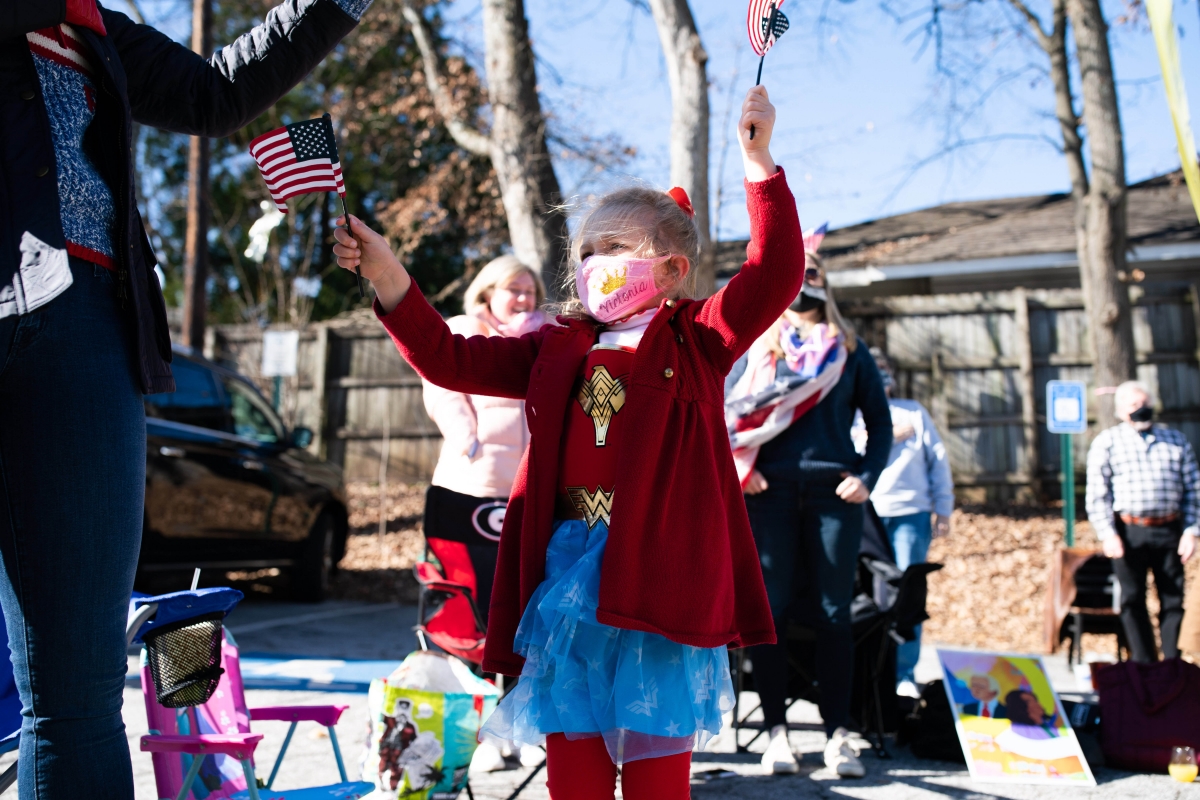
The theme of Joe Biden’s inauguration was “America united.” But in the nation’s 50 state capitals – the laboratories of American democracy – there were ample reminders that divisions run deep. 

Victoria Walker attends an Inauguration Day event at Manuel's Tavern in Atlanta on Wednesday, Jan. 20, 2021. MUST CREDIT: Photo for The Washington Post by Kevin D. Liles

Victoria Walker attends an Inauguration Day event at Manuel’s Tavern in Atlanta on Wednesday, Jan. 20, 2021. MUST CREDIT: Photo for The Washington Post by Kevin D. Liles

The attitudes of those who showed up – either to joyously celebrate or to bitterly protest – were not the only evidence. The National Guard troops, armored Humvees and chain-link fences that surrounded many capitol complexes were added proof that toxic America’s partisanship has recently bled into violence – and could do so again. 

“There is a general threat to all 50 state capitols,” said Colorado Gov. Jared Polis, a Democrat, on inauguration eve as he became the latest state leader to activate National Guard troops. Thousands had been deployed to capitals across the country late last week, ahead of a weekend in which potentially violent demonstrations were predicted by the FBI – but never materialized.

Once again on Wednesday, security officials’ worst fears were not borne out: In some states, it was close to business as usual. In others, demonstrations were small and peaceful, with occasionally tense moments.

At Colorado’s Capitol complex in Denver, dozens of “anti-fascist” demonstrators burned an American flag and yelled epithets at police, forcing officers to temporarily withdraw. In Portland, police used smoke bombs during a confrontation with far-left activists. And in Tallahassee, Fla., a Trump supporter and a Biden backer screamed at each other.

“It shouldn’t be like that,” said Molly Siddall, 18, after verbally sparring with a Trump supporter who yelled discredited conspiracy theories about Democrats and pedophilia. “That’s the problem with this country.”

Yet in a nation where the national Capitol was ransacked two weeks ago, the lack of significant strife Wednesday counted as an important step as Biden attempts to turn down the national temperature. 

“His aim is to unify us,” said Willy Stokman, a lone demonstrator on an otherwise deserted Utah Capitol lawn in Salt Lake City on Wednesday. “I am hopeful that people and politicians take him up on that, because it doesn’t have to be so divisive.”

In one of the nation’s most evenly split states – Pennsylvania, which voted narrowly for Biden in 2020 after Trump eked out a victory four years earlier – security was tight Wednesday at the Capitol in Harrisburg. But the scene was calm. 

Police on horseback and National Guard troops were positioned around the perimeter of the 10-block complex. On the Capitol steps, several Biden supporters waved U.S. flags and signs as a smattering of passing vehicles honked their approval. A lone Trump supporter wore a robe with the words “Impeach China Joe” affixed to it.

Matt Convery, 41, of Wallingford, said he had hoped to take his family to Washington for the inauguration but scrapped that plan after the insurrection on Jan. 6. He said he came out in the bitter cold with his sign reading “Biden” and “Truth over lies” because he watched the video of the Capitol siege and felt he needed to do something.

“I’ve never done anything like this, but wanted to do something for democracy,” he said. “It feels good.”

Across the street, Liz Albayero, 26, was behind the barista counter of the Fix Café, topping lattes with small, foamy pictures of Kamala Harris that she had found on Instagram. It was her own little way to celebrate. 

“It’s so amazing to see a woman there,” said Albayero, who came to Harrisburg from her native El Salvador as a student five years ago. “I feel a part of it with her.”

Albayero, who watched on the shop’s television as the inauguration played out, said she is studying for her citizenship test and plans to vote in the next presidential race. She said she is a Harris fan – but Biden’s history is an inspiration, too. “He never gave up – no matter what happened in his life,” she said.

When Jennifer Lopez broke out in Spanish, she laughed, and when Garth Brooks sang “Amazing Grace,” she hummed along. 

“This kind of represents the opposite of the last administration,” Albayero said. “I’m a minority and the last administration made me feel like I didn’t matter. It didn’t represent me.”

In Kentucky’s capital, Frankfort, Roger Abner was narrating a different experience. The candidate he had backed, Trump, was jetting to Florida after leaving the White House. And Abner was wondering why there were not more of the 45th president’s fans around to show their support. 

“We feel like we don’t have a voice anywhere else since they closed off social media,” said Abner, a 29-year-old construction worker, as he stood outside a heavily guarded Capitol complex. “We actually expected a lot more people like us to be up here,”

Instead there were a few, including Abner and his childhood friend, Curtis Pavlik, 27. 

Pavlik, a truck driver, wore a green T-shirt with the letters LGBT – which in this context, the shirt made clear, stood for Liberty, Guns, Beer and Trump. He carried a long steel pole with an American flag obscured by a yellow “Don’t tread on me” Gadsden-flag insignia. The response to the Jan. 6 riot – including attempts to shut down far-right social media networks – had, he said, “instilled fear into quite a few people and that’s why you don’t see a big crowd here.”

Both men had voted for Trump each time he ran, but neither approved of the Capitol riot. “There’s nothing to gain there. You have no plan to take over the government. You couldn’t if you wanted to,” Abner said. 

And Pavlik said he will be rooting for Biden’s success. 

“I’m not going to wish for him to fail,” he said. “I want him to do what’s good for the country. Do I think that’s what’s going to happen? Absolutely not. Do I want that to happen? Of course.”

Other Trump supporters appeared less interested in conciliation. 

At Georgia’s Capitol, Rhonda Beach watched on a smartphone as a president she regards as illegitimate was sworn in.

“All of it was compromised. Every bit of it,” said the 50-year-old. “They didn’t even try to hide that they were stealing it.”

As she spoke, hundreds of police and National Guard members stood watch, having shut down streets for several blocks. 

At other capitols, the security presence was barely visible. In Boise, Idaho, normal legislative work went on, undisturbed by any threats to the democratic order. 

Steve Ellefson was determined to keep it that way. 

“I’ve got to ring this bell!” Ellefson, 70, said as he tried to put all of his weight behind a large bell inscribed with the word “liberty.”

Ellefson sat alone near the Idaho Capitol when the clock struck noon, Eastern time. He could not quite push the bell hard enough to make it ring, but he still celebrated for a moment with praise for the Bidens. He also stood ready to serve his country.

“I am here to protect the Capitol from insurrectionists,” he said.

He had watched the Jan. 6 riot with tears in his eyes, and decided he could help protect Idaho’s legislature from a similar fate. With no threats – or even other people – to be seen, the retired bail bondsman concluded Wednesday that he probably would not be needed. But he was ready, he insisted as he thumbed the pages of a book, any time that changed.

“I’ve got a flashlight, an apple, potato and three cans of pop,” he said, “so if I have to fight, I’ll fight.”

Pfizer-BioNTech shot likely to foil mutant, new study shows #SootinClaimon.Com

#SootinClaimon.Com : ขอบคุณแหล่งข้อมูล : หนังสือพิมพ์ The Nation.

Pfizer-BioNTech shot likely to foil mutant, new study shows

InternationalJan 21. 2021

By Syndication Washington Post, Bloomberg · Naomi Kresge, Janice Kew

Pfizer and BioNTech built the case that their Covid-19 vaccine will protect against the new variant of the coronavirus that emerged in the U.K. with results of another lab trial.

Like previous work out of the University of Texas Medical Branch, the results published on Wednesday showed that antibodies in the blood of people who had been vaccinated were able to neutralize a version of the mutant virus that was created in the lab. The study was published on preprint server BioRxiv prior to peer review.

Unlike the earlier study, which focused on one crucial mutation, the new research tested all 10 mutations located on the virus’s spike protein, which helps it bind to cells in the host.

Antibodies in the blood of 16 volunteers in a previous German trial of the vaccine were just as effective against the lab-created mutant strain as they were against the original virus. The result “makes it very unlikely that the U.K. variant viruses will escape” protection from the vaccine, wrote the research team, led by BioNTech Chief Executive Officer Ugur Sahin.

The BioNTech team is nevertheless ready to adapt the vaccine if needed in the future, it said. That could become necessary to protect against other strains amid evidence another variant that emerged in South Africa may be harder to check.

A separate study on that strain raised concern. Scientists found that half of the blood samples from a handful of patients who already had Covid-19 don’t have the antibodies needed to protect against the South African variant, which is spreading around the globe.

The findings, from South Africa’s National Institute for Communicable Diseases, suggest that those individuals may no longer be protected from re-infection. In the other half, antibody levels were reduced and the risk of re-infection couldn’t be determined, according to the institute. The findings weren’t peer-reviewed and were based on a small sample size.

Jack Ma emerges for first time since Ant, Alibaba crackdown #SootinClaimon.Com

#SootinClaimon.Com : ขอบคุณแหล่งข้อมูล : หนังสือพิมพ์ The Nation.

Jack Ma emerges for first time since Ant, Alibaba crackdown

InternationalJan 21. 2021A livestream of Jack Ma, co-founder of Alibaba Group, addressing teachers at an annual event he hosts to recognize rural educators, is recorded from a laptop computer in Hong Kong, on Jan. 20, 2021. MUST CREDIT: Bloomberg photo by Justin Chin.A livestream of Jack Ma, co-founder of Alibaba Group, addressing teachers at an annual event he hosts to recognize rural educators, is recorded from a laptop computer in Hong Kong, on Jan. 20, 2021. MUST CREDIT: Bloomberg photo by Justin Chin.

By Syndication Washington Post, Bloomberg · Lulu Yilun Chen, Coco Liu

Jack Ma resurfaced for the first time since China’s government began clamping down on his business empire nearly three months ago, appearing in a live-streamed video that sent Alibaba Group’s stock soaring but left plenty of unanswered questions about the billionaire’s fate.

Ma spoke briefly on Wednesday during an annual event he hosts to recognize rural teachers. In one video of the event circulated online, China’s most famous entrepreneur can be seen touring a primary school in his hometown of Hangzhou. Ma, who had stayed out of public view since regulators suspended the initial public offering of his fintech company Ant Group, told the teachers he’ll spend more time on philanthropy. He didn’t mention his run-ins with Beijing.

Ant confirmed the authenticity of the video, first posted on an online blog, but declined to comment further.

Speculation about Ma’s whereabouts and his standing with President Xi Jinping’s government had reached a fever pitch in recent weeks, after regulators ordered Ant to overhaul its business and began an antitrust investigation of Alibaba. Beijing’s crackdown followed an October speech by Ma in which he infamously rebuked “pawn shop” Chinese lenders, regulators who don’t get the internet, and the “old men” of the global banking community.

Ma’s comments on Wednesday struck a much different tone, echoing themes espoused by the ruling Communist Party. A former English schoolteacher, he spoke about the importance of reviving China’s countryside and narrowing income disparities by encouraging the return of younger talent to rural areas.

“Recently, my colleagues and I have been studying and thinking. We made a firmer resolution to devote ourselves to education philanthropy,” Ma said during the event. “Working hard for rural revitalization and common prosperity is the responsibility for our generation of businessmen.”

While Ma’s exact whereabouts remain unclear, his emergence in a public forum may help quell some of the more dire rumors about his fate in a country where media coverage is often tightly choreographed. Among the earliest outlets to report on his video address was an online news outlet backed by the Zhejiang provincial government.

Ma had kept out of public view since regulators in November scuttled Ant’s $35 billion IPO, tightened fintech regulations and launched a separate probe into Alibaba — all in a span of weeks.

“Jack Ma’s unexpected re-emergence — just as sudden as his earlier disappearance — is likely a sign that his relationship with Beijing’s regulatory authorities has stabilized,” said Brock Silvers, a managing director at private equity fund Kaiyuan Capital in Hong Kong.

But Ma probably isn’t out of the woods, Silvers added. “A path acceptable to all parties may have been identified, but Ant Group still looks likely to be dis-aggregated and regulatory restrictions will almost surely take a significant bite out of Ant’s former valuation.”

The clampdown on Ma’s empire is part of a broader campaign to rein in a generation of Chinese tech giants that Beijing views as wielding too much control over the world’s second-largest economy.

The government has increasingly sought to exert influence over the extent to which companies from Tencent Holdings to ByteDance amass data and direct commerce and media. The same month Ant’s IPO was scuttled, the nation’s top antitrust watchdog published new guidelines warning tech giants against monopolistic practices from forced exclusive arrangements to collusion on data. While Ant and Alibaba have borne the brunt of that assault since November, investors have since sold off peers from Tencent to Meituan. Both stocks rallied more than 3% on Wednesday.

While Alibaba’s surge added about $58 billion to the company’s market value, Ma’s standing with Beijing remains unclear. As of early December, the man most closely identified with the meteoric rise of China Inc. was advised by the government to stay in the country, a person familiar with the matter has said. Debate about his whereabouts arose because Beijing has in the past quietly detained billionaires that have run afoul of the law, without immediate trial.

U.S. homebuilder confidence fell to a four-month low in January #SootinClaimon.Com

#SootinClaimon.Com : ขอบคุณแหล่งข้อมูล : หนังสือพิมพ์ The Nation.

U.S. homebuilder confidence fell to a four-month low in January

InternationalJan 21. 2021Contractors install floor beams on the foundation of a house under construction in Lehi, Utah, U.S., on Dec. 16, 2020. MUST CREDIT: Bloomberg photo by George Frey.Contractors install floor beams on the foundation of a house under construction in Lehi, Utah, U.S., on Dec. 16, 2020. MUST CREDIT: Bloomberg photo by George Frey.

By Syndication Washington Post, Bloomberg · Julia Fanzeres

U.S. homebuilder confidence slipped to a four-month low in January as firms became slightly less optimistic about sales against a backdrop of higher house prices and construction costs.

A gauge of builder sentiment fell to 83 from December’s reading of 86, National Association of Home Builders data showed Wednesday. The figure was weaker than the median forecast of 86 in Bloomberg’s survey of economists.

The second-straight decline in confidence shows the extent to which higher building materials costs, particularly lumber, and rising home prices tied to lean inventory are slowing momentum. Builders continue to face pandemic-related supply-chain challenges at the same time elevated asking prices hinder affordability, with many homes priced above what prospective buyers are willing to pay.

“While housing continues to help lead the economy forward, limited inventory is constraining more robust growth,” Robert Dietz, NAHB chief economist, said in a statement. “A shortage of buildable lots is making it difficult to meet strong demand and rising material prices are far outpacing increases in home prices, which in turn is harming housing affordability.”

A gauge of current sales fell to a three-month low, while measures of sales expectations in the next six months and prospective homebuyer traffic both declined to the lowest since August.

Confidence measures decreased across all four regions across the U.S.

In Japan, pandemic deals fatal blow to arcades #SootinClaimon.Com

#SootinClaimon.Com : ขอบคุณแหล่งข้อมูล : หนังสือพิมพ์ The Nation.

In Japan, pandemic deals fatal blow to arcades

InternationalJan 21. 2021The last few customers are seen on Saturday in Game Spot 21 in Shinjuku Ward, Tokyo. The arcade had been outfitted with plastic sheets as a preventive measure against the coronavirus. MUST CREDIT: Japan News-YomiuriThe last few customers are seen on Saturday in Game Spot 21 in Shinjuku Ward, Tokyo. The arcade had been outfitted with plastic sheets as a preventive measure against the coronavirus. MUST CREDIT: Japan News-Yomiuri

By The Japan News-Yomiuri · Tomoki Masuda

Game arcades in Tokyo have been falling like dominoes amid the coronavirus pandemic, left no choice but to close after what for some have been decades in operation.

Despite growing demand for videogames now that the world has moved indoors, social distancing measures have caused foot traffic to plummet at brick-and-mortar “game centers,” commonly located in the city’s once-bustling downtown entertainment districts.

Arcade operators have been requested to shorten their business hours after the second state of emergency was declared for Tokyo and 10 other prefectures. Yet even if they comply with the request, arcades remain ineligible to apply for financial assistance, such as the government subsidies available to restaurants and bars.

Taking stock of the rapid succession of closures, regular customers lamented the loss of their favorite gaming haunts.

For over four decades, Game Spot 21 could be found a short walk from the west exit of JR Shinjuku Station. Nestled among a hodgepodge of multitenant buildings jostling for space along a cramped side street, the arcade was always announced by the frenzied chirping of claw crane games that lined its entrance.

But in recent months, a profusion of plastic partitions had joined the nearly 50 mahjong and fighter game machines in the dimly lit interior as a sign of the times.

On Saturday afternoon, a dozen regular customers who were undeterred by the pandemic peered intently at their monitors. The well-known arcade beloved by generations of gamers was to close at midnight on Wednesday.

“Given the circumstances, we had no other choice,” said Naoki Ichiki, 42, the arcade’s manager and longtime employee of nearly 20 years.

In the 1990s, Game Spot 21 would have been packed with enthusiasts trying their hand at Sega’s popular “Virtua Fighter” title. During the arcade’s heyday, it had around 100 machines, and drew over 500 patrons daily.

Hit hard by the pandemic, attendance dropped to 10%. As sales also fell by 70%, the operator decided it was finally time to pull the plug for good.

“After the first state of emergency was declared, we closed the arcade for about two months as a temporary step. But our customers never came back,” Ichiki said. He added that the extra scrutiny placed on Shinjuku during the pandemic as a “nightlife district” likely also had an adverse impact on business.

Yasuhiro Tsuji, 55, who runs a real estate company in Shibuya Ward, Tokyo, said he had been a frequent customer of the arcade from his teenage years, and expressed his disappointment about the closure.

“I’ve been coming here ever since the Space Invaders days and always felt a zing of excitement on each visit. This arcade was somewhere I could relieve stress and reset whenever I needed a breather. It’s a shock to see this place go.”

Takashi Noguchi, a self-employed 43-year-old from Shinjuku Ward, was similarly a regular presence for over 20 years. “I enjoyed chatting with the other regulars here between games. This place was like a candy store for adults,” he said.

Ineligible for financial support

Game arcades have felt a pinch in recent years, threatened by the unabated march of home video consoles, online gaming and smartphones. According to the Japan Amusement Industry Association, there were 21,688 game arcades nationwide in fiscal 2008. That number was nearly halved to 12,167 in fiscal 2018.

The coronavirus has only exacerbated the ailing industry’s woes. Since last spring, a sizable chunk of the population has elected to stay at home, drastically reducing foot traffic.

Now that a new state of emergency was declared this month, certain businesses including game arcades and pachinko parlors have been asked to shorten their hours and close by 8 p.m., although they do not qualify for the up to ¥60,000 a day in “cooperation funds” promised to restaurants and other establishments.

Across town, a void opened in front of Akihabara Station last year with the successive closures of the Sega Akihabara 2nd store in August and the Adores Akihabara outlet in November. Later that month, Shinjuku Playland Carnival closed in the Kabukicho district, marking the end of nearly half a century of business.

Japan aims to vaccinate most of country before Olympics, report says #SootinClaimon.Com

#SootinClaimon.Com : ขอบคุณแหล่งข้อมูล : หนังสือพิมพ์ The Nation.

Japan aims to vaccinate most of country before Olympics, report says

InternationalJan 21. 2021A pedestrian wearing a protective mask walks past an advertisement for the now-postponed Tokyo 2020 Olympic Games in Tokyo on Jan. 14, 2021. MUST CREDIT: Bloomberg photo by Toru Hanai.A pedestrian wearing a protective mask walks past an advertisement for the now-postponed Tokyo 2020 Olympic Games in Tokyo on Jan. 14, 2021. MUST CREDIT: Bloomberg photo by Toru Hanai.

By Syndication Washington Post, Bloomberg · Gearoid Reidy

Japan aims to vaccinate the majority of its population against covid-19 by July, according to a report, meaning most of its more than 125 million residents could be inoculated by the time the Tokyo Olympics are scheduled to begin.

The country plans to complete vaccination of 50 million people in high-priority tiers, including the elderly and health-care workers, by April, according to the Yomiuri newspaper, citing multiple unidentified people. Japan then plans to begin inoculation of the general public as early as May, depending on the availability of doses, the report said.

The Health Ministry could not confirm the report when contacted by Bloomberg News. Chief Cabinet Secretary Katsunobu Kato, the government’s top spokesman, said Wednesday that the government couldn’t announce a schedule before the country had approved a vaccine.

Taro Kono, who was appointed by Prime Minister Yoshihide Suga on Monday as minister in charge of the vaccine rollout, took to Twitter to pour cold water on the reports.

“The newspapers are all citing ‘government officials’ but they’re completely unfounded, and just guessing,” he wrote. “You’re better off not trusting them.”

Still, the Yomiuri report is an early indication of how Japan, which is facing its biggest wave of infections, may roll out vaccines to the general population. Suga has said he aims to begin the country’s vaccination program in late February starting with frontline medical workers.

The government has emphasized that vaccination is not a prerequisite for holding the Tokyo Olympics, which are scheduled to start in July following a year’s delay. Surging cases in Japan and elsewhere and new strains of the virus have cast doubt on the country’s ability to hold the games as planned.

The rollout laid out in the Yomiuri report would represent a hugely ambitious plan. Completing vaccination of the 50 million in the high priority tiers, including the elderly, medical workers and those with underlying conditions, would require more than 800,000 doses to be administered each day.

Such a plan would keep pace with an aggressive program in China, which in December set out to inoculate 50 million people against the virus in about a two-month span ahead of the annual Lunar New Year holiday. Other countries have also set goals to reach herd immunity, which occurs when a large portion of a community becomes immune to a disease.

South Korea’s president said this week the country may reach herd immunity by November at the latest. In the U.S., Anthony Fauci has said that level will likely happen during the summer, with a return to normality by the end of the year.

Japan, which has plans to provide vaccines free of charge, is working to approve Pfizer Inc.’s shot in the middle of February, Health Minister Norihisa Tamura said last week. Vaccines will not be given to the more than 18 million children under 16 until more trial data on that age group is available, according to the Yomiuri.

Japan has sealed a contract for about 144 million doses of the Pfizer/BioNTech vaccine this year, and will request the company to provide much of that supply by June, Tamura told reporters in Tokyo late Wednesday. Pfizer is the only company so far to have applied for emergency approval for its vaccine in Japan, but the country also has contracts with Moderna Inc., AstraZeneca Plc and Novavax Inc.

Japan’s plan faces many potential obstacles, among them a public cautious about receiving a vaccine so soon. An NNN/Yomiuri poll in December found that while most wanted to get the vaccine eventually, only 15% wanted to take it “soon,” with a further 15% responding they didn’t want it at all.

Biden to mend World Health Organization ties, Fauci to speak #SootinClaimon.Com

#SootinClaimon.Com : ขอบคุณแหล่งข้อมูล : หนังสือพิมพ์ The Nation.

Biden to mend World Health Organization ties, Fauci to speak

InternationalJan 21. 2021The World Health Organization regional office for the Americas in Washington, D.C., on Aug. 26, 2020. MUST CREDIT: Bloomberg photo by Stefani Reynolds.The World Health Organization regional office for the Americas in Washington, D.C., on Aug. 26, 2020. MUST CREDIT: Bloomberg photo by Stefani Reynolds.

By Syndication Washington Post, Bloomberg · David Wainer, John Lauerman, Mario Parker

President-elect Joe Biden plans to take immediate steps Wednesday after he is inaugurated to re-engage with the World Health Organization and send top U.S. medical expert Anthony Fauci to speak to the group in a strong repudiation of Donald Trump’s snubs during the coronavirus pandemic.

The incoming administration plans to participate in the WHO executive board meeting this week, with Fauci, the top U.S. infectious disease expert, heading the delegation and speaking. Once the U.S. resumes its engagement with the WHO, the new administration will work with the body to strengthen and reform the group, according to a fact sheet released by the Biden transition team.

Trump announced in May that the U.S. would exit the WHO because of what he said was its undue deference to China and failure to provide accurate information about the coronavirus. He often blasted the organization and also has publicly belittled Fauci and diminished his role in past months.

In announcing these changes, Biden is underscoring that he intends to set a new science-based tone in seeking to reverse Trump’s dismissal of virus mitigation strategies and international cooperation in addressing the pandemic.

The U.S. had been the WHO’s largest contributor, providing $400 million to $500 million in mandatory and voluntary contributions, and Trump’s decision last year drew sharp criticism in Congress, as well as from allies in Europe. The WHO has been heavily involved in the fight against the coronavirus, especially in poor countries. The Geneva-based group said it looks forward to the participation of the U.S. delegation at Thursday’s executive board meeting.

Meanwhile, the president-elect said he would sign an executive order requiring masks and physical distancing in all federal buildings — including government office buildings — as well as on federal lands and by federal employees and contractors in an attempt to help stem the spread of the surging coronavirus. He said this will be part of a “100 days masking challenge” to get Americans to wear masks in public.

“This is not a political statement; this is about the health of our families and the economic recovery of our nation,” said Jeff Zients, who will be the new administration’s covid response coordinator.

Biden is expected to sign another order in coming days requiring masks on trains and planes, which also fall under federal jurisdiction.

The approach represents a reversal of the stance taken by Trump, who clashed with public health officials by at times casting doubt on the benefits of wearing masks and generally refusing to wear them himself.

During the campaign, Biden suggested he’d impose a national mask mandate, citing face coverings’ ability to slow the spread of the virus. But there’s no clear authority for a presidential order outside of areas controlled by the federal government. Biden later revised his approach to focus on federal property and interstate travel.

Biden faces a challenge in persuading Americans to wear masks after Trump and Republican officials across the country politicized their use.

On Tuesday, as U.S. deaths topped 400,000 in the world’s worst covid-19 death toll, Antony Blinken, Biden’s choice for secretary of state, signaled that a U.S. rift with WHO may be healing and that the U.S. would join Covax, the 92-nation collaboration seeking to deploy Covid-19 vaccines around the world. While the Trump administration has given some $18 billion to vaccine and drug development through Operation Warp Speed, it declined to participate in Covax.

“The combination of rejoining, taking part in Covax and looking at how we can help make sure the vaccine is equitably distributed is something we’re going to take on,” Blinken told the Senate Foreign Relations Committee during his confirmation hearing on Tuesday.

The program plans to distribute some 2 billion doses around the world by the end of 2021. WHO Director-General Tedros Adhanom Ghebreyesus, whose agency leads Covax along with the Coalition for Epidemic Preparedness Initiatives and Gavi, the Vaccine Alliance, has expressed concern that drugmakers are prioritizing wealthier countries for vaccine clearances and distribution. That could delay distribution through Covax.

U.S. participation could help shore up the vaccine-equity program. China is one of the partner nations, and although its vaccines are not among those procured by Covax, Chinese drugmaker Sinovac Biotech said it has submitted data on its shot for pre-qualification. The EU is also supporting the plan.

Biden instructs Education Department to extend pause on federal student loan payments through September #SootinClaimon.Com

#SootinClaimon.Com : ขอบคุณแหล่งข้อมูล : หนังสือพิมพ์ The Nation.

Biden instructs Education Department to extend pause on federal student loan payments through September

InternationalJan 21. 2021Joe Biden, then the presumptive Democratic nominee, appears in August with running mate Kamala D. Harris in Wilmington, Del. MUST CREDIT: Washington Post photo by Toni L. SandysJoe Biden, then the presumptive Democratic nominee, appears in August with running mate Kamala D. Harris in Wilmington, Del. MUST CREDIT: Washington Post photo by Toni L. Sandys
By The Washington Post · Danielle Douglas-Gabriel

WASHINGTON – On his first day in office, President Joe Biden is asking the Education Department to extend the suspension of federal student loan payments through Sept. 30.

The move arrives days before the moratorium is set to expire at the end of this month. It makes good on Biden’s pledge to give borrowers some breathing room as the economy struggles to find its footing.

On a call with reporters Tuesday, Brian Deese, the incoming director of the National Economic Council, spoke of the struggles of many households, particularly Black and Latino families, to pay basic expenses and said that student loan debt is often weighed against the costs of food and housing.

“In this moment of economic hardship, we want to reduce the burden of these financial trade-offs,” Deese said.

To that end, consumer advocates and liberal lawmakers had hoped Biden would use executive authority to cancel some portion of the $1.6 trillion in outstanding student debt. Deese said the administration supports forgiving up to $10,000 in debt per person through congressional action.

The Democratic-controlled House passed legislation last year affording cancellation to borrowers through a stimulus package shelved by Senate Majority Leader Mitch McConnell, R-Ky.

Sen. Chuck Schumer, D-N.Y., the incoming majority leader, has been unwavering in his support for debt cancellation and could clear a path forward. That would be a formidable challenge given the slim majority Democrats will have in the Senate, but advocates say it’s not impossible.

In the meantime, about 41 million Americans will continue to benefit from the federal government’s pause of student loan payments.

“This is really important,” said Jessica Thompson, policy and research director at the Institute for College Access & Success. “It allows borrowers to take a sigh of relief, (and) get out of this cycle of being reliant on the current politics of the day determining whether they’re going to have to start paying again.”

When the Education Department approves Biden’s request, all borrowers with student loans held by the Education Department will see their payments automatically suspended until Sept. 30 without penalty or accrual of interest. Each month until then will still count toward loan forgiveness for borrowers in public-service jobs. It will also count toward student loan rehabilitation, a federal program that erases a default from a person’s credit report after nine consecutive payments.

Collections on defaulted, federally held loans are still halted, and any borrower with defaulted federal loans whose wages are being garnished will receive a refund. However, the directive still excludes more than 7 million borrowers whose federal loans are held by private companies or universities.

The Trump administration in March gave borrowers the option of postponing payments for at least 60 days as the coronavirus pandemic battered the economy. Congress later codified the reprieve in the stimulus package, known as the Cares Act, and made it automatic. The Trump administration twice extended the moratorium before leaving office.

Thompson said the latest extension will give the Education Department, the administration and Congress time to figure out how to successfully transition millions of borrowers back into repayment.

“It’s going to take a fair amount of thought to do this well, to do it carefully and to make sure we aren’t setting people up for failure or default when we try to kick-start payments,” Thompson said.

While many borrowers might have an easy time resuming payments, some will struggle to get back on track with their payments. Consistent and accurate information from the department and its contractors about options for people facing hardships will be essential to avoid a wave of defaults, Thompson said.

The Education Department reported a spike in people defaulting on their federal student loans in 2019 after exiting forbearance provided in the wake of natural disasters such as Hurricane Harvey and the California wildfires.

Navalny enrages Putin with video recorded in jail #SootinClaimon.Com

#SootinClaimon.Com : ขอบคุณแหล่งข้อมูล : หนังสือพิมพ์ The Nation.

Navalny enrages Putin with video recorded in jail

InternationalJan 21. 2021

By The Washington Post · Robyn Dixon

MOSCOW – Russian opposition leader Alexei Navalny wasted no time showing why the Kremlin finds him such a threat: From behind bars in a coronavirus isolation cell, he released a bombshell video accusing President Vladimir Putin of colossal corruption.

The YouTube video – released Tuesday less than 48 hours after Navalny returned to Russia in a direct challenge to Putin and his security services – crossed all Putin’s red lines.

It also underscores that Navalny and his supporters appear united and organized five months after the opposition leader suffered a near-fatal nerve agent poisoning he claims was ordered by Putin. The Kremlin denies the claim.

Protests by Navalny’s backers are planned across Russia on Saturday.

But videos and social media – anchored by his network of 40 offices across Russia – remain the core of Navalny’s opposition power, pointing out alleged abuses and indulgences by Russia’s leaders under Putin. Navalny’s election efforts back candidates with the best chances of ousting members of Putin’s party.

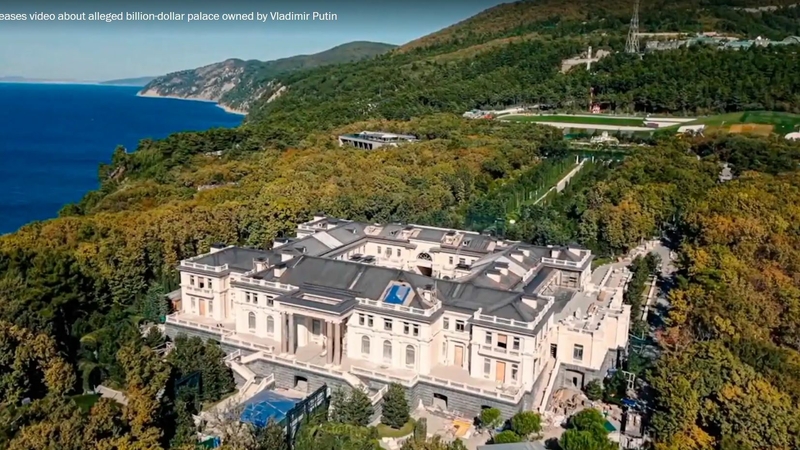
This time, the video pointed directly at Putin. It included a photo of teenager Elizaveta Krivonogikh, whom it claimed was the secret daughter Putin fathered with a lover. Navalny’s video also published an architectural plan and drone footage of a gigantic palace near Gelendzhik on the Black Sea, including a cellar winery, an indoor ice rink and a casino. The video alleged it was built for Putin using a complex “slush fund.”

“Putin’s palace: History of the world’s largest bribe,” viewed more than 25 million times, also named former gymnast Alina Kabaeva as another woman who allegedly received benefits such as apartments for herself and her family through Putin. Neither Kabaeva nor Krivonogikh has commented publicly.

Putin’s spokesman Dmitry Peskov said the video was “a con,” and “pure nonsense,” denying the palace was related to Putin, but he gave no details on who they say is the owner. Peskov also has rejected a November report by a Russian outlet, Proekt media, that Krivonogikh was related to Putin as “unfounded and unconvincing.”

Releasing such an explosive video while in the clutches of a judicial system notorious for its politicized decisions is a risk for Navalny.

He was detained Sunday upon his return from Berlin and faces at least two and a half years on charges he violated a suspended sentence. He also is looking at possible lengthy prison terms in two other criminal cases for alleged fraud and embezzlement. Navalny says the charges are political.

After surviving poisoning by a Novichok group nerve agent in August during a trip to Siberia, he directly confronted the domestic intelligence service, or FSB. Navalny phoned a member of the hit team that investigative reporting group Bellingcat linked to the crime, tricking him into revealing details of the poisoning last month.

Navalny, 44, is seen by the Kremlin and securocrats as an enemy of the state, according to political analyst Tatiana Stanovaya of R. Politik analytical firm. Bringing down Navalny was now seen as “a matter of honor” by the FSB, she said.

“They want to see Navalny destroyed in prison, physically and mentally weak and vulnerable,” she said. “They don’t care about protests or elections. They would like to see the West increase sanctions because it gives them more arguments to insist on this harsh line in Russian policy.”

Leonid Volkov, head of Navalny’s network of 40 regional offices, believes Navalny’s life remains in danger.

“The situation is very dangerous indeed because, technically and practically, Alexei Navalny is now in the custody of the very people who tried to poison him,” said Volkov, who is organizing the protests planned for Saturday. The Kremlin denies any link to the poisoning.

“The Russian Orwellian reality actually demands a lot of bravery now,” he added.

Navalny’s poisoning sent the message that serious opposition rivals to Putin would not be tolerated. Since then, authorities have passed a raft of laws aimed at Navalny and other dissidents, making it harder to protest, oppose the regime or to expose corruption by security officials and others.

“There were some unwritten rules about what you could do and not do to be on the safe side, but this has changed,” Volkov said. “So what really makes practical sense is to do what you have to do and that’s it.”

Navalny was still in intensive care in Berlin after his poisoning when he conceived the video as what he sees as the definitive account of Putin’s corrupt regime. He called it “psychological portrait” of a man he says was an unexceptional former KGB agent who became obsessed with amassing unlimited wealth and staying in power.

The video’s visualizations of luxury palace interiors with ornate Italian furniture are based on drawings that Navalny said were leaked by a contractor “stunned and enraged by the luxurious decorations and the insane prices of the furnishings.”

There were details: a wine-production cellar with classical musical piped 24 hours a day to help the vintages mature; a hookah room with a pole-dancing stage; a tunnel to a sea lookout; an underground ice hockey rink, a two-story theater, a casino and an “aquadiscoteque.” There were custom-made sofas for $27,000, and tables costing up to $56,000.

Businessman Sergei Kolesnikov revealed some details in 2010, saying he had been involved in the project to build a residence for Putin. Photographs of the lavish interiors were posted online by workers in 2011.

On Navalny’s first day in Moscow’s Matrosskaya Tishina detention center on Tuesday, Vladimir Ashurkov, London-based executive director of Navalny’s Anti-Corruption Foundation, called on Western governments to issue sanctions against a list of eight Russians with links to Putin. The roster includes billionaires Roman Abramovich, owner of Chelsea soccer club in Britain, and Health Minister Mikhail Murashko for “covering up Alexei’s poisoning and hindering efforts to evacuate him to Germany for medical treatment.”

“People on the short list are some of the key architects of the system of corruption, restriction of political freedom and oppression that Putin’s regime has built over years in Russia,” Ashurkov said in an interview.

“It will be a deterrent to other people not on this list,” he added. “The message is that there will be consequences to the support of Putin’s regime and to the oppression that these people bring to Russia.”

There has been no immediate reaction to the sanctions appeal.

Ashurkov said Navalny knew he might be jailed, but “will find a way to have his voice heard.” At the same time, Putin’s popularity has been ebbing, real incomes declining and the Kremlin is struggling to ignite a sense of national momentum and pride amid the crippling pandemic.

“People are depressed,” said Dmitry Gudkov, an opposition figure unaffiliated with Navalny, adding that many people were angered by Navalny’s detention but afraid to heed his call for street protests. “Many people are threatened by the regime because people were sent to prison for just participating in actions and meetings.”

“Putin is losing popularity, and law enforcement and the FSB and repression will be the key instruments to sustain power,” Gudkov said. “If you can’t buy loyalty, you can trade on fears. You can intimidate people and threaten people to prevent them from participating in actions. That’s the trend in our country.”

At the end of the video, Navalny urges people to “believe in our strength” and take to the streets.

“All we have to do is stop being patient. Stop wasting your life and your taxes enriching these people,” he said. “Our future is in our hands.”