Pompeo’s last-minute actions on foreign policy will complicate Biden’s plans #SootinClaimon.Com

#SootinClaimon.Com : ขอบคุณแหล่งข้อมูล : หนังสือพิมพ์ The Nation.

Pompeo’s last-minute actions on foreign policy will complicate Biden’s plans

InternationalJan 17. 2021WILMINGTON, DE ‐ January 15, 2021: President- elect Joe Biden in Wilmington, Del., on Jan. 15, 2021. MUST CREDIT: Washington Post photo by Demetrius Freeman.WILMINGTON, DE ‐ January 15, 2021: President- elect Joe Biden in Wilmington, Del., on Jan. 15, 2021. MUST CREDIT: Washington Post photo by Demetrius Freeman.

By The Washington Post · Karen DeYoung

WASHINGTON – While President Donald Trump and many of his top aides seem to have left the nation’s business behind, largely disappearing from view in the days since Joe Biden’s election was formalized and Trump-inspired violence erupted, one corner of the administration has moved into overdrive.

Secretary of State Mike Pompeo has made near-daily announcements of major foreign policy actions, many of which appear designed to cement Trump priorities and create roadblocks to new directions already charted by the incoming Biden team.

Among the barriers put in place are the relisting of Cuba as a state sponsor of terrorism, the designation of Yemen’s Houthi rebels as terrorists, the removal of long-standing restrictions on contacts between senior U.S. officials and their Taiwanese counterparts, the recognition of Moroccan sovereignty over the long-contested Western Sahara, the fast-track approval of controversial arms sales and a slew of new sanctions against Iran.

All of those changes can be undone. But each complicates the challenges Biden will face in putting his own stamp on policy.

Biden officials express little doubt that most, if not all, of them are motivated by domestic politics. But they have not spoken out against them, in part because of the “one president at a time” tradition regarding U.S. national security interests overseas.

“We’ve taken note of these last-minute maneuvers,” said a senior Biden transition official, who spoke on the condition of anonymity before the inauguration. Each is being reviewed, the official said, “and the incoming administration will render a verdict based exclusively on one criterion: the national interest.”

A White House official cited differing rationales for several of the recent moves, saying that some of them had been under consideration for some time. “It’s not like one size fits all,” the official said.

Trump adviser Jared Kushner pushed for recent decisions on matters such as Morocco and arms sales to the United Arab Emirates and Saudi Arabia as part of the payoff for Arab countries that agreed to normalize relations with Israel. Much of the rest, including actions on Cuba and Taiwan, “Pompeo just kind of did on his own,” the official said.

“I wouldn’t dispute that there were a lot of domestic political incentives for Pompeo to give a final push on Cuba, Iran and Taiwan,” said another person with direct knowledge of the policy process. Officials spoke on the condition of anonymity to discuss internal deliberations.

While Biden has remained silent, lawmakers have spoken out against some of the actions. Both Republicans and Democrats have criticized the Houthi designation – announced Jan. 10, to take effect the day before Biden’s inauguration – as have numerous humanitarian organizations working to keep millions of Yemenis from starving.

U.S. involvement in the Yemen war has long been controversial. Saudi Arabia is accused of causing thousands of civilian deaths in its fight against the Iranian-backed Houthis who control much of the country.

Bipartisan majorities, with no sympathy for Iran or the Houthis, have cited human rights concerns in repeated efforts to block Yemen-used military assistance to the Saudis, and their partner in the war, the United Arab Emirates, with measures that Trump has vetoed or otherwise circumvented.

Objections to the terrorist designation center primarily on what Senate Foreign Relations Committee Chairman James Risch, R-Idaho, and House Foreign Affairs Committee ranking Republican Michael McCaul of Texas said would be “devastating humanitarian impacts.”

Yemen, with more than 24 million people who rely on outside assistance for survival, imports about 90 percent of its food. Under the designation, aid organizations helping starving Yemenis in Houthi areas could be charged with criminal acts. “Good intentions must not be eclipsed by significant unintended consequences,” Risch and McCaul said in a statement Monday following Pompeo’s announcement.

Treasury officials, including Secretary Steven Mnuchin, opposed the designation, arguing that the action was so rushed that sanctions waivers to ensure the steady flow of food and other supplies to civilians were not ready to be implemented.

Others objected internally based on concerns that it would undermine ongoing diplomatic efforts to resolve the war and accomplish little. “The reason there was dissent . . . was the question: What do we get from this? What leverage does it give us” in pushing a diplomatic solution, the person familiar with the process said. “The feeling from a lot of us was that it doesn’t give us much.”

Biden has said that he intends to cut back on arms sales to the Saudis and push for more diplomacy and humanitarian assistance for Yemen. But reversing the Houthi designation cannot be done with the stroke of a pen. Under statute, it requires an act of Congress, or an administration review, after which the secretary of state finds that changed circumstances on the ground of U.S. national security warrant a reversal.

Pompeo’s main motivation appeared to be another opportunity to cast Iran as the primary generator of problems in the Middle East and to place additional obstacles in Biden’s path. The administration emphatically opposes his plans to reenter the international nuclear deal with Tehran that Trump exited in 2018.

Both Biden and the Iranians have said they are willing to trade “compliance for compliance,” with each side reversing the steps they have taken outside the parameters of the agreement since the U.S. withdrawal. For Iran, that means reversing the activation of additional uranium-enriching centrifuges, and a return to sharp limits on the quantity and quality of enriched material.

For the United States, it means lifting of all nuclear-related sanctions, as agreed in the deal, formally known as the Joint Comprehensive Plan of Action (JCPOA). But most U.S. sanctions – charging terrorism support, ballistic missile development and other types of activity – remain, and Pompeo has piled on even more measures in recent days.

Iran is expected to demand that those sanctions – which have been secondarily applied to other nations doing business in Iran, including in Europe – also be eased. But any effort by Biden to negotiate over them will probably be time-consuming and run into congressional objections. In an additional land mine laid this past week, Pompeo declared, in a Wednesday announcement that puzzled intelligence and counterterrorism experts who saw no substantive evidence, that Iran is the now the “new home base” and “operational headquarters” for al-Qaida.

Biden’s argument is that once the nuclear issue is back on track – with Iran’s breakout time for production of enough fissile material to build a weapon put back from two or three months to at least one year, where it was when Trump quit the deal – he will build international and domestic support and push for additional agreements.

But time is short to unravel and analyze the tangle of new measures that the current administration has put in place, and tempers are high all around. In Iran, where the economy is foundering, parliament has decreed that sanctions must be lifted by early February or Iran itself will leave the JCPOA. Iran is also about to enter into a heated political season, with presidential elections scheduled for early summer.

Pompeo has spent much of the past year berating China and arguing that the Trump administration’s hard-line policies are one of the many areas in which the president “flipped the script” on traditional appeasement. Biden has said he shares concerns about Chinese territorial and trade aggression, but he wants to review the situation and join with like-minded democracies, particularly in Europe, in confronting Beijing.

China experts see the most volatile part of the relationship as Taiwan, where the administration has softened restrictions on arms sales and diplomatic relations that were enshrined decades ago in laws governing U.S.-China relations.

Most recently, Pompeo announced Jan. 9 that he was removing all “self-imposed restrictions” on interactions between high-level U.S. officials, including in the military, with their Taiwanese counterparts. The United States, he said, would no longer “appease the Communist regime in Beijing.”

The State Department scheduled a visit to Taipei this past week by Kelly Craft, the U.S. ambassador to the United Nations, following precedent-shattering trips there last summer by senior American delegations. The trip did not take place, however, after Pompeo abruptly canceled all scheduled diplomatic travel – including his own – on Tuesday, citing the need to assist in the change of administrations here.

Like many of the other last-minute administration actions, Biden could simply reverse the new Taiwan policies if he chooses. But Pompeo has put him in a difficult position, requiring an overt act that could be seen as pro-China at a time when he is still developing and implementing his own strategic posture toward Beijing.

“Why are they doing these things?” asked a former senior U.S. diplomat, speculating as to Pompeo’s additional motivation. “The fact is that a substantial number of extreme right-wing representatives [in Congress] have never bought the idea of normalization with China. And the embers of ‘two Chinas’ never fully died out.

“I’m inclined to believe this is heavily Pompeo-driven, as opposed to Trump thinking things up. I believe Pompeo is laying down these markers as a campaign platform for 2024,” the former diplomat said.

Biden has also said he intends to return to the diplomatic normalization with Cuba established under the Obama administration, a task made more difficult this past week by Pompeo’s re-designation of Cuba as a state sponsor of terrorism.

The move was widely seen as a gift to what future Republican presidential candidates see as an important domestic constituency – Cuban American voters in southern Florida – with little credible policy basis. Reversing it will be important to Biden’s plans, but it will be time-consuming.

U.S. law outlines two paths to reverse the designation. In the first, the president must certify to Congress that there has been “a fundamental change in the leadership and policies of the government of the country concerned,” that “government is not supporting acts of international terrorism” and that it will not in the future.

For the second, the president must notify Congress, 45 days before a recission takes place, that the government in question has not provided support for acts of international terrorism over the previous six months, and that it promises it will not.

A lab in Italy reported a cluster of the U.K. coronavirus variant. But that wasn’t enough to stop the spread. #SootinClaimon.Com

#SootinClaimon.Com : ขอบคุณแหล่งข้อมูล : หนังสือพิมพ์ The Nation.

A lab in Italy reported a cluster of the U.K. coronavirus variant. But that wasn’t enough to stop the spread.

InternationalJan 17. 2021Photo by: Federica Valabrega — For the Washington PostPhoto by: Federica Valabrega — For the Washington Post

By The Washington Post · Chico Harlan, Stefano Pitrelli

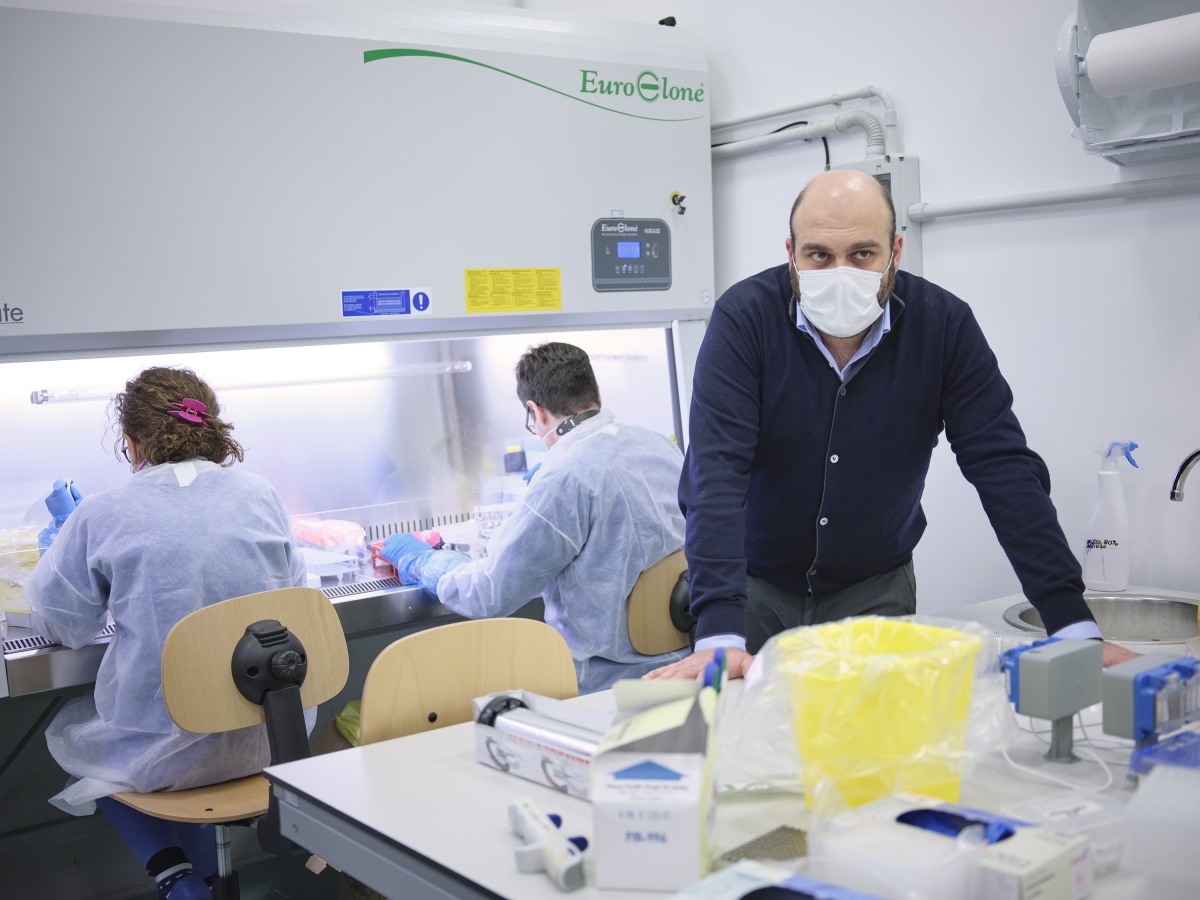
TERAMO, Italy – The virus hunter saw the apparent pattern come into view over several hours in late December, as he studied genetic sequences from positive coronavirus tests in his region. He found four cases involving the new, highly infectious British variant, in the same hilltop town.

“A cluster,” said Alessio Lorusso, the virologist.

His findings were a rare, initial insight into the mutated forms of the virus reaching new parts of the world. Most countries, including the United States and across Europe, do not perform enough genomic surveillance to adequately track the virus’s changes – to the alarm of disease control agencies, which warn that governments could be blind to dangerous mutations.

But the scenario in Italy’s mountainous center shows how even when a worrisome variant is detected early, governments can miss the narrow window to mount a rapid response and limit the spread. Containment measures come too late, in the wait for more substantial evidence. And the virus races ahead.

Lorusso’s director quickly notified the affected region of the four cases. But it took more than two weeks for any official confirmation to reach the town of Guardiagrele and its population of 9,000. During that time, overall coronavirus cases there tripled, from 35 on Dec. 28 to more than 100 by mid-January. Of those, 29 have been confirmed to involve the British variant, compared with the 76 cases identified in the entire United States, where surveillance is highly lacking.

No targeted restrictions have been imposed on Guardiagrele or the surrounding region of Abruzzo, though there is a plan to soon perform widespread testing.

In Britain, the variant – known officially as B.1.1.7 – has forced a national lockdown, after the mutation defied regional measures that had curbed less transmissible strains. Though the variant appears responsive to vaccines and is not thought to be more deadly, it has spread so widely, and so overwhelmed hospitals, that it is causing the death toll to skyrocket, as well. In recent days, Britain has seen more per capita deaths than any other populous country, including the United States.

Scientists worry a similar escalation could follow elsewhere. On Friday, the Centers for Disease Control and Prevention warned the variant could become dominant in the United States by March. The timeline could be even shorter for some countries in Europe.

“If you don’t act now, in two months, in all of Europe, we’ll have the British variant taking the place of the current ones,” said Walter Ricciardi, a World Health Organization adviser to Italy’s Health Ministry.

He said that if a highly transmissible variant is detected in a particular place, it is important to act quickly, with widespread testing and restrictions on movement.

“You have to immediately lock down the area,” Ricciardi said.

Virologist Alessio Lorusso oversees genetic analysis of coronavirus samples in Teramo, Italy. MUST CREDIT: photo for The Washington Post by Federica Valabrega.

Virologist Alessio Lorusso oversees genetic analysis of coronavirus samples in Teramo, Italy. MUST CREDIT: photo for The Washington Post by Federica Valabrega.

To the extent that Italy has an early warning system, it depends on scientists such as Lorusso, 39, a bearded man who could pass for a retired wrestler outside the confines of his white-walled lab. He says he “likes viruses.” He has spent much of the past year working 14-hour days, squinting at genomic code, watching SARS-CoV-2 evolve. The lab where he works, the Experimental Zooprophylactic Institute of Teramo, has now identified more than 50 instances of the British variant in the Abruzzo region. But the British variant is far from the dominant strain in the area.

“The variant with the greatest fitness will replace the others,” he said. “It’s just a fact.”

For Lorusso and his lab, the British variant is fairly easy to hunt down. That’s because it leaves a telltale: One of the most commonly used coronavirus testing machines, produced by the company Thermo Fisher, checks for the presence of three genes. In the British variant, one of those genes is missing. For somebody with the B.1.1.7 strain, the test result looks puzzling: positive-negative-positive.

Such a readout is hardly a definitive indication of B.1.1.7; some less concerning variants can yield a similar result. But it provides a starting point, and Lorusso’s lab can then select swabs for deeper analysis.

Walking through the lab this past week, Lorusso stopped at the area where the swabs were being processed – 96 at a time, several thousand per day. In the room with the Thermo Fisher machine, he took a look at some recent test results – each corresponding to a person, who had been awaiting news of the outcome. In one batch of 96, nobody had the positive-negative-positive pattern. But in the next batch, 12 did.

Lorusso sat down at a computer, logging on to a system that tracks the personal information of everyone swabbed.

He checked for the home address of the one person who’d tested positive-negative-positive.

Guardiagrele.

He checked another.

Guardiagrele.

“Same neighborhood,” he said.

He’d still have to sequence the code to know if it was B.1.1.7. But already, there was a growing number of newly arrived swabs revealing that same pattern.

– – –

Italy reported its first detected case involving the British variant on Dec. 20, in a traveler who had arrived from Britain. The government in Rome stopped flights from the United Kingdom the same day.

But even by then, the variant was apparently already circulating in Italy.

Lorusso spotted the initial four cases from Guardiagrele – three within one family – on Dec. 26, and by Dec. 30, according to a document, the lab had informed regional government officials.

Regional officials, in turn, said they needed national government confirmation of the lab results. Into mid-January, the region was insisting there was still no “definitive proof” of a variant that might be spreading differently.

“The region never said to me, ‘Dear mayor, there is a cluster in your town of the most infectious variant, so you’d better put a stop to everything,’ ” said Guardiagrele’s mayor, Donatello Di Prinzio. “Had that been the case, I would have taken all the required actions.”

Instead, after the end of a national holiday lockdown, all of Abruzzo – including his town – landed back in the lightest tier of Italian restrictions, with shops and hair salons open, and restaurants allowed to offered dine-in service until 6 p.m.

Meanwhile, coronavirus infections in the town were rising rapidly, reaching a point far exceeding anything from earlier waves. A local media report pointed to the variant, and there was speculation about it on Facebook. But without official word, the mayor said he didn’t want to be alarmist.

“I only talk when there is data on my hand and official information,” he said.

While he waited, Di Prinzio asked the region to send civil protection officers, who could supplement a depleted local police unit and help enforce basic distancing measures.

Then, on Tuesday, he was invited to a video conference with a provincial official and mayors from seven other towns that were seeing significant case increases. The authorities agreed to launch a mass-testing campaign in those towns, starting in Guardiagrele. It would kick off Jan. 23 – more than three weeks after Lorusso’s initial findings.

One of the provincial officials involved with the health response, Giuseppe Torzi, said “measures need to be stricter” in places with the variant, but the crux of the response would be the same: try to isolate the positive cases and reduce contacts.

“I could list situations where there’s no English variant and yet there’s been a monstrous increase,” Torzi said. “So it’s not as if the other virus is some joke.”

– – –

On Friday, Guardiagrele received definitive word of the variant’s arrival, but not because of a national confirmation. Instead, Lorusso’s lab notified the region, as well as a provincial health director, of updated, more extensive findings. Torzi called the mayor, feeling this time no further research was needed.

The province of Chieti, one portion of Abruzzo, had 51 cases of the variant.

Twenty-nine of those were in Guardiagrele.

That news coincided with a national government order that a large part of the country, including the Abruzzo region, would on the basis of infection rates be classified in the middle tier of coronavirus restrictions, which includes the closure of restaurants for in-person dining. Nonessential travel between regions will be banned through mid-February. But there has been no indication that Guardiagrele would be sealed off, as has happened in numerous hot spot Italian towns throughout the past year.

Speaking to The Washington Post by phone on Friday, Di Prinzio said he would redouble his request for residents to wear masks and keep their distance. He’d already closed a market. Nothing else would change. Even if he wanted to impose a lockdown, he said there was little point; other towns might well have the same problem, and it would have to be a coordinated effort.

Another lab doing genomic sequencing, at the University of Chieti, said it had traced a case in one town, San Giovanni Teatino, back to Guardiagrele, carried by a woman who works there.

“For such reason,” the university wrote to the region, “it is possible to hypothesize that in these cases we are witnessing a progressive expansion of such a variant across the territory.”

Lorusso, who said he had not been monitoring the policy response in the wake of his findings, said he realized people around the world were suddenly scrambling to understand the implications of this variant and others. He emphasized that even the most infectious strain could be curbed with rigorous distancing, mask-wearing and a reduction in social contact. Over the course of a day at the lab, he mentioned it so many times that he came to seem almost protective of the virus. The changes in SARS-CoV-2 were logical, not alarming, he said. The spread of the British variant, and any other highly infectious strains, depended on the behavior and decisions of humans.

“Viruses search for a host,” he said. “It’s human habits that make the pandemic.”

Trump to flee Washington and seek rehabilitation in a MAGA oasis: Florida #SootinClaimon.Com

#SootinClaimon.Com : ขอบคุณแหล่งข้อมูล : หนังสือพิมพ์ The Nation.

Trump to flee Washington and seek rehabilitation in a MAGA oasis: Florida

InternationalJan 17. 2021President Donald Trump greets visitors and staff members as he walks to board Marine One and depart from the South Lawn at the White House on Tuesday, Jan 12, 2021. MUST CREDIT: Washington Post photo by Jabin BotsfordPresident Donald Trump greets visitors and staff members as he walks to board Marine One and depart from the South Lawn at the White House on Tuesday, Jan 12, 2021. MUST CREDIT: Washington Post photo by Jabin Botsford

By The Washington Post · Philip Rucker, Josh Dawsey, Ashley Parker

WASHINGTON – President Donald Trump will leave Washington this week politically wounded, silenced on social media and essentially unwelcome in his lifelong hometown of New York.

By migrating instead to Palm Beach, Fla., Trump plans to inhabit an alternate reality of adoration and affirmation. The defeated president will take up residence at his gilded Mar-a-Lago Club, where dues-paying members applaud him whenever he eats meals or mingles on the deck. He is sure to take in the same celebratory fervor whenever he plays golf at one of the two Trump-branded courses nearby.

In Florida – one of only two top battleground states Trump won last November – Trump will be living in a veritable MAGA oasis, to use the acronym for his “Make American Great Again” campaign slogan. South Florida has fast become a hub of right-wing power brokers and media characters, and some of Trump’s adult children are making plans to move to the area.

Even as Trump broods privately over his second impeachment last week and the election he continues to falsely insist he won, his aides are at work to establish a Trump fiefdom in the Sunshine State aimed at maintaining his influence over Republican politics, according to allies and advisers, some of whom requested anonymity to reveal internal discussions.

Some of Trump’s associates are buzzing about a possible presidential library and museum – likely located, yes, in Florida – and about the birth of a family dynasty, should his children, Donald Jr. or Ivanka, someday run for political office. Florida is seen as a better launchpad for the Trumps than New York, given the outgoing president’s popularity in the former. Some in Trump’s orbit are talking up the idea of Ivanka possibly running for Senate in 2022, when the term of Sen. Marco Rubio, R-Fla., will be up.

Trump has become something of a pariah in the nation’s capital of Washington and its financial center of New York in the wake of the Jan. 6 riot at the Capitol that he incited, but Florida offers him a place to try to rehabilitate himself.

Newsmax chief executive Christopher Ruddy, a longtime Trump friend and Mar-a-Lago member, predicted that the president would remain a powerful force in politics and the media regardless of his current woes.

“We don’t know what legal issues are going to arise, but discounting those, I think he’s going to remain a global force,” Ruddy said. “I think he’s going to like being post-president more than he liked being president, because you have a lot of the perks without as many of the restrictions.”

Trump may have imagined a mischief-making, mega-rally farewell – complete with a tease about reclaiming the White House in 2024 – to draw attention from President-elect Joe Biden’s inauguration and to remind fellow Republicans that he still rules the roost.

But there will be no such grand departure in the wake of the Capitol insurrection.

Trump instead is winding down his presidency largely out of public view, though he still intends to take some actions in his four days remaining as president. There remain sharp disputes among the president and his advisers about a final round of pardons he may issue, including for members of the Trump family, according to people familiar with the discussions. The president continues to talk about wanting to pardon himself, they said.

The White House is a fortress guarded by armed military ahead of Wednesday’s inauguration and now practically deserted. “It looks like a war zone around here,” one official said.

Aides spent last week boxing up their offices and desks – White House chief of staff Mark Meadows’ wife, Debbie, was spotted packing a taxidermy bird into an SUV. Aides posed for goodbye photos; snared oversized framed snapshots of Trump’s presidency from West Wing walls; and scavenged for challenge coins and other mementos.

Staffers stood on West Executive Drive for a big send-off Thursday for Larry Kudlow, the National Economic Council director and one of the most well-liked figures in the West Wing.

Four years of roaring commotion are ending in a whimper. An aggrieved Trump has told aides he is uninterested in doing ceremonial events, a senior administration official said.

Other than flying last Tuesday to Texas to autograph a piece of the soaring steel border wall his administration constructed, Trump has demurred on suggestions from advisers to spend his final days touting his achievements and attempting to burnish his legacy.

Rather, Trump has been consumed with anger over his impeachment Wednesday by the House for inciting the Capitol riot, advisers said. He is also upset by the silence from many of his most vigorous defenders, and is nursing feelings of betrayal from Republican congressional leaders, they said.

As aides visited with him to say goodbye and take farewell pictures, Trump complained bitterly about Rep. Liz Cheney, R-Wyo., and other Republicans who voted to impeach him. “They’ll have primaries, all of them,” one aide recalled Trump saying on Thursday.

Homing in on Rep. Tom Rice, R-S.C., who voted for impeachment, the president referred to himself in the third person and remarked, “You can’t vote against Trump in South Carolina,” according to the aide, who like some others interviewed spoke on the condition of anonymity to disclose private conversations.

Some aides have tried to explain to Trump that these and many other members of Congress are angry about the attack and scared for their lives, but the president has often returned to his popularity among Republican voters in their districts and has shown no remorse for his role in the riot, two officials said.

Aides said Trump has occasionally brought up the Georgia Senate races unprompted with them, arguing that he is not to blame for the two Republican incumbents, Kelly Loeffler and David Perdue, losing both seats in the Jan. 5 runoff elections – and why the candidates, particularly Loeffler, were bad.

Michael D’Antonio, a Trump biographer, said the president’s state of victimhood fits the narrative he has concocted for his entire life.

“This is the end that he would have scripted for himself, actually,” D’Antonio said. “He has always imagined himself as an embattled person. He’s talked about life itself being a constant struggle for survival and how he’s surrounded by enemies . . . that the world conspires against him and that he is a lonely hero who is underappreciated and besieged.”

One of Trump’s final Oval Office visitors was Mike Lindell, the My Pillow founder and television pitchman, who showed up Friday afternoon brandishing notes that he said were from a lawyer, whom he would not identify, advising to institute “martial law” and install Trump loyalist Kash Patel in the CIA leadership.

Lindell, a vociferous supporter of the president, spent the afternoon at the White House but said in an interview that he left unsatisfied. “I had to make an appointment like everyone else,” he said. “People were lined up to see him.”

Lindell claimed ignorance about the contents of the memo, which was partially captured by a Washington Post photographer as Lindell waited to enter the White House.

“I didn’t know what was in it,” he said. “I didn’t know who some of the people even were.” He explained that the unnamed lawyer asked him, “If you get a meeting, can you drop this off?”

Lindell said he presented his information to the president for about five minutes before Trump referred him to White House Counsel’s Office. He also argued that China and Russia hacked the election, bringing a false article from The American Report, a conspiracy-theory right-wing website, as his evidence.

Lindell said he has been working with a large team to try to prove widespread voter fraud and falsely argued that Trump had won by 11 million votes. “I have spent a lot of money and gone down every rabbit hole in this country,” he said.

But Lindell said Trump was noncommittal on what he’d do with the information and told him to talk to the lawyers, who were dismissive and argued with him.

“They were skeptical,” Lindell said. “They were disinterested, very disinterested. They are giving the president the wrong advice.”

He said the lawyers did not allow him to see Trump again.

With Trump cocooned in the White House, Vice President Mike Pence has looked more like the commander in chief. He visited the Federal Emergency Management Agency headquarters last week for a briefing on inauguration security preparations and visited with National Guard soldiers stationed at the Capitol.

On Saturday, Pence departed on a two-day trip to Naval Air Station Lemoore in California and Fort Drum in New York to personally thank service members and to tout the administration’s foreign policy achievements.

Trump is leaving office with his popularity at one of the lowest points of his presidency. Just 38% of Americans approve of his job performance and 60% disapprove, according to a Washington Post-ABC News poll conducted after the Capitol attack and released on Friday. The survey found that 15% said Trump would be remembered by history as an “outstanding” president, while 48% said he would be remembered as “poor” and 11% as “below average.”

Trump, who has refused to participate in traditional transfer-of-power rituals, plans to leave Washington on Wednesday morning, just before Biden is inaugurated. Trump instead will stage his own departure ceremony at Joint Base Andrews before his final trip aboard Air Force One. A military ceremony is being planned similar to the receptions visiting dignitaries receive for state visits.

In New York, residents have long shunned him and Mayor Bill de Blasio, a Democrat, last week announced the city was terminating its contracts with the Trump Organization because of the Capitol insurrection.

But in Florida, Trump looks to be surrounded by supporters, including some of his adult children.

Donald Trump Jr. and his girlfriend, Kimberly Guilfoyle, are shopping for a house in Jupiter, Fla., about 15 miles from Palm Beach, according to a person familiar with their plans, confirming a New York Post report. Trump Jr.’s ex-wife, Vanessa, and their five children moved to the area last year, this person said.

Ivanka Trump and husband Jared Kushner, both White House senior advisers, recently purchased land owned by pop star Julio Iglesias in Indian Creek, a gated private island near Miami that is home to wealthy celebrities, business figures and professional athletes, including Jay-Z, Beyoncé and football star Tom Brady.

Daughter Tiffany Trump also is shopping for property in Miami, according to Page Six.

Trump will have a small post-presidential staff working for him in Florida, including a trio of White House aides – Cassidy Hutchinson, Nick Luna and Molly Michael – according to an administration official, who confirmed a Bloomberg report.

South Florida is home to talk-radio stars Rush Limbaugh and Mark Levin, conservative commentator Ann Coulter and several Fox personalities, including Geraldo Rivera and Dan Bongino. And at least two of Trump’s Cabinet members – Commerce Secretary Wilbur Ross and Housing and Urban Development Secretary Ben Carson – have homes in South Florida.

Broward and Palm Beach counties also are home to a growing number of Republican direct-mail firms as well as server farms and other companies that handle back-end processing for conservative digital operations.

And Newsmax – whose cable channel has seen a surge in viewers in recent months as Trump, angry over Fox News Channel’s coverage of the election and its aftermath, has urged his fans to migrate – is headquartered in West Palm Beach.

“It’s sort of like his home state, in a way,” Ruddy said. “There’s a lot of New Yorkers there, a lot of personal friends he has that live down there. It’s a New York environment.”

In addition, MSNBC’s Joe Scarborough and Mika Brezinski, whose show Trump regularly watches and attacks despite their sharply critical assessments of him, spend time in South Florida and sometimes broadcast their show from there.

Rick Wilson, a longtime Republican strategist in Florida who is a senior adviser to the anti-Trump Lincoln Project, explained the state’s appeal to Trump – including that Florida’s Republican base is especially “Trumpy.”

“It fits in with Florida’s overall character of being the magnet for all insanity in the universe,” Wilson said. “We are what we are in the great state of Florida, and that is a state of lives restarting and second-chances and reboots and low property taxes and liberal bankruptcy laws and a fairly casual approach to public ethics. Florida, in some freakish, horrible way, is the Trumpiest of states. This is the logical place for them to come.”

Trump has floated a 2024 bid and his campaign and the Republican Party raised more than $200 million after the election with fundraising bids to help overturn it. Much of that money will go to Save America, a leadership PAC Trump set up after the election that will allow him to support candidates and maintain political influence after leaving office.

Speculation is also coursing through Trump World about a possible presidential library and museum. No announcements have been made, but two people familiar with internal discussions said it is likely to be located in Florida and run by Dan Scavino, one of Trump’s longest-serving and most loyal aides who advises him on social media and most recently served as deputy White House chief of staff.

One of these people, who was a top fundraiser on Trump’s campaign, said the president has told supporters he wants to raise $2 billion for the library – a far greater sum than has been raised for past presidential libraries – and thinks he can collect it in small-dollar donations from his grass-roots supporters.

“I thought to myself, what is this alternative fantasy life you’re living?” this fundraiser said. “I have no clue where they think they’ll get this money raised. Anyone who gives to him will be radioactive.”

Asked about raising money for the library, another former top Trump fundraiser wrote in a text message: “Insane.” This person noted that, “except for the wackos, everybody’s running for the hills.”

The mood in the West Wing has been generally dour, aides said, with many deeply upset over the president’s actions on Jan. 6 and frantically searching to find a job.

Aides said Trump has been working only sporadically in the Oval Office, spending a lot of time lately in the residence. He also has been bouncing around the West Wing taking pictures with departing staffers.

One senior administration official who visited with the president last week described his mood as decent. But when asked whether it seemed like he had made peace with the fact that his presidency was coming to an end, this official said, “I doubt it. It’s probably just like a moment there.”

Thomas V. Mike Miller Jr., pillar of Maryland’s state capital for decades, dies at 78 #SootinClaimon.Com

#SootinClaimon.Com : ขอบคุณแหล่งข้อมูล : หนังสือพิมพ์ The Nation.

Thomas V. Mike Miller Jr., pillar of Maryland’s state capital for decades, dies at 78

InternationalJan 16. 2021Thomas V. Mike Miller in 2018.
Washington Post photo by Marvin Joseph. Thomas V. Mike Miller in 2018. Washington Post photo by Marvin Joseph.

By The Washington Post, Paul Schwartzman

For decades, he was the man to see in Maryland’s state capital, a country-boy Democrat who rose to the heights of power in the General Assembly and used his commanding influence to direct politics and policy across the state.

Thomas V. Mike Miller Jr., the nation’s longest-serving president of a state Senate and a pillar of Maryland government for nearly a half-century, died Jan. 15 at his home in Chesapeake Beach, Md. He was 78. The cause was complications from prostate cancer, said family spokesman Jake Weissmann.

A thick-shouldered pragmatist who had no use for ideologues, Miller led the campaign to legalize casino gambling in Maryland and, despite his centrist views, facilitated the passage of progressive laws including legalization of same-sex marriage and the repeal of the death penalty.

Nearly two years after he announced his cancer diagnosis, Miller’s passing unleashed a wave of grief in Annapolis and further sealed a complete leadership transformation at the State House he presided over for 33 years. Because of his illness, Miller relinquished the Senate presidency in October 2019 but retained his seat as a rank-and-file member until Dec. 23, when he resigned.

A shrewd tactician, Miller controlled the Senate under six governors and endured as opponents derided him as an autocrat, as demographics in his home base of Prince George’s County shifted, and as Maryland’s political culture drifted left.

“Mike Miller was the cornerstone for all the progress that has occurred in the state over the past three decades,” said Timothy F. Maloney, a prominent trial lawyer and former Democratic state delegate representing Prince George’s. “There has been no major initiative that has occurred without Mike’s leadership. He saw everything from a historical context and tried to get ahead of history to see where things were going.”

A backslapping raconteur, Miller was a singular presence as he ruled the Senate. His mane of white hair and chiseled features invited reminders of the Founding Fathers, at least in appearance – comparisons that Miller rarely discouraged.

Mr. Miller sometimes got himself into trouble for his freewheeling banter. In 1989, as he was emerging as a statewide political force, he used a profanity to describe Baltimore, a blunder that quashed whatever hope had to run for governor.

As the Senate’s leader, Miller was unafraid to lacerate rivals, accusing Democratic Gov. William Donald Schaefer of hiring “eunuchs and sycophants” and comparing Democrat Parris Glendening, then Prince George’s County executive, to a “baboon.” In the heat of one election season, he promised Democrats would “bury” Republicans “six feet deep, faces up.”

Miller clung to his grudges as if they were prized treasures. Those who “crossed the boss,” as one colleague described betraying Miller, could find their legislative proposals – and their political careers – extinguished. After then-Del. Patricia Billings, D-Montgomery, opposed legislation he supported, Miller sent her a Christmas card. “I haven’t forgotten your vote,” he wrote.

“Working for Mike was like working in the Mafia – you go out feet first,” said Gerard Evans, a lobbyist and longtime friend. “You’re either in the organization or – if you p—-d him off – you were dead politically and functionally.”

Miller could offer foes a second chance, but only if it served a larger political purpose. “If he needed you, he brought you back,” said former state senator Gloria Lawlah, D-Prince George’s, who mended fences with Miller after a falling-out. “He was the master of power and control.”

Miller waved off suggestions he commanded the Senate with a heavy hand, saying he sought to delegate power and promote fellow senators.

Grudges? Not him, he insisted.

“I forgive and forget,” he said during an interview for this obituary. “Honestly and truly.”

Asked who, if anyone, intimidated him over the years in Annapolis, Miller, without hesitation, said, “I was never afraid of anyone.”

– – –

Thomas Vincent Mike Miller Jr. was born Dec. 3, 1942, in Clinton, Md., where his grandfather founded B.K. Miller’s, a general store that Miller’s father eventually took over. At the intersection of Old Branch Avenue and Woodyard Road, the store was a center of Prince George’s life, a few yards from the church where the Miller family attended services and down the street from the modest brick building where Miller eventually opened a law office.

As the oldest of 10 children, Miller navigated family squabbles – often instigated by his volatile father – and developed skills that helped him later maneuver in Annapolis. From boyhood through early adulthood, Miller worked at his family’s store and learned lessons that would stay with him as a politician.

“You were taught the customer was always right. And so when I ran, I treated my constituents like they were my customers,” Miller said in the interview. “It gave me huge exposure to people, their issues and their problems.”

His parents’ politics spanned the Democratic spectrum, with his father a conservative and his mother a New Dealer who encouraged her son to go to law school. “She was determined that I was not going to work in the store,” he once told The Washington Post.

He got his introduction to politics in 1962 as a driver for Frank Small Jr., a Republican gubernatorial candidate who lived next door to the Millers. Miller befriended Small’s press consultant, Lawrence J. Hogan Sr., who would become a U.S. congressman and Prince George’s County executive. Hogan’s son, Larry, for whom Miller babysat, became Maryland governor during the last years of Miller’s reign in Annapolis.

“He had more political contacts at 18 years old than I’ve ever had any time I’ve been alive,” Thomas Farrington, who worked alongside Miller in the Young Democrats in the 1970s, once told The Washington Post.

Miller graduated from the University of Maryland in 1964 with a bachelor’s degree in business administration and a law degree in 1967. In 1965, he married Patricia Given, a college classmate. In addition to his wife, survivors include five children – Melissa Miller of Chesapeake Beach, Michelle Miller Fink and Melanie Miller, both of Annapolis, Tommy Miller Jr. of West River, Md., and Amanda Miller Stokely of Sunderland, Md. – as well as three brothers, five sisters and 15 grandchildren.

In 1970, with the backing of the Prince George’s Democratic machine, Miller won his first political race, capturing a House of Delegates seat. Four years later, he was elected to the state Senate as a conservative Democrat.

As an intern in Miller’s office in 1977, Evans learned that his boss could be “unreasonably” demanding. At Miller’s urging, Evans suggested legislative ideas, including a bill allowing victims of domestic abuse to seek compensation.

“Don’t ever suggest another bill!” Miller yelled, according to Evans. Miller, he said, was afraid of seeming too liberal in a conservative district. “It was nothing more basic than getting reelected,” Evans said. “His core was delivering as a retail politician.”

Miller’s early years in the state legislature and his reign as a boss of the Prince George’s Democratic organization coincided with the county’s transition from majority White to majority Black. Miller adapted by forging alliances with a number of rising Black leaders.

Nonetheless, some African Americans chafed at what they regarded as Miller’s dictatorial control over local politics. “He appears to be with you,” former state senator Tommie Broadwater Jr., D-Prince George’s, once told The Post. “If you don’t know him, you’ll think he’s the best of buddies. But he will stab you in the back.”

Miller, when asked about Broadwater’s description, replied: “That’s not a bad analysis.”

In Annapolis, Miller’s influence was growing. Melvin Steinberg, then the Senate’s leader, described Miller as his “enforcer” and appointed him chairman of the powerful Judiciary Committee.

Blair Lee IV, then Montgomery County’s chief lobbyist, learned the consequence of opposing legislation Miller supported one day as he walked along a State House corridor. “All of a sudden I saw this curly-haired guy coming around the corner. He sees me and puts both hands on my lapels and backed me against the wall,” Lee once told The Post. “He has got an Irish temper and an Irish humor, but you never know which one he’ll be in at that minute.”

In 1986, as Schaefer became governor, the state’s 47 senators elected Miller Steinberg’s successor. At 44, Miller assumed the Senate’s throne, fueling chatter that he was on a glide path to becoming governor. Three years later, Miller hosted a swanky fundraiser in Baltimore, an event that many regarded as his statewide coming-out party.

A few hours before the fundraiser, Miller agreed to an interview with a local television reporter, who asked why he was hosting the affair far from his legislative district. “It helps educate my constituents as to why Baltimore needs the economic help,” Miller said. “I mean Baltimore is a g—– ghetto. It’s worse than inner-city Washington, D.C. It is s—.”

“I hope you’re not going to play this on tape,” Miller said, laughing nervously before adding that Baltimore “is a war zone. I mean, it’s crack. I mean, it’s these dime bags of PCP. . . . Fifty percent of the kids that start out in school don’t graduate. So looking at things from a statewide perspective, we really have to do things to help.”

The station aired Miller’s comments, causing a furor that dogged him for decades. Miller cited the incident as his sole political regret.

But Miller also said he did not regret that the incident may have ended his statewide potential. As it turned out, he served another three decades as Senate president, his influence uninterrupted at the State House while moving trucks pulled up to the governor’s mansion across the way every four or eight years.

– – –

Of all the governors who presided during his reign, Miller said his favorite was Democrat Marvin Mandel because he knew how to build support for legislation “and would reward you for working with him.” The worst governor, he said, was Schaefer, because “he didn’t understand governance. He wanted to spend money that we didn’t have to spend. He thought he could print money in the basement of the State House.”

By his own account, Miller’s crowning achievement was the legalization of casino gambling and the subsequent launch of gaming in Prince George’s, despite fierce opposition from church leaders and civic groups. In a show of political gamesmanship, Miller forced two special sessions of the Assembly, after which the fate of what became the MGM Casino at National Harbor was left to voters to decide in a 2012 referendum. It passed by 100,000 votes.

“Everybody wants to take credit for MGM,” Lawlah said. “It was Mike Miller’s baby. He never took his eye off of it.”

Miller survived various threats to his power, including a failed attempt to oust him in 2000 led by state Sen. Thomas Bromwell, D-Baltimore. Two years later, the legislature’s ethics panel rebuked Miller for yelling at two appeals court judges about a pending dispute over redistricting maps. He also faced scrutiny from federal prosecutors investigating contributions to a campaign fund he oversaw. No charges were filed.

Miller often attributed his political endurance to his ability to “see what’s going to happen before it happens.” Despite his own reservations, he facilitated the abolition of the death penalty in Maryland in 2013 after polls showed the public supported the ban. Even as he voted no, he allowed a bill legalizing same-sex marriage to move forward in 2012, a shift he attributed not only to political pragmatism but to his friendships with people who were gay.

“He didn’t live in a world where he would substitute his core beliefs for what he saw as the larger consensus,” said Todd Eberly, a St. Mary’s College of Maryland political scientist. “He’s a good representative of what it used to be like when two sides were able to compromise.”

For all his adaptability, Miller was stubborn when it came to history. In 2017, he was widely criticized for opposing the removal from the state capitol grounds of a statue of Roger Taney, the Maryland-born Supreme Court chief justice who supported the 1857 Dred Scott decision that Blacks in free or slave states could not be citizens.

Miller, who regarded himself as the curator of State House history, hung portraits on his office walls of past Maryland governors, including segregationists. He also had a rendering of the trial of Mary Surratt, a Clinton native and a co-conspirator in President Abraham Lincoln’s assassination.

“Somebody could walk into my office and say, ‘Why is that picture on your wall?’ ” Miller said in the interview for this obituary. “Because of my love of history, I’m not politically correct. But, you know, they were products of their times. They’re products of history.”

As 2019 began, Miller divulged that he had cancer but kept showing up in Annapolis, eager to demonstrate his vigor even as he was undergoing chemotherapy. “I’m in the game, I’m on top of it, I’m right there,” he told reporters one afternoon before unleashing a string of invectives, as if to prove his point.

Ever the pragmatist, he had reached out months before to four newly elected senators, progressives who had defeated his more moderate lieutenants in the 2018 Democratic primary. He understood that his style of politics – dealmaking and consensus-building – had become an antiquated art form in an era dominated by President Trump and extreme rhetoric.

As much as anything, he yearned for a return to the political center.

“It’s really time for me to get out of politics,” he said in the interview. “Our democracy is the oldest in the history of the world, but it’s on very shaky legs. I see the Democrats going further to the left, and the Republicans going further to the right, until something absolutely horrible happens and people realize they’ve made a terrible mistake.”

Whatever happens, Miller said, it would no longer be his problem.

His time, he said, had come and gone.

Democrats wrestle with length of Trump trial #SootinClaimon.Com

#SootinClaimon.Com : ขอบคุณแหล่งข้อมูล : หนังสือพิมพ์ The Nation.

Democrats wrestle with length of Trump trial

InternationalJan 16. 2021 The House votes to impeach President Trump earlier this week, paving the way for a Senate trial, whose shape is not yet clear.  
Washington Post photo by Melina Mara. The House votes to impeach President Trump earlier this week, paving the way for a Senate trial, whose shape is not yet clear. Washington Post photo by Melina Mara.

By The Washington Post, Seung Min Kim

WASHINGTON – Democratic lawmakers eager to punish President Donald Trump for his role in fomenting last week’s deadly attack on the Capitol are grappling with how elaborate and lengthy a Senate trial should be, as President-elect Joe Biden ramps up pressure on Congress to swiftly implement his ambitious agenda.

Few if any Senate Democrats want a lengthy impeachment proceeding, senators and aides said Friday – particularly as Biden faces a raft of crises with potentially no Cabinet secretary in place on the first day of his presidency, a break from past practice. Some have suggested the trial be put on pause to first tackle confirmations and pandemic relief.

But Senate leaders have not yet found a way to move ahead simultaneously on the impeachment trial and the chamber’s normal activities, such as confirming nominees, despite Biden urging them to do so.

Once an impeachment trial of a president begins in the Senate, it traditionally supersedes all other business. To do otherwise would almost certainly require consent from all 100 senators, many of whom might not share the political incentive to help move along Biden’s priorities expeditiously.

Democrats are increasingly talking up the possibility of a quick trial, arguing that there is only a single, relatively straightforward charge – that Trump incited insurrection by egging on the crowd before it assaulted the Capitol.

“It’s a simple allegation, and the facts are mostly not in dispute,” Sen. Brian Schatz, D-Hawaii, said Friday. “We can do this responsibly without allowing it to take too long.”

Barring a major reversal from Senate Majority Leader Mitch McConnell, R-Ky., who would have to agree to reconvene the Senate earlier than planned, Trump’s second impeachment trial is set to begin at 1 p.m. on Wednesday – one hour after Biden becomes president.

House Speaker Nancy Pelosi, D-Calif., could delay the starting date by withholding the article of impeachment until a later time. At a news conference Friday, Pelosi declined to specify when she will send the article to the Senate.

“On January 6th, there was an act of insurrection perpetrated on the Capitol of the United States, incentivized by the president of the United States,” Pelosi said, adding, “So urgent was the matter, they’re now working on taking this to trial. . . . You’ll be the first to know when we announce that we’re going over there.”

Biden has not said publicly how he believes the impeachment trial should proceed, other than to suggest that the Senate tackle other agenda items simultaneously. In private, he has deferred to Democratic leaders such as Pelosi on strategy.

But in a sign of how sweeping his agenda is likely to be, Biden on Friday unveiled a $1.9 trillion relief package that he said was urgently needed to fight the pandemic. Ronald A. Klain, Biden’s incoming White House chief of staff, said there are ways for the Senate to tackle both the relief package and the impeachment trial.

“Obviously, there will have to be committee work on this proposal that the president-elect put forward, that can obviously go on while impeachment trial is going on,” Klain said in a Washington Post Live interview. “There will be floor time outside of the impeachment trial, and hopefully the trial will not be a lengthy trial.”

Jen Psaki, the incoming White House press secretary, said there is precedent for the Senate juggling multiple priorities during impeachment proceedings, noting that Senate committees held hearings as Trump’s first trial unfolded last year. However, the Senate did not take any floor votes for the duration of that trial, which lasted three weeks.

Privately among Senate Democrats, a sense is growing that the “sooner we can get this over with, the better,” said one aide familiar with the dynamics, who spoke on the condition of anonymity to discuss internal matters. Some Democrats said they hoped their Republican colleagues, exhausted by the outgoing president’s antics, would agree to help the Senate move on.

But some GOP senators may prefer to slow down the trial in hopes of bogging down Biden’s initiatives, include the pandemic relief package, which several Republicans have already said they oppose.

McConnell noted this week that the three previous presidential impeachment trials conducted by the Senate lasted for several weeks – 83, 37 and 21 days, respectively. He suggested there was little reason to believe this one would be any different.

Some Democrats have suggested either indefinitely withholding the article from the Senate or devising other procedural delays so that senators can first handle Biden’s nominations and the coronavirus aid package.

“If there is a mechanism by which to either delay the trial or to be able to do it in parts, I would certainly support that,” Sen. Chris Murphy, D-Conn., said in an appearance with the Atlantic Council on Friday. “I think that confirmation and covid relief legislation is more important right now than expediting the trial of a president who has already left office.”

Bifurcating the Senate calendar – by, for example, conducting regular business in the morning and the trial in the afternoon – could also have the unintended effect of prolonging a trial, which few Democrats want.

The nine House impeachment managers tapped by Pelosi earlier this week, who will act as prosecutors during the trial, have declined to discuss details of their strategy such as whether they plan to call witnesses. Doing so could allow powerful testimony on the riot and Trump’s role in it, but could also prolong the proceedings.

House Democrats announced Friday that they have tapped two outside lawyers – Barry Berke and Joshua Matz – to serve as impeachment counsels as they prepare for the trial.

As for the defendant, it remained unclear Friday whom Trump would pick to lead his defense. White House counsel Pat Cipollone and deputy counsel Pat Philbin, who steered his legal strategy last year, have privately indicated they don’t want to do so again, and would be under no imperative to defend Trump when he officially becomes a private citizen.

One option discussed last year – to choose key Trump allies among House Republicans to defend Trump – is also unlikely, because congressional ethics rules bar members of Congress from serving as a “fiduciary” to an outside interest, according to a GOP official familiar with the procedure who spoke on the condition of anonymity to discuss strategy.

Senate Minority Leader Chuck Schumer, D-N.Y., who is set to become majority leader next week, said Friday that the trial and the Senate’s other work are both priorities.

“Donald Trump remains a threat to our democracy and will be held accountable for what he’s done, whether or not he’s president during trial,” Schumer said in his weekly address aired Friday. “At the same time, the Senate’s work on behalf of the American people will not be deterred.”

Because the trial will be held after Trump leaves office, congressional leaders do not believe Chief Justice John Roberts Jr. will be summoned to preside over the Senate proceedings, according to a Democratic official familiar with the matter, who spoke on the condition of anonymity to disclose internal conversations.

The Supreme Court has declined to comment on whether Roberts would be involved.

บลูมเบิร์กตีแผ่ท่องเที่ยวไทยในวันที่ไร้นักท่องเที่ยวต่างชาติ #SootinClaimon.Com

#SootinClaimon.Com : ขอบคุณแหล่งข้อมูล : หนังสือพิมพ์โพสต์ทูเดย์

https://www.posttoday.com/world/642892

วันที่ 16 ม.ค. 2564 เวลา 18:00 น.บลูมเบิร์กตีแผ่ท่องเที่ยวไทยในวันที่ไร้นักท่องเที่ยวต่างชาติ“เราปิดประเทศตลอดไปไม่ได้ แต่ก็ปล่อยให้นักท่องเที่ยวเข้ามาโดยไม่ควบคุมไม่ได้เหมือนกัน ดังนั้นวิธีที่ดีที่สุดคือการเปิดแบบควบคุม”

สำนักข่าวบลูมเบิร์กรายงานสถานการณ์อุตสาหกรรมท่องเที่ยวของไทยในบทความเรื่อง Thailand Sold Itself As A Paradise Covid Retreat. No One Came (ไทยชูจุดขายการเป็นสวรรค์สำหรับเลี่ยงโควิด แต่กลับไม่มีใครมา) ไว้น่าสนใจว่า กว่า 3 เดือนที่บรรดาโรงแรมและรีสอร์ทกลับมาเปิดบริการอีกครั้งเพื่อรองรับนักท่องเที่ยว แต่กลับพบว่าจำนวนนักท่องเที่ยวต่างชาติไม่เป็นไปตามเป้า แม้จะคาดการณ์ตัวเลขไว้ต่ำสุดแล้วก็ตาม

จากข้อมูลของบริษัท Thailand Longstay ตัวแทนจัดทำวีซ่าพิเศษพบว่า นับตั้งแต่เดือน ต.ค.ที่ผ่านมา นักท่องเที่ยวต่างชาติเข้าไทยด้วยวีซ่าพิเศษเฉลี่ยเดือนละ 346 คน ซึ่งต่ำกว่าตัวเลขที่รัฐบาลตั้งเป้าไว้ที่ 1,200 คน และนับว่าน้อยมากเมื่อเทียบกับตัวเลขนักท่องเที่ยวก่อนที่ Covid-19 จะระบาดซึ่งอยู่ที่กว่า 3 ล้านคน

ความซบเซานี้ทำให้ไทยที่พึ่งพารายได้จากการท่องเที่ยวตกที่นั่งลำบาก

ไทยตั้งเป้าว่าจะดึงนักท่องเที่ยววัยเกษียณที่หนีความหนาวเย็นของฤดูหนาวในยุโรปและนักท่องเที่ยวกลุ่มอื่น โดยนักท่องเที่ยวต้องผ่านการกักตัว 2 สัปดาห์ซึ่งสามารถพักที่โรงแรมหรูที่ไม่ได้รับผลกระทบจาก Covid-19 ได้ และหลังจากนั้นสามารถพำนักอยู่ในไทยได้ถึง 9 เดือน

บลูมเบิร์กระบุว่า โครงการที่มีผู้สนใจน้อยยิ่งเพิ่มแรงกดดันให้รัฐบาลที่จะต้องปรับเปลี่ยนแนวทางให้สอดคล้องกับทั้งผู้ประกอบการที่เรียกร้องให้ผ่อนคลายระยะเวลากักตัว ทั้งเจ้าหน้าที่สาธารณสุขที่เตือนว่าไม่ควรเอาความปลอดภัยของประชาชนมาเสี่ยง

ระหว่างนี้บรรดากิจการที่เกี่ยวข้องกับการท่องเที่ยวทยอยปิดกิจการต่อเนื่อง หนำซ้ำยังเกิดการแพร่ระบาดรอบใหม่ในประเทศอีก

Bhummikitti Ruktaengam นายกสมาคมธุรกิจการท่องเที่ยวจังหวัดภูเก็ตเผยกับบลูมเบิร์กว่า “การถ่วงดุลระหว่างความต้องการของธุรกิจท่องเที่ยวกับคนในท้องถิ่นเป็นเรื่องท้าทายมาก ผมเข้าใจดีว่ามันน่าเบื่อที่ต้องติดอยู่ในห้อง 14 วัน ผมกักตัวมาแล้ว แต่ความปลอดภัยของประชาชนต้องมาก่อน เพราะนักท่องเที่ยวมาแล้วก็ไป แต่คนท้องถิ่นต้องอยู่ที่นี่ตลอด”

6 เดือนที่ไม่มีนักท่องเที่ยวต่างชาติเลย ตามด้วยอีกหลายเดือนที่นักท่องเที่ยวบางตาทำให้ภาคการท่องเที่ยวสาหัส การวิเคราะห์ของบลูมเบิร์กนิวส์โดยใช้ข้อมูลจากกรมพัฒนาธุรกิจการค้า กระทรวงพาณิชย์พบว่า เมื่อปีที่แล้วกิจการที่เกี่ยวข้องกับการท่องเที่ยวอย่างน้อย 931 แห่งต้องปิดกิจการ แต่ตัวเลขจริงๆ อาจสูงกว่านี้ เนื่องจากหลายบริษัทไม่ได้ขึ้นทะเบียนกับทางการ

ตามเกาะที่เป็นสถานที่ท่องเที่ยวชื่อดังสถานการณ์ค่อนข้างแย่ อาทิ ภูเก็ตที่มีรายได้ในภาคการท่องเที่ยวจากนักท่องเที่ยวต่างชาติถึง 90% ก่อนการแพร่ระบาด ซอยบางลาในป่าตองร้างผู้คนและเรียงรายไปด้วยธุรกิจที่ปิดกิจการ

Rungarun Loiluen พนักงานร้านอาหาร The Kitchen ในซอยบางลาเผยว่า “เมื่อไม่มีนักท่องเที่ยวต่างชาติแถวนี้ก็ร้าง แทบจะไม่มีคนเดินเลย”

บลูมเบิร์กระบุต่อว่า แม้รัฐบาลจะพยายามช่วยเหลือภาคการท่องเที่ยวทั้งการสนับสนุนค่าโรงแรมที่พักและค่าเดินทาง แต่นักท่องเที่ยวภายในประเทศซึ่งมักจะเดินทางเฉพาะช่วงวันหยุดก็ไม่สามารถทดแทนนักท่องเที่ยวต่างชาติ

Jessada Srivichian ผู้จัดการฝ่ายการเงินของโรงแรม Hotel Clover Patong Phuket ในภูเก็ตเผยว่า “อยู่ภูเก็ตมา 20 ปีไม่เคยเห็นภูเก็ตเงียบแบบนี้ เราต้องการนักท่องเที่ยวต่างชาติ เราไม่ได้คิดแต่เรื่องกำไร แต่ให้ความสำคัญกับการลดการขาดทุน เพราะตราบใดที่ยังต้องกักตัวก็ไม่มีใครมา”

ด้าน Ron Cooper ช่างภาพและที่ปรึกษาธุรกิจชาวอเมริกันเผยว่า “ไม่มีประโยชน์ที่จะต้องเพิ่มวันเดินทางเป็นสองเท่าเพื่อเข้ากักตัว ไหนจะมีค่าใช้จ่ายในการเข้าพักโรงแรมในช่วง 2 สัปดาห์โดยเปล่าประโยชน์อีก ไม่ใช่ข้อเสนอที่น่าดึงดูดเลย”

บลูมเบิร์กยังระบุอีกว่า มาตรการของไทยต่างกับประเทศที่เป็นจุดหมายปลายทางท่องเที่ยวอื่น อาทิ มัลดีฟส์ที่เปิดรับนักท่องเที่ยวต่างชาติตั้งแต่เดือน ก.ค. โดยไม่ต้องกักตัว เพียงแต่ต้องมีผลตรวจ Covid-19 เป็นลบ และนับแต่นั้นก็มีนักท่องเที่ยวเดินทางเข้ามัลดีฟส์กว่า 172,000 คน แม้จะลดลงบ้างในช่วงที่พบผู้ติดเชื้อเพิ่มDirk de Cuyper ซีอีโอ S Hotels & Resorts เผยกับบลูมเบิร์กว่า “ถือเป็นความท้าทายที่มัลดีฟส์เปิดรับนักท่องเที่ยวซึ่งมากับความเสี่ยง” และนั่นอาจเป็นข่าวร้ายสำหรับไทย “นักท่องเที่ยวส่วนใหญ่ไม่เห็นด้วยกับการกักตัว โดยเฉพาะอย่างยิ่งเมื่อมีประเทศอื่นที่อ้าแขนต้อนรับและไม่ต้องกักตัว”

บลูมเบิร์กบอกว่า คนไทยส่วนใหญ่ไม่เห็นด้วยกับการเปิดประเทศและการผ่อนคลายมาตรการกักตัว ส่วนหนึ่งเนื่องจากคนท้องถิ่นอาศัยใกล้กับโรงแรมหรือรีสอร์ท ขณะที่โรงแรมและรีสอร์ทของมัลดีฟส์อยู่แยกออกมาตามเกาะต่างๆ ขณะที่บางคนมองว่าต้องรอวัคซีนก่อน

ทว่า ก็ยังมีคำถามว่าการท่องเที่ยวระหว่างประเทศจะดำเนินไปอย่างไรหลังจากคนส่วนใหญ่ฉีดวัคซีนแล้ว

ซึ่งขณะนี้วัคซีนพาสปอร์ตกำลังถูกพูดถึงว่าจะเข้ามาตอบโจทย์นี้ แต่ยังไม่มีรายละเอียดว่าจะบังคับใช้กันอย่างไร

อย่างไรก็ดี แม้จะมีผลกระทบกับเศรษฐกิจ นายกสมาคมธุรกิจการท่องเที่ยวจังหวัดภูเก็ตมองว่า แนวทางที่ถูกต้องสำหรับไทยคือเปิดประเทศด้วยความระมัดระวัง และอุตสาหกรรมท่องเที่ยวที่ได้รับผลกระทบต้องรอวัคซีน

“เราปิดประเทศตลอดไปไม่ได้ แต่ก็ปล่อยให้นักท่องเที่ยวเข้ามาโดยไม่ควบคุมไม่ได้เหมือนกัน ดังนั้นวิธีที่ดีที่สุดคือการเปิดแบบควบคุม” Bhummikitti กล่าว

Photo by Mladen ANTONOV / AFP

ชี้รัฐบาลจีนมีแผนฮุบอาลีบาบาเป็นสมบัติชาติ #SootinClaimon.Com

#SootinClaimon.Com : ขอบคุณแหล่งข้อมูล : หนังสือพิมพ์โพสต์ทูเดย์

https://www.posttoday.com/world/642875

วันที่ 16 ม.ค. 2564 เวลา 15:35 น.ชี้รัฐบาลจีนมีแผนฮุบอาลีบาบาเป็นสมบัติชาตินักวิเคราะห์จีนชี้รัฐบาลแดนมังกรกำลังวางแผนยึดกิจการของ แจ็ก หม่า มาเป็นสมบัติชาติ

International Business Times รายงานว่า ซ่งชิง บุคคลวงในในวงการผู้ให้บริการการเงินในช่องทางออนไลน์มองว่า การเดินหน้าตรวจสอบและควบคุมการดำเนินธุรกิจของบริษัท อาลีบาบา และแอนท์ กรุ๊ป ของ แจ็ก หม่า โดยทางการจีน เป็นส่วนหนึ่งของความพยายามทำให้บริษัทเอกชนทั้งสองแห่งกลายเป็นกิจการของรัฐ

“มันต้องมีผลลัพธ์ออกมาสักอย่าง ตอนนี้พวกเขาเริ่มการตรวจสอบแล้ว นี่เป็นคำสั่งจากเบื้องบนแน่นอน” ซ่งชิงเผยกับ Radio Free Asia

ซ่งยังเผยอีกว่า ทางการจีนต้องการใช้กรณีของอาลีบาบาเป็นตัวอย่าง และคณะกรรมการต่อต้านการผูดขาดจะเร่งรัดกระบวนตรวจสอบให้เร็วขึ้น

ก่อนหน้านี้หนังสือพิมพ์ People’s Daily ซึ่งเป็นกระบอกเสียงของรัฐบาลจีนระบุว่า การเดินหน้าขจัดการผูกขาดทางการค้าของรัฐบาลจะนำมาสู่การพัฒนาที่ดีขึ้น และยังระบุอีกว่าคณะกรรมการบริหารพรรคคอมมิวนิสต์ (politburo) เชื่อว่าการป้องกันการผูกขาดทางการค้าควรเพิ่มความเข้มงวด เพื่อป้องกันการขยายการลงทุนที่ไม่เป็นระเบียบ

หุ้นของอาลีบาบาร่วงราว 25% นับตั้งแต่เดือน ต.ค.ที่ผ่านมา หลังจากที่หม่าวิจารณ์ระบบธนาคารของจีน และหลังจากนั้นก็มีคำสั่งฟ้าผ่าระงับการเสนอขายหุ้น IPO ของแอนท์ กรุ๊ป ซึ่งหากสำเร็จจะเป็นการระดมทุนครั้งใหญ่ที่สุดในโลก

และนับแต่นั้นมาหม่าก็ไม่ปรากฏตัวต่อสาธารณชนอีกเลยจนเกิดคำถามว่าเจ้าตัวหายไปไหน

AFP PHOTO / FABRICE COFFRINI

เตือนอินโดอาจไหวอีกรอบหนักกว่าเดิม เสี่ยงเกิดสึนามิ #SootinClaimon.Com

#SootinClaimon.Com : ขอบคุณแหล่งข้อมูล : หนังสือพิมพ์โพสต์ทูเดย์

https://www.posttoday.com/world/642879

วันที่ 16 ม.ค. 2564 เวลา 14:15 น.เตือนอินโดอาจไหวอีกรอบหนักกว่าเดิม เสี่ยงเกิดสึนามิล่าสุดอินโดเจออาฟเตอร์ช็อกซ้ำหลังแผ่นดินไหว ยอดดับพุ่ง 45 ราย

สำนักข่าวรอยเตอร์สรายงานว่า ดิโคริตา คาร์นาวาติ ผู้อำนวยการหน่วยงานอุตุนิยมวิทยาและธรณีฟิสิกส์อินโดนีเซียเตือนว่า มีความเป็นไปได้ว่าอินโดนีเซียจะเกิดแผ่นดินไหวอีกครั้ง โดยอาจมีขนาดถึง 7 แมกนิจูด และมีความเสี่ยงเกิดสึนามิ

ในวันเดียวกันเกิดอาฟเตอร์ช็อก 5 แมกนิจูดในเมืองมามูจูและมาเจเนของจังหวัดสุลาเวสีตะวันตก 1 วันหลังจากเกิดแผ่นดินไหว 6.2 แมกนิจูดในพื้นที่เดียวกันเมื่อวันศุกร์ที่ผ่านมา เบื้องต้นยังไม่มีรายงานความเสียหายและผู้เสียชีวิตจากเหตุอาฟเตอร์ช็อก

ขณะที่ตัวเลขผู้เสียชีวิตจากแผ่นดินไหววานนี้เพิ่มขึ้นเป็น 45 ราย บาดเจ็บอีกกว่า 820 ราย อีก 15,000 คนต้องอพยพออกจากพื้นที่

Photo by Hariandi Hafid / AFP

ไบเดนเลือก ส.ว.เชื้อสายไทยเป็นรองประธานเดโมแครตแห่งชาติ #SootinClaimon.Com

#SootinClaimon.Com : ขอบคุณแหล่งข้อมูล : หนังสือพิมพ์โพสต์ทูเดย์

https://www.posttoday.com/world/642866

วันที่ 16 ม.ค. 2564 เวลา 13:40 น.ไบเดนเลือก ส.ว.เชื้อสายไทยเป็นรองประธานเดโมแครตแห่งชาติในที่สุด ส.ว.แทมมี ดักเวิร์ธ ผู้มีสายเลือดไทยก็ได้รับตำแหน่งในรัฐบาลไบเดน

ทีมงานของว่าที่ประธานาธิบดร โจ ไบเดน ประกาศว่า ไบเดนเลือกพันโทหญิง ลัดดา แทมมี ดักเวิร์ธ วุฒิสมาชิกรัฐอิลลินอยส์ของพรรคเดโมแครต ซึ่งมีเชื้อสายไทยให้ดำรงตำแหน่งรองประธานคณะกรรมการแห่งชาติของพรรคเดโมแครต (DNC)

ขณะที่ เจมส์ แฮร์ริสัน จากรัฐเซาท์แคโรไลนา ได้รับเลือกเป็นประธานคณะกรรมการแห่งชาติของพรรคเดโมแครต โดยปัจจุบันแฮร์ริสันเป็นรองประธานและที่ปรึกษาอาวุโสของคณะกรรมาธิการแห่งชาติของพรรคเดโมแครต

สำหรับดักเวิร์ธ เมื่อรับตำแหน่งแล้วจะทำหน้าที่ดูแลกิจการของพรรคเดโมแครตเพื่อเตรียมพร้อมการเลือกตั้งกลางเทอมที่จะมีขึ้นในปี 2022 ซึ่งเธอจะลงเลือกตั้งเพื่อชิงเก้าอี้วุฒิสมาชิกสมัยที่ 2 ด้วย โดยตำแหน่งรองประธานนี้จะอยู่ไปจนถึงปี 2025

ทั้งนี้ ดักเวิร์ธเคยอยู่ในรายชื่อบุคคลที่ไบเดนจะเลือกให้เป็นรองประธานาธิบดี และเคยเป็นตัวเต็งว่าจะได้เป็นรัฐมนตรีกลาโหมสหรัฐ หรือรัฐมนตรีกระทรวงทหารผ่านศึกเช่นกัน

รัฐบาลดัตช์ลาออกทั้งคณะเหตุบริหารผิดพลาด #SootinClaimon.Com

#SootinClaimon.Com : ขอบคุณแหล่งข้อมูล : หนังสือพิมพ์โพสต์ทูเดย์

https://www.posttoday.com/world/642863

วันที่ 16 ม.ค. 2564 เวลา 11:40 น.รัฐบาลดัตช์ลาออกทั้งคณะเหตุบริหารผิดพลาดคณะรัฐมนตรีเนเธอร์แลนด์ลาออกทั้งคณะเซ่นบริหารจัดการเงินสวัสดิการเลี้ยงดูบุตรหลานผิดพลาด

นายกรัฐมนตรี มาร์ค รุตเตอร์ ของเนเธอร์แลนด์แถลงผ่านสถานีโทรทัศน์แห่งชาติหลังร่วมประชุมกับคณะรัฐมนตรีว่า ที่ประชุมมีมติเป็นเอกฉันท์ในการยื่นใบลาออกพร้อมกันทั้งคณะ เพื่อแสดงความรับผิดชอบต่อความผิดพลาดใหญ่หลวงของรัฐบาลในกรณีอื้อฉาวเรื่องการบริหารจัดการเงินสวัสดิการสำหรับเด็ก โดยจะรักษาการไปจนกว่าจะมีการเลือกตั้งทั่วไปในวันที่ 17 มี.ค.นี้ เพื่อไม่ให้การรับมือ Covid-19 สะดุดลง

เหตุอื้อฉาวครั้งนี้เกิดขึ้นหลังจากสำนักงานสรรพากรตัดเงินสวัสดิการสำหรับเด็ก โดยกล่าวหาว่าครอบครัวกว่า 11,000 ครอบครัวทุจริตเงินส่วนนี้ระหว่างปี 2013-2019 และต้องจ่ายเงินคืนทางการหลายหมื่นยูโร บางครอบครัวต้องจ่ายถึง 48,000 ยูโร หรือ 1,745,739 บาท ส่งผลกระทบอย่างหนักต่อฐานะทางการเงินของหลายครอบครัว โดยเฉพาะอย่างยิ่งผู้ถือสองสัญชาติและครอบครัวผู้อพยพ จนหลายคู่ต้องหย่าร้างกันอันเนื่องมาจากการทะเลาะเบาะแว้งเกี่ยวกับปัญหาทางการเงิน

ทว่า การตรวจสอบเอกสารย้อนหลังอย่างละเอียดของคณะกรรมการสอบสวนของรัฐสภาพบว่าเป็นความบกพร่องด้านเอกสาร โดยภายหลังทางการอนุมัติจ่ายเงินชดเชยแก่ครอบครัวที่ได้รับผลกระทบครอบครัวละอย่างน้อย 30,000 ยูโร หรือ 1,091,086 บาท แต่หลายครอบครัวบอกว่าไม่เพียงพอ

หลังจากแถลงผู้นำเนเธอร์แลนด์ไปปั่นจักรยานไปยังพระราชวังเฮาส์เทนบอสช์เพื่อเข้าเฝ้าสมเด็จพระราชาธิบดีวิลเลม อเล็กซานเดอร์ ทูลเกล้าฯ ถวายหนังสือลาออกของของคณะรัฐมนตรี

อย่างไรก็ดี แม้การลาออกครั้งนี้จะได้รับเสียงชื่นชมจากหลายฝ่าย ทว่าฝ่ายค้านมองว่าเป็นเพียงสัญลักษณ์ทางการเมือง เนื่องจากเนเธอร์แลนด์กำลังจะจัดการเลือกตั้งทั่วไปในวันที่ 17 มี.ค.นี้ และสภามีกำหนดอภิปรายไม่ไว้วางใจรัฐบาลในสัปดาห์หน้าด้วย