By The Washington Post, Joanna Slater and Niha Masih
NEW DELHI – The boxes began arriving at airports across this vast nation earlier this week, escorted by police and stamped with a message of hope: “May all be free from disease.”
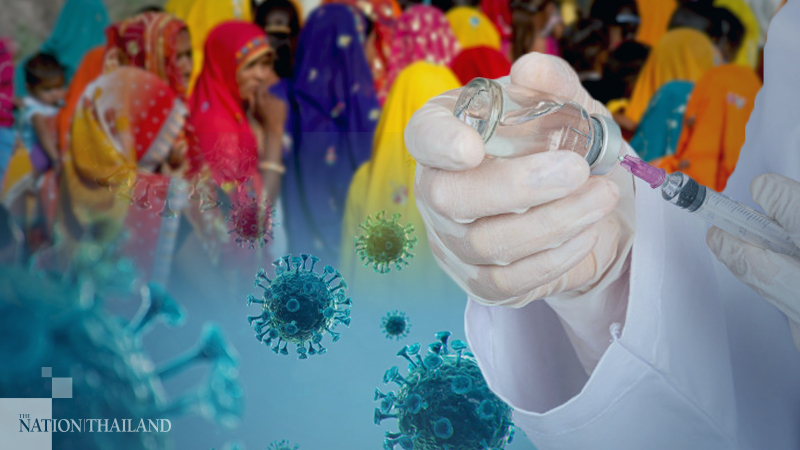
India is set to launch on Saturday one of the world’s largest vaccination campaigns with the aim of immunizing 300 million people by this summer.
The mammoth undertaking is a leap forward in the fight against the coronavirus in India, second only to the United States in its total number of cases.
The effort is being buoyed by two locally-made vaccines and India’s prior experience with large-scale immunization campaigns. But what might have been a triumph for the country’s vaccine industry has been dogged by controversy.
The Indian government granted emergency approval to two vaccines – a locally manufactured version of the Oxford-AstraZeneca vaccine and a vaccine called Covaxin developed by Bharat Biotech, an Indian pharmaceutical company.
Only the Oxford-AstraZeneca vaccine has completed a Phase 3 clinical trial for safety and efficacy. Bharat Biotech has finished earlier-stage trials on its vaccine but has so far provided no data on whether it works. Yet both vaccines will be administered starting Saturday, and people being immunized will not be able to choose which they receive.
Complicating matters further, Indian regulators have said that the Bharat Biotech vaccine will be used in “clinical trial mode,” a phrase that left experts baffled. One of India’s foremost vaccine experts, Gagandeep Kang, told an interviewer that she had “no clue” what it meant.
Unlike the United States and the United Kingdom, India is starting its vaccination campaign at a moment when the virus is in retreat. New cases have dropped drastically since peaking in September: India is recording about 14,000 cases a day and fewer than 200 deaths.
The massive vaccine push is expected to kick off at 3,000 sites across the country on Saturday, a number that authorities say will grow in the coming weeks.
To start, the Indian government has purchased 11 million doses of the AstraZeneca vaccine, manufactured by Serum Institute of India, and 5.5 million doses of the Bharat Biotech vaccine. Both vaccines were sold at $2.75 a dose (the Pfizer vaccine, by comparison, costs $19.50). If targets are met, 300,000 people could receive doses on Saturday.
The first to receive vaccines will be approximately 30 million health-care workers, soldiers, paramilitary personnel and municipal employees dealing with sanitation. They’ll receive it free of cost. Then the immunization drive will target 270 million people over the age of 50 as well as those below 50 who have co-morbidities.
The rollout of the vaccine program matters not just for India, but for the entire developing world. India is a vaccine powerhouse with a proven track record of low-cost manufacturing. Serum Institute of India is the world’s largest vaccine maker by volume.
Serum Institute will be a major supplier to COVAX, a global initiative backed by the World Health Organization to distribute vaccines equitably to poorer countries. Several countries – including Brazil, Bangladesh and Nepal – are looking to purchase vaccines directly from Indian companies.
Adar Poonawalla, the chief executive officer of Serum Institute, said that the company would start delivering doses to COVAX by the end of this month. The company has also forged deals to supply the AstraZeneca vaccine to Saudi Arabia, Bangladesh, Myanmar and Morocco, he said.
In India, health officials have been preparing for weeks – registering recipients, training vaccinators and conducting dry runs. Neither the AstraZeneca vaccine nor the Bharat Biotech vaccine requires ultracold storage, a crucial plus in a country such as India.
Rajesh Bhaskar, the official in charge of covid-19 management in the state of Punjab, said he expected to be able to vaccinate 30,000 people on Saturday and to complete the immunization of the state’s health-care workers within 10 days.
“There is a sense of relief, big relief,” he said. “We hope this will suppress the pandemic and eventually we will get rid of it.”
The distribution effort has already spread across the country. In Chandrapur, a predominantly rural district in central India, an initial shipment of 20,000 doses of the AstraZeneca vaccine arrived by road in a government van earlier this week.
They were stored in an ice-lined refrigerator guarded by a private security firm specially hired for the occasion, said Rajukumar Gahlot, the district’s health officer. Nearly 100 health-care personnel in the district have contracted covid-19, he said. Six of them died.
The AstraZeneca vaccine will represent the large majority of vaccines administered on Saturday, but Covaxin is also a key part of the launch, particularly in cities. There remains “a lot of conjecture” around how regulators reached the decision to grant emergency approval to the Bharat Biotech vaccine in the absence of efficacy data, said Anant Bhan, a public health and bioethics expert.
Bhan said that by granting approval to Bharat Biotech’s vaccine in “clinical trial mode,” regulators raised many unanswered questions. Critics of the government went further. “Indians are not guinea pigs,” Manish Tewari, a spokesman for the opposition party, told Asian News International.
Bharat Biotech declined to respond to questions about concerns over the efficacy of its vaccine, but it has pointed to the results of early-stage studies showing an immune response as an indicator of future results.
Bharat Biotech’s vaccine is “incredibly safe but I don’t know if the d— thing works,” said one expert on India’s vaccine industry who spoke on the condition of anonymity to comment frankly. Both vaccines are “less than ideal,” the expert added, noting that the data on the efficacy of the AstraZeneca vaccine showed huge variations, partly as the result of a dosing mistake.
Some experts worry that the lack of transparency in the process of approving vaccines for emergency use could undermine confidence in them more broadly. That would represent a break from the past in India, a place where vaccine skepticism is low and immunization is seen as an essential tool in reducing mortality.
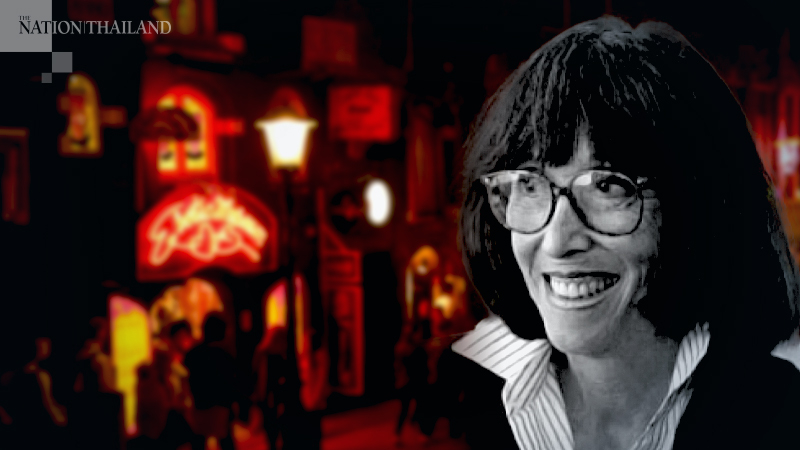
The organization Margo St. James founded in 1973 was called COYOTE – short for Call Off Your Old Tired Ethics – but she and her associates also referred to themselves as a “loose union of women” or, winkingly, a “union of loose women.”
St. James, a self-described erstwhile prostitute, emerged from the countercultural ferment of San Francisco in the early 1970s as an outspoken advocate for sex workers, their rights and the decriminalization of their profession.
Peppering her impassioned arguments with saucy humor, she fashioned herself a grande dame of what is often dubbed the world’s oldest profession and became an irresistible subject for the local, national and international media in her heyday.
“It’s a service which is demanded by society,” she told Canada’s Globe and Mail in 1980, referring to prostitution. “We have to accept the viability of sexual service as a means of work – it’s just like someone doing your nails, doing your hair, or giving you an enema in the hospital.”
St. James, who once ran for the San Francisco Board of Supervisors on the slogan “The Lady Is a . . . Champ,” died Jan. 11 at a nursing home in Bellingham, Wash. She was 83 and had complications from dementia, said her sister, Claudette Sterk.
St. James was known in San Francisco as the convener of the Hookers’ Ball, a COYOTE fundraiser that for years was one of the city’s most colorful political events. At its height, in 1978, it attracted 20,000 guests, including a sizable contingent of politicians.
“In any other city in America, the photo opportunities alone would ruin a political career,” a Washington Post reporter wrote in 1996, describing that year’s attendees as clad in attire “largely constructed of leather thongs and neoprene, with lots of cutouts.”
“But not in San Francisco,” the dispatch continued, “a city that revels in its tolerance of lifestyles and activities that would be scandalous elsewhere.”
St. James had moved to the city in the late 1950s from Washington state, where she was born Margaret Jean St. James in Bellingham on Sept. 12, 1937. She grew up on her father’s dairy farm and was married around the time of her high school graduation to an older classmate, Don Sobjack. Shortly thereafter, their son, Don Sobjack Jr., was born.
“I knew that was a mistake,” St. James told the Guardian in 1986, reflecting on her sudden entry into parenthood. “I knew I would be a bad mother.”
Nurturing ambitions to become an artist, she settled in San Francisco, leaving her husband and son behind. She said she did not engage in prostitution until after she was arrested on false accusations of having done so.
Police had become suspicious of the volume of people going to and from her home, and she conceded to the Windy City Times of Chicago in 2011 that “a lot of friends came over to my house after work, and there was a lot of pot-smoking and sex.”
But “your Honor,” she recalled telling the judge in her case, “I’ve never turned a trick in my life.” His reply, she said, was that “anyone who knows the language is obviously a professional.”
St. James said she enrolled in law school in part to appeal her conviction, which was ultimately overturned. By her account, she began taking money for sex to pay her tuition. She did not complete law school and said that at various points she earned income by working as a process server, private detective, car parker, restaurant hostess and deckhand on a dinner cruise boat.
Although her tactics at times seemed high on entertainment value – she once made her entrance at the Hookers’ Ball astride an elephant – her mission was deeply serious, part of a broader movement to gain greater health services, legal rights and financial security for sex workers.
“We are trying to funnel sex workers into the mainstream,” she told the Globe and Mail. “We’ve got to demystify it. We’ve got to accept them as human beings.”
In addition to founding COYOTE, St. James established the St. James Infirmary, a clinic that serves sex workers in San Francisco. In the 1980s, she moved to Europe with Gail Pheterson, a fellow activist and author of the volume “A Vindication of the Rights of Whores.” There St. James helped organize international conferences of sex workers in Amsterdam in 1985 and in Brussels the following year, hammering out a World Charter for Prostitutes’ Rights.
St. James later returned to the United States, making her bid for elective office in San Francisco in 1996. (She was said to have sought the Republican nomination for president in 1980, but the extent of her efforts were unclear.)
Claiming to have “the support of the bohemians, the old hippies, the gays,” as well as “the veterans and the longshoremen and the politicians,” she promised to install a red light outside her office, to be turned on when she was present in City Hall.
Her experience in politics, she argued, was greater than many voters realized.
“I’m perceived as an outsider, but I’ve really been on the inside all these years – sitting on their laps in the smoke-filled rooms,” she said on CBS at the time. “So now I want to come in the front door and I want a place at the table.”
St. James won endorsements from Mayor Willie Brown and poet Lawrence Ferlinghetti, among others, but in a race for one of six seats, she came in seventh place.
In the later years of her life, she returned to Washington state, where she lived with her second husband, Paul Avery, a California crime reporter who had covered cases including the serial murders of the Zodiac Killer and the kidnapping of heiress Patty Hearst by the Symbionese Liberation Army in 1974. He died in 2000 after seven years of marriage.
Besides her sister, St. James’s survivors include her son, Don Sobjack of Custer, Wash.; a brother; a half brother; three grandchildren; and nine great-grandchildren.
St. James was a unionist to the core. Once, a newspaper reported that she had been a madam, and she agitated for a retraction, according to The Washington Post.

 สหรัฐเตือนเชื้อกลายพันธุ์ที่แพร่กระจายง่ายขึ้นจะซ้ำเติมสถานการณ์ Covid-19 ให้แย่ลง
 เอกสารลับของทางการสหรัฐว่าด้วยยุทธศาสตร์อินโด-แปซิฟิกแทบจะไม่เอ่ยถึงไทยเลย

 นักวิจัยจีนคาดผู้เสียชีวิตทั่วโลกอาจแตะ 5 ล้านภายในเดือนมีนาคม
 สหรัฐเจอเชื้อโคโรนาไวรัสกลายพันธุ์ถึง 3 สายพันธุ์ ติดจากคนสู่คนง่ายขึ้น
 องค์กรบริหารความปลอดภัยบนท้องถนนของสหรัฐยื่นจดหมายถึงเทสลาหลังพบปัญหาด้านความปลอดภัย
 บริษัทมาเลเซียยกเลิกจดทะเบียนเครื่องหมายการค้าเมนู ‘ฮารีมาอู เมอนางิส’ หรือ ‘เสือร้องไห้’
 ทรัมป์กดดันจีนทิ้งทวนตำแหน่งประธานาธิบดีด้วยการแบนบริษัทสัญชาติจีนอีก 9 แห่ง
 ชาวอินเดียนับล้านคนแห่ทำพิธีทางศาสนาท่ามกลางการแพร่ระบาดของโควิด-19 เชื่อพระแม่คงคาคุ้มครอง

