วุฒิสภาสหรัฐเปิดอภิปราย แสดงจุดยืนร่วมขบวนการประชาธิปไตยไทย #SootinClaimon.Com

#SootinClaimon.Com : ขอบคุณแหล่งข้อมูล : หนังสือพิมพ์โพสต์ทูเดย์

วุฒิสภาสหรัฐเปิดอภิปราย แสดงจุดยืนร่วมขบวนการประชาธิปไตยไทย – โพสต์ทูเดย์ รอบโลก (posttoday.com)

วันที่ 04 ธ.ค. 2563 เวลา 11:45 น.วุฒิสภาสหรัฐเปิดอภิปราย แสดงจุดยืนร่วมขบวนการประชาธิปไตยไทยส.ว.สหรัฐร่วมอภิปรายสนับสนุนการเคลื่อนไหวเพื่อประชาธิปไตยในประเทศไทย หนึ่งในนั้นยังมีส.ว.อเมริกันเชื้อสายไทยอีกด้วย

เมื่อวันที่ 3 ธ.ค. คณะกรรมาธิการความสัมพันธ์ต่างประเทศของวุฒิสภาสหรัฐอเมริกา เปิดการอภิปรายในประเด็นความเคลื่อนไหวเรียกร้องประชาธิปไตยในประเทศไทย โดยเรียกร้องให้รัฐบาลสหรัฐเน้นย้ำถึงความมุ่งมั่นของสหรัฐในการส่งเสริมสิทธิมนุษยชนและประชาธิปไตยตามหลักนิติธรรม

วุฒิสมาชิกสหรัฐอเมริกาที่เข้าร่วมการอภิปรายครั้งนี้ ได้แก่ บ๊อบ เมเนนเดซ, ดิก เดอร์บิน, เบน คาร์ดิน, ดิแอน เฟนชไตน์, คริส คูนส์, เอ็ด มาร์กี้, เจน ชาฮีน, ลัดดา แทมมี ดักเวิร์ธ และคริส เมอร์ฟี่

โดยเมเนนเดซ กล่าวว่าเป็นเรื่องสำคัญที่วุฒิสภาสหรัฐอเมริกาจะยืนหยัดร่วมกับขบวนการประชาธิปไตยในประเทศไทย พวกเขาไม่ได้ต้องการปฏิวัติ เขาเพียงแค่โหยหาการเปลี่ยนแปลงที่เป็นประชาธิปไตยในระบบการเมืองของประเทศรวมถึงเสรีภาพในการแสดงออก เพื่อให้ประเทศไทยเป็นส่วนหนึ่งของประชาคมของประชาชาติที่เป็นประชาธิปไตย

“สหรัฐจำเป็นต้องสร้างความชัดเจนถึงจุดยืนในการเป็นพันธมิตรและหุ้นส่วนระยะยาวกับประเทศไทย และจะยังคงยึดมั่นในผลประโยชน์ของทั้งสองประเทศ เคารพซึ่งกันและกันในระบอบประชาธิปไตย สิทธิมนุษยชนขั้นพื้นฐาน และหลักนิติธรรม” เมเนนเดซกล่าว

เดอร์บิน มองว่าประเทศไทยซึ่งเป็นประเทศพันธมิตรที่สำคัญของสหรัฐกำลังถกเถียงเรื่องการแก้ไขรัฐธรรมนูญ ทั้งนี้อนาคตทางการเมืองของพวกเขาควรถูกกำหนดผ่านการเจรจาอย่างสันติไม่ใช่การใช้ความรุนแรงหรือการคุกคาม โดยเฉพาะอย่างยิ่งเสียงของประชาชนที่กล้าหาญจำนวนมากควรได้รับความสนใจ

ด้านดักเวิร์ธ ซึ่งเป็นวุฒิสมาชิกสหรัฐเชื้อสายไทย กล่าวว่าในฐานะคนไทย-อเมริกันผู้ต่อสู้เพื่อปกป้องสิทธิในการประท้วงอย่างสันติในบ้านเกิด ขอเรียกร้องให้ผู้นำประเทศไทยรับฟังเสียงของประชาชนและเคารพหลักการประชาธิปไตยซึ่งเป็นหัวใจสำคัญ

ทั้งนี้ การอภิปรายในครั้งนี้เพื่อแสดงออกถึงการสนับสนุนเสรีภาพในการพูดและการชุมนนุมในประเทศไทย รวมทั้งเรียกร้องให้ทุกฝ่ายไม่ใช้ความรุนแรงหรือการคุกคามโดยไม่จำเป็น

ญี่ปุ่นเล็งสอบอาเบะใช้เงินรัฐจัดงานเลี้ยงผู้สนับสนุนพรรค #SootinClaimon.Com

#SootinClaimon.Com : ขอบคุณแหล่งข้อมูล : หนังสือพิมพ์โพสต์ทูเดย์

ญี่ปุ่นเล็งสอบอาเบะใช้เงินรัฐจัดงานเลี้ยงผู้สนับสนุนพรรค  – โพสต์ทูเดย์ รอบโลก (posttoday.com)

วันที่ 04 ธ.ค. 2563 เวลา 09:00 น.ญี่ปุ่นเล็งสอบอาเบะใช้เงินรัฐจัดงานเลี้ยงผู้สนับสนุนพรรค อัยการญี่ปุ่นเตรียมเรียก ชินโซ อาเบะ เข้าให้การกรณีมีเอี่ยวใช้เงินรัฐจัดงานเลี้ยงมื้อเย็นให้กลุ่มผู้สนับสนุนพรรค

สำนักงานอัยการในกรุงโตเกียวเตรียมเรียก ชินโซ อาเบะ อดีตนายกรัฐมนตรีเข้าให้การกรณีที่เลขานุการไม่รายงานค่าใช้จ่ายที่ใช้ในการจัดงานเลี้ยงมื้อค่ำแก่ผู้สนับสนุนพรรคและยังใช้เงินของรัฐออกค่าใช้จ่ายส่วนหนึ่งในคนกลุ่มนี้ด้วย

แหล่งข่าวเผยกับสื่อท้องถิ่นของญี่ปุ่นว่า เลขานุการของอาเบะเป็นแกนนำในการจัดงานเลี้ยงอาหารค่ำแก่กลุ่มผู้สนับสนุนพรรคระหว่างปี 2013-2019 ซึ่งจัดขึ้น 1 วันก่อนที่จะมีงานเลี้ยงชมดอกซากุระประจำปีที่รัฐบาลเป็นผู้รับผิดชอบค่าใช้จ่าย

การจัดงานเลี้ยงแก่ผู้สนับสนุนมีค่าใช้จ่ายที่ใช้ในการจัดงานที่โรงแรมหรูสองแห่งในกรุงโตเกียวตลอด 5 ปีที่ผ่านมาจนถึงปีที่แล้วรวมทั้งสิ้น 23 ล้านเยน ซึ่งสูงกว่าเงินที่เก็บจากผู้สนับสนุน โดยผู้เข้าร่วมงานเลี้ยงดังกล่าวจ่ายเงินคนละ 5,000 เยนทั้งที่โรงแรมคิดค่าใช้จ่ายคนละอย่างน้อย 11,000 เยน

ด้วยเหตุนี้ฝั่งผู้จัดงานจึงต้องใช้เงินของรัฐบาลจ่ายส่วนต่างกว่า 1 ล้านเยนต่อปี โดยจำนวนเงินที่เคยจ่ายสูงสุดสูงถึง 2.5 ล้านเยน

นอกจากนี้ ยังมีรายงานว่าเอกสารรายชื่อผู้เข้าร่วมงานเลี้ยงถูกทำลายหลังจากพรรคฝ่ายค้านขอดูหลักฐาน

ก่อนหน้านี้ อาเบะเคยปฏิเสธว่าไม่ได้ทำผิดและยืนยันว่าผู้เข้าร่วมงานเป็นผู้จ่ายเงินเองทั้งหมด

การสอบสวนกรณีนี้อาจจะสร้างปัญหาให้กับนายกรัฐมนตรี โยชิฮิเดะ สุงะ ซึ่งรับไม้ต่อจากอาเบะด้วย เนื่องจากขณะที่เกิดเรื่องสุงะนั่งตำแหน่งเลขาธิการคณะรัฐมนตรีและยังช่วยปกป้องอาเบะในเรื่องนี้ระหว่างการประชุมสภาหลังเรื่องแดงเมื่อเดือน พ.ย.ปีที่แล้วด้วย

ทั้งนี้ กฎหมายญี่ปุ่นห้ามไม่ให้นักการเมืองจัดหาสิ่งของให้แก่ผู้มีสิทธิ์เลือกตั้ง โดยเมื่อปีที่แล้วรัฐมนตรี 2 คนในคณะรัฐมนตรีของอาเบะต้องออกจากตำแหน่งหลังพบว่าให้เมล่อน ปู และมันฝรั่งแก่ผู้มีสิทธิ์เลือกตั้งในพื้นที่ของตัวเอง

Biden chooses Murthy as nation’s top doctor, offers Fauci key role as coronavirus team takes shape #SootinClaimon.Com

#SootinClaimon.Com : ขอบคุณแหล่งข้อมูล : หนังสือพิมพ์ The Nation.

Biden chooses Murthy as nation’s top doctor, offers Fauci key role as coronavirus team takes shape (nationthailand.com)

Biden chooses Murthy as nation’s top doctor, offers Fauci key role as coronavirus team takes shape

InternationalDec 04. 2020Joe Biden conducts a a health briefing with Vivek Murthy, former surgeon general, and Celine Gounder, clinical assistant professor at New York University's Department of Medicine, in October 2020. MUST CREDIT: Washington Post phooto by Demetrius FreemanJoe Biden conducts a a health briefing with Vivek Murthy, former surgeon general, and Celine Gounder, clinical assistant professor at New York University’s Department of Medicine, in October 2020. MUST CREDIT: Washington Post phooto by Demetrius Freeman 

By The Washington Post · Toluse Olorunnipa, Amy Goldstein

WILMINGTON, Del. – President-elect Joe Biden has selected a close adviser to help lead the nation’s response to the coronavirus crisis, choosing a veteran of the Obama administration to serve as America’s top doctor as the country suffers from a surging pandemic.

Vivek Murthy, a former U.S. surgeon general, has been asked to reprise the role in an expanded version in the new administration, according to an individual familiar with the decision.

He is expected to be part of a team of health-care officials who will handle the issue Biden said would his top priority, according to people with knowledge of the matter, who, like others, spoke on the condition of anonymity because decisions have not been announced.

On Thursday, Biden told CNN that Anthony Fauci, the nation’s top infectious-disease expert, would serve as a chief medical adviser and help his administration with its coronavirus response plan. Fauci, who served on President Donald Trump’s coronavirus task force, has been criticized by the president in recent months as he has contradicted the White House’s message that the pandemic is under control and on the verge of disappearing.

“I asked him to stay on the exact same role he’s had for the past several presidents, and I asked him to be a chief medical adviser for me as well and be part of the covid team,” Biden told CNN’s Jake Tapper.

Biden’s health-care team will be crucial to the success or failure of his presidency, far more than for most administrations. He is posed to take office during a raging pandemic that has killed roughly 275,000 Americans and counting, and at a time when many Republicans are trying to undo the Affordable Care Act, a law that provides insurance to millions.

Biden also said Thursday that he would ask Americans on the first day of his presidency to commit to wearing a mask for a limited period in an effort to bring the transmission rates down from their current record levels.

“Just 100 days to mask, not forever – 100 days,” he told CNN. “And I think we’ll see a significant reduction.”

Fauci said separately Thursday that he had begun speaking with the incoming administration about plans for controlling the deadly virus and distributing a vaccine in the new year.

Fauci is director of the National Institute of Allergy and Infectious Diseases, part of the National Institutes of Health, a position he’s held since 1984. Ordinarily, Biden’s decision to keep him on would not be noteworthy, but because he’s come under fire from Trump, Fauci has emerged as a national symbol of sound medical advice.

Biden’s comments came against the backdrop of two grim daily records set by the U.S. on Wednesday, when more than 200,000 new coronavirus cases were reported and more than 100,000 patients were hospitalized.

Other officials who have been advising Biden on the novel coronavirus, which can cause the illness covid-19, and who could take key roles in the White House include Jeff Zients, who served as a top economic adviser to President Barack Obama, and Marcella Nunez-Smith, a professor at the Yale University school of medicine who specializes in health-care inequities. Politico reported Thursday that Zients was expected to become coronavirus coordinator and that Nunez-Smith would also take a senior position in Biden’s White House.

Murthy may also receive a White House title, beyond his surgeon general position, to signify that he is a central member of the team battling the pandemic, according to a person familiar with the matter who said it was possible that Murthy and Zients could be designated co-leaders of the effort.

One of the team’s central challenges will be in overseeing the logistically and ethically complex distribution of a coronavirus vaccine once it is approved. The decisions about who will fill these crucial jobs are not yet final, according to individuals familiar with the transition team’s work.

The search for a secretary of health and human services, the nation’s top health official, appears to be underway, with at least three people widely believed to have been under consideration no longer in contention. No front-runner is visible.

The position faced considerable turbulence under Trump; Tom Price, his first HHS secretary, resigned under an ethics cloud, and current Secretary Alex Azar has confronted the president’s displeasure.

Murthy had been one of the candidates under consideration by the Biden transition team for HHS secretary, but Biden’s transition leaders appear to be leaning toward a governor or someone else with more extensive management experience. Murthy is trained in internal medicine, has a public health background and is regarded as a skillful communicator, but he has not run a bureaucracy on the scale of the HHS.

New Mexico Gov. Michelle Lujan Grisham, a Democrat, had been considered a leading candidate for HHS secretary, but she was said this week to be out of the running. Another prospect, Democratic Rhode Island Gov. Gina Raimondo, told WPRI 12 News on Thursday that she would not be taking the job.

“I am not going to be President-elect Biden’s nominee for HHS secretary,” she said. “My focus is right here in Rhode Island, as I have said.”

The statement was another jolt to a process that has seen several candidates floated as possibilities before quickly disappearing from contention.

In an interview on Thursday, Lujan Grisham said it was “flattering” to have been mentioned in connection with the HHS job and that she “deeply cares” about health care. But she said she has not had specific conversations about any particular position with members of Biden’s team.

“I have not talked to them,” she said. A co-chair of Biden’s transition efforts since September, Lujan Grisham said that she is “honored to do the transition work that I’m doing” and that Biden will ultimately pick a well-qualified HHS secretary.

“He’s got lots of folks to choose from,” said Lujan Grisham, who has been overseeing her own state’s response to a coronavirus surge that is overwhelming New Mexico hospitals.

The Biden team offered Lujan Grisham the role of interior department secretary, but she declined, a source familiar with the events said. On Thursday, the Democratic Governors Association announced that Lujan Grisham would serve as its chair for 2021.

The Biden team appears to be sending a message that it will be different from the Trump administration, which has often seemed at war with its own public health agencies. Trump criticized Fauci’s assessments and blasted the Food and Drug Administration’s vaccine approval process, while flouting mask-wearing and other measures urged by his own public health officials.

Ronald Klain, who will be Biden’s White House chief of staff, probably will be particularly attuned to the coronavirus pandemic in part because he coordinated the Obama administration’s response to the Ebola outbreak.

As the pandemic enters a critical phase, with experts predicting an explosion of cases this winter, medical and public health advocates are pressing the Biden transition to include in the new administration’s Cabinet at least one person with a background in medicine or public health, whether that is Murthy or someone else.

Leana Wen, a visiting professor at George Washington University and a former Baltimore health commissioner, wrote on Twitter that she was “thrilled” with Murthy’s appointment and would like to see the position given greater prominence.

“Medical groups are pushing for Surgeon General being a Cabinet role,” she wrote Thursday. “Pres-elect @JoeBiden should heed this, as he has with climate post, to solidify importance of public health in administration.” (Wen is a contributing columnist for The Washington Post.)

Murthy, 43, served as surgeon general from late 2014 until a few months into Trump’s tenure. He issued the first surgeon general’s report on addiction, at a time when opioid overdoses had become a national crisis. Since then, Murthy has written a book about loneliness, which he casts as an epidemic in America.

Zients, who led the Obama administration’s National Economic Council, does not have a background in medicine or public health. But he maintains a close relationship with Biden, and he is credited with helping repair healthcare.gov, the Affordable Care Act’s insurance enrollment website, after a rocky rollout in 2013.

Fauci said Thursday that he had recently spoken with Zients, who is a co-chair of the Biden transition team, and that he expects to have more substantive talks with the team. Those talks, long delayed after the Trump administration spent weeks declining to acknowledge that Biden had won the election, were set to begin in earnest Thursday, Fauci said in an interview with MSNBC’s “Andrea Mitchell Reports.”

“I’m looking forward to it,” he said. “It likely will be the first of a series of normal type of transition undertaking.”

Nominations for other key health-care positions could be announced as early as next week, according to people familiar with the planning.

Coordination between the various agencies and positions will be critical because of the worsening coronavirus crisis, which has killed at least 275,000 Americans and is rapidly spreading in much of the country, said Max Skidmore, a political science professor at the University of Missouri at Kansas City and the author of a book on presidential responses to pandemics.

Skidmore said Biden would need to choose a team that could coordinate strategy smoothly among various government agencies, from the Centers for Disease Control and Prevention to the National Institutes of Health and the FDA.

“All of these and others need to have a unified approach,” Skidmore said. “We need a unified national program for public health, which we do not have, and that requires a team, but it also requires coordination of the team.”

Meanwhile, Vice President-elect Kamala Harris also made progress in building her team, announcing Thursday that she had chosen Tina Flournoy as chief of staff, tapping an operative with decades of Washington experience to help run the vice-presidential operation.

Harris’s longtime aide Rohini Kosoglu will serve as her domestic policy adviser, and former ambassador to Bulgaria Nancy McEldowney will advise Harris on national security.

Flournoy had been serving as chief of staff to former president Bill Clinton, hovering out of the direct Washington spotlight for a few years after serving in several prominent roles in the Democratic Party throughout the 1990s and 2000s.

Vaccines offer hope for end to pandemic, but brutal months lie ahead #SootinClaimon.Com

#SootinClaimon.Com : ขอบคุณแหล่งข้อมูล : หนังสือพิมพ์ The Nation.

Vaccines offer hope for end to pandemic, but brutal months lie ahead (nationthailand.com)

Vaccines offer hope for end to pandemic, but brutal months lie ahead

InternationalDec 04. 2020

By The Washington Post · Joel Achenbach, Jose A. Del Real

Coronavirus vaccines are poised to be approved and distributed in the coming weeks in the United States, but that promising news comes amid record levels of infections and hospitalizations, with experts warning that the most brutal period of the pandemic lies ahead.

This is a split-screen moment: Progress on vaccines means people can now plausibly talk about what they will do when the pandemic is over. But with new infections topping 212,000 Thursday – another daily record, topping one set Wednesday – it won’t be over in a snap. This remains a dismal slog.

“The vaccine has not come in time to do much about the winter wave,” said Christopher Murray, director of the University of Washington’s Institute for Health Metrics and Evaluation. “Vaccination is coming too late even if we do a really great job of scale-up. It’s coming too late to do much by March 1, or really by April 1.” Only at that point, he added, will the widespread distribution of vaccines begin to crush the virus.

In the meantime, the country faces what could turn out to be the most challenging few months in the public health history of the nation, Centers for Disease Control and Prevention director Robert Redfield warned in a speech Wednesday. That kind of dire language is increasingly coming from the top experts in the field and from the highest levels of the federal medical establishment. “We are in a very dangerous place,” declared a White House coronavirus task force document circulated to governors earlier this week.

To date, at least 275,000 people in the United States have died of the virus, a toll that includes more than 2,700 deaths reported Thursday, according to health data tracked by The Washington Post. That is among more than 14 million confirmed infections.

A new national ensemble forecast – an aggregation of 37 models sent to the CDC – projected that 9,500 to 19,500 people would of covid-19, the disease caused by the virus, in the week encompassing Christmas. Murray’s institute, meanwhile, has been putting the final touches on a new forecast that he said would show an increase from its Nov. 19 projection of 470,000 deaths by March 1.

Two vaccines are being reviewed by the Food and Drug Administration and expected to receive clearance in the coming weeks. One of them, from Pfizer and the Germany company BioNTech, was approved this week in the United Kingdom. Four more vaccine candidates are in late-stage trials. Later this year or early next year, there could be more than a million doses of vaccines going into arms every day in the United States.

But it will take time to change the trajectory of the epidemic. The fall wave of infections that began in September in the Upper Midwest and Northern Great Plains is now crashing across much of the country, including in the high population centers of California and the Northeast, such as metropolitan New York City, which was pummeled by the virus in the spring.

“The assessment does indeed look pretty frightening when you see how this is spreading now not just in a subset of the country but across most of the landscape,” Francis Collins, director of the National Institutes of Health, said Thursday. “We are seeing a person dying every minute. We have an enormously significant challenge here to try to get this turned around.”

In some of the worst hit hospitals in the country, health care workers are navigating a punishing surge in cases that has left them short on beds and staff. In Jackson, Miss., the University of Mississippi Medical Center on Thursday had 35 more patients than beds, said Vice Chancellor LouAnn Woodward. Those patients are being held for now in the emergency department and in the recovery room. And because the hospital is the premiere destination for specialized medical care in Mississippi, like trauma and transplants, the covid surge has also placed significant pressure on all facets of health care in the state.

“It is challenging all the way around. It is alarming. It is a very uncomfortable place for us to be,” she said.

Woodward noted that the exhaustion felt by medical staff, and in particular nurses, is afrightening component of this latest surge that sets it apart from the most difficult peaks in the spring and summer.

“They feel defeated. They are working so hard. Their concern and dedication for their work hasn’t changed, but they are tired and they are worn out. And they just don’t feel like they can catch a break,” she said. “And the piece that is so hard to describe is that you literally go through hell taking care of these patients . . . and then you leave work and your friends are talking about going to a wedding the next weekend.”

She said the vaccine news has been a “bright spot,” and is “the best news we’ve had in awhile,” but she stressed that the problems confronting the country will not ease up with the early vaccine distributions.

For now, the message from infectious-disease experts and a growing number of governors and mayors is that everyone needs to mask up, stay at home as much as possible, and hang on.

“Help is on the way,” Anthony Fauci, director of the National Institute of Allergy and Infectious Diseases, said Thursday on MSNBC. “We’re going to be giving vaccines towards the middle and end of December, and then more in January and then more in February. . . . If we can just hang on and do those fundamental public health measures to try and blunt some of these surges, ultimately we can get out of this. It isn’t all despair.”

Fauci said he intends to stay at his institute and help with the coronavirus response from the Biden administration. Later in the day, President-elect Joe Biden on CNN confirmed he had asked Fauci to stay in his role and be “a chief medical adviser for me as well.”

Biden also said that on the day of his inauguration he will ask Americans to wear masks for 100 days. “Just 100 days to mask – not forever, just 100 days. And I think we’ll see a significant reduction” in infections, Biden said.

On Thursday, California Gov. Gavin Newsom, a Democrat, announced that regions in the state where intensive care unit capacity fell below 15% would be put on strict shelter-at-home orders for three weeks. As of Thursday afternoon, about 18,600 new covid-19 cases were counted in the state, the second-highest single-day record, which was set Wednesday. About 9,700 people in California are currently hospitalized with covid-19.

The mayor of the city of Los Angeles, Eric Garcetti, has forcefully urged the city’s residents to stay at home except for essential activities like buying food.

“My message couldn’t be simpler. It’s time to hunker down. It’s time to cancel everything. And if it isn’t essential, don’t do it,” Garcetti said during a news conference. “Don’t meet up with others outside your household, don’t host a gathering, don’t attend a gathering.”

Even if vaccines roll out quickly, daily death tolls may not peak in the United States until mid- to late January, Murray said.

Emily Allen, a registered nurse at St. Joseph’s Hospital in St. Paul, Minn., said the intensive care unit where she works the night shift has become a “revolving door” of increasingly sick covid-19 patients. If the trajectory of the pandemic was grim in the spring, she said, it has reached an altogether new low in recent weeks. To meet demand in her region, her hospital will soon accept only covid patients.

“We cannot get beds cleaned fast enough by the time we have another patient coming in. On the night shift we have two doctors for 50 ventilated patients. We can have three patients crashing at the same,” she said. “It’s every single shift that is overwhelming. It doesn’t shut off.”

Patients are now sometimes held in the emergency room because beds are not readily available, she said. Others are sent to rural hospitals. There is often not enough space to readily accept transfer patients who need specialized care.

She described the exhausting process of correctly handling a covid patient with severe lung problems who must be placed carefully on his or her stomach.

“We just took a patient from a facility 15 minutes from us and right away we were proning, which takes 11 or 12 people do safely. The patient took a very, very fast turn,” she said. “We don’t have a team of people just waiting around to help prone.”

Redfield, the CDC director, has joined the chorus of experts saying that what the country needs desperately is a unified message on how to respond to the virus, and in his speech Wednesday he expressed dismay over the debate about whether masks are helpful in limiting the contagion. Officials in some states, including ones slammed badly by the virus, continue to resist issuing mask mandates or other restrictions, such as limiting indoor dining.

But the CDC says these measures produce results. That’s been seen in North Dakota, where Gov. Doug Burgum, a Republican, three weeks ago announced limits on indoor dining and a public mask mandate. Since then, the state’s average number of new cases has dropped from 1,400 per day to about 700 per day, according to data tracked by The Washington Post.

Trisha Jungels, a nurse in Jamestown, N.D., credits those steps with bringing some much needed relief to health care workers at Jamestown Regional Medical Center, a critical access hospital with 25 beds where she is chief nursing officer. Two weeks ago, the hospital came close to shutting down other units to create more beds to host incoming coronavirus patients.

She noted that covid-19 patients take more time and resources than others to care for, which in turn puts a strain on medical staff that can also affect the quality of care non-covid patients receive.

“We still have other illnesses happening. It’s not just covid,” she said. “It’s covid on top of the work that we were already doing, making sure that we have resources to take care of people that have a heart attack.”

It is impossible to know when life will get back to normal, or something that feels close to it. The vaccine rollout will take many months under even the most optimistic scenarios. But the vaccine news has boosted optimism even among the experts who are warning of a rough winter.

“We can be in baseball stadiums in the summer,” Murray said. “By July we can be very back to normal. Personally I’m starting to think we have a very bad three months ahead – actually four months ahead – and then things start to look more optimistic.”

William Schaffner, a professor of infectious disease at Vanderbilt University Medical School, said doctors are “all kind of grimly prepared” for what this cold-weather surge in cases will mean for the country. But he welcomed the recent news about the vaccines.

“No magic wand here. It’s still going to take months. But hey, long journeys take first steps,” Schaffner said.

Trump’s losses stack up as Wisconsin Supreme Court declines to hear campaign challenge to election results #SootinClaimon.Com

#SootinClaimon.Com : ขอบคุณแหล่งข้อมูล : หนังสือพิมพ์ The Nation.

Trump’s losses stack up as Wisconsin Supreme Court declines to hear campaign challenge to election results (nationthailand.com)

Trump’s losses stack up as Wisconsin Supreme Court declines to hear campaign challenge to election results

InternationalDec 04. 2020Absentee ballots sit in stacks during a recount of Milwaukee County results at the Wisconsin Center on Nov. 20, 2020. MUST CREDIT: Photo for The Washington Post by Taylor GlascockAbsentee ballots sit in stacks during a recount of Milwaukee County results at the Wisconsin Center on Nov. 20, 2020. MUST CREDIT: Photo for The Washington Post by Taylor Glascock 

By The Washington Post · Rosalind S. Helderman, Emma Brown, Elise Viebeck

WASHINGTON – The daily drumbeat of legal losses for President Donald Trump continued Thursday as he and his allies once again hit roadblocks in court on cases seeking to have the election overturned.

The Wisconsin Supreme Court declined to hear a challenge to the election results filed by Trump’s campaign, finding that under state law, the campaign should have gone first to a lower-level court.

In Arizona, a judge dismissed a key part of a suit seeking to overturn the election filed by the state’s Republican Party chairwoman.

And in Pennsylvania, where the state Supreme Court had dismissed a Republican lawsuit challenging universal mail voting, the court on Thursday issued a one-sentence order unanimously refusing to stay the dismissal.

Despite the steady stream of legal defeats, Trump and his allies pressed forward with their attempts to open new fronts and roll back President-elect Joe Biden’s win.

A day after Trump delivered a 46-minute, falsehood-filled rant from the White House attacking the integrity of the election, his personal attorney Rudy Giuliani continued his traveling road show, in which he has been making baseless allegations about fraud to audiences of Republican state lawmakers.

On Thursday, he was at the Georgia Capitol, where he encouraged GOP legislators to reject Biden’s victory in the popular vote and instead choose electors who will back Trump.

“State law doesn’t in any way prevent you, the legislature, from immediately taking this over and deciding this,” Giuliani said at a state Senate subcommittee hearing.

Ray Smith, legal counsel for Trump in the state, said the campaign will be filing a new lawsuit asking the Fulton County Superior Court for a new election; he urged Georgia legislators to select electors independently.

Meanwhile, in the Pennsylvania case, Trump allies late Thursday formally asked the U.S. Supreme Court to block the state high court’s rejection of their challenge to Act 77, the 2019 law that established universal mail voting there.

But judges across the country continued to express skepticism at claims lodged by Trump and his allies. During a hearing in Michigan on Thursday, where Biden’s win has already been certified, state Judge Timothy Kenny quizzed an attorney for a group of Republican poll workers seeking an audit of the results in Wayne County about the intentions of the plaintiffs.

“You really are trying to change the results, are you not?” Kenny asked.

“Honestly, Judge, I don’t know what the results will be,” attorney David Kallman responded.

David Fink, an attorney for Detroit, asked the judge to not just reject the request but also to sanction the plaintiffs for bringing it. “They want to undermine our democracy,” he said. “Grant significant sanctions, because this has to stop. They are trying to use this court in a very improper way.” The judge said he would rule by Tuesday.

In Arizona, Maricopa County Judge Randall Warner dismissed part of a challenge brought by state GOP Chair Kelli Ward, saying she had brought the claim too late.

He held an hours-long hearing Thursday on another piece of her suit, allowing her lawyers to present evidence they claimed shows that the processing of ballots in Maricopa County was so flawed that the election results – which were certified this week – were either wrong or so uncertain that they should not be allowed to stand.

Ward’s lawyers focused on errors in the duplication of ballots that were damaged or otherwise unreadable by tabulation machines. In such cases, a bipartisan board of election workers looks at the ballot to determine the voter’s intent and fills in a clean ballot accordingly.

Before Thursday’s hearing, Ward’s lawyers were allowed to compare 1,626 duplicated ballots to the originals in the presence of attorneys for Democrats and Secretary of State Katie Hobbs. They found a total of nine errors, an error rate of about 0.5%.

In other words, county elections official Scott Jarrett said Thursday, 99.45% of the inspected ballots were duplicated properly.

Jarrett said some level of human error is unavoidable. “We’re all people,” he said. “It would be unreasonable to expect there would be no errors.”

Seven of the errors deprived Trump of votes, compared with two that deprived Biden. Applying the same error rate to the more than 27,000 ballots that were duplicated countywide, Trump would gain a total of 103 votes, Jarrett said.

That is far less than Biden’s margin of victory of 10,457 votes.

The judge said he would continue to hear evidence Friday and did not disclose when he plans to rule on the matter.

In Wisconsin, where Biden defeated Trump by more than 20,000 votes, the Trump campaign’s top lawyer in the state said that despite Thursday’s rejection from the Supreme Court, the campaign plans to seek action “immediately” in front of a lower-level state circuit court and expects “to be back in front of the Supreme Court very soon.”

The refusal of the state’s highest court to take up Trump’s petition was a particularly stinging rebuke, given that conservatives hold a 4-to-3 majority on the elected panel.

One conservative member of the panel, Brian Hagedorn, joined the court’s three more-liberal members in declining to take the case.

In a concurring opinion, he wrote, “We do well as a judicial body to abide by time-tested judicial norms, even – and maybe especially – in high-profile cases. Following the law governing challenges to election results is no threat to the rule of law.”

Hagedorn wrote that the court should decline to take the case so the Trump campaign could “promptly exercise” its right to seek action in a lower court.

Trump’s campaign had argued that the matter was of such pressing and urgent concern that it should be considered immediately by the high court. In the petition, it argued that more than 220,000 ballots cast in the state’s two most Democratic counties were improperly accepted by election officials and should be thrown out.

The campaign did not allege that individual voters committed fraud or engaged in wrongdoing but rather that election officials misinterpreted state law regarding several large categories of ballots. That included all ballots cast early and in person in the two counties. The campaign challenged the practices, even though they were identical to those in places statewide and were unchanged since before the 2016 election, which Trump won and did not contest.

Three of the court’s conservative members appeared open to the Trump campaign’s arguments and said they wanted to take the case.

“Petitioners assert troubling allegations of noncompliance with Wisconsin’s election laws by public officials on whom the voters rely to ensure free and fair elections,” wrote Justice Rebecca Bradley in the dissent. “The majority’s failure to embrace its duty (or even an impulse) to decide this case risks perpetuating violations of the law by those entrusted to follow it.”

The judicial discussion did not indicate how the court would ultimately view the merits of the Trump campaign’s arguments should the matter return to the state’s highest court. Nor did justices offer any indication that they believed that overturning the election would be the proper recourse if the court decided to eventually hear it.

Chief Justice Patience Roggensack, who is part of the conservative wing, wrote that she believed the court should take the case to decide whether the state gave incorrect advice to local clerks about how to run the election.

“However, doing so does not necessarily lead to striking absentee ballots that were cast by following incorrect . . . advice,” she wrote. “The remedy Petitioners seek may be out of reach for a number of reasons.”

France floats veto threat on Brexit deal as EU feels strain #SootinClaimon.Com

#SootinClaimon.Com : ขอบคุณแหล่งข้อมูล : หนังสือพิมพ์ The Nation.

France floats veto threat on Brexit deal as EU feels strain (nationthailand.com)

France floats veto threat on Brexit deal as EU feels strain

InternationalDec 04. 2020Michel Barnier, EU's chief negotiator, arrives for Brexit talks in London on Dec. 3, 2020. MUST CREDIT: Bloomberg photo by Simon Dawson.Michel Barnier, EU’s chief negotiator, arrives for Brexit talks in London on Dec. 3, 2020. MUST CREDIT: Bloomberg photo by Simon Dawson. 
By Syndication Washington Post, Bloomberg · Alberto Nardelli, Ian Wishart, Kitty Donaldson

France warned it could veto a trade deal between the U.K. and the European Union if it doesn’t like the terms, piling pressure on the EU negotiating team not to make further concessions as talks build to a climax.

At a meeting of the bloc’s 27 ambassadors on Wednesday, the French envoy warned chief Brexit negotiator Michel Barnier of how bad it would look if he brokered a deal only to see it vetoed by EU leaders, according to a diplomatic note of the meeting seen by Bloomberg. Barnier swerved a request from ambassadors to see key parts of the text before it’s finished, with some of those present voicing concerns he might be giving too much away and leaving them with too little time to scrutinize any agreement.

Once any deal is done, EU leaders must approve it unanimously if it is to take effect, meaning Barnier has to keep all member states on board.

After nine months of work, the negotiations have reached a delicate point, with officials on both sides saying that a deal could be done in the next few days. To get there, uncomfortable compromises still have to be made.

“If we were to reach an agreement, no single EU state would dare to throw a veto,” Bernard Jenkin, a lawmaker from Boris Johnson’s Conservative Party, said in an interview. “It would demonstrate exactly how dysfunctional the EU can be. I suspect it is just saber-rattling.”

France is leading a group of countries worried that Barnier will surrender too much access to British fishing waters and back down on conditions designed to prevent U.K. businesses getting an unfair competitive advantage.

At the meeting in Brussels, at which Barnier spoke by video link from the talks in London, the French ambassador cautioned him against making too many concessions simply because time was running out. The French position was backed by Belgium, the Netherlands and Denmark, and several ambassadors pressed to see draft text so that they could have enough time to scrutinize it properly.

An EU diplomat briefed on the meeting said some countries were of the view that no deal wouldn’t be the end of the world because they could resume negotiations in 2021. This would mean, however, that trade with the U.K. would become subject to tariffs and quotas after the end of the post-Brexit transition period on Dec. 31.

Barnier pointed out that his role in the process is set to end this year. If talks were shelved until 2021, a new team would have to take up the baton and the EU would have to give it a new negotiating framework while at the same time grappling with the disruption of a no-deal outcome, according to the note.

Spanish Foreign Minister Arancha Gonzalez Laya played down the fight in an interview on Bloomberg TV.

“There are specific interests like, for example, fishing interests or achieving a good deal where we will not see unfair competition on the U.K. side,” she said. “What we did in the last few hours with the EU negotiator is examine the state of affairs like is normal in any negotiation in which the European Union is involved.”

A second diplomat said France’s view wasn’t the opinion of most EU countries and that Barnier’s briefing was intended to calm nerves in Paris.

On Thursday, a senior diplomat at the meeting said while a veto was possible, it was very unlikely because Barnier wouldn’t sign a deal that he thought wouldn’t be supported by leaders.

In response to the ambassadors’ concerns, Barnier said he understood their worries but was sticking within the negotiating mandate he’d been given, according to the note. Still, he was non-committal on whether he would allow an examination of the draft texts. Barnier is reluctant to give member states access to the document to avoid getting drawn into negotiations with EU governments while he is still dealing with the U.K., officials said.

There’s a “good chance” of a deal in the next few days if “we hold our nerve” and trust Barnier, Irish Foreign Minister Simon Coveney told Newstalk Radio. He said he hoped talks were “now finally drawing to a close.”

The two sides have made some progress on the level playing field and on state aid, two major areas of disagreement, but the U.K. has yet to provide details on the national state-aid system it will adopt from next year and how its procedures will work in the event of any breaches, according to the note.

Differences also remain on so-called non-regression clauses that would prevent the U.K. from watering down existing regulatory standards. The U.K. wants a more generic definition of the starting point than the EU does. The bloc also wants to be able to take unilateral measures in the event of “systemic divergences” from agreed standards.

On fisheries, disagreements remain on access to British waters and fishing quotas, as well as on how to manage disputes. The U.K. wants an annual arrangement, which France and others have said they will not accept.

The EU is also asking to include access to waters six miles to 12 miles from Britain’s coast in the agreement. And a landing zone has yet to be identified on quotas and how to divide up the more than 100 species that are caught in Britain’s waters.

When it comes to how to enforce any deal, Barnier told the envoys that the U.K. still wants to slice up the various sectors that make up the agreement’s chapters. The EU wants one overarching governance package, so all aspects of the deal would be covered by a single dispute-resolution mechanism and cross-retaliation clauses allowing the bloc to respond to a breach in one area by punishing the U.K in another. Barnier told the diplomats he would stick to this position.

He also reiterated that he had reminded his British counterpart, David Frost, that the U.K. had to stick to the terms negotiated in the withdrawal agreement, including on the Northern Ireland protocol.

U.K. legislation giving the government power to renege on the Brexit divorce treaty could also yet spoil the negotiations. Britain is preparing to reintroduce controversial elements of its Internal Market Bill, which would allow it to unilaterally override parts of that agreement, and also table a finance bill with similar law-breaking clauses.

U.S. restricts visas for Chinese Communist Party members, families #SootinClaimon.Com

#SootinClaimon.Com : ขอบคุณแหล่งข้อมูล : หนังสือพิมพ์ The Nation.

U.S. restricts visas for Chinese Communist Party members, families (nationthailand.com)

U.S. restricts visas for Chinese Communist Party members, families

InternationalDec 04. 2020

By The Washington Post · Gerry Shih

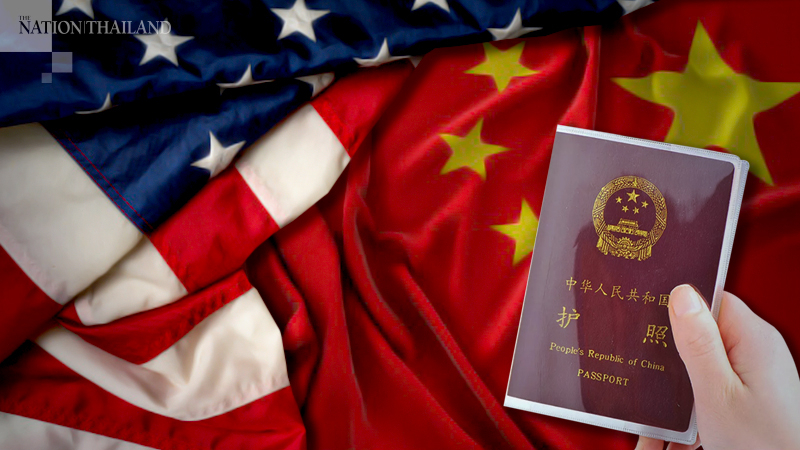
TAIPEI, Taiwan – The State Department imposed tighter visa regulations for Chinese Communist Party members Thursday in a move that puts limits on U.S. travel for tens of millions of Chinese working in government and other prominent roles and further stokes tensions with Beijing ahead of the Biden administration.

The new rules would affect members of China’s ruling party, who number around 92 million, and their close relatives. The impact could be sweeping in a country where party members dominate the upper echelons not only in government but also in business, media, academia and other areas.

The restrictions would limit visas for party members and their relatives to a single entry, with the visa duration lasting one month. Previously, Chinese nationals were eligible to apply for tourism or business visas, for instance, that are valid for 10 years and for unlimited entries, with stays of up to 90 days.

The State Department said the rules were part of broad U.S. policies and actions to protect the country from what it called “malign influence” of the Chinese Communist Party (CCP).

“Through various entities, the CCP and its members actively work in the U.S. to influence Americans through propaganda, economic coercion, and other nefarious activities,” a spokesperson at the U.S. Embassy in Beijing said Thursday in a statement.

“For decades we allowed the CCP free and unfettered access to U.S. institutions and businesses while these same privileges were never extended freely to U.S. citizens in China,” said the embassy, which also noted incidents of CCP agents threatening Chinese dissidents on American soil.

China said it had lodged representations with the U.S. Embassy over the issue on Thursday. But there was no immediate announcements from Beijing on potential retaliation.

The U.S. move was an “escalated form of political oppression toward China by some extreme anti-China forces in the U.S. who act out of intense ideological bias and a deep-rooted Cold War mentality,” Chinese Foreign Ministry spokeswoman Hua Chunying told reporters in Beijing.

“We hope that some people in the U.S. can view China and China’s development in a more rational, calm and objective manner, and give up this hatred and abnormal psychology toward the Chinese Communist Party,” Hua added.

The two countries have been locked in a cycle of tit-for-tat measures that have included the closure of consulates in Houston and Chengdu and the expulsion of journalists.

The new rules for party members could be disruptive for trade, and academic and cultural exchanges between the two countries, and the personal lives of the elite. Communist Party membership is not explicitly required, but it is often a de facto requisite for career advancement to top positions in China from the government to most major industries and academia. Many rank-and-file corporate employees and low-level civil servants are also dues-paying members.

Even in the relatively liberal technology sector, top executives such as Alibaba Chairman Jack Ma, are often party members and would normally travel to the United States multiple times a year. In Beijing and Shanghai, stories abound of the elite frequenting their California vacation homes or sending their children to East Coast boarding schools.

Hua, the Foreign Ministry spokeswoman accused officials at U.S. ports this week of harassing Chinese airline and shipping crews to ascertain whether they hold Communist Party membership.

The party began receding from everyday life after China turned toward economic liberalization in the 1980s. But it has made a comeback in recent years under current leader Xi Jinping, who has sought to root out corruption, attract younger members and return the party to its central role in Chinese society in the Marxist-Leninist tradition.

“Government, the military, society and schools, north, south, east, and west – the party leads everything,” Xi said in 2017 in a political document outlining his thinking, known as “Xi Jinping Thought.”

As the U.S.-China confrontation heightened this year, senior Trump administration officials, including Secretary of State Mike Pompeo and deputy national security adviser Matthew Pottinger, delivered speeches that warned about the party’s surging influence in China and abroad while drawing a distinction between the party and the general Chinese population.

The rules curtailing travel for party members come after a year when the two governments have been at loggerheads over visas, trade, technology, the coronavirus pandemic and a raft of other issues.

In September, the State Department canceled visas for 1,000 Chinese graduate students working in sensitive fields. U.S. officials said at the time they continued to welcome legitimate Chinese students “who do not further the Chinese Communist Party’s goal of military dominance.” The Chinese government denounced the move as “outright political persecution and racial discrimination.”

After China expelled reporters from The Wall Street Journal in 2019 and earlier this year, the United States pulled visas for Chinese state media employees. In March, China revoked visas for reporters at three U.S. newspapers, including The Washington Post.

Germany extends restrictions to fight stubborn virus spread #SootinClaimon.Com

#SootinClaimon.Com : ขอบคุณแหล่งข้อมูล : หนังสือพิมพ์ The Nation.

Germany extends restrictions to fight stubborn virus spread (nationthailand.com)

Germany extends restrictions to fight stubborn virus spread

InternationalDec 04. 2020Chancellor Angela MerkelChancellor Angela Merkel 

By Syndication Washington Post, Bloomberg · Arne Delfs, Raymond Colitt

Chancellor Angela Merkel said Germany will extend its partial lockdown by three more weeks into next year as the country struggles to regain control of the coronavirus spread.

Bars, gyms and cinemas will remain closed until Jan. 10 and the government will reconvene with regional leaders on Jan. 4 to reassess the restrictions, Merkel said late Wednesday after talks with the premiers of Germany’s 16 states.

The country’s infection rates are still far too high and need to come down faster, Merkel said in Berlin. “We have to bemoan a very high number of deaths every day, which shows the amount of responsibility that we have.”

Germany had 23,275 new cases in the 24 hours through Thursday morning and total infections have more than doubled since the measures started, according to data from Johns Hopkins University. The latest daily death toll was 482, close to a record.

Merkel’s administration last week already extended the partial shutdown until Dec. 20 while keeping schools and much of the economy open. The so-called “lockdown light” has yielded little progress in slowing the spread to levels the government has determined as manageable.

Merkel on Wednesday reiterated that the seven-day incidence per 100,000 citizens needs to come down to around 50 — and stay there — before restrictions can be loosened. It was unchanged at 134 on Thursday, according to the latest data from Germany’s RKI public health institute.

RKI President Lothar Wieler said that the infection numbers have leveled out but are not yet showing any palpable sign of declining. “Weary” health authorities are no longer able to track cases effectively and some hospitals are approaching the limit of their capacity, with operations and treatments delayed, he added.

“We are seeing more and more outbreaks in care homes,” Wieler said Thursday at a news conference, urging citizens to respect hygiene and distancing rules and protect vulnerable groups. “These restrictions will be with us for a long time, until a sufficient section of the population has been vaccinated.”

Curbs might be tightened further in January if the number of new cases doesn’t come down fast enough, according to Bavarian State Premier Markus Soeder.

“We should not shy away from acting much more consequently,” said the conservative politician, who is seen as a candidate to succeed Merkel as chancellor next year.

Merkel has said before that the country will likely prolong its partial shutdown into January unless there’s an unexpectedly rapid decline in contagion rates. By contrast, France and Britain, which imposed tougher restrictions, are now cautiously moving to loosen curbs ahead of the Christmas holidays.

The lack of progress in stemming the spread is increasing tension over how to protect the economy. Merkel said the government can’t continue to reimburse affected businesses for 75% of lost sales next year.

Eckhardt Rehberg, budget spokesman for Merkel’s parliamentary caucus, said the chancellor is right to turn the focus away from compensating businesses for lost sales and back to so-called bridge aid. Under the program, which has been extended until the end of June, companies can apply for assistance with fixed costs such as heating and rent.

Spending 15 billion euros ($18 billion) a month on sales compensation “cannot be justified either to other sectors of the economy or to the taxpayer,” Rehberg said Thursday in an interview with Deutschlandfunk radio. “The state won’t be able to afford to pay for everything,” and “we still have the challenge of financing intensive-care beds for hospitals and rolling out the vaccine.”

Merkel dampened expectations that new medication can quickly put an end to the disease. She said it’s unclear if a vaccine for the virus will be available before Christmas, but added that Pfizer Inc., BioNTech SE and Moderna Inc. will deliver 7 million doses in the first quarter of 2021.

Governments across the world are hoping for a rapid rollout of such vaccines to bring an end to the pandemic. On Wednesday, Britain’s drug regulator cleared the vaccine for emergency use, ahead of the U.S. Food and Drug Administration and its European Union counterpart.

Jobs report preview: U.S. hiring holds up while threats multiply #SootinClaimon.Com

#SootinClaimon.Com : ขอบคุณแหล่งข้อมูล : หนังสือพิมพ์ The Nation.

Jobs report preview: U.S. hiring holds up while threats multiply (nationthailand.com)

Jobs report preview: U.S. hiring holds up while threats multiply

InternationalDec 04. 2020Workers break up concrete while doing road work on the Google campus in Mountain View, Calif., on Oct. 21, 2020. MUST CREDIT: Bloomberg photo by David Paul Morris.Workers break up concrete while doing road work on the Google campus in Mountain View, Calif., on Oct. 21, 2020. MUST CREDIT: Bloomberg photo by David Paul Morris. 

By Syndication Washington Post, Bloomberg · Olivia Rockeman, Henry Ren

U.S. employment gains probably slowed only modestly in November despite a record surge of coronavirus cases that still threatens to limit or even reverse hiring in coming months.

Friday’s jobs report will show nonfarm employers added 475,000 people to payrolls and the unemployment rate fell 0.1 percentage point to 6.8%, according to economists surveyed by Bloomberg. While those would be the smallest improvements since the rebound began in May — and leave the economy 9.6 million jobs short of pre-pandemic levels — the labor market is in better shape than analysts expected it to be a few months ago.

Forecasters say steady hiring for holiday shipping, easing restrictions on businesses in late October and early November, and strong demand for construction work are likely to deliver a seventh-straight payroll gain. One caveat: payroll figures reflect data through mid-month, meaning jobs lost to subsequent lockdowns won’t show until December or later.

Even if the first jobs report since Joe Biden won the White House does show solid if cooling momentum, he may face a different reality upon taking office in January. In addition to raging infections, precarious businesses like restaurants face colder weather that’s discouraging outdoor dining, and the federal aid outlook remains uncertain.

Federal Reserve Chair Jerome Powell this week urged Congress to approve additional pandemic aid, warning that the economic crisis isn’t over. Policymakers will likely discuss the jobs report when they convene Dec. 15-16 and consider whether to adjust their bond-buying program to provide more stimulus.

While vaccine breakthroughs offer new promise, it may be many months before distribution is wide enough to meaningfully boost demand and affect employment, according to Jay Bryson, chief economist at Wells Fargo.

“Help is on the way, but it’s still a little bit of a race against time,” he said. “There’s going to be near-term weakness in the economy.”

On a positive note, filings for state unemployment benefits fell last week by the most in almost two months, though the figures may partly reflect volatility around the Thanksgiving holiday.

The U.S. saw 4.4 million infections in November, one-third of the nation’s outbreak total. While the surge slowed around the Thanksgiving holiday, millions of gatherings and the busiest air travel days since March may fuel infections that prompt further restrictions and curb hiring. Los Angeles County, the nation’s largest, has ordered its 10 million residents to stay home.

“The labor market has started to show signs of strain, with jobless claims moving higher and virus-related lockdown measures being reinstituted as case counts surge, but these factors will be more fully felt in the December data,” Bloomberg economists Carl Riccadonna, Yelena Shulyatyeva, Andrew Husby and Eliza Winger wrote in a report.

The headline payrolls figure should reflect a reduction of more than 90,000 temporary workers for the decennial Census, which ended counts in October. Without that drag from government, private payroll growth is forecast to be 545,000, following 906,000 in October.

Weak seasonal hiring at retailers may weigh on overall jobs. The raw November figures are typically adjusted lower to account for an influx of holiday workers. In November 2019, retailers boosted payrolls by 431,900 on an unadjusted basis; that became a decline of 13,900 after seasonal adjustments.

“Temporary employees that get hired to work in stores, whether in a mall or a strip shopping center, to a large extent, aren’t happening this year,” said David Berson, chief economist at Nationwide Insurance.

Such headwinds mean temporary labor-market damage is more likely to become permanent, especially for those longest out of work. The ranks of those jobless for at least 27 weeks more than doubled over two months to a six-year high of 3.6 million in October.

November hiring is likely to come from goods-producing sectors rather than services, according to Bloomberg economist Yelena Shulyatyeva. She projects gains in both construction and manufacturing jobs, and gains for warehousing and transportation amid soaring holiday e-commerce demand.

Other data are less upbeat.

The Institute for Supply Management manufacturing employment index in November fell for the first time in seven months.

Private indicators from Homebase, a scheduling tool for 60,000 firms, signal business openings have fallen back to around pre-summer levels. Data from time-clock software maker Ultimate Kronos Group show shift work declined 0.2% in mid-November from a month earlier, the first drop since April.

“What we’re seeing is that downward momentum is exacerbated by the resurgence of the virus,” said Kathy Bostjancic of Oxford Economics, one of two forecasting firms to project a decline in jobs in November in Bloomberg’s survey.

U.S. jobless claims drop, offering ray of hope for labor market #SootinClaimon.Com

#SootinClaimon.Com : ขอบคุณแหล่งข้อมูล : หนังสือพิมพ์ The Nation.

U.S. jobless claims drop, offering ray of hope for labor market (nationthailand.com)

U.S. jobless claims drop, offering ray of hope for labor market

InternationalDec 04. 2020A worker installs plumbing at the HL Enterprise manufacturing facility in Elkhart, Ind., on Oct. 8, 2020. MUST CREDIT: Bloomberg photo by Ty Wright.A worker installs plumbing at the HL Enterprise manufacturing facility in Elkhart, Ind., on Oct. 8, 2020. MUST CREDIT: Bloomberg photo by Ty Wright. 

By Syndication Washington Post, Bloomberg · Jarrell Dillard

Applications for U.S. state unemployment benefits fell by the most in almost two months, offering some hope that the gradual recovery in the job market will continue despite a spike in covid-19 infections and renewed business restrictions.

Initial jobless claims in regular state programs decreased by 75,000 to 712,000 in the week ended Nov. 28, the first drop in three weeks, Labor Department data showed Thursday. Without adjustments for seasonal fluctuations, applications dropped by about 122,000 during the period.

Continuing claims — the total pool of Americans on state unemployment benefits — declined 569,000 to 5.52 million in the week ended Nov. 21.

The main figures were below economists’ projections for 775,000 initial claims and 5.8 million continuing claims, based on the median estimates in Bloomberg surveys. One caveat: seasonal adjustments on claims data tend to be trickier around holidays, and last week included Thanksgiving, making it important to see if the trend holds.

While the latest claims figures show gradual improvement, they’re still well above pre-pandemic levels. The labor market also remains challenged by a rising number of covid-19 cases and a tightening of business restrictions in parts of the U.S. Some industries such as travel, leisure and hospitality are still depressed by the pandemic and could cut jobs more aggressively in the absence of additional fiscal relief.

All but 10 states and territories posted unadjusted declines in initial claims last week, with some of the biggest drops occurring in California, Texas, Michigan and Georgia. Illinois, Oregon and Indiana reported the largest increases in filings during the holiday week.

“The plunge in initial claims does not refute the idea that the trend is rising; we expected a sharp fall because of the difficulty of adjusting for Thanksgiving,” Ian Shepherdson, chief economist at Pantheon Macroeconomics, wrote in a note. He had forecast claims of 725,000.

The government’s monthly jobs report on Friday is projected to show payrolls grew by about 475,000 in November, still solid yet the smallest gain in seven months, according to the median forecast in a Bloomberg survey of economists. The jobless rate is forecast to tick down to 6.8% from 6.9%.

A report on Wednesday from ADP Research Institute showed that companies in the U.S. added fewer jobs than expected in November, a sign that businesses are slowing down the rate of hiring as coronavirus cases reach new levels.

Continuing claims for Pandemic Unemployment Assistance, a program that provides benefits to self-employed and gig workers, decreased about 339,000 to 8.87 million in the week ended Nov. 14. This number, though, is inflated by multiple-counting and fraud, according to a government watchdog’s report this week, and the Labor Department plans to add a disclaimer.

More people have moved into extended programs like Pandemic Emergency Unemployment Compensation, but these were put in place by the Cares Act will expire by year-end and leave millions of people without government aid. The number of Americans on PEUC assistance rose slightly to 4.57 million in the week ended Nov. 14.