Trump creates new hurdles for pregnant women seeking U.S. tourist visas #ศาสตร์เกษตรดินปุ๋ย

#ศาสตร์เกษตรดินปุ๋ย : ขอบคุณแหล่งข้อมูล : หนังสือพิมพ์ The Nation

https://www.nationthailand.com/news/30380983?utm_source=category&utm_medium=internal_referral

Trump creates new hurdles for pregnant women seeking U.S. tourist visas

Jan 24. 2020
File Photo: President Trump

File Photo: President Trump
By The Washington Post · Abigail Hauslohner, Maria Sacchetti 

WASHINGTON – The Trump administration says it is cracking down on what it calls “birth tourism” and will instruct consular officers to assess whether women requesting visas to visit the United States are hoping to give birth here to obtain U.S. citizenship for the child.

Starting Friday, the U.S. State Department will no longer issue temporary visitor visas to women hoping to travel to the United States for the purposes of having a child, White House officials said Thursday in a statement. The visas – known as B-1/B-2 visas – provide for temporary travel to the United States for tourism, business or medical care.

The State Department said Thursday that consular officers cannot require pregnancy tests to make the determination but would not rule out that a woman’s physical appearance could be taken into consideration. Consular officers will consider “the totality of the circumstances and what comes out in the interview,” a State Department official told a group of reporters on a conference call Thursday, speaking on the condition of anonymity.

The Trump administration has cast the rule as a matter of national security and public safety.

“Closing this glaring immigration loophole will combat these endemic abuses and ultimately protect the United States from the national security risks created by this practice,” White House officials said in a statement, citing a “birth tourism industry” that they argue “threatens to overburden valuable hospital resources.”

“It will also defend American taxpayers from having their hard-earned dollars siphoned away to finance the direct and downstream costs associated with birth tourism,” the White House said.

Immigration attorneys have expressed concerns that the regulation is another brick in what they call Trump’s “invisible wall” – the mass of new rules, policies and regulations the Trump administration has unfurled to make legal immigration more difficult. They also said the rule could be applied in a misogynistic way.

“The rule itself invites discrimination against women,” said Tom Jawetz, a lawyer and the vice president of immigration policy at the Center for American Progress. “If you have consular officers who are looking for opportunities to restrict access to the immigration system, this provides a bit of a tool to do so.”

Eli Kantor, an immigration attorney in Beverly Hills, California, said he sees nothing wrong with the apparent intention of the rule, though he does believe it opens up the potential for discrimination against women.

“It makes sense to prevent people from coming to the U.S. just to have a baby who becomes a U.S. citizen,” he said. “But my fear is that by giving them one more tool in their arsenal to vet prospective applicants, it will be that much more difficult for a female applicant to obtain lawful entry into the United States just because she’s female. And I could see potential for abuse depending on how they implement the rule.”

Trump has said he wants to end birthright citizenship for the children of noncitizens, which legal scholars say would require Congress to amend the Constitution. The 14th Amendment affords the right of automatic and permanent citizenship to most people born on U.S. soil.

The White House and the State Department declined to provide examples of security threats linked to birth tourism, data about birth tourism or information about its financial impact.

Of the 5.8 million B-1/B-2 visas issued annually, the State Department estimates that there are thousands of such visa-holders who go on to give birth in the United States each year, according to the department official who briefed reporters.

“I don’t have an estimate for you on what this costs U.S. taxpayers,” the official said.

Mike Howell, a senior adviser at the Heritage Foundation, a conservative think tank, estimates that at least 30,000 people come to the United States to give birth every year, and he worries that their U.S. citizen children ultimately could gain access to public benefits. News articles on birth tourism have presented the women typically participating in the practice as affluent Chinese nationals who pay tens of thousands of dollars to patronize “maternity hotels” in California, and are seeking citizenship for their children so as to maximize their educational opportunities.

U.S. Immigration and Customs Enforcement and the Justice Department secured the first conviction in a birth tourism scheme last year in a probe that began under the Obama administration.

Dongyuan Li, 41, pleaded guilty to visa fraud and conspiracy for helping run “You Win USA Vacation Services Corp.,” which charged affluent women in China $40,000 to $80,000 each to obtain visas to come to Southern California to give birth. The company coached more than 500 women to pass their consular interviews abroad and conceal their pregnancies from U.S. Customs and Border Protection once they arrived at the airport, according to ICE and federal court records.

The State Department official on Thursday said that foreign governments might seek to exploit birth tourism, but the official declined to cite examples in which foreign governments have benefited from the practice.

It is unclear exactly how consular officials will determine whether a woman applying for a visa intends to travel to the United States to give birth. The State Department official said that the new rule does not bar all pregnant women from obtaining tourist visas; a pregnant woman traveling for a different purpose, for example, to visit a sick relative, “can still be issued a visa,” the official said. The consideration would only apply to the initial visa application process; many nationalities have access to 10-year, multi-entry tourist visas.

The official also said that not all women would be asked whether they are pregnant – only those for whom an officer has “a specific articulable reason to believe that this applicant is planning to give birth in the United States” would be questioned about their birth plans.

But the official declined to rule out the possibility that consular officers will ask such questions based on a woman’s physical appearance, saying that officers will consider the “totality” of factors. A woman who lists “medical treatment” as her primary reason for travel, for example, could trigger further questions about pregnancy or birth plans, the official said.

Other obstacles could arise upon arrival in the United States, where CBP officers exercise broad discretion to refuse entry to valid visa-holders, and have on several occasions in the past few years turned back heavily vetted visa-holders, such as people who worked for the U.S. government in Afghanistan and secured Afghan Special Immigrant Visas.

A CBP spokesman said the State Department rule will not change the way CBP operates.

“This rule does not affect CBP regulations regarding the admissibility of aliens and it does not otherwise modify the standards enforced by CBP officials at ports of entry,” the spokesman said.

CBP has the authority to deny entry to foreigners traveling with visas under certain circumstances, such as national security concerns.

Acting ICE director Matthew Albence, praised the “birth tourism” regulation Thursday as “good sense” and another way to ensure that visitors are not exploiting U.S. law to claim citizenship for their children.

“I think it’s a big problem,” Albence said.

Global markets swoon as lethal virus in China spreads #ศาสตร์เกษตรดินปุ๋ย

#ศาสตร์เกษตรดินปุ๋ย : ขอบคุณแหล่งข้อมูล : หนังสือพิมพ์ The Nation

https://www.nationthailand.com/news/30380982?utm_source=category&utm_medium=internal_referral

Global markets swoon as lethal virus in China spreads

Jan 24. 2020
Photo by: The Washington Post — The Washington Post

Photo by: The Washington Post — The Washington Post
By The Washington Post · David J. Lynch 

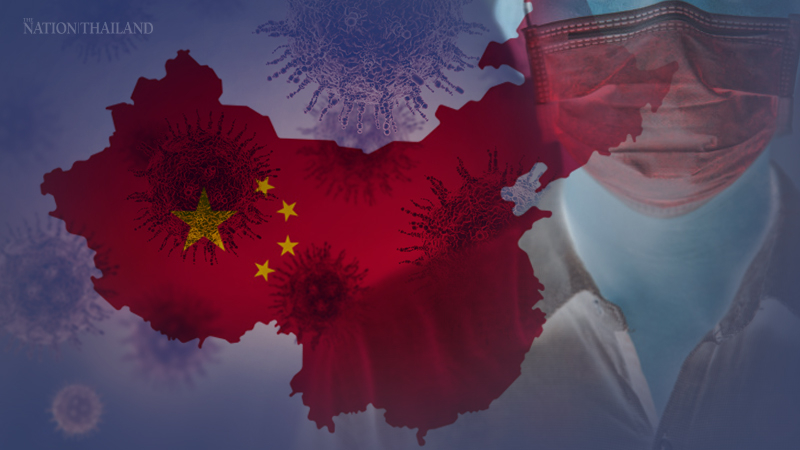
Wall Street stumbled on Thursday amid fears that efforts to curtail a lethal virus in China could further disrupt the global economy.

The Dow fell nearly 200 points before recovering to close at 29,160.09, down 26 points for the day, following China’s decision to expand its quarantine beyond Wuhan, where the virus first appeared. Oil prices also dipped again as traders anticipated global slowing.

The unprecedented lockdown of a provincial capital of 11 million people and several other cities showed that Chinese authorities are belatedly ramping up efforts to head off a potential pandemic. So far, the virus has killed 17 and sickened more than 600 in China.

And reported cases in Singapore and Vietnam show that the illness, which causes flulike symptoms, has jumped national borders.

Overnight, China’s CSI 300 index lost more than 3%, while Hong Kong’s Hang Seng surrendered more than 1.5%, and Seoul’s KOSPI gave up 0.9%. Trading screens Thursday glowed red as losses spread to European markets and the United States.

“This disruption comes at a time when Chinese economic growth already looks fragile, and it will unfortunately undo some of the boost in consumer and business sentiment from the China-U.S. trade deal,” said economist Eswar Prasad, former head of the International Monetary Fund’s China unit. “A broader spread of this disease has the potential to disrupt travel, trade and supply chains throughout Asia, with knock-on effects on the world economy, since Asia is now a key driver of global growth.”

The Wuhan coronavirus appeared on the eve of the Chinese Lunar New Year, an annual festival that sees hundreds of millions of people travel to their hometowns for family celebrations.

The quarantines already announced – and those that may follow – are certain to dent spending on airlines, railways, hotels, restaurants and other parts of the consumer sector that Chinese officials have been seeking to develop.

“This couldn’t have come at a worse time,” said Jorge Guajardo, former Mexican ambassador to China.

On the Yangtze River, Wuhan is a key transport hub for goods moving from China’s interior to the coast, as well as for north-south commercial traffic.

The city reflects China’s role at the center of pan-Asian supply chains for electronics, pharmaceuticals and automobiles.

Manufacturers in recent days have rushed to get shipments out before the New Year festivities. Government officials will use this annual break to control the outbreak while factories are idle during the roughly three-week holiday.

“Any serious transportation shutdown has the potential to interrupt supply chains,” said Phil Levy, chief economist for Flexport, a freight forwarder. “[But] it will make a big difference to economic impact how long this virus threat lasts.”

The flulike ailment adds to worries over the global economy. Earlier this month, the IMF trimmed its 2020 growth forecast from 3% to 2.9%, citing weakness in key emerging markets such as India.

Chinese officials, meanwhile, must battle the unexpected health crisis and implement the terms of a new U.S.-China trade deal. The accord requires China to increase its spending on American goods and services by $200 billion over the next two years and begin opening its financial services market by April 1.

“That could be a major distraction,” said Scott Kennedy, a China specialist at the Center for Strategic and International Studies. “Meeting targets in the trade deal would fade in comparison to managing the domestic politics and economics of this crisis.”

Previous health scares offer reasons for investor concern, at least in the short run. In 2014, an Ebola outbreak in West Africa knocked U.S. markets off course as investors worried about a chilling effect on consumer spending. The Dow fell nearly 7% between mid-September and mid-October that year.

Likewise, in 2003 as Chinese authorities struggled to curb the fatal severe acute respiratory syndrome (SARS) virus, the MSCI China Index plunged by more than 10%. SARS ultimately was responsible for the deaths of 774 individuals worldwide, according to the U.S. Centers for Disease Control and Prevention.

The economic hit from SARS was more lasting, according to a study by economists Jong-Wha Lee of Korea University and Warwick McKibbin of the Australian National University. In a 2004 paper, they found that the fast-moving virus carved more than 1% from China’s economic output and 2.6% from that of Hong Kong.

Fallout from the disease continued to dampen activity and marginally depress investment in China and Hong Kong for the next decade, the study concluded.

But markets rebounded swiftly as SARS was brought under control, indicating that in most such cases any financial damage is short-lived, Oliver Jones, senior markets economist with Capital Economics in London, wrote in a note to clients Wednesday.

Still, China already is burdened by soaring government debt, meaning officials are less able to offset any economic damage with tax cuts or increased spending.

China also accounts for twice as great a share of the global economy as it did in 2003, “meaning there is greater scope for events there to set the tone in global markets,” Jones added.

Official measures to blunt the disease also are likely to be heavy-handed and disruptive, according to Guajardo, who was Mexico’s ambassador to China during a 2009 outbreak of swine flu.

In that case, Chinese authorities concluded that the virus had originated in Mexico and responded with a draconian crackdown on all Mexican citizens whether or not they had recently visited their homeland, Guajardo said. Individuals, including a Mexican consular official visiting from Cambodia, were arbitrarily quarantined for a week.

“It was awful. None of it was done scientifically,” Guajardo said.

Investors drew solace from a meeting of the World Health Organization (WHO) emergency committee, which decided, for now, not to declare the Wuhan episode a public health emergency of international concern.

On Twitter, Patrick Chovanec, a China specialist and chief strategist at Silvercrest Asset Management, offered a chilling reminder of the worst-case risks.

“Behind everything WHO does is the specter of the 1918 global influenza epidemic, which killed an estimated 50-100 million people,” he wrote. “That’s the nightmare they’re always thinking about.”

Outbreak sparks biotech booms but vaccine funding is missing #ศาสตร์เกษตรดินปุ๋ย

#ศาสตร์เกษตรดินปุ๋ย : ขอบคุณแหล่งข้อมูล : หนังสือพิมพ์ The Nation

https://www.nationthailand.com/news/30380975?utm_source=category&utm_medium=internal_referral

Outbreak sparks biotech booms but vaccine funding is missing

Jan 23. 2020
By Syndication Washington Post, Bloomberg · Cristin Flanagan

The promise of a vaccine for coronavirus has sparked rallies in a handful of stocks this week but past pandemics show there may be little to show for drugmakers’ efforts.

Moderna Inc. became the latest stock to get a bump after saying it is working with the U.S. National Institutes of Health on a vaccine. The shares shot up as much as 11% on Wednesday to the highest in eight months. Novavax surged 71% on Tuesday, its biggest rally in more than 10 years, after the company said it was looking into a vaccine.

While the timeline to start clinical trials has gotten faster since the SARS outbreak some 17 years ago, developing new vaccines is still time consuming. In the case of Moderna, an experimental vaccine could be available to test in humans within about three months, according to Anthony S. Fauci, director of the National Institute of Allergy and Infectious Diseases at the NIH.

“Obviously that doesn’t mean, you’re going to have a vaccine ready for use in that time, because that’s just phase one for safety,” Fauci said in a phone interview, referring to the earliest stage of drug testing in people.

Testing can also be affected by changes in need. The NIH started safety testing for a Zika vaccine in 2016 but a clinical trial is stalled and it will take another Zika outbreak to find out if it works or not, according to Fauci.

“Zika went away it’s no longer determined to be a hot priority,” said William Schaffner, professor of infectious diseases at Vanderbilt University School of Medicine. “If you were the CEO of the vaccine manufacturer understandably you would dial back that effort.”

In this latest outbreak, Novavax has focused on studying the virus’s genetic code rather than human or animal testing. “It’s hard to get scaled up and ready in a short period of time, but it’s possible,” said Gregory Glenn, the company’s head of research and development.

Novavax developed an Ebola vaccine and had early results showing immune responses in 2015 but hasn’t pursued further development. Glenn blamed limited funding, saying “there’s no real market, the only market is a disaster.”

The need for cash in the U.S. to be prepared for a pandemic was echoed by the Biomedical Advanced Research and Development Authority, within the HHS Office of the Assistant Secretary for Preparedness and Response.

“We have ongoing partnerships with several developers of response-capable platforms for expedited development of medical products in each of these areas,” said Rick Bright, the agency’s director, in an email. “However, it is important to note that BARDA does not currently have adequate funding to initiate product development activities for this novel coronavirus or other emerging infection diseases.”

“Although Congress authorized a public health emergency fund that could be used in such cases, funding for it has not been appropriated,” Bright said. “If funding becomes available, we would be positioned to be able to initiate activities quickly.”

Merck & Co.’s Ebola vaccine finally received U.S. regulatory approval late last year after the drugmaker licensed it from NewLink Genetics Corp. in 2014.

Wuhan quarantine expands as Chinese fear authorities not telling full story about coronavirus outbreak #ศาสตร์เกษตรดินปุ๋ย

#ศาสตร์เกษตรดินปุ๋ย : ขอบคุณแหล่งข้อมูล : หนังสือพิมพ์ The Nation

https://www.nationthailand.com/news/30380968?utm_source=category&utm_medium=internal_referral

Wuhan quarantine expands as Chinese fear authorities not telling full story about coronavirus outbreak

Jan 23. 2020
By The Washington Post · Anna Fifield

BEIJING – The central Chinese city of Wuhan pulsated with fear and anger Thursday, as 11 million people awoke to news that they were being confined to a metropolis-sized quarantine zone designed to contain a widening coronavirus outbreak.

The quarantine is also spreading with nearby Huanggang and Ezhou announcing they were shutting down travel networks, effectively confining some 20 million people to their municipalities.

In Wuhan, train and bus stations were abruptly closed, hundreds of flights were canceled, and some roads were blocked to stop people from leaving the city Thursday, a day when transportation networks should have been heaving with passengers heading to their hometowns for the official start of the Lunar New Year holiday on Friday night.

But experts warned that it would not be enough to stop the spread of the pneumonia-like virus, which has now killed 17 people in Wuhan and surrounding Hubei province. The number of people infected in China stood at 617 on Thursday afternoon.

“A bigger outbreak is certain,” said Guan Yi, a virologist who helped identify Severe acute respiratory syndrome in 2003. He estimated – “conservatively” – that this outbreak could be 10 times bigger than the SARS epidemic because that virus was transmitted by only a few “super spreaders” in a more defined part of the country.

“We have passed through the ‘golden period’ for prevention and control,” he told Caixin magazine from self-imposed quarantine after visiting Wuhan. “What’s more, we’ve got the holiday traffic rush and a dereliction of duty from certain officials.”

Authorities had initially said that the virus, which began in a Wuhan food market selling exotic animals for consumption, was mild and could not be transmitted between humans. But that changed this week when the numbers of people infected by the virus, which has an incubation period as long as 14 days, began to rise rapidly.

Now cases have been detected around the country, from Harbin in the north to Shenzhen in the south. The Chinese territories of Hong Kong and Macao have both reported cases, as have countries including the United States, Japan, South Korea and Thailand.

The ruling Communist Party, which initially tried to show transparency after being criticized for covering up the SARS virus outbreak 17 years ago, has now shown signs of reverting to its default position of censoring bad news.

The Wuhan Health Commission admitted Thursday evening that it was struggling under the strain of the outbreak. “At present, there is an obvious increase in the number of patients with fever in the city, and it is true that there are long queues and a shortage of beds in fever clinics,” the commission said in a post that was online for less than an hour.

A post from Wuhan Railway saying that 300,000 people traveled by train out of Wuhan on Wednesday, headed to every corner of the country, was also quickly deleted.

Analysts said the heavy-handed reaction underscored the political risks for Chinese leader Xi Jinping and the ruling Communist Party, already under pressure amid an economic slowdown and accused of mishandling an outbreak of swine flu last year, which led to a sharp spike in China’s beloved pork meat.

“This outbreak may be the biggest threat to Xi and the Party in years, which is why they will stop at nothing to try to control and then eradicate it,” said Bill Bishop, publisher of the influential Sinocism newsletter.

Wuhan ground to a halt on Thursday as the travel ban came into effect.

The three main railway stations, 13 bus stations, the entire subway network and almost all city bus lines were shut down at 10 a.m. Thursday. Half of the 566 flights scheduled at Wuhan’s international airport for Thursday were canceled, as were 251 ferry sailings on the Yangtze River, according to the Wuhan Transportation Bureau.

Many people flocked to the roads to try to avoid getting caught in the quarantine. Television footage showed health workers in hazmat suits taking motorists’ temperatures as they waited at toll booths.

Others did not make it out. Hubei’s highway management authority closed multiple expressways in and around Wuhan, at least for some periods.

Neighboring Huanggang said it would join Wuhan’s quarantine from midnight on Thursday, shutting down transport networks and telling people they should not leave the city without special reason. Nearby Ezhou announced it would close its railway stations “to efficiently cut off channels for spreading the virus.”

A raft of Chinese companies, both public and private, began to impose their own travel restrictions to try to avoid infection. CITIC Securities, China’s largest investment bank, told employees from Hubei province not to return home for the holidays, and said that if they did, they would have to work remotely for 14 days before being allowed back into the office.

Other measures were taken to limit public gatherings.

English tests scheduled for next month were canceled and film companies delayed the release of seven blockbuster movies that were expected to attract big crowds over the Spring Festival holiday, which official starts Friday.

“Everyone wishes for peace and health,” the producers of “Detective Chinatown 3” said, announcing the delay. “In the face of the virus, our wills are united like a fortress. We will cooperate hand in hand, and we will overcome difficulties together.”

In Macao, where one case has been found, the government said it might shut down the territory’s casinos if the epidemic worsens. Macao’s gambling sector is seven times the size of Las Vegas’s. The authorities have already called off a public festival to ring in the new year.

In Wuhan, a city with three million more people than New York, many residents were incensed at the sudden announcement of the travel restrictions on Thursday.

“I didn’t even receive a notice,” said one woman who found herself stranded at Hankou Station. She had been on her way from Henan province southwest to Sichuan and was changing trains in Wuhan when she got caught up in the suspension.

She said, indignantly, that she would go back to Henan. But when a reporter asked how, she conceded she didn’t know.

Others interpreted the fact that the health authorities announced the travel ban at 2:30 a.m as a sign that the outbreak was more serious than they were letting on.

“The notice shouldn’t come out so late, when everyone’s asleep,” said Jeffrey Yang, a 27-year-old Wuhan local working in the financial industry. “It makes people panic and feel like they’ve missed the opportunity to change their fate.”

Yang had planned to leave Wuhan on Friday to join his parents in the southern coastal city of Beihai to celebrate the new year. After a friend called to warn him, he managed to get a flight out before the travel ban came into force. But when he arrived at his destination, the hotel owner refused to allow him to check in after hearing that he’d traveled from Wuhan.

“I feel quite nervous,” he said. “I think there must be some things about this virus that remain undisclosed.”

Some people resorted to extreme measures to escape the travel ban. One man who couldn’t get a taxi to the station to catch an earlier train convinced a food delivery guy to give him a lift on his scooter. The desperate traveler paid $72 to have the delivery guy, who would usually make less than half that in a day, drop him at the station. “We were flying,” he said.

Others, especially those in the age groups most affected by the virus, thought the ban was warranted.

“I think we can fully understand why they made the decision, they have no alternative,” said Zhu, a 56-year-old university professor in Wuhan who declined to give full name. “But it’s difficult to tell how effective it will be.”

Still, distrust of authorities is mounting.

Although local authorities said they had enough food for residents and medical supplies to treat patients, Wuhan residents posted photos on social media showing empty shelves in grocery stores. Prices have spiked, with cabbages selling for double the usual amount.

Wuhan authorities have ordered residents to wear masks in public places, but the People’s Daily, the mouthpiece of the Communist Party, posted on social media that the province was short of masks and protective clothing. The post, which was widely shared, was soon deleted.

Speculation swirled that the government had silenced Zhong Nanshan, the renowned respiratory expert who helped discover SARS in 2003 and is famous for his blunt language.

Zhong, a member of the National Health Commission’s group of experts investigating the outbreak, had been on Chinese television constantly this week and announced the finding that the coronavirus could pass from human to human. But he has disappeared from screens in recent days.

Luwei Rose Luqiu, a journalism professor who used to be with the Phoenix Television network, tweeted that Zhong had been banned from speaking to media after giving an interview to Phoenix in Guangzhou on Tuesday. Zhong did not answer phone calls from the Post.

There were also widespread reports on social media of hospitals in Wuhan turning away patients, reports that were indirectly confirmed when the Wuhan Health Commission sent out a notice saying the 61 outpatient fever treatment clinics “should not be closed for any reason.”

Rebecca Zhang had tried to get treatment for her 65-year-old father, who developed a fever on Jan. 13, at two hospitals in Wuhan but they were turned away because of “lack of capacity.” The hospitals refused to even test him for the coronavirus, apparently to avoid having to admit him, Zhang wrote on Weibo.

Other hospitals wouldn’t see him without a positive diagnosis of coronavirus. “He was stuck in an infinite loop!” she wrote on Wednesday, saying he had still not been admitted despite scans showing serious inflammation in both lungs.

Another Wuhan woman, He Lianna, said that her father, who was feverish and having difficulty breathing, was only admitted to hospital on Wednesday after her complaint on social media about the situation was shared thousands of times.

As the uncertainty continued, Guan, the virologist who identified SARS, offered a chilling perspective on the outbreak.

“I’ve seen it all: bird flu, SARS, influenza A, swine fever, and the rest. But the Wuhan pneumonia makes me feel extremely powerless,” he told Caixin. “Most of the past epidemics were controllable, but this time, I’m petrified.”

– – –

The Washington GiaPost’s Wang Yuan, Liu Yang and Lyric Li contributed reporting from Beijing.

International Court of Justice orders Myanmar to prevent genocide against the Rohingya #ศาสตร์เกษตรดินปุ๋ย

#ศาสตร์เกษตรดินปุ๋ย : ขอบคุณแหล่งข้อมูล : หนังสือพิมพ์ The Nation

https://www.nationthailand.com/news/30380967?utm_source=category&utm_medium=internal_referral

International Court of Justice orders Myanmar to prevent genocide against the Rohingya

Jan 23. 2020
By The Washington Post · Shibani Mahtani

The United Nation’s top court on Thursday ruled that Myanmar must implement emergency measures to protect Rohingya Muslims against violence and preserve evidence of possible genocide.

The decision from the International Court of Justice on a request filed by Gambia, represented the first reckoning against Myanmar after decades of alleged atrocities against the beleaguered Muslim minority, including charges of indiscriminate killing, torture and rape.

Thursday’s ruling, the first step in a legal process that is likely to run for years, did not make a final determination of whether Myanmar, which is run by Nobel laureate Aung San Suu Kyi, could be found responsible for genocide, among the most severe crimes under international law.

Those charges have been resoundingly rejected by Myanmar authorities, who have maintained that they were responding to an insurgency by Rohingya Muslim radicals and did not have any premeditated intention against the group.

Yet, it does mean that Myanmar must now cease destroying any evidence of genocide, making it more likely that a court could find proof of this crime further down the road, and will have to take immediate steps to protect the minority living in its borders. Separate international proceedings at the International Criminal Court are ongoing against Myanmar.

It also sends a strong signal of hope to the more than 700,000 Rohingya Muslims who have lived in squalid refugee camps in neighboring Bangladesh since August 2017, driven out amid stories of rape, indiscriminate killing and torture. There are also still hundreds of thousands Rohingya inside Myanmar, living without citizenship rights or freedom of movement.

“As Rohingya, we feel vindicated today that the International Court of Justice has effectively established that genocide is the possible name of our persecution,” said Nay San Lwin, co-founder of the Free Rohingya Coalition. “Justice is partially served. We know that there is a long road ahead [but] this is a great day for the Rohingya.”

Abdulqawi Ahmed Yusuf, the current president of the court, said on Thursday that the ICJ is “of the opinion that the Rohingya in Myanmar remain extremely vulnerable.” Yet, he added, Myanmar has not presented concrete measures to the court aimed at ensuring “the right of the Rohingya to exist as a protected group.”

The provisional measures he announced on Thursday mandated Myanmar to “take all measures within its power” to prevent acts of genocide against the group, including killings, rape, destruction of villages and land, and other actions “calculated to bring about the physical destruction of the Rohingya group.” Myanmar must also allow access to evidence of genocide, and must report on its progress within four months – with follow-ups every six months thereafter.

Myanmar on Thursday also lost its legal challenge against the ICJ, which they contended does not have jurisdiction over the case, as well as against Gambia, which they said had no legal basis to bring the claim to the court.

Suu Kyi, Myanmar’s civilian leader, defended her country against the charges at The Hague last month, what many saw as the completion of her fall from international human rights icon to a defender of mass atrocities. In an op-ed published in the Financial Times on Thursday, Suu Kyi once again criticized human rights groups which she said have condemned her country “based on unproven statements without the due process of criminal investigation,” and defended Myanmar’s efforts at accountability.

In comments to The Washington Post, Myo Nyunt, spokesman for her ruling National League for Democracy party, said Suu Kyi has urged her countrymen to stand together in the face of the decision.

“Right now, we can’t say what exactly our next steps will be,” he said, expressing sadness at the court’s ruling. “We have to study and learn what the impact of this decision will be on our state, which is a sovereign state.”

In November, Gambia, the smallest country in continental Africa, filed a lawsuit in the International Court of Justice accusing Myanmar of genocide against Rohingya Muslims, in violation of a 1948 convention that both countries are signatories to. The ICJ can rule on disputes between states.

Experts in international justice said the court’s ruling that Gambia did indeed have a case against Myanmar set a strong precedent, and also acknowledged at the United Nations’ highest court that the Rohingya is a vulnerable group in need of protection.

“There was a level of complicity that existed around the Rohingya,” said Akila Radhakrishnan, president of the New York-based Global Justice Center. “The ruling not only sends a signal to Myanmar that its flimsy excuses won’t be accepted, but also sends a signal to the rest of the international community that there are still some serious risks to the Rohingya that must be acted on.”

Many in Myanmar have overwhelmingly supported Suu Kyi in her defense of their country at their Hague, and have also backed the military in their clearance operation against the Rohingya. During the hearing in December, hundreds of residents gathered outside the city hall in Yangon, Myanmar’s largest city, to watch the hearings broadcast live on huge screens. Banners supporting Suu Kyi and the military were erected all over the country.

However, some ethnic minority and civil society groups have backed the proceedings at the United Nations’ court, seeing the military’s actions as a long-standing pattern of behavior dating back decades.

A day before Thursday’s ruling, over a hundred civil society groups signed on to a statement saying that their country’s “political and military policies have always been imposed with violent force and intimidation upon the people of Myanmar, systematically and institutionally, on the basis of their political and religious beliefs and ethnic identities.”

“We civil societies wish to declare our commitment to working together on the side of truth and justice according to international human rights standards,” the statement added, welcoming the ICJ’s case.

– – –

Mahtani reported from Hong Kong. The Washington Post’s Cape Diamond in Yangon contributed to this report.

THAI takes added precautions as virus concerns deepen #ศาสตร์เกษตรดินปุ๋ย

#ศาสตร์เกษตรดินปุ๋ย : ขอบคุณแหล่งข้อมูล : หนังสือพิมพ์ The Nation

https://www.nationthailand.com/news/30380965?utm_source=category&utm_medium=internal_referral

THAI takes added precautions as virus concerns deepen

Jan 23. 2020
By The Nation

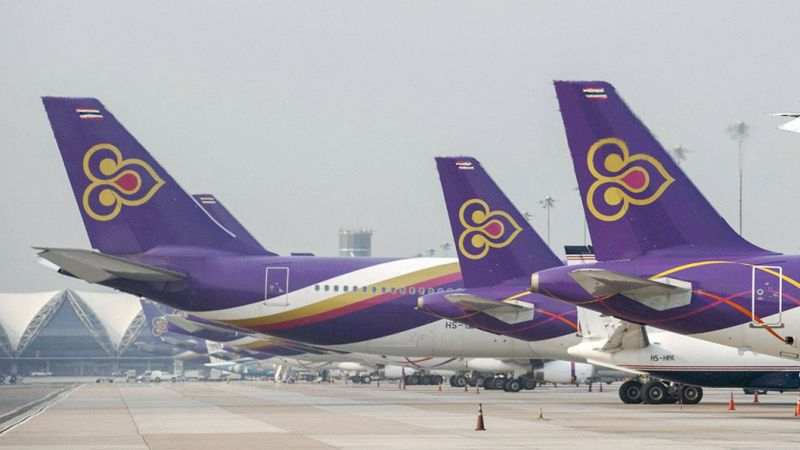
Thai Airways International (THAI) is implementing measures to boost passenger confidence amid the spread, mainly in central China, of the disease now being referred to as the “novel coronavirus”.

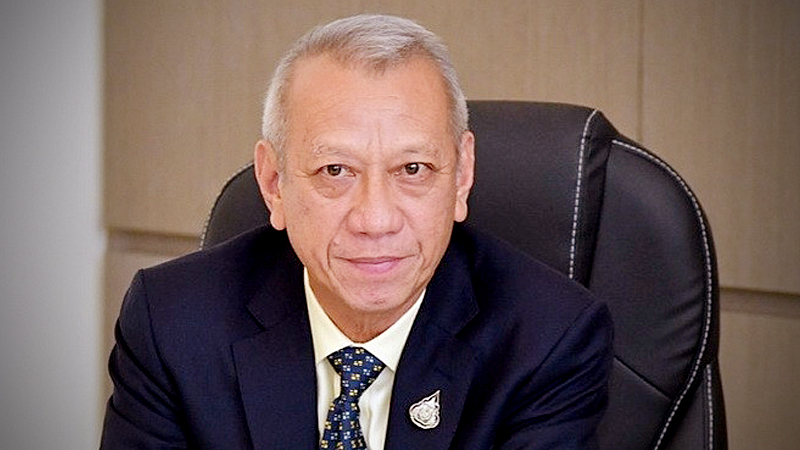
Flight Lt Pratana Patanasiri, THAI’s vice president for aviation safety, security and standards, said the actions were based on directives issued by the Public Health Ministry and Civil Aviation Authority of Thailand.

He said passengers were now being more carefully screened and ground-service measures had been instituted.

Also taking effect are measures covering inflight service, aircraft preparation, interior cleaning and disinfection, employee precautions, cargo and commercial mail transportation and meal preparation.

Pratana said employees on duty must “take heed of personal hygiene, such as wearing protective masks and gloves and pay attention to passenger symptoms while onboard”.

U.N. report: Saudi crown prince was involved in alleged hacking of Bezos phone #ศาสตร์เกษตรดินปุ๋ย

#ศาสตร์เกษตรดินปุ๋ย : ขอบคุณแหล่งข้อมูล : หนังสือพิมพ์ The Nation

https://www.nationthailand.com/news/30380960?utm_source=category&utm_medium=internal_referral

U.N. report: Saudi crown prince was involved in alleged hacking of Bezos phone

Jan 23. 2020
By The Washington Post · Marc Fisher
Jan 23, 2020

On April 4, 2018, the richest man in the world and the leader of the world’s biggest oil-exporting nation met at a dinner party at a Hollywood producer’s house in Los Angeles and exchanged phone numbers.

“Hello MBS,” Jeff Bezos wrote in a text that evening.

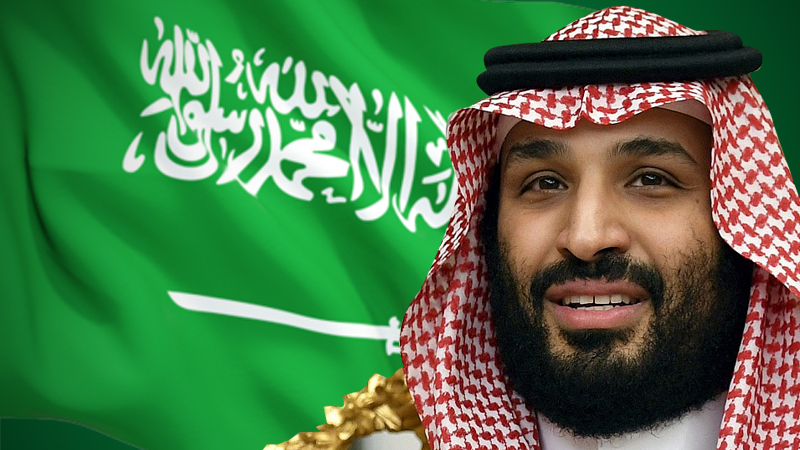
“Hello, I saved the number,” replied Saudi Arabian Crown Prince Mohammed bin Salman – often known as “MBS” – the next morning.

One day earlier, The Washington Post, which the Amazon founder and CEO owns, had published a column by Saudi dissident Jamal Khashoggi that blasted the prince’s government, saying that “replacing old tactics of intolerance with new ways of repression is not the answer.”

Four weeks later, on May 1, the prince sent Bezos a WhatsApp message containing a video in Arabic promoting Saudi Arabia’s telecom market. Allegedly inside the video file, according to a United Nations report released Wednesday, was a tiny, malicious piece of code that allowed the sender to extract massive amounts of information from the phone over the course of many months.

U.N. human rights investigators have now concluded with “medium to high confidence” that an account belonging to Mohammed sent that infected video to Bezos, triggering a gigantic extraction of data and fueling a concerted campaign against the billionaire, Amazon and The Post.

Human rights investigators Agnes Callamard and David Kaye said that a forensic probe of Bezos’ phone “suggests the possible involvement of the Crown Prince in surveillance of Mr. Bezos, in an effort to influence, if not silence, The Washington Post’s reporting on Saudi Arabia.”

In a statement released Wednesday, Callamard and Kaye called for the United States and other nations to investigate the alleged hacking of Bezos’ phone as part of a larger look at what they called “the continuous, multi-year, direct and personal involvement of the Crown Prince in efforts to target perceived opponents.”

The U.N. experts decided to examine the allegations as an extension of their investigation into the killing of Khashoggi, who wrote opinion columns for The Post and was slain in October 2018 at the Saudi Consulate in Istanbul.

Callamard and Kaye said Mohammed’s apparent involvement was part of “a pattern of targeted surveillance” by Saudi authorities.

The U.N. officials based their conclusions on a forensic investigation of Bezos’ phone commissioned by the Amazon founder. Bezos hired investigator Anthony Ferrante of FTI Consulting last year to examine his iPhone X. In a report written in November, Ferrante, a former chief of staff of the FBI’s Cyber Division, concluded that Bezos’ device had been compromised “possibly via tools procured by Saud al Qahtani,” who directed hacking programs for the Saudi government and led a massive online campaign of tweets targeting Bezos, Amazon and The Post.

The alleged hack of Bezos’ phone took place five months before Khashoggi’s death in 2018, which the CIA linked to the Saudi government in a briefing with senators in December of that year.

The U.S. Treasury Department sanctioned Qahtani for his role as “part of the planning and execution” of Khashoggi’s death, but a Saudi public prosecutor last month found a “lack of evidence” against him. The Saudi government said five other Saudis were sentenced to death in connection with the Khashoggi killing but did not identify them.

Ferrante’s report said Qahtani bought a 20 percent ownership in a company called Hacking Team that had been working to develop a way to infect phones by sending videos through the WhatsApp messaging platform.

Saudi Arabia’s foreign minister, Prince Faisal bin Farhan Al Saud, called the U.N. report “absurd.” At a meeting of world leaders in Davos, Switzerland, the minister said, “The idea that the crown prince would hack Jeff Bezos’ phone is absolutely silly.”

A person close to Mohammed called it inconceivable that the crown prince would try to hack Bezos’ phone but said one of his aides might have. Like others, the person spoke on the condition of anonymity because they were not authorized to publicly discuss the issue. Khashoggi’s columns in The Post “hit Riyadh like a bombshell,” the person said. “There is also this thrill when you buy some software, and you don’t know your limits.”

A spokesman for Bezos declined to comment. Bezos on Wednesday tweeted a photo of himself at a memorial ceremony in October, honoring Khashoggi a year after his death. Bezos accompanied the picture with just one word, the hashtag #Jamal.

Ferrante’s report says that “within hours of receipt of the MP4 video file from the Crown Prince’s account, massive and (for Bezos’ phone) unprecedented exfiltration of data from the phone began.” The flow of data out of Bezos’ phone jumped suddenly by 29,156 percent, and the “spiking then continued undetected over some months.” Material extracted from Bezos’ phone included personal photos, text messages, instant messages, emails and possibly “eavesdropped recordings done via the phone’s microphone,” Ferrante found.

Twice in the months after the initial breach, Bezos received texts from the crown prince’s account that seemed to demonstrate that the sender had access to Bezos’ private information.

On Nov. 8, 2018 – two months before the National Enquirer published an exposé revealing that Bezos had been conducting an extramarital affair with former TV host Lauren Sanchez – Bezos received a photo of a woman who looked something like Sanchez.

The photo was accompanied by a cryptic caption saying that “Arguing with a woman is like reading the Software License agreement. In the end you have to ignore everything and click I agree.”

Ferrante’s report said the message arrived “precisely during the period Bezos and his wife were exploring divorce.” At that point, there had been no public reporting on the collapse of Bezos’ marriage.

Then, in February of last year, Bezos received a second text from Mohammed’s account – one that the consultant said showed that the Saudi leader had information “that could have been gained via surveillance of Bezos’ phone.”

On Feb. 14, Bezos had been sent a detailed briefing – delivered to his iPhone – about the Saudis’ online propaganda campaign against him. Two days later, a text arrived from Mohammed’s account saying, “Jeff all what you hear or told to it’s not true,… there is nothing against you or amazon from me or Saudi Arabia.”

The technology that investigators believe infected Bezos’ phone did not require him to click on the video but rather instantly created a channel for remote extraction of data from the phone, FTI concluded.

FTI was unable to find malware on Bezos’ phone. It concluded, however, that the extraordinary outflow of data right after the mysterious file arrived strongly indicated a hack.

“It’s not the smoking gun, but it’s very suspicious,” said Matthew Green, a computer scientist at Johns Hopkins University. “If you’re looking for concrete, undeniable evidence of an actual hack, then it’s not here. But sometimes you’re not lucky enough to get that evidence. In fact, one of the goals of this kind of malware is to disguise the fact that it was present.”

Bill Marczak, a researcher at the University of Toronto’s Citizen Lab, which investigates spyware, said FTI’s report uncovered “worrying” allegations, including the “massive data egress spikes from Bezos’ phone,” which he said require further investigation.

The U.N. experts cited reports that Saudi officials have previously used malware such as the NSO Group’s Pegasus-3 product to surveil dissidents’ computer activity. NSO Group, an Israeli company, issued a statement on its website Wednesday denying “unequivocally” that its product was used in the alleged Bezos hack.

The alleged hack on Bezos’ phone is part of “a growing trend,” said Sen. Ron Wyden, D-Ore., in a letter to Bezos. Wyden cited reports that concluded the Saudis have bought hacking software from several commercial providers and used an NSO product to hack the phone of one of Khashoggi’s associates in Canada.

WhatsApp, which is owned by Facebook, discovered last spring that it had a vulnerability that allowed attackers to install surveillance software on Apple and Android phones. The U.N. statement said “the use of WhatsApp as a platform to enable installation of Pegasus onto devices has been well-documented and is the subject of a lawsuit by Facebook/WhatsApp against NSO Group.”

“We are aware of the media reports and are concerned about the allegations,” said a Trump administration official.

The Office of the Director of National Intelligence, the Justice Department and the FBI declined to comment on the U.N. experts’ conclusions. People with knowledge of the case have said that federal prosecutors in New York have been investigating Bezos’ allegation, made in an online essay last year, that executives at the National Enquirer tabloid newspaper used “extortion and blackmail” against him. The Enquirer’s 11-page story last January, touted as “the biggest investigation in Enquirer history,” included surveillance photos of Bezos with Sanchez.

Bezos said that American Media Inc., the Enquirer’s parent company, threatened to publish photos of his genitals unless he publicly stated that the exposé of his extramarital affair was not motivated by the newspaper’s ties to President Donald Trump. Trump and David Pecker, AMI’s chief executive, were friends for many years, and AMI admitted to paying two women who said they had affairs with Trump.

The Enquirer said last year that its “single source” who provided information about Bezos’ affair was not the Saudis, but rather Sanchez’s brother, Michael Sanchez, who denied the allegation.

Any U.S. investigation of the latest hacking allegations would probably be conducted by the FBI. But such a probe would be extremely difficult for both legal and diplomatic reasons.

The bureau probably could not confront hacking suspects in the Saudi government, let alone the crown prince himself. Even if law enforcement officials could use intelligence sources or technical methods to find evidence against someone in the Saudi government, they would face a difficult decision: Do they publicly charge suspects mainly to shame them, knowing they would probably never face trial in the United States and potentially strain diplomatic relations? Or would the FBI remain silent rather than reveal how U.S. authorities gather intelligence on their Saudi allies?

In recent years, officials have at times charged foreign actors. For example, the Justice Department indicted Russian government hackers for interfering in the 2016 election and similarly charged government-backed Iranian hackers with a wide array of computer mischief. A person familiar with the federal investigation into the hacking of Bezos’ phone said the FBI approved the selection of Ferrante to do the forensics work on the device.

The U.N. report marks the first time a public entity has backed up Bezos’ allegations about Saudi involvement in the hacking. Last year, Bezos alleged through his security consultant, Gavin de Becker, that the Saudi government had “access to Bezos’ phone, and gained private information.” De Becker wrote in the Daily Beast that the Saudis were “intent on harming Jeff Bezos since . . . the Post began its relentless coverage” of the killing of Khashoggi.

Within days of Khashoggi’s death, as The Post published numerous news accounts about the killing and the Saudi government’s involvement, a massive Internet campaign against Bezos began, focused on his role as owner of The Post.

By the next month, the top-trending hashtag on Saudi Twitter was “Boycott Amazon.”

Relations between Bezos and the Saudi government have deteriorated over the past two years. After Trump picked Saudi Arabia for his first foreign trip as president, and Mohammed visited the United States in early 2018, Bezos’ company continued its efforts to make a $2.2 billion deal to build three data centers for Amazon Web Services in the desert kingdom – a project that seemed to dovetail with the prince’s desire to expand his country’s participation in the global economy.

AWS, which dominates the cloud-computing industry, is the most profitable part of Bezos’ colossal business empire. The discussions between AWS and the Saudis ended after the Khashoggi killing.

But a far smaller piece of Bezos’ business interests, The Post, proved to be what the billionaire later called “a complexifier.”

After the Enquirer published its exposé, Bezos did not deny the affair with Sanchez, but wrote an online essay in which he said he was investigating how the Enquirer had obtained his texts with his girlfriend.

“Certain powerful people who experience Washington Post news coverage will wrongly conclude I am their enemy,” Bezos wrote.

– – –

The Washington Post’s Kareem Fahim in Istanbul, Jay Greene in Seattle, and Shane Harris, Carol Morello, Ellen Nakashima and Matt Zapotosky in Washington contributed to this report.

Minister to seek free visas for Chinese, Indian tourists; floats ‘Eat, Shop, Spend’ scheme for foreigners #ศาสตร์เกษตรดินปุ๋ย

#ศาสตร์เกษตรดินปุ๋ย : ขอบคุณแหล่งข้อมูล : หนังสือพิมพ์ The Nation

https://www.nationthailand.com/news/30380998?utm_source=category&utm_medium=internal_referral

Minister to seek free visas for Chinese, Indian tourists; floats ‘Eat, Shop, Spend’ scheme for foreigners

Jan 24. 2020
By THE NATION

The Ministry of Tourism and Sports will propose tourism stimulus measures to the Cabinet on January 31.

Minister of Tourism and Sports Pipat Ratchakitprakarn said on Thursday (January 23) that the “top priority measure is to grant free visas to Chinese and Indian tourists, which should help boost tourism in 2020 substantially,” he said. “If the measure doesn’t get approval, we will seek to extend the visa on arrival period to the end of 2020 instead of April 30.”

Pipat further added that Thailand needs to act fast regarding the visa privilege or risk losing tourists to neighbouring countries such as Malaysia, which has announced free visas for Chinese and Indian tourists throughout 2020.

The free visa measure is expected to increase Indian tourists to 2.5 million from last year’s 1.9 million, while the number of Chinese tourists could exceed 12 million from last year’s 11 million, Pipat added.

“Apart from visa measures, the ministry has also come up with several other plans to boost tourism, including a campaign similar to the government’s ‘Eat, Shop, Spend’ scheme but targeted at foreign tourists,” he said. “We will discuss the possibility of handing out cash coupons to foreign tourists visiting Thailand, which should help boost their spending and dampen the effects of the baht appreciation. We expect to use the central budget to fund this project.”

The Ministry of Tourism and Sports estimates revenue from the tourism industry in 2020 to reach Bt3.4 trillion, higher than last year’s Bt3.01 trillion. The number of foreign tourists visiting Thailand is expected to reach 40.5 million to 41 million people and generate income of at least Bt2.1 trillion.

EEC solar energy project gets the nod with goal of becoming zero-carbon area #ศาสตร์เกษตรดินปุ๋ย

#ศาสตร์เกษตรดินปุ๋ย : ขอบคุณแหล่งข้อมูล : หนังสือพิมพ์ The Nation

https://www.nationthailand.com/news/30380997?utm_source=category&utm_medium=internal_referral

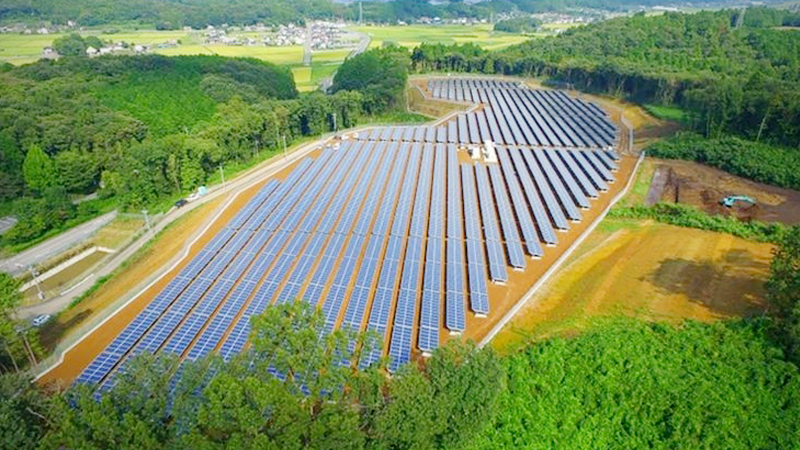
EEC solar energy project gets the nod with goal of becoming zero-carbon area

Jan 24. 2020
By THE NATION

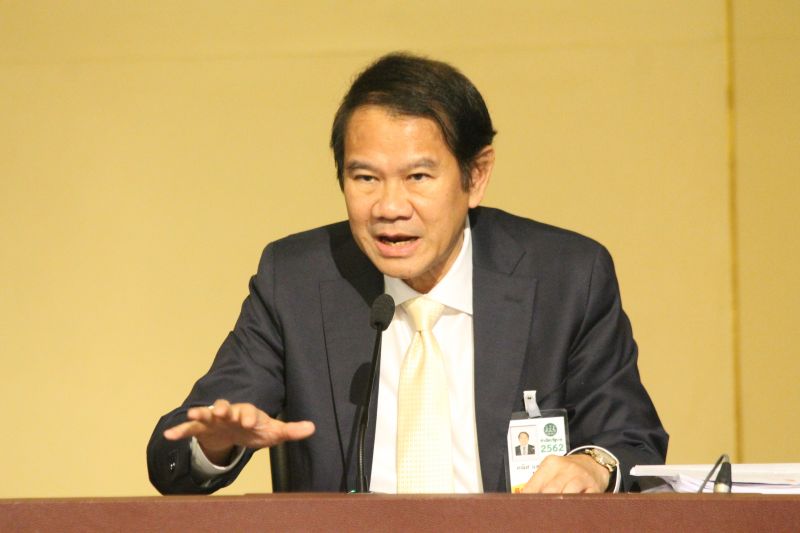
The EEC development subcommittee chaired by Finance Minister Uttama Savanayana has approved the clean energy (solar) project in the Eastern Economic Corridor, EEC Policy Office secretary-general Kanit Sangsubhan said on Thursday (January 23).

“This project was proposed by Provincial Electricity Authority and aims to study, develop and invest in solar energy generation, distribution and storing in EEC areas,” he said. “It will also expand to other renewable energies in the future with the goal of making the EEC a low-carbon community and achieving the ratio between fossil fuel and clean energy usage of 70:30.”

Kanit

Kanit

Kanit said that in the first phase, the EEC will seek co-investment with the private and agricultural sectors to establish solar farms in EEC areas with capacity not less than 500 megawatts. “We will also work with Thailand Greenhouse Gas Management Organisation to plan and design a carbon-credit system to allow the trading of greenhouse gas quota in the voluntary carbon market among entrepreneurs in EEC areas.”

“We hope that this project will drive the EEC towards being a zero-carbon city, as well as promote the study and development of solar energy manufacturing and storage technology to be used in other communities nationwide,” added Kanit.

Light thundershowers forecast all over Thailand #ศาสตร์เกษตรดินปุ๋ย

#ศาสตร์เกษตรดินปุ๋ย : ขอบคุณแหล่งข้อมูล : หนังสือพิมพ์ The Nation

https://www.nationthailand.com/news/30380996?utm_source=category&utm_medium=internal_referral

Light thundershowers forecast all over Thailand

Jan 24. 2020
By THE NATION

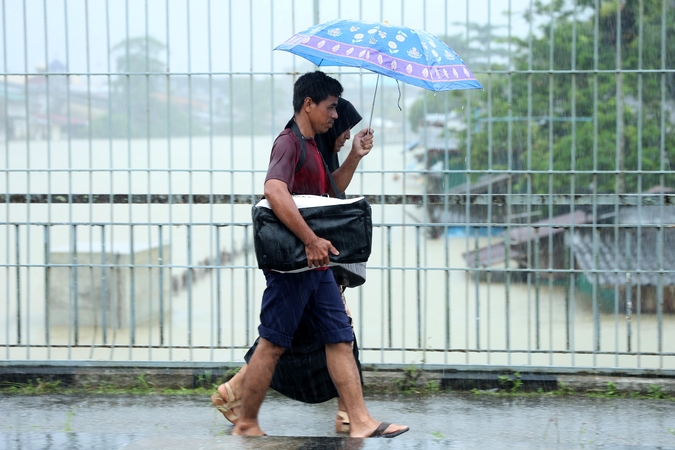
Thundershowers and gusty winds are forecast for the upper North on January 24-25, as another high-pressure system from China will extend to the Northeast of Thailand and the South China Sea while the westerly trough will move through the North and Northeastern region by Friday.

The Thailand Meteorological Department forecast on Friday (January 24) that the plains of the North and the Northeast will see cool to cold mornings and minimum temperatures in the range of 11-23 degrees Celsius. The southeasterly wind prevails over the Central and the East while easterly winds prevail across the South, leading to light rains.

Dust situation: In the North and Central region, including Bangkok and its vicinity, strengthening winds blowing around the area will decrease the accumulation of dust and smog.

The weather forecast for the next 24 hours is as follows:

Northern region: Cool to cold in the morning with thundershowers in 10 per cent of the area; temperature lows of 10-22°C and highs of 32-37°C. Temperature likely to drop to 4-11°C on hilltops with frost in some areas.

Northeastern region: Cool weather with fog in the morning and thundershowers in 20 per cent of the area; temperature lows of 19-22°C and highs of 35-37°C. Temperature likely to drop to 12-15°C on hilltops.

Central region: Cool with fog in the morning and thundershowers in 10 per cent of the area; temperature lows of 22-24°C, highs of 35-37°C.

Eastern region: Fog in the morning and thundershowers in 10 per cent of the area; lows of 23-26°C, highs of 32-36°C; waves lower than a metre high.

Southern region (east coast): Mostly cloudy with thundershowers in 20 per cent of the area; lows of 22-25°C, highs of 31-34°C; waves 1-2 metres high.

Southern region (west coast): Partly cloudy with thundershowers in 10 per cent of the area; lows of 22-26°C, highs of 33-36°C; waves a metre high.

Bangkok and surrounding areas: Fog in the morning with thundershowers in 10 per cent of the area; lows of 24-26°C, highs of 34-36°C.