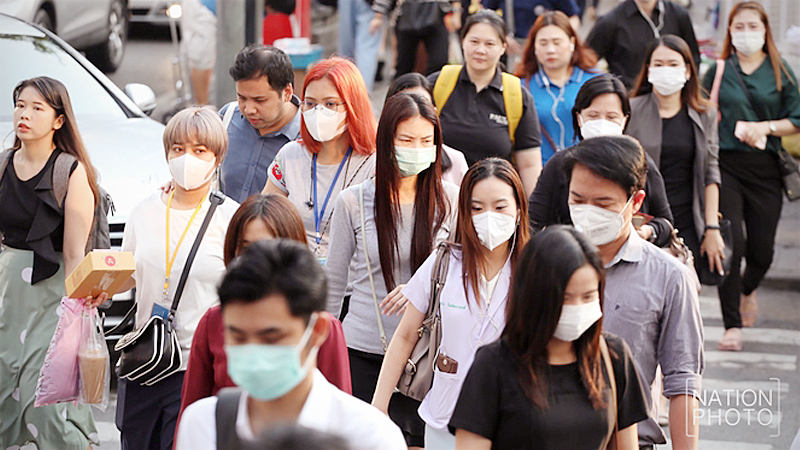
Coronavirus scare chills SET, other Asian markets #ศาสตร์เกษตรดินปุ๋ย

#ศาสตร์เกษตรดินปุ๋ย : ขอบคุณแหล่งข้อมูล : หนังสือพิมพ์ The Nation

https://www.nationthailand.com/business/30380951?utm_source=category&utm_medium=internal_referral

Coronavirus scare chills SET, other Asian markets

Jan 23. 2020
By The Nation

The Stock Exchange of Thailand index remained in a slump on Thursday morning (January 23), down about 0.4 per cent following a fall Wednesday.

Tisco Financial Group is predicting a narrow swing between a support level of 1,565-1,570 and a resistance level of 1,585 from Wednesday’s close of 1,574.59.

It cited several contributing factors for the muted trade, including concerns about the Wuhan coronavirus, an expected delay in disbursing the budget for fiscal 2020 and a lowered project for world economic growth from the International Monetary Fund.

Tisco is recommending investment in STEC, SEAFCO, PYLON, COMM, CPALL, BJC, BBL, KKP, SCB and AEONTS.

Coronavirus concerns dropped both Japan’s Nikkei 225 and South Korea’s Kospi about 1 per cent, the Shanghai Composite index and Hong Kong’s Hang Seng by more than 2 per cent and the Shenzhen Composite about 3 per cent.

There have been reports suggesting that thousands in Wuhan, public transit has been suspended, might be infected, rather than the official tally of 571.

Constitutional Court ruling sought on passage of FY2020 budget #ศาสตร์เกษตรดินปุ๋ย

#ศาสตร์เกษตรดินปุ๋ย : ขอบคุณแหล่งข้อมูล : หนังสือพิมพ์ The Nation

https://www.nationthailand.com/news/30380959?utm_source=category&utm_medium=internal_referral

Constitutional Court ruling sought on passage of FY2020 budget

Jan 23. 2020
Chuan Leekpai

Chuan Leekpai
By The Nation

President of the National Assembly Chuan Leekpai on Thursday (January 23), submitted a request to the Constitutional Court, seeking its ruling on the verification of the Bt3.2 trillion budget bill for fiscal year 2020 after two Bhumjaithai MPs (Chalong Toedweerapong and Natee Ratchakitprakarn) were accused of casting their vote without being present during the voting process.

If their action was ruled unconstitutional, it will not affect the salary payments of government officials but projects’ funding will be deliberated on a case-by-case basis, said the president.

“I have to admit that this place [parliament house] is not yet ready for MPs who have yet to be allocated their own seats. They are still using the Senate’s Chandra conference room for meetings. If MPs have regular seats, we would know who’s voting. But, it largely depends on the responsibility of each individual,” Chuan said.

Prime Minister Prayut Chan-o-cha was also concerned over delay of the bill’s passage since it would affect the country’s development plan.

Macao confirms 2nd novel coronavirus case, mainland 571 #ศาสตร์เกษตรดินปุ๋ย

#ศาสตร์เกษตรดินปุ๋ย : ขอบคุณแหล่งข้อมูล : หนังสือพิมพ์ The Nation

https://www.nationthailand.com/news/30381000?utm_source=category&utm_medium=internal_referral

Macao confirms 2nd novel coronavirus case, mainland 571

Jan 24. 2020
Passengers don masks in a subway in Wuhan on Wednesday amid an outbreak of pneumonia. ZHOU GUOQIANG/FOR CHINA DAILY

Passengers don masks in a subway in Wuhan on Wednesday amid an outbreak of pneumonia. ZHOU GUOQIANG/FOR CHINA DAILY
By ​China Daily/ANN

MACAO/BEIJING – A Macao hospital reported its second case of novel coronavirus, the special administrative region (SAR)’s health service announced on Thursday morning.

A 66-year-old man traveling from Wuhan of central China was sent to Centro Hospitalar Conde de Sao Januario Wednesday afternoon, after the health authorities at Border Gate checkpoint found he had fever, with his body temperature registering 38.7 degrees centigrade.

He tested positive for novel coronavirus at the hospital and has been quarantined. His four family members traveling with him have also been quarantined for medical observation.

In Beijing, Chinese health authorities announced Thursday that 571 confirmed cases of pneumonia caused by the novel coronavirus (2019-nCoV) had been reported across 25 provincial-level regions in the country by the end of Wednesday.

A total of 393 suspected cases had also been reported, according to the National Health Commission (NHC).

The pneumonia outbreak so far resulted in 17 deaths, all in central China’s Hubei province. Those who died were aged between between 48 and 89, according to the commission.

It added that most of the patients who died had underlying health issues such as cirrhosis, diabetes, high blood pressure and coronary heart disease.

As of Tuesday night, a total of 32 cases of novel coronavirus had been confirmed in Guangdong province, according to the Guangdong Health Commission.

Of the 32 people infected, 28 lived in or had recently travelled to Wuhan and the other four are their family members. So far, six family clusters have been identified in the province, involving 17 cases. No medical personnel has been infected.

Overseas, cased have been confirmed in the regions of Hong Kong, Macao, Taiwan, as well as in the United States, Japan, the Republic of Korea and Thailand.

A total of 5,897 people who came in close contact with the patients have been traced, the commission said, adding that of them, 4,928 remained under medical observation while 969 had been discharged.

Based on current knowledge, the incubation period of the virus – the interval between infection and onset of symptoms – can be as long as about 14 days, according to a prevention and control plan released Wednesday by the NHC.

Meanwhile, the general office of the NHC and the office of the National Administration of Traditional Chinese Medicine jointly issued the third trial version of the diagnosis and treatment plan Thursday.

The updated plan covers the etiology characteristics of the virus, the clinical characteristics of the outbreak, related case definition and diagnosis, as well as discovery and reporting of cases. It also offers treatment plans including those with traditional Chinese medicine.

With Xinhua inputs

Press Myanmar to comply with the ICJ order #ศาสตร์เกษตรดินปุ๋ย

#ศาสตร์เกษตรดินปุ๋ย : ขอบคุณแหล่งข้อมูล : หนังสือพิมพ์ The Nation

https://www.nationthailand.com/news/30380999?utm_source=category&utm_medium=internal_referral

Press Myanmar to comply with the ICJ order

Jan 24. 2020
By The Daily Star/ANN

Global human rights bodies have called for the international community to press Myanmar to comply with the order issued by the International Court of Justice (ICJ) to protect Rohingyas in Rakhine from the acts of possible genocide.

They also called on corporations to end any business relationships with companies owned or controlled by the Myanmar army, saying that there can no longer be “business as usual” with the perpetrators of genocide if the Myanmar government fails to comply with the ICJ order.

“The ICJ order to Myanmar to take concrete steps to prevent the genocide of Rohingyas is a landmark step to stop further atrocities against one of the world’s most persecuted people,” said Param-Preet Singh, associate international justice director at Human Rights Watch.

“The governments and UN bodies concerned should now weigh in to ensure that the order is enforced as the genocide case moves forward,” she said in a statement.

The ICJ at the Hague, Netherlands, has also ordered Myanmar to stop the crimes against Rohingyas and prevent the military or paramilitary forces from making a physical and mental harm of the ethnic minorities. It also ordered Myanmar to report on its implementation of the order in four months, and then every six months afterwards.

The order comes after The Gambia filed a case in November accusing Myanmar of violating UN Genocide Convention. Some 750,000 Rohingyas fled brutal military campaign in Rakhine to Bangladesh. An estimated 600,000 Rohingyas remain in Rakhine, but continue to face serious rights violations.

The HRW said the ICJ order does not prejudge the question of the court’s jurisdiction to deal with the merits of the case, the case’s admissibility before the court, or the merits of The Gambia’s allegation that Myanmar has violated provisions of the Genocide Convention. A case before the ICJ can take years to reach a resolution.

The ICJ provisional measures order is legally binding on the parties. The court’s provisional measures orders are automatically sent to the UN Security Council. Therefore, such an order will increase pressure on the council to take concrete action in Myanmar, HRW said.

For example, the Security Council could pass a resolution directing Myanmar to lift restrictions on Rohingya’s freedom of movement, eliminate unnecessary restrictions on humanitarian access to Rakhine State, repeal discriminatory laws, and ban practices that limit Rohingya access to education, healthcare, and livelihoods.

Thus far, the Security Council has not taken (significant) action on Myanmar, in part because of Russia and China’s apparent willingness to use their vetoes to shield the Myanmar’s government and military, HRW said.

“The ICJ order brings increased scrutiny of Myanmar’s horrific brutality against Rohingyas and raises the political cost of the UN Security Council’s weak response to the crisis so far,” Singh said.

“China and Russia should stop blocking the Security Council from taking action to protect Rohingyas.”

The HRW said the UN Human Rights Council and the UN General Assembly could pass resolutions calling on Myanmar to comply with its terms. This could spur other countries to take action against Myanmar.

“The Myanmar government cannot hide behind its powerful friends or the banner of sovereignty to escape its responsibilities under the Genocide Convention.”

“This is a major victory for Rohingyas everywhere,” said Matthew Smith, chief executive officer of Fortify Rights.

Fortify Rights encouraged members of the Myanmar military, state security forces, and the government to come forward with additional evidence of crimes against Rohingyas and others that could be used at the ICJ and in international prosecutions.

“It is now imperative that the international community apply sufficient pressure on Myanmar to comply with the International Court of Justice’s rulings and end its genocide of Rohingyas,” stated Simon Billenness, executive director of the International Campaign for the Rohingya and campaign director of No Business With Genocide.

“We urge governments to impose tough sanctions on the Myanmar military and its business empire. We further call on corporations to end any business relationships with companies owned or controlled by the Burmese [Myanmar] army. There can be no longer be “business as usual” with the perpetrators of genocide.”

The Asia Justice Coalition has urged members of the international community to unequivocally support the pursuit of justice for Rohingyas, and to impress upon Myanmar the legal obligation to comply with the order of the court.

How new coronavirus differs from SARS, measles and Ebola #ศาสตร์เกษตรดินปุ๋ย

#ศาสตร์เกษตรดินปุ๋ย : ขอบคุณแหล่งข้อมูล : หนังสือพิมพ์ The Nation

https://www.nationthailand.com/news/30380995?utm_source=category&utm_medium=internal_referral

How new coronavirus differs from SARS, measles and Ebola

Jan 24. 2020
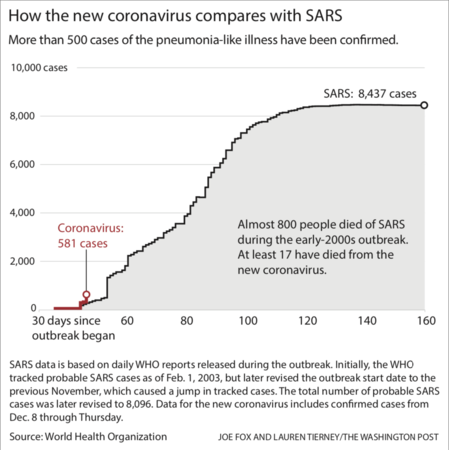
How the new coronavirus compares with SARS
Photo by: The Washington Post — The Washington Post

How the new coronavirus compares with SARS Photo by: The Washington Post — The Washington Post
By The Washington Post · Yasmeen Abutaleb 

Global health officials have almost as many questions as answers about the mysterious, pneumonia-like virus that originated in China last month and has spread to at least five other countries, including the United States. How exactly is it transmitted? How infectious is it and, most critically, how deadly?

They do know that the new virus is believed to have come from animals sold in a Wuhan market and that it shares many similarities with SARS, the coronavirus that also originated in an animal-to-human transmission in China in 2002, though it does not appear to be as deadly.

Similar to SARS – or severe acute respiratory syndrome, which infected more than 8,000 people and killed nearly 800 before it was mostly contained in 2003 – the new virus spreads through close person-to-person contact. Each infected person seems to spread the virus to about two others, through coughing or sneezing or by leaving germs on a surface that is touched by non-infected people who touch their faces, said Colleen Kraft, who is associate chief medical officer for Emory University Hospital and helped treat the first U.S. Ebola cases in 2014.

The latest report from Chinese health authorities put the death toll from the new coronavirus at 25, with 1,072 suspected cases nationwide.

It is not nearly as infectious as the measles virus, which can live for up to two hours in the air after an infected person coughs or sneezes. Nor does it appear to be anywhere near as deadly as Ebola, which is also much harder to transmit. Ebola is passed largely through direct contact with an infected person’s blood or bodily fluids.

Yet Kraft and global health officials from the World Health Organization cautioned that understanding of the novel virus is still evolving and that the way it spreads and infects people could also change over time.

“The transmission is going to be the same as other respiratory viruses,” Kraft said. “Whether it’s more severe in a person or lasts longer on the surface, those are things that can change. As we learn those things, we can gauge what our panic mode needs to be.”

The WHO on Thursday said it was still too early to declare the outbreak an international public health emergency – a step the international body ultimately took for Ebola in 2014 and Zika in 2016.

Coronaviruses range from the common cold to more-severe diseases such as SARS and Middle East respiratory syndrome, or MERS. Some coronaviruses, including this new one, can cause severe symptoms and illnesses, including pneumonia.

Yet because there are still so many unknowns, there are many scenarios of how this virus could spread, said Tom Frieden, former director of the Centers for Disease Control and Prevention.

An unlikely possibility is that it can be transmitted as readily as the common cold and cause severe pneumonia in a small fraction of people, Frieden said. “That seems quite unlikely, but it would be alarming because it could become like a circulating strain of flu all over the world,” Frieden said.

Another possibility: The virus spreads like SARS – in other words not as readily as the flu – but causes less severe illness than that sister virus. “That would be concerning but not as alarming, and potentially more controllable,” he said.

There is no vaccine or treatment for this coronavirus, but the National Institutes of Health said human trials for a coronavirus vaccine could begin within three months. It is spreading in health-care settings, which officials say is also cause for concern.

“Many things are giving us an advantage, but our disadvantage is the unknown – not fully understanding the disease, its severity and its transmission,” Michael Ryan, executive director of the WHO’s health emergencies program, said at a news conference Thursday.

Chinese cities cancel New Year celebrations, travel ban widens in effort to stop coronavirus outbreak #ศาสตร์เกษตรดินปุ๋ย

#ศาสตร์เกษตรดินปุ๋ย : ขอบคุณแหล่งข้อมูล : หนังสือพิมพ์ The Nation

https://www.nationthailand.com/news/30380994?utm_source=category&utm_medium=internal_referral

Chinese cities cancel New Year celebrations, travel ban widens in effort to stop coronavirus outbreak

Jan 24. 2020
On Jan. 23, China enacted travel bans for the central Chinese city of Wuhan in an effort to contain a coronavirus outbreak.

On Jan. 23, China enacted travel bans for the central Chinese city of Wuhan in an effort to contain a coronavirus outbreak.
By The Washington Post · Anna Fifield, Lena H. Sun · WORLD, HEALTH

BEIJING -Major Chinese cities, including Beijing and quarantine-blocked Wuhan, banned all large gatherings over the coming Lunar New Year festival, the most important holiday on the Chinese calendar, in an expanding effort to contain a rapidly spreading coronavirus outbreak.

The announcement Thursday came as authorities expanded travel restrictions imposed on Wuhan to surrounding municipalities, shutting down travel networks and attempting to quarantine about 25 million people

– more than the population of Florida. Here is what we know:

– Cases of the virus have been detected around China, including Hong Kong and Macao, and other countries, including Japan, South Korea, the United States and Thailand. Singapore and Vietnam are the latest to join the list.

– At least 25 deaths have been confirmed in China, with 835 people infected.

– U.S.-bound travelers from Wuhan will be routed to five airports for screening: Chicago’s O’Hare, New York’s John F. Kennedy, Atlanta’s Hartsfield-Jackson, and Los Angeles’s and San Francisco’s international airports.

– Residents of Wuhan report empty shelves in stores and express frustration that the government isn’t telling them the full story.

– The World Health Organization declined to declare a global health emergency Thursday, saying it’s too early.

The extreme measures were accompanied by other indications that Communist Party authorities were struggling to control the outbreak, notably the aggressive censorship of any criticism or skepticism on social media.

But some outspoken doctors warned that the controls would not be enough to stop the spread of the pneumonia-like virus, which has killed 25 people in Wuhan and surrounding Hubei province.

“A bigger outbreak is certain,” said Guan Yi, a virologist who helped identify severe acute respiratory syndrome (SARS) in 2003. He estimated – “conservatively,” he said – that this outbreak could be 10 times bigger than the SARS epidemic because that virus was transmitted by only a few “super spreaders” in a more defined part of the country.

“We have passed through the ‘golden period’ for prevention and control,” he told Caixin magazine from self-imposed quarantine after visiting Wuhan. “What’s more, we’ve got the holiday traffic rush and a dereliction of duty from certain officials.”

The Centers for Disease Control and Prevention announced Thursday that health officials in Texas notified it about a potential case of coronavirus. CDC said in a statement that it is in communication with state health officials and will share more information as it becomes available.

Health officials in Brazos County, Texas – which is where Texas A&M University is located and is about 100 miles northwest of Houston – said they are investigating a patient who meets the definition of a potential case of the new virus. The patient contracted a respiratory illness within two weeks of traveling in Wuhan and is being isolated at home in accordance with recommendations from the CDC.

In Geneva, the World Health Organization cited Chinese efforts to prevent transmission and the limited number of cases recorded abroad as its reasons for not declaring Thursday that the outbreak was a public health emergency of international concern.

But WHO Director General Tedros Adhanom Ghebreyesus said at a news conference that the decision “should not be taken as a sign that WHO does not think the outbreak is serious or that we’re not taking it seriously. Nothing could be further from the truth.”

He said the emergency committee was divided on whether the outbreak deserved the special designation, but said regardless, the outbreak amounts to “an emergency in China.””It has not yet become a global health emergency, but it may become one.”

In general, declaring an international public health emergency gives the WHO director general powers to issue recommendations to other countries, such as urging them not to close borders or restrict trade with a country in the middle of an outbreak. Public health officials say such measures are considered unlikely to stop disease spread and very likely to discourage countries from being forthright about outbreaks.

WHO officials gave the most detailed information so far about the severity of the illness associated with the new coronavirus. Much about how it works is still unknown, Tedros said, including its source, how easily it spreads and its full clinical features. These are all critical factors, experts have said, for declaring a global health emergency.

The most likely source is an animal, WHO said. But officials don’t know which one. And they don’t know the extent of human-to-human spread.

Still, WHO officials said that despite some gaps in knowledge, they have several advantages confronting this outbreak compared with the 2003 SARS outbreak that also originated in China and sickened thousands of people worldwide.

Michael Ryan, executive director of WHO’s Health Emergencies Program, said it was too early to estimate just how severe this virus is and what proportion of people it kills, often referred to as the case fatality rate.

A vaccine is under development for the virus, but that process is not quick, and there are no specific therapies or treatment. Some of the patients who died in China have required extensive ventilator assistance to help them breathe.

As with other epidemics, countries with weaker health systems may come under pressure from the “worried well” who may overwhelm hospitals and clinics. Health officials need to “manage the pressures on the health systems,” Ryan said.

It has not peaked, he added. WHO officials are “grateful” for the partnership with China. In many similar situations, “other countries have not been willing to share at that level,” he said.

The data released by WHO drew criticism from some experts because so much remains unknown. WHO officials said that about 25 percent of cases were severe infections. China has reported the number of sick patients, but has not provided – and may not know – the total number of people infected.

If the total number of infected people is five or 10 times larger than those who have fallen ill and been diagnosed, “we can’t say 25 percent for severe infections without knowing the denominator, the number of people infected,” said Tom Frieden, former director of the Centers for Disease Control and Prevention.

The Lunar New Year holiday, a weeklong period when millions of Chinese travel to their hometowns – the biggest human migration on the planet – officially begins Friday.


Ahead of the holiday, authorities initially said that the virus, which began in a Wuhan food market selling exotic animals for consumption, was mild and could not be transmitted among humans. But that changed this week when the number of people infected by the virus, which has an incubation period as long as 14 days, began to rise rapidly.

Even one of the government’s top experts, who had played down the prospects for widespread infection, contracted the virus.

Chinese state media says there are 835 confirmed cases in mainland and five cases across Hong Kong, Macao, and Taiwan.

Now, cases have been detected around the country, from Harbin in the north to Shenzhen in the south.Vietnam and Singapore joined the list of other countries that have detected the virus, with both confirming two cases had been found and were being treated.

Airports around the world, from London to Dubai to Atlanta, have put special screening measures in place to detect passengers arriving from China with fevers.

Authorities in Beijing and the southern city of Guangzhou said they were restricting public gatherings over the Lunar New Year holiday, which officially begins Friday and is often celebrated with large fireworks displays and popular fairs at temples.

The Forbidden City, the old imperial palace in the heart of Beijing and one of China’s top tourist attractions, said it was closing its doors until further notice “to avoid cross-infection caused by the gathering of people.”

Authorities in Wuhan announced even more stringent measures. In addition to banning public gatherings, local officials, wearing masks, announced that the start of the spring semester at all Hubei province schools will be delayed because of the outbreak.

The ruling Communist Party, which initially tried to show transparency after being criticized for covering up the SARS virus outbreak 17 years ago, has now shown signs of reverting to its default position of censoring bad news.

In a post that was online for less than an hour, the Wuhan Health Commission admitted Thursday that it was struggling to respond to the outbreak.

A post from Wuhan Railway saying that 300,000 people traveled by train out of Wuhan on Wednesday, headed to every corner of the country, was also quickly deleted.

Analysts said the heavy-handed reaction underscored the political risks for Chinese leader Xi Jinping and the ruling Communist Party, already under pressure amid an economic slowdown and accused of mishandling an outbreak of swine fever last year, which led to a sharp spike in prices for China’s beloved pork.

“This outbreak may be the biggest threat to Xi and the Party in years, which is why they will stop at nothing to try to control and then eradicate it,” said Bill Bishop, publisher of the influential Sinocism newsletter.

The city of Wuhan pulsated with fear and anger Thursday, as 11 million people absorbed the news that they were being confined to a metropolis-sized quarantine zone designed to contain a widening coronavirus outbreak.

The three main railway stations, 13 bus stations, the entire subway network and almost all city bus lines were shut down at 10 a.m. Thursday. Half of the 566 flights scheduled at Wuhan’s international airport for Thursday were canceled, as were 251 ferry sailings on the Yangtze River, according to the Wuhan Transportation Bureau.

Many people flocked to the roads to try to avoid getting caught in the quarantine. Television footage showed health workers in hazmat suits taking motorists’ temperatures as they waited at toll booths.

Others did not make it out. Hubei’s highway management authority closed multiple expressways in and around Wuhan, and Wuhan traffic police confirmed that although vehicles were allowed to come into the city, they were prohibited from going out, except in special cases.

At least four other neighboring districts said they will adopt similar travel restrictions, effectively doubling the number of people in quarantine to 25 million.

In Macao, where one case has been found, the government said it might shut down the territory’s casinos if the epidemic worsens. Macao’s gambling sector is seven times the size of Las Vegas’s. The authorities have called off a public festival to ring in the new year.

Many people in Wuhan were incensed at the sudden announcement of the travel restrictions Thursday.

“I didn’t even receive a notice,” said one woman who found herself stranded at Hankou Railway Station. She had been on her way from Henan province southwest to Sichuan and was changing trains in Wuhan when she got caught up in the suspension.

Some people resorted to extreme measures to escape the travel ban. One man who could not get a taxi to the station to catch an earlier train persuaded a food delivery driver to give him a lift on his scooter. The desperate traveler paid $72 to have the man, who would usually make less than half that in a day, drop him at the station. “We were flying,” he said.

Others thought the ban was warranted.

“I think we can fully understand why they made the decision; they have no alternative,” said Zhu, a 56-year-old university professor in Wuhan who declined to give a full name. “But it’s difficult to tell how effective it will be.”

Still, distrust of authorities is mounting.

Although local authorities said they had enough food for residents and medical supplies to treat patients, Wuhan residents posted photos on social media showing empty shelves in grocery stores. Prices of fresh fruit and vegetables have spiked, with cabbages selling for double the usual amount.

Wuhan authorities have ordered residents to wear masks in public places, but the People’s Daily, the mouthpiece of the Communist Party, posted on social media that the province was short of masks and protective clothing. The post, which was widely shared, was soon deleted.

Speculation swirled that the government had silenced Zhong Nanshan, the renowned respiratory expert who helped discover SARS in 2003 and is known for his bluntness

Zhong, a member of the National Health Commission’s group of experts investigating the outbreak, had been on Chinese television constantly this week and announced the finding that the coronavirus could pass from human to human. But he has disappeared from screens in recent days and did not answer phone calls from The Washington Post.

As the uncertainty continued, Guan, the virologist who identified SARS, offered a chilling perspective on the outbreak.

“I’ve seen it all: bird flu, SARS, influenza A, swine fever and the rest. But the Wuhan pneumonia makes me feel extremely powerless,” he told Caixin. “Most of the past epidemics were controllable, but this time, I’m petrified.”

Trump, Democrats keep their distance as GOP moderates face crucial impeachment votes #ศาสตร์เกษตรดินปุ๋ย

#ศาสตร์เกษตรดินปุ๋ย : ขอบคุณแหล่งข้อมูล : หนังสือพิมพ์ The Nation

https://www.nationthailand.com/news/30380993?utm_source=category&utm_medium=internal_referral

Trump, Democrats keep their distance as GOP moderates face crucial impeachment votes

Jan 24. 2020
File Photo:  President Trump

File Photo: President Trump
By The Washington Post · Mike DeBonis, Josh Dawsey

WASHINGTON – They are the most closely watched senators of President Donald Trump’s impeachment trial – the moderate Republicans who might vote with Democrats to call new witnesses and subpoena unseen documents. But, a week into the trial, they are also oddly isolated.

Trump has kept his distance after White House advisers warned him that outreach would not help his cause. Democrats say there is no serious effort to privately lobby the Republicans, with the party relying instead on public opinion and the House prosecutors to squeeze them into breaking ranks.

The group of senators, some facing tough elections in November, could be decisive next week, defying GOP leaders and voting with Democrats for the witnesses and evidence that the Trump administration has repeatedly denied Congress. Such a move could extend the trial indefinitely, shed new light on Trump’s conduct and pose a serious threat to his presidency.

In the crosshairs are centrists such as Sens. Susan Collins of Maine, Lisa Murkowski of Alaska, Mitt Romney of Utah and Lamar Alexander of Tennessee, but also Sens. Joni Ernst of Iowa, Cory Gardner of Colorado and Martha McSally of Arizona and Thom Tillis of North Carolina, who, like Collins, face voters this year.

An incessant operator of the telephone, Trump has not taken to calling the potential swing senators to plead his case. Advisers, who spoke on the condition of anonymity because they were not authorized to discuss the matter publicly, said they have cautioned the president that calls to members such as Collins, Murkowski and Romney would not influence their decisions. So Trump has left them alone – returning to a tack he used during the successful fight to confirm Supreme Court Justice Brett Kavanaugh in 2018 – while regularly checking in with Senate Majority Leader Mitch McConnell, R-Ky., who has marshaled Trump’s trial defense.

Democrats have not made it easy. They used a series of procedural votes Tuesday night and early Wednesday morning to box in GOP leaders, potentially putting their goals of protecting Trump and ensuring their majority at odds by forcing the moderates to cast votes against summoning documents and witnesses.

What has so far been absent, multiple senators and aides said, is any sort of bipartisan dialogue aimed at brokering an agreement to secure testimony from key witnesses such as former national security adviser John Bolton and acting White House chief of staff Mick Mulvaney.

“They’re going to make a decision based on what they think,” said Sen. Debbie Stabenow, D-Mich. “People have to decide: Country or party.”

The tenor of the Democratic pressure campaign has prompted some Trump loyalists to view the impeachment trial as less about the president and more about Democrats’ efforts to seize power on Capitol Hill.

“The goal of this entire process is not to remove the president from office, it’s simply to remove certain Republican senators,” said Sen. Tim Scott, R-S.C. “This is absolutely an opportunity for them to try and overtake the Senate.”

The most vulnerable senators have adopted different approaches to the impeachment scrutiny. Collins has made a conspicuous display of her deliberations, taking copious notes during the trial and issuing public statements lending qualified support to the notion of witnesses. Gardner has stayed mostly silent, while Ernst, McSally and Tillis have been more eager to embrace Trump.

All, however, voted in near-lockstep with McConnell against the Democratic amendments for witnesses and evidence Tuesday and Wednesday – only Collins broke ranks, voting for one of 11 amendments to McConnell’s rules.

Asked about the Democratic pressure Thursday, Ernst was defiant.

“Bring it on, folks,” she said. “We’ve got a strong economy. Unemployment in Iowa is at an all-time low. We’re fully employed in this state. . . . I mean, you name it, we have had a number of successes here. And if they want to argue [impeachment] with me, bring it on.”

The pressure will build: More votes are expected next week, after the House managers and Trump’s defense team present their arguments. Some Democratic senators held out the possibility of bipartisan talks about summoning additional evidence at that point but suggested it would depend on whether the outside pressure campaign succeeded.

Democrats have public opinion on their side. Two polls released Wednesday found that significant majorities of Americans believe the trial should include new evidence.

A Monmouth University poll found that 57 percent of respondents believed the House impeachment managers should be able to present new evidence in the Senate trial, while a CNN poll found that 69 percent favor hearing from witnesses who did not testify during the House impeachment inquiry.

“The American people seem to agree with us,” Senate Minority Leader Charles Schumer, D-N.Y., said Thursday. “Am I certain that we’ll get those four Republicans? Absolutely not.”

Democratic campaign groups have ratcheted up the pressure – particularly on Collins, who called for witnesses in the 1999 impeachment trial of President Bill Clinton – but what they have not done so far is put significant money behind those messages.

Instead, multiple Democratic campaign officials said, they plan on continuing a tried-and-true strategy of focusing on health care and other proven messages while impeachment pressure mounts through home-state media coverage.

“Let’s be clear about one thing: Trump’s position on cutting Social Security and Medicare will be featured in far more ads this year than the fact that he has been impeached,” read a memo issued Wednesday by Priorities USA, a major Democratic super PAC that is expected to spend millions in key states.

But the Democratic officials, who were not authorized to comment publicly and spoke on the condition of anonymity, said the vulnerable senators’ impeachment votes would make it difficult for them to distance themselves from Trump and McConnell – who are unpopular in key Senate battleground states.

Some Democratic money is pushing impeachment messages: Presidential candidate Mike Bloomberg, for instance, is planning to run TV ads in key Senate states declaring, “If they won’t do their jobs, this November, you and I will.”

Two groups run by disaffected Republicans, the Lincoln Project and Republicans for the Rule of Law, have launched relatively modest ad campaigns targeting the GOP moderates.

Trump, meanwhile, has suppressed his instincts to work the phones. Besides leaving the GOP swing votes off his call list, he also has avoided contacting potential Democratic votes for acquittal, Sens. Joe Manchin III of West Virginia and Doug Jones of Alabama, aides say.

While he has agitated at times to have the case dismissed, pushing advisers on a recent flight to Wisconsin to get rid of it, he has not tried to force his hand with senators. He has instead been more focused on White House communications and political messaging, said aides, who spoke on the condition of anonymity to talk frankly.

The strategy instead, senators say, is to turn senators against the House managers who are arguing the case. Trump has told his legal team to attack the lead impeachment managers – Intelligence Committee Chairman Adam Schiff, D-Calif., and Judiciary Committee Chairman Jerrold Nadler, D-N.Y. – as much as they can, according to White House aides familiar with the conversations.

Some of his formal and informal political advisers have cautioned him to let the Democrats talk – and that the American public, and senators, would tire of the impeachment managers.

The strategy appeared to be working on Murkowski, who gave a brief but cutting review of the managers’ case Thursday. “It was long. It was very repetitive,” she said. Murkowski voted with McConnell against witnesses and evidence. It was unclear how she will vote next week.

But inside the Senate chamber, there have been some moments when Democrats have appeared to make an impression.

Around 9:30 p.m. Wednesday, Schiff reviewed the case of former U.S. ambassador to Ukraine Marie Yovanovitch and the smear campaign undertaken by Trump’s allies to “get her out of the way.”

In telling the story, Schiff repeatedly directed his gaze toward Collins and Murkowski, seated side-by-side behind Republican leaders. They appeared engrossed, and their expressions became more troubled as Schiff continued.

“I think this is some form of cosmic justice that this ambassador that was so ruthlessly smeared is now a hero for her courage,” he said, praising many of the executive branch officials who came forward to testify over White House opposition.

Schiff also reminded Republicans that new evidence could emerge later this year. That could be more consequential for Democrats looking toward the November elections.

“More emails are going to come out. More witnesses are going to come forward. They’re going to have more relevant information to share,” Schiff said. “And the only question is, do you want to hear it now? Do you want to know the full truth?”

Caught in Iran crisis, refugees go to Turkey #ศาสตร์เกษตรดินปุ๋ย

#ศาสตร์เกษตรดินปุ๋ย : ขอบคุณแหล่งข้อมูล : หนังสือพิมพ์ The Nation

https://www.nationthailand.com/news/30380992?utm_source=category&utm_medium=internal_referral

Caught in Iran crisis, refugees go to Turkey

Jan 24. 2020
Tamana Ghulami, center, an Afghan refugee who lived for years in Iran, sits with her husband and another relative at the Van bus station. Ghulami, 20, is one of tens of thousands of Afghans who have crossed into Turkey illegally this year, according to government statistics. MUST CREDIT: Washington Post photo by Erin Cunningham

Tamana Ghulami, center, an Afghan refugee who lived for years in Iran, sits with her husband and another relative at the Van bus station. Ghulami, 20, is one of tens of thousands of Afghans who have crossed into Turkey illegally this year, according to government statistics. MUST CREDIT: Washington Post photo by Erin Cunningham
By The Washington Post · Erin Cunningham, Mohammad Mahdi Sultani 

VAN, Turkey – Decades ago, the Soviet invasion of Afghanistan prompted thousands of people to flee to neighboring Iran. Now, many of these refugees are once again seeking a new home in a new land, Turkey, desperate to escape the dire economic conditions fueled by U.S. sanctions on Tehran.

Tens of thousands made the dangerous, cross-border trek last year into Turkey, a U.S. ally that is already heaving under the burden of refugees fleeing unrest on its borders.

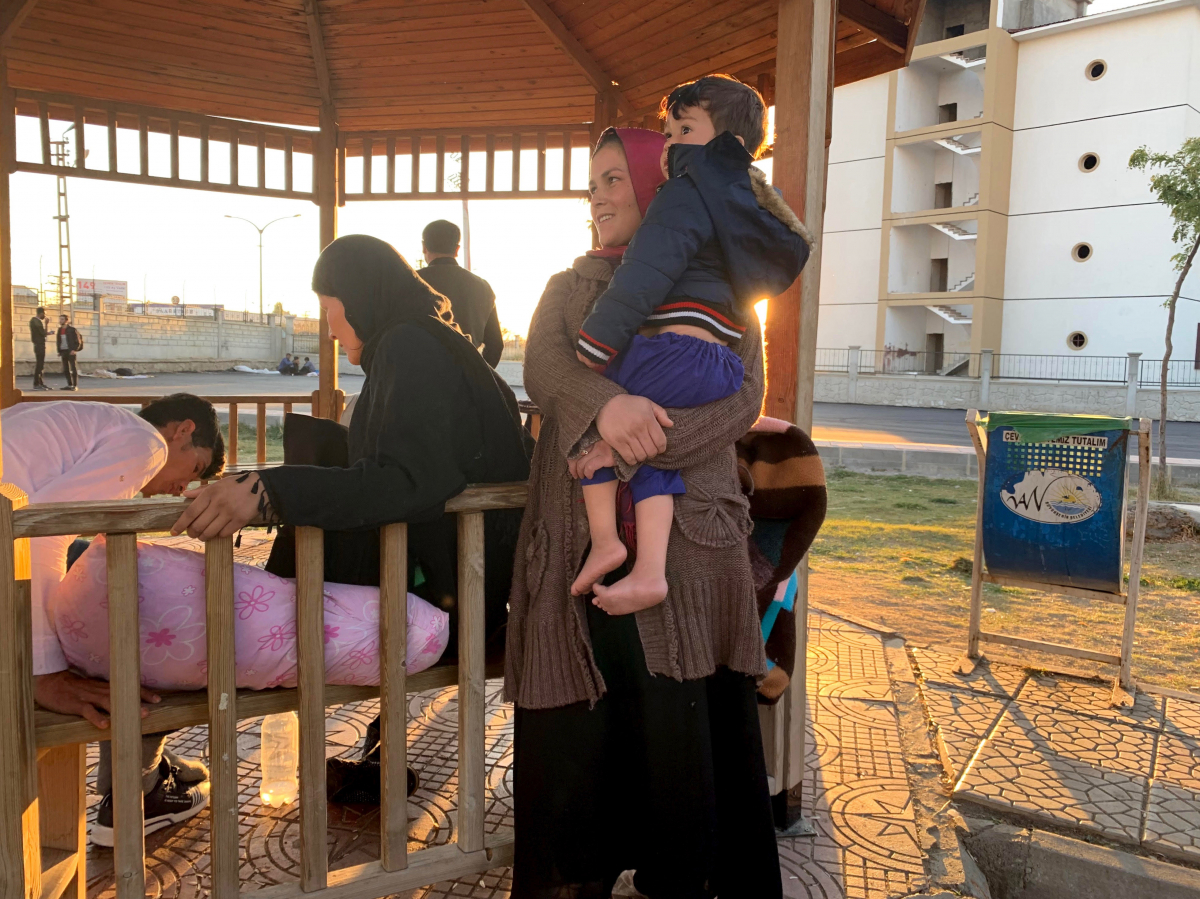
Members of an extended family from Afghanistan's Kunduz province rest at a gazebo at the bus station in Van. Police have ordered the refugees to squat at the station while authorities prepare to register the new arrivals. MUST CREDIT: Washington Post photo by Erin Cunningham

Members of an extended family from Afghanistan’s Kunduz province rest at a gazebo at the bus station in Van. Police have ordered the refugees to squat at the station while authorities prepare to register the new arrivals. MUST CREDIT: Washington Post photo by Erin Cunningham

Turkish authorities are grappling with nearly 4 million refugees. This is the world’s largest population of displaced people, according to the United Nations, including more than 170,000 registered Afghan refugees. Turkey has struggled to contain the influx even as aid agencies say the number of arrivals from Iran is on the rise.

Samira Tajik, shown wearing a yellow headscarf, lived for years in Iran after fleeing conflict in Afghanistan. Tajik, 24, and her extended family, including her husband and three children, recently crossed into Turkey. This grassy lot at the bus station in Van, a city in eastern Turkey, now is a de facto camp for Afghan refugees. MUST CREDIT: Washington Post photo by Erin Cunningham

Samira Tajik, shown wearing a yellow headscarf, lived for years in Iran after fleeing conflict in Afghanistan. Tajik, 24, and her extended family, including her husband and three children, recently crossed into Turkey. This grassy lot at the bus station in Van, a city in eastern Turkey, now is a de facto camp for Afghan refugees. MUST CREDIT: Washington Post photo by Erin Cunningham

In the eastern Turkish city of Van, about 50 miles west of the Iranian border, a growing number of Afghan refugees are forced to sleep on the streets and in public parks and bus terminals, barred by Turkish authorities from traveling farther. Many of them were either born in Iran or lived there for years.

This fresh crisis is one of the unintended consequences of President Donald Trump’s “maximum pressure” campaign, which his administration hopes will compel Tehran to negotiate an end to its nuclear energy and ballistic missile programs.

The strategy includes a broad trade embargo with restrictions on banking transactions, oil exports, supplies to Iran’s automotive sector and more. Last month, Iran abruptly raised the price of gas to shore up funds for cash handouts, setting off a wave of nationwide unrest, including in areas with large Afghan communities.

Afghans make up the largest group of people crossing the border illegally into Turkey, according to Interior Ministry data. The government says more than 184,000 undocumented Afghans crossed last year – up from about 100,000 in all of 2018. The government does not distinguish between Afghans who lived in Iran before crossing into Turkey and those who simply transited through Iran.


Many more Afghans have slipped over the border undetected, local refugee aid organizations say, the majority of them fleeing hardship in Iran.

Refugees who have made the journey describe harrowing treks over rugged terrain littered with the corpses of those who perished along the way. Some collapsed from exhaustion or were separated from their families amid the chaos and wandered off in the dark. Others say they were shot at by Turkish or Iranian security forces or abandoned by smugglers charging the equivalent of thousands of dollars to hustle them across.

Ramazan, a man from Afghanistan’s Ghazni province who uses only one name, recently arrived with his three children. As they walked through the mountain passages at night, he said, his wife fell from the ridge. He could hear her screams from the canyon, he said, but the smugglers forced them to keep walking.

“We walked for 24 hours. We could see the bodies of people who fell to their deaths. People had broken arms and broken legs. Some of the elderly were left behind,” said Maryam Fazly, an Afghan mother of six who said she had lived in Tehran for 10 years.

The soft-spoken widow from northern Afghanistan was sitting forlorn with her children in a grassy lot at the main bus terminal in Van. They had arrived just days earlier, fearing they could no longer survive in Iran.

Police have ordered refugees to squat at the bus station while local authorities prepare to register the new arrivals. Once processed, they are either transferred to another city, moved into a guarded tent camp or, in some cases, deported to Afghanistan, a place many of them have never even seen.

Iran hosts about 1 million Afghan refugees who are registered with the United Nations and permitted to work in certain industries. Afghans began arriving in large numbers following the 1979 Soviet invasion of their country.

Aid agencies and the U.N. say that as many as 3 million Afghans live in Iran, most of whom are undocumented and, therefore, uniquely vulnerable to economic and social strife.

On a recent afternoon at the Van bus station, dozens of Afghan families napped together on woven carpets in the grass while women bathed children in a small fountain and hung laundry on a rusty chain-link fence. One man in a gray suit, an Afghan who said he had lived in Iran for 30 years, wandered the parking lot with a warm kettle, pouring tea for his fellow refugees.


“A lot of Afghans are leaving Iran for Turkey because of the economic situation. Everything got worse for us because of America’s new policies toward Iran,” said Tamana Ghulami, 20, a refugee who had lived in Tehran with her Afghan husband, an out-of-work tailor.

The couple traveled to Van with relatives who say they left Afghanistan over the summer because of threats from Taliban insurgents in their farming village in the north. The extended family said they sought a more stable life in Turkey or Europe.

“In Iran, there are no jobs and there are even fewer jobs for Afghan refugees,” said Ghulami, a turquoise-and-gold-patterned scarf framing her face. “Everything is expensive, and we have no authorization to work. We knew that we wouldn’t even be able to afford having children if we stayed there.”

Ghulami’s tale of poverty and insecurity was echoed by dozens of other refugees at the bus station. In Iran, they said, they had eked out a meager existence as part of a migrant underclass, taking menial jobs as day laborers, farmhands, tailors and blacksmiths. They faced discrimination at work and on the streets, living under the constant threat of deportation and regular abuse by police.

When the United States reimposed sanctions in 2018, Afghans were among the first to suffer the fallout. Imports fell and prices rose, putting basic food items out of reach for many Afghan families. Business owners halted payments to employees or laid off workers, citing the drop in trade.

“I worked in the basement of a shop making shoes. But even as prices grew higher, my salary stayed the same,” said Reza Ahmadi, 23. He said he left Afghanistan as a child when the Taliban were in control and had lived in Iran ever since.

“When the sanctions started, our boss stopped paying us on time or he would pay us less than what we were owed. One day I would have work and the next day there would be none,” he said. “It was so hard.”

According to the Norwegian Refugee Council, the largest of only five international nongovernmental aid agencies working in Iran, even the delivery of aid to Afghan refugees is at risk because banks are refusing to transfer money because of the sanctions.

“We are hitting brick walls on every side,” Jan Egeland, the organization’s secretary general, said in a statement.

As a result, Egeland said, “the number of Afghans in need has nearly doubled and pushed almost 3 million people into emergency levels of hunger.”


Rajaba Rezai, 50, arrived in Iran from Afghanistan’s Samangan province as a teenager. Despite Iran’s labor restrictions on Afghans, Rezai said, he eventually managed to open a plastics manufacturing workshop in the city of Qom, where he produced rubber sandals sold in local bazaars.

But the Trump administration sanctioned Iran’s largest petrochemical holding company and more than three dozen of its subsidiaries. Soon, the synthetic plastic polymer that Rajaba needed to manufacture the shoes became unaffordable. Then, customers stopped placing orders. So, after more than three decades in Iran, Rajaba sold his factory and fled to Turkey with his wife and children.

“We could barely tolerate our lives before, but then we simply could not handle the situation anymore,” Rajaba said from his sparse apartment in Van. “I had no money and no life. We decided to escape from this hell.”

Rajaba, like the other refugees, described a perilous trip across the border with his wife, who was pregnant at the time.

At a cemetery north of Van, the growing number of freshly dug graves is a testament to the dangers of the journey – and how many are making the trek.

Seyyed Mustafa Hashimi, an Afghan who has lived in Van for more than a decade, oversees the burials. In recent months, authorities have had to expand the cemetery to accommodate the rising number of Afghan refugees dying along the way.

Some of those buried here, on a gentle slope near the central train station, were killed in road accidents as smugglers transported them from the border. Others perished on mountain trails and were retrieved by Turkish forces. Most of them died this year.

Many carried no identification. Their graves include a simple cement marker painted with a mix of numbers and letters.

“If the morgue cannot find their families, either dead or alive, they will call me and I will bury them – without any name, without anything,” said Mohammed Hussein Soltani, 34, an Afghan imam who volunteers to wash and prepare the bodies for burial.

“They lost hope in their lives, so they came here,” he said. “But there is no solution.”

Bloomberg gets under Trump’s skin as he ramps up spending on 2020 ads #ศาสตร์เกษตรดินปุ๋ย

#ศาสตร์เกษตรดินปุ๋ย : ขอบคุณแหล่งข้อมูล : หนังสือพิมพ์ The Nation

https://www.nationthailand.com/news/30380990?utm_source=category&utm_medium=internal_referral

Bloomberg gets under Trump’s skin as he ramps up spending on 2020 ads

Jan 24. 2020
File Photo: Mike Bloomberg /Getty Images

File Photo: Mike Bloomberg /Getty Images
By The Washington Post · Josh Dawsey, Michael Scherer 

Mike Bloomberg is lagging his Democratic competitors in the polls, and he will not appear on the next presidential debate stage or on the ballot in Iowa, New Hampshire or South Carolina.

But the former New York mayor has attracted the obsessive attention of President Donald Trump, who is annoyed by Bloomberg’s constant ads targeting the president, concerned about the billionaire’s outsize spending, focused on his growing numbers in the polls and seemingly fixated on his TV appearances.

The president has repeatedly attacked Bloomberg on Twitter, calling him “Mini Mike” to insult his small stature, and has frequently focused on him in conversations with campaign advisers and White House officials.

“It’s very clear that the ads we are running have gotten under his skin because they are effective,” said Howard Wolfson, a senior Bloomberg aide. “Mike’s poll numbers are improving, the president is screaming. Mike is a data-driven guy. When he sees data is working, he doubles down.”

Wolfson said to expect more blistering ads against the president in the coming months. So far, Bloomberg’s spots have targeted Trump over impeachment, his position on vaping, his health care policy decisions and his relationship with the military. Many have prompted rapid responses from Trump, sometimes minutes after they air.

Bloomberg campaign manager Kevin Sheekey debuted a new ad attacking Trump’s treatment of military leaders on Fox & Friends Thursday – apparently inspiring Trump to respond shortly afterward.

“Mini Mike Bloomberg is playing poker with his foolhardy and unsuspecting Democrat rivals,” Trump wrote, in an apparent effort to create division within the Democratic Party. “The fact is, when Mini losses [sic], he will be spending very little of his money on these “clowns” because he will consider himself to be the biggest clown of them all – and he will be right!

Trump’s advisers have repeatedly encouraged the president to focus on other opponents instead. Campaign manager Brad Parscale and senior adviser Jared Kushner have warned against giving Bloomberg more attention and don’t see him as the threat that Trump does, aides said. There is no plan for the campaign to target him with advertisements at this point, advisers said.

Trump has repeatedly brought up Bloomberg – calling him “evil,” in the words of one close adviser – and saying that he wants to destroy Trump with unrelenting money, even if the president does not believe Bloomberg can win himself, according to aides. He has called Bloomberg’s ads “lies” that are unfair depictions of his record in the White House. Several advisers say the president also references Bloomberg’s 2016 Democratic convention speech as a sore point and repeatedly asks advisers about his polling numbers, which have hovered below 10 percent in public surveys.

Other advisers have sought to elevate Bernie Sanders, hoping that a leftist candidate could give Trump a good foil in the general election.

Trump campaign manager Brad Parscale said in an interview that he would only worry about Bloomberg if he surpassed former South Bend, Indiana, mayor Pete Buttigieg and Sen. Elizabeth Warren, D-Mass., in the Democratic race.

“It’s a free country and he can set his money on fire if he wants to. He’s still in a statistical tie with the back of the pack in the Democrat field,” said Tim Murtaugh, a Trump campaign spokesman.

Trolling the president is different from convincing skeptical primary voters and defending his own record on issues such as stop-and-frisk policing in New York City. Bloomberg, for example, endorsed George W. Bush and welcomed the Republican National Convention in New York in 2004.

But his path to the nomination could become clearer if former vice president Joe Biden stumbles in Iowa and New Hampshire, creating an opening for Bloomberg to use his significant advertising budget to argue that he is the most electable alternative.

In the meantime, the campaign has been using attacks on Trump as a rallying cry, both to recruit staff to his campaign and to convince Democratic primary voters that his campaign is more than the vanity project of another billionaire candidate.

Campaign manager Kevin Sheekey said the campaign will either be the “best primary campaign in American history” or the greatest independent spending campaign against an incumbent president that has ever been created.

As it stands, the current Bloomberg advertising campaign is squarely focused on states that could help get Bloomberg the nomination, with only about one in four dollars going to the six swing states that his advisers expect to be competitive in the general election, according to Facebook ad spending data and a source familiar with the television buys.

But that swing state spending has still been considerable. Through January 11, Bloomberg has spent $198 million on television advertising, including more than $47 million for spots in the projected swing states of Arizona, Florida, Michigan, North Carolina, Pennsylvania and Wisconsin. On Facebook, he has blasted another $3.6 million to voters in those states.

Before the year is done, he has promised to spend $100 million on a digital effort to defeat Trump in swing states, and he has committed millions more to an effort to register 500,000 new voters in those states. He is also building a data operation that he intends to use to elect a Democratic president whether or not he is the nominee, his advisers say.

In an interview, Wolfson, the top strategist who is focused on the ad strategy, said he wanted to draw a contrast with Democrats, who are attacking each other in New Hampshire and Iowa. Bloomberg has not competed in those states, knowing he would be unlikely to fare well, and is focused on Super Tuesday.

“We’ve chosen a different path. They are an Iowa and New Hampshire attacking one another. We’re making the case against Donald Trump,” Wolfson said. “Voters among all else are looking for a candidate that is best qualified to take on Donald Trump in a general election.”

Many of the ads Bloomberg has run include some mention of Trump, with many of the spots focusing on the president’s perceived weaknesses among swing voters.

“Health care is a huge vulnerability for him,” Wolfson said of Trump. “It’s the issue that won the Democrats won the midterms. It is difficult for him to defend his own record on health care.”

Bloomberg’s aides also plan on using the ground campaign that Bloomberg is building against Trump, whether or not he wins the nomination. Those hired in potential general election swing states – 60 in Arizona and more than 80 in North Carolina, for example – have been told they will have a job through the summer conventions or November elections to organize against Trump.

Bloomberg himself seems to have approached the endeavor as a no-risk proposition, given that he had decided that defeating someone he calls an “existential threat to our country,” was one of his top priorities.

“My Plan B is a hell of a lot better than anybody else’s Plan A,” he has told advisers, according to one aide, who requested anonymity to describe private conversations. Either Bloomberg wins the nomination and the presidency or he remains the 12th richest person in the world with a chance of taking credit for defeating Trump.

On the stump, Bloomberg takes delight in needling Trump, calling him a “real estate promoter” and not a businessman. He will recount the phone call from Trump after the 2016 election, when the president-elect offered his cellphone number. Bloomberg says he didn’t bother to write it down.

Bloomberg also repeats an anecdote about Trump not knowing how to use a New York subway card when they rode together many years ago. Trump has said this description is untrue, saying the gates were opened for them because they were traveling with a large entourage.

“I never had a MetroCard when I rode the subway with him, ” Trump told The Washington Post last year.

Science ranks are growing thin in Trump administration #ศาสตร์เกษตรดินปุ๋ย

#ศาสตร์เกษตรดินปุ๋ย : ขอบคุณแหล่งข้อมูล : หนังสือพิมพ์ The Nation

https://www.nationthailand.com/news/30380989?utm_source=category&utm_medium=internal_referral

Science ranks are growing thin in Trump administration

Jan 24. 2020
Activists, scientists and others rally on the Mall in 2018 at the March for Science. MUST CREDIT: Washington Post photo by Marvin Joseph.

Activists, scientists and others rally on the Mall in 2018 at the March for Science. MUST CREDIT: Washington Post photo by Marvin Joseph.
By The Washington Post · Annie Gowen, Juliet Eilperin, Ben Guarino, Andrew Ba Tran

KANSAS CITY, Mo. – Dozens of government computers sit in a nondescript building here, able to connect to a data model that could help farmers manage the impact of a changing climate on their crops.

But no one in this federal agency would know how to access the model, or, if they did, what to do with the data.

That’s because the ambitious federal researcher who created it in Washington quit rather than move when the Agriculture Department relocated his agency to an office park here last fall.

He is one of hundreds of scientists across the federal government who have been forced out, sidelined or muted since President Donald Trump took office.

The exodus has been fueled broadly by administration policies that have diminished the role of science as well as more specific steps, such as the relocation of agencies away from the nation’s capital.

While the administration has come under fire for prioritizing the concerns of industry at the expense of science in government decisions, the cumulative effects are just beginning to appear after three years of Trump in the White House.

Some farmers said the USDA staff upheaval has made it harder to access information they need.

Torrential rains last spring dashed the plans of Liz Brownlee, who runs a livestock farm with her husband, to expand her pasture in Crothersville, Indiana. Then an unseasonably dry autumn brought 90-degree days that baked the farmers’ seeds.

“With all this uncertainty from climate change, I need the best data possible” to know when to plant, she said. “I’m worried I’m not going to have it.”

In the first two years of the Trump administration, more than 1,600 federal scientists left government, according to Office of Personnel Management employment data analyzed by The Washington Post. That represents a 1.5% drop, compared with the 8% increase during the same period in the Obama administration.

One-fifth of the high-level appointee positions in science are vacant – normally filled by experts who shape policy and ensure research integrity.

Of those who departed, the numbers were greatest among social scientists, soil conservationists, hydrologists and experts in the physical sciences – chemistry, geology, astronomy and physics.

At the Environmental Protection Agency, nearly 700 scientists have left in the past three years, according to The Post analysis. The EPA has hired 350 replacements.

Linda Birnbaum, who spent four decades working on toxicology and public health issues at the EPA and National Institutes of Health before retiring in October, said the loss of expertise weakens the government’s ability to make sound decisions.

“It’s going to take a long time for government science to come back. There’s little doubt about that,” said Birnbaum, who serves as an adjunct professor at Duke University and the University of North Carolina at Chapel Hill. She added that NIH has remained well-insulated because it enjoys bipartisan support in Congress.

“But when I look at colleagues in other agencies, especially any agency that has any regulatory role, they’re decimated,” she said.

Trump administration officials dismiss that notion, saying much of the criticism comes from activists outside the federal government.

Interior Secretary David Bernhardt points out that he is the first secretary to enlist a career federal scientist to serve as his scientific adviser.

“I’ve got an ideas box, I haven’t seen that,” he said in an interview, referring to complaints that science has been de-emphasized. “I do hear that from advocates and external parties. And, you know, anybody that looks at these things objectively tends to find that they’re without merit.”

Last year, the environmental group Center for Biological Diversity accused Bernhardt of pushing aside the conclusions reached by career scientists at the U.S. Fish and Wildlife Service regarding how a pesticide affected endangered species. Eight Democratic senators sought an investigation. Interior’s inspector general concluded there was “no evidence” Bernhardt abused his position.

As a presidential candidate, Donald Trump called climate change a “hoax.” Once in office, he began dismantling much of President Barack Obama’s climate plan. He has installed industry figures in regulatory roles and rolled back scores of rules and policies that he considers harmful to the fossil-fuel industry. Trump’s actions spurred scientists into the streets, joining protesters for a March for Science rally on the Mall in 2017 and again in 2018.

Many scientists who work for the U.S. government or rely on its funding say the changes brought by the Trump administration are being felt across the country.

After historic rainfall last spring swept away livestock and grain in the Midwest, crop planting was delayed by weeks. Andrew Crane-Droesch, 38, a researcher at the Agriculture Department’s Economic Research Service, started work on a data tool that could predict months in advance the impact of, say, heavy rainfall on crop prices or planted fields. He hoped that knowledge could help farmers, commodity traders and government disaster planners prepare.

But when Agriculture Secretary Sonny Perdue moved forward with his controversial plan to relocate the Economic Research Service and the National Institute of Food and Agriculture – two key research agencies – to Kansas City, Crane-Droesch headed for the exit.

He joined two-thirds of affected employees in his division who either retired or found other jobs rather than move to the greater Kansas City region. At the National Institute of Food and Agriculture, which oversees $1.7 billion in scientific funding for researchers, nearly 8 of every 10 employees have left.

Crane-Droesch, who took a health-research job in Philadelphia, said there’s no one left at the USDA who has the time or the know-how to run the model he created or to finish the project.

“All that work was for naught, and they nuked the account,” he said. “Even if they hired somebody for my portfolio – which I don’t think they did – it would take that person quite a while to get up to speed, just as it took me several years.”

The move to Kansas City has also meant dozens of reports and millions in research funding have been delayed or scuttled as the Agriculture Department scrambled to keep up with departures.

The agency has been forced to hire back 21 retired employees on temporary contracts, to stanch its losses.

But experts on bee pollination, organic farming, commodity markets and trade are gone, setting back research that has been in process for months or even years.

“They never tried to refute our work; they tried to bury it by getting rid of the people who produced the work,” Crane-Droesch said.

To restore the National Institute of Food and Agriculture and the Economic Research Service to their size under the Obama administration, the USDA would have to hire more than 400 people. One USDA official said the department has “well over 150 active recruitments in process between both agencies.”

Current and former employees interviewed said they felt the move to Kansas City was intended to diminish research areas such as trade policy, farm income and climate change; Perdue is a climate skeptic who recently described the problem as “weather patterns, frankly.”

A USDA spokesman defended the move, saying that Perdue believes the agencies can better serve “customers” – farmers, ranchers, academic institutions and agribusiness – by relocating to Kansas City, “a hub for all things agriculture in America’s heartland.”

The department estimates it will save $300 million over 15 years from employment and rent in Kansas City.

Some federal researchers said they left the Trump administration after concluding their work was being undermined.

Dan Costa, who worked at the EPA for 34 years before stepping down as director of its air, climate and energy research program in January 2018, said the tipping point for his retirement came when an EPA spokesman undercut a study published in the New England Journal of Medicine that the agency had funded.

The study found that long-term exposure to levels of soot and smog lower than current national standards can cause premature death among older Americans. Such a finding suggests that current standards don’t adequately protect public health, which would have implications for industries that pollute. An unidentified EPA spokesman attacked the study in an interview with the Washington Times, an act Costa called “scientifically unethical.”

Peter Van Doren, a senior fellow at the libertarian Cato Insitute, said in an interview that scientists need to remember that they don’t set policy.

“When nerds and politicians disagree, nerds lose,” he said. “Scientists think, ‘We are smart, and we ought to decide.’ But we don’t get to decide.”

Elsewhere in the government, political appointees have delayed grants for scientific work.

At Interior’s U.S. Geological Survey, Director James Reilly “felt that he needed to personally look at every grant that went out,” according to Bernhardt’s science adviser William Werkheiser, who served as Reilly’s deputy before joining the secretary’s office. The process stalled grants at the agency’s climate adaptation science centers for more than six months.

The centers fund university research to help wildlife, lands and people adjust to a changing climate.

Robin O’Malley, who retired last month as director of one climate adaptation center, said in an interview that the slowdown in hiring and grant approvals has hampered the centers.

“They haven’t said no to us at any time, they’ve just made it difficult to move forward,” he said. “You’re up a creek.”

Across the government, the administration is scaling back advisory committees that offer input to policymakers from scientists and other experts. Last year, Trump required agencies to eliminate one-third of their advisory panels, with a few exceptions.

Will McClintock, a marine scientist who has helped dozens of countries establish marine sanctuaries, used to serve on the National Oceanic and Atmospheric Administration’s Marine Protected Areas federal advisory committee.

After seeing that people were mailing in hand-drawn maps to nominate reserves, McClintock created a Google Maps-like program called SeaSketch that allows fishermen, divers and conservationists to propose sanctuary zones alongside scientists and government officials.

“I’m bringing lots and lots of expertise, for free, to our federal government,” said McClintock, a project scientist at the University of California at Santa Barbara who volunteered on the advisory panel. But before NOAA could adopt the software, his federal advisory committee was eliminated.

Some Republicans have supported the executive order to cut advisory committees. “Based on the characterization made by many of my colleagues and their friends in the media, you would think this order was a death blow to science at all the agencies,” said Rep. Ralph Norman, R-S.C., to EPA Administrator Andrew Wheeler at a hearing in September. “In reality it just seems like a common sense, nonpartisan way to eliminate wasteful committees.”

The Office of Management and Budget declined to estimate the cost savings from cutting the committees. “The administration is always looking for ways to end redundant and out of date programs – this is an open and closed case where taxpayer resources are better used elsewhere,” the office said in a statement.

It is unclear whether the USDA relocation will ultimately save taxpayers $300 million over 15 years as promised. For now, employees transferred to Kansas City are working out of an existing USDA office until permanent space is leased.

Earlier this month, the boxy building about six miles outside the city’s central business district had the feeling of the first day of school. New hires waited to sign in, get security badges and learn where to park.

“We lost a lot of people, and we’re trying to rebuild,” said Daniel Hellerstein, an economist who researches the economic impact of soil conservation. Hellerstein was one of the retiring employees who was temporarily hired back but remains in Washington. “It’s going to be difficult because the slots we need are fairly skilled, and there’s a lot of competition out there for qualified people.”

Much of the impact of the federal government’s shrinking science capacity will not be felt for years, observers said.

“If we’re gone, is the world going to be a worse place?” he mused. “I like to think so. But it’s not going to be immediate.”