Swiss diamond jeweler at heart of Angolan scandal goes bankrupt #ศาสตร์เกษตรดินปุ๋ย

#ศาสตร์เกษตรดินปุ๋ย : ขอบคุณแหล่งข้อมูล : หนังสือพิมพ์ The Nation

https://www.nationthailand.com/news/30381256?utm_source=category&utm_medium=internal_referral

Swiss diamond jeweler at heart of Angolan scandal goes bankrupt

Jan 30. 2020
By Syndication Washington Post, Bloomberg · Corinne Gretler, Hugo Miller

The Genevan jeweler De Grisogono, known for extravagant diamond jewelry worn by the likes of Paris Hilton, filed for bankruptcy, ensnared in a corruption probe involving Isabel dos Santos, the daughter of Angola’s former president.

De Grisogono couldn’t secure a buyer despite talks that lasted several months, the company said in a statement on Wednesday. The failed negotiations forced the company to file for creditor protection with Swiss authorities, which if accepted, will affect 65 jobs in the nation, the company said.

The move comes a week after a consortium of global media reported that De Grisogono was propped up with nearly $150 million in loans from Angolan entities to pay off the struggling company’s debts and expenses. The reports, based on the so-called Luanda Leaks, said dos Santos’ husband, Sindika Dokolo, and the Angolan state diamond firm Sodiam in 2012 formed a Malta-based company to buy a stake in the brand.

Angola’s prosecutor general on January 22 named Dos Santos as a suspect in an investigation into alleged mismanagement during her 18-month stint as chairwoman of state-owned oil company Sonangol. An Angolan court separately froze her local assets and those of her husband, as prosecutors alleged that they engaged in illicit transactions with state-owned companies that cost the government $1.14 billion.

Dos Santos has said the news stories about her are part of a political witch hunt to discredit her and that she made her fortune as a self-made businesswoman.

A spokesman for de Grisogono didn’t immediately respond to a request for comment on the allegations against the jeweler’s shareholders or on the exact nature of the company’s ownership structure. Sodiam said in 2017 it would divest its stake in De Grisogono “for reasons of public interest and legality.”

“Without financial support from current shareholders, and without a buyer, the solvency of the company is now in question, making the continuation of the business impossible,” De Grisogono said in the statement.

The company was founded in the 1990s by former Bulgari executive Fawaz Gruosi with just 16,000 Swiss francs (about $12,000) and a mission to sell black-diamond jewelry. De Grisogono, whose pieces have been worn by Naomi Campbell and Salma Hayek, has combined uncommonly used semi-precious stones such as rubellite and tourmalene with diamonds, sapphires and rubies.

10-year-old boy raises fears Wuhan virus could spread undetected #ศาสตร์เกษตรดินปุ๋ย

#ศาสตร์เกษตรดินปุ๋ย : ขอบคุณแหล่งข้อมูล : หนังสือพิมพ์ The Nation

https://www.nationthailand.com/news/30381251?utm_source=category&utm_medium=internal_referral

10-year-old boy raises fears Wuhan virus could spread undetected

Jan 30. 2020
Medical workers in protective gear transport a patient believed to be a confirmed case of the Wuhan coronavirus, also known as 2019-nCoV, at Queen Mary Hospital in Hong Kong on Jan. 29, 2020. MUST CREDIT: Bloomberg photo by Justin Chin.

Medical workers in protective gear transport a patient believed to be a confirmed case of the Wuhan coronavirus, also known as 2019-nCoV, at Queen Mary Hospital in Hong Kong on Jan. 29, 2020. MUST CREDIT: Bloomberg photo by Justin Chin.
By Syndication Washington Post, Bloomberg · Jason Gale 

The case of a 10-year-old boy who was diagnosed with the Wuhan coronavirus even though he showed no symptoms is raising concern that people may be spreading the virus undetected by the front-line screening methods implemented to contain the epidemic.

The boy was part of a family who visited relatives in the central Chinese city over the New Year. While his parents and grandparents fell ill and were treated after they returned to their hometown, the 10-year-old appeared healthy and was only diagnosed with the virus after his parents insisted he too was tested, his doctors said, adding that he “was shedding virus without symptoms.”

“You may have mild disease spreaders that would be feeding sort of a community outbreak and they don’t go to hospital because they don’t feel that bad,” said Ralph Baric, professor of microbiology and immunology at the Gillings School of Global Public Health at the University of North Carolina at Chapel Hill, who has studied coronaviruses for decades and warned about their threat before the 2003 SARS outbreak.

The boy’s case, published Jan. 24 in the Lancet medical journal, was the first to demonstrate person-to-person and health-care associated spread of the newly identified virus, dubbed 2019-nCoV. The asymptomatic infection has fueled concern the pathogen, which has already spread to 15 countries and infected close to 6,000 people, may turn out to be harder to detect and contain than SARS, the similar pneumonia-like illness that erupted into a global epidemic.

While both the boy’s parents were infected, each had a normal body temperature when they sought treatment. Later, the virus spread to a sixth relative who hadn’t traveled.

Similar patterns are appearing outside China. Four cases in Germany were linked to a company training event that was attended by a colleague visiting from China who had no symptoms of disease during her stay.

“These cryptic cases of walking pneumonia might serve as a possible source to propagate the outbreak,” Kwok-Yung Yuen and colleagues the University of Hong Kong, said in the Lancet paper.

The boy’s family flew from their home in Shenzhen, a city in the south of the country next to Hong Kong, to Wuhan on Dec. 29 to visit relatives, including one who was in a hospital. Two days after they arrived, the Health Commission of Hubei province announced that a group of 27 people in the city had unexplained cases of pneumonia, a statement that received little notice outside of the city at the time.

Within three to five days in Wuhan, four family members gradually developed symptoms such as fever, cough, fatigue and diarrhea. On their return home, they were diagnosed with 2019-nCoV based on a viral analysis and lung scan.

The 10-year-old boy’s lungs were also scanned “on the insistence by the nervous parents” and showed signs of infection, which was confirmed by swabs of the back of his nose and throat. That meant he was capable of transmitting the virus even though the kind of tests used in airport screening for the virus would not identify him as a carrier.

It was “a rather unexpected finding,” Yuen and colleagues wrote. Yet it doesn’t come as a complete surprise to doctors in China trying to unravel the means and ways the new virus is spreading.

“Children and infants’ symptoms are comparatively mild, while older people have more severe symptoms, as of our findings so far,” Feng Zijian, deputy director of the Chinese Center for Disease Control and Prevention, told reporters Wednesday.

“One of the worrying things is the walking pneumonia and especially the younger kids in whom you don’t get as much of an immune reaction,” said John Nicholls, a clinical professor of pathology at the University of Hong Kong and part of the research team that isolated and characterized the SARS virus.

As more cases of the new coronavirus appear around the world, doctors and medical research teams are rushing to try to develop a vaccine or treatments that could prevent its spread. But, as in the SARS outbreak, the most effective methods are thought to be in identifying and isolating patients soon after infection, and then tracing and isolating their potential contacts.

China has locked down Wuhan, a city of 11 million people, and imposed travel restrictions within China and to Hong Kong and Macau in an attempt to combat the epidemic. But evidence that children may be able to contract and spread the disease without showing acute symptoms may complicate those efforts.

“Public health controlled SARS because SARS let it,” said Mark Denison, director of infectious diseases and and a pediatrics professor at the Vanderbilt University School of Medicine. That’s unlike influenza, where a larger portion of patients transmit the virus while they are silently incubating the infection.

“So the question is, is this virus more SARS-like, or is it more flu-like?” Denison said. “The data suggests that it’s somewhere in the middle: that it is a more mild disease, but that there may be more transmission.”

Traders set to win in Trump-era redo of oil speculation rule #ศาสตร์เกษตรดินปุ๋ย

#ศาสตร์เกษตรดินปุ๋ย : ขอบคุณแหล่งข้อมูล : หนังสือพิมพ์ The Nation

https://www.nationthailand.com/news/30381250?utm_source=category&utm_medium=internal_referral

Traders set to win in Trump-era redo of oil speculation rule

Jan 30. 2020
File Photo: Syndication Washington Post, Bloomberg

File Photo: Syndication Washington Post, Bloomberg
By Syndication Washington Post, Bloomberg · Ben Bain 

U.S. regulators are poised to issue long-delayed restrictions on excessive speculation in oil and metals markets after tougher proposals stalled during the Obama administration, said three people with direct knowledge of the matter.

The Commodity Futures Trading Commission intends to release a new plan Thursday for limiting the size of bets that hedge funds and other traders can make on derivatives tied to various commodities. The constraints, less sweeping than earlier versions proposed by the agency, would impact trading on the soonest-expiring contracts, leaving intact traders’ abilities to make big wagers on longer-term contracts, two of the people said.

The effort is the CFTC’s latest attempt to pass controversial regulations that for years have faced stiff opposition from a powerful coalition of financial, energy and agricultural firms.

In another sign that the revamp will be softer than previous iterations, it’s likely to let traders take bigger maximum positions than currently allowed in some physically settled futures contracts. That’s partly because the CFTC is relying on data that shows that deliverable supplies of commodities are larger than previously estimated, said the people who requested anonymity to discuss the plan.

The policy proposal is the most significant to date from CFTC Chairman Heath Tarbert, a former Treasury Department official who the Senate confirmed in June. While the effort will add regulations if finalized, it’s arguably better for firms that such rules come from a CFTC chairman picked by President Donald Trump than someone appointed by a possible Democratic administration.

The plan would impact a wide swath of businesses, including food and transportation companies, that trade commodity derivatives to protect against price fluctuations for raw materials.

In a Jan. 22 Twitter post, Tarbert said he was “100% committed to getting the position limits rule done right in a way that allows flexibility for farmers, ranchers, and end users of the products our futures markets are meant to serve.”

A CFTC spokesman declined to comment on the proposal.

CFTC commissioners are set to vote on the new rules at a Thursday public meeting. The proposal will mark the agency’s fourth attempt over the past decade to address the politically charged issue. The effort was prompted by the 2010 Dodd-Frank Act, which was passed amid surging gas prices and widespread hostility toward financial firms that lawmakers accused of manipulating commodities to boost their trading profits.

During the Obama administration, the CFTC said it was required by law to finish the rules. But Tarbert’s proposal is based on the premise that the CFTC is moving ahead because it’s found a “necessity” for the new limits, two of the people said.

The subtle difference could be important in fending off possible legal challenges. In 2012, a federal judge blocked the CFTC’s first attempt to create position limits after the International Swaps and Derivatives Association and Securities Industry and Financial Markets Association sued the regulator.

“Position limits have been without question the most star-crossed Dodd-frank rule for the CFTC,” said Justin Slaughter, who served as an aide to former Democratic CFTC Commissioner Sharon Bowen and now works as a consultant with Mercury Strategies in Washington. “Finishing this would be a big accomplishment for any chairman. The hard part is not proposing it, but finishing it.”

While the CFTC has long imposed federal restrictions on nine contracts tied to agricultural products, exchanges set the limits on widely traded contracts for energy and precious metals futures. Tarbert’s proposal would create additional thresholds on more than a dozen contracts.

The position limits to be proposed by the CFTC will likely be more permissive than those now allowed by exchanges, according to one of the people. Exchanges would be free to maintain their current levels, but then they’d be more restrictive than what the CFTC is permitting. The CFTC will maintain spot and aggregate position limits for the nine agricultural contracts for which it already restricts speculative bets, two of the people said.

Many businesses have long been concerned that any CFTC rule would upend how they do business. For instance, companies such as airlines are now permitted to exceed exchanges’ oil constraints if the trades are deemed bona fide hedges, such as transactions that protect against legitimate business risks. In its proposal, the CFTC plans to broadly continue honoring those exemptions and others, two of the people said.

In a possible blow to some on Wall Street, the CFTC will propose scrapping a long-standing exemption that has been used by banks to offload risk they take on when they sell commodity index funds to clients, according to the people. Agriculture firms in particular have complained that such an exemption shouldn’t be available to financial firms.

Bloomberg LP, the parent of Bloomberg News, provides data that’s used for commodity index funds.

After the CFTC proposal is released the agency will take public comment before holding a second vote on whether to finalize it.

China’s virus outbreak triggers a global run on face masks #ศาสตร์เกษตรดินปุ๋ย

#ศาสตร์เกษตรดินปุ๋ย : ขอบคุณแหล่งข้อมูล : หนังสือพิมพ์ The Nation

https://www.nationthailand.com/news/30381249?utm_source=category&utm_medium=internal_referral

China’s virus outbreak triggers a global run on face masks

Jan 30. 2020
customers wear protective masks inside a McDonald's restaurant in Hong Kong on Jan. 29, 2020.. MUST CREDIT: Bloomberg photo by Paul Yeung.

customers wear protective masks inside a McDonald’s restaurant in Hong Kong on Jan. 29, 2020.. MUST CREDIT: Bloomberg photo by Paul Yeung.
By Syndication Washington Post, Bloomberg · Lulu Yilun Chen 

People across the globe are stockpiling facial masks to protect themselves from the new coronavirus, depleting online malls and store shelves from California to Beijing. Yet their efficacy against an outbreak that’s claimed more than 130 lives remains uncertain.

On Amazon and Alibaba, many shops peddling anti-virus masks had run out of stock as of Wednesday. Across China, Hong Kong and Singapore, people lined up for hours at stores and pharmacies hoping to secure dwindling supplies. People from San Francisco to Orlando, Florida said they were unable to find surgical masks at their usual outlets.

While the rush is global, Chinese people living abroad have been buying masks – especially the popular N95 variant made by 3M Co. – to send back to family members or resell them online, often via Tencent’s WeChat messaging app. Demand is only likely to increase — even though doubts have surfaced among the medical community about their effectiveness in curbing the disease, which some doctors say can spread through physical contact. The coronavirus, which first emerged in the central Chinese city of Wuhan, has infected more than 6,000 – more than the 5,327 cases officially reported in China during the SARS epidemic of 17 years ago.

“I’ve been running around town for days to buy masks,” said Liu Yan, a 36-year-old, who works in the cryptocurrency industry in Tokyo and said she scooped up 2,000 masks to send back to people in China without asking for additional money. She added she may stop buying soon because patient numbers were on the rise in Japan and she didn’t want to deprive locals of supplies.

While it’s still unclear how the 2019-nCoV virus is spreading, one confirmed channel is through direct contact with infected people — most likely coming into contact with respiratory secretions or virus-containing droplets from an infected person’s cough. It’s also possible the virus could be shed in other ways, including through the fecal waste of acutely infected people.

Good hand hygiene, including the regular use of an alcohol-based sanitizer, may be more effective than face masks at preventing transmission of the 2019-nCoV virus, said Peter Collignon, an infectious diseases physician and microbiologist at Australia’s Canberra Hospital.

China’s government has responded to the worsening shortage by cracking down on vendors who sell fake masks or overcharge online. More than 80 shops on e-commerce platform Taobao, run by Alibaba Group Holding, allegedly sold counterfeit 3M and N95 face masks, Chinese state-media reported Monday. The company said on its official Weibo account it removed shops found to engage in false advertising or price rigging. The e-commerce site said it sold 80 million face masks through Taobao within two days.

In Hong Kong, some store chains have begun restricting sales. Watsons said on its official Facebook account it would receive a limited supply on Jan. 30, then limit purchases to 50 masks per person on a first come first serve basis. People in the city who have tried to send masks to mainland China said their deliveries got bounced back without being given a clear reason.

3M said it’s increasing output and working with distributors to ensure sufficient inventory to meet demand and supply existing customers, according to a representative. Other factories are ramping up production. In Japan, plants that supply personal care company Unicharm Corp. have been working around the clock since Jan. 17 after orders increased ten-fold, according to spokesman Hitoshi Watanabe.

Meanwhile, the global mask stockpiling is spurring market speculation. Shares in surgical equipment maker Medtecs International Corp. have more than quintupled since the start of the year.

Virus prompts India top cotton trader to stop sales to China #ศาสตร์เกษตรดินปุ๋ย

#ศาสตร์เกษตรดินปุ๋ย : ขอบคุณแหล่งข้อมูล : หนังสือพิมพ์ The Nation

https://www.nationthailand.com/news/30381245?utm_source=category&utm_medium=internal_referral

Virus prompts India top cotton trader to stop sales to China

Jan 30. 2020
By Syndication Washington Post, Bloomberg · Pratik Parija 
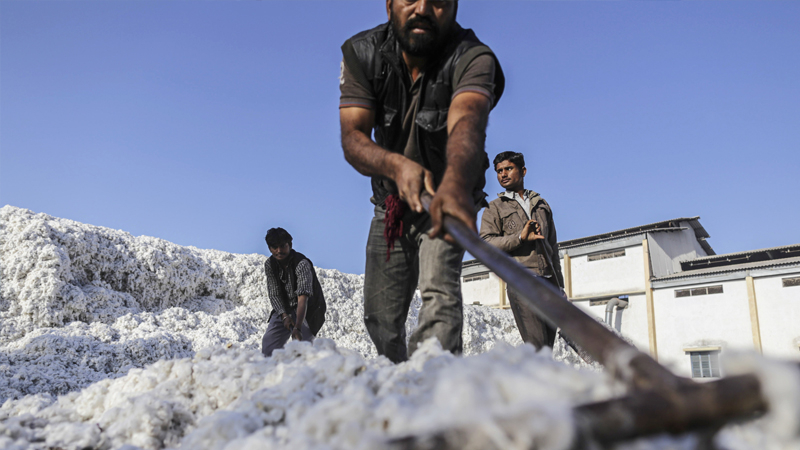
Kotak Commodity Services, one of India’s top cotton exporters, will stop selling new cargoes to China on concern the spread of coronavirus may force the top buyer of the fiber to close ports and banks.

The Mumbai-based company will look for new buyers of cotton in countries such as Bangladesh, Indonesia, Taiwan and Vietnam to make up for any possible shortfall in sales to China, Vinay Kotak, director of the company, said in an interview by phone on Tuesday.

“Let’s not panic today, but if the virus keeps spreading and is not controlled in the next 10 to 15 days then it will create a big problem for the cotton industry globally,” he said. “If banks and ports are shut, then it will be a force majeure.”

Sellers in India have already shipped 600,000 to 700,000 bales of 170 kilograms each to Chinese buyers so far this season and of that, about 75% is in transit, he said. Exporters were expecting to ship another 300,000 bales to China by the end of February, but that may not happen if the virus keeps spreading, Kotak said.

Any signs of disruption in cotton shipments to China could pressure prices that had been recovering from three-year lows. Though China is a huge cotton producer, it’s also the world’s biggest importer. It could also tighten supplies in China, where stockpiles have been declining after Beijing levied retaliatory tariffs on cotton from America, the No. 1 exporter of the commodity.

Nervousness surrounding the novel coronavirus outbreak in China has already impacted a raft of companies. Starbucks has closed more than half of its coffee shops in mainland China, while Toyota Motor is halting production in the country. Investors are now waiting to see what damage this will do on corporate earnings.

For India’s cotton optimists, the virus in China isn’t a major concern. The South Asian country’s exports are price competitive and finding new buyers won’t be hard, said Atul Ganatra, president of the Cotton Association of India.

“Our export target is easily achievable as we are still the cheapest in the world,” said Ganatra. India has shipped 2 million bales since the beginning of the marketing year in October and sales may reach 3.5 million bales by the end of March, he said.

Indian cotton is selling at 39,500 rupees to 40,000 rupees ($561) per candy (785 pounds) compared with the free-on-board price of 46,000 rupees in the U.S., according to Ganatra.

India’s cotton production may climb to 35.45 million bales in 2019-20, from 31.2 million bales a year earlier, according to the association on Jan. 6. Exports are likely unchanged at 4.2 million bales, it said.

New cases in China surpass SARS epidemic as infections grow abroad; WHO calls for emergency committee meeting #ศาสตร์เกษตรดินปุ๋ย

#ศาสตร์เกษตรดินปุ๋ย : ขอบคุณแหล่งข้อมูล : หนังสือพิมพ์ The Nation

https://www.nationthailand.com/news/30381243?utm_source=category&utm_medium=internal_referral

New cases in China surpass SARS epidemic as infections grow abroad; WHO calls for emergency committee meeting

Jan 30. 2020
By The Washington Post · Simon Denyer, David Crawshaw, Siobhán O’Grady

TOKYO – The World Health Organization will reconvene its emergency committee Thursday to determine whether the coronavirus outbreak amounts to a public health emergency of international concern, as the total number of people infected with coronavirus in mainland China surpassed those infected with SARS during the 2002-2003 epidemic.

More than 6,000 cases have been confirmed in China, with thousands more suspected. Schools in Beijing have closed indefinitely, and foreigners who have been evacuated from Wuhan, which is at the epicenter of the outbreak, are starting to arrive in their home countries or at temporary screening sites, including via charter flights for Japanese and U.S. citizens.

Many countries are also curtailing flights to China, with British Airways suspending its two daily flights and India and Kazakhstan cutting back as well. Experts say a vaccine for the virus is still a long way off.

The death toll has risen to 132 in China, with 6,078 confirmed cases of infection as of Wednesday evening local time – a day-over-day increase of more than 1,000. Other countries in the region also are reporting more people infected – nearly all of them tourists from China.

In a series of tweets Wednesday, Tedros Adhanom Ghebreyesus, director general of the WHO, said that just 68 of the more than 6,000 new cases of coronavirus have been recorded outside China. But he cited person-to-person transmission in three different countries outside China as signaling “potential for further global spread.”

“Of known cases, most people exhibit milder symptoms, but about 1 in 5 people have severe illness, including #pneumonia and respiratory failure,” he wrote. He said he is concerned that the outbreak is coinciding with flu season and affecting health systems.

Tedros added that he just returned from China, where he described holding “frank talks” with Chinese leader Xi Jinping, who he described as having “taken charge of a monumental national response” to the outbreak. He went on to say he welcomed China’s invitation to allow the WHO to lead a team of global health experts to assess the outbreak inside China and work with their Chinese counterparts. “I appreciate such openness & urge this to continue from [China] & all other countries,” he said.

Tedros said the “WHO deeply regrets” an error in a recent situation report on coronavirus, which he said inaccurately described the outbreak’s global risk as “moderate.” “This was a human error in preparing the report,” he wrote. “I have repeatedly stated the high risk of outbreak.”

The number of coronavirus cases in mainland China has now overtaken the total recorded during the 2002-3 SARS (severe acute respiratory syndrome) epidemic, although the death toll remains much lower.

Official Chinese government statistics show 5,974 confirmed cases in mainland China, with more than 9,000 suspected cases, 132 deaths and 103 people cured. Adding in Hong Kong, Macao, Taiwan and 15 other countries, the total of confirmed cases tops 6,000.

The SARS outbreak saw 5,327 people infected in mainland China and 349 deaths, according to the World Health Organization.

But SARS also hit 1,755 people in Hong Kong and killed 299 people there, and spread to more than two dozen other countries. In total it is thought to have affected 8,096 people and killed 774, according to WHO data,

The data underlines just how quickly the latest coronavirus has spread and the problems involved in getting it under control, experts say, especially with many believing the true number of infected people in China could be significantly higher than the official data show.

SARS was also a form of coronavirus thought to have originated in bats and passed onto humans through another animal.

Meanwhile, U.S. Secretary of State Mike Pompeo told reporters on board his plane Wednesday morning that the United States is closely monitoring the outbreak but does not want to “overreact.”

When asked whether the State Department is considering banning travel to China, Pompeo said he did not want “to get ahead of any decisions or talk about internal deliberations” but that U.S. authorities are watching closely for developments that could merit changes in travel advisories, “including banning travel.”

“The American people should know that there are enormous efforts underway by the United States government to make sure that we do everything we can to protect the American people and to reduce the risk all around the globe,” he added.

Still, he said, the United States does not “want to react in a way that actually has the potential to make things worse and not better.”

in China, companies in Hubei province, where Wuhan is located, should not resume work before Feb. 13, provincial governor Wang Xiaodong said Wednesday, according to Reuters.

The halt in business has raised concerns about disruptions to supply chains, although some companies say their output will continue as normal. Despite having a facility in Wuhan, the province’s capital, Foxconn – an Apple supplier – has said it will be able to meet its “manufacturing obligations.”

“We do not comment on our specific production practices, but we can confirm that we have measures in place” to ensure those obligations are met, the company told Reuters in a statement.

Apple CEO Tim Cook told CNBC that the company has closed one of its stores in China and is limiting travel to only what’s “business critical.” The uncertainty generated by the coronavirus outbreak is reflected in an unusually wide range in revenue guidance for the firm’s next quarter, he said.

Another corporate giant, Starbucks, says it has closed half of its stores in China, where the coffee chain has experienced its greatest store growth in recent times.

Meanwhile, companies that produce face masks have seen their stocks jump and are working to meet skyrocketing demand.

“We are ramping up to full production – we’re going 24/7,” Mike Roman, CEO of 3M, which makes masks, said on CNBC.

The Guardian ends advertising from fossil fuel companies because of climate change #ศาสตร์เกษตรดินปุ๋ย

#ศาสตร์เกษตรดินปุ๋ย : ขอบคุณแหล่งข้อมูล : หนังสือพิมพ์ The Nation

https://www.nationthailand.com/news/30381242?utm_source=category&utm_medium=internal_referral

The Guardian ends advertising from fossil fuel companies because of climate change

Jan 29. 2020
By The Washington Post · Kim Bellware
The Guardian will no longer accept advertising from oil and gas companies and, in doing so, becomes the first major news organization to divest from industries that extract fossil fuels, company executives announced Wednesday.

Anna Bateson, the Guardian’s acting CEO, and Hamish Nicklin, chief revenue officer, shared the news in a joint statement and said the move was driven in part by their own newspaper’s reporting on the urgency of climate change and a need to be true to the company’s values – particularly, they said, as fossil fuel companies continue to use their power to influence policies that harm the planet.

“Our decision is based on the decades-long efforts by many in that industry to prevent meaningful climate action by governments around the world,” Bateson and Nicklin said.

The policy takes effect immediately and applies to the Guardian’s flagship paper in Britain; its American and Australian digital imprints, the Observer and Guardian Weekly print publications and all Guardian digital applications.

Company leaders admitted that the ban on fossil fuel advertising will test the company financially, although it wasn’t immediately clear how much of a hit to revenue the new policy will account for; last year, 40% of the company’s revenue came from advertising.

The Guardian’s leaders also said they hope their decision will attract new, like-minded advertising partners and reader support and potentially balance the loss of revenue from the fossil fuel industry ban.

The new policy will not apply to what are considered high carbon-emitting industries, such as car manufacturing and travel. The Guardian said the decision to keep advertising with such industries may disappoint some readers, but ending those partnerships would be a “severe financial blow” that could force major cuts to the news product.

Environmental groups praised the news. Greenpeace called Wednesday’s announcement “a huge moment in the battle against oil and gas for all of us!”

The Guardian’s move is unique among traditional news organizations, where revenue models remain heavily reliant on advertising dollars, but the movement to divest from fossil fuel industries has gained traction in all corners of academic, religious, corporate and philanthropic spheres.

Heirs to the Rockefeller oil fortune in 2014 announced that the Rockefeller Brothers Fund would divest from fossil fuel industries. The University of California system last year cut fossil fuel companies from its $70 billion pension fund and $13.4 billion endowment. Earlier this month, BlackRock, the world’s largest asset manager, said it would divest $500 million in coal interests.

December manufacturing sees contraction, but exports make it better than last year #ศาสตร์เกษตรดินปุ๋ย

#ศาสตร์เกษตรดินปุ๋ย : ขอบคุณแหล่งข้อมูล : หนังสือพิมพ์ The Nation

https://www.nationthailand.com/news/30381279?utm_source=category&utm_medium=internal_referral

December manufacturing sees contraction, but exports make it better than last year

Jan 30. 2020
By THE NATION

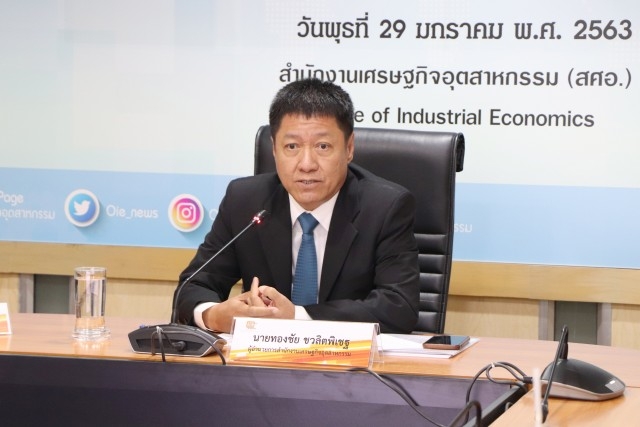
The manufacturing production index (MPI) for December 2019 shrank 3.23 per cent year on year, but it was still an improvement over December 2018 when it had contracted by 8.09 per cent, Thongchai Chawalitphichet, director-general of the Office of Industrial Economics (OIE), said

“Compared to November, the MPI rose 2.13 per cent thanks to a bump in Thailand’s industrial exports at 0.2 per cent after months of contraction,” he said. “Furthermore, the import of capital goods, which had expanded by 0.3 per cent, strengthened investor confidence to make domestic investments, resulting in total industrial investment in 2019 of Bt480 billion, a 31.47 per cent increase year on year.”

According to the director-general, the industries that contributed to the improvement in MPI compared to November were air-conditioner components (23.47 per cent increase in production volume), hard-disk drives (up 18.56 per cent), gems and jewellery (up 15.16 per cent) and frozen seafood (up 13.07 per cent).

Meanwhile, industries that contributed to the shrinking of December’s MPI were palm oil (31.14 per cent decrease in production volume), sugar (down 21.39 per cent), automobiles and engines (down 19.49 per cent), textiles (down 12.34 per cent) and petroleum (down 3.93 per cent).

Chamber of commerce proposes measures to tackle air pollution #ศาสตร์เกษตรดินปุ๋ย

#ศาสตร์เกษตรดินปุ๋ย : ขอบคุณแหล่งข้อมูล : หนังสือพิมพ์ The Nation

https://www.nationthailand.com/news/30381276?utm_source=category&utm_medium=internal_referral

Chamber of commerce proposes measures to tackle air pollution

Jan 30. 2020
By THE NATION

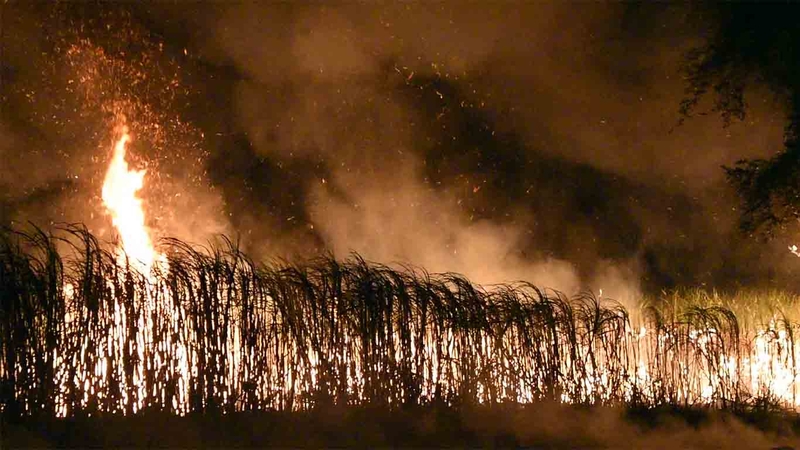
The Thai Chamber of Commerce has proposed increasing the use of agricultural waste in biomass power plants to tackle the air pollution problem which is affecting economic growth as well as the health of people, chamber chairman Kalin Sarasin said on Wednesday (January 29).

“We urge the government to promote the use of byproducts from agricultural harvesting as fuel in local biomass power plants such as sugarcane leaves, rice straws and corn cobs,” he said. “This will help in reducing the need to burn crop fields as many power plants have closed burning chambers that don’t produce air pollution.”

“We wish to see zero burning of crop fields in Thailand by 2022, and agree with the government’s policy to punish those who burn their fields by cutting financial aid to the offenders,” he added.

Kalin has also proposed that the government establish a fund for agricultural cooperatives and community enterprises for loans at low interest to buy harvesting machines or hire additional labourers to clean up their fields after harvesting.

“Alternately, the government may support the business of harvesting services by a third party, or appeal to agricultural entrepreneurs to help farmers in harvesting and cleaning up their fields by providing tax breaks,” he said.

Kalin added that the private sector had previously proposed the draft of the Clean Air Act to the House of Representatives, with more than 30,000 signatures in support nationwide and is currently under the process of finalising the details. “The Thai Chamber of Commerce will soon have a meeting with the Ministry of Natural Resources and Environment, which is the responsible agency to make this draft a law as soon as possible,” he added.

Economic slump? Go cicada-hunting! #ศาสตร์เกษตรดินปุ๋ย

#ศาสตร์เกษตรดินปุ๋ย : ขอบคุณแหล่งข้อมูล : หนังสือพิมพ์ The Nation

https://www.nationthailand.com/news/30381241?utm_source=category&utm_medium=internal_referral

Economic slump? Go cicada-hunting!

Jan 29. 2020
By The Nation

While the market price of rubber waits to bounce back, one alternative source of income for growers and their families in southern Yala province is catching cicadas.

There were people of all ages prowling around Betong district on Tuesday night (January 28), equipped with flashlights to spot the bugs and plastic bags and water bottles to store them in.

Jate In-on, 34, said just before summer is the best time for cicada hunting because that’s when they emerge from their underground burrows and climb trees to moult.

“Cicadas cling to the trunks and branches and live on the sap,” he said. “We can hear their buzzing for four months of the year.”

Every now and again the flashlights are switched off and purple neon lights are used to lure the cicadas into better view so they can be caught with bare hands.

“We sell them on Facebook or to restaurants – Chinese and Malaysian people love them!” Jate said. “We sell them live for Bt2 or Bt3 each and fried for Bt5.”

So, if an average night’s catch is between 500 and 1,000 cicadas, that brings in Bt1,500-Bt2,500, and if the weather is cool, there are more bugs and a bigger payoff.

Cicadas are protein-packed ingredients in many dishes, but the favourite around Betong is deep-fried in seasoning sauce with peppers.