Facebook will now show you exactly how it stalks you – even when you’re not using Facebook #ศาสตร์เกษตรดินปุ๋ย

#ศาสตร์เกษตรดินปุ๋ย : ขอบคุณแหล่งข้อมูล : หนังสือพิมพ์ The Nation

https://www.nationthailand.com/business/30381214?utm_source=category&utm_medium=internal_referral

Facebook will now show you exactly how it stalks you – even when you’re not using Facebook

Jan 29. 2020
This page, buried behind lots of settings menus, is the product of a promise CEO Mark Zuckerberg made during the height of the 2018 Cambridge Analytica scandal to provide ways we can

This page, buried behind lots of settings menus, is the product of a promise CEO Mark Zuckerberg made during the height of the 2018 Cambridge Analytica scandal to provide ways we can “clear the history” in our accounts. File Photo of Zuckerberg/ Credit : Syndication Washington Post, Bloomberg
By The Washington Post · Geoffrey A. Fowler · BUSINESS, TECHNOLOGY

Ever suspect the Facebook app is listening to you? What we now know is even creepier.

Facebook is giving us a new way to glimpse just how much it knows about us: On Tuesday, the social network made a long-delayed “Off-Facebook Activity” tracker available to its 2 billion members. It shows Facebook and sister apps Instagram and Messenger don’t need a microphone to target you with those eerily specific ads and posts – they’re all up in your business countless other ways.

Even with Facebook closed on my phone, the social network gets notified when I use the Peet’s Coffee app. It knows when I read the website of presidential candidate Pete Buttigieg or view articles from The Atlantic. Facebook knows when I click on my Home Depot shopping cart and when I open the Ring app to answer my video doorbell. It uses all this information from my not-on-Facebook, real-world life to shape the messages I see from businesses and politicians alike.

You can see how Facebook is stalking you, too. The “Off-Facebook Activity” tracker will show you 180 days’ worth of the data Facebook collects about you from the many organizations and advertisers in cahoots with it. This page, buried behind lots of settings menus, is the product of a promise CEO Mark Zuckerberg made during the height of the 2018 Cambridge Analytica scandal to provide ways we can “clear the history” in our accounts.

Facebook’s new tool isn’t nearly as useful as your web browser’s clear-history button – it doesn’t let you reset your entire relationship with Facebook. But along with the transparency, it does give you a way to unlink some of its surveillance from your Facebook account.

You might be shocked or at least a little embarrassed by what you find in there. My Washington Post colleagues found Facebook knew about a visit to sperm-measurement service, log-ins to medical insurance and even the website to register for the Equifax breach settlement. Even when your phone is entirely off, businesses can upload information about you making an in-store purchase. One colleague found 974 apps and websites shared his activity.

There’s not necessarily a new privacy violation here. Facebook has been partnering with websites, apps and stores to track and target customers for years. And it’s hardly alone. Lots of companies send information about us to ad and data firms. Think of it more as a reminder that we’re all living in a reality TV program where the cameras are always on.

Anyone who’s concerned about the power Facebook has to manipulate people and shape elections should care about how it tracks us. It’s easy to forget in the constant barrage of Zuckerberg’s privacy apologies and fines, but here’s the reality: Facebook keeps gathering more and more data about us, with few laws restricting how it can use it.

Rivals such as Google don’t offer anything comparable to the “Off-Facebook Activity” page.

“Despite how commonplace this activity is across the internet, we believe it’s important to help people understand why they’re seeing the ads they see and to give them control over how their data is used, regardless of the services they use,” says Facebook spokesman Jay Nancarrow.

But hold the applause: Laws such as this year’s California Consumer Privacy Act require companies to let us know exactly what data they’ve collected about us.

Regardless, I’ll take Facebook’s new tool as a win for us. It offers an opportunity to see in ugly detail how Facebook’s advertising surveillance system actually works. Chances are, it’s not at all like you think.

If all of this sounds confusing, it’s not your fault. A Pew survey published in 2019 found 74 percent of American Facebook members were unaware the social network builds a dossier on each of us to target ads. Facebook makes its surveillance systems so convoluted and, frankly, boring that we’re less likely to object. I’m not letting that stop me.

Here’s the big picture: Everybody’s experience on Facebook and Instagram is different. Your feed might be filled with stories about luxury real estate and ads from Mike Bloomberg, while mine might be NASCAR and Donald Trump commercials. That’s because Facebook’s software uses the data it gathers about us to tailor what it shows us. Facebook also lets advertisers target messages to the people the data suggests might be most receptive – or, in the case of political advertisers, easily swayed.

Facebook uses some data to put you into “interest” categories, such as people who live in Washington, D.C., and are into cats. You can see the boxes Facebook has put you in by looking under its “ad preferences” menus.

A part of this is easy to understand. Facebook obviously knows who your friends are, what you “like,” and what and where you post. You entered that information yourself.

But there’s also a world of information Facebook gathers that you didn’t volunteer to the social network – and probably didn’t know was being collected.

How does Facebook get this info? The social network provides partners tracking software they embed in apps, websites, loyalty cards and other systems. According to research by the Electronic Frontier Foundation, Facebook has so-called tracker pixels or cookie-sharing code on about 30 percent of the top 10,000 websites.

Facebook’s surveillance is hard to avoid. It doesn’t require you to click “like” or use a “log-in with Facebook” button. You don’t necessarily have to be logged in to the Facebook app or website on your phone – companies can report other identifying information to Facebook, which will marry up the activity to your account after the fact.

Your off-Facebook activity isn’t exposed to your friends; they won’t see it in the News Feed. The social network also doesn’t pass your personal information back to businesses – they just get the chance to target ads to people with Facebook accounts who triggered the trackers. A company could, for example, ask Facebook to show ads to people who looked at a certain style of shoe. (Off-Facebook activity doesn’t contribute to Facebook’s dossier of your ad “interests,” but the social network might use it to suggest groups, events or Marketplace items to buy.)

Thanks to the “Off-Facebook Activity” tool, I now know that Home Depot told Facebook when I visited its online store, viewed an item or added an item to a shopping cart. The Atlantic shared the pages I viewed and devices I used, which it says inform its distribution strategy and help it target campaigns. The Washington Post says it stopped using the Facebook tracking pixel, along with some other social-networking trackers, on content pages as of Oct. 24.

The Buttigieg campaign says it used the Facebook tracking pixel to target ads at people who have visited its website or engaged with its donation link. Peet’s Coffee didn’t respond to my questions.

Ring, which is owned by Amazon, let Facebook know when I installed or opened its app. Spokeswoman Yassi Shahmiri says Ring uses the information to “optimize our marketing campaigns on Facebook,” including advertising less to people who already own the product.

But is that a good reason to share information about my doorbell with Facebook? Shahmiri says Ring doesn’t share specific camera data, such as a motion detected at your door. But Ring does ping Facebook when I open the app, which is almost always when there’s someone at my door. Guess I was foolish to presume what happens on my doorstep stays between me and Ring. (Amazon CEO Jeff Bezos owns The Washington Post, but I review all tech with the same critical eye.)

Facebook says it puts limits on the information organizations can share with it. For example, they’re not supposed to pass along health and financial information. But it’s unclear how well Facebook polices this. Using forensic software, I found Facebook tracker code on the website for an HIV drug. Nancarrow, the Facebook spokesman, says that “a health site with a Facebook Pixel does not mean that they are sharing sensitive medical information with Facebook.”

Don’t businesses worry we’ll find this to be oversharing? Most probably never thought we’d find out. Facebook says companies are required to provide us “robust notice” that they’re sending data about our activity to the social network. But I found very few explained this tracking in clear terms.

Facebook wants to paint surveillance as totally normal. Zuckerberg often says people want to see “relevant” ads. I wonder whom he’s asking. About 81 percent “of the public say that the potential risks they face because of data collection by companies outweigh the benefits,” according to Pew.

You can do a few things to fight back against Facebook’s surveillance, some of which haven’t been available before.

The new “Off-Facebook Activity” page includes ways to ask Facebook to cut it out. From that page, click on “Clear History” to tell Facebook remove that data from your account.

After you’ve done that, you still need to inform Facebook you want them to stop adding this data to your profile in the future. On the same “Off-Facebook Activity” page, look for another option to “Manage Future Activity.” (To find it, you may first have to click “More Options” – sorry, I know they’re not making this easy.) Click that, and then click the additional button labeled “Manage Future Activity,” and then toggle off the button next to “Future Off-Facebook Activity.”

An important caveat: Turning off your off-Facebook activity will mean losing access to apps and websites you’ve used Facebook to login to in the past. (Aside from privacy concerns, there are also security reasons why Facebook logins are a bad idea.)

While we’re adjusting things, I also recommend changing one other bad Facebook default setting. Under the settings menu, go to “Your Ad Preferences” (click here to go directly). Under the heading “Ad settings,” look for “Ads based on data from partners.” Make sure it is set to “Not allowed.”

Now I have to share a bummer: Changing these settings doesn’t actually stop Facebook from collecting data about you from other businesses. Facebook will just “disconnect” it from your profile, to use the social network’s carefully chosen word. Mostly they’re just promising they’ll no longer use it to target you with ads on Facebook and Instagram – which means you’ll be less likely to be manipulated based on your data. (Facebook has separately said that starting this summer we will be able to adjust a setting to see fewer political and social issue ads on Facebook and Instagram.)

So what can you do if you don’t want Facebook collecting all this data about you in the first place? That requires more hand-to-hand combat.

On your computer, use a web browser that fights trackers, like Mozilla’s Firefox. Or go even further by adding an ad or tracking-blocking extension to your browser, such as the EFF’s Privacy Badger. My account tallied much less off-Facebook activity than most of my colleagues because I use Firefox along with Mozilla’s Facebook Container add-on, which prevents Facebook’s software from connecting with other sites.

In smartphone apps, where tracking is also increasingly common, tracking even is harder to stop. A few services, such as Disconnect’s Privacy Pro, scan app activity and block tracker traffic, but they may also interfere with the way apps function.

Or there’s the ultimate fix: Say farewell to Facebook and Instagram forever, and close your accounts. So far, though, that’s not a choice most people have been willing to make.

New Amazon-Arlington solar farm on pace to fulfill renewable pledges #ศาสตร์เกษตรดินปุ๋ย

#ศาสตร์เกษตรดินปุ๋ย : ขอบคุณแหล่งข้อมูล : หนังสือพิมพ์ The Nation

https://www.nationthailand.com/business/30381209?utm_source=category&utm_medium=internal_referral

New Amazon-Arlington solar farm on pace to fulfill renewable pledges

Jan 29. 2020
By The Washington Post · Patricia Sullivan 

Amazon and Arlington County have agreed to buy all the electricity generated from a new Dominion Energy solar power farm, a major step toward fulfilling their promises to rely fully on renewable energy in the coming decade.

The agreement, which Amazon has signed and the Arlington County Board approved by a 5-to-0 vote Tuesday night, would name a 1,500-acre site near the North Carolina border the “Amazon Arlington Solar Farm Virginia.” Beginning in 2022, the farm will be capable of generating about 250 million kilowatt-hours per year, according to Dominion officials.

Amazon will buy about 68 percent of the energy, and Arlington will buy about 32 percent, which equals 83 percent of the electricity used by the county government for its buildings, streetlights, traffic signals, water pumping stations and wastewater treatment.

Amazon is building an East Coast headquarters in the Arlington neighborhood of Crystal City, and the county and the retail giant have pledged to cooperate on issues from affordable housing to infrastructure to the environment. (Amazon founder and chief executive Jeff Bezos owns The Washington Post.)

Dominion will build, own and operate the shared site in Pittsylvania County, said Dianne Corsello, the utility’s director of business development. There will be no charge to other ratepayers. Arlington officials said the project entails no upfront cost from them and should be revenue neutral.

The power generated at the new site, which is now farmland, will go into the regional grid. Arlington and Amazon will get renewable energy credits for their share of the power. The county has been buying similar credits equal to 30 percent of its energy needs. When the new agreement takes effect, Arlington will end those purchases, which cost about $30,000 per year.

“All these kinds of agreements and purchases make solar more viable for everybody,” said Libby Garvey, the County Board chair. “The next step [for Arlington] is going carbon neutral by 2050, and this gives us some breathing room.”

Although the property had earlier been described as “treeless,” between 10 to 15 percent of the land does have trees of varying sizes on it, Corsello said. She told the board Tuesday that Dominion will seek to minimize tree-clearing as the land is developed.

The revelation was not enough to thwart the deal. Garvey called it a “hiccup,” and said if the county wants to be innovative, it has to be willing to accept mistakes. She then asked Corsello to save any “big, beautiful trees” on the property.

The county’s goal is to use 100 percent renewable energy for government functions by 2025 and have county residents and businesses achieve that goal by 2035. The agreement approved Tuesdaygets it much of the way there.

A “bigger reach,” Garvey said, is carbon neutrality – which means the county would not release more carbon into the atmosphere (through gas emissions, for example) than it replaces with carbon-consuming products (such as trees).

Virginia’s state government recently purchased a significant amount of energy, mostly from solar farms, from Dominion, which Gov. Ralph Northam (D) called the largest such contract negotiated by any state.

That deal says state agencies will get 30 percent of their electricity from renewable sources by 2022. Fairfax County is also moving to buy energy from contractors that would install solar panels on more than 100 county buildings, part of an effort that aims to remove protections against competition given to Dominion.

Amazon said its portion of the deal will power the tech giant’s new headquarters along with other Amazon-owned operations across the commonwealth, including Whole Foods Markets and fulfillment centers. It already has agreements in place with Dominion to buy solar energy on Virginia’s Eastern Shore in Accomack, as well as in nine other locations in Virginia. It has 84 renewable energy projects that are projected to deliver more than 5.5 million megawatt hours of renewable energy annually globally. The company has said its aim is to be net-zero in carbon emissions by 2040.

The Arlington agreement has been in the works since last fall, said John Morrill, the county’s energy manager. The price Arlington will pay for the power is 3.35 cents per kilowatt-hour; the county government would have to cover any differential between that price and what the hourly wholesale power price is.

“Fluctuations in the wholesale price of electricity may cause some months to have net savings and other months to have net expenses,” Morrill wrote in a report to the County Board, which assured them the financial risk was small. “Over the course of a year, these are expected to offset each other and be neutral in the aggregate.”

Samsung launches new AI laundry appliances #ศาสตร์เกษตรดินปุ๋ย

#ศาสตร์เกษตรดินปุ๋ย : ขอบคุณแหล่งข้อมูล : หนังสือพิมพ์ The Nation

https://www.nationthailand.com/business/30381208?utm_source=category&utm_medium=internal_referral

Samsung launches new AI laundry appliances

Jan 29. 2020
(Samsung Electronics Co.-Yonhap)

(Samsung Electronics Co.-Yonhap)
By The Korea Herald/ANN

Samsung Electronics Co. on Wednesday launched new laundry appliances with upgraded artificial intelligence features for the South Korean market.

The tech giant unveiled its Grande AI range of washing machines and dryers — part of the company’s Project Prism, which aims to reflect consumers’ lifestyles and offer personalized products.

Samsung’s first Project Prism product was Bespoke, a customizable refrigerator launched last year.

The new washers and dryers come with an upgraded self-learning ability offering customized washing and drying, according to Samsung.

Samsung said its “all-in-one” function allows consumers to control their dryer through their washer.

The latest products can also remember frequently used wash or drying modes and propose optimal settings. Based on the washing machine’s settings, the AI can automatically set up the best dryer cycle, the company added.

Samsung said its AI learned from more than 12 million laundry cycles and will get smarter as consumers provide it with their laundry routines.

The new washing machines can also detect the volume and weight of clothes and determine the level of soiling, and the dryers are equipped with bigger compressors and heat exchangers, providing upgraded drying performance, according to Samsung.

With its AI, Samsung claimed that it only takes 36 minutes to wash and dry a batch of shirts.

The Grande AI washers are priced between 1.84 million won ($1,565) and 1.94 million won depending on colors and options, while the dryers will sell for between 1.89 million won and 1.99 million won in South Korea. (Yonhap)

Dtac sets low growth estimate for this year #ศาสตร์เกษตรดินปุ๋ย

#ศาสตร์เกษตรดินปุ๋ย : ขอบคุณแหล่งข้อมูล : หนังสือพิมพ์ The Nation

https://www.nationthailand.com/business/30381192?utm_source=category&utm_medium=internal_referral

Dtac sets low growth estimate for this year

Jan 28. 2020
By THE NATION

Total Access Communication (dtac) has announced its growth estimate of service revenue excluding interconnection charge (IC) for 2020, at a low single-digit with mid single-digit EBITDA (Earnings Before Interest Tax Depreciation and Amortization).

The company has set Bt13 – 15 billion in capital expenditure for this year, according to its statement on Tuesday (January 28).

At the end of 2019, dtac’s subscriber base stood at 20.6 million after the loss of 560,000 users during the year.

Net profit for 2019 amounted to Bt5.9 billion, increasing 69.4 per cent year on year, mainly due to lower regulatory and amortization expenses of assets under concession.

Energy Absolute introduces sustainable business management model #ศาสตร์เกษตรดินปุ๋ย

#ศาสตร์เกษตรดินปุ๋ย : ขอบคุณแหล่งข้อมูล : หนังสือพิมพ์ The Nation

https://www.nationthailand.com/business/30381187?utm_source=category&utm_medium=internal_referral

Energy Absolute introduces sustainable business management model

Jan 28. 2020
By The Nation

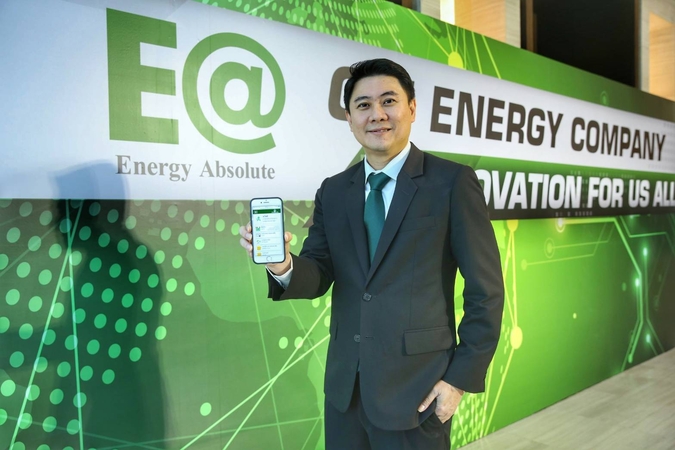
Energy Absolute Pcl (EA), the first Thai energy innovation firm, is introducing a new business model under the corporate social innovation (CSI) concept to develop the organisation to sustainable integrated management.  It is pioneered with production innovation prototype, PCM (Phase Change Material) from crude palm oil, for which it is seeking a global patent. It aims to have a production capacity of 130 tonnes a day within 2020 and expects to have additional revenue of more than Bt800 million

The company also has transformed the Thai palm industry with “Palm Yang Yuen” (sustainable palm) application, the world’s first online platform with blockchain technology to verify all trading transactions, which make it transparent, fair and can return extra profit sharing to suppliers including palm farmers.

This innovation is raising standards of production, transaction and quality to add value to Thai palm to become an innovative product for export to the global market.

Amorn Sapthaweekul, deputy CEO of EA, said that the company operates a green energy business and energy innovation technology for the future through various businesses comprising solar-wind farm, lithium-ion battery factory, biodiesel from palm oil, electric vehicle (EV) car and ferry produced by Thai and EV charging stations, focusing on business related to the need of energy in the future and energy efficiency for the best benefit.

The company emphasises intensive research and development in technology and invented new innovations to extend and add value to existing businesses, he said. The company has implemented the concept of CSI.

“We want to share our knowledge, innovation and technology we use in our organisation for the benefit of society and relevant communities to grow and be strong for mutual benefit in the long run.

“It is a foundation leading to community development in all dimensions of sustainability eventually, pioneered with PCM or Phase Change Material produced from crude palm oil for the first time in the world. With blockchain innovation, it develops an online platform to record, verify and facilitate additional profit-sharing. This is the company’s CSI prototype with an investment budget of more than Bt1 billion to solve the price and volume fluctuation of palm. It will also add value to palm, boosting the income of farmers and stakeholders in the supply chain. PCM is a substance with a high heat of fusion which, melting and solidifying at a certain temperature, is capable of storing and releasing heat. Heat is absorbed or released when the material changes from solid to liquid and vice versa. PCMs are classified as latent heat storage units and applied in many industries such as building and construction, textile, packaging and logistics.

PCM developed from crude palm oil base or bio-PCM is a new innovation, created for the first time by EA, which has put its PCM under the patent registration process in the global market. The PCM market size is estimated at around US$1 billion, which is expected to triple in the next five years. EA’s PCM production plant is in Rayong with a production capacity of 130 tonnes a day. The first phase of production will start in the second quarter of this year. All the output will be exported to Germany and Japan to be used in construction of buildings and residences.

“This is a significant role in energy conservation as PCM can provide a more stable temperature to reduce energy consumption from air-conditioners or heaters. By the end of the year, revenue from PCM will be around Bt800 million, accounting for 3 per cent of the company’s total revenue. The second phase of PCM production line will be completed by the end of the year and the company aims to expand production capacity to 1,000 tonnes a day within five years.

EA has also transformed the Thai palm industry with the launch of ‘Palm Yang Yuen’ (sustainable palm) application, the world’s first palm platform with blockchain technology, to help farmers and related partners.

They can register by entering personal information, transaction data and quality of raw materials for examination. Additional benefits will be shared if the raw materials meet quality standards to be produced as high-quality PCM. This will be a key driver to promote farmers to produce good-quality raw materials. Consequently, pricing will be led by market mechanism with the practice of transparency which can be examined in every process.

Farmers will get paid quickly through money transfer to their registered account. The application can help prevent trading in smuggled palm and also can be applied widely.

Supalai sets year’s targets, looks to larger share in provinces #ศาสตร์เกษตรดินปุ๋ย

#ศาสตร์เกษตรดินปุ๋ย : ขอบคุณแหล่งข้อมูล : หนังสือพิมพ์ The Nation

https://www.nationthailand.com/business/30381183?utm_source=category&utm_medium=internal_referral

Supalai sets year’s targets, looks to larger share in provinces

Jan 28. 2020
Tritecha Tangmatitham

Tritecha Tangmatitham
By THE NATION

Property developer Supalai Plc has set this year’s pre-sales and total revenue targets at Bt26 billion and Bt24 billion respectively, the company’s managing director Tritecha Tangmatitham said on Tuesday (January 28).

The company will launch 30 new projects worth a total of Bt30 billion this year, comprising 25 horizontal development and five condominiums, according to its statement.

The company will explore new markets showing potential demand in the provinces. Also, it will continue launching new mobile applications to boost customer satisfaction.

Bt8 billion is earmarked for land bank purchases this year.

The developer introduced 24 projects with a total value of Bt34.380 billion in 2019, of which 19 are horizontal development.

What changes after Brexit Day on Jan. 31? #ศาสตร์เกษตรดินปุ๋ย

#ศาสตร์เกษตรดินปุ๋ย : ขอบคุณแหล่งข้อมูล : หนังสือพิมพ์ The Nation

https://www.nationthailand.com/business/30381220?utm_source=category&utm_medium=internal_referral

What changes after Brexit Day on Jan. 31?

Jan 29. 2020
By The Washington Post · William Booth, Karla Adam 

LONDON – Brexit Day, or “Exit Day” as Prime Minister Boris Johnson would have it, is nearly upon us. On Friday, Britain will officially leave the European Union, after more than four decades with the closest of ties.

What will change? Nothing! At least, at first.

For the rest of 2020, free trade and free movement between the United Kingdom and the EU will continue. Britain will still contribute to the EU budget. And it will still have to abide by EU laws – even though British members of the European Parliament will have packed their bags and lost their say in how those laws are determined.

The biggest jolt to British politics in a generation won’t be felt by most until the end of an 11-month transition period. That’s when everyone will see a profound change to Britain’s relationship with Europe and the world. And there’s still lots that needs sorting between now and then. Here’s what’s on the to-do list.

– – –

It’s all about cod.

British fishing folk, and the folks who love them, have been banging on for years about rapacious Irish, French and Danish fleets over-exploiting rich British waters.

Fisheries account for a tiny percent – a mere minnow – of Britain’s gross domestic product and employ just 24,000 people. But the issue is highly emotional, stirring up nationalist fervor.

Johnson has vowed that Britain will – no matter what else – reclaim its “spectacular maritime wealth.”

Meanwhile, Ireland’s prime minister, Leo Varadkar, warned on the BBC on Monday: “You may have to make concessions in areas like fishing in order to get concessions from us in areas like financial services” in a post-Brexit trade deal.

The Cod War of 2020 is just beginning.

– – –

During the transition period, Britain will remain in the EU’s custom union and single market, but after that, everything is up for grabs.

Brexit Secretary Stephen Barclay has declared that the U.K. wants a “zero tariff, zero quota” trade pact with the EU by the end of the year.

But the new president of the European Commission, Ursula von der Leyen, has warned – in a very friendly, very warm, very public way – that it is almost certainly “impossible” for the two sides to complete a comprehensive agreement within this “very tight” schedule. She suggested that Johnson will have to ask for a delay. Or accept a partial deal – and keep talking.

The prime minister insists he will walk away if his deadlines are blown and head (again) for the dreaded cliff edge of a no-deal departure. Not everyone believes this.

– – –

Once the U.K. is officially out of the EU, it can start to negotiate with countries that don’t already have trade deals with the EU. At the top of that list is the United States.

President Donald Trump, a fan of Brexit, has promised a “massive” deal.” Both sides have said they want to hammer something out quickly. But there could be stumbling blocks, including over drug prices and taxes on big tech companies.

There’s also the debate about “chlorinated chicken.”

Believe it or not, this is a big thing. Bigger than cod.

To have easy, free trade of agricultural goods, Europe is pressing Britain remain aligned with EU rules on food safety and animal welfare. But that puts Britain on a collision course with the United States and its relatively lax regulations on industrial farming. American food processors rinse their poultry in a chlorine bath and shoot up their beef with antibiotics – both no-nos in Europe.

Whether Johnson will bow to the Americans on “chlorinated chicken” and on allowing U.S. pharmaceutical companies access to the U.K. health service market were both points of contention in last month’s general election. Brits will be watching what he does.

– – –

As Britain goes its own way, it will effectively withdraw from hundreds of pacts signed between the EU and the rest of the world.

The Financial Times counted more than 750 treaties “running to hundreds of thousands of pages and spanning 168 non-EU countries. Within them are covered almost every external function of a modern economy, from flying planes to America and trading sows with Iceland to fishing in far-flung seas.”

Johnson’s government has said most of these treaties will be quickly dispatched with a few added lines of text and rubber-stamped by the sides.

In any case, Britain will need lots of ink.

– – –

Britain will begin introducing spiffy new passports – blue, like the good old days – early this year. By mid-2020, all new British passports will be blue.

But they won’t have that “European Union” stamp on the front cover, which allows the 500 million citizens of the bloc to travel effortlessly across the 28-member nations.

Free movement will continue through the transition period. Londoners can still freely move to Lisbon, Berliners can take jobs in Birmingham. But EU citizens living in Britain must apply for residency rights by June 2021 – or they will be in the country illegally.

Going forward, Europeans won’t get automatic preference over people from other countries who want to live and work in the U.K. And Brits won’t as easily be able to live and work in Europe.

Johnson will soon unveil a post-Brexit immigration plan, which is expected to be something akin to Australia’s point-based scheme. Immigration was a huge driver in the 2016 EU referendum, with Brexiteers promising to “take back control” of Britain’s borders. Johnson will want to say he’s achieved that goal.

Stocks shake off virus dread in busy earnings week #ศาสตร์เกษตรดินปุ๋ย

#ศาสตร์เกษตรดินปุ๋ย : ขอบคุณแหล่งข้อมูล : หนังสือพิมพ์ The Nation

https://www.nationthailand.com/business/30381212?utm_source=category&utm_medium=internal_referral

Stocks shake off virus dread in busy earnings week

Jan 29. 2020
By Syndication Washington Post, Bloomberg · Rita Nazareth, Vildana Hajric 

U.S. stocks climbed the most since October on speculation that efforts to contain the coronavirus will prevent a major economic fallout.

The S&P 500 Index rebounded from its worst sell-off in four months, with technology shares leading the charge. Some of the companies that suffered the biggest losses during the latest equity rout, such as chipmakers, casino operators and airlines, advanced on Tuesday. Demand for havens cooled, sending Treasuries and gold lower. After the close of regular trading, Starbucks Corp. reported earnings that beat analyst estimates.

Stocks Turnaround Got Few Cheering With Uncertainty Running High

Equities rallied after a slide that wiped about $1.5 trillion off the value of world stocks since Jan. 20. As it’s too early to assess the full impact of the deadly virus, traders digested some positive readings on U.S. consumer confidence and home prices. With earnings continuing to roll in, investors will be looking for signs of how the disease is affecting operations in China.

“We kind of stall a little bit on the Chinese recovery, but we have a lot of other things going in favor of a global recovery anyway,” Stephen Auth, chief investment officer of equities at Federated Investors, told Bloomberg TV. “We still think that’s coming.”

– – –

Some corporate highlights:

– PulteGroup Inc. climbed after reporting better-than-expected quarterly orders.

– Lockheed Martin Corp. rose on sales that beat the highest estimate.

– Acceleron Pharma Inc. surged on mid-stage results for its medicine aimed at treating a type of lung and heart disorder.

– 3M Co. sank after revealing it had received a grand jury subpoena in an environmental probe and saying it would cut 1,500 jobs.

– Harley-Davidson Inc. slid after quarterly profit missed estimates.

– Pfizer Inc. tumbled as a drop in sales overshadowed the company’s projections for a better-than-feared 2020.

– – –

Here are some events to watch out for this week:

– Wednesday brings reports from GE, Boeing and Facebook; Samsung Electronics, International Paper, Unilever and Shell report on Thursday, followed by South Korean chip maker SK Hynix, Chevron, Caterpillar and Exxon Mobil all on Friday.

– Federal Reserve policy makers on Wednesday are expected to open 2020 the same way they closed 2019, by holding rates steady.

– Goldman Sachs will hold its first-ever Investor Day on Wednesday.

– The Bank of England meeting on Thursday is highly anticipated after a series of dovish comments raised speculation policy makers could lower interest rates.

– The U.S. reports fourth-quarter GDP Thursday.

– The U.K. is scheduled to leave the European Union Friday.

– – –

These are the main moves in markets:

Stocks

– The S&P 500 climbed 1% as of 4 p.m. New York time.

– The Stoxx Europe 600 Index rose 0.8%.

– The MSCI Emerging Market Index was little changed.

Currencies

– The Bloomberg Dollar Spot Index decreased 0.1%.

– The euro was unchanged at $1.1019.

– The Japanese yen weakened 0.2% to 109.14 per dollar.

Bonds

– The yield on 10-year Treasuries rose four basis points, to 1.65%.

– Germany’s 10-year yield climbed four basis points, to -0.34%.

– Britain’s 10-year yield jumped four basis points, to 0.552%.

Commodities

– The Bloomberg Commodity Index advanced 0.1%.

– West Texas Intermediate crude rose to $53.48 a barrel.

– Gold decreased 0.5%, to $1,575.80 an ounce.

S. Korea’s consumer sentiment sharply improves for Jan. #ศาสตร์เกษตรดินปุ๋ย

#ศาสตร์เกษตรดินปุ๋ย : ขอบคุณแหล่งข้อมูล : หนังสือพิมพ์ The Nation

https://www.nationthailand.com/business/30381206?utm_source=category&utm_medium=internal_referral

S. Korea’s consumer sentiment sharply improves for Jan.

Jan 29. 2020
(Yonhap)

(Yonhap)
By The Korea Herald/ANN

South Korea’s consumer sentiment improved sharply from a month earlier in January, central bank data showed Wednesday, amid outlooks that the country’s economic conditions will improve down the road.

The composite consumer sentiment index came to 104.2 for the month, up from 100.5 for the previous month, according to the data from the Bank of Korea.

The reading marks the highest since June 2018, as well as the largest on-month gain since September 2019, when the index jumped 4.6 points from a month earlier but still fell short of the benchmark 100 at 97.0.

A reading above 100 means optimists outnumber pessimists, while a reading below the benchmark means the opposite.

Local consumers apparently saw future improvements in conditions for their own livelihoods and the country’s economy.

The index measuring their sentiment toward their current economic conditions came to 93 in January, up 1 point from a month earlier.

The index on their livelihood in the future, on the other hand, jumped 3 points to 97, with the index on their outlook for their future income also adding 3 points from a month earlier to 101.

The index for their sentiment toward current economic conditions came to 78, up 4 points from a month earlier. The index for their outlook on economic conditions six months from now came to 87, compared with 82 registered in December, according to the BOK.

The central bank has forecast the local economy to grow 2.3 percent this year, accelerating from last year’s 2 percent expansion in 2019 that marked the slowest on-year growth in a decade. (Yonhap)

Bt100 bn new investment seen in latest tax, loan measures #ศาสตร์เกษตรดินปุ๋ย

#ศาสตร์เกษตรดินปุ๋ย : ขอบคุณแหล่งข้อมูล : หนังสือพิมพ์ The Nation

https://www.nationthailand.com/business/30381191?utm_source=category&utm_medium=internal_referral

Bt100 bn new investment seen in latest tax, loan measures

Jan 28. 2020
Lavaron Sangsnit

Lavaron Sangsnit
By THE NATION

The Cabinet on Tuesday (January 28) approved the new tax and loan measures proposed by the Finance Ministry, expected to attract new investment of up to Bt110 billion this year, said Finance Ministry’s spokesman Lavaron Sangsnit.

Leading the measures is the incentive of tax deduction, allowing companies to deduct expense of their investment in machinery at 2.5 times of the actual cost. It covers investments from January 1 to December 31, 2020.

The second is the exemption of tariffs on 146 items of imported machinery. They must be new machinery to be used for the business of the importer, and not imported for sales or be used in household. This will come into effect from the date the ministry announces the regulations until the end of this year.

Another one is the Bt5 billion loans from the Export-Import Bank of Thailand for the purchases of new machinery and improvement of existing items. It offers a fixed annual interest rate of 2 per cent during first two years, and 4 per cent during the following three years.

Maximum lending is set at Bt100 million per borrower, available until December 31,2020.

State banks have also offered loans with low interest rates for investment in certain ventures, as the New-S-Curve businesses in the Eastern Economic Corridor. The S-Curve businesses range from robotics to medical hub.

He added that the ministry has estimated that these new measures will lead to Bt110 billion in new investment this year.