Seoul extends reduction of airport usage fees for virus-hit airlines
Dec 30. 2020Korean Air aircraft at Incheon International Airport, west of Seoul (Yonhap)
By The Korea Herald/ANN
South Korea will extend the reduction of airport usage fees for virus-hit airlines by six months to help them stay afloat amid the prolonged COVID-19 pandemic, the transport ministry said Wednesday.
The government will allow airlines, duty-free shops and other related companies at airports to pay quite lower airport usage fees until June next year, the Ministry of Land, Infrastructure and Transport said in a statement.
Incheon International Airport Corp., the operator of the country’s main Incheon International Airport, has extended the cut of airlines’ landing fees by up to 20 percent and the exemption on paying parking fees through June 2021, it said.
In August, the government took the same step until December as air travel demand dried up due to countries’ entry restrictions to stem the spread of the pandemic.
The extended support programs are aimed at relieving the financial burden of the airline industry next year as it is expected to take some time for airlines and related businesses to recover from the impact of the coronavirus pandemic, the statement said. (Yonhap)
Half of the nation’s medical institutions were in the red in July-September and many reduced their winter bonuses, according to surveys conducted by hospital groups, as the novel coronavirus pandemic continues to put pressure on the management of medical institutions.
Exhausted nurses have been expressing anguish with many saying they are almost at their limit.
■ Urgent support needed
“We’ve been struggling for funds. The government grants have arrived too late,” said Ryota Uruno, executive director of Tokyo Kinrosya Iryokai, which operates Toukatsu Hospital in Nagareyama, Chiba Prefecture.
In August, the hospital was designated by the Chiba prefectural government as a key medical institution to treat coronavirus patients and has 10 beds in dedicated wards.
However, the number of outpatients and health checkups handled by the hospital has decreased significantly, and the cumulative deficit for the period from April to November was about ¥600 million.
The hospital reduced the summer employee bonus and was planning to do the same with the winter bonus, but after receiving complaints from staff, it paid the same amount as last year.
The central government has offered grants to key medical institutions to improve coronavirus-related procedures, but the payments have been delayed. A total of ¥472.8 billion was appropriated for the grants in the second supplementary budget for this fiscal year, but only ¥275.6 billion had been granted as of Dec. 15.
Toukatsu Hospital applied for a ¥160 million government grant for the period from August to October, but the money was not transferred until Dec. 22 — after the hospital had paid the winter bonus — because it took time for the prefectural government to complete administrative procedures.
“The burden on staff has increased. Without prompt support, we won’t be able to survive,” Uruno said.
■ Bonuses cut
The Japan Hospital Association and other groups conducted a survey in July-September to investigate the business conditions of hospitals.
Of the 1,460 hospitals that responded to the survey, 54% were in the red in July, 49% in August and 52% in September.
In another survey conducted by the Japan Municipal Hospital Association, 388 hospitals reported a total decrease of ¥47.6 billion in medical income and expenditure between June and October compared to the same period last year. Of these, 90% were for hospitals that treated COVID-19 patients.
Many hospitals have reduced employee bonuses amid the severe business conditions.
A Japan Federation of Medical Worker’s Unions survey conducted in November found that 44% of 289 hospitals reported a decrease in this year’s winter bonus from the previous year, with 31 reporting a decrease of ¥100,000 or more.
■ Crowd-funding
Some hospitals have resorted to raising funds on their own.
Moriya Keiyu Hospital in Moriya, Ibaraki Prefecture, had raised about ¥47 million through online crowdfunding as of Friday, with donations from 2,773 people.
The hospital has been treating COVID-19 patients since April. Its revenue for the period from April to August decreased by about ¥150 million compared to the previous year.
Faced with the threat of having to reduce its winter bonus, the hospital launched a crowdfunding campaign on Nov. 26, setting a target of ¥10 million.
The donations it received far exceeded the target.
The hospital will use the donations to provide allowances of up to about ¥140,000 to nurses and other workers.
“The unexpectedly large amount of support was not just for us. It was probably also intended for the entire medical community fighting against the virus,” said Moriya Keiyu Hospital Director Akira Imamura.
On Friday, the central government announced a plan to provide subsidies of up to ¥15 million per bed to hospitals treating COVID-19 patients in areas where the number of cases is rapidly increasing, to encourage medical institutions to secure more beds.
Josai University Prof. Tomotoshi Iseki, who specializes in public administration and regional medical care, said: “Delays in the provision of subsidies are a matter of life and death for hospitals. The national and local governments should establish a system to promptly provide subsidies and encourage more hospitals to treat coronavirus patients.”
Dec 30. 2020An attendant walks past EU and China flags ahead of the EU-China High-level Economic Dialogue at Diaoyutai State Guesthouse in Beijing, on June 25, 2018. [Photo/Agencies]
By MO JINGX China Daily/ANN
The signing of an investment agreement between China and the European Union can be expected soon, Foreign Ministry spokesman Wang Wenbin said on Tuesday, noting that major progress has been achieved in recent talks.
“Negotiations on a China-EU investment agreement is currently the most important item on the agenda in economic and trade relations between the two sides,” Wang said at a regular news briefing in Beijing.
“We hope the agreement will come to fruition at an early date and offer an institutional framework of guarantees for the two sides’ trade cooperation and tangible benefits to their businesses and people,” he said.
Negotiations, which started in 2013, have aimed at reaching a higher-level agreement covering investment protection and market access.
Both China and the EU have expressed the hope on many occasions of speeding up the talks to fulfill the target of signing a deal by the end of this year.
This month, the two sides held the 35th round of negotiations, during which they conducted talks on the text of the agreement as well as remaining issues on their lists, and progress was achieved, according to the Ministry of Commerce.
A report in the South China Morning Post said the deal was likely to be clinched this week. It cited an EU diplomat with knowledge of the discussions as saying that on Monday, representatives of the EU member states “broadly welcomed the latest progress in the EU-China talks”.
The Stock Exchange of Thailand (SET) Index rose by 12.24 points, or 0.84 per cent, to 1,474.19 in the morning session on Wednesday.
The SET gained positive sentiment from mass buy-ups of large-cap shares. However, the index is expected to come under pressure amid uncertainty over the quick rollout of US economic stimulus measures and Thailand’s rising Covid-19 cases.
Meanwhile, investors have been advised to beware of mass sell-offs of shares to reduce risks during the New Year holiday.
The top 10 stocks with the highest trade value in the morning session were Delta, GPSC, AEONTS, PTT, STGT, KEX, True, Banpu, EA and IVL.
The SET Index closed at 1,461.95 on Tuesday, up 9.28 points, or 0.64 per cent. Total transactions amounted to Bt77.71 billion, with an index high of 1,468.60 points and a low of 1,440.59.
The price of gold was unchanged in morning trade on Wednesday, the Gold Traders Association reported.
As of 9.22am, the buying price of a gold bar was Bt26,650 per baht weight and selling price Bt27,750, while gold ornaments cost Bt26,166.16 and Bt27,250, respectively.
The Comex (Commodity Exchange) gold price to be delivered in February rose by US$2.50, or 0.13 per cent, closing at $1,882.90 (Bt56,514) per ounce on Tuesday due to a weakening dollar.
However, the price rose slightly as some investors sold their safe-haven assets after US home prices hit the highest level in six years.
By Syndication Washington Post, Bloomberg · Vildana Hajric
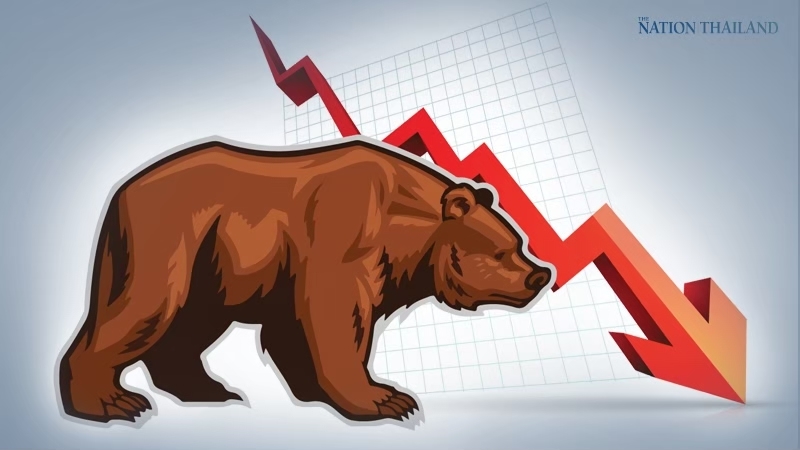
U.S. stocks pulled back from record highs, with small-cap shares posting their biggest drop in a month, as prospects faded for bigger government aid checks to individuals. The dollar weakened.
The Russell 2000 Index tumbled almost 2%, while the S&P 500 finished only slightly lower. A gauge of global equities was set to close at a record after the U.S. House backed President Donald Trump’s proposal to boost aid checks for individuals, but pulled back from its high of the day as Senate Republicans blocked an attempt by Democrats to increase the direct payments to $2,000 from $600.
The year is coming to a close with risk assets such as stocks, corporate bonds and bitcoin just off record highs. As investors try to gauge the impact of the pandemic and the pace of U.S. vaccine distribution, the S&P 500 is set to end the year 15% higher.
On the coronavirus front, more restrictions are being imposed to fight the spread of the new, more infectious strain. covid-19 hospitalizations in the U.S. reached new highs, while Southern California plans to extend a regional stay-at-home order. South Korea’s daily toll of fatalities rose to a record, while Thailand reported its first virus death since November.
In Europe, the Stoxx 600 rose as the FTSE 100 Index rallied in the first session since the U.K.’s Christmas Eve trade deal with the European Union. Uncertainty about what accord will be struck on financial services weighed on Lloyds Banking Group Plc, Natwest Group Plc and Barclays Plc.
Elsewhere, the pound recouped some of Monday’s decline.
These are the main moves in markets:
Stocks
– The S&P 500 Index fell 0.2% as of 4 p.m. EST.
– The Stoxx Europe 600 Index gained 0.8%.
– The MSCI Asia Pacific Index jumped 1.4%.
– The MSCI Emerging Market Index increased 1.1%.
Currencies
– The Bloomberg Dollar Spot Index sank 0.4%.
– The euro increased 0.3% to $1.2249.
– The British pound gained 0.4% to $1.3499.
– The Japanese yen strengthened 0.3% to 103.53 per dollar.
Bonds
– The yield on 10-year Treasuries rose one basis point to 0.93%.
– Germany’s 10-year yield dipped less than one basis point to -0.58%.
– Britain’s 10-year yield fell four basis points to 0.21%.
Commodities
– West Texas Intermediate crude gained 0.8% to $47.99 a barrel.
The Eastern Economic Corridor (EEC) Office has maintained its target of investment in the EEC zone over the next three years at Bt100 billion, despite the gloomy global economic outlook.
Meanwhile the number of investors granted EEC promotion certificates in the first 11 months of 2020 rose 62 per cent, indicating investors are confident to continue investing, said Luxmon Attapich, the office’s deputy secretary general for Investment and International Affairs.
In 2021, the EEC will focus more on wooing investment from industries benefiting from the Covid-19 pandemic fallout, including the digital, health and logistic businesses.
During the first 11 months of 2020, total investment in processed food, the bio-industy and medical industry stood at Bt18 billion, which is expected to rise 70 per cent in the next three years.
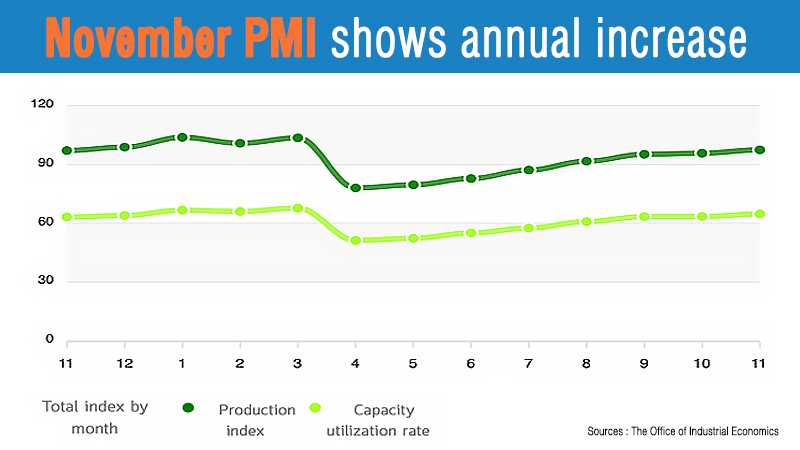
Thailand’s manufacturing production index (MPI) rose 0.35 per cent in November from a year earlier, for its first annual increase in 19 months.
The index also rose 1.77 per cent from last month driven by a 10.2 per cent growth in auto manufacturing, said the Industry Ministry.
The figures showed Thai manufacturing was on the path to recovery after being hit by the trade war and Covid-19 outbreak, said Thongchai Chawalitpichaet, director-general of the ministry’s Office of Industrial Economics.
Global economy recovery aided by stimulus packages had boosted orders for Thai-made products, resulting in a smaller export contraction of 0.87 per cent last month, he added.
He expects December’s PMI to match November’s level, if authorities can contain the latest virus outbreak.
Overall in 2020, the PMI is expected to contract by 8 per cent but then grow by 4-5 per cent next year, he said.
The manufacturing sector is expected to contract 7 per cent this year, then expand 4-5 per cent next year, based on an exchange rate of Bt29-32 per dollar and crude oil at US$40 to $50 per barrel, he added.
Kasikorn Asset Management (KAsset) expects the Stock Exchange of Thailand (SET) Index to move between 1,550 and 1,600 next year amid the global economic recovery.
KAsset managing director Suradech Kietthanakorn said Thai bank, energy, petrochemical, hotel and healthcare stocks will benefit from the recovery, while the performance of shares in public utilities, retail, public transport and electronics shares should improve next year.
He added that positive sentiment from Covid-19 vaccines, central banks’ moves to ease monetary policy, and countries’ economic stimulus measures is driving the SET upwards.
“However, investors should diversify risks and invest with caution due to impacts from Covid-19, domestic politics, US-China relations and President-elect Joe Biden’s administrative policies.”
He advised investors to consider the K Global Income Fund (K-GINCOME), K Global Income Fund-SSF (K-GINCOME-SSF), K China Equity Fund (K-CHINA) and K China Equity RMF (KCHINARMF).
The Thai Hotels Association (THA) will ask for more government measures to soften the impact of Covid-19 on the sector, THA chairperson Marisa Sukusol told the Thansettakij newspaper.
Among them is a measure allowing hotels to suspend their outstanding debt. Hotels want to halt their principal and interest payments for two years. The THA also wants annual interest on hotel debt to be cut to 2 per cent.
The THA will also ask the government to allocate budget for soft loans of up to Bt60 million per hotel at 2 per cent interest, with principal and interest repayment suspended for two years. When payment is due, the loans should be converted into long-term credit at low interest. The loans were needed to boost liquidity, the association said.
It will also ask the government to pay 50 per cent of monthly staff salaries in order to retain as many as 200,000 hotel employees nationwide.
The co-payment scheme would cover monthly salaries of up to Bt15,000 and last for one year. Payments would be transferred directly into their accounts via Krungthai Bank. The total cost of the scheme is estimated at Bt18 billion.
Hotel operators calculate the Covid-19 impact could drag on until late next year, due to the fresh outbreak in Thailand.
The new surge of infections has seen some hotels that had reopened, close again after guests cancelled bookings over infection fears.
 Korean Air aircraft at Incheon International Airport, west of Seoul (Yonhap)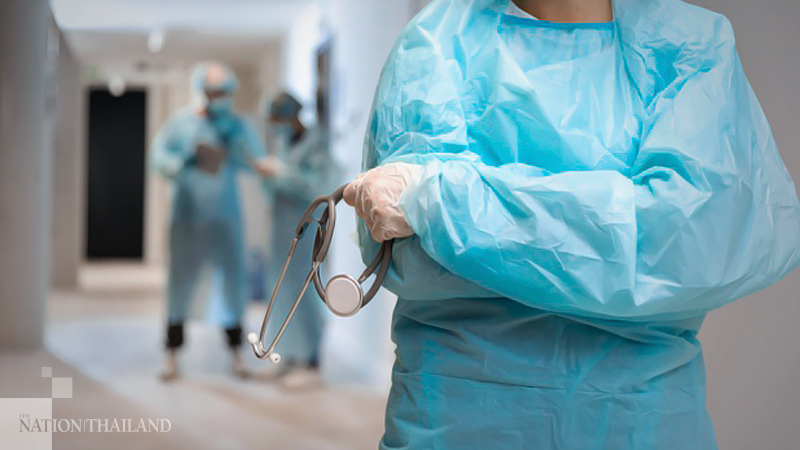
![An attendant walks past EU and China flags ahead of the EU-China High-level Economic Dialogue at Diaoyutai State Guesthouse in Beijing, on June 25, 2018. [Photo/Agencies]](https://media.nationthailand.com/images/news/2020/12/30/30400464/800_06fb17e63e45d75.jpeg?v=1609295819) An attendant walks past EU and China flags ahead of the EU-China High-level Economic Dialogue at Diaoyutai State Guesthouse in Beijing, on June 25, 2018. [Photo/Agencies]
An attendant walks past EU and China flags ahead of the EU-China High-level Economic Dialogue at Diaoyutai State Guesthouse in Beijing, on June 25, 2018. [Photo/Agencies]



 SootinClaimon.Com