Moderna to supply vaccines for 20m to S. Korea from Q2 2021: Cheong Wa Dae
Dec 29. 2020President Moon Jae-in (R) talks with Moderna CEO Stephane Bancel (on the monitor) via video conference at the presidential office in Seoul on Monday. (Presidential office)
By The Korea Herald/ANN
US biotech company Moderna will supply new coronavirus vaccine doses for 20 million people to South Korea starting in the second quarter of next year, Cheong Wa Dae announced Tuesday.
The deal was reached in a video conference between President Moon Jae-in and Moderna CEO Stephane Bancel held Monday, according to the South Korean presidential office. (Yonhap)
[China] Officials slam US sanctions on Xinjiang products
Dec 29. 2020Workers make down-filled coats at a factory in Jiashi county, Xinjiang Uygur autonomous region, last month. WANG ZHUANGFEI/CHINA DAILY
By CUI JIA and MAO WEIHUA CHINA DAILY/ANN
The United States’ sanctions on the Xinjiang Production and Construction Corps in the name of “forced labor” are groundless and won’t affect the healthy development of the corps, officials said.
“More than 70 percent of the XPCC’s cotton and 95 percent of its textile products have been sold domestically in the past two years,” Sun Huantao, deputy director of the XPCC’s Commerce Bureau, told China Daily in an exclusive interview at its headquarters in Urumqi, capital of the Xinjiang Uygur autonomous region.
“We don’t have much direct trade volume with the US. The US’ latest sanctions on cotton and cotton products produced by the XPCC indeed have affected our businesses, but they have only had a limited impact,” Sun said.
The XPCC, also known as Bingtuan, is a special provincial-level entity entrusted by the State to cultivate and guard China’s border areas in Xinjiang. It has administrative control of several cities as well as farms and industrial facilities.
In 2020, China produced 5.91 million metric tons of cotton, of which 87.3 percent came from Xinjiang, according to figures released by the National Bureau of Statistics in December. In 2019, the XPCC produced more than 2 million tons of cotton, making it the key cotton producer in China.
On Dec 2, US Customs and Border Protection issued a withhold release, or detention, order that applies to all cotton and cotton products produced by the XPCC and its subordinate and affiliated entities, along with all products made in whole or in part from XPCC cotton, such as apparel, garments and textiles, because of concerns about “the risks of forced labor”, the agency said.
In the days leading up to the withhold release order, Customs and Border Protection sent detailed questionnaires to US importers of apparel to obtain information on supply chains in Xinjiang.
“The sanctions have affected the exports of cotton and cotton products from the XPCC,” Sun said. “It means that many foreign businesses will be unable to use good-quality cotton from the XPCC.
“Global businesses and consumers, particularly those in the US, are the real victims of the sanctions. It’s a move of extreme trade protectionism and not in line with principles of a market-oriented economy. It will surely damage the international supply chain,” Sun added.
To cope with the sanctions, the XPCC will further explore the domestic market, which is strong enough to support the healthy development of the corps’ cotton industry, she said.
Han Yongjiang, a spokesman for the XPCC’s Human Resources and Social Security Bureau, said all workers’ rights are fully protected in accordance with the law, and not a single complaint about forced labor has been received in recent years.
About 46 percent of employees in the corps’ textile and apparel enterprises in 2020 are from ethnic minorities such as Uygurs.
It also employees many seasonal workers in the agricultural sector.
These seasonal workers can make an average of 6,000 yuan ($915) in two months, which is very competitive in Xinjiang, Han said, and such employment is at the free will of employers and workers.
“We have stepped up the inspections to ensure any action that violates the rights of employees of the XPCC is punished in a timely manner. Also, employees from all ethnic groups can complain about possible misconduct via multiple channels, such as online, social media and by phone,” he added.
“If we don’t treat our employees with a better attitude or pay them well, they will quit. Their absence will severely affect the enterprises’ operations. So accusing the XPCC of using forced labor doesn’t stand, either factually or logically.”
The US Customs and Border Protection’s order follows the announcement in July by the US Office of Foreign Assets Control that it had designated the XPCC as a “specially designated national”. This designation essentially prohibits people in the US from engaging in any transactions with the XPCC or any companies of which the XPCC owns more than 50 percent.
Xiao, the manager of a tomato sauce company in which the XPCC holds shares, felt the bite of the sanctions as early as mid-August, although the company doesn’t directly export to the US, but mainly to European markets.
“Because we are on the sanctions list, we started to experience problems in international bank transfers. Also, one of our international shipping partners clearly told us they will no longer provide services to us for fear of being sanctioned by the US for doing business with us,” said Xiao, who wished to give only her surname.
The company, established in 2008, is currently appealing the US decision because the XPCC owns only about 45 percent of the shares of the company.
Because of the quality of tomatoes grown in Xinjiang, more than 90 percent of tomato sauce exported to other countries from China is produced there. In September, US Customs and Border Protection considered a much broader import ban on all cotton and tomato products from Xinjiang.
Xiao said, “Our business partners in Europe have asked us about the sanctions. If the situation deteriorates, the business ties that we’ve built over the years may be cut and will be difficult to reestablish. If we lose our contracts, it’s the growers and employees who will suffer in the end.”
Of the more than 300 tomato growers for the company based in southern Xinjiang, about 40 percent are locals from ethnic minorities, including Uygurs. During the harvest season, the company also annually employs about 200 seasonal workers, mainly Uygurs.
“Many of them keep coming back to work for us, year after year, because we can provide them with a good working environment and good pay, as stated in their contracts. They even ask their families and friends to come along, so we have never had recruitment problems. I don’t think they will introduce us to their loved ones if the seasonal workers are ever forced to work,” Xiao said. “They will lose their income if the company cannot survive the sanctions.”
“All we can do is to continue to improve the quality of our products and make them irreplaceable in the global market,” she added.
By Syndication Washington Post, Bloomberg · Vildana Hajric
U.S. equities rallied to records after President Donald Trump backed away from earlier threats and signed a coronavirus aid package.
The S&P 500 Index, Dow Jones industrial average and Nasdaq Composite closed at all-time highs following Trump’s surprise approval of the combined $2.3 trillion covid-19 relief and government funding package. Germany’s DAX Index also rose to a record. Treasuries dipped and the dollar strengthened.
Bitcoin retreated after a rally over the holiday pushed it past $28,000 for the first time.
U.S. investors cheered the U.S. aid package, restoring some of the optimism that drove global stocks to a record this month even as the pandemic escalated. In approving the bill, Trump also demanded a vote in Congress to replace the $600 in direct stimulus payments with $2,000 — a nonbinding request that is unlikely to pass both chambers. Still, Goldman Sachs Group Inc. upgraded its first-quarter U.S. economic growth forecast because of the measure.
“The new law is large enough to make a significant difference for individuals,” Dennis DeBusschere, head of portfolio strategy at Evercore ISI, said in a note to clients. “Ignore the noise about the ‘disappointing’ checks and focus on the setup for a robust economic recovery in 2021, particularly in the services sector.”
Alibaba Group Holding Ltd. tumbled in Hong Kong despite boosting its share buyback program to $10 billion, amid ongoing concern over China’s inquiry into alleged monopolistic practices. Regulators over the weekend ordered affiliate Ant Group Co. to return to its roots as a provider of payments services, a development that threatens to clip its growth.
On the coronavirus front, more restrictions are being imposed to fight the spread of the new, more infectious strain. Indonesia imposed a temporary ban on all foreigners from visiting the country, while Taiwan will increase the quarantine period for flight crews to seven days. Meanwhile, the European Union kicked off a continentwide vaccination campaign less than a week after clearing a shot developed by Pfizer Inc. and BioNTech SE.
Elsewhere, the pound weakened after the U.K. last week clinched a historic Brexit trade deal with the European Union.
These are the main moves in markets:
Stocks
– The S&P 500 Index rose 0.9% as of 4 p.m. EST.
– The Stoxx Europe 600 Index rose 0.7%.
– The MSCI Asia Pacific Index gained 0.1%.
– The MSCI Emerging Market Index slipped 0.2%.
Currencies
– The Bloomberg Dollar Spot Index rose 0.1%.
– The euro rose 0.1% to $1.2208.
– The British pound decreased 0.8% to $1.3449.
– The Japanese yen weakened 0.4% to 103.86 per dollar.
Bonds
– The yield on 10-year Treasuries increased less than one basis point to 0.93%.
– Germany’s 10-year yield declined two basis points to -0.57%.
– Britain’s 10-year yield was unchanged at 0.25%.
Commodities
– West Texas Intermediate crude fell 1.2% to $47.66 a barrel.
The Bank for Agriculture and Agricultural Cooperatives (BAAC) will conduct a new round of evaluation of clients dealing with the impact of the fresh Covid-19 outbreak, said senior executive vice president Kasarb Ngernruang.
Prior to the new outbreak, the bank evaluated 87 per cent of its total 7.5 million customers. It found 23 per cent were able to repay debts as usual, 61 per cent had been unable to make payments for the past 15 months, while debts of the remaining 16 per cent had been written off by the bank.
Kasarb added that the outbreak in Samut Sakhon would only have a small impact on the BAAC since the bank has few customers in the province.
The Office of Small and Medium Enterprise Promotion (OSMEP) will push for SMEs nationwide to get Bt400 billion of the total Bt1.3 trillion annual state spending on procurement of products and services next year.
The office board approved the target on Monday, said OSMEP director-general Veerapong Malai.
The state agency will also urge at least 100,000 SMEs to register with the Comptroller General’s Department, up from its current of around 1,000.
Revenue of SMEs currently accounts for 35 per cent of GDP – close to the pre-pandemic level.
The Transport Ministry will focus on implementing seven new mega-projects next year, including the “southern land bridge” linking the Gulf of Thailand and Andaman Sea, minister Saksayam Chidchob said as he outlined the ministry’s plan for 2021 on Monday.
The Office of Transport and Traffic Policy and Planning has drawn up the terms of reference to hire a private firm to study the feasibility of the project and come up with a suitable design.
Another mega-project is Phase 2 of the double railway track being built by the State Railway of Thailand (SRT).
Saksayam said he has given SRT the job of studying the project, which will be developed on a public-private partnership. Given that the state agency has a huge debt and limited budget, getting the private sector to jointly develop the project is one of the options to help the project take off.
He said work on the double track Denchai-Chiang Rai-Chiang Khong and Ban Pai-Nakon Phanom railway will start next year.
Economic recovery accelerated in November, says Finance Ministry
EconDec 29. 2020Pisit Puapan, left, executive director of the macroeconomic policy bureau at the Fiscal Policy Office (FPO), and Wuttiong Jittungsakul, fiscal policy adviser, report on the state of the economy in November on Monday.
By The Nation
Economic indicators for November suggest Thailand’s recovery from Covid-19 is gathering pace, Wuttipong Jittungsakul, fiscal policy adviser to the Fiscal Policy Office, said on Monday.
Collection of VAT, an indicator of private consumption, rose 2.5 per cent from the previous month while contracting 6.5 per cent year on year (YoY) – a big improvement on the 9.4 per cent contraction in October.
Auto sales in November increased 8.7 per cent from October and contracted 7.2 per cent year on year, significantly improving from the 25.9 per cent YoY contraction in October, he said.
As for private spending, commercial vehicle sales rose 8.2 per cent year on year, for a third consecutive month in growth. However, the growth rate decelerated from 10.4 per cent and 13.5 per cent in October and September respectively.
Imports of capital goods expanded 6.2 per cent month on month, but contracted 3.2 per cent YoY, compared with 17 per cent yearly contraction in October.
Cement sales grew 10.8 per cent from the month before but contracted 1.5 per cent YoY – better than the 9.1 per cent contraction in October.
Government spending, which is a key driver of the economy, increased 100.6 per cent year on year to Bt363.8 billion.
Consumer confidence also grew in November, with the spending sentiment index up 52.4 to reach its highest level in nine months after the second consecutive monthly increase.
Farmers’ real income rose 13.6 per cent, boosting their purchasing power. Covid relief packages have driven rising consumer sentiment and farmer’s income, said Wuttipong.
Meanwhile, Pisit Puapan, executive director of the macroeconomic policy bureau, said most on Thailand’s regional economies also expanded in November on the month before.
The economic situation in the Northeast, Central Region, Greater Bangkok, East and South improved from October. However, economic conditions in the West and North stayed flat in November compared with October.
Energy plan for 2021 targets more than Bt127bn in private investment
EconDec 28. 2020Energy Minister Supattanapong Punmeechaow, centre, outlines policies for 2021.
By The Nation
The Energy Ministry on Monday outlined its 2021 mission to strengthen Thailand’s energy sector.
Minister Supattanapong Punmeechaow said the ministry would ask the Cabinet to approve a national energy plan that sets clear directions for private investment.
The ministry will also set a clear policy to reduce the electricity reserve, as well as further liberalising the natural gas and power sectors.
It will also promote more investment in electric vehicles and prepare a new bidding round for petroleum exploration concessions.
The ministry will stimulate sales of B10 diesel and set E20 gasohol as base-grade fuel.
The plan will also hasten establishment of community power plants with capacity totalling 150 megawatts.
The minister added that energy policies next year are expected to generate investment of Bt127.932 billion.
China’s biggest internet companies got that way with at least tacit support from the government. Now two events have raised doubts about where those giants stand: the last-minute suspension of a stock offering by billionaire Jack Ma’s sprawling Ant Group Co. due to regulatory pressure; and the introduction of a draft antitrust policy seemingly designed to rein in the most powerful, including Alibaba Group Holding Ltd. (Ant’s major backer) and Tencent Holdings Ltd., operator of the WeChat super-app.
In the final days of 2020, regulators fired their opening salvos — opening an investigation into alleged monopolistic conduct at Alibaba and ordering Ant to refocus on its roots as a digital-payments provider. All that has left investors worried about what’s next for China’s Big Tech players and if the unusual freedom enjoyed by entrepreneurs like Ma might be coming to an end.
1. What happened?
Years of loose regulatory oversight in China helped Ant become a fintech giant, with businesses spanning payments, banking, wealth management and insurance. But just ahead of what was to be a $35 billion mega-listing in Shanghai and Hong Kong, Chinese authorities slapped new rules on the consumer-lending industry, in which Ant is the biggest player. That led to an indefinite suspension of Ant’s Nov. 5 initial public offering. The following week regulators proposed new rules intended to curb monopolistic practices across its internet landscape, spooking investors and wiping $290 billion off the value of market leaders including Tencent and Alibaba over two days.
2. Why the assault now?
We don’t know exactly. As is almost always the case, the country’s leaders have said little about their intentions, apart from protecting consumers and maintaining financial stability by mitigating risks. Some analysts and investors say they think regulators are merely reasserting their oversight power, not looking for drastic changes. Others think they may have grown frustrated with the swagger of tech billionaires and want to teach them a lesson by breaking up their companies — even if it means short-term pain for the economy and markets. What is known is that at a conference in October, Ma blasted China’s financial system as outdated and complained that regulators were shortsighted. He was summoned to Beijing for a rare joint meeting with the country’s top financial officials. The new regulations soon followed. The Wall Street Journal reported Nov. 12 that Chinese President Xi Jinping was furious at Ma’s speech and personally made the decision to halt the IPO.
3. Why is Jack Ma getting singled out?
The charismatic impresario behind two of the country’s largest corporations, Ant and Alibaba, is arguably the one person most closely identified with the meteoric rise of China’s internet sector. Long a regular face on the global conference circuit, the flamboyant billionaire has all but vanished from public view since Ant’s IPO got derailed. As of early December, he was advised by the government to stay in the country, a person familiar with the matter has said.
4. Is this a big change for China?
The government has played an important role in developing the tech sector, aided by a massive consumer market. In manufacturing, it intervened directly many times to reach the point where much of the world’s technology is made in China, even if it’s not always by Chinese companies. The central metropolis Zhengzhou, dubbed by locals as iPhone City, wouldn’t have become Apple Inc.’s biggest production base without government incentives. While less active in software and services, China facilitated their development by effectively creating its own version of the internet that’s blocked off from the rest of the world by what’s known as the Great Firewall. In the absence of Facebook Inc. or Twitter Inc., Tencent’s WeChat and Sina Corp.’s Weibo have flourished as social networks. Once Alphabet Inc.’s Google pulled out, Baidu Inc. extended its dominance of desktop search.
5. And the internet?
Early movers Alibaba and Tencent grew massively and came to dominate the entire ecosystem. Together with Ant they had a combined market capitalization of nearly $2 trillion in early November — easily surpassing state-owned behemoths like Bank of China Ltd. as the country’s most valuable companies. Their networks of investments encompass the vast majority of Chinese start-ups in arenas from artificial intelligence (SenseTime, Megvii) to fresh veggies (Meicai) and digital finance (Ant Group). Their patronage helped groom a new generation including food and travel giant Meituan and Didi Chuxing — China’s Uber. Rare are those that prosper outside their aura, the largest being TikTok owner ByteDance Ltd.
6. What are the legal issues?
China’s antitrust watchdog is seeking feedback on 22 pages of vaguely worded edicts that would establish a framework for curbing potentially anti-competitive behavior such as forced exclusivity deals, algorithm-based prices favoring new users or below-cost pricing to eliminate competitors. In that sense it echoes concerns raised by regulators worldwide who are investigating whether Facebook, Google and other internet giants are leveraging their dominance to squash competition, or abusing user data. Consumers in China in recent years also have protested against the gradual erosion of their privacy via technology from facial recognition to big data analysis.
7. What’s this about VIEs?
Embedded in the rules is a reference to the need for official approval for mergers and acquisitions involving Variable Interest Entities. The VIE model has been used by Alibaba and others to sell shares overseas, because Chinese law restricts foreign investment in internet companies (along with banking, mining and private education). The exotic corporate structure — pioneered by Sina and its investment bankers during a 2000 IPO — magically turns a Chinese company into a foreign one with shares that overseas investors can buy. But it has never been formally endorsed by Beijing, leaving investors perennially nervous about their bets unwinding overnight.
8. Has this happened before?
Yes, to an extent. China has a tradition of cracking down in fits and starts, or making examples out of high-profile companies. Tencent, for instance, became a target of a campaign to combat gaming addiction among children in 2018. While its shares took a hit, they eventually recovered to hit new highs. Alibaba has done the same after running afoul of authorities on everything from unfairly squeezing merchants to turning a blind eye to fakes. But the present scrutiny is shaping up to become one of the largest concerted actions against private enterprise in decades.
9. Is the internet being singled out?
China’s private sector has maintained a delicate relationship with the Communist Party for decades, and has only recently been recognized as central to the nation’s future (Ma was confirmed as a Communist Party member in 2018). While Xi’s government has been steadily tightening its grip on the world’s second-largest economy, it had taken a relatively hands-off approach toward the internet, e-commerce and digital-finance spheres. That could be changing as Big Tech amasses evermore influence and power through the data and loyal patronage of hundreds of millions of consumers.
10. Will Ant – or anyone else – get broken up?
Beijing told Ant to overhaul its suite of services — which include consumer loans, wealth management and insurance. It stopped short of calling for splitting the company but the language left that option open. The central bank stressed it was important Ant “understand the necessity of overhauling its business” and told it to come up with a plan and timetable as soon as possible. Authorities also berated Ant for what they said was subpar corporate governance and disdain toward regulatory requirements. As for other companies, Beijing is expected to tread cautiously, looking to rein in their growing clout without undermining some of the nation’s biggest corporate success stories. It’s unclear when or whether Beijing will wring concessions from Alibaba in its antitrust investigation, or what they could be.
By Syndication Washington Post, Bloomberg · John Tozzi, Linus Chua
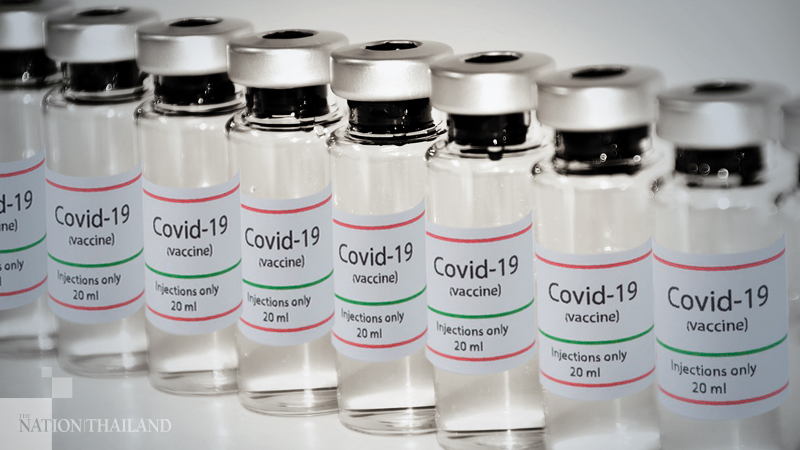
Novavax Inc. will start the final-stage trial of its coronavirus vaccine with 30,000 people in the U.S. and Mexico, opening another avenue for shots to fight the pandemic, the National Institute of Allergy and Infectious Diseases said.
The trial, to be completed across 115 locations, is the latest large-scale effort in the U.S. to evaluate vaccines to protect against the virus that’s killed more than 330,000 Americans. The company is also studying the vaccine in a large trial in the U.K. that’s completed dosing. Initial results from that trial should be released early next year, Chief Executive Officer Stan Erck said Monday in an interview on Bloomberg Television.
Erck said the trials underway will show whether the Novavax vaccine is similarly effective to shots already authorized in the U.S. that have demonstrated greater than 90% protection from illness.
“We don’t know until we know,” Erck said. Based on earlier studies of the immune response prompted by the Novavax shot, “we expect similar results,” he added.
If successful, Novavax’s shot would expand an arsenal that includes vaccines from Pfizer Inc. and Moderna Inc. that were authorized for emergency use this month. Other vaccines from Johnson & Johnson and AstraZeneca Plc are also in large-scale trials.
Novavax’s experimental NVX-CoV2373 vaccine uses a different mechanism than the Pfizer and Moderna shots, which rely on messenger RNA, a technology being used in vaccines for the first time. The Novavax shot is made from a “stabilized” form of the coronavirus spike protein incapable of causing infection. It also contains an adjuvant, a substance designed to enhance the immune system response.
Erck also said he thought the Novavax shot would likely prove effective against a new variant of the SARS CoV-2 virus spreading in the U.K. and elsewhere that is suspected of being more easily transmitted.
The company has been working to build manufacturing capacity across the globe, with commercial-scale factories worldwide ready to produce millions of doses, Erck said.
The U.S. trial of Novavax’s vaccine will be conducted with Operation Warp Speed, the federal government’s effort to accelerate vaccine development.
“The launch of this study — the fifth investigational coronavirus vaccine candidate to be tested in a phase 3 trial in the United States — demonstrates our resolve to end the pandemic through development of multiple safe and effective vaccines,” Anthony Fauci, director of the National Institute of Allergy and Infectious Diseases, said in a statement.

 President Moon Jae-in (R) talks with Moderna CEO Stephane Bancel (on the monitor) via video conference at the presidential office in Seoul on Monday. (Presidential office)
 Workers make down-filled coats at a factory in Jiashi county, Xinjiang Uygur autonomous region, last month. WANG ZHUANGFEI/CHINA DAILY

 Saksayam Chidchob
 Pisit Puapan, left, executive director of the macroeconomic policy bureau at the Fiscal Policy Office (FPO), and Wuttiong Jittungsakul, fiscal policy adviser, report on the state of the economy in November on Monday.
 Energy Minister Supattanapong Punmeechaow, centre, outlines policies for 2021.
 SootinClaimon.Com