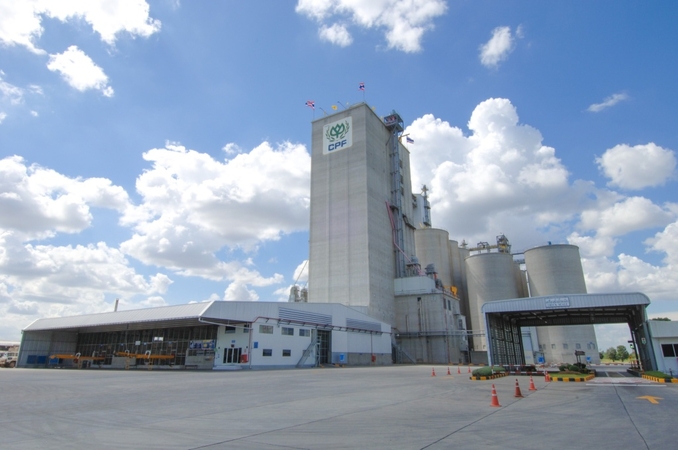
CP Foods set to launch five series of debentures to finance expansion
Dec 25. 2020
By The Nation
Charoen Pokphand Foods (CP Foods) is getting ready to issue and offer five series of debentures with tenors of two to 12 years to retail and institutional investors as well as high-net worth investors.
The debentures have been assigned an A+ by TRIS ratings and the subscription period is expected to be held throughout January. There are seven financial institutions overseeing the issue, namely
Krungthai Bank, Kasikornbank, Siam Commercial Bank, Government Savings Bank, CIMB Thai Bank, TMB Bank and Kiatnakin Phatra Securities.
Paisan Chirakitcharern, chief financial officer, said CP Foods plans to issue debentures to refinance its existing debts maturing in 2021 and for funding future business expansions.
Retail investors will be offered four series of debentures: a 5-year tenor at a coupon rate of 2.99 per cent per annum, a 7-year tenor with a coupon rate of 3.15 per cent per annum, the 10-year tenor with a coupon rate of 3.60 per cent per annum and a 12-year tenor with a coupon rate of 3.80 per year. Meanwhile, the 2-year tenor will only be offered to institutional investors and/or high-net worth investors.
The final coupon rate of the 2-year tenor debentures will be determined and announced at a later stage, with interest being paid for debentures every six months.
Retail investors and high-net worth investors interested in the debentures can subscribe for a minimum Bt100,000 in multiples of Bt100,000.
More details are available at www.sec.or.th or via the joint lead arrangers.
#SootinClaimon.Com : ขอบคุณแหล่งข้อมูล : หนังสือพิมพ์ The Nation.
Thai developer signs MoU for building two industrial estates in Vietnam
Dec 25. 2020David Nardone, group executive industrial and international as well as vice-chairman of WHA Corporation
By The Nation
WHA Industrial Development, a leading developer of industrial estates in Thailand and Vietnam, has signed a memorandum of understanding (MoU) with Thanh Hoa provincial authorities to develop to industrial zones in the province.
The first project, called the WHA Smart Technology Industrial Zone – Thanh Hoa, will cover approximately 600 hectares and an additional 30 to 50 hectares devoted to homes.
The second project, WHA Northern Industrial Zone – Thanh Hoa, will cover a gross area of about 540 hectares and will target downstream industries such as plastics, rubber, chemical and bio-chemical products, metal fabrication and foundries to name a few.
Both parties will immediately commence the necessary process for obtaining licences and approvals, with construction expected to commence in 2023 and 2022, respectively.
With a population of 3.6 million people, including a labour force of 2.3 million, Thanh Hoa, located in the north central region, is Vietnam’s third largest province. Its proximity with the capital Hanoi and the city of Haiphong is beneficial in terms of connectivity, logistics, infrastructure and access to the Hanoi International Airport and Lach Huyen Deep Sea Port.
David Nardone, group executive industrial and international as well as vice-chairman of WHA Corporation, said: “This WHA Thanh Hoa PPC MoU will reinforce our presence and growth strategy in Vietnam. The two WHA projects present location advantages to target specific market opportunities.”
The first project, 12km from the province’s main city and with its educated workforce, will capture demand from high-value technology companies.
The second project, located near the well-established Nghi Son petrochemical complex, will further enable the integration of petrochemical and metal supply chains, he said.
Huawei signs pact with Walailak University to develop ICT professionals in southern Thailand
Dec 24. 2020
By THE NATION
Huawei Technologies (Thailand) signed a memorandum of understanding with Walailak University (WU) in Nakhon Si Thammarat province to better equip students with next-generation technologies and prepare them for the job market, the companies said in a press statement on Wednesday.
As part of the Huawei ICT Academy programme, the partnership aims to introduce advanced IT knowledge through practical courses and on-the-job training.
The MoU was finalised at Walailak University by WU president Prof Dr Sombat Thamrongthanyawong and Huawei Technologies (Thailand) CEO Abel Deng.
Under the initial partnership, Huawei will provide the university with knowledge and training resources on advanced network technology.
“WU students will be accorded learning opportunities in authentic work situations that will give them real-world awareness, skills and flexibility, using tools and resources from the Huawei ICT Academy programme. To prepare them for the digital workforce, qualifying students will be given the chance to participate in the Huawei ICT Competition and Huawei ICT Job Fair, two of Huawei’s flagship ICT skills promotion initiatives. The company’s long-standing commitment to form a better-informed generation of talent will be the basis of this collaboration,” the statement said.
The MOU signing ceremony was followed by the endowment of Huawei Enterprise Routers, Ethernet Switches and Huawei IdeaHub, and a smart whiteboard for collaborative learning, to Prof Dr Sombat.
This ICT equipment will be instrumental in supporting the training and nurturing the most deserving ICT students, the statement said.
“Huawei gives tremendous importance to this collaboration with Walailak University, and it is our pleasure and honour to work with the academic community of Thailand’s southern region,” said Deng.
“We are determined to work more closely with universities across the country to better equip students with the next generation of technologies. We have created the Huawei Asean Academy (Thailand) as an educational platform to demonstrate to the youth that they are capable of becoming outstanding ICT talent in a world-class workforce,” he added.
“We are very excited about this MOU that combines theoretical and practical training, because of its potential to inspire more students who can help transform the country’s IT landscape,” said Prof Dr Sombat. “I would like to express my gratitude to Huawei for helping us provide our students with learning solutions to promote digital development. We are confident that this initiative will go a long way to build a stronger and more skilled ICT workforce for the country.”
Huawei, in cooperation with Huawei ICT Academy, looks forward to building more win-win partnerships with Thailand’s academic community, developing an environment of progress, innovation and value for the youth, and identifying and forming future leaders, as the country moves towards Thailand 4.0, the statement added.
Elements to celebrate black truffle season from Jan 19
Dec 25. 2020
By The Nation
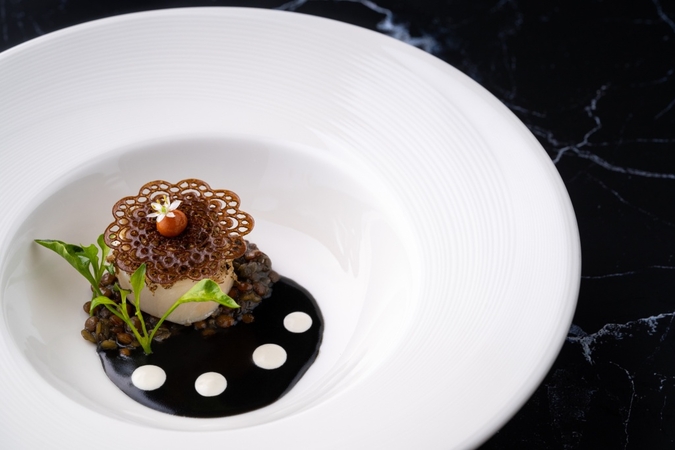
The season of black winter truffles has arrived at the Michelin-starred Elements restaurant, with chef de cuisine Hans Zahner and his team getting ready to serve up delicacies featuring the richly flavoured “black diamonds”.
Considered to be among the best in the world, these highly-prized are harvested in the mountainous woods of France’s Perigord region.
Dishes featuring the truffles will be served up at the Elements from January 19 to March 31, every Tuesday to Saturday from 6pm to 10.30pm.
The restaurant is located on the 25th floor of the Okura Prestige Bangkok.
Merry ‘Covid Christmas’? Families struggle to celebrate amid the year’s losses and as coronavirus cases surge.
Health & BeautyDec 25. 2020Amy Solo of Greensboro, N.C., with the family presents she was set to deliver to Virginia on Wednesday. MUST CREDIT: Photo for The Washington Post by Eamon Queeney
By The Washington Post · Annie Gowen, Scott Wilson, Abigail Hauslohner
Amy Solo and her husband, Brian, skipped the traditional Thanksgiving dinner with their 20-something kids this year out of pandemic-related safety concerns.
It was okay at the time, Solo said, because “we were all going to be together at Christmas.”
Christmas is always the “big show” in the Solo household, starting with a festive Christmas Eve of hors d’oeuvres and matching holiday pajamas, and then a boozy Christmas morning brunch and present opening, with a traditional dinner in the evening.
At some point the group poses for an annual family photo, which this year was supposed to be post-apocalyptic and Kardashian-themed, in tuxedos and black dresses, a “2020 kicked our butts, but we’re leaving it in style” kind of thing, she said.
But in recent days, Solo, who has asthma, grew increasingly worried about the health and safety issues of the coronavirus, as small groups continue to drive the virus’s spread.
Her 1847 home in Greensboro, N.C., left little room for social distancing, and her children all work in jobs where they come in contact with the public.
The 56-year-old homemaker started making the calls to inform her family of the cancellation on Dec. 18. She began with her daughter Marjorie Solo, 25, a server in Greensboro, and son Burke, a 27-year-old music teacher in Henrico County, Va.
But the hardest call was to the young woman she considers her third child, Alysse Messick, 25, a Washington D.C. hairdresser who has been an adopted member of the family since she lost her parents in high school.
“She’s the one with the tenderest heart,” Solo said, “so the decision not to be together for the holidays was the hardest on her.”
“I was telling myself this story: ‘Seven people, that’s not that many.’ But even in masks it would be so different than what we usually have here – hugs and laying on each other like puppies,” she said.
Much of the country, like Solo’s family, is spending this holiday in a suspension – of fixed plans and quirky traditions, of shared meals and extended gatherings marked by family photos each year like milestones, of long catch-up conversations and first meetings of just-born family members.
Many are making the best of it, arranging just a handful of place settings rather than dusting off the card table from the garage, bumping it up against the dining room table to accommodate the siblings, cousins, aunts and uncles, and others welcomed in years past.
Too many others are mourning, such as Karen Kirby, who in a town west of Atlanta is seeking some Christmas solace after losing her mother, father and grandmother to covid-19, the disease caused by the virus. The holiday this year is being marked after more than 325,000 Americans have died of the virus.
In this uneasy isolation, Zoom may be the greatest gift of all, with present-opening sessions scheduled to be shared from the Los Angeles living room of Jonathan Contreras’s mother, who will watch her 14-month-old granddaughter Cataleya open “lots of Disney,” to the Germantown, Md., home of Mary Pedder, who has a time locked in on Christmas Day to join her daughter and grandchildren online in Belgium.
A few days before Christmas, Solo was putting up decorations and “faking it, hanging candy canes from light fixtures and pretending everything’s all right.”
“That’s what you do when the world burns, right?” she said.
White lights twinkled hopefully on the Christmas tree.
A “sad tin of gingersnaps” sat on the piano, never to be eaten. A red wooden tchotchke on the mantel said it all: “This is as Merry as We Get.”
In ordinary times, the family would gather on Christmas Eve, five dogs underfoot, munching on Marjorie’s famous crab dip. A new – well, newish – poker table was set to debut for holiday card games this year.
Then on Christmas morning, everybody does a tequila shot before a plenty-of-bacon brunch and opening presents.
The kids always put a lot of thought into their gifts, Solo said, trying to one-up each other to “win” Christmas. Some of the great gifts of years past are now part of family lore, like the time someone got a “Chambong” – a bong-like device for the rapid consumption of Champagne.
Later it would be the family photograph and the typical big meal of hot sausage dressing, Cajun-spiced turkey, two kinds of potatoes (mashed and marshmallow-studded yams), Champagne gravy and pumpkin pie.
They had also planned a Boxing Day dinner with neighbors on Saturday, inspired by the TV show “It’s Always Sunny in Philadelphia,” complete with Rum Ham, which figures in one of the show’s more popular episodes.
“It breaks my heart,” Solo said. “But in the grand scheme of things, so many people will have an empty seat at the table this year. All of my seats are empty now, and that’s for the best.”
– – –
– Goleta, Calif.
“We’ll be going to Colorado soon,” Levi Perrin, 5, told his dad gleefully after school let out for the holidays last week.
Jared Perrin paused.
The trip to Carbondale, Colo., for Christmas was the family’s annual end-of-year celebration and a key provision of the compact between Perrin and his wife, Meredith, that allowed the couple to live happily here along the California coast.
When Christmas came, the family would visit Meredith’s parents in the Rockies. That was the deal, and the fact that it included a few days skiing in Aspen, well, all the better.
Levi, the eldest of the couple’s three children, counted on seeing his grandparents. The countdown-to-Colorado chatter always began around Thanksgiving, as it did this year, but Jared and Meredith, both physicians, were quieter than usual about the holidays, uncertain what the virus would do over the next few weeks.
As it turned out, as the nation’s coronavirus deaths topped 325,000, it produced only more fear and, eventually, a fateful call to Tina Linnehan, Meredith’s mother. The family would not be coming. Meredith’s brother in Minnesota, a father of two, also canceled.
“She cried when we told her,” Perrin said. “She was understanding, but it’s very hard, particularly for my wife being so far from her family. This is when it is most pronounced, being away from family. Especially after nine months.”
Perrin and his family are among the 34 million Americans who AAA estimates will not travel this end-of-year holiday season after doing so last year, a nearly 30 percent decrease.
A doctor at the Santa Barbara County public health department who treats covid-19 patients, Perrin said he knows the decision to stay put is the right one, even though it has been a challenge to explain it to Levi.
“We have tried to explain to him all year what we just refer to as ‘the virus,’ ” Perrin, 34, said. “We just had to tell him that like the masks we wear, not being able to travel is a part of what this virus has brought.”
– – –
– Douglasville, Ga.
If this year were like most years, Karen Bowen Kirby, 44, would be in the kitchen on Christmas Eve with her dad and granny, making country ham and biscuits.
At night, Kirby, along with her parents and granny, her husband and their sons would unload their Christmas stockings, goodies placed inside them by Kirby’s mom. And then they would sit around, checking the lottery scratch tickets that her dad had put in there, too – a long-running family joke.
None of that will happen this year.
There will be no lottery tickets. No ham and biscuits. No stockings stuffed by grandparents.
Wilma Gail Bowen, 70; Willard Daniel Bowen, 73; and Geraldine Lewallen Williams, 91, are all buried, side by side, in the family plot in Paulding County, Ga. All of them, her parents and grandmother, are victims of the coronavirus.
They died weeks apart. And Kirby, an only child, is contending with how suddenly and radically her life changed.
“Some days I know exactly what I’m doing,” she said, “and some days I feel like I’m walking through a fog.”
Kirby’s grandmother, Geraldine, died Nov. 7. A few weeks later, Kirby’s parents died together in the same hospital room, just hours apart, on Thanksgiving. Her father was holding her mother’s hand when he died.
The couple had celebrated their 50th wedding anniversary in September.
They had so many plans.
Before they fell ill, her mother was still working as a nurse at a local school. Her father was collecting and selling antiques, which he loved to do.
They were planning this summer to take a cruise all together – a belated celebration of her parents’ 50th anniversary – once they figured the pandemic would be over. And Kirby had just purchased a house for her parents, five minutes down the road from her own, so they could be closer, and her father could drive her youngest son to school.
Even when her parents became ill, Kirby and her husband initially thought that they would be able to bring them home from the hospital in time for Christmas.
“We planned on things being as normal as we could get,” she said.
There will be no normal this year.
Kirby’s friends – whom she refers to affectionately as her “village”-“swooped in” after the funerals.
They put up a Christmas tree in Kirby’s house, and decorated it. They left presents underneath. Her in-laws will host them for dinner on Christmas Eve. Even her boys, also wrestling with the loss of their grandparents, have tried to make things easier on her, telling her not to worry about presents.
“Everyone is reaching out and trying to help, but it’s just that void. It’s something you can never get back,” she said. “We’ve always loved Christmas, but I’m not looking forward to that emptiness.”
– – –
– Philadelphia
Hana Choy, an emergency medicine physician in Philadelphia, had already postponed traveling to Columbus, Ohio, to visit her parents and brother over Thanksgiving because of the surging virus case count.
Instead, she had planned to start the seven-hour drive after her last shift this week. She and her husband would make it to Christmas Eve Mass with her parents, then a holiday week spent with them eating, talking and watching Korean dramas.
The holiday visit had held special significance for her because she had not seen her parents, both 76 and in decent health, for a year.
“It made me really sad not to have seen them for so long,” said Choy, 39, who also is an assistant professor of clinical emergency medicine at Penn Medicine. “That was pulling at me, this sense of, ‘I don’t have much time left with them.’ “
But the covid-19 case numbers worsened in December. Choy surveyed her friends and fellow physicians, asking them about their Christmas plans. Most said they would use Zoom to do Christmas. Her parents and brother also advised her to stay home.
So on Dec. 17, on the same day she received the first dose of the coronavirus vaccine, Choy scrapped her plans.
“You would think that because [doctors] see it so much, and we see people so sick from covid, that it would make it easier for us to make these decisions,” she said. “But I think we struggle with it, just like everyone else does, because we have loved ones we’d meant to see and friends we want to hang out with.”
Choy and her husband, Chris Vacca, a 39-year-old business owner, will stay in their Philadelphia home and cook a Christmas meal of ham, Brussels sprouts, butternut squash and twice-baked potatoes.
She has already secured days off in May, around Mother’s Day, and in June, around Father’s Day. She will have received the second dose of vaccine and expects it to be at full strength, so she’ll head to Columbus then.
“It’s worth it: Sacrifice, for now, in order to protect the ones you love and simply protect your fellow human beings,” she said. “It sucks for everybody, but ultimately, the spirit of Christmas, the spirit of these holidays, is to be unselfish.”
– – –
– Milwaukee
When she visited her father last week, Karen Berenson cut the 74-year-old’s hair.
She did things he struggles to do since his Stage 4 lung cancer spread to his brain and decreased his mobility: She cleaned his ears and washed his feet. Once the personal hygiene was done, he told her he’d bought a new sweater and declared himself “all ready for Christmas!”
Covid-19 had other plans.
Berenson’s 78-year-old mother, Jayne, tested positive on Wednesday, two days before they were to gather, after learning she’d been exposed to the virus by her boss at an insurance agency the previous week. She quickly alerted the family: There will be no gathering this year, and she will be in quarantine until New Year’s Day.
“The only phrase that sums this up is ‘2020,’ ” Berenson said.
Berenson’s sister, Nancy Iverson, had already planned to celebrate alone at home with her two dogs. Her husband died of melanoma seven years ago. She’s at high risk of contracting the coronavirus because of the immunosuppressants she uses since receiving a kidney donated by Berenson in 2019.
Before the positive test, other family members were still deciding, left in the limbo between risking their health and missing what could be a last Christmas for some.
“We know how special our days together are,” Berenson said.
Her father was taken to the hospital last week. He came out okay, but it served as a reminder of his precarious health. Two daughters-in-law are undergoing treatment for breast cancer.
Christmas always has included the six adult children, four spouses, nine grandchildren and six great-grandchildren. Dean and Jayne Luke buy a gift for everyone.
After each gift opening, the family chants, “Throw the bow!” The recipient tosses the bow at the Christmas tree. If it sticks, family members applaud. If it’s a miss, they jeer: “Air bow!” And playing on repeat in the living room is “A Christmas Story.”
Now, Christmas is on hold till next year. This is the first year the family has missed.
“My dad was really looking forward to seeing everyone,” Berenson said. “He wasn’t built to be isolated.”
– – –
– Germantown, Md.
For every one of her 60 years, Mary Pedder and her family have gathered on Christmas Day to exchange gifts and drink eggnog and eat cookies, and generally have an uproariously good time.
By now, with her kids and her siblings’ seven kids grown up, some of them with their own kids, the gatherings have become massive – often 70 people crammed into her sister’s house on Christmas afternoon for a smorgasbord of ham and turkey and prime rib, among other goodies.
Pedder’s daughter usually flies home from Belgium, where she lives, and her other two children and their spouses drive over. Her nephew is always the first to reach for the tin of her homemade frosted Christmas cookies and gobble a few down. And everybody exchanges gifts through a Secret Santa-type arrangement.
This Christmas, they will meet via Zoom at 2 p.m.
“This is the first year that we all won’t be together,” said Pedder, a retired paraeducator in Germantown, who on Wednesday was driving to her siblings’ houses to drop off batches of her cookies for everyone to enjoy separately.
Her sister who makes the eggnog was doing the same.
Instead of a giant gift exchange, the family opted this year to do a charitable giving exchange instead. Each person will choose a charity to which their Secret Santa will donate.
Pedder will spend the day at her beach house in Delaware, where she will be joined by two of her children and their spouses and dogs. The daughter in Belgium won’t come – “obviously,” Pedder said.
“It’s the first time we’ve done it this way, so I’m sure the day of it is going to be very strange for us,” Pedder said.
But the family never saw much choice in the matter.
Virus robs Bangkok’s 3 world badminton tournaments of audience
Dec 25. 2020
By THE NATION
All three Badminton World Federation (BWF) tournaments in Bangkok next month will take place without an audience over Covid-19 concerns, organisers said on Thursday.
Back-to-back Thailand Opens (Super 1000 level) due on January 12-17 and January 19-24, each with $1 million up for grabs, and the US$1.5-million World Tour Finals on January 27-31 will be locked down to prevent virus transmission. Thailand is on high alert after a second wave of Covid-19 hit the country last week.
“Due to the current situation, the organisers of the three BWF tournaments in Bangkok have decided they will proceed without spectators,” said Badminton Association of Thailand president Patama Leeswadtrakul.
International players must be tested 72 hours before leaving for Thailand and carry “Fit to Fly” documentation. On landing in Thailand, they will undergo a Covid-19 test, then remain confined to their rooms until the test results are known. Only once a negative test has been confirmed will the athletes be permitted to start training. Practice facilities will be offered to one nationality at a time and disinfected between each session.
Competitors and their support staff will have to stay in their bio-secure “bubbles” for 14 days after arriving in Thailand.
During the tournament players will receive shuttlecocks directly from a machine, as per the Danish Open in October.
Khan believes he has the right game plan to beat Dae
Dec 25. 2020
By THE NATION
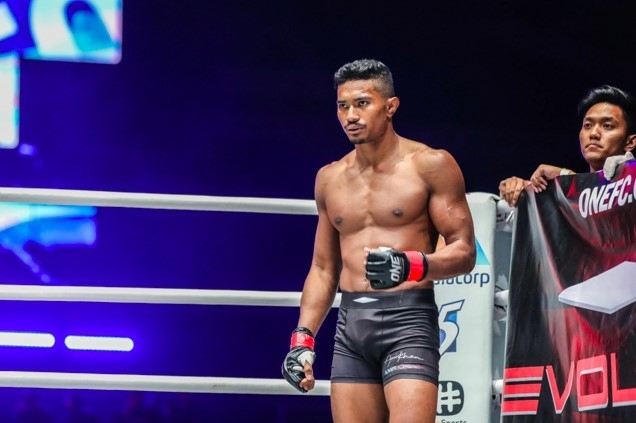
Top lightweight talent Amir Khan of Singapore is heading into his next matchup looking to put another solid win in the books. After stopping Rahul Raju last October, the 26-year-old Circle veteran is back in action, and wants to put on another epic performance.
Khan faces South Korea’s “Crazy Dog” Dae Sung Park at ONE: COLLISION COURSE II, a previously recorded event from the Singapore Indoor Stadium in Singapore scheduled for broadcast this Friday, 25 December.
Riding a wave of confidence from his last outing, Khan is excited to get back in the Circle to showcase his skills once again.
“I hadn’t gotten a KO in a while. It’s definitely a good feeling to get that killer instinct back. I knew I had it deep down within, I just had to get it back. Sometimes you know you have it, but you have to show it to yourself,” Khan said of the win over Raju, before sharing his thoughts on Park.
“It’s a good matchup. Me and my coach accepted the fight right away and created a game plan. He (Park) a very well-rounded fighter. He has his strong points. He’s southpaw, so we’ve got to be careful of his left side attacks.”
Park is a ONE Warrior Series graduate under the legendary Rich Franklin. The South Korean is riding a four-bout win streak. He’s won 9 of his last 10 fights.
Khan, considered one of the best lightweights in the promotion, has studied Park’s particular style, and has come up with a solid game plan with his coach at Evolve MMA, Siyar Bahadurzada. The Singaporean star is confident he can pull off another spectacular victory to move himself further up the ranks.
“[Park] overuses his energy in the first round, so we’re going to capitalize on that. We know we have to go through a storm in the first round because he comes in hot, and once we go through it, then we can take him out,” said Khan.
“He’s going to come out strong in the first round and then get a bit tired, a bit lethargic. But I’m not going to go for the kill. I’m just going to have fun, pick my shots, pick him apart, and stay loose. I’m going to keep on the offense, and I believe the knockout will come, but I will not look for it.”
ONE: COLLISION COURSE II is ONE Championship’s final broadcast of the year. The previously recorded show features a main event classic between #2 ranked Muay Thai featherweight Jamal Yusupov and #4 ranked Samy Sana. It’s expected to be one of the most exciting Muay Thai clashes in recent memory.
Khan, who aims to move up the lightweight ladder, realizes how important this fight is against Park. The 26-year-old Singaporean even believes a victory here could position him for a handful of significant matches in 2021.
“Park has three wins in ONE Championship. He’s a good name. So if I get another good win, another dominant finish, that will set me up for going against one of the top contenders in 2021,” Khan concluded.
“Then after, maybe I can eventually fight for a belt. But one fight at a time. I’m just going to get through Park first, focus on him, and the rest will come later. I’m giving my full attention to Park because he’s equally as dangerous, and I don’t want to underestimate him.”
Men and women battle for Bt17m in Thailand’s first mixed golf tour
Dec 24. 2020
By THE NATION
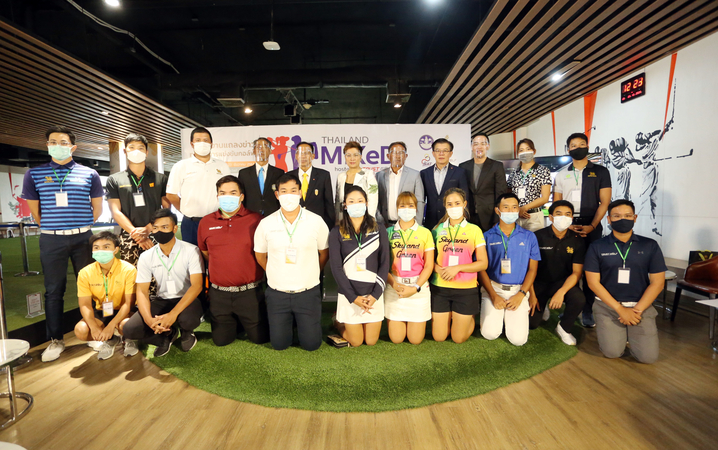
For the first time in Thai golfing history, men will battle against women in a professional tour with millions in prize money at stake.
Trust Golf founder Dr. Prin Singhanart
The Thailand Mixed tour kicks off in Pattaya in January, the first leg of a five-tournament circuit offering total prize money of over Bt17 million.
Hosted by golf training centre Trust Golf, the mixed tournament will be competed in the regulation professional format: a 156-field (78 men and 78 women) playing 36 holes in the first two rounds with half of field moving to the weekend rounds.
However, to create a competitive scenario between the two genders, tee-off positions for female players will be set closer to the pin.
According to Trust Golf founder Prin Singhanart, women are capable of competing against the men as there was no significant difference between the level of male and female players.
“We held a test competition and found that their results are not so different,” said Prin. “Currently, the standard of women’s golf is quite high. By favouring them with the tee-off positions, they should be able to put the men to the test,” she added.
Also open to international players, the tour kicks off at the Chee Chan Golf Resort in Pattaya from January 28-31, with the second leg at the Alpine Golf Resort in Chiang Mai on March 18-21. The third stop is at the Blue Canyon in Phuket on May 20-23 while the fourth is due from July 8-11 with the venue yet to be confirmed.
Each will offer total prize money of Bt3 million. The biggest purse of Bt5 million will be up for grabs in the final tournament on December 9-12 (venue to be confirmed).
Eight-time European Tour winner Thongchai Jaidee agrees that women have the potential to challenge the men on the fairways.
“This type of tournament brings Thai golf to a new dimension. Our Thai female golfers are on a higher level these days. It’s a great opportunity for the women to test their potential,” Thongchai said.
Two-time Asian Tour winner Prom Meesawat said the women would inevitably be at a disadvantage, but added the tournament would serve as a springboard for female golfers eyeing the global stage.
“Succeeding at the international level means playing the tough and long courses out there. It’s important that our female players undergo challenges that will prepare them for the higher stage,” said Prom.
Sana wants to establish his dominance against Yusupov
Dec 24. 2020
By THE NATION
French-Algerian striker Samy “AK47” Sana wants a shot at the ONE World Title. If he gets his way, the 32-year-old from Paris, France, promises he will capitalize on the opportunity. He plans to show why he deserves to be considered among the top fighters in his division with a fiery performance in his next bout.
Sana, the #4 ranked Muay Thai featherweight in ONE Super Series, is set to take on #2 ranked Jamal “Kherow” Yusupov of Russia in what is expected to be a dramatic showcase of action inside the ONE Circle.
The two go head-to-head in the main event of ONE: COLLISION COURSE II, a previously recorded event from the Singapore Indoor Stadium scheduled for broadcast this Friday, 25 December.
“In my next bout, I’ll prove that I am a top contender who is tough to beat, and I want to show that I am the real champion of my weight class. This is a really important bout that I’m taking extremely seriously, especially [if there is a chance to compete] for the ONE Championship belt,” Sana told ONE Championship.
Against Yusupov, Sana faces a three-time Russian Kickboxing Champion, hardened on the rough and tumble streets of Dagestan. He is a winner of six Russian national championships in both kickboxing and Muay Thai, as well as a European kickboxing title.
In November of 2019, Yusupov burst onto the ONE Super Series scene with a shock second round finish of legendary Yodsanklai Fairtex, a man Sana also defeated recently.
Surprisingly, Sana wasn’t all too impressed with Yusupov’s performance, and wants to prove to fans why he’s the better fighter.
“He beat Yodsanklai after I’d beaten him. I think Yodsanklai was still in mental shock after my bout, so it was easier for him, but I’ll show that I’m the boss. There is not a lot of footage of him available, but I’m analyzing his Yodsanklai bout. He seems to be a good striker, but I’m also really powerful. He has a good boxing technique and he comes from K-1, so I’ll only have to care about his fists,” said Sana.
“He has to fear everything because I’m strong, tall, and powerful. I’m a pure nak muay, so it’ll be tough for him. We are going to put on a good fight. As with every fight, I’ll need to give my best at 200 percent to finish the opponent and to show I’m the best.”
ONE: COLLISION COURSE II is ONE Championship’s final broadcast of the year. Aside from the main event between Sana and Yusupov, the card also features a host of other compelling martial arts contests.
Sana knows how important this bout is to establish his footing in the Muay Thai rankings. After a failed bid in kickboxing, losing to the great Giorgio Petrosyan in the final round of the ONE Lightweight Kickboxing World Grand Prix, Sana has rededicated himself to training, and vows to capture ONE gold, one way or another.
“Of course, I’ve been disappointed by my loss because I’m not used to losing. Losing is very tough for me. But Giorgio and I are in the same rankings, so there will definitely be a time to take my revenge,” Sana concluded.
“It is definitely my goal to get the ONE Championship belt. I’ll do anything, and I’ll get to it in Muay Thai, kickboxing, and maybe in the higher weight class.”
The automakers that have won big or lost ground going into 2021
Dec 25. 2020Hyundai cars are displayed at the company’s Motorstudio showroom in Goyang, South Korea, on Oct. 22, 2020. MUST CREDIT: Bloomberg photo by SeongJoon Cho
By Syndication Washington Post, Bloomberg · Hannah Elliott
If you asked automakers in April or May about the outlook for the rest of 2020, answers would have been grim.
Plants around the world were shut down, production stalled, workers were furloughed, sales plummeted, and billions of dollars were lost. Early estimates from IHS Markit had year-end U.S. sales barely cresting 12 million new vehicles.
By December, many automakers had bounced back-and then some. IHS now predicts 14.5 million new-vehicle units will be sold in the U.S. this year, down roughly 3 million units from 2019. Cox Automotive puts the number at 14.4 million, down 15.3% year-over-year.
“It’s still a pretty big drop,” says Stephanie Brinley, an automotive analyst for IHS Markit, “but better than we thought was going to happen in March when we shut the country down.”
Americans, it turns out, still want to buy new cars. They’re also buying homes, classic cars, and, in general, a lot of fancy things.
Credit the federal stimulus, says Brinley, plus improved online sales and configurators and pent-up consumers with time on their hands and a yearning to get out: “People who were already interested in buying a new car went and did it anyway, despite the covid situation.”
Some automakers have responded better to the shifting markets than others. The pandemic has enabled them to stop producing cars that didn’t make money, rein in incentives, trim budgets for efficiency, and become more disciplined regarding supply and demand. Some could even come out of the pandemic stronger, says Kevin Tynan, the senior automotive analyst for Bloomberg Intelligence.
“Our headline sales number may not be 17 [million], but it’s a lot healthier than when it was 17.5 million, and 30% of that was from unprofitable cars,” Tynan says. “We have spent decades trying to get to this.”
Final reports will come in early January, but from this nearly year-end vantage point, it’s easy to see which automakers and brands in the U.S. came out looking stronger, given the circumstances-and which did not.
To compile this list, we considered all different aspects of what makes a car manufacturer and specific brands healthy: sales rates, market share, the depth and variety of portfolio offerings, a brand’s position within its holding company, the quality and performance of its products, and additional analysis from Bloomberg Intelligence, IHS Markit, and Cox Automotive.
WINNERS
Hyundai
Hyundai Hyundai Motor Co. has been one of the biggest gainers of U.S. market share in 2020, according to a Dec. 14 report by Cox Automotive analyst Vanessa Ton.
Hyundai succeeded by reaching younger, more affluent customers who had higher credit scores, Ton says. Nearly 45% of Hyundai buyers have $100,000-plus household incomes, compared with 33% in 2015; and 30% are aged 18-44, compared with 24% in 2015.
“Hyundai has been strengthening its affordability and fuel efficiency imageries for years, while putting a history of mediocre quality in the rearview mirror,” Ton wrote in her year-end analysis. “In times of economic uncertainty, the value proposition is essential.”
Tesla
The best-performing automotive stocks this year have been electric start-ups such as Nio, Li Auto, and for a time, Nikola. But they all still pale against the 17-year-old incumbent, Tesla Inc., whose shares have soared by as much as 700% in 2020, minting millionaires out of its most loyal fans. On Dec. 21, the company was added to the S&P 500 Index. (It was such a big addition that S&P Dow Jones Indices debated whether Tesla should be added all at once or in two separate pieces.)
With a value that reached as high as $649 billion-that’s more than the collective value of the world’s seven largest carmakers at the start of 2020, by the way-Tesla is the most valuable car company in the world.
Tesla has said it expects to deliver a half-million of its sufficiently-executed-to-achieve-cult status cars and SUVs this year. (Some 180,000 cars of those cars need to come in the final quarter to hit that figure.) Much of that demand is driven by China, where it sells more EVs than anywhere else. Still to come: That Blade Runner-esque Cybertruck we’ve been hearing about for more than a year.
General Motors and Ford
General Motors Co. is the nation’s largest legacy automaker. It had a $4 billion third-quarter profit and has used 2020 to set itself up for a bold future, announcing plans to produce 30 electric vehicle models by 2025, starting with the gold standards for Detroit car lovers: Cadillac and Hummer. All told, GM has already started on spending what it says will be a total of $27 billion in an effort to remake 40% of its lineup.
Ford Motor Co., meanwhile, reported a healthy $2.4 billion in net income in the third quarter of this year. It has already shown signs of a potential upswing in earnings growth, thanks to its “global redesign” initiative (which streamlines overseas operations and eliminates poorly performing products) and an upcoming lineup of model debuts and announcements that includes an electric pickup (due in 2022), a modern Bronco and Bronco SUV, and Mustang Mach-E electric SUV.
It helps both Ford and GM that full-size pickup trucks in particular represent a $125 billion industry, according to research compiled by Bloomberg Intelligence’s Tynan, with compact pickup trucks representing an additional $22.4 billion: “Trucks are going to be near 80% of [the U.S. automotive segment] by the end of this year. It’s going to be 90% in the future.”
The pickup segment will be the key to recovery for automakers and dealerships in 2021, Tynan continues. No other group can generate profit as quickly. “The automakers that are falling behind are the ones that don’t get that.”
While Tesla may be out “conquering hamlets, fighting these little battles with EVs, and the [compact car] Model 3,” he says, “Ford and GM are rolling out the big artillery to the battlegrounds of pickup trucks-they’re ready for those EVs.”
Porsche
Porsche AG unveiled a whopping 17 new model iterations this year, including the next-generation Porsche 911 and additional versions of its electric Taycan sedan. That number rises to 33 new models if you include such mid-cycle refreshes as 16 Panamera variants on top of other new Panamera models like the Panamera 4S E-Hybrid in sedan, Executive, and Sport Turismo variants, and the Panamera Turbo S.
It’s a very confusing rundown-but very effective. Aside from having its Porsche 911 Turbo S named the best new car of the year, Porsche generated revenue of €19.4 billion ($23.7 billion) and a 10.4% return on sales in the first nine months of 2020, a feat that Porsche executives are rightly calling a success. To wit: More than 25,400 911s were delivered-a 1% increase over 2019.
Rivian
Although it has yet to make and sell cars, Michigan-based Rivian positioned itself perfectly in 2020 to capitalize on the coming wave of electric pickups. It received $6 billion in infusions from the likes of Amazon and Ford itself since 2019. By July, Rivian had nearly doubled the $2.85 billion it raised in all of 2019 with a $2.5 billion round of investment led by T. Rowe Price Associates Inc.
Whether this translates into success when the Rivian R1T truck arrives in summer 2021, one thing is certain: Tesla is on the offense. In July it sued Rivian for allegedly poaching employees and stealing trade secrets; soon after, former Tesla employee Nick Kalayjian joined Rivian to oversee engineering and product.
LOST GROUND
Nissan
In May, Nissan reported its first fiscal year loss in a decade and its biggest loss in the past 20 years; by Nov. 12, Nissan had started to flatten out its decline but still expects to see an operating loss of $3.2 billion for the fiscal year to March, likely to be the largest blow to any major automaker.
Chalk it up to the company’s being in the early stages of a massive cost-cutting and turnaround plan.
And a lack of exciting product: Even the line-topping Nissan GTR fared poorly in its most recent Bloomberg review. Despite the fact there are rumored talks of a possible Nissan electric truck, so far it can’t compete in the essential truck space: U.S. sales of the Nissan Titan full-size pickup were down 24%, to 19,403, for the first three quarters of this year, compared with more than 589,000 deliveries of the winning Ford F-series pickup, which fell just 11% over the same period.
“They’re in every segment, but they’re not the model in any segment-there’s always some other thing that’s always a little bit better,” Bloomberg Intelligence’s Tynan says. “There’s an identity crisis of what exactly is Nissan and why would I buy them. I don’t know the answer to that any more. I think they have a lot of stuff that is just ‘also ran.'”
Charlie Chesbrough, the senior economist and senior director of Industry Insights for Cox Automotive, has a similar outlook.
“Nissan, besides ongoing management issues, is being plagued by old products and big drops in fleet sales,” he said via email, noting that the situation should improve in 2021. “New Rogue, Frontier, Pathfinder are scheduled to rollout in coming months, so more consumer interest should follow. Fleet activity should pickup in 2021, so this may help Nissan’s overall sales numbers as well.”
A representative from Nissan said that the brand is “fully committed” to Nissan Next, the plan launched in 2020 to build a more sustainable business.
“New models launched this year such as the all-new Sentra and Rogue demonstrate our focus on giving customers what they want, with safety, technology, design and value that exceeds their expectations,” the spokesperson said in an emailed statement. “You will see this continued shift in Nissan showrooms in 2021 with five additional new models, along with a continued emphasis on putting the customer first in everything we do.”
Maserati and Alfa Romeo
While parent company Fiat Chrysler Automobiles NV has popular pickups such the Ram to help it tap the lucrative truck market, its overlooked, under-loved Alfa Romeo and Maserati brands don’t have anything to pull up to that tailgate party. In fact, brands that have fallen behind in transitioning to the next era of the industry (autonomous driving and electric mobility on an accessible level) have lagged in the stock market, and FCA-owned Maserati and Alfa Romeo fall into that category.
Despite public comments by FCA about its commitment to those brands, Tynan expects they could be soon packaged and sold. “I don’t know that they necessarily want them, I don’t know where they necessarily fit in the [FCA] portfolio.” Maserati, he continues, “is not the brand-just not it, either performance-wise or luxury-wise, in its segment.” Alfa presents a similar story: “It’s good for what it is … but what is it?”
Chesbrough said much the same: “The [FCA] portfolio is old and too small for the current market where trucks are in favor and gasoline prices are low. Fiat sales are down significantly in 2020, and their days’ supply continues to grow.”
Maria Conti, chief communications officer at Maserati, responded that Maserati is moving past the dark days of 2020, poised for 2021. She points to its first electrified model, a refreshed lineup, and expanded V8 Trofeo range, as well as a “foundation for a new era” with a new product offensive pegged to the “100% made-in-Modena” MC20 Supercar announced in September. “Our future is bright.”
Alfa Romeo reps also “respectfully disagree” with their place on this list, pointing to new connected infotainment systems with standard 8.8-inch touch screens in all 2020 models. “Last quarter our sales were up by 17%,” said Bob Broderdorf, the director of Alfa Romeo Sales for FCA North America, in an emailed statement. He added that from January to October 2020, sales of Alfa Romeo were down 6% while the relevant premium segment decreased by 16%. “This clearly indicates that we are capturing net market share and we have been increasing our market share each month of this year.”
On Dec 14., the company announced the Alfa Romeo 4C Tributo edition, which pays homage to the legendary 33 Stradale and is a nod to all the passionate Alfa Romeo fans in the U.S. Next year, Broderdorf said, the company will start production in Italy of the all-new Alfa Romeo Tonale, the brand’s first-ever plug-in hybrid. Time will tell if it helps.
Jaguar Land Rover
Once a bastion of stylish saloons, powerful roadsters, and iconic off-roaders, Tata Motors-owned Jaguar has suffered in 2020, though its troubles have long been gestating following over-investment in manufacturing capacity, especially for now-unpopular sedans. It has fallen far from making memorable vehicles in favor of chasing market trends. Meanwhile, demand for Land Rover’s diesel vehicles has stalled, sales in China have plummeted, and Brexit will make everything worse.
Its new electric products like the Jaguar I-Pace are, so far, forgettable. And as great as the F-Type was when it debuted, it needs a refresh. “Jag is just … I don’t think anybody cares,” Tynan says. “It is a brand with heritage that totally got away from the heritage, which was cars-sedans and saloons-and now it’s nondescript, strangely named, crossover, weird stuff.” The problem isn’t that Jaguar has added SUVs to its lineup, it’s that it hasn’t done a very good job of it.
Land Rover suffers from a non-diverse portfolio that will hurt it in years to come, even with the 2020 advent of the new Defender. “With such a limited product portfolio on the Land Rover side, what else can they do to grow?” asks Tynan. “You can have your Hamptons market share, but what other white space do you have anymore to add new products?”
Not a lot, it seems. Especially when much of the U.S. market is going to pickups.
Representatives at Jaguar Land Rover, for their part, remain optimistic, noting that 2021 will bring “an exciting new range” including significant refreshes of the Jaguar F-Pace and E-Pace, Range Rover Velar, and Land Rover Discovery, with electrified options extended to 12 of the 13 models in their product lineup.
“In the quarter ended Sept. 30, the company saw sales increase over 50% from the prior quarter, and generated a profit with strong cash flow of £463 million ($620.8 million),” spokesman Jeffrey Jablansky said in an email. “We have said we expect the recovery in sales, revenue, and profitability to continue in the second half of our financial year ended March 31, 2021.”
SSC Automotive
In October, the Richland, Wash.-based supercar maker wowed the world with its reports of a new world record for speed. But subsequent video analysis revealed inconsistencies with details surrounding SSC’s record run.
Now the race is on, with Texas-based Hennessey announcing it will run its new Venom F5 for a high-speed test at NASA Kennedy Space Center Shuttle Landing Facility in Florida in 2021.
SSC founder Jerrod Shelby has said he intends to redo his run-but stands to lose millions of dollars in early orders on the SSC Tuatara in the meantime. And while SSC waits to correct the errors in reporting and plans another attempt, Hennessey may just swoop in and claim the record for itself. Talk about tension. SSC did not respond to a request for comment before this story was published.
 David Nardone, group executive industrial and international as well as vice-chairman of WHA Corporation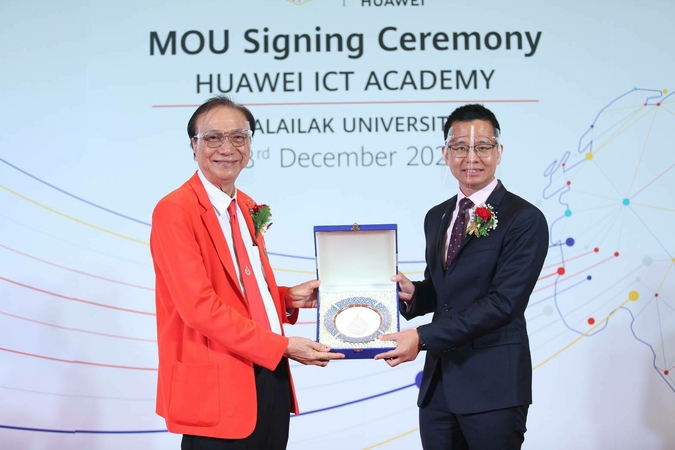


 Amy Solo of Greensboro, N.C., with the family presents she was set to deliver to Virginia on Wednesday. MUST CREDIT: Photo for The Washington Post by Eamon Queeney




 Hyundai cars are displayed at the company’s Motorstudio showroom in Goyang, South Korea, on Oct. 22, 2020. MUST CREDIT: Bloomberg photo by SeongJoon Cho
 SootinClaimon.Com