SCG, a cement and building material conglomerate in the ASEAN region, has announced a revenue from sales in Viet Nam at over VND9.85 trillion (US$428 million) in the second quarter of this year, up 41 per cent year-on-year.
The positive performance was mainly attributable to new partnership of packaging (SOVI, GOPAK), chemicals (TPC, Chemtech) and export sales from Thailand to Viet Nam, according to the company.
In the second quarter, SCG’s total assets in Viet Nam surpassed VND122 trillion, an increase of 37 per cent year-on-year, mainly from the chemicals business.
Amid the pandemic, SCG has actively contributed to the National Vaccination Fund while its subsidiaries have supported nationwide pandemic curbing attempts.
In southern provinces, SCGP – the packaging business of SCG – has donated 2,000 field hospital beds to alleviate frontline pressure in HCM City, Dong Nai, Binh Duong and Long An, while Long Son Petrochemicals has contributed VND10 billion for vaccination purposes.
In the central region, Song Gianh Cement has supported the vaccination programme in Quang Binh. Meanwhile, in the northern areas, SCGP has accompanied Hai Duong and Bac Giang in the fight against the pandemic.
Overall, SCG revenue from sales for the first half of 2021 rose 27 per cent year-on-year to over US$8.29 billion thanks to higher chemical prices. Profit for the period saw a yearly hike of 99 per cent to over $1 billion on the back of improved chemical product spreads and equity income. — VNS
Economic impact of Tokyo Games estimated at ¥1.6 tril.
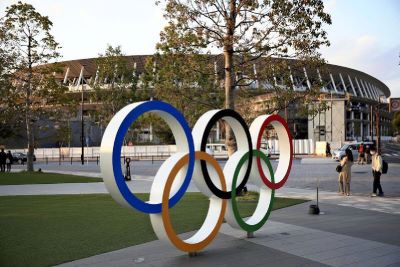
Japan’s economy stands to gain a ¥1.6771 trillion windfall from the Tokyo Olympic and Paralympic Games, according to Takahide Kiuchi, executive economist at Nomura Research Institute, Ltd.
The estimate included factors such as revenue from the sale of officially licensed merchandise and the construction of temporary facilities for the Games.
The figure was down from an earlier estimate of ¥1.8108 trillion, when the decision was made to bar overseas spectators. The absence of domestic spectators at most venues may have resulted in a ¥133.7 billion hit, including lost ticket and accommodation revenue.
The government has declared a state of emergency, in effect until August 31, for six prefectures including Tokyo and Osaka. Since the fourth state of emergency went into effect in Tokyo on July 12, there have been fewer opportunities to dine out and stay at hotels or other lodgings. Kiuchi projects that the economic loss from the states of emergency could total ¥2.19 trillion.
Yet the strong performance of Japanese athletes at the Tokyo Games stands poised to stimulate new consumption.
Katsuhiro Miyamoto, professor emeritus at Kansai University, has said that if major department stores and supermarkets were to hold post-Olympics sales in honor of the athletes for about a week or so in August, they could cash-in on a gold rush of their own, to the tune of ¥143.6 billion.
Philippines now at ‘high risk’ status as COVID-19 cases rise
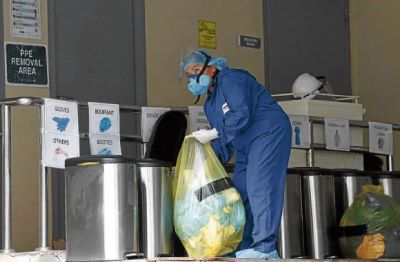
MANILA, Philippines — The Philippines is now officially at “high risk” of being overwhelmed with COVID-19 cases, according to the Department of Health (DOH).
It reported on Monday that daily cases grew by 25.61 percent nationwide to 8,829 last week from 7,029 in the last week of July.
The DOH uses the average daily attack rate (Adar), or the number of people infected for every 100,000 population, as an indicator of the COVID-19 risk in an area. Classified as “low risk” are those with an average of less than one infection for every 100,000 population. Those with between one and seven infections are classified as “moderate risk,” while areas are considered “high risk” when the cases reach more than seven.
The DOH in particular flagged Metro Manila and six other regions as high risk due to the increase in cases, high average daily attack rate or the number of people infected out of every 100,000 population, and high hospital occupancy. The high-risk regions were the Cordillera, Ilocos, Cagayan Valley, Calabarzon (Cavite, Laguna, Batangas, Rizal and Quezon), Central Visayas and Northern Mindanao.
Five other regions were at moderate risk: Western Visayas, Central Luzon, Soccsksargen (South Cotabato, Cotabato, Sultan Kudarat, Sarangani and General Santos), Eastern Visayas and Bicol.
The DOH said last week it was already assuming a community transmission of the highly infectious Delta variant of COVID-19 and to date, such cases have been detected in 26 provinces and 29 cities—including all of Metro Manila—covering 13 of the country’s 17 regions, according to the DOH.
In Metro Manila, the cities of Malabon and Navotas and the town of Pateros were officially at critical risk while the rest were at moderate or high risk.
As of Sunday, the regions with the most number of new daily reported cases were Metro Manila with 2,325; Calabarzon, 1,562; Central Visayas, 1,412; Central Luzon, 1,025; and Northern Mindanao, 635.
The areas with the most number of new cases were Cebu with 664; Cavite, 556; Laguna, 528; Bulacan, 487; and Quezon City, 431.
More deaths
An average of 48 people died every day due to COVID-19 during the first week of August. The average daily deaths were 75 in July and 98 in June.
On Monday, 8,900 more cases were reported but the DOH admitted this was small due to lower laboratory reports last Saturday. The country’s total cases now stood at 1,667,714.
The DOH reported a 21.3-percent positivity rate, the highest since April 10, out of the 50,096 people who were tested for the virus on Aug. 7.
The DOH said COVID-19 cases were also increasing not only among children but across all age groups, with the highest increase observed among the 30-38 age group.
The lowest increase in cases was seen among those 80 years old and above.
Health Undersecretary Maria Rosario Vergeire also clarified that the DOH and its vaccine advisers were still studying whether to start vaccinating those 12 to 17 years old.
Alarming situation
In Cebu City, the local government has transformed a portion of the Cebu City Sports Center into an isolation facility.
However, the Mega Stay-in Center, which has 150 beds, could not start operations yet since the city government still had to hire nurses and doctors.
In a post on Facebook, acting Mayor Michael Rama said the city was offering a monthly salary of P70,000 for doctors and P45,000 for nurses.
In a press briefing on Monday, Cebu City Councilor Joel Garganera said: “We are not in good shape. It’s alarming. I have talked with some of the infectious disease experts and they told me that we are just about to start the third surge.”
Local government data showed that from June to August, Cebu City recorded 7,576 new cases. The city also recorded 151 deaths, at least 50 of which happened in the first eight days of August.
Garganera said the occupancy rate of the 15 hospitals in Cebu City stood at 69.5 percent.
He said 296 beds were not being used due to a shortage of health workers.
Lack of frontliners
At the Southern Philippines Medical Center (SPMC), the primary COVID-19 referral hospital in the Davao region, authorities were trying to add more beds and nurses.
Dr. Ricardo Audan, SPMC acting chief, said the hospital had increased its COVID-19 ward capacity to 519 beds and would be opening 44 more beds this month.
As of Sunday, only four of SPMC’s 92 beds in the intensive care unit (ICU) remained unoccupied although there were still 87 unused ICU beds in the region, most of them at Davao Regional Medical Center in Tagum City.
Audan also said he was confident that their new job order rates would attract more applicants. “From the P711 per day salary, we have increased this to P1,190 per day, with all the benefits and their hazard pay,” he said.
Audan said some of the hospital’s health-care workers had resigned because they were already being called by their employers abroad.
Hospitals and other health facilities in the provinces of Ilocos Norte, Pampanga and Tarlac were likewise overwhelmed by COVID-19 patients.
The Mariano Marcos Memorial Hospital and Medical Center in Batac City was facing a shortage of workers as 159 of its personnel had been infected with the coronavirus.
As of Monday, the COVID-19 bed capacity of the hospital reached 97 percent, said Dr. Rheuel Bobis, COVID-19 focal person of the DOH in the Ilocos region.
The entire Ilocos region has a 63.6-percent health-care utilization rate (HCUR) out of its 79 facilities as of Monday.
The provincial hospital of Ilocos Norte in Laoag City and the Laoag City General Hospital reached a critical risk capacity and were also running out of beds. Both hospitals were already over 90 percent occupied.
In Dagupan City, at least 89 of 120 beds dedicated to COVID-19 patients at the Region 1 Medical Center were already occupied, said Dr. Roland Mejia, chief of the hospital. But he said 70 beds would be added to the city’s capacity in September.
In Central Luzon, 59 percent of COVID beds in its 173 health facilities had already been occupied.
In Pampanga alone, only 20 percent of the beds dedicated to COVID patients in 47 hospitals and medical facilities in the province remained vacant.
In Tarlac, only eight of 37 ICU beds in the province remained available.
In the Cordillera, where two Delta variant cases have been recorded, the regional HCUR was classified as low risk as of Aug. 8.
—WITH REPORTS FROM INQUIRER BUREAUS
Published : August 10, 2021
By : Dona Z. Pazzibugan/Philippine Daily Inquirer/ANN
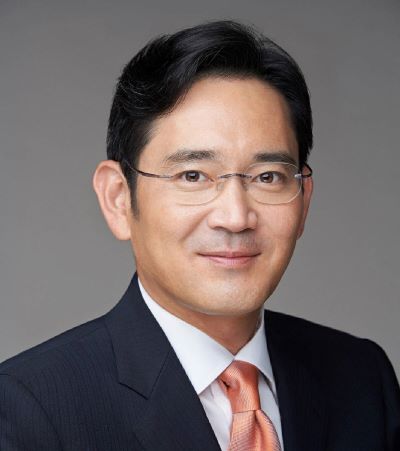
The Ministry of Justice on Monday decided to parole Samsung Electronics Vice Chairman Lee Jae-yong, who is in prison for bribery.
He will walk free from the Seoul Detention Center in a southern suburb of Seoul at 10 a.m. on Friday, about 11 months before the end of his sentence.
The de facto chief of Samsung Group is among over 800 prisoners to be released the same day as part of South Korea’s long tradition of clemency for Liberation Day, which falls on Aug. 15.
“The committee decided to grant parole for Samsung Vice Chairman Lee Jae-yong, considering the current conditions in the global business environment,” Justice Minister Park Beom-kye said in a press conference, which was streamed live online.
“The committee also said to have considered various factors including public sentiment and his conduct in prison,” he said adding he has also gave his endorsement on Lee’s release.
The ministry didn’t mention whether Lee would be given a special exemption that would enable him to formally return to the management of Samsung Electronics. Under current laws, anyone convicted of crimes such as embezzlement are not allowed to work there for five years following the completion of the sentence.
Lee has spent 18 months of his 2 1/2-year term behind bars. The ministry lowered the minimum time an inmate has to serve to become eligible for parole, from 80 percent to 60 percent, starting this month.
He was imprisoned in January this year after the top court sentenced him to serve 2 1/2 years, saying he was responsible for paying a total of 8.6 billion won ($7.51 million) in bribes to former President Park Geun-hye.
By that time, Lee had already spent nearly a year behind bars during investigations and lower court trials.
Monday’s decision came amid mounting calls for leniency for Lee, with many citing the need for strong leadership at Samsung Electronics so it can navigate through a global chip war. In the beginning, appeals were directed to President Moon Jae-in, asking him to grant a pardon.
Releasing Lee on parole appears to be a face-saving way for President Moon to heed the calls.
Moon, a liberal who took charge after two consecutive conservative administrations, has openly criticized the country’s record of leniency toward law-breaking chaebol chiefs.
The late Samsung Chairman Lee Kun-hee, father of the current leader, was convicted twice, only to be pardoned both times.
Moon’s stance on what he called “economic justice,” however, seems to have changed in recent months, as major economies engage in a power struggle over key supply chains, including those for semiconductors.
The local business community strongly called for a pardon for the Samsung chief, citing Samsung’s significance to the national economy. Korea should step up and help the local chip industry — namely, Samsung Electronics — to stay ahead of the game, they said.
The heads of five economic organizations submitted a joint petition to the presidential office in April. In June, leaders of the country’s top four conglomerates met with President Moon at a luncheon meeting to request a pardon for Lee Jae-yong.
Without him at the helm, Samsung, the world’s biggest memory provider and one that aspires to be No. 1 in the processor chip market by 2030, appears to have slowed down its decision-making process for new investments and business plans.
Regarding the delays in Samsung’s plan to build a new foundry plant in the United States, Samsung officials said, “Such a huge investment decision cannot be decided without the leader’s determination.”






 SootinClaimon.Com