Hun Sen pushes GMS to invest in digital base #SootinClaimon.Com

#SootinClaimon.Com : ขอบคุณแหล่งข้อมูล : หนังสือพิมพ์ The Nation.

https://www.nationthailand.com/international/40005953

Hun Sen pushes GMS to invest in digital base


Prime Minister Hun Sen urged all countries in the Greater Mekong Subregion (GMS) to push for the development of digital infrastructure in order to make the economies of the region more competitive globally.
The GMS consists of China – where the river’s waters originate – and the other countries which the Mekong flows through: Cambodia, Laos, Thailand, Myanmar and Vietnam.

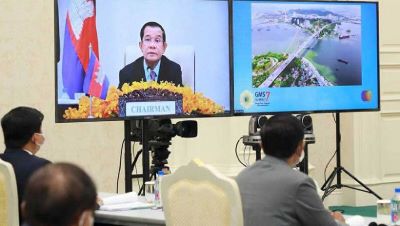
Hun Sen made the remarks as he chaired the seventh GMS conference on September 9, which was held virtually due to the pandemic. He said digital connectivity is at the core of cooperative efforts within the GMS.

He said digital infrastructure can ensure the effectiveness and sustainability of the socio-economy in the post-Covid-19 recovery context.

“Cambodia urges GMS members to focus on digital infrastructure development, economic integration and improving workforce skills in line with Industry 4.0 demands to keep the region competitive,” he said, referring to the Fourth Industrial Revolution.

Hun Sen also pushed for forward progress on the development of smart cities, the adoption of clean energy and greener logistics, the mobilisation of resources and finance,and increased partnership between the public and private sectors as a key mechanism to ease ongoing financial hardships.

“I believe that our common efforts [for economic growth] must be undertaken in a timely manner and done responsibly in order to ensure a smooth trade supply chain, increased investment, renewed tourism and good public health in the region,” he said.

Hun Sen also praised China for supplying Covid-19 vaccines to countries in the region. He also thanked other countries and the international community for providing vaccines to Cambodia, such as those donated through the World Health Organisation-led Covax Facility or directly via bilateral agreements.

“We have to [increase] the promotion of solidarity and mutual tolerance within a multilateral framework to ensure that we “build back better” our societies and economies post-pandemic,” he said.

In his closing remarks, Hun Sen said humanity is now feeling the painful consequences caused by climate change all over the globe through the predicted increase in severity of natural disasters, which has proven without question that what the world is facing is truly an emergency.

He also warned that GMS member states must guard against threats to global economic growth such as the emergence of unilaterally restrictive or protectionist trade policies.

“Now, more than ever, we must realise the crucial importance of cooperation and collaborative actions. The threats and challenges that we face have impacts that straddle and spill over our borders and therefore require joint solutions,” he said.

The GMS issued a jointed declaration on September 9 saying they were committed to maximum regional cooperation, noting that since 1992 the GMS have mobilised financial loans totalling $27.7 billion to support 109 investment projects and 230 technical assistance programmes across the region.

The GMS have also contributed to regional connectivity by constructing 12,000km of roads and nearly 700km of railways. It has contributed to the electricity supply with around 150,000 families given access to the grid via installation of power plants producing 3,000MW over 2,600km of power lines, according to the declaration.

By Ry Sochan/The Phnom Penh Post

Published : September 10, 2021
China’s Foreign Minister Wang Yi to visit Vietnam, vaccine assistance on the agenda #SootinClaimon.Com

#SootinClaimon.Com : ขอบคุณแหล่งข้อมูล : หนังสือพิมพ์ The Nation.

https://www.nationthailand.com/international/40005952

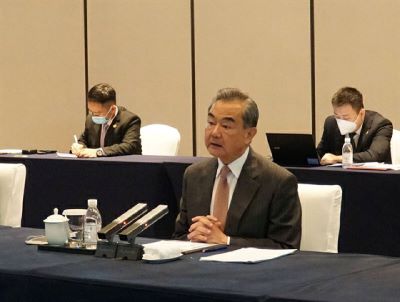
China’s Foreign Minister Wang Yi to visit Vietnam, vaccine assistance on the agenda


HÀ NỘI — Chinese State Councillor and Foreign Minister Wang Yi will visit Việt Nam from September 10-12, discussing cooperation in the COVID-19 fight and vaccine assistance.

The announcement was made by the deputy spokesperson of Vietnamese Ministry of Foreign Affairs Đoàn Khắc Việt at a press briefing on Thursday.

Within the visit, the Chinese minister will co-chair the meeting of the 13th Steering Committee for Việt Nam-China Bilateral Cooperation with Deputy Prime Minister Phạm Bình Minh, hold talks with Vietnamese Foreign Minister Bùi Thanh Sơn and pay courtesy calls on Vietnamese leaders, the spokesperson said.

At the steering committee meeting, the two sides will discuss measures to resolve existing issues and strengthen the relations between the two countries.

The two sides will also talk about COVID-19 prevention and control, vaccine assistance and supply of medical equipment, the spokesperson said. 

The visit, which is made upon the invitations of Việt Nam’s Deputy Prime Minister Phạm Bình Minh and Foreign Minister Bùi Thanh Sơn, aims to continue to strengthen the Việt Nam-China comprehensive strategic cooperative partnership for the interest of two countries’ people and for the peace, stability, cooperation and development of the region and the world, he said.

Meanwhile, Deputy Prime Minister Lê Văn Thành will attend and deliver remarks at the opening ceremony of the 18th China-ASEAN Expo and China-ASEAN Trade and Investment Summit held in China’s Nanning City on September 10 via video conference.

These are among the top 10 expos of China held annually since 2004. This year Việt Nam will participate the most extensively among ASEAN countries with 80 businesses attending in person and 200 businesses via video conference.

The participating businesses will introduce and promote signature products of Việt Nam including agricultural produce, food, woodworking products and consumer goods as well as promote the country’s investment environment and tourism. — VNS

Published : September 10, 2021

Reconnecting with Asean a key focus for Singapore as it recovers from pandemic, says Desmond Lee #SootinClaimon.Com

#SootinClaimon.Com : ขอบคุณแหล่งข้อมูล : หนังสือพิมพ์ The Nation.

https://www.nationthailand.com/international/40005951

Reconnecting with Asean a key focus for Singapore as it recovers from pandemic, says Desmond Lee


SINGAPORE – Reconnecting with its Asean neighbours will be a key focus for Singapore as it reopens its economy and recovers from the Covid-19 pandemic, said Minister for National Development Desmond Lee on Thursday (Sept 9).

He added that if people can travel in and out of Singapore safely, the country can reestablish its hub status and better serve the interests of Asean and Asia.

But the linkages should also extend to the digital realm, since rebuilding physical links will take time.

Mr Lee made the remarks at the Asean and Asia Forum, with the theme of “Seeking Recovery amid Covid-19: Regional Strategies and a Digital Future”.

Delivering the keynote speech at the event organised by the Singapore Institute of International Affairs, he noted that many sectors in Singapore had been affected by movement restrictions and border closures around the world.

Companies in the construction, marine and offshore engineering sectors found themselves unable to bring in foreign workers, and travel ground to a halt, for instance.

Mr Lee said reconnecting with the world is critical for a small and open economy like Singapore’s.

“Therefore, the first big step is to find safe means of reconnecting with our neighbours, while building resilience locally to cope with future disruptions that will surely come our way,” said the minister who co-chaired the Emerging Stronger Taskforce (EST) set up to chart Singapore’s economic recovery post Covid-19.

“If we can manage physical travel safely and become an oasis of hope during troubled times, we can better serve the interests of Asean and Asia,” he added.

Even as these physical links are being rebuilt, Singapore should also push ahead with digital connectivity with its neighbours, said Mr Lee.

He noted that this was the “best window” for Singapore to embed itself in the digital networks that have grown, with many people and businesses having been pushed online during the pandemic.

In this regard, Singapore’s reputation as a neutral, trusted broker may help, he said.

He cited the Alliance for Action on supply chain digitalisation, an industry-led coalition convened by the EST that set up the Singapore Trade Data Exchange, a common data infrastructure that facilitates the secure sharing of data between different parts of the supply chain.

In a separate speech, Senior Minister of State for Communications and Information Janil Puthucheary said Singapore and Asean would have to keep reinventing themselves to stay competitive amid digitalisation, which “brings the global market to our doorstep, but… also brings global competition”.

At the national level, past investments have helped to attract 80 per cent of the top 100 tech companies to set up shop here.

The next phase of investments in 5G technology, research, and up-to-date regulations are needed to help the country become one of the most digitally connected cities and among the best to do business, he added.

Amid these developments, it would also be important to reinforce partnerships, said Dr Janil.

“In a digital world with porous boundaries, we have to recognise that economic prosperity happens only when there is a belief that the world is not zero sum,” he added, noting Singapore’s partnership with Asean in areas such as data exchange across borders.

Mr Lee said that ultimately, Singapore will only be able to open up carefully and safely if as many people as possible get vaccinated.

Given the virulence of the new variants, it will be impossible for the world to maintain indefinite restrictions on society and economy, he added, noting Singapore’s push to work towards Covid-19 becoming endemic.

“We will open up at a controlled pace, making adjustments from time to time, so that the rate of transmission is managed without us having to return to heightened alert state,” he said, calling on people to encourage their friends and relatives to get vaccinated against Covid-19.

After his speech, Mr Lee was also asked about vaccination for children who are 12 years old and below.

He said Singapore would embark on vaccinating children only when the science has shown that it is safe to do so.

But he added that it was important to keep children safe in the meantime, while ensuring that they do not become a “lost generation”, deprived of the opportunity of a full education and development.

“A lot of stress and strains you see among young people, including children, that cause us to focus on the importance of mental wellness, arise from their feeling constrained, that somehow they haven’t quite got that full opportunity in school,” he said, noting this is why schools have restarted co-curricular activities to provide more opportunities for face-to-face interaction.

Mr Lee added that even the young people in Singapore who have been vaccinated, such as university students, were deeply concerned about the loss of opportunities to go on exchange programmes, and to travel and see the world.

“We have to be very mindful that even as we keep safe, and aspire to open up economically, we need to concern ourselves with the social aspects of this pandemic as well, such as opportunities for young people.”

By Tham Yuen-C/The Straits Times

Published : September 10, 2021

Xi: China to donate 100m more vaccines to developing nations #SootinClaimon.Com

#SootinClaimon.Com : ขอบคุณแหล่งข้อมูล : หนังสือพิมพ์ The Nation.

https://www.nationthailand.com/international/40005950

Xi: China to donate 100m more vaccines to developing nations


BEIJING – China will donate 100 million more doses of COVID-19 vaccines to developing countries within this year on top of a donation of US$100 million to COVAX, said Chinese President Xi Jinping on Thursday.

Xi made the announcement in Beijing while addressing the 13th BRICS summit via video link.

China will strive to provide a total of 2 billion doses of COVID-19 vaccines to the world by the end of this year, said Xi, noting that China, to date, has provided more than 1 billion doses of finished and bulk vaccines to over 100 countries and international organizations.

Xi also said at the summit that China will take over as the chair of BRICS and host the 14th BRICS summit next year.

China looks forward to working with BRICS partners to deepen cooperation in all areas and build a closer and more results-oriented partnership to meet common challenges and create a better future, Xi said.

Xi said that the BRICS countries have become an important force on the international stage to be reckoned with.

Over the past 15 years, the five countries have enhanced strategic communication and political trust in the spirit of openness, inclusiveness and equality, respected each other’s social system and development path, and explored a sound way for countries to interact with each other, Xi said.

While seeking synergy between their development policies and drawing on their complementarities, the five countries have made solid progress in various areas of cooperation in the spirit of pragmatism, innovation and win-win cooperation, and have forged ahead on the common journey of development, he added.

Xi said the five countries have supported multilateralism and taken part in global governance in the spirit of equity, justice, and mutual assistance.

“What has happened shows that come what may, we can make smooth, solid and sustained progress in BRICS cooperation as long as we pull our minds and our efforts,” he added.

Xi made five proposals for BRICS practical cooperation, adding that, under the current circumstances, it is important for BRICS countries to stay resolved, strengthen unity and further enhance the quality of practical cooperation

Xi proposed that BRICS strengthen public health cooperation in the spirit of solidarity; strengthen international cooperation on vaccines in the spirit of equitable access for all; strengthen economic cooperation in the spirit of mutual benefit; strengthen political and security cooperation in the spirit of fairness and justice; and strengthen people-to-people exchanges in the spirit of mutual learning.

Published : September 10, 2021

Afghanistan at risk of becoming terrorist haven, experts say #SootinClaimon.Com

#SootinClaimon.Com : ขอบคุณแหล่งข้อมูล : หนังสือพิมพ์ The Nation.

https://www.nationthailand.com/international/40005949

Afghanistan at risk of becoming terrorist haven, experts say


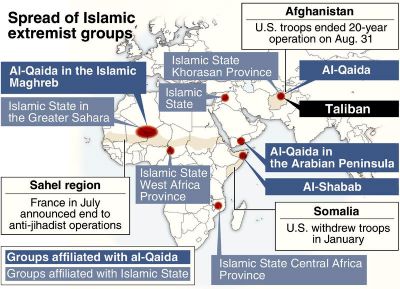
There are fears that groups affiliated with the international terrorist organization al-Qaida and the Islamic State (IS) militant group will increase their activities in Taliban-held Afghanistan and various parts of Africa.

Twenty years after the Sept. 11, 2001, terrorist attacks on the United States, international terrorism has been on the decline. The “fleeing” of the U.S. military, however, could give momentum to extremist ideas that have spread to various parts of the world.

“Afghanistan will become a haven for terrorists,” said Nabil Naeem, an Egyptian former member of al-Qaida, in an interview with The Yomiuri Shimbun on Sept. 2.

Naeem traveled to Afghanistan with the current al-Qaida leader, Ayman al-Zawahiri, and the two underwent military training together. Judging from his own experience, Naeem said extremist fighters on a watch list of U.S. and European security organizations are likely to gather in Afghanistan as a haven.

The Taliban has vowed to keep out international terrorism. However, the Haqqani network, the hardline element of the Taliban, is said to maintain military connections with al-Qaida. The suicide bombings near the international airport in Kabul on Aug. 26 exposed the Taliban’s inability to contain terrorism.

■ Reminiscence of Islamic State militant

The current situation in which people who follow Islamic extremist ideology are heading for Afghanistan is reminiscent of 2014, when the IS expanded its power in Iraq and Syria. About 30,000 people from 86 countries are said to have traveled to Iraq and Syria to join the IS.

The group at its height controlled an area from northern Syria through northern Iraq and established a system to govern the area based on its own interpretation of Islamic law. It was hostile to the United States and Europe and was deeply involved in international terrorism, including the 2015 attacks in Paris.

The 20-year U.S. war on terrorism weakened al-Qaida and the IS, and led to the death of charismatic leaders Osama Bin Laden and Abu Bakr al-Baghdadi.

However, the potential threat of international terrorism has not disappeared. Extremists have scattered around the world and continued their activities while “indigenizing” themselves in various regions.

■ The next struggle

On Aug. 31, the day the U.S. military completed its withdrawal from Afghanistan, al-Qaida issued a statement and called for preparations for the “next stage of the struggle” to “liberate” the Islamic world.

Certain regions in Africa, where al-Qaida and IS-affiliated groups are embedded, are of particular concern.

Islamic State West Africa Province (ISWAP) militants based in Nigeria attacked a town in the northeast of the country in late August, killing 17 people, including government solders and aid workers. In Somalia, the al-Qaida-affiliated Al-Shabab has recently carried out a series of suicide bombings and other attacks.

According to the Institute for Economics & Peace’s Global Terrorism Index, 41% of the terror attacks by the IS were concentrated in sub-Saharan Africa.

Prior to the pullout from Afghanistan, the U.S. military completed its withdrawal from Somalia in January. France also announced an end to its anti-extremist operations in the Sahel region.

African militant groups are currently focusing on overthrowing the rulers of the area and establishing an Islamic state, rather than waging international terrorism against the United States and European nations. Their primary targets are government troops and local residents.

However, Alexandre Marc, a nonresident senior fellow at the Brookings Institution in Washington, warned in an interview with The Yomiuri Shimbun that, without intervention by the United States and France, “jihadi insurrections” could quickly overrun major cities in Africa and become a global threat, possibly leading them to engage in international terrorism to assert their presence.

By Hiromi Uechi / Yomiuri Shimbun Correspondent

Published : September 10, 2021
Singapores new Covid-19 workplace rules challenging, say business leaders #SootinClaimon.Com

#SootinClaimon.Com : ขอบคุณแหล่งข้อมูล : หนังสือพิมพ์ The Nation.

https://www.nationthailand.com/international/40005906

Singapores new Covid-19 workplace rules challenging, say business leaders


SINGAPORE – Business leaders have expressed concerns over the new Covid-19 workplace management rules which, they say, could impact operations if fresh infections force their staff to work from home.

Some said that the rules could be disruptive, particularly in the face of a manpower crunch.

On Tuesday, the Ministry of Manpower issued an updated advisory on workplace management to curb the spread of Covid-19. Under the new guidelines, companies must implement a snap 14-day work-from-home (WFH) regimen if an employee tests positive for Covid-19 and was at the workplace in the last seven days. There will also be regular testing for staff who work onsite.

While these new measures are needed to stem the rise of community cases, they will also take a toll on businesses, experts said.

Singapore National Employers’ Federation executive director Sim Gim Guan said: “The need to implement a snap 14-day WFH arrangement can be quite challenging because that is going to require a lot of communication, and could also be disruptive. So, companies and employees alike need to be a lot more agile and resilient.”

Chipmakers are feeling the heat, said Mr Ang Wee Seng, Singapore Semiconductor Industry Association’s executive director.

“The industry is already facing a manpower crunch due to the shutting down of borders and expansion of many companies. This will definitely (add) further pressure. Companies will need to manage their work hours carefully so as to mitigate the risk of a wide outbreak within the company.”

However, companies can continue split-team arrangements. For instance, if someone from Team A is infected and the team has to work from home, those who are from Team B and need to work on site may do so.

Randstad Singapore managing director Jaya Dass added: “Business leaders need to create an internal taskforce to revise or create new standard operating procedures and communicate them transparently to the workforce.”

Meanwhile, Singapore Manufacturing Federation president Douglas Foo said manufacturing firms are adapting and remaining resilient despite challenges.

“The business continuity plans that companies have put in place in the factories such as split teams and staggered working hours have helped ensure operations continue moving even with manpower constraints,” he said, adding that automation and Industry 4.0 technologies have also lightened the load on the workforce.

A spokesman for the Public Service Division said the public service will align its guidelines to be in tandem with the latest workplace safe management measures.

He added that it is working towards greater work flexibility, with hybrid work becoming more common where possible.

“We leverage on teleconferencing to ensure business continuity and safe management,” he said.

Mr Devadas K, chief executive of management consultancy firm Future-Moves Group, said that the snap 14-day WFH requirement is an understandable precaution, though in the longer term, such a requirement could be disruptive and a cause of frustration to businesses.

But after a year of the pandemic, FastJobs general manager Lim Huishan noted that many firms should already have WFH arrangements in place, so they just have to activate the plans when needed.

Mr Kurt Wee, president of the Association of Small and Medium Enterprises, added that ultimately, firms just want to get through the crisis in a sustainable manner, rather than triggering a lockdown.

Mr Yap Shih Chia, executive vice-president of corporate development, strategy and new businesses at environmental services firm Chye Thiam Maintenance, said: “We are confident that we can apply the new guidelines for our corporate services. But for the project sites where workers are deployed, this is something that still needed to be reviewed.”

He added that work-from-home is not an option for his front-line essential staff.

Meanwhile, most staff at Prudential Singapore are still working from home, and they have the equipment needed to connect remotely. This means they can easily transition to a snap work-from-home arrangement, the firm said.

Singapore Business Federation chief executive Lam Yi Young noted: “Notwithstanding, businesses should review their contingency plans to ensure they are ready to implement the snap work-from-home arrangement once required, including how to communicate with employees.”

By Sue-Ann Tan and Cheryl Tan/The Straits Times

Published : September 09, 2021

HCM City allows food and drink takeaway services, reopens IT stores #SootinClaimon.Com

#SootinClaimon.Com : ขอบคุณแหล่งข้อมูล : หนังสือพิมพ์ The Nation.

https://www.nationthailand.com/international/40005905

HCM City allows food and drink takeaway services, reopens IT stores


HÀ NỘI — HCM City People’s Committee late Wednesday issued a new decision on COVID-19 prevention and control measures as the city continues to stay under the restrictive Directive 16 with outbreaks still not properly controlled yet.

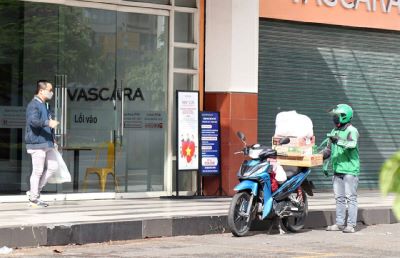
After two months of complete shutdowns to deal with COVID-19 outbreaks, restaurants and other food and drink services can now resume delivery of takeaway orders, between 6am-6pm every day.

The southern city, currently the COVID-19 epicentre of the country, will allow postal service providers, telecommunications, IT devices and equipment and office stationery vendors to reopen, also within the same time frame and also only for delivery orders. The decision is made as millions of students in the city are starting the new school year via online learning.

All places must have household business/business licences issued by relevant authorities, must register with district (or Thủ Đức City) authorities to obtain travel permits, and follow the three on-site model (eat, rest, sleep in place).

Workers at these businesses must have received at least one dose of COVID-19 vaccine and be tested for COVID-19 every two days (using rapid antigen method for each individual, or pooled samples of three persons).

Supermarkets, convenience stores and food stores are allowed to open. Shippers can operate within the perimeter of a single district or Thủ Đức City.

Establishments producing and trading in pharmaceutical materials, drugs, medical equipment and medical supplies are allowed to operate from 6am to 9pm daily to meet public needs.

The people’s committees of District 7 and Củ Chi District, considered to have the COVID-19 situation under control, can establish plans to allow their residents to go shopping for food and essentials once a week. The plan must be reported to the municipal People’s Committee before September 11.

Currently, residents in HCM City are not allowed to go outside for food and essentials amid worsening outbreaks, with their food orders delivered by local authorities, military personnel, volunteers, and more recently, e-commerce platform shippers.

Under today’s decision, two wholesale markets Bình Điền and Hóc Môn will be used as transhipment venues for agricultural produce and food – in addition to Thủ Đức wholesale market – to ensure supplies for the city’s residents at a reasonable price. — VNS

Published : September 09, 2021

Korea’s race to vaccinate 70% of population with first dose nears finish line #SootinClaimon.Com

#SootinClaimon.Com : ขอบคุณแหล่งข้อมูล : หนังสือพิมพ์ The Nation.

https://www.nationthailand.com/international/40005903

Korea’s race to vaccinate 70% of population with first dose nears finish line


The race for vaccinating 36 million people or 70 percent of the Korean population with one dose of a COVID-19 vaccine by Chuseok, beginning in less than two weeks, is nearing its end. By Monday’s end, more than 30 million people here had been at least partly vaccinated.

The upcoming Chuseok marks the first major national holiday after the vaccine program kicked off in February, with the government seeking to permit more social distancing-free family gatherings and celebrations.

The government is mulling a “phased return to normalcy” after passing the vaccine milestone.

Speaking at Tuesday’s government COVID-19 response meeting, Vice Minister of Health Kang Do-tae said that by the end of next four weeks of “intensive” social distancing, Korea may be able to move on to a more normal life, assisted by a wide vaccine coverage.

“The next four weeks will be a turning point for Korea,” he said.

The vice minister said the addition of 1.3 million Moderna doses was “more than the initially negotiated amount,” and said the boost in supplies is “expected to expedite Korea’s push for getting to the vaccine goal before Chuseok comes around.”

But the rush to deliver as many first doses as possible is met with concerns that not enough will remain for second doses, as it is not clear whether deliveries will arrive as planned next month or the rest of this month.

On exhausting current supplies for handing out first doses, Hong Jeong-ik, heading the national COVID-19 vaccination planning committee, said last week Korea did not have contingency plans for supplies falling short by the time first-dose recipients are due their seconds.

Despite high hopes pinned on the 70 percent first-dose rate to be a “turning point” in Korea’s pandemic, expert views are less optimistic.

Dr. Paik Soon-young, Catholic University of Korea’s emeritus professor of virology, said first-dose vaccination “means almost nothing” in the face of variants. “Only full vaccination (receiving all of the prescribed doses by a vaccine regimen) should count as vaccination,” he said.

Ahead of the weekend Korea confirmed its first cases of the more nascent and lesser known mu variant, which Paik described as having “significant mutations in the spike protein” that may render the virus more vaccine-resistant. Delta, which is known to somewhat weaken vaccine effectiveness, was already the dominant strain in Korea.

Jeong Eun-kyeong, overseeing COVID-19 vaccinations as the national disease control agency’s chief, offered a reality check with her assessment that even with the partial vaccination rate of 70 percent, significant freedoms won’t be viable. She says Korea will need to fully vaccinate 80 percent of adults aged 18 and up before any further easing in restrictions.

“That may be achievable around the end of October,” she told the National Assembly on Tuesday.

Korea on Tuesday set a new record in the number of COVID-19 vaccinations given out in a day. In the latest 24-hour period, a total of 1,374,038 doses of COVID-19 vaccines were administered, of which 741,052 were first doses, according to the Korea Disease Control and Prevention Agency. Tuesday’s feat marks a huge jump from the one-day average of 321,407 doses seen the previous week.

Over the first seven days of September, Korea counted an average of 1,708 cases each day. There were 25,819 people with “active cases” remaining in isolation as of Monday afternoon. The pandemic left a total of 263,374 people infected here, among whom 2,330 died.

By Kim Arin

Published : September 09, 2021

Japan to establish national training centers for ‘urban sports’ #SootinClaimon.Com

#SootinClaimon.Com : ขอบคุณแหล่งข้อมูล : หนังสือพิมพ์ The Nation.

https://www.nationthailand.com/international/40005902

Japan to establish national training centers for ‘urban sports’


The Japan Sports Agency has decided to establish national training centers (NTCs) for skateboarding, sport climbing, surfing and BMX freestyle park, which have drawn increased attention following Japanese athletes’ success at the Tokyo Olympics, The Yomiuri Shimbun has learned.

Utilizing a system in which existing facilities nationwide can be designated and supported as NTCs, the agency will proceed with the selection of target facilities. It aims to start operations next spring.

Japanese athletes performed well in these four new sports, which made their Olympic debut at the Tokyo Games. Yuto Horigome, 22, won the gold medal in men’s street skateboarding and Momiji Nishiya, 14, won the gold medal in the women’s competition. Kanoa Igarashi, 23, took the silver medal in men’s surfing.

These sports will also be part of the 2024 Paris Olympics.

After examining candidate facilities selected by each sporting organization, the agency will designate them as NTCs based on the quality of their training environment and how convenient it is for athletes to gather there from around the nation. The agency will subsidize the rent for the facilities, personnel costs for medical staff, and equipment costs.

The agency has appropriated ¥1 billion in its budgetary requests for fiscal 2022, which includes operating expenses for other sports facilities that have already been designated.

According to officials of the relevant sports organizations, candidate locations include Ariake Urban Sports Park in Koto Ward, Tokyo, the main venue for skateboarding at the Olympics; and the Surf Stadium Shizunami in Makinohara, Shizuoka Prefecture, which hosted a pre-Olympic training camp for the U.S. surfing team.

These “urban sports” are rapidly gaining in popularity, especially among young people, and facilities dedicated to them are springing up one after another overseas. However, there are few places in Japan to assemble leading athletes and help them develop, forcing individual athletes to rely on their own ingenuity.

“We want to prepare facilities where we can continue to work on strengthening the athletes, and contribute to the development of young people,” an official of the agency said.

Published : September 09, 2021

China to provide millions worth of supplies to Afghanistan #SootinClaimon.Com

#SootinClaimon.Com : ขอบคุณแหล่งข้อมูล : หนังสือพิมพ์ The Nation.

https://www.nationthailand.com/international/40005901

China to provide millions worth of supplies to Afghanistan


BEIJING – China has decided to urgently provide 200 million yuan (US$30.96 million) worth of grains, winter supplies, vaccines, and medicines to Afghanistan according to the needs of the Afghan people.

China to provide millions worth of supplies to Afghanistan

Chinese State Councilor and Foreign Minister Wang Yi made the announcement on Wednesday when attending the first meeting of foreign ministers of Afghanistan’s neighboring countries in Beijing via video link.

Wang said China has decided to donate 3 million vaccine doses to the Afghan people in the first batch. China is also ready to provide more anti-epidemic and emergency materials to Afghanistan under the China-South Asian Countries Emergency Supplies Reserve. 

Meanwhile, a Foreign Ministry spokesperson said China attaches importance to the Taliban’s announcement of the formation of a caretaker government in Afghanistan and some important personnel arrangements.

According to reports, the Taliban announced on Tuesday night the formation of Afghanistan’s caretaker government, with Mullah Hassan Akhund appointed as the acting prime minister.

“This has ended the more than three weeks of anarchy in Afghanistan and is a necessary step toward Afghanistan’s restoration of order and post-war reconstruction,” spokesperson Wang Wenbin told a press briefing.

China’s position on the Afghanistan issue is consistent and clear, said Wang, adding that China upholds a policy of non-interference, respects Afghanistan’s sovereign independence and territorial integrity, and supports the Afghan people in choosing a development path that suits their national conditions.

Wang said China hopes that Afghanistan will build a broad-based and inclusive political framework, adopt moderate and prudent domestic and foreign policies, fight firmly against terrorism of all kinds and establish friendly relations with all countries, particularly with neighbouring countries.

China stands ready to maintain communication with Afghanistan’s new government and leaders, and hopes that the new government will broadly absorb opinions from Afghan ethnic groups and parties, and meet the Afghan people’s aspirations and the expectations of the international community, Wang said.

Published : September 09, 2021