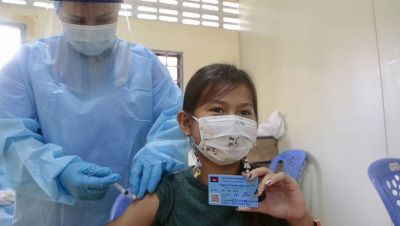
More than 80 per cent of the Kingdom’s total population of 16 million have been vaccinated against Covid-19, at least with their first doses, according to the Ministry of Health.
As of September 24, Cambodia had vaccinated over 98 per cent of the adult population of 10 million and more than 88 per cent of the 12-17 age group of nearly two million.
Vaccinations for the 6-11 age group of over 1.8 million have reached 70 per cent.
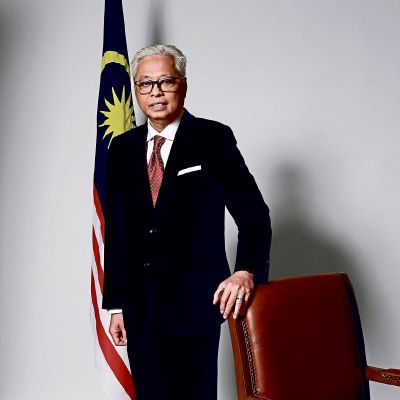
PETALING JAYA: With his “Malaysian Family” concept in mind, Prime Minister Datuk Seri Ismail Sabri Yaakob appeared on the world stage to call upon nations to work together in the spirit of a “world family” to address inequality, political instability and global governance amid the Covid-19 pandemic.
While delivering Malaysia’s national statement at the General Debate of the 76th Session of the United Nations General Assembly (UNGA) in New York, Ismail Sabri voiced the country’s stance on health diplomacy, vaccine inequality, humanitarian issues and nuclear disarmament, among others.
“The pandemic has shown that we need to improve our resolve to strengthen international cooperation and multilateralism, and consider ourselves as a family of nations.
“At the same time, the world family must be made a more peaceful, prosperous, sustainable and equitable one,” he said via a pre-recorded video yesterday.
In his maiden speech at the UNGA, Ismail Sabri took the chance to highlight the discriminatory rollout of Covid-19 vaccines, pointing out that vaccine-producing countries and wealthy nations were further ahead while the majority of the world’s population, mostly from middle-income and least developed countries, remained unvaccinated.
“With the growing frequency of global health threats, this world family must come together and engage in more effective health diplomacy and ensure greater collaboration not just to end this pandemic but on an array of other health-related issues.
“These include expanding the public health capacity of nations, particularly by enhancing their access to relevant technology and knowledge,” he said.
He said Malaysia would now play a more prominent role and participate more actively in health diplomacy, as there was a need to regard public health as a global public good rather than the exclusive domain of individual nations.
ADVERTISEMENT
He acknowledged that Covid-19 had reversed many hard-won gains on the path towards achieving the UN 2030 Agenda for Sustainable Development, as seen in Malaysia’s gross domestic product (GDP) which contracted by 5.6% last year.
To protect the people’s livelihood, he said the government had introduced economic stimulus packages worth about US$130bil or 36% of Malaysia’s GDP, added Ismail Sabri.
The government had also rolled out the National Recovery Plan as the nation’s exit strategy from the pandemic which included speeding up vaccination rates, which stood at over 500,000 doses daily in recent weeks, as well as reopening key economic sectors, he said.
On climate change, he said Malaysia had ambitious plans to facilitate the transition to a more sustainable, low-carbon and climate-resilient future, including introducing policies like the concept of a circular economy.
“We are confident that they will greatly contribute towards making Malaysia a low-carbon nation by 2050.
“At the same time, developed countries have the responsibility to provide financial resources and technology transfer to the developing world to undertake sustainable initiatives,” he added.
In stating Malaysia’s firm stance on nuclear disarmament, Ismail Sabri asserted that Malaysia supported the total elimination of nuclear weapons.
Malaysia also reaffirmed its commitment to the Treaty on the Non-Proliferation of Nuclear Weapons.
As an Asean member, he said Malaysia was also committed to preserving the Asean region as a zone of peace, freedom and neutrality.
“We strongly believe that the UN membership must speak with one voice on the need for an immediate cessation of hostilities in all corners of the world,” he said.
Political and humanitarian issues including those of Palestine and Myanmar, as well as developments in Afghanistan, were also highlighted by the Prime Minister.
He said Malaysia was particularly worried about the humanitarian situation in Myanmar, but equally troubling was the refugee crisis since the mass exodus of the Rohingya in 2017.
“Malaysia currently hosts over 154,000 refugees from Myanmar, comprising 86% of the refugee population in the country, with more than 66% of those from the Rohingya ethnic minority,” he said.
On Palestine, he said, Malaysia continued to call for the deployment of a temporary international presence in the city of Al-Quds and to monitor the cessation of hostilities in the Occupied Palestinian Territory.
“The systematic oppression of Palestinians over many years through discriminatory policies, denial of basic civil rights, imposition of harsh conditions, large-scale land confiscation and inhumane acts committed against them is tantamount to the crime of apartheid.
“Malaysia stresses again that Israel must be held responsible and accountable for all its wrongdoings including its flagrant violations of international law,” he added.
In condemning terrorism in all its forms and manifestations, Ismail Sabri also called upon the world family to come together to support Afghanistan, including extending humanitarian assistance to the people.
“On this, Malaysia stands ready to extend its assistance and do what it can,” he noted.
He ended his speech by calling for member states to come together to reform the UN organisation to strengthen its effectiveness, bring more transparency and enhance its credibility.
“We must close ranks and enhance our unity and cohesion. We must live in peaceful co-existence. Only then will we have a chance to succeed,” he said.
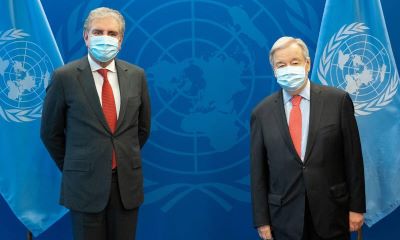
Foreign Minister Shah Mahmood Qureshi met UN Secretary General Antonio Guterres on the sidelines of the 76th session of the UN General Assembly in New York on Friday and stressed “urgent action” to address the humanitarian crisis in war-torn Afghanistan, according to a statement issued by the Foreign Office (FO).
“Qureshi underscored the need for urgent action to address the prevailing dire humanitarian situation in [the] country, calling for the continued political and economic engagement of the international community to end [the] decades-long conflict,” the statement said.
It added that the foreign minister also highlighted Pakistan’s ongoing efforts to address the humanitarian situation and those aimed at achieving lasting peace and stability in the neighbouring country.
Moreover, the statement said, Qureshi briefed Guterres on the “deteriorating human rights” situation in Indian-occupied Kashmir and shared with him a “comprehensive dossier containing evidence of gross, systematic, and widespread human rights violations, war crimes, crime against humanity and genocide being perpetrated by Indian occupation forces” in the valley.
Qureshi also expressed hope that the UN would play its role in ensuring that the people of occupied Kashmir were able to “exercise their inalienable right to self-determination as enshrined in the relevant UN resolutions”.
ADVERTISEMENT
According to the statement, the minister called for making the UN Security Council (UNSC) “more representative, democratic, transparent, effective and accountable to address the multiple challenges” faced by the world.
He emphasised that reforms must be decided by consensus and member states must be allowed the necessary time and space to evolve a solution acceptable to the entire UN membership, the statement said.
Qureshi also called for the need for stemming the rising tide of Islamophobia, ending vaccine inequity, and ensuring adequate financing for developing countries to respond to the pandemic and the resulting economic crisis.
After the meeting, Qureshi briefly shared the the details of his talk with Guterres in a tweet.
“Great to meet Antonio Guterres at UNGA and share Pakistan’s key priorities: equitable socio-economic development, stabilisation of Afghanistan and just resolution of Jammu and Kashmir dispute,” he tweeted.
“We look to the UN to play central role in addressing and overcoming these challenges.”
ccording to the FO, the foreign minister also met the president of the 76th Session of the general assembly, Abdulla Shahid, on the day and congratulated him on his election to the position.
Qureshi expressed the hope that Shahid’s presence in this important office would help with making progress on important issues on the UN agenda.
PM’s UNGA address
The foreign minister’s meetings coincided with Prime Minister Imran Khan’s address at the UNGA, which outlined the same issues raised by Qureshi in his meeting with Guterres.
In his address, the prime minister made a strong pitch for the world to rally behind Afghanistan’s nascent Taliban government for preserving the progress made by the war-ravaged country over the past two decades and preventing it from turning into a safe haven for terrorists.
“There is only one way to go. We must strengthen and stabilise the current government, for the sake of the people of Afghanistan,” he said, warning that taking a course contrary to this would further destabilise the war-torn country and turn it into a terrorists’ haven.
Since the Taliban takeover of Kabul, Pakistan has consistently called for recognition of the new Taliban government, assistance for averting the looming humanitarian crisis in Afghanistan, and resumption of development aid for the new administration for preventing an imminent economic collapse there. This has dominated Pakistan’s foreign policy agenda for the past few weeks.
Most of the Western countries have expressed interest in engaging the Taliban and promised humanitarian aid. But, they have been reluctant to formally recognise the group as the government in office in Afghanistan and provide development assistance that has historically funded the functioning of the state institutions there.
This reluctance has been fuelled by fears about human rights under the Taliban regime, especially those of women; lack of representation of other ethnicities, religious minorities, and women in the government; and concerns about the resurgence of terrorist groups in Afghanistan that could threaten other countries.
‘Environment of talks with Blinken was good’
Speaking at a press conference with Pakistani media representatives, Qureshi recapped the speech by PM Imran at the UNGA and his various meetings with officials over the past few days.
Commenting on his meeting with US State Secretary Antony Blinken, he said: “The environment of the talks was very good.
“He listened to all the things I said with great attention, noted them down and gave me the full opportunity to present my stance,” he said, adding that the talks had stretched beyond the time allocated.
“So I am satisfied, as for any breakthroughs, there are several things [such as] what are their overall wishes, goals and [what are] Pakistan’s needs. So we should look at all of that and move forward in a realistic manner.
“I don’t think we should associate ourselves with unrealistic wishes but they also realised, and are cognizant, of Pakistan’s importance and need. They will realise that Pakistan can better serve as an ally in the current situation,” he said.
Responding to a question from a reporter, the foreign minister said: “I didn’t go to take anything”.
He said that the purpose of the meeting was to remove misunderstandings and make Pakistan’s role clear, adding that more interactions could be expected in the future.
He said that Pakistan supported an inclusive Afghan government but some patience was required. He highlighted how the Taliban had included other ethnicities in the expansion of their government.
Summing up his meeting with Blinken, Qureshi said he had advised three things: engagement, persuasion and patience with the Taliban.
Regarding PM Imran’s UNGA address, Qureshi said he had addressed every topic that was important in the nation’s eyes particularly human rights violations in occupied Kashmir.
“He presented a review of Afghanistan, and I don’t think any Pakistani leader has [presented] such a strong and clear stance on Afghanistan,” he said.
“The countries who are making use of regressive thinking as a political tool must understand, that terrorism poses an equally big threat for them,” the PM said in his remarks at the 76th session of UNGA, PM Modi said.
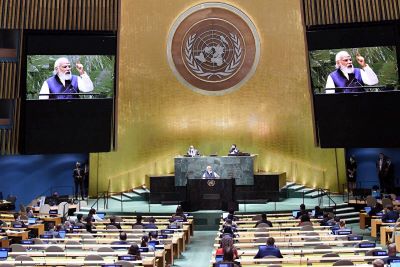
Without naming Pakistan, Prime Minister Narendra Modi at his UN General Assembly (UNGA) address said that countries that are using terrorism as a “political tool” must understand that terrorism is an equally big threat for them.
“The countries who are making use of regressive thinking as a political tool must understand, that terrorism poses an equally big threat for them,” the PM said in his remarks at the 76th session of UNGA, PM Modi said.
The Prime Minister said that the world must ensure sure that the land of Afghanistan must not be used to spread terrorism and terrorist attacks. “We must be stay alert that no one should make use of the delicate situation in Afghanistan as a tool for their own use,” he said.
He said the people of Afghanistan, including children and minorities, need help. “We must fulfil our responsibility in this regard.”
ADVERTISEMENT
He said the world is facing the increasing threat of recursive thinking and extremism. “Under this circumstance, the whole world should make science-based rational and progressive thinking, the basis for progress.”
Prime Minister explained that India’s diversity is the identity of its strong democracy. “It is a country that has dozens of languages and hundreds of dialects, different lifestyles and cuisine. This is the best example of a vibrant democracy.”
Prime Minister, during his address, also invited the global manufacturers of COVID-19 vaccines to come and make vaccines in India, stressing that the country’s “faith is to serve people”.
“Understanding its responsibility towards humanity, India started giving vaccines to the needy in the world. I, invite the global manufacturers of vaccines to come and make the vaccine in India,” PM Modi said.
He also paid tribute to all those who have lost their lives in the deadly COVID-19 pandemic.
The theme for this year’s General Debate is ‘Building Resilience through hope to recover from COVID-19, rebuild sustainably, respond to the needs of the planet, respect the rights of people, and revitalise the United Nations.’
The high-level segment of the 76th UNGA began in New York on Tuesday. The UNGA meeting this year is in a hybrid format but a large number of leaders have arrived in New York.
PM Modi arrived in Washington on Wednesday for a three-day visit to the country.
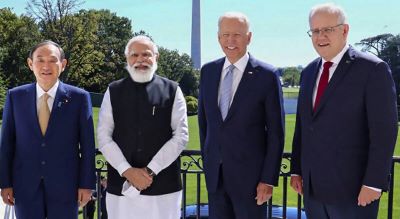
WASHINGTON — The leaders of Japan, Australia, India and the United States held the first in-person Quadrilateral Security Dialogue (Quad) summit in Washington on Friday, during which they agreed to work together in areas such as infrastructure development and space to realize a “free and open Indo-Pacific.”
According to a joint statement released after the summit, Prime Minister Yoshihide Suga, Australian Prime Minister Scott Morrison, Indian Prime Minister Narendra Modi and U.S. President Joe Biden agreed to hold summit talks every year under the Quad framework.
At Friday’s meeting, which lasted about two hours and 20 minutes, Suga stressed the importance of the framework. “The Quad is an extremely significant initiative to realize a free and open international order in the Indo-Pacific region based on the rule of law,” Suga said.
Biden also stressed the significance of the “group meeting of democratic partners who share a world view and have a common vision for the future, coming together to take on key challenges of our age.”
Morrison said, “I’m in no doubt that together our four nations multiply many times over the forces of hope for a free, open and inclusive Indo-Pacific,” while Modi said the Quad “will play the role of a force for global good.”
In the joint statement, the Quad leaders reaffirmed support for the rule of law, freedom of navigation and overflight, and territorial integrity of states, and while avoiding naming names, they warned against China’s maritime expansion.
The statement also included plans for the four countries to cooperate in infrastructure development, cybersecurity and space with a focus on sharing satellite data. The statement referred to joint efforts in the deployment of secure fifth-generation (5G) communications standards and the monitoring of biotechnology.
ADVERTISEMENT
Regarding Afghanistan, the four leaders called on the Taliban to secure the safety of people wishing to leave the country.
According to a senior Japanese government official, Suga expressed serious concern about attempts to change the status quo by coercion in the South and East China seas.
Regarding North Korean missile launches, he strongly condemned the act as a “clear violation of U.N. Security Council resolutions.” The four leaders confirmed their commitment to realizing the complete denuclearization of North Korea.
The four-way alliance, which was initially proposed by former Prime Minister Shinzo Abe, held its first foreign ministers’ meeting in September 2019. The Biden administration, which was inaugurated in January this year, has placed the Quad as the core of its Indo-Pacific strategy. The group held its first online summit in March.
“The Japan-initiated alliance with the United States, Australia and India has been launched fully,” Suga told reporters after the summit on Friday. “The meeting was very meaningful for the further development of the partnership.”
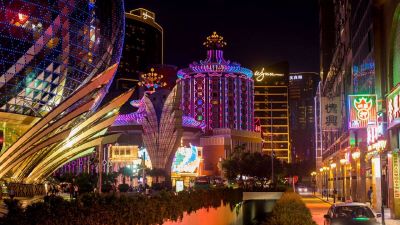
To many investors, Macaus push to extend oversight over the worlds largest gambling hub came as a shock, triggering a record selloff in casino shares. To long-term observers, however, it was just the latest move in Chinas grand plan to transform the $24 billion economy.
For years, Beijing has been focused on trying to control an industry that’s enriched the only Chinese territory where casinos are legal but also provided an avenue for capital outflows for the country’s rising elite. Authorities have been steadily tightening their grip, with facial-recognition software installed in Macau’s ATMs, cash withdrawals limited, and a digital currency under consideration to better track transactions.
At the same time, the government has been laying the groundwork for the dilution of Macau’s reliance on gambling. Unveiled in 2019, China’s blueprint for the Greater Bay Area — a region that includes Hong Kong and parts of southern China — sees the former Portuguese colony departing from its decades-long identity as a casino mecca to become a global leisure and tourism hub. Think sports stadiums, convention centers and traditional Chinese medicine parks instead of more baccarat tables.
“What the government wants, and what Beijing wants, is to have a lot more non-gaming facilities,” said Allan Zeman, chairman and an independent director of Wynn Macau Ltd., one of the six casino operators with licenses to operate in the enclave. “The border will kind of disappear. Macau will become a much bigger place, so gaming is just one part of a city that will have a lot more.”
The announcement of revisions to the law governing casinos was one of the most definitive signs yet that there’s no turning back for Beijing.
ADVERTISEMENT
The proposed changes, which are now up for consultation with the public and industry, came just a week after the Chinese government released a plan to further integrate Macau with the Chinese mainland. The city is being encouraged to develop non-gaming industries in a special zone on the neighboring island of Hengqin — currently divided between Guangdong province and Macau — with a focus on high-tech manufacturing, cultural tourism, Chinese medicine, conventions and sports, according to a master plan released by Beijing earlier this month. Gambling won’t be allowed.
The Bloomberg Intelligence index of Macau’s six casino operators has fallen 26% since last Tuesday’s proposal. The market recovered slightly this week, with the index gaining about 1.7%.
Gambling in Macau goes back more than three centuries, with the practice legalized there in 1847 as a way to fill the colonial authority’s coffers. By the late 19th century, gaming taxes had become the government’s main income. For decades the industry was monopolized by a company co-founded by late billionaire Stanley Ho before opening up in 2002 to the current players. Macau eventually surpassed Las Vegas, and today bettors can pose before a fake Eiffel Tower or stroll along replica Venetian canals on its main strip.
But a shift is firmly under way. While still employing one-fifth of the city’s workforce, the gambling industry’s contribution to Macau’s gross domestic product had dropped to 51% before the pandemic hit, from 63% in 2013, according to the latest government data.
The license renewal process for the city’s six casino operators is shaping up to be a key test of Beijing’s pivot. With the permits set to expire in less than 10 months, the government is expected to pressure the firms — who have seen gaming revenue contribute 85% of overall revenue on average the past three years, according to Bloomberg calculations from company reports — to boost investment in non-gaming sectors.
Macau’s government will likely nudge casino operators to invest in projects in Hengqin, even if their profit outlook is questionable, given the limitations on expanding further in Macau, said Ben Lee, a managing partner at gambling consultancy IGamiX.
While the casinos have recently been doubling down on luring more so-called mass market bettors, who may spend more time dining out and shopping than at the tables, entire projects separate to the casino business could be more challenging. Convention activities, the ferry service and income from retail accounted for less than 3% of net revenue in 2019 for Sands China Ltd., the largest operator in Macau by gaming revenue.
And they face stiff competition for non-gaming business from elsewhere in the region. Hong Kong — just a ferry ride away — has an established convention and exhibition industry and hosts major international events from art festivals to rugby tournaments. The island province of Hainan has also seen a domestic tourism boom due to its tax-free status and wants to develop similar industries.
The revisions to the casino law follow a decade-long crackdown on VIP bettors, said Morningstar Inc. analyst Jennifer Song. Such gamblers attracted Beijing’s wrath because they’re facilitated by junkets which sometimes breach Chinese law by promoting gaming in the mainland, organizing overseas gambling trips and providing shadow banking services to high rollers.
The moves significantly reined in what was once the lifeblood of Macau, Song said. Now, Beijing’s wider plan could have a similar effect on the casino industry overall.
TOKYO – With registration for the Common Test for University Admissions set to open on Sept. 27, educators and authorities are facing a test of their own as they prepare for a second entrance exam season under the novel coronavirus pandemic.
There is a growing trend toward priority vaccination for test-takers as they are expected to travel more across prefectural borders.
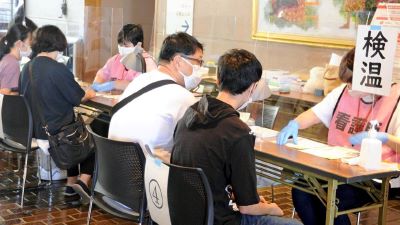
“The Common Test exam site is going to be crowded, so I wanted to make sure I got vaccinated,” said a 17-year-old third-year high school student after receiving a shot at the Comprehensive Social Education Center in Ota, Gunma Prefecture on Sept. 19.
The student was vaccinated alongside her mother, 42, who added: “I didn’t want to leave any chance my daughter would be infected at home before taking her exams.”
Since August, Ota has offered priority vaccination to third-year students who live in the city and attend junior and senior high schools there. Students’ parents have also been given preferential access, as have students planning to take entrance exams or run the job interview gauntlet. About 2,400 people have applied for the 2,800 slots set aside by the city for these purposes.
Ota is just one of many local governments that have begun implementing priority vaccination campaigns as entrance exam season hits full swing.
In Tokyo, 50.7% of all residents have already received two shots. But less than 25% of Tokyoites aged 12 to 19 have been vaccinated. The Tokyo metropolitan government has begun accepting reservations for third-year high school students and other youths at a mass vaccination center in the capital from August.
ADVERTISEMENT
The Shizuoka city government set aside 7,000 doses for the priority vaccination of students in their last year of elementary, junior high or senior high schools in the city from September. About 6,300 doses have been claimed.
On Sept. 14, the Education, Culture, Sports, Science and Technology Ministry issued a memo to local governments nationwide, introducing the precedent for allowing exam-takers priority access to COVID-19 shots.
Education minister Koichi Hagiuda also called for “special consideration to be given to exam candidates who want to get vaccinated so that they can do so expediently.”
Private high schools have even initiated their own vaccine drives — some drawing ire in the process.
Although schools offered shots on a discretionary basis to students who wanted them, this was in some cases misconstrued as a vaccine mandate for all students. One school was inundated with missives protesting the policy, on the grounds that peer pressure would make it hard for students to decline the shots.
The Common Test for the upcoming academic year is slated to be held on Jan. 15 and 16 next year, with a makeup test two weeks later. Makeup tests will be conducted at venues in all 47 prefectures.
Face masks were required during the last Common Test in January, but trouble still arose when an exam-taker was disqualified after repeatedly refusing to cover his nose with his mask. This led to a new rule stipulating that masks must fully cover examinees’ mouths and noses.
A majority of universities plan to take precautions when conducting their own institution-specific admissions exams.
As of the end of July, 1,020 of 1,056 — 96.6% — of national, private, and junior colleges surveyed by the education ministry indicated that they plan to offer makeup exams or alternative dates.
According to the Kawaijuku cram school chain, some perennially popular private universities have announced that they will use Common Test scores to make an admissions decision in the event an applicant becomes unable to sit for their institution-specific entrance exams due to infection with the novel coronavirus or other extenuating reasons.
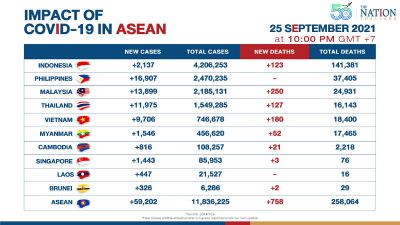
Southeast Asia witnessed a decline in new Covid-19 infections but the death toll was higher on Saturday, collated data showed.
Asean countries reported 59,202 infections and 758 deaths — nearly one-third in Malaysia — on Saturday compared to 61,840 and 690 respectively on Friday.
Vabiotech, a pharmaceutical company in Vietnam, has achieved success in production of Sputnik V Covid-19 vaccine.
The first batch of vaccines will be evaluated by Gamaleya, a research institution under Russia’s Sputnik V research and development centre.
These vaccines will be used under Vietnam’s vaccine distribution plan to deal with the fourth Covid-19 wave and vaccine shortage.
Cambodian Prime Minister Hun Sen has banned celebration of the Kan Ben festival that falls on October 6, in order to contain the spread of Covid-19.
ADVERTISEMENT
The move came after almost 50 monks at a Buddhist temple in Phnom Penh tested positive for Covid-19 on Thursday.
The Kan Ben festival is considered the country’s largest Buddhist festival as many devotees will go to temples to make merit for their ancestors.
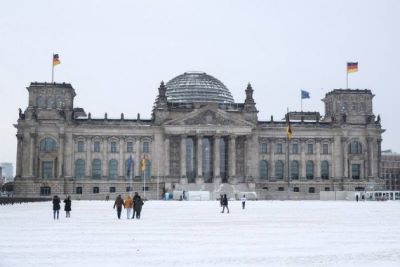
This year, around 60.4 million people are eligible to vote in Germany. In total, 6,211 candidates from 47 political parties will compete for at least 598 seats.
Germans will elect the members of the country’s 20th Bundestag (lower house of Parliament) on Sunday. In total, 6,211 candidates from 47 political parties will compete for at least 598 seats.
A new government will be formed after the election. The current German Chancellor, Angela Merkel, is not seeking re-election after 16 years in office.
The Bundestag exercises legislative power, supervises the implementation of laws, elects the chancellor and oversees the work of the federal government.
ADVERTISEMENT
This year, around 60.4 million people are eligible to vote in Germany, and the country is divided into 299 electoral districts according to population.
Voters cast two votes. The first for an individual constituency candidate. The candidate who gets the most constituency votes (relative majority voting) will become a directly elected member of the Bundestag. The second vote is for political party lists. The share of second votes won by the party lists determines the total number of seats they will hold in the Bundestag.
German Chancellor Angela Merkel (L) and Armin Laschet, leader of German Christian Democratic Union (CDU) and chancellor candidate of CDU/Christian Social Union (CSU), attend an election rally of CDU for Germany
Currently, the Bundestag has 598 seats by law. The 299 lawmakers directly elected by their constituents (first vote) ensure that, in principle, every region is represented in the Bundestag. The proportion of second votes won by the political party lists determines the distribution of party power in the legislative body. As a rule, only parties receiving at least five percent of the second vote or winning at least three directly elected seats can enter the Bundestag.
However, an excess of seats may arise when a party obtains more directly elected seats in the first vote than the total number of seats it is entitled to on the basis of the second vote. In this case, the number of directly elected seats must be retained in full and the other parties are given additional seats to balance the proportion. The actual size of the Bundestag is thus greater than 598 seats. The last Bundestag elections in September 2017, for example, produced an unprecedented 709 seats.
Voters can bring their ballot papers and identity documents to their nearest polling station on polling day between 8 a.m. and 6 p.m., or they can choose to vote by post in advance, provided they ensure that their ballot papers reach the relevant authorities before 6 p.m. on polling day, when voting closes and counting begins.
In Germany’s current electoral system and party landscape, it is very unlikely that any one party will be able to secure an absolute majority of seats to govern alone. Therefore, after the election results are announced, the parties with the highest number of votes will try to make contact and discuss the possibility of forming a governing coalition. The parties that decide to govern together will negotiate the choice of a chancellor, the composition of the cabinet, policy directions and other issues, and eventually come up with a joint cabinet agreement.
Once the parties have agreed on all these, the new Bundestag will put the election of a chancellor on its agenda. As a matter of procedure, the chancellor will be nominated by the federal president of Germany and voted on by the members of Bundestag.
Once all the issues related to the formation of the government have been settled, the new government will start to implement its campaign promises and lead the country into the next phase.
German Chancellor Angela Merkel (L) and Armin Laschet, leader of German Christian Democratic Union (CDU) and chancellor candidate of CDU/Christian Social Union (CSU), attend an election rally of CDU for Germany
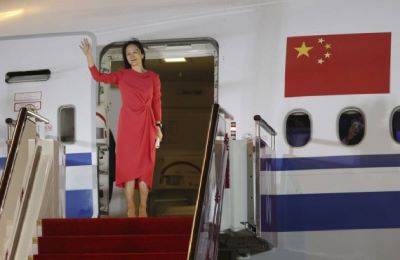
Meng Wanzhou, Huaweis chief financial officer, arrived in the southern Chinese city of Shenzhen on Saturday night on a charter flight organized by the Chinese government, after being illegally detained for nearly three years in Canada.
At around 10 p.m., the charter flight touched down at the Shenzhen Bao’an International Airport.
Meng, in a red dress, waved to the welcoming crowd after she stepped out of the cabin. As she walked down the stairs, applause and cheers erupted from the crowd. Airport staff presented flowers to her.
The crowd held up a banner reading “Welcome home, Ms. Meng Wanzhou,” waved national flags, and chanted “welcome home.”
ADVERTISEMENT
There were no handshakes due to epidemic prevention concerns. Meng made a brief speech at the airport.
Meng was arbitrarily detained by Canada on a U.S. extradition request on Dec. 1, 2018 at Vancouver International Airport.
Meng has pleaded not guilty to all charges against her and reached a deferred prosecution agreement with U.S. prosecutors. The U.S. side has withdrawn its extradition request.
There were no handshakes due to epidemic prevention concerns. Meng made a brief speech at the airport.
“After more than 1,000 days of torment, I am finally back in the embrace of the motherland,” Meng said.
“I am back, motherland!” she chanted to the cheering crowd.
“As an ordinary Chinese citizen who had suffered this plight and been stranded overseas for nearly three years, there was never a moment when I did not feel the care and warmth of the Party, the motherland and the people,” she said.
“President Xi Jinping cares about the safety of each and every Chinese citizen, including me. I am deeply moved by this,” Meng said. “I also thank the relevant departments for their support and help. They have resolutely safeguarded the legitimate rights and interests of Chinese enterprises and citizens.”
“The motherland provides us the strongest backing,” Meng said. “As an ordinary Chinese person, I am proud of my motherland.”
Meng Wanzhou, Huawei
The crowd broke into an impromptu rendition of the patriotic song “Ode to the Motherland” after the speech. Meng then sang together with the crowd.
According to epidemic control rules, Meng will be quarantined at a designated hotel after her arrival.
Meng was arbitrarily detained by Canada on a U.S. extradition request on Dec. 1, 2018 at Vancouver International Airport.
Meng has pleaded not guilty to all charges against her and reached a deferred prosecution agreement with U.S. prosecutors. The U.S. side has withdrawn its extradition request.

 SootinClaimon.Com