The price of gold dropped by THB50 in morning trade on Thursday.
AGold Traders Association report at 9.21am said the buying price of a gold bar was THB27,950 per baht weight and selling price THB28,050, while gold ornaments cost THB27,439.60 and THB28,550, respectively.
At close on Wednesday, the buying price of a gold bar was THB28,000 per baht weight and selling price THB28,100, while gold ornaments cost THB27,500 and THB28,600, respectively.
The spot gold price on Thursday morning was moving around US$1,763 (THB59,166) per ounce after Comex gold at close on Wednesday rose slightly by 60 cents to $1,778.80 per ounce ahead of results from a key Federal Reserve meeting. The New York gold market was closed for trading before the Fed committee announced it would taper its quantitative easing programme soon and raise the interest rate next year.
The baht opened at 33.46 to the US dollar on Thursday, weakening from Wednesday’s closing rate of 33.44.
The Thai currency is likely to move between 33.40 and 33.55 during the day, Krungthai Bank market strategist Poon Panichpibool predicted.
Poon said the baht was testing the key resistance level of 33.50 to the dollar due to China’s Evergrande crisis, which caused the dollar to strengthen and the yuan to weaken.
Meanwhile, foreign investors are offloading their Thai assets, but Poon expected the sales to be limited unless an Evergrande default hammers the Chinese economy, which might cause foreign investors to sell their emerging market assets again.
Poon said the baht could weaken from 33.80 to 33.85 to the dollar if it dropped past the resistance level. However, the Thai currency might strengthen from 32.70 to 32.80 if it does not weaken past the resistance level.
Investors are ready to take more risks despite uncertainties after a key US Federal Reserve meeting produced the expected results. The Fed stuck with its policy interest rate of 0.00 to 0.25 per cent until an economic recovery.
The Fed also signalled that its quantitative easing (QE) programme may decrease soon and it might stop buying assets in the middle of next year.
Chairman Jerome Powell said the QE programme might even decrease in November, but pointed to an interest rate increase after a QE decrease.
The Fed’s dot plot revealed that some central bank officials support an increase in the interest rate in 2022, while most officials back a rise in 2023 and 2024, which is more than the market expected.
Poon added that investors are not fully open to taking risks because they are awaiting a solution to Evergrande’s massive default.
The Stock Exchange of Thailand (SET) Index rose by 10.59 points or 0.65 per cent to 1,630.18 on Thursday morning, witnessing a high of 1,637.65 and a low of 1,628.81 in opening trade.
Krungsri Securities expected the day’s index to rise to between 1,625 and 1,630 points as neighbouring stock markets moved up in response to the US Federal Reserve’s move to taper its quantitative easing programme soon and raise the interest rate next year.
It added that the index also gained positive sentiment from Siam Commercial Bank’s move to restructure its business and establish SCB X Pcl in order to make a foray into the financial technology business.
“However, investors should beware of foreign fund outflows in response to the weakening baht,” Krungsri Securities said.
It recommended purchasing the following companies’ shares as an investment strategy:
ADVERTISEMENT
▪︎ SCB, Advanc and True, which gained specific positive sentiment.
▪︎ PTT, PTTEP, Top, PTTGC, SPRC and Banpu, which benefit from rising oil and coal prices.
▪︎ Hana, KCE, TU, CPF, GFPT, Asian, EPG, NER, Sun and APure, which benefit from a weakening baht.
The SET Index closed at 1,619.59 on Wednesday, up 4.73 points or 0.29 per cent. Transactions totalled THB79.02 billion with an index high of 1,623.86 and a low of 1,611.76.
The Asian Development Bank (ADB) has lowered Thailand’s 2021 GDP estimation to 0.8 per cent from its previous estimation of 3 per cent in April amid continuing concern over the Covid-19 pandemic across Asia.
Thailand’s growth outlook for 2022 was also lowered from 4.5 to 3.9 per cent, according to the ADB’s updated Asian Development Outlook 2021, released on Wednesday.
The ADB has lowered its 2021 economic growth outlook for all of developing Asia.
ADB forecast growth of 7.1 per cent among Asia’s developing nations this year. That compares with a projection of 7.3 per cent in April.
The growth outlook for 2022 is however raised to 5.4 from 5.3 per cent.
New Covid-19 variants, renewed local outbreaks, the reinstatement of various levels of restrictions and lockdowns, and slow and uneven vaccine rollouts are weighing down the region’s prospects, it said.
The report also said Thailand’s inflation rate would stay at 1.1 per cent this year and 1 per cent next year due to overall sluggish demand.
ADVERTISEMENT
The ADB said the latest Covid-19 wave threatens to undermine Thailand’s economic recovery this year and the next.
However, strong growth in merchandise exports and an enabling policy environment could partly offset the large negative impact of Covid-19 on Thai growth.
“Even so, the risks to economic outlook are tilted downward on the current wave of the outbreak adding to concerns over the efficacy of vaccines and delays in the country’s vaccination programme,” the ADB report added.
“The Committee would be prepared to adjust the stance of monetary policy as appropriate if risks emerge that could impede the attainment of the Committees goals,” the Fed said in a statement.
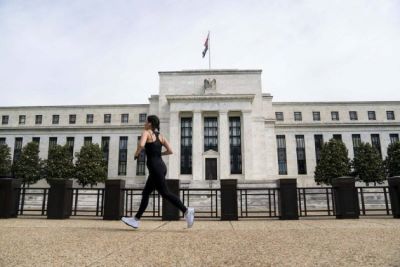
The U.S. Federal Reserve on Wednesday kept its benchmark interest rate unchanged at the record-low level of near zero, while signaling that the central bank may begin tapering asset purchases soon despite the Delta variant increasing economic uncertainty.
The Fed has pledged to continue its asset purchase program at least at the current pace of 120 billion U.S. dollars per month until “substantial further progress” has been made on employment and inflation since last December.
“Since then, the economy has made progress toward these goals. If progress continues broadly as expected, the Committee judges that a moderation in the pace of asset purchases may soon be warranted,” the Federal Open Market Committee (FOMC), the Fed’s policy-making committee, said in a statement after a two-day meeting.
ADVERTISEMENT
“The Committee would be prepared to adjust the stance of monetary policy as appropriate if risks emerge that could impede the attainment of the Committee’s goals,” the statement said.
At a virtual press conference Wednesday afternoon, Fed Chair Jerome Powell said that the sectors most adversely affected by the pandemic improved in recent months, but the rise in COVID-19 cases slowed recovery.
“The Delta variant led to significant increases in COVID-19 cases resulting in significant hardship and loss and slowing the economic recovery. Continued progress on vaccinations would help contain the virus and support a return to more normal economic conditions,” he said.
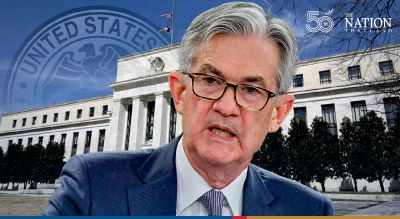
U.S. Federal Reserve Chairman Jerome Powell testifies at a hearing before the House Select Subcommittee on the Coronavirus Crisis on the Federal Reserve
Powell also said that Fed officials downgraded their forecasts for U.S. economic growth this year compared with three months ago, “partly reflecting the effect of the virus”.
The U.S. economy is expected to expand at 5.9 percent this year, lower than 7 percent estimated in June, according to the median forecast of the Fed’s latest summary of economic projections released Wednesday.
The median estimate of inflation at the end of this year, measured by annual growth in the personal consumption expenditures (PCE) index, rose to 4.2 percent from 3.4 percent in June, well above the central bank’s target of 2 percent.
“For inflation, we appear to have achieved more than significant progress, substantial further progress,” Powell said, adding the substantial further progress test for employment is “all but met”.
“Once we met those two tests … that could come as soon as the next meeting, the Committee will consider that test and look at the broader environment at that time and make a decision whether to taper,” he said.
“This sets the stage for the Fed to formally announce tapering plans in November and the first reduction to occur in December, which is our baseline forecast assumption,” Ryan Sweet, a senior director at Moody’s Analytics, said Wednesday in an analysis.
Jay H. Bryson, chief economist at Wells Fargo Securities, believed that the September labor market report, which is scheduled for release on Oct. 8, will be crucial in determining whether the FOMC will announce a tapering decision at its next meeting in November.
“If payrolls disappoint again, then the FOMC may decide to take a pass at the November meeting and wait until its last meeting of the year on December 15 to see if the data improve by then,” Bryson said.
“While no decisions made, participants generally view that so long as the recovery remains on track, a gradual tapering process that concludes around the middle of next year is likely to be appropriate,” Powell added.
Stocks closed higher and the Treasury yield curve flattened after Federal Reserve officials signaled they would probably begin tapering their bond-buying program soon. The dollar strengthened versus its major peers, while oil gained.
The S&P 500 had jumped earlier, rising for the for the first time in five trading sessions, as concerns about China Evergrande Group’s debt woes eased. The benchmark index rose 1%, the biggest-one day increase since July. Shorter-maturity Treasury notes fell while longer-maturity debt edged higher, flattening the yield curve, after revisions to Fed’s dot-plot forecasts for fed funds target showed a 2022 median of 0.25%, up from 0.125% prior, while 2023 rate forecasts were also dragged higher.
“If you take a step back, the Fed’s stance is still accommodative and it’s reasonable for the Fed to want to return to a state of normalcy if the economy is as robust as the data suggests,” said Mike Loewengart, managing director of investment strategy at E*Trade Financial. “And given the recent volatility, it’s likely that investors are viewing the taper projection and potential 2022 rate hikes as a vote of confidence that the recovery is on track.”
If progress toward the Fed’s employment and inflation goals “continues broadly as expected, the committee judges that a moderation in the pace of asset purchases may soon be warranted,” the U.S. central bank’s policy-setting Federal Open Market Committee said Wednesday in a statement following a two-day meeting.
ADVERTISEMENT
Fed Chair Jerome Powell said during a news conference that tapering could end around mid-2022 and that most on the committee favor a gradual pace. That could mean the Fed makes an announcement in November, potentially creating an eight-month taper process.
Earlier, basic resources and energy were among the leading gainers in the Stoxx Europe 600 index as commodity prices steadied after Beijing moved to contain fears of a spiraling debt crisis at Evergrande that could ravage demand from the property sector. China avoided a major sell-off as trading resumed following a holiday, after the country’s central bank boosted its injection of short-term cash into the financial system.
The Fed’s timeline for tapering stimulus and any shifts in expectations for interest-rate increases are key for investors, who have grown used to central-bank stimulus supporting asset prices. The revision follows a period of market volatility stoked by Evergrande’s woes. China’s wider property-sector curbs are also feeding into concerns about a slowdown in the economic recovery from the pandemic.
“What markets are relieved by was that given the events of this week in terms of China, Evergrande, the debt ceiling dysfunction, some of the growth slowdown,” said Michael Arone, chief investment strategist at State Street Global Advisors’ U.S. SPDR business. “Some of what we’ve been seeing in markets, I think the risk was that the Fed would announce tapering and a timeline today. I think that would have been an unexpected surprise that would have created some volatility and some negative reaction by investors, and that didn’t happen, and so investors are happy.”
Elsewhere, Governing Council member Madis Muller said the European Central Bank may boost its regular asset purchases once the pandemic-era emergency stimulus comes to an end.
In Japan, the central bank left its main monetary policy settings unchanged. Markets in South Korea and Hong Kong were closed for a holiday.
Here are key events to watch this week:
– Bank of England rate decision, Thursday
– Fed Chair Jerome Powell, Fed Governor Michelle Bowman and Vice Chairman Richard Clarida discuss pandemic recovery, Friday
Some of the main moves in markets:
– – –
– The S&P 500 rose 1% as of 4:01 p.m. New York time
– The Nasdaq 100 rose 1%
– The Dow Jones industrial average rose 1%
– The MSCI World index rose 0.6%
– – –
– The Bloomberg Dollar Spot Index rose 0.2%
– The euro fell 0.3% to $1.1694
– The British pound fell 0.3% to $1.3620
– The Japanese yen fell 0.5% to 109.79 per dollar
– – –
– The yield on 10-year Treasuries declined two basis points to 1.30%
– Germany’s 10-year yield was little changed at -0.32%
– Britain’s 10-year yield was little changed at 0.80%
– – –
– West Texas Intermediate crude rose 2.1% to $71.97 a barrel
WASHINGTON – Reflecting growing optimism for the economic recovery, the Federal Reserves top policymakers signaled on Wednesday they will ease supports for markets in November if the economy progresses as expected, while also moving up expectations for a rate hike in 2022.
Federal Reserve Chair Jerome H. Powell also raised concerns Wednesday about the ongoing coronavirus pandemic and its grip on the economy. At the end of their two-day policy meeting, Fed officials downgraded earlier, more-encouraging expectations for job and economic growth by the end of the year, amid the continued strain of the public health crisis.
The Fed’s assessment captures two simultaneous tales of the economy. By some measures, the economy has made a full recovery from the pandemic and is on track for even more growth. At the same time, jobs and peoples’ livelihoods are still being threatened by a surge in coronavirus cases and drop-off in government aid in a pandemic that has killed 1 in 500 Americans.
Fed officials must now find a way to unwind the central bank’s financial supports while acknowledging the economy’s lingering holes. Overall, the country is still down more than 5 million jobs from before the pandemic, and the unemployment rates for Black and Hispanic workers are well above that for White workers.
Fed officials had said over the summer that they hoped job growth would gain momentum this fall, with more people getting vaccinated, enhanced unemployment benefits phasing out and schools reopening, helping alleviate child-care responsibilities. But then “delta happened,” as Powell put it in a Wednesday news conference. The surge in cases is hurting some workers’ confidence about returning to jobs and weighing on consumer spending.
“Hiring and spending in these face-to-face service industries – travel and leisure – it just kind of stopped during those months,” Powell said, referring to the recent surge of the delta variant of the coronavirus. “The big shortage in jobs was really in travel and leisure, and that’s clearly because of delta.”
Policymakers on Wednesday signaled they still predict that inflation – which has risen faster and higher than the Fed expected this year – will simmer back down closer to the central bank’s goal of around 2% next year.
ADVERTISEMENT
Stocks rallied off news that the Fed is not pulling back its financial supports just yet. The Dow Jones industrial average climbed more than 330 points, or 1%, and the S&P 500 index rose nearly 1%. Fed officials have said there will be plenty of notice before the Fed starts to pull back its stimulus, to avert turmoil in the markets.
Fed leaders have been saying they needed to see “substantial further progress” on inflation and job growth before they start slowly pulling back on vast financial supports to the economy, namely $120 billion a month in asset purchases that have continued throughout most of the pandemic.
Many Fed officials, including Powell, say that bar has been met on inflation. As the global economy emerges from the pandemic’s depths, supply chains – for used cars, food, construction materials and more – have struggled to catch up with pent-up consumer demand, pushing prices up. The Fed’s preferred gauge of inflation showed prices rose 4.2% in July compared with the year before and 0.4% compared with June.
On employment, Powell said during the news conference that it was his opinion that “the test is all but met.” He said he would not necessarily need to see a gangbuster jobs growth for September to fill that gap and would be satisfied with “a decent employment report.”
Still, Powell acknowledged differences of opinion among the Fed’s top ranks on when to begin pulling back on supports. He said that many officials “feel the test for employment has been met,” while “others feel that it’s close” but want to see a little more progress.
Powell is known to value consensus at the Fed, especially on major policy decisions. Still, he repeatedly pointed toward the Fed’s next meeting in November as a marker for when the Fed could start to “taper” its sprawling bond-buying program.
“There’s very broad support on the committee for this plan, quite broad support for this approach,” Powell said.
Depending on the pace and structure, the Fed could be in position to entirely wind down its asset purchases by the middle of next year. That could put the Fed in a position to raise rates sometime afterward, though Powell has warned that the Fed’s projections on interest rates can easily change with time.
Meanwhile, the country is facing an urgent financial crisis as lawmakers clash on whether to raise the U.S. government’s borrowing limit, known as the debt ceiling. There is growing alarm among economists and the business community about what would happen if there was an unprecedented default on the federal debt.
Powell on Wednesday added his voice of concern, saying it was “very important that the debt ceiling be raised in a timely fashion, so that the United States can pay its bills when and as they come due. That’s a critically important thing.”
“No one should assume that the Fed or anyone else can protect the markets or the economy in the event of a failure – fully protect – in the event of a failure,” Powell added.
Fed leaders lowered their expectations for the unemployment rate later this year, projecting it could be 4.8% by the end of 2021, compared with a previously suggested 4.5%, according to the Fed’s newest crop of economic projections. They also lowered their estimates for the economy’s overall growth. The projections pointed to gross domestic product growing 5.9% by the end of the year. The projection from June was for 7% growth.
Last month, Powell teed up the possibility that asset purchases could start to be scaled back later this year, based on the pace of the economic recovery.
While the labor market showed clear progress picking up new jobs over the summer – with the unemployment rate edging down to 5.2% in August – that jobs report also showed how vulnerable the recovery is amid the spread of the delta variant. The economy added only 235,000 jobs last month – well short of expectations – with the restaurant and retail sectors shedding positions. The rise in coronavirus cases, especially among unvaccinated Americans, has also rattled consumer confidence.
Fed leaders have said they do not expect the delta variant to lead to shutdowns or significantly alter the economic recovery. Many say they are taking stock of many months of jobs data, rather than fixating on August’s disappointing numbers.
“Some months come in stronger, some not so strong. It’s really about accumulation,” John Williams, president of the Federal Reserve Bank of New York, said earlier this month.
Still, Powell on Wednesday pointed to challenges for the labor market, including parents who must constantly weigh whether their children’s schools will stay open as they consider job options. Powell has long maintained that the surest way to stabilize the economic recovery is to vaccinate as many people as possible and end the public health crisis.
“Rather than going ahead and taking a job and having to quit it, you’re going to wait until you’re confident,” Powell said.
Another big question hanging over the Fed is whether the White House will decide to keep Powell and others in leadership positions. In the coming months, the Biden administration will have as many as four slots to fill with its own nominees. Powell was made chair by President Donald Trump.
Powell’s term is up in February, and he did not answer a question Wednesday about his possible reappointment. Still, the personnel decision is of enormous consequence and is fanning political flames across Washington and beyond.
The White House must also decide whom to nominate to be the Fed’s top banking cop after Randal Quarles. Quarles’s term as vice chair for supervision expires in mid-October.
The decision has taken on added scrutiny as many liberals criticize Powell’s record on banking regulation. Some liberal advocacy groups and Democrats in Congress have raised concerns that a more left-leaning banking cop would not be as effective under Powell if he stays on as chair.
Powell on Wednesday said he respects the authority of whoever is in that role – as he did with Daniel Tarullo, a Democrat who led the Fed’s moves to tighten Wall Street oversight when Janet L. Yellen, now the treasury secretary, was chair.
“It’s fully appropriate for a new person to come in and look at the current state of [regulatory policy] and suggest appropriate changes, and I welcome that,” Powell said.
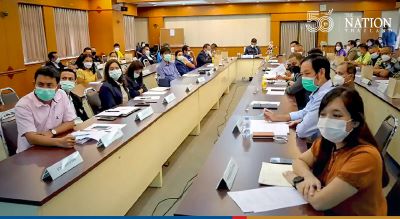
Trang’s tourism development committee got together on Thursday to discuss the option of opening the province under a sandbox scheme from October 15.
The meeting was chaired by provincial governor Kajonsak Charoensopha.
The plan to reopen the province is in line with the start of the high season in the Andaman region and will link Trang with Phuket, Phang Nga, Krabi and Surat Thani, which are already open.
Trang eyes opening door to tourists from Oct 15
ADVERTISEMENT
The committee considered the reopening plan from various aspects, such as tourism routes, application of tourist-tracking technology and the reopening timeline.
The province, in the meantime, will speed up the delivery of jabs to ensure 70 per cent of the population is inoculated to create herd immunity. Agencies will also implement measures related to public health, logistics, Covid-19 screen and community participation and will also make preparations for emergencies.
Alcoholic beverages can be served in bars and restaurants in Koh Samui from October 1 under the “Samui Vaccine Green Zone” scheme, Surat Thani authorities announced on Thursday.
This will be allowed only if every member of staff has received both doses of the Covid-19 vaccine. The authorities also require people working in restaurants and bars to undergo antigen tests regularly.
Koh Samui’s district chief Teerapong Chuaychoo said the aim was to stimulate the local economy and promote the island as a sandbox area in the future.
Teerapong had said earlier that the “Samui Plus Model” will be replaced by the more liberal “sandbox” scheme from October 1 if approved by the government.
Under the Samui Plus Model, launched on July 15, fully vaccinated tourists can enter the island without the need for quarantine.
Thailand’s daily cases rose to 13,256 over the past 24 hours on Thursday, though deaths dropped slightly to 131. Of the new cases, 478 were in prisons.
Meanwhile, 13,829 people have recovered and been discharged over the past 24 hours.
Thailand’s total caseload from Covid-19 stands at 1,524,613 – 1,380,362 of whom have recovered, 128,367 are still in hospitals and 15,884 have died.
Separately, another 240,789 people were given their first Covid-19 shot in the last 24 hours, 404,841 their second shot and 889 a booster shot, bringing total Covid-19 vaccine doses administered nationwide to 46,669,535.
According to Worldometer, confirmed cases globally had risen to 230.88 million on Thursday, 207.59 million of whom have recovered, 18.56 million are active cases (97,801 in severe condition) and 4.73 million have died (up by 9,319).
Thailand ranks 29th in the global list of most cases, which is topped by the US with 43.40 million, followed by India with 33.56 million, Brazil with 21.28 million, the UK with 7.53 million and Russia with 7.33 million.





 Trang eyes opening door to tourists from Oct 15
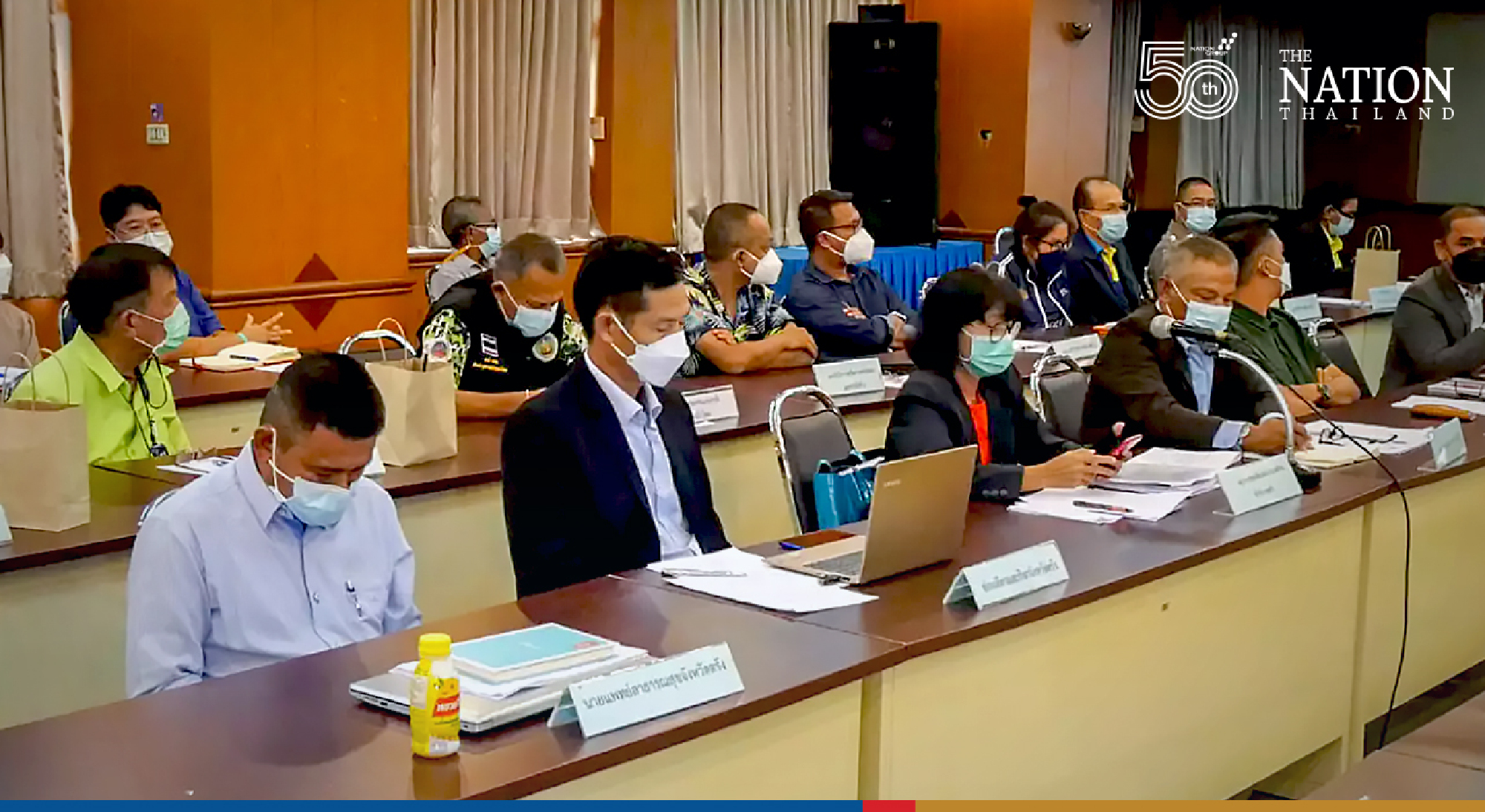 Trang eyes opening door to tourists from Oct 15

 SootinClaimon.Com