Delta is “by far” the worlds dominant coronavirus variant, a top World Health Organization scientist said Tuesday.
The global body downgraded its advisories on three other virus variants in a reflection of how delta is “outcompeting and replacing” everything else.
“Less than 1% of the sequences that are available right now are alpha, beta and gamma,” Maria Van Kerkhove, the WHO’s technical lead on covid-19, said in a video Q&A, referring to the three other variants the organization considers “of concern.”
“Of those four variants of concern, delta is, by far, the most transmissible,” Van Kerkhove added. “If delta is identified or starts to circulate in a country where there is beta . . . [delta] has quickly replaced the variant there.”
The delta variant has appeared in 185 countries, as global coronavirus cases near 230 million and deaths surpass 4.7 million since the start of the pandemic.
The mu variant, which has been identified thousands of times in the United States and had raised concerns that it may be more resistant to vaccines than its sibling variants, is also being replaced in countries where delta is present, Van Kerkhove said. “Lambda and mu don’t seem to be dominant.”
By the end of July, delta had overpowered all its rivals in the United States. The “coronavirus pandemic in America has become a delta pandemic,” The Washington Post reported in August, noting that it accounted for 93.4% of new infections.
In the past four weeks, more than 98% of the coronavirus sequences submitted from the United States to the Global Initiative on Sharing All Influenza Data, a large database of novel coronavirus genome sequences in the world, were of the delta variant.
Separately on Tuesday, the WHO reclassified three other variants – eta, iota and kappa – to “monitoring” status, indicating that they “no longer pose a major added risk to global public health” as they are being outcompeted by delta.
“They are not taking hold,” Van Kerkhove said.
Ahead of a vaccination summit that President Biden is set to propose on Wednesday, the World Health Organization also said that the number of global coronavirus deaths and infections had declined in recent weeks, reflecting increased access to vaccines in rich and some middle-income nations even as developing economies scramble to immunize their populations.
Mike Ryan, the WHO’s emergencies chief, warned in the same video event that previous dips had been followed by sharp spikes, though he said that countries with high immunization rates had less to worry about. “It shows us that vaccines work,” he said.
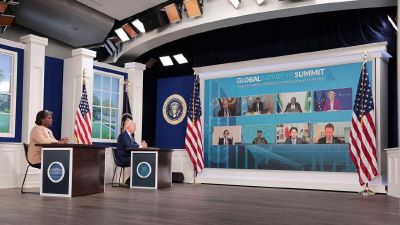
WASHINGTON – President Joe Biden announced Wednesday that the United States will double the number of Pfizer coronavirus vaccine doses it is donating to other countries, a step toward the goal of immunizing 70% of the worlds 8 billion people within the next year.
Biden made the pledge as he convened a virtual global summit of world leaders amid criticism that his administration has done too little to help nations with fewer resources.
Organizers said the conference would explore ways that all nations can cooperate to blunt a pandemic that has killed an estimated 4.5 million people and stunted economic growth around the globe.
“We’re not going to solve this crisis with half measures or middle-of-the-road ambitions,” Biden said at the White House.
“We need to go big, and we need to do our part” across governments, the private sector and charities, Biden said.
“This is an all-hands-on-deck crisis. And the good news is, we know how to beat this pandemic: vaccines, public health measures and collective action.”
The United States will buy 500 million doses of the Pfizer-BioNTech coronavirus vaccine to donate to countries in need as part of what Biden said is an effort to become “the arsenal of vaccines, as we were the arsenal of democracy during World War II.”
ADVERTISEMENT
The Biden administration already purchased 500 million doses of the vaccine in July to be distributed in batches.
The doses would go to poorer countries through Covax, the initiative led by the World Health Organization, Gavi and the Coalition for Epidemic Preparedness Innovations.
“This is a monumental commitment by the United States, bringing our total number of donated vaccines to the world to more than 1.1 billion,” White House coronavirus coordinator Jeff Zients and Secretary of State Antony Blinken wrote in an op-ed in The Washington Post on Wednesday. “For every one shot we’ve put in an American arm to date, we are now donating about three shots globally.”
The United States is the world leader in vaccine donations, Biden said, although he and other leaders of wealthy nations have been criticized for all but cornering markets for vaccines early on. Biden has also come under fire for welcoming booster shots for Americans while vaccination rates remain in single digits across most of Africa.
“Put another way, for every one shot we have administered to date in America, we have now committed to do three shots to the rest of the world,” Biden said.
The WHO chief has called for a halt to boosters in rich countries for the rest of the year, to give other nations more chances to catch up.
Neither Biden nor United Nations Ambassador Linda Thomas-Greenfield addressed critiques of the booster plan in the United States in their opening remarks heard by reporters.
“We can do both, and it’s a false choice,” White House press secretary Jen Psaki said of the suggestion that rich nations should hold back.
“Our view also continues to be that, frankly, the rest of the world needs to step up and do more.”
The summit, which coincides with this week’s U.N. General Assembly meetings, was broken into four sessions.
Biden chaired the first session on the need to vaccinate the world, where he called on global leaders to fully vaccinate 70% of the world’s population by next September, The Post previously reported.
Participants included U.N. Secretary General António Guterres, World Health Organization chief Tedros Adhanom Ghebreyesus, the leaders of Britain, Canada, South Africa and Indonesia, plus a representative from the European Union.
Biden stressed that the goal is “donating, not selling” vaccines and with no strings attached. That was a dig at China and Russia, which have sold vaccines.
Vice President Kamala Harris also announced that the United States would contribute $250 million toward a new World Bank fund intended to finance global health security initiatives and avert future outbreaks.
Harris said the Biden administration would seek an additional $850 million from Congress for the global fund and appealed to other nations to contribute as well.
“Unless we establish a new financing mechanism, in my view, we will never be fully prepared,” Harris said at the session.
Some advocates cheered Wednesday’s event as a needed turning point in the pandemic response and said they awaited further actions.
The summit was a “critical reset of the world’s ambition to end the pandemic once and for all, as quickly as possible,” said Carolyn Reynolds, co-founder of Pandemic Action Network, who spoke at the event. “We welcome President Biden’s plan to host another summit early next year to make sure the world is on track to achieve the summit goals and targets.”
But other advocacy groups like Oxfam America panned Biden’s event as insufficient and faulted the U.S. government for not doing more to pressure coronavirus vaccine manufacturers to immediately share their intellectual property with the developing world.
“While additional donations are always welcome, it’s hard not to see the summit as anything but a disappointment,” said Zain Rizvi, a researcher at Public Citizen. “The global vaccine effort cannot be relegated to a GoFundMe campaign.”
Pregnant people who get mRNA vaccines pass high levels of antibodies to their babies, according to a study published in American Journal of Obstetrics & Gynecology – Maternal Fetal Medicine on Wednesday.
The study — one of the first to measure antibody levels in umbilical cord blood to distinguish whether immunity is from infection or vaccines — found that 36 newborns tested at birth all had antibodies to protect against Covid-19 after their mothers were vaccinated with shots from Pfizer-BioNTech or Moderna.
“We didn’t anticipate that. We expected to see more variability,” said Ashley Roman, an obstetrician at NYU Langone Health System and co-author of the study.
The data could help encourage more people to get vaccinated during their pregnancies. Only 30% of pregnant people ages 18 to 49 are vaccinated, according to Centers for Disease Control and Prevention data from Sept. 11, despite growing evidence of prenatal vaccine safety. Given the study’s small sample size, the team is now looking at results from a larger group, as well as how long immunization lasts for infants after birth.
“We pushed this data out relatively early because it’s a unique finding and it has important implications for care,” Roman said. “Right now we’re recommending all pregnant women receive the vaccine for maternal benefit.”
Pfizer and BioNTech’s own study on how their shots affect pregnant people and their babies has been delayed due to slow enrollment, the Wall Street Journal reported Wednesday, citing researchers.
ADVERTISEMENT
Pfizer “stopped enrollment in the U.S. because of recommendations encouraging vaccination of pregnant women,” the drugmaker said in an emailed statement to Bloomberg. It’s looking at sites in countries that don’t advise pregnant people to get shots for possible study sites, according to the statement.
The researchers studied cord blood of 36 fully vaccinated people to look for antibodies to spike protein, which appears after vaccination or getting sick from Covid, and to nucleocapsid protein, which is only present after getting Covid. Prior studies focused on antibodies to the spike protein.
Among the 36 samples the researchers looked at, 31 tested negative for antibodies to the nucleocapsid protein. In other words, 31 pregnant people developed immunity from the vaccine. The other five weren’t tested for nucleocapsid protein, so the researchers can’t conclusively say the immunity was from the vaccine or from natural infection.
The findings show “very encouraging levels of antibody in cord blood,” said Linda Eckert, an obstetrics and gynecology professor at the University of Washington who wasn’t involved in the study. “This is another reason pregnant women should get vaccinated, as we are seeing more disease in younger infants and this is a proactive choice pregnant individuals can make to protect their infants.”
WASHINGTON – The Food and Drug Administration on Wednesday authorized a Pfizer-BioNTech coronavirus booster shot for people 65 and older and adults at risk of severe illness, an effort to bolster protection for the most vulnerable Americans against the highly transmissible delta variant of the virus.
The agency said boosters should be made available to people 18 through 64 years of age at high risk of severe illness from the coronavirus and those “whose frequent institutional or occupational exposure” to the virus put them at high risk of serious complications of the disease caused by the virus.
The agency said the extra dose of the Pfizer-BioNTech vaccine should be administered six months after its standard two-shot regimen.
The FDA, in issuing the emergency clearance, took an approach similar to what was recommended Friday by the agency’s outside panel of vaccine experts. But the agency interpreted the advisory panel’s guidance broadly to cover a larger swath of people.
The FDA action is not the final step before the booster is made available. The Centers for Disease Control and Prevention and its advisers still must recommend in detail who should receive the shots.
The CDC’s Advisory Committee on Immunization Practices met Wednesday to hear data about the safety and effectiveness of a Pfizer-BioNTech booster, and it is expected to make a recommendation for its use when the committee meets Thursday. The decision will hinge in large part on which groups the advisers believe are most at risk of becoming seriously ill from covid-19, the illness caused by the coronavirus.
ADVERTISEMENT
The recommendation from the CDC advisory committee will almost certainly receive a quick endorsement from agency Director Rochelle Walensky. The shots are expected to be available as soon as this week at pharmacies and some doctors’ offices.
The FDA decision Wednesday will help frame the recommendation by the CDC advisory panel on who should get the boosters. The challenge for the CDC advisers “is to make a recommendation that is appropriate from the public health perspective and easy to communicate,” said William Schaffner, an infectious-disease professor at Vanderbilt University School of Medicine and a liaison member of the vaccine advisory panel.
The CDC advisers, in previous meetings, have expressed a strong inclination to prioritize boosters for groups who were among the first to be vaccinated, including front-line health-care workers, people in nursing homes and then the elderly.
Several CDC advisers reiterated Wednesday that the key goal of booster shots should be the prevention of serious disease, not prevention of mild infection.
But Beth Bell, a global health expert at the University of Washington, said the panel should consider the importance of protecting health-care employees from even mild infections because those illnesses would require time off work.
Bell acknowledged that the panel will not be able to address many outstanding questions about boosters, such as the ability to use a Pfizer booster for people who have been vaccinated with the Moderna or Johnson & Johnson products.
“I think it’s extremely important for us to be keeping in mind that . . . these are interim recommendations, and there may be data forthcoming in the near future which might change those recommendations,” she said Wednesday.
The federal action on boosters this week pertains only to Pfizer-BioNTech. Federal officials have suggested that clearance of booster shots for the Moderna and Johnson & Johnson vaccines could happen in a few weeks. An FDA official participating in the CDC advisers meeting, Doran Fink, said the FDA has no data on the safety and efficacy of giving a Pfizer booster to someone who received a different vaccine.
But limiting action to the Pfizer product poses immediate practical challenges for front-line immunization and health workers, issues that surfaced repeatedly during the CDC vaccine advisory committee meeting Wednesday. Nursing home residents and employees, for example, have received Pfizer and Moderna shots.
“In North Dakota, the vast majority [of long-term-care facilities] had a mixture of people that needed both Moderna and Pfizer,” said Molly Howell, director of North Dakota’s immunization program and a liaison member to the CDC panel. “I don’t know that it’s realistic to keep going back with different brands.”
In some states, hospital systems already have been considering or moving forward with boosters before the FDA and CDC decisions.
“Our hospitals here in Alaska and many hospitals in the country are really facing unprecedented choices and decisions about care and trying to weigh the risk-benefit of things like a booster shot versus, you know, waiting,” Anne Zink, Alaska’s chief medical officer, said in a recent interview.
Federal health officials have already authorized a third shot of Pfizer and Moderna vaccines for people with weakened immune systems, such as cancer patients and organ-transplant recipients.
Some Americans, regardless of their health status, have received extra doses by showing up at pharmacies, sometimes on the advice of their clinicians. Consumers are not required to get a prescription or a letter from their doctors for the third shot. More than 2.3 million people have received an additional dose since an extra shot was authorized for people with frail immune systems, according to the CDC.
Limited data from Israel and from one of the U.S. coronavirus vaccine monitoring systems shows there were fewer side effects after a third dose of mRNA vaccines compared with the second dose, according to a presentation to the CDC advisers by Helen Keipp Talbot, an infectious-disease expert at Vanderbilt University who chairs the advisers’ safety work group.
The Biden administration announced in mid-August that it hoped to make boosters for all three vaccines widely available beginning this week, pending sign-offs from the FDA and the CDC. But that announcement set off weeks of controversy as angry scientists complained the White House had gotten ahead of the agencies’ vaccine experts.
Ultimately, the heads of the CDC and the FDA told the White House that only the Pfizer-BioNTech booster could be cleared by this week. And last Friday, the FDA advisers declined to greenlight the Pfizer-BioNTech booster for all adults, saying there was a lack of robust safety data for younger adults. Several also argued that the two-shot regimen remains highly protective against serious illness, even though there are signs the efficacy of the vaccines may be waning somewhat against mild infections.
Booster shots have emerged as a hot topic as the delta variant has spread havoc in some areas, with intensive care units filling up with unvaccinated patients and a few hospitals rationing care. The pandemic’s death toll exceeds the 675,000 Americans killed by the 1918 influenza pandemic, according to data tracked by The Washington Post – although the population of the United States today is three times as large as in 1918.
At the same time, critics have pressed the Biden administration to wage a more vigorous campaign to get shots to countries that have not had access to vaccines, and for wealthier countries to forswear boosters until more people receive first shots. The administration, in an effort to show it can provide boosters to Americans and simultaneously offer shots to other nations, announced Wednesday that it has bought an additional 500 million doses to send overseas.
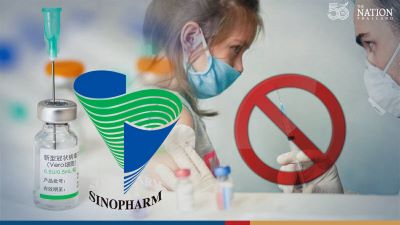
The Thai Food and Drug Administration (FDA) says it needs more data before approving Sinopharm vaccine for use in children.
FDA chief Paisan Dankhum said on Wednesday that information on the safety, quality and efficacy of the Chinese vaccine would be evaluated to decide whether it could be used to inoculate children aged 3 and up against Covid-19.
Sinopharm’s maker, Beijing Institute of Biological Products, insists the vaccine is safe for children aged 3 and over, citing data from a study published in the Lancet medical journal last week.
The Thai FDA has so far approved two vaccines – Pfizer and Moderna – as safe for use in children aged over 12. Thailand has already begun vaccinating children against Covid-19 in preparation for the reopening of schools next month.
The FDA said it will seek more data on Sinopharm from its importer, Biogenetech.
ONE Championship made headlines in 2020 when it signed mixed martial arts legend Vitor Belfort. Plenty of amazing matchups awaited “The Phenom” in the Singapore-based martial arts promotion.
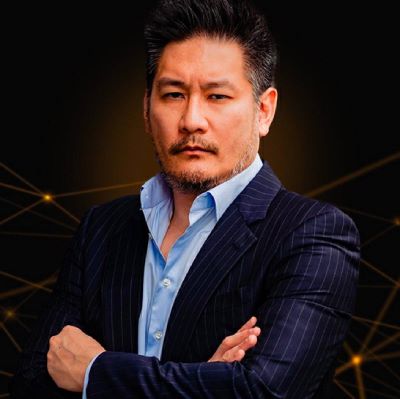
Unfortunately, things didn’t exactly pan out for either side, and Belfort never got to compete in the Circle. ONE CEO Chatri Sityodtong cleared the air on the Vitor situation in a recent interview on The MMA Hour with Ariel Helwani.
“Vitor [Belfort] and I are still quite close, we chat on WhatsApp. I wished him good luck for his fight with [Oscar] De La Hoya. And then the next day he switched to Evander [Holyfield]. But I’m super happy for Vitor,” Sityodtong said.
“In a nutshell, Vitor joined ONE and we had this big vision that he was going to still be fighting in his prime. And I think he realized that he wanted these special fights. We wanted to put kind of a young lion – old lion storylines. We just could never see eye to eye.”
ADVERTISEMENT
Belfort has since moved on, and is now competing in lucrative celebrity-type boxing matches. He knocked out former heavyweight boxing champion Evander Holyfield via first-round TKO last weekend, and he’s already called out Jake Paul.
“There was just a mismatch in terms of what he wanted and what we wanted, and we tried. Both sides tried really hard. He offered a lot of different opponents. We offered a lot of different opponents and we just never came together,” Sityodtong said.
“It was like ‘Chatri, I want to go,’ you know I don’t want to stop you. But I left the door open. I said, ‘look, Vitor, if you want to work with us again, no problem.’ I personally have a very strong relationship with Vitor.”
Sityodtong wished Belfort well and even threw out some names he would love to see “The Phenom” face.
“Vitor has a vision which is panning out, which is phenomenal. Hopefully, he fights Anderson Silva or he fights [Mike] Tyson or whoever’s next,” Sityodtong said.
ONE Championship returns on Friday, 24 September with ONE: REVOLUTION, live from the Singapore Indoor Stadium. Christian Lee defends his ONE Lightweight World Title against Ok Rae Yoon in the main event.
Standing areas could return to Premier League and Championship League clubs stadiums next year should be approved after safety scrutiny, more than two decades after the Hillsborough disaster in 1989.
Premier League and Championship League clubs could apply for licensed safe standing to the trial return of standing areas at football grounds, announced Sports Grounds Safety Authority (SGSA) on Wednesday.
SGSA, the British government’s advisor on safety at sports grounds, confirmed that football clubs in the top two tiers will have until October 6 to submit an application to it. If approved, these clubs will be able to offer licensed standing areas from January 1, 2022.
ADVERTISEMENT
“The licensed standing areas will be independently evaluated from their introduction in January for the remainder of the 2021/22 season. Other parts of the ground will remain all-seated and fans will be expected to sit in these areas,” read a statement released by the SGSA.
After the Hillsborough disaster in 1989 which cost the lives of 97 Liverpool fans, the stadiums in English football’s top two leagues have been requiring to be all-seaters since 1994.
“We know many fans want the choice to stand and, with the advent of new engineering solutions, our research has shown how this can be managed safely,” said Martyn Henderson, Chief Executive of the SGSA. “Today’s announcement will enable us to properly test and evaluate licensed standing areas before the government decides its next steps.”
A young Manchester City supporter runs onto the pitch to ask Jack Grealish (2nd L) for his shirt after the English Premier League match between Tottenham Hotspur and Manchester City at Tottenham Hotspur Stadium in London, Britain on Aug. 15, 2021. (Str/Xinhua)
Clubs will have to meet a number of criteria in order to receive approval to have licensed standing areas. For example, seats with barriers or independent barriers must be in both home and away sections. Fans must be able to sit or stand in the licensed area. There must also be one seat or space per person.
Ambassador of the Republic of Korea to Thailand presents gifts for encouraging to Paralympic medalist and coach In KCC’s ‘Online K-pop Academy’ opening event
On 21st September, H.E. Mr. LEE Wook-Heon, Ambassador of the Republic of Korea, met Tokyo Paralympics’ bronze medalist Kwansuda Phuangkitcha and National Para-Taekwondo team Coach Shin Young-kyun, and presented bunch of flowers and various gifts, including Hanbok(Korean traditional clothes) and training shoes. On this ceremony, H.E. Mr. Lee congratulated Kwansuda’s first medal in Thailand’s Para-Taekwondo history, followed by Panipak’s first gold medal in Tokyo Olympic 2020. As the national Para-Taekwondo team Coach Shin is also from Korea like Coach Choi, both coaches made Thailand’s sport history with Thai players, and contributed to the increasing popularity of Taekwondo in Thailand.
The ceremony held with the opening event of the ‘Online K-Pop Academy’ by the Korean Cultural Center in Thailand(KCC Thailand).
ADVERTISEMENT
KCC’s ‘Online K-Pop Academy’ has been operated for the second time, the first one successfully completed its 4-weeks course on 7th September with 1,000 students per each class.
On this online class, Ms. Park, Jun-hee, who choreographed for popular K-pop idols such as GFRIEND, IZ*ONE, WekiMeki, and famous TV show ‘Produce101’ by Mnet Korea, teaches the real K-pop dance and Mr. Kevin Yoon , the vocal trainer in YG Entertainment, take the vocal class.
Since the pre-registration started in 6th Sep, over 2,000 students per class finished the enrollment after a few days.
H.E. Mr. LEE Wook-Heon, presented bunch of flowers and various gifts to Tokyo Paralympics’ bronze medalist Kwansuda Phuangkitcha and National Para-Taekwondo team Coach Shin Young-kyun
21st September is ‘Chuseok’, the traditional Thanksgiving Day for Koreans to celebrate the harvest with the family.
H.E. Mr. Lee presented the training shoes for the player Kwansuda, and helped to tie her shoes as she lost one hand by the fire when two years old. H.E. Mr. Lee hoped that the player Kwansuda keep training hard with the shoes. After then, Mr. Kevin Yoon, sung her favorite song ‘Kwam-chua’ by Bodyslam, and 1,000 students celebrated together.
H.E. Mr. LEE Wook-Heon, helped to tie her training shoes that H.E. Mr. Lee presented with hoping for a good fight in the next game
H.E. Mr. Lee said, “We believe that the friendship and cultural exchange between Korea and Thailand can get more synergy, such as the incredible popularity on the world about ‘Thainess’ in the music video of Blackpink’s Lisa, the first gold medal in Thailand’s Taekwondo and the first medal in Thailand’s Para-taekwondo by cooperation between the Korean coach and Thai players”.
Training shoes H.E. Mr. Lee presents to Kwansuda with hoping for a good fight in the next game
Huawei remains committed to introducing digital technologies to create a strong, connected healthcare ecosystem that can make the experience better for patients, customers and medical staff, while improving efficiency and reducing costs.
Huawei Technologies (Thailand) Co. Ltd. today signed the 5G Empowered Healthcare Towards a Digital Thailand Memorandum of Understanding (MoU) with the Department of Medical Services (DMS) under the Ministry of Public Health (MoPH), to establish a smart platform that will facilitate advanced medical treatment using state-of-the-art digital technology. The MoU signing ceremony was held at the DMS Office, presided by H.E. Mr Anutin Charnvirakul, Deputy Prime Minister and Minister of Public Health and Mr Abel Deng, CEO of Huawei Thailand.
In cooperation with the National Cancer Institute and Rajavithi Hospital, both under the DMS, this initiative aims to increase the efficiency of medical services and operations to improve the quality of healthcare services. During the event, a live demonstration was held to present 5G smart ambulance, 5G Telemedicine and Home Isolation solutions for remote diagnosis and treatment of patients.
Huawei and Department of Medical Services Sign MoU to Develop 5G Empowered Healthcare in the Digital Era
ADVERTISEMENT
During his honorable speech, H.E. Mr. Anutin Charnvirakul stressed on the Ministry’s mission to enhance Thailand’s healthcare system. Through the implementation of ICT technologies, many new services, including Telemedicine, patient queue management, patient information collection using Big Data, were made possible. He commented “We believe that, with advanced ICT equipment, our expertise, and the adoption of 5G technology, we can create equal access to quality and timely healthcare. During the ongoing pandemic where social distancing measures are adopted, the Department of Medical Services and Huawei will jointly explore the benefits of 5G in the healthcare field under this MoU. The joint projects will ensure better health services for Thai people. On this special occasion, I would like to thank Huawei for their support in providing the state-of-the-art equipment and their extensive industry knowledge. My gratitude also goes to the Department of Medical Services for their contribution that led to knowledge transfer in healthcare.”
Huawei and Department of Medical Services Sign MoU to Develop 5G Empowered Healthcare in the Digital Era
“This MoU is a milestone that will bring rapid advances to medical care in the country,” declared Dr. Somsak Akksilp, Director General of Department of Medical Services. “It is an honor for the DMS and our carefully selected hospitals to partner with Huawei for a cutting-edge initiative that will raise the level and standards of our hospital services and improve operational efficiency.”
Mr. Abel Deng emphasized that “Huawei is proud to team up with the DMS, the National Cancer Institute and Rajavithi Hospital for this pioneer program that will help empower Thailand’s healthcare system. This MoU will contribute to the MoPH’s vision to transform more smart hospitals in the near future.” He further added that “During this era of digitalization in the medical field, it is an honor to accompany Thailand as its healthcare sector connects the value of medical care with the patients’ needs. Introducing smart innovations and infrastructure will improve the work of healthcare and medical professionals and the quality of life of the people in urban and rural areas. Huawei continues to push forward digital transformation in Thailand, and bring digital technology to every person, home, and organization for a fully connected, intelligent Thailand.”
This MoU comes in response to the DMS’ mission to continuously improve its services and, with the support of Huawei, to introduce enhanced smart services that will apply integrated digital technologies using 5G infrastructure, artificial intelligence (AI), big data and cloud edge computing.
Huawei and Department of Medical Services Sign MoU to Develop 5G Empowered Healthcare in the Digital Era
Under this two-year agreement, Huawei will provide 5G technology to the two partner hospitals, enabling the immediate upgrade of their existing infrastructure. It will also provide digital knowledge transfer, training and project supervision to hospital staff to enable them to operate efficiently and sustainably, for the benefit of both medical staff and patients. These technologies will initially be used for telemedicine solutions such as remote monitoring and diagnosis that will help reduce the risk of transmitting infections between doctors and patients significantly. In addition, they will be used for emergency care services such as ambulance transportation, where useful information, such as real-time location, patients’ vital signs and video images are transmitted instantly, enabling rescue doctors to receive guidance for the best emergency care and the hospital team to prepare for treatment or surgery upon arrival.
Huawei remains committed to introducing digital technologies to create a strong, connected healthcare ecosystem that can make the experience better for patients, customers and medical staff, while improving efficiency and reducing costs.
The move will ready the Group for entry into the emerging competitive arena and propel the firm as a regional financial technology conglomerate by 2025, with the goal of building a 200 million strong customer-base with a mission of connecting to the ecosystem both at home and abroad. SCBX will remain under the supervision of the Bank of Thailand.
The SCB Group has announced its corporate vision for tackling the rapidly evolving global context by establishing SCBX as a mothership company to accelerate proactive expansion into financial business to the fullest extent. The move will ready the Group for entry into the emerging competitive arena and propel the firm as a regional financial technology conglomerate by 2025, with the goal of building a 200 million strong customer-base with a mission of connecting to the ecosystem both at home and abroad. SCBX will remain under the supervision of the Bank of Thailand.
In announcing the latest move, Siam Commercial Bank CEO and Chairman of the Executive Committee Arthid Nanthawithaya said, “In 2025, the arrival of decentralized finance technology, the expansion and penetration of global platforms into financial business, post-Covid 19 consumer behavior, and dramatic changes to regulations will reshape business models, forcing banks into playing roles as intermediaries and making traditional banking fees less and less important. Such conventional roles will no longer satisfy the emerging needs and expectations of consumers. Consumer reliance on banks will wane, which will unavoidably have a negative impact on the future value proposition for traditional banking investors.”
SCB Group to set up SCBX as “Mothership” to increase flexibility and competitiveness as it aims to become a regional financial technology group
ADVERTISEMENT
“This disruption trend began six years ago and will become very apparent over the next three years, so SCB has rekindled its ambition and will continue to work hard to maximize its potential. Now is the most important time to ask the difficult questions of the future, to discover how SCB will transform itself in three years to create new value for its shareholders and consumers and grow further in the new world. SCB must no longer limit itself to traditional banking business, but rather take advantage of its financial strength to accelerate its aggressive expansion into other types of financial businesses that the market demands, build technological capabilities, and manage a large technology platform to keep pace with global players. It is crucial to quickly enter this new arena of competition in order to survive in the next 3-5 years,” added Arthid.
The strategy to strengthen the bank along with creating new business for the future will focus on embracing technology in conjunction with simplifying processes to meet the changing needs of customers as much as possible through every channel. The Bank’s focus is on creating maximum customer satisfaction.
SCB Group to set up SCBX as “Mothership” to increase flexibility and competitiveness as it aims to become a regional financial technology group
SCB will therefore no longer be a bank in the original sense of the word, instead transforming into a financial technology group with a stronger banking business as part of the group. The group will expand into high-growth personal finance businesses where the Bank has yet to fill the gap. For each business, SCB will also partner with leading local and regional players in businesses that will be launched in the near future.
Apart from expanding into the personal finance business, SCB will need to leverage the group’s capabilities in building and managing large technology platforms, following its pilot Robinhood food delivery platform. The move aims to create competitiveness on par with global platforms and to upskill technology personnel, starting with the establishment of “SCB Tech X” and “Data X” with global partners to create in-house technology-based capabilities and platform scalability within a short time span.
In addition, SCB will expand into the digital asset business on a global scale via SCB 10X and SCB Securities (SCBS) to tackle the challenges of the financial world of the future by entering into venture capital arrangements and partnerships with global funds and developing digital asset businesses using new business models to create added value for the group in the long run.
“By 2025, SCB hopes to be able to create significant corporate value from new businesses beyond the fundamental profit and stability of its core banking business. This includes building a customer base reaching 200 million, expanding new businesses in foreign countries, and owning a large technology platform with a large number of users. After these three years, SCB will no longer be a bank. Instead, it will be a conglomerate with various financial businesses and technology platforms capable of meeting new consumer demands and able to compete with global competitors to create new value for shareholders, replacing banking businesses that may be impacted by change in a timely manner,” concluded Arthid.





 Vitor Belfort
 A young Manchester City supporter runs onto the pitch to ask Jack Grealish (2nd L) for his shirt after the English Premier League match between Tottenham Hotspur and Manchester City at Tottenham Hotspur Stadium in London, Britain on Aug. 15, 2021. (Str/Xinhua)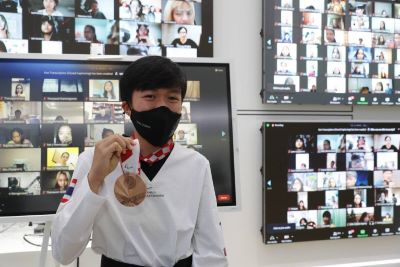
 H.E. Mr. LEE Wook-Heon, presented bunch of flowers and various gifts to Tokyo Paralympics’ bronze medalist Kwansuda Phuangkitcha and National Para-Taekwondo team Coach Shin Young-kyun
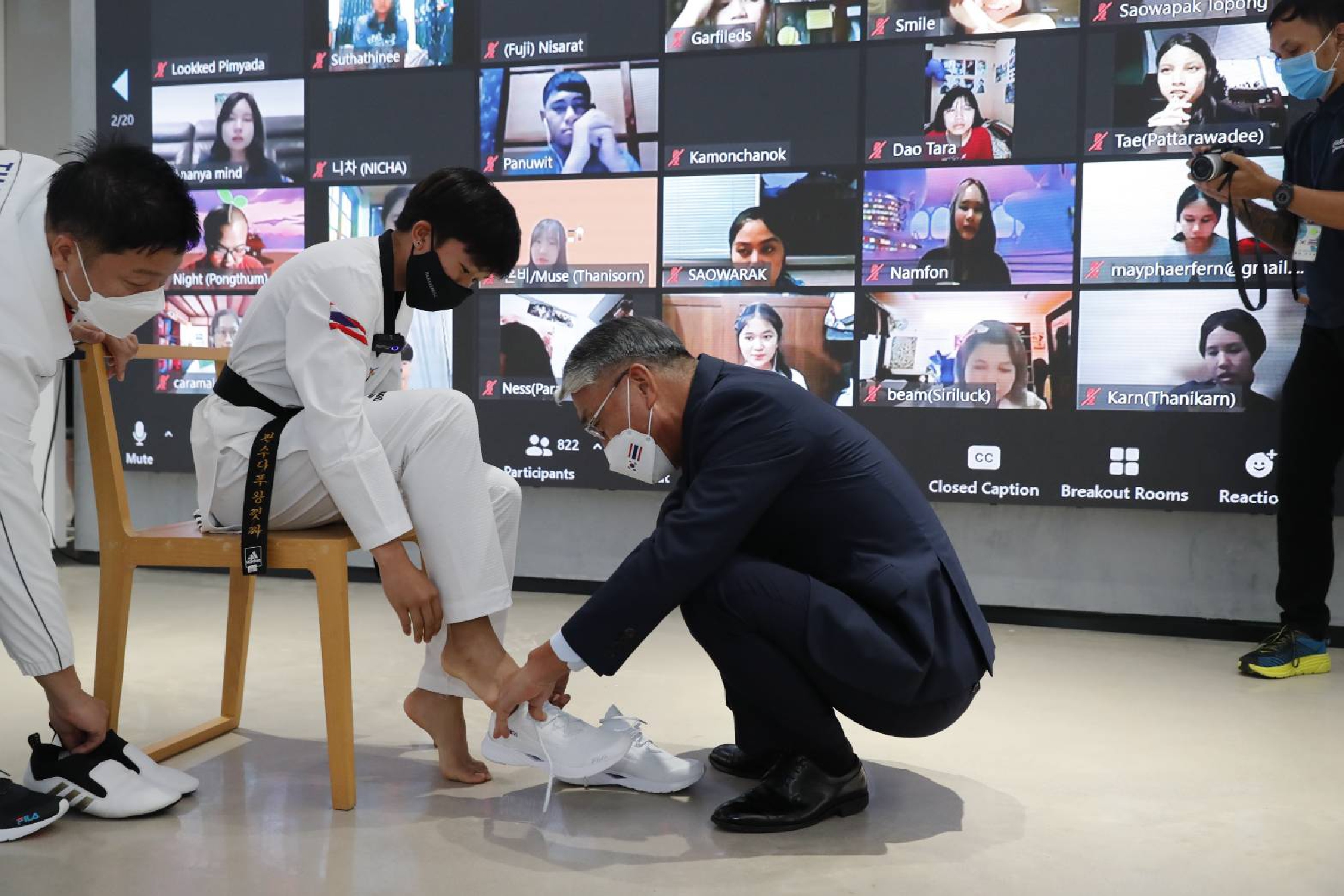 H.E. Mr. LEE Wook-Heon, helped to tie her training shoes that H.E. Mr. Lee presented with hoping for a good fight in the next game
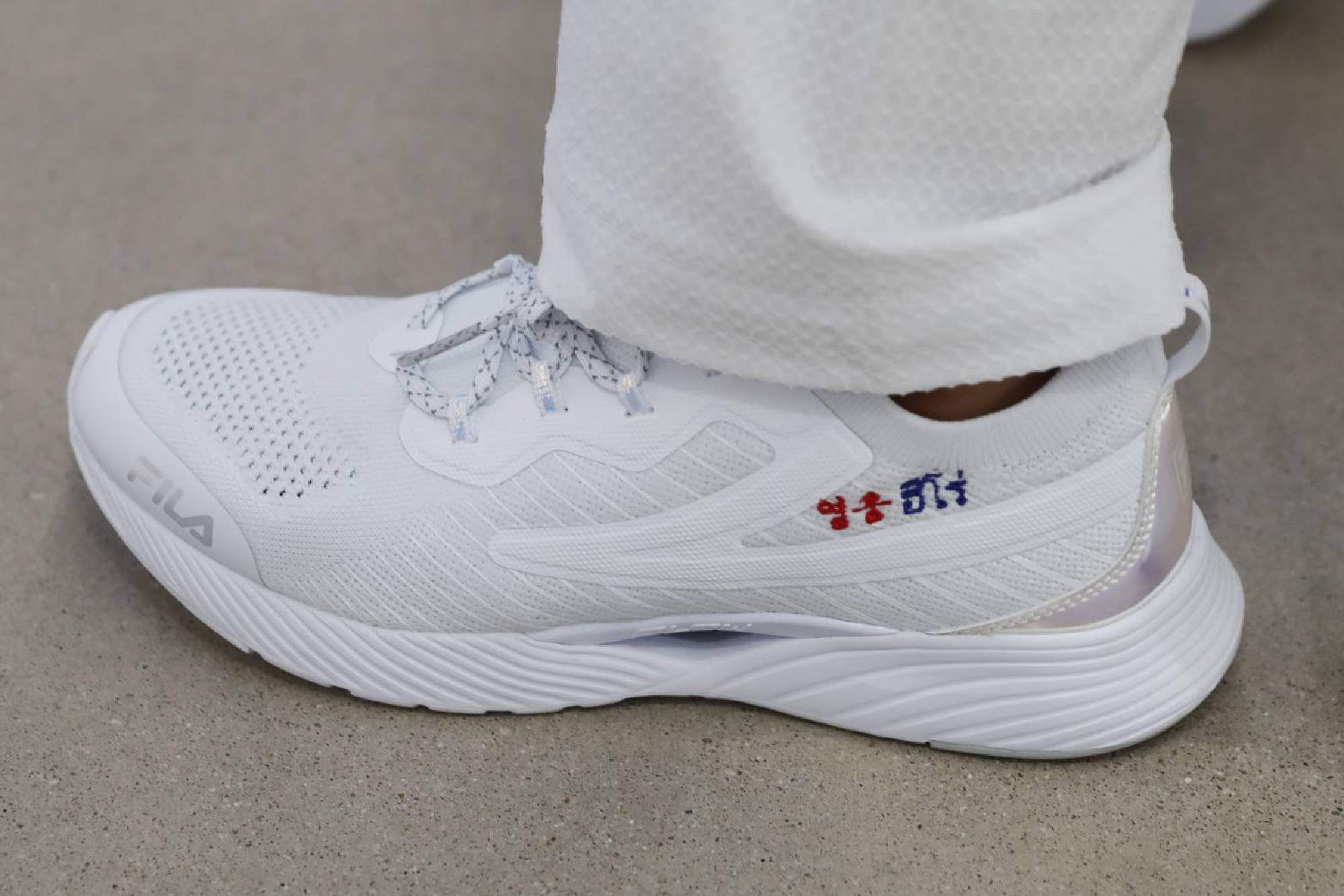 Training shoes H.E. Mr. Lee presents to Kwansuda with hoping for a good fight in the next game
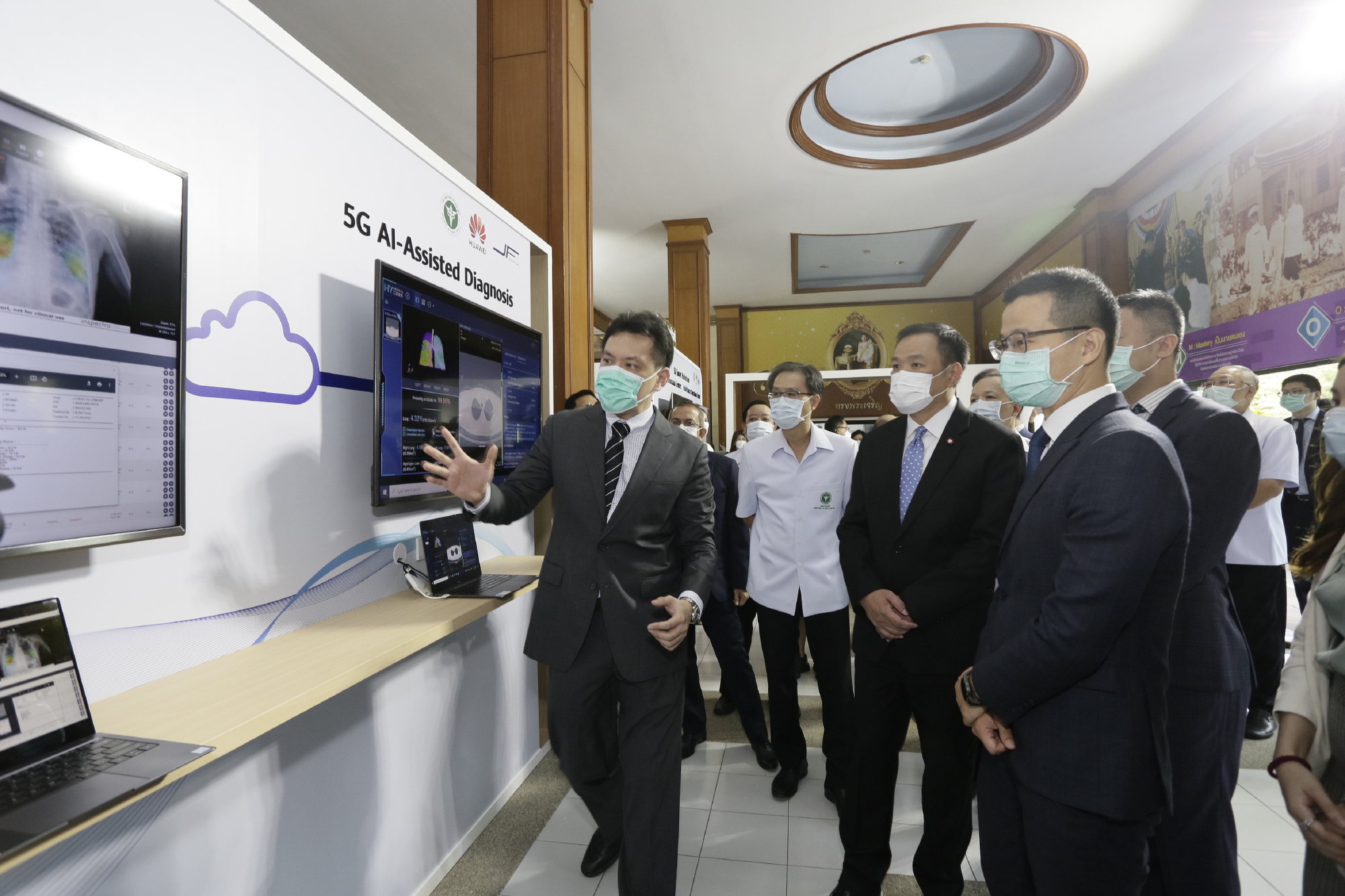 Huawei and Department of Medical Services Sign MoU to Develop 5G Empowered Healthcare in the Digital Era
 Huawei and Department of Medical Services Sign MoU to Develop 5G Empowered Healthcare in the Digital Era
 Huawei and Department of Medical Services Sign MoU to Develop 5G Empowered Healthcare in the Digital Era
 SCB Group to set up SCBX as “Mothership” to increase flexibility and competitiveness as it aims to become a regional financial technology group
 SCB Group to set up SCBX as “Mothership” to increase flexibility and competitiveness as it aims to become a regional financial technology group
 SootinClaimon.Com