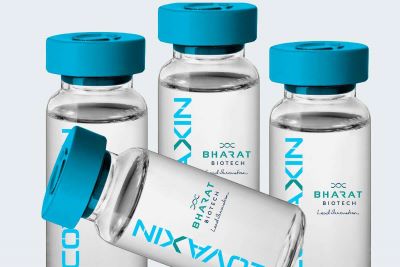
The World Health Organisation’s approval for Covaxin is likely before the month-end, Dr VK Paul, member Niti Aayog and chairman of the National Expert Committee on Vaccine Administration, said here today.
The WHO approval for emergency use of Covaxin will not only declare it safe for use in other countries but will also enable people receiving the shot to travel abroad without mandatory quarantine, he said.
The dossier of Bharat Biotech has been under review by technical experts for consideration since July.
“We know of positive developments – data sharing, data evaluation going on through multiple reviews and we know that we are close to a decision point. We believe that a positive decision could be coming in before the month-end,” he was quoted as saying.
“We must give time to WHO to make their decision based on science and yet we hope that the decisions will be taken quickly because people who are receiving Covaxin have certain imperatives of travel etc, for which WHO’s concurrence is important,” Paul added.
Minister of State for Health Bharati Pravin Pawar had told Parliament that the application for pre-qualification was submitted by Bharat Biotech on July 9.
Covishield, manufactured by the Serum Institute of India, has received the WHO pre-qualification.
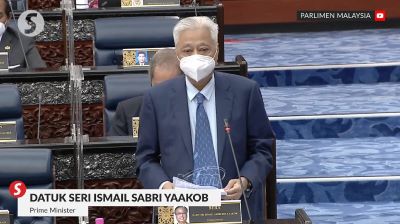
KUALA LUMPUR: More economic sectors are allowed to reopen as the lockdown move is no longer feasible as it is feared that it can have more negative implications, including on the mental health of Malaysians, says Prime Minister Datuk Seri Ismail Sabri Yaakob.
He said the reopening of the sectors would not only help speed up economic recovery but also give the people the opportunity to improve their livelihoods.
“The reopening of 11 economic sectors in states under Phase One of the National Recovery Plan (NRP) was appropriate due to the high vaccination rates in the states.
“The government made the decision after taking into consideration data from the risk assessments conducted by the Health Ministry and the Domestic Trade and Consumer Affairs Ministry,” he said in reply to Datuk Mohd Salim Sharif (BN-Jempol) who questioned the government’s move to reopen economic sectors amid high daily Covid-19 cases.
Ismail Sabri also said that 74.7% of Malaysia’s adult population had been fully vaccinated while 91.6% has received at least the first dose of the Covid-19 vaccine.
He added that the sectors were reopened with strict compliance to standard operating procedure, including allowing in only fully vaccinated customers and having only fully vaccinated workers on duty.
A total of 11 types of economic activities were allowed to resume operations in Phase One of the NRP from Aug 16, including car wash, electrical and electronics shops, clothing, fashion and accessories shops, goldsmith shops, barbers, as well as beauty centres and hair salons.
To a supplementary question from Mohd Salim whether the decision to reopen the sectors had taken into consideration the risks of Covid-19 infection for the unvaccinated population aged 17 and below, Ismail Sabri said the responsibility lies with everyone to maintain discipline and self-control to prevent themselves, their families and their communities from being infected by the virus.
ADVERTISEMENT
“When we reopen (the economic sectors), we see people beginning to flock to holiday destinations and some are not even wearing face masks.
“The future of our country, in terms of Covid-19, depends on us.
“We cannot depend on the vaccine alone. Self-control is very important or all our efforts will be in vain,” he said.
To a question by Datuk Seri Saifuddin Nasution Ismail (PH-Kulim Bandar Baharu) on why the government relaxed social and economic restrictions despite the death toll hovering at three-digit figures daily, the Prime Minister maintained that the decision was done based on science and data.
He added that Covid-19 clusters from the 11 recently reopened economic sectors were few, citing the example of barbers, beauty salons and car wash shops which had sparked little to no known cases or clusters throughout 2020.
“Based on data like these, we focused on reopening certain sectors,” he said.
To Saifuddin’s question on why former prime minister Tan Sri Muhyiddin Yassin was chosen to head the National Recovery Council (NRC), Ismail Sabri this was because Muhyiddin has been chairing the meetings since the NRC was formed and therefore, was chosen as chair for the sake of continuity.
U.S. and China Agree to Delay Myanmar Government’s Efforts to Appoint U.N. Ambassador
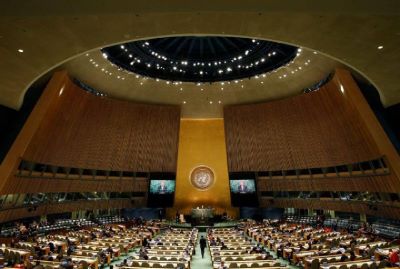
(Foreign Policy)- The United States and China have reached an agreement to block Myanmar’s military government efforts to address the United Nations’ General Assembly next week, serving as a hindrance to the military government’s pursuit for international recognition, at least until November.
However, this agreement between the U.S. and China will require U Kyaw Moe Tun, the still-serving U.N. ambassador who represented the deposed government to ‘hold his tongue’ during the event and to withhold the ‘tough rhetoric’ that he has used over the past year in condemning the military takeover. Additionally, this pact will also delay efforts by Myanmar’s military rulers to pressure U.N. members to recognize it as the legitimate government in Myanmar, at least until November.
This pact, according to multiple diplomatic sources and representatives of advocacy groups, has been informally endorsed by multiple representatives of the EU, members of ASEAN, and Russia. This agreement comes as the U.N. plans to announce a nine-member panel on U.N. credential after the U.N. General Assembly opens on Tuesday (September 14th) to determine the U.N. representative to Myanmar. The committee will chaired by Sweden and includes representatives from Bhutan, the Bahamas, Chile, China, Russia, Sierra Leone, South Africa, and the United States.
The U.S. and its European allies hope to delay any decision on Myanmar’s representation at the United Nations as long as possible, preserving the ‘diplomatic stalemate’ by ensuring that Kyaw Moe Tun retains his U.N. seat for the time being.
In a telephone interview to Foreign Policy, Kyaw Moe Tun confirmed that ‘international negotiations are underway to determine how to move forward on Myanmar’s U.N. seat. He also added that he is highly unlikely to address the UN General Assembly even though the list of speakers at the assembly includes Myanmar.
HCM City to extend lockdown until September end, delay COVID ‘green cards’
HCM CITY — HCM City authorities have announced an extension of the lockdown until the end of September from mid-month as instructed by the Government, and delayed a plan to issue COVID ‘green cards’ until further notice.
Speaking at a meeting on Monday, Dương Anh Đức, vice chairman of the city People’s Committee, said that the city would even impose stricter social distancing measures in some high-risk districts.
Low-risk areas like districts 7, Cần Giờ and Củ Chi, where the pandemic has been basically controlled, could ease measures, he added.
Directive 16 requires people to stay at home except for essential tasks like buying food or medicines.
Nguyễn Văn Nên, secretary of the city Party Committee, said the city was unlikely to contain the outbreak by September 15 as required by the Government last month, and was likely to do so by the end of the month.
He said the city would also delay issuance of COVID green cards.
It would continue to consult medical and economic experts to further tweak the green card system and its requirements, depending on the pandemic status, he said.
Đức said, “The city will place safety first before it gradually opens the economy.”
Earlier authorities said the city would gradually ease isolation measures based on risk assessment, epidemiological surveillance data and the response capacity of the health sector to reopen the economy, provide essential services and ensure distribution and transport of goods.
Classification of industries and units based on certain criteria would be carried out in order to gradually restore their operations.
ADVERTISEMENT
It would work with the ministries of health and information and communications to use a single application to automatically check people’s information across the country.
One of the criteria for issuing green cards is receiving two shots of vaccines.
Đức said under the green card model social distancing regulations could be relaxed for people meeting certain requirements. “Vaccinating the population quickly is important for reopening the economy,” he added.
People who have fully recovered after getting COVID would be exempt from vaccination for six months but could go to work just like those who have received their second shot.
Issuing green cards is one of seven proposals made by the Department of Health.
The others are universal vaccination, raising public awareness, community-based care, improving treatment, epidemiological surveillance, and consolidating the healthcare system.
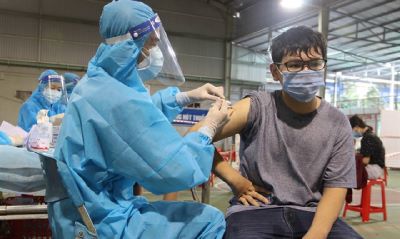
The city targets giving all adults aged 18 and above their first shot by September 15 and second shot by the end of the year.
Children who have underlying diseases or are obese will be immunised first when more vaccines are available.
As of September 12 more than 7.8 million adults have received their first shots (85.2 per cent of the population), and 1.3 million have received both shots.
HCM City is the country’s pandemic hotspot with nearly 300,000 cases since late April.
It has been imposing strict preventive measures, carrying out tests to isolate patients and instructing citizens to “stay where they are”. — VNS
S. Korea has better submarines to launch missiles, N. Korea has better missiles
South Korea and North Korea are locked in an expanding arms race to bolster their naval power through submarine-launched ballistic missiles (SLBM) with no end to tensions in sight.
SLBMs are hard to intercept because they are fired from submarines deep in the sea. Seven countries that have nuclear weapons — China, France, India, North Korea, Russia, the UK and the US – have developed them. South Korea is the only non-nuclear state to have tested them recently.
Nuclear warheads make North Korea’s SLBMs far more powerful than South Korea’s. But Seoul has a lead in submarines and is looking to widen the gap.
North’s upper hand in missile
North Korea, which last tested its SLBM lineup in October 2019 with the Pukguksong-3, revealed the latest 5 series in January this year. The 5 series is believed to be able to fly longer and carry larger warheads than the Pukguksong-3, which could fly about 2,000 kilometers, well beyond the Korean Peninsula.
South Korea’s Hyunmoo series could fly about 800 kilometers and reach anywhere in North Korea. The South Korean military has said it will increase the range and firepower. But experts say Seoul’s missiles pale in comparison to Pyongyang’s.
“Ballistic missiles without a nuclear warhead atop are no match to those with one. North Korea just has better SLBMs, unless we decide to go nuclear on ours,“ said Ryu Seong-yeop, an intelligence analyst at the Korea Research Institute for Military Affairs in South Korea.
ADVERTISEMENT
Ryu said the military’s plan to make more ballistic missiles capable of carrying heavier warheads could destroy North Korea’s underground missile bases, but not directly counter Pyongyang’s nuclear missiles.
“Ballistic missiles are a vehicle, the means, not the end itself. What we mount matters the most,” Ryu said, suggesting that the military use its 2022-26 defense blueprint, worth 315 trillion won ($271 billion), to bring in more fighter jets — such as the US-made F-35 — and improve its missile defense.
Shin Jong-woo, a senior analyst at the Korea Defense and Security Forum, said Seoul cannot compete with Pyongyang, at least on SLBMs, because South Korea cannot employ nuclear devices. Shin also suggested bolstering air power with the latest stealth fighter jets to target North Korean leadership.
South’s edge in submarine
North Korea touts more powerful SLBMs but it has yet to make operational a submarine capable of firing them. Pyongyang, which partially revealed in 2019 a modified Soviet-era Romeo-class model, has never publicly test-fired an SLBM from the 3,000-ton submarine.
The regime is believed to be working on building a 4,000-ton submarine that could carry as many as six SLBMs, twice the number the Romeo class carries. But it is unclear how long and deep the North Korean submarines can stay underwater — a capability vital to delivering a surprise attack.
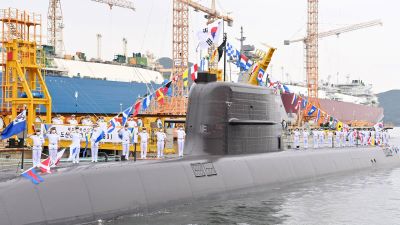
Meanwhile, South Korea test-fired this month an SLBM from its Dosan Ahn Chang-ho class submarine, the country’s first 3,000-ton homegrown vessel capable of carrying as many as six SLBMs, the highest number for a diesel-powered submarine.
The Dosan class is able to stay underwater for as long as three weeks and reach depths of 400 meters and beyond.
The Navy plans to make the Dosan class combat ready as early as August next year and by the late 2020s deploy six submarines in total, each of which could carry up to 10 SLBMs.
Seoul, which is eyeing launching bigger submarines as part of the 2022-26 defense plan, is also close to greenlighting a nuclear-powered submarine, which will further contribute to enhancing its naval power to strike back Pyongyang in case it is attacked first.
Poverty in Afghanistan could have catastrophic consequences for regional stability: Jaishankar
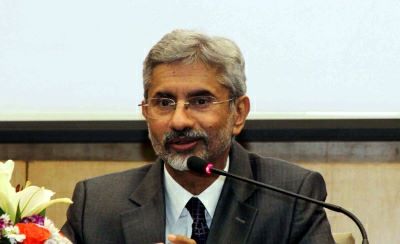
Noting that Afghanistan was passing through a ‘critical and challenging phase’ following its takeover by the Taliban, India today warned that the imminent threat of increased poverty in the war-torn nation could have ‘catastrophic consequences’ for regional stability.
Addressing a high-level UN meeting on the humanitarian situation in Afghanistan, External Affairs Minister S Jaishankar drew attention towards a UNDP report which stated that the levels of poverty in the troubled nation could rise from 72 per cent to 97 per cent.
“India has always supported the UN role in Afghanistan’s future. We believe the UNSC resolution 2593 should guide the international community’s approach in dealing with the situation in Afghanistan,” he said.
The minister said India was monitoring developments in Afghanistan with “understandable concern” and would stand by the people of that nation just as in the past. “India’s approach is guided by the historical friendship with the people of Afghanistan. This will continue to be the case.”
Jaishshankar said there has been a sea change in the political, economic, social and security situation in Afghanistan and consequently in its humanitarian needs. “It’s important that the issue of travel and safe passage that can emerge as an obstacle to humanitarian assistance be immediately sorted out. Those who wish to travel in and out of Afghanistan should be granted such facilities without obstruction,” he added.
The normalisation of regular commercial operations of Kabul airport would not only assist in that regard but then become the basis of a regular flow of relief material. This would also accelerate activities that would complement domestic relief measures, he said.
ADVERTISEMENT
He was also of the view that the humanitarian assistance to the people in Afghanistan should be non-discriminatory.
BEIJING – China on Monday warned the United States against any attempt to elevate relations in essence or engage in official interactions with Taiwan, including allowing the change of the name of the Taipei Economic and Cultural Representative Office (TECRO) in the United States.
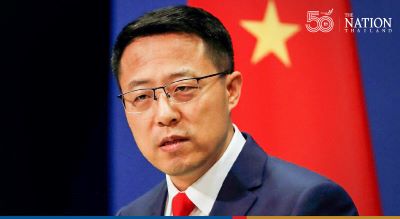
China has lodged solemn representations with the United States over media reports that the Biden administration is considering allowing Taiwan’s Democratic Progressive Party (DPP) authority to rename TECRO as “Taiwan Representative Office”, Foreign Ministry spokesperson Zhao Lijian said at a press briefing.
On the same day, a mainland spokesperson said Beijing resolutely opposed the development of official ties or the establishment of official entities between China’s Taiwan region and countries that have diplomatic ties with China.
Zhu Fenglian, a spokesperson for the Taiwan Affairs Office of the State Council, made the remarks in response to the media reports.
Zhu warned that any trick played by the DPP to seek “Taiwan independence” is doomed to fail.
Thai-Lao businesses launch “Flash Laos”, enter e-commerce in CLMV countries
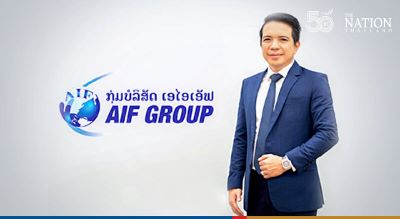
Flash Express and the AIF Group Laos on September 9 announced a joint investment to step into the CLMV market and launch Flash Laos a full service of express logistics by land and air in Laos.
Customers will be able to deliver parcels between Thailand and Vientiane to support the growth of E-Commerce business, boost the economies of Laos and Thailand, and seamlessly connect.
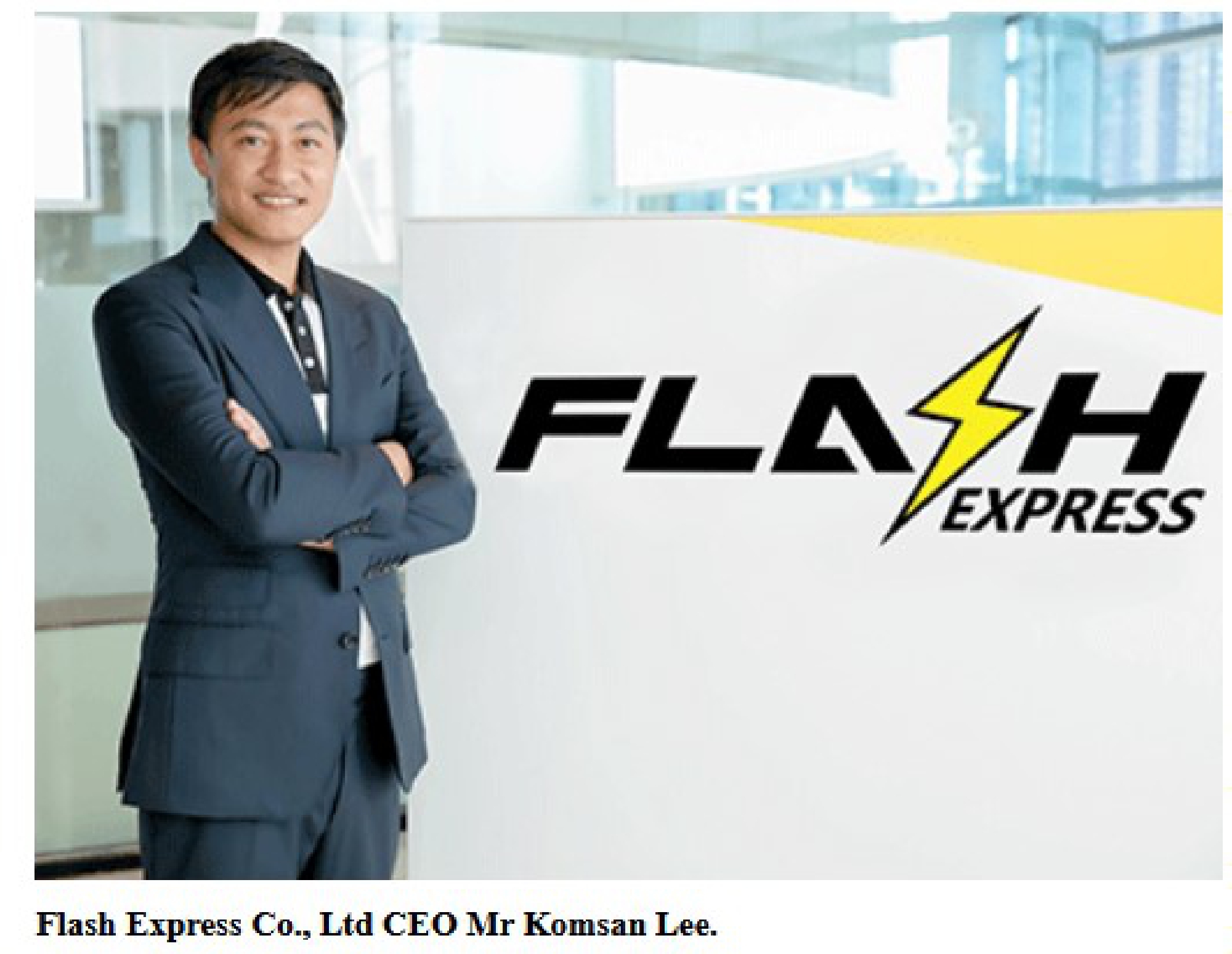
Flash Express Co., Ltd. is a Thai full service logistics provider, and the first Thai start-up to become an international unicorn under the direction of its CEO, Mr Komsan Lee. Mr Komsan said the expansion of Flash services to Laos is a source of pride for the Thai start-up, expanding a full service logistics business in CLMV with a strong strategic partner, AIF Group Laos.
“We will be partners in both land and air full logistics service providers. Through an economic and social study of the CLMV market, Flash foresees an opportunity for full service logistics to neighbouring countries, being well prepared in terms of labour and resources.
Moreover, the Thai government is continuously developing infrastructure between Thailand and neighbouring countries, which will be an opportunity and good direction for logistics businesses.”
Mr Komsan added that from a successful business model of Flash Express in Thailand and technology that has been developed over the past three years, the company is now ready to launch “Flash Laos” a full logistics service by land and air with the same concept used in Thailand.
Thai-Lao businesses launch “Flash Laos”, enter e-commerce in CLMV countries
ADVERTISEMENT
The concept is the first and only express logistics service provider that operates 365 days a year. “We will also provide booking in advance via the Flash Express Application where customers can prebook a delivery service, from in-person pick up, receiving parcels, tracking, to checking the service fee by themselves,” Mr Komsan said.
Cooperation between Flash Express and the AIF Group Laos will have two main parts. The first part, “Flash Laos”, will provide logistics services from Thailand to Vientiane.
The second part will be the key cooperation of both companies, expanding the service to cover all parts of Laos. In addition, the second part will include a cross-border logistics service between Thailand and Laos to support customer demand for B2B, B2C, and C2C.
The second part of the venture will be launched in November 2021 and Flash Laos will recruit new local business partners with the concept of house opening as a parcel pick up. This will provide jobs and income opportunities for our Lao partners, Mr Komsan said.
Chairman of the AIF Group Laos, Mr Rithikone Phoummasack, said “We are pleased to partner with the first Thai unicorn and rely on both the AIF Group and Flash Thailand’s expertise to bring best practices and ease cross-border deliveries for the fast-growing Lao logistics industry.”
“Flash Laos, a fully integrated digital service provider, will help support the continuous growth of our E-Commerce division, already bolstered by the recent integration of a local marketplace platform within the group’s activities,” Mr Rithikone emphasised.
“The strategic venture further enhances our capacity to deliver superior digital services and better serve Laos’ fast-growing consumer base,” he added, “and leverages AIF Group’s strong understanding and expertise of the Lao and regional markets to enable local consumers to seamlessly exchange goods between Thailand and Laos.”
About Flash Express Thailand Flash Express (Thailand) Company Limited is a Thai full service logistics provider, and is the first Thai start-up to become an international unicorn under the concept “In mind, In delivery”.
The company was established in 2018 by Mr Komsan Lee, the Chief Executive Officer and the management team and Thai officers. It is the first express service provider to implement a policy of receiving free parcels at the front door (Door-to-Door Service) and is available 365 days a year.
Flash Express is a subsidiary of the Flash Group, a Thai-based fully integrated E-Commerce service provider. Flash Logistics services include large-scale transportation, Flash Fulfillment, product warehousing, and financial services (Flash Money/Flash Pay).
About AIF Group Laos AIF Group is one of the biggest and the most dynamic business groups in Laos, employing more than 3,000 workers from 17 countries. The group’s core business activities include Banking & Financial Services; Energy Utilities; Construction, Property & Infrastructure Development; E-Commerce, Telecom & Technology Services; Trading; as well as Agriculture, with operations in Laos, Vietnam, Cambodia, Thailand, and Singapore.
Vietnam reassures US of efforts to maintain supply chains: Trade minister
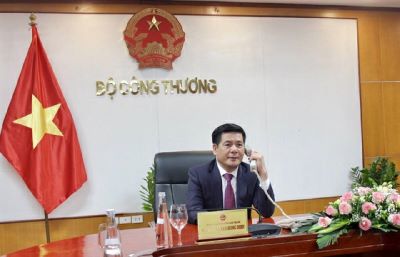
HÀ NỘI — Vietnamese Minister of Industry and Trade Nguyễn Hồng Diên held phone talks with US Secretary of Commerce Gina Raimondo to discuss bilateral economic and trade issues.
Diên, who is also Chairman of the Việt Nam-US Trade and Investment Framework Agreement (TIFA) Council, suggested the US Department of Commerce enhance discussions to recognise Việt Nam as a market economy and give objective and fair opinions in line with the World Trade Organisation (WTO)’s regulations in trade defence investigations.
The maintenance of goods supply, manufacturing activities and import-export were the top important priorities of the Vietnamese Ministry of Industry and Trade, Diên said in response to concerns over potential disruptions to supply chains in Việt Nam due to the severe ongoing fourth wave of infections.
The Vietnamese minister added that Việt Nam would step up vaccinations against COVID-19, creating favourable conditions for firms to mobilise workers back to work, ensure the flow of goods, resume business and production activities, to meeting global chains supply demands, including those of the US firms.
Diên stressed that Việt Nam was ready to increase dialogue with the US to deal with existing bilateral economic and trade issues. He also hailed the US for offering opinions to further perfect existing legal framework.
Raimondo said economy and trade remained a high priority under President Joe Biden’s policy, stressing that US enterprises want to invest in many fields in Việt Nam, with energy as a top priority.
ADVERTISEMENT
The US would actively work with Việt Nam to ensure the continuity of the goods supply chain amid the complicated developments of the pandemic in the country, she said.
The US official also said that in March next year, she would lead a major US delegation to Việt Nam in search of trade and investment opportunities.
Diên asked Raimondo to convey his message to the US Government about giving further priority to assisting Việt Nam in COVID-19 vaccines given current shortages, accelerating the implementation of signed vaccine supply contracts, and facilitating vaccine production technology transfer.
Both sides expressed their belief that bilateral ties would maintain stable growth momentum, with economic and trade collaboration as a focus and key driving force.
Over the past five years, Việt Nam’s export to the US has surged by 230 per cent while the US’s shipment to Việt Nam has soared by over 175 per cent. The US became Việt Nam’s largest importer while Việt Nam was the 10th biggest trade partner of the US. — VNS
Asean ministers to start talks on regional digital economy agreement by 2025
SINGAPORE – As Asean continues to grapple with Covid-19 cases and an uncertain recovery, its economic ministers have committed to conducting a study on a region-wide digital economy pact by 2023.
They also agreed to start negotiations on the Asean Digital Economy Framework Agreement by 2025.
A focus on digital transformation to enable the smooth flow of goods and services and data will help ensure the region continues to draw global trade and investments, and better position itself for future growth, Singapore’s Minister for Trade and Industry Gan Kim Yong said at meetings with his counterparts last week.
“Asean remains fully committed to free and open trade and deepening regional economic integration, especially amidst the challenging backdrop posed by Covid-19,” he said.
“As the region emerges from the pandemic, it is important to leverage new growth opportunities in areas such as digitalisation and sustainability so that we entrench Asean as an attractive trade and investment proposition for our global partners.”
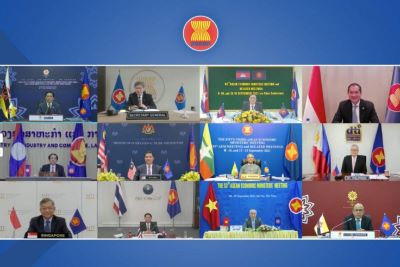
The 53rd Asean Economic Ministers’ Meeting was held via video conference on Sept 8 and 9, and will continue from Sept 13 to 15 when the ministers will meet their counterparts from the grouping’s key partners, including the United States and China.
At the meeting, chaired by Brunei, which holds the rotating leadership of the grouping this year, the Asean ministers endorsed the Bandar Seri Begawan Roadmap, which sets out an agenda to turn the ongoing pandemic crisis into an opportunity for South-east Asia through digital transformation and greater integration of its digital economy till 2025.
The road map highlights digital initiatives that are expected to boost the region’s competitiveness over the immediate and longer term.
These initiatives seek to build a foundation for an Asean digital economy that the ministers described as one “where the seamless and secure flow of goods, services and data is underpinned by enabling rules, regulations, infrastructure and talent”.
ADVERTISEMENT
The Digital Economy Framework Agreement and timeframe are part of this road map.
A digital economy agreement establishes trade rules and facilitates interoperability between the digital systems of two or more economies.
It also supports cross-border flows of data, safeguards personal data and consumer rights, and encourages innovation and cooperation in areas such as artificial intelligence.
Singapore has so far negotiated two such agreements: the Digital Economy Partnership Agreement with Chile and New Zealand, and the Singapore-Australia Digital Economy Agreement, both of which were signed last year.
It has also started talks on digital economy agreements with South Korea and Britain.
At their meeting, the Asean ministers acknowledged that e-commerce and digital services are now providing alternative channels for people to continue activities such as working and learning.
To that end, the Workplan on Asean Agreement on E-Commerce, which identifies priority areas to ensure the continued development of electronic commerce in the region, was adopted.
The ministers also took note of the implementation of the Asean Comprehensive Recovery Framework – adopted by leaders at the Asean Summit last November – which serves as an exit plan from the pandemic through five broad strategies around health, human security, economic integration, digital transformation and sustainability.
The moves come at a time when economic recovery across the region remains “fragile” amid a resurgence in Covid-19 cases as new variants emerge and disrupt efforts to reopen borders, the ministers noted.
Nonetheless, the Asean ministers also said that the regional economy is picking up, with gross domestic product in South-east Asia expected to reach 4 per cent this year and 5.2 per cent next year.
In 2020, the Asean economy contracted by 3.3 per cent primarily due to mobility and cross-border travel restrictions.
As the region tries to sustain that recovery, vaccination remains the top priority and continued fiscal and monetary stimulus is necessary to reinforce the economy, the ministers added.
They also said: “Support for vulnerable groups, including informal workers, women and youth, is important to minimise the development gap that has been amplified by the pandemic.”
 Thai-Lao businesses launch “Flash Laos”, enter e-commerce in CLMV countries