[South Korea] Gathering rules are slightly eased from Monday: PM #SootinClaimon.Com

#SootinClaimon.Com : ขอบคุณแหล่งข้อมูล : หนังสือพิมพ์ The Nation.

https://www.nationthailand.com/international/40005692

[South Korea] Gathering rules are slightly eased from Monday: PM


Slightly eased social distancing rules will take effect starting Monday to alleviate the difficulties of small-business owners and the self-employed hit hard by the prolonged pandemic.
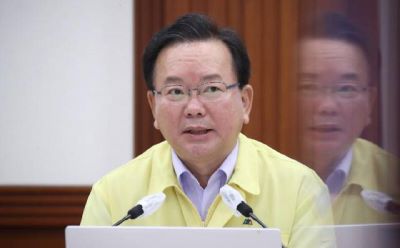
On Friday, Prime Minister Kim Boo-kyum said that business hours of restaurants and cafes in the Seoul metropolitan area will be extended by one hour to 10 p.m., starting next week and to last four weeks.

The current social distancing rules — Level 4 in Greater Seoul and Level 3 in most other areas — will be extended until Oct. 3. But exceptions will be made for those who are fully vaccinated.

“The restriction on the number of people gathering in restaurants and cafes (in Greater Seoul) is extended to six,” Kim said.

“But it is limited to cases where at least two people during the day and four people after 6 p.m. are fully inoculated.”

In areas outside Greater Seoul where Level 3 social distancing rules are implemented, up to eight people, including four fully vaccinated people, are allowed at all multiuse facilities.

In the cases of a wedding venue, up to 99 people are to be allowed if no meals are provided. Under the current toughest curbs, only 49 people are permitted.

Regarding the quarantine measures for the Chuseok holiday this month, Kim said, “We have decided to allow family gatherings of up to eight people, including four fully vaccinated people, for a one-week period (from Sept. 17 to 23).”

He still urged people to refrain from visiting their hometowns and, if they should go, to visit after receiving vaccines or diagnostic tests.

“Before the Chuseok holiday, enough vaccines will be introduced to achieve the goal that more than 70 percent of the public will receive first doses of vaccines.”

He said 32.7 percent of the public had been fully vaccinated as of Thursday, and for the portion of the population over the age of 18, that number marked 38 percent.

The government said 905,000 doses of the Moderna vaccine were to arrive at the Incheon Airport on Friday, out of the 7.01 million doses that Moderna promised to supply by this week.

Of the promised doses, 1.01 million arrived Aug. 23, 1.02 million came Thursday and the remaining vaccines are set to arrive in batches through Sunday.
 

Published : September 04, 2021
Thailand censured for releasing dam water, flooding border area #SootinClaimon.Com

#SootinClaimon.Com : ขอบคุณแหล่งข้อมูล : หนังสือพิมพ์ The Nation.

https://www.nationthailand.com/international/40005691

Thailand censured for releasing dam water, flooding border area


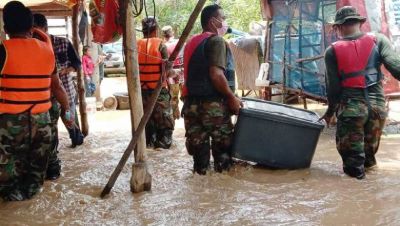
Flash floods inundated communes in Battambang province’s Phnom Proek district and Banteay Meanchey province’s Malai district, where more than 100 homes were overwhelmed by floodwaters from Thailand.

Malai district governor Svay Chea told The Post that 50 houses were flooded in Boeung Beng commune and another 60 houses in Malai commune.

“The rain was not too heavy, but the Thai side opened water gates to let water flow to our side as they were afraid their dams would break. That is why some residents’ houses in the two communes were flooded,” he said.

Chea said Malai district authorities were evacuating people in the affected areas to safer places, providing first aid and assisting with daily needs.

Chea blamed the Thai side for repeatedly not following the spirit of a memorandum of understanding, which states that the Thais must provide advance information about when the gates are opened so that Cambodia can prepare.

He reiterated his call for the Thai side to provide information to Cambodia before deciding to open the dam’s gate.

In Battambang province, Phnom Proek district police chief Song Sopheak said at present, three communes there – Baraing Thleak, Phnom Proek and Buor – are gradually being flooded by downpours.

Sopheak said that at this time, some houses in Buor commune, located at the lower part of the stream, are gradually being flooded while the rain continues to fall moderately to heavy.

“It has been raining heavily for two days in a row, and about 60 houses in the three communes have been flooded with water up to people’s knees. We are worried about whether the rain will continue to fall as the Ministry of Water Resources and Meteorology has predicted,” he said.

According to the recent weather forecast from the water resources ministry, there will continue to be scattered rainfalls nationwide with moderate to heavy downpours, which could cause flash floods in the lowlands, especially the central lowlands, and rainfall catchment areas on the ridge of the Dangrek Mountains and the northeastern plateau.

National Committee for Disaster Management (NCDM) spokesman Khun Sokha told The Post that at this time, NCDM’s municipal and provincial branches are ready to assist people in vulnerable and flooded areas.

“Currently, each working group has prepared all means, forces and equipment to intervene,” he said.

By Khouth Sophak Chakrya, The Phnom Penh Post

Published : September 04, 2021

Asia opens travel bubbles with low-risk nations #SootinClaimon.Com

#SootinClaimon.Com : ขอบคุณแหล่งข้อมูล : หนังสือพิมพ์ The Nation.

https://www.nationthailand.com/international/40005690

Asia opens travel bubbles with low-risk nations


PETALING JAYA: Several countries in Asia have been working towards opening up their tourism sector by opening travel bubbles between low-risk countries.

Asia opens travel bubbles with low-risk nations

In Singapore, the government has allowed for a fully vaccinated travel lane with Germany and Brunei that will begin on Sept 8.

Under this travel arrangement, the special lanes will be open for leisure, business or family visits for fully vaccinated travellers.

The travellers, too, will be able to enter Singapore without the need for home quarantine.

But its government noted that travellers will still be required to undergo the Covid-19 RT-PCR test 48 hours before departing for Singapore and will be subjected to an on-arrival test upon landing in the country.

They will also be subjected to a post-arrival test on days three and seven at a Singapore-designated clinic.

In Thailand, the country has implemented a “tourist sandbox scheme” in Phuket and Samui that kicked off on July 1 and July 15 respectively.

Under the scheme, fully vaccinated travellers from 70 countries and territories are allowed to travel to the two islands without quarantine.

These travellers are subjected to RT-PCR testing before arrival.

Meanwhile, in South Korea, the country also launched a quarantine-free travel bubble with Saipan that started on July 24.

Taiwan also implemented a travel bubble with Palau in April.

Published : September 04, 2021

HCM City power utility eyes integration of private renewable energy #SootinClaimon.Com

#SootinClaimon.Com : ขอบคุณแหล่งข้อมูล : หนังสือพิมพ์ The Nation.

https://www.nationthailand.com/international/40005651

HCM City power utility eyes integration of private renewable energy


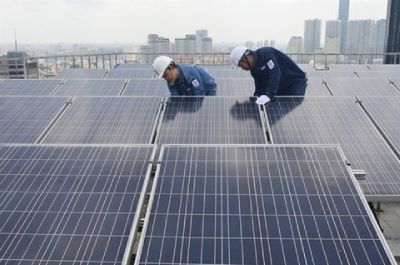
The HCM City Power Corporation is undertaking a number of projects to develop and integrate power sources such as rooftop solar.

This will allow several control measures such as active reduction of grid power consumption during peak hours, load curtailment and management of loads through the day.

According to EVNHCMC, since power sources such as rooftop solar have become increasingly popular around the world, cities with high urbanisation and population density are looking for suitable distribution solutions.

For the city, rooftop solar is currently the best option for efficiency and optimisation, and it not only helps customers reduce electricity expenditure but also cools their houses by reducing radiation and offers the option of selling excess production to the grid, it said.

Besides, it is a clean source of energy, it pointed out.

As of August 1 the city had 14,250 rooftop solar systems with a total capacity of 365 MWp.

EVNHCMC has set up a dedicated section for rooftop solar power on its customer care website since 2019, providing transparency on the feed-in tariff mechanism, power purchase and connection for capacity release procedures, incentive programmes, and a quick rooftop solar system investment cost/efficiency calculation tool.

It also carries out negotiations for rooftop solar system connections and power purchase.

It also plans to provide electric motorbikes to 400 of its electricians this year after already providing them at two of its subsidiaries, Saigon and Hoc Mon Power Companies.

It is also seeking to set up charging stations in co-ordination with electric vehicle manufacturer VinFast in anticipation of the enormous demand in the near future. — VNS

Published : September 03, 2021

Military to build ‘Korean Iron Dome,’ increase long range strike capabilities #SootinClaimon.Com

#SootinClaimon.Com : ขอบคุณแหล่งข้อมูล : หนังสือพิมพ์ The Nation.

https://www.nationthailand.com/international/40005650

Military to build ‘Korean Iron Dome,’ increase long range strike capabilities


The military said Thursday it will pursue a homegrown missile defense system and a greater strike capability as part of a 315 trillion-won ($271 billion), five-year plan starting next year.

About 106 trillion won goes to bolstering defense capabilities to build weapons, such as anti-missile systems and ballistic missiles, while the rest is set aside to cover operating costs.

“We will have ironclad defense against North Korean fire targeting Seoul and the surrounding areas,” the Ministry of National Defense said, referring to the capital that is home to over 9 million people, nearly one-fifth of South Korea’s population.

The military plans to put up a missile shield, similar to Israel’s Iron Dome, to protect the capital, which is well within range of North Korea’s long-range rockets. The regime could be resuming nuclear reactors for weapons, according to the International Atomic Energy Agency last week.

The military is also looking to upgrade the Patriot, one of two anti-missile shields — along with THAAD — that makes up the country’s multilayered missile defense system. The Patriot takes down threats flying low, while the Terminal High Altitude Area Defense system intercepts higher targets.

Early warning radar systems will come along the way to mount an independent missile defense, according to the military, which noted it will work for a Korean Positioning System, much like the US-operated GPS, but with its own satellites unaffected by changes the US makes.

Advanced missiles will boost firepower in the meantime, the military added.

“We will see more lethal missiles — including surface-to-surface and surface-to-air — becoming operational. More accurate, long-range missiles capable of striking targets just right will be the deterrence,” the Defense Ministry said.

The military, which was cut loose in May from a Korea-US missile pact that had long capped Seoul’s missile program, is seeking better ballistic missiles. And the military is close to testing missiles carrying a warhead of up to 3 metric tons, according to a military official.

Experts said those missiles, which could hit anywhere in North Korea, would roughly match the power of tactical nuclear weapons and could destroy underground missile bases known as silos.

Meanwhile, the military is also eyeing warships and fighter jets to ensure its readiness.

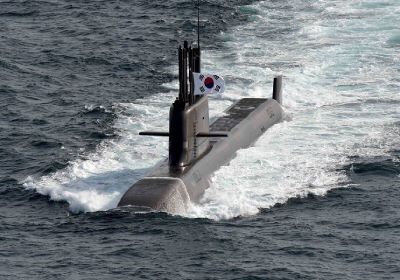
The Navy, which has recently unveiled its first submarine carrying a submarine-launched ballistic missile, will locally build more 3,000-ton submarines. Seoul is close to greenlighting a nuclear-powered submarine, and is set to reveal its first light aircraft carrier by 2033.

The Air Force will see the US-made F-35, the latest stealth fighter jets, delivered to Seoul by December. The Air Force, which revealed in April a prototype of its first homegrown fighter jet that many see as a cheaper and less-stealth alternative to F-35, will fly the local jets as early as 2027, after flight tests.

But the five-year plan did not address the wartime operational control South Korea is expected to take over from the US. President Moon Jae-in, who leaves office in May next year, promised to make it happen during his tenure, but the two allies have been at odds over whether Seoul is actually ready.

Washington, which insists Seoul meet a set of conditions for the transfer to take place, has reversed its position and is now seen as reluctant to relinquish control over Korea’s 550,000-strong armed forces, backed by 28,500 American troops here, as the US seeks to rein in a more combative China in the region.

Published : September 03, 2021

Study finds 75% of weather-linked deaths in SW Pacific region are in PH #SootinClaimon.Com

#SootinClaimon.Com : ขอบคุณแหล่งข้อมูล : หนังสือพิมพ์ The Nation.

https://www.nationthailand.com/international/40005649

Study finds 75% of weather-linked deaths in SW Pacific region are in PH


The Philippines accounts for 75 percent of all deaths caused by weather, climate and water hazards in the Southwest Pacific region in the past 50 years, according to a new report by the World Meteorological Organization (WMO).

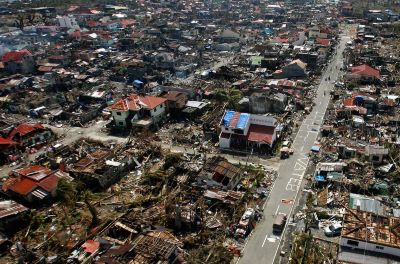
In its “Atlas of Mortality and Economic Losses from Weather, Climate and Water Extremes,” the specialized agency of the United Nations said the majority of the deadliest events in the region from 1970 to 2019 were tropical cyclones that devastated the country, with Supertyphoon “Yolanda” (international name: Haiyan) in 2013 topping the list.

‘Serious disruption’

Globally, the WMO said, there were more than 11,000 disasters attributed to weather, climate and water-related hazards in the 50-year period. These disasters, defined as the “serious disruption” on the function of a community due to hazardous events, have resulted in over 2 million deaths and $3.6 trillion in economic losses.

These translate to a hazard occurring every day on average in the past five decades, taking 115 lives and causing $202 million in losses daily, the WMO said.

While no disaster in the Philippines ranked among the 10 most deadly around the world in the past five decades, it fared highest in the Southwest Pacific region, which included Indonesia, Australia, Papua New Guinea and New Zealand.

$163B in economic losses

The report said that between 1970 and 2019, a total of 1,407 disasters devastated the region, resulting in over 65,000 deaths and $163 billion in economic losses.

Out of the total deaths, 48,950 were recorded in the Philippines, where they were mainly caused by storms.

Owing to its location relative to the Pacific Ocean, the archipelagic nation faces the brunt of extreme weather and climate change. It is lashed by an average of 20 cyclones every year.

The WMO identified Yolanda, the typhoon that battered Eastern Visayas in November 2013, as the deadliest during the five-decade period. It killed more than 7,300 people, based on government figures, but survivors considered it a conservative estimate.

Heavy toll

Also counted among the deadliest disasters in the country were Tropical Storm “Uring” (Thelma), which hit Leyte Island and Negros Occidental in November 1991, killing nearly 6,000 people; Typhoon “Pablo” (Bopha), which left 1,901 people dead in Mindanao in December 2012; and Tropical Depression “Winnie,” whose torrential rains caused flash floods and landslides in Luzon and a death toll of around 1,600.

These disasters also exacted a heavy toll on the economy, with $36.8 billion in cumulative losses. More than half, or some $20 billion, occurred in the past decade, between 2010 and 2019.

Across the world, the number of weather and climate-related disasters have surged fivefold in the past 50 years, the WMO said. “The number of weather, climate and water extremes are increasing and will become more frequent and severe in many parts of the world as a result of climate change,” said WMO secretary general Petteri Taalas in the report.

Increased water vapor in the atmosphere has exacerbated extreme rainfall and flooding, while warming oceans due to climate change have affected the extent and frequency of the most intense tropical storms, he added.

Despite the bleak numbers, the WMO said, improved early warning systems and disaster management have led to a decrease in mortality by almost threefold from 1970 to 2010. In the 2010s, less than 20,000 deaths were recorded, marking a sharp fall from 50,000 in the 1970s.

“Behind the stark statistics lies a message of hope,” said Taalas. “Quite simply, we are better than ever before at saving lives.”

Much remains to be done, however, with only half of the 193 members of the WMO equipped with multihazard early warning systems.

Multihazard forecasting

In 2019, the Philippines secured $10 million from the Green Climate Fund (GCF) to develop its own multihazard forecasting and early warning system for disasters, with target sites in Tuguegarao City in Cagayan province, Legazpi City in Albay province, Palo in Leyte province and New Bataan in Compostela Valley.

It was the first grant that the country received from GCF, the world’s largest climate finance mechanism supporting adaptation and mitigation programs of developing countries.

The project will be led by the Philippine Atmospheric, Geophysical and Astronomical Services Administration.

Published : September 03, 2021

India-US discuss Afghanistan, situation in Indo-Pacific #SootinClaimon.Com

#SootinClaimon.Com : ขอบคุณแหล่งข้อมูล : หนังสือพิมพ์ The Nation.

https://www.nationthailand.com/international/40005648

India-US discuss Afghanistan, situation in Indo-Pacific


The disturbing developments in Afghanistan are understood to have figured prominently during the ‘2+2’ Inter-sessional meeting held at the official level between India and the United States.

The two sides reviewed progress made since the last ‘2+2’ ministerial dialogue involving their foreign and defence ministers in October 2020 and preparations for the forthcoming dialogue later this year.

The Indian delegation was led jointly by Vani Rao, Joint Secretary (Americas) in the Ministry of External Affairs and Somnath Ghosh, Joint Secretary (International Cooperation) in the Ministry of Defence. The U.S. delegation was led by Assistant Secretary of Defense for Indo-Pacific Affairs Ely Ratner alongside Principal Deputy Assistant Secretary of State for South and Central Asian Affairs in the Department of State Ervin Massinga.

An official release said both sides took stock of the progress and developments in the bilateral agenda under the India-US strategic partnership, including defence, global public health, economic and commercial cooperation, science and technology, clean energy and climate finance, and people to people ties.

They explored opportunities for enhancing ongoing cooperation in these fields based on mutual interests. Cooperation in contemporary areas such as space, cyber security and emerging technologies was also discussed.

The officials had an opportunity to exchange assessments about recent developments in South Asia, the Indo-Pacific region and Western Indian Ocean, given their shared vision for peace, stability and prosperity and for a free, open and inclusive Indo-Pacific region. They also considered the possibility of enhancing collaboration in areas of counterterrorism, HADR and maritime security.

The two sides agreed to continue these discussions ahead of the ‘2+2’ ministerial dialogue scheduled for later this year.

Published : September 03, 2021

Xi: China to set up stock exchange in Beijing #SootinClaimon.Com

#SootinClaimon.Com : ขอบคุณแหล่งข้อมูล : หนังสือพิมพ์ The Nation.

https://www.nationthailand.com/international/40005647

Xi: China to set up stock exchange in Beijing


BEIJING – President Xi Jinping on Thursday unveiled a slew of new measures to facilitate trade in services in the countrys latest efforts to share its development opportunities and boost global economic recovery.

China will explore the development of national demonstration zones to promote the innovative development of services trade and increase support for services sector in countries participating in the Belt and Road Initiative, Xi said while addressing the Global Trade in Services Summit of the 2021 China International Fair for Trade in Services (CIFTIS) held in Beijing.

The country will optimize the rules for the services sector by supporting Beijing and other localities in piloting the alignment of domestic rules with the ones in high-standard international free trade agreements and in building digital trade demonstration zones, Xi said.

A stock exchange will be set up in Beijing to serve innovation-oriented small and medium-sized firms, Xi said.

“Let us join hands to defeat the COVID-19 pandemic and get through these tough times,” Xi said.

“Using peace, development and win-win cooperation as the ‘golden key’, we will be able to address the challenges facing the world economy and international trade and investment, and create a brighter future for all,” he said.

Themed “Towards Digital Future and Service Driven Development,” the 2021 CIFTIS will last from Sept 2 to Sept 7.

As a massive exhibition and trading platform dedicated to trade in services, the CIFTIS played an important role in boosting worldwide trade last year, when the COVID-19 pandemic disrupted global trade.

Addressing the CIFTIS in 2020, Xi made three proposals, calling on all countries to jointly foster an open and inclusive cooperation environment, work together to invigorate momentum for cooperation driven by innovation, and break new ground in win-win cooperation.

At a press conference last week, Vice Minister of Commerce Wang Bingnan said the ministry has rolled out 36 detailed measures to implement what was proposed at last year’s CIFTIS, with many seeing significant progress.

For example, the country introduced its first negative list for cross-border trade in services at the Hainan free trade port in July, marking the highest level of opening-up in the cross-border services trade realm.

As COVID-19 has accelerated the digitalization of trade in services, this year’s CIFTIS features a dedicated section for digital services for the first time.

The 2021 CIFTIS has attracted the registration from more than 12,000 enterprises, up 52 percent from that in 2020. Representatives from 153 countries and regions signed up for the event, compared with 148 last year.

Published : September 03, 2021

[Japan] Princess Mako to marry this year #SootinClaimon.Com

#SootinClaimon.Com : ขอบคุณแหล่งข้อมูล : หนังสือพิมพ์ The Nation.

https://www.nationthailand.com/international/40005598

[Japan] Princess Mako to marry this year


Princess Mako, the eldest daughter of Crown Prince Akishino, will marry Kei Komuro this year, sources have said. The princess, 29, and Komuro are not planning to hold engagement or wedding ceremonies.

If these events ultimately do not take place, it would be the first time in postwar history for a marriage involving a member of the Imperial family.

The princess has also expressed her intention to refuse the financial settlement she would normally receive when leaving the Imperial family upon her marriage, according to the sources. The government is expected to discuss whether it is legally possible for her to not receive the money.

Prince Akishino has approved the marriage, and the couple plans to submit their marriage registration to the local government this year, according to the sources. However, they might postpone this until next year depending on the situation with the pandemic.

The prince said at a press conference in November 2018 that he believed the engagement ceremony could not take place “unless there is a situation in which many people are content [with the marriage] and happy [for the couple],” apparently a reference to the financial trouble between Komuro’s mother and her former fiance. He then urged Komuro’s side to take “appropriate measures.”

Komuro released statements in January 2019 and in April this year, explaining the circumstances of the financial trouble. However, the situation has not necessarily reached a point where many people would celebrate the marriage.

Given this and the pandemic, it is now being discussed whether to skip the Nosai-no-Gi (Ceremony of Betrothal), a wedding ceremony and other related rituals.

Princess Mako is said to have informed people around her of her intention to decline the money due to public criticism over the financial problems involving Komuro’s mother.

The Imperial Household Finance Law stipulates that a member of the Imperial family receives a one-time payment upon leaving, to help them maintain their dignity.

Since the end of World War II, all female members of the Imperial family have received such a sum upon their marriage — judging by past examples, Princess Mako would receive about ¥137 million.

The specific amount to be paid has so far been determined by the committee on the Imperial household’s finances, consisting of eight people including the prime minister, the speaker of the lower house and the president of the upper house. But the committee has never discussed whether the money should be paid in the first place.

“Declining the money is unprecedented. We may have to change the interpretation of the Imperial Household Finance Law,” said an official of the Imperial Household Agency.

Princess Mako and Komuro were classmates at International Christian University, and after five years of dating, their engagement was unofficially confirmed in September 2017. However, they postponed their marriage in February 2018 after a weekly magazine reported on the financial problems, saying they “did not have enough time to make sufficient preparations” for the wedding events and life after marriage.

Komuro enrolled in a law school in New York State in August 2018. He completed his studies in May and took the bar exam in the state in July. His test results will be announced by mid-December.

Komuro is in the process of getting a job at a law firm in the U.S., and it is believed that the economic foundation of his life, which had been a bottleneck, is now in place.

After the marriage, Princess Mako will leave the Imperial family and is expected to start a new life in the United States.

In a statement released in November 2020, Princess Mako reiterated her strong desire to marry, saying, “Marriage is a necessary choice for us to live.”

In response, Prince Akishino expressed his intention to approve the marriage. Speaking at a press conference held the same month, the prince cited Article 24 of the Constitution, which stipulates, “Marriage shall be based only on the mutual consent of both sexes.”

Published : September 02, 2021

Korea becomes 14th in world to legislate carbon neutrality act #SootinClaimon.Com

#SootinClaimon.Com : ขอบคุณแหล่งข้อมูล : หนังสือพิมพ์ The Nation.

https://www.nationthailand.com/international/40005597

Korea becomes 14th in world to legislate carbon neutrality act


National Assembly passes bill outlining goal to cut down harmful emissions in 2030 by 35 percent or more from 2018 levels

Korea became the 14th country in the world to legislate a carbon neutrality act after the National Assembly on Tuesday passed the related bill.

The other countries that have legislated commitments to reduce carbon dioxide emissions include Canada, France, Germany, Ireland, Japan, New Zealand, Spain, Sweden and the UK.

The bill, which requires the government to cut greenhouse gas emissions in 2030 by 35 percent or more from the 2018 levels, was approved with 109 lawmakers voting in favor and 42 against during the plenary session. The legislation will become law once it is signed by President Moon Jae-in.

Article 7 of the carbon neutrality act says the government has a national vision to achieve carbon neutrality by 2050 and to promote harmonious development of the environment and economy.

Carbon neutrality means producing net-zero carbon dioxide emissions. Balancing emissions by removing or eliminating emissions altogether are two ways to achieve carbon neutrality.

In October 2018, the Intergovernmental Panel on Climate Change, established by the United Nations and the World Meteorological Organization to provide scientific assessments on climate change, announced that the entire world would have to achieve carbon neutrality by 2050 to limit global warming of 1.5 degrees Celsius above preindustrial levels.

Article 8 of the act stipulates that the government has to slash national greenhouse gas emissions in 2030 by 35 percent or more from 2018 levels. With the minimum figure set in stone, the article says the law can be amended by a presidential decree for more aggressive targets.

The 2030 reduction goal is internationally dubbed as the nationally determined contribution, or NDC, which indicates each country’s efforts in cutting down greenhouse gas emissions in accordance with the 2015 Paris Agreement to achieve carbon neutrality by 2050.

“The enactment of the carbon neutrality act laid the foundation for Korea’s carbon neutral policy for the next 30 years,” Environment Minister Han Jeoung-ae said after the bill was passed Tuesday evening.

“We will confirm the mid- to long-term goal for greenhouse gas reduction within the range set by the law through social discussions and we will also make every effort to prepare for the implementation of newly enforced systems such as climate change impact assessment.”

The Ministry of Environment said the act will serve as a basis for drafting practical policies such as a greenhouse gas reduction cognitive budget system and a climate response fund.

Under the law, Korea will have to axe greenhouse gas emissions to at least 472.9 million metric tons by 2030, down from the 727.6 million tons recorded in 2018.

The estimated greenhouse gas emissions for 2020 reached 648.6 million tons, down 10.9 percent from 2018, according to the Greenhouse Gas Inventory and Research Center under the Ministry of Environment.

The carbon neutrality act, however, has faced severe criticism since it was endorsed by the National Assembly’s Environment and Labor Committee on Aug. 19.

Business associations expressed concerns that new green compliances would hurt the competitiveness of the country’s major industries, which heavily rely on the manufacturing sector, and put too much burden on the economy.

Civic groups denounced the minimum goal of cutting down greenhouse gas emissions by 35 percent by 2030, saying the target is too low to cope with the climate crisis.

The Presidential Committee on Carbon Neutrality is working on coming up with a first draft of Korea’s 2030 NDC goal to reduce greenhouse gas emissions by 35 percent of more on the basis of the carbon neutrality act before mid-September, according to the Environment Ministry.

After receiving feedback and having discussions with stakeholders in October, the government plans to publicly reveal its final goal for the country’s 2030 NDC at the 26th United Nations Climate Change Conference of the Parties slated to be held in Glasgow, Scotland, in November. 

Published : September 02, 2021