Securities companies on Sunday picked their top shares for investment in 2021.
Finansia Syrus Securities expected the Stock Exchange of Thailand (SET) to hit 1,600 points based on its price/earnings growth (PEG) at 0.73 times, price to earnings ratio of 20.7 times and price to book value at 1.76 times.
The securities company advised investors to buy shares that would benefit from the Covid-19 outbreak, consumption recovery and positive news of a Covid-19 vaccine, such as BEM, BDMS, KBANK, JWD, JR, M, MTC and SYNEX.
Globlex Securities expected the SET to fluctuate between 1,470 and 1,650, advising investors to buy defensive stocks (ADVANC, DIF, GPSC and GULF) and stocks that benefit from the news of a Covid-19 vaccine (MINT, CENTEL, ERW, BH and BDMS).
The securities company also advised investors to follow the Fiscal Policy Office’s indices related to Thai industry, and the Bank of Thailand’s economic data.
Tisco Securities expected the new round of Covid-19 outbreak to affect the SET in the short term, adding that this was an opportunity to buy shares, as listed companies’ first-quarter performance was likely to see an improvement.
The securities company also expected the SET to hit 1,500 points at the beginning of this year from the economic recovery and the weakening dollar.
“We recommend investors to buy BAM, BBL, BDMS, PTTGC, AEONTS, TWPC, WHA, INTUCH, KKP, LH, NYT, PROSPECT and TVO,” the securities company said.
Capital Nomura Securities expected the SET to hit 1,650 points, advising investors to buy stocks that would benefit from the global economic recovery, such as SCC, SCGP, PTT, TOP, GULF KCE, SAWAD, CPALL, CENTEL, VNT, GFPT and SNC.
DBS Vickers Securities advised investors to buy AMATA, which would benefit from the progress of the Eastern Economic Corridor, at Bt18 per share; AP, which pays dividends regularly, at Bt8.1 per share; BTSGIF, which would benefit from positive news of a Covid-19 vaccine, at Bt7.2 per share; PTT, which would benefit from the rising oil price, at Bt43 per share; and TSR at Bt5.1 per share.
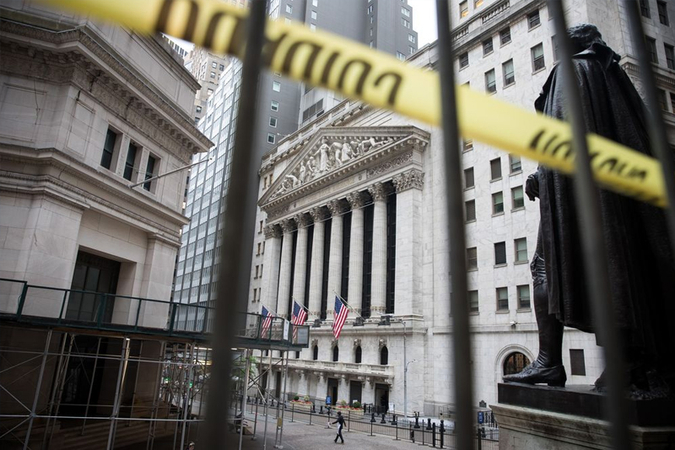
The New York Stock Exchange (NYSE). Photographer: Michael Nagle/Bloomberg
By Syndication Washington Post, Bloomberg · Max Zimmerman, Gregor Stuart Hunter
The New York Stock Exchange said it will delist three Chinese corporations to comply with a U.S. executive order that imposed restrictions on companies identified as affiliated with the Chinese military.
China Mobile Ltd., China Telecom Corp Ltd., China Unicom Hong Kong Ltd. will be suspended from trading between Jan. 7 and Jan. 11, and proceedings to delist them have started, according to a statement by the exchange.
In response, China’s Ministry of Commerce said on Jan. 2 that the country will adopt necessary actions to protect the rights of Chinese companies and hopes the two countries can work together to create a fair, predicable environment for businesses and investors.
Quantitative hedge fund managers including Renaissance Technologies, Dimensional Fund Advisors and Two Sigma Investments were among the largest holders in these U.S. listings but the stakes they held at the end of September were small, 13F filings show.
The three Chinese companies have separate listings in Hong Kong. All generate the entirety of their revenue in China and have no meaningful presence in the U.S. except for their listings there. Their shares are also thinly traded on the New York Stock Exchange compared to their primary listings in Hong Kong, making this NYSE delisting more of a symbolic blow amid heightened geopolitical friction between the U.S. and China.
President Donald Trump signed an order in November barring American investments in Chinese firms owned or controlled by the military, in a bid to pressure Beijing over what it views as abusive business practices. The order prohibited U.S. investors from buying and selling shares in a list of Chinese companies designated by the Pentagon as having military ties.
The Chinese Foreign Ministry later accused the U.S. of “viciously slandering” its military-civilian integration policies and vowed to protect the country’s companies. Chinese officials have also threatened to respond to previous Trump administration actions with their own blacklist of U.S. companies.
The executive order has resulted in a series of companies being removed from indexes compiled by MSCI Inc., S&P Dow Jones Global Indices and FTSE Russell.
The U.S. Federal Communications Commission in May barred China Mobile from operating in the U.S. In December, it ordered carriers to remove equipment made by Huawei Technologies Co., and begun looking into whether China Telecom should be allowed to operate in the country. China Telecom’s U.S. unit told the FCC in a June 8 filing that it’s an independent business based in the U.S. and not subject to Chinese government control.
Global exchanges, including NYSE and Nasdaq Inc., courted Chinese companies during the past decade as they attempted to expand their IPO business, particularly in the internet sector. In response, Hong Kong Exchanges & Clearing Ltd. changed its rules in recent years to lure back listings, including allowing share sales by companies with weighted voting rights — strengthening the power of company founders at the expense of weaker protections for minority investors.
Companies including e-commerce giants Alibaba Group Holding and JD.Com, which already had listings in New York, conducted secondary listings in Hong Kong in the past two years as tensions between the U.S. and China intensified on a range of issues including trade and the novel coronavirus.
By Syndication Washington Post, Bloomberg · Kurt Schussler
More time at home, reduced mobility and billionaire Masayoshi Son helped drive stocks in Japan in 2020, as the coronavirus pandemic became the dominating force separating winners from losers.
While the stay-at-home trend boosted game makers and online retailers including Nexon Co. and Mercari Inc., heightened health concerns saw drugmakers and medical-care innovators such as M3 Inc. also feature among the biggest gainers. At the other end of this teeter-totter were companies that thrive on domestic movement and foreign tourism: stocks tied to oil and autos, railways and airlines, as well as brick-and-mortar retailers.
Looking ahead, Naoya Oshikubo, senior economist at Sumitomo Mitsui Trust Asset Management Co., expects “further polarization” among companies as Japan makes a strong recovery in 2021. Demand for games, e-commerce, online medical care and work-from-home technology is unlikely to fade even after the pandemic is under control, he wrote in a note this month.
SMBC Nikko Securities Inc. expects a rotation following earnings reports in February, with value “taking the upper hand” from growth as restrictions on activity are eased and the economic recovery broadens. The broker sees de-carbonization, digitization and business consolidation as the key themes.
“Export sectors, led by manufacturing, are already seeing a clear cyclical recovery, and there are many names with high-quality environmental technologies,” Masashi Akutsu, chief equity strategist at SMBC Nikko, wrote in a Dec. 16 report. He sees exporters remaining better positioned in the first half of 2021, with domestic-focused sectors lagging.
Here’s a look at some of the most significant Japanese stock moves in 2020.
Winners:
– M3 Inc. (+195%). The top performer on the Nikkei 225 this year, M3 rode a wave of investor interest in online heath services, such as the company’s virtual drug-marketing platform and telemedicine tie-up with Line Corp. The same theme drove gains of more than 500% in Carenet Inc., making it the sixth biggest gainer on the Mothers index of startups, as well as a jump of over 340% in Medpeer Inc., which ranked No. 3 on Topix.
– Nexon Co. (+119%). Demand for videogames among people stuck at home helped shares of Nexon, Koei Tecmo Holdings Co. and Capcom Co. more than double this year. Among the console makers, Nintendo Co. jumped 50% and Sony Corp. climbed 39%. Nexon benefited from particularly strong growth in South Korea and high expectations for its Dungeon & Fighter game in China, as well as its surprise addition to the Nikkei 225.
– Mercari Inc. (+105%). Virtual flea-market operator Mercari is the largest stock on the Mothers Index and its surge accounted for about 20% of this year’s gain in the startup gauge. The e-commerce boom lifted a broad spectrum of players, from SoftBank affiliate Z Holdings Corp. (+35%) to online shop creation and payments firm Base Inc. (+456%) and food delivery website operator Demae-Can Co. (+179%).
– CyberAgent Inc. (+86%). CyberAgent was another beneficiary of the stay-at-home trend, with the market impressed by subscriber and revenue growth at its Abema video-streaming service, even though it has yet to contribute to earnings. The company also has a profitable game operation, and its internet advertising business is recovering from the Covid-19 hit earlier in the year.
– SoftBank Group Corp. (+69%).
Masayoshi Son’s tech conglomerate surged on a plan to sell about $43 billion in assets to buy back shares and pay down debt, with the company unloading chipmaker Arm and paring its stakes in Alibaba Group Holding Ltd., T-Mobile US Inc. and its domestic telecom unit SoftBank Corp. In addition to ongoing share repurchases, which have spurred speculation over whether Son is looking to take the company private, continued valuation gains and IPOs from the SoftBank Vision Fund portfolio may continue to drive the stock.
Chugai, a unit of Swiss drug giant Roche Holding, has received attention for testing of its Actemra arthritis remedy as a treatment for Covid-19, as well as growth in sales of its hemophilia drug Hemlibra. Daiichi Sankyo forged its second big cancer drug deal with AstraZeneca this year and was also selected as a Japanese supplier for the British drugmaker’s coronavirus vaccine.
– Tokyo Electron Ltd. (+61%).
Even coronavirus-sparked supply disruptions and ongoing trade tensions between the U.S. and China couldn’t damp the rally in semiconductor stocks this year. Chip-making equipment suppliers like Tokyo Electron benefited directly from increased spending on next-generation technology by the semiconductor giants, as well as indirectly from elevated demand for computers and smart devices.
The dent in demand for oil due to the coronavirus was the culprit behind the huge losses in three of the Nikkei 225’s worst performers of 2020. The more than 20% decline in oil prices hurt profits at energy explorer Inpex, while Mitsui E&S and JGC suffered from delays in energy-related projects due to the virus.
– Mitsubishi Motors Corp. (-53%).
While covid-19 hurt car sales all over, no Japanese automaker saw its stock slide more than Mitsubishi Motors. The company has been struggling with losses amid high costs and slumping sales. A report that Nissan Motor Co. was considering selling some or all of its 34% stake was the latest blow to a firm already reeling from trouble in the companies’ three-way alliance with Renault SA since the arrest of Carlos Ghosn.
– Nikon Corp. (-52%).
The dent to tourism and travel plans as well as cancellations of sporting and other events crushed demand for cameras, and Nikon tumbled the most among the big Japan brands. Delayed deliveries of flat-panel display equipment due to Covid-19 dragged on the company’s other major business.
– Citizen Watch Co. (-51%).
Citizen Watch dropped as lockdowns halted duty-free and other travel-related sales in addition to shuttering retail stores in North America, a key market for its timepieces. A similar slide was seen in smaller rival Seiko Holdings Corp. (-55%), while Casio Computer Co. (-14%) was less scathed as sales of G-Shock watches climbed in China.
– J Front Retailing Co. (-47%), West Japan Railway Co. (-43%), Japan Airlines Co. (-41%).
With inbound tourism ground to a halt, and domestic travel restricted for much of the year despite the government’s “Go To Travel” promotional campaign, shares of Japan Railway companies and both major airlines all fell 30% or more. Department-store operators were also negatively impacted, with J Front sliding the most, while smaller retailers such as suit shop Aoyama Trading Co. (-65%) and pub operator Chimney Co. (-50%) were hit even harder.
– Konica Minolta Inc. (-45%).
Konica Minolta posted its sixth-straight annual decline, the worst performer in Japan’s office-equipment space. The multiyear shift toward paperless offices was given an extra push in 2020 by the increasing work-from-home trend.
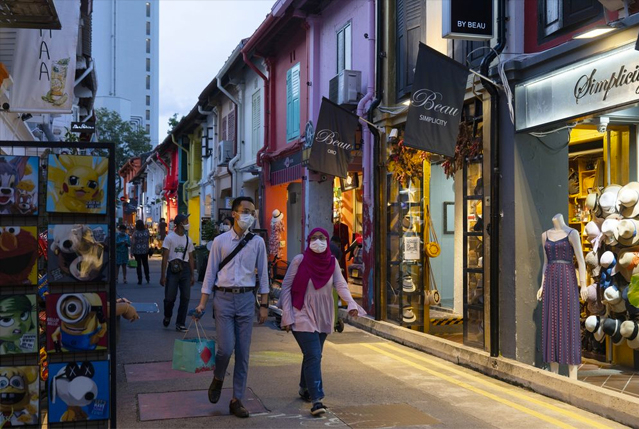
Shoppers in the Arab Street area of Singapore. Photographer: Wei Leng Tay/Bloomberg
By Syndication The Washington Post, Bloomberg · Krystal Chia, Michael S. Arnold
After suffering its worst economic downturn since its independence in 1965, Singapore is expecting to see a rebound in 2021, Prime Minister Lee Hsien Loong said Thursday, echoing other top officials to caution that the recovery will be uneven.
“Economically, we are not yet out of the woods either, but we are beginning to see signs of stabilization,” with employment picking up and multinational firms making new investments, Lee said in a New Year’s address. “We look forward to a rebound in 2021, although the recovery will be uneven, and activity is likely to remain below pre-covid-19 levels for some time.”
Singapore’s economy has been hammered by the global pandemic, which has slammed mainstays such as tourism and trade. Gross domestic product is expected to contract 6% to 6.5% this year, the Ministry of Trade and Industry said in November, before growing 4% to 6% in 2021.
Fourth-quarter and full-year GDP data due Monday will likely show that a recovery that began in the third quarter continued in the final three months of the year, according to economists surveyed by Bloomberg. Despite that, the full-year contraction is likely to be the most severe since the country’s independence in 1965.
Singapore officials have said there’s still scope to provide more fiscal stimulus after pledging about S$100 billion ($75.6 billion) in aid this year. Lee has said he sees the government running a budget deficit at least through early 2021, and perhaps longer, to support consumers and businesses. The next budget will be released Feb. 16.
This week, Singapore became one of the first countries in Asia to administer a coronavirus vaccine. The country has moved quickly since securing and approving Pfizer Inc. and BioNTech SE’s vaccine and will start giving shots to health-care workers, with those age 70 and older set to be vaccinated from February. Singapore also eased some social restrictions this week.
“We can now see light at the end of the tunnel,” Lee said in the speech. “But it will still take some time for enough people to be vaccinated before we are safe from another major uncontrolled outbreak.”
By Syndication The Washington Post, Bloomberg · Anna Shiryaevskaya, Stephen Stapczynski, Sergio Chapa
Liquefied natural gas traders anticipate a swift demand recovery in 2021 after a year in which the coronavirus pandemic prompted dramatic price swings.
Colder weather in key importing nations, outages at major production hubs and congestion along global shipping routes already have combined to push spot prices in Asia to the highest level since 2014. That’s a more than sixfold jump from a record low in April, making Asian LNG the best performer among major commodities in 2020.
Demand for the fuel used in heating and power generation is growing faster than for any other fossil fuel as nations look for a cheap, reliable and cleaner alternative to coal. The pandemic derailed that growth for 2020, but China and India are emerging as major sources of demand.
“A lot of countries are looking to import LNG,” Tom Holmberg, a partner at law firm Baker Botts LLP in Washington D.C., said by phone. “I still think we are going to see growth in the LNG market.”
Below are the key areas likely to shape the market in 2021:
– Uneven Demand Recovery
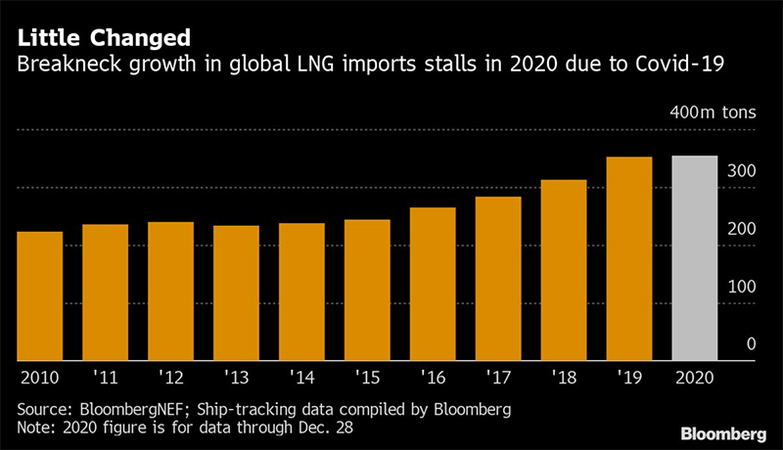
Global LNG imports in 2020 were roughly equal to the previous year, according to ship-tracking data compiled by Bloomberg. That was a big disappointment for an industry that has enjoyed 10% annual growth rate since 2016.
However, global gas demand is expected to resume growth next year. LNG demand, which makes up roughly 10% of the total, may rebound even faster, depending on how Pakistan, India and Bangladesh perform, said Manas Satapathy, a managing director in Accenture’s Energy business.
Shipments of the fuel into Asia have mostly recovered since the height of the pandemic, and the region’s LNG demand will rebound sharply next year, according to S&P Global Platts.
On the last day of 2020, spot Asian LNG price – the Japan-Korea Marker benchmark – rallied above $15 per million British thermal units for the first time since April 2014.
“It has been interesting to see how quickly Asian demand seems to have ramped up,” Holmberg said.
The picture in Europe is very different as countries grapple with a new surge of infections and lockdowns that sap energy demand. The continent is headed for a “very neutral recovery” in 2021, according to Satapathy.
Europe mainly relies on storage and pipeline gas shipments, which may be boosted with flows from a new link from Azerbaijan and the controversial Nord Stream 2 project that’s nearing completion.
– Supply Woes
Unplanned maintenance at LNG export facilities from Australia to Qatar to Malaysia has led to a tighter than expected market in the second half of the year. And delays in navigating the Panama Canal curbed supplies to Asia. If these disruptions persist well into the year, then prices could remain elevated well above current levels.
The Gas Exporting Countries Forum, which represents 60% of global LNG exports, expects supply to climb by 6% to 7% next year, up from 2% to 2.5% in 2020. LNG trade was much more resilient to this year’s challenges than imports in the fuel’s gaseous form, the group said in its short-term outlook.
The market will likely remain oversupplied next year, according to Vitol and Trafigura Group, two of the biggest trading houses active in LNG. Beyond that they expect the market to tighten.
– More Cancellations?
Traders will be watching to see if buyers of U.S. LNG scrap any cargoes next year. About 200 cargoes were canceled in the summer after the pandemic hit spot prices in Europe and Asia. While there’s unlikely to be a repeat of that in 2021, traders do expect some cancellations to help balance the market.
American gas exports are rising to fresh records every month as new facilities come online. But any dip in demand could force suppliers to shut-in cargoes. The nation has become a swing supplier because its contracts allow for scrapping deliveries, which enables exports to quickly respond to volatile markets.
– China-U.S. Relations
Trade relations between the U.S. and China will be a key focus. China is the fastest-growing LNG importer, and the U.S. is ramping up exports. There’s few long-term supply deals between the two nations even though LNG was a focus of President Donald Trump.
Joe Biden takes over as president on Jan. 20. A number of proposed U.S. LNG projects are hoping for more normal relations to help them sign deals with Chinese buyers.
“This certainly affects the LNG markets, particularly the LNG coming from the U.S.,” Holmberg said.
And with Chinese economy roaring back and offices open, Jack Fusco, chief executive officer of Cheniere Energy, anticipates that “deal making environment looks good for 2021.”
– Green Ambition
Environmentalists are increasingly looking at natural gas as a major polluter. After years of focusing on coal and oil, they’re turning their attention to how to zero out emissions from all fossil fuels. That shift has suppliers, buyers and shippers thinking green initiatives to clean up activities linked to methane and greenhouse gas emissions.
Half of the carbon footprint in the life cycle of an LNG cargo comes from upstream, Fusco said. The LNG producer is pushing for more transparency on carbon emissions for the fuel.
“Our customers are going to want to be sure that they can validate and audit what we’re telling them our carbon signature is,” he said.
The world’s first supply contract that required a declaration of emissions was signed this year while so-called carbon-neutral cargoes started flowing to China and Japan as nations outline ambitious targets to effectively zero out emissions.
All quiet in Dover: The calm before Brexit’s border storm
EconDec 31. 2020An empty terminal at the Port of Dover in Dover, England, on Dec. 23, 2020. MUST CREDIT: Bloomberg photo by Chris Ratcliffe. Photo by: Chris Ratcliffe — Bloomberg Location: Dover, United Kingdom
By Syndication The Washington Post, Bloomberg · Lizzy Burden, Richard Weiss
On the day the U.K. makes its final break with the European Union, the ports are clear of truck backups, goods are moving smoothly and grocery-store shelves are well stocked.
Even so, U.K. businesses that rely on some 1.2 billion pounds ($1.6 billion) worth of products crossing the border each day are taking no chances. At 11 p.m. Thursday, Brexit gets real.
Companies were already stockpiling and exploring alternatives to the crowded truck-ferry route across the English Channel when France unexpectedly closed its border for two days last week, citing a fast-moving Covid-19 outbreak in the U.K. The disruption produced miles-long backups at the Port of Dover — a warning shot for potential chaos as the Brexit transition period ends.
In response, logistics firms have redoubled efforts to relieve pressure on truck traffic, stepping up air freight, container ferry and air-cargo shipments. With the New Year arriving on a long weekend, concerns of an immediate repeat of last week’s spectacle have diminished. The port and its users will have the chance to ease into the new reality of a customs regime at the formerly open border.
“It should be quiet for at least the first few days,” said Richard Ballantyne, who heads the British Ports Association. “If there are blips of people turning up without the correct documentation, if it’s going to happen at any time, it’s better to be then.”
Dover remains the U.K.’s most important link with the EU, the country’s biggest trade partner. Still, the amount of tonnage has declined steadily since the year of the Brexit vote — down 14% from 2016 to 2019, Department for Transport data show. Other ports have meanwhile gained business: Liverpool’s traffic grew 7.6% and London Medway surged 43%.
The unanswered question is what happens in the coming weeks and months. With Britain’s departure from the single market come a host of regulations and customs paperwork that threaten to gum up the free flow of trade and add costs for importers and exporters on both sides of the split.
The trend toward other ports and unaccompanied freight moving by train or ferry, along with supplemental air-cargo shipments of vital goods, is expected to continue into the new year, according to port officials and logistics firms.
Container volumes traveling between the port of Tilbury, on the River Thames east of London, and Zeebrugge, Belgium, have increased by a fifth in December as firms sought alternatives to the short straits. P&O Ferries Ltd. has added an additional ship to the route to cope with demand.
Charles Hammond, chief executive officer of Tilbury owner Forth Ports Ltd., credits the coronavirus pandemic with changing the logistics industry’s dynamics. Unaccompanied freight is “the answer to a number of the questions of our time,” he said.
Kuehne + Nagel International, one of Europe’s biggest freight-forwarding firms, has switched some goods from trucks to container ferries. It drops off and picks up the goods by truck on either side, something some smaller firms aren’t able to do.
The company is still moving goods across the English Channel via roll-on roll-off truck ferries, after implementing software that’ll make it easier to clear customs. The amount of paperwork has increased five-fold because of the new procedures, Kuehne + Nagel spokesman Dominique Nadelhofer said.
Firms that rely on frictionless movement of parts are opting to maintain their stockpiles for now.
Jet-engine maker Rolls-Royce Holdings Plc is holding onto 100 million pounds worth of additional inventory as it monitors the flow of goods over coming weeks, according to a spokesman. It’s not clear when it’ll return to normal levels.
Products that can’t be stockpiled for long remain a concern, with aircraft being called in to clear up the remnants of last week’s shutdown. The cargo unit of Deutsche Lufthansa was scheduled to fly another Boeing 777F full of urgently needed goods — fruit, vegetables, clothing, oil-field equipment, medical equipment and jet-engine parts — from Frankfurt to Doncaster Sheffield Airport in England on Thursday.
That will be followed by a 100-ton load of fruit and vegetables on Jan. 2 meant for supermarkets such as J Sainsburyc, Tesco, Co-op Food and Aldi Stores Ltd.
Lufthansa Cargo is exploring ways to send freight from France to Ireland via ferry instead of trucking it through the U.K., which “currently makes little sense,” spokeswoman Jacqueline Casini said.
A potential shortage of truckers is a lingering concern from last week’s disruption, which stranded fresh seafood in trucks headed for Europe and sent fish prices haywire. Some drivers may “wait and see” before returning to the U.K. and others will demand more money, said Shane Brennan, CEO of the Cold Chain Federation, which represents movers of frozen and chilled goods.
The U.K. government on Wednesday extended an trade-credit insurance program that protects sellers against non-payment, a measure that will provide added support to the supply chain.
The acid test for British infrastructure will come next week, when traffic returns to normal levels, said Jimmy Buchan, Chief Executive Officer of the Scottish Seafood Association. “At that point buyers will be buying to export and replenish empty shelves,” he said. “Demand will be quite high.”
Ireland, which relies on truck traffic from the U.K. and through it from continental Europe, has hired 1,500 extra staff to deal with issues like tax and customs, as well as animal checks.
Irish officials warned of potential significant disruption to come as Brexit becomes reality, though delays may not take hold until next week. Two new ferries will start service from Rosslare to Dunkirk, France, on Saturday, augmenting one that’s already been added.
At Rotterdam, officials have set aside triple the parking area the port expects to need for trucks that show up with the wrong paperwork. Ninety percent of ferry users have signed up to its digital system, they said.
Despite the planning, some disruption is inevitable, said Tim Morris, CEO of the U.K. Major Ports Group.
“The ports and shipping companies are as prepared as they can be,” Morris said. “Outside of our control is how prepared British businesses are and how pragmatic European nations will be about border arrangements.”
Gold heads for best year in a decade with dollar on the ropes
EconDec 31. 2020A casting mold filled with molten gold in Semey, Kazakhstan, on June 7, 2016. MUST CREDIT: Bloomberg photo by Andrey Rudakov. Photo by: Andrey Rudakov — Bloomberg Location: Semey, Kazakhstan
By Syndication The Washington Post, Bloomberg · Eddie Spence Gold is set for the biggest annual advance in a decade after a tumultuous year, with gains this month aided by the dollar’s decline to the lowest level since April 2018.
Bullion hit a record in August as investors feared an unprecedented wave of stimulus by central banks and governments would lead to currency debasement and inflation. Holdings in bullion-backed exchange-traded funds set an all-time high in October.
While prices ebbed as the roll out of vaccines injected optimism into financial markets, the dollar’s continued weakness has helped support gold into the year-end.
Looking ahead, there’s little consensus from Wall Street’s biggest names on bullion’s direction. Morgan Stanley sees gold and other precious metals coming under pressure as financial markets normalize and longer maturity bonds yields rise. Meanwhile, HSBC Holdings sees gold climbing higher on continued uncertainty.
Much of gold’s performance next year will depend on whether the eventual return to normality is outweighed by ongoing stimulative policies. Led by Chair Jerome Powell, the U.S. Federal Reserve has signaled that its ultra-easy monetary conditions will last throughout 2021. Efforts to pass further fiscal stimulus through the Senate have hit another roadblock.
“Gold’s main drivers — weaker U.S. dollar and low real interest rates — are likely to provide support” even as vaccines are distributed around the world, said Vasu Menon, executive director, investment strategy, at Singapore-based Oversea-Chinese Banking Corp. With the lower-for-longer Fed, “it is too early to throw in the towel on gold,” he said in an email.
Gold was little changed at $1,894.95 an ounce at 10:04 a.m. in London. That’s up 6.6% this month, and 25% higher over 2020, poised for the biggest full-year advance since 2010. The Bloomberg Dollar Spot Index is heading for a third straight quarterly loss.
Spot silver traded at $26.4661 an ounce, up 48% this year. Palladium is on course for a fifth consecutive annual gain, with a rise of more than 20% in 2020. Platinum has climbed 11%.
The export of farm, fishery and livestock products to 18 countries that Thailand has free-trade agreement (FTA)s with inched up 1 per cent year on year in the first 11 months of 2020 to US$13.52 billion, Department of Trade Negotiations director-general Auramon Supthaweethum said.
In November alone, the export of farm goods to these countries grew 12 per cent month on month to $1.23 billion. Though exports to all countries increased, shipments to China surged 18 per cent, Japan 9 per cent, Asean region 11 per cent, South Korea 5 per cent, India 16 per cent, Peru 223 per cent and Chile 344 per cent.
Auramon said the export of Thai farm, fishery and livestock products has grown continuously this year despite the Covid-19 pandemic.
She called on exporters to reap the benefit of FTAs by carrying out stringent quality control to ensure the products are safe from the virus or contamination.
She added that six countries that Thailand has an FTA with, namely Australia, New Zealand, Hong Kong, Singapore, Brunei and Cambodia, have cancelled import tariff for Thai rice.
Meanwhile, 15 FTA countries comprising nine Asean nations, China, Australia, New Zealand, Chile, Peru and Hong Kong have lifted import tariff for Thai cassava, while 16 countries (Asean plus Japan, South Korea, Hong Kong, Australia, New Zealand, Chile and Peru) have removed tariff for all rubber products from Thailand.
Thai central bank worried at larger economic impact after virus surge
EconDec 31. 2020Chayawadee Chai-Anant, senior director of the BOT’s economic and policy department
By The Nation
The Bank of Thailand (BOT) has listed three concerns for economic recovery now that Thailand and other countries have been hit by a new surge of Covid-19 cases.
The fresh outbreak may disrupt the recovery more than calculated in the central bank’s December 20 assessment, Chayawadee Chai-Anant, senior director of the BOT’s economic and policy department, warned on Wednesday.
The central bank is watching closely to see whether the government can contain the outbreak, she said.
The second concern is that Thai exports may be hit hard by fresh lockdown restrictions imposed abroad, she warned.
The third concern is the Thai labour market. The job market’s recovery remains very fragile, with unemployment still high and compensation payments not dropping, she pointed out.
Jobless workers in the social security system accounted for 7.8 per cent of total unemployment in November, compared to 8.1 per cent in October. Those receiving compensation payments accounted for 4.7 per cent, little change from 4.9 per cent in the month before. Those working less than 20 hours per week both in farm and non-farm sectors dropped slightly to 2.2 million last month from 2.5 million in October. The weak labour market indicates the economic recovery does not have a broad base, said Chayawadee.
Partial economic recovery in November was driven by government stimulus while contraction of exports decelerated to 2.3 per cent. The baht appreciated sharply in November after Joe Biden won the US presidential election and vaccine development advanced – good news that fuelled capital inflows into Thai stock and bond markets. The baht’s appreciation decelerated in December as the US dollar rebound, she added.
The Stock Exchange of Thailand (SET) Index closed at 1,449.35 on Wednesday, down 12.60 points or 0.86 per cent. Transactions, meanwhile, totalled at Bt87.54 billion with an index high of 1,479.04 and a low of 1,445.36.
The index this year fell 144.53 points or by 7.32 per cent compared to 1563.88 last year.
Paiboon Narintarangkul, chairman of the Federation of Thai Capital Market Organisations, said SET dropped because the Covid-19 outbreak hit Thailand’s tourism industry badly, resulting in investors selling off Thai shares to reduce their investment risks.
“However, the drop was slight compared to other indices in the region,” he said.
The top 10 stocks with the highest trade value today were DELTA, GPSC, STGT, PTT, AEONTS, STARK, BANPU, IVL, TRUE and KBANK.
As of 4.30pm, the price of oil rose by US$0.32 or 0.67 per cent to $48.32 per barrel, while gold rose by $0.30 or 0.02 per cent, to $1,883.20 per ounce.
Other Asian indices were mixed:
Japan’s Nikkei Index closed at 27,444.17, down 123.98 or 0.45 per cent.
China’s Shanghai SE Composite Index closed at 3,414.45, up 35.42 points or 1.05 per cent, while Shenzhen SE Component Index closed at 14,201.56, up 231.35 points or 1.66 per cent.
Hong Kong’s Hang Seng Index closed at 27,147.11, up 578.62 points or 2.18 per cent.
South Korea’s KOSPI Index closed at 2,873.47, up 52.96 points or 1.88 per cent.
Taiwan’s TAIEX Index closed at 14,687.70, up 215.65 points or 1.49 per cent.



 An empty terminal at the Port of Dover in Dover, England, on Dec. 23, 2020. MUST CREDIT: Bloomberg photo by Chris Ratcliffe. Photo by: Chris Ratcliffe — Bloomberg Location: Dover, United Kingdom
 A casting mold filled with molten gold in Semey, Kazakhstan, on June 7, 2016. MUST CREDIT: Bloomberg photo by Andrey Rudakov. Photo by: Andrey Rudakov — Bloomberg Location: Semey, Kazakhstan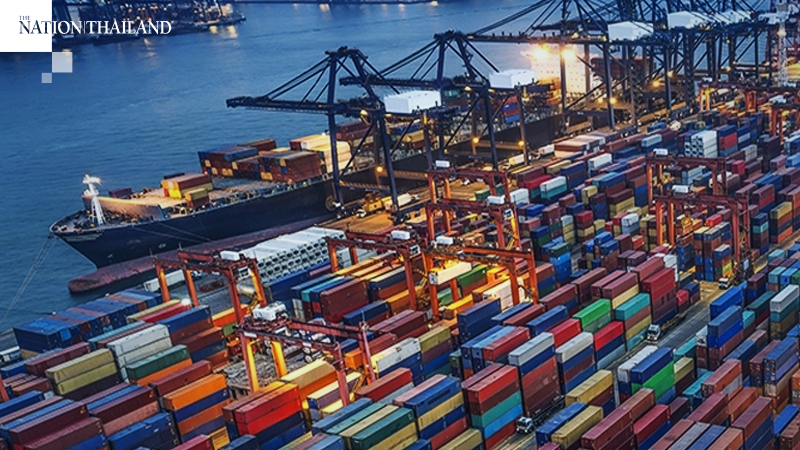
 Chayawadee Chai-Anant, senior director of the BOT’s economic and policy department