
Biden taps proponents of stricter Wall Street rules for his agency review teams during transition #SootinClaimon.Com

#SootinClaimon.Com : ขอบคุณแหล่งข้อมูล : หนังสือพิมพ์ The Nation.

Biden taps proponents of stricter Wall Street rules for his agency review teams during transition

EconNov 11. 2020
By The Washington Post · Rachel Siegel, Yeganeh Torbati · NATIONAL, BUSINESS, POLITICS 

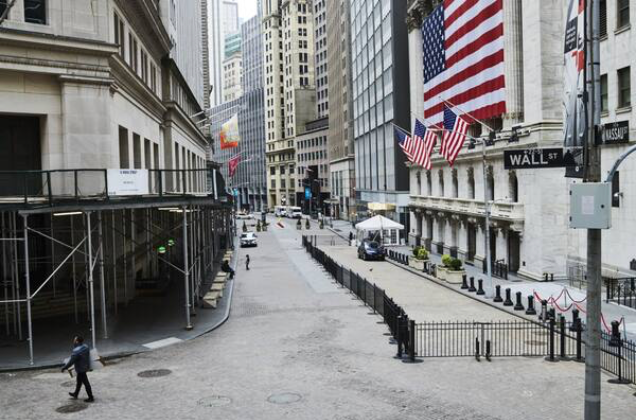
WASHINGTON – President-elect Joe Biden on Tuesday tapped a number of fierce advocates for Wall Street regulation to his agency review teams, a sign that he could be quickly preparing to take stock of the deregulatory push President Donald Trump has led for almost four years.

Many of these new advisers, who are expected to serve in their roles during the transition in November, December, and January, are veterans of the Obama administration or have played vocal roles in the past pushing for much tougher oversight of Wall Street as well as stricter consumer protection rules.

They include Michael Barr, who was a senior Treasury Department official during the Obama administration during the passage of the Dodd-Frank regulation law in 2010, and Leandra English, who Trump ousted from the Consumer Financial Protection Bureau during a messy power struggle several years ago.

The list of 500 experts are a crop of academics, economists, former Obama administration officials, and the sheer volume of names makes it difficult to determine how much sway any particular person might have. The list is broken into subgroups, as some of the advisers will look at the government operations from the Federal Reserve, Consumer Financial Protection Bureau, Treasury Department, Commerce Department and the Council of Economic Advisers, as well as a host of other government agencies.

Agency review teams come in during the transition and look at agency operations. They can prepare reports for the incoming administration on issues that are facing each agency, such as new regulations, staffing problems, or industry trends that are likely to need to be addressed. Some review teams come in and meet with existing agency officials for interviews. Others are less intrusive.

These teams are often not the groups who pick nominees for cabinet secretaries, though. That process is typically done by other officials on the transition.

Leading the team conducting a review of the Federal Reserve and other banking regulators is Gary Gensler, who headed the Commodity Futures Trading Commission from 2009 to 2014. In the Obama administration, Gensler advocated for strict regulation of derivates, a type of financial product that was central to the 2008 financial crisis. Gensler currently teachers at the MIT Sloan School of Management focusing on digital currencies, financial technology and public policy.

Gensler’s team includes Lisa Cook, an economics professor at Michigan State University focusing on economic growth, innovation and development. Cook served as a senior economist at the President’s Council of Economic Advisers in 2011 and 2012. Also advising the transition on the federal banking regulators is Mehrsa Baradaran, a professor at the University of California School of Law, who specializes in banking law, financial inclusion and the racial wealth gap.

Alongside Cook and Baradaran is Damon Silvers, policy director and special counsel to the AFL-CIO. Silvers is a longtime labor leader who was deputy chair of the Congressional Oversight Panel for the Troubled Asset Relief Program, a Treasury initiative to stabilize the country’s financial system during the Great Recession. Another team memebeer, Simon Johnson, currently at MIT, co-authored “13 Bankers,” one of the most widely-read books on the 2008-2009 financial crisis that called for breaking up the big banks and imposing restrictions on how large banks could grow.

The team reviewing operations at the Consumer Financial Protection Bureau, a major priority for progressive groups hoping to see aggressive action to rein in banks and corporations, is led by English, the former deputy CFPB director and most recently an adviser at New York’s Department of Financial Services.

English sued the Trump administration in 2017 to stop Trump from installing his pick as head of the agency, saying that she was the rightful acting director. Trump’s pick, Mick Mulvaney, had earlier called the agency a “joke” and advocated for it to be dissolved. After a more than six-month legal battle, English dropped the lawsuit and resigned from the agency.

Her presence on the Biden review team means the group will benefit from someone with close knowledge of the CFPB and its inner workings, since she was part of the team that helped build the agency during the Obama administration. Other former CFPB officials who are serving on the transition team are Ashwin Vasan, Brian Shearer, David Mayorga, and Diane Thompson.

Other members of the Biden review team include Manny Alvarez, commissioner of the California Department of Business Oversight, whose name has been mentioned among observers as a possible pick to eventually lead the CFPB in the Biden administration. Another member, Bill Bynum, has spent his career focusing on financial inclusion for the disenfranchised, especially in the South. Another member, Josh Nassar, of the United Automobile, Aerospace and Agricultural Implement Workers of America, has argued against financial deregulation in the Trump era.

All of the CFPB transition team members are serving in a volunteer capacity, meaning they are not being paid by the Biden transition.

The economy is recovering faster than expected, but the overwhelming uncertainty from the coronavirus pandemic has experts wary that those gains can be sustained. Come January, the Biden administration is expected to prioritize another massive stimulus package. Biden also campaigned on tax increases for businesses and some of the wealthiest Americans.

Much of Biden’s economic agenda will be implemented by his pick for Treasury Secretary. A leading candidate is Federal Reserve Governor Lael Brainard, who served as Treasury’s top financial diplomat in the Obama administration. At the Fed, Brainard has consistently pushed back against loosening rules on the banking system put in place after the Great Recession, a position echoed by many of the experts sought out by the Biden transition team.


Tech stocks lead market losses after big rally #SootinClaimon.Com

#SootinClaimon.Com : ขอบคุณแหล่งข้อมูล : หนังสือพิมพ์ The Nation.

Tech stocks lead market losses after big rally

EconNov 11. 2020

By Syndication Washington Post, Bloomberg · Rita Nazareth, Kamaron Leach · BUSINESS 
Stocks dropped amid a sell-off in big tech and speculation that this month’s rally has outpaced prospects for an economic rebound as coronavirus cases surge. Treasurys fell.

The S&P 500 retreated from a two-month high as the slide in technology shares outweighed gains in industrial and energy companies. The Nasdaq 100 slumped as much as 2.7% on Tuesday. Amazon.com Inc. sank as the online-retail giant faced an antitrust complaint from the European Union, while American depositary receipts of Alibaba Group Holding Ltd. tumbled after China tightened the scrutiny over internet behemoths. Meanwhile, the Dow Jones industrial average outperformed as Boeing Co. extended its November rally to more than 30% on news that regulators could lift the 737 Max grounding as soon as next week. The Russell 2000 Index of small caps climbed to the highest since August 2018.

After all the enthusiasm that lifted global equities and sent havens into a tailspin, some analysts said the moves may have gone too far. The coronavirus shot still has several hurdles to clear, there’s concern over fiscal stimulus, the transition of power to President-elect Joe Biden and a virus resurgence. The U.S. reported a record 142,907 new infections on Monday, and Gov. Phil Murphy, D, said New Jersey’s jump in cases is “devastating.” Despite the uncertainties, the S&P 500’s valuations are near the highest levels since the dot-com era.

“You still have a tremendous amount of uncertainty out there, and while equities may continue to climb a wall of worry, the stock market is still subject to the rules of gravity,” said Jonathan Boyar, managing director at Boyar Value Group.

With the Nasdaq Composite Index down for a second straight session, an ominous double-top pattern is forming. That should put all eyes on the 50- and 100-day moving averages as the first and second line of support for the tech-heavy gauge. Megacaps extended the slide that accompanied Monday’s rotation out of pandemic favorites and into value stocks, and potentially setting up a test of the 11,000 level around the 100-day line.

Meanwhile, China unveiled regulations to root out monopolistic practices in the internet industry, seeking to curtail the growing influence of corporations like Alibaba and Tencent Holdings Ltd. The rules, which sent both stocks tumbling and sparked a wider sell-off in the nation’s equities, landed about a week after new restrictions on the finance sector that triggered the shock suspension of Ant Group Co.’s $35 billion initial public offering.

These are some of the main moves in markets:

Stocks

– The S&P 500 Index dropped 0.2% at 4 p.m. EST.

– The Stoxx Europe 600 Index increased 0.9%.

– The MSCI Asia Pacific Index decreased 0.1%.

Currencies

– The Bloomberg Dollar Spot Index was little changed.

– The euro was little changed at $1.1811.

– The Japanese yen strengthened 0.1% to 105.30 per dollar.

Bonds

– The yield on 10-year Treasurys gained three basis points to 0.96%.

– Germany’s 10-year yield rose two basis points to -0.49%.

– Britain’s 10-year yield climbed three basis points to 0.401%.

Commodities

– The Bloomberg Commodity Index gained 1.7%.

– West Texas Intermediate crude increased 2.7% to $41.39 a barrel.

– Gold strengthened 0.8% to $1,877.15 an ounce.

Palm oil price surging as virus retreats #SootinClaimon.Com

#SootinClaimon.Com : ขอบคุณแหล่งข้อมูล : หนังสือพิมพ์ The Nation.

Palm oil price surging as virus retreats

EconNov 11. 2020

By The Nation

The prices of oil-palm fruit and palm oil are rising as the Covid-19 outbreak eases, the Office of Agricultural Economics (OAE) said on Tuesday.

The ex-factory price of oil-palm fruit in key production provinces such as Surat Thani, Krabi and Chumpon rose to Bt6-Bt7.90 per kilo as of Tuesday (November 10), from Bt4.10-Bt5 as of October 1.

The price of crude palm oil rose to Bt39.7 per kilo as of Tuesday from Bt25-Bt25.25 per kilo as of October 1.

The government has introduced measures to boost the use of palm oil for generating electricity and making biodiesel, and also pushed exports to reduce local oversupply, said OAE deputy secretary-general Unchana Tracho.

Low production levels mean Thailand is currently storing between 30,000 and 80,000 tonnes of crude palm oil per month. This is expected to rise to normal levels of 280,000-320,000 tonnes per month at the end of this year.

The prices are expected to continue to rise through the first quarter of next year.

‘Let’s Go Halves’ shopping subsidy could be extended #SootinClaimon.Com

#SootinClaimon.Com : ขอบคุณแหล่งข้อมูล : หนังสือพิมพ์ The Nation.

‘Let’s Go Halves’ shopping subsidy could be extended

EconNov 11. 2020 Deputy Prime Minister Supattanapong PunmeechaowDeputy Prime Minister Supattanapong Punmeechaow 

By The Nation

The Centre for Economic Situation Administration (CESA) will meet next week to decide whether to extend the “Khon La Khrueng” (Let’s Go Halves) subsidised-shopping scheme, said Deputy Prime Minister Supattanapong Punmeechaow.

The scheme, which runs from October 23 to December 31, offers about 10 million citizens discounts of up to Bt150 per day on purchases at participating stores, capped at Bt3,000 throughout the period.

Supattanapong declined to say whether the subsidy would be increased from Bt150 per day.

The government is also evaluating whether additional measures are needed to encourage consumers’ spending, he added.

He estimated the economy next year would grow at between 4 and 5 per cent, adding that the government will accelerate state spending to boost recovery from the Covid-19 crisis.

Cabinet annexes more land for EEC’s Silicon Valley #SootinClaimon.Com

#SootinClaimon.Com : ขอบคุณแหล่งข้อมูล : หนังสือพิมพ์ The Nation.

Cabinet annexes more land for EEC’s Silicon Valley 

EconNov 11. 2020

By The Nation

The Cabinet on Tuesday approved a proposal to incorporate Rayong’s Wang Chan district into the Eastern Economic Corridor (EEC). The rezoning of Wang Chan from rural community (yellow) to special economic zone (brown) was requested by the EEC Policy Committee. 

The rezoned area covers 152 rai, or 24.3 hectares.

The land will be added to the Wang Chan economic zone to make a 3,454-rai tract earmarked for innovative and high-tech development, including housing. 

A highlight of the planned development is an innovation hub at Wang Chan Valley.

The hub will be built by Thailand’s largest energy group PTT, in a collaboration with the National Science and Technology Development Agency, Vidyasirimedhi Institute of Science and Technology, the Civil Aviation Authority of Thailand, the National Broadcasting and Telecommunications Commission and three telecom firms – AIS, True and dtac.

SET soars over news of Covid vaccine, hope of improved global trade under Biden #SootinClaimon.Com

#SootinClaimon.Com : ขอบคุณแหล่งข้อมูล : หนังสือพิมพ์ The Nation.

SET soars over news of Covid vaccine, hope of improved global trade under Biden

EconNov 10. 2020

By The Nation

The Stock Exchange of Thailand (SET) Index closed at 1,341.24 on Tuesday, up 55.36 points or 4.31 per cent. The volume of total transactions was Bt166.67 billion with an index high of 1,346.72 and a low of 1,313.04.

In the morning session, a Krungsri Securities analyst said he expected the day’s index to rise to between 1,300 and 1,310 thanks to progress being made in the development of a Covid-19 vaccine, hopes of a global trade recovery under the Joe Biden US presidency and rising price of oil.

However, he warned investors to beware of market volatility from listed companies’ third-quarter business results and short-term mass sell-offs of stocks.

“We expect positive sentiment from progress in the development of a Covid-19 vaccine will help boost recovery in economic activities, demand for fuel and mass buy-ups in large-cap stocks,” he predicted.

The top 10 stocks with the highest trade value today were AOT, KBANK, MINT, PTT, STGT, SCB, BBL, CPALL, PTTEP and BDMS.

As of 4.30pm, the price of oil rose by US$0.61 or 1.51 per cent to $40.90 per barrel, while gold rose by $28.40 or 1.53 per cent, to $1,882.80 per ounce.

Other Asian indices were mixed:

Japan’s Nikkei Index closed at 24,905.59, up 65.75 points or 0.26 per cent.

China’s Shanghai SE Composite Index closed at 3,360.15, down 13.59 points or 0.40 per cent, while Shenzhen SE Component Index closed at 13,993.34, down 147.82 points or 1.05 per cent.

Hong Kong’s Hang Seng Index closed at 26,301.48, up 285.31 points or 1.10 per cent.

South Korea’s KOSPI Index closed at 2,452.83, up 5.63 points or 0.23 per cent.

Taiwan’s TAIEX Index closed at 13,081.72, down 45.75 points or 0.35 per cent.

Intouch, Thaicom stocks take big hit after ministry seeks compensation for lost satellite #SootinClaimon.Com

#SootinClaimon.Com : ขอบคุณแหล่งข้อมูล : หนังสือพิมพ์ The Nation.

Intouch, Thaicom stocks take big hit after ministry seeks compensation for lost satellite

EconNov 10. 2020

By The Nation

The stock price of Intouch Holdings (INTUCH) and Thaicom (THCOM) on Tuesday dropped sharply despite the rise in the Stock Exchange of Thailand (SET) Index after the Digital Economy and Society (DES) Ministry claimed compensation of more than Bt7.7 billion for the damage to Thaicom 5 satellite.

In the morning session, the price of INTUCH shares dropped by Bt0.75, or 1.39 per cent, to Bt53.25 per share, while THCOM dropped by Bt0.05, or 0.92 per cent, to Bt5.40 per share.

INTUCH informed the SET on Monday that the DES Ministry had issued a notice, urging the company and THCOM to construct and deliver a new satellite to be used instead of Thaicom 5 satellite by next year. If they cannot deliver, they must pay damages of Bt7.7 billion with an interest rate of 7.5 per cent per year.

Meanwhile, they must pay a fine of Bt4.98 million with an interest rate of 7.5 per cent per annum until the delivery of a new satellite or full payment of damages is completed.

On December 17, 2019, Thaicom 5 experienced technical difficulties, causing limitations in monitoring the status of the satellite. THCOM, in which INTUCH is a major shareholder, performed several unsuccessful attempts to recover the satellite after the anomaly occurred. The satellite manufacturer eventually suggested deorbiting the Thaicom 5 satellite 14 years after its launch in May 2006.

DES Minister Buddhipongse Punnakanta acknowledged that Thaicom 5 satellite is now space debris, so the ministry has to establish a working group for claiming compensation from INTUCH and THCOM.

“As a minister, I have to submit a notice to these private companies to protect the interest of the country,” he said.

SET soars amid good progress in Covid-19 vaccine, hopes for global trade from Biden’s victory #SootinClaimon.Com

#SootinClaimon.Com : ขอบคุณแหล่งข้อมูล : หนังสือพิมพ์ The Nation.

SET soars amid good progress in Covid-19 vaccine, hopes for global trade from Biden’s victory

EconNov 10. 2020

By The Nation

The Stock Exchange of Thailand (SET) Index rose by 31.15 points, or 2.42 per cent, to 1,317.03 in the morning session on Tuesday.

An analyst at Krungsri Securities expected the day’s index to rise to between 1,300 and 1,310 from good progress in developing a Covid-19 vaccine, hopes of a global trade recovery after former vice president Joe Biden won the US presidential election, and the rising oil price.

However, he warned investors to beware of market volatility from listed companies’ third-quarter business results and short-term mass sell-offs of stocks.

“We expect positive sentiment from progress in developing a Covid-19 vaccine would help boost recovery in economic activities, demand for fuels and mass buy-ups in large-cap stocks,” he said

He recommended that investors buy STGT, STA, EPG, AP, COM7, SYNEX, ASIAN, HANA, SVI and TVO, whose third-quarter performances are expected to improve.

The SET Index closed at 1,285.88 on Monday, up 25.80 points or 2.05 per cent. Total transactions amounted to Bt77.89 billion with an index high of 1,293.90 and a low of 1,277.52.

Gold slumps amid positive news on Covid-19 vaccine, Biden victory #SootinClaimon.Com

#SootinClaimon.Com : ขอบคุณแหล่งข้อมูล : หนังสือพิมพ์ The Nation.

Gold slumps amid positive news on Covid-19 vaccine, Biden victory

EconNov 10. 2020

By The Nation

The price of gold dropped sharply by Bt1,200 per baht weight in morning trade on Tuesday, the Gold Traders Association reported.

As of 9.27am, the buying price of a gold bar was Bt27,000 per baht weight and selling price Bt27,100, while gold ornaments were priced at Bt26,514.84 and Bt27,600, respectively.

At close on Monday, the buying price of a gold bar was Bt28,200 per baht weight and selling price Bt28,300 while gold ornaments were Bt27,697.32 and Bt28,800, respectively.

Spot gold price moved to US$1,877 (Bt57,174) per ounce in the morning after the price dropped by US$97.3 to $1,854.4 per ounce at close on Monday due to mass sell-offs of safe-haven assets in response to the good progress in developing a Covid-19 vaccine, and former vice president Joe Biden’s victory in the US presidential election.

Hong Kong gold price dropped by HK$800 to $17,330 (Bt68,082) per tael on Tuesday morning, the Chinese Gold and Silver Exchange Society reported.

Experts call for removing outdated laws to boost national competence #SootinClaimon.Com

#SootinClaimon.Com : ขอบคุณแหล่งข้อมูล : หนังสือพิมพ์ The Nation.

Experts call for removing outdated laws to boost national competence

EconNov 10. 2020Dr Kiratipong NaewmaleeDr Kiratipong Naewmalee 

By The Nation

Thailand must tackle red tape and get rid of outdated laws that obstruct free competition and increase the cost of doing business, two researchers from the Thailand Development Research Institute (TDRI) said.

In their talk on “Laws as Computer Code”, research fellows Saliltorn Thongmeensuk and Kiratipong Naewmalee argued that laws and regulations are comparable to machine code instruction executed by computers. “If the code is written correctly, the computer can function properly. However, if programers write the code poorly, the computer will not function well or will not function at all.”

“To increase our country’s competency, Thailand urgently needs to dispose of these excessively burdensome laws and regulations,” they said.

Just as in the case of a computer code, if the law is designed properly and proportionately implemented, citizens can have a better a quality of life.

On the other hand, bad laws can create unnecessary burden and negatively restrict the rights and freedoms of people, they said.

According to a TDRI study, there are approximately 1,000 laws and regulations that require businesses to acquire licences to operate in Thailand, which costs the private sector more than Bt200 billion a year, regardless of additional processing fees. If the government axes these overlapping laws and regulations, the private sector can save costs of up to Bt130 billion a year, or about 0.8 per cent of GDP in 2018.

“Revamping laws and red tape can effectively assist the private sector’s competitiveness and boost the economy without state financial interventions,” said Kiratipong. “This measure is especially urgent while the economy is hit hard by the Covid-19 pandemic.”

Instead of trimming laws and red tape, the government has passed about 70,000 new laws each year. Meanwhile, the country has more than 1,700 types of business licences which require over 10,500 bureaucratic procedures.

Also, the government has set up 345 committees to monitor a variety of laws which more often than not aggravate the red-tape maze rather than provide legal solutions, the duo said.

Some regulatory provisions are vague and up to interpretation, causing confusion and weakening legal enforcement. In addition, some of them are out of touch with changes in society and technology. Some maintain business monopoly which hurts small-scale merchants and is also against our constitutional mandates, the TDRI researchers said.

One case in point is the 2008 Alcoholic Beverage Control Act. It prohibits both direct and indirect promotion of alcohol consumption. As a result, if a logo of an alcoholic beverage appears on a personal post on social media or a restaurant menu, it may be interpreted as marketing of an alcoholic beverage and therefore illegal. Furthermore, there is a maximum fine of Bt500,000 for this offence while there is only a Bt200,000 maximum fine for drunk driving resulting in death.

They said the 1934 Postal Act exemplifies how outmoded laws maintain state monopoly and hurt consumer interest. The Postal Office Department has transformed into Thailand Post, a state enterprise, but its monopoly over postal services is still protected by 86-year-old regulations. As a result, other postal service companies have to pay Thailand Post certain fees.

“Business monopoly violates the right to free and fair competition guaranteed by the constitution,” Saliltorn pointed out.

“Therefore, before passing any law, it is necessary for legislators to make sure that such legislation can truly solve the problem and that creating new laws is the best solution to the problem, which does not exceedingly affect the rights and freedoms of the citizens,” Saliltorn said.

But with political will, there are solutions, said Kiratipong.

Before issuing any new laws and rules, they must go through the Regulatory Impact Assessment (RIA) to estimate their impacts on the public, state mechanisms and businesses.

Existing laws and rules must be re-evaluated for their usefulness. They must be eliminated if no longer useful, or be simplified to fit with the needs of the market economy. This process is called Regulatory Guillotine (RG).

Many countries have experienced similar problems from outdated and redundant laws and rules which hurt citizens, businesses and the economy. But their efforts to eliminate outdated laws and rules have significantly cut business costs and improved competitiveness, he said.

He cited South Korea’s RG efforts, which succeeded in eliminating 48 per cent of its laws, cutting government costs by 4.4 per cent of GDP, and increasing one million job placements.

Although the 2017 Constitution has institutionalised the RIA and RG assessment under Section 77, the government has issued about 70,000 new laws since then. Kiratipong outlined what should be done to free the country from outdated laws and rules:

– Improve the competency of officials involved so they understand their roles in RIA and RG;

– Set up clearer frameworks for the RIA and RG procedures as guidelines for the concerned officials;

– Set up a quality control agency to evaluate RIA and RG reports and improve their assessment standards with internal and external auditing;

– Develop a central database to facilitate people’s participation and public input;

– Seek other options to solve problems outside the legal framework.

The success in eliminating and simplifying outdated laws and rules depend on three main factors, said Dr Kiratipong, mentioning, “political commitment and clear goals; close collaboration between the government, civil society and business sector; and, lastly, a quality control agency for RIA and RG procedures.”

If the government is determined to improve RIA and RG performance, then laws and rules, as the country’s software, would contribute to national competency, he said.

“Equally important, we must look at other options that are more efficient and less costly to tackle the problems,” he said.

“We must look outside the legal framework. We must realise that laws are not necessarily the only solution.”