Total lockdown an option as Covid cases spike in Singapore
Southeast Asia reported 75,832 new Covid-19 cases on Friday, lower than Thursday’s 80,238. There were 1,390 fatalities, almost on par with the previous day’s 1,388.
The number of Covid-19 cases in the region crossed 10.83 million and the death toll rose to 240,284.
Singapore reported 573 new cases and one death on Friday, bringing cumulative cases in the country to 70,612 with 58 deaths. The government said the infection rate been climbing again due to the spread of the delta variant of the virus, which may hinder the country’s plan of “living with Covid-19”. It added that more intense testing and social distancing measures will be employed, while total lockdown measures will remain a possibility if the situation escalates.
Meanwhile Vietnam plans to reopen the beach-fringed island of Phu Quoc to foreign tourists from next month, as the country looks at ways to revive an economy suffering from extended lockdowns due to the coronavirus pandemic. Fully vaccinated tourists with a negative coronavirus test will be eligible to visit Phu Quoc either on chartered or commercial flights. Foreign arrivals to Vietnam slumped from 18 million in 2019, when tourism revenue was $31 billion or nearly 12 per cent of gross domestic product, to 3.8 million visitors last year.
U.S. Fed officials prepare for tapering asset purchases in November: media
While Fed officials are unlikely to announce a plan for tapering asset purchases at their meeting on Sept. 21-22, Fed Chairman Jerome Powell could use that gathering to signal they are likely to start the process at their following session on Nov. 2-3, according to The Wall Street Journal.
U.S. Federal Reserve officials will seek to forge agreement at their coming meeting later this month to begin tapering the central bank’s asset purchases in November, The Wall Street Journal reported on Friday.
While Fed officials are unlikely to announce a plan for tapering asset purchases at their meeting on Sept. 21-22, Fed Chairman Jerome Powell could use that gathering to signal they are likely to start the process at their following session on Nov. 2-3, according to the Journal.
Under the plans taking shape, Fed officials could reduce those purchases at a pace that allows them to conclude asset buying by the middle of next year, the report said.
The Fed has pledged to keep its benchmark interest rate unchanged at the record-low level of near zero, while continuing its asset purchase program at least at the current pace of 120 billion U.S. dollars per month until “substantial further progress” has been made on employment and inflation.
Many Fed officials have said in recent interviews and public statements that the central bank could begin reducing asset purchases this year.
“Assuming the economy continues to improve as I anticipate, it could be appropriate to start reducing the pace of asset purchases this year,” Federal Reserve Bank of New York President John Williams said Wednesday at a virtual event.
“I will be carefully assessing the incoming data on the labor market and what it means for the economic outlook, as well as assessing risks such as the effects of the Delta variant,” he said.
Food, job insecurity primary concern in Afghanistan: WFP
“It is now a race against time to deliver lifesaving assistance to the Afghan people before roads are cut off by snow,” said a UN official.
Food and job insecurity is now the primary cause of concern for families in Afghanistan, Anthea Webb, deputy regional director for the World Food Program (WFP), told a UN press briefing on Friday.
With winter setting in and the economy on the verge of collapsing, their worries are also growing, she said via a conference call.
Quoting from the latest survey of the WFP, she said that 93 percent of households in Afghanistan have no sufficient access to food now.
The randomized phone survey, carried out from Aug. 21 to Sept. 5 in all provinces in the country, revealed that three in four Afghan families have been reducing portions or borrowing food.
Photo taken on Sept. 8, 2021 shows a view of a street in Kabul, capital of Afghanistan.
“They are buying cheaper food, foregoing more nutritious options such as meat, dairy products and vegetables. Parents are skipping meals entirely to allow their children to eat,” Webb said.
She added that food insecurity in Afghanistan had already been widespread before Aug. 15, with 81 percent of households reporting insufficient food consumption, with one in three Afghans signaling acute food insecurity.
“It is now a race against time to deliver lifesaving assistance to the Afghan people before roads are cut off by snow,” the UN official said.
She told reporters that the main reason the situation had gotten so much worse over the past month was that many Afghans did not have access to the money they needed to buy enough food.
UN Secretary-General Antonio Guterres has announced that he will travel to Geneva on Sept. 13 to convene a high-level humanitarian meeting to address the growing needs in Afghanistan.
People walk on the street in Kabul, capital of Afghanistan, Aug. 31, 2021.
U.S. COVID-19 vaccination strategy draws mixed reactions
The Biden administrations far-reaching announcement mandating coronavirus vaccines or rigorous testing for larger businesses prompted a mix of critical and supportive responses from companies, employers and corporate advocacy groups.
Various reactions have risen over the sweeping new vaccine requirements announced by U.S. President Joe Biden on Thursday together with a new action plan to curb the surging COVID-19 cases driven by the highly contagious Delta variant.
Biden outlined a broad plan to increase COVID-19 vaccination rates in the country as cases plateau at high numbers, pressuring private employers to immunize their workforce as well as mandating the shots for federal workers, contractors and employees of health-care facilities that receive Medicare or Medicaid funding.
With the plan, the White House is particularly compelling businesses with more than 100 employees to require their workers be vaccinated against the novel coronavirus or subjected to weekly testing. Companies that ignore the policy could face penalties of up to 14,000 U.S. dollars for each violation. Also, companies would be required to give workers paid time off to get the vaccine.
The employer mandates, which the White House estimates could reach as many as 80 million people, or two-thirds of U.S. workers, would be the most extensive government intervention into private companies and employer practices since the pandemic began.
Patrons dine at a restaurant in Navy Yard neighborhood in Washington D.C., the United States on Aug. 31, 2021.
FOR ECONOMY President Biden’s aggressive move to expand the number of vaccinated Americans and halt the spread of the Delta variant is not only an effort to save lives, but an attempt to counter the continuing and evolving threat that the virus poses to the economy, reported The New York Times on Thursday.
Delta’s rise has been fueled in part by the inability of Biden and his administration to persuade millions of vaccine-refusing Americans to inoculate themselves against the virus. That has created another problem: a drag on the economic recovery, according to the report.
Real-time gauges of restaurant visits, airline travel and other services show consumers pulled back on some face-to-face spending in recent weeks. In August, the president and his team also blamed Delta for slowing job growth.
“The virus threatens the recovery even though consumers and business owners are not retrenching the way they did when the coronavirus began to spread in the United States in the spring of 2020,” added NYT.
Photo taken on July 20, 2018 shows a passenger plane of U.S. Delta Air Line at Hartsfield-Jackson Atlanta International Airport in Atlanta, the United States.
COMPANIES DIFFER The Biden administration’s far-reaching announcement mandating coronavirus vaccines or rigorous testing for larger businesses prompted a mix of critical and supportive responses from companies, employers and corporate advocacy groups, reported The Washington Post (WP) on Friday.
While some companies, such as McDonald’s, Delta Air Lines and Tyson Foods, have already moved to mandate vaccinations or regular testing in their U.S. workforces and offices, the new federal rules threaten to escalate tensions in office workplaces, where some workers have already been arguing about masks and testing rules.
Neil Bradley, executive vice president and chief policy officer at the Chamber of Commerce, which represents thousands of businesses affected by the measure, said that “the chamber will carefully review the details of the executive orders and associated regulations.”
On Thursday, Business Roundtable President Joshua Bolten said the group, which represents chief executives from some of the largest U.S. companies, “welcomes the Biden administration’s continued vigilance in the fight against COVID-19,” adding that “America’s business leaders know how critical vaccination and testing are,” which is why many are encouraging customers and employees to get vaccinated and providing paid time off.
REPUBLICANS ENRAGED Republican leaders in the United States are blasting President Biden’s new coronavirus vaccine mandates for businesses and federal workers, decrying them as unconstitutional infringements on personal liberties and promising to sue, reported WP on Friday.
Republican governors from Texas to Missouri and Georgia threatened to fight back. Texas Governor Greg Abbott called the mandates “an assault on private businesses” and said the state is “already working to halt this power grab.”
Wyoming Governor Mark Gordon said he asked his state’s attorney general “to stand prepared to take all actions to oppose this administration’s unconstitutional overreach of executive power.”
South Dakota Governor Kristi L. Noem said “see you in court,” and Republican National Committee Chairwoman Ronna McDaniel said the group “will sue the administration to protect Americans and their liberties.”
Texas Governor Greg Abbott speaks at a press briefing in Santa Fe, Texas, the United States, May 18, 2018.
Laos launches herbal cure for Covid-19 as new cases in Asean surge
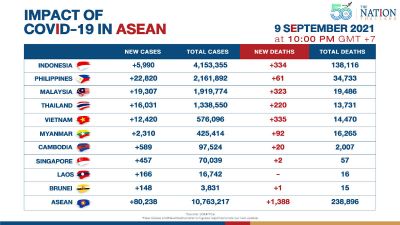
Southeast Asia saw a sharp decrease in Covid-19 related deaths though the number of new cases rose on Thursday, collated data showed.
Asean reported 80,238 new cases, higher than Wednesday’s 70,045, but deaths were lower at 1,388 from Wednesday’s 1,920.
The number of Covid-19 cases in the region crossed 10.76 million, while the death toll climbed to 238,896.
Cambodia reported 589 new cases and 20 deaths on Thursday, bringing cumulative cases in the country to 97,524 with 2,007 deaths.
The Phnom Penh administration office announced the extension of disease control measures in the city for another 14 days, until September 23, to curb the spread of Covid-19. These measures include a ban on public gathering of more than 15 people and sales of alcoholic beverages.
Meanwhile, Laos’ Institute of Traditional Medicine announced that it has researched the process of producing herbal medications in capsule form, which are now being used to treat patients infected with Covid-19.
Medical personnel in Laos are already treating some 450 Covid-19 patients using herbal medicines in capsules in the provinces of Champasak and Savannakhet. The capsules that contain green chiretta (Fah Talai Jone), fish mint and finger root have proved to be effective in the treatment of respiratory diseases, particularly Covid-19.
China to donate 100 mln more doses of COVID-19 vaccines to developing countries by year end: Xi
China will donate 100 million more doses of COVID-19 vaccines to developing countries within this year on top of a donation of 100 million U.S. dollars to COVAX, said Chinese President Xi Jinping on Thursday.
Xi made the announcement in Beijing while addressing the 13th BRICS summit via video link.
China will strive to provide a total of 2 billion doses of COVID-19 vaccines to the world by the end of this year, said Xi, noting that China, to date, has provided more than 1 billion doses of finished and bulk vaccines to over 100 countries and international organizations.
Putin attributes Afghan crisis to imposition of foreign values
It is necessary to ensure that countries with different political and social systems, national interests, and spiritual and moral values are able to coexist, Putin said.
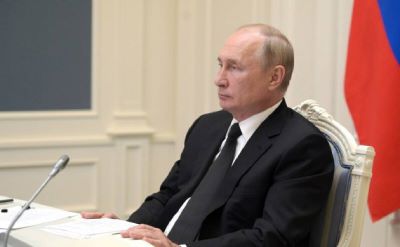
The current crisis in Afghanistan is a direct consequence of “irresponsible attempts to impose alien values from the outside” on the country, Russian President Vladimir Putin said Thursday.
Addressing the 13th BRICS summit via video link, Putin pointed out foreign countries’ desire to “build so-called democratic structures by socio-political engineering” without taking into account the local people’s historical and national characteristics as well as their traditions.
Russia has consistently advocated the establishment of a long-awaited peace and stability in Afghanistan, and expects Afghanistan not to be a threat to its neighbors in terms of terrorism and drug trafficking, he said.
To achieve a peaceful and progressive development of international relations, it is necessary to ensure that countries with different political and social systems, national interests, and spiritual and moral values are able to coexist, Putin said.
“It is also important to maintain and develop mutually respectful, constructive and effective interaction at the global level, to strengthen the emerging multi-polar system that consists of independent centers of economic growth and political influence,” he added.
The Latest: First Chinese COVID-19 vaccine plant in Europe to produce 30 million doses annually
The first Chinese COVID-19 vaccine plant in Europe, the construction of which starts today, is expected to supply Serbia, several countries in the region and Europe with the Sinopharm vaccines.
Chinese vaccines, including Sinopharm and Sinovac, have been approved by the World Health Organization for emergency use. Construction of the first Chinese COVID-19 vaccine production facility in Europe started in Serbia on Thursday.
The factory is planned to produce 30 million vaccine doses annually starting in April 2022, and is expected to supply Serbia and several countries in the region and Europe with the Chinese-developed Sinopharm vaccines.
The foundation stone for the new factory was laid by Serbian President Aleksandar Vucic in the presence of Chinese Ambassador Chen Bo, according to a press release from the president’s office.
Vucic said that he was proud that Serbia, together with partners from China and the United Arab Emirates (UAE), was “trying and seems to be able to solve some global problems.”
“This is not a partnership of interest but a proof of friendship,” Vucic said.
Back in January this year, Serbia started a mass vaccination campaign with the Sinopharm jab, which has been most widely used among Serbian citizens along with products from other manufacturers.
In June, Serbia started to produce Russia’s Sputnik V COVID-19 vaccine at the Institute of Virology, Vaccines and Sera “Torlak” in Belgrade.
Chinese vaccines, including Sinopharm and Sinovac, have been approved by the World Health Organization (WHO) for emergency use.
Chinese President Xi Jinping said on Thursday while addressing the 13th BRICS summit via video link that China will strive to provide a total of 2 billion doses of COVID-19 vaccines to the world by the end of this year, noting that China, to date, has provided more than 1 billion doses of finished and bulk vaccines to over 100 countries and international organizations.
Since the pandemic broke out, China has sent medical aid and batches of vaccines to Serbia and helped build two “Fire Eye” laboratories for PCR testing. Chinese doctors spent months helping set up prevention measures in the country.
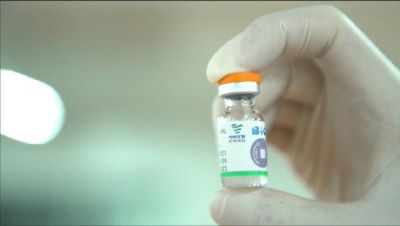
A staff member checks the packaging of the Sinopharm vaccines in Beijing, capital of China, May 31, 2021.
Biden announces sweeping new vaccine mandates amid COVID-19 surge
President Joe Biden has put forward a six-point initiative to boost vaccinations, improve access to testing and make COVID-19 treatments more widely available.
U.S. President Joe Biden on Thursday announced sweeping new vaccine requirements, which may affect about 100 million Americans, as part of a new action plan to curb the surging COVID-19 cases driven by the highly contagious Delta variant.
“While America is in much better shape than it was seven months ago when I took office, I need to tell you a second fact, we’re in the tough stretch and it could last for a while,” said Biden, speaking from the White House.
Biden has put forward a six-point initiative to boost vaccinations, improve access to testing and make COVID-19 treatments more widely available.
The president blamed the remaining 25 percent of eligible Americans, roughly 80 million people, who are not yet vaccinated, despite months of availability and incentives.
“We’ve been patient. But our patience is wearing thin, and your refusal has cost all of us,” he said, adding this is “a pandemic of the unvaccinated.”
Biden’s latest push to combat the pandemic came as the Delta variant tears through communities across the country, causing upticks in hospitalizations and deaths particularly in areas where vaccination rates remain low.
As of Thursday, 53.4 percent of the U.S. population had been fully vaccinated, according to data from the U.S. Centers for Disease Control and Prevention.
The country’s COVID-19 caseload was over 40.5 million with a death toll of more than 654,000 as of Thursday afternoon, according to the tally by Johns Hopkins University.
United Nations computers breached by hackers earlier this year
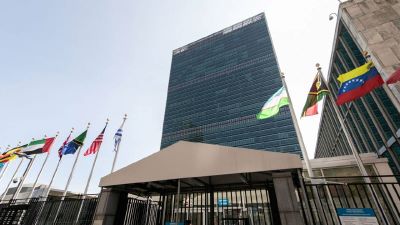
Hackers breached the United Nations computer networks earlier this year and made off with a trove of data that could be used to target agencies within the intergovernmental organization.
The hackers’ method for gaining access to the UN network appears to be unsophisticated: They likely got in using the stolen username and password of a UN employee purchased off the dark web.
The credentials belonged to an account on the UN’s proprietary project management software, called Umoja. From there, the hackers were able to gain deeper access to the UN’s network, according to cybersecurity firm Resecurity, which discovered the breach. The earliest known date the hackers obtained access to the UN’s systems was April 5, and they were still active on the network as of Aug. 7.
“Organizations like the UN are a high-value target for cyber espionage activity,” Resecurity Chief Executive Officer Gene Yoo said. “The actor conducted the intrusion with the goal of compromising large numbers of users within the UN network for further long-term intelligence gathering.”
The attack marks another high-profile intrusion in a year when hackers have grown more brazen. JBS, the world’s largest meat producer, was hit by a cyberattack this year that forced the shutdown of U.S. plants. Colonial Pipeline Co., operator of the biggest U.S. gasoline pipeline, also was compromised by a so-called ransomware attack. Unlike those hacks, whoever breached the UN didn’t damage any of its systems, but instead collected information about the UN’s computer networks.
Resecurity informed the UN of its latest breach earlier this year and worked with organization’s security team to identify the scope of the attack. UN officials informed Resecurity that the hack was limited to reconnaissance, and that the hackers had only taken screenshots while inside the network. When Resecurity’s Yoo provided proof to the UN of stolen data, the UN stopped corresponding with the company, he said.
The Umoja account used by the hackers wasn’t enabled with two-factor authentication, a basic security feature. According to an announcement on Umoja’s website in July, the system migrated to Microsoft’s Azure, which provides multifactor authentication. That move “reduces the risk of cybersecurity breaches,” an announcement on Umoja’s site read.
The UN didn’t respond to requests for comment.
The UN and its agencies have been targeted by hackers before. In 2018, Dutch and British law enforcement foiled a Russian cyberattack against the Organisation for the Prohibition of Chemical Weapons as it probed the use of a deadly nerve agent on British soil. Then, in August 2019, the UN’s “core infrastructure” was compromised in a cyberattack that targeted a known vulnerability in Microsoft’s SharePoint platform, according to a report by Forbes. The breach wasn’t publicly disclosed until it was reported by the New Humanitarian news organization.
In the latest breach, hackers sought to map out more information about how the UN’s computer networks are built, and to compromise the accounts of 53 UN accounts, Resecurity said. Bloomberg News wasn’t able to identify the hackers or their purpose in breaching the UN.
Bloomberg News did review dark web ads where users across at least three marketplaces were selling these same credentials as recently as July 5.
The reconnaissance carried out by the hackers may enable them to conduct future hacks or to sell the information to other groups that may seek to breach the UN.
“Traditionally, organizations like the United Nations have been targeted by nation state actors, but as cybercriminals are finding ways to more effectively monetize stolen data and as access to these organizations is more frequently available for sale by initial access brokers, we expect to see them increasingly targeted and infiltrated by cybercriminals,” said Allan Liska, a senior threat analyst at Recorded Future. Liska said he had seen the username and password for UN employees for sale on the dark web.
The credentials have been offered by multiple Russian-speaking cybercriminals, according to Mark Arena, chief executive officer of security-intelligence firm Intel 471. The UN credentials were being sold as part of a patch of dozens of usernames and passwords to various organizations for just $1,000.
“Since the start of 2021 we’ve seen multiple financially motivated cybercriminals selling access to the Umoja system run by the United Nations,” Arena said. “These actors were selling a broad range of compromised credentials from a multitude of organizations at the same time. In a number of previous occasions, we’ve seen compromised credentials being sold to other cybercriminals, who have undertaken follow up intrusion activity within these organizations.”

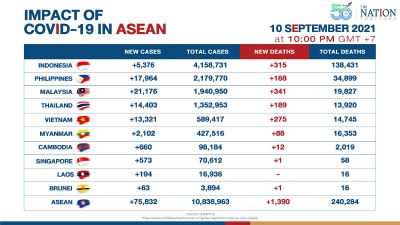
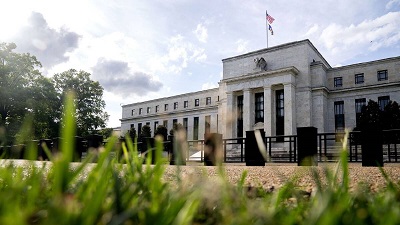
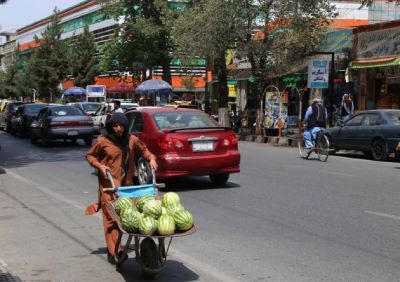
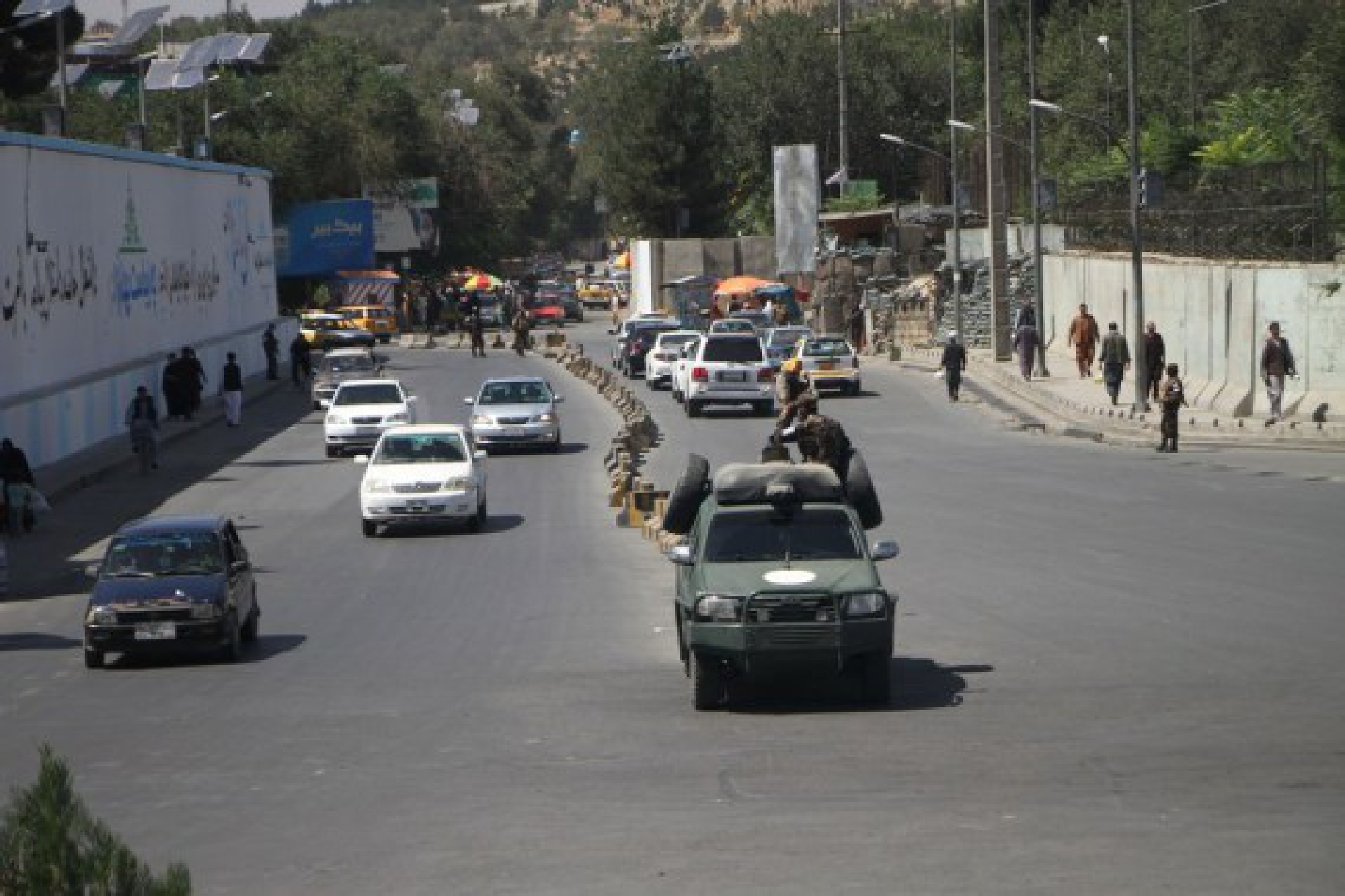 Photo taken on Sept. 8, 2021 shows a view of a street in Kabul, capital of Afghanistan.
 People walk on the street in Kabul, capital of Afghanistan, Aug. 31, 2021.
 Patrons dine at a restaurant in Navy Yard neighborhood in Washington D.C., the United States on Aug. 31, 2021.
 Photo taken on July 20, 2018 shows a passenger plane of U.S. Delta Air Line at Hartsfield-Jackson Atlanta International Airport in Atlanta, the United States.
 Texas Governor Greg Abbott speaks at a press briefing in Santa Fe, Texas, the United States, May 18, 2018.