Imported frozen food may play role in emergency of COVID-19: research
“…the massive scale of cold-chain supply … suggests that frozen susceptible-animal carcasses, either for human or animal consumption, should not be discounted as playing a role in the emergency of SARS-CoV-2,” read a report.
Imported frozen food may play a role in the emergency of SARS-CoV-2 in China, said a recent research conducted by British and Chinese scientists and published in U.S. magazine Science.
The researchers reviewed the SARS-associated coronavirus and discussed possible animal origin of the novel coronavirus, reaching the conclusion that “animal-to-human transmission associated with infected live animals is the most likely cause of the COVID-19 pandemic,” according to the study report titled “The animal origin of SARS-CoV-2.”
“However, the massive scale of cold-chain supply … suggests that frozen susceptible-animal carcasses, either for human or animal consumption, should not be discounted as playing a role in the emergency of SARS-CoV-2,” read the report published in late August.
The report noted that the outbreak of the African swine fever virus, which had led to a severe shortage of pork products in China in 2019, increased wildlife-animal contacts, since China imported other meat such as poultry, beef and fish products from international markets in response to the short-fall.
“The resulting increased trade of susceptible farmed animals and wildlife could have brought humans into more frequent contact with meat products and animals infected with zoonotic pathogens, including SARSr-CoVs,” it said, pointing to reports of Chinese patients who had contact with imported frozen foods, and of SARS-CoV-2 “apparently identified from frozen food, packaging, and storage surfaces.”
The scientists also called for international anti-virus cooperation, saying “humanity musk work together beyond country borders to amplify surveillance for coronavirus at the human-animal interface to minimize the threat of both established and evolving variants evading vaccines and to stop future spillover events.”
People visit a night market at Baocheng Road in Wuhan, central China
Taliban forms caretaker govt, Afghans craving peace
“As a caretaker and committed cabinet has been announced by authorities of the Islamic Emirate to control and run affairs of the country which will start functioning at the earliest (time possible), I assure all countrymen that the figures will work hard towards Islamic rules and Sharia law.”
The Taliban announced on Tuesday night the formation of Afghanistan’s caretaker government, with Mullah Hassan Akhund appointed as acting prime minister.
In a statement following the announcement, the Taliban’s supreme leader, Haibatullah Akhundzada, said the urgent task would be to carry out reconstruction and rehabilitation, and the country would seek “strong and healthy relations” with its neighbors and all other countries.
START FUNCTIONING SOON
At Tuesday’s press conference, Taliban spokesman Zabihullah Mujahid said Mullah Abdul Ghani Baradar and Abdul Salam Hanafi were named acting deputy prime ministers, while Mullah Mohammad Yaqoob, son of late Taliban co-founder Mullah Mohammad Omar, was appointed as acting defense minister.
Amir Khan Muttaqi was appointed as acting foreign minister, and Sarajuddin Haqqani, son of the founder of the Haqqani network, a Taliban-linked group, was named acting interior minister, the spokesman said.
Taliban spokesman Zabihullah Mujahid (Rear) speaks during a press conference in Kabul, Afghanistan, on Sept. 7, 2021.
Mujahid said the appointments were not final as these were acting positions, and the remaining posts would be announced later.
The move was aimed at carrying out “necessary government works,” the spokesman said without elaborating on how long the caretaker government will serve.
In his first statement issued since the Taliban’s takeover of Kabul in mid-August, Akhundzada, its supreme leader, said the newly formed caretaker government would start functioning soon.
“As a caretaker and committed cabinet has been announced by authorities of the Islamic Emirate to control and run affairs of the country which will start functioning at the earliest (time possible), I assure all countrymen that the figures will work hard towards Islamic rules and Sharia law,” Akhundzada said.
An Afghan man pushes a handcart on the street in Kabul, capital of Afghanistan, Aug. 31, 2021.
He noted that the ultimate goal would be to get Afghanistan back on its feet as quickly as possible, and efficiently carry out reconstruction and rehabilitation work in the war-torn country.
“We want strong and healthy relations with our neighbors and all other countries based on mutual respect and interaction,” Akhundzada said in the statement.
He added that the Afghan soil would not be used against the security of any other country, and foreign diplomats, humanitarian agencies and investors should carry out their work in Afghanistan with “peace of mind.”
DESIRE FOR PEACE, STABILITY
In 2001, U.S.-led military forces invaded Afghanistan under the pretext of searching for Osama bin Laden, the alleged mastermind of the Sept. 11 terror attacks.
Twenty years later, the last batch of U.S. troops left Afghanistan at midnight on Aug. 30, hastily putting an end to the prolonged invasion war.
Over the past two decades, the war has caused more than 40,000 civilian deaths, and turned about 11 million people into refugees. The safety and livelihood of ordinary Afghans, who are now anxiously craving peace and stability, were severely impaired by the chronic fighting.
The announcement of the caretaker government’s founding “is another step toward peace and prosperity of Afghanistan,” Basir Faqiri, a Kabul resident, told Xinhua on Tuesday night.
“After the Taliban declared that the war is over in Afghanistan, many people changed their mind about leaving … I tried to go abroad after the Taliban took control of most provinces. But after they captured Kabul, I found that the war is over,” said Faqiri, who ran a shop in the capital.
“Now I am trying to reopen my shop and restart my small business in Kabul. I hope the Taliban soon find some solutions to political and economic uncertainty,” he said. “I know Afghans are witnessing difficult days recently, but I am sure we will overcome the difficulties soon.”
In his statement, Akhundzada told Afghans that “We want to have a peaceful, prosperous and self-reliant Afghanistan, for which we will strive to eliminate all causes of war and strife in the country, and (allow) our countrymen to live in complete security and comfort.”
For this war-battered nation, however, reconstruction requires both time and strenuous efforts. According to the latest figures of the United Nations, almost half of Afghanistan’s population, or 18 million people, are in need of humanitarian assistance to survive.
“We enjoy a peaceful environment in at least 90 percent of Afghanistan after the Taliban takeover,” said Bushra Parnian, a student at Kabul University, adding that many people in this country were still suffering from shortages of food, medicine and other daily necessities.
Afghan people are seen on Afghan side of the border near the border crossing point of Torkham between Pakistan and Afghanistan on Sept. 5, 2021.
MIXED INTERNATIONAL RESPONSE
The United Nations will assist the fledgling Taliban government in paving the way for international aid delivery in war-torn Afghanistan and the rights of women and girls, said UN Undersecretary-General for Humanitarian Affairs Martin Griffiths during a meeting with Mullah Baradar and the Taliban leadership on Tuesday.
“The movement we face here today, as many, many other people have told me, is not the movement that we saw (in 1998),” said the UN relief coordinator. “It certainly has links in ideology but it’s different to the one then.”
“One senior leader of the movement said to us, ‘We need guidance; we need guidance,’ and therefore we will provide guidance,” he said.
Also on Tuesday, Griffiths’ Office for the Coordination of Humanitarian Affairs (OCHA) issued a consolidated 606-million-U.S.-dollar Flash Appeal with an aim to help relieve the country’s “humanitarian crisis.”
Basic services in Afghanistan are collapsing and food and other life-saving aid are about to run out, OCHA said.
UN Secretary-General Antonio Guterres has warned of a looming humanitarian catastrophe, and will host a high-level meeting next Monday in Geneva on the humanitarian situation in Afghanistan.
The United States said there is no rush to recognize the Taliban government. White House press secretary Jen Psaki said Tuesday that Washington’s recognition would be dependent on the Taliban’s actions.
During a recent visit to Qatar, U.S. Secretary of State Antony Blinken said the Taliban were honoring promises to allow Afghans to freely depart from Afghanistan.
“We’ve been engaged with the Taliban, including in recent hours. They’ve said that they will let people with travel documents freely depart,” said Blinken.
The Kremlin on Tuesday said that Russia has not made any decisions on the recognition of the Taliban government and will “very carefully” monitor the situation in Afghanistan.
Russia will observe how the Taliban’s recent statements and promises match their actions, Kremlin spokesman Dmitry Peskov told a daily briefing.
The Chinese Foreign Ministry said Wednesday that China attaches importance to the Taliban’s announcement of the formation of the caretaker government and some important personnel arrangements.
“This ended the more than three weeks of anarchy in Afghanistan and is a necessary step toward Afghanistan’s restoration of order and post-war reconstruction,” Foreign Ministry spokesperson Wang Wenbin told a press briefing.
An Afghan child waits to cross border at the border crossing point of Torkham between Pakistan and Afghanistan on Sept. 5, 2021.
Russian emergencies minister dies while trying to save film director
Zinichev was trying to rescue Russias well known film director Alexander Melnik.
Russian Emergencies Minister Yevgeny Zinichev has died on duty while attempting to save a person’s life, the ministry announced on Wednesday.
The tragedy happened during interdepartmental drills in north Russia’s Norilsk to protect the Arctic zone from emergencies, it said.
Zinichev was trying to rescue Russia’s well known film director Alexander Melnik, 63, who travelled to Norilsk to pick a location for his new documentary on the development of the Arctic region, local media reported.
“Zinichev was standing with the director at the edge of a cliff. The director slipped and fell into the water below. No one of the many eyewitnesses even had time to figure out what had happened as Zinichev rushed into the water but crashed against a protruding rock,” RT Editor-in-Chief Margarita Simonyan said on Telegram.
Both Zinichev and Melnik died in a helicopter to hospital, according to reports.
Russian President Vladimir Putin, who has worked together with Zinichev for many years, expressed his deepest condolences to the late minister’s family and friends, the Kremlin said.
Russian Foreign Minister Sergei Lavrov said Zinichev “acted like a true rescuer” and Defense Minister Sergei Shoigu said he would always be remembered.
Zinichev, 55, became the emergencies minister in January 2020.
U.S. back-to-school week features rising COVID-19 cases, more tests among children
Some U.S. schools are trying a new plan, known as “test-to-stay,” to keep students safe in the classroom. Rather than quarantining children who have an in-school contact with a positive case, they are testing students in large numbers.
As more campuses reopened during the second week of September in the United States, pediatric cases of COVID-19 have seen upticks again, though mask mandates are observed in some schools and regular tests are carried out in areas of coronavirus exposure.
Weekly pediatric coronavirus cases surpassed 250,000 for the first time since the start of the pandemic, according to the latest data published by the American Academy of Pediatrics.
As more campuses reopened during the second week of September in the United States, pediatric cases of COVID-19 have seen upticks again, though mask mandates are observed in some schools and regular tests are carried out in areas of coronavirus exposure.
Weekly pediatric coronavirus cases surpassed 250,000 for the first time since the start of the pandemic, according to the latest data published by the American Academy of Pediatrics.
The data shows that more than a quarter of weekly reported coronavirus cases in the United States were among children for the week ending Sept. 2. While most pediatric cases are not severe, nearly 2,400 children were hospitalized nationwide with COVID-19 in the seven days ending Tuesday, more than ever before.
“COVID-19 cases in children dipped early in the summer but quickly rose again, both with the spread of the highly transmissible Delta variant and because coronavirus vaccines are not authorized for children under 12,” reported The Washington Post on Wednesday.
TEST INSTEAD OF QUARANTINE
As the pandemic extends into a third academic year, administrators, lawmakers and health officials are again balancing health risks with best practices for learning. Safety protocols vary across states and school districts. Public health experts are concerned that a rollback of precautions and the heightened infectiousness of the Delta variant could lead to greater transmission risks in schools, reported The Wall Street Journal (WSJ) on Wednesday.
Hundreds of students and staff across the United States have already tested positive, pushing thousands into quarantine and prompting schools to temporarily close or revert to virtual learning.
Meanwhile, some schools are trying a new plan to keep students safe in the classroom. Rather than quarantining children who have an in-school contact with a positive case, they are testing students in large numbers, said the report.
A student of Montrara Ave. Elementary School has a COVID-19 test in Los Angeles, California, the United States, on Aug. 16, 2021.
The method keeps children in school after exposure to a classmate or teacher who tested positive for COVID-19 if they test negative at least every other day. Known as “test-to-stay,” the approach is a higher transmission risk than keeping exposed students at home, but some public health experts and educators say the trade-off is worth it to avoid missed days in class.
The Centers for Disease Control and Prevention (CDC) Director Rochelle Walensky has said that bigger COVID-19 outbreaks and quarantines are occurring primarily in schools that haven’t followed the agency’s recommendations, including promoting vaccines for those who are eligible, universal masking, distancing, improved ventilation and screening testing.
Without such mitigation measures, more students and staff will have to sit out of school because they are sick or quarantined, Jason Newland, a pediatrician and infectious disease expert at Washington University School of Medicine in St. Louis, was quoted by WSJ as saying. “You’ve now really hurt the kids in the end.”
SUPPORT FOR MASKING, IN-PERSON LEARNING
U.S. parents are eager for kids to return to school, but they’re concerned their children will get seriously ill if they catch COVID-19. A strong majority support requiring masks and teacher vaccinations amid a surge in pediatric cases, reported USA Today on Wednesday.
A majority of parents in a new USA TODAY/Ipsos poll agree that masks should be required. Research suggests masking at schools can limit COVID-19 transmission, yet it’s emerged as one of the most contentious issues in education, causing chaos at school board meetings and garnering lawsuits, according to the report.
Roughly two in three Americans, parents and non-parents alike, are in favor of schools or states implementing mask mandates for teachers and students. There lies the strongest support among parents of color. Forty-three percent of poll participants said student mask-wearing should be at the discretion of individual parents, according to the poll.
Respondents were similarly in favor of requiring teachers and other school employees to be vaccinated against COVID-19 — 65 percent of all participants and 56 percent of parents said they supported such mandates.
In the meantime, parents are more skeptical of online learning than they were last school year. Across the country, more than 1,000 schools, having just reopened, halted in-person learning and went back online because of COVID-19 outbreaks.
Among parents of schoolchildren, seven in 10 supported returning to full-time instruction in classrooms. Support was the strongest among white and Asian parents and weakest among Black and Hispanic parents, communities that have been hit harder by COVID-19, according to the poll.
Kindergarten children play toys in a classroom at Montrara Ave. Elementary School in Los Angeles, California, the United States, on Aug. 16, 2021.
The number of Covid-19 cases in Southeast Asia crossed 10.67 million, with 70,045 new cases reported on Wednesday, lower than Tuesday’s tally of 75,437.
Asean however saw 1,920 additional deaths, an increase from Tuesday’s 1,821, taking total coronavirus deaths to 237,508 so far.
Hanoi’s ruling Party Committee announced the extension of social distancing measures in the Vietnamese capital for at least 14 more days, while forcing those residing in the city’s “red zone” or high infection area to receive testing three times a week.
Vietnam is currently the least vaccinated country in Asean, with only 3.4 per cent of its 98 million population being inoculated with two doses of Covid-19 vaccine, while 19 per cent have received one dose.
Meanwhile, Singapore’s government has launched an active case finding campaign in risky areas and among employees whose jobs require interaction with many people after new infections in the city-state started climbing again.
It also announced a ban on public gatherings in workplaces from Wednesday until further notice.
In the past week Singapore has reported double the number of new cases compared to the week before.
The Taliban is bringing back its feared ministry of vice and virtue
The last time the Taliban ruled Afghanistan, morality police roamed the streets, implementing the groups austere interpretation of Islamic law – with harsh restrictions on women, strictly enforced prayer times and even bans on kite-flying and chess.
Nearly 20 years later, the Ministry for Propagation of Virtue and Prevention of Vice is back.
Following its return to power last month, the Taliban this week formed an interim government, announcing a slate of provisional ministers, all male and most from the Taliban’s old guard. Among them: a little known cleric called Mohamad Khalid, named to lead the restored department.
In an English-language list of new appointees distributed by the Taliban, the Ministry for Propagation of Virtue and Prevention of Vice was the only name not translated.
A body under the previous government, the Ministry of Women’s Affairs, was not included at all, apparently having been disbanded. Protesters across major cities this week the called on the militants to give women seats in government and to run the country with less repression than the last time around.
In Kabul, some people expressed fears that the return of the ministry meant that the Taliban would not seek to change.
“People have stopped listening to loud music in public . . . fearing the past experiences from when the Taliban last ruled,” said Gul, a Kabul resident who only gave his first name due to safety concerns. “I personally didn’t see any forced prayers. But there is fear in everyone’s minds.”
A Taliban spokesman did not respond to requests for comment on the ministry or its mandate. On Wednesday, the Taliban’s Interior Ministry announced that protests were discouraged “for the time being.”
While the Taliban was in power from 1996 until 2001, the ministry enforced a severe interpretation of Islamic law.
It was disbanded by then-Afghan President Hamid Karzai after the U.S.-led invasion of Afghanistan in 2001, and replaced by the Ministry for Hajj and Religious Affairs. Karzai’s cabinet approved a less powerful Department for the Promotion of Virtue and the Discouragement of Vice in 2006 amid pressure from conservatives.
Religious policing predated Taliban rule. The government of Burhanuddin Rabbani, who served as president between 1992 and 1996, created the vice and virtue ministry. But under the Taliban their role expanded. Human Rights Watch later called the institution a “notorious symbol of arbitrary abuses.”
For ordinary people, the ministry was the face of the regime, said Robert Crews, a historian of Afghanistan at Stanford University. “It is the institution that most Afghans were likely to encounter, and it is one that the leadership prioritized above all others.”
Accounts from the time detail forces patrolling the streets, shutting down shops and markets at prayer time. They beat people caught listening to music and frowned upon dancing, kite-flying and American-style haircuts.
Squads of the ministry’s morality police punished those who disobeyed modesty codes, with beards too thin or ankles that showed. They banished girls from school and women from the workplace and the public eye. A woman could not venture outside without a male guardian.
With these memories in mind, many Afghans remain skeptical of promises from the Islamist fighters that they have changed.
Two Taliban members, who spoke on the condition of anonymity because they were not authorized to talk to the media, said the minister appointed to run the restored government body, Khalid, was a cleric well-versed in religious law.
“The ministry will have their own specific officials, but not police or soldiers,” one of the two told The Washington Post from Kabul.
“The ministry has not started working yet. Its duty will be to preach virtues and teachings of Islam, and prevent people from vice [and] unlawful acts,” he said. “It is an important ministry.”
The second member said he did not expect the Taliban to use force to apply its guidelines in the same way it had before.
While several residents of the Afghan capital said they had not encountered the militants enforcing strict regulations, they said people had changed their behavior in anticipation.
A woman who works for a private company said she had just gone back to work after spending nearly two weeks hiding at home.
“For the last three days, no one stopped me,” she said. “I am still moving in the streets, filled with nervousness that they might ask me at any time.”
The Taliban has put out mixed messages on whether women can return to work. Taliban spokesman Zabihullah Mujahid has said that there would be “no discrimination against women,” but added, “of course, within the frameworks we have.”
Crews said that if the ministry tried to return to the past, it would probably face conflict in an Afghanistan that had changed much over two decades.
“There’s no reason to expect anything different this time from the Taliban, except that they seem to be surprised by how different Afghan society has become,” Crews said, adding that he “sees the puzzlement on the faces of Taliban fighters when in recent days they’ve encountered female protesters who do not back down, even at gunpoint.”
Altogether 650,532 Americans have died from COVID-19 as of Wednesday, averaging more than 1,100 deaths per day since the first coronavirus death was reported in the United States, according to Johns Hopkins University. New Jersey, Mississippi and New York are among states with the highest coronavirus death rates.
While the federal government sharpens new strategy to fight the COVID-19 pandemic, the return of unvaccinated school children to classrooms, cold weather in the northern states and the upcoming holiday season could give the coronavirus new opportunities to spread in the United States, further fueling the cases and hospitalizations consistently on rise.
“I don’t know if we’ve peaked for all time, but the wave that was currently ongoing seems to have crested and is falling in some states but is rising in others,” Andrew Noymer, an infectious disease epidemiologist and demographer at the University of California, Irvine, was quoted on Wednesday by The Wall Street Journal as saying.
While the federal government sharpens new strategy to fight the COVID-19 pandemic, the return of unvaccinated school children to classrooms, cold weather in the northern states and the upcoming holiday season could give the coronavirus new opportunities to spread in the United States, further fueling the cases and hospitalizations consistently on rise.
“I don’t know if we’ve peaked for all time, but the wave that was currently ongoing seems to have crested and is falling in some states but is rising in others,” Andrew Noymer, an infectious disease epidemiologist and demographer at the University of California, Irvine, was quoted on Wednesday by The Wall Street Journal as saying.
According to The New York Times, the 7-day average of confirmed cases of the pandemic stood at 152,393 nationwide on Tuesday, with its 14-day change striking a 1-percent increase. COVID-19-related deaths were 1,499 on Tuesday, with the 14-day change realizing a 34-percent rise.
STATES WOUNDED MOST
Altogether 650,532 Americans have died from COVID-19 as of Wednesday, averaging more than 1,100 deaths per day since the first coronavirus death was reported in this country, according to data compiled by Johns Hopkins University. Some states have sustained especially large death tolls.
New Jersey, which faced a brutal early surge of COVID-19 infections in spring 2020, has the nation’s highest coronavirus death rate, totaling 303 fatalities per 100,000 residents since the start of the pandemic last year, according to the U.S. Centers for Disease Control and Prevention (CDC).
Refrigerated trailers are seen at a temporary morgue in Brooklyn, New York, the United States, June 15, 2021.
Mississippi has the second-highest death rate, at 291 per 100,000 people, a toll driven partly by a recent wave of infections that’s left Mississippi with the nation’s third-highest rate of new cases per day in the last week.
New York has suffered 279 deaths per 100,000, the country’s third-highest rate. The death rate statistics published by the CDC list New York City (403 deaths per 100,000) separately from the rest of New York State (184).
Another five states have death rates above 250 per 100,000 residents: Louisiana (273), Massachusetts (265), Arizona (261), Rhode Island (261) and Alabama (253).
Some 15 other states have suffered more than 200 deaths per 100,000 residents, including larger states like Pennsylvania (221), Florida (218), Michigan (217), Georgia (217) and Illinois (210).
BLOCK AND SHORTAGE
One big news related with the pandemic on Wednesday was that Florida’s Leon County Circuit Judge John Cooper agreed to set aside a stay on his ruling and blocked the Sunshine State’s mask mandate ban, effective immediately. With the motion to vacate the stay granted, Republican Governor Ron DeSantis’ ban, which requires districts to offer parental opt-outs or face a financial penalty, is now on hold for at least the duration of a forthcoming court challenge in appellate court.
The back-and-forth legal battle began after Judge Cooper found the governor’s ban unlawful last month following a lawsuit brought by pro-mask parents. Cooper ruled a 2021 law, the Parents’ Bill of Rights, protecting a district’s choice to install protections like a mask mandate provided it meets certain criteria if challenged.
DeSantis has maintained his executive order and connected administrative rules are lawful, continuing to defend the action as protecting a parent’s right to choose what’s best for the health and wellbeing of their children.
On Tuesday, northwestern U.S. state Idaho’s public health leaders announced that they activated “crisis standards of care,” allowing health care rationing for the state’s northern hospitals because there are more coronavirus patients than the institutions can handle.
The state health agency cited “a severe shortage of staffing and available beds in the northern area of the state caused by a massive increase in patients with COVID-19 who require hospitalization,” reported NBC.
The Idaho Department of Health warned residents that they may not get the care they would normally expect if they need to be hospitalized. The move came as the state’s confirmed coronavirus cases skyrocketed in recent weeks. Idaho has one of the lowest vaccination rates in the United States.
STRATEGY AND MILESTONE
U.S. President Joe Biden on Thursday will present a six-pronged strategy intended to fight the spread of the highly contagious coronavirus Delta variant and increase U.S. COVID-19 vaccinations.
White House spokeswoman Jen Psaki told reporters on Tuesday that the strategy would be “working across the public and private sectors to help continue to get the pandemic under control.”
Asked about possible new mandates, the spokeswoman acknowledged that the federal government cannot broadly mandate that Americans get vaccinated, adding that “we need to continue to take more steps to make sure school districts are prepared and make sure communities across the country are prepared.”
Guests dine outside in Coral Gables near Miami, Florida, the United States, Aug. 11, 2021.
Also on Tuesday, White House COVID-19 Data Director Cyrus Shahpar tweeted that three-fourths of U.S. adults have been vaccinated with at least one dose of the COVID-19 vaccine.
From Sunday through Tuesday, 1.51 million doses were administered, with 681,000 newly vaccinated and 105,000 additional doses, he said, noting that there was “as usual, lower reporting over the holiday weekend” of Labor Day.
The United States reached the 75 percent threshold about a month after hitting 70 percent. Previously, Biden had hoped to achieve the 70 percent mark by July 4.
White House Press Secretary Jen Psaki speaks during a press briefing at the White House in Washington, D.C., the United States, on June 8, 2021.
Mexicans clean up after powerful earthquake rattles Acapulco and Mexico City
MEXICO CITY – Mexican workers shoveled rubble from roads and restored electricity to hundreds of thousands of homes on Wednesday after a powerful earthquake rocked buildings from the beach city of Acapulco to Mexico City, more than 200 miles away.
The quake, which struck outside Acapulco at 8:47 p.m. local time Tuesday, killed at least two people, authorities said. One was a 19-year-old motorcyclist in Coyuca de Benitez, about 30 miles northwest of Acapulco. The other was an elderly woman who died when a fence toppled onto her home in an outlying district of the resort city, Mayor Adela Román Ocampo said.
In Acapulco, nervous residents and tourists slept on benches or in parked cars Tuesday night as aftershocks jolted the city.
“People are afraid to go back into their homes,” the mayor said in a phone interview. The city government opened up sports facilities so residents would have a safe place to rest, she said.
Most damage was minor: Shattered windows, roof tiles that clattered to the ground, gas leaks at a few hotels. But the Acapulco airport was closed to commercial flights after problems were detected in the control tower, the mayor said. “They are rushing to do the repair work,” she said.
Highway crews labored Wednesday to open roads blocked by rocks and landslides, including the Carretera Escénica, the curving coastal highway linking Acapulco to the nearby tourist hub of Punta Diamante.
Luisa Martinez, 30, an employee of a juice shop in downtown Acapulco, returned to work on Wednesday still jittery about the powerful quake.
“It was really strong,” she said. She had just put her children to bed on Tuesday night when her two-story home began to shake, she said. “Chunks of concrete went flying, and the lights went out. Fortunately it didn’t kill a lot of people.”
The National Seismological Service reported more than 200 aftershocks, including one that reached 5.2 magnitude.
Cracked walls and other minor damage was reported at buildings throughout Guerrero state, including two hospitals where patients had to be evacuated.
Electricity was restored by Wednesday morning to most of the 1.9 million people in central Mexico who lost power, according to the Federal Electricity Commission.
The U.S. Geological Survey said the 7.0-magnitude quake struck 11 miles northeast of Acapulco at 8:47 p.m. local time. Officials initially issued a tsunami warning, but none materialized.
Still, the quake was strong enough to be felt by residents of Mexico City, where the lights went off in some buildings and many people ran outside, huddling together in the rain.
The capital’s subway service was briefly interrupted after the temblor. Perhaps most worrisome, commuters were trapped on an aerial cable-car system operating in the working-class district of Iztapalapa, after an electrical failure. For about an hour, the cars rocked slowly in the wind, as panicked bystanders watched from below. The service resumed as generators kicked in.
“Everyone was able to end their trips calmly,” the capital’s transportation chief, Andrés Lajous, reported on Twitter.
The temblor revived memories of a massive quake that occurred on the same day in 2017, killing scores of people in the southern part of the country. A quake 10 days later triggered the collapse of buildings in Mexico City and left nearly 400 dead nationwide.
The world biggest plant to capture CO2 from the air just opened in Iceland
A major new facility to pull carbon dioxide out of the atmosphere started operating in Iceland on Wednesday, a boost to an emerging technology that experts say could eventually play an important role in reducing the greenhouse gases that are warming the planet.
The carbon capturing plant, perched on a barren lava plateau in southwest Iceland, is the biggest of its kind, its builder says, increasing global capacity for the technology by more than 40%. Many climate experts say that efforts to suck carbon dioxide out of the air will be key to making the world carbon neutral in the coming decades.
By 2050, humanity will need to pull nearly a billion metric tons of carbon dioxide from the atmosphere every year through direct air capture technology to achieve carbon neutral goals, according to International Energy Agency recommendations from earlier this year. The plant in Iceland will be able to capture 4,000 metric tons annually – just a tiny fraction of what will be necessary, but one that Climeworks, the company that built it, says can grow rapidly as efficiency improves and costs decrease.
“This is a market that does not yet exist, but a market that urgently needs to be built,” said Christoph Gebald, a corkscrew-haired Swiss engineer who co-founded and co-directs Climeworks. “This plant that we have here is really the blueprint to further scale up and really industrialize.”
For now, the Icelandic installation, which is called Orca – phonetically the same as the Icelandic word for “energy” – is an unlikely global savior. Human-sized fans are built into a series of boxes that are the size of standard 40-foot shipping containers. They sip carbon dioxide out of the air, catching it in spongelike filters. The filters are blasted with heat, about the same temperature needed to boil water, freeing the gas. Then it is mixed with water and pumped deep into underground basalt caverns, where over time it cools down and turns into dark-gray stone.
It is a straightforward chemical reaction: taking the carbon dioxide that is causing global warming out of the air and tucking it away where it can do little harm.
Pumping CO2 into the ground is just one way to dispose of it. It can also go to other uses, as well. Energy companies can mix the carbon dioxide with hydrogen to make fuel. Farmers can feed their plants with it. Soda manufacturers can use it to fizz their drinks – something a Swiss customer of Climeworks did a few years ago when there was a carbonation shortage.
At the moment, the costs are high: about $600 to $800 per metric ton of carbon dioxide, Gebald said, far from the levels around $100 to $150 per ton that are necessary to turn a profit without the help of any government subsidies. The costs reflect both the hand-hewn nature of the technology – Climeworks’ installations are mostly built by hand for now, not through automation – and also the large amounts of energy needed to power the CO2 capture process.
The Orca installation was built in Iceland both because the tiny island nation has ample supplies of climate-friendly geothermal energy as well as just the right underground geology to make it easy to capture carbon.
“If people hear those numbers for the first time they might think, ‘Oh wow, that’s expensive,’ but it’s always a question of what you compare it to,” Gebald said. The state of California subsidizes electric cars around $450 to $500 per ton of carbon emissions saved over the course of a vehicle’s expected life, for example, he said.
Longer term, Gebald thinks prices can get cheaper – by 2030, he said they expect prices around $200 to $300 per ton. By the late 2030s, he thinks it will be half that – about the price where it will be a competitive method of reducing global emissions.
“That’s really the main problem, whether you can make it cheap enough. And there’s reason to believe that it could be possible,” said Stephen Pacala, the director of the Carbon Mitigation Initiative at Princeton University. If the technology were to cost $100 per metric ton of carbon dioxide and the aviation industry paid to offset the emissions from its aviation fuel, it would increase the cost of fuel by about $1 a gallon, well within the range of seasonal price fluctuations, Pacala said.
The new technology “could be a big deal. It could be a really big business,” he said.
World leaders see a promising new possibility, too.
“This is indeed an important step in the race to net-zero greenhouse gas emissions, which is necessary to manage the climate crisis,” Icelandic Prime Minister Katrin Jakobsdottir said Wednesday at the ceremony marking the opening of the Orca plant. “This almost sounds like a science fiction story, but we do have other examples in our history of amazing advances in technology.”
Inside the Ohio factory that could make or break Biden big solar energy push
WALBRIDGE, Ohio – On the outskirts of Toledo, a short drive from Interstate 90, thousands of glass panels rumble along assembly lines at a factory that will help determine whether the Biden administration can meet two of its biggest goals – dramatically reducing carbon emissions and lessening reliance on China.
First Solar is one of the few U.S. solar-panel manufacturers in an industry dominated by Chinese factories, some of which the Biden administration has accused of employing forced labor. Lately, that has made First Solar particularly popular with panel buyers, which have snapped up the company’s entire production run through 2022.
Posters in the factory’s lobby proudly declare that the company is “countering China’s state-subsidized dominance of solar supply chains” while churning out products that are “uniquely American” and “Ohio-made.”
The question now: Can First Solar and its smaller counterparts in the U.S. solar industry crank up enough manufacturing capacity to meet the administration’s renewable energy goals or will U.S. power companies remain dependent on the massive Chinese solar industry, despite concerns about how it operates?
The technology offers a high-profile test of the United States’ ambition to re-shore manufacturing after years of losing ground to China’s low-cost and state-subsidized factories. Since 2004, U.S. production of the photovoltaic cells that form solar panels has fallen from 13% of global supply to less than 1%, while China’s share has soared from less than 1% to 67%, according to the National Renewable Energy Laboratory (NREL).
Inside the Ohio factory that could make or break Biden big solar energy push
The Biden administration on Wednesday renewed its commitment to dramatically expand solar energy as part of its goal of eliminating carbon emissions from electricity production by 2035. Large investments could increase solar from 3% of electricity generation today to 45% within three decades, an Energy Department study concluded.
Solar is already the fastest-growing source of new electricity generation in the United States, with power companies relying mostly on panels made by Chinese companies. The Biden administration says the rate of deployment must triple or quadruple if the nation is to hit the 2035 decarbonization goal.
But those plans are now running up against another White House priority: promoting human rights.
Customs and Border Protection this summer began blocking the import of solar panels that it believed could contain materials from Hoshine Silicon, a Chinese company that it said appeared to be coercing workers from the persecuted Uyghur minority by threatening them or restricting their movement.
The Washington Post has reported that the company’s factories in China’s Xinjiang region have participated in state-sponsored programs that place Uyghurs in factory jobs – placements that human rights researchers say workers cannot refuse. Hoshine has declined to comment, and China has denied allegations about forced labor.
CBP officials have declined to say how many imports they may ultimately block, but Hoshine is the world’s largest manufacturer of a material used to produce silicon-based solar panels, making it a ubiquitous industry supplier.
First Solar, which last year supplied about 16% of panels deployed in the United States, is confident it can play a bigger role and is aiming to roughly double its global production capacity by 2023.
“There’s robust demand in the U.S. market, and we’re very well positioned to serve that demand,” chief executive Mark Widmar said in an interview.
But doubling its global output to about 17 gigawatts worth of panels a year still won’t meet the current U.S. pace of solar-panel installation, which could exceed 20 gigawatts this year. And First Solar’s panels are designed for power-utility use, not for residential rooftops.
Solar energy experts say they believe the United States will continue importing panels from China but that the volume could fall as the federal government enforces its ban, and as some lawmakers push to cut Chinese-made panels out of federally funded energy projects.
Solar panels are made of semiconductor materials that convert sunlight into electricity. When light hits the panels, electrons in the semiconductor material break free of their atoms and form an electric current. Different panels produce different levels of power, ranging from about 300 watts to 600 watts per hour.
Chinese companies use silicon as their semiconductor and have built a vast supply chain to mine the material from quartz and turn it into panels.
Hefty state subsidies of Chinese solar companies helped drive many U.S. and European panel producers out of business a decade ago. First Solar, which grew out of a predecessor company founded in the 1990s by University of Toledo scientist Harold McMaster, was one of the few to hang on.
The company uses a different semiconductor compound called cadmium telluride, applying it to glass panels in an ultrathin layer using a method developed by McMaster and his university colleagues. First Solar produces the compound out of byproducts from the mining of copper and zinc.
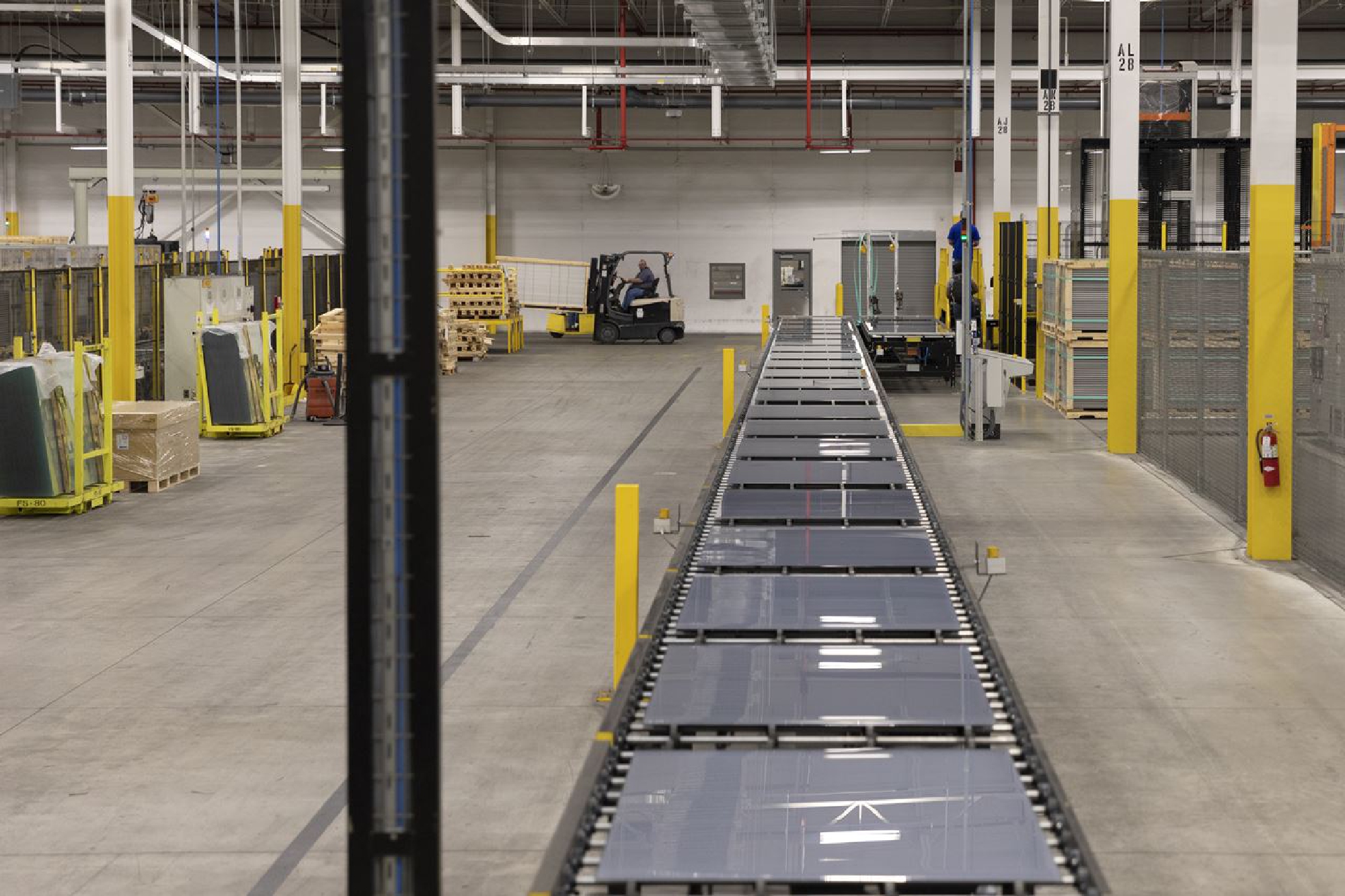
On a recent afternoon at the Ohio factory, an endless line of glass panels traveled through machines that deposited layers of cadmium telluride and other materials.
The panels then rolled under lasers that carved grids into their surface, to create individual cells that would help channel electric current out of the panel.
The whole process takes about four hours, after which the panels are loaded onto trucks for mostly domestic delivery.
Just down the road, First Solar is spending $680 million to build a new factory that will be twice as big, bringing the company’s total output in the United States to over 6 gigawatts worth of panels a year. Labor Secretary Marty Walsh last month attended a groundbreaking ceremony for the factory, which the company said will create over 700 jobs.
“That’ll make this the largest integrated solar complex in the world outside of mainland China,” Mike Koralewski, the company’s head of manufacturing, said of the planned Toledo-area cluster, which also includes a third facility that served as the original manufacturing plant.
The rising cost of shipping panels from Asia has helped make U.S.-produced panels more affordable, compared with imports, Widmar said. So have import tariffs levied by the Obama and Trump administrations to protect domestic manufacturers from China’s state-subsidized solar industry.
Congress, meanwhile, has signaled it might offer further support for U.S. panel producers. An amendment incorporated into the $3.5 trillion budget resolution passed by the Senate last month would block Chinese components from federally funded renewable-energy projects. The Senate adopted the amendment by a vote of 90 to 9.
And Sen. Jon Ossoff, D-Ga., and other Senate Democrats are proposing new tax credits for domestic solar manufacturers.
Solar-panel installers say they believe they’ll be able to document that some Chinese suppliers are free of forced labor, which should allow them to continue importing.
Chinese “manufacturers are going into overdrive to make sure they can get all the details . . . to show they are clean, completely, down to time cards for the quartz miners,” said John Berger, chief executive of Sunnova, a residential solar-energy company in Houston. “We are becoming increasingly confident we have no forced labor.”
The United States, he added, needs to figure out “how to solve the [forced-labor] problem and not create another massive problem that gets in the way of decarbonization and addressing climate change.”
The U.S. Solar Energy Industries Association, which represents panel installers and others, has developed a “traceability protocol” that it says will ensure its members aren’t buying components tied to forced labor. The group has tapped auditors with offices in China to monitor compliance.
But Laura T. Murphy, a professor of human rights and contemporary slavery at Sheffield Hallam University in the United Kingdom, who has reported on forced labor in China’s solar industry, expressed doubt that such audits would work, given that Chinese authorities have pressured domestic companies not to comply with them.
“Right now I don’t see how a company would feel confident that the information they are getting is providing certainty,” she said.
First Solar, she added, “is not going to be able to supply the entire world with solar panels. However, they do point to the fact that there are alternatives.”
The Clean Power Alliance, a nonprofit that buys renewable energy from power generators and sells it to households and businesses in Southern California, recently began requiring its electricity suppliers to sign contracts confirming that none of their components were made with forced labor.
“Besides being the right thing to do, it is also reducing our risk,” said Natasha Keefer, the group’s director of power, planning and procurement. “We want [solar-energy] projects to be able to secure panel supply . . . having components that are getting detained is not conducive to us reducing our risk and the developers don’t want that, either.”
Widmar said he has urged customers to take similar action.
“There is one customer, a utility here in the U.S., that made the decision to procure Chinese modules for a project we were bidding on,” Widmar said. “After we were made aware of that I personally made a call to the head of their renewable energy unit and we talked about it. I said ‘I want to be sure you understand the risks you may be taking.’
“My call made him go back to his team and after they did that . . . they made a decision to move that project over to us. This is becoming more and more of a concern, and people just don’t want to take the risk.”



 Taliban spokesman Zabihullah Mujahid (Rear) speaks during a press conference in Kabul, Afghanistan, on Sept. 7, 2021.
 An Afghan man pushes a handcart on the street in Kabul, capital of Afghanistan, Aug. 31, 2021.
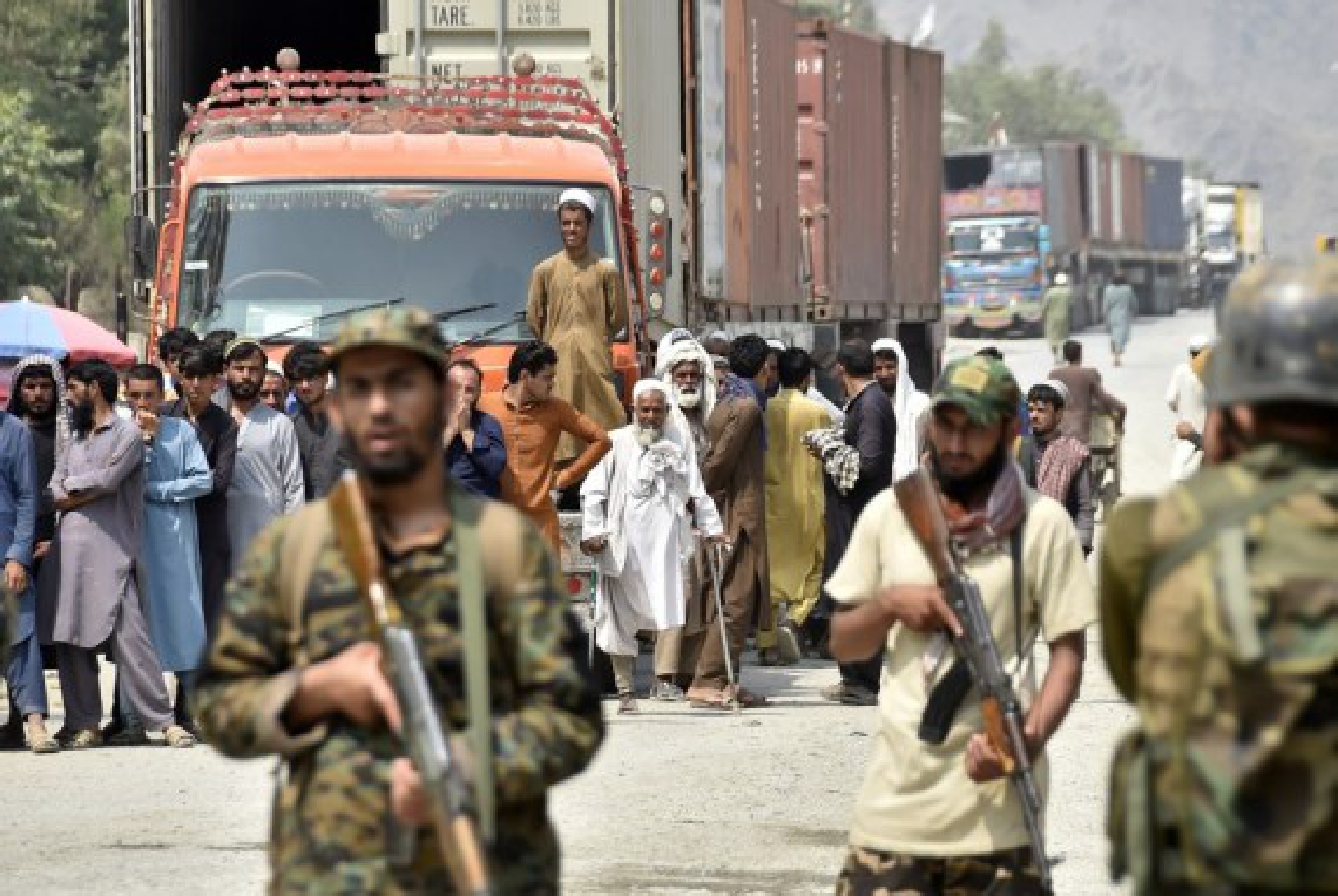 Afghan people are seen on Afghan side of the border near the border crossing point of Torkham between Pakistan and Afghanistan on Sept. 5, 2021.
 An Afghan child waits to cross border at the border crossing point of Torkham between Pakistan and Afghanistan on Sept. 5, 2021.

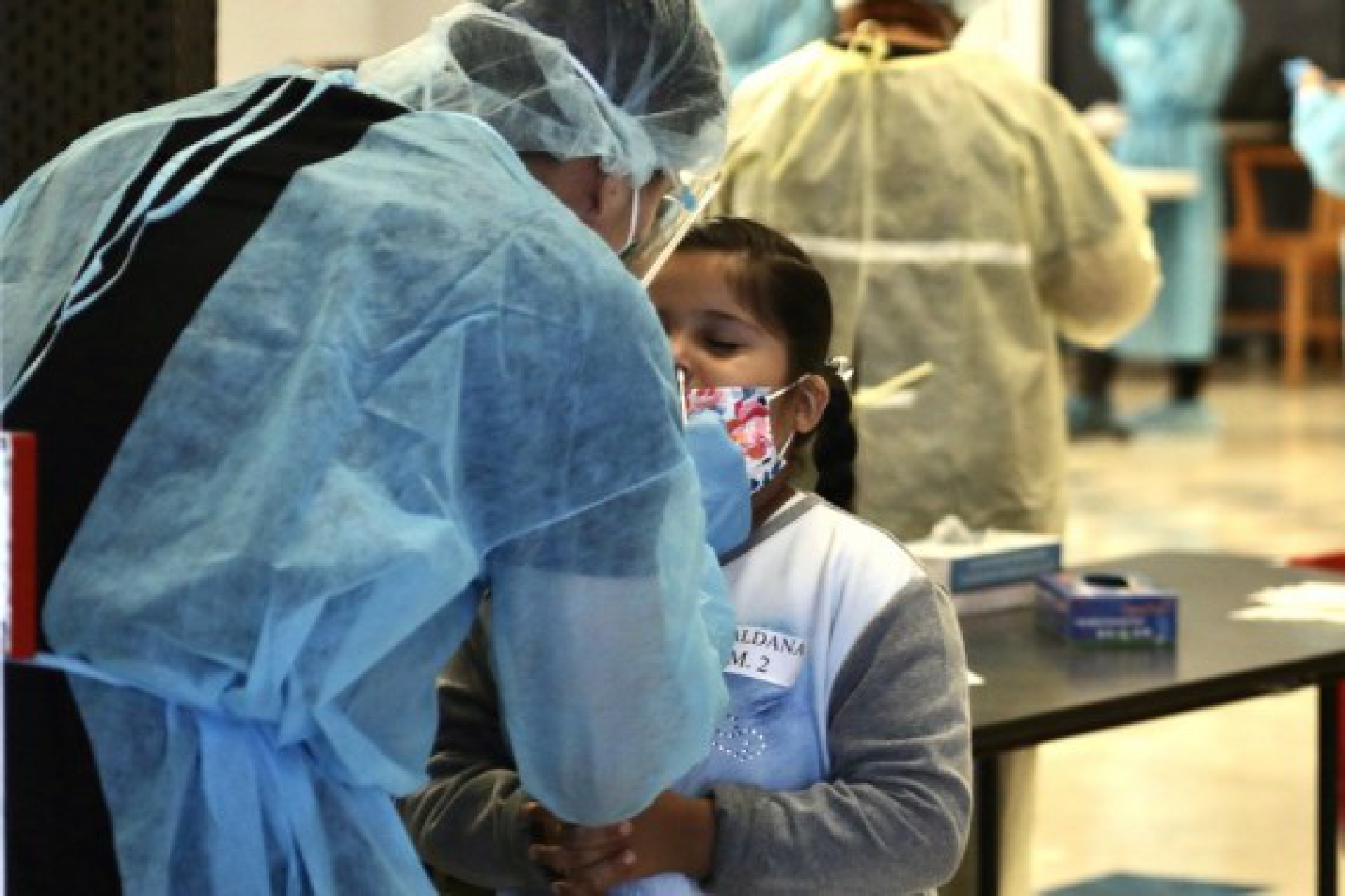 A student of Montrara Ave. Elementary School has a COVID-19 test in Los Angeles, California, the United States, on Aug. 16, 2021.
 Kindergarten children play toys in a classroom at Montrara Ave. Elementary School in Los Angeles, California, the United States, on Aug. 16, 2021.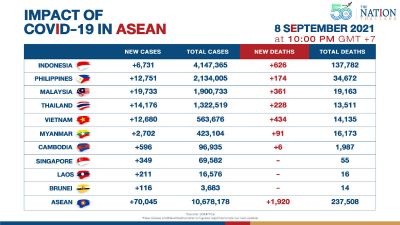


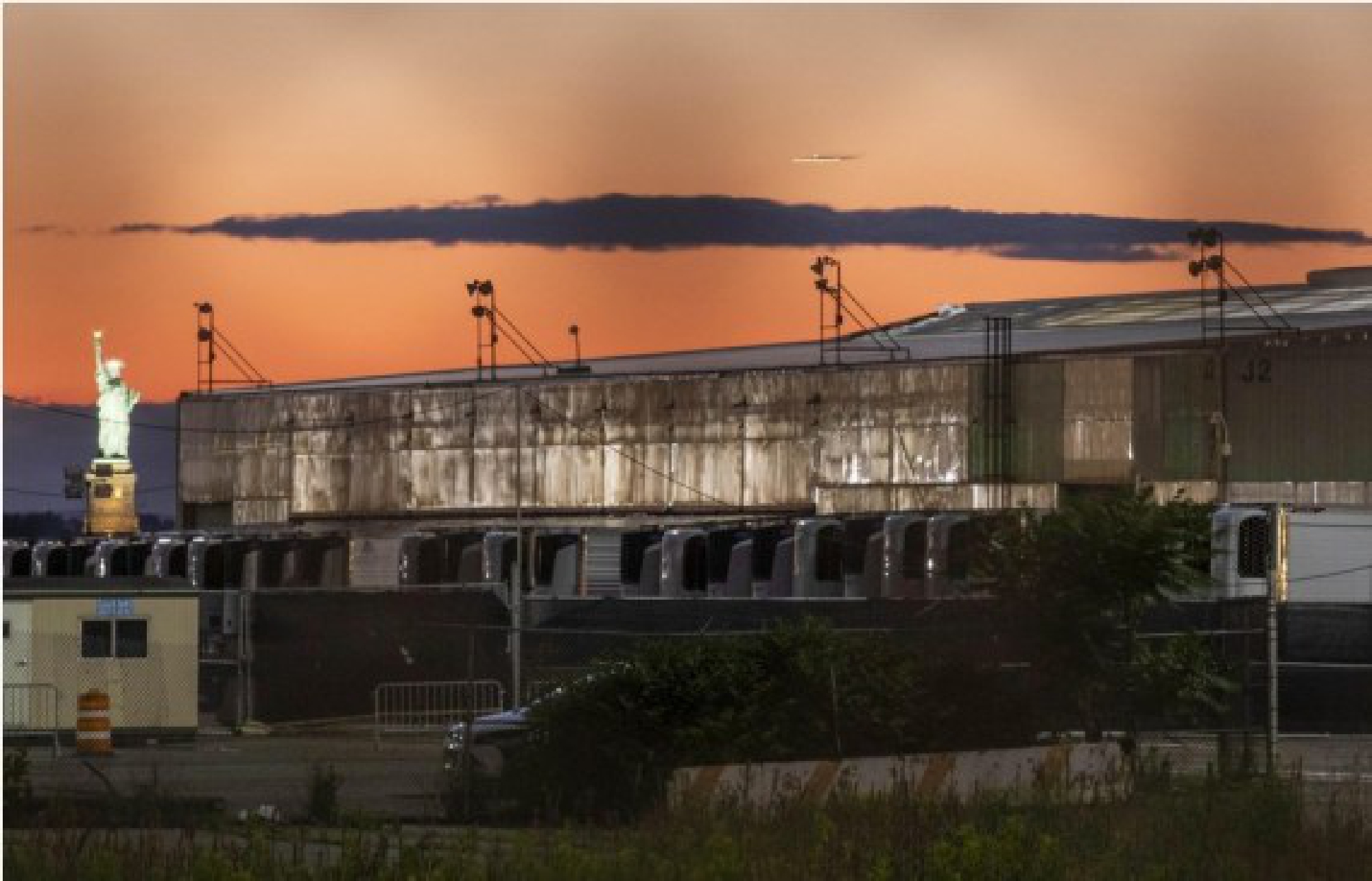 Refrigerated trailers are seen at a temporary morgue in Brooklyn, New York, the United States, June 15, 2021.
 Guests dine outside in Coral Gables near Miami, Florida, the United States, Aug. 11, 2021.
 White House Press Secretary Jen Psaki speaks during a press briefing at the White House in Washington, D.C., the United States, on June 8, 2021.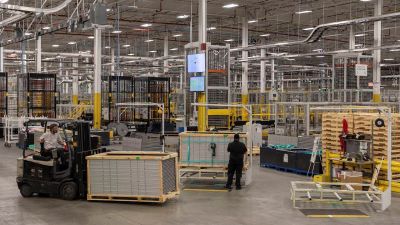
 Inside the Ohio factory that could make or break Biden big solar energy push
