Scarce flights, visa issues snarl students plans to reach U.S. #SootinClaimon.Com

#SootinClaimon.Com : ขอบคุณแหล่งข้อมูล : หนังสือพิมพ์ The Nation.

https://www.nationthailand.com/international/40003380

Scarce flights, visa issues snarl students plans to reach U.S.


Students from around the world are eager to study at U.S. colleges in the upcoming fall semester after the Covid-19 pandemic confined many of them to their home countries and left some attending virtual classes in the wee hours of the morning.

Now, getting to campus is the hard part.

In China, which accounts for a third of the roughly 1 million foreign students that flock to the U.S. in a typical academic year, the decline in available flights to American cities has been so severe that some students and their parents have resorted to lining up charter planes. Others, including from India, are caught up in visa purgatory because the State Department reduced personnel at embassies and consulates due to the pandemic. And that’s to say nothing of fast-changing Covid-19 vaccine guidelines.

It all adds up to tangle of challenges that has created uncertainty for students and a potential headache for schools that are looking to blunt last year’s sharp drop in international enrollment and the attending financial hit.

Ohio State University, which drew almost 6,600 international students to its Columbus campus in the fall of 2019, has already begun to see requests to defer for the term that begins Aug. 24, said Carina Hansen, who directs the International Students and Scholars program.

International students bring a worldly perspective to campuses and, crucially, often pay full tuition. Widespread deferrals would be a blow to colleges and universities, which dealt with a 16% decline in international student enrollment in this year’s spring term from the previous year because of the pandemic.

“If they defer for the semester, there’s always the concern that you’ll lose them for good,” said Don Heller, vice president of operations at the University of San Francisco who studies higher education finance. “If it’s easier for them to get into Canada, they might decide to go to a university in Canada instead, or stay in their home country.”

Anticipating potential problems with travel and other factors, Northeastern University in Boston held more than 200 virtual support sessions – in a half dozen languages, across multiple time zones – to answer questions about vaccines, visas and requests for travel support letters for airlines, said Renata Nyul, a spokeswoman.

Chinese students are finding the airline industry’s fitful recovery from the pandemic is making the trip to the U.S. trickier to plan, with a 96% decline in seats from two years ago. In July, there are 61 flights, or 20,254 seats, going from China to the U.S., according to Cirium, an aviation data company. That is far lower than the 1,626 flights, or 479,519, seats, making that voyage in July 2019.

Flights from China may come with an eye-popping price tag, too: The average cost of a round-trip ticket from that country to the U.S. was $2,260 in the first two quarters of 2021, according to travel-management company TripActions, a big jump from the $1,247 average fare seen in the same period in 2019.

Alicia Zhang, 20, took a gamble by buying a ticket for a direct flight in late June from her hometown, Shanghai, to New York, where she’s a rising junior studying economics at New York University. The price – about $4,000 for a one-way ticket – was roughly five times greater than what she had paid in pre-pandemic times. It didn’t pay off: She said the China Eastern Airlines flight was canceled less than a month later, with a refund. She then purchased a seat on another flight, with a layover in Hong Kong, for about $4,500. She said many students fear that the course of the pandemic this summer could prompt airlines to reconsider their schedules, potentially leading to cancellations or changes.

“The biggest problem will be the ticket,” Zhang said. “Most of my friends will buy several tickets and just wait for which ticket is not canceled, and just go to that flight.”

After trading stories of pricey airfares or worries about flight cancellations in WeChat groups organized by the Chinese Students and Scholars Association, some students and their parents lined up charter flights with Cathay Pacific, including two flights to New York in August. The group helps Chinese students studying abroad, especially in the U.S.

“We don’t have many choices,” said Samantha Duan, 18, an incoming NYU student from Chengdu who is traveling to the U.S. for the first time on one of the charter flights. This option offers some certainty, a more attractive price, and the fun of traveling with other students.

For those that don’t opt for charter flights, the ever-changing circumstances of the pandemic make it hard to game out when fares might be most affordable.

“An uptick in ticket prices should indeed be expected given airlines will be looking to tap the surge in demand from students over the short August/September window,” said Chris Muckensturm, a Bloomberg Intelligence analyst who studies passenger transportation in the Asia Pacific region, in an e-mail. “Yet more capacity deployed on those routes could mitigate price increases.”

For some students, the primary difficulty isn’t the flight, but obtaining a visa. According to a State Department website that offers guidance on appointment wait times, the situation varies widely across the globe. For those looking to obtain student and exchange visas, estimates range from three calendar days in Beijing and 36 days in Seoul to emergency appointments only in Shanghai, Mumbai and London. The State Department says it is prioritizing visa applications for certain types of travelers, including students and exchange visitors.

Sara Dahiya, 17, an incoming freshman at Harvard University from Panipat, India, is among the students awaiting her visa. She expects to depart for the U.S. this fall alongside her twin brother, Anirudh, who will begin at the University of Wisconsin-Madison. She and her brother purchased their plane tickets in mid-June.

“It definitely was a risk to book my flight before getting a visa but I’m glad I took it,” Dahiya wrote in an email. “The process of scheduling a visa appointment, as it is, was extremely distressing, and finding and paying twice the amount for a flight right now would’ve only added to the troubles.”

ADVERTISEMENT

Colleges have ample incentive to move away from remote learning this fall. Beyond the potential educational rewards of in-person schooling, there are financial benefits to these institutions, because payments for living in dormitory housing and eating in dining halls help cushion their bottom lines.

International students studying at U.S. colleges and universities contributed $38.7 billion to the nation’s economy and supported 415,996 jobs during the 2019-2020 academic year, according to an analysis by NAFSA: Association of International Educators. Last year, when campuses shut down in March, many students were stranded far from home. If they did eventually depart the U.S., they might have ended up taking classes online at odd hours, thanks to time-zone differences.

“International students probably took the hardest hit in the pandemic,” said Wendy Wolford, vice provost for international affairs and a professor of global development at Cornell University in Ithaca, New York.

Paulash Chatterjee, a rising senior at the University of Illinois-Chicago, has attended school from his home in Jaipur, India, since last August, located 7,500 miles away from campus in a time zone that is 10.5 hours ahead.

He plans to resume in-person learning in the fall, but is concerned about the cost of airfare and the possibility that his flight might end up canceled. He also must consider Covid-19 vaccine recommendations. He received his first dose of the Indian vaccine Covishield in June, but evolving government advice now suggests that a later administration of his second vaccine dose – up to 16 weeks after the first – would offer better protection. That’s long after Chatterjee is set to be in the U.S.

ADVERTISEMENT

“I’ve been checking flights every day,” said Chatterjee, 21, who is studying biology. “Of course I want to go back to Chicago, but at the same time, I don’t want to risk my life.”

Published : July 18, 2021

By : Syndication Washington Post, Bloomberg · Janet Lorin, Eric Krebs

Death toll from European floods climbs to more than 150 #SootinClaimon.Com

#SootinClaimon.Com : ขอบคุณแหล่งข้อมูล : หนังสือพิมพ์ The Nation.

https://www.nationthailand.com/international/40003379

Death toll from European floods climbs to more than 150


BERLIN – German military units helped clear roads Saturday and open more rescue routes into areas devastated by massive floods that claimed more than 150 lives in Germany and Belgium and raised alarms that the disaster was a glimpse into growing threats from climate change.

But even as the waters receded – and crews begin to shore up flood-damaged buildings and roads – the death count continued to grow.

German police said that more than 130 people died in flooding in western parts of the country after torrential rains that began Wednesday triggered a catastrophe that unfolded at astonishing speed: rivers pouring over their banks, bridges buckling and hillsides giving way in a rush a mud and debris. Belgium’s national crisis center said at least 24 people were dead.

“A lot of people have lost everything they spent their lives building up – their possessions, their home, the roof over their heads,” German President Frank-Walter Steinmeier said during a visit to the flood-battered town of Erftstadt near Cologne. “It may only be possible to clear up in weeks how much damage needs to be compensated.”

Photographs and aerial video showed scenes of total – and sudden – devastation in the heart of Europe: a train stranded at a swamped station, vehicles abandoned on waterlogged roadways, survivors floating down a city street on rubber boats.

A television interview with a Belgian mayor was interrupted when a house in the background started to crumble. Bricks and belongings poured from the home into the flooded street – and two people tried to escape through the roof.

“We are still waiting for a definitive toll, but it could be that this flood becomes the most catastrophic our country has ever known,” Belgian Prime Minister Alexander De Croo said Friday.

The storm – a major low-pressure system that stretched from Germany to France – brought a deluge Thursday that quickly swelled rivers, damaged bridges and roads, and left many people scrambling to rooftops or onto fallen trees.

More than 1,000 rescue operations have been carried out in the hardest-hit areas since early Thursday, authorities said. In some places, helicopters were the only way to reach stranded people.

By midday Friday, the death toll in Germany had climbed to more than 100, according to German media reports citing officials. At least 50 people died in the southwestern state of Rhineland-Palatinate, and 43 died in neighboring North Rhine-Westphalia, security officials said.

German Chancellor Angela Merkel, fresh off a trip to Washington, met via video conference with a crisis team Friday. She was briefed on rescue efforts and pledged government support. Belgian officials also said Tuesday will be declared a day of national mourning.

In the hardest-hit parts of Germany, two months’ worth of rain fell in 24 hours, according to the Deutscher Wetterdienst, Germany’s meteorological agency, causing a 1-in-100-year deluge.

In remarks Friday, Malu Dreyer, premier of Rhineland-Palatinate, called the flooding a “national catastrophe.”

“We’re not at the point today where we can say the situation is getting better. The sorrow is still rising,” she said.

รูปภาพนี้มี Alt แอตทริบิวต์เป็นค่าว่าง ชื่อไฟล์คือ kmrwgrkontbz0a3smrmc.jpg

Dreyer said that work to tackle the issue of climate change would continue and stressed the importance of protecting future generations from such turmoil.

Many saw the flooding as a vivid warning of what’s to come as climate change reshapes weather patterns.

Armin Laschet, the premier of North Rhine-Westphalia and a candidate to succeed Merkel in September’s elections, called on officials to take the issue more seriously.

“We need to continue Germany’s path toward climate neutrality even faster,” he said. “In these difficult hours, we must overcome all party and state boundaries.”

ADVERTISEMENT

Ernst Rauch, the chief climate and geoscientist for Munich Re, a major German insurer, warned of more such catastrophes to come.

“There are clear indications that part of the growing damage cannot be explained solely by socio-economic factors but is due to climate change,” he wrote in a statement posted to Twitter.

“We have to assume that these damages will increase in frequency and intensity.”

In the Netherlands, near the city of Maastricht, a dike of the Juliana Canal collapsed Friday, a local spokesman in charge of the security said. Residents were told to evacuate amid fears the breach in the dike could widen.

In other places across the flood zone, survivors took stock of what was lost and traded stories of the fearsome speed and power of the rushing waters.

ADVERTISEMENT

“We already experienced floods, but nothing like this. We just bought this house eight months ago and it was meant to be the unsinkable house of the village,” said Laurence Willquet, 47, who lives in the Belgian village of Hony, around 10 miles from Liège and near the Ourthe river.

“Everything is ruined, we lost everything,” she said, adding that she fled to stay with a friend whose house was also flooded. Willquet was rescued Thursday, jumping to a boat from the first floor of the house.

Luxembourg and Switzerland were also hit by torrential rain, and warnings were issued in more than a dozen regions of France. Earlier this week, Britain was struck by flash floods that submerged parts of London in deep waters and turned residential roads into flowing rivers.

Published : July 18, 2021

By : The Washington Post · Loveday Morris, Jennifer Hassan, Emily Rauhala

In this summer of covid freedom, disease experts warn: The world needs a reality check #SootinClaimon.Com

#SootinClaimon.Com : ขอบคุณแหล่งข้อมูล : หนังสือพิมพ์ The Nation.

https://www.nationthailand.com/international/40003378

In this summer of covid freedom, disease experts warn: The world needs a reality check


Maria Van Kerkhove, a World Health Organization epidemiologist, was in her Geneva office last weekend preparing for a keynote address when a simple phrase came to mind.

She had been pondering the dismaying rise in coronavirus infections globally during the previous three weeks, reversing promising trends of late spring. The surge came as people across much of the Northern Hemisphere were moving around again in a suddenly freewheeling summer – as if the pandemic were over.

She wrote in her notebook: “The world needs a reality check.”

Van Kerkhove’s subsequent comments on Twitter pointing out the lack of social distancing drew predictable flak from the social media trolls, something she has gotten used to in the past year and a half. But she is not an outlier. Around the world, scientists and public health officials fear that the world’s protracted battle against the coronavirus is at a delicate and dangerous moment.

Reality checks abound. Coronavirus infections are surging in places with low vaccination rates. SARS-CoV-2 is continuing to mutate. Researchers have confirmed the delta variant is far more transmissible than earlier strains. Although the vaccines remain remarkably effective, the virus has bountiful opportunities to find new ways to evade immunity. Most of the world remains unvaccinated.

And so the end of the pandemic remains somewhere over the horizon.

“We’re getting further away from the end than we should be. We’re in a bad place right now globally,” Van Kerkhove said.

Similarly dismayed is Francis S. Collins, director of the National Institutes of Health. Last summer, he watched cases in the United States spike, particularly in the Sun Belt, after what he felt was a premature end to spring restrictions. This summer, he is not surprised by the rise in infections across a country where many people haven’t gotten their shots and have returned to pre-pandemic behavior.

“It’s like we’ve been to this movie several times in the last year and half, and it doesn’t end well. Somehow, we’re running the tape again. It’s all predictable,” Collins said.

Coronavirus infections in the United States rose nearly 70% in a single week, officials reported Friday, and hospitalizations and deaths rose 36% and 26%, respectively. Almost every state has experienced a rise in cases. Florida, populous and not highly vaccinated, is seeing a surge in cases. In hotspots such as Arkansas and Missouri, covid wards are opening up again in hospitals.

Los Angeles County this past week announced that it had to reinstate indoor mask requirements for everyone, regardless of vaccination status. Breakthrough infections among vaccinated people provide another reality check. Thursday night’s prime-time baseball game between the New York Yankees and Boston Red Sox was canceled when six Yankees players – most of them vaccinated – tested positive for the virus.

Many breakthrough infections will produce no symptoms. The Centers for Disease Control and Prevention decided in May to track only breakthrough infections leading to hospitalization.

The vaccines, though marvels of basic and applied science, do not form an impenetrable shield against SARS-CoV-2. They work as advertised, meaning they usually prevent severe illness and death, but they do not deliver what is known as “sterilizing immunity.”

The CDC issued a statement Friday saying the agency has multiple programs, working with state and local partners, to track vaccine effectiveness.

“COVID-19 vaccines are effective and are a critical tool to help bring the pandemic under control. However, no vaccines are 100% effective at preventing illness in vaccinated people. There will be a small percentage of fully vaccinated people who still get sick, be hospitalized, or die from COVID-19. As with other vaccines, this is expected. As the number of people who are vaccinated goes up, the number of breakthrough cases is also expected to increase,” the CDC said.

The next reality check comes from the virus itself. The delta variant has mutations that significantly enhance transmissibility, and it is responsible for a majority of new infections in the United States as it outcompetes other strains. Mutations in the virus are inevitable and complicate forecasts of how the pandemic will play out. The world is in the midst of a global experiment in which a single virus is turning into a full Greek alphabet of distinct strains, each with its own suite of mutations.

“They’re evolving. Even the delta variant, we have two sublineages we are monitoring,” Van Kerkhove said. “Everyone is fixated on the delta, but we should be prepared for more.”

Amid these concerns are positive signs of long-term progress against covid-19, the illness caused by the virus. That’s a reality check on the positive side of the ledger. This isn’t 2020. The increase in hospitalizations has been less dramatic than the increase in reported infections. That’s because the vaccines – a tool the world lacked a year ago – usually prevent severe illness.

“The game changer is if and when we see large numbers of vaccinated individuals returning to hospitals. But we are not seeing that,” said David Rubin, director of PolicyLab at Children’s Hospital of Philadelphia.

This hints at how the pandemic may eventually play out: The virus would become endemic. It would not be eradicated – and would still cause occasional clusters of infection – but it would not ignite runaway outbreaks nor be nearly as lethal as when it emerged into the human population. That drop in lethality will be driven less by changes in the virus itself than by the changed immunological landscape.

For people with at least partial immunity, covid-19 could become more like influenza or even a cold, which are caused by viruses that are at least somewhat familiar to our immune systems. Four other coronaviruses are endemic in humans and are responsible for a significant fraction of colds.

This scenario – call it Scenario A – has been the general assumption or hope of many infectious-disease experts since the start of the pandemic. The dialing down of the lethality of the disease would be an example of history repeating itself: The 1918 influenza pandemic was caused by a virus that never vanished, but instead became the cause of the seasonal flu.

ADVERTISEMENT

SARS-CoV-2 and covid-19 are often referred to as if they were interchangeable. But the trajectory of the virus increasingly is distinct from the trajectory of the disease. As time goes on, more people will have immunity from a previous natural infection or from vaccination, and SARS-CoV-2 will pose less of a threat to them than it will to people unvaccinated or never previously infected.

“We’re really teasing apart SARS-CoV-2 the virus from covid-19, the disease,” said Jennie Lavine, an Emory University researcher and lead author of a paper in Science earlier this year showing how the virus may become endemic. There won’t be a single moment when the virus becomes endemic, she said. It will happen gradually, as the virus loses its virulence. In Scenario A, the pandemic as we know it comes to an end.

“That’s not saying you won’t get infected again, it’s saying that you won’t get really sick from it,” she said.

Janis Orlowski, chief health-care officer of the Association of American Medical Colleges, offers one version of Scenario B: “Delta goes on to epsilon which goes on to lambda, and that becomes another ugly virus. . . . The virus mutates to a strain that we are not effectively vaccinated against – and that leads us into another ugly year.”

(For the record: There already is an epsilon and a lambda.)

ADVERTISEMENT

Orlowski adds, “I think Scenario B is less likely, but is still a concern because we are not vaccinated at the rate we should be.”

New scientific research, including two reports highlighted by Collins on his NIH blog, indicates that important elements of immunity appear to remain durable against the virus even when antibodies begin to wane. And although Pfizer-BioNTech – the companies behind one of the three authorized vaccines in the United States – put the idea of boosters into play with a recent news release saying people may need them six to 12 months after being fully vaccinated, many experts, including Collins, regarded the announcement as premature.

Some people who are immunocompromised – for example, from taking powerful drugs to reduce chances of organ rejection after undergoing a transplant – may need another vaccine dose in the near term, especially if tests show they have not mounted any immune response to the vaccines. But Collins doesn’t consider that a “booster” so much as another attempt to get people to the initial stage of immunity.

The bigger question for public health officials is whether they can persuade millions more people to get jabbed in the arm for the first time. Roughly one-third of adults in the United States remain unvaccinated. Vaccine uptake is lowest among younger age groups that are also at lower risk of severe illness from covid-19, but they represent a growing percentage of cases in hospitals.

Misinformation has run rampant. The vaccines are not, contrary to one rumor, “gene therapy.” They do not implant microchips. They are not part of a plot. And although they can cause side-effects – and on rare occasions, dangerous ones – the vaccines have passed rigorous safety reviews.

Surgeon General Vivek H. Murthy released a report Thursday decrying the epidemic of misinformation. On Friday, he called out “technology companies” that he said enabled misinformation “to poison our information environment with little accountability to their users.” President Joe Biden doubled down on that Friday as he boarded the Marine One helicopter for a trip to Camp David: “They’re killing people,” he said of the social media platforms that spread misinformation.

Even if, through vaccination and prudent behavior, the virus is brought under control, the rattling psychological effects of the pandemic could persist.

As Lavine points out, people have been told repeatedly for a year and a half that this virus is a potential killer. For many of those people, it will be difficult to let go of covid-19 fears. The many unknowns about covid-19 will make risk tolerance calculations difficult. This remains a new virus and a new disease, and scientists and doctors are still trying to understand what they’re looking at.

“Nobody has had covid for 10 years. So there’s an unknown factor, and that is going to make it scary for a while because people are scared of the unknown,” said David W. Dowdy, an epidemiologist at the Johns Hopkins Bloomberg School of Public Health.

Meanwhile, many people are not scared at all, don’t feel vulnerable, or simply are done – done, done, done – with the pandemic. Van Kerkhove, the WHO epidemiologist, was upset last Sunday at the sight of unmasked people across Europe crowding into bars to watch the European championship soccer match between Italy and England.

“It’s really disheartening, and it’s really devastating to see situations where we can facilitate spread,” she said. “I want to go to those football matches, too. I want to go to the bar and have a drink. I want to go out to dinner.”

But she’s not ready. She knows too much.

“The situation globally is so dynamic, it’s so uncertain, and is so fragile,” she said.

Published : July 18, 2021

By : The Washington Post · Joel Achenbach

How vaccine-skeptic France and Germany came to support near-mandates #SootinClaimon.Com

#SootinClaimon.Com : ขอบคุณแหล่งข้อมูล : หนังสือพิมพ์ The Nation.

https://www.nationthailand.com/international/40003377

How vaccine-skeptic France and Germany came to support near-mandates


PARIS – When France and Germany launched their coronavirus vaccination programs late last year, officials in both countries assured that the shots wouldnt be mandatory in their societies, where vaccine skepticism is widespread.

But more than half a year later, the two nations are going further than most other Western countries in granting privileges to people who have been vaccinated and making daily life difficult for those who aren’t.

These aren’t mandates. Not formally. But in practice, some of the measures come close.

In contrast with the U.S. states that have explicitly banned vaccination mandates or passports, the European Union is using digital covid certificates, with scannable QR codes that quickly show if someone has been vaccinated, tested negative or recovered from covid-19. The certificates were designed with the primary goal of easing movement across borders, but many E.U. countries are using them internally, as well.

In Germany, vaccinated people have gained privileged access to restaurants and bars that would otherwise require a recent negative coronavirus test. Some of those restrictions have now been lifted because of low caseloads. But rules could be tightened again, as the European CDC predicts incidence rates across the bloc to triple within the next two weeks because of the delta variant.

German officials have vowed that vaccinated people would not be significantly affected by a fourth-wave lockdown.

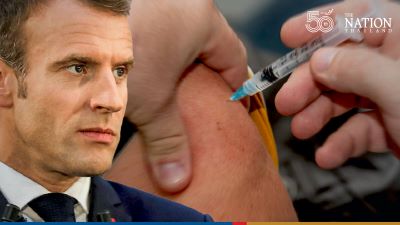
In France, President Emmanuel Macron announced this past week that people would have to flash their certificates before entering trains, planes, restaurants, cafes and many other places starting next month.

As in Greece and Italy, vaccination would become mandatory for health workers in France by fall. Most everyone else here would still be in a position to decline vaccines. But the unvaccinated would be largely excluded from social life unless they meet the covid recovery exception or get tested every 48 hours.

In addition, coronavirus tests would no longer be free, unless prescribed by a doctor.

Under a draft law, customers and business owners would risk hefty fines or even jail if they circumvent the rules, which still need to be approved by Parliament.

The French government says the measures are essential to revive a flagging inoculation campaign – which had stalled at around 53% for first shots – and to prevent a deadly fourth wave of the virus.

“We must move toward the vaccination of all French people, because it is the only way to return to normal life,” Macron said.

People seemed to get the message. Within hours of Macron’s speech, vaccination booking platforms registered a surge in appointment requests. A record number of shots were administered in France on Tuesday, the day after the announcement.

But thousands of protesters rallied against the measures on Saturday, demanding Macron’s resignation and urging the government to reverse its plans. Protests were held in several cities, including in Paris, Marseille, and Montpellier, drawing the support of politicians from across the far-right and far-left of the political spectrum.Protesters in Paris chanted “No to the health dictatorship!” and “Freedom!”

The French plans constitute “an obligation in disguise,” said Françoise Salvadori, an immunology researcher and author. She added that the proposed changes mark a “clear change in tone” by the president, who vowed in December that “the vaccine will not be compulsory.”

Pharmaceutical industry scandals and a controversial influenza vaccination campaign in 2009 had turned France from one of the most vaccine-approving nations into one of the most skeptical over the past two decades. As a result, French officials launched an extremely cautious coronavirus vaccine rollout – a strategy that was widely criticized by scientists for sending mixed messages on the safety and benefits of vaccines.

Trust in vaccines has since been on the rise in the country, and surveys show a majority of French support the measures announced this past week.

ADVERTISEMENT

But some research suggests that vaccine mandates can decrease trust in government or in science, and Macron’s announcement was met with angry protests from some groups.

In Paris, anti-vaccination demonstrators – chanting, “Down with dictatorship!” and “Liberty!” – clashed with the police on Wednesday.

The far right sought to capitalize on the discontent. National Rally party leader Marine Le Pen called mandatory vaccination for health workers an “indecent brutality.”

Former Le Pen ally Nicolas Dupont-Aignan said the expanded use of a health pass constitutes a “deprivation of freedoms” and a “health coup d’etat.”

Macron also took criticism from the far left, with politician Jean-Luc Mélenchon describing the plan as “presidential monarchy.”

ADVERTISEMENT

Salvadori said the debate risks politicizing science ahead of presidential elections in France next year.

“I hope that political interests won’t prevail over the discourse of scientific reason,” she said.

There is a similar risk of deepening resentment against the government in Germany, where the anti-vaccine movement has attracted a wide range of supporters, ranging from far-right conspiracy theorists to hippie moms.

But both in Germany and France, experts said, the political risks associated with the recent changes are likely to be outweighed by the potential benefits of higher vaccination rates. Vaccines are now easily available in France, Germany and other E.U. countries, meaning the ethical debate around preferential treatment for vaccinated people has shifted in those nations, too.

“At the beginning, I was shocked when this question came up,” said Tobias Kurth, the director of the Institute of Public Health at the Charité hospital in Berlin. Allowing vaccinated people to resume their lives while their neighbors or colleagues still wait for their shots “runs entirely against my understanding of how society should work.”

But Germany and France are quickly reaching a stage in their vaccination campaigns that resembles the United States’ current dilemma, Kurth said. Whereas only a few months ago, German authorities went to great lengths to prosecute individuals who jumped the vaccine line, they are now trying to convince holdouts. Germans can get vaccines in front of supermarkets, in churches or at the airport.

Still, vaccinations have slowed down.

German Chancellor Angela Merkel excluded the possibility of mandates for certain professions this past week. But earlier this year, she voiced support for a privileged treatment of vaccinated people, saying in an interview that – once sufficient supplies are available – she might be in favor of an announcement that “those who don’t want [the vaccine] perhaps won’t be able to do certain things,” she said in February.

Unlike in France, where the president wields extensive powers, in Germany the 16 federal states are in charge of their own pandemic policies. In some states, there appears to be a growing perception that the scenario Merkel was referring to is quickly approaching.

Unvaccinated employees in the eastern state of Saxony need a negative coronavirus test to return to work after their summer holidays. Meanwhile, the leader of the southern German state of Bavaria has said that only vaccinated people may be able to party in clubs later this year, and that – as in France – unvaccinated people may soon need to pay for their coronavirus tests.

Public health expert Kurth cautioned that putting a price tag on tests that are required to participate in social life risks doing more harm than good.

“The social problems that were already exacerbated by the coronavirus will be worsened even more,” he said.

The debate about tests is not the only controversial question that needs to be resolved. It’s still unclear how vaccinated American tourists will be able to have their vaccination certified in Europe, to receive the QR codes, without first having to go to a French doctor or pharmacy.

Rules for minors remain in flux, with France saying that the planned regulations will be delayed for 12-to-17-year-olds. It is also unclear how French authorities would be able to control whether restaurants or bars are implementing the rules, leading some to wonder whether Macron’s announcement could turn out to have been an empty threat that will be watered down in the weeks to come.

Didier Seyler, who leads a preventive health-care center in southern France, said the current proposals may not be far-ranging enough.

With French people once again partying in bars, clubs and on the streets, “it seems like the lockdown – and everything else – it all happened 10 years ago,” he said.

“I’m willing to bet that in 12 months, we will have a quasi-universal vaccination obligation, given the threat the virus poses to our freedoms,” Seyler said.

Published : July 18, 2021

By : The Washington Post · Rick Noack

First case of coronavirus infection inside Olympic Village confirmed six days before Opening Ceremony #SootinClaimon.Com

#SootinClaimon.Com : ขอบคุณแหล่งข้อมูล : หนังสือพิมพ์ The Nation.

https://www.nationthailand.com/international/40003375

First case of coronavirus infection inside Olympic Village confirmed six days before Opening Ceremony


TOKYO – The first positive coronavirus case has been confirmed inside the Olympics Village just six days before the Opening Ceremony, officials said Saturday, amid growing fears about the spread of the virus during the Games.

Tokyo Olympics organizing committee officials declined to identify the person infected with the virus, but said the individual had traveled to Japan from overseas and was a “Games-concerned personnel,” the Tokyo Olympic Committee confirmed Saturday. The person is now quarantining in a hotel room, according to officials, who confirmed the infection during a news conference on Saturday.

Thousands of athletes and journalists are now arriving in Tokyo for the Games which begin on July 23 amid a state of emergency due to rising coronavirus cases in the country’s capital. Japan has barred all spectators from Olympic events in and around Tokyo in an effort to curb the spread of the virus, but public support for the Games remains lukewarm.

So far, 44 people affiliated with the Games have tested positive for coronavirus since the committee began tracking infections earlier this month. A member of the Nigerian delegation became the first Olympic visitor to be hospitalized with covid-19, according to local media reports. Olympic officials said Saturday that they are working to prevent any outbreaks.

Those arriving from overseas are tested for coronavirus before taking off and after landing in Tokyo. International Olympic Committee president Thomas Bach, who has been the subject of repeated criticism over the controversial pandemic Games, this week promised that there is “zero” risk that the virus would spread through the Olympic Village or beyond, citing the fact that everyone who arrives in Japan is tested for the virus.

Bach on Saturday drew a fresh round of ire amid reports that the Tokyo Olympic organizing committee plans to host a welcome party for Bach on Sunday evening with 40 guests, including high-profile politicians.

Critics responded online to reports of the welcome event by noting that the state of emergency urges members of the Japanese public not to gather in large numbers.

Among those invited are Japanese Prime Minister Yoshihide Suga, Tokyo Olympic organizing committee president Seiko Hashimoto and former Olympics chief Yoshiro Mori, who resigned earlier this year over sexist remarks he made about women, according to a report Saturday by NHK.

Meanwhile, local officials in Osaka said the Ugandan athlete who had gone missing from a training camp there left a note that he intended to stay in Japan because of difficulties living back home, according to local media. The Ugandan athlete failed to show up to a coronavirus test on Friday and had been reported missing. Local officials said they found the note in his place of accommodation.

Published : July 18, 2021

By : The Washington Post · Michelle Ye Hee Lee

U.S., other nations appear to snub Haitis interim prime minister while supporting rival #SootinClaimon.Com

#SootinClaimon.Com : ขอบคุณแหล่งข้อมูล : หนังสือพิมพ์ The Nation.

https://www.nationthailand.com/international/40003374

U.S., other nations appear to snub Haitis interim prime minister while supporting rival


PORT-AU-PRINCE, Haiti – The question of who leads Haiti after the assassination of President Jovenel Moïse gained a new dimension on Saturday, as a key group of international diplomats released a statement that appeared to show support for one hopeful vying for control of the country.

The statement released by the Core Group, an informal bloc of ambassadors and envoys that includes the United States, did not mention Claude Joseph, interim prime minister and Haiti’s effective leader.

Instead, emphasizing the need for a “consensual and inclusive government,” it called on “designated Prime Minister Ariel Henry to continue the mission entrusted to him to form such a government.”

By apparently snubbing Joseph and backing Henry, the Core Group appeared to be the first major international group to withdraw its support for Joseph – a move that surprised some observers given the tense political situation in Haiti.

In addition to the United States, the Core Group is made up of ambassadors from Brazil, Canada, Spain, France, Germany, the European Union and representatives from the United Nations and the Organization of American States.

Joseph has been serving as Haiti’s de facto leader since Moïse was assassinated July 7. A former academic, Joseph had been put in place as interim prime minister on April 14.

However, two days before he was killed, Moïse had selected Henry, a neurosurgeon, to become Haiti’s new prime minister. But Joseph says Henry was not sworn in before the slaying and that he would lead Haiti in what he called a “state of siege,” similar to martial law.

Aside from the interim prime minister and the designated prime minister, Joseph Lambert, a lawmaker who had led Haiti’s dismantled Senate, also claims to be leading Haiti. Lambert says he was named leader in a resolution adopted by a majority of the 10 remaining senators.

The Core Group statement is a departure from previous statements made by some of its members.

A day after Moïse was assassinated, State Department spokesman Ned Price said the United States would continue to work with Joseph as he was serving as acting prime minister before the slaying. A U.S. delegation that visited Haiti said that it met with Joseph, Henry and Lambert and encouraged them to work together to hold “free and fair elections,” White House national security council spokeswoman Emily Horne said on Monday.

ADVERTISEMENT

The State Department did not immediately respond to a request for comment on the Core Group’s statement.

The Core Group statement also appeared to contradict remarks made last week by U.N. special envoy for Haiti, Helen La Lime, who said that Joseph will lead the Caribbean nation until an election is held later this year.

Speaking virtually to reporters, La Lime said that Haiti’s constitution meant that the serving prime minister assumed control of the country during current events. She said that Joseph had told her that he would go through with current plans to hold the first round of voting in a new election on Sept. 26.

“There certainly are tensions. There are certainly people on all sides of this issue having different interpretations,” La Lime said, adding that this was why dialogue was important.

Joseph also did not immediately respond to a request for comment. But Mathias Pierre, minister of elections and interparty relations, who has backed Joseph as interim leader, said it remained unclear whether Henry could put together a working transitional government.

ADVERTISEMENT

He said Joseph was “open to negotiations” on the future of the country’s leadership, and wanted to ensure the assassination investigation continued and that elections within 120 days remained on track.”

He is prepared to do anything, any sacrifice for the good of the future of Haiti,” Pierre said.

Patrice Dumont, an influential Haitian senator who had been critical of Moïse’s government, said he rejected the idea that Henry could lead the country as he was “inadmissible.”

Some independent groups said they were dismayed that international backing had not considered the views of Haitian society.

Jake Johnson, who tracks Haiti for the Center for Economic and Policy Research in Washington, said that it appeared foreign diplomats were “once again putting their finger on the scale in an attempt to manage the nation’s politics.”

“While many see this as a snub of [Joseph], it should be seen more so as a snub of Haitian civil society organizations, who are meeting today to come up with a Haitian-led solution to the current impasse,” Johnson said.

Before he was gunned down in his home, Moïse, 53, had been ruling Haiti by decree for more than a year. With no elections, the terms of many Haitian politicians had ended.

On Thursday, Haitian Police Director General Léon Charles strongly rejected claims that Joseph had knowledge of the plot to kill Moïse, dubbing a story from Colombian media that alleged the interim prime minister was involved in the assassination “a lie.”

Published : July 18, 2021

By : The Washington Post · Widlore Merancourt, Adam Taylor, Anthony Faiola

Migrant encounters at U.S. southern border reach yearly high in June: CBP. #SootinClaimon.Com

#SootinClaimon.Com : ขอบคุณแหล่งข้อมูล : หนังสือพิมพ์ The Nation.

https://www.nationthailand.com/international/40003362

Migrant encounters at U.S. southern border reach yearly high in June: CBP.


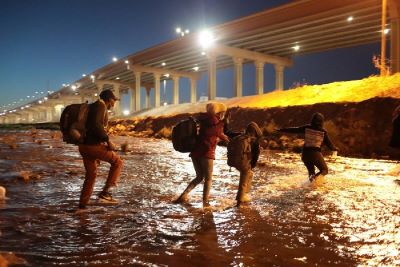
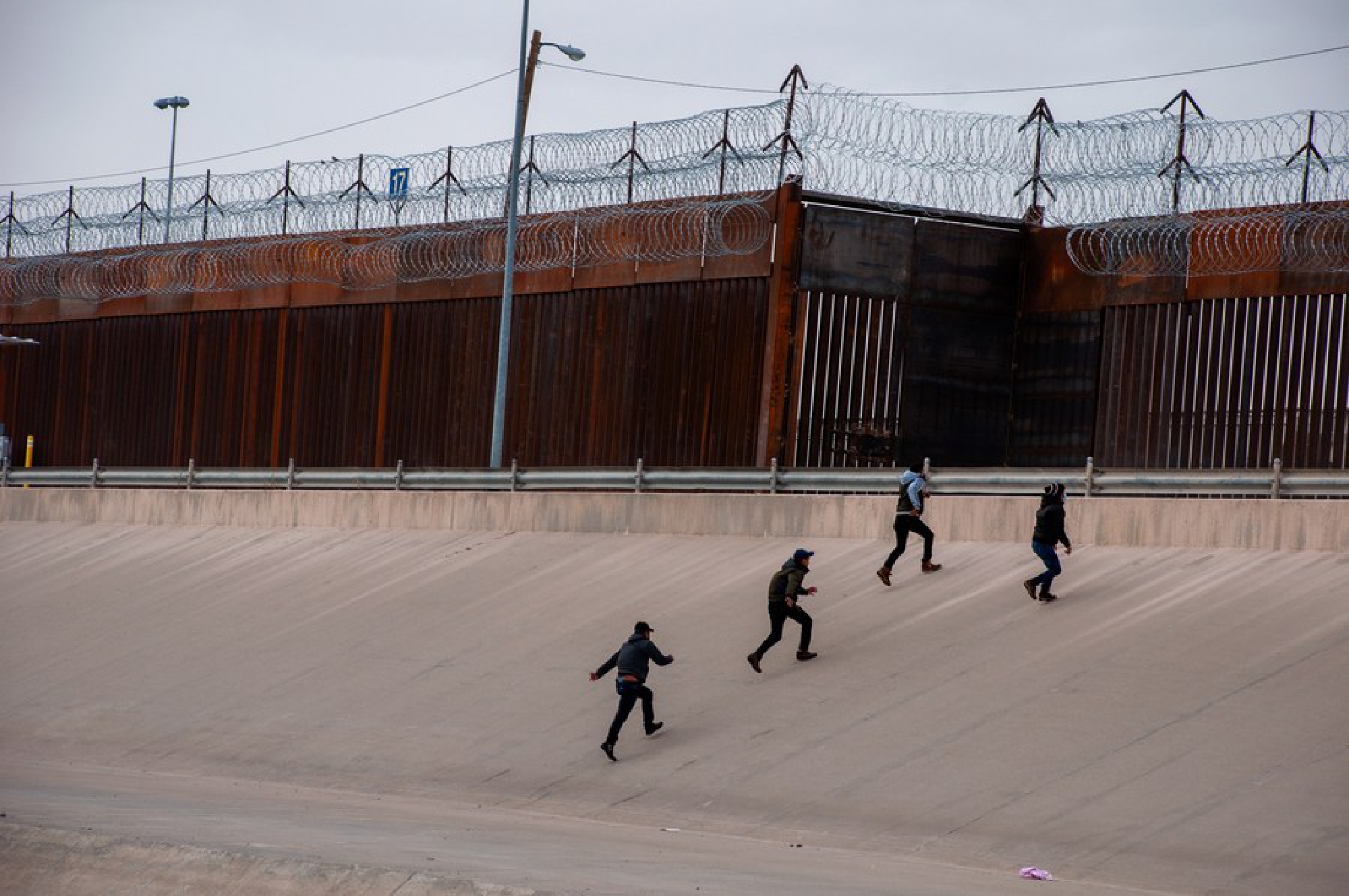
U.S. Customs and Border Protection encountered 188,829 people attempting to come to the United States through its southern border in June, a 5 percent increase from May. The June total is the highest monthly number of encounters by CBP in at least two decades.

The number of migrants encountered at the U.S.-Mexico border reached a yearly high in June, according to new statistics released Friday by U.S. Customs and Border Protection (CBP).
CBP encountered 188,829 people attempting to come to the United States through its southern border in June, a 5 percent increase from May, CBP said, in which 180,641 individuals were encountered.
The June total is the highest monthly number of encounters by CBP in at least two decades. June’s numbers mean CBP has encountered more than 1 million people so far in the current fiscal year that started Oct. 1, 2020.
The administration of President Joe Biden has been grappling with an increased number of migrants coming into the United States through the southern border.
The Biden administration has undone many of former President Donald Trump’s immigration policies, but has kept in place a policy that allows CBP to expel undocumented migrants so as to prevent the spread of the coronavirus at border facilities.
The majority of encounters were from single adults, which totaled 117,602. CBP encountered 55,805 family units, 15,253 unaccompanied children and 1,155 accompanied children.

Migrant encounters at U.S. southern border reach yearly high in June: CBP.Migrant encounters at U.S. southern border reach yearly high in June: CBP.The Biden administration has attributed the increase of migrants to past migratory trends, as well as the Trump administration’s hardline immigration policies.
Thirty-four percent of encounters in June 2021 were individuals who had at least one prior encounter in the previous 12 months, compared to an average one-year re-encounter rate of 14 percent for Fiscal Years 2014-2019, CPB said.
CBP Acting Commissioner Troy Miller warned in a statement that amid the summer heat, CBP is seeing a high number of distress calls to CBP “from migrants abandoned in treacherous terrain by smugglers with no regard for human life.”
“Although CBP does everything it can to locate and rescue individuals who are lost or distressed, the bottom line is this: the terrain along the border is extreme, the summer heat is severe, and the miles of desert migrants must hike after crossing the border in many areas are unforgiving,” Miller said in the statement.

Published : July 17, 2021

By : Xinhua

Israels COVID-19 cases surpass 850,000 #SootinClaimon.Com

#SootinClaimon.Com : ขอบคุณแหล่งข้อมูล : หนังสือพิมพ์ The Nation.

https://www.nationthailand.com/international/40003359

Israels COVID-19 cases surpass 850,000


Israels Ministry of Health reported 914 new COVID-19 cases on Friday, bringing the tally of cases in the country to 850,104. The total number of active COVID-19 cases in Israel increased to 5,968, the highest since April 3.

The death toll from the virus in Israel rose by one to 6,444, while the number of patients in serious condition decreased from 54 to 49.
The total recoveries from the disease climbed to 837,692 after 497 newly recovered cases were added.
The number of people vaccinated against COVID-19 in Israel has surpassed 5.74 million, or 61.5 percent of its total population. Israels COVID-19 cases surpass 850,000Israels COVID-19 cases surpass 850,000

Earlier on Friday, the ministry decided to forbid Israelis from traveling to Spain and Kyrgyzstan from July 23, citing a high level of COVID-19 morbidity.
The country has already banned its citizens and permanent residents from traveling to Argentina, Brazil, South Africa, India, Mexico, Russia, Belarus, and Uzbekistan unless they can obtain special permission from an exception committee.

Published : July 17, 2021

By : Xinhua

Catastrophic floods leave over 120 dead in Europe, many more still missing. #SootinClaimon.Com
#SootinClaimon.Com : ขอบคุณแหล่งข้อมูล : หนังสือพิมพ์ The Nation.

https://www.nationthailand.com/international/40003356

Catastrophic floods leave over 120 dead in Europe, many more still missing.


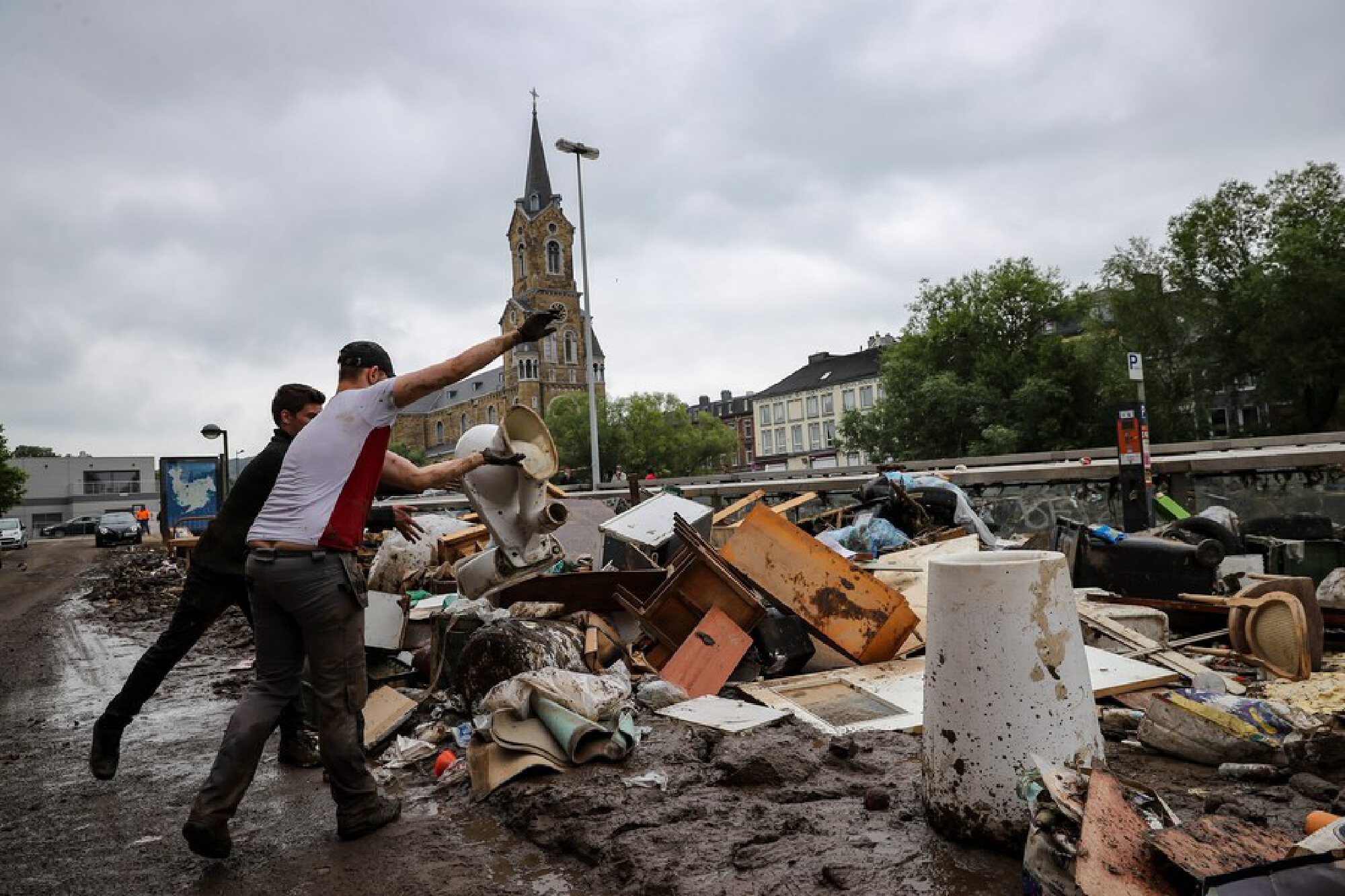
In Germany, the death toll climbed to 103 as of Friday afternoon local time, with many more people still missing. In Belgium, a national day of mourning has been set for July 20 for the victims of the severe weather in recent days.

Devastating flash floods due to intense rainfalls have swept through several western European countries in the past few days, killing more than one hundred and causing damages.
Some countries in Western Europe received up to two months worth of rainfall in two days, with Germany, Belgium, the Netherlands and Luxembourg strongly affected, the World Meteorological Organization (WMO) reported on Friday.
In parts of western and southern Germany, towns and communities were hit by catastrophic flash floods after heavy and continuous rainfall this week.
As of Friday afternoon local time, the death toll climbed to 103 in the country, with many more people still missing, according to local authorities. The federal states of North Rhine-Westphalia and Rhineland-Palatinate were hit particularly hard, with 43 people and 60 people killed respectively.
A large number of people are still missing. The district of Ahrweiler alone currently estimates about 1,300 missing people, while around 3,500 are being treated in care facilities.
Germany’s Ministry of Defence has issued a military disaster alert on Friday, deploying more than 850 soldiers for rescue work and the number is increasing.
“Extreme precipitation such as the heavy rains that flooded parts of western Germany this week is likely to become more frequent due to global warming,” said German expert Stefan Rahmstorf, head of Earth System Analysis at the Potsdam Institute for Climate Impact Research (PIK). Catastrophic floods leave over 120 dead in Europe, many more still missing.Catastrophic floods leave over 120 dead in Europe, many more still missing.

In Belgium, a national day of mourning has been set for July 20 for the victims of the severe weather in recent days. Twenty-one people died and 18 were reported missing on Friday after flash floods that saw rivers burst their banks in the south and east of the country.
In the town of Verviers, near the city of Liege, disastrous floods submerged the city center, upturning cars and damaging homes and shops along the high street.
The heavy downpours in the Belgian provinces of Luxembourg, Namur, Liege and Limbourg match what climate models predict for when the Earth warms up, suggesting direct links with global warming, the Belgian weekly Le Vive reported on Friday. Catastrophic floods leave over 120 dead in Europe, many more still missing.Catastrophic floods leave over 120 dead in Europe, many more still missing.

In neighboring Netherlands, 10,700 people have been evacuated in Venlo in the north of the southern Dutch province of Limburg on Friday, as a precaution due to the high water level and the fear of flooding.
The Dutch government has formally assessed the flood in Limburg as a disaster, allowing victims to obtain clarity about whether their damage will be reimbursed by the government if their insurance does not cover it.
Dutch King Willem-Alexander visited the city and called the situation in Limburg “heartbreaking.”
In Switzerland, maximum flood warnings have been issued in central parts of the country due to persistent rainfall. As of Friday, Lake Lucerne, Lake Thun and Lake Biel have remained at the highest flood warning level (5) after continued and intense rainfall throughout the week.
The Swissinfo website reported that the major cities such as Basel and Bern are also facing high flood risks, with the River Aare reaching a flow rate of 540 cubic meters per second, nearing the 600 level recorded in the major floods of 2005.
France’s meteorological service warned on Friday that the continuous rainfall is soaking the soil, putting France at risk of flooding. Currently, 13 provinces in northern and eastern France have been placed on orange alert for floods.
The European Union’s Civil Protection Mechanism has been activated to tackle the heavy floods.

Published : July 17, 2021

By : Xinhua

Damian Lillard denies trade request but has plenty of questions about the Blazers plans #SootinClaimon.Com

#SootinClaimon.Com : ขอบคุณแหล่งข้อมูล : หนังสือพิมพ์ The Nation.

https://www.nationthailand.com/international/40003355

Damian Lillard denies trade request but has plenty of questions about the Blazers plans


As Damian Lillard prepares to head for the Tokyo Olympics with USA Basketball, he made it clear Friday that he wants the Portland Trail Blazers to display “more urgency” and a clearer commitment to pursuing a championship.

The six-time all-star guard, who has been the subject of trade speculation since the Blazers were eliminated from the playoffs last month, denied a report that he plans to request a trade “in the coming days,” but also repeatedly expressed a desire for a more assertive approach from his organization.

During a virtual news conference from Las Vegas following Team USA’s practice, Lillard called that report, published by TrueHoop on Friday morning, “not true” and said that he expects to remain in Portland next season.

“A lot of things are being said,” Lillard said. “It hasn’t come from me. I haven’t made any firm decision on what my future will be, so it’s really no need for anybody else to speak for me.”

The 31-year-old Lillard has spent his entire nine-year career with the Blazers, leading Portland to the playoffs in each of the past eight seasons. In 2019, he signed a four-year, $196 million supermax extension that runs through the 2024-25 season. If Lillard does proceed with a trade request, he would likely emerge as this summer’s most-coveted superstar because of a weak free agency class and Kawhi Leonard’s recent ACL surgery.

Despite his consistent track record of winning and his long-term contract, Lillard has reached a professional crossroads. Since the 2018 death of Blazers owner Paul Allen, an obsessive basketball fan with limitless resources thanks to his Microsoft fortune, the franchise has favored small maneuvers over splashy moves. The Blazers are now owned by Jody Allen, Paul Allen’s sister, who has steadfastly remained behind the scenes.

Blazers General Manager Neil Olshey has chosen not to move guard CJ McCollum and has resisted going all-in for a marquee player via trade, leaving Lillard without an all-star teammate since LaMarcus Aldridge left via free agency after the 2015 season. Persistent injuries to key players have only increased the burden on Lillard, who averaged 28.8 points, 4.2 rebounds and 7.5 assists per game this season. Portland has lost in the first round of the playoffs in four of the past five seasons. The Blazers have reached the Western Conference finals once but gotten no further since Lillard arrived in Portland in 2012.

“[We need to] be more urgent about what our next step is and how we move forward,” Lillard said. “We have a lot of pride about making the playoffs all these years. We’re not a bad team. We’re a winning team.

“But we’ve reached that point where it’s not enough. Do we actually want to win it all? Is that what we’re shooting for? We’ve got to do things to show that. We’ve got to put action behind that desire to win at that level.”

Lillard’s call for assertiveness is understandable given the amount of prominent playoff teams recently boosted by recent trades. The Milwaukee Bucks are in the Finals after acquiring Jrue Holiday, the Phoenix Suns are in the Finals after acquiring Chris Paul and the Brooklyn Nets emerged as title favorites after landing James Harden before falling in the second round having been beset with injuries. The Denver Nuggets, who eliminated the Blazers, acquired Aaron Gordon in a key trade deadline move.

Following the season, Olshey pinned the team’s playoff exit and poor defense on coaching, rather than personnel, and noted that it is difficult for small-market teams to compete for top talent. After the Blazers parted with longtime coach Terry Stotts, Olshey said that starters Lillard, McCollum, Robert Covington and Jusuf Nurkic were all “absolutely” returning for the 2021-22 season.

The Blazers then tabbed Los Angeles Clippers assistant coach Chauncey Billups, a longtime Olshey favorite, as Stotts’s replacement. That hiring prompted substantial backlash from fans and some media because of a sexual assault allegation levied against Billups in 1997.

Lillard, who expressed frustration weeks ago that fans called him out about Billups’s hire, said Friday that a coaching change wasn’t sufficient. Billups, 44, has no previous NBA head coaching experience and spent just one season as a Clippers assistant.

“I don’t disagree that maybe Chauncey can really change our team and make us a better team and get us going in that direction,” Lillard said. “But I think if you look at our team as it is going into next season, I don’t see how you can say, ‘This is a championship team. You just need a new coach.'”

The criticism of Billups’s hiring and questions about the Blazers’ vetting process have further complicated Portland’s summer. While introducing Billups to the Portland media, a Blazers staffer abruptly cut off a question to Billups about the assault allegation. Olshey also refused to divulge specifics about the organization’s background investigation into the incident, which occurred during Billups’s rookie season with the Boston Celtics, saying that such information was “proprietary.”

Subsequent reporting by Oregon Public Broadcasting revealed that the Blazers did not contact Billups’s accuser during their investigation. A Blazers spokesperson later told Willamette Week that the organization had ended an 11-year professional relationship with a private investigator linked to the investigation after it was revealed that he had shared pornographic material on his Twitter account.

Now, the Blazers’ front office must juggle that external pressure with a new round of internal pressure from the team’s franchise player.

“Right now, I’m not sure what I’m going to do,” Lillard said. “What I can say is, my intentions and my heart is set on being in a Trail Blazers uniform for my entire career. But over time, you want to win it all. I want to win it at all in a Trail Blazers uniform, but we all need to be making strides towards that.”

Published : July 17, 2021

By : The Washington Post · Ben Golliver