Buildings collapse, families are buried under rubble in Gaza #SootinClaimon.Com

#SootinClaimon.Com : ขอบคุณแหล่งข้อมูล : หนังสือพิมพ์ The Nation.

https://www.nationthailand.com/international/40000949

Buildings collapse, families are buried under rubble in Gaza


GAZA CITY – Sanaa al-Kulak spent the night under the rubble. It was hard to breathe; her leg was trapped. Her son, stuck beside her, managed to get out his phone and call for help. “We tried to hold out,” she said.

Buildings collapse, families are buried under rubble in Gaza

It was about five hours after Israeli airstrikes flattened their home before al-Kulak, 56, and her 24-year-old son, Mohammed, were pulled out by rescuers. It was not until she got to the hospital that she learned the shattering news.

Her husband, their two sons, a daughter, a daughter-in-law and a 1-year-old grandchild had been killed, alongside at least 11 other members of her extended clan that had lived across two four-story buildings in Gaza’s Wehda Street.

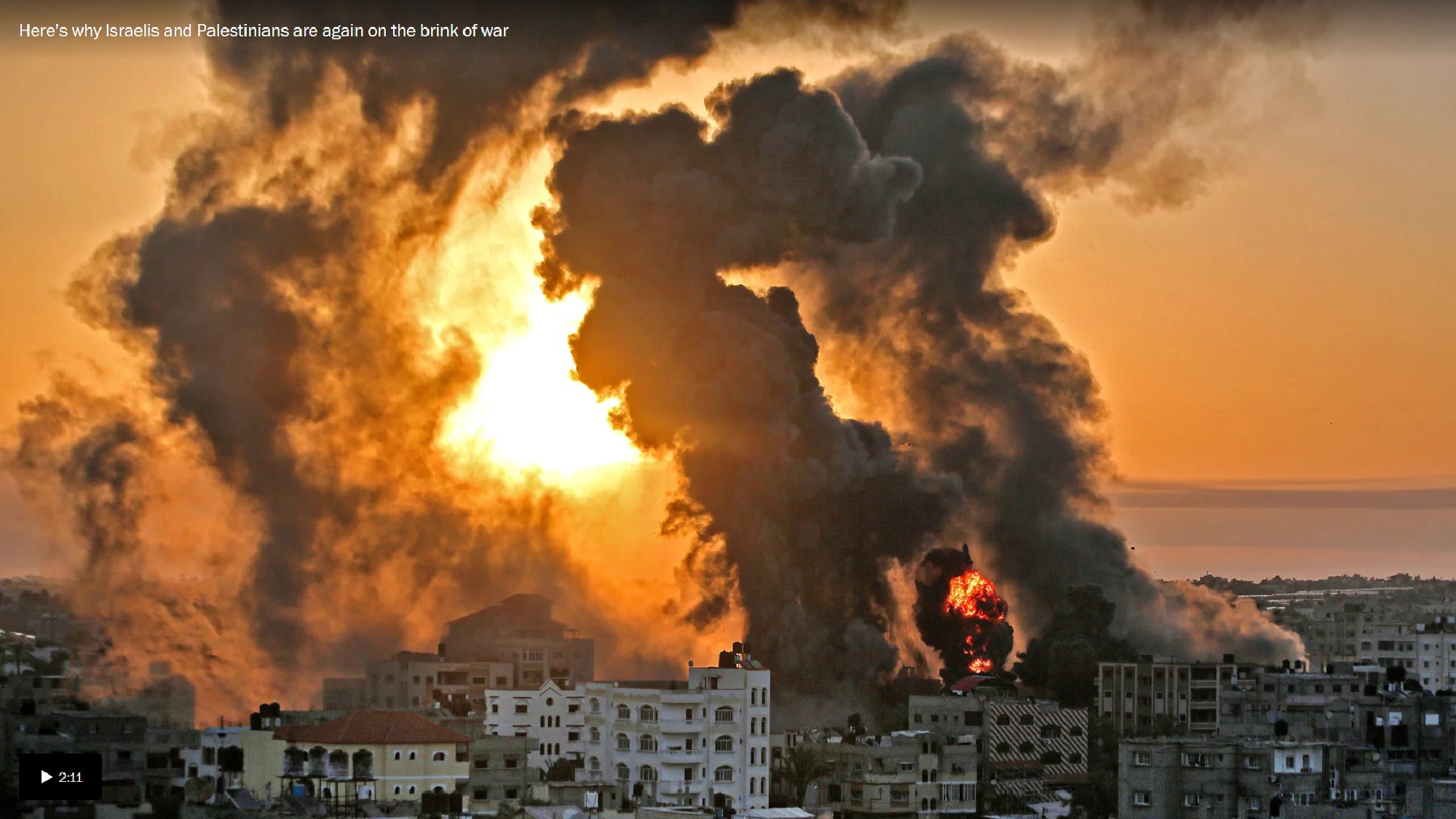
Both buildings and another in the neighborhood were reduced to rubble early Sunday. Forty-two people, including 16 women and 10 children, were killed in the predawn strikes, according to Gaza health authorities, the deadliest incident in the current round of violence between Israel and Hamas. A list of 30 of the dead released by the Mezan Center for Human Rights, a local advocacy group, included 17 members of the al-Kulak family.

The Israeli military said an initial investigation showed that the casualties had been “unintended.” The aim of the strike, it said, was Hamas “military infrastructure” under the street outside. The seven-day conflict, during which Hamas has fired more than 3,100 rockets toward Israel, has seen airstrikes in Gaza of a ferocity that people here say surpasses that of previous conflicts.

Israeli Prime Minister Benjamin Netanyahu said Sunday that the Israeli military had carried out attacks on more than 1,500 targets in seven days. The strikes in the center of the city have struck terror in Gaza.

Gaza’s health ministry says 192 residents, including 58 children and 34 women, have died in the past week. In Israel, 10 people have died as Hamas has fired of intense barrages of rockets and missiles toward cities in an attempt to overwhelm air defenses.

Sana’a al-Kulak said she awoke about 1 a.m. Sunday to the sound of bombing. The house was full. A son who ordinarily lives in northern Gaza had brought his wife home to stay with his parents in central Gaza, thinking it would be safer.

The bombardment was so frightening that some family members began to leave their third-floor apartment for lower floors. Mohammed said his mother was at the door while others were on the stairs. “They didn’t reach the first floor,” he said.

The Israeli military says it was an indirect building collapse. Mohammed said the building suffered a direct hit. It collapsed around Mohammed and his mother.

“I tried to call the police, but the connection was very bad,” he said. He called a friend and told him they were trapped. “I didn’t know about the rest of the family,” he said. He was dragged out at 6 a.m.; his mother was rescued half an hour later.

Mohammed Abu Mughaiseeb, deputy medical coordinator for Doctors Without Borders in Gaza, lives half a mile away but thought the strike was right outside. “My house was completely shaking,” he said. “It was about 15 minutes – intense bombing, continuous duh-duh-duh-duh-duh.”

One of the group’s trauma and burn treatment clinics nearer to Wehda Street was damaged. For Mughaiseeb, as for most Gazans, it’s his fourth war. “In 2014, the bombing was at the edges and then, at the end, inside,” he said. “But not in the same way it’s happening now. Now even the streets are bombed.”

Buildings collapse, families are buried under rubble in Gaza

Israeli commanders say their targets have included what it terms the “Gaza Metro” – Hamas’s extensive network of tunnels that snake under the city. The military has struck to degrade the group’s rocket launching capacity; some attacks have been in the heart of Gaza City. Israel accuses Hamas of using civilians as human shields.

The operation is the first test of a new “victory concept” espoused by Lt. Gen. Aviv Kochavi, Israel’s chief of staff. It aims to turn the Israeli military into what one Israeli Defense Forces document describes as a “significantly more lethal, networked war machine that can destroy enemy capabilities in record time and with the lowest possible casualties,” and to shift away from the old methods known as “mowing the lawn” – military campaigns that buy a little respite – to more decisive victories. Part of it is adapting to more quickly identify targets in dense urban areas such as Gaza.

“This,” Israeli military spokesman Lt. Col. Jonathan Conricus said in a recent briefing, “is the doctrine and concept being applied.”

For those in the city, it has felt as if there is no escape.

Aya Aloul’s building partially collapsed. The 25-year-old had pulled her mattress into her parents’ room to sleep at the beginning of the conflict last week. She was lying in bed, chatting on WhatsApp early Sunday when the bombing started. “Within a second, it was black. I couldn’t see anything, and I found myself on the ground in the street,” she said.

She was covered in rubble. “I didn’t know how I could bring the strength to remove all the rubble on me,” she said. She could not free her mother, who was later pulled out by rescuers. Her father, a doctor, did not survive.

Civil defense rescue workers in orange vests were still pulling bodies out of the rubble on Sunday afternoon and loading them into white body bags. Yellow diggers pulled up concrete and twisted metal to get to families trapped underneath.

Parts of Wehba Street were collapsed and cracked. One rescuer, pulling out a newly discovered body, said he had been working since about 1 a.m. He said he had rescued 10 people and retrieved four bodies.

Maryam al-Kulak, a daughter of Sana’a, rushed to the nearby Shifa Hospital when she heard that her family home was destroyed. “There were bodies and some injured people,” she said. “I waited, crying.”

The bodies of her father and one brother arrived first. Then her mother and Mohammed were brought in alive. “They bombed the house without warning, and without any reason,” she said. “There were civilians in it who do not deserve what happened to them.”

Sana’a said she does not feel a sense of revenge. “I just want the war to end,” she said.

She thanks God that she’s alive. “But now there is no sense in life without my husband and children.”

Published : May 17, 2021

By : The Washington Post · Hazem Balousha, Loveday Morris
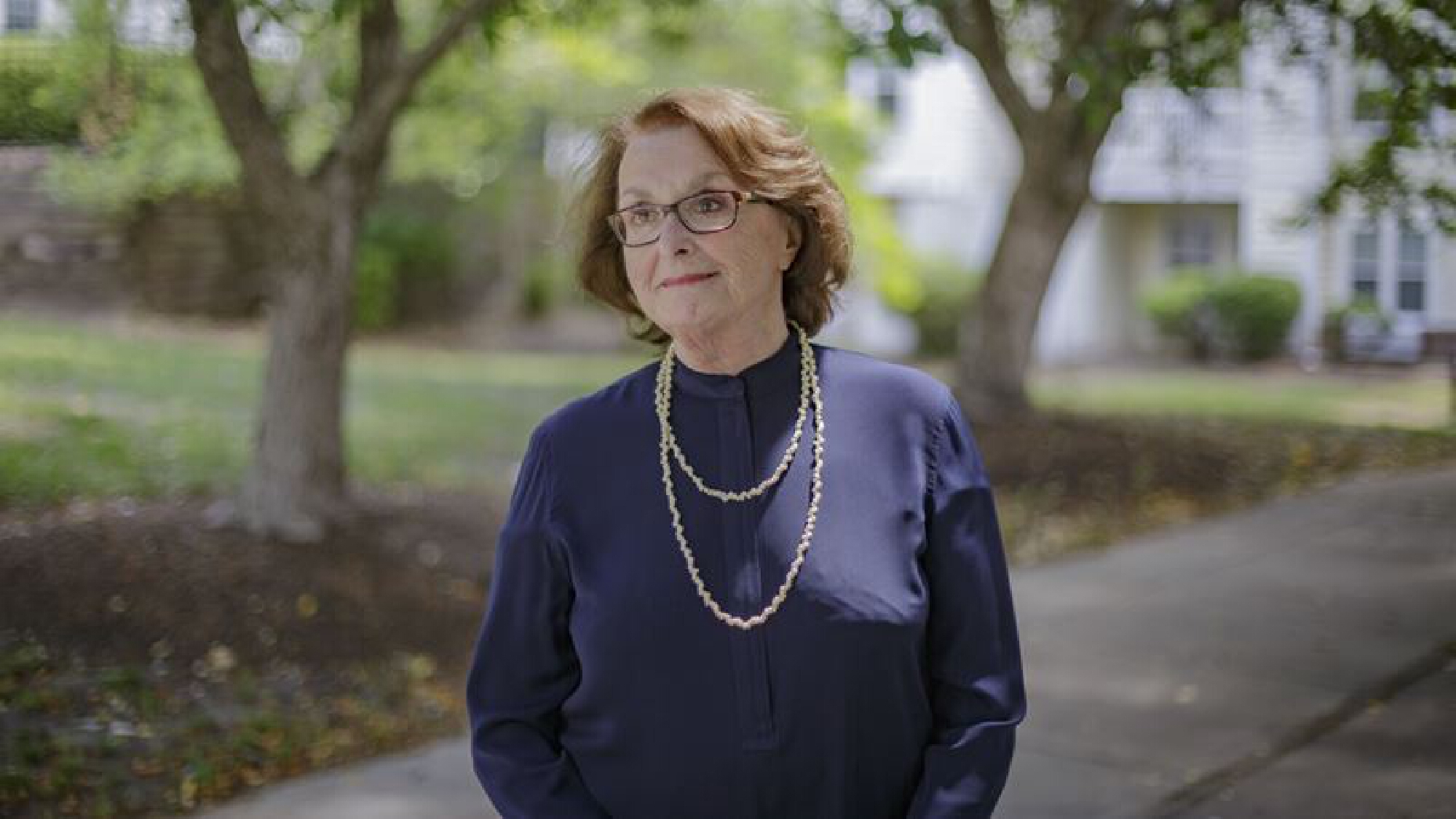
The pandemic got seniors to buy groceries online. That might not last. #SootinClaimon.Com

#SootinClaimon.Com : ขอบคุณแหล่งข้อมูล : หนังสือพิมพ์ The Nation.

https://www.nationthailand.com/international/40000948

The pandemic got seniors to buy groceries online. That might not last.


When the pandemic hit the Brookdale Chambrel senior living community in Williamsburg, Virginia, Nancy Crowell knew hopping in the car and heading to the local Harris Teeter supermarket was out of the question.

The pandemic got seniors to buy groceries online. That might not last.

The virus was spreading fast, and Brookdale’s residents were being encouraged to stay put. Staff set up computers in the main common room and began teaching residents how to open online accounts to order groceries.

Crowell’s first attempt to order from Kroger Co.’s Harris Teeter chain failed, so the 85-year-old retiree switched to another local grocer’s website only to discover an annoyance familiar to legions of online grocery shoppers: substitutions of her favorite brands and products. “Once, I ordered a few ounces of bouillon and got a great big quart bottle,” she said. “It’s still in my closet.”

Crowell tried Harris Teeter again and succeeded, ordering seven times between May and August. But when the holidays rolled around last year, Crowell was once again walking the aisles. “There’s just something about picking up your own stalk of celery,” she said.

The covid-19 outbreak super-charged online grocery shopping, prompting industry watchers to declare that the habits of millions had forever changed. In fact, it’s a little more complicated than that. Yes, Walmart, Kroger and other chains picked up millions of new online customers-generating additional revenue and persuading even skeptical executives to expand their digital operations. But holding onto these shoppers is hardly a foregone conclusion-especially older ones like Crowell, who are already reverting to pre-pandemic behavior.

That’s bad news for web grocery specialists like Instacart Inc., which processes orders and deliveries for thousands of supermarkets and has helped almost 300,000 senior customers figure out how to use its service. It’s also not great for brick-and-mortar food retailers because shoppers spend considerably more when they buy groceries online than when they have to lug everything home themselves. And there are more seniors online than you’d think: More than three in 10 people age 60 or older shopped for groceries online in April, according to consultants Brick Meets Click and Mercatus, and the number of seniors using Instacart last year rose faster than any other age group.

Almost half of Baby Boomers surveyed by Morgan Stanley said they’ll continue to grocery shop online at the same rate they did during the outbreak. Those seniors who stay online will do so because e-commerce has “become ritualized as a part of everyday life,” says Columbia Business School lecturer Robert Morais. It’s what anthropologists like Morais call an “adaptive strategy,” not unlike when humans went from foraging for food to agriculture and then onto large-scale manufacturing.

But the number of seniors using web grocery regularly declined by 25% in April compared with the previous year, Brick Meets Click and Mercatus found, the biggest drop of any age group by far. That suggests many seniors are still hunter-gatherers at heart, Morais says, and often prefer to use their senses to choose the food that’s most appealing, like Crowell’s celery. Jody Holtzman, an expert on the so-called longevity economy and the former head of market innovation at the AARP, says seniors will probably split their shopping going forward, using the web periodically to stock up on staples like canned goods and cereal and reserving in-store trips for produce, fish and meat.

There’s also the social aspect of shopping and interacting with staff and neighbors, something that’s particularly appealing for older Americans who were unable to see friends and family during lockdowns. Vivian Paquette, 85, another resident of the Brookdale community who started online shopping last year but has since given it up, says she enjoys chatting with the cashiers at the local Harris Teeter.

“I feel I have a connection to the store,” she says. “This might be the only person I talk to today!”

Grocers are responding to the defections by offering more enticements to stay online. Kroger doled out half a trillion personalized product recommendations to its digital customers last year. Albertsons, which operates 2,277 supermarkets under banners like Safeway and Vons, is doing online cooking demonstrations. Instacart created a “Senior Support Service” last fall to help older customers get accustomed to ordering online and says it’s growing by about 1,000 users a day this year. Other chains will waive delivery fees if shoppers come back online or offer discounts.

“As the necessity imposed by the pandemic lessens,” Holtzman says, “retailers will have to start to play the price game.”

Still, all those sweeteners won’t convince Paquette to hop online again. What would? “I don’t know,” she says. “Maybe a free lobster dinner?”

Published : May 17, 2021

By : Syndication Washington Post, Bloomberg · Matthew Boyle

Duty-free giants offer free flights to lure VIP shoppers #SootinClaimon.Com

#SootinClaimon.Com : ขอบคุณแหล่งข้อมูล : หนังสือพิมพ์ The Nation.

https://www.nationthailand.com/international/40000947

Duty-free giants offer free flights to lure VIP shoppers


Last month, Hyun Jung-a boarded a flight from South Koreas Incheon Airport. Around two hours later, she was back in the same airport and loading up on duty-free shopping, despite never landing in another country.

Duty-free giants offer free flights to lure VIP shoppers

The Air Busan Co. flight, organized by Lotte Duty Free for its VIP customers, was Hyun’s first since the pandemic began and it didn’t cost her a cent. Because the route briefly departed Korean airspace and went over a Japanese island, the 130 passengers on board qualified to shop at duty-free stores in Seoul typically reserved for people who have traveled internationally.

Destination-less flights like these are an attempt by duty-free operators to salvage an industry decimated by covid-19. Before the virus, business was booming — the global duty-free market was worth $85 billion in 2019 and on track to reach $139 billion by 2027, according to Verified Market Research.

Sales plunged as countries restricted international travel. Globally, only 1.8 billion people took scheduled flights last year compared with 4.5 billion in 2019, the International Civil Aviation Organization has said. Annual revenue for Swiss duty-free giant Dufry, which operates outlets worldwide, fell 71%.

While shoppers on flights such as Hyun’s won’t fill the financial void, they at least bring in some much-needed business.

“I saw a lot of people with bags full of duty-free items,” said Hyun, who bought a Chanel bag, shoes and cosmetics. “I tell all my friends that it’s worth taking the flight because of the duty-free shopping opportunity.”

Hotel Shilla, South Korea’s second-biggest duty-free operator after Lotte, is offering 114 seats on two so-called flights to nowhere on May 23 and 30 to customers who have spent more than $550 at its stores since May 3. Lotte is putting on another five flights this month.

Duty-free operators and other stores are among the last in South Korea to recover from the pandemic, with the country’s retailers and wholesalers shedding 182,000 positions in April even as the economy added 652,000 jobs from a year earlier, the statistics office reported Wednesday.

The industry is in less of a squeeze where domestic air traffic has rebounded and tax-free shopping zones are in place. The palm-fringed Chinese island of Hainan has become an even more popular getaway for tourists from the mainland now starved of international travel. That’s helped the province’s duty-free sales, which more than doubled to 27.5 billion yuan ($4.3 billion) last year, according to the Ministry of Commerce.

Duty-free shopping has been permitted for domestic tourists in Hainan since 2011. In July, the government raised the spending limit to allow people to buy more and it is extending some duty-free shopping to Beijing, Shanghai and other cities to tap the growing purchasing power trapped in China.

Catering to the demand in Hainan, Alibaba Group Holding’s logistics unit is starting daily cargo flights from Singapore to deliver cosmetics, handbags and other goods to the island. Japan’s leading duty-free retailer, Laox Co., which was acquired by Chinese retailer Suning Holdings Group Co. in 2009, is planning to enter Hainan as soon as the second half of this year, setting up stores designed similarly to its outlets in Japan.

“The trend of visiting Hainan to do luxury shopping is here to stay for the Chinese,” said Jonathan Siboni, chief executive officer of data-intelligence firm Luxurynsight.

International air travel, if it is happening at all, is tending toward shorter-haul, regional routes, and from places where vaccination programs are at a more advanced stage. Seven of the world’s busiest international routes in the first four months of the year included U.S. links, such as Cancun-Houston and New York-Santo Domingo, according to aviation analytics company Cirium.

Share prices suggest investors are upbeat. Dufry’s stock has climbed more than 100% since the end of September, while Hotel Shilla is near the highest in nearly 15 months in Seoul, rallying 13% this year.

Paris-based Lagardere Travel Retail, which operates duty-free stores, restaurants and other shops in airports, is counting on customers from closer to home to help it through an uncertain summer in Europe after its revenue slid 56% from a year earlier to 341 million euros ($414 million) in the first three months.

“We’re betting more on retired Europeans traveling,” said Frederic Chevalier, the company’s chief operating officer for Europe, Middle East and Africa. McKinsey forecasts passenger flows between Asia and Europe will only return to 2019 levels “beyond 2024,” said Anita Balchandani, a partner at the firm.

With vaccination rates lagging in places such as South Korea — which has delivered enough jabs for just 4% of the population, Bloomberg’s Virus Tracker shows — retailers may rely on gimmicks like flights to nowhere for a while.

“The contribution from the flights to nowhere is small but it’s better than having nothing,” said Sung Junewon, an analyst at Shinhan Investment Corp. In Seoul. “Every little bit counts.”

Seven South Korean carriers have operated these flights, carrying about 8,000 passengers in total. Authorities are also considering plans to allow overseas flights into Incheon, where passengers can spend a few hours shopping without leaving the airport before flying back to their original departure point.

Park Ju-hyun, a 31-year-old office worker from Seoul, paid about 90,000 won ($80) for a flight-to-nowhere ticket in March. It was her first time on a plane since a trip to the Philippines before the pandemic, and it was well worth it for the shopping, said Park, who spent about $600, mostly on cosmetics.

“It was nice to be back at the airport,” she said.

Published : May 17, 2021

By : Syndication Washington Post, Bloomberg · Kyunghee Park, Bruce Einhorn, Angelina Rascouet

Designed for disaster: These homes can withstand a Category 5 hurricane #SootinClaimon.Com

#SootinClaimon.Com : ขอบคุณแหล่งข้อมูล : หนังสือพิมพ์ The Nation.

https://www.nationthailand.com/international/40000946

Designed for disaster: These homes can withstand a Category 5 hurricane


Looking at a brochure from Deltec Homes feels like watching an episode of HGTVs “House Hunters” – beachfront homes with ornate patios and panoramic windows overlook pristine ocean views.

Designed for disaster: These homes can withstand a Category 5 hurricane

It’s hard to believe that the same quaint, debonair homes are built to withstand Mother Nature’s ultimate test – a Category 5 hurricane.

It’s something they’ve done before, and will inevitably do again. And, in an era marked by strengthening storms and rising seas due to climate change, Deltec Homes has made a business of building for the extreme.

Deltec is one of a number of companies that designs, builds and sells custom hurricane-proof homes. The group was born in the 1950s when two brothers – one an engineer at Oakridge National Laboratories and the other an entrepreneur – began experimenting with the idea of marketing homes designed to survive the inconceivable. Since then, Deltec has contributed to the design installation of more than 5,000 homes worldwide.

Unlike other hurricane-proof homes, which are typically modular and often bunkerlike, Deltec’s homes are all custom-built. They design each structure at their facilities in Asheville, N.C., contracting out with local builders to assemble the final product to the customer’s wishes.

“Each home that we build is essentially custom-designed using a series of what we call building blocks,” said Steve Linton, a degreed engineer and the president of Deltec Homes. “There are 10 sizes of those panoramic homes. People can design whatever they want and connect them with other structures.”

Older residents may prefer single-story elongated ranch-style homes, while others may want a three-floor beach house with lots of natural light and windows facing the water. Deltec has refined their engineering over the years to be able to do it all. That’s meant a lot of time at the drawing board.

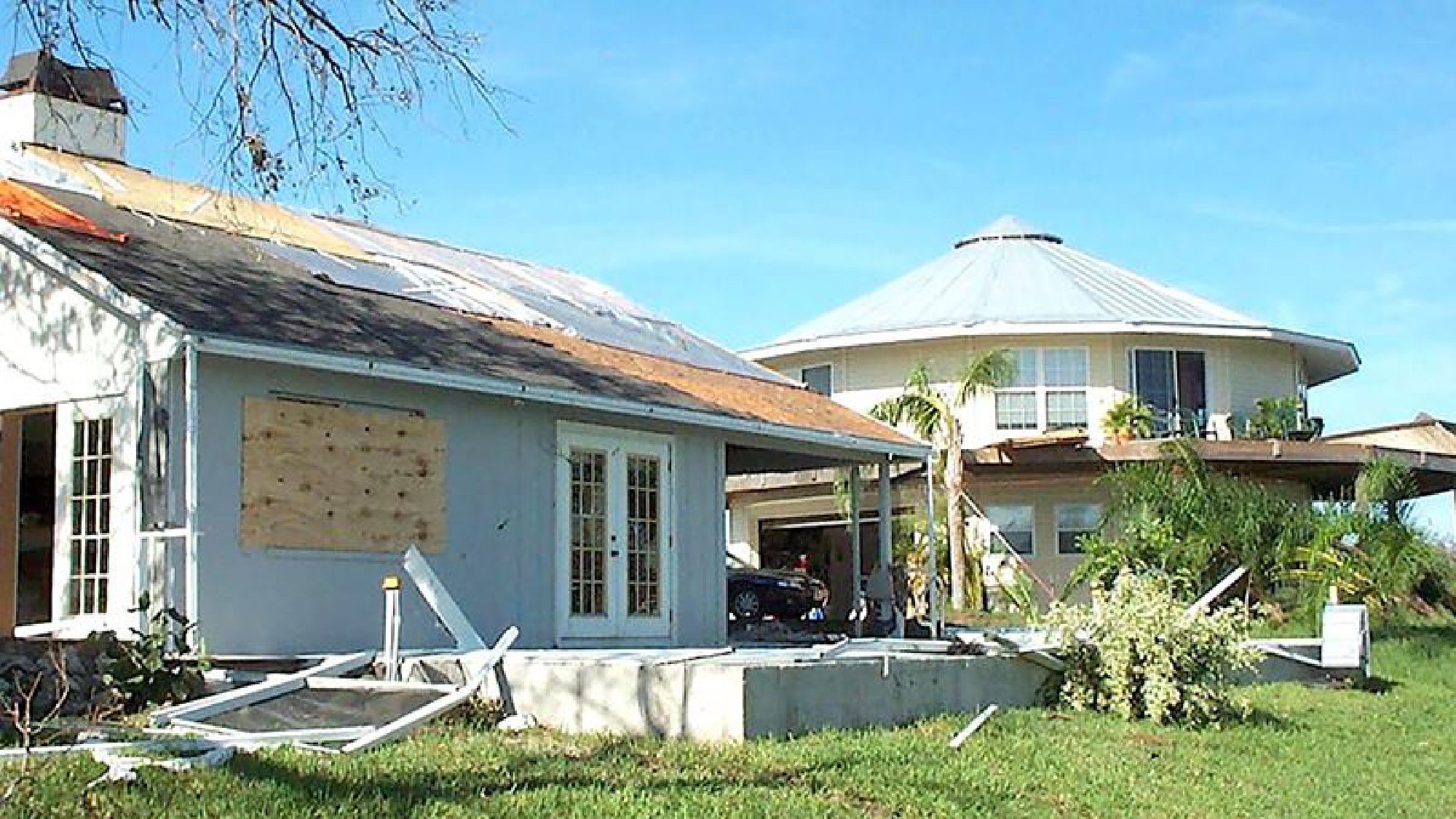
“Obviously the shape matters,” explained Linton. “It’s a round home. It’s aerodynamic to the point you get about 30 percent less pressure that builds up against Deltec home versus a conventional home.”

In other words, the shape of the house helps deflect air flow around the structure rather than absorb that force, no matter which way the wind is coming from.

“The second piece is the materials that go into the home,” continued Linton. “We look at optimizing the materials … to all be about twice as strong as in a typical home. Every board is tested for strength. The plywood is twice as strong and the metal connections we use are made in a completely different fashion.”

Joints and connections are typically a failure point in structure when they’re subjected to high winds. That’s seen especially often in surveying the damage left by tornadoes. Poorly-anchored roofs take off when wind passes overhead, lifting like airplane wings in response to relative low pressure generated over the structure. After that, it’s only a matter of time before exterior walls fail, leaving the bones of the house susceptible to flying debris.

Deltec’s homes have encountered top-tier hurricanes like Michael, a Category 5 that hit the Big Bend of Florida on Oct. 10, 2018, and Dorian, which lay siege to the northwest Bahamas in early September 2019. All have fared well, escaping with minimal damage.

Josh Morgerman, among the world’s top hurricane chasers and star of UKTV’s and BBC’s Hurricane Man, became a brand ambassador for Deltec after surviving the eyewall, the zone of strongest winds as high as 185 mph, of Hurricane Dorian on Great Abaco Island. He had heard that the homes built by Deltec were still standing after the storm. He had to learn more.

“At first, I was very skeptical,” said Morgerman. “But they gave me a very detailed Excel spreadsheet that was pages long of where their houses are along the Gulf Coast and the Bahamas. I found the ones that had gone through the eyewalls of (Categories) 4 and 5, and some that had perfect direct hits. There were a few that went through Dorian’s right front quadrant of the eyewall. I reached out to the homeowners and interviewed them.”

Morgerman learned that both homes emerged with only minor scratches and dings, primarily in the form of cosmetic damage.

“Those houses had survived the ultimate test,” said Morgerman. “Dorian was the hurricane of hurricanes. If a house can sustained that, this product’s for real.”

Dick Love, who lives in Florida, owns a Deltec home on Scotland Cay, just north of Marsh Harbour in the Bahamas, that survived Dorian. Of the 62 homes that one stood there, only three escaped with minimal damage – Love’s, and two others built by the same contractor.

“The house to the left and to the right were obliterated,” said Love. “All that was left was the foundation. The only damage to my home was a couple roof shingles, and then (a piece of wood from) the neighbor’s home that was next door. It was attached to his roof and went through the side wall and the inner wall and went through the living room and hit the other wall twenty-five feet away.”

Wind gusts on Scotland Cay were estimated to have topped 180 mph.

“It looked like an atom bomb went off,” said Love. “For the other homes, it wasn’t just that all four walls were gone, the furniture was gone … the refrigerators, freezers in the houses were nowhere to be found. Everything was blown into the sea. It’s indescribable.”

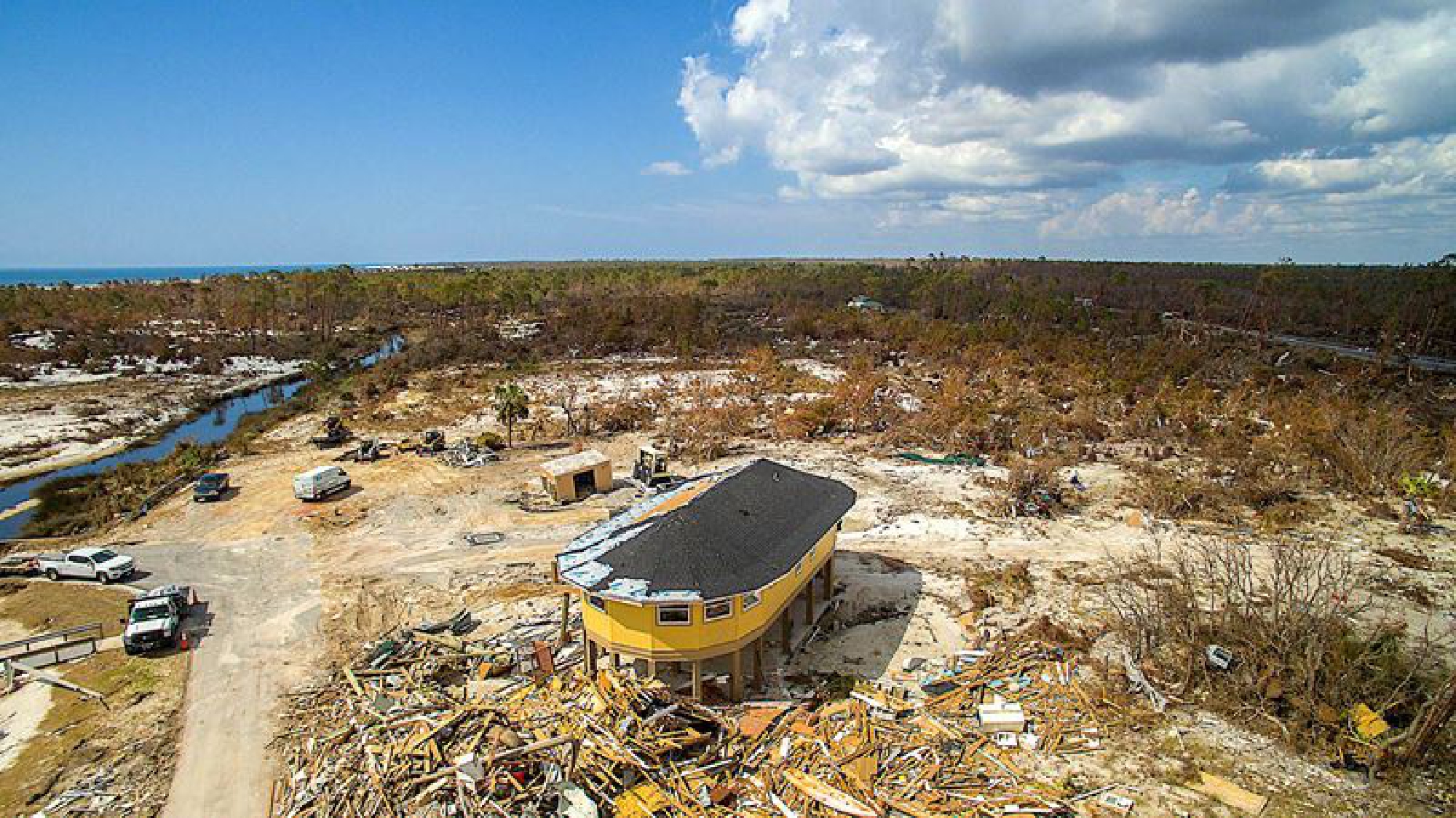
A Deltec home remains standing in Mexico Beach, Fla. following the passage of Category 5 Hurricane Michael in October of 2018. MUST CREDIT: DeltecA Deltec home remains standing in Mexico Beach, Fla. following the passage of Category 5 Hurricane Michael in October of 2018. MUST CREDIT: Deltec

Love has lived through four hurricanes in Florida, including Jeanne and Frances in 2004. He wasn’t on Scotland Cay when Dorian struck, something he says he’s thankful for.

“My home had 175 mph rated Deltec shutters, and they survived but with huge bashes and dents in them,” he explained.

After some small repairs, Love’s home is now good as new.

Matt Oblinksy, Deltec’s director of engineering, spearheads an effort to constantly find better building materials to further strengthen its designs.

“After each and every hurricane … we reach out to each and every homeowner in the path of a storm to ask how they are,” said Linton. “99.9 percent of the time we’re seeing ‘we lost a couple shingles’ or ‘we lost a piece of trim, but our neighbor’s home was demolished.’ Our homes have been field tested for a number of years.”

Deltec allows customers the flexibility to customize their homes. About two thirds of homes they produce are one story, with the remainder generally two floors. Once in a while the company builds a three-story structure, but those are rare, and usually for commercial purposes. Three stories is the limit. Many customers opt for impact-resistant windows.

Hurricane-proof homes are designed to protect inhabitants from the wind, but nothing can counteract the power of water. That’s why the homes are located to avoid storm surge flooding.

“We do homes up on pilings to elevate them to avoid storm surge,” said Oblinsky. “We highly recommend two feet above flood elevation to protect them from those situations.”

The company also has a propriety anchoring technique that ensures homes remain firmly affixed in place no matter what Mother Nature throws their way.

Leslie Chapman-Henderson, president of the Federal Alliance for Safe Homes, or FLASH, said hurricane-resilient homes like Deltec are worth the price in the long run.

“Often in the industry people will talk about price point as the purchase point,” explained Chapman-Henderson. “We urge homeowners to consider that the house isn’t just what you pay for it the first day … it’s the time horizon after the hurricane. The homes that are really the most affordable are the ones that survive the storm.”

Chapman-Henderson, whose organization closely studies the recovery process after major storms, says that aspect of storms is rarely talked about – and lasts long after the television crews and reporters leave.

“We have a project we’re doing on hurricane Michael. We still have hundreds of families who are not back in their home,” she said. “To us that’s the cost.”

Even for residents who can’t afford a hurricane-proof home, there are plenty of tactics for fortifying your home. Many, said Chapman-Henderson, can be done for under $50.

“The cost of these things is so minuscule,” she explained. “A couple handfuls of additional nails that keep the roof there when you need it, for instance.”

Deltec isn’t the only company marketing hurricane-proof homes to consumers. Fox Blocks Insulated Concrete Forms, headquartered in Omaha, helps build hurricane-proof structures too, but they take a different approach.

“We are an insulated concrete form manufacturer,” said Mike Kennaw, Fox Blocks’ vice president. “We basically manufacture, produce, sell and market the insulate concrete form, which is part of a steel reinforced wall assembly, and the testing we have done for poured-in-place concrete walls has shown that we have very high wind test rating.”

The concrete can be one hard shell, meaning fewer failure points, and is more impact-resistant than traditional wood homes. When it comes to roofs and interior walls, however, that’s up to the individual builder.

“We are a component of high wind construction,” explained Kennaw.

Building a hurricane-proof home may cost you a pretty penny, but it’s something people like Chapman-Henderson advocate could pay for itself over time. Meanwhile, forecasters are looking forward to what will likely be another anomalously busy hurricane season. The National Hurricane Center began issuing its daily tropical weather outlooks on Saturday.

Published : May 17, 2021

By : The Washington Post · Matthew Cappucci

Bitcoin drops after Musk implies that Tesla may sell cryptocurrency #SootinClaimon.Com

#SootinClaimon.Com : ขอบคุณแหล่งข้อมูล : หนังสือพิมพ์ The Nation.

https://www.nationthailand.com/international/40000945

Bitcoin drops after Musk implies that Tesla may sell cryptocurrency


Elon Musk continued to whipsaw the price of bitcoin, sending it to the lowest since February after implying in a Twitter exchange Sunday that Tesla may sell or has sold its cryptocurrency holdings.

Bitcoin drops after Musk implies that Tesla may sell cryptocurrency

Bitcoin slid below $45,000 for the first time in almost three months after the billionaire owner of the electric-car maker seemed to agree with a Twitter post that said Tesla should divest what at one point was a $1.5 billion stake in the largest cryptocurrency. It traded at $45,270 as of 5:51 p.m. in New York, down about $4,000 from where it ended Friday.

The online commentary was the latest from the mercurial billionaire in a week of public statements that have roiled digital tokens. He lopped nearly $10,000 off the price of bitcoin in hours after saying Tesla would not take it for cars. A few days earlier, he hosted “Saturday Night Live” and joked that Dogecoin, a token he had previously promoted, was a “hustle,” denting its price. A few days later he tweeted that he was working with Doge developers to improve its transaction efficiency.

Musk’s disclosure in early February that Tesla used $1.5 billion of its nearly $20 billion in corporate cash to buy bitcoin sent the token’s price to record and lent legitimacy to electronic currencies, which have become more of a mainstream asset in recent years despite skepticism.

His latest dust-up with Bitcoin started with a tweet from a person using the handle @CryptoWhale, which said, “Bitcoiners are going to slap themselves next quarter when they find out Tesla dumped the rest of their #Bitcoin holdings. With the amount of hate @elonmusk is getting, I wouldn’t blame him…”

The Tesla CEO responded, “Indeed.”

The Twitter account @CryptoWhale, which calls itself a “crypto analyst” in its bio, also publishes a Medium blog on market and crypto trends.

Musk spent hours Sunday responding to Twitter users who criticized his change of stance on bitcoin last week, a move he said was sparked by environmental concerns over the power demands to process bitcoin transactions. He said at the time that the company would not be selling any bitcoin it holds.

An outspoken supporter of cryptocurrencies with a cultlike following on social media, Musk holds immense sway with his market-moving tweets. He has been touting Dogecoin and significantly elevated the profile of the coin, which started as a joke and now ranks the fifth largest by market value.

Dogecoin was down 9.6% in the last 24 hours, trading at 47 cents late Sunday afternoon, according to data from CoinMarketCap.com.

Tesla did not immediately respond to an email seeking comment on Musk’s tweet Sunday.

Musk’s Sunday posts were the latest chapter in one of the zaniest weeks in a crypto world famous for its wildness. For die-hards, the renewed slumps in Bitcoin and other tokens have done nothing to deter crypto enthusiasts who say digital coins could many times their current value if they transform the financial system.

“We’re looking at the long-term and so these blips, they don’t faze us,” Emilie Choi, president and COO of crypto exchange Coinbase Global, said last week on Bloomberg TV about the wild swings prevalent in the market. “You’re looking for the long-term opportunity, and you kind of buckle up and go for it.”

Aside from Musk’s antics that sent Doge and Bitcoin on wild rides, a host of other developments have pushed around prices in the past eight days.

Tether, the world’s largest stablecoin, disclosed a reserves breakdown that showed a large portion in unspecified commercial paper. Steve Cohen’s Point72 Asset Management announced that it would begin trading cryptocurrencies. And a long-standing critique of the space reared its head again: illicit use.

The owners of the Colonial Pipeline reportedly paid a $5 million ransom in untraceable digital currencies to hackers that attacked its infrastructure, while Bloomberg reported that Binance Holdings, the world’s biggest cryptocurrency exchange, was under investigation by the Justice Department and the Internal Revenue Service in relation to possible money-laundering and tax offenses.

But, “for many crypto assets such as bitcoin and Ethereum, the long-term story has not changed,” said Simon Peters, an analyst at multiasset investment platform eToro. “This emerging asset class continues to revolutionize many aspects of financial services, and while nothing goes up in a straight line, the long-term fundamentals for crypto assets remain as solid as ever.”

Bitcoin was swinging wildly on the weekend before Musk tweeted. The two days tend to be particularly volatile for cryptocurrencies, which – unlike most traditional assets – trade round-the-clock every day of the week. Bitcoin’s average swing on Saturdays and Sundays this year is 4.95%.

That type of volatility is owing to a few factors: Bitcoin’s held by relatively few people, meaning price swings can be magnified during low-volume periods. And the market remains hugely fragmented with dozens of platforms operating under different standards. That means cryptocurrencies lack a centralized market structure akin to that of traditional assets.

Published : May 17, 2021

By : Syndication Washington Post, Bloomberg · Patrick McHale, Yueqi Yang

Americans grapple with new guidance #SootinClaimon.Com

#SootinClaimon.Com : ขอบคุณแหล่งข้อมูล : หนังสือพิมพ์ The Nation.

https://www.nationthailand.com/international/40000923

Americans grapple with new guidance


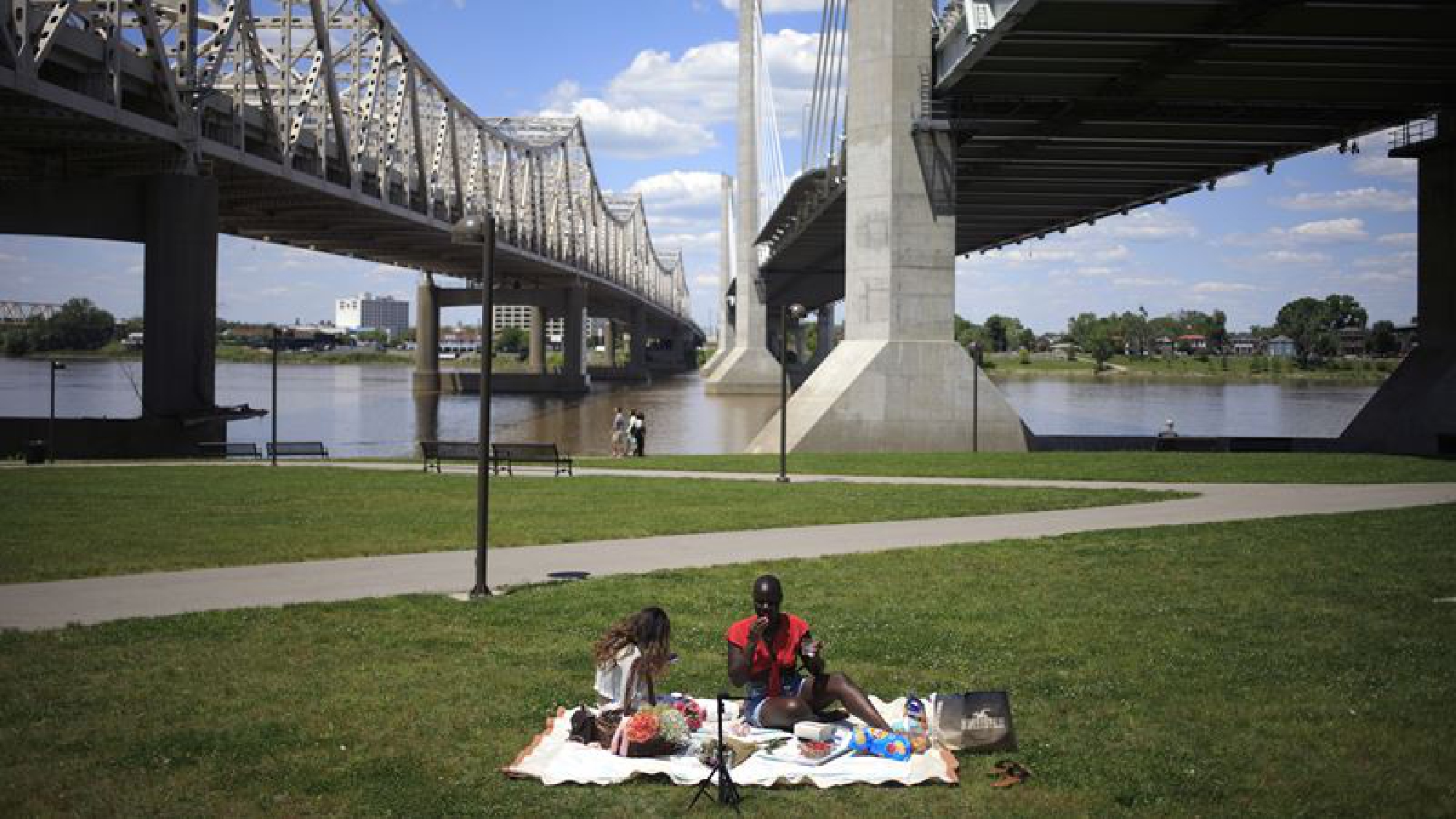
LOUISVILLE – Soon after the CDC announced its updated mask guidance, Louisville coffee shop owner Billy Sechman took to Instagram.

Americans grapple with new guidance

“Notice,” he posted, “masks are still required!”

Even though most of his staff is fully vaccinated, Sechman said he wasn’t comfortable with customers coming in barefaced.

“The mask mandate dropped so fast it caught us off guard,” said Sechman, 58, who owns Bean. “We have to get the team together and talk about everything.”

His experience highlights the chaos and confusion unleashed by the Centers for Disease Control and Prevention’s Thursday pronouncement that fully vaccinated people don’t need to wear masks in most cases.

While the relaxed guidelines had some ripping the cloth from their faces and vowing to party like it’s 2019, many around the country – particularly front-line workers and parents of small children – worried for their health, and wondered whether and how to implement the new guidance, at odds with the local regulations in some states.

Aubrielle Whitis, 23, a vaccinated barista at Bean, said she was nervous about the new guidelines.

“I’m worried that people who aren’t vaccinated will take it as a pass not to wear their mask. I feel pretty safe being vaccinated, but it’s more of a risk with the possibility of variants,” Whitis said.

For others, the announcement brought relief.

At Al’s Cafe in suburban Pittsburgh, a thrilled Rod Ambrogi told his staff Friday that they can take off their masks if they are vaccinated. The cafe was cited by the county health department after it continued to serve meals indoors last December, defying the governor’s shutdown order.

Ambrogi, who wore a mask only in public areas of the restaurant before Thursday, does not plan to get vaccinated. He said he thinks he had a mild case of covid-19 a few months ago, though he never got tested, and believes he is immune.

“I never did believe in masks,” he said.

Ambrogi, 74, said he could understand the restrictions for the first three months of the pandemic, but “I’ve been done with this coronavirus for the past few months. It’s behind us right now.”

Ambrogi said the CDC guidelines conflict with state regulations, creating confusion. Pennsylvania Gov. Tom Wolf, a Democrat, is lifting all capacity restrictions on businesses on Memorial Day, but said he will keep a state mask mandate until at least 70% of adult Pennsylvanians are vaccinated.

“As it is right now, should we wear masks, or shouldn’t we?” Ambrogi said. “The president says we don’t; Rite Aid or Giant Eagle says we do.”

In Minnesota, local officials grappled with that question.

Last week, Gov. Tim Walz, a Democrat, announced that all coronavirus restrictions on business and social gatherings would end on May 28, but extended the statewide indoor mask mandate until July 1, or until 70% of the eligible population has been fully vaccinated.

But at a Thursday news conference following the CDC announcement, Walz said he would end the mask mandate Friday, leaving cities and businesses to decide whether to impose their own rules.

At a Friday city council meeting, Minneapolis officials debated whether getting rid of the mask mandate would exacerbate racial disparities. “If the information that you’re giving us is that in more affluent and Whiter parts of town, lifting the mask mandate would be a pleasurable fun thing that would probably be safe; and if in other parts of town where people haven’t had access to the vaccine, it means people will get sick and die, I think it’s very clear what the choice is,” said council member Steve Fletcher, who represents an area of downtown Minneapolis.

Ultimately, the mayors of St. Paul and Minneapolis announced they would retain their mask mandates for now, saying they needed to consult with city health experts before lifting restrictions.

Jorge Guzman, a James Beard award-nominated chef who owns and operates Petite León in South Minneapolis, said he wasn’t surprised by the mixed messages from government and health officials.

“It’s been like that from the beginning,” he said. “One minute it’s this, the next minute it’s that. . . . You get tons of conflicting messages, and then all of the sudden one day without notice, no more mask.”

The CDC ruling is expected to accelerate an already busy summer of travel for vacations, barbecues and family reunions. Late Thursday evening, Disney chief executive Bob Chapek said he expected attendance at Disney World in Florida to spike and that the company is planning to drop its mask requirements for the theme park.

Disneyland in California will still be under that state’s mask order.

In Las Vegas, casino operators are bracing for a surge of visitors. But even as resorts such as Wynn Resorts and the Venetian posted signs at entrances Friday stating that vaccinated individuals could go maskless, a majority of visitors kept the cloth coverings in place.

Ricky Rodriguez, a bartender at ReBAR in the city’s downtown Arts District, is fully vaccinated but said he is going to play it cautiously.

“In the beginning, I wasn’t a believer. I thought it was just the flu,” the 33-year-old said. It wasn’t until a close friend contracted the virus and died of a blood clot at age 30 that he took it seriously.

“I’m happy everything is opening back up and that there is going to be some sort of normalcy, but I’m going to take precautions and sanitize my hands, wear my mask and keep my distance,” he said between pouring customers drinks. “I’m still going to be careful.”

The CDC’s surprise announcement also roiled parents of young children, who can’t yet get vaccinated.

“It’s hard to know that you can trust if people are vaccinated or if they just don’t want to wear a mask. It’s like a free pass to stop being considerate of the vulnerable populations who can’t get vaccinated,” said Kelsey Gorder, 30, a mother in San Francisco.

Gorder and her husband are both fully vaccinated. But with three unvaccinated kids at home under 6, one who is medically high risk, they’re not taking off masks anytime soon. She wants to set a good example for her kids, but is also uncomfortable with how fast things are moving.

“I get it, they’re getting more data and more information. But having spent the last 14 months quarantined and masked, to all the sudden say, ‘Oh it’s cool, you don’t really have to anymore,’ seems really premature,” Gorder said.

Rebecca Kee, another San Francisco resident, has seen how divisive the new guidance can be.

After the CDC said fully vaccinated people don’t need masks outside last week, she decided to walk barefaced in her neighborhood.

Then a man with two children, all masked, darted into the street to avoid her. When she told him there was new guidance, the man told Kee she was lying and he hoped her family would get sick and die.

“It shook me to my core and made me really feel horrible,” said Kee, 38. “I think in a time of deep instability and real fear, the mask became a symbol of caring for your neighbor that we all clung to.”

Kee said she will continue to go mask-free where allowed, but will give people a wide berth.

Jacob Schwandt, a 26-year-old government and civics teacher at Oldham County High School near Louisville, said he got vaccinated to spend time with his asthmatic dad. He said people aren’t even trying to abide by safety recommendations anymore – and the CDC’s Thursday ruling will only make it harder.

“The amount of time I spend each day prompting students to pull their mask up or put their mask back on is staggering,” he said.

In theory, he’s excited about an end to masking. But he’s worried about his workplace, which is full of unvaccinated young people who don’t typically follow social distancing rules and are vocal about their families’ opposition to vaccination.

And Schwandt doesn’t think the CDC’s new guidelines will lead to more vaccinations.

“Honestly, I believe that anyone who wanted to be vaccinated already has been, or has plans to become vaccinated,” Schwandt said. “The announcement felt more like an appeasement to those who are jaded with the safety protocols.”

Sandra Dear, the owner of the Little Boho Bookshop on Broadway in Bayonne, N.J., wore her black mask shortly after opening her store on Friday morning.

She carefully tracks coronavirus data in Bayonne, as well as neighboring cities in Hudson County and across the bridge in Staten Island. While information has changed almost daily, Dear has remained resolute in mandating that customers wear masks indoors until local vaccination rates reach 80%.

“The CDC announcement was a breath of fresh air,” she said. “However, then you hear the Yankees have eight people that are positive after the shot. We will step cautiously.”

Tory Aunspach, 42, is readying to open Cafe Alyce, his new venture in Jersey City. He just got tables for outdoor seating and is fully vaccinated. Workers wore masks as they prepared the space to welcome customers in coming weeks.

Aunspach welcomed the latest lifting of restrictions. He has kept delivery going at his other restaurant, Hooked JC, having closed the kitchen there for only five days early in the pandemic, and limited orders to online to keep his staff safe.

He sees opportunity now with his new cafe that looks out at the Manhattan skyline, and is planning for dining service when he opens sometime next month.

“People are tired of this,” he said. “It’s going to be nuts.”

Published : May 16, 2021

By : The Washington Post · Austyn Gaffney, Heather Kelly, Annie Gowen

Covid Zero havens find reopening harder than taming virus #SootinClaimon.Com

#SootinClaimon.Com : ขอบคุณแหล่งข้อมูล : หนังสือพิมพ์ The Nation.

https://www.nationthailand.com/international/40000922

Covid Zero havens find reopening harder than taming virus


A smattering of places, mainly across the Asia Pacific region, have seen breathtaking victories in the battle against covid-19 by effectively wiping it out within their borders. Now they face a fresh test: rejoining the rest of the world, which is still awash in the pathogen.

Covid Zero havens find reopening harder than taming virus

In some ways, the success of “Covid Zero” locations is becoming a straitjacket. As cities like New York and London return to in-person dealmaking and business as usual — tolerating hundreds of daily cases as vaccination gathers pace — financial hubs like Singapore and Hong Kong risk being left behind as they maintain stringent border curbs and try to stamp out single-digit flareups.

After a brutal 18 months that claimed 3.3 million lives worldwide, nations like China, Singapore, Australia and New Zealand have suffered fewer deaths during the entire pandemic than many countries, even highly vaccinated ones, continue to log in a matter of days.

That achievement has allowed people to have largely normal lives for much of the past year. Some haven’t even had to wear masks. But sustaining this vaunted status has also required stop-start lockdown cycles, near-blanket bans on international travel and strict quarantine policies. The few travelers permitted to enter have had to spend weeks in total confinement, unable to leave a hotel room.

Now that mass inoculation drives are allowing other parts of the world to normalize and open up to international travel, experts and residents are starting to question whether walling off from covid is worth the trade-off, if implemented long-term.

“The whole world is not going to be Covid Zero,” said Rupali Limaye, director of behavioral and implementation science at the International Vaccine Access Center at Johns Hopkins School of Public Health. “That’s not an option here.”

Aggressive reactions to tiny caseloads may seem overblown to observers in countries facing thousands of infections a day, but the aim is to snuff out coronavirus before more disruptive restrictions like months-long lockdowns are needed — and largely the strategy has worked. Still, the slower pace of vaccination in these places, and the threat of new variants, has meant that measures have become more and more onerous.

New York currently logs 95 new daily cases per million people, and the U.S. has just lifted its mask mandate for those vaccinated. Singapore found just 4.2 new cases per million on Thursday, boosting locally acquired cases to the highest level since July last year, and is returning to restrictions it last imposed a year ago, banning dining-in and limiting gatherings to two people. The resurgence is also putting its highly-anticipated travel bubble with Hong Kong in doubt.

Meanwhile, Taiwan recorded 16 local cases on Wednesday — a daily record high — and promptly restricted access to gyms and other public venues. On Saturday, Taiwan imposed restrictions on gatherings and ordered entertainment businesses to shutter operations as it raised the alert level in its capital to battle a surge in local covid-19 infections.

In Hong Kong, anyone living in the same building as a person infected with a new covid variant was required to spend as much as three weeks in government isolation until the policy changed last week. Australia has said that it likely won’t open its international borders until the second half of 2022.

“Because we have been so successful, we are even more risk-averse than we were before,” said Peter Collignon, a professor of infectious diseases at the Australian National University Medical School in Canberra.

“We are very intolerant of letting any covid come into the country,” he said. “The fear has almost gotten out of proportion to what the risk is.”

Continued isolation is the price these places will have to pay to maintain this approach in the longer term, as other parts of the world learn to tolerate some infections as long as medical systems aren’t overwhelmed.

Most experts agree that the virus is unlikely to disappear completely. Instead, it is expected to become endemic, meaning it will circulate at some level without sparking the deadly outbreaks seen since late 2019.

To maintain zero infection rates, these economies will have to implement measures that are harsher and more strict, said Donald Low, professor at the Institute of Public Policy of the Hong Kong University of Science and Technology.

“This is neither wise nor tenable for much longer,” he said. “All this puts the places that have done well to suppress covid-19 so far at a serious disadvantage as their societies — not having been exposed to the possibility of covid-19 becoming endemic — are not willing to accept any relaxation of measures that may put their health at risk.”

Meanwhile, many countries — particularly those in the west that are awash in vaccines — are starting to reopen.

Travelers from England and Scotland will be permitted to visit a dozen countries without quarantining from 17 May. In the U.S., where about 35,000 people were diagnosed with the virus on May 12, the strict quarantine rules that prevented the import of the pathogen to Covid Zero countries never existed. Most states are starting to lift their pandemic restrictions and 25 have removed them completely.

For Hong Kong and Singapore, the drawbacks of maintaining an elimination strategy as financial centers like London and New York City re-open may be significant. As aviation hubs and financial centers, both cities’ economies are particularly reliant on travel, compared to export-led economies such as China and Australia that can stomach being shut for longer. In 2019, Hong Kong was the world’s most popular city with international visitors — even after months of political unrest — while Singapore came in fourth place. London was at No. 5 and New York at No. 11.

A major obstacle to reopening is the slow vaccine rollout in these covid havens, due to a combination of supply limitations and citizens’ lack of urgency about fronting up for shots.

China has administered enough vaccinations for about 12% of its population. In Australia, the figure is 5% and in New Zealand, just 3%. Meanwhile, more than one-third of the U.S. — and more than one quarter of the U.K. — is fully protected, as those countries’ failure to mitigate the spread of covid meant vaccination was prioritized.

In places with very few infections, the public hasn’t developed the searing fear of the virus that emerged in the U.S., Europe, India and Brazil, where many families were cut off from dying loved ones or left unable to visit elderly relatives in care facilities.

In fact many residents fear the vaccine more than the virus. Reports of routine side effects including fever and injection-site pain, as well as rare and potentially deadly complications like blood clots, have put people off. The lack of an immediate threat from covid means some people would rather wait until the vaccines are more progressed.

Not everyone agrees that elimination can’t be pursued long-term. For Michael Baker, professor of public health at the University of Otago in Wellington, New Zealand, the approach’s benefits are evident in how deaths in the country — from any cause — actually dropped in 2020.

“The evidence is overwhelming for zero covid if you can achieve it,” he said. “If there had been the commitment to having elimination as the first option, we may have been able to eliminate it entirely and avoided this global disaster.”

He’s still hopeful that the strategy will be more broadly adopted with the help of vaccination, so that coronavirus will follow the measles model rather than an endemic one.

“With the measles approach, you largely stop outbreaks in every country that has high coverage,” he said.

Nonetheless, covid havens face a growing dilemma. If vaccinations don’t pick up pace, they risk being stuck in a perpetual cycle, unable to move past the pandemic.

“If their vaccination rates are low, that further jeopardizes their ability to open up,” Low said. “If so, the earlier ‘victory’ of these places over covid-19 would have been a Pyrrhic one.”

Published : May 16, 2021

By : Syndication Washington Post, Bloomberg · Michelle Fay Cortez, Jinshan Hong

Amid intense Israeli airstrikes in Gaza, a media hub hit after warning #SootinClaimon.Com

#SootinClaimon.Com : ขอบคุณแหล่งข้อมูล : หนังสือพิมพ์ The Nation.

https://www.nationthailand.com/international/40000921

Amid intense Israeli airstrikes in Gaza, a media hub hit after warning


TEL AVIV – Israeli jets demolished the building housing several international news outlets in Gaza City Saturday, sparking outrage among media groups and concern from the White House as violence continued to engulf Israel and the Palestinian territories.

Amid intense Israeli airstrikes in Gaza, a media hub hit after warning

The conflict raged unabated as the violence moved into its second week. Rockets from Gaza bombarded Israeli cities and communal strife gripped swaths of Israel and the West Bank. Warning sirens sounded in Tel Aviv and parts of southern Israel.

At least 139 people have died in Gaza, according to the health ministry, including eight people, women and children among them, who were killed in a strike within the Shati refugee camp. An Israeli military spokesman said that incident was being investigated and officials would issue a statement shortly.

In Israel, one person died after two rockets fell in Ramat Gan, just east of Tel Aviv, according to emergency rescue services, taking the total death toll in Israel to 10.

The Israeli military said the multistory building in Gaza City that housed the BBC, the Associated Press, Al Jazeera other media outlet was also used by Hamas and Islamic Jihad, including intelligence and research and development offices. The military condemned the militants for using the news agencies as “human shields.”

The journalists and others received warning calls from Israeli military operatives giving them about an hour to clear the building. Many offices were closed for the Eid holiday, marking the end of the Muslim holy month of Ramadan, and reporters had no chance to retrieve notes, records and laptops before a midday strike leveled the structure.

The action raised concerns that media would find it more difficult to report on events in Gaza, where the military onslaught threatens a humanitarian disaster and outside reporters are being blocked from entering because checkpoints are closed.

“The world will know less about what is happening in Gaza because of what happened today,” the AP’s president and chief executive, Gary Pruitt, said in a statement.

President Joe Biden raised the issue with Israeli Prime Minister Benjamin Netanyahu in a call Saturday. “He raised concerns about the safety and security of journalists and reinforced the need to ensure their protection,” the White House said in summary of their conversation. The president also restated his support for Israel to defend itself against more than 2,200 rockets from Gaza and “noted that this current period of conflict has tragically claimed the lives of Israeli and Palestinian civilians, including children.”

“Ensuring the safety and security of journalists and independent media is a paramount responsibility,” tweeted White House press secretary Jen Psaki.

Mohammed Ali, a bureau assistant with Al Jazeera, said that he and other staff fled the building when the warning came from the Israelis an hour before the strike. But they went back in to try to retrieve something that was irreplaceable: the bureau’s archives.

“There are thousands or hours of videos and photos,” he said. “We were able to get some of it out, not even half of it. We tried our best, but in the end we were afraid for our lives,” he said. If there was a Hamas office in the building, he wasn’t aware of it, he said. There building also contained doctors’ and legal offices and residential apartments, he said.

The military strikes came as funerals were held for 11 Palestinians killed by Israeli forces in clashes in the West Bank Friday and early Saturday as the area emerged as a new flash point.

In Israel, residents braced for another night of violence between Arab and Jewish citizens. In Jaffa, Israeli police said they were investigating an attack that saw a 12-year-old boy burned reportedly by a molotov cocktail thrown his living room window.

Meanwhile, Israeli Arabs gathered for Nakba Day, an annual event marking the displacement of an estimated 700,000 Palestinians when Israel was founded in 1948. (Nakba means disaster or catastrophe in Arabic). At midday, sirens sounded in central Ramallah, the main West Bank city, to mark the event.

“I think for Palestinians it’s less about commemorating Nakba right now and more about commemorating the ongoing Nakba,” said Mariam Barghouti, a Palestinian writer and activist in Ramallah. “That’s the difference this time.”

Amid intense Israeli airstrikes in Gaza, a media hub hit after warning

In Sakhnin, a town in northern Israel, dozens of Palestinian flags flapped over a crowd of about 5,000 gathering for Nakba events. The crowd, many wrapped in black-and-white kaffiyehs, marched from a mosque to the municipal building chanting slogans as families lined the route.

“We are living Nakba,” said Kristen Ghnaiem, 25. “It’s continuous. We are living another one.”

Journalists in Gaza City described a surreal experience of covering the destruction of their own offices.

Al Jazeera broadcast footage of what it said was the building’s owner trying to negotiate by phone with an Israeli officer to get an extra 10 minutes of time before the strike to retrieve camera equipment. Those in the building had been given more than an hours warning, but he said journalists had been outside their offices doing broadcasts.

“There’s no difference between 3 o’clock and 3:10,” he argued, but the voice on the other side was unrelenting: “No one enters the building,” it said.

“All the efforts we put into our lives is one with the wind,” said the owner. “Our memories, our lives, you forced us to lose.”

The exchange is the one of several recorded example of Arabic-speaking Israeli military operatives phoning landlords, managers and tenets of targeted buildings. The Israel military has made calls, issued social media warnings and delivered nonlethal “roof-knocking” strikes to give residents and workers a chance to flee.

The building also housed the Gaza Center for Media Freedom, which trains local journalists and monitors press freedom. The organization’s director, Adel Zanoun, said the group had been in the process of moving out of the building anyway, but they hadn’t dared to enter the building to retrieve their remaining equipment – 12 laptops and six desktop computers – after the evacuation order came.

“What could we do?” he said. “It’s a big risk, it’s very, very dangerous.”

Zanoun, who also works for the Agence France-Presse news agency, said that the aerial bombardment eclipses anything seen in the later major attacks on Gaza in 2014. “There are airstrikes everywhere,” he said. “And very, very strong.”

Palestinians say Israeli is showing disregard for civilians safety in the bombardment.

But a senior Israeli Air Force general, who would only speak if not identified by name, said the process of issuing advance warnings was evidence that Israel is doing what it can to minimize civilian casualties as it strikes the military assets Hamas has embedded in crowded neighborhoods.

Mindful of the growing international condemnation of the mounting death toll in Gaza, a senior Israeli air force general, who spoke on the condition of anonymity to discuss sensitive military issues, said the process of issuing advance warnings was evidence that Israel is doing what it can to minimize civilian casualties as it strikes the military assets Hamas has embedded in crowded neighborhoods.

Published : May 16, 2021

By : The Washington Post · Loveday Morris, Miriam Berger, Hazem Balousha, Steve Hendrix

Indias coronavirus crisis spreads to its villages, where health care is hard to find #SootinClaimon.Com

#SootinClaimon.Com : ขอบคุณแหล่งข้อมูล : หนังสือพิมพ์ The Nation.

https://www.nationthailand.com/international/40000920

Indias coronavirus crisis spreads to its villages, where health care is hard to find


BANAIL, India – The illness traveled silently through the narrow lanes of this prosperous village in Uttar Pradesh, infecting both young and old. People complained of fevers, cough and breathlessness. Then they began to die.

Indias coronavirus crisis spreads to its villages, where health care is hard to find

Vipin Kumar, a farmer in his 40s, was one of them. Last week, a feverish Kumar lay in pain on a cot in the courtyard of his family’s modest home, which abuts a maize field.

On the fifth day, his breathing became labored, and the family was advised by a local doctor to rush him to a big city 25 miles away – a formidable task the family could not manage, according to his son, Devendra. That evening, on May 10, his body began to shake violently and he died soon after.

More than 20 people with coronavirus symptoms have died in the village over the past two weeks, according to locals, a significant increase over the three or four deaths per month the village saw before the pandemic. Most of them, like Kumar, were never tested.

“Not a day goes by when there are no deaths,” said Hariom Raghav, a farmer and businessman who had just returned from a cremation. “If things continue like this, the village will empty out soon.”

The story of Banail has been playing out in villages across India as the virus continues its deadly surge: Rural areas, where over 65 percent of India’s 1.3 billion people live, had been spared in the first wave of the pandemic but are now facing devastating numbers of infections. Three quarters of all districts in India are reporting a positivity rate of more than 10 percent, a health official said Tuesday, an indication of how widely the virus had spread.

With more than 23 million reported cases, India is the global epicenter of the coronavirus pandemic. The country is recording more than 4,000 deaths a day, which experts say is an undercount. This week the World Health Organization classified the variant first found in India as a variant of “concern” and said initial studies suggested it spreads more easily.

Health-care infrastructure in villages – deficient at best or missing altogether before the pandemic – is ill-equipped to service the current needs. India’s rural health-care system has far fewer specialist doctors than needed. Low levels of awareness among villagers about coronavirus prevention and a slow rollout of vaccines has added to worries.

At the center of this crisis in the hinterland is the state of Uttar Pradesh – home to 230 million people, more than the population of Brazil. It is also one of the poorest and least-developed states. In April, local elections were held in villages across the state, which officials say led to the surge in rural areas. According to a teachers’ organization, more than 700 government teachers who were assigned to poll duty died after the elections, many after testing positive for the coronavirus. At the start of the month, the state was recording just over 2,500 cases. By the end of the month, as the elections wrapped up, cases surged to nearly 35,000.

This week, dozens of bodies suspected to be coronavirus patients have been found floating in India’s holy Ganges river in areas of Uttar Pradesh and its adjoining state, raising fears that corpses are being cast into the river because crematoriums are overwhelmed.

Activist and farmer leader Yogendra Yadav wrote that “sheer political callousness” has made the state the epicenter of “one of the worst” disasters in 21st century India. Recently, legislators from the ruling Bharatiya Janata Party wrote to the state chief minister to raise an alarm over the situation in rural areas.

In Banail, the village seeing a spurt of deaths, the primary health center is a rundown pink building with broken windows and a motorbike parked in one of the treatment rooms. The doctor had been away for more than a month – first for a government training program, and then in quarantine after working in a covid hospital in the district. A pharmacist on duty said he told villagers to call covid helpline numbers for assistance.

“The government has made no arrangements. They have left us at the mercy of God,” said Rakesh Sisodiya, a villager. “Where should people go?”

Manpal Singh, a local doctor, said nearly 10 people turn up at his clinic every day with flu-like symptoms. He advises those who complain of breathlessness to get tested.

On a recent afternoon, a government team arrived in the village to conduct screening and testing. Outside a temple guesthouse, under the shade of a neem tree, the team checked the temperature and oxygen level of the villagers who gathered. The team had brought 25 rapid antigen test kits for a village with more than 10,000 people.

About three miles away in a nearby town is a larger government health center. Just before 2 p.m., Hemendra Kumar, the solo technician conducting tests, had run out of kits and began to turn people away. He said the district authorities send 100-120 rapid antigen kits and 50 RT-PCR kits each day that are used quickly. RT-PCR results can take up to five days because they are sent to a city hospital 40 miles away.

At district headquarters in Bulandshahr, Ravindra Kumar, a high-ranking official, said he works late into the night these days. “You have visited one village out of 951,” he said. “We are sending teams in villages for screening, testing and with medicine kits. The situation is completely under control.”

Unlike earlier, he said, a majority of the cases in the past weeks have been reported from rural areas.

In Ghazipur district, at the other end of the state, the situation is just as grim. In the village of Sauram, the village head recently wrote to officials about 17 covid-like deaths in the past two weeks, prompting them to organize screening camps. Most died at home without ever making it to a health-care facility. The closest center is 12 miles from the village; for advanced care, villagers must travel 60 miles to the city of Varanasi. G.C. Maurya, a local health official, denied these were deaths from the coronavirus.

The neighboring state of Bihar is also hard-hit. In Siwan, Vishnu Shankar Tiwari, a 34-year-old worker at an eye clinic, spent three days trying to find a hospital bed with access to oxygen for his mother, whose saturation levels were dropping quickly. She died on way to a hospital.

“In last two weeks at least 12 people I knew have died,” Tiwari said. “Most of them died without even reaching a hospital, like my mother.”

Amjad Khan, a doctor in the area, runs a covid WhatsApp group offering consultation to people across the state that he said helped him keep tabs on the situation in far-flung places.

“It is impossible to know the real magnitude of covid-related deaths in rural Bihar,” Khan said. “Most of the people don’t even know that it was [covid] that killed their loved ones.”

For the family of Kumar, the farmer from Banail village, the shock of his death was compounded by the ordeal that followed. Villagers were unwilling to help carry the body to the cremation ground, as is the norm. Ultimately, Kumar’s sons, including a 12-year-old, picked up the cot on which he died and carried it the two miles to the cremation site.

“He would have been alive if there had been medical facilities here,” said Bimla Devi, Kumar’s sister breaking into tears. “This was not his age to die.”

Published : May 16, 2021

By : The Washington Post · Niha Masih

In Britain, soccer final is a study for post-pandemic crowds #SootinClaimon.Com

#SootinClaimon.Com : ขอบคุณแหล่งข้อมูล : หนังสือพิมพ์ The Nation.

https://www.nationthailand.com/international/40000919

In Britain, soccer final is a study for post-pandemic crowds


LONDON – To the fans, the FA Cup final at Wembley Stadium is an all-important soccer match. Its also a science experiment with far-reaching implications about how to reopen society as the pandemic loosens its grip in some places.

In Britain, soccer final is a study for post-pandemic crowds

On Saturday afternoon, the British government was watching scientists watching fans watching Chelsea and Leicester City play in the final of the oldest national soccer tournament in the world. Prince William, the president of the English Football Association, was watching at the stadium in northwest London, too.

The event in Wembley is the last and largest of a series of trials in Britain designed to inform how to resume large-scale gatherings as coronavirus restrictions are lifted.

The trials haven’t involved vaccine passports, as Prime Minister Boris Johnson initially suggested they would. But among other things, they are assessing people’s willingness to provide documentation that they are virus-free.

The 21,000 fans at Wembley were required to present evidence of a negative lateral flow test from the previous 48 hours to pass through the turnstiles. These are the cheap and relatively easy-to-use kits that require a swab of the throat and nose. In this experiment, fans must go to a pharmacy or National Health Service testing center to be checked.

In the Wembley experiment, the fans are also being encouraged to take a more precise PCR test at home before and after the game to gauge whether the less trustworthy lateral flow method is sufficient for preventing outbreaks.

“I feel like we are sorta being tested like lab rats,” said Alfie Collins-Smith, an 18-year-old student and Chelsea fan.

But he quickly added that he willingly signed on. “I’d do many, many tests, even quarantine, to go to this match. It’s the first live game I’ve gone to in 14 months,” he said.

As people began to file into the stadium, several fans let off blue flares and sang songs, some with beer cans raised high. The crowd appeared more worried about the rain clouds than the coronavirus.”

I’m looking at Wembley Stadium and am so looking forward to actually seeing people in the stands watching real football,” said David Parker, 47, a real estate agent. He took his coronavirus tests and said he’d happily submit to wearing masks or producing a vaccine passport going forward.Asked about the idea that fans stop singing or chanting in the stadium, he replied: “That’s not going to happen.”

“If we go to stadiums we will sing and chant. There’s no point going in to be quiet.”

Britain is slowly emerging from its third national lockdown and has announced a step-by-step plan to ease restrictions.

On Monday, pubs and restaurants will open indoors for the first time in months. Indoor and outdoor venues will also be allowed to host events, but with social distancing and caps on capacity. For instance, indoor venues can have up to 1,000 spectators or half-capacity, whichever is lower. Large outdoor venues, such as big soccer stadiums, will have a cap of 10,000 or a quarter full, whichever is lower.

It’s a start. But hardly a snap back in time to heaving sports stadiums or sweaty nightclubs. At the FA Cup final in 2019, more than 85,000 fans packed into Wembley.

And as long as capacity restrictions are in place, certain events aren’t viable. The bigger musicals in London’s West End, for instance, need to sell about 80% to 85% of tickets to break even.

The British government is hoping that its Events Research Program can help guide a fuller reopening. Johnson has set June 21 as the target date to lift all restrictions, though on Friday he warned that it could be pushed back because of the risk posed by the coronavirus variant first identified in India.

Johnson has repeatedly touted testing as a way out of the pandemic. Last fall, he unveiled “Operation Moonshot,” a plan to test 10 million Brits every single day. Although that didn’t happen, officials are still looking for a new way forward, which could include testing before large events, vaccine passports or other measures entirely.

Some of the experimental events, including a business conference and two raves at a nightclub in Liverpool, dropped social distancing requirements and allowed participants to go maskless. Fans at Wembley were still being urged to stay three feet apart.

In that sense, it was like a Major League Baseball game – if baseball fans were required to get tested and researchers were monitoring their behavior. Cameras were recording footage and researchers were dispatched to take notes. Are people sharing food and drinks? What does the flow of the crowd look like?

Theresa Marteau, a behavioral scientist at Cambridge University who is overseeing the pilot studies, was an author on a recent academic paper that discussed creating new norms at events: Perhaps fans could stamp their feet instead of cheer, or clap instead of sing.

“While it is a basic norm of many sports crowds that people express passionate support for their team, and without that the whole activity has little meaning . . . it may be possible to develop new and distinctive ways of expressing that passion (stamping, clapping, etc) that are of lower risk than shouting or singing,” the authors wrote.

In Britain, soccer final is a study for post-pandemic crowds

Many scientists approve of the experiment, but they caution against reading too much into the results.

Using the lateral flow tests, which aren’t foolproof, makes sense for large events as the lockdown eases, said Adam Finn, a professor of pediatrics at the University of Bristol and a member of the Britain’s Joint Committee on Vaccination and Immunization.

“You’re not aiming for perfection. What you’re trying to do is ‘re-risk’ the event. I’m in favor of giving it a try,” Finn said.

“Context is hugely important,” said Martin McKee, a professor of European public health at the London School of Hygiene and Tropical Medicine. “You can’t necessarily say you can do the same thing safely in another place where the prevalence is higher.”

With a brisk vaccination program and after a rigid lockdown, Britain has a caseload that is even lower than that in the United States, averaging a little over three new daily cases per 100,000 people.

McKee also said that while this experiment will include supervised testing, this is labor intensive and will require substantial resources. Otherwise, the system could be open to fraud.

“It would be wide open to abuse if testing was unsupervised,” he said. “You could test all your family until you get a test that comes up negative and bring that in.”

He said that, at the moment, there were still “big question marks” about whether Britain could reopen to large-scale events in the summer, given the threats posed by variants of concern.

Perhaps that’s why some fans at Wembley were keen to savor the moment.

“It’s something I’ve been waiting a long time for,” said Prem Patel, 24, who hasn’t seen a live soccer match in more than a year. Speaking before kickoff, he said he was excited to see old friends, cheer on his team and “do my bit for research.”

Published : May 16, 2021

By : The Washington Post · Karla Adam