Biden and Trudeau try to reset relations after Trump #SootinClaimon.Com

#SootinClaimon.Com : ขอบคุณแหล่งข้อมูล : หนังสือพิมพ์ The Nation.

https://www.nationthailand.com/news/30402994

Biden and Trudeau try to reset relations after Trump

InternationalFeb 24. 2021

By The Washington Post · Anne Gearan, Amanda Coletta

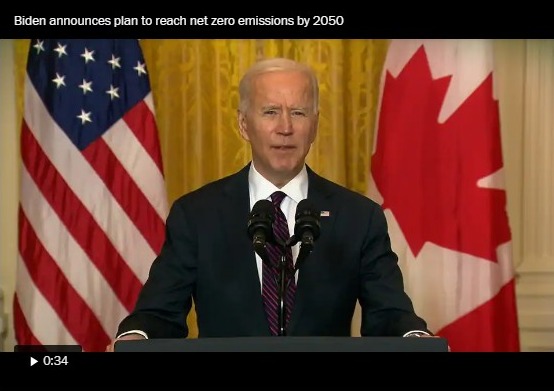
Even through a video screen, you could feel the warm fuzzies between President Joe Biden and Canadian Prime Minister Justin Trudeau as the two met Tuesday for a symbolic rebooting of neighborly relations grown testy over the past four years.
https://www.washingtonpost.com/video/c/embed/04812110-2c5e-4178-af1f-104a8235a989?ptvads=block&playthrough=false

Biden recalled visiting Canada in 2016 when he was vice president and joked about his poor French. Trudeau said he welcomed partnership with the United States “to keep making sure we are pulling our weight around the world and making the world a better and safer place for everyone.”

The relief on Trudeau’s masked face was obvious as he and Biden held the pandemic version of an Oval Office sit-down. Trudeau was in Ottawa and Biden in Washington, but the White House clearly intended the session to be intimate and celebratory, a sort of hug meant to salve Canada’s wounded pride after the slights inflicted by President Donald Trump.

“The United States has no closer friend – no closer friend – than Canada,” Biden said. “That’s why you were my first call,” he added, and the first foreign leader to receive an invitation to the White House, even if conducted long-distance.

Neither leader mentioned Trump by name during the portion of their long-distance meeting seen by reporters. They didn’t have to.

“U.S. leadership has been sorely missed over the past years,” Trudeau said. He noted how differently the process of crafting a joint statement went this time: “It’s nice when the Americans aren’t pulling out all references to climate change, and instead adding them in.”

That was partly a reference to a disastrous 2018 meeting of the Group of Seven industrialized democracies hosted by Canada. Trump skipped the session on climate change and refused to sign onto a statement endorsing the Paris climate agreement. Trump pulled the United States out of that pact; Biden recently rejoined it.

Trump’s outburst at the time of that G-7 meeting included personally attacking Trudeau, tweeting after leaving the meeting that his Canadian host was “very dishonest” and “weak.”

The shock and hurt in Canada, the largest U.S. trading partner and a close ally, was hard to overstate. But for all the palpable relief Tuesday, several irritants remain between the two countries, and Biden added one more on his first day in office when he canceled the permit for the Keystone XL pipeline.

Ahead of the meeting, opposition lawmakers from across Canada’s political spectrum called on Trudeau to push for an exemption from Biden’s “Buy American” executive order on procurement, which could squeeze Canadian firms out of U.S. government contracts.

Conservative Party leader Erin O’Toole also urged the prime minister to ask Biden to let Canada acquire its coronavirus vaccines from U.S.-based manufacturers. Canada has been obtaining vaccines from Europe, and recent shipments have encountered delays.

“At a time when both our countries need to be focused on getting people back to work and returning to normal post-covid-19, Justin Trudeau needs to show Canadians he’ll stand up for our interests and our jobs,” O’Toole said in a statement.

None of that appeared to dampen the mood Tuesday.

The White House released a “road map” for U.S.-Canada relations, focused on a recovery from the pandemic, a reversal of the economic downturn and cooperation on climate change and other priorities. Among those is a recommitment to traditional alliances and international institutions such as the United Nations, NATO, the Group of Seven and the World Trade Organization.

The United States and Canada also will work together to resume three-way meetings with Mexico, a White House statement said.

Trudeau was just one of the traditional allies whom Trump publicly scorned, and both the Canadian and U.S. leaders were eager Tuesday to signal a clean break from the former president’s tendency toward isolationism and protectionism.

Trump had mused about sending troops to the U.S.-Canada border, for example, and ordered the manufacturing giant 3M to stop sending N95 masks to Canada, before reaching a deal with the company that would allow the protective gear to continue flowing.

Trump trade adviser Peter Navarro even appeared to call into question the motives for Canada’s contribution to the U.S.-led mission in Afghanistan, in which 158 Canadian soldiers have been killed.

The comments were “such an affront to Canadian contribution and Canadian loss,” a deputy defense minister wrote to Canada’s ambassador to the United States in an email obtained by The Washington Post through a public records request.

Biden is now trying to make up for those years of tension. Even though it was the diplomatic equivalent of a Zoom meeting, Tuesday’s session, as the first one-on-one with a foreign leader, was meant to reflect the resetting of a traditionally close relationship.

The White House arranged the day with as many bells and whistles as could be managed virtually. After their private meeting, Biden and Trudeau appeared side by side on separate screens to make public statements.

“Now that the United States is back in the Paris agreement, we intend to demonstrate our leadership in order to spur other countries to raise their own ambitions,” Biden said.

He made a point of condemning the detention in China of two Canadians caught up in a dispute over Canada’s arrest of Huawei executive Meng Wanzhou. “Human beings are not bartering chips,” Biden said.

Trudeau, who called Biden “Joe,” added, “We’re facing tough times, no doubt. But we’re not facing them alone. Canada and the United States are each other’s closest allies, most important trading partners and oldest friends.”

Still, Canada’s relationship with the new administration got off to a bumpy start. On Biden’s first day in office, he signed an executive order revoking the permit for Calgary-based TC Energy’s Keystone XL pipeline expansion, which would carry Canadian crude oil from Alberta to Nebraska.

The move was not a surprise, but Canadian officials had hoped for a chance to make their case.

A senior U.S. official told reporters Monday that the United States considers the matter settled. “The decision will not be reconsidered. It has already been made,” said the official, who spoke on the condition of anonymity to preview the meeting.

Airline bookings surge on Johnson’s plan to reopen travel #SootinClaimon.Com

#SootinClaimon.Com : ขอบคุณแหล่งข้อมูล : หนังสือพิมพ์ The Nation.

https://www.nationthailand.com/news/30402993

Airline bookings surge on Johnson’s plan to reopen travel

InternationalFeb 24. 2021A member of ground crew prepares a passenger aircraft, operated by Easyjet on the tarmac at Nice Cote d'Azur Airport in Nice, France, on Friday, Feb. 5, 2021. MUST CREDIT: Bloomberg photo by Jeremy SuykerA member of ground crew prepares a passenger aircraft, operated by Easyjet on the tarmac at Nice Cote d’Azur Airport in Nice, France, on Friday, Feb. 5, 2021. MUST CREDIT: Bloomberg photo by Jeremy Suyker
By Bloomberg · Siddharth Philip, Christopher Jasper

U.K. holidaymakers reappeared with a roar, showering airlines with summer bookings after Prime Minister Boris Johnson outlined a roadmap for air travel to return.

EasyJet ticket sales more than quadrupled in the hours after Johnson said Monday that international trips may restart as soon as May 17. Tour operator TUI said holiday bookings to Spain, Turkey and Greece jumped sixfold overnight, while Ryanair Holdings cited Italy as another popular destination.

Airline shares advanced for a second day as evidence mounted of burgeoning customer demand for the crucial summer season. While travel could open as soon as late May or June, travelers are hedging their bets, with the uptick concentrated on July and August. Price-comparison site Skyscanner said that flight bookings on Monday increased by 69% compared with the previous day.

“We are seeing this latest news translate into a surge in travel demand,” said Hugh Aikten, vice president of flights at Skyscanner. Ultimately, he said, further steps will be needed to truly unlock demand, “including greater global alignment on common, international standards to enable people to plan.”

Shares of EasyJet rose as much as 12% in London on Tuesday, a day after gaining 7.3% in response to Johnson’s plan to gradually reopen the economy. TUI surged as much as 7.3% and Jet2 10%, while Ryanair and IAG, owner of British Airways, also added to Monday’s gains.

U.K. hotel operators such as Whitbread and InterContinental Hotels Group meanwhile rose in anticipation of a pickup in internal. Hotels could reopen May 17, a month after campsites and self-catering accommodation.

Britain has established a task force that will set out a roadmap for when international travel might resume, with a report due by April 12. Questions still remain about requirements for testing and quarantines.

Bookings for flights from the U.K. jumped 337% in a few hours, EasyJet said late Monday. Sales of package holidays soared 630%, the low-cost carrier said.

Sunny spots such as Malaga, Alicante and Palma in Spain, Faro in Portugal and the Greek island of Crete are among top destinations, EasyJet said. While travel may reopen sooner, August is the most popular period.

Bookings from Britons have begun to surge at the 21-floor Madeira Centro Hotel in Benidorm on Spain’s Costa Blanca, according to commercial manager Juan Natera, who said that reservations are strong for August and September, extending into the fall.

Michalis Vlatakis, president of the Association of Cretan Tourism and Travel Agencies, said that restarting travel will depend on the roll-out of vaccinations and decisions by Greek authorities, he said.

“Tourism is psychology and the right psychology must be created for people to travel,” Vlatakis said.

While the U.K. ticket sales validate optimism for customer demand, the outlook for travel in the early part of summer remains cloudy.

TUI will seek to encourage customers to take a break after May 17, when the current ban on tourist travel potentially ends, by extending a policy allowing them to rebook for free until the end of June.

“We will continue to work closely with the government so people can look forward to a well-deserved break away, after what has been a very difficult year for many,” said Andrew Flintham, managing director of TUI UK and Ireland.

Hong Kong loses last outlet for democracy #SootinClaimon.Com

#SootinClaimon.Com : ขอบคุณแหล่งข้อมูล : หนังสือพิมพ์ The Nation.

https://www.nationthailand.com/news/30402992

Hong Kong loses last outlet for democracy

InternationalFeb 24. 2021

 Erick Tsang, Hong Kong's secretary for constitutional and mainland affairs.

Erick Tsang, Hong Kong’s secretary for constitutional and mainland affairs.

By The Washington Post · Shibani Mahtani, Theodora Yu

HONG KONG – Serving as a district councilor in Hong Kong means addressing everyday concerns such as pest control, traffic issues and helping elderly residents pay bills. One of the few perks of the modest office is having a say, alongside tycoons and Beijing loyalists, in choosing Hong Kong’s leader.

On Tuesday, Hong Kong’s government announced that anyone running for these local positions will need to be a “patriot” – meaning they must swear loyalty not to their constituents but to Beijing and the Communist Party – as China moves to quash the territory’s last avenue of democracy.

The changes, which are expected to be introduced to the legislature – where there is no viable opposition – next month and become law soon thereafter, will trigger the expulsion of several young pro-democracy councilors, even if they read the oath as instructed. Disqualified candidates will be barred from running in any elections for five years.

“You cannot say you love the country but you don’t respect” the Chinese Communist Party, said Erick Tsang, Hong Kong’s secretary for constitutional and mainland affairs. “It does not make sense.”

The insistence on “patriots” allows China to ensure that pro-democracy representatives cannot influence the selection of the financial hub’s next leader. The district councils have some say in a committee that selects Hong Kong’s chief executive, but they are currently dominated by pro-democracy politicians who won a landslide victory in 2019 elections.

With Tuesday’s announcement, the councils, the only fully democratic body in Hong Kong, fall in line with China’s broader reshaping of a city once known for its boisterous political culture as democratically chosen representatives are replaced with Beijing loyalists.

Since the 2019 protests, China has weeded out elements that could galvanize resistance to its tightening control over Hong Kong, jailing activists and forcing others into exile, including through a new national security law. Pro-democracy lawmakers have been ousted from the legislature, political slogans have been banned, and schools have been ordered to toe Beijing’s line.

Xia Baolong, one of Beijing’s top officials in charge of Hong Kong, outlined his vision on Monday for “patriots” ruling the territory, signaling electoral changes and dismissing the opposition camp as “radical” and “anti-China.” Patriots, he said, must hold roles in all the city’s institutions, including the judiciary, legislative and statutory bodies.

In a news conference Tuesday, government officials laid out a set of criteria and oath-taking procedures for the district councilors and warned of legal consequences if they did not comply. They prepared a two-and-a-half page list of “positives” and “negatives” they would use to determine whether an official was abiding by Hong Kong’s mini-constitution, known as the Basic Law. Some of the “negatives” echo language in the Beijing-drafted national security law, which punishes people guilty of soliciting “foreign interference” or advocating Hong Kong independence with up to life in prison.

Other offenses that could force a candidate’s disqualification, according to the guidance provided by authorities on Tuesday, include undermining the “political order” led by the chief executive and “indiscriminately” objecting to government proposals – potentially rendering all opposition politics illegal.

Tsang said this list of “positives” and “negatives” was not exhaustive, and loyalty of public officers would be reviewed on a “case-by-case” basis.

The changes will be introduced March 17 in the legislature, which is now devoid of meaningful opposition after Beijing disqualified four pro-democracy lawmakers, prompting the mass resignation of their colleagues. Four serving district councilors already disqualified from contesting legislative elections will similarly be dismissed from their local positions.

They include Lester Shum, a democracy activist involved in the 2014 Umbrella Movement and the 2019 protests; Tiffany Yuen, the former vice chairwoman of a political party founded by prominent activist Joshua Wong; and Fergus Leung. All were arrested under the national security law in January but were not charged.

Shum, in a Facebook post, wrote that it is within his expectations that the government “is completely stifling the space for opposition voices.”

“Though the end has been set, I will stand firm by my post, and perform my duties until the very last minute,” he added.

South Africa unemployment rises to record as more look for jobs #SootinClaimon.Com

#SootinClaimon.Com : ขอบคุณแหล่งข้อมูล : หนังสือพิมพ์ The Nation.

https://www.nationthailand.com/news/30402991

South Africa unemployment rises to record as more look for jobs

InternationalFeb 24. 2021

By Bloomberg · Monique Vanek

South Africa’s unemployment rate climbed to a record in the fourth quarter as more people started to look for jobs in an economy that was ravaged by lockdown restrictions to curb the impact of the coronavirus.

The jobless rate rose to 32.5% from 30.8% in the previous three months, Statistics South Africa said Tuesday in a report released in the capital, Pretoria. That’s the highest number on record. The median estimate of five economists in a Bloomberg survey was 31.5%. Unemployment according to the expanded definition, which includes people who were available for work but not looking for a job, fell to 42.6% from 43.1% in the previous quarter.

The unemployment rate in Africa’s most-industrialized economy has remained above 20% for at least two decades, largely due to structural barriers, including an education system that doesn’t provide adequate skills. Restrictions to curb the spread of covid-19 probably caused the economy to contract the most since the Great Depression, with the lockdown forcing some businesses to cut wages, reduce staff or shut permanently. The market is not creating sufficient jobs to absorb enough people of working age into employment, Statistician-General Risenga Maluleke told reporters.

The persistently high unemployment rate poses a challenge for Finance Minister Tito Mboweni as he prepares to deliver his budget speech on Wednesday. While joblessness has added to social tensions that dent the country’s status as an investment destination and erode business confidence, it could also hinder efforts to stabilize South Africa’s rapidly deteriorating public finances. The Treasury will have to fork out more cash to finance a three-month extension of a special coronavirus jobless relief grant.

Restrictions reintroduced at the end of December and warnings of increased business rescues earlier this year may weigh on new hirings in the first quarter.

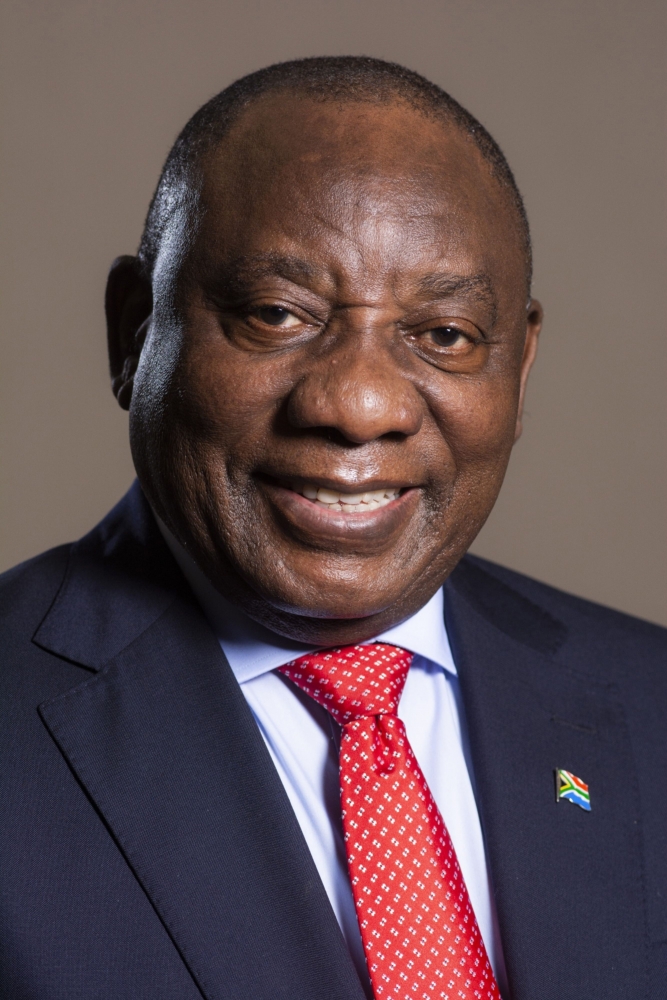
Cyril Ramaphosa, South Africa's president, following a Bloomberg Television interview in Johannesburg on Nov. 18, 2020. MUST CREDIT: Bloomberg photo by Waldo Swiegers.

Cyril Ramaphosa, South Africa’s president, following a Bloomberg Television interview in Johannesburg on Nov. 18, 2020. MUST CREDIT: Bloomberg photo by Waldo Swiegers.

Jobs were among President Cyril Ramaphosa’s top four priorities in his state-of-the-nation address this month and at the center of a post-virus reconstruction and recovery plan he presented last year. The government has allocated 13 billion rand ($885 million) to create job opportunities.

Other highlights:

– The number of people employed rose 333,000 to 15 million. The number of unemployed climbed 701,000 to 7.2 million. The employment numbers have come in worse than the recovery in gross domestic product, Sisamkele Kobus, fixed income analyst at Ninety One, said in an email. The data shows that the extension of the covid-19 grant was the right thing to do, despite the current fiscal limitations, Kobus said.

– Community and social services, which include the government, added 170,000 positions.

– The finance industry lost 123,000 jobs and mining shed 35,000.

– Construction gained 86,000, trade 55,000 and transport 65,000 jobs. Private household employed 76,000 more people.

Biden administration preparing to sanction Russia for SolarWinds hacks and the poisoning of an opposition leader #SootinClaimon.Com

#SootinClaimon.Com : ขอบคุณแหล่งข้อมูล : หนังสือพิมพ์ The Nation.

https://www.nationthailand.com/news/30402990

Biden administration preparing to sanction Russia for SolarWinds hacks and the poisoning of an opposition leader

InternationalFeb 24. 2021

By The Washington Post · Ellen Nakashima

WASHINGTON – The Biden administration is preparing sanctions and other measures to punish Moscow for actions that go beyond the sprawling SolarWinds cyber espionage campaign to include a range of malign cyber activity and the near-fatal poisoning of a Russian opposition leader, said U.S. officials familiar with the matter.

The administration is casting the SolarWinds operation, which hacked government agencies and private companies, as “indiscriminate” and potentially “disruptive.” That would allow officials to claim that the Russian hacking was not equivalent to the kind of espionage the U.S. also conducts, and to sanction those responsible for the operation.

Officials also are developing defensive measures aimed at making it harder for Russia and other sophisticated adversaries to compromise federal and private sector networks, said the officials, several of whom spoke on the condition of anonymity because of the matter’s sensitivity.

Part of the administration’s response, too, will be an attribution statement stronger than the one the intelligence community released in January saying that Moscow “likely” was behind the SolarWinds operation. A White House official said last week that the Russian campaign hit nine U.S. government agencies and about 100 private companies.

But the aim of the various measures, officials said, is to convey a broader message that the Kremlin for years has used cyber tools to carry out an array of actions hostile to the interests of the United States and its allies: interfering in elections, targeting coronavirus vaccine research and creating a permissive atmosphere for criminal hackers who, among other things, have run ransomware botnets that have disrupted American public health facilities.

In a speech to the Munich security conference last week, President Joe Biden said that “addressing . . . Russian recklessness and hacking into computer networks in the United States and across Europe and the world has become critical to protecting our collective security.”

National security adviser Jake Sullivan said Sunday that the response, expected in the coming weeks, “will include a mix of tools seen and unseen, and it will not simply be sanctions.” The bottom line, he told CBS’s “Face the Nation,” is that “we will ensure that Russia understands where the United States draws the line on this kind of activity.”

The administration is also working on an executive order that will improve the Department of Homeland Security’s ability to ensure the resilience of government networks. Part of that is deploying a new technology, a senior administration official said, that gives federal defenders at the department’s Cybersecurity and Infrastructure Security Agency “visibility” into networks that was missing in the SolarWinds hacks.

“You can’t defend against something you can’t see,” the official said in an interview.

The punishment for the cyber hacks is intended to be part of broader measures aimed at holding Moscow accountable for other actions, such as its use of a banned chemical weapon against anti-corruption activist Alexei Navalny.

Politico on Monday reported on the administration’s plan to impose sanctions for the poisoning and jailing of Navalny, in coordination with European allies.

On Monday Secretary of State Antony Blinken welcomed the European Union’s decision to sanction Russia in response to actions taken against Navalny and his supporters.

The government in January characterized the Solar Winds operation as “an intelligence-gathering effort.” Espionage is an activity the United States and virtually every other country conducts against its adversaries – and even allies. But senior Biden administration officials have said they view the Russian activity as more than just classic espionage.

Last week, Anne Neuberger, deputy national security adviser for cyber and emerging technology, said at a news briefing that “when there is a compromise of this scope and scale, both across government and across the U.S. technology sector . . . it’s more than a single incident of espionage. It’s fundamentally of concern for the ability for this to become disruptive” – damaging computers or undermining their operation.

What’s notable about these breaches is they were enabled by the Russians hacking software used in the victims’ networks – what is known as a “supply chain” attack.

For instance, some of the victims had downloaded poisoned software updates from the Texas company SolarWinds, which was the Russians’ initial steppingstone into their computers. About 18,000 entities worldwide received the updates. But only a fraction were compromised. The Russians designed the operation so they could choose which targets to victimize. Those they chose to ignore received a “kill switch” dismantling the malware.

Some U.S. officials argue privately that that feature – the selective targeting and disabling of the malware – made the campaign “discriminate,” and not as alarming as an attack that compromised every person whose computer downloaded the poisoned update.

But the senior administration official viewed it differently. “We’re seeing that this kind of broad, indiscriminate compromise, and the access that it enabled the hackers to have, crosses a line of concern to us because it can be turned to be disruptive so quickly,” the official said. “So, at its centrality, it is destabilizing.”

Meddling with the supply chain is concerning, said Trey Herr, director of the Atlantic Council’s Cyber Statecraft Initiative, if only because it undermines customer confidence in the integrity of the software supplier and may lead consumers to distrust software updates that are important to patching vulnerabilities.

Herr stressed that the United States must accept responsibility for not securing its software supply chain. “This is huge egg on the face of the U.S. cybersecurity establishment – both public and private sector,” he said. “It’s not shame on the Russians. It’s shame on us.”

Others also counseled restraint. When it comes to cyber spying, said Fiona Hill, a former deputy assistant to president Donald Trump and senior director for Russia at the National Security Council, the best offense is a good defense. “There’s a huge risk if we say we’re going to take action through cyber retaliation,” Hill said. “If you do tit-for-tat vengeance, you always risk getting in a cycle.”

Paul Kolbe, former chief of the CIA’s Russian operations, said sanctions with Russia have generally been ineffective. “It gives us the satisfaction of having taken some action and sends a signal of displeasure,” he said. “But I’m hard-pressed to find a single act that we’ve sanctioned Russia for that’s actually changed its behavior.”

The Washington Post reported in December that intelligence officials think the SVR, Moscow’s foreign intelligence service, carried out the intrusions, but the administration has not decided whether to say that publicly.

Some intelligence officials were pushing for a stronger attribution before the administration change last month, but White House officials, wary of angering Trump, who publicly played down the notion that Moscow carried out the hacks, softened it to “likely,” said several people familiar with the matter.

Biden has ordered the intelligence community to provide an assessment of the breaches. Last week, Neuberger said the government has found that nine federal agencies were compromised. She did not name them, but The Post has confirmed the identities with U.S. officials. They include NASA and the Federal Aviation Administration, which have not been previously publicly identified.

The Transportation Department, which houses the FAA, and NASA did not dispute that they were compromised. A DOT spokesman said the department is “continuing to investigate and look into the [FAA] situation.” A NASA spokeswoman said the agency is continuing to work with CISA on “mitigation efforts to secure NASA’s data and network.”

The seven other agencies are the departments of State, Justice, Treasury, Energy, Commerce and Homeland Security, as well as the National Institutes of Health (part of the Health and Human Services). In all cases, the data stolen was unclassified and no operational systems were breached.

“Our general assumption is this was designed to be a long-term operation, low and slow, targeting very few accounts in each individual agency and being selective about the exfiltration so as to avoid detection,” a second U.S. official said.

In some ways, SolarWinds is a misnomer for the campaign. The Russians hacked other companies’ software to gain access to victims’ networks. They compromised the email security firm Mimecast, and a Microsoft corporate partner that handles cloud-access services. And they broke into two federal agencies using “brute force” password cracking, or algorithms that guess passwords, officials said.

The SVR hacked the State Department, the White House and the Joint Chiefs of Staff unclassified networks in 2014 and 2015. But that operation was “noisier,” using phishing emails that were easier to detect, said Dmitri Alperovitch, founder of the Silverado Policy Accelerator and a cybersecurity expert who investigated the earlier hacks.

“Ultimately, those campaigns – at least against those high-priority targets – weren’t very successful, because the intruders were quickly discovered and ejected,” he said. “I believe that realization drove them to the supply-chain model – to get into victims’ networks through third-party suppliers.”

A Spanish rapper was arrested for tweets praising terrorists and mocking royals. Then the protests began. #SootinClaimon.Com

#SootinClaimon.Com : ขอบคุณแหล่งข้อมูล : หนังสือพิมพ์ The Nation.

https://www.nationthailand.com/news/30402989

A Spanish rapper was arrested for tweets praising terrorists and mocking royals. Then the protests began.

InternationalFeb 24. 2021

Pablo Hasel

Pablo Hasel

By The Washington Post · Adam Taylor

Thousands of protesters have take to the streets in some of Spain’s largest cities every night for the past week, where they have often clashed with police. In just one night in Barcelona on Saturday, authorities said they had detained 38 people and recorded injuries among 13.

The anger of the young protesters is centered around the high-profile arrest of a man who until recently been an obscure figure: Pablo Rivadulla, a rapper better known by his stage name, Pablo Hasel.

With an aggressive, anti-authoritarian musical style, the 32-year-old Hasel has a lengthy rap sheet. In the past, he has been sentenced of assaulting a journalist and for threatening a witness at a trial. But Hasel’s rise to infamy has mostly come not through his actions, but through his words.

Or more specifically, in the case of his latest arrest and nine month sentence, his tweets.

Spanish prosecutors had pointed to more than 60 tweets Hasel sent between 2014 and 2016, in which he had expanded on the left-wing stance in his lyrics.

Hasel’s tweets were certainly provocative.

They included references to the police as killers, Nazis and “cry babies.” The Spanish royal family were described as “mafioso, medieval,” derided for their alleged links to Saudi Arabia who would be “remembered in history as the parasites they are.”

Arguably more offensive, however, were references to the Marxist organization GRAPO and Basque separatist movement ETA, mostly defunct groups that had been previously linked to hundreds of killings between them. Both were categorized as terrorist organizations by the European Union.

“The demonstrations are necessary but insufficient, let’s support those who have gone further,” Hasel tweeted in 2016, alongside a photograph of Victoria Gómez, a GRAPO member jailed in relation to a violent crimes.

Hasel’s subsequent arrest has now sparked a major debate in the country that extends far beyond Twitter.

A petition signed by more 200 Spanish cultural figures, including film director Pedro Almodóvar and actor Javier Bardem, said that Spain resembled countries like Morocco or Turkey, where artists can no longer create freely.

“We are aware that if we allow Pablo to be imprisoned, tomorrow they could come after any one of us,” the petitioners wrote.

Salil Tripathi, chair of PEN International’s writers in prison committee, warned Tuesday that “democracies don’t jail poets, even if the words they express are disturbing or uncomfortable,”

The situation has sparked some of the largest protests in years in Catalonia, a northeastern region of Spain with a strong separatist movement. Hasel, who was born in the region, was also a public supporter of Catalonian independence. His arrest came two days after regional elections in Catalonia.

If the protests continue, they may not only threaten peace and quiet but the coalition that holds together the left-wing Spanish government.

Hasel was previously convicted in 2015 after a series of songs he uploaded to YouTube that included lyrics describing violence against Spanish journalists and politicians.

One song, titled “Obama Bin Laden,” saw Hasel says that Televisión Española, Spain’s public broadcaster, “deserves a bomb.” Another, titled “I’m not sorry for your shot in the neck,” is addressed to the supporters of Spain’s center-right People’s Party.

In 2015, the rapper was then sentenced to two years in prison, though he ultimately didn’t serve any time behind bars.

The new sentence that focused on his tweets came first in March 2018. It was reduced on appeal to nine months and one day, in part because neither GRAPO or ETA were currently active. This shorter sentence was later upheld by Spain’s Supreme Court.

Hasel isn’t the first rapper to face prison time for his words. His friend and co-performer Josep Miquel Arenas, known as Valtonyc, was sentenced to three and a half years, but he fled to Belgium and is now fighting against extradition back to Spain.

But Hasel now looks set to become the first rapper to actually serve his sentence. In some ways, that may not be a surprise. “I will go to jail,” he told The Washington Post during an interview in 2018. “I can do it.”

More surprising is the chaos the arrest has caused. Though most of the protests have been peaceful, in some cities like Barcelona there have been clashes every night.

Free speech advocates argue that restrictions in Spain have grown in recent. They point to a 2015 public security law imposed under a previous People’s Party government which broadened an article in the Spanish criminal code that focuses on those that “glorified terrorism.”

“If these articles of the criminal code are not amended, freedom of expression will continue to be silenced and artistic expression will continue to be restricted,” Esteban Beltrán, director of Amnesty International Spain, warned shortly after Hasel’s arrest.

On Tuesday, PEN Català president Àngels Gregori called on Article 578 to be repealed and said defamation should be a matter of civil law “where the government has no role.”

Government officials in the center-left Socialist party said that the country would review Spain’s free speech laws, potentially removing prison terms for related crimes, but the reform is said to be in the early stages.

But the left wing Unidas Podemos, junior partner in the government, have gone further, proposing new legislation that would eliminate the crime of glorifying terrorism or insulting the royal family. The split has resulted in tension within the coalition, which was already deeply divided over economic policy.

It’s a sign of the growing power of the rappers, whose status has only increased in recent years despite the laws meant to silence them. In 2018, Hasel told The Post that his last job had been picking grapes and apples.

At the time of his tweets between 2014 and 2016, he topped out at around 50,000 Twitter followers. Now, he has close to 140,000.

Moderate Senate Democrats target state aid fund in Biden covid relief bill #SootinClaimon.Com

#SootinClaimon.Com : ขอบคุณแหล่งข้อมูล : หนังสือพิมพ์ The Nation.

https://www.nationthailand.com/news/30402985

Moderate Senate Democrats target state aid fund in Biden covid relief bill

InternationalFeb 24. 2021

By The Washington Post · Erica Werner, Jeff Stein, Seung Min Kim

WASHINGTON – Even as the House prepares to pass President Joe Biden’s $1.9 trillion coronavirus relief bill this week, divisions are growing among Senate Democrats over state aid and a $15 minimum wage – raising the prospect the bill might have to change significantly to pass the Senate.

Biden himself has forcefully defended his legislation in recent days, asking critics, “What would they have me cut?” Democratic senators, it turns out, have plenty of ideas.

Democrats’ proposal would devote hundreds of billions of dollars to extending unemployment benefits through August and approving another round of stimulus payments at $1,400 per person, as well as devoting billions to vaccine distribution, housing and nutritional assistance, in addition to raising the minimum wage and helping states and local governments.

Sen. Joe Manchin III, D-W.Va., who has been a vocal skeptic of raising the current $7.25 federal hourly minimum wage to $15 an hour, as proposed by Biden, told reporters this week he hopes to amend the legislation to boost the minimum wage to $11 an hour instead.

Several Democratic senators are working on changes to the portion of the bill on state and local aid, including redirecting some of the money to invest in infrastructure to expand the broadband network.

Sen. Kyrsten Sinema, D-Ariz. – who has also opposed the $15 minimum wage increase – has been working to include more funding for small restaurants in the legislation, as well as lobbying for other provisions to help her state.

“Any money we spend needs to be focused where it would do the most good,” Sen. Jon Tester, D-Mont., said at a hearing Tuesday, telling reporters later: “I think it’s part of our job to put our fingerprints on this package so it does the most good.” Tester said that he’s been in touch with some other senators and that he wants to be prepared for a possible amendment process.

White House press secretary Jen Psaki acknowledged Tuesday the legislation may change and declined to rule out Biden signing a final bill that included an $11 minimum wage instead of the $15 he initially proposed. Any changes sought by moderates could run into resistance from liberal lawmakers and party leaders who have insisted on keeping the $15 an hour minimum wage plan in the bill.

“There’s going to be a process that works its way through the Senate. We don’t even know where it’s going to end up,” Psaki said.

Administration officials and lawmakers in both parties are currently awaiting guidance from the Senate parliamentarian on whether the minimum wage provision can even remain in the legislation under the complex Senate rules governing its consideration. A decision could come in the next day or two.

In the House, meanwhile, the legislation passed the Budget Committee on a party-line vote Monday. Lawmakers and aides are now preparing it for consideration on the floor, which could come Friday or Saturday.

The bigger hurdles are expected to come in the Senate, where the minimum wage has been a flash point, although attention is also focusing on the $350 billion for state and local governments in the legislation. The disputes could complicate plans by Biden and Democratic leaders to get the legislation signed into law ahead of a March 14 deadline when enhanced unemployment insurance benefits will expire without action.

A group of centrist lawmakers has been working on changes to the state and local aid portion of the bill as criticisms have intensified that some of that funding could be better spent to boost the economy more directly. Those suggestions are expected to soon be presented to Senate Majority Leader Charles Schumer, D-N.Y., one person familiar with the matter said, speaking on the condition of anonymity because the discussions were private.

Senior Democratic lawmakers have grown concerned that some states, upon receiving the federal aid, could cut local taxes rather than spend the money on needs related to the coronavirus pandemic.

“We could distribute billions to the states, and they turn around and lower taxes – there are governors talking about that, and it’s not the point here . . . there should be a prohibition against voluntarily diminishing revenues,” Sen. Angus King, I-Maine, said in an interview.

King suggested $50 billion of the $350 billion state aid portion be repurposed for broadband. Sen. Mark Warner, D-Va., made a similar suggestion during a hearing with Federal Reserve Chair Jerome Powell on Tuesday, saying, “I hope the current package can be changed to include a sizable investment in broadband.”

Mark Zandi, chief economist at Moody’s Analytics, published a report this weekend showing the state and local shortfall amounted to approximately $60 billion through fiscal 2022, when accounting for already approved federal support. Zandi said in an interview that he sent the analysis to White House officials, who have repeatedly cited his economic reports.

“There’s still a lot of uncertainty in these estimates, but $100 to $150 billion would be appropriate given the circumstances. That’s well shy of the $350 billion they have penciled in the legislation,” Zandi said.

Zandi said the money should be repurposed for infrastructure spending as a better way to restore full employment and long-term economic and productivity growth. “Say they would go to $150 billion for state and local aid – that would give them $150 billion for infrastructure,” Zandi said.

Jason Furman, a former senior Obama administration official, also said in an interview that some of the state aid funding could be better spent elsewhere or more precisely structured.

“The state fiscal relief total [in the bill] exceeds the amount states immediately need,” Furman wrote in a text message. “It should either be better defined by focusing on what it should be spent on, like infrastructure or broadband; what it should not be spent on (like tax cuts); or the total should be reduced.”

Officials representing cities and counties are gearing up to lobby to protect the state and local funding in the bill. They have been arguing for months that the $150 billion distributed to states from the Cares Act last March was woefully inadequate for their needs, especially because only the largest localities could get direct funding; that restriction does not exist in the legislation Biden proposed.

Tom Cochran, CEO and executive director of the U.S. Conference of Mayors, said some reports that reflect states rebounding economically mask how dire the situation is for cities across the country.

Labor groups and other advocates are closely watching moderate Senate Democrats and urging them to support the state and local aid funding in Biden’s bill, according to Cochran.

“There is no indication from the House side or the White House that is not totally supporting the fiscal support for state and local governments. But the Senate throughout the pandemic has left state and local aid on the cutting-room floor. That’s where the drama is going to be,” he said. “You have to have the Democrats stand with the president to withstand this pressure. We have to make sure these senators stay with the president.”

A White House spokeswoman said the Biden plan reflected the needs of states and cities, citing the administration’s extensive conversations with local officials. The Center on Budget and Policy Priorities, a left-leaning think tank, said states, cities and U.S. territories face a revenue shortfall of about $300 billion through 2022.

The focus on moderate Senate Democrats comes after Biden’s initial courtship of a group of 10 Senate Republicans went nowhere.

Sen. Susan Collins, R-Maine, who led a group of Republicans in a meeting at the White House about the relief package, said that talks with the White House have stalled and that GOP lawmakers are now considering amendments to the package.

“The administration has not indicated a willingness to come down from its $1.9 trillion figure. And that’s a major obstacle,” Collins said. “Unfortunately, the White House seems wedded to a figure that really can’t be justified. . . . So what we’re looking at now is whether there are changes that we could make.”

Senate Minority Leader Mitch McConnell, R-Ky., said Tuesday that Biden has an “A+ personality” but that Republicans are “unified in opposition” to what he decried as a partisan bill.

Vaccine delays threaten economies hardest hit by pandemic #SootinClaimon.Com

#SootinClaimon.Com : ขอบคุณแหล่งข้อมูล : หนังสือพิมพ์ The Nation.

https://www.nationthailand.com/news/30402983

Vaccine delays threaten economies hardest hit by pandemic

InternationalFeb 24. 2021A health-care worker carries a container of Pfizer-BioNTech coronavirus vaccines in Bogota, Colombia, on Thursday, Feb. 18, 2021.A health-care worker carries a container of Pfizer-BioNTech coronavirus vaccines in Bogota, Colombia, on Thursday, Feb. 18, 2021.


By Syndication Washington Post, Bloomberg · Andrew Rosati

Latin America and the Caribbean, the region where the coronavirus caused the most pronounced economic destruction and more than a quarter of the world’s deaths, is falling victim to a slow inoculation campaign.

Political fights and production bottlenecks are stymieing Brazil’s vaccination efforts. Mexico is struggling to source doses as its death toll surpasses India’s. Colombia only began administering shots last week.

Such sluggishness alongside a recent spike in infections risks hampering an already slow economic recovery.

“If vaccination and public health policy don’t succeed at reversing the trend that we’ve seen in recent months, clearly this recovery is at risk,” Alejandro Werner, the International Monetary Fund’s Western Hemisphere director, said this month.

Latin America’s economic rebound was wobbling after a new round of lockdown measures in response to the surge in cases that began around the late-2020 holidays. Since January, JPMorgan Chase & Co. trimmed its first quarter growth forecasts for Argentina, Brazil, Chile, Colombia and Mexico, citing concerns of rising case load and new restrictions.

The region contracted by more than 7% last year, according to the IMF, the most in the world. The fund does not see output returning to prepandemic levels until 2023, and this year is off to a rocky start.

In December, Brazilian retail sales suffered their biggest drop for the month on record, included in a sharp slowdown in Latin America’s largest economy. Meanwhile, Mexico saw its recovery lose steam as growth slowed to 3.1% from 12.1% over the last two quarters of 2020.

– – –

Activity is expected to pick up this year, but a strong rebound depends on vaccines becoming more widely available in the coming months. Underscoring the importance of an efficient vaccine rollout, investors are already rewarding Latin America’s only success story: Chile, which is on pace to vaccinate 75% of its population in six months, according to Bloomberg’s Vaccine Tracker.

This month, Moody’s Investors Service and Spain’s Banco Santander revised upward their growth forecasts for Chile, setting it apart from its neighbors. Its economy will recover to prepandemic levels three to six months earlier than most other countries in the region, according to Nikhil Sanghani, an economist at Capital Economics in London.

The Chilean peso has led gains among regional peers, rallying more than 3% this month.

Other countries in the region are nowhere close. At the current rate, Brazil would take 2 1/2 years to reach the 75% level of vaccination, which is the threshold experts say is needed for a return to normality. Mexico would take 3.6 years, and Argentina would take over a decade. The United States, in contrast, is projected to reach that level by the end of the year.

This outlook may improve over the next few weeks as some of the “teething problems” with the vaccine rollout start to ease, Sanghani said.

Delays in deliveries have sent countries that relied heavily on particular vaccines, such as Mexico and Colombia, running to make last-minute contracts with competitors. Argentina is trying to produce more locally.

After dragging its feet for months in making orders, the administration of Brazilian President Jair Bolsonaro is running out of doses to sustain its vaccination campaign, leading nine state capitals including Rio de Janeiro to suspend immunizations.

– – –

The holdups in the vaccination drive are not all self-inflicted.

From the start, poorer countries have been pushed to the back of the line by wealthier ones that quickly sealed deals with drugmakers, or are now commandeering vaccinations produced in their territory for their own citizens.

Much of the Caribbean and Central America are weeks away from kicking off their campaigns. Jamaica’s Prime Minister Andrew Holness last month accused rich countries of “hoarding” vaccines.

Economists watching mobility trends are bracing for another hit to activity caused by people once again staying home and businesses closing shop. Chile aside, they remain skeptical about restrictions relief for the rest of the region given their slow start and distance from major vaccine distributors.

“Richer countries already started to buy out everything they could, only leaving breadcrumbs for the rest,” said Joan Domene, a Mexico City-based economist for Oxford Economics.

Huawei: COVID-19 closed many doors, but innovation offers a window of hope #SootinClaimon.Com

#SootinClaimon.Com : ขอบคุณแหล่งข้อมูล : หนังสือพิมพ์ The Nation.

https://www.nationthailand.com/news/30402975

Huawei: COVID-19 closed many doors, but innovation offers a window of hope

InternationalFeb 23. 2021

By THE NATION

Breakthroughs in technical innovation promise to make life better, businesses smarter, and the world more inclusive

[Shanghai, February 23, 2021] At the opening ceremony of Mobile World Congress Shanghai 2021, Huawei’s Deputy Chairman Ken Hu spoke about the huge impact that COVID-19 has had on countries, enterprises, and people around the world, as well as the role technology plays in combatting the pandemic.

Ken Hu

Ken Hu

“Innovation isn’t just about solving the challenges we face today,” said Hu. “It’s about lighting up tomorrow. Once we get the pandemic under control, we need to think hard about how we can innovate to improve quality of life, make businesses smarter, and create a more inclusive world.” He explained that, while unequal access to digital technology and digital skills has widened the digital divide, the pandemic has made the situation significantly worse. “We have to focus innovation on bridging the gap between the haves and have-nots, and on driving digital inclusion”.

COVID-19 has created many new requirements for digital infrastructure. Over the past year, Huawei has worked closely with carriers to ensure the stable operations of more than 300 networks across 170 countries. In Indonesia, Huawei employed a new digital delivery technology to rapidly deploy over 50,000 base stations. In Ningxia, China, Huawei’s integrated routers enable multi-cloud access for enterprise users, helping them move to cloud more rapidly – and at lower cost. “As we look towards recovery,” Hu said, “we need to ensure that innovation isn’t just about today. It’s about lighting up tomorrow and creating greater social value.”

Innovating for better quality of life
During his keynote, Hu showed the audience Huawei’s Cyberverse app, an advanced AR application that demonstrates how 5G networks, 5G devices, and AR technology can converge to create a more immersive virtual experience, whether it be a lifelike forest or a simulation in outer space. The new app makes it possible to seamlessly integrate virtual and physical realities with high-precision, centimeter-level positioning capabilities, massive computing power, and high-bandwidth transmission through 5G. Huawei expects Cyberverse to create many new growth opportunities in multiple sectors, including education, entertainment, tourism, transportation, and navigation.

Innovating for smarter business
In recent years, technologies like 5G, cloud, and AI have begun playing an important role in manufacturing, accelerating the transition to more intelligent and flexible operations. Hu explained how Huawei’s own Dongguan South Factory is currently using 5G networks with cloud-based AI applications in its 5G smartphone production lines to drive huge productivity gains.

Opportunities abound in the digital transformation space. Huawei predicts that, by 2025, 97% of all large companies will use AI. Other estimates for 2025 include that 55% of China’s entire GDP will be driven by the digital economy, and 60% of global carrier revenue will be derived from industry customers. Hu noted that, to achieve these projections, “all industries should focus on improving their capabilities, building out the ecosystem, and creating value with digital technology.”

As an ICT infrastructure provider, Huawei has been focusing heavily on 5G innovation to help drive the digital transformation of all industries. Hu noted that Huawei’s innovation is focused on three areas: technology, products, and applications.

• Technology: Huawei’s new 5G Super Uplink solution delivers unmatched uplink speeds, helping companies break through a major bottleneck in industrial Internet.

• Products: Huawei’s fully converged 5G edge computing products have sped up deployment of edge computing sites by a factor of 10.

• Applications: Huawei’s Wireless X Labs incubates 5G applications with partners across a wide range of domains like manufacturing, healthcare, finance, and transportation. With these partners, Huawei is exploring how 5G can help different industries go digital more effectively.

Huawei is also working closely with customers and partners to drive innovation in 5G. The company is currently working with ecosystem partners to develop devices targeted at meeting specific industry needs. Through joint innovation and strategic partnerships with its customers, Huawei aims to drive 1 to N expansion of 5G applications for business. The company is also working to coordinate 5G communication and industry standards to more rapidly scale up 5GtoB applications.

Hu reported that, in collaboration with its partners and regional carriers, Huawei has signed more than 1,000 contracts for industrial 5G applications in more than 20 industries.

Innovating for a more inclusive world
While pivoting to address the pandemic, Hu warned that the world faces a real risk of K-shaped economic recovery once COVID-19 is brought under control. He predicts an increasingly wide divide between organizations and people who actively benefit from digital technology and those who do not. In order to avoid unbalanced development, bridge the digital divide, and promote inclusive growth, Hu emphasized that the focus of innovation needs to shift to producing greater social value.

The company has put its money where its mouth is. Through a partnership with Ghanaian operators on a rural network infrastructure project, Huawei currently plans to deploy more than 2,000 RuralStar base stations in remote regions around the country. This will help increase mobile coverage in Ghana from 83% to 95% and bring previously unconnected communities online for the first time.

Similarly, new AI services deployed on HUAWEI CLOUD are being used to help a small company in Malaysia double its production capacity without increasing headcount during the pandemic.

Hu also shared how 5G networks have been used to enable remote ultrasounds and CT scans that help address imbalanced distribution and shortages of medical resources.

Closing out his speech, Hu stressed that, while the pandemic closed many doors, innovation has opened new windows of hope. He concluded that, through ongoing innovation, Huawei will continue to pursue open partnerships with its customers and partners to help industries go digital and make life better, businesses smarter, and the world more inclusive.

At this year’s MWC Shanghai, Huawei is showcasing in Hall N1 seven new ICT network concepts, including Wireless 1+N, Home+, All-optical Bases, and Cloud-network Smart Connections, as well as nine new products and solutions, including ultra-simplified sites, gigabit home broadband, premium private lines, and intelligent cloud networks.

MWC Shanghai 2021 runs from February 23 to February 25 in Shanghai, China. Huawei’s products and solutions can be found at booth E10, E50, and E90 in Hall N1 in the Shanghai New International Expo Centre (SNIEC). For more information, please visit https://carrier.huawei.com/en/events/mwcs2021.

The Smithsonian is turning 175. It’s celebrating with robots, flying cars and hope. #SootinClaimon.Com

#SootinClaimon.Com : ขอบคุณแหล่งข้อมูล : หนังสือพิมพ์ The Nation.

https://www.nationthailand.com/news/30402939

The Smithsonian is turning 175. It’s celebrating with robots, flying cars and hope.

InternationalFeb 23. 2021The Smithsoanian's Future event will reopen the AIB, the 1881 structure that was the institution's first dedicated exhibition space. It has remained closed to the public since 2004. MUST CREDIT: Washington Post photo by Matt McClainThe Smithsoanian’s Future event will reopen the AIB, the 1881 structure that was the institution’s first dedicated exhibition space. It has remained closed to the public since 2004. MUST CREDIT: Washington Post photo by Matt McClain

By The Washington Post · Peggy McGlone

WASHINGTON – Smithsonian Secretary Lonnie Bunch likes to tell museum visitors that looking to the past can help them understand the future. To celebrate its 175th anniversary, the Smithsonian is turning that idea on its head by focusing on the future to celebrate its past.

“Futures” is a groundbreaking, multidisciplinary exhibition that will blend art, science, design, history and technology in a celebration of the world’s largest museum complex. Part festival, part exposition, part exhibition, “Futures” was created during a worldwide pandemic – but it nonetheless offers a hopeful glimpse of what lies ahead.

Opening in November and running through July 2022 at the Smithsonian’s Arts and Industries Building, “Futures” will include site specific art installations, a wetlands exhibit, a flying car and – of course – robots. It will help visitors imagine the future they want, not the one they fear, said Rachel Goslins, AIB’s director and the visionary behind the project.

“We have plenty of models that help us imagine what could go wrong. We don’t have a model to help us imagine what could go right,” Goslins said. “The future isn’t a fact. It’s a dream. We will help you understand and think and experience the future that you want to live. It’s hopeful without being naive.”

The event will reopen the AIB, the 1881 structure that was the institution’s first dedicated exhibition space and the incubator of the American History, Natural History and Air and Space museums. Nicknamed the Mother of Museums and the Palace of Invention, the building is a playful space, “a circus tent made of bricks,” Goslins said. She added that it’s the perfect site for an exploration of the future that’s tied to the Smithsonian’s past.

“The Smithsonian was always about how it could help the country reimagine itself, understand itself,” said Bunch, a historian and founding director of the popular National Museum of African American History and Culture. “The work we did with early aviation, even the way we collect history, which was always trying to ensure future generations understand how we got where we are.

“The notion is to help people recognize that they create the future. Often we think technology and everything sweeps over us, and that’s partly true, but we can also ruminate about what we want the future to be.”

"The future isn't a fact. It's a dream," said Rachel Goslins, director of the Smithsonian Arts and Industries Building, about the "Futures" exhibition. MUST CREDIT: Washington Post photo by Matt McClain

“The future isn’t a fact. It’s a dream,” said Rachel Goslins, director of the Smithsonian Arts and Industries Building, about the “Futures” exhibition. MUST CREDIT: Washington Post photo by Matt McClain

“Futures” serves as a dress rehearsal for the AIB’s own future. A $55 million renovation completed in 2015 allowed it to host a few special events, but it has remained closed to the public since 2004. This spring, the Smithsonian announced a plan to renovate both the AIB and the Castle, the iconic administration building next to it on the southern edge of the National Mall. The AIB is also a potential site for the newly authorized National Museum of the American Latino.

Curators Glenn Adamson, Ian Brunswick, Brad MacDonald, Ashley Molese and Monica O. Montgomery have been collaborating for more than a year on the exhibition, tapping into the Smithsonian’s deep collections and experts to create immersive and interactive displays. The Rockwell Group, an award-winning architectural firm whose résumé includes Tonys for scenic design and an Emmy for art direction, designed the 32,000-square feet of exhibits.

“Futures” is organized in four sections, each housed in one of the AIB’s main halls. It opens with “Past Futures,” where artifacts and objects from across the Smithsonian – some on display for the first time – offer a view of how previous generations saw the future.

“The Smithsonian is an engine of the future, it has always recognized itself as that,” said Adamson, curator of this section. Visitors will encounter early androids, an experimental Alexander Graham Bell telephone and the Bakelizer, an early 20th-century machine used to produce commercial quantities of plastic.

“Futures that Inspire” features artificial intelligence that promotes meditation, while “Futures that Work” focuses on food, work and sustainability. It will include an algae bioreactor that cleans as much air as a 400-acre forest. “Futures that Unite” focuses on social themes, including justice and health.

“We’re approaching the future with a sense of adventure, of playfulness,” Adamson said. “It’s not all about hardnose problem-solving but leaps of imagination.”

Smithsonian curators anticipate the exhibition will be a tonic for visitors who - they hope - will be emerging from the worst of the pandemic. MUST CREDIT: Rockwell Group handout

Smithsonian curators anticipate the exhibition will be a tonic for visitors who – they hope – will be emerging from the worst of the pandemic. MUST CREDIT: Rockwell Group handout

Visitors will be encouraged to share their ideas and opinions, Montgomery added.

“We want people to feel a sense of agency and hope when they go through our halls. There will be areas for people to be contemplative and areas for speaking out,” she said. “We know there’s not just one approach to the future. It’s multifaceted, multivocal. It envisions equity and sustainability. It’s asking juicy questions rather than prescribing what will be. We’re counting on the brilliance of our audience.”

The approach – collaborative, diverse, cross-disciplinary – is perhaps a model for future exhibitions, Goslins said.

“The thrust of the exhibition is curiosity, not education. One of the ways I think we push the envelope is to create an exhibition that listens as much as it speaks. In general, in museums, there’s a lot of broadcasting and not as much listening. This is a good example of how to democratize, to open a platform for outside voices.”

The exhibition’s optimistic attitude was informed by 2020’s dual crises of the pandemic’s shutdowns and the national protests for racial justice. The final version – shaped by a team that never met in person – emphasizes health and social justice themes and is touch-free.

“The show was devised as having an optimistic cast from the beginning, pre-covid. But the pandemic made us lean in even more,” Adamson said.

A support robot that reduces loneliness was a covid addition to an expanded health section. The curators also emphasized their visitors’ role in shaping the future, an extension of last year’s social protests.

“We want visitors to come and make their mark. We can channel that energy in this space where you are committing to taking personal action,” Montgomery said. “Don’t be so depressed by this moment that you can’t even dream of a brighter future.”

The curators anticipate the exhibition will be a tonic for visitors who – they hope – will be emerging from the worst of the pandemic.

“In November, we’ll be coming out of this dark time, and it will feel super timely. It will feel very right to people.”

Adamson’s optimism aside, the Smithsonian has learned that the pandemic is unpredictable, and it has contingency plans in place if there’s a coronavirus setback. The exhibition will follow Smithsonian guidance and policies, and the safety of the staff and visitors is the priority, an AIB spokeswoman said. The AIB is large and open, and the exhibit features touchless interactive technology and an extensive mobile experience.

Officials haven’t announced exact dates of the run or daily schedules yet, and it has not determined whether visitors will be required to have free timed passes for entry. That information, and a schedule of in-person and virtual events, will be released later in the year on the AIB website.