Texans slammed by thousand-dollar power bills after storm
InternationalFeb 23. 2021A truck drives down the street during a power outage in McKinney, Texas, about 30 miles north of Dallas, on Feb. 16, 2021. MUST CREDIT: Bloomberg photo by Cooper Neill
By Syndication Washington Post, Bloomberg · Yueqi Yang, Naureen S. Malik
After a week of Arctic storms, hunger and cold, some Texans lucky enough to have power were handed another pain point: massive electricity bills.
Houston resident David Astrein, 36, a human resources director at a manufacturing company, said he’s been charged $2,738.66 for 20 days this month, compared with $129.85 for the whole of January for a three-bedroom home with a detached garage. He and his wife stopped using their dishwasher, washer and dryer, and turned on as few lights as possible at night. They kept the heat on for their 5-month old son.
His bill for the month is set to exceed $3,000, according to his provider Griddy Energy.
Astrein is one of a swath of consumers facing sky-high payments after the storm, with many posting electricity bills as high as $8,000 on social media. According to their screenshots, most are customers of Griddy, a supplier with a unique business model.
The Macquarie Energy-backed company charges electricity based on real-time prices in wholesale power markets, therefore exposing consumers to the full swings. Griddy saw the problem developing and even urged its retail customers last weekend to switch to another provider. By Sunday last week, 20% managed to do so. But not Astrein.
“We were stuck with Griddy and those astronomical prices,” he said by phone. “The failure in Texas as a whole to plan for this adequately is now a financial emergency for all of these customers on a program like Griddy.”
For Griddy, that business model meant it got only a very small cut of Astrein’s bill.
“I want to highlight that on the $2,738.66 total bill, Griddy only made $6.48,” Chief Executive Officer Michael Fallquist said in a text message. “We only make $9.99 per month. All other charges are a pass-through.”
But for some Griddy watchers, the furor comes as scant surprise after the scorching summer of 2019 also resulted in eye-watering bills. The phenomenon is unique to Texas, where the retail power industry is entirely deregulated.
Pulse Power LLC went a step further in trying to convince clients to conserve electricity — it offered clients who curbed usage by 10% over three days the chance to win a Tesla Model 3. The raffle is set for the first week of March.
Rob Cantrell, the company president, said his customers, both commercial and retail, would see relatively limited increases in their bills.
“Customers on certain types of plans will be devastated, but almost all of our customers are on fixed plans, which will see a small increase for the month,” he said.
CPS Energy, the city-owned gas and power provider in San Antonio, said on Twitter that it was looking at allowing customers to spread their payments over 10 years or longer. The plan wasn’t received well, with angry comments ranging from “Ridiculous” to “Are you out of your minds?”
Texas Gov. Greg Abbott, R, held an emergency meeting Saturday with legislators on the issue. Rep. Michael McCaul, R, said Sunday that the current plan is to use federal assistance funding to help homeowners with both post-storm repairs, such as for water damage and pipe bursting, and surprise electricity bills.
Assistance from the federal government is “what Texans need right now so desperately,” he said on CNN’s “State of the Union.”
But Houston Mayor Sylvester Turner, D, said the state of Texas should pay for the “exorbitant costs” of repairs and bills for consumers, in a Sunday interview on CBS’ “Face the Nation.”
State Attorney General Ken Paxton has already opened a probe into the power failures and issued civil investigative demands to companies including Griddy.
For now, the state’s Public Utility Commission ordered retailers to not disconnect customers who haven’t paid their bills, particularly on a Sunday.
In a Feb. 18 blog post, Griddy said the prices were sky high because the Public Utility Commission of Texas forced wholesale prices to $9 a kilowatt-hour, about 300 times more than normal.
“We know you are angry and so are we,” the blog said. “We intend to fight this for, and alongside, our customers for equity and accountability.”
Griddy said Friday it was seeking relief from the Electric Reliability Council of Texas, or ERCOT, and the PUCT for customers who were exposed to the high prices.
As power is restored in Texas, new websites have sprung up to help organize potential class-action lawsuits. At least four of the new domains signal the target may be ERCOT, which says it operates about 75% of the state’s electricity.
Astrein plans to pay the bill out of his own funds, and on Sunday managed to switch providers. It will take up to 72 hours to take effect.
Alibaba, Pinduoduo take on China’s looming food crisis
InternationalFeb 23. 2021The Fuxin Farm is shown in an aerial photograph in Longyan, Fujian province, China, on Nov. 18, 2020. MUST CREDIT: Bloomberg photo by Qilai Shen
By Syndication Washington Post, Bloomberg · Coco Liu
The battle to supply 1.4 billion people with fresh fruit and vegetables is taking China’s e-commerce companies into the country’s hinterlands, where they are attempting to revolutionize centuries-old agricultural practices to secure future supply for their burgeoning online grocery businesses.
Xi Jinping’s government has long made self-sufficiency in food a “top state issue” as it seeks to avert a looming food crisis. The need to modernize China’s 200 million largely small-scale farms took on added urgency during the pandemic, when output and logistics disruptions coincided with homebound shoppers turning to Alibaba Group Holding Ltd. and other internet retailers for their produce.
Now, some of the country’s largest private companies have joined in with state efforts to help growers boost production, improve food quality and lower prices. For the e-commerce giants, it’s one way of strengthening their foothold in an online grocery market that’s expected to be worth more than $120 billion by 2023, without running afoul of Beijing’s recent crackdown on monopolistic practices like predatory pricing and forced exclusivity arrangements.
In Fujian along the eastern coast, Alibaba has provided chicken farmers with smart bracelets that track the health of their poultry, while under JD.com Inc.’s guidance, rice growers in China’s arid north have installed smart sensors to gain real-time insights for irrigation. Out west, scientists in Yunnan are teaming up with Pinduoduo Inc. to use artificial intelligence to automate strawberry planting.
“Agriculture is a critical area supported by the Chinese government,” said Liu Yue, an analyst with market research firm EqualOcean. With rural youths flocking to cities for better jobs and food safety increasingly threatened by pesticides and outdated farming methods, the country’s tech champions are eager to lend Beijing a hand, she said.
Chickens inside a shed at Fuxin Farm in Longyan, Fujian province, China, on Nov. 18, 2020. MUST CREDIT: Bloomberg photo by Qilai Shen
The driving force behind the e-commerce platforms’ push into smart agriculture is the boom in online groceries, which is expected to double to about 820 billion yuan ($127 billion) by 2023 from last year, according to iResearch. The category overtook consumer electronics as the biggest contributor at JD.com in the first half last year, while Alibaba is making a bigger push into the business by taking a larger stake in hypermart Sun Art Retail Group Ltd.
Meanwhile, a clutch of smaller rivals ranging from Xingsheng Youxuan and MissFresh– both backed by Tencent Holdings Ltd. — to Dingdong Maicai are in the process of raising billions of dollars to grab larger shares of the online fresh foods distribution market. That prompted state media to warn in December against overcrowding in the sector, saying instead that internet giants with immense data and advance algorithms should do more in technology innovation.
“Covid-19 has helped accelerate the conversion of such purchases to online channels,” said Vey-Sern Ling, an analyst with Bloomberg Intelligence. “It’s a large untapped market, and the companies have to participate or be left behind.”
At a time when Chinese leaders are clamping down on monopolies in areas from fintech to e-commerce, smart agriculture is one sphere where the tech giants’ commercial interests are aligned with the national agenda.
In guidelines issued on Sunday, the State Council called for increased private investment to develop modern farming techniques and empower villages using advanced technologies. Breeding and cultivation sciences were also listed as one of Beijing’s top tech priorities for the next five years, alongside AI, quantum computing and computer chips. JD has said its smart farm projects are at least 50% funded by government subsidies.
Despite the efforts, the growing appetite for fresh fruits and vegetables has left most of China’s traditionally labor-intensive farms — roughly 98% of the 200 million operators are families or small businesses — struggling to keep up. The country’s restrictions on land ownership and diverse terrain spanning the steppes of Inner Mongolia to the tropical shores of Hainan island in the south make it difficult to implement the industrial-scale farming that’s commonly seen in the U.S. and Europe. Data from the National Bureau of Statistics also show that about a third of farmworkers are aged 55 or older, and the birthrate is at record lows, driving labor costs higher.
Lei Jinrong is one farmer who’s benefited from partnering with the online retailers. The owner of Fuxin Farm in Fujian province has equipped 1,000 of his chickens with Apple Watch-style bracelets supplied by Alibaba. The devices digitally track the number of steps the birds take each day and anything below 20,000 would be an early sign of illness, he said, adding that he no longer needs to patrol his fields in search of sick poultry.
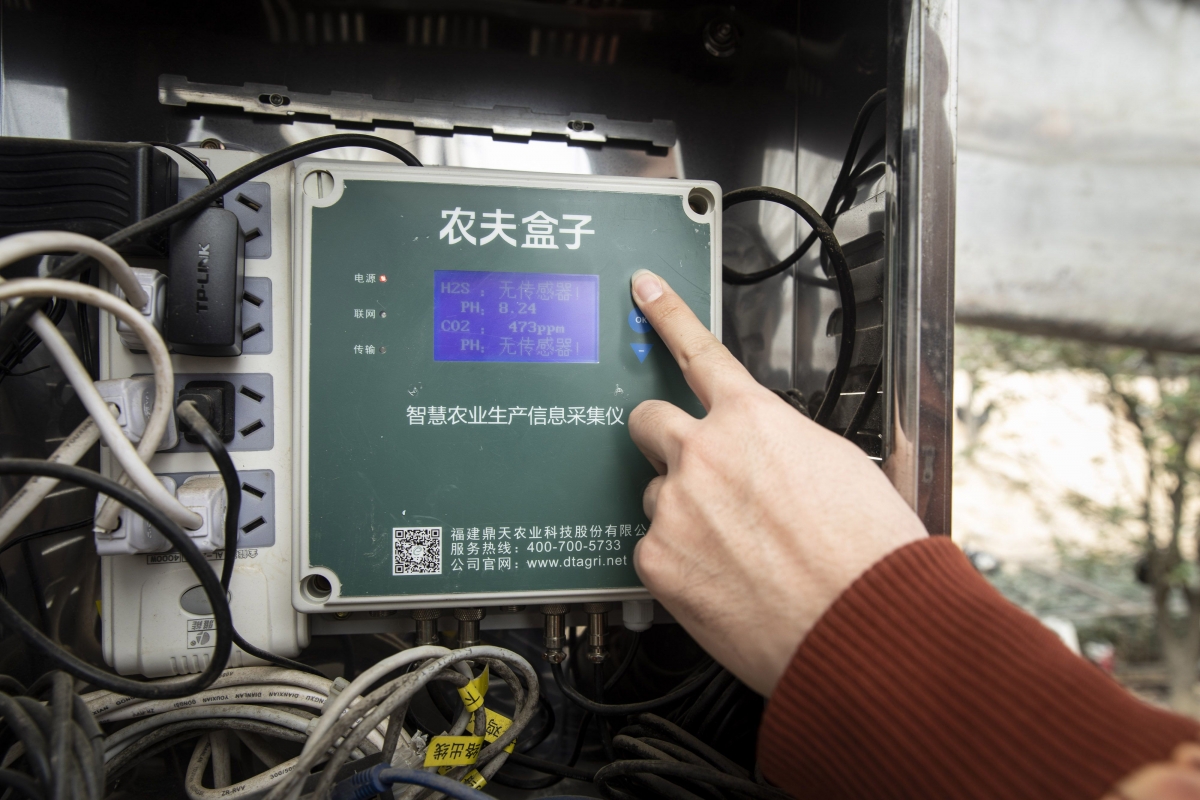
The grower has also deployed street lamp-like devices that monitor air temperature, humidity and the level of toxic ammonia gas generated from bird waste, all displayed in real-time on a computer screen at his office. That has enabled Lei to expand production without hiring more workers — good news as average salaries in his village have almost quadrupled over the past decade.
A worker uses data link equipment at Fuxin Farm in Longyan, Fujian province, China, on Nov. 18, 2020. MUST CREDIT: Bloomberg photo by Qilai Shen
In the eastern province of Shandong, peach farmers increased revenue by 50% last year after using JD’s blockchain technology to encrypt each step of the planting process and increase trust and transparency, attracting consumers long weary of food scandals from tainted milk powder to imitation eggs.
“The improved efficiency and the economies of scale will drive down costs while higher-quality produce will yield better prices,” said Charlie Chen, head of consumer research at China Renaissance in Hong Kong. This will benefit both farmers and the e-commerce operators, he said.
Pinduoduo, which raised $6.1 billion in November in part to finance its agricultural innovations, is counting on these efforts to help it quadruple sales of farm products to 1 trillion yuan by 2025. The company expects the initiatives to help it diversify beyond online retail, as it aims to license cutting-edge farming technology down the road, according to David Liu, vice president of strategy.
Many of these initiatives are still in their infancy and scaling up will take time, as farmers have only recently started to collect data — the foundation of running AI and other next-generation technologies — and test new methods of growing. But the twin drivers of surging demand for online produce and Beijing’s push for self-sufficiency in food supplies means the tech behemoths’ forays into modernizing China’s farms have only just begun.
“Smart agriculture is really the way to move forward,” said Lei, the chicken farmer. “We all have to innovate.”
China urged the Biden administration to take steps to “build up goodwill,” including removing tariffs and sanctions, as Beijing continued to put the onus on Washington to repair their fractured relationship.
Chinese Foreign Minister Wang Yi told a forum Monday in Beijing that the two sides should reopen dialogue platforms cut off under former President Donald Trump and back away from some of the previous administration’s policies. He reiterated the need to remove “unreasonable tariffs,” abandon “irrational suppression” of China’s technology progress, and cited curbs on Chinese media and students as another issue of concern.
“Under the current circumstances, the two sides may start from easier things, interact actively and build up goodwill,” Wang said, adding that Beijing and Washington were still capable of “getting big things done” for the world. “We hope that the U.S. side will adjust its policies as soon as possible.”
The speech represents China’s most high-profile comment on ties since U.S. President Joe Biden and China’s Xi Jinping spoke by phone before the Lunar New Year holiday earlier this month. While both sides want to stabilize a relationship shaken during Trump’s term, Biden has signaled a desire to maintain many of his predecessor’s China policies.
As China waits for the U.S. to make a first move, the Biden team has been making efforts to rebuild bonds with America’s partners. On Friday, the president urged U.S. allies to uphold democracy, warning that the world faces an “inflection point” in history that could result in a tilt toward autocracy. While a Feb. 19 readout from the Group of Seven industrialized nations’ meeting offered little detail on China, leaders discussed the country “at length,” Bloomberg News reported, citing a European Union official with knowledge of the conversation.
Other speakers at Monday’s event included Hank Paulson, the former U.S. treasury secretary, Kevin Rudd, the former Australian prime minister and Maurice Greenberg, former chairman and CEO of American International Group Inc.
Paulson said it falls on both countries to work to improve ties. “The U.S. and China must decide how and where to compete and how to avoid conflict,” he said. “If we don’t, the world will be very dangerous place.”
In his call with Xi, Biden expressed concern about what he said were China’s coercive and unfair economic practices” as well as human rights abuses in the Xinjiang region. Xi cautioned Biden against interfering in what it considers its own internal affairs and urged the U.S. help reestablish communication mechanisms to avoid misunderstanding and miscalculation.
Wang’s comments Monday about easing visa pressure on Chinese students and media, which echoed remarks by top Chinese diplomat Yang Jiechi earlier this month, pointed to one possible area of compromise. Biden’s Indo-Pacific coordinator Kurt Campbell said in January that the U.S. could reverse such actions to build confidence with China.
“From China’s perspective, the responsibility of deterioration in China-U.S. relations during the Trump administration lies mainly with the U.S.,” said Zhou Qi, director of Institute of Global Governance and Development at Tongji University. “To get the ties back on track, the U.S. needs to change its attitude first.”
InternationalFeb 23. 2021A social-distancing floor marker sits in a classroom at All Saints Catholic College in Manchester, England, on Sept. 1, 2020. MUST CREDIT: Bloomberg photo by Anthony Devlin
By Syndication Washington Post, Bloomberg · Emily Ashton, Alex Morales
British Prime Minister Boris Johnson declared the end of the pandemic is “in sight” for England as he set out his aim to ease lockdown rules in a series of stages over the next four months.
Johnson detailed a four-step plan that will reopen schools from March 8, outdoor hospitality from mid-April and sports stadiums by mid-May. From June 21 all remaining businesses, such as nightclubs, will resume operations and rules on social contact will be scrapped.
The premier warned that his blueprint for a return to normality depends on keeping the virus under control. More deaths will inevitably follow the ending of lockdown but if infection rates surge dramatically again, restrictions will have to stay, he said.
“This road map should be cautious but also irreversible,” Johnson told members of Parliament in London. “The end really is in sight and a wretched year will give way to a spring and a summer that will be very different and incomparably better than the picture we see around us today.”
While U.K. leisure and travel stocks jumped as Johnson revealed his timeline, he is already facing pressure to move faster after the economy endured its deepest recession in more than 300 years. Chancellor of the Exchequer Rishi Sunak will announce more support for pandemic-hit businesses in his budget next week.
England has been under lockdown since early January, and even under Johnson’s plan, government guidance asking people to work from home where possible will remain in place at least until June 21, when social distancing measures will be reviewed.
Each move will be taken uniformly across England, with authorities in Scotland, Wales and Northern Ireland making their own plans.
The government said there must be a five-week gap between the key stages in the plan to allow officials to evaluate the impact of relaxing the rules on the spread of the virus before moving on to the next step. Further easing will depend on the vaccine program working, hospitals remaining safe from a surge in cases, and new strains not threatening to increase the risks.
There will be a review of social distancing measures such as face coverings, and a task force will be set up to explore how to enable more international travel while managing the risk of new variants entering the country. Johnson also announced a review into whether proof of vaccines could be used to give people access to venues or workplaces domestically, having acknowledged that such documentation would likely be necessary for travel to certain countries.
“There may well be a role for certification. We just need to get it right,” he said at a press conference on Monday. “There are clearly some quite complex issues, some ethical issues about discrimination and to what extent government can either compel or forbid use of such certification.”
With cases and deaths now falling rapidly, an influential group of Conservative backbenchers wants to see all restrictions lifted by the end of April.
Johnson’s predecessor, Theresa May, welcomed the return of pupils to schools but urged him to move faster to open up the aviation industry. Former Conservative leader Iain Duncan Smith also urged Johnson to reopen the hospitality sector more quickly.
Falling case numbers and a significant acceleration of the U.K.’s vaccination program have fueled calls to lift the curbs. All adults are due to be offered a vaccine shot by the end of July and everyone over 50 by mid-April. More than 17.7 million people have had a vaccine so far.
Still, Johnson’s top medical and scientific advisers used a televised press conference to warn the public that the fight against the virus will outlast the government’s lockdown exit plan. Chief Scientific Officer Patrick Vallance said it may be necessary to wear face masks next winter, while Chief Medical Officer Chris Whitty said coronavirus will be a risk to vulnerable members of the population for the foreseeable future.
“We cannot persist indefinitely with restrictions that debilitate our economy, our physical and mental well-being, and the life-chances of our children,” Johnson said. “We are setting out on what I hope and believe is a one-way road to freedom.”
It’s only February, but it feels like May in Beijing. Temperatures some 40 degrees above normal brought historically warm winter weather to China, Japan and other parts of Asia over the weekend.
Beijing’s temperature shot up to 78 degrees Sunday, its highest temperature ever observed between December and February by 10 degrees.
“Record pulverized,” wrote Maximiliano Herrera, a climate historian known for meticulously keeping track of temperature extremes across the world. He noted that Sunday’s reading surpassed previous marks for warm weather in each of the three core winter months. The December record stands at 57.7 degrees, with 58.4 degrees the record for January.
The springlike weather began in Beijing on Saturday, when the mercury soared to 69.4 degrees Fahrenheit, the first time on record the city has climbed above 20 degrees Celsius (68 Fahrenheit) during the month of February. That set a new record, beating out the high of 67.6 degrees observed on Feb. 13, 1996. Then it hit 78 degrees the next day.
Breaking a record alone is rare, but to do so by 10 degrees is virtually unheard of; usually records fall by margins of only a fraction of a degree.
The warmth seen in Beijing would be the equivalent of New York climbing into the mid-80s, or Denver or Washington, D.C., flirting with 90 in late February.
The situation bears resemblance to the extreme heat wave that swallowed Europe in July 2019, when temperatures in Paris and Germany climbed to 109 degrees and in Belgium and the Netherlands to 107. Records then fell by between 3 and 6 degrees.
The extreme February temperatures in eastern China were preceded by a pair of national records in Mongolia. The country set an all-time February record on Friday in Tsetserleg, a city in central Mongolia, when a high temperature of 59.7 degrees was measured. The previous record of 58.4 degrees was set in 1992 in Dalanzadgad, farther to the southeast.
That same newly-claimed record was edged out on Saturday when Hanbogd in south central Mongolia popped up to 60.4 degrees.
Temperatures in Mongolia are usually cooler than in China. Mongolia is farther north and has a cool desert or semi-aid climate; winters can feature Arctic cold down to minus-70 degrees. Mongolia is the 18th largest country in the world but has a population just over 3.2 million.
According to Herrera, the extreme heat in Asia can be traced back to Europe. He tweeted that Uzbekistan nicked 90 degrees on Thursday.
While affecting China, the same warm air mass spread to Japan and the Korean Peninsula over the weekend. One hundred-and-nine cities in Japan observed new February temperature records. South Korea enjoyed unusually mild temperatures too.
The record warmth in Japan is a sharp departure from early January when the country saw a barrage of ocean-effect snowstorms that each produced mind-boggling totals of up to 7 feet.
The anomalous warmth was a product of both surface and upper-air features that overlapped to push much of Asia into record territory. A ridge of high pressure at the mid levels brought sinking motion and clear skies, favoring warm weather. Similarly, surface high pressure reinforced the sunshine, while also inducing a channel of warm, southerly winds that pumped in a toasty air mass from the south.
In addition, the air was dry, allowing for it to warm up more easily. That meant balmy daytime highs along with big nighttime temperature fluctuations. While Beijing soared to near 80 on Sunday, it started the day in the upper 30s.
The heat in Asia can be tied to the same northern hemispheric weather pattern that brought historic cold and snow to Texas. It’s a high amplitude pattern, meaning the jet stream is extra wavy. Over the United States, the jet stream dove southward, allowing a tongue of cold air to spill down across the central Lower 48. That same jet stream screamed north over Europe, with the resulting ridging of high pressure to its south introducing atypical mildness.
Beijing should see a return to more seasonable weather Tuesday and Wednesday with temperatures in the 40s. An additional warm-up is possible late week.
India wields colonial-era sedition law to detain farm protesters
InternationalFeb 23. 2021A police officer in riot gear stands guard beyond razor wire coils along a highway in Ghazipur on the outskirts of New Delhi, India, on Feb. 6, 2021. MUST CREDIT: Bloomberg photo by Anindito Mukherjee
By Syndication Washington Post, Bloomberg · Archana Chaudhary, Bibhudatta Pradhan, Sudhi Ranjan Sen
In its struggle to quell unrelenting farmer protests, Prime Minister Narendra Modi’s administration is using a colonial-era sedition law that has been used to lock up dissidents often without bail while they await trial — sometimes for years.
Delhi police this month arrested environmental campaigner Disha Ravi, 22, at her home in the southern city of Bangalore for editing and sharing a “tool kit” tweeted by teenage climate activist Greta Thunberg in support of the farmers. Police said the document aimed to “spread disaffection against the Indian state” in a tweet that tagged the prime minister’s office.
Ravi joined at least seven others hit with similar charges since the farmer protests began almost three months ago, including a former foreign minister, journalists, authors and academics, part of a growing number of sedition cases under Modi. The total number of cases has risen from 43 when he first took office in 2014 to more than 100 each of the past two years, according to research group Article14. Since multiple individuals can be charged in one case, it said, the number of people affected stretches into the thousands.
A relic of the British colonial government once used against Mahatma Gandhi, India’s 19th-century sedition statute gives police broad powers to make arrests ahead of filing formal charges if an act or speech by an individual is “regarded to be disloyal to or threatening to the state.” The maximum penalty can be a life term in prison.
Still, many cases rarely even reach that stage: Only 10 people have been convicted under the law in the five years to 2019, according to data presented to parliament. For the government, the real use of the law is the ability to deny bail and keep people locked up for years while their cases trudge through the court system.
“The process is truly the punishment now,” said Lubhyathi Rangarajan, head of the sedition database of Article 14. “Cases are being filed at multiple places, arrests made, remand periods extended and bail denied.”
The farmers — many of them Sikhs from the northern states of Punjab and Haryana — want Modi to repeal three laws passed in September that allow them to sell crops directly to private firms instead of licensed middlemen at state-controlled markets. While Modi has said the laws will help them earn more cash, farmers fear those companies won’t give them minimum prices set by the government.
Members of the ruling Bharatiya Janata Party have alleged the protesters have connections to a Sikh separatist movement dating back to the 1980s, and Delhi Police also linked Ravi’s arrest to connections with those groups. Her family or lawyers couldn’t be reached for comment. Protest leaders have repeatedly denied any links to separatists.
Farmers sit inside a tractor trailer at a protest site at a roadblock on the Delhi-Haryana border crossing in Singhu, Delhi, India, on Dec. 3, 2020. MUST CREDIT: Bloomberg photo by Prashanth Vishwanathan
The protests were largely peaceful until Jan. 26, when a rally on India’s Republic Day led to clashes that left one demonstrator dead. Since then police have put cement barricades and razor wire around the protest sites, while using targeted internet blackouts that have drawn criticism from the U.S. State Department. Some 152 people have been arrested over the clashes apart from the sedition charges, according to reports.
Celebrities have weighed in on behalf of the farmers, including Thunberg, pop singer Rihanna, actress Susan Sarandon and Meena Harris, the niece of U.S. vice president Kamala Harris. The government has dismissed the international reaction as “vested interests” trying to “mobilize international support against India.”
“Suddenly, activists are being villainized and journalists harassed,” said Vinod Jose, executive editor of The Caravan magazine who was among six journalists charged with sedition, along with former minister and opposition lawmaker Shashi Tharoor. “The jailing of civil liberties activists in the last three-four years have shown us the decline in freedom of press and rule of law.”
While the U.S. has criticized the internet blackouts, President Joe Biden has a “delicate balancing act” given India has become a key partner on issues such as climate change and countering China in the Indo-Pacific, said Akhil Bery, Washington-based South Asia analyst at risk consultancy Eurasia Group.
“If the Modi government continues to arrest activists for nonviolent protests, pressure will grow on the Biden administration to address this more publicly,” he said.
Impeachment is over, but other efforts to reckon with Trump’s post-election chaos have just begun
InternationalFeb 22. 2021People pray outside the Wisconsin Capitol in Madison on Dec. 14, 2020, in a protest of the presidential election results. MUST CREDIT: Photo for The Washington Post by Darren Hauck
By The Washington Post · Rosalind S. Helderman
WASHINGTON – The state of Michigan and the city of Detroit have asked a federal judge to sanction attorneys who filed lawsuits that falsely alleged the November vote was fraudulent, the first of several similar efforts expected across the country.
An Atlanta-area prosecutor has launched a criminal investigation into whether pressure that then-President Donald Trump and his allies put on state officials amounted to an illegal scheme to overturn the results of the presidential election.
And defamation lawsuits have been filed against Trump’s allies – the start of what could be a flood of civil litigation related to false claims that the election was rigged and to the subsequent riot at the U.S. Capitol on Jan. 6.
Although Trump was acquitted by the Senate on a charge that his rhetoric incited the deadly Capitol siege, public officials and private companies are pursuing a multifront legal effort to hold him and his allies accountable in other ways. The actions target the former president and numerous others – including elected officials, media pundits and lawyers – who indulged and echoed his falsehoods that Joe Biden did not win the election.
The goal, according to lawyers and others supportive of such efforts, is to mete out some form of punishment for those who helped undermine confidence in the election results and fueled the Jan. 6 attack on the Capitol. But even more, they said they hope to discourage other public officials from rerunning Trump’s strategy of attempting to overturn an election result by sowing doubt about the legitimacy of the vote.
“There has to be some consequence for telling these lies – because when you lie to people, they take action based on what they think is true,” said Philadelphia Commissioner Al Schmidt, a Republican who received threats after false allegations of fraud in the counting of the city’s votes. “Because it’s such a dangerous new thing that occurred, there has to be some reconciliation. Moving on isn’t enough.”
A federal judge in the District of Columbia late Friday referred one lawyer for possible disciplinary action. It’s not yet clear how far courts will go in pursuing sanctions against lawyers who may have believed in their own conspiracy theories, or whether prosecutors will ultimately bring criminal charges related to the election. The civil litigation could linger for years.
One side effect of the endeavors: They could provide new forums for Trump and his allies to showcase their false claims about the vote in 2020.
Former New York mayor Rudy Giuliani, who served as Trump’s lead post-election attorney and who is the target of several of the lawsuits that have been filed, said in a text message that he sees the court actions as “an opportunity” to defend his claims. Or, as he wrote, “it will give me a chance to get the truth past the Iron Curtain of Big Tech and Most Media censorship.”
A spokesman for Trump did not respond to a request for comment.
The most serious ongoing legal actions involve criminal inquiries. More than 225 people have been charged with various crimes directly related to storming the Capitol on Jan. 6. Justice Department officials have said they do not expect to file criminal charges against Trump or others who gave incendiary speeches in Washington that day before the violence, but they also said that the case is complex and that the investigation ongoing.
Even without charges against the former president, several lawyers representing alleged rioters have signaled that they plan to argue that their clients were merely following what they believed were Trump’s directions that day – meaning there could be lengthy legal wrangling over Trump’s culpability.
Meanwhile, one local prosecutor is directly examining whether Trump and his allies broke state laws when they sought to overturn the results in Georgia.
Fulton County District Attorney Fani Willis sent a letter this month to various state officials indicating that her office is examining a variety of criminal charges related to “attempts to influence” the 2020 election.
In December, Trump called Georgia’s top state elections investigator and asked the person to “find the fraud.” Then, in a recorded phone call in January, Trump pressured Georgia’s secretary of state, Republican Brad Raffensperger, to “find” enough votes to reverse Biden’s win in the state.
Another front could open up in Wisconsin, where a recount confirmed Biden’s victory.
Last week, lawyers representing the state council of the Service Employees International Union sent a letter to Milwaukee County District Attorney John Chisholm, a Democrat, requesting a criminal investigation into whether laws were broken when 10 would-be Wisconsin electors sympathetic to Trump met behind close doors at the state Capitol on Dec. 14 and tried to appoint themselves as the state’s representatives to the electoral college.
The group signed illegitimate certificates of election and sent the fake documents to federal and state officials, proclaiming that Trump had won the state’s electoral votes.
Their actions came as Wisconsin’s governor on the same day convened Biden’s electors in an open ceremony elsewhere in the Capitol, as prescribed by state law, to formally give the state’s votes to Biden and Vice President-elect Kamala Harris.
The union identified six Wisconsin laws it says the would-be Trump electors may have broken, including prohibitions on forgery and falsely assuming to act as a public officer.
“Some of this is about trying to bring bad actors to account,” said Jeffrey Mandell, an attorney representing the union. “But the bigger part is trying to make sure we never go through something like this again. We have seen an intensification from election to election of how far people are willing to push these issues. And we need it to stop.”
The Milwaukee County District Attorney’s Office did not respond to a request for comment, nor did a spokesman for the Wisconsin Republican Party, which was involved with organizing the Trump elector effort. Party Chair Andrew Hitt was one of the 10 people purporting to be Trump electors.
Meanwhile, a variety of groups and individuals who say they were harmed by lies told about the election are pursuing lawsuits.
On Tuesday, Rep. Bennie Thompson, D-Miss., chairman of the House Homeland Security Committee, sued Trump, Giuliani and members of two extremist groups, arguing that their rhetoric caused the Jan. 6 riot in violation of an 1871 law that bars violent interference in the performance of Congress’s duties. Thompson is being represented by the NAACP, which said other members of Congress are expected to join.
Trump spokesman Jason Miller has rejected the effort, saying in a statement that “the facts are irrefutable” that Trump “did not incite or conspire to incite any violence at the Capitol on Jan. 6th.”
Separately, two election technology companies are pursuing multibillion-dollar defamation suits against various Trump allies, alleging that they repeatedly told lies about the companies’ products in the weeks leading up to Jan. 6.
Dominion Voting Systems, one of the two companies, has filed twin $1.3 billion defamation suits against Giuliani and another lawyer, Sidney Powell, who together promoted false claims that the company’s voting machines were somehow manipulated to swing the election to Biden.
Dominion lawyers have said they plan to file similar action against Mike Lindell, a leading Trump supporter who is the chief executive of the company My Pillow, and the lawyers have sent letters warning of potential litigation to dozens of others, including the Trump campaign.
Lindell has said he would welcome a lawsuit that might result in discovery and allow him to press his allegations against Dominion.
Giuliani has accused the company of using the suit “to wipe out and censor the exercise of free speech” and has likewise said the lawsuit will give him an opportunity to litigate his assertions about the election.
Dominion has claimed in court documents that Powell “evaded” service of its suit, forcing it to pursue her across state lines. In an email, her attorney Howard Kleinhendler called that claim “false,” indicating that she had been traveling frequently for work and was facing security threats but had not been avoiding the lawsuit.
A second company, Smartmatic, which has said that during the November election it operated in only one U.S. county, a jurisdiction in California, has filed a $2.7 billion lawsuit against Fox News and several of its prominent commentators, as well Giuliani and Powell. Smartmatic says the commentators and lawyers used the network to propagate wild lies, including falsely claiming the company had been founded by Venezuelans close to former leader Hugo Chávez.
Kleinhendler called the lawsuits “empty, self-serving publicity stunts and pathetic attempts at obscene and unfounded damages claims” and said Powell looked forward to defending herself in court.
The lawsuits are turnabout for Trump and his allies, who filed more than 60 lawsuits after the election, challenging the results in various states. They lost all the suits but one in Pennsylvania that affected few ballots.
Judges in some of those suits are considering requests to sanction the pro-Trump lawyers, either through monetary penalties or by referring them for disciplinary action in the states where they hold their law licenses.
Federal rules prohibit lawyers from filing frivolous suits or from using litigation for improper purposes such as to harass or delay. Lawyers also are not allowed to lie in court.
The purpose of the rules, said Stephen Gillers, a professor at New York University’s law school and an expert in legal ethics, is to discourage bad practices: “Lawyers should not bring garbage complaints to the court and take up valuable court time. Judicial time is limited – it’s a valuable resource.”
Detroit was the first formally to request sanctions, filing a motion in December asking U.S. District Judge Linda Parker to assess monetary fees against Powell, Lin Wood and several others involved in a case that had challenged Michigan’s presidential election results.
In ruling against the Trump allies at one stage of the litigation, Parker had called the suit “stunning in its scope and breathtaking in its reach” and an attempt to “disenfranchise the votes of the more than 5.5 million Michigan citizens who, with dignity, hope, and a promise of a voice, participated in the 2020 General Election.”
In January, Detroit also asked Parker to initiate a process that could prevent the lawyers from being able to work in Michigan courts. Michigan Gov. Gretchen Whitmer and Secretary of State Jocelyn Benson, both Democrats, have asked the judge to sanction the lawyers. The two officials, along with Michigan Attorney General Dana Nessel, a Democrat, have written letters to state bar associations requesting grievance proceedings against the lawyers.
“Attorneys who use their license to fuel the fires of insurrection have no right to run and hide when their battle is lost,” said David Fink, a Detroit-based lawyer representing the city in the case. “They chose to misrepresent the facts to the court and participated in a scheme to persuade millions of Americans that this was not a free, fair and open election. They have to be held accountable for what they’ve done.”
In a filing this month, attorney Stefanie Lambert Junttila, representing the pro-Trump lawyers, called the request for sanctions “baseless,” “procedurally improper” and “an attempt to create a dangerous precedent that could dissuade future civil rights and voting rights plaintiffs from bringing their disputes to court.” (She also argued that Powell should not be sanctioned because she had not actually signed documents that were filed in the case under her name.)
Kleinhendler, also a lawyer for Powell, said there was “no credible basis” that any ethics complaint could stand against her and said she had practiced “with the highest professional legal integrity” throughout her career, which included a stint as a federal prosecutor in Texas.
Similar motions for sanctions could be forthcoming in other states where Trump and his allies challenged election results in court.
In Wisconsin, Gov. Tony Evers, a Democrat, said in a statement to The Washington Post that state officials will “absolutely” be seeking attorney fees from and sanctions for the Trump lawyers. “These lawsuits had no basis in the law or reality, and they were an attack on our democracy. There needs to repercussions for this reckless, dangerous behavior,” he said.
No sanction motions have been filed in Pennsylvania, where Giuliani appeared in court to argue Trump’s case, but a spokeswoman for Attorney General Josh Shapiro, a Democrat, said, “We have made it clear there will be accountability for those who filed and defended those meritless claims regarding the Pennsylvania election.”
“We saw the horrific consequences that ensued on January 6th as a result of these baseless attacks designed to undermine faith in our election process,” she added.
In D.C., Judge James Boasberg of the U.S. District Court initiated possible sanctions without any formal request. Late Friday, he formally referred Minneapolis-based lawyer Erick Kaardal to an attorney grievance committee for an investigation into Kaardal’s conduct over a last-ditch lawsuit filed in December seeking to stop Biden from taking office.
The suit, in which Kaardal was representing a conservative group called the Amistad Project, was filed against then-Vice President Mike Pence, both houses of Congress, the leaders of five states and the electoral college – a body that does not exist as a permanent entity.
In his order, Boasberg identified a variety of problems with Kaardal’s suit and added that the lawyer had sought a “staggering” outcome – to invalidate a presidential election. “When any counsel seeks to target processes at the heart of our democracy, the Committee may well conclude they are required to act with far more diligence and good faith than existed here.”
A lawyer for Kaardal had argued earlier this month against the move, writing that Kaardal had acted in good faith and that disciplinary action would have a “chilling effect” on future litigants who assert similarly good-faith arguments in challenging existing law.
Separately, Wood, who worked closely with Powell, has said he has been alerted by the State Bar of Georgia that it is considering disciplinary action against him – which could result in the suspension or revocation of his law license. An official of the Georgia bar association declined to comment, citing the confidentiality of the process, as did an official with the bar association in Texas, where Powell is licensed.
“The false attacks are propaganda intended to smear my good name,” Wood said in an emailed statement. “The enemy wants me to stop speaking truth. I will not be stopped.”
There also is an effort to seek sanctions in New York, where Gillers, the NYU law school professor, helped draft a complaint asking state courts to investigate Giuliani’s conduct, potentially to revoke his license to practice law in the state.
Gillers noted that New York state has an especially stringent rule that prohibits lawyers from engaging in “conduct that adversely reflects on the lawyer’s fitness as a lawyer.” Although the disciplinary process can take three to four years to resolve, he said the court has the option to suspend a lawyer’s license on an interim basis if that lawyer is deemed a threat to the public interest. He said Giuliani could be a candidate for that kind of drastic action.
“He spent months as the titular head of the Trump legal challenges, bringing useless cases and publicly claiming that the election was fraudulent, thereby creating confusion,” he said. “I believe he knew it – or should have known it – and I think that behavior, across many months and after many losses both in court and in public opinion, adversely reflects on his fitness as a lawyer.”
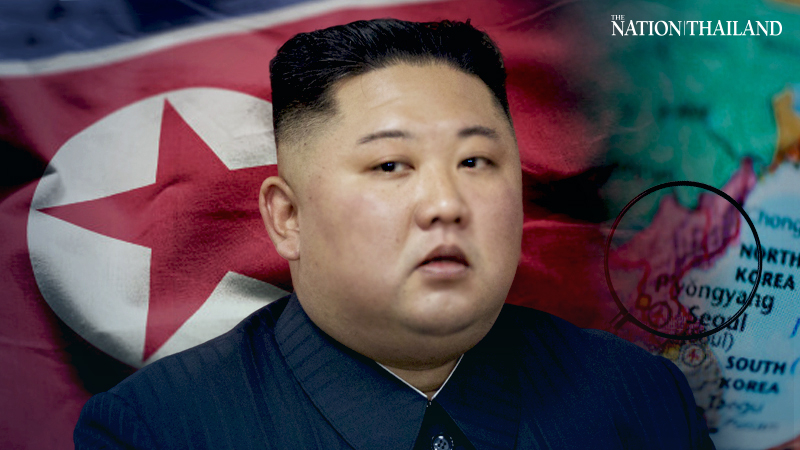
TOKYO – Kim Jong Un is angry, and he’s lashing out.
North Korea’s last economic plan failed “tremendously,” he complained. And his inner circle lacked an “innovative viewpoint and clear tactics” in drawing up a new one, Kim told the ruling Workers’ Party last month, yelling and finger-pointing at frightened-looking delegates.
His economy minister, appointed in January, has already been fired.
It’s not altogether surprising. North Korea is suffering its worst slump inmore than two decades, experts say. It’s a combination of international sanctions and especially a self-imposed blockade on international trade in attempts to keep the coronavirus pandemic out.
A shortage of spare parts usually supplied from China has caused factories to close, including one of the country’s largest fertilizer plants, and crippled output from the country’s aging power plants, according to news reports. Electricity shortages, long a chronic problem, have become so acute, production has even halted at some coal mines and other mines, Kim himself admitted in mid-February.
“Without imported materials, raw materials and components, many enterprises stopped, and people, accordingly, lost their jobs,” Alexander Matsegora, the Russian ambassador to North Korea, told the Interfax news agency.
The economic pain is unlikely to threaten Kim’s regime or force any retreat in North Korea’s standoff with the United States and allies over Pyongyang’s nuclear program. Nor should it lead to famine – as it did in the 1990s, when hundreds of thousands of people died – partly because food production and distribution has improved in the past decades and ally China would probably come to North Korea’s rescue, experts say.
But it does presage more pain and misery for millions of ordinary North Koreans.
Even in the capital Pyongyang, the regime’s bastion and home to its elite, shelves have emptied and it’s difficult even to buy basic products such as pasta, flour, vegetable oil and sugar, Matsegora said, as well as suitable clothes and shoes.
“If you manage to get something, it is three to four times more expensive than before the crisis,” he told Interfax.
But Kim’s response to the crisis risks appears to be making the situation much worse.
Andrei Lankov, a Russian university professor based in Seoul, called it a “dramatic U-turn.” Kim has turned his back on even modest economic and market reforms and reverted back to de facto Leninism, emphasizing central planning while trying to clamp down on the private entrepreneurial activity that has become a mainstay of the country’s mixed economy, he said.
In speeches to the ruling party, Kim demanded the restoration and strengthening of the system under which the economy runs “under the unified guidance and management of the state,” putting special emphasis on metal and chemical industries as the “main link in the whole chain of economic development.”
Kim also announced plans to expand state control of society, clamp down on foreign culture and media, and launch a “powerful mass campaign against practices running counter to the socialist lifestyle.”
Benjamin Katzeff Silberstein, a nonresident scholar at the Stimson Center foreign policy think tank, said Kim is unwilling to undertake serious reforms to the state-controlled system.
“The only thing left is to blame officials for not doing their jobs properly,” he said, “as if a more competent official would be able to work within the system and make it more efficient – whereas, in fact, it’s the system itself that’s the problem.”
North Korea’s economic managers are largely flying blind, without even the reliable data they would need to run a command economy, said Kim Byung-yeon, an economics professor at Seoul National University.
The few clues he can glean suggest cement production has fallen by 25 percent since 2016, while interviews with defectors suggest household incomes declined a similar amount between 2017 and 2019. The overall economy may have contracted by 20 percent since 2017, he “guesstimates.”
In rural areas, there are many days when households only get two hours of electricity, the Seoul-based Daily NK news service reports, while fertilizer shortages could compound an already shaky food situation.
But it’s the scarcity of goods in Pyongyang and possible discontent among the elites that will have Kim more worried, experts say.
His attempt to reimpose state control of the economy may partly be driven by a desire to corral what limited resources are there. But it also could be simply driven by insecurity.
“To make a Stalinist economy work these days is pretty much as hopeless as teaching pigs to fly,” Lankov said. “He probably understands that, but he also feels insecure about losing control. He decided that, in the days of crisis, he should increase control over the economy and population.”
Lankov noted that Kim’s father, Kim Jong Il, oscillated among turning a blind eye to private enterprise, actively promoting market reforms and reverting to state control during his rule. It now appears his son may be following the same path.
“I used to believe Kim Jong Un would be different from his father,” he said. “I didn’t expect him to surrender his nuclear weapons or pursue political liberalization, but I did expect him to pursue economic liberalization.”
Ever since the 1990s, North Korea has allowed a degree of private enterprise as the only way to prevent total economic collapse, allowing traders to sell food and consumer goods in markets, and other people to run small businesses. Since taking power, Kim had quietly expanded these freedoms in measures “that were clearly copied from China in the 1980s,” Lankov said.
Now, Kim’s apparent swing back toward central planning and the “juche” philosophy of self-reliance is unrealistic in an economy that was dependent on trade with China, experts say.
“The economy was quite open before sanctions,” said Seoul National University professor Kim. “He is trying to encourage people by saying they can overcome the crisis by the juche ideology. But if he really tries to implement it, it will worsen the economic situation.”
The crisis is partly self-inflicted, driven by what Katzeff Silberstein calls a “remarkable paranoia” about the coronavirus pandemic that saw the regime not only block the movement of people across its border with China – with armed guards told to shoot on sight – but also block the movement of goods.
Despite the crisis, Lankov said, North Korea’s diplomatic calculus is unlikely to change, and certainly won’t induce Kim to go cap-in-hand to Washington or Seoul for help.
Kim is never going to surrender his nuclear weapons, which he considers essential for the survival of his regime and his family, Lankov said.
“Kim Jong Un basically wants to negotiate the partial or complete removal of sanctions, but at a limited cost,” he said. “Denuclearization is not acceptable to the North Koreans, and so if the Americans only want to talk about denuclearization, it means nobody is going to talk to them.”
By The Washington Post · Sarah Dadouch, Nader Durgham
BEIRUT – The Lebanese judge leading the investigation into the August explosion that tore through Beirut had set his sights on the caretaker prime minister and three former ministers, charging them with negligence for ignoring the highly combustible material stored for six years on the waterfront.
But when two of the former ministers filed a complaint, alleging Judge Fadi Sawan had demonstrated a lack of neutrality by charging prominent figures to appease the public, he was dropped last week from the case. The Lebanese court that dismissed Sawan further questioned whether he could be impartial because his own home had been damaged in the blast – like those of hundreds of thousands of other Beirutis.
More than six months after the explosion, which killed more than 200 people, injured more than 7,500 others and devastated large portions of the capital, the official investigation is struggling to break through Lebanon’s culture of corruption and political influence to hold anyone of consequence accountable.
Sawan had already brought charges against 33 people, placing 25 of them in detention, but most were low-level customs, port and security officials.
When he summoned caretaker Prime Minister Hassan Diab and two former ministers for questioning as defendants, they refused, claiming immunity from prosecution as public officials.
Throughout his investigation, Sawan had focused on a question that has gripped much of Lebanon since August: Who was responsible for allowing 2,750 tons of ammonium nitrate to be stored haphazardly in a warehouse, alongside fireworks and paint thinners, on the edge of a crowded city?
“I believe there was purposeful negligence,” Diab said in an interview earlier this month at the Grand Serail, the prime minister’s offices. Most of their windows were still covered with tarps, the glass yet to be replaced after it was shattered in the blast. “A blind eye has been turned for seven years,” he added. Diab resigned after the blast but holds the role of caretaker prime minister until a new government is formed.
Although Diab has refused to be interrogated as a defendant, Sawan had succeeded in questioning him previously as a witness, and the focus had been on when he had first learned about the storage of the ammonium nitrate in Beirut. Diab, during the interview with The Washington Post, laid out the timeline he had provided under questioning, saying he initially heard about the material on June 3 of last year and brought the matter to the attention of the appropriate ministers. Diab said he had not realized how dangerous the material was.
Government documents reviewed by The Washington Post show that officials were well aware of the dangers posed by the large chemical stockpile long before last year. The documents reveal that responsibility for the ammonium nitrate was for years passed among different public and private entities, including the Public Works and Transportation Ministry, the judiciary, the army and even a private explosives company.
At least since 2015, a chemical expert made officials aware of the hazard of storing the chemicals at the port, and officials were advised to move the material out of the port.
A report by Lebanon’s national security agency, which was sent to Diab two weeks before the explosion after he requested an assessment of the shipment, cited the expert at Lebanese University who had examined the material and warned, “if ignited, (it) would cause a massive explosion, one of whose results would cause the semi-destruction of Beirut’s port.”
Sawan’s investigation had largely set aside questions surrounding how the ammonium nitrate arrived at the port and what caused the material to explode, according to Diab and lawyers who spoke to Human Rights Watch. The ownership of the ammonium nitrate remains unclear, as does how it ended up on a ship in Beirut’s port in 2013. Local media have been probing a series of shell companies allegedly involved with the shipment.
While officials across sectarian and political lines have been calling for accountability, many of them rallied against Sawan once he charged the four senior officials in December. A week later, two of the former ministers he charged, Ali Hassan Khalil and Ghazi Zeaiter, filed a motion to the Court of Cassation to replace Sawan, and his investigation was paused. Khalil and Zeaiter have not addressed the merits of the charges against them, arguing instead that they are immune from prosecution.
The 26-page decision dismissing Sawan on Thursday said there was “legitimate suspicion” regarding his neutrality and impartiality, in part because the judge said he would not recognize the legal immunity claimed by the ministers. The question of how far legal immunity extends for public officials is hotly contested in Lebanon.
The decision also alleged that he covered up the failings of other judges, including at least one who had allegedly known about the dangers posed by the ammonium nitrate but did not act, and that Sawan could not maintain impartiality because his house was damaged in the blast.
Sawan has not made any public statements since being dismissed and did not respond to multiple requests for comment for this article.
On Friday, a new judge, Tarek Bitar, was appointed by the Minister of Justice to replace Sawan. Bitar will now have to restart the investigation.
“In a country dealing with decades of legal impunity and after months of pushing for the investigation to target high-level politicians, this is a major setback,” said Ghida Frangieh, head of litigation at the Legal Agenda advocacy group.
Sawan’s investigation was not without issues, said Aya Majzoub, a Lebanon researcher for Human Rights Watch. She said, for instance, that his use of pretrial detention of dozens of suspects without presenting specific charges or evidence against them violated their due process rights.
But Sawan’s removal is a sign of the “red line” courts have drawn around politicians, Majzoub said. “What this policy of immunity has done is make the political class completely, completely unaccountable, perpetuating the culture of impunity,” she said.
Immediately after the Aug. 4 explosion, tens of thousands of protesters angrily filled the rubble-and-glass-littered streets, demanding accountability. The protests pushed Diab to resign on Aug. 10. Three days later, Sawan was named as the judicial investigator.
Hours after Sawan’s removal was announced on Thursday, families of the victims gathered in front of the Ministry of Justice.
“The Lebanese state doesn’t do anything,” said Mona Jawish, whose daughter Rawan was killed when the blast tore through the popular bar where she worked as a waitress. “They don’t care about us. They don’t care about the martyrs. We are just here crying but (the politicians) only care about themselves.”
The protesters held photos of family members lost in the blast, a sea of printed faces gathered around a burning tire. Several held out a banner that somberly demanded: “We want the results of the investigation with transparency before our patience runs out.”
By The Washington Post · Reis Thebault, Paulina Firozi, Brittany Shammas
The cold has killed the young and the old. It has claimed lives from southern Texas to northern Ohio. And authorities expect the toll to rise in the coming days, with frigid weather lingering, hundreds of thousands without electricity and millions without clean water.
The two major winter storms that have plunged most of the United States into an Arctic chill have killed at least 58 people since Sunday, according to data compiled by The Washington Post. More than half of them – 32 – lived in Texas, where persistent power outages have exposed residents to bitter temperatures.
Texans are well-versed in hurricanes and heat waves, but snowstorms and frigid temperatures are rare. Last week’s weather was what some have called a once-in-a-generation event.
“It’s not unusual in July or August, in Fort Worth, anyway, to have stretches of days where it’s over 100 degrees,” said Matt Zavadsky, a spokesman for the area ambulance provider MedStar. “But we’re accustomed to that. We’re not accustomed to a string of days where it’s 3.”
The Post’s data includes deaths confirmed or suspected to be linked to the weather and its attendant hardships, and the true number is undoubtedly higher than what is known so far. Some first responders worry about what they’ll find in their next week’s worth of wellness checks.
In Taylor County, Texas, Sheriff Ricky Bishop said his officers have been checking on residents for days, delivering food and water and following up with them later to make sure they’re all right. Already, they’ve found three people dead.
“There’s definitely that possibility that over the next week or two we could find some more that we don’t know about right now,” Bishop said.
The identities of most victims still aren’t known. Authorities have confirmed the ages of fewer than half, but of those, 23 were 50 or older and six were 85 and older. Eight states have at least one confirmed death.
Some died while trying to keep warm. An early-morning house fire in Sugar Land, Texas, killed a woman and her three grandchildren as they were huddled near their fireplace.
Douglas Adolph, a spokesman for the city, said the exact cause of the fire is under investigation, but he noted that fireplaces in the area – where winter temperatures typically hover in the 60s – are not meant to burn for hours or heat a home.They tend to be “small and aesthetic in nature,” he said.
Where the weather is coldest, some resorted to risky, last-ditch attempts to escape the cold.
“It’s heartbreaking,” Harris County Judge Lina Hidalgo said in a news conference this week, tallying hundreds of 911 calls about gas poisoning. “This carbon monoxide poisoning is a disaster within a disaster.”
Others seem to have frozen to death. At least 17 people died of hypothermia or “exposure.” Some of them were among society’s most vulnerable.
Early Thursday, a man was found lifeless in a parking lot north of Houston. He was wearing a jacket with no shirt beneath, authorities said. He had no shoes and no socks.
About 350 miles northwest, in Abilene, another person was found dead whom the local fire chief described as “a transient” who had been sleeping outside.
Even those with shelter succumbed.
In rural eastern Kentucky, two elderly women from Ashland – a city of 20,000 on the banks of the Ohio River – died in 48 hours, both of hypothermia. One woman, age 77, lost power in her home, Boyd County Coroner Mark Hammond said. Her family, blocked by ice and felled trees, couldn’t reach her and couldn’t contact her. She was found on Wednesday.
Still others have died in cold weather accidents – in cars and on foot.
In Louisiana, a 77-year-old man in Calcasieu Parish, where Lake Charles is located, slipped, fell into a pool and drowned. And in Lafayette Parish, a 50-year-old man died after slipping on ice and slamming his head on the ground.
A 10-year-old boy died in Shelby County, Tenn., after falling through ice into a pond with his 6-year-old sister, who is in critical condition. When authorities arrived at the scene, it was just 14 degrees.
That boy is one of three known victims under the age of 12. The youngest was 5, one of the three children killed in the Sugar Land house fire. Another, identified by Univision as Cristian Piñeda, was 11. His mother had just managed to get Cristian from Honduras to Texas so the two could live together, she told the outlet. With no electricity, she tried to cover him with blankets as best she could.
It was 12 degrees when Cristian’s mother put him to bed Monday night. He never woke up.

 A truck drives down the street during a power outage in McKinney, Texas, about 30 miles north of Dallas, on Feb. 16, 2021. MUST CREDIT: Bloomberg photo by Cooper Neill
 The Fuxin Farm is shown in an aerial photograph in Longyan, Fujian province, China, on Nov. 18, 2020. MUST CREDIT: Bloomberg photo by Qilai Shen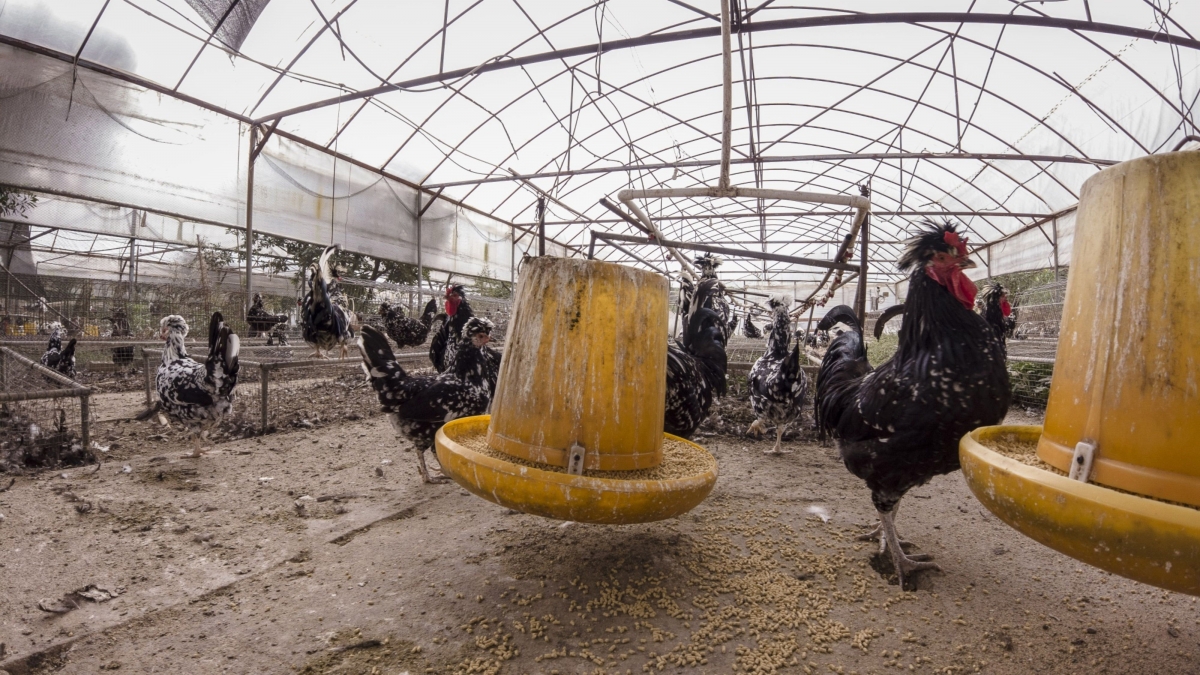

 A social-distancing floor marker sits in a classroom at All Saints Catholic College in Manchester, England, on Sept. 1, 2020. MUST CREDIT: Bloomberg photo by Anthony Devlin
 A police officer in riot gear stands guard beyond razor wire coils along a highway in Ghazipur on the outskirts of New Delhi, India, on Feb. 6, 2021. MUST CREDIT: Bloomberg photo by Anindito Mukherjee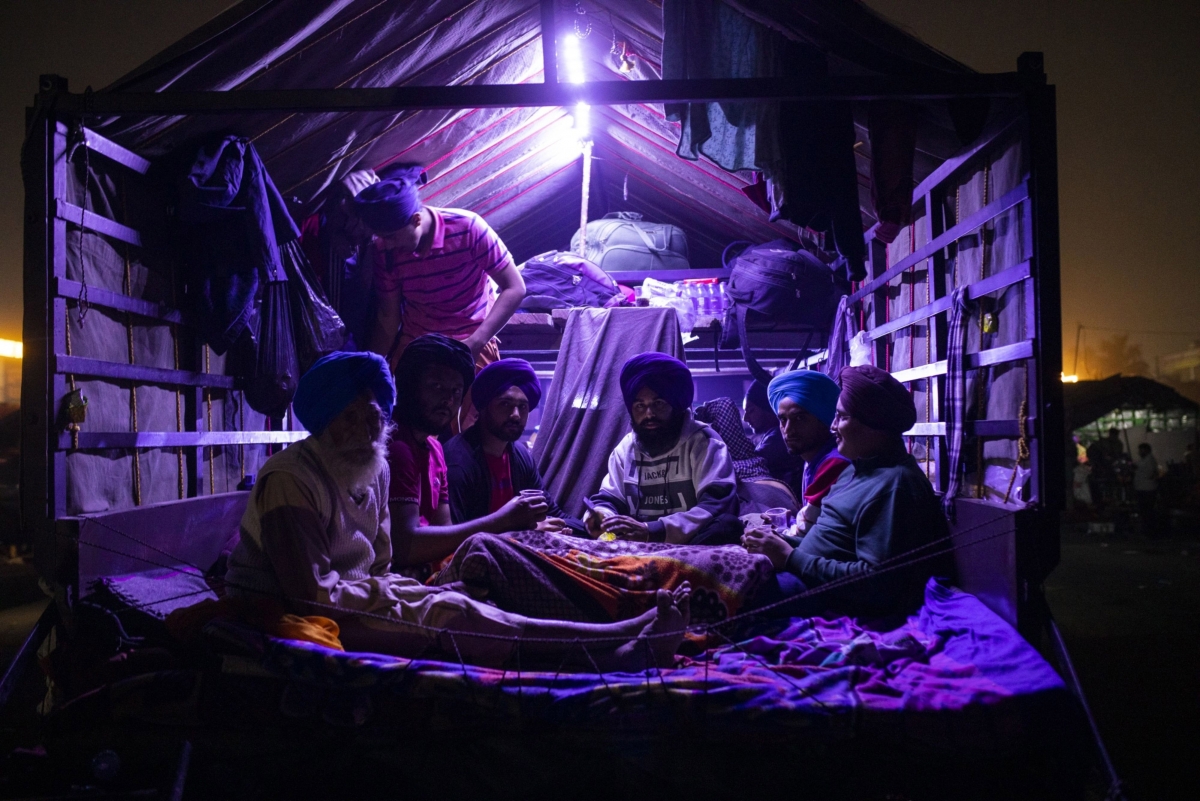
 People pray outside the Wisconsin Capitol in Madison on Dec. 14, 2020, in a protest of the presidential election results. MUST CREDIT: Photo for The Washington Post by Darren Hauck


 SootinClaimon.Com