By The Washington Post · Andrew Nachemson, Shibani MahtaniYANGON, Myanmar – Tens of thousands of demonstrators filled the streets of Yangon, Myanmar’s largest city, for the second day in a row on Sunday in defiance of the military’s overthrow of the democratically elected government and demanded the release of civilian leader Aung San Suu Kyi.
The largely peaceful protests, which happened despite a shutdown of the internet over the weekend until late Sunday afternoon, represented the biggest display of resistance against the Myanmar military, known as the Tatmadaw, since the 2007 Saffron Revolution protests. Those demonstrations in 2007, like every other popular uprising in Myanmar’s recent history, were brutally crushed – raising the stakes for what follows and how the military government will respond. Many in the international community, including Pope Francis on Sunday, have expressed support for the protesters.
Myanmar’s military seized power from the democratically elected civilian government, led by Suu Kyi and her National League for Democracy party, in a pre-dawn raid on Monday. The military and its proxy political party had for months before the coup complained of widespread fraud in November elections, with little evidence, in an apparent effort to discredit the NLD’s landslide win and claim power for themselves.
Since the coup, a steady drumbeat of resistance has been building in the country, where Suu Kyi is singularly beloved, with a civil disobedience movement that swelled this weekend into street protests. Suu Kyi remains in detention, along with Myanmar’s president Win Myint. The government is now controlled by Min Aung Hlaing, commander-in-chief of the military, who has also replaced the cabinet with former generals.
The military “thinks they can break the law and do whatever they like,” said a 23-year-old student, who only gave part of her name, Thu, out of fear of repercussions. “We won’t accept it. Our leader is our hope,” she added, referencing Suu Kyi.
Protesters flowed in from townships on Yangon’s fringes and all over the city, converging on the area around Sule Pagoda, a sparkling golden stupa that is the heart of the city center. They held up the three-finger salute, a gesture of resistance popularized by the Hunger Games movie trilogy and later also used by anti-junta protesters in Thailand. Residents who were not already at the demonstrations rushed out from their homes in support of the protesters, while cars honked their horns in support and cheered them on.
Police, armed with water cannons, largely stood by, watching, barricading off important landmarks in Yangon like City Hall and stopping protesters from marching toward the U.S. Embassy. Protesters offered water, snacks, flowers and cigarettes to the officers, chanting that they should be for the citizens and stand on their side.
There were also protests in numerous other cities outside of Yangon. In Pathein, a city in the country’s delta region 120 miles west, people began to gather at around 8 a.m. Some 400 people, many riding motorbikes and also holding the three finger salutes in the air, choked the streets in a show of defiance.
“Some people who experienced the ’88 revolution don’t dare go out,” an owner of a rice shop said, referencing the 1988 uprising when millions took to the streets before the military opened fire on them, killing hundreds. “But young people are not afraid of the military.”
“They blocked the internet, whatever, we will keep going,” she added, speaking on the condition of anonymity similarly fearing repercussions.
When the first signs of resistance and civil disobedience campaigns began emerging on Facebook, one of the main online platforms in Myanmar, authorities moved to block access, and later expanded that to other social media sites like Twitter and Instagram. Then on Saturday, all mobile internet connectivity was disrupted. Netblocks, a website that tracks real-time Internet disruptions, said Sunday that connectivity was just 14 percent of ordinary levels.
By late afternoon Sunday, Telenor, one of Myanmar’s telecommunications operators, announced they had restored the network, following instructions from authorities.
International pressure, meanwhile, is growing. United Nations special rapporteur on Myanmar, Thomas Andrews, pointed out that more than 160 people have been arrested since the coup – including representatives of the elected government and prominent activists. He urged the Human Rights Council to hold a special session on the crisis.
“The military must accept public acts of opposition for what they are, a peaceful demand for justice and democracy,” he said. “We must all stand with the people of Myanmar in their hour of danger and need.”
In his Sunday address in St. Peter’s Square, the pope said he was following the situation “with deep concern” and expressed solidarity with the people of Myanmar.
By The Washington Post · William Booth, Carolyn Y. Johnson
LONDON – South Africa will suspend use of the coronavirus vaccine being developed by Oxford University and AstraZeneca after researchers found that it provided “minimal protection” against mild to moderate coronavirus infections caused by the new variant first detected in that country.
Health Minister Zweli Mkhize said Sunday that the rollout will be paused while scientists assess the data and determine a way forward. Officials had been eager to begin vaccinating health-care workers with the shots after 1 million doses arrived last week.
The data, disclosed at a news conference Sunday, showed that once the variant became dominant in the country in November, the vaccine provided no significant protection against illness – though all the cases of disease were mild or moderate. There were 19 cases of covid-19 caused by the variant among people who received the vaccine and 20 cases among people who got a placebo. That suggests that the vaccine was 10% effective, but the difference could have been due to chance.
“That is largely disappointing news,” said Shabir Madhi, a vaccine expert at the University of the Witwatersrand in Johannesburg, who presented the data.
Because many vaccines, including other coronavirus vaccines, are more effective against severe disease, there’s still hope that it could protect against the worst outcomes. But because the participants in the trial were young and healthy – their average age was 31 – researchers weren’t able to test whether the vaccine still works against severe disease.
“The vaccine clearly does not work against this variant for mild and moderate disease,” said Larry Corey, a virologist at the Fred Hutchinson Cancer Research Center. “Does it work against severe disease? The answer is: We don’t know.”
The preliminary data is a potential setback, and bolsters concern that some of the emerging variants of the virus might be able to elude at least some of the new vaccines.
Vaccine developers say they are creating “libraries” of tweaked vaccines that they could quickly test against emerging viral variants. They say that some of the new and improved versions of their vaccines could be tested and released within the year, if necessary.
The variant first identified in South Africa, known as B.1.351, appears to be more transmissible and has subtle but important changes to its telltale spike protein, which the virus uses to attach to and then enter human host cells.
Thousands of new variants are circling the planet, but only a few rise to the level of “variants of concern,” because they are more transmissible, more lethal or suspected of being able to dodge the antibodies produced by vaccination.
Thousands of new variants are circling the planet, but only a few have risen to the level of “variants of concern,” because they are more transmissible, more lethal or suspected of being able to dodge the antibodies produced by vaccination.
Mutated virus may reinfect people already stricken once with covid-19, sparking debate and concerns
The date released Sunday was limited. Scientists eagerly await a detailed preprint or publication in a scientific journal.
Researchers from the Universities of Witwatersrand and Oxford examined adults between the ages of 18 and 64 across seven sites in South Africa from June 24 to Nov. 9. Half the participants received at least one dose of the Oxford vaccine; half received at least one dose of a placebo.
Given the median age of the participants, researchers could not produce statistically robust conclusions about whether the vaccine protected against severe covid-19 cases, hospitalizations and deaths. Few young adults get severe illness, and the number of participants in the study was small.
The Oxford vaccine looked very promising until November, with about 75 percent effectiveness – in line with its performance in other trials. But once the mutated B. 1.351 variant became dominant, its protective abilities were severely eroded, at least against mild and moderate disease.
In contrast, vaccine trials from Novavax and Johnson & Johnson have shown that vaccines don’t work as well against B. 1.351, but do still work, with 50 to 60 percent efficacy.
Andrew Pollard, chief investigator on the Oxford vaccine trial, said the study “confirms that the pandemic coronavirus will find ways to continue to spread in vaccinated populations, as expected.”
Speaking to the BBC, Oxford vaccine developer Sarah Gilbert said the coronavirus vaccines in use worldwide “have a reduction in efficacy against some of the variant viruses.”
“What that is looking like is that we may not be reducing the total number of cases, but there’s still protection in that case against deaths, hospitalizations and severe disease,” she told the “Andrew Marr Show.”
Gilbert added that her team is developing a vaccine to protect against the variant identified in South Africa. “It’s not quite ready to vaccinate people yet. It’s easy to adapt the technology, develop a new vaccine, which will have to go through a small amount of clinical testing, not nearly the same amount as we had to go through last year,” she said.
Public health officials have been relieved in recent days by preliminary reports that the Novavax and Johnson & Johnson vaccines were up to 60 percent effective against the variant from South Africa. That efficacy is good but substantially lower than against the original virus.
That variant contains a worrisome mutation, at a site on the virus RNA called E484K, that has drawn close scrutiny from infectious-disease experts, who have given it the nickname “Eeek.”
The “Eeek” mutation has been seen in variants in Brazil and Britain. It has also been identified in recent days in a handful of cases in the United States.
On Friday, the Oxford-AstraZeneca team reported that its vaccine may help keep people from spreading the virus, offering a hopeful but uncertain answer to one of the great remaining questions of the pandemic.
In a preprint of an article under review at the Lancet medical journal, the Oxford University vaccine developers reported that based on follow-up studies of their clinical trials in Britain, which found the vaccine safe and effective, there is also “the potential for the vaccine to reduce transmission of the virus.” That data is preliminary, and independent researchers are awaiting more information.
NEW DELHI – A piece of a glacier broke off high in the Himalayas on Sunday, causing a deadly flash flood that smashed through a hydroelectric power plant and destroyed homes in India. More than 125 people were reported missing.
India rushed disaster response teams to Uttarakhand, a mountainous northern state. Seven bodies have been recovered. Because of the rapid flow of the water, bodies were being recovered away from the disaster site, officials told local media.
Ashok Kumar, Uttarakhand’s police chief, said the avalanche occurred at 11 a.m. Authorities evacuated several villages downstream. “The picture will be clear tomorrow morning,” he said, referring to the rescue operations and those missing.
Television channels aired footage of water barreling down a narrow canyon and sweeping away the power plant at its base. A second state-run power plant nearby also suffered extensive damage.
Most of the missing were workers at the two power plants. Troops dug a ditch to rescue about a dozen workers trapped in a tunnel. Videos of the operation showed rescue workers pulling out a man, who flung his arms in the air victoriously. Rescue operations continued late into the night at another tunnel, where an estimated 30 people remain trapped.
Girish Joshi, a consultant with the state’s disaster management authority, said that an eight-mile stretch of the Alaknanda River was affected but that there was no further danger. “The river levels are normal now,” he said.
Authorities in the neighboring state of Uttar Pradesh said they were on alert and monitoring water levels.
Uttarakhand suffered a devastating flood in 2013 that claimed thousands of lives. Analysts have blamed climate change and unchecked construction for such disasters.
“This looks very much like a climate change event,” said Anjal Prakash, a professor at the Indian School of Business in Hyderabad. “The glaciers are melting due to global warming.”
Prakash, who serves on a United Nations panel on climate change, said that the Himalayan area is one of the least monitored in the region and that the disaster Sunday shows how vulnerable it can be.
Farooq Azam, a specialist in glaciology and hydrology at the Indian Institute of Technology in Indore, said glacial bursts are rare. He said more information is needed to understand the event Sunday, but “climate change-driven erratic weather patterns” such as increased snowfall and rainfall and warmer winters have led to the melting of “a lot of snow.”
Trivendra Singh Rawat, the chief minister of Uttarakhand, said that experts will look into the cause of the disaster but that the priority is to “save lives.” Prime Minister Narendra Modi said the nation “prays for everyone’s safety.”
China’s messy car repair market gets a Goldman-backed makeover
InternationalFeb 08. 2021An employee inspects a vehicle at a Tuhu repair and service center in Shanghai on Feb. 3, 2021. MUST CREDIT: Bloomberg photo by Qilai Shen.
By Syndication Washington Post, Bloomberg
Car repair can be challenging in China, rife with the potential for disputes over the quality of service and parts and dominated by mom-and-pop stores. But the auto after-market industry is changing as vehicles age and owners become more exacting, creating a giant opportunity for companies trying to raise the bar using technology.
One of those is Shanghai Lantu Information Technology Holding, or Tuhu, and it’s got some notable backers in Goldman Sachs, Carlyle Group, Sequoia Capital, as well as internet giant Tencent Holdings. Valued at $4 billion, the company is already a major distributor of auto parts and China’s biggest internet-based car maintenance service provider, according to founder Chen Min.
Chen says Tuhu is bringing a new approach to car repair in China through its 2,400 franchises and 13,000 partner shops. Unlike many of the individual or family-run auto-repair stores in the country, Tuhu centers share similar designs and layouts, bear the company’s red and white logo, and employees wear a uniform. This universal standard is important to Chen, 39, who likens it to what customers have come to expect from somewhere like Starbucks Corp.
“When customers maintain their cars, we hope it’s as simple as going to Starbucks for a cup of coffee: no matter what type — big cup, medium cup, small cup — they get what they ask for and don’t need to worry about the cost,” he said in a Jan. 20 interview. “We must offer very affordable prices.”
For routine maintenance of a Dodge 2.7-liter sport utility vehicle, Tuhu charges 426 yuan ($66), according to its website, more than 20% cheaper than the same service offered at a Dodge dealership.
Vehicle ownership in China more than tripled over the past decade to 281 million units at the end of 2020, according to government data, putting it on track to overtake the U.S. as the world’s biggest auto market this year in terms of car ownership. That also means the average age of vehicles in use is increasing. Deloitte & Touche forecasts that China’s auto-maintenance market revenue, which includes spare parts sales, will rise to 1.7 trillion yuan a year by 2025, almost double the figure in 2015.
Competition is heating up as companies with deep-pocketed backers enter the fragmented market and overpower the smaller, inefficient independent players. With that, China is becoming more like Western countries where well-known after-market operators such as Autozone, O’Reilly Automotive or Halfords Group in the U.K. have large networks and recognizable brands.
As vehicles get older, there is “rising demand for the type of standardized maintenance services offered by companies like Tuhu both online and offline,” China Passenger Car Association Secretary General Cui Dongshu said in a phone interview. “Other companies such as JD.com that want to grasp this business opportunity are also getting into the game.”
Another is New Carzone, whose backers include Alibaba Group Holding Ltd., Goldman Sachs and Warburg Pincus, which says it is “well-positioned to expand its nationwide network and empower independent auto after-market service providers in China.”
Tuhu has an online platform and database that can be used to find spare parts, make orders and book appointments for repairs. A real-time inventory tracker of some 100,000 components at about 500 warehouses helps control the management of stock and lets customers figure out whether, where and when they can get new components, according to Chen.
“There is a huge market for car services in China and that is why I founded this company,” said Chen, who worked for Microsoft Corp.’s China software venture and HP Inc. before creating Tuhu in 2011. “A lot of my colleagues started their career as programmers. We believe digitalization and the internet can bring changes to various industries and society.”
Tuhu’s revenue this year should increase at least 50% from the 10 billion yuan recorded last year, according to Chen, and the company plans to add as many as 1,400 franchise stores. Discussions are also being held about a possible initial public offering, he said, without providing details.
Putin’s once-scorned vaccine now favorite in pandemic fight
InternationalFeb 07. 2021A healthcare worker receives a dose of the Russian Sputnik V Covid-19 vaccine at a hospital in La Plata, Argentina, on Jan. 11, 2021. MUST CREDIT: Bloomberg photo by Anita Pouchard Serra.
By Syndication Washington Post, Bloomberg · Henry Meyer
President Vladimir Putin’s announcement in August that Russia had cleared the world’s first covid-19 vaccine for use before it even completed safety trials sparked skepticism worldwide. Now he may reap diplomatic dividends as Russia basks in arguably its biggest scientific breakthrough since the Soviet era.
Countries are lining up for supplies of Sputnik V after peer-reviewed results published in The Lancet medical journal this week showed the Russian vaccine protects against the deadly virus about as well as U.S. and European shots, and far more effectively than Chinese rivals.
At least 20 countries have approved the inoculation for use, including European Union member-state Hungary, while key markets such as Brazil and India are close to authorizing it. Now Russia is setting its sights on the prized EU market as the bloc struggles with its vaccination program amid supply shortages.
In the global battle to defeat a pandemic that’s claimed 2.3 million lives in little more than a year, the race to obtain vaccines has assumed geopolitical significance as governments seek to emerge from the huge social and economic damage caused by lockdowns imposed to limit the spread of the virus. That’s giving Russia an edge as one of a handful of countries where scientists have produced an effective defense.
Its decision to name Sputnik V after the world’s first satellite whose 1957 launch gave the Soviet Union a stunning triumph against the U.S. to start the space race only underlined the scale of the significance Moscow attached to the achievement. Results from the late-stage trials of 20,000 participants reviewed in The Lancet showed that the vaccine has a 91.6% success rate.
“This is a watershed moment for us,” Kirill Dmitriev, chief executive officer of the state-run Russian Direct Investment Fund, which backed Sputnik V’s development and is in charge of its international roll-out, said in an interview.
While it’s too early to gauge the political gains for Putin, Russia is already making much of the soft-power impact of the vaccine on its image after years of international condemnation over election meddling and targeting of political opponents at home and abroad. State television reports extensively on deliveries to other nations.
Sputnik’s success won’t change hostility toward Putin among Western governments, though it could strengthen Russia’s geopolitical clout in regions such as Latin America, according to Oksana Antonenko, a director at Control Risks consultancy.
“With this vaccine, it’s proven itself capable of producing something new that’s in demand around the world,” she said.
Production constraints are the biggest challenge facing all manufacturers as global demand far outpaces supply. Russia, pledging free shots for its 146 million population, began output last year and the vaccine is currently being manufactured in countries including India, South Korea and Brazil.
This week, it emerged a close ally of Turkish President Recep Tayyip Erdogan signed an agreement to produce Sputnik V in Turkey, even as the nation has deals to buy 50 million doses of China’s Sinovac Biotech’s CoronaVac vaccine and 4.5 million doses of the Pfizer- BioNTech shot.
Despite Russia’s success, domestic demand remains lukewarm so far, driven by public suspicion of the authorities. Putin, 68, fueled the skepticism in December when he said he was waiting to get the inoculation until it had been cleared for people his age.
He still hasn’t said whether he’s been vaccinated, but other nations aren’t waiting to find out. The day after announcing he’d contracted covid-19, Mexican President Andres Manuel Lopez Obrador said Jan. 25 he’d thanked a “genuinely affectionate” Putin for pledging 24 million doses of Sputnik V in the coming two months. Three days later, Bolivian President Luis Arce personally took delivery of a batch at La Paz airport.
Latin America is proving fertile territory. Argentina, which has struggled to obtain vaccine supplies, started its mass inoculation program after taking delivery of more than half a million Sputnik V doses by January. It’s been joined by Nicaragua, Paraguay and Venezuela. In Brazil, the region’s biggest market, a decision announced Feb. 3 to scrap the requirement for phase three trials for emergency use may speed up approval.
Guinea became the first African nation to start dispensing Sputnik V in December with Moscow-friendly President Alpha Conde and several ministers taking the vaccine. It expects to get 1.6 million doses this year and is also in talks on acquiring Chinese vaccines, along with AstraZeneca Plc’s shot. Zimbabwe, the Central African Republic and Ivory Coast are among other potential customers for Russia.
“We’re not in a position where we can say no to any vaccine. We’ve opted for the Pfizer vaccine, but we’re looking at other vaccines as well,” said Professor Joseph Benie, head of the National Institute of Public Hygiene in Abidjan, Ivory Coast. “There’s an urgency now to start inoculating.”
Unlike the Pfizer/BioNTech vaccine, Sputnik V can be stored in a fridge rather than a freezer, making it easier to transport and distribute in poorer and hotter countries. At around $20 for a two-shot vaccination, it’s also cheaper than most Western alternatives. While more expensive than AstraZeneca, the Russian inoculation has shown higher efficacy than the U.K. vaccine.
For some nations such as Iran, which received the first batch of a promised 2 million doses this week, Russia offers a more palatable political alternative than Western suppliers. But Russia is also making inroads into countries such as the United Arab Emirates, which is traditionally close to the U.S. and has approved Sputnik V for use.
A nurse prepares to administer a dose of the the Sputnik V vaccine in a covid-19 vaccination center inside the GUM department store in Moscow on Jan. 20, 2021. MUST CREDIT: Bloomberg photo by Andrey Rudakov.
China, whose inoculations are as low as 50% effective in the case of Sinovac Biotech, retains a lead in Asia. Only a handful of countries have opted for Sputnik V, including the Philippines, which is in talks for 25 million doses.
Chinese developers may now team up with Russia. The RDIF struck a preliminary deal to test a combined regimen of shots from Sputnik V and China’s CanSino Biologics to boost effectiveness against Covid-19, people with knowledge of the matter said Friday.
In what could represent the Kremlin’s biggest potential breakthrough, Russia has asked European regulators to examine a request for authorization of Sputnik V after Germany promised to help expedite the process. With top EU officials still smarting over a sluggish vaccine roll-out, German Chancellor Angela Merkel said Tuesday the Russian shot could be used to protect people in the 27-member bloc as long as it was approved by the European Medicines Agency.
Hungary has already granted emergency approval, signing a deal for 2 million doses of Sputnik V with the first 40,000 shots delivered Tuesday. “The vaccine cannot be a political question,” Prime Minister Viktor Orban told state radio Jan. 29. “One can only choose between western and eastern vaccines when you have enough.”
European approval may take several months because of the need to submit detailed data, The Lancet’s Editor-in-Chief Richard Horton told Bloomberg’s QuickTake. “I do think this Russian vaccine will come on tap,” but “not quickly,” he said.
While Russia says it expects the vaccine to be available to 700 million people this year, it’s facing production bottlenecks. “We have to be realistic. Given our other commitments, we will not be able to supply to Europe before May, other than Hungary,” said RDIF’s Dmitriev.
Still, the vaccine is paying dividends for Putin. Even as he visited Moscow Friday to confront Foreign Minister Sergei Lavrov over the imprisonment of opposition leader Alexey Navalny, EU foreign policy chief Josep Borrell took time to congratulate Russia on developing Sputnik V.
“It’s good news for the whole mankind,” Borrell said. “It means that we are going to have more tools to face the pandemic.”
Will Ferrell has it out for Norway. “Did you know that Norway sells way more electric cars per capita than the U.S.?” he asks before smashing his fist through a plastic globe. In an unlikely and very expensive Super Bowl ad made by the usually-staid General Motors, a disheveled, bearded Ferrell shouts “Well I won’t stand for it!”
During a break in the Super Bowl action, the comedian vows to “crush” Norway and recruits help from Kenan Thompson of “Saturday Night Live” and actress and rapper Awkwafina in a multimillion-dollar promotion for GM’s Ultium battery. At the end, after Ferrell mistakenly winds up in Sweden and Thompson and Awkwafina mistakenly end up in Finland, the ad says “We’re coming, Norway.”
Conquering Norway’s small car market won’t make or break the fate of GM, which has been making cars for more than a century. But the good-humored GM ad – one of two EV ads the company will air – is another sign that the world’s fourth-largest automobile company might be trying to steer its way toward a new era of electric vehicles.
This week, GM’s corporate account tweeted, “Norway is crushing us at EVs. That’s crazy. We have to do better.” GM’s chief executive Mary Barra said in a tweet: “Norway has set the bar high with electric vehicle adoption.” And the company account tweeted again to say: “Did you know 54% of new cars sold in Norway are EVs? We can’t let them show us up.”
It isn’t just GM. The global automobile business is peering into an all-electric future, the industry’s most profound turning point in a century and the most crucial since the 2009 financial crisis that saw GM go in and out of bankruptcy. After spending the past four years encouraging President Donald Trump to weaken fuel efficiency standards, GM’s Barra last week did a U-turn on electric vehicles, declaring that the company’s “aspiration” was to phase out gasoline vehicles and sell only electric versions of passenger cars and light trucks by 2035, eliminating tailpipe emissions.
“The timing right now is excellent,” said Dane Parker, head of sustainability at GM, noting the Biden administration’s “clear emphasis on a low-carbon or zero-carbon future.” The industry knows more about how to make electric cars than American scientists knew about space travel before going to the moon, Parker said. “We will look back and say, ‘Wow, that worked.'”
Other companies have already been speeding ahead. Ford Motor Co. on Thursday said it would double its outlays on EVs, adding about $11 billion in new spending through 2025; another $7 billion will go to driverless vehicles. Volkswagen is pumping $37 billion into a race to outdo all-electric Tesla.
But there are many bumps in the road ahead. The carmaker of the future will have to be as much a battery or software company as it is a conventional engineering company. It will need networks of rapid recharging stations and massive new supply chains to meet demand for new parts, like lithium for batteries. New business models could alter the nature of car ownership – and undermine politically powerful dealers. And throughout, the big car companies must work to maintain peace with their unions.
“Barriers will slow down the achievement of some of these goals,” said John Paul MacDuffie, professor of management at the University of Pennsylvania’s Wharton School, “but there will be a tipping point and all forward-looking forces will be focused on this future.”
Even if the big car manufacturers can marry the expertise of Silicon Valley-style software and Detroit-style mass production, climate experts worry that the scale of the transportation sector is so great that overhauling it will take far too long from a climate perspective. GM’s Chevrolet Bolt sales in the United States doubled in the fourth quarter of 2020 from a year earlier, but they remained 0.8% of GM’s 2.5 million U.S. sales for the year. Globally, electric vehicles made up about 3% of total cars sold in 2020, according to the International Energy Agency.
David R. Keith, a Chevy Bolt owner and assistant professor at the Sloan School of Management at the Massachusetts Institute of Technology, said “given that EVs cost more than conventional vehicles and we’re at a point where consumers are not making lavish discretionary purchases, the question is not, ‘Can we sell to the wealthy?’ It is, ‘Can we get the everyday household in mainstream America to buy an EV?’ and we’re still a long way away from that.”
Meanwhile, he added, the cars on the road today will be on the road for the next 15 to 20 years. “There is so much inertia baked into those 250 million light-duty vehicles,” he said.
The biggest companies, like GM, have not gotten off to a strong start.
On at least three occasions, the batteries powering GM’s Chevy Bolt caught on fire under the rear passenger seat, according to National Highway Traffic Safety Administration reports. In one instance, a car recharging in a driveway in Belmont, Mass., caught fire, billowing smoke, forcing the evacuation of neighbors and leaving behind noxious fumes through the house; it took firefighters three hours to extinguish the blaze. In Vienna, Va., it took firefighters an hour to douse a burning Bolt outside a townhouse – and they had to be called two more times when the car started smoking again.
In November, GM issued a recall for 50,932 Chevy Bolts – more than 60% of all Chevy Bolts on the road. The company urged its customers to park their cars outdoors a safe distance from their houses, an inconvenience for EV owners who rely on recharging sockets inside their garages. And GM adjusted the Bolt batteries so that they couldn’t recharge more than 80% of capacity.
“It’s really a city car,” said MIT’s Keith.
GM’s early struggles are cultural as much as they are technological.
In November, GM launched a hiring blitz for 3,000 engineering, design and information technology specialists. “This will clearly show that we’re committed to further developing the software we need to lead in EVs, enhance the customer experience and become a software expertise-driven workforce,” GM President Mark Reuss said in a news release.
But on the online job site Glassdoor, many GM workers in software were disappointed. One current GM employee said there were “good benefits” and a “good work/life balance,” but “too much time spent on meetings and political games.” The advice to management? “It is hopeless. IT management needs to be completely replaced. IT bureaucracy is an obstacle for innovation.”
A former employee said the pros of working there included “working with the latest on Car Tech.” The cons? “Big company, slow pace of changes.”
Glassdoor does not post the names or contact information of people who correspond on its site.
VW has also struggled with software glitches, which forced the German carmaker to twice postpone sales of its new ID.3, which resembles the Golf.
The big carmakers have to compete for talented engineers, not only with Tesla but with other new entrants into the car market. One 11-year-old EV startup, Rivian, last year swiped a rising star named Alex Archer from GM’s design engineering department. Archer, a 2015 Stanford University graduate, had already invented a sliding console in 2020 models of GM’s small trucks and SUVs.
Rivian said this week that the first of 10,000 vans Amazon had ordered by 2022 would start making deliveries in select cities. Rivian also plans to start selling pickup trucks later this year, a direct competitor with some of the industry’s most popular brands. Amazon has invested $700 million and Ford has invested $500 million in Rivian. (Amazon founder Jeff Bezos owns The Washington Post).
For workers who lack Archer’s star power, the coming upheaval in the car markets is a source of anxiety. Unions are worried that the change to electric vehicles might undermine their membership. EV powertrains are mechanically simpler than those in internal combustion engines, the United Auto Workers said in a report. According to analysts at UBS, the Chevy Bolt’s e-motor has three moving parts, while a VW Golf’s internal combustion engine has 113.
“This simplicity could reduce the amount of labor, and thus jobs, associated with vehicle production,” the UAW report said.
But while electric vehicles lack transmissions, exhaust systems and fuel systems, they could create employment in batteries, electric motors, electronics, thermal systems, braking systems, and semiconductors.
The problem, the union warned, is that many of those new components “could shift business and employment to non-auto companies that lack a large U.S. manufacturing base. This could undermine auto job quality by shifting work to employers with a poor history of labor relations or companies that are more likely to import components.”
The big carmakers also face a variety of battery challenges, posing tough questions for President Biden on trade, subsidies and investment. In her confirmation hearing, energy secretary nominee Jennifer Granholm noted that “of the 142 lithium ion battery mega-factories that are under construction, 107 are in China. Nine are in the U.S. We can’t sustain this. We have got to lean in much more quickly.”
That’s going to mean subsidizing domestic battery makers or arm-twisting or incentivizing foreign battery makers to set up factories in the United States. The UAW has called for large-scale retraining programs for displaced workers.
An explosion in the use of electric batteries could also spark conflict over environmental choices, pitting conservation against industrial needs.
James D. Calaway, chairman of an Australian firm called Ioneer, is hoping to get the permits to start a lithium mine in Nevada that would quadruple U.S. production of the mineral. It would be located on the parched outcropping Rhyolite Ridge in the third most sparsely populated county in the United States, Calaway says, between Reno and Las Vegas. Phase one would produce about 22,000 tons a year of battery-grade lithium for the next 25 years – enough to produce about 400,000 EVs a year. The U.S. market usually exceeds 17 million cars a year, though with the ailing economy, sales fell about 15% short of that last year.
But getting that lithium would mean destroying the majority of the habitat of Tiehm’s buckwheat, a plant, says the Center for Biological Diversity, which wants to stop the mine.
“What we need is sensible environmental policy,” Calaway said. “We have got to weigh this against our targets on CO2.”
The nascent electric vehicle market could soon be riled further by a spat between two South Korean battery makers arguing over intellectual property. One company, SK Group, is sinking about $2.6 billion into a massive battery plant in a rural town in Georgia, the largest foreign investment in the state’s history. But LG Chem says SK stole its intellectual property and has asked the International Trade Commission to block SK from starting up the plant. That would hurt SK’s two biggest customers, Ford, which wants to put the batteries in an electric version of the popular F-150 pickup, and VW, which wants to use them in a car plant in Chattanooga, Tenn.
“If somehow this plant were to be rendered unusable because of this ITC decision, it isn’t like they go out and put Duracell batteries in this thing. You need to design customized batteries,” said Daniel Spiegel, vice chair of the public policy practice at the law firm Covington & Burling, which is representing SK.
If the ITC sides with LG Chem, Biden could overturn that decision. There are only five other occasions when a president has overruled the ITC. The last was President Barack Obama in a dispute between Apple and Samsung. Either way, the case shows how vulnerable the EV supply chain is to disruption.
“This goes right into the wheelhouse of Biden’s jobs plan, Biden’s global warming plan, Biden’s advanced technology plan, Biden’s manufacturing in the United States plan,” Spiegel said. “All these things are embedded in this trade agency’s decision next week.”
And then there are the auto dealers, who in most states are shielded from manufacturers by consumer protection laws. Many dealers make more money on follow-up services and leasing than they do selling cars in the first place. They have little to no expertise in batteries or EV software. When Tesla announced it would have virtually no showrooms and would sell directly to customers, dealers were up in arms.
“An EV well engineered is going to have a much lower service profile than an internal combustion engine,” said Diarmuid O’Connell, a former top Tesla executive. “The question is what is the strategic business model for dealers to be incentivized to support EVs.”
Another ad to be aired during the Super Bowl takes aim at car dealers, portraying one as a villain who has tied up a potential customer on the floor and threatens him with jumper cables in a horror-like sequence that ends with a sunny pitch for Vroom, an online car dealership that delivers vehicles to the home.
Many dealers are simply closing shop. Given a choice, 17% of 880 Cadillac dealers took a buyout from GM rather than invest in the repair equipment and charging stations needed to sell and service electric versions of the luxury car, the Wall Street Journal reported.
When O’Connell worked at Tesla, he was tasked with overcoming the dealers’ demands. “It was a painful experience to have to go state to state, dealing with folks who were locally very politically connected. And very often there was, if not an explicit, an implicit monopoly,” he said.
O’Connell said the auto industry every year for three or four years invited him to a summertime conference in Traverse City, Mich., to debate the future of EVs. And every year, auto industry executives would say that motorists aren’t interested in them. O’Connell would reply, “You’re not even trying.”
For now, the big century-old companies are sprucing up existing brands. Ford, in addition to introducing electric F-150 pickups, will start selling an electric version of its Mustang. GM is pressing ahead with plans for a new electric Cadillac crossover called the Lyriq.
So far, though, the road to an EV future looks like a long one. “Kenan, Norway’s out EV’ing us,” Ferrell says in the Super Bowl ad. “Grab an EV, meet me in Norway.” Ferrell then interrupts Awkwafina, who is practicing archery outside her house. “Sorry to disturb you, but Norway’s beating us in EVs,” he says, catching an arrow in his teeth. “Meet me there in an hour.”
Perhaps the auto industry will have a better sense of direction than Ferrell and his fellow stars.
New restaurant owners get shut out of PPP loans despite their financial losses
InternationalFeb 07. 2021Andrew Darneille, owner and pitmaster at Smokecraft Modern Barbecue in Arlington. MUST CREDIT: photo for The Washington Post by Deb Lindsey.
By The Washington Post · Tim Carman
Every month, Andrew Darneille says his Smokecraft Modern Barbecue in Arlington, Va., has been losing between $15,000 and $20,000, and the numbers would be uglier if not for breaks from his bank and landlord. December was the worst yet: The owner and pitmaster says he suffered $30,000 in losses, even with a skeleton crew and a separate ghost kitchen selling fried chicken sandwiches.
With no bank loans available to bridge the gap, Darneille and his family have been covering the monthly shortfall. He doesn’t have much choice: It’s either cover the expenses or watch his dream project go down in flames, after investing three years and nearly $2 million in the full-service restaurant, which showcases a refined version of the barbecue that has earned Darneille dozens of awards on the competitive circuit.
Darneille had hoped the second round of the Paycheck Protection Program would get him to the other side of the coronavirus pandemic, or at least to spring, when he could reopen his patio. But he learned the Small Business Administration program excludes businesses such as his. He opened Smokecraft on July 31. All PPP applicants had to be operating by Feb. 15, 2020. The cutoff date made sense for the initial draws of PPP loans last spring and summer, Darneille thought. But 10 months and a lot of pandemic-related debt later, he doesn’t understand why the new round continues to honor the same date.
“There is no avenue to appeal. They said I have to write my congressman. I said, ‘Write my congressman? Do you think my congressman will read a letter from me?'” Darneille said. “They’re not going to change the law just for me.”
Other restaurateurs and entrepreneurs who launched businesses after Feb. 15 are scratching their heads over the rule, too. The latest $284 billion round of the PPP was designed, in part, to blunt the criticisms of previous draws: There are new rules to favor community lending institutions and women- and minority-owned businesses, rules to prevent public companies and generally thriving businesses from securing second loans, and rules to give hard-hit restaurants and other food establishments a little extra money.
But in rewriting the guidelines, lawmakers also stuck with the same operating date for eligible businesses, even though countless new restaurants and companies have opened in the interim and have been subjected to the same pandemic-related restrictions and shutdowns that have impacted more-established businesses.
It’s difficult to determine how many small businesses – hundreds of restaurants alone have opened since Feb. 15 in cities around the country – may be impacted by the operating-date rule. Darneille said representatives of his bank told him thousands of new businesses were in a similar situation as Smokecraft. (The Washington Post could not confirm that figure; the SBA said it doesn’t have those statistics.) But Molly Day, vice president of public affairs for the National Small Business Association, says she hasn’t heard widespread complaints from members, but that may be because first-time small business owners don’t typically join an organization focused on federal advocacy.
“We are hearing there’s that frustration,” Day said. But she added that “when crafting the PPP, the whole point of it was to try and keep employees employed at their small businesses. . . . It wasn’t necessarily to start a new business and bring on new employees.”
A representative of the SBA said the agency’s hands are tied. The SBA – and by extension the PPP lenders that act as agents for the government – are just following the rules as established by Congress. “The SBA is working to ensure the economic aid is accessible to all that are eligible, including those hit hardest, while protecting program integrity and ensuring as quick release as possible of the aid,” emailed SBA spokeswoman Shannon Giles.
Patrick Crump, chef-owner of the Renegade in Arlington., Va. MUST CREDIT: photo for The Washington Post by Deb Lindsey.
New businesses may not have access to PPP money like their more-established peers, but they bleed red ink just the same. In some ways, new restaurants such as Amigo by Nai in Manhattan are at a disadvantage as they try to survive the pandemic, said chef and co-owner Ruben Rodriguez.
Amigo by Nai is a partnership between Rodriguez, the chef behind the Spanish fine-dining concept Nai Tapas, and Juan “Billy” Acosta, co-owner of Carnitas El Momo, a beloved Los Angeles taco shop. Amigo debuted on Oct. 1 in the East Village, more than 10 years after Rodriguez opened Nai Tapas just blocks away.
Nai Tapas has been approved for a PPP loan, Rodriguez said, but Amigo by Nai was declined because of its launch date. He’s frustrated by the seemingly arbitrary nature of the cutoff date. As the proprietor of an established restaurant and a new one, Rodriguez knows the former has some advantages over the latter.
Over the years, Nai Tapas has developed a sense of trust and loyalty among employees and suppliers, who will, as a result, stick with the business in tough times. Amigo, by contrast, debuted during a pandemic when everything is uncertain, most notably revenue. As such, suppliers “don’t give you as much leeway for payments,” Rodriguez said, and employees may not stick around if their hours are getting cut.
Not only that, but Amigo has a greater need than Nai Tapas, which has been closed since mid-December, when Gov. Andrew Cuomo shut down indoor dining (though the restaurant will reopen on Feb. 14). Amigo has 14 to 15 employees on the payroll, at a time when sales are only about half of the projected $30,000 to $35,000 a week. “We’re left with a deficit every month,” Rodriguez said. “The PPP was definitely a lifeline I was hoping for.”
Sen. Marco Rubio, R-Fla., former chairman of the Senate Committee on Small Business and Entrepreneurship, was a principal architect of the PPP. From the beginning, Rubio viewed the program as a way to keep Americans employed during the pandemic as well as a way for small businesses to avoid “the start-up costs and impediments businesses face while hiring and training new employees.” These views were sometimes at odds with those of restaurant owners who saw the PPP as a lifejacket to prevent them from going under.
A congressional aide involved with the PPP said the Feb. 15 operating date was put in the original rules for a number of reasons. Among other things, it was there to prevent scam artists from establishing new companies just to get their hands on PPP money.
The aide, who spoke on the condition of anonymity because he was not authorized to speak, added that “the program was intended to provide relief to businesses that were hurt by the pandemic, meaning they had to be in operation before the pandemic to be hurt by it. By definition, you can’t be hurt by the pandemic if you opened after the pandemic because there’s nothing to compare to.”
The PPP is “not a revenue replacement program,” the aide said. “You can’t be looking at the PPP as a way to supplement your revenue.” He doesn’t foresee Congress pushing back the operational date to accommodate new businesses.
Despite the tough talk on rules, the SBA and participating banks have shown flexibility in applying them. The official rules state a business had to be “in operation” by Feb. 15, 2020. But SBA spokeswoman Giles says lenders have discretion in how they interpret that language: Some banks use the company’s first day of business, while others use the day the company was incorporated.
This explains why the owners of Petite Peso, a modern Philippine restaurant in downtown Los Angeles, are so bullish about securing a PPP loan even though they opened in April, two months after the cutoff date. The restaurant’s accountant, said president and co-owner Robert Villanueva, has worked with the bank to use Petite Peso’s January incorporation date on the PPP application.
The owners need the cash to help prop up their business, which has struggled to survive through stay-at-home orders and bans on both indoor and outdoor dining in Los Angeles County. Petite Peso is closed but still selling some products online. Without PPP money, “it’s going to be an extremely tough road,” Villanueva said. “Financially we’re getting very very low on our resources.”
On the other hand, Patrick Crump, chef and owner of the Renegade in Arlington, Va., penciled in his first official day of business on the PPP application. The Renegade, a restaurant and live music venue, debuted on Oct. 24, 2019, well ahead of the loan program’s eligibility date. But here’s the thing: For small businesses that are trying to secure a second PPP loan, such as Renegade, they have to prove a 25 percent drop in revenue in one quarter of 2020 compared to the same quarter in 2019.
That calculation would have been almost impossible for the Renegade: Its revenue from the fourth quarter of 2019 covered just over two months, compared to the full quarter in 2020. So of course the revenue was higher in 2020. But because the Renegade used its first day of business, rather than its incorporation date in March 2019, the company was able to compare its only operating quarter in 2019 against any other quarter in 2020, said Yuri Calustro, a partner and business manager with Renegade. They opted to compare it to the second quarter, when Renegade’s revenue plummeted 36 percent compared to 2019 due in part to Virginia’s stay-at-home orders.
The Renegade just had its application approved and is now expecting $156,000 in PPP funds.
“I’m not questioning it,” Calustro said about the flexibility over the revenue-loss rules. “I’m happy that we had the opportunity to do so because otherwise, we would have seriously been looking at closing our doors, and that’s terrible.”
For new restaurants, all this hand-wringing may soon be moot. On Thursday, the Senate passed an amendment during the marathon budget resolution session to provide targeted relief to restaurants and bars. The amendment directs the relevant committees writing the new budget to establish a specific fund to support restaurants. The relief package is expected to top out at $25 billion. There is an air of confidence on Capitol Hill that this will finally be the direct financial relief that restaurants have been lobbying for, though it’s not clear if, like the PPP, it will include new restaurants.
At the same time, lawmakers in both the House and Senate introduced an updated version of the Restaurants Act. The $120 billion program would direct grants, up to $10 million, to independent bars and restaurants, which they could use on a wide range of expenses. Better yet, the revamped act includes new language inserted by Rep. Earl Blumenauer, D-Ore., after he spoke to frustrated restaurateurs in Portland: Restaurants that opened after Jan. 1, 2020, would be eligible for the relief money.
By The Washington Post · Toluse Olorunnipa, Michelle Ye Hee Lee
WASHINGTON – President Donald Trump’s onslaught of falsehoods about the November election misled millions of Americans, undermined faith in the electoral system, sparked a deadly riot – and has now left taxpayers with a large, and growing, bill.
The total so far: $519 million.
The costs have mounted daily as government agencies at all levels have been forced to devote public funds to respond to actions taken by Trump and his supporters, according to a Washington Post review of local, state and federal spending records, as well as interviews with government officials. The expenditures include legal fees prompted by dozens of fruitless lawsuits, enhanced security in response to death threats against poll workers, and costly repairs needed after the Jan. 6 insurrection at the U.S. Capitol. That attack triggered the expensive massing of thousands of National Guard troops on the streets of Washington amid fears of additional extremist violence.
Although more than $480 million of the total is attributable to the military’s estimated expenses for the troop deployment through mid-March, the financial impact of the president’s refusal to concede the election is probably much higher than what has been documented thus far, and the true costs may never be known.
Many officials contacted by The Post said they were still trying to tally the cost of rapidly scaling up security to deal with the increased threat of violence from Trump supporters. Others have given up on trying to measure their outlays – perplexed over how to calculate the financial impact of a president’s injecting so much instability into the democratic system – opting instead simply to absorb them as the cost of doing business in the Trump era.
Some officials have shifted their attention to planning additional security measures in the volatile environment fostered by Trump’s conspiratorial brand of politics.
“I think anytime you see an event like we saw on January 6, it changes your perspective going forward. You don’t take things for granted like we used to,” said Michael Rapich, superintendent of the Utah Highway Patrol, which spent $227,000 on Jan. 17 to deploy 300 troopers to the State Capitol after threats of an armed siege by Trump supporters ahead of the inauguration of President Biden. “It is an incredible amount of money to spend.”
Other states spent even more, and officials are beginning to draft new security budgets that suggest costs for public safety will grow significantly in the future as a result of the attack on the U.S. Capitol.
The cost to the federal government continues to grow daily as thousands of National Guard troops patrol Washington and lawmakers consider supplemental spending to bolster their security.
The 25,000 troops that were deployed in Washington traveled on military planes and stayed in local hotels – their presence aimed at restoring order in the nation’s capital after an attempted insurrection that overwhelmed the Capitol Police and led to five deaths.
The Guard deployment’s estimated cost, first reported by Bloomberg News, covers the troop presence at the Capitol through mid-March, according to Defense Department officials who spoke on the condition of anonymity to discuss internal figures. With an unprecedented show of force that included checkpoints and militarized zones in Washington, the troops thwarted any effort to disrupt Biden’s swearing-in, which took place on the same platform stormed by Trump-supporting rioters two weeks earlier.
It is not clear whether the House Democrats managing Trump’s impeachment trial plan to bring up the financial costs borne by taxpayers as a result of what critics have called his “big lie.” The trial begins Tuesday, and Democrats have focused mainly on Trump’s speech to supporters shortly before the Capitol riot.
A spokeswoman for Trump’s presidential office did not respond to a request for comment. Trump’s defense lawyers have argued that he was within his rights to publicly question the election’s integrity and should not be held responsible for the actions of those who attacked the Capitol after his speech.
Several states are working to calculate the taxpayer costs for additional security and related expenses in the aftermath of the November election and the Jan. 6 protests.
In California, state officials estimated that they spent about $19 million, deploying 1,000 National Guard troops and hundreds of state troopers from Jan. 14 to Jan. 21 to protect the State Capitol and other locations.
“That’s a lot of money, even by California standards, for one week’s worth of work,” California Department of Finance spokesman H.D. Palmer said in an interview. “But it was necessary work to make sure that we didn’t see the damage that could have occurred, had we had a crowd that was bent on doing damage to the building.”
In Ohio, taxpayers spent $1.2 million to deploy National Guard troops to the closed Statehouse building in Columbus. The New Mexico legislature increased its appropriation for Capitol security during the 60-day session by almost 40 percent this month, handing taxpayers a bill of $1.5 million for personnel, equipment and other expenses, officials said.
Taxpayers paid to deploy helicopters to monitor potential demonstrations in Texas and North Carolina, temporary fencing around the capitols in Lansing, Mich., and Olympia, Wash., and extra security details for state lawmakers attending legislative sessions.
District of Columbia police dispatched 850 officers to help defend the Capitol, spending more than $8.8 million during the week of Jan. 6, acting police chief Robert Contee III said in his opening statement before a closed session of the House Appropriations Committee on Jan. 26. Contee said the final tab probably will be much higher, and police and prosecutors will be “engaged for years” investigating and trying the rioters.
“The costs for this insurrection – both human and monetary – will be steep,” he said. “The immediate fiscal impact is still being calculated.”
For many states, the post-Jan. 6 costs added to a tab that has been growing since shortly after polls closed on Nov. 3. Trump’s false assertion that night that he had won the election and that it was being stolen in ballot-processing centers led to credible threats against poll workers and facilities where they were working. Between additional legal fees to fend off conspiracy-theory-laced lawsuits from Trump and enhanced security for election officials, states’ costs resulting from the president’s central fabrication about the Nov. 3 vote have escalated rapidly.
States spent untold millions of dollars on election recounts not required by law but demanded by Trump, and on legal and state legislative hearings.
Protesters, some armed, massed at ballot-processing centers in places including Maricopa County, Ariz.; Detroit; and Las Vegas in the days after Nov. 3, echoing Trump’s rhetoric about a rigged election.
The additional costs come as many states are resource-strapped as a result of a pandemic that has racked the economy and decimated state budgets.
Chris Loftis, communications director for the Washington State Patrol, said the new “staggeringly high” costs for security and other expenses constituted “a wasteful distraction of essential and diminishing resources.”
Not included in the more than $4 million estimated security bill that Washington state taxpayers face is the yet-to-be-determined cost of repairing a gate at the governor’s mansion broken by armed demonstrators on Jan. 6.
“Not only have our people, places and processes of democracy been attacked and damaged, but the continuing expense of this new security environment will take away from funds that could have been used for covid vaccines and treatment” and other critical expenses, Loftis said.
In Georgia, the target of a large share of Trump’s post-election fraud allegations, officials conducted two recounts of the presidential vote. One was triggered by Biden’s narrow margin of victory over Trump, leading to a hand recount of all 5 million presidential ballots cast – the largest hand recount in U.S. history. The Trump campaign then requested another recount – this time, a machine rescan of those hand-recounted ballots. Both recounts reaffirmed Biden’s victory. The recounts also generated more costs for staff time and the security of election administrators, who faced growing threats and in some cases required 24-hour police details.
In Fulton County, Georgia’s largest, taxpayers spent an estimated $500,000 on security alone for election officials, who faced harassment and threats fueled by conspiracy theories over the November election.
Other state and local officials spent funds to battle with Trump’s well-funded team of lawyers in court. Trump and his allies devoted more than $11 million to a failed legal effort that included dozens of lawsuits and repeated losses in court because of a lack of evidence to support their allegations. After the Nov. 3 election and through the end of December, Trump and the Republican Party paid at least 65 law firms or lawyers on election-related legal challenges, according to federal campaign finance filings.
The state of Pennsylvania hired several private law firms to deal with the onslaught of election litigation, paying outside lawyers as much as $480 per hour to fight Trump’s claims of rigged voting.
How much taxpayers ultimately had to spend to beat back Trump’s efforts to delay certification or overturn the results remains unknown, because many state officials did not specifically track their legal expenses.
“Although difficult to quantify, many legal hours were invested by the secretary of state’s general counsel and attorneys with the New Mexico attorney general’s office in responding to the baseless lawsuit filed by the Trump campaign,” said Alex Curtas, a spokesman for the New Mexico secretary of state.
Many officials said that although they wished the cost incurred as a result of Trump’s baseless election-fraud allegations could have gone to more productive purposes, they saw the expenses as necessary to defending democracy.
“Safety isn’t cheap. Preparedness isn’t cheap,” Loftis said. “But neither are the lives of the elected leaders and support staff that we have been protecting, the historic and symbolic buildings they work in or the processes of democracy they represent.”
Congress also is grappling with calculating the expected costs of cleaning up and shoring up the U.S. Capitol after rioters, many carrying Trump flags and wearing the signature MAGA hats of the Trump campaign, smashed windows, broke doors, destroyed light fixtures and sprayed graffiti. The hours-long clash between law enforcement and insurrectionists left the building with battle scars that could take months to assess and repair, officials said.
“Statues, murals, historic benches and original shutters all suffered varying degrees of damage – primarily from pepper spray accretions and residue from tear gas and fire extinguishers – that will require cleaning and conservation,” according to an initial assessment of the damage by the office of the architect of the Capitol, which is responsible for preserving and maintaining the Capitol complex.
An official estimate of repair and cleanup costs is still being compiled, said Laura Condeluci, a spokeswoman for the office.
Congressional officials also are trying to determine the cost of securing the Capitol in the future. House Speaker Nancy Pelosi, D-Calif., requested a third-party review of security protocols for lawmakers and said she expected Congress to put forward a supplemental spending bill specifically for beefing up security for lawmakers. The $515 million annual budget of the Capitol Police is funded through congressional appropriations.
The Capitol Police, which did not respond to multiple requests for comment about how much the Jan. 6 riot cost, has placed many of its officers on 12-hour shifts and installed magnetometers and other additional security measures in recent weeks to deal with the increased threat of violence against lawmakers.
Acting Capitol Police chief Yogananda Pittman said in a Jan. 28 statement that “vast improvements” were needed for security in the future, including permanent fencing and backup forces in the vicinity of the Capitol complex.
The idea of erecting a fence around the Capitol has received pushback from some congressional leaders and District Mayor Muriel Bowser, a Democrat, and it could ultimately be an expensive prospect if approved. The recent project to replace and upgrade the fencing around the White House complex, for example, cost about $64 million.
In the meantime, members of Congress are taking additional security measures on their own, including acquiring bulletproof vests and using private security details and surveillance cameras. Taxpayers are ultimately footing the bill as lawmakers increasingly use their publicly funded Members’ Representational Allowances, known as “MRAs,” to protect themselves.
Pelosi has suggested that she wants the supplemental spending bill to cover much of those costs so that members can use the MRAs for their original purpose of constituent services.
Pelosi also has encouraged lawmakers to attend post-trauma counseling sessions organized in response to the riot. A spokesman for Pelosi did not respond to questions seeking the cost of the third-party security review, the counseling sessions or other ancillary expenses in the aftermath of Jan. 6.
Whatever they cost, those and other measures are expected only to grow over time as lawmakers deal with what the Department of Homeland Security recently described in a bulletin as a “heightened threat environment” in which domestic extremists may act on “perceived grievances fueled by false narratives.”
Robert McCrie, who teaches security management at the John Jay College of Criminal Justice, compared the circumstances to the aftermath of the terrorist attacks on Sept. 11, 2001, which led to a range of permanent security measures and expenses that have continued for almost 20 years.
“There’s no going back,” he said. “Our institutions have to be protected. They’re symbolic, but more than that, they are centers of government, of our sense of having a stable society. So those funds have to be spent.”
Federal investigators also have devoted considerable time and resources to identifying and prosecuting rioters who breached the Capitol and threatened lawmakers; an officer also died after suffering injuries in the attack, and dozens of others also were injured.
U.S. authorities have opened case files on more than 400 potential suspects and obtained more than 500 grand jury subpoenas and search warrants in the sprawling investigation, the acting U.S. attorney in the District, Michael Sherwin, told reporters Jan. 26.
A nationwide manhunt has resulted in 135 arrests and 150 federal criminally charged cases, according to Sherwin, the top prosecutor in the District.
More charges could follow.
Law enforcement officials have estimated that roughly 800 people entered the Capitol without authorization, The Post reported last month.
The FBI and Justice Department declined to comment on the costs of the prosecutions and investigations, but some inside the bureau have described the Capitol riot case as their biggest since the Sept. 11, 2001, attacks.
Loftis, the Washington State Patrol spokesman, has said he has the full backing of his agency’s leadership to speak out.
“The selfish madness that caused this national self-inflicted wound must be addressed, as it has heaped tragedy on top of tragedy,” he said. “If those of us in law enforcement don’t speak up in defense of democracy and public safety, then our silence becomes a dreadfully powerful statement in its own right.”
The $9.2 trillion price tag for failing to vaccinate world
InternationalFeb 07. 2021A healthcare worker receives a dose of the Sinovac Biotech covid-19 vaccine in Jakarta, Indonesia, on Feb. 4, 2021. MUST CREDIT: Bloomberg photo by Dimas Ardian.
By Syndication Washington Post, Bloomberg · Enda Curran, Michelle Jamrisko
The global economy’s recovery risks being dampened or even derailed by the lag in coronavirus vaccinations for poorer nations relative to their wealthier peers.
Bloomberg’s Vaccine Tracker shows 4.54 million doses were given on average across the world each day over the last week, but it’s far from an even spread. The U.S. and U.K. make up about 40% of the 119.8 million doses administered globally.
Developing and emerging markets are, by and large, doing far less well. In Africa, only Egypt, Morocco, Seychelles and Guinea are recorded as having given any of the vaccines at all. Much of Central Asia and Central America has yet to begin vaccinating, or is moving slowly.
That means emerging economies risk falling further behind economically and limits room for rebound even in fully-inoculated countries by depriving them of demand for their goods and a supply of manufacturing parts. Worse still, not combating covid-19 everywhere may mean harder-to-contain mutations of the virus generate fresh health and economic crises.
“With the virus mutating, no country is safe until the whole world is inoculated and achieves herd immunity,” said Chua Hak Bin, senior economist at Maybank Kim Eng Research in Singapore.
A recent study commissioned by the International Chamber of Commerce concluded an unequal allocation of injections could deprive the world economy of as much as $9.2 trillion.
Similar research by Rand Corporation estimated the annual cost could hit $1.2 trillion. Global growth this year could be less than half the World Bank’s 4% estimate if vaccine distribution doesn’t move quickly, said Chief Economist Carmen Reinhart.
Such calculations put rich nations under intensifying pressure to share their vaccine stocks, even though their publics may not support such generosity. Yet the signs point to ongoing hoarding.
European countries are already at odds over access to vaccines, just as they were over personal protective equipment a year ago. A program aimed at enabling access to vaccines is being underfunded by the biggest economies.
In China, which has paced the global economic recovery after getting the virus under control, a lack of urgency means it is now lagging the West in its rollout of vaccines, according to analysis by Gavekal Dragonomics.
Some developing economies worldwide might see some relief soon through the World Health Organization’s Covax initiative, which will send 97.2 million vaccine doses to India in its first tranche of distribution, even as current supply in the country is seen outpacing demand. Pakistan is due to receive 17.2 million shots from the program, with Nigeria getting 16 million.
Rand estimated that so-called vaccine nationalization could end up costing high-income countries $119 billion per year versus a $25 billion price tag for supplying low-income countries with vaccines. The U.S. and Germany would face the biggest hit in absolute terms from the lack of a global inoculation, according to a December report.
Meantime, the study sponsored by the International Chamber of Commerce and written by academics from Koc University and the University of Maryland reckoned 49% of the economic cost of a lingering worldwide pandemic would be borne by advanced economies even if they enjoy total vaccination.
Almost half of respondents in a survey of executives by Oxford Economics see activity in their business remaining below pre-pandemic levels throughout 2021. More than four in five respondents flagged repeated pandemic waves as a significant or very significant risk over the medium term.
Emerging and developing economies are vulnerable to richer countries hoarding their doses because their fragile health systems are straining under the weight of mounting infections, they lack the resources to generate and distribute vaccines as fast as their wealthier peers, and foreign investment is flowing to safer locations.
Take Indonesia. It’s the world’s fourth-largest economy and home to 274 million people, yet covid-19 cases and deaths have accelerated at record paces. Almost half a million people received a first dose of the vaccine by end-January, falling short of a government goal of 598,400 that month. The nation is currently one of the least-vaccinated populations across 66 nations, at 0.30 doses per 100 people as of Feb. 5, according to Bloomberg’s Vaccine Tracker.
The Peterson Institute for International Economics spelled out the dilemma posed by so-called vaccine nationalization bluntly in a report published this week titled: “The pandemic is not under control anywhere unless it is controlled everywhere.”
“If you have public health out of control somewhere, it’s not just a local economic problem, it’s a global economic problem,” said Monica de Bolle, a senior fellow at Peterson and one of the report’s authors. “But, unfortunately, I’m not sure anyone is gearing up to actually do anything about it.”
InternationalFeb 07. 2021Travelers wearing protective masks walk through Los Angeles International Airport in Los Angeles on Nov. 22, 2020. MUST CREDIT: Bloomberg photo by Bing Guan.
By Syndication Washington Post, Bloomberg · Angus Whitley, Jason Gale, Tara Patel, Christopher Jasper
As coronavirus vaccines started rolling out late last year, there was a palpable sense of excitement. People began browsing travel websites and airlines grew optimistic about flying again. Ryanair Holdings even launched a “Jab & Go” campaign alongside images of 20-somethings on holiday, drinks in hand.
It’s not working out that way.
For a start, it isn’t clear the vaccines actually stop travelers spreading the disease, even if they’re less likely to catch it themselves. Neither are the shots proven against the more-infectious mutant strains that have startled governments from Australia to the U.K. into closing, rather than opening, borders. An ambitious push by carriers for digital health passports to replace the mandatory quarantines killing travel demand is also fraught with challenges and has yet to win over the World Health Organization.
This bleak reality has pushed back expectations of any meaningful recovery in global travel to 2022. That may be too late to save the many airlines with only a few months of cash remaining. And the delay threatens to kill the careers of hundreds of thousands of pilots, flight crew and airport workers who’ve already been out of work for close to a year. Rather than a return to worldwide connectivity — one of the economic miracles of the jet era — prolonged international isolation appears unavoidable.
“It’s very important for people to understand that at the moment, all we know about the vaccines is that they will very effectively reduce your risk of severe disease,” said Margaret Harris, a WHO spokesperson in Geneva. “We haven’t seen any evidence yet indicating whether or not they stop transmission.”
To be sure, it’s possible a travel rebound will happen on its own — without the need for vaccine passports. Should jabs start to drive down infection and death rates, governments might gain enough confidence to roll back quarantines and other border curbs, and rely more on passengers’ pre-flight Covid-19 tests.
The United Arab Emirates, for example, has largely done away with entry restrictions, other than the need for a negative test. While U.K. regulators banned Ryanair’s “Jab & Go” ad as misleading, the discount airline’s chief Michael O’Leary still expects almost the entire population of Europe to be inoculated by the end of September. “That’s the point where we are released from these restrictions,” he said. “Short-haul travel will recover strongly and quickly.”
For now though, governments broadly remain skittish about welcoming international visitors and rules change at the slightest hint of trouble. Witness Australia, which slammed shut its borders with New Zealand last month after New Zealand reported one Covid-19 case in the community.
New Zealand and Australia, which have pursued a successful approach aimed at eliminating the virus, have both said their borders won’t fully open this year. Travel bubbles, meanwhile, such as one proposed between the Asian financial hubs of Singapore and Hong Kong, have yet to take hold. France on Sunday tightened rules on international travel while Canada is preparing to impose tougher quarantine measures.
“Air traffic and aviation is really way down the priority list for governments,” said Phil Seymour, president and head of advisory at U.K-based aviation services firm IBA Group Ltd. “It’s going to be a long haul out of this.”
The pace of vaccine rollouts is another sticking point.
While the rate of vaccinations has improved in the U.S. — the world’s largest air-travel market before the virus struck — inoculation programs have been far from aviation’s panacea. In some places, they’re just one more thing for people to squabble about. Vaccine nationalism in Europe has dissolved into a rows over supply and who should be protected first. The region is also fractured over whether a jab should be a ticket to unrestricted travel.
It all means a rebound in passenger air traffic “is probably a 2022 thing,” according to Joshua Ng, Singapore-based director at Alton Aviation Consultancy. Long-haul travel may not properly resume until 2023 or 2024, he predicts. The International Air Transport Association said this week that in a worst-case scenario, passenger traffic may only improve by 13% this year. Its official forecast for a 50% rebound was issued in December.
American Airlines on Wednesday warned 13,000 employees they could be laid off, many of them for the second time in six months.
At the end of 2020 “we fully believed that we would be looking at a summer schedule where we’d fly all of our airplanes and need the full strength of our team,” Chief Executive Officer Doug Parker and President Robert Isom told workers. “Regrettably, that is no longer the case.”
The lack of progress is clear in the skies. Commercial flights worldwide as of Feb. 1 wallowed at less than half pre-pandemic levels, according to OAG Aviation Worldwide. Scheduled services in major markets including the U.K., Brazil, Spain are still falling, the data show.
Quarantines that lock up passengers upon arrival for weeks on end remain the great enemy of a real travel rebound. A better alternative, according to IATA, is a digital Travel Pass to store passengers’ vaccine and testing histories, allowing restrictions to be lifted. Many of the world’s largest airlines have rolled out apps from IATA and others, including Singapore Airlines Ltd., Emirates and British Airways.
“We need to be working on as many options as possible,” said Richard Treeves, British Airways’ head of business resilience. “We’re hopeful for integration on those apps and common standards.”
But even IATA recognizes there’s no guarantee every state will adopt its Travel Pass right away, if at all. There’s currently no consensus on vaccine passports within the 27-member European Union, with tourism-dependent countries like Greece and Portugal backing the idea and bigger members including France pushing back.
“We’re going to have a lack of harmony at the beginning,” Nick Careen, IATA’s senior vice president for passenger matters, said at a briefing last month. “None of it is ideal.”
The airline group has called on the WHO to determine that it is safe for inoculated people to fly without quarantining, in a bid to bolster the case for Travel Pass. But the global health body remains unmoved.
“At this point, all we can do is say, yes, you were vaccinated on this date with this vaccine and you had your booster — if it’s a two-course vaccine — on this date,” the WHO’s Harris said. “We’re working very hard to get a secure electronic system so people have that information. But at this point, that’s all it is. It’s a record.”
A vaccine passport wouldn’t be able to demonstrate the quality or durability of any protective immunity gleaned from being inoculated, or from being infected with virus naturally, either, Harris said.
“The idea that your natural immunity should be protective and that you could somehow use this as a way of saying ‘I’m good to travel’ is out completely.”
Doubts around vaccines mean aviation’s top priority should be a standardized testing regime, said IBA’s Seymour. This might involve a coronavirus test 72 hours before departure, 24 hours of isolation on arrival, and then another test before being released.
“If this was the world standard, then I think we would all be prepared to start picking holidays and fly away,” he said.



 An employee inspects a vehicle at a Tuhu repair and service center in Shanghai on Feb. 3, 2021. MUST CREDIT: Bloomberg photo by Qilai Shen.
 A healthcare worker receives a dose of the Russian Sputnik V Covid-19 vaccine at a hospital in La Plata, Argentina, on Jan. 11, 2021. MUST CREDIT: Bloomberg photo by Anita Pouchard Serra.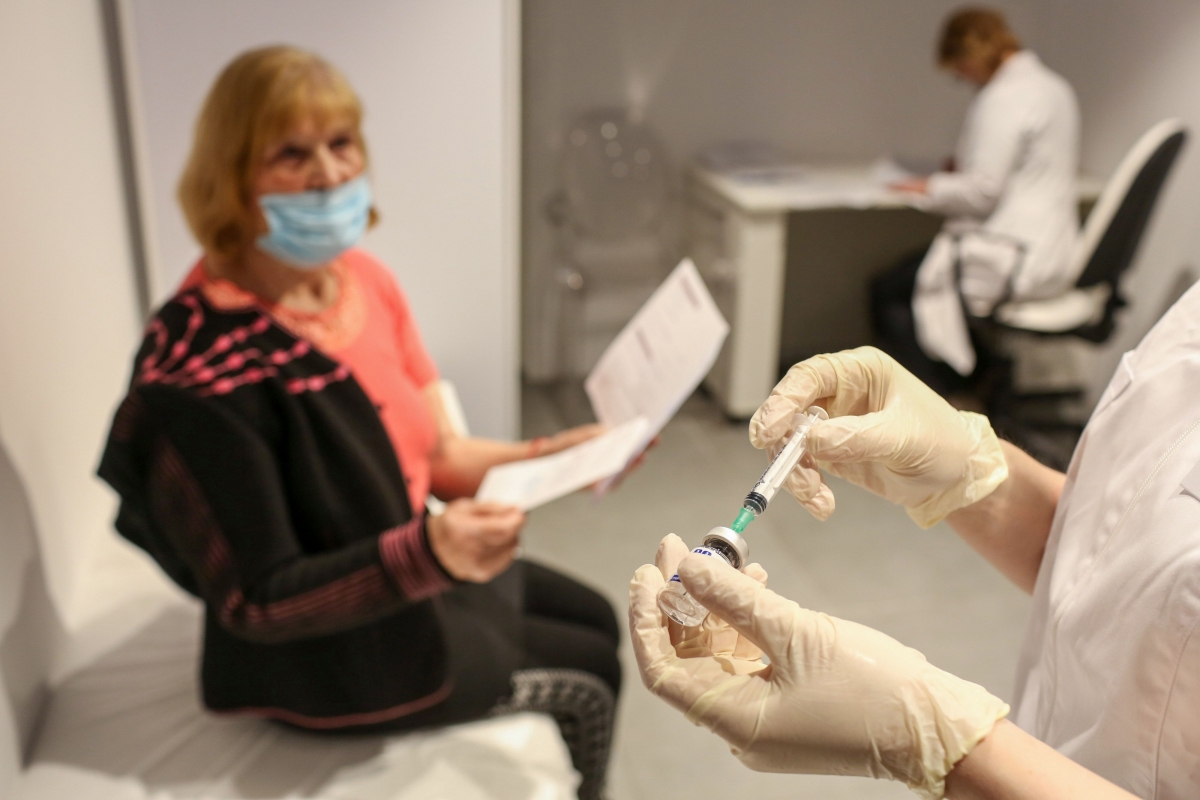

 Andrew Darneille, owner and pitmaster at Smokecraft Modern Barbecue in Arlington. MUST CREDIT: photo for The Washington Post by Deb Lindsey.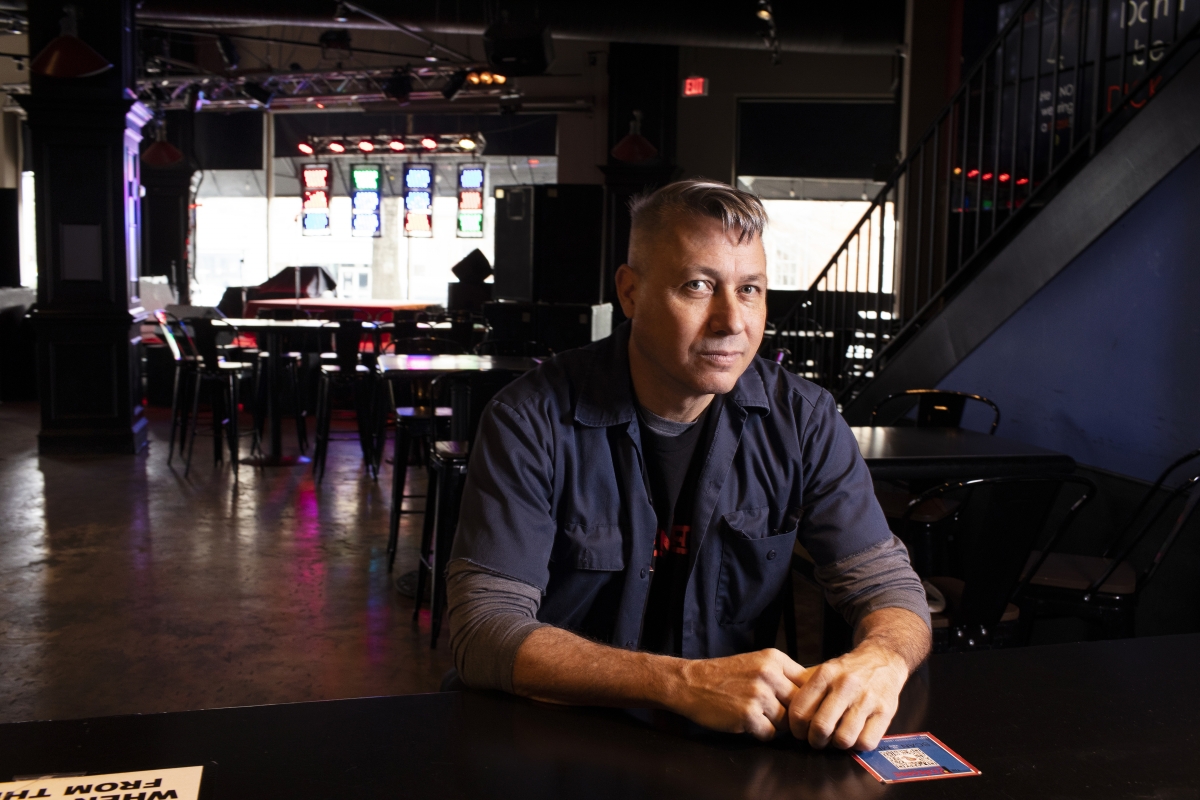
 A healthcare worker receives a dose of the Sinovac Biotech covid-19 vaccine in Jakarta, Indonesia, on Feb. 4, 2021. MUST CREDIT: Bloomberg photo by Dimas Ardian.
 Travelers wearing protective masks walk through Los Angeles International Airport in Los Angeles on Nov. 22, 2020. MUST CREDIT: Bloomberg photo by Bing Guan.
 SootinClaimon.Com