Myanmar blocks Internet amid first large street protests since coup #SootinClaimon.Com

#SootinClaimon.Com : ขอบคุณแหล่งข้อมูล : หนังสือพิมพ์ The Nation.

Myanmar blocks Internet amid first large street protests since coup

InternationalFeb 07. 2021

By The Washington Post · Shibani Mahtani

HONG KONG – Myanmar authorities on Saturday restricted Internet connectivity and blocked more social media websites, as thousands of people protested in the first street demonstrations since the military took power from the democratically elected government in a coup.

By midmorning, residents in Yangon, Myanmar’s largest city, were unable to access mobile Internet services, or found their connection spotty. Two foreign telcos, Norway-based Telenor and Qatar-based Ooredoo, operate there.

In a statement, Telenor said that authorities had ordered a “nationwide shutdown” of the network, citing “circulation of fake news, stability of the nation and interest of the public as basis for the order.”

“Telenor Myanmar, as a local company, is bound by local law and needs to handle this irregular and difficult situation,” the operator said, adding that the directive was made to all mobile operators there. “We have employees on the ground and our first priority is to ensure their safety.”

The Internet shutdown followed the first major demonstrations since the Myanmar military seized power in a coup, returning themselves to direct rule and ending a power-sharing agreement with the elected civilian government, led by Aung San Suu Kyi and her National League for Democracy party. Dozens of activists and democratically elected ministers were arrested on Monday as the military seized power, and while some were released, Suu Kyi and Myanmar’s president Win Myint continue to be remanded, charged with minor infractions that have allowed authorities to prolong their detention.

Reuters reported that on Saturday, Sean Turnell, an Australian economic adviser to Suu Kyi who has long studied and worked in the country, was also detained. Turnell, in a message to Reuters, said he was “being charged with something, but not sure what.” Messages to Turnell were not returned.

On Saturday morning, protests began in various areas around Yangon, including factories and major intersections close to the city center. Demonstrators held banners denouncing the coup and military rule, and demanding the release of Suu Kyi, who is akin to a deity there. There were no immediate reports of clashes between protesters and police, despite the heavy presence of armed police on standby.

Suu Kyi spent 15 years under house arrest and won a Nobel Peace Prize for her nonviolent resistance to military rule before her release in 2010, and went on to lead her NLD party to landslide victories in democratic elections in 2015 and again last November.

The military, which allowed for this nominally democratic transition after half a century of rule and paved the way for these elections, allege that there was widespread fraud surrounding the vote, and used that as a pretext to seize power. The union election commission found no such evidence of voter fraud, and analysts have noted that the NLD win was so overwhelming that any minor irregularities would not have changed the result.

Since the coup, a steady drumbeat of resistance has been building, first with a civil disobedience campaign largely organized on social media, Facebook in particular, which is the de facto Internet in Myanmar, widely used and integral to communications there. The military-run government then blocked access to Facebook, prompting a migration to Twitter, which was blocked too along with Instagram.

Telenor expressed deep concern over these actions, which they said contradicted with international human rights law.

Human rights groups were swift to condemn the restrictions, pointing out the essential functions provided by the Internet amid a number of crises in Myanmar: the coup, humanitarian crises and ongoing ethnic fighting and the pandemic.

“Since the 1 February coup, people in Myanmar have been forced into a situation of abject uncertainty,” said Ming Yu Hah, Amnesty International’s Deputy Regional Director for Campaigns. “An expanded Internet shutdown will put them at greater risk of more egregious human rights violations at the hands of the military.”

In a statement, civil society groups in Myanmar added that “the Internet is integral to our survival.”

“These directives were given by an illegitimate authority body,” the statement said, urging the ISPs and mobile operators not to comply. “By engaging in an illegal, unconstitutional seizure of power, the military does not have the right to be recognized as the governing body of Myanmar.”

Chiefs assistant coach Britt Reid involved in car accident that reportedly injured two children #SootinClaimon.Com

#SootinClaimon.Com : ขอบคุณแหล่งข้อมูล : หนังสือพิมพ์ The Nation.

Chiefs assistant coach Britt Reid involved in car accident that reportedly injured two children

InternationalFeb 06. 2021Britt Reid, an assistant coach for the Kansas City ChiefsBritt Reid, an assistant coach for the Kansas City Chiefs

By The Washington Post, Mark Maske

Britt Reid, an assistant coach for the Kansas City Chiefs and the son of Coach Andy Reid, was involved in a multiple-vehicle accident that reportedly injured two children Thursday night in the Kansas City, Mo., area.

One of the children suffered life-threatening injuries, Kansas City television station KSHB reported.

The Chiefs said in a written statement Friday that they were aware of the incident.

“The organization has been made aware of a multi-vehicle accident involving Outside Linebackers Coach, Britt Reid,” the team said in its statement. “We are in the process of gathering information, and we will have no further comment at this time. Our thoughts and prayers are with everyone involved.”

According to KSHB, authorities were attempting to determine whether driver impairment was a factor in the accident. The station reported that, according to a search warrant, a police officer said that “a moderate odor of alcoholic beverages” was detectable and Britt Reid’s eyes were bloodshot and red. According to the warrant application, Reid told the police officer that he’d had two to three drinks and also took Adderall by prescription.

The officer wrote in the warrant that he observed signs of impairment, and the officer’s request to draw blood from Reid, made after Reid was transported to a hospital due to stomach pain, was approved by a Jackson County Judge, KSHB reported. According to the station, the accident occurred on an interstate near the Chiefs’ practice facility just after 9 p.m. local time Thursday.

The pickup truck reportedly being driven by Reid struck one of two vehicles stopped on an entrance ramp. One vehicle had run out of gas and the other vehicle was driven by a family member who had been summoned to help. According to KSHB, a 5-year-old child in the back seat of one vehicle suffered life-threatening injuries and a 4-year-old child suffered non-life-threatening injuries.

The Chiefs are scheduled to travel to Tampa on Saturday and face the Tampa Bay Buccaneers in Sunday’s Super Bowl at Raymond James Stadium. The Chiefs did not immediately respond to a request for comment on reports that Britt Reid is not expected to travel with the team. The NFL did not immediately respond to a request for comment.

The Chiefs spent the week in Kansas City, practicing at their own facility, because of changes to the usual Super Bowl procedures brought about by the coronavirus. Teams normally spend the week leading up to the Super Bowl in the city in which the game is to be played.

Britt Reid, 35, was sentenced to eight to 23 months in jail and five years’ probation in 2007 on gun and drug charges after pointing a gun at another driver following a dispute. In 2008, he pleaded guilty after being arrested on a charge of driving under the influence.

He is in his eighth season with the Chiefs and has spent the past two as the team’s outside linebackers coach. He previously had served as a defensive quality control coach, assistant defensive line coach and defensive line coach.

House approves budget plan as President Biden emphasizes willingness to approve stimulus without GOP votes #SootinClaimon.Com

#SootinClaimon.Com : ขอบคุณแหล่งข้อมูล : หนังสือพิมพ์ The Nation.

House approves budget plan as President Biden emphasizes willingness to approve stimulus without GOP votes

InternationalFeb 06. 2021 Speaker Nancy Pelosi, D-Calif., walks to the House floor on Thursday. 
Washington Post photo by Salwan Georges. Speaker Nancy Pelosi, D-Calif., walks to the House floor on Thursday. Washington Post photo by Salwan Georges.

By The Washington Post, Jeff Stein, Erica Werner, and Rachel Siegel

WASHINGTON – President Joe Biden on Friday sent his strongest message yet that he intends to move forward on his economic relief plan without Republican support, as the House gave final approval to a budget bill that will allow him to do just that.

https://www.washingtonpost.com/video/c/embed/1873d1dc-c578-4ba9-a96a-0279dac79223

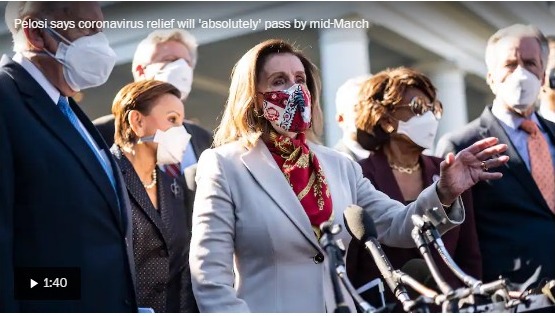
The House voted 219-209 to approve the budget plan, which the Senate had already passed early Friday morning, beginning the process of turning Biden’s stimulus proposal into legislation. House Speaker Nancy Pelosi, D-Calif., said Friday she aims to pass Biden’s stimulus plan through the House within two weeks.

The rapid movement by congressional Democrats came as Biden gave his sharpest criticism to date of the Republican approach to the stimulus package, suggesting further negotiations with the GOP could cause an unacceptable delay to critical relief.

“Are we going to say to millions of Americans who are out of work – many out of work for six months or longer, who have been scarred by this economic and public health crisis – Don’t worry, hang on, things are going to get better’ ” Biden said in remarks at the White House on Friday. “That’s the Republican answer right now. I can’t in good conscience do that. Too many people in the nation have already suffered for too long.”

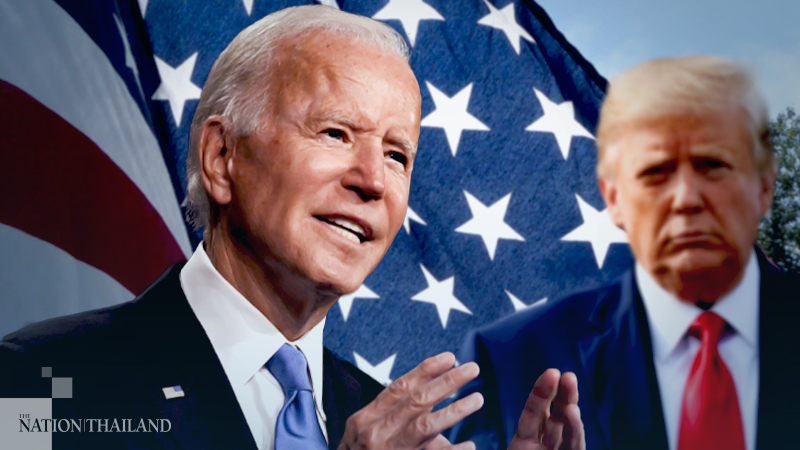
Biden’s declaration that he will not wait for Republicans represents a pivotal moment in his presidency, given his pledges restore bipartisanship to Washington. Biden spent 40 years shaping a political identity as a figure who reaches across the aisle – often attracting mockery or derision for it – and he campaigned on pulling the country together after the divisiveness of the Donald Trump era.

Biden invited Republicans to the White House for negotiations over the stimulus, and White House officials said they would still try to incorporate GOP ideas into the final package. But on Friday, Biden sounded ready to push ahead with only the Democrats’ tiny majorities reliably behind him.

“I see enormous pain in this country. A lot of folks out of work. A lot of folks going hungry, staring at the ceiling at night wondering, ‘What am I going to do tomorrow?’ ” Biden said. “So I’m going to act, and I’m going to act fast.”

The budget plan passed by the House will direct committees to start working on the details underlying Biden’s $1.9 trillion stimulus package. The Senate approved that measure in the early-morning hours Friday by a 51-50 vote, with Vice President Kamala Harris casting the tiebreaking vote in the chamber after more than 15 hours of debate.

The stimulus package would include checks up to $1,400 for low- and moderate-income families, extended jobless benefits, and provide $160 billion to strengthen the public health response to the pandemic, improving the vaccine distribution and increased testing, among other measures.

The Friday votes are the latest sign of a more partisan effort underway in pursuing final passage of Biden’s relief package through a narrow majority.

Top Democrats in both chambers say they are moving with an increased sense of urgency, as the economic recovery from the pandemic continues to show signs of stalling. Meanwhile GOP lawmakers have called for slowing down the relief effort and substantially scaling back the $1.9 trillion effort, which conservatives have derided as unnecessarily increasing the federal deficit.

For his part, Biden, on Friday, accused Republicans of “rediscovering” the danger of the deficit, which rose during the Trump administration with massive tax cuts.

A new jobs report out Friday provided the latest glimpse of the faltering economy, which added just 49,000 jobs in January, an anemic amount of growth, coming a month after the labor market shed jobs. The U.S. has only recovered about half of the 22 million jobs it lost between February and April.

“We now have three disappointing months in a row. We have to admit we’ve stalled out. There’s a danger of double-dip recession,” Austan Goolsbee, who served as a senior economist in the Obama administration, said on CNBC Friday morning while talking about the January jobs report.

Indeed, Democrats have been rushing the stimulus package through, in part, because tens of millions of Americans would begin to lose federal unemployment benefits under existing law in mid-March.

Biden on Friday hosted House Democratic leaders, including Pelosi and House Majority Leader Steny Hoyer, D-Md., at the White House to make the case for swiftly passing the relief effort. He also cited increases in suicides, drug abuse and violence against women during the pandemic.

Pelosi also told House Democrats in a letter Friday that they aim to “finish our work” on the relief package before the end of February. Asked if she could guarantee the legislation would be passed before unemployment aid expires for millions of Americans in mid-March, Pelosi said: “Absolutely. Without any question. Before then.”

“Hopefully in a two-week period of time, we will send something over to the Senate,” Pelosi said, flanked by the Democratic committee chairs. “We hope to be able to put vaccines in people’s arms; money in people’s pockets; children safely in schools; and workers in their jobs.”

Earlier on Friday, the Senate passage of the budget resolution moved the “budget reconciliation” process along, clearing the way for the final stimulus package to pass the Senate with a simple-majority vote, instead of the 60 normally required. That allows Democrats to move forward with no GOP votes if necessary, although Democrats and Biden officials insist that they hope Republicans will join them.

The Senate spent most of Thursday afternoon and Friday morning voting on some 45 amendments on a range of issues, including passing a motion that said stimulus payments should not go to affluent Americans.

“The American people deserve for the conversation about next steps to begin with them and their needs. Not partisan rush jobs. Not talking points,” Senate Minority Leader Mitch McConnell, R-Ky., said on the Senate floor on Thursday. “It will not serve Americans to pile another huge mountain of debt on our grandkids for policies that even liberal economists say are poorly targeted to current needs.”

Not all Democrats have been thrilled with Biden’s approach. Sen. Joe Manchin, D-W.Va., the most conservative Senate Democrat, has said he would strongly prefer a bipartisan bill than one approved only with Democratic votes. On Friday, a bipartisan group of centrist House lawmakers called the Problem Solvers Caucus called for Congress to first approve legislation boosting vaccine distribution — an approach rejected by the White House.

Biden says Trump should not receive intelligence briefings #SootinClaimon.Com

#SootinClaimon.Com : ขอบคุณแหล่งข้อมูล : หนังสือพิมพ์ The Nation.

Biden says Trump should not receive intelligence briefings

InternationalFeb 06. 2021

By The Washington Post, Shane Harris

WASHINGTON – President Joe Biden said Friday that former president Donald Trump should not have access to classified information in the form of the briefings usually given to ex-presidents, citing Trump’s “erratic behavior” and the risk that he might recklessly reveal sensitive information.

Biden stopped short of announcing that he had officially decided to prevent his predecessor from receiving the briefings, which are traditionally given before former presidents travel abroad, particularly in an official capacity. But Biden has the unilateral authority to deny intelligence access to anyone he chooses, and his remarks amounted to a statement that Trump – who for four years controlled the entire U.S. security apparatus – was himself a security risk.

Denying the briefings to a former president would be an unprecedented action, and Biden’s remarks, made during an appearance on the “CBS Evening News” with Norah O’Donnell, emphasized the president’s concern, and that of other officials, that Trump poses a risk to national security because of what he might disclose.

Asked by O’Donnell whether Trump should receive the briefings, Biden replied, “I think not.”

White House press secretary Jen Psaki, during her daily press briefing Monday, when asked whether the Biden administration would provide Trump with intelligence briefings, said that she had raised the question with Biden’s national security team and that the issue was “under review.”

The White House on Friday did not immediately clarify whether Biden’s comments to CBS News represented an official White House policy or was simply an expression of the president’s opinion in response to a question.

A spokesman for Trump did not respond to requests for comment.

Explaining his reason for wanting to withhold sensitive information from Trump, Biden said, “because of his erratic behavior unrelated to the insurrection.”

That was a reference to the events at the heart of the Senate impeachment trial that Trump faces next week. Trump was impeached after encouraging a throng of supporters on Jan. 6 to march to the Capitol in an effort to pressure Congress as it moved to certify Biden’s electoral college victory. A mob broke into the Capitol, forcing Congress to suspend its proceedings and resulting in several deaths.

As president, Trump selectively revealed highly classified information to attack his adversaries, gain political advantage and impress or intimidate foreign governments, in some cases jeopardizing U.S. intelligence capabilities.

The Washington Post reported in May 2017, for example, that Trump had revealed highly classified information to the Russian foreign minister and the Russian ambassador to the United States during a White House meeting, jeopardizing a valuable source of intelligence on the Islamic State.

In Friday’s interview, O’Donnell pressed Biden on his past characterizations of Trump.

“You’ve called him an existential threat. You’ve called him dangerous. You’ve called him reckless,” she said.

Biden replied, “Yeah, I have. And I believe it.”

When asked to describe his “worst fear” were Trump to continue receiving classified information, to which he had unrestricted access as president, Biden said, “I’d rather not speculate out loud. I just think that there is no need for him to have the – the intelligence briefings.”

He added, “What value is giving him an intelligence briefing? What impact does he have at all, other than the fact he might slip and say something?”

Even before Trump left office, it was clear that his post-presidential life, like his time in office, would deviate starkly from tradition. He declined to attend Biden’s inauguration or welcome him to the White House, as departing presidents have done for their successors for decades. And now he faces an impeachment trial for an alleged offense during his presidency.

Current and former U.S. officials said Friday that they shared Biden’s concern about giving Trump access to national secrets.

“President Biden is certainly correct about the lack of any value in providing Trump intelligence briefings,” said David Priess, who, as a CIA officer, briefed George H.W. Bush for many years after he had left the presidency.

He noted that the briefings are provided because former presidents have a unique role in national life. They are often seen as representing the United States, especially by foreign leaders, for the duration of their lifetime.

“Traditionally, these briefings have kept former presidents informed enough to serve as confidential advisers to the current president if needed, to offer perspective during an international crisis or before high-level negotiations with a foreign leader, for example,” Priess said.

“But there’s no chance of Biden reaching out to Trump for that,” he added. “So why would Biden run the risk of Trump’s disclosure of sensitive information by agreeing to such briefings?”

Last month, before Biden’s inauguration, the chairman of the House Intelligence Committee also said Trump should be denied access to official secrets after he left office.

“There is no circumstance in which this president should get another intelligence briefing, not now and not in the future,” Rep. Adam Schiff, D-Calif., said on CBS’s “Face the Nation.”

Schiff helped lead the first impeachment effort against Trump, starting more than a year ago, after Trump suggested to the president of Ukraine that his country should investigate Biden – at the time a potential rival for the presidency – and his family.

“Indeed, there were, I think, any number of intelligence partners around the world who probably started withholding information from us because they didn’t trust the president would safeguard that information and protect their sources and methods,” Schiff said. “And that makes us less safe.”

While in office, Trump also drew criticism from intelligence officials for his relentless attacks on the intelligence community, which he often portrayed as a den of conspirators fabricating information about his campaign’s contacts with Russia. Trump also ordered the declassification of intelligence that U.S. officials warned could expose sensitive sources of intelligence that could not easily be replaced.

All presidents exit the office with valuable national secrets in their heads, including procedures for launching nuclear weapons, knowledge of the country’s intelligence-gathering capabilities, information about assets inside foreign governments and plans for new and advanced weapon systems.

But until Biden took office, no new president had voiced concern that his predecessor might expose what he knew or act recklessly with information he received after leaving the White House.

Some intelligence experts have previously said that Trump could be seen as a counterintelligence risk: He was in debt and angry at the U.S. government, particularly what he described as a “deep state” conspiracy that he said tried to stop him from winning the White House in 2016 and resisted him while he was in office. Trump also falsely claimed that he was the victim of an illegal effort that robbed him of reelection.

Former presidents generally receive briefings before they travel overseas, especially if they are doing so at the behest of the administration of the day, so that they can be apprised of recent developments and know what subjects they might want to explore, or avoid, with particular foreign leaders. They are often seen as valuable assets by the incumbent White House, given their stature and access to the top levels of foreign governments.

The briefings are usually delivered by current intelligence officers, including those who have experience briefing the sitting president. But former presidents do not receive the same classified daily briefing as a sitting commander in chief.

Biden’s comments about security briefings came just days before the Senate was scheduled to open Trump’s second impeachment trial. House impeachment managers, or prosecutors, are preparing their case that the president, among his alleged offenses, “gravely endangered the security of the United States and its institutions of government” by inciting the mob that attacked the Capitol.

Trump’s defense team is expected to deny any incitement, saying the president was exercising his right to free speech in questioning the election results, and to argue that the Constitution does not provide for the impeachment trial of a president after he has left office.

Biden, in the interview aired Friday, declined to comment on whether he would vote to convict Trump if he still were a senator.

“Look, I ran like hell to defeat him because I thought he was unfit to be president,” Biden told O’Donnell. “I’ve watched what everybody else watched, what happened when that – that crew invaded the United States Congress. But I’m not in the Senate now. I’ll let the Senate make that decision.”

Phase III clinical trials show AstraZeneca Covid-19 vaccine very effective #SootinClaimon.Com

#SootinClaimon.Com : ขอบคุณแหล่งข้อมูล : หนังสือพิมพ์ The Nation.

Phase III clinical trials show AstraZeneca Covid-19 vaccine very effective

InternationalFeb 06. 2021

By THE NATION

Primary analysis of Phase III clinical trials of the AstraZeneca Covid-19 vaccine conducted in the UK, Brazil and South Africa showed the vaccine is safe. There have been no hospitalisations in more than 22 days after the first shot was administered.

The results were published in The Lancet.

Results demonstrated 76 per cent efficacy of the vaccine after the first dose, and with an inter-dose interval of 12 weeks or more, the vaccine’s efficiency rose to 82 per cent.

The report also showed the vaccine’s potential to reduce asymptomatic transmission of the virus, based on weekly swabs obtained from volunteers in the UK trial.

Data showed that PCR positive readings dropped by 67 per cent after a single dose, and 50 per cent after a two-dose regimen.

The primary analysis was based on 17,177 participants, including 332 symptomatic cases, from the Phase III UK (COV002), Brazil (COV003) and South Africa (COV005) trials led by Oxford University and AstraZeneca. This study included an extra 201 cases.

Sir Mene Pangalos, executive vice president of BioPharmaceuticals R&D, said: “This primary analysis reconfirms that our vaccine prevents severe disease and keeps people out of the hospital. Also, extending the dosing interval not only boosts the vaccine’s efficacy but also enables more people to be vaccinated upfront. Together with the new findings, we believe this vaccine will have a real impact on the pandemic.”

Professor Andrew Pollard, chief investigator of the vaccine trial and co-author of the paper, said: “These new data provide important verification of the interim data that has helped regulators such as the MHRA in the UK and elsewhere around the world to grant the vaccine emergency use authorisation.

“It also helps support the policy recommendation made by the Joint Committee on Vaccination and Immunisation for a 12-week prime-boost interval, as they look for the optimal approach to roll out and reassures us that people are protected 22 days after a single dose of the vaccine.”

Data will continue to be analysed and shared with regulators around the world to support their ongoing rolling reviews for emergency supply or conditional approval during the health crisis. AstraZeneca is also seeking Emergency Use Listing from the World Health Organisation for an accelerated pathway to vaccine availability in low-income countries.

The vaccine can be stored, transported and handled at normal refrigerated conditions (2 to 8 degrees Celsius) for at least six months and administered within existing healthcare settings.

AstraZeneca continues to engage with governments, international organisations and collaborators around the world to ensure broad and equitable access to the vaccine at no profit for the duration of the pandemic.

In addition to the programme led by Oxford University, AstraZeneca is conducting a large trial in the US and globally. In total, Oxford University and AstraZeneca expect to enrol up to 60,000 participants globally.

The AstraZeneca Covid-19 vaccine has already been granted a conditional marketing authorisation or emergency use in close to 50 countries, spanning four continents including in the EU, several Latin American countries, India, Morocco and the UK.

Pots and pans became tools of protests from Chile to Myanmar #SootinClaimon.Com

#SootinClaimon.Com : ขอบคุณแหล่งข้อมูล : หนังสือพิมพ์ The Nation.

Pots and pans became tools of protests from Chile to Myanmar

InternationalFeb 05. 2021

By The Washington Post · Ruby Mellen

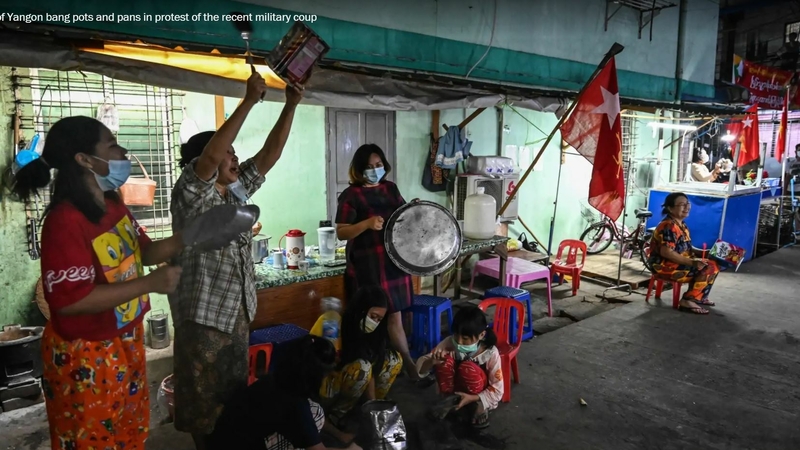
At 8 p.m. Tuesday, the banging of pots filled the air in Myanmar’s largest city. Residents of Yangon, the country’s former capital, unleashed a volley of pan rattling, drum beating and horn honking, a dissonant moment of dissent a day after the military seized power in a coup.

The banging of pots and pans is often associated with celebration: Throughout the coronavirus pandemic, people across the globe took to clanging their kitchenware at 7 p.m. to hail essential health workers beginning overnight shifts.

The noisy practice is also associated with a legacy of protest dating back to at least the 19th century, when French women banged pots and pans outside their Paris homes to protest economic conditions and food shortages. Since then, movements around the world have followed each other in using common household items to sound their dissent.

Here are some examples.

– – –

Cacerolazo in Latin America

The banging of pots and pans in Latin America – or cacerolazo – gained prominence in the 1970s because conservative women used the practice to oppose the election of leftist President Salvador Allende in Chile.

“It was an ideal tool for women because the pots symbolized their femininity. But it also was a statement about the lack of food,” Margaret Power, a professor of Latin American history at Illinois Institute of Technology told Vox. “It was accessible. It was a way that somebody could stay within their home or their neighborhood at a time when women’s lives were a bit more controlled.”

The act evolved in the country in 1984, emerging as the sound of protests against Chilean dictator Augusto Pinochet and later spreading across South America in response to the 2001 financial crisis in Argentina, 2013 elections in Venezuela and, in 2020, to protest Brazilian President Jair Bolsonaro’s pandemic response.

– – –

George Floyd protests

In the United States, demonstrators made wide use of pots and pans over the summer, when mass demonstrations against racial injustice sparked by the death of George Floyd in Minneapolis prompted some U.S. cities to issue nighttime curfews. Unable to go out and march, people banged kitchen implements instead.

– – –

Iceland’s pots and pans revolution

In Iceland, protesters reeling from the effects of the country’s handling of the 2008 financial crisis took their pots and pans into the streets. Demonstrations calling for the government to resign had broken out across the country since the fall of 2008. On Jan. 20, 2009, as parliament reconvened after a Christmas recess, around 2,000 people gathered outside the building intent on making noise.

The gathering was dubbed by the media the “pots and pans” or “kitchenware” revolution. One Icelandic writer, talking to the New Yorker, called it the “night of the long spoons.” Demonstrators also brought other culinary items, hurling trays of pasta at riot police, who responded with pepper spray.

– – –

Spain

In Spain, the banging of pots and pans most recently emerged as a form of protest against Prime Minister Pedro Sánchez’s strident shutdown measures to combat the coronavirus. Spaniards also banged their kitchenware during a televised speech by King Felipe VI in March amid a financial scandal involving the king’s father.

In the past, the practice was used to protest the Iraq War in 2003 and as part of the 2017 protest movement in Catalonia, where the practice is called cassolada.

Doubts loom over Tokyo Olympics without vaccine, isolation rules #SootinClaimon.Com

#SootinClaimon.Com : ขอบคุณแหล่งข้อมูล : หนังสือพิมพ์ The Nation.

Doubts loom over Tokyo Olympics without vaccine, isolation rules

InternationalFeb 05. 2021A pedestrian wearing a protective mask passes an advertisement for the now-postponed Tokyo 2020 Olympic Games in Tokyo on Jan. 14, 2021. MUST CREDIT: Bloomberg photo by Toru HanaiA pedestrian wearing a protective mask passes an advertisement for the now-postponed Tokyo 2020 Olympic Games in Tokyo on Jan. 14, 2021. MUST CREDIT: Bloomberg photo by Toru Hanai

By Syndication Washington Post, Bloomberg · Ayai Tomisawa, Yuki Hagiwara

Covid-19 countermeasures unveiled by the organizers of the delayed Tokyo Olympics don’t include mandatory vaccinations or quarantines for those arriving in Japan for the Games, fueling doubts on whether they can go ahead this summer as planned.

Coronavirus tests will be required before arrival in Japan and then at least every four days, with movements limited to a predetermined plan. The first version of the “Playbook” unveiled Wednesday was light on many details, such as what would happen if participants, athletes or other staff test positive.

With thousands of people from around the globe set to descend on Tokyo, where the pandemic still isn’t under control, citizens remain nervous. Just 16% of Japanese say the event should be held as planned this summer. The country declared a state of emergency last month, seeking to reduce infections and pave the way for the Olympics, which were postponed last year.

“A 14-day quarantine period is needed to be certain that you haven’t developed an infection that you could spread to others,” said Norio Sugaya, a visiting professor at Keio University’s School of Medicine in Tokyo and a member of a World Health Organization panel advising on the pandemic. “There is a risk that the infections will spread within the Olympic Village, and they may spread to the country as well. Now is not the time to discuss large-sized face-to-face events.”

The organizers won’t require athletes and teams to be inoculated to take part, but said instead that they’ll work with each national Olympic committee to “encourage and assist their athletes, officials and stakeholders to get vaccinated in their home countries, in line with national immunization guidelines, before they go to Japan.”

Instead of a 14-day quarantine, those arriving in Japan will be asked to submit an “activity plan” detailing locations they will visit, accommodations and method of transportation.

The playbook is an important step in clarifying the conditions under which the games can take place. The document was prepared by the Tokyo Organizing Committee, the International Olympic Committee and the International Paralympic Committee.

Organizers said they will decide more specifics in an update in April, to make use of the latest testing technology and other developments. Participants will need to submit a negative test before departure for Japan and may be tested on arrival.

“It’s questionable whether these rules are viable or not,” said Kenji Shibuya, professor and director of the Institute of Population Health at King’s College London.

That also means that the participants will have to comply with the rules in the playbook, whether they have been vaccinated or not, they added.

Teams were told not to join events as spectators, and not to use public transport. They will also have to download a contact tracing app. They will not have to quarantine when they arrive in the country. Athletes will be housed in the Olympic Village rather than being dispersed around hotels in Tokyo, organizers said.

Despite speculation over the future of the games, the organizers insisted Wednesday that they would go ahead. They cited the knowledge gained on how the virus spreads since the decision last March to postpone the Games, as well as the successful resumption of thousands of other sports worldwide among reasons for their optimism.

The playbook made no specific mention of how spectators would be handled. Decisions on that question, including the number allowed and the prospects for overseas spectators, will be made within the next few weeks, Christophe Dubi, IOC Olympic Games Executive Director, said on a video conference.

The Tokyo 2020 Committee has already indicated that it will need to decide on whether to impose limits on attendance or restrict spectators from entering the country by this spring, due to the ticketing process.

The Australian Olympic Committee has “every confidence” the games are going ahead and is “doing everything we can” to ensure its team can arrive safely and compete. The playbook is a “very good start,” spokesman Strath Gordon said in an emailed statement. “We know there is more detail to come.”

The playbook will be updated as the pandemic situation changes ahead of the games, which are set to kick off on July 23, a year after they were originally due to start.

“Tokyo is the best-prepared city we have ever seen,” Dubi said.

Britain passes peak of covid surge, with 10 million vaccinated #SootinClaimon.Com

#SootinClaimon.Com : ขอบคุณแหล่งข้อมูล : หนังสือพิมพ์ The Nation.

Britain passes peak of covid surge, with 10 million vaccinated

InternationalFeb 05. 2021

By Syndication Washington Post, Bloomberg · Joe Mayes, Tim Ross

The U.K. has passed the peak of its latest wave of the coronavirus pandemic, officials said, as the country reached the milestone of vaccinating 10 million people, about 15% of the population.

“We are on a downward slope of cases, hospitalizations and deaths,” Chief Medical Officer Chris Whitty said at a televised news conference Wednesday. “This peak, at least, we are past.”

But Whitty, a senior adviser to Prime Minister Boris Johnson, said infections are still widespread and the state-run National Health Service would be “back in trouble extraordinarily fast” if social restrictions are lifted.

Britain’s immunization program — the most successful so far in Europe — puts the country on track to provide shots to 15 million citizens and carers at greatest risk from the disease by Feb. 15. Johnson said it will be possible to begin easing the lockdown only three weeks after that date, once those vaccinated have received the benefits of the immunization.

Johnson, who will publish a plan for relaxing the curbs on Feb. 22, said there are “signs of hope” but warned the number of people with the disease is still “alarmingly high.” A further 1,322 deaths were reported Wednesday.

Johnson said he’s “very hopeful” schools will reopen on March 8, though doesn’t want to move too soon and then have to go “in reverse.” He also said he’d support a statue in memory of Captain Tom Moore, the centenarian who became a U.K. icon by raising money for the NHS, who died Tuesday.

The rapid roll out of coronavirus vaccines is a rare success for the U.K. government in its handling of the pandemic, which has left more than 109,000 people dead and caused the deepest recession for more than 300 years.

Johnson is under mounting pressure to ease restrictions from lockdown skeptics in his own party who fear shutting up businesses and schools will inflict lasting scars on the economy and society. News that vaccines are effective at cutting transmission of the disease has fueled their argument.

“With better and better news by the day on the vaccination roll out and its effectiveness, the government has got to start addressing its mind to the harms caused by the measures we’re putting in place,” said Mark Harper, chairman of the so-called covid Recovery Group of Conservative members of Parliament. “Lockdowns and restrictions cause immense damage to people’s health and livelihoods, and we need to lift them as soon as it is safe to do so.”

Johnson has promised to review the pandemic response after the priority groups have been given vaccines. Schools will be the first facilities to reopen in England, starting no earlier than March 8 under the government’s plans.

Malaysia PM seeks balance as economy reels from virus curbs #SootinClaimon.Com

#SootinClaimon.Com : ขอบคุณแหล่งข้อมูล : หนังสือพิมพ์ The Nation.

Malaysia PM seeks balance as economy reels from virus curbs

InternationalFeb 05. 2021Malaysian flags hang from lamposts near the the office complex of the prime minister in Putrajaya, Malaysia, on Sept. 23, 2020. MUST CREDIT: Bloomberg photo by Samsul Said.Malaysian flags hang from lamposts near the the office complex of the prime minister in Putrajaya, Malaysia, on Sept. 23, 2020. MUST CREDIT: Bloomberg photo by Samsul Said.

By Syndication Washington Post, Bloomberg · Anisah Shukry, Anuradha Raghu

Struggling with elevated numbers of covid-19 cases, Malaysia’s government is trying to strike a balance that will protect lives while ensuring that economic activity can continue, Prime Minister Muhyiddin Yassin said Thursday.

While a total lockdown would be the best way to control the surge in cases, that would have negative repercussions for the economy, Muhyiddin said in the televised address. Instead, tighter protocols — known as Standard Operating Procedures, or SOP — will be imposed while essential businesses continue to operate.

“The government listens to your views by not shutting down the economy during the Movement Control Order period,” Muhyiddin said. “So please reciprocate this gesture by complying strictly with the SOPs so that we can ensure business and trade will continue to operate, while at the same time helping break the chain of Covid-19 transmission at the workplace and in the community.”

Movement Control Orders, Malaysia’s strictest form of lockdown, are in force in all but one state and will continue until Feb. 18.

Still, the government will allow car-wash services, hair salons and night markets to reopen starting Friday, Defense Minister Ismail Sabri Yaakob said in a separate briefing on Thursday. The government is studying whether to allow more businesses to operate throughout the MCO period as well, he said.

Here are key points from the prime minister’s address:

– Repeat offenders of health protocols will face higher fines and possible imprisonment.

– The government is working with 31 private hospitals to treat non-Covid patients, easing pressure on government-run hospitals burdened with Covid cases. The government will compensate owners whose premises are used as Covid screening centers.

– Malaysia will begin a nationwide vaccine rollout by the end of this month. The aim is for 80% of population to get free vaccine.

– The first phase of vaccinations, which will last until April, will focus on inoculating 500,000 frontline workers, followed by the elderly and high-risk groups between April and August. The third leg of the program will run from May through next February to immunize those age 18 and above.

– Muhyiddin said he will advise the king to dissolve parliament after the virus is brought under control.

Nokia sees revenue drop in 2021 in fight for market share #SootinClaimon.Com

#SootinClaimon.Com : ขอบคุณแหล่งข้อมูล : หนังสือพิมพ์ The Nation.

Nokia sees revenue drop in 2021 in fight for market share

InternationalFeb 05. 2021The Nokia Executive Experience Center in Espoo, Finland, on March 2, 2020. MUST CREDIT: Bloomberg photo by Roni Rekomaa.The Nokia Executive Experience Center in Espoo, Finland, on March 2, 2020. MUST CREDIT: Bloomberg photo by Roni Rekomaa.

By Syndication Washington Post, Bloomberg · Kati Pohjanpalo

Nokia said it expects revenue to continue to drop this year as the telecommunications equipment maker battles share loss and falling prices for its products in some markets.

Sales are expected to be between 20.6 billion euros and 21.8 billion euros ($24.7 billion to $26.2 billion), the company said in a statement on Thursday. Analysts had predicted about 21.5 billion euros for 2021, according to the average in a Bloomberg survey.

Adjusted operating profit in the fourth quarter fell to 1.1 billion euros, better than the average analyst estimate of 955.3 million euros.

“We expect 2021 to be challenging, a year of transition, with meaningful headwinds due to market share loss and price erosion in North America,” Chief Executive Officer Pekka Lundmark said in the statement.

Lundmark said in an interview on Thursday that the mobile networks business will have “a reset” this year because of lower market share in North America, but said he still sees 5G competitiveness improving. In Europe, the company has won contracts from wide-scale bans of Huawei Technologies Co. equipment.

Lundmark is working on a larger transformation and has vowed to do “whatever it takes” to stop losing market share. That includes investing more in research and development.

The company’s board won’t propose a dividend for 2020 as it focuses on investing in 5G and other strategic areas.

Nokia will also look for ways to cut costs as it simplifies its operations, though Lundmark declined to elaborate.

Net sales in the fourth quarter fell 5% to 6.57 billion euros. That compares with the average analyst estimate of 6.51 billion euros.

Nokia also retained its guidance for an adjusted operating margin in the range of 7% to 10%.

Shares fell 0.8% to 3.76 euros at 9:47 a.m. in Helsinki. Nokia trades at about 18 times its estimated earnings per share for the coming year. The shares are up about 19% this year, compared with a 6.4% gain for the Stoxx Europe 600 Telecommunications index.

Nokia’s stock was entangled last week in bouts of speculative trading after being touted on a Reddit forum, sending the shares up about 17% and prompting the company to issue a statement saying it wasn’t aware of any developments that could have a bearing on its stock. The price of its American depositary receipts doubled at one point mid-week.