By Syndication Washington Post, Bloomberg · Mark Niquette
Former president Donald Trump announced that two trial lawyers will take over representing him at his upcoming impeachment trial after parting ways with his previous defense team.
Attorneys David Schoen and Bruce Castor will head his impeachment defense, the former president announced Sunday evening. His previous attorneys, including Butch Bowers of South Carolina, departed this weekend, leaving the president without representation just over a week before his trial is to start.
Schoen has been working with Trump and other advisers to prepare for the trial, and Schoen and Castor agree that the impeachment is unconstitutional, Trump said in the release.
Former White House lawyers Pat Cipollone and Eric Herschmann are still in touch with Trump but will not be taking an official role in his defense, said two people familiar with the matter.
Schoen previously represented Trump adviser Roger Stone and victims of terrorism under the Anti-Terrorism Act, according to Trump’s office. He practices across the U.S., focusing on civil rights litigation in Alabama and federal criminal defense work, including white collar cases, in New York, the release said. Schoen has appeared on Fox News, including to discuss the case of accused child sex trafficker Jeffrey Epstein.
Castor was district attorney of Montgomery County, Pa., from 2000 to 2008 and twice was elected Montgomery County commissioner, according to the release. Castor also served as solicitor general and acting attorney general of Pennsylvania.
The move comes as the former president faces a Tuesday deadline to file an initial response to the impeachment charge, and the trial is expected to begin Feb. 9.
Citing sources it did not identify, CNN reported on Saturday that Bowers and the other attorneys representing Trump parted ways after the former president wanted the lawyers to argue that the Nov. 3 election had been stolen from him by massive fraud, an argument he’s already lost in court challenges. The lawyers prefer to focus on the constitutionality of impeaching a president who’s already left office.
The House impeached Trump on one charge of incitement of insurrection after he encouraged supporters who went on to riot at the U.S. Capitol on Jan. 6 in an effort to stop the counting of electoral college votes for President-elect Joe Biden. Five people died in the mayhem, including one police officer.
– – –
Democrats were joined by 10 Republicans, including No. 3 House Republican Liz Cheney of Wyoming, in supporting impeachment.
Trump’s allies have argued that a president who’s no longer in office cannot be impeached, and 45 Republican senators voted last week for a measure to declare the attempt unconstitutional, suggesting that it is improbable that at least 17 would vote to convict.
Sen. Rob Portman, R-Ohio, said on CNN’s “State of the Union” on Sunday that while Trump’s actions were “inexcusable,” he’s keeping an open mind as a juror and the constitutionality of impeaching a former president must be considered.
“If the argument is not going to be made on issues like constitutionality, which are real issues and need to be addressed, I think it will not benefit the president,” said Portman, who announced last week that he’s not seeking reelection in 2022.
On “Fox News Sunday,” Sen. Bill Cassidy, R-La., said that if the evidence presented is that Trump “contributed to an atmosphere to have people charge the Capitol” and threaten members of Congress, “I would hope that whatever defense is put up refutes that charge.”
Blockbuster snowstorm to strike New York, Philadelphia
InternationalFeb 01. 2021Travis Fondow, right, and a friend, prepare to ski near the Washington Monument in Washington on Sunday, Jan. 31, 2021. MUST CREDIT: Photo for The Washington Post by Oliver Contreras
By The Washington Post · Matthew Cappucci, Andrew Freedman
A high-impact winter storm is set to take aim at the Northeast beginning late Sunday, with the heaviest snow likely from Philadelphia to New York northward to the Boston metro area.
Widespread snow totals nearing or exceeding a foot are possible from Philadelphia to Boston, with 18 inches or more not out of the question in New York, depending on any influx of relatively mild air from the Atlantic Ocean.
The same storm system has already brought eight inches of snow in Chicago and will drop a healthy dose of snow all the way to the Canadian border on Sunday.
The low-pressure area that will bring the heavy snow, strong winds and potential for coastal flooding to the Northeast will spend Sunday getting organized in the Mid-Atlantic region, where snow was falling in the nation’s capital. Washington was poised to receive more snow in one day than the city has seen in two winters.
The winter storm has a history of spawning wild weather across the Lower 48, first driving an atmospheric river ashore in California last week with extreme snow totals topping 100 inches in the Sierra Nevada. From there, it brought severe thunderstorms to the Desert Southwest and tornado activity to Oklahoma, while a dust storm in its wake caused visibility to plummet Saturday in parts of Texas.
Now the main low-pressure area is transferring its energy offshore into a coastal system, also known as a nor’easter, that will intensify and move northward up the coast.
Winter storm warnings for heavy snow were in effect from the mountains of North Carolina through southwestern Connecticut, while watches extend all the way to extreme-northern Maine.
Snow is likely to move into Philadelphia by 4 or 5 p.m. Sunday, with snowfall rates increasing rapidly as the offshore low-pressure system begins to strengthen. Moderate to heavy snow is likely there by late evening, with numerous computer models showing a band of extremely heavy snow forming between Philadelphia and Rhode Island from Sunday night into Monday.
There is a chance that milder marine air drawn inland by the counterclockwise winds around the low-pressure center may flip Philadelphia over to mixed precipitation, including sleet or freezing rain, during the wee hours of Monday morning, before precipitation changes to rain and temporarily ends. Snow will fall heaviest immediately before that changeover, with snowfall rates of at least an inch per hour.
In New York, snow will arrive by late evening Sunday, with heavy snow and possible thundersnow during the morning hours on Monday. Significant uncertainty exists regarding a potential changeover to a wintry mix or rain around noontime, however.
If that transition does occur, snowfall amounts would stack up to a bit more than a foot. But if the changeover doesn’t occur, more significant accumulations would be likely in the Big Apple – perhaps on the order of 18 inches or even a few inches more.
The National Weather Service included New York in the level 5 out of 5 “extreme impact” zone on their outlook map, citing the potential for “extreme disruptions to daily life.”
Most of the surrounding Tri-State area can anticipate “major impacts” from the storm system, which looks to produce potentially blockbuster snowfall totals. In Boston, it’s shaping up to be a more moderate event.
One particular high-resolution computer model, known as the North American Model (NAM), suggests that cold air would remain entrenched in New York for the duration of the event. While this simulation is a bit of an outlier, if that outcome were to come to fruition, this would wind up being a top-tier blockbuster storm for the city itself.
Such heavy snowfall could shut down city streets and cancel flights at the region’s major airports.
“Despite the fact that we are forecasting up to 18 inches of snow, these numbers are conservative if you trust the NAM,” wrote the National Weather Service in New York. “The NAM suggests that 2 ft is reasonable for this event where the heaviest band sets up and where it remains mostly snow.”
If New York were to pick up 19.8 inches or more in 48 hours, it would qualify as one of the top 10 heaviest snowfalls on record in the city.
The top spot of 27.5 inches is held by the Jan. 22-23, 2016, storm.
Regardless, snowfall amounts will vary significantly depending on where the narrow corridors of heaviest snowfall, known as snow bands, set up and stall. In the heaviest bands, snowfall rates of one to two inches per hour or more are possible. Eastern Pennsylvania is also likely to see very heavy snowfall, including in such places as Harrisburg and Allentown, in the east and onto the western Philadelphia suburbs.
There’s the possibility that places in northern New Jersey could see more than two feet of snow, as moisture from the Atlantic Ocean is drawn westward, directly into much colder air.
Snow will ease overnight Monday into Tuesday, but light snow is still likely most of Tuesday morning into the afternoon.
The jackpot of snow may occur in New York City proper, while also encompassing the southern Hudson Valley and most of central and eastern Pennsylvania.
In Hartford, Conn., the snow should stack up to six to 12 inches, with the potential for higher totals.
Farther northeast, in the Providence-to-Boston corridor, meteorologists were grappling with predicting the finicky rain-snow line. Snow will arrive there Monday midmorning, with the steadiest and heaviest precipitation occurring overnight before winding down midmorning Tuesday.
During the storm, the rain-snow line may wiggle back-and-forth near Interstate 95, with a touch of mixing possible in Boston and Providence, R.I., despite predominantly snow falling. For the South Shore, Upper Cape and Plymouth and Bristol counties in Massachusetts, a quick burst of snow will give way to mainly rain.
Storm totals of 10 to 14 inches are expected just west of Boston, with the biggest wild card being the amounts in Boston itself and along the immediate coastline.
The storm is even expected to spread snow into northern New England, benefiting ski areas in Vermont, New Hampshire and Maine.
Conditions will improve Wednesday before milder weather late in the week.
The pace of vaccinations appears to be slowly ticking up amid concerns about how the emergence of more transmissible coronavirus variants will affect U.S. efforts to crush the pandemic.
Saturday marked the third day in a row that more than 1.5 million coronavirus vaccine doses were given in the United States, according to a Washington Post tracker, and the 12th straight day that more than 1 million shots were given.
Meanwhile, experts are calling for dual efforts to address the emergence of the variants by ramping up vaccinations and by continuing to underline the need for safety protocols to curb transmission.
Maryland became the second state to report a case of the new coronavirus variant that was first found in South Africa.
The mass vaccination site at Dodger Stadium, one of the largest in the nation, was shuttered briefly Saturday because of maskless, anti-vaccine protesters.
A group of 10 Senate Republicans announced plans to release a compromise covid relief package and have requested a meeting with President Joe Biden.
Tom Inglesby, director of the Center for Health Security at the Johns Hopkins Bloomberg School of Public Health, said the variants signal that “this virus is going to continue to mutate as long as it’s allowed to thrive in the world.”
“It’s important for us to really do what we can to contain this virus,” Inglesby said in an interview on “Fox News Sunday.”
“Wear masks, avoid social gatherings, decrease social interaction until we get this under control,” he said. “And, certainly, if you have a chance to get vaccinated, if you’re eligible for vaccine, you should get vaccinated.”
Biden has signaled an accelerated goal for vaccinations as his administration continues to tackle the complex mass vaccination campaign. After touting a goal of 100 million shots in 100 days, Biden suggested that he hoped for a figure closer to 1.5 million coronavirus shots in arms per day.
“I think, with the grace of God, and the goodwill of the neighbor, and the creek not rising, as the old saying goes, I think we may be able to get that to 1.5 million a day, rather than 1 million a day,” Biden said Monday. “But we have to meet that goal of a million a day.”
Experts say a faster pace for vaccinations will be key.
Michael Osterholm, director of the Center for Infectious Disease Research and Policy at the University of Minnesota and an adviser to Biden’s coronavirus task force, said it may be time to “call an audible” on vaccine distribution in response to the growing risk from variants. He called for prioritizing first vaccine doses ahead of a variant-fueled surge in cases.
Osterholm said he expects to see a surge of cases in the next “six to 14 weeks,” from variants, such as the strain first found in Britain.
“If we see that happen, which my 45 years in the trenches tells us we will, we are going to see something like we have not seen yet in this country,” he said in an interview Sunday on NBC News’s “Meet the Press.”
“We still want to get two doses in everyone,” Osterholm added, but that in advance of a surge, “we need to get as many one doses in as many people over 65 as we possibly can to reduce the serious illness and deaths that are going to occur over the weeks ahead.”
Florida has the largest number of cases from virus variants, with 125 as of Saturday, according to Washington Post data, followed closely by California with 113 cases from variants.
Scott Gottlieb, a former director of the Food and Drug Administration, warned that Miami and parts of Southern California are at the “highest risk” of becoming overrun by variants, specifically pointing to the variant first found in Britain.
“What we’re likely to see is regionalized epidemics with this new variant, and the two places in the country right now that are the biggest hot spots are Southern California and southern Florida, Miami. Those cities need to be very mindful of the spread of these variants,” Gottlieb said Sunday on CBS News’s “Face the Nation.”
He said vaccinations could help curb that spread.
“As we immunize more of the population, and if people continue to wear masks and be vigilant in these parts of the country, we can keep this at bay. It’s not too late, but it’s a real risk to those regions of the country right now,” he said.
Tom Frieden, former director of the Centers for Disease Control and Prevention, warned in a tweet that the virus could eventually evolve to a point where vaccines may not be protective.
“The Covid variants identified so far are an early warning that the virus could evolve to escape vaccine protection,” Frieden wrote. “The way to prevent that is to BOTH ramp up vaccinations and control spread.”
Richard Besser, the president and chief executive of the Robert Wood Johnson Foundation and a former acting director of the CDC, said discussions on increasing vaccinations should include deliberations on getting vaccines to the most vulnerable individuals.
“The more important question to me is, can we get vaccines to those people who are at the greatest risk, being infected, being hospitalized and dying?” Besser said Sunday on ABC News’s “This Week.”
He suggested more data was needed to understand whom the vaccines are reaching.
Few states are accurately tracking coronavirus vaccinations by race. Some aren’t at all.
“If we don’t do a better job at getting vaccines to those people who are working, who are out there face-to-face every day to put food on the table and to pay the rent, people who are going to work to keep our economy going,” Besser said, “… we could see the same kind of disparities that we’re currently seeing and this same incredible toll in terms of death.”
As health experts call for continued adherence to pandemic protocols, Osterholm also said it’s especially important that people wear face masks properly.
“We see up to 25 percent of people wear it under their nose. You know that’s like fixing three of the five screen doors in your submarine,” he said on “Meet the Press.” “What’s going on there? We’ve got to get people to start using these right.”
By The Washington Post · Joel Achenbach, Ariana Eunjung Cha
The road to herd immunity from the coronavirus suddenly looks longer. The emergence of more transmissible, potentially vaccine-evading variants threatens to extend the global health disaster and make 2021 feel too much like 2020. A complicated mix of good news and bad news makes any forecast for the coming months fuzzy, but scientists have one clear and sobering message: The pandemic is a long way from over.
Research findings published in recent days have shown that vaccines will still likely work against mutated variants of the coronavirus. But they may not work as well, as the slippery virus continues to adapt to its new host, the human species. Scientists are ramping up genomic surveillance of the virus and vaccine makers are retooling their formulas in an attempt to keep pace with this morphing pathogen.
“We’re very worried,” said Francis Collins, director of the National Institutes of Health. “All it’s going to take is a couple more mutations on top of that, and you’re really going to have to start worrying.”
There is also the issue of reinfection. Collins said Friday that he is troubled by information from the biotech company Novavax, maker of a vaccine that proved effective in clinical trials, that the new variant circulating in South Africa showed signs of eluding natural immunity among volunteers who had previously survived an infection with the more common coronavirus strain. The Novavax vaccine was strikingly less effective against that variant, called B.1.351, than against other strains.
“That is something I had not seen before,” Collins said of the reinfection claim. “It is very tentative, and the numbers are not huge, but I would be alarmed if natural infection . . . is not sufficient to provide immunity.”
All three of the most-scrutinized “variants of concern” – first identified in the United Kingdom, South Africa and Brazil – have arrived in the United States. As of midday Saturday there were more than 430 reported cases involving the U.K. variant, B.1.1.7, and one case, in Minnesota, of the Brazil variant, known as P.1., announced by authorities there Monday.
On Thursday, officials in South Carolina announced the detection of the South Africa variant in two people with no travel history or connection to one another. Maryland Gov. Larry Hogan, a Republican, announced Saturday that this variant had infected an adult who resides in the Baltimore area. The person also had no travel history, which is evidence of community transmission.
The coronavirus mutations have complicated and likely extended the timeline for crushing the pandemic. A truism among epidemiologists is that herd immunity from a more transmissible virus requires a higher percentage of immunized people. Early in the pandemic, scientists estimated that around 70% of people would need to be vaccinated or have developed natural immunity to reach the threshold at which the virus would not freely circulate. That number now seems too low.
If a more transmissible strain becomes dominant, “that level of coverage needed for herd immunity would become higher, in the 80 to 85 percent range,” Jay Butler, deputy director for infectious diseases at the Centers for Disease Control and Prevention, said Friday.
The latest bulletins about variants and the Novavax results in South Africa “really does make the prospect of herd immunity, at least before next winter, much less likely,” said Christopher Murray, director of the University of Washington’s Institute for Health Metrics and Evaluation.
The worrisome comments from experts come despite several positive developments on the vaccine front. Johnson & Johnson reported Friday that its one-dose vaccine was 66% effective in a large clinical trial in preventing moderate and severe disease. That vaccine is relatively easy to handle and, if authorized in coming weeks, will be another weapon to fight the pandemic.
Moreover, vaccines appear to work well against the B.1.1.7 variant that has spread explosively in southern England and led to drastic lockdowns.
But the good results come with asterisks. The J&J vaccine did not appear to prevent disease quite as well in South Africa and Latin America – places where problematic variants are spreading. And the Novavax data showed a dramatic drop in effectiveness against the B.1.351 variant circulating in South Africa.
The mutations have not changed the basic nature of the virus. The new variants spread from person to person and sicken people in the same manner as the more common coronavirus. Their spread can be inhibited by the same common-sense measures, like social distancing and mask-wearing.
So far there is limited evidence of changes in disease severity from these variants. The exception is the variant spreading in the United Kingdom, which may be roughly 30% more lethal, British scientists said recently, acknowledging their evidence is preliminary. There is no strong scientific evidence that B.1.351 or P.1, the variants identified in South Africa and Brazil, respectively, cause more severe disease.
Alessandro Sette, an immunologist at the La Jolla Institute for Immunology, also sees hopeful signs of lasting immunity to the virus. A paper he and colleagues published this month showed that post-infection immunity remained robust at eight months. Preliminary results suggest a large fraction of the immune response is mediated by T-cells that are not affected by the variants, he said, and both natural infection and vaccination induce this response.
“They would still be able to modulate disease severity,” Sette said, suggesting that people infected a second time would likely have a milder disease.
That said, many scientists are convinced that the variants are more transmissible. They contain mutations that appear to enhance the virus’s ability to bind to human receptor cells. One mutation, called E484K, which emerged independently in the variants seen in South Africa and Brazil, has shown signs of eluding antibodies produced either through the natural immune system or therapeutic drugs.
But there are limits to how much a virus can mutate without defanging itself, said Stanley Perlman, a virologist at the University of Iowa.
“It can’t keep mutating because it’s going to lose the properties of being an all-around transmissible and pathogenic virus,” Perlman said. “You don’t have an infinite number of ways to make yourself better.”
Some scientists expect the punch of the virus will grow weaker over time. That has happened with other viruses, including the influenza virus that killed millions worldwide in 1918.
“We will not be for decades dealing with a pandemic,” said epidemiologist Marc Lipsitch, of the Harvard T.H. Chan School of Public Health. “The concern is whether it will be a year or three years until we can make enough vaccines against enough strains to get this under control.”
Paul Offit, a virologist and pediatrician at Children’s Hospital of Philadelphia, said when he first saw the news about the efficacy of the Johnson & Johnson vaccine against the South African variant, it appeared “grim.” But as he dug into the data, he saw that it was much more effective at preventing severe disease.
“If you can keep people out of the hospitals and out of morgues, that is of tremendous value,” he said.
No vaccine is 100% effective, and even the flu vaccines are often just 50 to 60% effective, he noted, which is good enough to save countless lives.
The big question is whether SARS-CoV2 will mutate more like measles, also a single strand RNA virus, which has not drifted very far from when the first vaccine was introduced in 1963. Or will it be more like flu, another single-strand RNA virus, which changes so much that the vaccine has to be updated every year.
The mRNA vaccines in general, he said, are relatively easily reconstructed to battle new variants. The holdup is more likely to be the manufacturing and distributionof the retooled vaccines, Offit said.
Peter Marks, the head of the Food and Drug Administration division that oversees vaccines, said Friday that the agency will do what it can to speed the process. It won’t require big clinical trials, for instance. Ratherthan studies of tens of thousands of people, the agency will mandate much smaller studies of a few hundred. The goal would be to ensure that the vaccines produce the desired immune response and to see whether the products cover just the new variants or the original virus as well as the new variation, he said.
“We would intend to be pretty nimble with this . . . so that we can get these variants covered as quickly as possible,” Marks said on an American Medical Association webinar.
Another issue that could undermine plans to achieve herd immunity is vaccine hesitancy. New polls show that up to a third of the population in the United States is either unsure about getting vaccinated or firmly against it.
Numerous medical centers and first-responder groups have reported that only about half of employees eligible for vaccines have chosen to take them. The 1199 SEIU, the union that represents workers at hospitals, nursing homes and other care facilities in Maryland and the District of Columbia, said that only about 20% of those who work in nursing homes had agreed to get the vaccine. Maryland’s acting health secretary said last week that it was a “surprise” that in the first few weeks the uptake in health care and nursing homes was 35 to 50% – rather than the 80 to 90% they expected.
The greater the unvaccinated pool, the greater the playing field for the virus to replicate and mutate, Anthony Fauci, director of the National Institute of Allergy and Infectious Diseases, said at a briefing Friday. “If you stop . . . the replication, viruses cannot mutate,” he said, adding that this is the reason “to vaccinate as many people as possible, as quickly as possible.”
The urgency of vaccination applies to everyone on the planet, disease experts point out. A mutation in any location will likely spread everywhere – something that happened earlier in the pandemic with a mutation called D614G that appears to have enhanced transmission.
“Vaccine nationalism is very clearly a problem,” said Maria Sundaram, an epidemiologist at the University of Toronto. “The allure of being vaccinated and getting to normal is not quite reality because of the new variants and the underserved communities of the world not getting them.”
But the alarms come at a time when the public may not be receptive to more dire warnings. As the number of infections and hospitalizations in the United States have dipped since the second week of January, governors and mayors have begun easing restrictions. People are eating indoors in restaurants in places formerly shuttered.
Infectious-disease experts warn that this is not a time to let down our guard.
“We have to understand we are going to live with this virus. That’s the new normal,” said Karin Michels, an epidemiologist at the University of California at Los Angeles. “I’m never going to sit on a plane for the next few years without being concerned.”
She said she remains optimistic that the pandemic will be under greater controlbylate summer or fall if vaccinations continue increasing and community spread of the virus is drastically reduced.
Collins, the NIH director, said he sees best-case and worst-case scenarios.
Best case, he said, is that “people roll up their sleeves as quickly as possible to get to that 80 to 85 percent [vaccination rate] and no other strains emerge that are more resistant.”
The worst case is that if people “continue to be irresponsible,” more transmissible variants will rip across the country and potentially escape vaccines, treatments and naturally acquired immunity.
And then, he said, “we’d have to redesign a completely new vaccine all over again.”
By Syndication Washington Post, Bloomberg · Ilya Arkhipov
A close ally of jailed Russian opposition leader Alexei Navalny urged U.S. President Joe Biden to take punitive action against a wider group of associates of President Vladimir Putin, saying current sanctions aren’t sufficient to stop the Kremlin from cracking down on political opponents and violating human rights.
“Existing sanctions don’t reach enough of the right people,” Vladimir Ashurkov wrote in a letter to Biden posted on his Facebook page on Saturday. He listed 35 people, including billionaires Roman Abramovich and Alisher Usmanov, senior staffers of Putin’s administration, and the heads of several state companies who Navalny says should be targeted.
“Anything less will fail to make the regime change its behavior,” Ashurkov wrote. “The West must sanction the decision makers who have made it national policy to rig elections, steal from the budget, and poison.” Navalny and his allies also want the U.S. to sanction those who hold their money.
The list includes two billionaires, VTB Bank Chief Executive Officer Andrey Kostin, Health Minister Mikhail Murashko and the prominent adult children of Putin allies. Some of those have already been sanctioned by the U.S. Kremlin spokesman Dmitry Peskov, who is also listed, didn’t respond to a request for a comment.
A spokesman for Usmanov declined to comment. Usmanov got into a video spat with Navalny from his 156-meter (512-foot) yacht in 2017 over an investigation into donations to a fund benefiting then-Prime Minister Dmitry Medvedev. The billionaire later won a defamation suit against Navalny.
A spokeswoman for Abramovich said there is no basis for the claims, “which are entirely without foundation.” A VTB spokesperson couldn’t immediately comment.
Navalny was arrested on Jan. 17 upon his return from Germany, where he’d been recovering from a nerve-agent attack in August that he and Western governments blamed on the Kremlin. It denies any involvement. A Russian court put him in custody for 30 days.
He faces as long as 3 1/2 years in prison at a hearing set for Feb. 2 on charges he breached the terms of a suspended sentence. He may also face separate charges of embezzlement punishable by as many as 10 years in prison.
Biden pressed Putin on the poisoning of Navalny in his first phone call with the Russian president on Jan. 26 after taking office. The Kremlin said Putin answered all Biden’s questions in their conversation. It has rejected calls from Western leaders to release the Putin critic. The Russian leader has repeatedly criticized Western sanctions as illegitimate and has sworn never to alter his course because of external pressure.
Tens of thousands of people in cities across Russia took part in mass protests last weekend to demand Navalny be freed. More protests are planned for tomorrow.
Public anger was sparked, in part, by a video by Navalny claiming Putin has built a $1.35 billion palace on the Black Sea, a clip that has drawn more than 100 million views since it was published last week. On Saturday, Putin ally Arkady Rotenberg said he bought the luxury estate to turn it into hotel, according to his press service.
Astra-EU fight opens new rift in global bid to end pandemic
InternationalJan 31. 2021The AstraZeneca and the University of Oxford Covid-19 vaccine in a refrigerator at the Royal Health & Wellbeing Centre in Oldham, England, on Jan. 21, 2021. MUST CREDIT: Bloomberg photo by Anthony Devlin.
By Syndication Washington Post, Bloomberg · James Paton, John Lauerman
A European dispute over supply of covid-19 vaccines is threatening to unleash a wider political and economic conflict that could stymie global collaboration needed to end the pandemic.
After accusing U.K. vaccine maker AstraZeneca of favoring deliveries to its home country, the European Union announced a drastic plan to control exports of covid shots. The retaliatory move may encourage more governments to use economic might — or other means — to protect their interests.
The European Commission’s restrictions “open Pandora’s box,” said Simon Evenett, a professor of international trade at the University of St. Gallen in Switzerland. If others respond in similar fashion, “it really would be every man for himself.”
The squabble is opening a new rift in the global effort to slow a pathogen that’s killed 2.2 million people and inflamed Brexit tensions between the U.K. and the EU. The bloc is already under pressure to speed up an immunization campaign that’s trailing those in Britain and the U.S.
In a sign of how fraught tensions have become, the bloc also announced Friday that it was seeking to limit exports to Northern Ireland, before retreating from the plan hours later. Introducing restrictions between the Republic of Ireland, which is part of the EU, and Northern Ireland would contravene one of the key principles of the Brexit deal, which sought to avoid border controls after decades of violence.
The EU move prompted a rare show of unity from traditional political enemies in Northern Ireland, who uniformly decried the initial decision. Even with the Northern Ireland issue resolved, the bloc’s actions remain hugely controversial and have been criticized by the World Health Organization, businesses and governments.
The likelihood of such vaccine disputes multiplying looms large after dozens of countries imposed export restrictions on masks, personal protective equipment and medical supplies earlier in the pandemic. Governments and companies have tussled in the past over access to drugs like new, life-saving HIV medications that were too costly for some hard-hit countries to purchase, said Thomas Bollyky, director of the global health program at the Council on Foreign Relations.
“This is not just a fanciful parade of horribles,” he said. “You could see this escalating.”
If governments do take aggressive steps, others could hold back shipments of key ingredients required to make vaccines, or invoke rights to try to produce shots themselves, though that would be very difficult to achieve without support from the manufacturers, according to Evenett.
The situation could set off “chain reactions that go to unexpected places,” said Richard Hatchett, chief executive officer of the Coalition for Epidemic Preparedness Innovations, the organization that’s worked to accelerate development of Covid vaccines. “It’s really important for countries not to overreact.”
In a show of unity, most European countries started vaccinations around the same time in late December. U.S. re-engagement with the World Health Organization under President Joe Biden also spurred hopes of global cooperation. But maintaining that isn’t easy in an environment of increasing infections and vaccine supply constraints.
As political pressure rises, “that feeling of solidarity fades,” said Klaus Stohr, a former WHO official who helped mobilize governments and drugmakers to prepare for pandemics.
The stakes of getting economies back on track have also grown. Access to vaccines has become a matter of national security, said J. Stephen Morrison, director of the Center for Strategic and International Studies’ Global Health Policy Center. That accounts for the U.S. Department of Defense’s important role in developing and distributing shots.
“Vaccines are an indispensable element of getting out from under this scourge that’s destroying economies,” he said. “If you can’t get to herd immunity fast, that inevitably provokes a security crisis.”
Biden has said he’d use the Defense Production Act, a Cold War-era law, to boost the manufacturing of vaccines and the supplies required to administer them, such as vials and needles. Parts of the act could help increase supply, though other pieces could have a ripple effect for global supply chains, Hatchett said.
If the U.S. were to combine that expanded production with export restrictions, other governments would be tempted to follow, Evenett said.
AstraZeneca now has found itself in the middle of a public row over contract terms, accusations of blame and threats to impose limits on vaccine exports. The EU’s drug regulator cleared the company’s covid shot Friday, paving the way for a conditional marketing authorization, and potentially easing supply concerns. Still, frustrations are running especially high across Europe as more contagious versions of the virus emerge, and every step of Covid vaccine production and distribution is under scrutiny.
For months, the EU has faced concerns that it might lag the U.S. and Britain, raising its vulnerability as the virus advanced. Britain in early December became the first Western country to clear a shot, while the U.S. plowed as much as $18 billion into Operation Warp Speed, adding to the pressure on the bloc.
The EU may secure enough supplies to vaccinate three-quarters of its population by late October, hitting that level more than two months after the U.S. and three months behind the U.K., according to the latest analysis by London-based research firm Airfinity Ltd. The estimates are based on the supplies governments have secured per capita, production capacity in each region and the expected efficacy of the shots.
While there are few restrictions on using export bans in trade law, nations could try to tamp down on vaccine-related retaliation via the G-7 or the G-20, as has been suggested by the Ottawa Group, Bollyky said. Those nations in November called for restraint in using any export restrictions as part of wider measures in response to the pandemic, and discouraged WTO members from putting tariffs on essential medical products.
Companies could also help defuse the tension by providing more details about their production plans, Evenett said. Bowing to pressure, AstraZeneca published its contract for the delivery of doses to the region. Still, any effort at resolution would need support from governments that are under extreme pressure to provide vaccines to their populations.
“Guidelines would be a way of preparing — they won’t help you in an ongoing dispute,” said Harvey Fineberg, former president of the U.S. National Academy of Medicine. Attempts to set rules for sharing vaccines “would only be interpreted in light of who it would advantage now.”
By The Washington Post · Ashley Parker, Isaac Stanley-Becker, Annie Linskey
WASHINGTON – For the first five days of President Joe Biden’s administration, he and his aides promised 100 million coronavirus shots in 100 days.
But then on the sixth day, Biden surprised everyone, including many of his own aides, by upping the ante – to 150 million.
“I think, with the grace of God, and the goodwill of the neighbor, and the creek not rising, as the old saying goes, I think we may be able to get that to 1.5 million a day, rather than 1 million a day,” Biden said. “But we have to meet that goal of a million a day.”
The number Biden floated was not a figure that was planned in advance, but rather a hypothetical possibility based on private briefings with his covid-19 task force, senior administration officials said. Biden’s comments prompted his team to reiterate that their official goal was still 100 million but also to stress that vaccinating more Americans would be preferable.
Andy Slavitt, Biden’s senior adviser for covid-19 response, said during a briefing that the 100 million vaccines in 100 days was “a floor, not a ceiling.”
“What we have tasked our team with is as many vaccines as possible into as many arms as possible,” he said.
The lack of clarity on vaccine targets underscores that the new administration is still reckoning with the complexity of conducting a mass vaccination campaign – while trying to control the messaging about its timing and scope. Biden’s advisers are scrambling to manage an ever-changing pandemic that has infected more than 25 million Americans, decimated the economy and strained the country’s social fabric – a challenge exacerbated by the patchwork approach they inherited from the previous administration and their early inability to immediately deliver on the full range of their promises.
The new administration has sought to provide better forecasting of vaccine allocation to the states and to outline a more robust federal role in the administering of the shots, enlisting the Federal Emergency Management Agency and taking steps to augment the public health workforce that is able to act as vaccinators.
But in expanding supply – among the most critical hurdles to a return to normalcy – Biden has relied on strides made under the previous administration, hoping that he and his team can help further expedite production and keep the country ahead of dangerous virus variants spreading in the population. Biden’s advisers have maintained that the Trump administration’s strategy was too reliant on existing infrastructure for vaccine delivery, failing to anticipate that state and local authorities would require not just expanded federal funding but also would need more direct coordination and assistance in carrying out immunizations.
The stakes for both the Biden team and the nation could not be higher: The deadly contagion has killed more than 436,000 Americans and continues to course through the country. One of Biden’s central promises on the campaign trail was that he would “shut down the virus” if elected president, and his administration’s handling of the crisis is likely to be critical to the success of his presidency.
Los Angeles Mayor Eric Garcetti, an ally of the president’s, said that in his earliest conversations with Biden, he stressed that progress on coronavirus would be the key to all other aims of his presidency.
“I tried to underscore with him the only thing that’s going to matter to America is covid and the economy coming back,” Garcetti said. “This will make or break our country, and certainly how people see this administration.”
So far, Biden has signed more than a dozen executive orders aimed at combating the pandemic, some of them symbolic statements of aspiration and others tangible directives already being implemented. The executive actions include creating a task force aimed at ensuring racial equity in the administration’s response; reversing the decision by former president Donald Trump to withdraw the United States from the World Health Organization; and reimbursing states up to 100% for using their National Guards to help fight covid-19.
On Tuesday, the administration told governors that because of increased manufacturing, they will get 16% more vaccine doses for the next three weeks. The announcement that Biden’s advisers also were seeking an additional 200 million doses of the two vaccines already authorized for emergency use in the United States will bring the nation’s total to at least 600 million doses, officials said, meaning enough for 300 million people to be fully vaccinated with the two-dose regimens.
Whether those additional doses can really be delivered by summer will be a test of the new administration’s capacity to augment supply beyond forecasts made last year. Biden and his advisers, for instance, have assured the public that they are making greater use of the Defense Production Act – a Korean War-era law that can be used to prioritize certain contracts and compel production of specific goods – but the behind-the-scenes reality is more complicated.
White House Chief of Staff Ron Klain recently said the administration had “used the Defense Production Act authority to order the production” of specialized syringes needed to extract a sixth dose from vaccine vials produced by Pfizer, as well as to speed production of N95 masks. The administration has not taken new steps under the Defense Production Act in either case but is relying on existing ratings and could soon take further action, according to Tim Manning, the supply coordinator for the White House’s coronavirus response.
One of the main syringe suppliers, Retractable Technologies, already had a priority rating, and the government has been able to secure enough of the equipment through other contracts to avoid ordering the company to take over more of the market. When it comes to masks, the administration is still assessing why there are shortages in some areas and surpluses in others, Manning said.
Where the administration has taken new steps, he said, is largely in engaging the private sector about the possibility of using loans and purchase agreements to pursue long-term expansion of the industrial base, which could mean additional production lines for a range of products including vaccine ingredients and specialized needles.
In a statement, White House spokesman Kevin Munoz said, “With regards to the Defense Production Act, we recognize the need to educate the American public around this process – and next week, you will see us do just that.”
Senior members of the new president’s team continue to accuse the Trump administration of inadequate planning, saying, in the words of one official, that the system they inherited was “so disorganized and unclear” that they’re still trying to locate all the vaccine. Yet the federal government tracks vaccine to the more than 100,000 enrolled providers across the country. What happens next, in terms of vaccine administration and reporting, is managed by provider agreements handled by the Centers for Disease Control and Prevention.
Rochelle P. Walensky, the new CDC director, has faulted Tiberius, a software for vaccine allocation developed by Palantir, according to people with knowledge of her views, while career officials have recoiled at her criticism of ongoing efforts. The CDC did not respond to a request for comment.
On Wednesday, just hours after the new administration’s first White House covid-19 briefing, the Dow Jones industrial average fell more than 600 points – its worst drop in almost three months – amid concerns about coronavirus vaccine distribution.
Former Chicago mayor Rahm Emanuel, who also served as chief of staff under President Barack Obama, said the growing pains of the Biden administration were of a different magnitude from what he characterized as the dangerous disregard of the crisis by the Trump administration.
“Look, we’re having a different qualitative argument,” Emanuel said. “We’re discussing 100 million or 150 million vaccines, and whether 100 million was a low bar, and also having a president who is leading by example with best practices, versus a White House that became a superspreader event and was hawking Lysol as a medical treatment. It’s literally night and day.”
Administration officials say Biden is regularly briefed about the pandemic and often asks about top-line issues as well as about how different communities are being affected, while largely leaving the technical specifics to public health officials and other government experts.
“The way that the president comes across is, ‘Don’t PowerPoint me. Don’t talk in fancy terms. What is really going on, and what is really going on at the ground level?’ ” Slavitt said in a phone interview. ” ‘And by the way, I don’t want to just know what’s going on with the average American. I want to know what’s going on with Black and Brown Americans. I want to know what’s going on with rural Americans. If this is hard, then there’s some people this is even harder for.’ “
Yet as the administration works to get up to speed, the challenges it faces are mounting, experts say.
Christopher Murray, the director of the University of Washington’s Institute for Health Metrics and Evaluation, said the three major hurdles facing the Biden team are increasing the rate of vaccinations, working to track and halt the new virus variants, and making sure that Americans who have been vaccinated do not overreact and engage in risky behavior.
After several months, Murray said, the administration should be able to begin vaccinating people at a rate of 3 million a day – roughly the rate of seasonal flu vaccinations.
“The current official ambition of one million a day is extremely conservative because we’re already doing one million a day,” Murray said. “We are a long way to go, and there’s obviously lots of logistical challenges, et cetera, but we should be able to get to three million quickly and then get beyond that.”
Biden’s transition team, signaling an aggressive approach to speeding distribution of the vaccine, announced this month, before Biden was inaugurated, that the new president would release all available vaccine supply. It was an apparent departure from a policy – introduced in December at the program’s outset – of keeping a reserve of second doses necessary for the two-dose regimens that have gained emergency use authorization in the United States.
Four days later, Trump’s health secretary, Alex Azar, said the federal government had gained enough confidence in the supply chain to make the reserve of second doses available to states. At the same time, he urged state and local officials to expand eligibility for the shots, leading health officers and medical providers to expect a windfall of vaccine.
But what Azar did not say was that the reserve of second doses had already been liquidated. The administration had shifted to a strategy of taking second doses directly off the manufacturing line, rather than holding them in reserve but had not announced the new approach.
Meanwhile, Azar’s instruction that states expand eligibility to adults 65 and older – not just those 75 and up – preempted one of the changes that Biden’s team was planning to pursue, according to two people familiar with the planning who spoke on the condition of anonymity because they were not authorized to discuss the matter.
Biden’s advisers objected to an additional instruction by the Trump administration that states also include those under 65 with a high-risk medical condition – a category they believed would open the floodgates and overwhelm health authorities. An administration official said they felt that individual states could expand their vaccine eligibility guidelines but worried that a blanket directive would cause unnecessary confusion.
Production is hardly seamless. A case study is the single-shot Johnson & Johnson vaccine that soon could gain federal clearance. The effectiveness and availability of the product could determine whether coronavirus vaccine is widely available by the summer or not until the fall. Because of production setbacks, only about 6 million or 7 million doses would initially be available, with significantly higher production not possible until March or April, according to two federal officials with knowledge of the estimates.
Better supply forecasting for states has been among the central objectives for Jeff Zients, Biden’s coronavirus coordinator, who has applied an “overarching strategy” to the effort that was lacking under Trump, in the words of one of the officials involved in the effort.
Zients has expedited the setting up of a system enabling increased reliance on pharmacies to receive and administer vaccine. And he was intent on rushing ramped-up supply from Moderna, which has overtaken Pfizer in manufacturing, out to the states in the coming week.
He announced the increase – from about 8.6 million doses to 10 million, distributed across the country – on a call Tuesday with governors. State leaders appreciated the estimates but remained frustrated by the lack of detail about when significant scale-up would occur, thus enabling access for members of the general public, according to two people who participated in the call.
Top Biden advisers say they are eager to assist the vaccine manufacturers with equipment and other needs, possibly using the Defense Production Act, but federal officials and outside experts see few opportunities to wield the law to speed up production in the short term.
“You can invoke the Defense Production Act for some things, perhaps some of the raw materials or other consumables that go into producing vaccines or administering vaccines,” said Céline Gounder, an infectious-disease specialist who was a member of Biden’s coronavirus advisory team during the transition. “But there are limits to that.”
The Trump administration already instructed suppliers to prioritize the needs of the six vaccine candidates in its portfolio. Pfizer, which sought the same status despite not taking research and development money from the government, gained priority under the law at the end of last year. The problem is the shortage – in the United States and globally – of biologic manufacturing capacity, which can take months, if not longer, to surge in the best of scenarios. Facility space is limited, as is the workforce with the expertise to manufacture the vaccines.
The act was used 18 times in relation to vaccine production under Trump, according to current and former federal officials, and retrofitting a plant or ordering a manufacturer to make a new product can take months to yield results.
On Tuesday, when pressed by reporters on the vaccine supply, White House press secretary Jen Psaki said the administration did have a handle on what quantities of doses were available in which states but declined to provide more details.
“We’ve been here for now six days,” Psaki said. “I’ll – at a certain point – stop saying that. But less than a week is not that long a period of time.”
Activists remove and save art on fence near Black Lives Matter Plaza in D.C.
InternationalJan 31. 2021Social activists remove and save art from Lafayette Square fencing near the White House on Saturday. Before they took the pieces down, activists photographed and packaged them for an archive. MUST CREDIT: Photo by Astrid Riecken for The Washington Post
By The Washington Post · Marissa J. LangWASHINGTON – The self-appointed guardians of the fence that separates Black Lives Matter Plaza in the District of Columbia from the federal parkland of Lafayette Square and the White House grounds gathered once again in the street Saturday as the sun rose.
They waved Black liberation flags and danced to the music of Pussy Riot, just as they have on many mornings before. Then, they did something new.
They carefully photographed each decorated panel of fence – 78 of them – and archived the contents, making detailed notes of each. Then, after a final look, the group began to take it all down.
They clipped zip ties and unfastened pipe cleaners, cut through thick layers of tape and unhooked bungee cords. Volunteers collected the pieces one by one in large plastic bags before carrying them to a waiting car.
Some of the pieces will be donated to museums and schools. Howard University and the Library of Congress have already selected some items for their respective collections. District Deputy Mayor John Falcicchio said recently that the District had reached out to the Smithsonian Institution about taking some of the works, though no official agreement had been reached.
National Park Service officials have prodded the Smithsonian, which in June sent representatives to collect artifacts that had accumulated in the square amid ongoing racial justice demonstrations. The Park Service also had planned to preserve some of the signs in the agency’s own museum collection, but Nadine Seiler, a racial justice activist and the unofficial curator of the display, said she had no word from the government about that.
“I haven’t heard from them at all,” she said Saturday as she unclipped an American flag from the metal. “It’s not like those people don’t know where to find me. I’m out here every day.”
Seiler, 55, had been among the hundreds of thousands of protesters who took to the streets of the District after the police killing of George Floyd in Minneapolis to demand criminal justice reform and protest the country’s long, painful history of racial inequality.
As signs carried by demonstrators began to accumulate on and around the security fence erected at Lafayette Square, Seiler started to do what she does best: organize.
Before the coronavirus pandemic made working in other people’s houses impossible, Seiler had been a professional home organizer. She helped others order their closets and inventory their collections. She enjoyed making order from chaos.
In August, Seiler began to make near-daily trips from her home in Waldorf, Md., to Black Lives Matter Plaza, where volunteer medics would gather for shifts throughout the day and protesters would meet for rallies or meandering marches about town.
Seiler, meanwhile, would tend to the pieces on the fence. She learned that each one had its own needs – more tape, a stronger foundation, a protective plastic coating.
Then, on Oct. 26, a small group of conservative activists who had come to the District for the confirmation of Supreme Court Justice Amy Coney Barrett, attacked the fence. They snatched signs, ripped posters, threw items to the ground. Many pieces were destroyed.
Seiler and a small army of volunteers restored what they could. Before long, a collection of salvaged signs and new additions refilled the fence.
But Seiler had made a decision. She would not let anything like that happen again.
That meant maintaining a vigil at the fence, day and night. It meant defending the fence with her body, raising her arms and standing between would-be vandals and the pieces they sought to destroy. It meant recruiting others to keep watch and feeding the homeless individuals who helped fill out her team of volunteers.
It meant being there all day, all night, no matter what.
Since that late October day, Seiler said, she has spent no more than a few hours at a time away from her post. She coordinates with others, including Karen Irwin, 45, so they can take turns sleeping, eating or using the bathroom.
The rest of her time is spent minding the pieces on display, negotiating with police officers who have closed the plaza several times over the past few months, or helping tourists with questions about the art, the protests, the best place to attempt a photo of the White House.
After President Joe Biden was inaugurated and Seiler had folded up her flags that opposed the former president – “He’s gone,” she had said, “so we don’t need these anymore” – Seiler decided the time had come to step away from the daily work of protecting the fence. Her protest of the former president was over, she said. It had become harder to imagine staying out there all day and night as temperatures fell and heaps of snow were forecast to hit the region.
So she and her team of volunteers conferred and determined that the best way to make sure the fence and its art would live on – with or without her standing watch – was to create a digital archive, to preserve the fence exactly as it was for anyone to see, forever.
Aliza Leventhal, an archivist with the Library of Congress, offered to help guide the group in recording and archiving each piece.
She told Seiler to number each panel of the fence, so every piece could be recorded and stored in order.
Over three days, Seiler adjusted the art a final time. She hung pieces that had fallen, made sure folded corners were upright.
By the time the sun rose on Saturday, several dozen panels had been photographed and recorded.
A team of six made quick work of the rest in the morning cold. Jogging in place at times to keep their feet from freezing, they plucked homemade shields, painted tarps, mixed-media works of art from their positions.
“This is going to be the ugliest fence in the world when we’re all done,” Irwin said.
Runners and dog walkers paused to watch the process. Some had questions.
“Where’s this stuff going to end up?” asked a man, his hands stuffed deep into the pockets of a puffy red jacket.
“Are you all taking this to a museum or something?” asked a young woman as she took pictures with her phone.
“Yes,” Seiler said, cutting through plastic zip ties.
“That’s awesome,” the woman said. “Thank you for taking care of this.”
By midday, only a handful of more than 1,200 pieces remained.
Colorful ribbons tied to the fence to form the words “we keep us safe” and “defend Black lives” would stay. So, too, would streamers on which activists had written the names of Black people killed by police. Items deemed too difficult to preserve in their current form – a circle of streamers, dried flower petals taped individually to the fence – were also left behind.
As she surveyed the rapidly emptying panels, Seiler was flooded with relief.
The art pieces and posters she cared so deeply about would be stored and protected from the elements and far-right groups that already were discussing plans to return to the District. They would not be torn down unceremoniously when federal law enforcement decides to remove the barricade – a date that has yet to be determined.
One of the last pieces to go was a black and blue painting of a man’s face. Across the top, the artist had scrawled the words, “free your mind,” but Seiler had spent all week worrying about it.
On Wednesday, she said, members of the white supremacist group Patriot Front wandered through the plaza, pasting “Biden lost” stickers on whatever they could find. Before she could intervene, Seiler said, a man slapped a sticker on the corner of the painting, which had been among those selected by the Library of Congress. She acted quickly, lifting one corner then another, trying to peel it off the paper.
She couldn’t sleep that night, worried about more trouble and afraid that the next time she looked away, someone could slap a sticker – or something worse – across the downcast eyes of the painting.
As the piece was unclipped Saturday, smoothed out and tucked away in a plastic bag, Seiler breathed in, then out.
She would sleep well Saturday night, knowing that the painting, and so many others, were safe, knowing her work at the fence was finally done.
Pelosi is trying to help lawmakers struggling with the trauma of the Capitol riot
InternationalJan 31. 2021House Speaker Nancy Pelosi, D-Calif, on the day of President Biden’s inauguration in Washington. MUST CREDIT: Washington Post photo by Melina Mara.
By The Washington Post · Paul Kane
WASHINGTON – House Speaker Nancy Pelosi first saw the emotional wounds moments after she returned to the U.S. Capitol the evening of Jan. 6.
“The trauma that I saw in their eyes,” Pelosi said, pausing three seconds as she recalled the faces of her closest aides. “It was just overwhelming, just overwhelming. You know, our staffs are largely young. They come here with the sense of idealism and just love that they’re working in the Capitol.”
In addition to leading the impeachment of a former president and the inauguration of a new one, Pelosi, D-Calif., has also played a unique role these past few weeks: emotional shepherd to a flock of traumatized lawmakers, staff and police still reeling from the aftermath of rioters storming the Capitol in a bid to overturn the 2020 election.
Some of her staff members locked themselves in a windowless conference room, blocking the door with office furniture and hiding under a table for 21/2 hours as rioters tried to break down the door.
Lawmakers inside the House chamber donned gas masks and crawled across the floor, then ran to secure locations under the armed protection of U.S. Capitol Police.
Since then, the speaker’s office has served a leading role in providing the congressional community access to post-traumatic counseling. It convened online sessions for lawmakers and aides less than a week after the riot. On Jan. 21, lawmakers were invited to an in-person session inside a vast auditorium.
Pelosi followed up a few days ago with a letter to lawmakers encouraging them to take advantage of more counseling sessions. And, in an interview with The Washington Post, she talked about attending the meetings with lawmakers, and how she emotionally processed the attempted insurrection.
“I sat through it myself,” she said, explaining how the Office of the Attending Physician and Office of Employee Assistance run the sessions. “It was interesting.” Pelosi said she was especially “impressed by the section about resilience.”
Pelosi is not interested in forgiving “those thugs, those terrorists” who trashed the Capitol, taking a bit more of an Old Testament view of healing through justice.
“I was thinking, the human person is built for survival,” she said of the counseling session. “You know, we just are. But how do we come back? Not to ignore the seriousness of the situation, but to recognize that, to heal, you have to have some justice. You just really have to have justice. You cannot heal without it.”
These sessions have been pulled together in the post-riot fog of trauma, and many people may not be aware of them. The critical thing Pelosi wants the Capitol Hill crowd to know is how common the struggles are, and that everyone can benefit from talking to a professional about their experience.
Pelosi admits that her reflexive posture is to eliminate emotion from events, so she can determine the right congressional response. That’s what she did when a Capitol Police security detail ushered her off the House dais to a secure, off-site location, where she monitored the situation and, in bipartisan fashion with other congressional leaders, charted the path to getting the House and Senate back into session as a show of democratic force.
“I have a responsibility to be, as I say, passionate about what’s happening, but dispassionate about how to deal with it,” Pelosi said. “So I almost have to remove myself immediately from the emotion of it all.”
But Jan. 6 was different from a budget standoff with an administration or even last year’s impeachment showdown with President Donald Trump over his effort to force Ukrainian officials to investigate the Biden family.
The lawmakers are still rattled, because they personally experienced the events in question.
So Pelosi has asked them to write an essay about their experience that day, partly as a therapeutic recollection of what they went through.
“Be your own historian, be part of writing the history of this, because there’s nobody who can be a better validator of what happened in your experience than you,” Pelosi said.
Republicans are furious that, without any hearings or testimony, Pelosi pushed Trump’s impeachment through the House one week after the insurrection. They have accused her of further dividing a nation that needs healing.
But she blames Republicans for standing by Trump in the hours after the attack, as about two-thirds of House Republicans opposed the certification of Biden as the victor in November’s election – effectively taking the side of the rioters.
She contrasted those divisive actions with the broad, bipartisan outpouring that followed the Sept. 11, 2001, terrorist attacks, which ended that night with a bipartisan singing of “God Bless America” on the steps of the Capitol.
“At least in 9/11, it was unifying, and there was no question that everyone was sympathetic to those who lost their loved ones, their families and the rest, and that we would get to the bottom of it,” Pelosi said.
She went through the images of that day, the mob using a door to crush a D.C. police officer. She thought of the Capitol Police officer who died as a result of injuries sustained during the riot.
“To just say, ‘Well, what’s the big deal? Let’s just turn the page.’ Turn the page? No, I don’t think so,” Pelosi said, reiterating that healing comes through justice.
Her impeachment effort will probably end without the conviction of Trump, because 45 Senate Republicans have already signaled their doubt in the case.
But the role of trauma shepherd will continue for months ahead, she knows, and she wants to hear everyone’s story.
Near the end of our interview, Pelosi asked me: Were you in the Capitol that day?
She listened to my terrifying tale: of being just above the stairwell where a heroic Capitol Police officer held off a mob, buying us time to get inside the Senate chamber as officers locked the doors, and of eventually evacuating with the Senate to a secure location, with armed police protection.
“You also experienced firsthand the trauma of it all,” she said. “The uncertainty: How is this going to proceed or end?”
Pelosi has given her colleagues one other instruction, beyond writing their firsthand account. She wants them, a month or two from now, to write another personal essay, telling the story again through a more distant lens, about how they felt in the interim and how it helped their recovery.
“When I say recovery, recovery from it,” she said. “Because this is, this is so historic. There’s nothing – there is nothing, nothing like it.”
FBI probe of U.S. Capitol riot finds evidence detailing coordination of an assault
InternationalJan 31. 2021With the U.S. Capitol in the background, the U.S. flag flies at half-staff near the Peace Monument at First Street NW and Pennsylvania Avenue NW on Jan. 8. MUST CREDIT: Washington Post photo by Melina Mara.
By The Washington Post · Devlin Barrett, Spencer S. Hsu, Aaron C. Davis
WASHINGTON – When die-hard supporters of President Donald Trump showed up at rally point “Cowboy” in Louisville on the morning of Jan. 5, they found the shopping mall’s parking lot was closed to cars, so they assembled their 50 or so vehicles outside a nearby Kohl’s department store. Hundreds of miles away in Columbia, S.C., at a mall designated rally point “Rebel,” other Trump supporters gathered to form another caravan to Washington. A similar meetup – dubbed “Minuteman” – was planned for Springfield, Mass.
That same day, FBI personnel in Norfolk, Va., were increasingly alarmed by the online conversations they were seeing, including warlike talk around the convoys headed to the nation’s capital. One map posted online described the rally points, declaring them a “MAGA Cavalry To Connect Patriot Caravans to StopTheSteal in D.C.” Another map showed the U.S. Congress, indicating tunnels connecting different parts of the complex. The map was headlined, “CREATE PERIMETER,” according to the FBI report, which was reviewed by The Washington Post.
“Be ready to fight. Congress needs to hear glass breaking, doors being kicked in,” read one posting, according to the report.
FBI agents around the country are working to unravel the various motives, relationships, goals and actions of the hundreds of Trump supporters who stormed the U.S. Capitol on Jan. 6. Some inside the bureau have described the Capitol riot investigation as their biggest case since the Sept. 11, 2001, attacks, and a top priority of the agents’ work is to determine the extent to which that violence and chaos was preplanned and coordinated.
Investigators caution there is an important legal distinction between gathering like-minded people for a political rally – which is protected by the First Amendment – and organizing an armed assault on the seat of American government. The task now is to distinguish which people belong in each category, and who played key roles in committing or coordinating the violence.
Video and court filings, for instance, describe how several groups of men that include alleged members of the Proud Boys appear to engage in concerted action, converging on the West Front of the Capitol just before 1 p.m., near the Peace Monument at First Street NW and Pennsylvania Avenue NW. Different factions of the crowd appear to coalesce, move forward and chant under the direction of different leaders before charging at startled police staffing a pedestrian gate, all in the matter of a few minutes.
An indictment Friday night charged a member of the Proud Boys, Dominic Pezzola, 43, of Rochester, N.Y., with conspiracy, saying his actions showed “planning, determination, and coordination.” Another alleged member of the Proud Boys, William Pepe, 31, of Beacon, N.Y., also was charged with conspiracy.
Minutes before the crowd surge, at 12:45 p.m., police received the first report of a pipe bomb behind the Republican National Committee headquarters at the opposite, southeast side of the U.S. Capitol campus. The device and another discovered shortly afterward at Democratic National Committee headquarters included end caps, wiring, timers and explosive powder, investigators have said.
Some law enforcement officials have suggested the pipe bombs may have been a deliberate distraction meant to siphon law enforcement away from the Capitol building at the crucial moment.
The FBI is also trying to determine how many people went to Washington seeking to engage in violence, even if they weren’t part of any formal organization. Some of those in the Louisville caravan said they were animated by the belief that the election was stolen, according to interviews they gave to the Louisville Courier-Journal.
Much of the discussion of potential violence occurred at TheDonald.win, where Trump’s supporters talked about the upcoming rally, sometimes in graphic terms, according to people familiar with the FBI investigation who spoke on the condition of anonymity to discuss an open matter.
After the riot, a statement posted on the website said moderators “had been struggling for some time to address a flood of racist and violent content that appeared to be coming primarily from a small group of extremists who were often brigading from other sites,” leading to inquiries from the FBI.
One of the comments cited in the FBI memo declared Trump supporters should go to Washington and get “violent. Stop calling this a march, or rally, or a protest. Go there ready for war. We get our President or we die.”
Some had been preparing for conflict for weeks.
Prosecutors say Jessica Marie Watkins – an Ohio bartender who had formed her own small, self-styled militia group and had joined Oath Keepers, according to prosecutors – began recruiting and organizing in early November for an “operation.”
Days after the election, Watkins allegedly sent text messages to a number of individuals who had expressed interest in joining her group, which called itself the Ohio State Regular Militia.
“I need you fighting fit by innaugeration,” she told one recruit, according to court papers.
The same day, she also asked a recruit to download Zello, an app that allows a cellphone to operate like a push-to-talk walkie-talkie, saying her group uses it “for operations.”
In conversations later that month, Watkins allegedly spoke in apocalyptic terms about the prospect of Joe Biden being sworn in as president on Jan. 20.
“If he is, our way of life as we know it is over. Our Republic would be over. Then it is our duty as Americans to fight, kill and die for our rights. . . . If Biden get the steal, none of us have a chance in my mind. We already have our neck in the noose. They just haven’t kicked the chair yet.”
In December, prosecutors say, Donovan Ray Crowl, a 50-year-old friend of Watkins’s, attended a training camp in North Carolina, while another friend, Thomas E. Caldwell, a 66-year-old Navy veteran from Berryville, Va., booked a room at an Arlington, Va., hotel, where Watkins also had a reservation for the days surrounding the Jan. 6 pro-Trump rally.
Prosecutors say Caldwell had written earlier to Watkins that “I believe we will have to get violent to stop this, especially the antifa maggots who are sure to come out en masse even if we get the Prez for 4 more years.”
In the week leading up to the rally and riot, Watkins and Caldwell were in regular contact as they talked about various groups of people meeting up on Jan. 5 and Jan. 6, according to an indictment filed this past week against them.
At different points, according to court filings and people familiar with the investigation, Watkins and Caldwell indicated a degree of impatience with Stewart Rhodes, the national leader of Oath Keepers, for not providing more direction.
Watkins messaged Caldwell that if Rhodes “isn’t making plans, I’ll take charge myself, and get the ball rolling,” according to the indictment. Caldwell replied that he was speaking to another person who expected a bus with 40 people to come from North Carolina. Caldwell allegedly told her that person, identified only as “Paul” in other court papers, “is committed to being the quick reaction force [and] bringing the tools if something goes to hell. That way the boys don’t have to try to schlep weps on the bus” – an apparent reference to weapons.
Caldwell added in a subsequent message that he didn’t know whether Rhodes “has even gotten out his call to arms but it’s a little friggin late. This is one we are doing on our own. We will link up with the north carolina crew,” according to court papers and the people familiar with the investigation.
On New Year’s Eve, according to the indictment, Watkins “responded with interest to an invitation to a ‘leadership only’ conference call” for what was described as a “DC op.”
Such exchanges are critical early clues in the planning and coordination that went on before, during and after the riot. Videos from the Capitol show Oath Keepers such as Watkins dressed in military-type gear, moving in coordination with Crowl through the crowds around the building.
Watkins used the walkie-talkie app to tell others she was part of a group of about 30 to 40 people who are “sticking together and sticking to the plan,” according to court documents.
Caldwell, for his part, posted images to Facebook, writing: “Us storming the castle. Please share. Sharon is right with me. I am such an instigator!” Sharon Caldwell, his wife, has not been charged with any crime; Caldwell, Crowl and Watkins are accused of conspiring to obstruct Congress and other violations.
Thomas Caldwell’s lawyer has said his client expects to see the charges dropped or to be acquitted at trial. Caldwell, the lawyer said, is not a member of Oath Keepers.
Watkins has previously denied committing any crimes. “I didn’t commit a crime. I didn’t destroy anything. I didn’t wreck anything,” Watkins told the Ohio Capital Journal, adding that the riot was a peaceful protest that turned violent.
Crowl’s lawyer has described his client as a law-abiding citizen who helped protect people during the riot.
In a phone interview this month, Rhodes, the founder of the Oath Keepers, told The Post that he gave no direction or signals to members of his group to storm the Capitol, and that he considers the entry by rioters a mistake that played into the hands of critics.
Rhodes said the only “mission” the Oath Keepers had organized to undertake in D.C. on Jan. 6 was dignitary protection for far-right personalities who had traveled to the city to participate in “Stop the Steal” events.
At the time of the riot, Rhodes said, he had just escorted one of the VIPs to a nearby hotel. Rhodes said one of his deputies “called and said, ‘People are storming the Capitol.’ I walked back over and found” fellow Oath Keepers, Rhodes said, but did not enter the building.
Rhodes disavowed any meaningful connection to Caldwell or Crowl. Rhodes said Watkins had played an important part in the group’s mobilization in opposition to demonstrations around police abuse in Louisville last year.
Former domestic terrorism investigators say the alleged discussion by Watkins and Caldwell about the group’s leader points to a longtime pattern among such extremists.
“Historically, within the right-wing extremist movements, leadership has produced rhetoric to spin up their members, increase radicalization and recruitment, and then stand back and let small cells or individual lone offenders follow through on that rhetoric with violent action,” said Thomas O’Connor, a former FBI agent who spent decades investigating domestic terrorists. “Domestic terrorism actually developed the leaderless resistance concept, taking the potential blame away from the leadership and putting it down into small groups or individuals, and I think that is what you’re starting to see here.”
Current law enforcement officials said they have not reached any conclusions about the interactions between leaders of extremist groups and their members or followers.
Investigators are examining who may have joined Caldwell and Watkins’s group, and whether any of those individuals, “known and unknown,” had links or communications with others at the Capitol that day or elsewhere.
Colin Clarke, a domestic terrorism expert at the Soufan Group, said the Jan. 6 attack represents a “proof of concept” for dangerous extremists.
“They talk about things like this in a lot of their propaganda, and the fact that the Capitol Police allowed this to happen, you can call it a security breach, or intelligence failure, but these people do not look at this as a failure, they look at it as an overwhelming success, and one that will inspire others for years.”

 Donald Trump
 Travis Fondow, right, and a friend, prepare to ski near the Washington Monument in Washington on Sunday, Jan. 31, 2021. MUST CREDIT: Photo for The Washington Post by Oliver Contreras
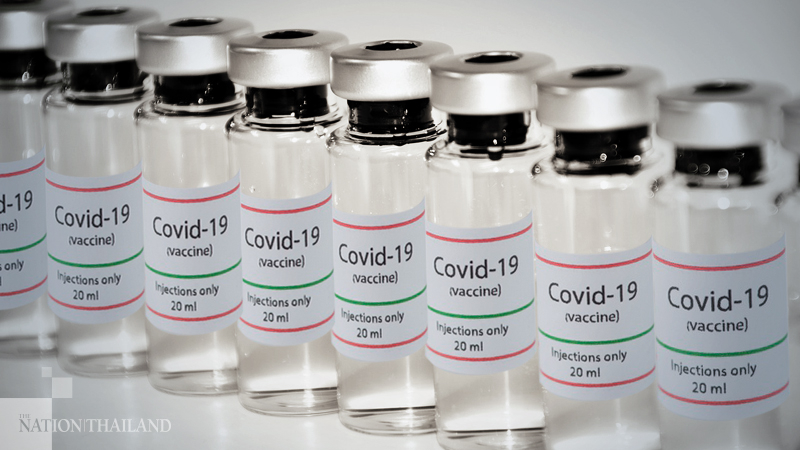
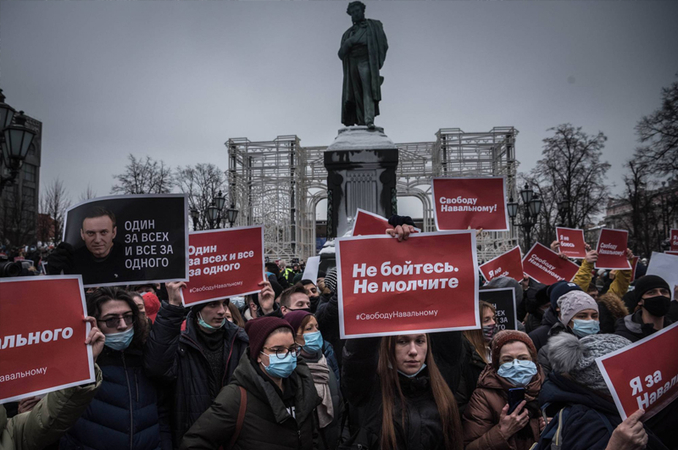
 The AstraZeneca and the University of Oxford Covid-19 vaccine in a refrigerator at the Royal Health & Wellbeing Centre in Oldham, England, on Jan. 21, 2021. MUST CREDIT: Bloomberg photo by Anthony Devlin.
 US President Joe Biden
 Social activists remove and save art from Lafayette Square fencing near the White House on Saturday. Before they took the pieces down, activists photographed and packaged them for an archive. MUST CREDIT: Photo by Astrid Riecken for The Washington Post
 House Speaker Nancy Pelosi, D-Calif, on the day of President Biden’s inauguration in Washington. MUST CREDIT: Washington Post photo by Melina Mara.
 With the U.S. Capitol in the background, the U.S. flag flies at half-staff near the Peace Monument at First Street NW and Pennsylvania Avenue NW on Jan. 8. MUST CREDIT: Washington Post photo by Melina Mara.
 SootinClaimon.Com