
Ten Senate Republicans propose compromise covid relief package, posing challenge for Biden #SootinClaimon.Com

#SootinClaimon.Com : ขอบคุณแหล่งข้อมูล : หนังสือพิมพ์ The Nation.

Ten Senate Republicans propose compromise covid relief package, posing challenge for Biden

InternationalFeb 01. 2021
By The Washington Post · Erica Werner, Jeff Stein, Seung Min Kim

WASHINGTON – Ten Republican senators announced plans Sunday to release an approximately $600 billion coronavirus relief package as a counter-proposal to President Joe Biden’s $1.9 trillion plan, posing a test for the new president who campaigned as a bipartisan deal-maker.

The senators, led by Susan Collins, R-Maine, said they would formally unveil the package on Monday. In a letter to Biden, they requested to meet with him and said they were offering their proposal in recognition of his “calls for unity.”

Biden spoke to Collins and has invited the 10 Republican lawmakers to the White House “for a full exchange of views” early this week, White House spokeswoman Jen Psaki said in a Sunday night statement.

The potential bipartisan discussion comes as Democrats prepare to move forward on Monday to set up a partisan path forward for Biden’s relief bill, which Republicans have dismissed as overly costly given some $4 trillion Congress has already committed to fighting the pandemic, including $900 billion in December.

The GOP proposal jettisons certain elements that have drawn Republican opposition, such as increasing the federal minimum wage to $15 an hour.

It would also reduce the size of a new round of checks Biden wants to send to Americans, from $1,400 per individual to $1,000 – while significantly reducing the income limits that determine eligibility for the stimulus payments.

A $600 billion plan that is a fraction of the size of Biden’s proposal is unlikely to draw much if any Democratic support. However, the GOP offer presents a challenge for Biden, who campaigned on promises to unify Congress and the country and must decide whether to ignore the GOP overture or make a genuine effort to find common ground across the aisle.

“We want to work in good faith with you and your administration to meet the health, economic and societal challenges of the covid crisis,” the Republican lawmakers wrote.

Top Biden economic adviser Brian Deese said on CNN’s “State of the Union” that the White House had received the Republicans’ letter and would review it. But he emphasized that speed was of the essence, and refused to say whether Biden was open to entertaining a smaller overall price tag.

“The president is uncompromising when it comes to the speed that we need to act at to address this crisis,” Deese said.

“The provisions of the president’s plan, the American Rescue Plan, are calibrated to the economic crisis that we face,” Deese said.

The White House is pushing its plan amid signs of a broader economic slowdown and a continued wave of enormously high unemployment claims of close to 1 million a week. The emergence in the U.S. of highly transmissible coronavirus variants has also intensified fears that another wave of lockdowns will be necessary.

Because the Senate is split 50-50 between Republicans and Democrats, it is significant that Republicans assembled 10 lawmakers to get behind the proposal. That means that, if Democrats were to join them, they could reach the 60-vote threshold necessary to pass legislation under regular Senate procedures.

Democrats are planning to skirt the 60-vote requirement using special budget rules that would allow the Biden package to pass with a simple majority vote. Democrats control the Senate because Vice President Kamala Harris can cast tie-breaking votes.

Democratic aides said the GOP proposal would not change their plans to move forward with the budget bill this week that would set the stage for party-line passage of Biden’s plan.

Psaki’s statement said Biden also spoke to Senate Majority Leader Chuck Schumer, D-N.Y., and House Speaker Nancy Pelosi, D-Calif., on Sunday as they prepare to push his relief package.

“The key to getting robust job opportunities is to cease any delay, any inaction, any wait-and-see around this rescue plan,” Jared Bernstein, a member of the White House Council of Economic Advisers, said on “Fox News Sunday.”

“The American people could not care less about budget process. . . . They need relief and they need it now,” Bernstein said.

Biden’s plan would send $1,400 payments to individuals with incomes up to $75,000 per year, and couples making up to $150,000.

Sen. Rob Portman, R-Ohio, one of the signers of the letter, said the GOP plan would lower those thresholds to $50,000 for individuals and $100,000 for couples. Instead of $1,400 checks, the GOP plan would propose $1,000 checks, according to Sen. Bill Cassidy, R-La., another member of the group.

The GOP plan would also reduce Biden’s proposal for extending emergency federal unemployment benefits, which are set at $300 a week and will expire in mid-March. The Biden plan would increase those benefits to $400 weekly and extend them through September. The GOP plan would keep the payments at $300 per week and extend them through June, according to three people with knowledge of the plan who spoke on the condition of anonymity ahead of an official announcement.

Portman criticized Democrats for their plans to go it alone, saying this approach would “jam Republicans and really jam the country.”

The signers of the letter include eight Republican senators who are part of a bipartisan group that has conferred with Biden administration officials about the relief bill. In addition to Collins, Portman and Cassidy, these are Sens. Lisa Murkowski of Alaska, Mitt Romney of Utah, Todd Young of Indiana, Shelley Moore Capito of West Virginia and Jerry Moran of Kansas. Also signing are Mike Rounds of South Dakota and Thom Tillis of North Carolina.

Cassidy strongly criticized Biden for not soliciting broader input from senators in both parties. Speaking on “Fox News Sunday,” Cassidy said the Republican package amounted to $600 billion and was “targeted to the needs of the American people.”

Cassidy also said Biden’s push to raise the minimum wage to $15 an hour would cost millions of jobs.

“You don’t want bipartisanship. You want the patina of bipartisanship. … The president’s team did not reach out to anybody in our group, either Democrat or Republican, when they fashioned their proposal,” Cassidy said. “They’ve never reached out to us – that’s the beginning of the bad faith.”

Democrats bristled at Republican accusations that Biden’s relief proposal would give too much in federal aid to affluent Americans, pointing to GOP support for the 2017 tax law that nonpartisan analysts cut taxes substantially for the wealthiest Americans.

“Reasonable people can have honorable differences on the precise income limits of emergency tax relief. But there’s a degree of hutzpah in the GOP suddenly on their high horse on this point when they were just fine with permanently giving people who make over $5 million more tax relief than the bottom 60% of American taxpayers combined,” said Gene Sperling, an economist who advised the Biden presidential campaign and served as former director of the White House National Economic Council under Presidents Bill Clinton and Barack Obama.

The $900 billion relief bill Congress passed in December included $600 stimulus payments to individuals. Biden’s plan to issue a new round of $1,400 checks would bring that figure to $2,000 – making good on promises he and other Democrats made that helped the party win two Senate seats in Georgia in early January. Those victories gave Democrats the majority in the Senate, and Democrats including the two new senators from Georgia have insisted they must make good on those promises.

“The entire Democratic Party came together behind the candidates in Georgia – we made promises to the American people,” Sen. Bernie Sanders, I-Vt., said on ABC. “If politics means anything – if you’re going to have any degree of credibility – you can’t campaign on a series of issues … and then change your mind. That’s not how it works. We made promises to the American people; we’re going to keep those promises.”

In addition to a new round of checks, a higher minimum wage and increased unemployment benefits, Biden’s plan includes rental assistance and eviction forbearance, an increased child tax credit, some $130 billion to help schools reopen, hundreds of billions of dollars for cities and states, and $160 billion for a national vaccination plan, more testing and public health jobs.

Money for vaccinations – which Federal Reserve Chairman Jerome Powell said recently was key to helping the economy – has emerged as the one real area of bipartisan consensus on Capitol Hill. The GOP plan would match Biden’s call to devote $160 billion to vaccines, testing and related health care spending.

“With your support, we believe Congress can once again craft a relief package that will provide meaningful, effective assistance to the American people and set us on a path to recovery,” the GOP senators wrote.

Myanmar leader held amid fears of military coup #SootinClaimon.Com

#SootinClaimon.Com : ขอบคุณแหล่งข้อมูล : หนังสือพิมพ์ The Nation.

Myanmar leader held amid fears of military coup

InternationalFeb 01. 2021

By The Washington Post
Shibani Mahtani, Kyaw Ye Lynn

HONG KONG – Myanmar’s military said Monday that it took control of the country and declared a state of emergency for a year, hours after detaining civilian leader Aung San Suu Kyi and other leaders of her ruling National League for Democracy in a predawn operation, staging a coup against the democratically elected government.

The raids came hours before a new session of parliament was scheduled to open and members who won the November elections were set to take their seats. Suu Kyi’s National League for Democracy (NLD) won those elections in a landslide, capturing 396 of 476 seats. It was Myanmar’s second democratic election since the country’s fragile transition from military rule to democracy.

NLD spokesman Myo Nyunt told The Washington Post that Suu Kyi, Myanmar President Win Myint and all chief ministers from their party, representing more than a dozen states and regions in the country, were taken at gunpoint. A spokesman for his party was also detained, he said.

“I expect that soldiers will arrive for me soon,” Myo Nyunt said. “This is very likely a coup, but we hope that there will also be negotiation between our leaders and the military.”

Several hours after the raids, the military in a television broadcast said that a state of emergency had been declared in Myanmar, and that power would be transferred to the commander-in-chief Min Aung Hlaing. Myint Swe, a former general and the military-backed vice president, will become the president, the broadcast added.

The sweep included other prominent democracy activists who have been fighting against military rule for decades, leaders of other political parties and NLD lawmakers, according to social media posts and news reports.

Communications appeared to be down or patchy in Naypyidaw, Myanmar’s capital, as well as Yangon, the country’s largest city and commercial hub. The state-run broadcaster Myanmar Radio and Television said in a Facebook post that it was not able to broadcast “due to communication problems.” Websites were also down; the Internet monitoring service Netblocks said national connectivity had fallen to 75% of normal levels.

The military has alleged voter fraud in the November vote, but Myanmar’s election commission has said there is no evidence to support its claims. The military’s proxy party, the Union Solidarity and Development Party, alleged voter fraud after winning 33 seats.

Political tensions and fears of a military takeover have prompted alarm in the international community.

In a statement sent late Sunday in Washington, White House spokeswoman Jen Psaki said the United States was alarmed by the reports and urged Myanmar’s military to adhere to the rule of law and release those detained, or face consequences. “The United States opposes any attempt to alter the outcome of recent elections or impede Myanmar’s democratic transition, and will take action against those responsible if these steps are not reversed,” she said.

On Friday, diplomatic missions in Myanmar affirmed their support for the country’s democratic transition and urged the military to respect the results of the elections.

The military, known as the Tatmadaw, said diplomats were making “unwarranted assumptions” and denied that it was impeding the democratic transition.

Myanmar’s military ruled the country for half a century before beginning a transition to democracy in 2010 and allowing elections that ushered Suu Kyi and her party to power in 2015. But the current military-drafted constitution enshrines power for military generals, who have a quarter of seats in parliament and maintain control over key ministries.

Suu Kyi spent 15 years under house arrest before her release in November 2010, and won the Nobel Peace Prize in 1991 for her resistance to military rule. The military-drafted constitution prevents her from leading Myanmar as president, but she is unequivocally the nation’s leader, revered as a deity, and rules through proxies. The military-drafted constitution also allows the army to step into a situation that may “disintegrate” the county and national solidarity.

Since taking power, Suu Kyi has disappointed old allies in the West, particularly for defending Myanmar – and its military in particular – against charges of genocide over the persecution of the Rohingya ethnic minority. Suu Kyi has in recent years moved closer to powers such as China and India, and grown increasingly estranged from countries such as the United States and Britain, which once led advocacy efforts to get her out of house arrest.

The historian and writer Thant Myint-U said Monday that “the doors just opened to a very different future.”

“I have a sinking feeling that no one will really be able to control what comes next,” he tweeted. “And remember Myanmar’s a country awash in weapons, with deep divisions across ethnic & religious lines, where millions can barely feed themselves.”

– – –

The Washington Post’s Kyaw Ye Lynn in Yangon, Myanmar and Timothy McLaughlin in Hong Kong contributed to this report.

Myanmar leader is detained; party says army staged ‘coup’ #SootinClaimon.Com

#SootinClaimon.Com : ขอบคุณแหล่งข้อมูล : หนังสือพิมพ์ The Nation.

Myanmar leader is detained; party says army staged ‘coup’

InternationalFeb 01. 2021Aung San Suu Kyi on Jan. 27.Photographer: Thet Aung/AFP/Getty ImagesAung San Suu Kyi on Jan. 27.Photographer: Thet Aung/AFP/Getty Images

By Bloomberg
Philip J. Heijmans, Max Zimmerman

Myanmar’s Aung San Suu Kyi and other top leaders have been detained in an early-morning raid in an apparent “coup,” her party’s spokesperson Myo Nyunt said, a move that came after the country’s military disputed its landslide win in a November election.

Ever since Suu Kyi’s party won a landslide victory in a Nov. 8 poll, the second general election after decades of army rule, the military and its political factions have demanded that authorities investigate its allegations of mass voting fraud. Myanmar’s election commission last week had labeled the vote transparent and fair, and the United States, the United Nations and the European Union urged the military to respect the results.

Top military leaders had hinted at seizing power while saying they pledged to work in accordance with the law. In a statement on Sunday, Myanmar’s military – known as the Tatmadaw – denied objecting to the outcome of the election and said it “finds the process of the 2020 election unacceptable.”

Myanmar’s military had retained wide powers under the constitution even after a shift to democracy a decade ago, which prompted the United States and the European Union to lift sanctions on the Southeast Asian country. But initial optimism that sparked a wave of interest from foreign investors quickly dissipated due to a violent crackdown against Muslim Rohingyas that prompted accusations of genocide against Suu Kyi’s government.

The treatment of the Rohingya has tainted the international image of Suu Kyi, who had won the Nobel Peace Prize while under house arrest during a military regime that effectively cut off Myanmar from the world.

In November’s election, Suu Kyi’s NLD won 396 seats in the national assembly, more than the 322 needed to form a government. Turnout was an estimated 70% of the nation’s 37.3 million people eligible to vote. The ruling party has won 524 seats in elections held for state and regional parliaments, official data showed.

Biden’s secret weapon to cleaning up energy is spelled FERC #SootinClaimon.Com

#SootinClaimon.Com : ขอบคุณแหล่งข้อมูล : หนังสือพิมพ์ The Nation.

Biden’s secret weapon to cleaning up energy is spelled FERC

InternationalFeb 01. 2021The Federal Energy Regulatory Commission seal in Washington, D.C., on Dec. 20, 2018. MUST CREDIT: Bloomberg photo by Andrew Harrer.The Federal Energy Regulatory Commission seal in Washington, D.C., on Dec. 20, 2018. MUST CREDIT: Bloomberg photo by Andrew Harrer.

By Syndication Washington Post, Bloomberg · Jennifer A. Dlouhy, Ari Natter, Naureen S. Malik

President Joe Biden outlined ambitious new plans for taking on climate change on Wednesday, but the most potent weapon may already be in his arsenal.

The five-member Federal Energy Regulatory Commission is poised to play a pivotal role fulfilling Biden’s clean-energy ambitions, including his vow to strip greenhouse gas emissions from the power sector over the next 14 years. FERC could help Biden deliver on those promises by fostering carbon prices on electricity, propelling a massive build-out of high-voltage power lines and making it harder to build natural gas pipelines.

“Transforming the American electric sector to produce power without carbon pollution will be a tremendous spurt of job creation and economic competitiveness in the 21st century,” the president said Wednesday, as he signed a series of climate directives.

Biden can’t count on help from Congress. With Democrats having only a narrow hold on the House and Senate, it’s unlikely both chambers will pass broad clean energy legislation, including a nationwide renewable power mandate.

Enter FERC, which can accomplish many of the same goals, said Ari Peskoe, director of Harvard Law School’s Electricity Law Initiative.

“FERC will be an indispensable player in the Biden administration’s clean energy agenda,” Peskoe said. “It’s the federal regulator of two major energy industries — the power sector and the natural gas industry — so it matters a lot in how this energy transition plays out.”

The commission has a big say in the nation’s energy mix because of its role overseeing gas pipelines, liquefied natural gas export facilities and wholesale power markets. The agency dictates how electricity is bought and sold in those wholesale markets, which are where most utilities get their power. And the commission’s decisions governing natural gas pipelines can give developers a green light to invoke eminent domain and install the projects on private land.

Biden has designated Richard Glick as chairman, giving one of the panel’s two Democratic members a chance to immediately steer the agenda. The remaining three seats are set to be occupied by Republicans through mid-year.

There are signs already of FERC’s new approach. Glick complained in a meeting earlier this month that the commission has not paid enough attention to how local, often disadvantaged communities are affected by the natural gas projects FERC scrutinizes. “I have been at the commission for three years, and I’ve seen little in the way of orders to do more than give lip service to environmental justice,” Glick said. “That needs to change .”

And in her opening remarks as a Democratic commissioner, Allison Clements stressed she planned to consider “the grave threat of climate change” in her decisions for the panel.

Environmentalists are counting on FERC to make major changes pushing the nation away from fossil fuels. Activists have already briefed Biden officials on how FERC can impose a climate litmus test to effectively block future natural gas projects. They also are urging policies to encourage state programs rewarding emission-free renewable and nuclear power.

And they have outlined ways FERC can help deliver on Biden’s promise “to build the next generation of electric grid transmission,” with high-voltage power lines that can deliver low-cost renewable power from the Midwest to customers in big coastal cities.

That is critical to meeting Biden’s 2035 goal of carbon-free electricity, said Rob Gramlich, a former FERC policy adviser and founder of Grid Strategies. “You just can’t achieve significant decarbonization without major changes to the grid,” Gramlich said.

FERC’s past transmission efforts have mostly spurred small, local projects, said Jeff Dennis, managing director of Advanced Energy Economy, an association of clean energy businesses. Now, the commission can reform planning processes to encourage big transmission projects that cross multiple jurisdictions and “are really critical to unlocking more capacity for renewables,” Dennis said.

Even a small shift in FERC’s approach to renewable energy could buttress state efforts to subsidize emission-free nuclear, wind and solar power.

States are “a real driver of decarbonization policy,” and FERC policy can ensure they have the power to “to go further and faster,” Dennis said.

Already nearly three dozen states in FERC-regulated markets have adopted clean-power goals.

“A lot of the actions are going to be taking place at the state level in the absence of federal leadership,” said FERC commissioner Neil Chatterjee, a Republican whose term expires at the end of June. “That is going to put FERC squarely in the epicenter of that debate.”

FERC had a mixed record enabling a clean energy transition under former president Donald Trump. On the one hand, it imposed regulations making it easier to integrate battery storage into the grid and explored ways to spur transmission lines critical to support offshore wind farms. However, it also created hurdles for renewable electricity while helping to sustain natural gas power plants, including by imposing a minimum price floor for sales of state-subsidized renewable power in capacity auctions run by the largest U.S. grid.

FERC also is expected to shift its approach to natural gas projects. Glick has argued the panel needs to better consider the climate change consequences of approving natural gas pipelines and export facilities.

“FERC has not kept up with the challenge and the real imminent threat of climate change,” said Joan Walker, an activist with Sierra Club’s Beyond Dirty Fuels Campaign. “The fossil fuel industry is going to find every opportunity to keep perpetuating their business model so it’s absolutely essential and urgent that these changes be made.”

(The Sierra Club has received funding from Bloomberg Philanthropies, the charitable organization founded by Michael R. Bloomberg, the majority owner of Bloomberg LP.)

Under federal law, FERC is supposed to weigh the potential benefits of proposed natural gas pipelines against their potential negative impacts on landowners and the environment, said Sierra Club staff attorney Elly Benson.

“If a pipeline will be pumping a lot of gas and therefore is going to have a lot of downstream emissions, FERC should really be taking a close look,” Benson said. “That should weigh against approving a new gas pipeline.”

Big shifts in FERC’s approach would probably come only after Democrats hold a three-member majority on the commission, and there’s a lull in proposals now pending before the panel. But changes could have lasting impact, said John Moore, who directs a Natural Resources Defense Council project focused on FERC.

The agency is using “a 21-year-old policy on assessing gas projects that we have long argued is way outdated and needs to be replaced,” Moore said. “That is going to definitely be up to the next chair to tackle.”

Olive oil is becoming one of the hottest ingredients in Asia #SootinClaimon.Com

#SootinClaimon.Com : ขอบคุณแหล่งข้อมูล : หนังสือพิมพ์ The Nation.

Olive oil is becoming one of the hottest ingredients in Asia

InternationalFeb 01. 2021Bottles of olive oil move along the production line ahead of labeling at the Borges Agricultural & Industrial Edible Oils plant in Tarrega, Spain, on Dec. 5, 2019. MUST CREDIT: Bloomberg photo by Angel Garcia.Bottles of olive oil move along the production line ahead of labeling at the Borges Agricultural & Industrial Edible Oils plant in Tarrega, Spain, on Dec. 5, 2019. MUST CREDIT: Bloomberg photo by Angel Garcia.

By Syndication Washington Post, Bloomberg · Joanna Ossinger

Twenty years ago, when chef Shinobu Namae cooked at the acclaimed Italian restaurant Acqua Pazza in Tokyo, he had trouble selling dishes made with olive oil, one of the cuisine’s featured ingredients. Customers frequently asked him to omit it from their order.

Today, says Namae, “people in Tokyo love olive oil.” At his Michelin three-star L’Effervescence, the chef can now source locally made oil from Souju, a farm in the Kagawa prefecture that once grew Bonsai plants. Because the owners were expert at pruning, Namae says they can control the growth of the olive trees to sustainably “harvest good fruits constantly.”

Japan’s increasing taste for olive oil has spurred local producers. The country won eight awards, including four gold ones, at the 2020 NYIOCC World Olive Oil Competition. A big winner, Green Basket Japan, has olive groves in Odawara, about an hour outside Tokyo.

In 2019, Japan exported 276.23 metric tons of olive oil, a 209 % increase from 2018 and a 545% increase from 2014.

China is also committing to the olive oil business. In 2020, the extra-virgin, organic oil Xiangyu Coratina won double gold at the Athena International Olive Oil Competition out of 430 entrants. The company that produced it, Xiangyu Oil Olive Development Co., hired an Argentine agronomic engineer, Pablo Canamasas, to produce the winning oil.

“Extra-virgin olive oil consumption in China is increasing at a significant pace,” said Canamasas via email. “Particularly in big cities and in a segment of the population aged 25-35 that has traveled abroad and is more exposed to the Mediterranean diet or has heard of it.”

Xiangyu’s olives are grown in the Wudu District in China’s western Gansu province. The climate has enough similarities to the Mediterranean coast to produce quality olives, including slightly alkaline soil and plenty of sun, according to Xiaoyong Bai, chairman of Garden City Olive Technology Development Co. His Garden Taste oil won a gold medal for quality at the 2018 International Olive Council’s Awards, where it was recognized for its “ripe fruitiness.”

Bai has been growing olives for 23 years; his plantation now encompasses more than 3.7 million acres. A retired civil servant and committed environmentalist, Bai said that he’s helped plant trees “on many barren mountains” via a translator over email. He added: “At present, China consumes 6,000 tons of olive oil every year, with an annual growth rate of 18%.” In 2020, his company exported a batch of olive oil to South Korea, the first time he sold product outside China.

The Asia-Pacific olive market is expected to record a annual growth rate of 4.2% from 2020 through 2025, according to market research firm Mordor Intelligence. Mordor sees the region’s market for olive oil growing rapidly to meet surging demand from consumers because of its health benefits.

In Singapore, Sebastien Lepinoy is likewise pushing world-class oil, but he’s not using local olives. The chef at Michelin three-star restaurant Les Amis spent five months developing a blend to complement his modern French cooking for such dishes as Langoustine de Loctudy-giant shrimp with zucchini and an extra-virgin emulsion.

“I needed an olive oil to match with my cuisine and also, for cheese,” Lepinoy says. He used five kinds of olives from Château d’Estoublon, in Provence, France, to create a blend that he imports, uses, and markets to customers.

Lepinoy has enough confidence in the market for olive oil in Singapore that he’s selling bottles of his smooth, subtly peppery oil for $36 ($48 Singapore). He says there has been good demand for a more healthful fat as an alternative to his restaurant’s famed butter.

Although travel restrictions have kept away tourists who might buy souvenir bottles of oil, restrictions have also kept the city-state’s well-off residents home, and they’ve shown a lot of interest in the olive oil, Lepinoy says.

Still, there is some resistance to olive oil in Asia. “Crazy as it may sound,” says Canamasas, who helped produce Longnan Xiangyu’s award-winning oil, “the Chinese public have the same view we outsiders have on Chinese products: that they are of poor quality.”

Dozens of restaurants in Michigan defy virus restrictions #SootinClaimon.Com

#SootinClaimon.Com : ขอบคุณแหล่งข้อมูล : หนังสือพิมพ์ The Nation.

Dozens of restaurants in Michigan defy virus restrictions

InternationalFeb 01. 2021Diners eat indoors at the Sunrise Family Diner in Howell, Mich., on Jan. 18, 2021. MUST CREDIT: Photo by Ed Ou for The Washington PostDiners eat indoors at the Sunrise Family Diner in Howell, Mich., on Jan. 18, 2021. MUST CREDIT: Photo by Ed Ou for The Washington Post

By The Washington Post · Kayla Ruble, Robert Klemko

HOWELL, Mich. – It’s a Monday morning and the Sunrise Family Diner is full. Retirees in jeans and plaid sit by the window, chatting over coffee and the local newspaper. A sign posted at the entrance urges customers to wear masks, but some don’t. They get seated anyway, within arm’s length of strangers in other booths.

Michigan is under shutdown, but inside Sunrise Family Diner, you might assume there is no pandemic.

This is the other rebellion. While armed extremists gathered outside the statehouse in Lansing a week after a mob stormed the U.S. Capitol in support of President Donald Trump’s false claims of election fraud, dozens of restaurateurs across Michigan held their own protests against reality.

The restaurants are operating in open defiance of the state’s polarizing governor and the restrictions she ordered in an effort to slow the spread of the coronavirus. The businesses say the science on which the rules are based – pushed by the state health department, World Health Organization and the Centers for Disease Control and Prevention – is politicized and untrustworthy.

“I don’t think it’s as bad as they’re saying it is,” diner owner David Koloski said. “The whole thing with the coronavirus is political. I think Democrats are dug in and unwilling to move on this.”

Their protests have thrived for weeks thanks to law enforcement officers who support their cause and state residents willing to travel hours in some cases to patronize businesses where they can flaunt their distaste for Gov. Gretchen Whitmer, a Democrat, and her rules. So far, cease-and-desist orders and fines have done little to dissuade the businesses, and state officials have declined to discuss what recourse they have for dealing with the revolt.

But the consequences are clear, some health professionals say: Even as Michigan’s coronavirus rates have declined, many of the state’s hospitals remain at capacity because of covid-19 patients.

Less than 40 miles away from Sunrise Family Diner, Lansing’s Sparrow Hospital has exceeded 90% capacity since April, even with multiple ICU expansions. Since last winter, more than 100 hospital caregivers have tested positive for the coronavirus and two have died. The hospital has lost more than 160 patients to covid since the pandemic began.

Sparrow president Alan Vierling describes driving past open restaurants and bars – and even more often the obvious house party or big family gathering – and how angry it makes him.

“You see that and you know that there’s a percentage of these folks, once they get covid, some of them will die. And it doesn’t have to be that way,” said Vierling, a registered nurse. “This isn’t like getting leukemia, where you can do everything right and get leukemia and die. With this, you have a choice.”

The scenario here in Michigan is one that is expected to play out increasingly around the country as the pandemic drags on, presenting a challenge for the Biden administration and its plans to use a science-based approach to combating the virus after the previous administration spent much of the past year downplaying its severity and refusing to mandate restrictions – or even model medically recommended protocols.

Koloski, 39, said he can’t afford to abide by the state’s guidelines that limit restaurants to takeout service only.

“If we didn’t open, we would have shuttered. Doors closed. Out of a house, out of a job, out of a car. Me and the rest of my staff,” said Koloski, who has seven employees.

Besides, he said, “I’m not holding a gun to anybody’s head and making them come here.”

So the diner reopened earlier this month, advertising with a group known as Stand Up Michigan. The group, organized by several western Michigan business owners, has held rallies and demonstrations against pandemic-related restrictions across the state, including at the state Capitol.

Restaurants “can’t live on takeout,” said group co-founder Ron Armstrong, whose business manufactures displays and exhibits for trade shows. “Some people said: ‘Either I’m going to have them come and take my keys or I’m going to have to give my keys to the bank. Those are my two choices, but I will not not be open anymore.’ “

Meanwhile, hospitals such as Sparrow are reeling from the consequences of such decisions.

On any given day, the hospital typically has five to 10 ICU beds available – and 30 to 40 patients who need them.

Vierling has been forced to supplement his staff with 90 traveling nurses who work 12-hour shifts, five days a week and live in nearby long-term-stay hotels.

The hospital turned its break rooms into respite rooms after seeing caregivers, one after another, retreat to the rooms to weep. It added massage chairs to soothe and distract.

“If you’d have told me before the pandemic that massage chairs would be one of the biggest, smartest decisions I’d make in this job, I’d say you were crazy,” Vierling said. “We have to try to provide some comfort. We’re trying to save as many lives as possible, and every time we lose somebody, that’s devastating. It’s like watching somebody drown slowly for 10 days.”

– – –

Whitmer announced on Jan. 22 that the state would allow restaurants to resume limited dine-in service beginning Monday. Seating will be limited to 25% of capacity and tables must be six feet apart with no more than six people per table. They also must close at 10 p.m.

“I know that it has not been easy,” Whitmer said, referring to the roughly 2½ month ban.

But, she said, data shows that the state’s actions have worked, and that if people continue to follow the recommendations of the scientific community, further restrictions might not be necessary.

“The science around this virus is settled, and if we can all wear masks and be very smart about congregating, and not do it unless it’s necessary, washing our hands, doing that social distancing, we will be in a strong position in a few weeks,” Whitmer said. “And we’ll be able to do more. That’s the hope.”

But even the loosening of some of the rules isn’t enough for the members of Stand Up Michigan, many of whom said they would continue operating at full capacity.

At All Star Coney Island, it was a full house on a recent Sunday night, with all but one booth filled. That tabletop was reserved for a large sheet of paper on which customers had written thank-you messages to the owners.

“Freedom is given by God. God bless this business!” one customer wrote.

“Thank you for being Patriots! Freedom!” wrote another.

“People need to use common sense. It’s been too long,” said a maskless Kathy Holcomb, 67, as she left the restaurant. “We stay safe. We wash our hands. We wear our masks – well, not just now,” she added, laughing.

Stand Up Michigan keeps a running list of restaurants that are open in defiance of the ban, posting weekly updates for its members, who also swap intel among themselves on the group’s social media site about restaurants they’ve discovered and businesses that allow customers to walk freely through their establishments unmasked.

The number fluctuates, but has more than 60 restaurants in 33 counties spread across the state from the Ohio border to the northernmost reaches of the Upper Peninsula.

The group’s online messaging goes beyond promoting open restaurants to disseminating false information and deceptive data to downplay the risks of the virus. For example, when discussing the risks of indoor dining, Armstrong claims that it is safer to be in a restaurant than it is to be in your home, saying more cases of coronavirus are contracted in small indoor gatherings in people’s homes than in restaurants. He does not provide any data to back up his claim.

Hospital admissions have dropped significantly in recent weeks, but 18 of the restaurants in Stand Up Michigan are in places where hospitals remain above 90% capacity.

As of Friday, Michigan had more than 557,883 confirmed coronavirus cases and 14,497 deaths, according to data from the state health department. Positivity rates were dropping as well, with more than half the state’s counties reporting seven-day positivity averages of less than 6%. But 17 of the state’s hospitals remain at 90 to 100% capacity, including the two in Lansing that serve several surrounding counties.

On Nov. 15, when new restrictions were announced, including the ban on indoor dining, Michigan was at 733 cases per million, according to health department spokeswoman Lynn Sutfin. “Two months in, the current number on our dashboard is 207 per million, a decline of more than 70 percent,” Sutfin said.

“You’d like to think if people could see the results and know they’re possibly putting people in harm’s way, they wouldn’t do it,” said Vierling, the hospital president. “But with this virus, it’s very likely large numbers of people are responsible for deaths of other people and never know it.”

Since mid-November, the state liquor control commission has suspended the licenses of 34 establishments for violating the emergency orders. Two restaurants have received fines of several thousand dollars, including a former Big Boy restaurant that was forced to give up its franchise agreement – and the iconic Big Boy statue – over its continued refusal to shut down.

State health officials declined to discuss what recourse they have for dealing with restaurants that continue to defy orders, or their plans for future enforcement.

Restaurants such as Jimmy’s Roadhouse, on the west side of the state in the town of Newaygo, have continued to operate through cease-and-desist orders and without a liquor license. It’s become a symbol of the restaurant defiance movement.

Jimmy’s also has become a destination for indoor-dining tourists, people who travel from all over the state seeking a place to publicly display their disdain for masks and social distancing.

“On the weekends, that’s one of the tourist attractions. And people drive three, four hours, with their families, elderly people,” owner Jimmy Cory said, noting that one of his “regulars” is an elderly couple that drives two hours from the northern Michigan town of Traverse City.

Cory says the restrictions are merely rules, not laws, and he doesn’t plan to follow them.

“Anything outside of the food code and the liquor code that I’ve been following my entire restaurant career is bull—t and unconstitutional,” he said, adding that “curfews are for comrades.”

Restaurants in many communities appear to have the support of local police, which is complicating enforcement efforts. OSKAR Scots restaurant in the village of Caledonia, was hit with a cease-and-desist order from Kent County’s health department on Jan. 11. A sheriff’s deputy visited to let the owner know that the department’s phone had been blowing up with reports about the business being open in defiance of the restrictions.

“I said, ‘Well what happens next with you?’ And he goes, ‘Nothing.’ He goes, ‘I’ll be seeing you tomorrow for coffee and breakfast,’ ” owner Randall Scot recalled.

The sheriff’s department did not respond to requests for comment. The county health department said it could not comment on specific cases.

Scot, 52, said a trip to Florida convinced him to ignore the state restrictions. His family visited the Sunshine State, where restaurants are allowed to remain open at 100% capacity, over Christmas.

“I decided at that point of time I’ll never shut my dining room down again,” he said.

Scot, who received a second cease-and-desist order from the county health department on Jan. 19, said operating at 25% of capacity simply isn’t enough.

“I have the right to not be deprived of my life, liberty or property without due process of law,” Scot said via a text message. “I have fantastic representation and will fight if I have to. I am STANDING UP.”

Russia cracks down on Navalny protests, locking down city centers and arresting thousands #SootinClaimon.Com

#SootinClaimon.Com : ขอบคุณแหล่งข้อมูล : หนังสือพิมพ์ The Nation.

Russia cracks down on Navalny protests, locking down city centers and arresting thousands

InternationalFeb 01. 2021Alexei NavalnyAlexei Navalny

By The Washington Post · Isabelle Khurshudyan, Robyn Dixon

MOSCOW – The Kremlin responded to a second straight weekend of protests on Sunday with a violent crackdown, arresting thousands in a show of Moscow’s unease at the growing unrest triggered by the treatment of jailed opposition leader Alexei Navalny.

A week after tens of thousands of Russians joined demonstrations in more than 100 cities throughout the country, authorities moved to stem Sunday’s rallies before they started, using more aggressive tactics.

But thousands came out despite the threat of arrest – the turnout in some Russian cities was believed to be higher than a week ago – boosting the opposition’s hope of a sustained movement.

Hours after protests began in Russia’s two largest cities, Moscow and St. Petersburg, the monitoring group OVD-Info reported that more than 5,000 people had been detained throughout the country, more than were arrested last Sunday. Navalny’s wife, Yulia, was arrested again.

To head off an afternoon protest planned for Moscow, the city shut down seven Metro stations four hours in advance, told stores and restaurants to close and blocked several roads around the Kremlin, sealing off much the capital’s center.

Police with black helmets and batons were posted along side streets, and they set up checkpoints and restricted people from passing. Large vehicles belonging to Russia’s National Guard parked in front of the famed Bolshoi Theatre; police trucks lined up outside of Moscow’s luxury department store, Tsum.

In an effort to defeat the authorities’ blockade, Navalny’s team announced a new meeting point, about a mile from the original location of Lubyanka Square.

The choice of Lubyanka had been symbolic: It’s in front of the headquarters of the Federal Security Service, the agency that Navalny has said was ordered by President Vladimir Putin to poison him. Navalny took ill during a trip to Siberia in August; Putin has denied involvement. “Who needs him, anyway?” Putin asked a news conference last month. “If we had really wanted, we’d have finished the job.”

Navalny was flown to Germany to recover; he returned to Russia this month and was arrested soon after his arrival.

With movement around Moscow heavily restricted Sunday, turnout was smaller than last week’s estimated 40,000. Those who did come out weren’t exclusively Navalny supporters; some said they wanted to express their unhappiness with the Russian government.

“I’m worried about my future,” said 18-year-old Masha Ulyanova. “They don’t allow people to just walk. They don’t allow people to express their opinion. It’s very sad that our authorities have reached the stage where they have resorted to such strict measures.

“They are afraid that they’ll lose power and they will have to live in this poor country that they have robbed.”

Security forces using megaphones to threaten arrests competed with the honking support of passing cars. As people were detained, the demonstration simply moved to a new location – with police buses right behind them.

Protesters steadily made their way to Matrosskaya Tishina, the pretrial detention center where Navalny is being held. Some traced “Svoboda” – the Russian word for “Freedom” – into snow-covered parked cars.

In a repeat of last week’s events, Yulia Navalnaya was again detained. A squad of heavily armored riot police snatched her out of the crowd and bundled her into an unmarked black van with tinted windows that then sped off.

In St. Petersburg, police used stun guns and batons to corral and detain protesters. Journalists, identifiable in neon yellow press vests, were among those knocked down and forcefully carried off. As riot police formed a wall before protesters and banged on their shields, the demonstrators clapped defiantly in response, videos posted to social media showed.

In Chelyabinsk, more than 1,000 miles east of Moscow, one man shouted that he “can’t breathe” as security forces pinned him to the ground.

“The U.S. condemns the persistent use of harsh tactics against peaceful protesters and journalists by Russian authorities for a second week straight,” Secretary of State Antony Blinken tweeted Sunday. “We renew our call for Russia to release those detained for exercising their human rights, including Aleksey Navalny.”

Seven thousand people turned out in Yekaterinburg, near the Ural Mountains, which was more than last week’s turnout. Protesters in the Far East city of Vladivostok danced in a large circle over the frozen Amur Bay and chanted: “My Russia is in prison.”

Protesters were again undeterred by the bitter cold. The temperature was 45 degrees below zero Sunday in Yakutsk, considered the world’s coldest city; a small group walked around the snow-covered main square. In Siberia’s Krasnoyarsk, where it was 22 below, protesters held hands and sang the Russian national anthem. Later, riot police surrounded the crowd on all sides, according to a photo posted on Twitter.

In Novosibirsk, Russia’s third-largest city, the reported turnout of 5,000 exceeded last week’s. Protesters marched toward the main government building, chanting: “Putin is a thief.”

After about 4,000 people were detained in connection with the Jan. 23 rallies, the turnout in most cities on Sunday appeared to be lower.

A Moscow court last week denied Navalny’s appeal for release from pretrial detention. In an apparent effort to quiet protest organizers, five of his allies were detained for allegedly violating coronavirus regulations at last weekend’s demonstrations and were placed under house arrest until March 23.

Sergey Smirnov, the editor in chief of Russia’s independent Mediazona news outlet, was detained on Saturday while out with his young son. He was accused of breaking protest regulations with a retweet. He was released Saturday evening amid a rising backlash on social media; he’s scheduled to appear before a court Wednesday.

In a message posted on Navalny’s website Thursday, he said the state television channels to which he has access to in jail described the protests as “a couple small rallies held in a couple cities.”

“It seems to me it was not at all like that,” Navalny said. He said people are afraid, but they also know “you can’t put everyone in prison.”

“Come on out, don’t be afraid of anything,” he said. “Nobody wants to live in a country where tyranny and corruption reign. The majority is on our side.”

Navalny will have another opportunity to galvanize support on Tuesday, when he is scheduled to appear in court for allegedly violating the terms of his probation from a 2014 embezzlement case while he was recovering from his near-fatal poisoning abroad. He returned to Russia on Jan. 17 but was arrested before passing border control at the airport.

Navalny has managed to rattle the Kremlin even from behind bars. His recent “Putin’s Palace” video investigation into a palatial billion-dollar Black Sea estate allegedly built for Putin through a complex slush fund has eclipsed 100 million views on YouTube.

As an indication of the video’s impact – owning an opulent mansion was an especially bad look in a week when the state statistics agency reported that nearly 20 percent of Russians live below the poverty line – Putin took the unusual step last week of personally denying that he or his close relatives own the property.

Some protesters on Sunday held up toilet brushes, a reference to the golden ones worth $850 allegedly purchased for the palace.

On Saturday, oligarch Arkady Rotenberg, Putin’s longtime friend and former judo sparring partner, told the pro-Kremlin Mash Telegram channel that he owns the property.

Navalny aide Leonid Volkov said the Russian people were not fooled. “Putin and the Kremlin consider Russian citizens a bunch of manipulated imbeciles,” he tweeted. “We don’t think so.”

Katya Volobuyeva, a 20-year-old university student, said Sunday’s protest in Moscow was the first unsanctioned one she had ever attended, “because it’s impossible to live the way we do in this country, because they tried to murder a person because of what he said, and because they build huge palaces with our taxes.

“They are so afraid of us that they blocked the whole city off,” she said. “My mom knows that I’m here and agrees with it, but she’s worried about me.”

Immigrant families separated at border, reunited, separated again #SootinClaimon.Com

#SootinClaimon.Com : ขอบคุณแหล่งข้อมูล : หนังสือพิมพ์ The Nation.

Immigrant families separated at border, reunited, separated again

InternationalFeb 01. 2021Antonio, Carolina and their daughter Mariel stand in front of the home of Carolina's parents in western Honduras. MUST CREDIT: Washington Post photo by Kevin SieffAntonio, Carolina and their daughter Mariel stand in front of the home of Carolina’s parents in western Honduras. MUST CREDIT: Washington Post photo by Kevin Sieff

By The Washington Post · Kevin Sieff

EL PROGRESO, Honduras – Thirty days after they were separated at the U.S.-Mexico border, held on opposite sides of the United States, Antonio and Maily were reunited at midnight in the parking lot of a South Texas detention center.

Antonio looked at his 7-year-old daughter and thought: “They are returning all of my happiness in a single moment.”

Attorneys and volunteers watched as they hugged. It was July 2018 – days after the Trump administration’s family separations policy was halted. The reunion seemed permanent, a bookend to the most controversial U.S. immigration directive in decades.

But six months later, they were separated again. Antonio went to a scheduled check-in at an Immigration and Customs Enforcement office in central California. He was handcuffed by ICE agents while Maily was in her second-grade class. They have not been together since.

A federal court ordered the government to reunite the thousands of families separated under Trump’s zero-tolerance policy. But many of those parents were released from detention without any legal status in the United States. They were back with their children, but immediately subject to deportation and reseparation.

Antonio, a part-time mechanic, landed in Honduras alone on Jan. 16, 2019. He was not allowed to say goodbye to his daughter. Their second separation has so far lasted two years. Maily is now a fourth grader in New Orleans.

“Separating us once was horrible enough,” he said between sobs at his home in rural Honduras. “Now it feels like I’ve died twice.” He spoke on the condition that his last name be withheld for fear of reprisals in Honduras.

Two and a half years after President Donald Trump ordered an end to family separations, immigration attorneys and advocates are growing increasingly concerned about reseparations. The policy of taking children from their parents at the border provoked global outrage, but far less attention has been paid to those families – or their legal cases – afterward.

Parents and children emerged with separate immigration cases – often with pending removal orders and no attorneys. In hundreds of those cases, parents have been ordered deported while their children’s asylum or visa applications were being processed.

– – –

The American Civil Liberties Union announced in November that it had been unable to locate 666 parents who were separated from their children at the border. Since then, attorneys have learned that some of them were reseparated and deported alone. In recent weeks, advocates have located more than a dozen reseparated parents in Central America.

“Even after families were reunited by the court, the Trump administration tried to reseparate them by deporting the parent,” said Lee Gelernt, the lead ACLU attorney on family separation. “Incredibly, one separation was not enough for the Trump administration.”

As the Biden administration prepares to launch a task force to potentially reunite hundreds of Central American families, cases such as Antonio’s are a reminder of the complicated legal path beyond reunification. It remains unclear what legal status the administration will offer to reunified families and whether it will protect them from deportation. There’s no guarantee that reseparated parents will be allowed to return to the United States.

Images of separated children in makeshift detention centers in 2018 prompted an outpouring of anger and activism. The Trump administration said it had separated at least 5,500 migrant children from their parents.

After Trump signed an executive order ending the policy, new images showed tearful reunions. It might have seemed as if the crisis had ended.

But hundreds of parents had been deported without their children; hundreds more were reunited, but issued deportation orders that meant they could be reseparated at any moment. Often parents were unaware of their removal orders, assuming that reunification implied a path to legal status. It did not.

“The government failed to give these parents basic information about their cases,” when they were released to be reunited with their children,” said Conchita Cruz, co-executive director of the Asylum Seeker Advocacy Project.

According to an analysis of roughly two thousand cases of parents and children separated at the border, about 13% have removal orders, said to the National Reunited Families Assistance Project, a legal cooperative. It’s unclear how many of them have been deported.

– – –

Weeks after Antonio was reunited with his daughter, an ICE agent put a tracking monitor around his ankle and directed him to check in at the agency’s office in Santa Maria, Calif., every 15 days. It was at one of those check-ins, he said, where an agent told him: You don’t have anything here. You’re going back to your country.

He asked whether Maily could return with him to Honduras. He said he was told to give up custody to a relative in the United States or she would be put up for adoption.

The Department of Homeland Security did not respond to requests for comment.

Antonio, who had fled repeated threats of violence in Honduras, was put on a charter flight back to his country. On his return, he relocated to a new area with his wife, Carolina, and another daughter. Their new home lay in a flood plain. When Hurricanes Iota and Eta blew through in November, it was destroyed. He shared a video that shows him up to his shoulders in water, searching for his possessions.

For a while, Maily stayed with an uncle in California. She would burst into tears without warning, often in her classroom. She explained to her teachers that she had been separated – twice – from her father. She is scheduled to begin therapy in the coming weeks.

“I just don’t understand why they did this,” Maily, now 10, said by phone.

Antonio and Maily speak on video calls a few nights a week. Antonio asks Maily how her English is progressing. Maily asks Antonio whether he’s safe. Her first court date is scheduled for December 2022.

During their years apart, she had tried to come up with ideas of how to get her father back to the United States. Last month, in her latest effort to reunite the family, she scribbled a letter to President-elect Joe Biden.

“Congratulations on your new job as president,” she wrote in Spanish. “My reason for writing is to ask you to please help bring my dad and mom and sister to the United States. If you’re able to do this I’ll be the happiest girl in the world.”

She drew a picture of her family, a wide space between herself and everyone else.

Child welfare advocates warn of the trauma inflicted on children who have been separated twice.

“Each time you do this you’re just multiplying by an exponent the level of terror,” said Ken Berrick, founder of Seneca Family of Agencies, which has been charged with linking separated families to mental health providers. “When this is your only experience as a child it becomes a part of who you are – it has lifelong impacts.”

– – –

Reunited families were released into legal peril for a range of reasons, each a reflection of a complex immigration system.

Parents were issued notices to appear in courts, but without dates; they unknowingly missed their hearings and were ordered removed in absentia. Some were never given notices to appear in court at all. Others were ordered deported while in detention, but they were inexplicably released and reunited with their children. For hundreds of reunited parents, deportation orders mean they cannot promise their children that they will not be separated again.

Henry, a 47-year-old Guatemalan man, was separated from his 7-year-old son, Brandon, in 2018. When they were reunited three months later, Henry already had a deportation order.

He says his son panics every time they see a police officer. A few months ago, when Henry had a scheduled check-in with ICE, his son called him frantically: Are they going to send you back to Guatemala?

“He’s always so scared that I’m going to be deported. But I told him, ‘No, they gave me another chance,’ ” Henry said. “Maybe the U.S. immigration officials want to watch me for a while, to see what kind of a person I am.”

Families have discussed what to do in the case of a reseparation. If a parent is deported, he or she can typically choose whether the child should return as well. But because of the conditions the families fled in Central America, those decisions are not straightforward.

“The fact that they don’t have any kind of security that they can remain here with their child – that they can be deported at any moment – it just adds to the extraordinary amount of trauma that families have gone through,” said Ann Garcia, a staff attorney with Catholic Legal Immigration Network.

Young people spreading covid a concern in rapidly aging Japan #SootinClaimon.Com

#SootinClaimon.Com : ขอบคุณแหล่งข้อมูล : หนังสือพิมพ์ The Nation.

Young people spreading covid a concern in rapidly aging Japan

InternationalFeb 01. 2021Visitors on the Kawaramachi shopping street in Kyoto, Japanb, on Jan. 14, 2021. MUST CREDIT: Bloomberg photo by Kosuke Okahara.Visitors on the Kawaramachi shopping street in Kyoto, Japanb, on Jan. 14, 2021. MUST CREDIT: Bloomberg photo by Kosuke Okahara.
By Syndication Washington Post, Bloomberg · Shiho Takezawa, Marika Katanuma

The world’s most rapidly aging society has long struggled to talk to its youth. That’s a disconnect that’s turning deadly in the pandemic.

The difficulty in persuading young adults to upend their lifestyles to prevent covid-19’s spread has challenged countries across the globe. Yet nowhere are the stakes higher than in Japan, where nearly a third of residents are over the age of 65, and the virus response depends on voluntary cooperation.

The nation has so far relied on people changing their behavior in its largely successful fight against the virus, as authorities lack the legal ability to enforce lockdowns. But while calling for cooperation worked in the early days of fighting an unknown pathogen, like their global peers younger Japanese are increasingly hit with virus fatigue. That’s left officials struggling to persuade a demographic that’s least likely to be struck by a harsh bout of Covid, but most likely to pass the virus on.

Government officials and health experts have been exasperated at their inability to communicate with younger people — and sometimes expressed incredulity at the fact that they don’t read newspapers or watch TV, the methods typically used by the government in Japan to reach wide audiences.

Younger people are “one of the key factors in controlling the virus spread,” said Hitoshi Oshitani, a professor of virology at Tohoku University and a member of the expert panel advising the government, “but these are the most difficult people to send a public health message to.”

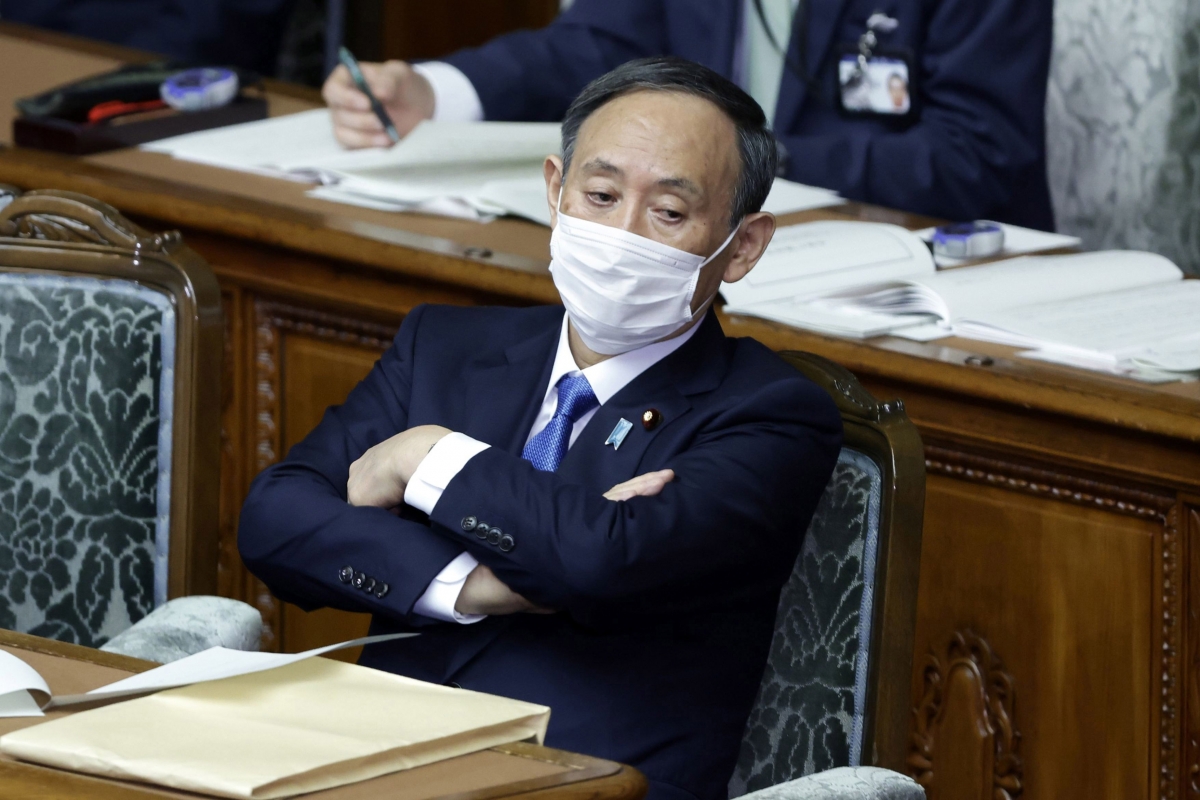
Prime Minister Yoshihide Suga attends an ordinary session at the lower house of parliament on Jan. 18. MUST CREDIT: Bloomberg photo by Kiyoshi Ota.

Prime Minister Yoshihide Suga attends an ordinary session at the lower house of parliament on Jan. 18. MUST CREDIT: Bloomberg photo by Kiyoshi Ota.

Authorities have tried various approaches to get the youth on board, as winter tests Japan’s less restrictive strategy and cases spike. Prime Minister Yoshihide Suga has appealed to their emotions, pleading with them to think about the lives of their grandparents. Japan’s virus czar Yasutoshi Nishimura invoked self-interest, raising the specter of a tougher job-hunting environment should the pandemic drag on and continue to impact the economy.

Other attempts have fallen flat. In August, Tokyo Governor Yuriko Koike released a video with popular YouTuber Fuwa-chan, where the two discussed lifestyle changes to help combat the virus. The video garnered around 370,000 views. A separate behind-the-scenes episode, where Fuwa-chan told jokes as she applied makeup and fretted about how to act with the governor, but said little about the virus, got over a million.

Suga himself, who is struggling with collapsing approval ratings during the latest virus surge, sought advice last week on how to use social media to better communicate his policies, according to a report.

In interviews with Bloomberg News, multiple students and young professionals say the government’s communication has failed to be empathetic to their situation and is unconvincing.

“During the prime minister’s press conferences, there’s no words of comfort or gratitude for the young — instead he just says the youth are infecting the elderly and need to stop. It’s not right,” said Koki Ozora, a 22-year-old college student who runs a mental health hotline for young people. He criticized politicians’ habit of holding dinners even as virus cases spread, and called for authorities to show more sympathy with young people.

“People in government tend to be more conventional and like to rely on methods that’s been used before,” said Makoto Shimoaraiso, a member of the coronavirus strategy office at the Cabinet Secretariat. “This is something I think many countries are struggling with.”

In Canada, Hollywood actor Ryan Reynolds recorded a message in August telling young people to act more responsibly. A German commercial that hailed a young couple being couch potatoes as heroes went viral in November. Yet these measures also appeared to have limited impact amid spiking virus cases.

About a fifth of the more than 300,000 confirmed infections in Japan are among people in their 20s – the largest proportion of any age group. Because they are younger and more mobile, that age demographic is also the most likely to pass on the virus and be part of super-spreader events.

While Japan’s youth are interested in social issues such as climate change and gender equality, most youth don’t see politics as a way to bring about change, said Kazuma Ito, the 22-year-old founder of PoliPoli, a website that helps communicate concerns among younger generations to politicians.

“It’s very difficult for young people to have a voice in politics,” he said.

One way to appeal to youth on covid-19 is by placing the wellbeing of their social group on their shoulders, said Dominique Brossard, a professor specializing in science communication at University of Wisconsin at Madison.

She pointed to the decades-old “Friends don’t let friends drink and drive” slogan in the U.S. as one successful campaign that helped lower incidence of youth drunk-driving. Simply relaying information about the virus may have limited effectiveness with the younger generation, who are accustomed to being bombarded with a constant stream of content.

The pandemic has also robbed young people of economic opportunities as jobs disappear. Many of Japan’s most coveted jobs at big companies start with being hired right out of college, but the jobs-per-applicant ratio for those openings was at a six-year low in 2020 — with 122,000 fewer spots anticipated compared to the year earlier.

“Even if the young make a big effort to stay home, there’s little benefit we can receive in the future,” said 19-year-old college student Lily Yoshida.

Egyptian charity is an oasis of care amid misery of the pandemic #SootinClaimon.Com

#SootinClaimon.Com : ขอบคุณแหล่งข้อมูล : หนังสือพิมพ์ The Nation.

Egyptian charity is an oasis of care amid misery of the pandemic

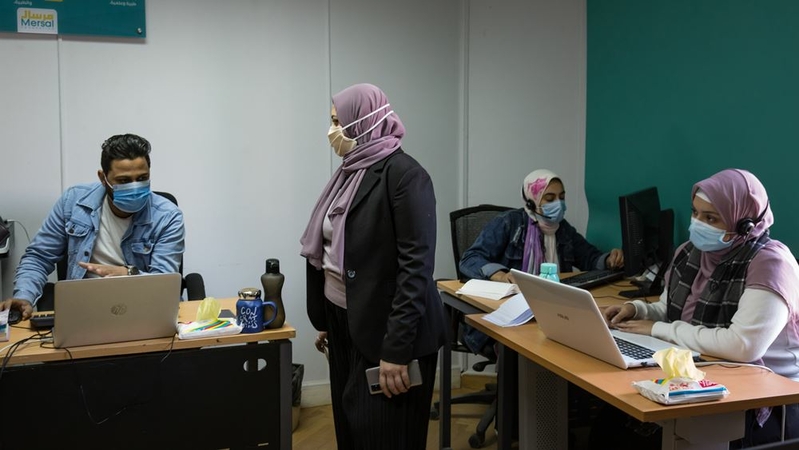
InternationalFeb 01. 2021Heba Rashed, 40, founder and CEO of the Mersal Foundation, on Jan. 21 in the group's emergency call center in Cairo. MUST CREDIT: Photo for The Washington Post by Sima DiabHeba Rashed, 40, founder and CEO of the Mersal Foundation, on Jan. 21 in the group’s emergency call center in Cairo. MUST CREDIT: Photo for The Washington Post by Sima Diab

By The Washington Post · Sudarsan Raghavan

CAIRO – The pleas for help were flooding in. By 2 p.m., Raba Mokhtar was picking up the 131st call of the day to the Mersal Foundation’s 24-hour hotline. Like the vast majority, it was related to the coronavirus pandemic.

On the other end of the line, a woman was frantically describing the condition of a relative, a 67-year-old man who had tested positive for the virus. He had a 100-degree fever and could hardly breathe. They had first tried the Health Ministry’s hotline to look for a bed in a government hospital, with no luck.

“So, you called them and they placed him on a waiting list?” Mokhtar confirmed, peppering the woman with questions and jotting down answers. “And he needs an intensive care unit?”

In a country where government health resources can be either stretched or inadequate and where most people cannot afford hospitalization, a once little-known charity has become a lifeline for thousands of Egyptians. For the past year, and especially during the latest coronavirus wave, the Mersal Foundation has contracted and paid for beds in private hospitals or provided oxygen tanks to people in need.

Mersal and its founder, Heba Rashed, have become so trusted that more than a quarter-million people now follow her social media accounts to learn the true impact of the pandemic in Egypt. Her posts have become an antidote to a widely criticized lack of transparency in the government’s response to the crisis. Today, many Egyptians cling to Rashed’s every assessment.

“Founder and CEO of the NGO @Mersalcharity, one of the most trusted voices on Covid19 in Egypt, stating that there is a slight decline in the number of cases,” tweeted the Big Pharaoh, a well-known blogger, on Jan. 13. “A similar report of her during wave 1 preceded a decline. Situation is still very serious, but let’s hope.”

Egypt has reported about 165,000 infections and 9,100 deaths since the start of the outbreak. Medical experts and even government ministers have publicly said the real numbers are far higher.

President Abdel Fatah al-Sissi’s government has sought to suppress critics who contradict official accounts of the pandemic. At least 15 people have been arrested for spreading “false news” about the virus, U.N. officials said. Doctors have been jailed or reprimanded for complaining about a lack of protective equipment, and a Western journalist was expelled for publishing data that questioned the official toll.

The lack of public confidence deepened in January when a video went viral online claiming that coronavirus patients at a government hospital had died because of a lack of oxygen. The government denied the report, but a week later Sissi ordered a doubling of oxygen production to meet increased demand.

Against this backdrop, the Mersal Foundation has emerged as a trusted oasis of care.

And every day, Rashed has become a covid-19 prognosticator for her legions of followers. “It makes me feel very responsible for every word I utter,” said Rashed, 40. “People get affected by everything I say.”

The entrance to Mersal Foundation offices in Cairo. MUST CREDIT: Photo for The Washington Post by Sima Diab

The entrance to Mersal Foundation offices in Cairo. MUST CREDIT: Photo for The Washington Post by Sima Diab

Growing up in Jordan and the Egyptian desert town of Fayoum, Rashed never intended to start a charity. In college, she studied Spanish and Arabic and later earned a master’s degree in linguistics and several diplomas in other fields. She later worked as a linguist and as a project manager. In her spare time, she volunteered at a local charity.

Soon, Rashed said, she found she had “no passion” for her job and found her charitable work more fulfilling. She also noticed there were few nonprofit groups in Egypt specializing in health issues. So with two other friends, she launched Mersal five years ago.

“It was truly hard at the start,” Rashed recalled. “We had no connections.”

Eventually, they found a sympathetic donor. He gave roughly $1,300, and they set up the charity in Rashed’s apartment. Slowly they grew, soliciting donations mostly on social media. They began to get noticed by some larger donors.

Today, the foundation has four offices in Cairo and one in the northern city of Alexandria, with roughly 200 employees, according to Rashed. She is often hooked, like an IV, to her phone, fielding scores of calls daily with the energy of a teenager.

On a recent afternoon, Rashed was at the foundation’s office on a quiet tree-lined street in Cairo’s affluent Maadi enclave, in a large, multilevel house with a green gate. At the reception area, several people were seeking financial help to address various medical ailments.

The nerve center is a small room with eight desks and a rotating shift of employees answering the hotline round-the-clock. The past few weeks, in particular, have been busy, averaging 60 to 70 coronavirus emergencies per day.

“The second wave is much more vicious than the first one, in terms of the intensity of the infection,” Rashed said. “The number of infections is bigger than the last wave. The symptoms are much more.”

She was infected. So were more than half of her 100 employees in the office, forcing mass isolations.

“It made it very hard to do our work,” Rashed said matter-of-factly.

Still, the foundation kept operating.

The case of the 67-year-old man who had been struggling to breathe was typical. His oxygen levels were extremely low, though he was using a tank. He was also suffering from diabetes and a heart condition, exacerbating the effects of the coronavirus.

Mokhtar, the employee who took the call, asked the man’s relative to send a complete medical report, X-rays of his lungs and any bloodwork. Mokhtar gave her the WhatsApp number.

“We will show them to the medical department, and we will get you a bed when one becomes available,” Mokhtar said. “Peace be with you.”

Finding a bed usually takes a few hours but can stretch into a day or two, employees said. During the earlier wave in the summer, few private hospitals accepted covid-19 cases, and the government hospitals were less prepared, creating huge shortages of beds.

Now, the foundation has contracted with more than 30 private hospitals. In some cases, patients who need help getting care can pay some or all costs. Mostly, though, the charity pays as much as $1,300 per day for hospital beds in intensive care units, money obtained in large part through online appeals for donations. In many instances, beds in government hospitals eventually become available, allowing the foundation to save its funds for the neediest cases.

“The government has prepared more hospitals to treat the virus, and the private sector has started to deal with it as well,” Rashed said.

Nearly 90 percent of patients hail from urban areas, and they often contact to the foundation when the symptoms become unbearable, said Magdy Eissa, the foundation’s medical director. The charity also has helped 22 infected refugees, largely from sub-Saharan Africa, since December.

The foundation’s Facebook page is filled with grateful notes from patients and their relatives, urging people to donate. There are also searing descriptions of the toll the virus has taken.

Hossam Elagamy wrote about his family’s struggle last year to save an aging, diabetic relative infected with the virus who fell ill and started to vomit. The ambulance arrived three hours later, but the paramedics refused to transport the man, because he had not taken a coronavirus test. Finally, an hour later another ambulance came and took him to a hospital.

At the hospital, the staff refused to give him an ICU bed, saying they were not equipped to treat covid-19 cases. An hour later, an ambulance took him to another hospital. It, too, was full.

“We called everyone we know who might help and it was in vain,” Elagamy wrote.

He finally went online to search for options for hospitals. He spotted a Facebook post from a woman applauding the Mersal Foundation’s efforts. Elagamy called the hotline and was asked to send his relative’s medical report.

Fifteen minutes later, the foundation had found a hospital bed, he wrote. But his relative’s condition deteriorated at the facility. He later died, Elagamy said.

“May God remove this crisis,” Elagamy wrote. “May God end this epidemic.”