Putin critic Navalny sentenced to prison for more than 2 years #SootinClaimon.Com

#SootinClaimon.Com : ขอบคุณแหล่งข้อมูล : หนังสือพิมพ์ The Nation.

Putin critic Navalny sentenced to prison for more than 2 years

InternationalFeb 03. 2021 Alexei Navalny Alexei Navalny
By The Washington Post · Isabelle Khurshudyan, Robyn Dixon

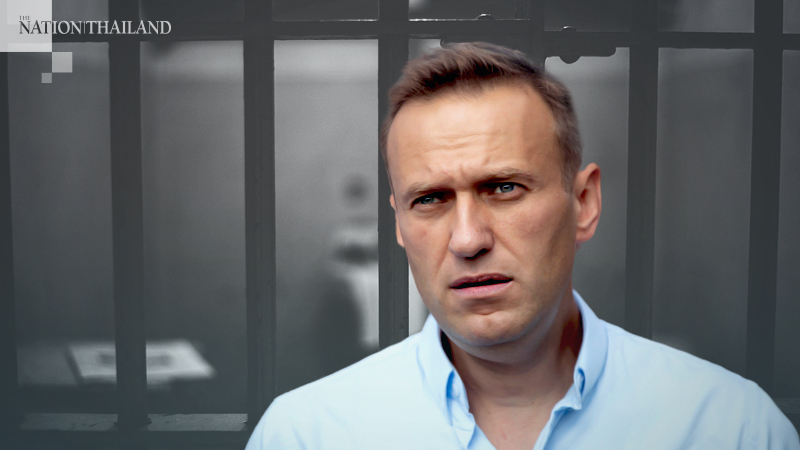
MOSCOW – Russian opposition leader Alexei Navalny was ordered to spend the next 32 months in prison Tuesday as he defiantly denounced President Vladimir Putin and said his supporters will not be intimidated by widening Kremlin crackdowns.
Hours after the verdict, protesters heeded Navalny’s call. Several thousand people marched through central Moscow and St. Petersburg, chanting “Russia without Putin” and “Freedom.” Riot police detained hundreds of people and beat some in the crowd with batons, according to video posted on social media.

Navalny again accused Putin of ordering the nerve agent attack that nearly killed him in August and rejected the case against him – for alleged probation violations – as political retribution less than three weeks after he returned to Russia.

Navalny, in court in a glass-enclosed pen, thanked the tens of thousands of supporters who have taken to the streets to call for his freedom in recent weeks. In another swipe at authorities, he paid tribute to members of his team targeted by authorities in arrest sweeps of opposition activists.

As his wife, Yulia, cried during the verdict – two years and about eight months in a penal colony – he drew a heart for her on the glass wall of his court cage.

She waited in the front row of the courtroom seating area until he was released from the cell, ripping off her black mask and lifting an arm to wave to him as police led him off in handcuffs.

“Bye. Don’t be sad,” he yelled to her. “Everything is going to be all right.”

In an emotional address to the court, Navalny said Putin would be remembered in history as “Vladimir the poisoner.”

“I’m guarded here by the police. Half of Moscow is blocked off because we proved that he issued orders to steal underwear from his opponent and smear it with chemical weapons,” Navalny said, referring to the poisoning attack in the Siberian city of Tomsk.

He said the “show trial” was a scare tactic that would not work.

“This is not a demonstration of strength,” he told the court. “It is a demonstration of weakness.”

To stem planned protests in the aftermath of Navalny’s conviction, four metro stations were closed in central Moscow as scores of riot police began detaining people, local media reported. Pushkin Square, also in the city center, was cordoned off with metal barricades.

More than 1,000 people were detained Tuesday, according to rights group OVD-Info. It followed the detention of more than 5,000 Sunday and more than 4,000 the previous weekend – both ominous single-day records since the organization began counting arrests in 2011.

“The current situation is a pivotal moment for Putin’s regime,” Tatiana Stanovaya, the head of the R. Politik think tank, said on Twitter. “For the first time in 20 years, it faces a completely new situation. This is the first time the Kremlin is unable to channel public discontent in a controllable direction.”

Speaking to the court earlier, Navalny demanded his freedom, saying that Russia was trying to jail him over a 2014 case in which the European Court of Human Rights had already cleared him.

“Someone did not want me to take a single step on the territory of Russia as a free man,” he said, referring to his return to Russia on Jan. 17 from Germany, where he recovered from the poisoning.

He called on Russians not to be afraid because “they can’t arrest the entire country.”

In what sounded like a campaign speech, Navalny referenced the “20 million people living below the poverty line” in Russia and “tens of millions living without the slightest prospects for the future” while “the only thing growing is the number of billionaires.”

Both the judge and the prosecutor attempted to silence him, imploring him to discuss just this case. Navalny talked over them, insisting it was all related, and continued his remarks, which lasted more than 16 minutes.

He vowed to continue his fight, “despite the fact that I am under the control of people who like to smear everything with chemical weapons, and no one will give three kopecks for my life.”

Moments after the verdict, a statement by Secretary of State Antony Blinken said the “United States is deeply concerned by Russia’s actions toward” Navalny.

“We reiterate our call for his immediate and unconditional release as well as the release of all those wrongfully detained for exercising their rights,” the statement added.

British Foreign Minister Dominic Raab called for Navalny to be freed along with “all of the peaceful protesters and journalists arrested over the last two weeks.”

At least 10 diplomats observed the hearing.

Navalny’s lawyers said they would appeal the verdict and complain to the Council of Europe.

The Kremlin has dismissed the alarm among U.S. and European leaders over the August poisoning with a nerve agent similar to the Soviet-era Novichok. Russia refused to open a criminal case, and it has suggested that if Navalny was poisoned, it could have happened in Germany.

Navalny said the penal service was “deceiving everybody” in its claims that he failed to meet his probation obligations, stating that he was in a coma after his poisoning, then was being treated in Germany. He said he sent documents to the penal service informing it of his whereabouts.

At one point, he questioned the Federal Penitentiary Service official himself, smirking as he asked him: “Comrade captain, do you respect President Vladimir Vladimirovich Putin?”

“Putin said on live television that thanks to him, I’d been sent to Germany for treatment, so how did you not know where I was?”

Because Navalny previously spent roughly 10 months under house arrest connected to this case, that counts as time served toward the court’s three-year, six-month sentence – as does Navalny’s past two weeks in a Moscow pretrial detention center.

At times during the hearing, Navalny glanced over to his wife and smiled. When the court dismissed for a two-hour lunch break, he jokingly asked whether someone could bring him McDonald’s takeout.

Outside the court, hundreds of Navalny’s supporters crowded the sidewalks.

“What’s happening to Alexei now is beyond all limits,” said Eduard Mikhalevich, 37, a social worker who never participated in any protest until Jan. 23, when he joined tens of thousands of Russians in more than 100 cities calling for Navalny’s freedom.

The Kremlin has said that the crackdown was appropriate and that the protests were led by “hooligans and provocateurs.”

But a new protest generation – largely young people, many of whom have never protested before – appears to have shaken the government.

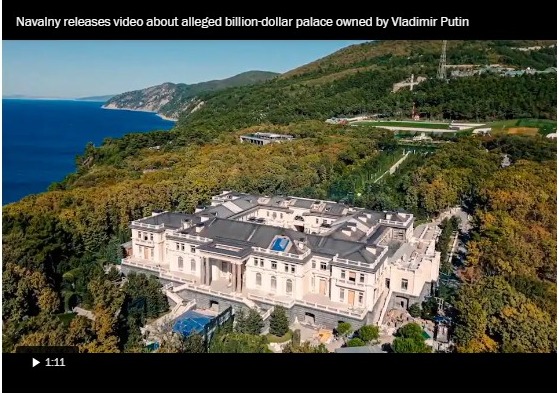
Navalny has been exposing government corruption for more than a decade, but his latest effort, a viral video “Putin’s Palace: History of the World’s Largest Bribe,” which has garnered more than 106 million views on YouTube, appears to have struck a nerve with the Kremlin. Its allegation that a vast palace was built for Putin on the Black Sea undercuts the president’s image as a conservative traditionalist with the nation’s interests at heart.

Arkady Rotenberg, an oligarch under U.S. sanctions as a member of Putin’s inner circle, says that he has owned the palace for two years and that it will become a hotel.

Navalny’s national network of 40 regional headquarters and his ability to communicate directly with Russians through his popular YouTube channel make him a potent threat. His decision to fly home to Russia after being poisoned, knowing that he probably faced imprisonment, has captured the imaginations of many young Russians and drawn an outpouring of support from celebrities, actors, writers, sports figures and bloggers.

Navalny is scheduled for release in October 2023, less than six months before Russia will have its next presidential election.

Russian vaccine over 91% effective against coronavirus, peer-reviewed test results show #SootinClaimon.Com

#SootinClaimon.Com : ขอบคุณแหล่งข้อมูล : หนังสือพิมพ์ The Nation.

Russian vaccine over 91% effective against coronavirus, peer-reviewed test results show

InternationalFeb 03. 2021

By The Washington Post · Adam Taylor, Carolyn Y. Johnson

The Russian coronavirus vaccine, Sputnik V, was 92% effective at preventing symptomatic illness in a large clinical trial, robust protection that puts it in line with top vaccines developed in the United States and Europe, according to results published in a peer-reviewed journal Tuesday.

The Russian vaccine effort has been criticized for being too rushed, elevating nationalistic competition over scientific evidence. The publication in the Lancet, a British medical journal, marks the first large-scale, peer-reviewed results to be published showing the performance of Sputnik V – despite the fact that the vaccine has been in broad use in Russia and is being rolled out to other countries.

Outside experts said the data convincingly shows the vaccine works. But because the trial was conducted in Russia in the fall, before the spread of virus variants that have shown signs of eroding vaccine effectiveness, questions loom about how protective the vaccine will be in the face of emerging threats.

“Results are great,” Hildegund C.J. Ertl, a vaccine scientist at the Wistar Institute, said in an email. “Good safety profile, more than 90% efficacy across all age groups, 100% efficacy against severe disease or death, can be stored in the fridge and low cost. What more would we want?”

Kirill Dmitriev, chief of the Russian Direct Investment Fund, a state fund that had backed the vaccine, said the results proved that criticism of the vaccine was unfounded.

“All our critics are keeping quiet at the moment because they are running out of arguments. We have addressed all of their concerns. Sputnik V has proven itself to be one of the most effective and safest vaccines in the world,” he said at a news conference.

The news was also a relief to foreign officials who had been relying on the Russian-made vaccine to fill gaps left in their supplies. Mexico’s deputy health minister, Hugo López-Gatell, had flown to Argentina last month to follow the country’s Phase 3 testing of Sputnik V. López-Gatell said Tuesday the public had felt “a concern, a worry that is totally legitimate about whether the [Russian] vaccine is effective.”

He said he hoped the results published in the Lancet put those anxieties to rest.

“This gives us an enormous opportunity to accelerate the pace of vaccination against covid in Mexico,” he said. Mexican authorities are expected to formally approve emergency use of the Russian vaccine Tuesday.

Almost 20,000 participants took part in the Phase 3 trial, with roughly three-quarters receiving the vaccine, while the remainder received a placebo.

The results appear to make Sputnik V the third coronavirus vaccine to have an efficacy of more than 90%, along with the Pfizer-BioNTech and Moderna vaccines. But experts have repeatedly cautioned that it can be misleading to compare performance in different vaccine trials, because of differences in how the trials are designed and when and where they were conducted.

Vaccines that have been tested more recently, in areas of the world where variants have become dominant, such as vaccine candidates from Johnson & Johnson and Novavax, appear less efficacious against a form of the virus that is rapidly becoming dominant.

Peter Jay Hotez, a vaccine scientist at Baylor College of Medicine, said he was concerned that antibody levels sparked by the Russian vaccine appeared relatively modest. While the vaccine may have offered robust protection against the form of the virus circulating in Russia in September and November, laboratory tests have demonstrated that antibodies triggered by other vaccines are less effective against the variants, particularly one that originated in South Africa and is rapidly spreading globally.

“The worry is that when you’re starting out low like this . . . as the South African variant comes through, this [vaccine] may no longer protect,” Hotez said. “I think that’s what’s probably going to happen, and the Russians are going to look at recasting this vaccine in some way.”

In the trial, participants who received Sputnik V were administered two shots 21 days apart. The regimen uses two different harmless cold viruses, called adenoviruses, to infect cells with a gene that carries the blueprint for the spike protein found on the surface of the coronavirus. By using two different viruses to deliver the gene, the vaccine regimen avoids one possible problem with such an approach – that the body may build an immune response to the cold virus that delivers the gene, blocking the booster shot’s ability to rev up the immune system.

The technology is similar to that used by the single-shot Johnson & Johnson vaccine, which reported 66% efficacy overall at preventing moderate and severe disease four weeks after the shot, and the vaccine developed by AstraZeneca and Oxford University, which EU regulators have judged to be about 60% effective. AstraZeneca and Gamaleya, the Russian research institute that developed Sputnik V, announced in December that they are working together to explore whether combinations of their vaccines might be beneficial.

The Russian vaccine, like those others, appeared to be most effective at preventing serious cases of disease. In the Johnson & Johnson trial, there were no cases of hospitalization or death related to covid-19, the illness caused by the virus, in people receiving the vaccine. In the Russian trial, there were no cases of moderate or severe covid-19 cases among vaccinated people, while there were 20 cases among those who received placebo. In the AstraZeneca-Oxford trial, there were 10 covid-19-related hospitalizations, all among people who received placebo.

“The vaccine appears to induce decent protection, consistent with their previous press releases,” said Konstantin Chumakov, a member of the Global Virus Network, an international coalition working on viral threats. “It confirms the expectations that adenovirus-based vaccines can be effective, at least in the short run. Now, it remains to be seen how long the immunity will last, and whether it will protect against the variant strains.”

There were 62 confirmed cases of covid-19 in the placebo group, compared with 16 infected people found in the vaccine group, none of whom had severe symptoms.

The trial included more than 2,000 volunteers who were older than 60. Results did not differ statistically for this older group.

There were limited side effects in those who received Sputnik V, the developers said, with 94% of adverse effects described as mild, including flu-like symptoms and reactions at the injection site.

After receiving approval Aug. 11 in Russia, the vaccine’s developers marketed Sputnik V aggressively, setting up a website that dubbed the vaccine the “first registered vaccine against COVID-19” and using a Twitter account to not only promote it but cast doubt upon rivals.

Sputnik V’s developers say the vaccine is already registered in 12 countries. It remains the only vaccine to be used in a low-income country, after being used on a trial basis in the West African nation of Guinea.

In mid-January, Moscow said it was “open to immediate cooperation” with Egypt and could provide the Sputnik V vaccine within days, adding more supply throughout 2021, the Russian Embassy in Cairo said in a statement last month.

Russia was also “ready to transfer technology to produce this vaccine” in Egypt, which the embassy said had “an adequate production base.”

The statement made clear that Moscow viewed the Sputnik V vaccine as an opportunity to solidify its burgeoning relationship with the government of Egyptian President Abdel-Fattah el-Sissi and gain influence in Africa and the Middle East.

“This will not only allow for the widest possible vaccination campaign, but it will also help develop the economic and trade capabilities of our Egyptian friends,” the embassy said.

Russia would like Egypt to become an export hub for the Sputnik V vaccine in Africa, Egypt’s ambassador to Moscow told Egypt’s El Watan newspaper.

Last month, Egyptian health specialists performed clinical trials of the Sputnik V vaccine, according to El Watan, which quoted an Egyptian health ministry aide saying that “the Russian vaccine is currently a priority for research.”

The Sputnik V vaccine has not been approved or registered in Egypt.

The Sissi government received its first shipment of the Chinese Sinopharm vaccine in December to vaccinate front-line medical workers.

This week, Egypt received its first 50,000-dose shipment of the AstraZeneca vaccine, also to vaccinate health workers, the country’s cabinet announced Tuesday. The government has ordered 20 million AstraZeneca doses from India, according to Al Ahram, a state-run newspaper.

On Tuesday, Algerian officials said that they will start producing the Sputnik V vaccine in coming weeks and that the first batch of 50,000 doses arrived in Algeria last Thursday. Kamel Mansouri, head of Algeria’s national agency for pharmaceuticals, said on national television Tuesday that Algeria and Russia were in advanced discussions to manufacture the vaccine at a government-owned facility.

The Super Bowl is coming. And we’re running out of chicken wings. #SootinClaimon.Com

#SootinClaimon.Com : ขอบคุณแหล่งข้อมูล : หนังสือพิมพ์ The Nation.

The Super Bowl is coming. And we’re running out of chicken wings.

InternationalFeb 03. 2021We're running out of delicious chicken wings right before the Super Bowl. MUST CREDIT: Photo for The Washington Post by Deb LindseyWe’re running out of delicious chicken wings right before the Super Bowl. MUST CREDIT: Photo for The Washington Post by Deb Lindsey

By The Washington Post · Jacob Bogage

America, we have another crisis. We’re running out of chicken wings.

Days before the Super Bowl, a veritable annual chicken wing holiday, food service providers are scrambling to get their hands on these delectable morsels of poultry – and paying top dollar for them, too.

The U.S. chicken wing market is dominated by the sports calendar. Consumption and sales peak right before the Super Bowl in February and a month and a half later before the NCAA men’s basketball tournament. Prices generally ebb and flow with that schedule, spiking before the competitions and coming back down to earth steadily through the rest of the year.

But wing prices have been flying high for months now during the coronavirus pandemic. Experts say there are a number of drivers of the increase, but chief among them is that we’re all eating a ton of chicken, including wings. The shortage isn’t so much that producers aren’t making enough wings, it’s that consumers want more and more (and more) of them to scarf down.

“What’s been really strange about this year is it’s actually been really strong since late summer, the demand for wings,” said Christine McCracken, executive director of animal protein at Rabobank. “And that’s made it a bit harder for people who didn’t have a plan going into [the Super Bowl] or are trying to catch up with demand.”

FAT Brands, the company behind wing chains Buffalo’s, Hurricane Grill & Wings, Ponderosa Steakhouse and six other restaurant franchises, began planning for the 2021 Super Bowl a year ago, said Andy Wiederhorn, the company’s president and chief executive.

He said the company is well-stocked, but is still making last-minute arrangements to shore up supplies. It expects to sell 500,000 wings (that’s 250,000 chickens’ worth) over Super Bowl weekend. The entire chicken industry will go through close to 1.4 billion wings, according to the National Chicken Council, up 2 percent from last year.

Even with restaurant trips down 11 percent in 2020 because of the pandemic, wing sales jumped 7 percent, the council reported in its annual “Wing Report.”

“If you think about it, restaurants like wing joints and pizza places were built around takeout and delivery, so they didn’t have to change their business model that much during the pandemic,” council spokesman Tom Super wrote in the report. “Wings travel well and hold up during delivery conditions. Plus, they align with consumer desire for comfort food during the pandemic. Chicken production remained steady in 2020, and as long as people are sitting around watching TV and maybe drinking a beer, wings will remain in the game.”

Wiederhorn said sales at Buffalo’s and Hurricane, FAT’s two wing-specific brands, are well above their 2019 mark.

By all accounts, 2020 was a weird year for wings. Prices and production jumped right around the Super Bowl, according to the Department of Agriculture, as they usually do. Then the pandemic hit. Sports shut down, including the NCAA men’s college basketball tournament. Restaurants shuttered and consumers rushed to grocery stores to stock up. They bought a whole lot of chicken, but not so much wings, which are more popular at restaurants rather than for home meals.

Wing prices plummeted, down to less than $1 per pound. Production fell too, as all of a sudden, the market was flooded with millions of excess wings.

And then, within months, the market rebounded. Stay-at-home orders meant more backyard barbecues over the summer. With nothing to do, football Saturdays and Sundays turned into de facto holidays – perfect for wings. New “ghost kitchens,” or delivery-only restaurants capitalizing on the rise of Grubhub and UberEats, popped up, many specializing in wings.

In normal years, McCracken said, there are things the food service industry can do to ease the strain on its wing supply. The best example, she said, is “boneless wings” (about which a great debate exists as to whether they are really “wings” or just chicken nuggets), which eateries can promote as a tasty (if controversial) alternative.

“Nobody switched to boneless wings this year,” she said. “I think it just caught people off guard.”

Consumers are also price sensitive when it comes to wings, said Sean McBride, the founder of DSM Strategic Communications and a food industry expert. Demand isn’t the only thing inflating wing prices. The pandemic comes with its own bevy of production expenses: more protective and sanitation equipment, worker shortages, transportation costs. Those all get baked into the price of a wing, and companies have to decide whether to swallow that cost, or pass it along to wholesalers, distributors, restaurants and grocery stores.

And with those increased production costs, McBride said, some producers may decide to allocate fewer resources to breaking down birds on the assembly line, and choose instead to sell more whole chickens and half chickens rather than chicken parts.

That contributes to the wing availability crunch, because restaurants have to spend more for a now-smaller supply of processed wings, and supermarket meat counters have to spend more time butchering birds to package wings, thigh, breasts and legs separately.

The results of the wing shortage are twofold, experts say. First, depending on where consumers buy wings, they can expect to pay more. There may not be a noticeable price bump on menus or at the grocery stores, but companies may look to be more stingy with discounts or promotions.

Second, the kind of wings you’re eating could be different. Chicken producers are letting their birds grow bigger to cut down on the cost of new hatchlings. At the grocery store or in restaurants where wings are sold by the pound, that means fewer wings per order. Wiederhorn said FAT Brands is struggling to find more small wings, which some customers prefer. As a last resort, McBride said, some eateries are also pulling wings out of frozen storage to supplement their fresh supply.

Myanmar army rallies supporters, bans flights through April #SootinClaimon.Com

#SootinClaimon.Com : ขอบคุณแหล่งข้อมูล : หนังสือพิมพ์ The Nation.

Myanmar army rallies supporters, bans flights through April

InternationalFeb 03. 2021

By Syndication Washington Post, Bloomberg · Khine Lin Kyaw, Philip J. Heijmans

Supporters of Myanmar’s military rallied in the nation’s largest city as it moved to suspend all flights through April, raising fresh concerns about the army’s crackdown a day after it seized power in a coup and detained senior government officials and activists.

The rally in the commercial capital Yangon is the first since de facto leader Aung San Suu Kyi and her colleagues were taken in early morning raids on Monday. “It is not a coup, but just an act of retaining the power to prevent others from misusing it,” a monk, Tipitaka Thitsar Pwintlin, told the pro-military crowd, urging them to thank the army for protecting the nation and its majority Buddhist religion.

The military on Tuesday instructed airlines to suspend all flights until April 30 — an extension of travel restrictions put in place by the previous government to contain the spread of covid-19 — and reopened the country’s stock exchange for trading from Wednesday.

President Joe Biden said the U.S. could reinstate sanctions if the military doesn’t “immediately relinquish the power they have seized” and release activists and officials.

“The United States removed sanctions on Burma over the past decade based on progress toward democracy,” Biden said Monday in a statement that called on the generals to release activists and officials, lift restrictions on telecommunications and refrain from violence. “The reversal of that progress will necessitate an immediate review of our sanction laws and authorities, followed by appropriate action.”

Broader sanctions like those imposed before the country’s shift to democracy more than a decade ago are likely to hit Myanmar’s 55 million citizens, many of whom overwhelmingly voted for Suu Kyi’s party.

The Southeast Asian nation’s economy was already struggling under the impact of the pandemic. The International Monetary Fund expects Myanmar’s economic growth to fall to 0.5% this fiscal year, as virus cases take a toll on the country’s key economic drivers, including exports, remittances and tourism.

The first wave of the pandemic “forced many poor households to adopt risky and unsustainable mechanisms to buffer the shock, including reducing their daily food consumption,” the World Bank said. “Even before the second wave hit in late August, many households were struggling to repay their debts. The ongoing restrictions under the second wave put more households at risk of entering poverty.”

Myanmar’s growth outlook now depends on a pipeline of key infrastructure projects and foreign direct investment, which could be delayed or canceled altogether if sanctions are implemented and if foreign entities decide to pull the plug amid elevated political risks, Fitch Solutions noted Monday.

“Infrastructure projects, both public and private, even if not canceled, also face high risks of stalling over the near term due to a combination of lack of funds, social unrest, and further lockdowns due to a renewed outbreak of covid-19 following mass protests,” it said in a statement.

The World Bank on Tuesday said it was “gravely concerned” about events in Myanmar, also known as Burma, calling the military’s actions a “major setback to the country’s transition and its development prospects.” The institution has funded projects ranging from electrification to education to covid-19 relief.

The military pledged to hold elections after a 12-month state of emergency and formally replaced Suu Kyi as foreign minister when it installed 11 new ministers to cabinet posts late Monday. A state-run television broadcast announced the new foreign minister as Suu Kyi’s predecessor, Wunna Maung Lwin, while Win Shein, who previously held the post of finance and planning minister, was reappointed to the position.

Suu Kyi on Monday urged her supporters to oppose the army’s move, calling it “an attempt to bring the nation back under the military dictatorship without any care for the covid-19 pandemic people are facing.” The election commission last week labeled the vote transparent and fair, and in 2015 the military had accepted her party’s landslide election win.

Asean calls for dialogue while UN chief condemns Myanmar coup #SootinClaimon.Com

#SootinClaimon.Com : ขอบคุณแหล่งข้อมูล : หนังสือพิมพ์ The Nation.

Asean calls for dialogue while UN chief condemns Myanmar coup

InternationalFeb 02. 2021

By THE NATION

Asean on Monday called for the return to dialogue and reconciliation in Myanmar after the military staged a coup on Monday morning.

According to China’s Xinhua news agency, Myanmar’s State Counsellor Aung San Suu Kyi, President U Win Myint and other senior officials were detained by the military early on Monday. Myanmar military TV declared on Monday a state of emergency in the country for one year after the government leaders were detained.

The Asean chairman’s statement read:

“Asean member states have been closely following the current developments in the Republic of the Union of Myanmar.

“We recall the purposes and the principles enshrined in the Asean Charter, including the adherence to the principles of democracy, the rule of law and good governance, respect for and protection of human rights and fundamental freedoms.

“We reiterate that political stability in Asean member states is essential to achieving a peaceful, stable and prosperous Asean Community.

“We encourage the pursuance of dialogue, reconciliation and the return to normalcy in accordance with the will and interests of the people of Myanmar.”

Brunei Darussalam takes over the Asean chairmanship in 2021 from Vietnam.

Meanwhile, Stéphane Dujarric, the spokesman for the United Nations Secretary-General, issued a statement strongly condemning the situation in Myanmar.

“The Secretary-General strongly condemns the detention of State Counsellor Daw Aung San Suu Kyi, President U Win Myint and other political leaders on the eve of the opening session of Myanmar’s new Parliament. He expresses his grave concern regarding the declaration of the transfer of all legislative, executive and judicial powers to the military. These developments represent a serious blow to democratic reforms in Myanmar.

“The November 8, 2020 general elections provide a strong mandate to the National League for Democracy, reflecting the clear will of the people of Myanmar to continue on the hard-won path of democratic reform. The Secretary-General urges the military leadership to respect the will of the people of Myanmar and adhere to democratic norms, with any differences to be resolved through peaceful dialogue. All leaders must act in the greater interest of Myanmar’s democratic reform, engaging in meaningful dialogue, refraining from violence and fully respecting human rights and fundamental freedoms.

“The Secretary-General reaffirms the unwavering support of the United Nations to the people of Myanmar in their pursuit of democracy, peace, human rights and the rule of law.”

Merkel’s hand prints are all over Germany’s vaccine failings #SootinClaimon.Com

#SootinClaimon.Com : ขอบคุณแหล่งข้อมูล : หนังสือพิมพ์ The Nation.

Merkel’s hand prints are all over Germany’s vaccine failings

InternationalFeb 02. 2021It wasn't until Nov. 20 that an EU agreement with BioNTech was finalized. MUST CREDIT: Bloomberg photo by Alex Kraus.It wasn’t until Nov. 20 that an EU agreement with BioNTech was finalized. MUST CREDIT: Bloomberg photo by Alex Kraus.

By Syndication Washington Post, Bloomberg · Arne Delfs, Naomi Kresge

Angela Merkel is starting to crack under the pressure of Germany’s faltering coronavirus vaccine program.

With the chancellor under fire publicly for a lack of covid-19 shots and her strategy of delegating responsibility to the European Union looking misguided, she snapped when pressed for answers by German state premiers during a closed-door meeting in early January.

Getting angrier than those involved had ever seen, she threatened to retaliate and make the officials’ mistakes public, shocking the participants into silence. On other occasions, she’s come close to tears in public in recent weeks.

“It’s breaking my heart when I see how many people have died in senior homes in loneliness,” she said in a recent speech.

Such emotion is highly unusual for the sober physicist, who has unflappably confronted one crisis after another in her 15 years at the helm of Europe’s largest economy. But, as she prepares to hand over the chancellorship after September’s election, the pandemic seems to be getting away from her. An opinion poll released last week bears that out. Only 11% of respondents thought Germany’s vaccine program is going well, while 61% saw major shortcomings with the rollout.

A reconstruction of events for this story, which is based on information from government officials who asked not to be identified discussing the private conversations inside the chancellery, shows that the country’s vaccine stumbles bear Merkel’s hand print. Her European focus sparked conflicts within the German government, while relying on an overburdened European Commission hampered the rollout. A government spokesman declined to comment on the internal deliberations.

The tension has sparked a high stakes power play in Brussels. The EU is taking on AstraZeneca and other pharmaceutical companies, and imposing export controls in an all-or-nothing response to its perceived failings.

Germany’s effort started out well enough. Merkel’s government supported early-stage vaccine development, getting a jump on other countries.

In April, Health Minister Jens Spahn — Merkel’s longtime adversary — contacted BioNTech and offered financial help. In September, the German start-up received 375 million euros ($450 million) in research funding, about three times what its public listing raised in late 2019. In June, Germany invested 300 million euros in another German start-up, CureVac, acquiring a stake and fending off an approach by the Trump administration.

But behind the scenes, a political struggle festered.

Spahn had long been a thorn in the chancellor’s side. The ambitious 40-year-old conservative was an outspoken critic of her refugee policy and was offered a seat in her cabinet in 2018 only reluctantly. The coronavirus crisis offered him a chance to raise his profile, and he planned to take it.

During the first weeks of the pandemic, Spahn gave press conferences almost daily, until the chancellery told him to step out of the limelight. In mid-March, Merkel put the crisis under her wing, and Germany’s relatively mild lockdown contained the spread. The impression was that Merkel had saved the day again.

Flushed with that success, she looked toward Germany’s EU presidency in the second half of 2020. There were big issues to tackle like the testy Brexit negotiations and the landmark recovery fund.

But Spahn kept active. In June, he forged a vaccine alliance with France, Italy and the Netherlands. The goal was to secure as many doses as possible, and on June 13, the group signed a preliminary contract with AstraZeneca for 400 million shots. What could have been good news raised alarm bells in Berlin and Brussels.

European Commission President Ursula von der Leyen asked the chancellery to stop Spahn’s alliance. Merkel’s former defense minister made it clear to the chancellor that Spahn’s effort could overshadow Germany’s EU presidency.

As a committed multilateralist, she didn’t want to be remembered saving Germans at the expense of the rest of the EU. Shortly thereafter, Spahn effectively apologized for the initiative.

“We think it makes sense if the commission takes the leadership in this process,” Spahn and his three counterparts said in the letter — which was leaked to the media in January as part of a pressure campaign on Merkel.

Meanwhile, the U.S. was throwing money around as part of Operation Warp Speed. In May, the Trump administration pledged as much as $1.2 billion in funding for AstraZeneca’s vaccine project. In July, the U.S. agreed to pay $1.95 billion for 100 million doses of the BioNTech vaccine, with an option to acquire an additional 500 million.

Nearly simultaneously with the U.S. deal, the U.K. also agreed to buy 30 million doses from BioNTech and its partner Pfizer.

Little was happening in Brussels. In July, the Commission flubbed a BioNTech offer for 500 million doses amid dithering on price and concerns about supercold storage for the shots.

By the end of the summer, the chancellery was increasingly alarmed about the slow progress, and Merkel asked von der Leyen to speed things up. At the end of August, the Commission signed a deal with AstraZeneca.

It wasn’t until Nov. 20 that an EU agreement with BioNTech was finalized, 11 days after the company announced that its vaccine candidate was more than 90% effective in clinical trials.

Even that was a struggle. Germany had to guarantee it would take up to 100 million doses and added 192 million euros to EU’s pot of money for virus deals. But as more studies underlined the shot’s benefits, other member states lined up, and Germany’s allotment was more than halved.

Meanwhile, a bilateral agreement that Spahn signed with BioNTech on Sept. 8 for 30 million doses exclusively for Germany was mired in red tape.

“The process in Europe certainly didn’t proceed as quickly and straightforwardly as with other countries,” BioNTech Chief Executive Officer Ugur Sahin told Spiegel magazine, blaming the EU’s cumbersome bureaucracy and a careless approach. “There was apparently an attitude of: We’ll get enough, it won’t be that bad, we have everything under control.”

While the EU’s procurement process was sputtering, Merkel was busy presenting herself as the advocate for vaccine fairness. In June, she announced Germany would give 600 million euros to the Gavi alliance, plus 100 million euros for developing countries.

The global approach makes sense from a scientific point of view, and to be sure, there’s still a long road ahead that could allow Germany — still better off than many other countries — to recover.

But politically, it was making her allies squirm, especially as they looked ahead to elections in September. Bavarian state leader Markus Soeder — a leading contender to succeed her as chancellor — has supported Merkel’s European course, but noted: “It’s also not wrong to care about your own country.”

To ease tensions, Merkel will hold a German vaccine summit on Monday, but the pressure remains palpable. When asked recently whether she would be willing to apologize for the missteps, she deflected and instead responded with a lecture about the complex production process, including the role of saline solution.

“Of course we could have ordered more earlier,” Spahn said on Friday, refusing to point the finger publicly at Merkel or anyone else. “It’s the virus that’s our opponent, and not the pharma industry and not each other.”

Singapore opens door for more governments to use covid data for other purposes #SootinClaimon.Com

#SootinClaimon.Com : ขอบคุณแหล่งข้อมูล : หนังสือพิมพ์ The Nation.

Singapore opens door for more governments to use covid data for other purposes

InternationalFeb 02. 2021The TraceTogether contact-tracing phone app. After countries from the U.S. to Australia to Israel collected reams of data during the pandemic, they may start to see uses for that information beyond the original intent. MUST CREDIT: Bloomberg photo by Lauryn IshakThe TraceTogether contact-tracing phone app. After countries from the U.S. to Australia to Israel collected reams of data during the pandemic, they may start to see uses for that information beyond the original intent. MUST CREDIT: Bloomberg photo by Lauryn Ishak

By Syndication Washington Post, Bloomberg · Jamie Tarabay

In early 2020, as the coronavirus began to ricochet around the world with terrifying consequence, Harish Pillay decided to do whatever he could to help stop the spread.

The software engineer, who lives in Singapore, heard the government was designing an app to track the virus so he emailed the minister in charge and asked how he could help. He was part of a fellowship of developers and engineers who volunteered their services, ready to pitch in on a solution.

“The problem was being solved by creating this tool, but there were aspects of trust and confidentiality which also needed to be addressed,” said Pillay, who has worked on Red Hat’s open-source software much of his career and fervently believes in transparent technologies. “We understand all of these things. Let the community help you do the right thing.”

In the beginning, Singapore was held up as a model for other nations. As the government encouraged people to download the TraceTogether app to their smartphones, it published the source code and promised strict limits on data use. Developers from around the world pitched in to hone and debug it in real time.

Now the early optimism is fading. Public support took a hit after authorities disclosed in January that police had used the app’s data in a murder investigation — only months after the minister in charge vowed it would be used only for covid containment. The government issued a rare apology. But rather than back down, it plans to formalize the ability of police to access such data in specific cases, introducing the proposed legislation in parliament Monday.

Pillay had put aside his politics as a member of the opposition Progress Singapore Party to be part of the TraceTogether campaign, but he’s become concerned.

“I felt disappointed,” he told Bloomberg News. “The trust factor that was there was reduced.”

Now Singapore could become a very different kind of model. After countries from the U.S. to Australia to Israel collected reams of data during the pandemic, largely with public support, they may start to see uses for that information beyond the original intent.

“Singapore is saying to other governments, with a wink and a nod, that we’ve done it and you can do it too,” said Phil Robertson, the deputy director in Asia for Human Rights Watch. “Many countries look to Singapore as a success story, so they think whatever Singaporeans do must be good, and that’s a problem.”

Singapore has tried to explain the changes. The legislation would allow access to contact tracing data under seven categories of serious crime including murder, rape and drug trafficking. In response to queries, a government spokesperson referred to Minister Vivian Balakrishnan’s comments in January.

“The police must be given the tools to bring criminals to justice, and protect the safety and security of all Singaporeans,” he said at the time. “Especially in very serious cases, and where lives are at stake, it is not reasonable for us to say that certain classes of data should be out of reach of the police.”

He added that TraceTogether data is automatically purged after 25 days and that the whole program will be retired once the covid-19 pandemic is over.

A government minister said in January TraceTogether is used by about 78% of Singapore’s residents, or about 4.2 million people. A smartphone app and token use Bluetooth technology to gauge the distance between users, allowing the government to notify them if they’ve been in contact with someone who’s tested positive for the virus.

Initial acceptance from the general public was sluggish, with downloads of the app hovering at around 20%. The slow pace paralleled a general wariness that coursed through the region, amplified by breaches in data security that governments in other countries struggled to address.

In South Korea, private sector contact tracing apps became increasingly invasive – one provided the exact location of every place of business or home visited by a positive case – and government workers are able to review hundreds of hours of surveillance camera footage and go through mobile phone and credit card transactions to track people down.

In China, a digital website reported last December that hackers were able to breach Beijing’s health code system and access government ID numbers and sell them online; such ID numbers are used to access a person’s coronavirus test records.

There has been pushback from the public. In Thailand, the government was forced to back off of a threat from the spokesman for the government pandemic center that anyone found to have tested positive without downloading the virus tracking app would face jail time.

In Malaysia, the health ministry mandated businesses destroy the personal records of visitors to their premises within six months after government-ordered tracing ended.

In Israel, the Supreme Court banned the country’s intelligence agency from using technology to track covid-19 cases.

In Australia, federal legislation was passed to prevent data collected in the country’s covid app from being used for any purposes beyond contact tracing.

The World Health Organization has issued guidelines to governments on the “ethical” considerations of using tracking technologies for contact tracing. Member states are obliged to develop surveillance systems to capture “critical data” to monitor the virus, “while ensuring that such systems are transparent, responsive to the concerns of the communities, and do not impose unnecessary burdens, for example infringements on privacy,” the guidance issued in May 2020 reads.

One major risk from governments seeking to expand their use of covid-19 tracking data is that people will be deterred from participating.

“Is this one of the laws of unintended consequences where it reduces the usage rate and be worse for society?” said Troy Hunt, an information security expert and the creator of the data-breach aggregation service, “Have I Been Pwned.”

He points out that governments can present virus technologies as benign and then reverse legislation or regulations later. The risk of Singapore’s move is that it shows not just governments, but citizens as well, how easily changes can be made.

“There is a slippery slope, where data retention periods are increased because it does add value to law enforcement, and suddenly the scope of the privacy risk changes so much more,” he said.

Singaporeans tend to be sanguine about such moves when it comes to their government, but unusually forceful arguments have broken out over the proposed legislation. When one local posted online that he thought concerns were overblown and privacy overrated, he triggered fierce blowback.

“The government is using covid-19 as an excuse to put in place social engineering and public surveillance platforms and policies that ordinarily would never have been considered nor publicly palatable,” wrote Andy Wong, a 27-year-old freelance defense writer and risk analyst. “I wonder how many sane foreigners will want to work in a country like that.”

He wrote that Singapore, with its high quality of life and tough government, is sometimes described as Disneyland with the death penalty, but he worries it will become “North Korea with a smile.”

The episode is “a massive betrayal of trust for ordinary citizens like myself,” he told Bloomberg News.

Jonathan Kok, an intellectual property lawyer in Singapore, said there was limited value to the data that police could get from the contact tracing app for their investigations. A person’s interaction history provided circumstantial evidence at best, he said.

“So, the data has really limited use. I’m just surprised why the police want to go through all that trouble to collect data when it only shows you who that person was with within the last few weeks or so,” he said.

“Many people have written in and said they may just turn on the device when they need to go out instead of having it run all the time. That’s not going to help the national effort to contain the virus,” he added.

As for Pillay, he spent his compulsory national service as a police officer, so he understands the context of using the data in rare and exceptional cases. But police have plenty of other ways to get data for their investigations, including CCTV footage and cellphone tower records.

“It’s less than ideal to have specific instances where the TraceTogether data could be accessed,” he said. “This will be a tarnished gold standard.”

Japan considers extension of covid emergency as economy sputters #SootinClaimon.Com

#SootinClaimon.Com : ขอบคุณแหล่งข้อมูล : หนังสือพิมพ์ The Nation.

Japan considers extension of covid emergency as economy sputters

InternationalFeb 02. 2021Japanese Prime Minister Yoshihide SugaJapanese Prime Minister Yoshihide Suga

By Syndication Washington Post, Bloomberg · Yoshiaki Nohara

Japanese Prime Minister Yoshihide Suga looks set to extend a state of emergency for major metropolitan areas that will inflict more pain on the economy, as he tries to stem the latest wave of covid-19 cases and reverse a fall in public support.

The emergency covering 11 areas including Tokyo, Osaka and Nagoya has helped halt a rapid acceleration of virus cases threatening the developed world’s oldest population. While infection numbers have started to drop under the guidelines, Suga’s government has said the number of cases remains worryingly high.

Suga will extend the emergency by one month to March 7, after consulting with an advisory panel on Tuesday, Kyodo News reported, citing an unnamed official with knowledge of the situation. The measure will remove Tochigi prefecture from the original 11 areas after cases there dropped sharply this month, it said.

Parliament’s lower house separately on Monday approved measures to add teeth to emergency orders including fines for bars and restaurants that defy instructions to close early. The legislation was expected to gain final approval later this week in the upper house, which is also controlled by Suga’s ruling coalition.

Japan’s current measures including a request that people work from home are far less stringent and enforceable than the lockdowns of some European nations. But they have already caused a sea change in the view of economists. Instead of the year starting with a slowing recovery, some of them now see a double-digit contraction looming.

The prime minister, who runs the risk of being replaced by the ruling party ahead of an election that must be held by October, has seen his support slide since he took office about four months ago. Critics contend his focus on propping up the economy has slowed efforts to stem infections.

Extending the emergency will prolong the distress for businesses, but Suga looks to have little choice if he is to control the virus, shore up his leadership and keep alive the hope of holding the Olympic Games in summer.

“The damage to businesses would be enormous,” said sushi restaurant owner Mamoru Sugiyama, referring to an extension. Bars and eateries are among the firms hardest hit by the guidelines. He has temporarily closed his restaurant, which boasts a history of 130 years in the swanky Tokyo shopping district of Ginza.

“Some businesses are about to use up their loans and I think if the emergency continues through February, firms may start going bust one after another, even in Ginza,” said Sugiyama, who also heads a coalition of about 370 local restaurants and bars.

A Nikkei/TV Tokyo survey suggests the public is in favor of an extension. The Jan. 29-31 poll showed 90% of respondents supported the lengthening of the emergency.

The government has said the emergency can end when the virus crisis eases to Stage 3 on a four-stage scale that draws on six data points.

In Tokyo, that would mean daily infections falling below 500 and staying there. Tokyo reported 393 new infections on Monday, the first reading below 500 since Dec. 28 and well below the city’s daily record of 2,447 on Jan. 7.

As of Jan. 27, the capital’s hospital bed occupancy rate was 73% and critical care units were at 113% of capacity, according to the health ministry. Both numbers would have to come down below 50% to reach Stage 3.

“We can see that the state of emergency has had an impact, but it’s been too weak,” said Yoshihito Niki, a professor of clinical infectious diseases at Showa University’s School of Medicine in Tokyo, indicating a need to prolong the measures. “The government will need to exercise patience at least through February.”

Parliament’s powerful lower house on Monday approved measures to add teeth to emergency orders including fines for bars and restaurants that defy instructions to close early. The legislation was expected to gain final approval later this week in the upper house, controlled by Suga’s ruling coalition.

Since the declaration of the emergency in early January, economists warned that the less stringent advisories compared with the first emergency in April, risked being insufficient and causing more damage over time. This time, schools remained open and streets continued to see foot traffic, albeit smaller than during normal times, despite repeated calls from officials to stay home.

Toshihiro Nagahama, economist at Dai-Ichi Life Research Institute, sees an emergency extended to two months shaving about 3 trillion yen off the economy.

While the consensus among analysts is for the economy to shrink an annualized 2.5% this quarter, economists Yoshimasa Maruyama and Koya Miyamae at SMBC Nikko Securities Inc., now see a stronger finish to 2020 whiplashing into an 11.5% contraction in the three months through March.

Still, an unemployment rate of just 2.9% and year-on-year falls in the number of bankruptcies show that spending and loan support from the government and the Bank of Japan have helped cushion the economic blow of the pandemic so far. Suga’s administration got a third extra budget through parliament last week offering another round of help for businesses, medical facilities and the economy.

The concern going ahead is how much longer companies can hang on if the emergency is extended and consumer spending remains subdued.

Yasuhide Yajima, chief economist at NLI Research Institute, warns there won’t be a dramatic revival of growth even when the emergency ends unless there’s more concrete reassurance for the public.

“Regardless of the state of emergency, consumption isn’t going to come back until we see the impact of vaccination,” Yajima said.

Biden to meet with Senate Republicans offering pandemic relief counterproposal #SootinClaimon.Com

#SootinClaimon.Com : ขอบคุณแหล่งข้อมูล : หนังสือพิมพ์ The Nation.

Biden to meet with Senate Republicans offering pandemic relief counterproposal

InternationalFeb 01. 2021US President Joe BidenUS President Joe Biden

By The Washington Post · Erica Werner, Jeff Stein, Seung Min Kim

WASHINGTON – President Joe Biden intends to meet on Monday with 10 GOP senators who are calling on him to make a bipartisan deal instead of forging ahead with a party-line vote on his $1.9 trillion coronavirus relief plan.

The group announced plans Sunday to release an approximately $600 billion coronavirus relief package as a counterproposal to Biden’s much larger plan, posing a test for the new president who campaigned on promises to unify Congress and the country.

The senators, led by Susan Collins, R-Maine, said that they would formally unveil the plan Monday, and that they requested a meeting with Biden. Biden and Collins subsequently spoke, and White House press secretary Jen Psaki announced late Sunday that the president had invited the 10 Republican lawmakers to the White House “for a full exchange of views.”

The meeting will take place Monday, according to two people with knowledge of the plans who spoke on the condition of anonymity because the official announcement had yet to be made.

The planned meeting comes as Democrats prepare to move forward this week to set up a partisan path for Biden’s relief bill, which Republicans have dismissed as overly costly because of Congress has already committed to spending $4 trillion to fight the pandemic, including $900 billion in December.

The GOP proposal jettisons elements that have drawn Republican opposition, such as increasing the federal minimum wage to $15 an hour.

It would also reduce the size of a new round of checks Biden wants to send to Americans, from $1,400 per individual to $1,000 – while significantly reducing the income limits that determine eligibility for the stimulus payments.

A $600 billion plan that is a small fraction of Biden’s proposal probably will not draw much, if any, Democratic support. However, the GOP offer presents a challenge for Biden, who campaigned on promises of bipartisanship and must decide whether to rebuff the overture or make a genuine effort to find common ground across the aisle.

“We want to work in good faith with you and your administration to meet the health, economic and societal challenges of the covid crisis,” the Republican lawmakers wrote, adding that they were responding to his “calls for unity.”

Top Biden economic adviser Brian Deese said on CNN’s “State of the Union” before the meeting was announced that Biden was open to an exchange of views on his plan. But Deese emphasized that speed was of the essence and refused to say whether Biden was willing to entertain a smaller overall cost.

“The president is uncompromising when it comes to the speed that we need to act at to address this crisis,” Deese said.

“The provisions of the president’s plan, the American Rescue Plan, are calibrated to the economic crisis that we face,” Deese said.

The White House is pushing its plan amid signs of a broader economic slowdown and a continued wave of enormously high unemployment claims of close to 1 million a week. The emergence in the U.S. of highly transmissible coronavirus variants has also intensified fears that another wave of lockdowns will be necessary.

Because the Senate is split 50-50 between Republicans and Democrats, it is significant that Republicans assembled 10 lawmakers to get behind the proposal. That means that, if Democrats were to join them, they could reach the 60-vote threshold necessary to pass legislation under regular Senate procedures.

Democrats are planning to skirt the 60-vote requirement using special budget rules that would allow the Biden package to pass with a simple majority vote. Democrats control the Senate because Vice President Kamala Harris can cast tie-breaking votes.

Democratic aides said the GOP proposal would not change their plans to move forward with the budget bill this week that would set the stage for party-line passage of Biden’s plan.

Psaki’s statement said Biden also spoke to Senate Majority Leader Chuck Schumer, D-N.Y., and House Speaker Nancy Pelosi, D-Calif., on Sunday as they prepare to push his relief package.

“The key to getting robust job opportunities is to cease any delay, any inaction, any wait-and-see around this rescue plan,” Jared Bernstein, a member of the White House Council of Economic Advisers, said on “Fox News Sunday.”

“The American people could not care less about budget process. . . . They need relief and they need it now,” Bernstein said.

Biden’s plan would send $1,400 payments to individuals with incomes up to $75,000 per year, and couples making up to $150,000.

Sen. Rob Portman, R-Ohio, one of the signers of the letter, said the GOP plan would lower those thresholds to $50,000 for individuals and $100,000 for couples. Instead of $1,400 checks, the GOP plan would propose $1,000 checks, according to Sen. Bill Cassidy, R-La., another member of the group.

The GOP plan would also reduce Biden’s proposal for extending emergency federal unemployment benefits, which are set at $300 a week and will expire in mid-March. The Biden plan would increase those benefits to $400 weekly and extend them through September. The GOP plan would keep the payments at $300 per week and extend them through June, according to three people with knowledge of the plan who spoke on the condition of anonymity ahead of an official announcement.

Portman criticized Democrats for their plans to go it alone, saying this approach would “jam Republicans and really jam the country.”

The signers of the letter include eight Republican senators who are part of a bipartisan group that has conferred with Biden administration officials about the relief bill. In addition to Collins, Portman and Cassidy, these are Sens. Lisa Murkowski of Alaska, Mitt Romney of Utah, Todd Young of Indiana, Shelley Moore Capito of West Virginia and Jerry Moran of Kansas. Also signing are Mike Rounds of South Dakota and Thom Tillis of North Carolina.

Cassidy strongly criticized Biden for not soliciting broader input from senators in both parties. Speaking on “Fox News Sunday,” Cassidy said the Republican package amounted to $600 billion and was “targeted to the needs of the American people.”

Cassidy also said Biden’s push to raise the minimum wage to $15 an hour would cost millions of jobs.

“You don’t want bipartisanship. You want the patina of bipartisanship. … The president’s team did not reach out to anybody in our group, either Democrat or Republican, when they fashioned their proposal,” Cassidy said. “They’ve never reached out to us – that’s the beginning of the bad faith.”

Democrats bristled at Republican accusations that Biden’s relief proposal would give too much in federal aid to affluent Americans, pointing to GOP support for the 2017 tax law that nonpartisan analysts cut taxes substantially for the wealthiest Americans.

“Reasonable people can have honorable differences on the precise income limits of emergency tax relief. But there’s a degree of chutzpah in the GOP suddenly on their high horse on this point when they were just fine with permanently giving people who make over $5 million more tax relief than the bottom 60% of American taxpayers combined,” said Gene Sperling, an economist who advised the Biden presidential campaign and served as former director of the White House National Economic Council under Presidents Bill Clinton and Barack Obama.

The $900 billion relief bill Congress passed in December included $600 stimulus payments to individuals. Biden’s plan to issue a new round of $1,400 checks would bring that figure to $2,000 – making good on promises he and other Democrats made that helped the party win two Senate seats in Georgia in early January. Those victories gave Democrats the majority in the Senate, and Democrats including the two new senators from Georgia have insisted they must make good on those promises.

“The entire Democratic Party came together behind the candidates in Georgia – we made promises to the American people,” Sen. Bernie Sanders, I-Vt., said on ABC. “If politics means anything – if you’re going to have any degree of credibility – you can’t campaign on a series of issues … and then change your mind. That’s not how it works. We made promises to the American people; we’re going to keep those promises.”

In addition to a new round of checks, a higher minimum wage and increased unemployment benefits, Biden’s plan includes rental assistance and eviction forbearance, an increased child tax credit, some $130 billion to help schools reopen, hundreds of billions of dollars for cities and states, and $160 billion for a national vaccination plan, more testing and public health jobs.

Money for vaccinations – which Federal Reserve Chairman Jerome Powell said recently was key to helping the economy – has emerged as the one real area of bipartisan consensus on Capitol Hill. The GOP plan would match Biden’s call to devote $160 billion to vaccines, testing and related health care spending.

“With your support, we believe Congress can once again craft a relief package that will provide meaningful, effective assistance to the American people and set us on a path to recovery,” the GOP senators wrote.

Legal team exits as Trump fixates on false claims #SootinClaimon.Com

#SootinClaimon.Com : ขอบคุณแหล่งข้อมูล : หนังสือพิมพ์ The Nation.

Legal team exits as Trump fixates on false claims

InternationalFeb 01. 2021Donald Trump boards Marine One to leave the White House for the last time as president on Jan. 20, 2021. MUST CREDIT: Washington Post photo by Bill O'LearyDonald Trump boards Marine One to leave the White House for the last time as president on Jan. 20, 2021. MUST CREDIT: Washington Post photo by Bill O’Leary

By The Washington Post · Josh Dawsey, Tom Hamburger, Amy Gardner

WASHINGTON – The implosion of former president Donald Trump’s legal team comes as Trump remains fixated on arguing at his second impeachment trial that the 2020 election was stolen from him, a defense that advisers warn is ill-conceived and that Republican strategists fear will fuel the growing divide in the GOP.

South Carolina lawyer Butch Bowers and four other attorneys who recently signed on to represent the former president abruptly parted ways with him this weekend, days before his Feb. 9 Senate trial for his role in inciting the attack on the U.S. Capitol. On Sunday evening, Trump’s office announced that two new lawyers were taking over his defense.

Two people familiar with the discussions preceding the departure of the original legal team said Trump wanted them to make the case during the trial that he actually won the election. To do so would require citing his false claims of election fraud – even as his allies and attorneys have said that he should instead focus on arguing that impeaching a president who has already left office is unconstitutional.

That approach has been embraced by many Republican senators, many of whom cited it when they cast a test vote against impeachment last week.

Trump’s attorneys had initially planned to center their strategy on the question of whether the proceedings were constitutional and on the definition of incitement, according to one of the people, who, like others interviewed for this report, spoke on the condition of anonymity to describe the internal conversations.

But the former president repeatedly said he wanted to litigate the voter fraud allegations and the 2020 race – and was seeking a more public defense of his actions. Bowers told Trump that he could not mount the defense that Trump wanted, the person said.

“It truly was mutual,” the person said. “The president wanted a different defense. The president wanted a different approach and a different team.”

Trump spokesman Jason Miller also said Sunday that the split with his lawyers was mutual, but he rejected the notion that the former president wants to focus on election fraud in the Senate trial, calling that account “fake news.”

“The only guidance offered has been to focus on the unconstitutional nature of the impeachment to which 45 senators have already voted in agreement,” Miller wrote in a text message.

Bowers and the other lawyers who quit Trump’s defense team did not respond to requests for comment. CNN first reported that Trump wanted his attorneys to focus his defense on his claims of election fraud.

On Sunday evening, Trump’s office announced in a statement that Atlanta-based trial attorney David Schoen and Bruce Castor, a former district attorney in Montgomery County, Pa., would lead his defense team. The two lawyers will bring “national profiles and significant trial experience in high-profile cases to the effort,” the statement said.

Schoen served as a lawyer for Trump adviser Roger Stone when he sought to appeal his conviction for lying and witness tampering in a congressional investigation. He also was in discussions with financier Jeffrey Epstein about representing him days before his death while awaiting sex-trafficking charges, and has said he does not believe Epstein killed himself. During his time as district attorney, Castor had declined to prosecute actor Bill Cosby and was later sued by accuser Andrea Constand in a case that was settled.

The disarray inside Trump’s circle comes as the House Democratic impeachment managers focus intensely on building a powerful and emotionally compelling argument that the president’s words led his supporters to ransack the Capitol.

The House impeachment article charges Trump with “incitement of insurrection” in the invasion of the U.S. Capitol on Jan. 6 by a pro-Trump mob.

The Democrats have been working round-the-clock in preparation for the trial – including on Saturday night, when the news broke of Trump’s legal team collapsing, according to people familiar with their activities.

The impeachment managers are compiling footage from Jan. 6, including cellphone recordings of protesters attending Trump’s rally that morning and video from inside the Capitol after protesters breached it.

Their aim is to present evidence of how Trump’s words and actions – including his long-running attacks on the integrity of the election – influenced the rioters. The insurrection left five dead, including one member of the U.S. Capitol Police. Two officers, one with the D.C. police, have since died by suicide.

Both sides face tight deadlines to prepare for the trial. The House team must file its briefs Tuesday. Trump’s defense lawyers must file their briefs on Feb. 8.

Democrats face a difficult task in persuading enough GOP senators to join them in voting to convict the former president. During a key test vote last week, all but five Republicans backed Trump in an objection to the proceeding, lodged by Sen. Rand Paul, R-Ky.

But Trump’s determination to mount a defense centered on the false claims that fraud tipped the outcome to Joe Biden could rattle GOP senators at a time when some in the party are facing pressure from donors and more-moderate voters to reject such conspiracy theories.

“Trump went 0 for 60 in trying to make the voter fraud argument,” said veteran GOP lawyer Ben Ginsberg. “Republican senators have no desire to be put on the spot in having to judge his unproven allegations of voter fraud.”

Ginsberg warned that Democrats have “so much raw material” that will allow them to “paint a picture of Trump that’s never been painted before of his involvement in the violence and insurrection.”

“And Trump plays right into their hands in talking about the fraud, for which he has been unable to produce any proof,” he said. “Which is why it’s a completely perilous defense. I can’t imagine any lawyer agreeing to present that case.”

It is also unclear whether Sen. Patrick Leahy, D-Vt., who will preside at the trial, will permit the president’s team to introduce claims of alleged voter fraud.

The collapse of Trump’s legal team could “force the president now to turn to a better strategy,” one that would save him “from self-immolation,” said Jonathan Turley, a constitutional law professor at George Washington University who declined an offer to represent the president at the impeachment trial.

If Trump insists on arguing that the election was stolen, he would be on a destructive path, Turley said.

“That claim is viewed by many senators as one of open contempt for their institution,” he said. “As it stands now, he would be acquitted by a fair margin. If he pursued that path, it could change the view and the votes of some senators.”

The former president’s allies have also urged him to move forward with a defense based on constitutional questions.

In a recent interview with The Washington Post before Trump split with his lawyers, Sen. Lindsey Graham, R-S.C., said the legal team planned to argue that impeaching a president who had already left office was unconstitutional, without getting into any battle over who won the election.

“It’s a simple case, really,” he said.

But Trump, who has been ensconced at his private estate in Florida since leaving the White House, has continued to insist that he won the election, according to people familiar with his comments.

As the trial nears, the former president’s circle of advisers has shrunk. He is continuing to talk with his attorney Rudy Giuliani, who led his efforts to subvert the election results. But former White House counsel Pat Cipollone, outside lawyer Jay Sekulow and former campaign lawyer Justin Clark have made clear that they want no part of his defense strategy over the Capitol attack.

Some advisers have told Trump that he should testify in his own defense, but that is broadly seen as a bad idea and probably will not happen.

Cipollone and Giuliani did not respond to requests for comment.

With the help of Graham, Trump had assembled a team of five lawyers led by Bowers, an ethics and campaign law expert in South Carolina who had worked in the Justice Department under President George W. Bush.

The group included three former federal prosecutors in the state – Deborah Barbier, Johnny Gasser and Gregory Harris – as well as a North Carolina lawyer, Josh Howard. All left the Trump defense team Saturday, according to people familiar with the situation.

Miller said that only Barbier and Bowers had officially been named to the team.

The selection of a South Carolina-based legal team was a shift from Trump’s previous impeachment last year, when he was charged with abusing his power and obstructing Congress in pressuring Ukrainian President Volodymyr Zelensky to investigate Biden and his family.

During that trial, Trump was defended by lawyers experienced on the national stage. They included Kenneth Starr, the former special prosecutor whose work led to President Bill Clinton’s impeachment; Sekulow, who had defended Trump in other cases; and Alan Dershowitz, a Harvard University law professor known for his work in high-profile cases.

Losing his legal team days before the upcoming Senate trial presents a serious challenge, said Norm Eisen, an attorney who served as co-counsel to the Democratic managers during Trump’s first impeachment.

“This is a total disaster,” he said. “These are real trials, even if they are being litigated in the U.S. Senate and, I can tell you, the defense team needs to be prepared for what’s ahead.”

He said the decision by Trump’s legal team to withdraw was a sign that the lawyers faced a deep ethical conundrum.

“It is anathema under our code of ethics to pull out on a client on the eve of a trial – unless that client places you in an impossible situation,” Eisen said.

If the Trump legal team had argued Trump’s claim that the election was stolen, “they would be arguing an out-and-out lie, and these lawyers were looking at the consequences of that,” he said, noting that other Trump lawyers are now facing ethics complaints, court sanctions and libel suits for pursuing fraud claims with no basis.

“I believe they were unwilling to expose themselves to years of repercussions for doing that,” Eisen said.