Crisis showcases corner of Europe derided by Trump advisers
InternationalJan 05. 2021Pedestrians walk along Karl Johans Gate, the main shopping street in Oslo, Norway, on Sept. 23, 2020. MUST CREDIT: Bloomberg photo by Odin Jaeger.
By Syndication Washington Post, Bloomberg · Niclas Rolander, Ott Ummelas
In the 21st century’s toughest test yet of governing, the Nordics stand out.
After almost a year of the pandemic, the region’s societal model has made it “the most promising” in charting a sustainable path out of the crisis, according to the World Economic Forum. HSBC says that superiority is down to generous social safety nets and high digitization.
It’s already clear that Denmark, Norway, Sweden and Finland have suffered a smaller economic setback during the Covid crisis than the euro zone or the U.K.
Though far from perfect — Sweden’s anti-lockdown strategy and high death rate even drew criticism from King Carl XVI Gustaf, while Denmark’s fight against a coronavirus mutation culminated in a botched mink cull — the bigger picture remains one of economic strength. According to the WEF’s December report on global competitiveness, the Nordic region is now best placed to achieve a “productive, sustainable and inclusive economic system.”
In fact, the pandemic is positively showcasing the Nordic model after a period of controversy on its merits, including the 2018 accusation by advisers to U.S. President Donald Trump that the region proves how “socialism reduces living standards” and belongs in the same basket as Venezuela.
The small and export-oriented Nordics have long combined high taxes channeled into public-sector spending with economic efficiency and technological innovation.
Nordic taxes, among the highest in the world, are widely embraced by voters who see them as a necessary mechanism for maintaining a stable society. That in turn creates a steady taxable base that means Nordic state debt levels are among the lowest in the European Union.
Low debt levels allowed the region, which regularly tops global happiness rankings, to enter the crisis with the natural advantage of being already rich and better able to spend.
That wealth supports key corners of the region’s economy. In Sweden, bankruptcies last year were on the same level as in 2019, despite the pandemic, a report showed on Monday. The sectors that were hardest hit “represent a very small part of Sweden’s economy,” according to the report by credit reference agency, UC.
The Nordics generally also rank high on gender equality. The fact that Swedish schools and kindergartens remained open may help explain why unemployment among women rose less than male joblessness at the height of the pandemic, compared with the EU average, said Johanna Jeansson of Bloomberg Economics. In Norway, the gender gap in labor force participation even declined this year, after the government expanded paid time off for taking care of small children.
Here’s a closer look at why the Nordic region is well placed to emerge from the crisis with fewer scars than elsewhere.
–Safety Net
The Nordic countries all offer universal welfare support, including health care and generous unemployment assistance. That translates into less concern over lost jobs and income than elsewhere, paving the way for economic activity to resume quicker when restrictions are finally removed, according to HSBC economist James Pomeroy.
“It’s a good example of how putting money in people’s pockets essentially has been shown in the pandemic as the best way to keep things going,” he said.
Danes and Swedes were at the top of the 27-member European Union in assessing their financial situation in July compared with the three previous months, with the Finns placed 7th, according to a study by the bloc’s Eurofound agency.
–Frugal Four
The region’s experiences of banking crises in the 1990s, followed by the global financial turmoil of 2008, have kept the Nordics wary of taking on public debts. That legacy of prudence means governments now have space to spend more to support economies during the current emergency.
Norway, home to the world’s biggest sovereign wealth fund, is in a class of its own when it comes to fiscal freedom. Sweden and Denmark have debt of roughly 40% of GDP, while the highest ratio in the region is in Finland, at close to 70%. That’s still less than half the tally in Italy, and compares with an EU average of almost 90%.
Sweden’s strong public finances are allowing it to implement expansionary fiscal policy combined with structural reforms, the Riksbank said in November, listing investments in human capital and infrastructure as well as a “broad” tax reform among the options available.
In Denmark, central bank Governor Lars Rohde says that “the starting position, with low public debt and households and companies with sensible finances, means that we can get through better.”
–Digitization
When the pandemic forced the world to adopt social distancing measures, remote work and digital schooling, few regions were as well prepared as the Nordics. Years of investment in computer technology, connectivity and teaching digital skills are now paying off.
Finland and Sweden reported the EU’s smallest decline in working hours for the second quarter compared with last three months of 2019, at less than 5%, according to Eurostat data. Norway, which isn’t an EU member, was at a similar level. Denmark took the sixth spot in the bloc.
“The parts of the world that have suffered the most in the pandemic are those that aren’t able to go digital at the flick of a switch,” HSBC’s Pomeroy said. “If you have a very digitally-savvy population, that sets you up very well going forward in terms of productivity.”
At Ivanka Trump’s urging, White House announces new $1.5 billion funding for Farmers to Families Food Box program
InternationalJan 05. 2021Fernaly Nazaire, 7, brings donated food to cars at the Seasons Florida Resort in Kissimmee. MUST CREDIT: Photo by Eve Edelheit for The Washington Post.
By The Washington Post · Greg Jaffe, Laura Reiley
The U.S. government is pumping $1.5 billion into the Farmers to Families Food Box program to help supply food lines, which were running low on food or had shut down completely in early December, through May.
The $4.5 billion program, which launched amid great fanfare last spring with the backing of President Donald Trump’s daughter Ivanka, started to run out of money in early December, just ahead of the holidays.
Soaring demand from hungry families and a funding cutoff by the Trump administration led to the cancellation of weekly food drives across the country, leaving tens of thousands without a critical supply of food just before the holidays.
“With over 3.3 billion meals distributed to families across this nation, I am proud to share that thanks to the Trump administration’s efforts, the Farmers to Families Food Box Program has an additional $1.5 billion to continue to feed families in need, provide employment and support our small farmers,” Ivanka Trump, an adviser to the president, said in a statement.
The program, which has been a staple of food banks and food pantries throughout the pandemic, pays large food distributors to supply pre-packed boxes to nonprofits running food lines.
The program served 132.5 million food boxes by the end of 2020.
After an initial $1.76 billion, its funding was cut to just $500 million in the fourth and final round of funding, leaving food lines in the southeast, California and New York without money to buy food.
Ivanka Trump pressed U.S. Department of Agriculture Secretary Sonny Perdue to continue the program, which has also been a boon to farmers, White House officials said. “This new round of Farmers to Families Food Boxes will go a long way in helping American families access nutritious and healthy meals as we recover from the COVID-19 pandemic,” Perdue said.
The new money drew a mixed reaction from nonprofit groups running the food lines. They were thankful for the return of the food boxes, which typically included fresh fruit, milk, meat and cheese – enough to feed a family for several days. They also were frustrated that a critical program had run out of funds just before the holidays, forcing nonprofits to cancel food drives at the last minute or scramble to find alternatives.
The Unite Here Local 737 union, which represents Orlando, Fla.-area theme park and hotel workers pounded by the recession, had distributed $155,805 worth of Farmers to Families food boxes every Saturday since the Spring, but canceled its three planned drives in December. In the interim it took to Facebook and other social media platforms to raise money to provide mostly canned goods and dried noodles to families in need.
The new funds should allow the union to resume passing out fresh food in January to families who typically begin lining up in the parking lot as early as 3 a.m.
“What a shame that it took national publicity about Americans going hungry for months to get action from Secretary Perdue,” said Jeremy Haicken, the union’s president.
The Northern Illinois Food Bank, which serves the suburbs of Chicago and rural Illinois, reached into its savings to purchase more food, according to chief executive Julie Yurko.
“In June we got 8 million pounds of food from the food box program, in November we got 1 million and I’m still waiting on December figures. So we are doubling the food we are purchasing because the need is so dramatic. But that is not sustainable,” she said.
She said the pre-packed boxes cut down on volunteer hours during a period when volunteerism was drastically reduced, in addition to supplying an array of fresh and healthy foods seldom seen in food banks, which often rely on more shelf-stable products.
At the height of the program, the Los Angeles Regional Food Bank was distributing 80 pounds of food per family, according to chief executive Michael Flood. It’s a challenge to replace the volume of produce, dairy and meat items that the program has provided, he said. Some individuals are turned away and most families receive less food.
Flood said food stamp benefits, which are meant as a “supplemental program,” last families about two weeks, before families need to turn to food lines. He estimates a gap of 2 million pounds weekly at the Los Angeles Regional Food Bank that the food box program could fill.
Kate Leone, chief government relations officer for Feeding America, applauded the continuation of the program but raised concerns about its effectiveness.
“We have a lot of open questions, and Congress has open questions about how the money was spent and whether it was spent most effectively and efficiently,” she said. The program had two goals, she said, to feed hungry people but also to provide financial help to distributors and producers who were laying people off.
“Are you prioritizing the maximum amount of food for people in need or is it a job support program,” she asks. “Ivanka really highlighted the small business side much more than the people-in-need side.”
Months later, more than 1 million Americans are still waiting for unemployment aid
InternationalJan 05. 2021Josh Vaughn, 25, visits a city park in Savannah, Ga., on Dec. 20, 2020. He has been waiting months for unemployment aid since he lost his job as a hotel bartender in March. MUST CREDIT: Photo for The Washington Post by Stephen B. Morton
By The Washington Post · Alyssa Fowers, Heather Long
Bartender Josh Vaughn served the last drink at a Hilton hotel bar in Savannah, Ga., on March 14. He was furloughed the next day. The company promptly filed paperwork for him to receive unemployment aid, yet he spent more than nine months waiting for the money.
Vaughn is among more than 1.2 million Americans stuck waiting months for desperately needed aid as states struggle to catch up with backlogs of unemployment claims stretching back to March, a Post analysis showed.
In April, Vaughn received a letter saying he qualified for $320 a week, but then his file was put on hold until he proved his identity. The fraud check process took nearly six months to clear up. But Vaughn, who is now decorating cakes and stocking shelves at a grocery store, a job that pays about half what he made as a bartender, was waiting in December for his unemployment benefits.
“It’s just so unbelievably difficult to get unemployment. It shouldn’t be this hard, especially at a time like this when millions of us are out of work,” Vaughn said.
Vaughn received $14,000 in unemployment on Thursday – a few days after The Post inquired about his case with the state. The Post’s calculation reflects 703,000 pending appeals across the country and 529,000 people waiting on a benefits decision in the states that publicly share that information or who responded to a request for comment.
People’s claims have been held up for months at times for something as simple as a typo or uploading a scan of a driver’s license instead of a photo. Most delays are the result of three key factors: extensive fraud prevention checks, antiquated computer systems and applications getting flagged for extra scrutiny. Claims set aside for manual review often take months to resolve.
The holdup in sending out unemployment aid has caused families to fall severely behind on rent, cancel health treatments and struggle to buy food, according to interviews with more than a dozen people who have yet to receive any money despite applying for unemployment in the spring or summer.
The stimulus bill that President Donald Trump signed over the holidays includes an extra $300 a week for the unemployed until mid-March, but that additional money won’t help people who are still “pending” in the unemployment system.
The fact that so many are still waiting for their claims to be processed underscores how unprepared the United States was to deal with this large-scale crisis, analysts say.
“The unemployment insurance system has been unfair,” said Andrew Stettner, a senior fellow at the Century Foundation. “In Europe, they’re paying unemployment through company payrolls, which is a lot simpler and faster. Here, the system has to handle millions of individual cases.”
The Post reached out to 20 state unemployment offices. Most stressed that they have doubled or tripled staffing levels, worked weekends and contracted with third parties to process applications as quickly as possible. But Labor Department data shows only eight states are currently processing the bulk of new applications and sending out payments in three weeks, which was the standard time before the pandemic.
“We are still dealing with twice the normal number of claims even today, nine months into the pandemic, while simultaneously continuing to plow through the record onslaught of claims that came in the door from March to June,” said Bret Crow, communications director at the Ohio Department of Job and Family Services.
Ohio has hired 150 new unemployment claim adjudicators and more than a thousand call center agents. Even so, Ohio is among many states that have still not been able to achieve pre-pandemic processing times.
New Jersey is another state that has been proactive in beefing up staff and upgrading its systems. But unemployed people still fall through the cracks.
Martin Jones, 39, of Camden, N.J., lost his security guard job in late May and applied for unemployment in June. But there was a glitch: New Jersey kept sending him letters asking why he wanted to resurrect an old claim from the summer of 2019. Despite numerous phone calls explaining he was applying for aid in 2020, it has not been fixed. He was told to refile in September, which he did, but he’s still waiting for his first payment.
“The very last person I talked to in November basically told me I should keep my fingers crossed and hope it eventually goes through,” Jones said. “I haven’t received a penny.”
Jones is diabetic and has been relying on charity from family members to buy the food and medicine he needs. In a recent trip to the store, he didn’t have enough money for toothpaste and deodorant.
New Jersey Department of Labor and Workforce Development spokeswoman Angela Delli Santi declined to comment on Jones’s case, but she said the state is seeing a lot of applications with missing information or a “complicating factor” that “often requires the assistance of an experienced agent.”
State unemployment offices stressed that most people still waiting for aid don’t qualify for the regular unemployment aid program. Instead, these people believe they qualify for the new program Congress created in March called Pandemic Unemployment Assistance, or “PUA,” that is meant to help gig workers, self-employed workers and parents who had to stop working to take care of a sick relative or watch a school-aged child when schools shut down in-person education.
States had to implement this new program from scratch in the spring when they were receiving millions of applications each week. Many states are struggling to figure out what proof is acceptable to show a gig worker lost their job because of the pandemic or whether a parent truly left a job to care for a child. Unemployment aid has typically replaced a little less than half of a worker’s prior wages, but gig workers often have wages that fluctuate a lot week to week, another challenge that requires case-by-case calculations.
Chantel Clark is a mom caught in this PUA limbo. She worked at Macy’s for years and was furloughed in March. Both her dad and her father-in-law died of the coronavirus in the spring. Despite her fears of the virus, when Macy’s asked her to return to work in June, she went. Then the summer camp for her autistic son closed, leaving Clark and her husband without childcare. Clark, 38, says she tried to work out something with Macy’s but ultimately had to resign to watch her son.
Clark would not have been eligible for unemployment insurance before the pandemic because she voluntarily left her job, but PUA covers parents who were not able to work because their kids’ childcare or schools shut down because of the pandemic.
“I filed for unemployment insurance at the end of July and I haven’t received a dime,” said Clark, who lives in Alpharetta, Ga. She and her husband recently had to sell one of their two vehicles because they ran out of savings and needed money.
When Clark finally got through to someone in Georgia’s unemployment office, they told her the computer system showed she quit her job, so a senior manager would determine whether she’s eligible for PUA. Clark was told a manager would call her to discuss her case in February 2021 – seven months after she initially filed a claim.
Clark received a call last week after The Post inquired about her case, but she has not received any money.
“I honestly just want to give up. It’s so not worth the stress,” she said.
Investigations into why someone left their last job are taking much longer during the pandemic. In November 2019, 90% were resolved within a month. Now only 40 percent are done in a month. In Georgia, 75% of cases like Clark’s are taking more than 10 weeks to resolve, Labor Department data show.
But even people with more straightforward job loss situations are having problems.
Angie Ivey, 31, from Atlanta is a mother of three who was laid off from her job in May at a mental health center because so few patients were coming in. She applied for regular unemployment and was denied. She then applied for PUA, but her case has been pending for months.
“My unemployment is still pending since August and there is nowhere to turn,” Ivey said. “You call and wait on hold for hours. Then they hang up or give you a message that says, ‘phone system not working.'”
She was recently informed there was an “IT issue” with her case and they needed to manually override it to approve her, but she has yet to receive any money. Ivey, a widow, is $3,000 behind on rent. The family is barely surviving on lunch meat and bread from a nearby church food pantry.
Several Democratic state representatives sent a letter this month to Georgia’s attorney general requesting an investigation into Georgia’s inability to pay claims in a timely manner.
Mark Butler, Georgia’s commissioner of labor, said his office has been working quickly to get money out, but it has also seen a spike in fraudulent claims. More than 4.1 million applications have been processed, but 111,000 were from people who were fired or quit, which requires extra review, and more than 31,000 have been flagged as potentially fraudulent, he said.
“A huge portion of the issues we have seen with claims stem from individuals who have quit, have been fired, or have not had a job in the past year who believe they are owed benefits from the state regardless of their separation reason,” Butler said in a statement. “We are responsible for making lawful benefit determinations based on the evidence presented in each case.”
The Trump administration has made fraud prevention a top priority, noted Peter Ganong, a public policy professor at the University of Chicago. But it has slowed the distribution of aid.
“I think we would be better served by focusing on getting benefits out to people who need them and getting them out quickly,” Ganong said.
It’s a difficult balancing act for states. Bank of America estimates that California paid up to $2 billion in fraudulent claims. At the same time, a report by California’s Employment Development Department Strike Team found that one simplistic fraud-detection technique redirected about 1.4 million claims to manual processing. About 0.02 percent of the claims processed were found to be fraudulent.
Efforts to prevent fraud can often hinder legitimate applicants from aid.
Michelle Stoltenberg from Pittsburgh thought she had uploaded all the required ID documents: driver’s license, passport, gas bill, electric bill, birth certificate and landline phone bill. But when she called to check, Pennsylvania’s unemployment office told her a scan of driver’s license wasn’t acceptable; she needed to photograph it. She did that. Then she was told she needed to upload a photo of the back of her birth certificate – even though it’s blank. She did that, too.
“I applied in July. This has gone on for five months,” said Stoltenberg, who has fallen behind on utility bills and put off a surgery. “My trust in my government is just fundamentally broken now.”
Stoltenberg, 44, works live music events in Pittsburgh, which stopped in March. She is still owed more than $10,000 in back pay from Pennsylvania’s unemployment office. Her former employer, a law professor and her state senator are all advocating for her, yet was not paid until Thursday, just after The Post asked about her case.
Another holdup is the appeals process. When people are denied unemployment, they can appeal, but getting a hearing can take months. Undecided appeals in the United States were open for an average of 82 days at the end of November, according to Labor Department data.
Rhett Wilkinson is a prime example. The 31-year-old freelance writer has worked for several years doing various writing gigs for companies and newspapers. He had a good job before the pandemic hit, but that firm told him in a note on March 18 that “with everything going on in the world right now, we are putting this project on hold” and that he was no longer needed.
Wilkinson, who lives in Utah, applied for PUA in April. He was denied in late August because the state said it wasn’t clear whether he lost his job because of the pandemic. He filed for an appeal but did not get a hearing until November 23 – just before Thanksgiving.
“The administrative law judge reversed the decision upon my appeal, but I still have not gotten any money,” Wilkinson said.
State unemployment agencies argue that they are doing the best they can. Many states report hiring hundreds of new adjudicators to handle appeals.
The Oregon Employment Department tripled the number of adjudicators on staff and winnowed down its backlog from 52,000 claims in September to 12,600 in December, despite a coronavirus outbreak at one of the departments’ offices.
Other states have taken to more creative solutions. Wisconsin partnered with Google Cloud, while Kentucky and Pennsylvania hired accounting firm Ernst and Young to help work through their backlogs. California stopped accepting applications for two weeks in the fall to work through their backlog. Virginia, facing a potential lawsuit, has begun the process of paying 58,000 workers before their cases go through adjudication – on the condition that they pay the money back if they are found to be ineligible.
State unemployment offices are often saddled with decades-old computer systems that delay the implementation of new programs. Oregon was the last state in the nation to waive a one-week waiting period for benefits because it took seven months to reprogram their computer system. Oregon, like many other states, uses a computer system based in a 1960s-era programming language called COBOL.
The latest relief package passed by Congress did not include additional funding to help state unemployment offices upgrade their computers. An early proposal included $1 billion for such upgrades but that measure was scrapped from the final bill.
“It’s crazy our computer systems couldn’t be programmed to do the right thing,” said Glenn Hubbard, former chief economist for George W. Bush and a Columbia Business School professor. “Something will happen again some day and we shouldn’t be in this position.”
By The Washington Post · Karla Adam, Jennifer Hassan, Ben Guarino
LONDON – Prime Minister Boris Johnson on Monday ordered a third national lockdown for England amid a surging coronavirus outbreak driven by a U.K. variant that appears to be more contagious and may have greater implications for children.
In a televised address to the nation on Monday evening, Johnson said the new variant was 50% to 70% more transmissible, spreading at a rate he called “frustrating and alarming.”
“With most of the country already under extreme measures, it’s clear that we need to do more together to bring this new variant under control while our vaccines are rolled out,” he said. “In England, we must, therefore, go into a national lockdown which is tough enough to contain this variant.”
Speaking on a visit to a hospital in London earlier in the day, Johnson said, “We have a new variant that is requiring extra-special vigilance.” The variant has spread to more than 30 countries.
The Monday announcement comes after a national lockdown in March and then a four-week one that began in November.
The government had been facing growing calls to impose further restrictions as coronavirus cases continue to rocket. On Monday, Britain recorded 58,784 new daily cases, the highest figure recorded here during the pandemic.
“Let me be candid with you: This virus is out of control,” London Mayor Sadiq Khan told LBC Radio earlier Monday. “We have more patients in hospital in London now with covid than anytime in March, April and May during the peak. Plus, we have the additional non-covid winter pressures.”
Britain has recorded more than 50,000 daily cases for seven days. The number of patients in London hospitals has more than doubled over the past two weeks. At least one London hospital has had to postpone urgent cancer surgeries this week because it is overwhelmed with covid patients.
Under the new lockdown, everyone in England will be asked to stay at home except in special circumstances. Schools and universities will close for in-class learning with immediate effect.
In his televised address, Johnson said, “I want to stress that the problem is not that schools are unsafe for children – children are still very unlikely to be severely affected by even the new variant of covid.
“The problem is that schools may nonetheless act as vectors for transmission, causing the virus to spread between households.”
The more contagious variant, which has spread to dozens of countries and has been detected in four U.S. states, may have had a disproportionate effect on people under 20 in the United Kingdom, according to a new report that has not gone through scientific peer-review.
When the study authors evaluated patients by age, they found a slightly higher proportion of new variant vs. non-variant cases in people younger than 20. The researchers’ observations cannot explain why. The difference they detected may have been circumstantial.
The fresh lockdown comes as Britain began rolling out the Oxford-AstraZeneca vaccine. Early Monday morning, Brian Pinker, 82, became the first person in the world to get a shot of the vaccine outside of clinical trials. The former maintenance manager rolled up his sleeve at a hospital in Oxford, where the vaccine was developed. “The vaccine means everything to me. To my mind, it’s the only way of getting back to normal life,” Pinker said afterward.
The government hopes that the Oxford-AstraZeneca vaccine, which is cheaper to produce and easier to transport than other vaccines that are being administered, will be a “game changer.” Nursing home residents, health-care workers and those over 80 are at the front of the line. Britain recently shifted its vaccine strategy so that it could inject as many people as possible, as quickly as possible, by allowing for 12 weeks between the first and second dose instead of the usual 21 days.
But inoculating an entire nation will take months, and the growing number of cases and hospitalizations has sparked alarm in Britain.
Scotland’s semiautonomous government also announced a new lockdown Monday for at least the rest of the month. Nicola Sturgeon, the first minister of Scotland, told the Scottish Parliament that starting Tuesday, there would be “a legal requirement to stay at home except for essential purposes. This is similar to the lockdown of March last year.”
She also said that students would move to remote learning for the rest of the month.
Sturgeon said that the “overall level of community transmission is simply too high” to keep schools open and that there was still “significant uncertainty about the impact of the new variant on transmission amongst young people.”
In England, schools will move to remote learning from Tuesday.
More than three-quarters of England was already at “Tier 4,” the highest level of restrictions.
Health Secretary Matt Hancock told the television program “Good Morning Britain” on Monday that Britain’s temporary “Nightingale hospitals,” built in weeks last year, were on “standby if needed.”
The National Health Service said in a statement that it was “working hard” to ready London’s flagship Nightingale hospital to treat patients “if necessary.” The London center will be used to rehabilitate people who are recovering from an emergency stay in a hospital and will not be used to treat patients who have covid-19, the statement said.
British media outlets have reported in recent days that the majority of the seven Nightingale hospitals had been dismantled or were not being used as cases began to climb in the country again – prompting many to question why.
ICU nurse Dave Carr told “Good Morning Britain” on Monday that the rise in infections was “breaking” exhausted NHS staff working in intensive care units in London that are full with patients, who are forced to share ventilators.
“The admissions keep coming in,” Carr said, adding that all available staff are already working at NHS hospitals and finding staff for the Nightingale facilities would be difficult. “It’s absolutely appalling planning,” he said of the government’s handling of the crisis.
Former health secretary Jeremy Hunt was among those on Monday urging the government to “close schools, borders, and ban all household mixing RIGHT AWAY.”
“To those arguing winter is always like this in the NHS: you are wrong,” he tweeted. “I faced four serious winter crises as Health Sec and the situation now is off-the-scale worse than any of those.”
By The Washington Post · William Booth, Rachel Weiner
LONDON – A British judge ruled Monday that WikiLeaks founder Julian Assange should not be extradited to the United States to face charges of violating the Espionage Act, because he is at extreme risk of suicide and might not be protected from harming himself in a U.S. prison.
Assange – who has been held at London’s Belmarsh prison since the Ecuadoran Embassy revoked his political asylum two years ago – is charged with 18 federal crimes, including conspiring to obtain and disclose classified diplomatic cables and sensitive military reports from the wars in Iraq and Afghanistan.
A spokesman for the Justice Department said the U.S. government will appeal the judge’s ruling. Prosecutors want Assange flown to northern Virginia to face the charges, which could lead to a life sentence in a maximum-security prison if he were convicted.
British District Judge Vanessa Baraitser did not object to the merits of the case. She rejected claims by Assange’s legal team that the U.S. government was seeking to punish the 49-year-old Australian for his political opinions and that President Donald Trump wanted his head on a pike.
The judge said she had no doubt that Assange could have a fair trial with an impartial jury in the United States, and she was not concerned that his prosecution would upend protections for journalists and publishers. She said that in encouraging hackers to join the CIA or break into government computers to give WikiLeaks material to publish, Assange had not acted as a traditional investigative journalist.
But Baraitser blocked the high-profile extradition based on testimony from psychiatrists called by the defense, who stressed that Assange was actively planning to kill himself if ordered to face trial in the United States.
She said the defense had provided compelling evidence that Assange suffers from severe depression, that he has written a will, sought absolution from a priest and that a razor blade was found hidden in his cell at Belmarsh prison in London.
“The overall impression is of a depressed and sometimes despairing man fearful for his future,” Baraitser said.
She focused on the harsh environment Assange could face if convicted. She described America’s supermax prison, the Administrative Maximum Facility or AMX, in Florence, Colo., as a facility where inmates are kept in lockdown 23 hours a day with almost no human contact.
“Faced with the conditions of near total isolation without the protective factors which limited his risk at HMP Belmarsh, I am satisfied the procedures described by the U.S. will not prevent Mr. Assange from finding a way to commit suicide and for this reason I have decided extradition would be oppressive by reason of mental harm and I order his discharge,” Baraitser said from the bench, reading from her ruling.
Assange was in the courtroom, sitting in a glass booth, wearing a dark blue suit and a green surgical mask, and he closed his eyes as he listened to the judge block his extradition. His partner and mother of their two children, Stella Moris, wept, as WikiLeaks editor in chief Kristinn Hrafnsson put his arm around her shoulders.
“I’m disappointed, certainly,” said U.S. Attorney G. Zachary Terwilliger, who brought the case against Assange. But Terwilliger said he was “pleasantly surprised” that the judge based her ruling narrowly on Assange’s mental health and not on arguments about political motivation, fair trial or freedom of speech.
“That to me is a much easier burden to get over versus if they said, no, this is entirely political. … We work through those issues all the time,” he said. “But, obviously, those will be decisions for the next administration.”
Although the Trump administration has sought to prosecute Assange, the president has praised the WikiLeaks activist for his role in releasing hacked emails from the Democratic National Committee. Assange supporters have urged Trump to issue a pardon before leaving office.
Outside the courthouse, Assange’s fiancee implored, “Mr. President, tear down these prison walls. Let our little boys have their father.”
Moris, who began a relationship with Assange while serving as his lawyer, said, “Let’s not forget the indictment in the U.S. has not been dropped. We’re extremely concerned that the U.S. government has decided to appeal this decision. It continues to want to punish Julian and make him disappear to the deepest, darkest hole of the U.S. prison system for the rest of his life.”
She added, “Journalism should never be a crime.”
U.S. prosecutors have sought to distinguish Assange and WikiLeaks from the media, arguing that no reporter would help a source try to break into encrypted files or expect legal protection if they did.
“Julian Assange is no journalist,” Assistant Attorney General for National Security John Demers said when the charges were announced. “This is made plain by the totality of his conduct as alleged in the indictment.”
The British High Court will probably agree to hear the appeal, since the extradition case has been so long and complex, said Nick Vamos, formerly head of the extradition unit at the Crown Prosecution Service and now a partner at Peters & Peters law firm in London.
But the process could take several months – perhaps even longer because of Assange’s poor health and the soaring outbreak of coronavirus in Britain, which has the capital city on near-lockdown.
Assange was returned to Belmarsh prison on Monday. He will seek release on bail, and his attorney Edward Fitzgerald said the defense will submit new evidence on Wednesday to counter a previous ruling that Assange is a flight risk.
After Monday’s ruling, the Mexican government offered Assange asylum, with President Andrés Manuel López Obrador saying at a morning news conference the WikiLeaks founder “deserves a second chance.”
A longtime standard-bearer for Mexico’s left, López Obrador said Mexico would guarantee that Assange “didn’t interfere in the political issues of any country.”
During hearings last year, Assange’s British lawyers presented witnesses to testify that their client suffers from Asperger’s syndrome, that his mental health is “fragile,” and that he is at “high risk of suicide.”
Michael Kopelman, professor of neuropsychiatry at King’s College London, told the court in September that Assange suffers from anxiety, depression and auditory hallucinations, that he has planned and imagined taking his own life, and that faced with imminent extradition, “he would indeed find a way to commit suicide.”
In her ruling, Baraitser twice referred to Jeffrey Epstein, who killed himself in a federal detention center last year while facing sex trafficking charges. His death came while he was on suicide watch after an unsuccessful attempt to take his own life.
“The suicide prevention strategy of the BOP is very good but it doesn’t always work,” a former warden of the New York facility told the British court.
Joel Sickler, a prison consultant who testified on Assange’s behalf, said he believed Epstein’s suicide was “an important factor” in the judge’s decision. “Mr. Assange likely faced the same fate if transferred here, perhaps not in pre-trial detention but most assuredly at the Super Max,” he said.
In 2017, the most recent year for which statistics from the Department of Justice are available, 33 people committed suicide while in federal custody.
This is not the first time a British court has denied a U.S. extradition request based on the same mental health grounds employed by the Assange defense.
On appeal, the British High Court in 2018 blocked the extradition of the activist Lauri Love, who was charged in 2013 with hacking into U.S. government computers to steal confidential data. Love’s lawyers presented evidence that he suffered from depression and would try to take his life if extradited. U.S. prosecutors later dropped the charges.
In addition to his alleged violations of the Espionage Act and the publishing of classified documents, U.S. prosecutors have charged Assange with conspiracy to commit “computer intrusions” by helping U.S. Army intelligence analyst Chelsea Manning try to hack a password.
In a superseding indictment unsealed in June, prosecutors say he also solicited hackers to break into Icelandic government computers to steal information.
Barry Pollack, one of Assange’s American attorneys, called the indictment and extradition request “ill-advised from the start.” He said, “We hope that after consideration of the U.K. court’s ruling, the United States will decide not to pursue the case further.”
By The Washington Post · Missy Ryan, Erin Cunningham, Kareem Fahim, Louisa Loveluck
WASHINGTON – U.S. tensions with Tehran ran high Monday, a day after the first anniversary of the American drone strike that killed Iranian military leader Qasem Soleimani, as U.S. officials warned of intelligence suggesting that Iran might still be preparing to retaliate.
American officials said they fear a strike could be more significant than the periodic rocket attacks that Iran-linked militias in Iraq have lobbed at bases where U.S. troops are located or at the U.S. Embassy in Baghdad, and that the militiamen in Iraq have added new advanced weaponry to their arsenals.
“We still believe that that could rapidly move from planning to execution with little or no notice,” a U.S. official said, speaking on the condition of anonymity to describe an assessment of Iran’s intentions. The concern, the official continued, is that any potential action “is not going to look like the standard proxy attack.”
The officials did not provide evidence of the Iranian preparations or say what led them to conclude that Tehran was transferring weapons into Iraq. Iran’s foreign minister has warned in recent days that “provocateurs” may be planning an attack on U.S. interests to bait the United States into a war in the final days of the Trump administration.
The U.S. assessment comes as Iran took a major step away from the 2015 international nuclear deal. According to Ali Rabie, a government spokesman, Tehran notified the International Atomic Energy Agency on Monday that it had begun 20% uranium enrichment at Fordow, an underground facility near the city of Qom.
The action defies the terms of the landmark agreement with world powers, which restricts Iranian enrichment and makes the Fordow site off-limits for uranium.
Iran began increasing its nuclear activities after Trump withdrew from the deal in 2018 as part of his “maximum pressure” campaign against Tehran, which it has identified as its chief rival in the Middle East.
The Jan. 3 strike on Soleimani, who oversaw a network of Iranian-supported proxy groups across the Middle East, marked the apex of that extended confrontation with Iran. Days later, Iran launched a significant missile attack on a U.S.-occupied base in Iraq, injuring scores of U.S. troops.
In recent weeks, Iranian officials have warned of further retaliation and issued threats against the United States, saying that not even President Donald Trump is safe.
In another apparent sign of intensifying concern, acting Defense Secretary Christopher Miller late Sunday abruptly reversed last week’s decision to send the aircraft carrier USS Nimitz back to the United States from the Middle East. The carrier, which transports fighter jets and electronic attack aircraft and is accompanied by a flotilla including guided-missile destroyers, is now located in the Far Eastern section of U.S. Central Command’s naval zone, near India.
The nuclear-powered Nimitz, the Navy’s oldest functioning carrier, has been part of the response to earlier U.S. confrontations with Iran. In 1979, U.S. pilots launched aircraft from her decks in an attempt to rescue Americans held hostage in Tehran. Before traveling east, the Nimitz supported an operation to reduce the U.S. troop footprint in Somalia.
Miller’s decision on the Nimitz is the latest in a series of dramatic decisions during the final months under Trump, who fired Miller’s predecessor Mark Esper after the Nov. 3 election.
In the lead-up to the first anniversary of the strike on Soleimani, which also killed a senior Iraqi militia figure, the Pentagon has taken other steps intended to deter Iran, including flying B-52 bombers to the region, and has reduced the staff at the U.S. Embassy in Baghdad. There are about 2,500 U.S. troops in Iraq.
Iran-linked militia groups have been blamed for attacks on U.S. diplomatic and military facilities in Iraq over the past year, most recently firing a barrage of 21 rockets at the U.S. Embassy after a months-long lull in hostilities. But in the run-up to Trump’s departure from office, Iraqi militia officials have mostly appeared to want to rein in any possibility of escalation, condemning rocket attacks and insisting that they do not intend to threaten the U.S. Embassy in the short term.
“We will not enter the embassy of evil nor topple the government, there is plenty of time for that,” Abu Hussain al-Hamidawi, secretary general of Iraq’s Kataib Hezbollah militia, said Sunday in a statement.
Thousands of Iraqi militia supporters gathered in Baghdad on Sunday to commemorate the deaths in a vociferous but tightly managed event. From a stage above the central Tahrir Square, militia officials urged the expulsion of U.S. troops from Iraq as the crowd chanted anti-American songs.
The Soleimani strike intensified a long-standing dilemma for Iraqi leaders, who juggle the desires of the United States, a major financial and military ally, with those of Iran, with whom Iraq shares a long border and deep religious and social ties.
The nuclear deal allows Iran to enrich uranium to a 3.67% concentration of uranium-235, a fissile isotope, at another site and to maintain a small stockpile of it to use as fuel for its nuclear power reactors. Uranium enriched to 20% U-235 is suitable for use in an old, U.S.-supplied research reactor in Tehran that began operating in 1967.
The 20% enrichment level is a relatively short, technical step from the 90% needed for the fissile material in a nuclear weapon. Iran began increasing its nuclear activities after the Trump administration withdrew from the agreement, which curbed Tehran’s nuclear program in exchange for major sanctions relief.
The United States then began reimposing major sanctions. In response, Iran said it would progressively abandon some elements of the deal, notably the limits on the purity and size of its enriched-uranium stockpile, though it has maintained its commitment in the deal that it will not build or acquire nuclear arms.
The IAEA said in a statement Monday that it has informed member states that Iran “began feeding uranium already enriched up to 4.1 percent U-235 into six centrifuge cascades at Fordow for further enrichment up to 20 percent.” It said “IAEA inspectors were present at the site” for the start of the process.
Iran’s enrichment announcement, just two weeks before President-elect Joe Biden is set to be sworn in, may constitute a new obstacle to his team’s stated goal of rejoining the nuclear deal if Iran also returned to compliance under the agreement.
Israel, which maintains that Tehran is seeking nuclear weapons, immediately condemned the Iranian move. Prime Minister Benjamin Netanyahu tweeted that it “cannot be explained in any way other than the further realization of its intention to develop a military nuclear program.”
Iran, meanwhile, has denounced recent shows of force as provocative and has suggested that Israel may take action of its own. On Saturday, Iranian Foreign Minister Mohammad Javad Zarif wrote on Twitter that “new intelligence from Iraq indicate that agent-provocateurs are plotting attacks against Americans – putting an outgoing Trump in a bind with a fake casus belli,” a term for an action that justifies a war.
Norman Roule, who served as the top U.S. intelligence officer on Iran, said the new enrichment was an attempt to build leverage with the Biden administration and the European Union, and to show defiance toward the Trump administration. “This step is reversible,” he wrote on Twitter.
The Washington Post’s Amy Gardner had a terrific scoop Sunday, obtaining the audio of a one-hour call between President Donald Trump and Georgia Secretary of State Brad Raffensperger, in which Trump urged Raffensperger to “find” enough votes to overturn his defeat in the state.
Her article provided a quick summary of the various false claims that president made in the call, but here’s a quick guide to the facts so readers can see how the president framed these statements himself. We will go through the claims, more or less in the order in which they were presented. What is clear is that the president is relying on highly dubious sources of information as he continues to contest the election results.
– – –
“I think it’s pretty clear that we won. We won very substantially in Georgia.”
No, Trump lost. Joe Biden has been certified as the winner of the state, after two recounts.
– – –
“You even see it by rally size, frankly. We’d be getting 25-30,000 people a rally, and the competition would get less than 100 people. And it never made sense.”
Trump has long been obsessed over the size of the crowds at his rallies. In the final days of the election campaign, according to our database of Trump’s false and misleading claims, Trump repeatedly hyped the number of people at his rallies – he rarely attracted more than 25,000 people – and often remarked that his crowds were bigger than any previous American or even world figure. (Not so.) He also knocked Joe Biden for having small crowds, even though the Biden campaign was purposely trying to model good behavior during the pandemic.
In these comments, Trump echoes something he said often in his final rallies – that he could not possibly lose because of the crowds he attracted. He constantly inflated the size of the “tractor rallies” and “boat rallies” on his behalf. But it’s absurd to believe that crowd sizes translate into votes. Many losing presidential campaigns – such as George McGovern’s in 1972 – attracted huge crowds in the last days of the campaign.
“The crowds at campaign events were large and enthusiastic,” recalled McGovern in a 2012 article. “I didn’t pay undue attention to the polls, and I wasn’t overly concerned that there would be no face-to-face debates with Nixon. But when election night came and the early returns revealed one of the most lopsided victories in U.S. history, I was genuinely stunned.” (McGovern lost 49 states to Richard Nixon.)
– – –
“Anywhere from 250 to 300,000 ballots were dropped mysteriously into the rolls.”
Only someone unaware of how ballots are counted would think something is mysterious. Trump is referring to the counting of mail-in ballots – almost two-thirds of the 1.3 million absentee ballots in Georgia were cast for Biden – that were generally counted after in-person ballots had been tabulated. In Georgia, absentee ballots can be processed (such as removed from envelopes and signature checked) upon receipt but they cannot be counted until Election Day.
– – –
“Much of that had to do with Fulton County, which hasn’t been checked. We think that if you check the signatures – a real check of the signatures going back in Fulton County – you’ll find at least a couple of hundred thousand of forged signatures of people who have been forged.”
Trump is making up numbers here. There were only about 147,000 absentee ballots cast in Fulton County, making it impossible for “a couple of hundred thousand” forged signatures.
– – –
“People that went to vote and they were told they can’t vote because they’ve already been voted for. And it’s a very sad thing. They walked out complaining. But the number’s large. . . . You also have a substantial numbers of people, thousands and thousands, who went to the voting place on November 3, were told they couldn’t vote, were told they couldn’t vote because a ballot had been put on their name. And you know that’s very, very, very, very sad.”
This has been a persistent claim by the Trump campaign in various states – that Trump supporters went to vote, only to find their ballot had already been cast (presumably by Democratic operatives) and thus they were given a provisional ballot. No evidence has ever emerged to prove this.
– – –
“There were no Republican poll watchers. Actually, there were no Democrat poll watchers, I guess they were them. But there were no Democrats, either, and there was no law enforcement. Late in the morning, early in the morning, they went to the table with the black robe and the black shield, and they pulled out the votes. Those votes were put there a number of hours before – the table was put there – I think it was, Brad, you would know, it was probably eight hours or seven hours before, and then it was stuffed with votes. They weren’t in an official voter box; they were in what looked to be suitcases or trunks, suitcases, but they weren’t in voter boxes.”
During a campaign rally for the Senate runoff races in December, Trump made a similar claim – which we debunked at the time.
The surveillance video at State Farm Arena, which comprises four security camera feeds – shows no irregularities, illegal behavior or evidence of malfeasance on behalf of poll workers. The supposed “suitcases” have been repeatedly identified by election officials as the standard boxes used in Fulton County to transport and store ballots. The video also fails to show any act of hiding or obscuring any ballots or election materials. Additionally, the video shown doesn’t prove the Trump campaign’s assertion that GOP monitors were told to leave the counting room in order for poll workers to engage in illegal ballot counting.
– – –
“It was late in the evening, late in the, early in the morning, and there was nobody else in the room. Where were the poll watchers, and why did they say a water main broke, which they did and which was reported in the newspapers? They said they left. They ran out because of a water main break, and there was no water main. There was nothing. There was no break.”
Later in the call, Trump referenced a supposed water main break used to clear the room of poll watchers, a key focus of right-wing conspiracy websites. Officials have explained that a urinal had created a “little slow leak” in the arena.
– – –
“You had out-of-state voters. They voted in Georgia, but they were from out of state, of 4,925.”
During the call, secretary of state counsel Ryan Germany told Trump that his numbers were wrong. “They’re not accurate,” he said. “Every one we’ve been through are people that lived in Georgia, moved to a different state, but then moved back to Georgia legitimately.”
– –
“You had drop boxes, which is very bad. You had drop boxes that were picked up. We have photographs, and we have affidavits from many people.”
Germany previously told the state House Government Affairs Committee that video reviews found this to be false.
– – –
“The other thing, dead people. So dead people voted, and I think the number is close to 5,000 people. And they went to obituaries. They went to all sorts of methods to come up with an accurate number, and a minimum is close to about 5,000 voters.”
Another ludicrous number. During the call and at the state hearing, Germany said they have found a total of two dead people who voted. “Usually, that’s somebody who died recently, and a family member votes with [the name],” Germany said. “That handful of instances are consistent with what we see in every election. Again, it’s not OK.”
– – –
“The bottom line is, when you add it all up and then you start adding, you know, 300,000 fake ballots.”
It is easy to add up nonsense numbers and come up with an even bigger number.
– – –
“They are burning their ballots, that they are shredding, shredding ballots and removing equipment. They’re changing the equipment on the Dominion machines and, you know, that’s not legal.”
As Raffensperger explained during the call, none of this is true. At a news conference Monday, Germany expressed bewilderment at Trump’s claim about Dominion machines being altered. “This is not a thing,” he said.
During the call, Raffensperger pointedly noted that Trump’s claims about Dominion machines could not possibly be true “because we did a hand re-tally, a 100% re-tally of all the ballots, and compared them to what the machines said and came up with virtually the same result. Then we did the recount, and we got virtually the same result.”
– – –
“Remember, her reputation is – she’s known all over the internet, Brad. She’s known all over. I’m telling you, ‘Where’s [name]’ was one of the hot items . . . [name] They knew her. ‘Where’s [name]?’ So Brad, there can be no justification for that.”
At one point, Trump referenced by name an election worker at the State Farm Arena who has been subject of feverish speculation by QAnon followers, who falsely believed she had been arrested. (The Washington Post is not printing her name.) Trump here demonstrates how deep in the conspiracy swamps he has swum.
– – –
“Brad, why did they put the votes in three times? You know, they put ’em in three times.”
“Mr. President, they did not put that,” Raffensperger replied. “We did an audit of that, and we proved conclusively that they were not scanned three times.”
– – –
“They supposedly shredded I think they said 300 pounds of, 3,000 pounds of ballots. And that just came to us as a report today.”
This is more crazed Twitter speculation, with no basis in fact. Cobb County officials explained on Nov. 24 that a shredding company every election is hired to “dispose of non-relevant materials that cannot be easily disposed of,” such as mailing labels and sticky notes. “None of these items are relevant to the election or the re-tally,” said Elections Director Janine Eveler. “Everything of consequence, including the ballots, absentee ballot applications with signatures, and anything else used in the count or re-tally remains on file.
– – –
“In Detroit, we had, I think it was, 139% of the people voted. That’s not too good.”
This has been debunked repeatedly. As we previously reported, Trump campaign allies mixed up precincts in Minnesota and Michigan. Someone had apparently mixed up two states that started with “Mi.” The precincts were not in Wayne County but in some of the reddest parts of Minnesota – Trump country. It turns out that about 51% of the registered voters in the city cast a ballot.
– – –
“In Pennsylvania, they had well over 200,000 more votes than they had people voting.”
Another debunked statement, based on a misunderstanding of an incomplete voter registration database, which was missing numbers for some of the most populous counties in the state. “To put it simply, this so-called analysis was based on incomplete data,” said Pennsylvania’s Department of State, which labeled the claim “obvious misinformation.”
– – –
“She got you to sign a totally unconstitutional agreement, which is a disastrous agreement. You can’t check signatures. I can’t imagine you’re allowed to do harvesting, I guess, in that agreement.”
The “she” here is voting-rights advocate Stacey Abrams. Trump is referring to a March settlement under which voters were to be contacted if problems arose with their absentee ballot. But Trump wrongly believes it did not allow signature verification and that it allows “harvesting,” the collecting of ballots in bulk permitted in some states. But not in Georgia, as Raffensperger quickly pointed out.
Here’s what to expect when Congress meets to confirm Biden’s win
InternationalJan 05. 2021This is what a joint session of Congress looked like before the pandemic. MUST CREDIT: Washington Post photo by Nikki Kahn
By The Washington Post · Amber Phillips
This week, as many as three dozen congressional Republicans will launch a final challenge to the electoral college results of the 2020 presidential election.
Congress will meet Wednesday to count and confirm each state’s electoral votes. It has become routine after recent elections for House lawmakers on the losing side to put up a symbolic fight over the results, which they can do under an 1880s law governing the process.
It has been less common for senators to join them, but this time a dozen will. Sens. Josh Hawley, R-Mo., and Ted Cruz, R-Texas, will lead the challenge of the votes and call for an emergency audit to investigate alleged fraud. It’s also unprecedented to see as many challenges to states’ results as are expected Wednesday. This will happen despite no evidence of widespread election fraud and as the outgoing president has refused to concede and tried to strong-arm the process at every step to stay in power.
The challenges are poised to delay the inevitable, which is Congress confirming Joe Biden’s win. But it will force Congress to vote on the challenges and put Vice President Mike Pence in the position of eventually having to officially announce Biden’s win.
Newly elected Republican House members gather on the steps of the Capitol for their formal photo on Monday, Jan. 4, 2021. MUST CREDIT: Washington Post photo by Michael Robinson Chavez
Here’s how the day probably will go:
– – –
What Congress is doing Wednesday
Throughout November and December, states certified their results. Then the electoral college voted Dec. 14 based on those results and made Biden the winner. States sent their electoral college vote totals to the new Congress to be counted and confirmed. This counting will happen Wednesday. It’s largely a formality, since election law says Congress has to treat states’ results completed by the deadline of Dec. 8 as “conclusive.”
Wednesday is the penultimate step in the post-election process. All that’s left after that is to inaugurate Biden.
– – –
How Congress counts the votes
Congress will meet in a joint session, meaning the House and Senate are together (with precautions taken for the coronavirus). Pence will preside over the process. He could delegate the job to another senator, but that is unlikely.
They will go through the states alphabetically. For each state, clerks sitting below Pence will hand him the envelopes and tell him the votes; he is to read them out loud. Congress will vote on accepting states’ results.
– – –
How challenges to states’ electors will work
For a challenge to proceed, at least one lawmaker from each chamber must object to a state’s electors. More than two dozen House Republicans have said they will try to challenge results, and a dozen GOP senators will join them – even though Senate Majority Leader Mitch McConnell, R-Ky., has urged senators to stay away from this move.
Lawmakers do not have to give a detailed explanation of why they object; they just object in writing, which Pence will read out loud.
If there’s an objection to a state’s electors raised by a lawmaker in the House and one in the Senate, the chambers have to split up and vote on that objection. They have up to two hours to debate each one.
– – –
How voting on challenges is expected to occur
If a House member and a senator challenge the electoral count in a state, the Senate splits off and debates this challenge for up to two hours, then each senator gets a vote on which electors to approve. The House does the same.
The Democratic-controlled House has the votes to knock down all challenges.
Senate Republican leaders have not been able to keep their party unified through this process, but they expect to have the votes to confirm Biden’s win, despite as many as a dozen Republican defections. Sen. John Thune of South Dakota, the No. 2 Senate Republican, said last month that any challenges are “going down like a shot dog.” Republican senators such as Mitt Romney of Utah and Ben Sasse of Nebraska have characterized their colleagues’ challenges to certified election results as dangerous.
At least one Republican critic of the objections pointed to President Donald Trump’s hour-long phone call with Georgia’s secretary of state, in which the president tried to get his loss in Georgia overturned, as all the more reason for the Republican Party to stand up to Trump and vote to certify states’ legitimate results. “To every member of Congress considering objecting to the election results,” tweeted Rep. Adam Kinzinger, R-Ill., “you cannot – in light of this – do so with a clean conscience.”
Republican leaders’ resistance to challenging the election now is notable given that the majority of Republican lawmakers waited more than a month to acknowledge that Biden was the winner. Many still have not. But there does not seem to be an appetite among a majority of Republican lawmakers to use Congress to try to overturn the will of the voters.
There’s also no legal basis for senators to question the electoral college results, since all the states that are in Trump’s focus met every legal requirement for having their electoral votes recognized by Congress.
– – –
What happens if one chamber votes to accept a challenge to electors
If the Senate decided to vote in favor of a challenge to a state’s electors, there are still many hurdles to overturning Biden’s win.
The law requires both chambers of Congress to affirmatively vote to object to a state’s electors, which will not happen with a Democratic-controlled House.
Even if both chambers agreed to accept the challenge, the tiebreaker would go to the governor of the state. All governors in contested states have certified results that Biden won.
– – –
This process could stretch into the night
Trump lost about six swing states, and they’re spread throughout the alphabet – Arizona to Wisconsin. Republicans who question the election results have indicated that they will try to challenge all of them. Each time there’s a challenge supported by at least one member of each chamber, Congress has to split off and vote on it. Then they come back together and keep counting states. Voting will also take longer than normal because of coronavirus precautions to space lawmakers apart from one another.
What is a normally quick and easy process could get dragged into the wee hours.
– – –
Pence’s role
Pence’s part here is administrative. He has no real authority to refuse to accept electoral results. If he did, it would be in violation of the law. It might even face a court challenge (although legal experts have said they do not think he would face criminal charges). A majority of Congress probably would quickly vote down any challenges he brought up.
Rep. Louie Gohmert, R-Texas, recently filed a lawsuit in federal court trying to undermine the 1880s election law that governs Pence’s role in the process. He wanted Pence to have total control over counting the votes from states, then award the election to Trump. Election law experts say that has no basis in law or the Constitution, and Pence’s team said it did not agree with the lawsuit. The judge threw it out in a matter of days.
Pence has told Trump that he has no power to thwart Biden’s electoral college win, The Washington Post reports, and aides say Pence plans to stick to his perfunctory role.
But after being tight-lipped about the process, his office this weekend encouraged the challenges to states’ results, saying Pence “welcomes the efforts of members of the House and Senate to use the authority they have under the law to raise objections and bring forward evidence.”
– – –
What’s happened in past challenges
Members of the party that lost the presidential election have raised objections after nearly every election since 2000. All have failed, and only one succeeded in splitting the chambers to force them to debate one challenge.
When certifying the contentious 2000 election, House Democrats tried to challenge Vice President Al Gore’s loss using Florida’s electoral votes, but they could not find a Senate partner to get things started.
In 2005, House Democrats challenged President George W. Bush’s reelection the same way over the result in Ohio. Then-Sen. Barbara Boxer, D-Calif., joined them, but the effort was quashed quickly, including by her fellow Democrats in the Senate. House Democrats tried again in 2016 to challenge Trump’s win, but no senator was willing to stand with them.
For that challenge, it was then-Vice President Joe Biden who was presiding over everything. “It is over,” he told Democrats.
National Guard activated for D.C. protests, with more restraints than in June, officials say
InternationalJan 05. 2021D.C. Mayor Muriel E. Bowser, center, with acting D.C. police Chief Robert Contee III behind and to her left on Dec. 22. MUST CREDIT: Photo by Robb Hill for The Washington Post.
By The Washington Post · Julie Zauzmer, Marissa J. Lang, Dan Lamothe
WASHINGTON – The District has mobilized the National Guard and will have every city police officer on duty Tuesday and Wednesday to handle protests of the November presidential election, which Mayor Muriel Bowser said may include people looking to instigate violence.
Bowser, a Democrat, has asked D.C. residents to stay away from downtown Washington on both days while members of far-right groups, including the Proud Boys, amass to falsely claim President Donald Trump was reelected.
Trump – who lost both the popular and electoral-college vote to President-elect Joe Biden – has continued to dispute the results, without evidence, and is encouraging his supporters to attend the rallies.
He has said he might appear at Wednesday’s demonstration at the Ellipse, just outside the White House, which is timed to coincide with Congress’s vote to certify the election results – a formality that this year will be a fraught and divisive process.
“People are allowed to come into our city to participate in First Amendment activities,” Bowser said Monday. “We will not allow people to incite violence, intimidate our residents, or cause destruction in our city.”
Pro-Trump protests in November and December, which included some of the same groups, ended violently, with multiple people stabbed and several Black churches vandalized. This time, members of right-wing groups have discussed how to bring guns into the District despite laws banning open carry throughout the city and prohibiting guns on such federal lands as the Mall and Freedom Plaza or anywhere within 1,000 feet of a protest.
Proud Boys march in Washington, D.C. on Nov. 14 to protest the election results. MUST CREDIT: Photo by Evelyn Hockstein for The Washington Post.
Bowser said that the National Guard members, who will not carry guns, will help enforce street closures and otherwise assist with crowd management so that D.C.’s police department can focus on law enforcement, including arresting anyone who is unlawfully carrying a gun.
Defense officials said the Pentagon approved the activation of more than 300 members of the District of Columbia National Guard, but limited the size and scope of the mission after a deployment in June raised questions about whether the Trump administration was trying to use the military as a political club.
Two defense officials familiar with the plans, speaking on the condition of anonymity due to the sensitivity of the issue, said the guardsmen are not expected to use armored vehicles, including Humvees, relying instead on civilian vans owned by the government. The military also has not approved the use of its helicopters, which were deployed over racial justice protesters in June in an apparent show of force, prompting a military investigation whose results still have not been released.
No National Guard members from other states are expected to be called into D.C., the officials said – again, in contrast to June.
The smaller military presence comes as current and former defense officials warn against relying on the Armed Forces for election-related activities. The military, with its nonpartisan tradition, should not be dragged into politics, they have said.
On Sunday, all 10 living former defense secretaries combined to publish an op-ed in The Washington Post warning that the time has come to stop contesting presidential election results, and that the military should have no role in overturning them.
The National Park Service began issuing permits Monday for the so-called “Stop the Steal” rallies, which are expected to begin Tuesday afternoon and continue through Wednesday.
Women for America First – a group behind a pro-Trump march in November and another on Dec. 12 that ended in a night of chaos on D.C. streets – was granted a permit to host about 5,000 people on the southern half of the Ellipse on Wednesday morning. A list of potential speakers includes longtime Trump ally Roger Stone, whose sentence for seeking to impede a congressional probe into Russian election interference was commuted by Trump in July before being upgraded to a full pardon, and Rudy Giuliani, Trump’s campaign attorney, who has waged a roundly unsuccessful legal fight to overturn the election results.
Groups questioning the election outcome will also hold protests at Freedom Plaza, on Pennsylvania Avenue NW, on Tuesday afternoon and outside the Capitol at 1 p.m. on Wednesday.
Though no organized march between the Wednesday rallies has been planned, organizers said they expect a large number of attendees to make their way from the Ellipse to the Capitol at the conclusion of the morning event.
Proud Boys during a Dec. 12 rally in downtown Washington that questioned President Trump’s election defeat. MUST CREDIT: Photo by Evelyn Hockstein for The Washington Post.
Pro-Trump protesters have also frequently visited the stretch of 16th Street NW north of the White House that Bowser renamed Black Lives Matter Plaza during the summer demonstrations, where they have torn down signs honoring Black leaders and victims of violence and demanding racial justice.
Acting D.C. police chief Robert Contee III, who assumed the position just this week, said Monday that police might close off the plaza to all pedestrians if conditions warrant.
The organization Black Lives Matter DC put out a statement Monday asking Bowser to go further than she has so far in her denunciation of far-right demonstrators.
The statement included three specific demands: that businesses in the District refuse to do business with “white supremacists and hate groups who incite violence”; that D.C. officials do more to enforce mask and social distancing protocol among rallygoers; and that D.C. lawmakers do more to “protect our sacred Black spaces.”
“The authorities have no problem keeping the White House – and the white man inside – safe; Black people expect and demand no less for our sacred Black spaces, including Black churches and Black Lives Matter Plaza,” the group wrote.
Bowser said Monday that police would focus on enforcing gun laws and addressing any potential violence, and would not arrest or fine people for violating the city’s masking and social distancing requirements.
She said she would consider imposing a curfew if needed, as she did during racial justice protests in June.
Did Trump break the law in his call to Georgia’s secretary of state? Some lawyers say yes.
InternationalJan 05. 2021President Donald Trump walks to the Oval Office on Thursday, Dec. 31, 2020. MUST CREDIT: Washington Post photo by Bill O’Leary
By The Washington Post · Teo Armus
After The Washington Post on Sunday published an extraordinary phone call between President Donald Trump and Georgia Secretary of State Brad Raffensperger, R, many observers shared one question: Did Trump break the law?
During that hour-long call on Saturday, Trump urged Raffensperger to “find” enough votes to overturn his defeat and threatened him with vague legal consequences, seemingly encouraging his fellow Republican to fix the election results.
As the sole Democrat on Georgia’s state election board on Sunday urged Raffensperger to investigate the president over the call, some lawyers and legal scholars say Trump’s actions indeed appeared to violate both state and federal criminal statutes.
On social media, much of the conversation among legal observers and Trump critics revolved around a federal statute, 52 U.S. Code 20511, that makes it a crime to “knowingly and willfully” deprive or defraud a state’s residents of a free or fair election – or to attempt to do so.
Eric Holder, the former attorney general under President Barack Obama, shared the text of that statute on Twitter on Sunday. “As you listen to the tape consider this federal criminal statute,” Holder wrote.
The question, according to Justin Levitt, a law professor at Loyola Marymount University, is whether Trump was “knowingly and willfully” pressuring Raffensperger to count nonexistent votes when he told the GOP official, “I just want to find 11,780 votes.”
In other words: Does Trump actually believe that 11,780 ballots in his favor were cast but not counted?
Considering that two recounts, an audit and several judges have upheld President-elect Joe Biden’s win in Georgia, Levitt said it is clear Trump was not actually pushing for an “honest tally” of the votes.
“Either the president was engaged in the commission of a felony,” he said, “or he has lost his hold on reality such that he can no longer distinguish fact from the fictions he has been fed.”
Michael R. Bromwich, a former Justice Department inspector general, put it more bluntly on Twitter: “His best defense would be insanity.”
Since 52 U.S. Code 20511 was adopted as part of the National Voter Registration Act of 1993, it has been used sparingly by federal prosecutors. It was used in 2005 to go after Milwaukee grandmother Kimberly Prude, who voted illegally in the city while still on probation. But Levitt said there is no precedent to use it against someone of Trump’s stature.
Other legal scholars said that Trump possibly violated 18 U.S. Code 241, which makes it illegal to participate in a conspiracy against people exercising their civil rights. That longstanding statute has been used frequently to prosecute acts of voter intimidation, especially those committed by the Ku Klux Klan against Black voters.
But charging Trump under that code would require prosecutors to show that someone else on the phone call was also aiding and abetting a scheme, Levitt said.
Additionally, Trump’s apparent threat of criminal consequences if Raffensperger failed to act could be seen as an attempt at extortion, The Post reported.
On the state level, Trump’s call could also have violated a Georgia statute.
Leigh Ann Webster, a criminal defense attorney in Atlanta, told The Post that in Georgia, Trump could run afoul of a state law that makes it illegal to cause someone else to partake in election fraud – by soliciting, requesting, or commanding it.
That’s the same statute cited on Sunday by David J. Worley, the Georgia election board member who asked Raffensperger to investigate Trump. In his email to the GOP official, Worley said that “probable cause” may exist to find violations of that law.
“It’s a crime to solicit election fraud, and asking the secretary to change the votes is a textbook definition of election fraud,” Worley said in an interview with The Post.
The argument may be more straightforward compared to a potential federal case. Under the Georgia statute, Webster said the crime would be merely asking someone else to partake in one of several forms of election fraud, including interfering with the secretary of state’s handling of an election.
But because such matters at the state level have rarely been interpreted in court, “none of this is bulletproof,” she said.
And whether Trump broke federal state law, it’s a different question of whether any prosecutor would try to charge him.
Until Biden is sworn in on Jan. 20, legal scholars say there is virtually no chance of federal charges being filed. Besides the short time frame, Levitt said, the Justice Department maintains a long-standing principle that a federal prosecutor may not prosecute a sitting president.
No such principle exists once a commander in chief is out of office. Yet under a Biden administration juggling a bevy of competing priorities, going after Trump in the courts could be a politically fraught choice.
Trevor Potter, a Republican and former Federal Election Commission chairman who was appointed by President George H.W. Bush, told the New York Times “there is a good argument” that Trump had been pushing for a fraudulent vote count during the call.
“But even if the Biden Justice Department thinks they have a good case, is that how they want to start off the Biden presidency?” he said. “That is a policy decision.”

 Pedestrians walk along Karl Johans Gate, the main shopping street in Oslo, Norway, on Sept. 23, 2020. MUST CREDIT: Bloomberg photo by Odin Jaeger.
 Fernaly Nazaire, 7, brings donated food to cars at the Seasons Florida Resort in Kissimmee. MUST CREDIT: Photo by Eve Edelheit for The Washington Post.
 Josh Vaughn, 25, visits a city park in Savannah, Ga., on Dec. 20, 2020. He has been waiting months for unemployment aid since he lost his job as a hotel bartender in March. MUST CREDIT: Photo for The Washington Post by Stephen B. Morton



 This is what a joint session of Congress looked like before the pandemic. MUST CREDIT: Washington Post photo by Nikki Kahn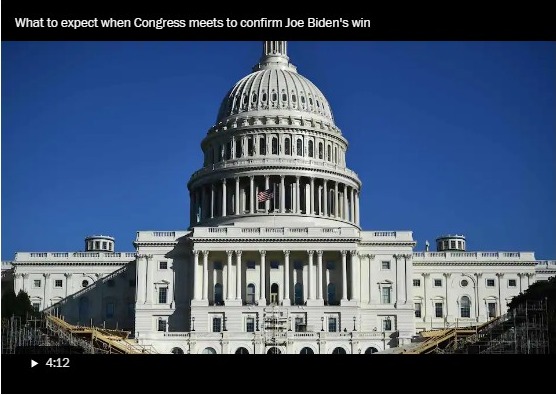

 D.C. Mayor Muriel E. Bowser, center, with acting D.C. police Chief Robert Contee III behind and to her left on Dec. 22. MUST CREDIT: Photo by Robb Hill for The Washington Post.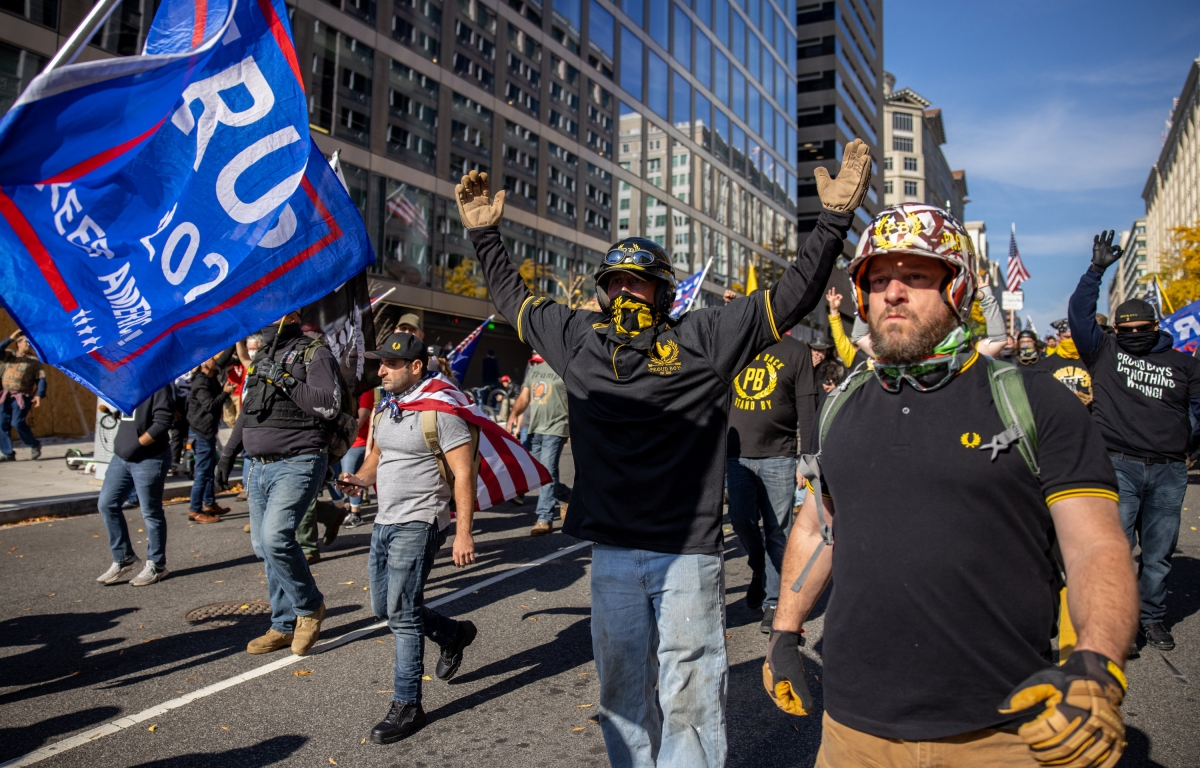

 President Donald Trump walks to the Oval Office on Thursday, Dec. 31, 2020. MUST CREDIT: Washington Post photo by Bill O’Leary
 SootinClaimon.Com