
Maryland may withhold vaccine allotments from hospitals with excess supply, Hogan says #SootinClaimon.Com

#SootinClaimon.Com : ขอบคุณแหล่งข้อมูล : หนังสือพิมพ์ The Nation.

Maryland may withhold vaccine allotments from hospitals with excess supply, Hogan says

InternationalJan 06. 2021Anna DaSilva, a medical clinic supervisor, receives her shot as Montgomery County administered 4,000 doses of the Moderna vaccine to healthcare workers and first responders on Dec. 30 in Silver Spring. MUST CREDIT: Washington Post photo by Bill O'Leary.Anna DaSilva, a medical clinic supervisor, receives her shot as Montgomery County administered 4,000 doses of the Moderna vaccine to healthcare workers and first responders on Dec. 30 in Silver Spring. MUST CREDIT: Washington Post photo by Bill O’Leary.

By The Washington Post · Erin Cox, Rebecca Tan, Lola Fadulu

Gov. Larry Hogan announced Tuesday that he will deploy the Maryland National Guard to help local health departments inoculate medical workers and that he may withhold future vaccine allotments from hospitals that have not used most of their available supply.

The governor, a Republican, said any hospital, contractor, pharmacy or health department that has not used 75% of its supply might not receive additional doses of the vaccine. Hogan identified hospitals that have been slow to administer it, some of which have used less than 20% of their supplies.

The state would send unused doses to places where they could be distributed quickly, he said.

“No doses should be sitting in freezers while others are waiting,” Hogan said during a news conference. “Either use the doses you have been allocated or they will be redirected.”

He laid out the most detailed timeline yet for when other priority groups could receive vaccinations.

Teachers were moved into the next eligible group, which includes people age 75 and over. Hogan estimated that they could receive vaccinations at the end of January. The next group, expected to get vaccines in early March, includes people over 65 and those deemed essential workers, such as grocery store employees.

Hogan said he will not wait for all medical professionals to be inoculated before moving on to other priority groups.

The governor noted progress in the state’s distribution of vaccines, but he said the rollout will take months, with 30% of the state’s population of about 1.8 million likely to be inoculated by the end of May.

Virginia Gov. Ralph Northam, a Democrat, plans to discuss vaccine distribution in his state during a Wednesday news conference.

Vaccine distribution continued across the region Tuesday as the seven-day rolling average of new infections in the District of Columbia, Maryland and Virginia stood at 7,421 – the third consecutive record-setting day.

Baltimore Mayor Brandon Scott, a Democrat, said his city will begin this week to vaccinate first responders and health-care workers not affiliated with hospitals.

The city received 2,600 doses of the Moderna vaccine from state officials last week. Health Commissioner Letitia Dzirasa said officials are unsure of how many more doses the city will receive through next week.

“There’s still a very limited supply,” she said, urging members of the public to be patient.

Maryland data shows that 1.5% of people in the Baltimore region have been vaccinated, compared with 0.7% vaccination rate in the state’s Washington suburbs.

Montgomery County Health Officer Travis Gayles said late Monday that the discrepancy might be because more Montgomery health-care workers have been vaccinated in D.C. or other jurisdictions but have not reported it to the state health department. He also acknowledged that at hospitals, which received the first batches of the vaccine from the federal government, not everyone who is eligible has agreed to take the vaccine.

“If we’re honest, there are some folks who are still taking a wait-and-see approach,” he said.

While hospitals have received doses directly from the federal government, local governments have had to wait for allotments from state authorities. This is “an additional layer of time” in the distribution process, Gayles said. The county, for example, learned Saturday that it would be receiving a new batch of doses Tuesday.

“We’re at the mercy of getting that information from the state and the state is at the mercy of getting the information from the federal government,” he said. “It’s our biggest obstacle.”

Of the 4,300 doses that Montgomery has received, 86% had been administered by Monday night, Gayles said. The county has planned six more vaccine clinics to administer the new batches, but with more than 50,000 people in the county’s top priority group, it will be some time before vaccinations begin for those in the next category, which includes people 75 and older.

Gayles said the county is not aware of vaccines expiring because of a lack of demand. In such a situation, the health department has told pharmacies to inform county officials, who would then identify a cohort of priority group members to receive the vaccine.

The greater Washington region reported 6,595 new infections and 118 virus-related fatalities Tuesday. D.C. had 262 new cases and four deaths; Virginia had 4,377 cases and 59 deaths; and Maryland had 1,956 cases and 55 deaths.

Virus-related hospitalizations were up 12% from last week in D.C.; up 8% from last week in Virginia; and up 3% from last week in Maryland, according to The Washington Post’s tracking of data.

D.C. has administered 16,989 of the 40,075 doses delivered, according to city data that includes reports from 58% of providers. Virginia has administered 103,083 doses, and Maryland has administered 76,916 doses.

Analysis: Trump roadshow whines to a close with last hurrah #SootinClaimon.Com

#SootinClaimon.Com : ขอบคุณแหล่งข้อมูล : หนังสือพิมพ์ The Nation.

Analysis: Trump roadshow whines to a close with last hurrah

InternationalJan 06. 2021President Donald Trump speaks during a rally on Monday in Dalton, Ga. MUST CREDIT: Washington Post photo by Jabin BotsfordPresident Donald Trump speaks during a rally on Monday in Dalton, Ga. MUST CREDIT: Washington Post photo by Jabin Botsford
By The Washington Post · Anne Gearan

DALTON, Ga. – President Donald Trump’s first words at a slick, theoretically scripted get-out-the-vote political rally on behalf of Georgia’s Republican Senate candidates were neither scripted nor on behalf of the candidates.

They were about President Trump.

“I want to thank you very much. Hello, Georgia. By the way, there’s no way we lost Georgia,” Trump began Monday night, after the treacly Lee Greenwood anthem “God Bless the U.S.A.” faded out. “There’s no way.”

Then it was on to familiar themes of grievance and defiance and familiar falsehoods, though with notes of melancholy, and perhaps resignation, some two months after President-elect Joe Biden’s victory was sealed.

What may be Trump’s final signature political rally as president felt like a grasping, wistful last hurrah. If this was the last stop on the Trump roadshow, it ended not with a bang but a whine.

“We won everything, and we won it now a second time,” Trump said, after a long digression about his 2016 victory. “I hate to bore you with that expression.”

He still gave the mostly maskless crowd at a rural airstrip a show – with a Marine One flyover, a booming sound system playing the Trump campaign playlist, warm-up red meat from Donald Trump Jr. and campaign surrogate Kimberly Guilfoyle, and a closing appearance from daughter and adviser Ivanka Trump.

In between, the hour-plus was filled with all the Trump iconoclasm, now no longer shocking. Baseless conspiracies! Dozens of easily disproved false claims! Internecine grudges! Casting out enemies! Threatening loyalists! Inviting an adherent of the QAnon conspiracy theory onstage! And throughout, Trump’s song to himself – the only theme music that has ever mattered.

“So somebody came up to me today, Kelly, and they said, ‘Sir, you’re way up in four years! Nobody can come close to me!’ ” Trump said, as the only current candidate onstage, Sen. Kelly Loeffler, stood by.

“I said, ‘ I’m not interested in four years, I’m interested in, like, eight weeks ago,’ ” Trump said to laughter.

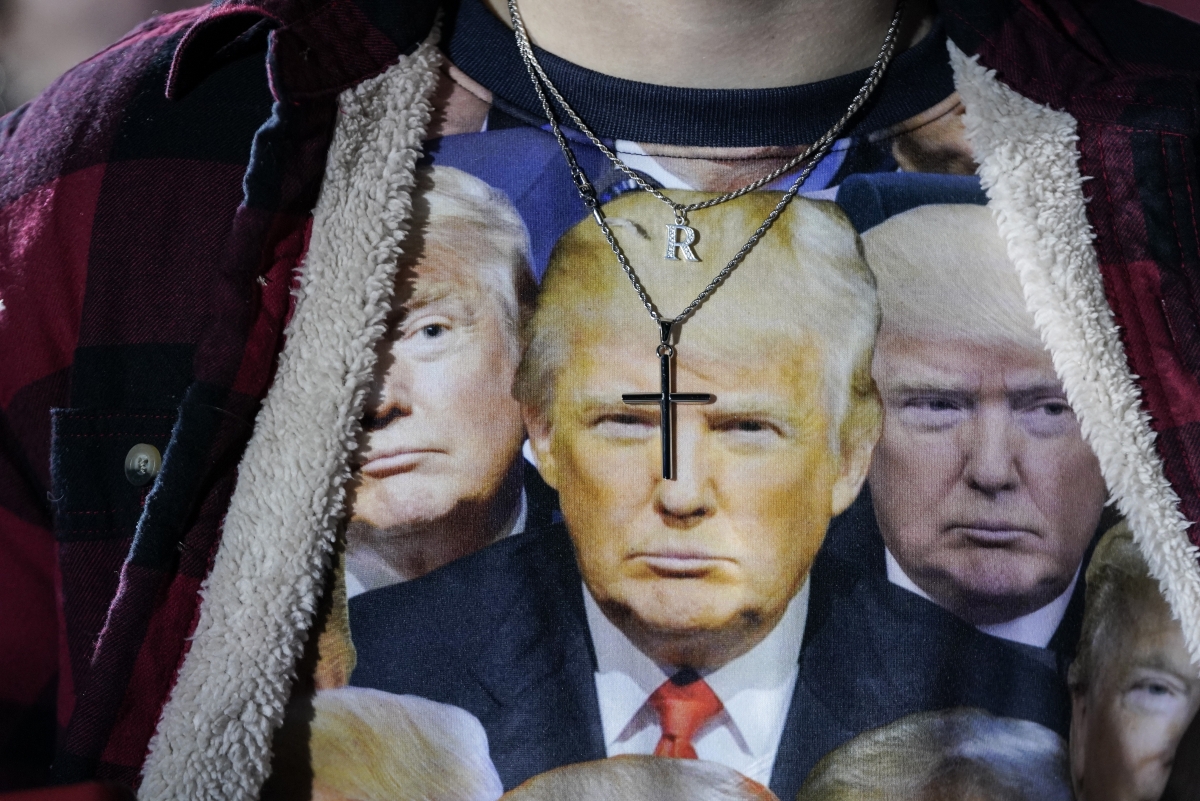
A supporter wears a Trump shirt as President Donald Trump speaksduring a rally on Monday in Dalton, Ga. MUST CREDIT: Washington Post photo by Jabin Botsford
A supporter wears a Trump shirt as President Donald Trump speaksduring a rally on Monday in Dalton, Ga. MUST CREDIT: Washington Post photo by Jabin Botsford

Over and over, Trump returned to his own election and a multistate list of grievances and debunked claims of fraud. A steady stream of rallygoers made their way to the buses as Trump gave a blow-by-blow riff about alleged ballot counting irregularities in Pennsylvania, which is of course a long way from northwest Georgia.

Seemingly aware that he was straying from the purpose of his appearance, Trump more than once observed that he was only trying to warn against election fraud during the Georgia runoff elections Tuesday, which will determine whether Republicans hold the Senate.

“That’s why I’m here,” Trump said. “I don’t want to do rallies for other people.”

Most in the crowd appeared to share Trump’s view about the real star of the show.

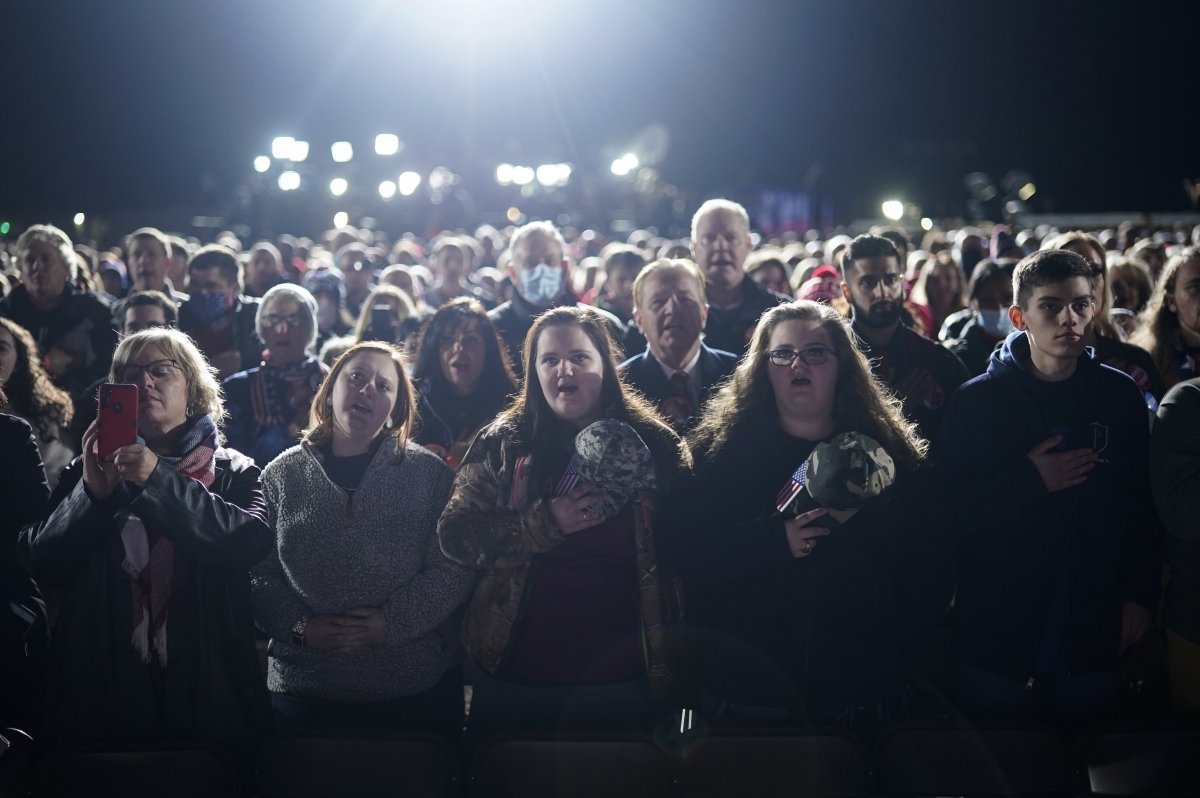
Three hours before Trump’s scheduled remarks alongside Loeffler, thousands of people sat side by side in folding chairs or stood close together on the tarmac, despite public health advice to avoid close contact with others, even outdoors. The other Republican Senate candidate, David Perdue, appeared by video after a close contact with a staffer who had tested positive for the potentially deadly viral disease.

The venue was decked as for a Trump rally, with giant red, white and blue electronic signs that flashed the name “Trump” in large letters in between exhortations to vote in the runoff the following day. Smaller signs bore the Republican Senate candidates’ names.

Many in the crowd wore red “Make America Great Again” ball caps. A few were wrapped in capes or blankets printed with Trump’s face. One guy had a giant red foam MAGA hat with a thatch of fake orange hair.

The president issued what once would have been a remarkable threat to his running mate, Vice President Mike Pence, who will preside over the congressional certification of the election results on Wednesday, saying he hopes Pence “comes through” with unspecified (and impossible) action that overturns the results.

“Of course if he doesn’t come through, I won’t like him so much,” Trump said as the crowd laughed.

He also raised the stakes in his feud with former ally Gov. Brian Kemp and Georgia’s top election official, Secretary of State Brad Raffensberger. He blames the fellow Republicans for allowing his loss in the state.

“I’m going to be here in a year and a half and I’m going to be campaigning against your governor and your crazy secretary of state,” he said to cheers.

Although he remained defiant and insisted that nothing he said should be considered a concession to defeat, Trump also appeared slightly at a loss.

He marveled that Biden, who was also campaigning in the state Monday, could be president when “he can’t talk”; Biden has struggled with a lifelong stutter. Trump also mocked Biden’s small motorcade and small traveling footprint, which is by design as a pandemic precaution.

Supporters wait for President Donald Trump at Monday's rally. MUST CREDIT: Washington Post photo by Jabin Botsford

Supporters wait for President Donald Trump at Monday’s rally. MUST CREDIT: Washington Post photo by Jabin Botsford

Trump also called the Georgia candidates the “last line of defense,” and said that without Loeffler and Purdue, no one could stop the Democrats’ agenda. That was a tacit nod to the reality that since he has lost and Pence will no longer be a deciding vote in the Senate, victories by Democrats in both Georgia Senate elections would put Republicans out of power entirely.

He promised to help Republicans regain control of the House in 2022 and to return to the state to campaign for Rep. Marjorie Taylor-Greene, the newly elected Republican who has espoused baseless QAnon theories about a sprawling government conspiracy.

“Of course, if I didn’t win, you probably wouldn’t want me,” Trump said, his playful tone tinged with rue – and bile. “You know, an awful big difference between losing and winning and having it stolen.”

Jeff Mitchell, 58, of Canton, Ga., and some friends from Florida were at the rally to see Trump. His buddies, who cannot vote in the runoff election, had stopped en route to pro-Trump demonstrations in Washington on Wednesday.

Mitchell said before the event that he can “accept defeat” if Trump lost fair and square, but he said he believes Trump has been treated unfairly. Mitchell, sounding resigned, also suggested Trump is a victim of circumstance.

“You had a perfect storm. The covid, the mail-in ballots and the hatred for Trump,” he said.

Trump’s speech included his standard gibes at the media, which he claimed does not report on election fraud or on his accomplishments. The crowd cheered, but without the thunder that used to accompany the president’s populist attacks.

The crowd appeared underwhelmed when, near the close of the event, Trump mused about what he considers one of those accomplishments. Although he did not seal a disarmament deal with North Korea’s dictator, Trump cast the gambit in his usual, highly personalized, terms.

“I got along very well with Kim Jong Un,” Trump mused, the past tense not lost on anyone. “I don’t think that Joe’s going to, based on what I’ve heard.”

By the end, with the music booming and Trump’s armored limousine idling to drive him the short distance to his presidential helicopter, Trump wandered the stage for a few awkward moments.

He tacked one way, pumping his fist, then the other, a sort of grimace on his face.

EU Seeks Up to 300 Million More Pfizer-BioNTech Doses #SootinClaimon.Com

#SootinClaimon.Com : ขอบคุณแหล่งข้อมูล : หนังสือพิมพ์ The Nation.

EU Seeks Up to 300 Million More Pfizer-BioNTech Doses

InternationalJan 06. 2021

By Syndication Washington Post, Bloomberg · Naomi Kresge, John Follain

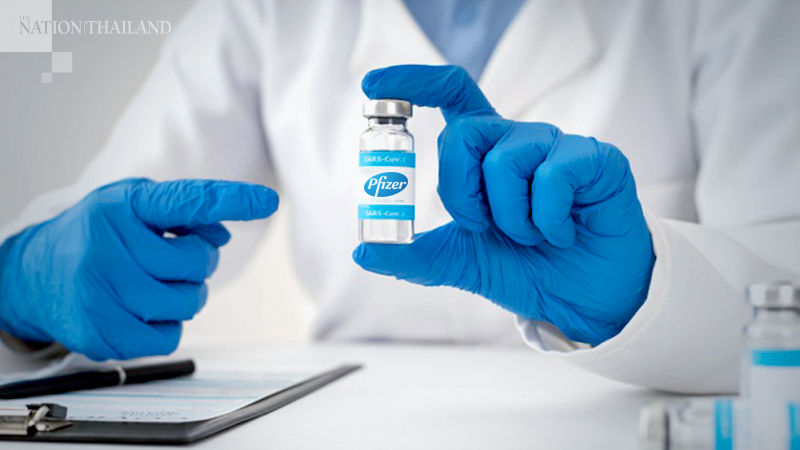
The European Union is negotiating with Pfizer and BioNTech on a deal that could double their supply of covid-19 vaccine to the region, according to people familiar with the talks.

The new contract would include 100 million doses, as well as an option for as many as 200 million more, said the people, who asked not to be identified because the talks are private.

Governments across the EU face growing questions over the slow pace of their vaccine rollouts, and shots from other drugmakers such as AstraZeneca won’t be available for weeks at the earliest.

The attempt to secure more of the Pfizer-BioNTech vaccine comes less than a week after the 27-member bloc boosted its original 200 million-dose order to 300 million. If the option in the new agreement were exercised, it would lift the total doses to 600 million, enough to vaccinate two-thirds of the bloc’s population based on a two-dose regimen.

In premarket trading, BioNTech American depositary receipts rose 2%, with Pfizer showing little change.

Member countries have pressured the EU to secure more doses as the pandemic’s death toll rises, lockdowns lengthen and leaders worry about containing a new, more contagious strain of the virus that has emerged in the U.K.

While the EU has signed deals with a range of companies for access to almost 2 billion doses, only the Pfizer-BioNTech shot has thus far won approval from its regulator. A decision on a similar vaccine from U.S. biotech Moderna Inc. could come on Wednesday. However, the EU has locked up less of that shot, with a contract for as many as 160 million doses.

“We are in talks about whether and how we can provide further vaccine doses from Europe for Europe this year,” BioNTech Chief Executive Officer Ugur Sahin said in an e-mailed statement.

No agreement has been reached and the numbers could still change. A Pfizer spokesman declined to comment. A BioNTech spokeswoman declined to comment on the number of doses involved.

The European Commission is examining with BioNTech and Pfizer whether there is a way to increase supply beyond the initially contracted 300 million doses, Stefan De Keersmaecker, a health-policy spokesman, said Monday. He declined to comment Tuesday about the details of the extra shots being sought.

Pfizer and BioNTech are pursuing all their options to boost production capacity for the vaccine beyond the 1.3 billion doses originally planned for this year, Sahin said in an interview last month. The CEO said he was confident that would be possible, saying the partners would probably know by January or February whether and how many additional doses they would be able to offer.

European leaders have also come under fire for how the existing doses have been distributed. In France, administrative red tape and a lack of nursing home staff hobbled the early days of the vaccine campaign. Meanwhile, German Chancellor Angela Merkel is being criticized for tasking the EU with centralized negotiations instead of striking out on her own sooner to get more of the vaccine for Germany itself.

Swelling Iraqi oil sales mean trouble for OPEC+ output talks #SootinClaimon.Com

#SootinClaimon.Com : ขอบคุณแหล่งข้อมูล : หนังสือพิมพ์ The Nation.

Swelling Iraqi oil sales mean trouble for OPEC+ output talks

InternationalJan 06. 2021

By Syndication Washington Post, Bloomberg · Anthony Di Paola

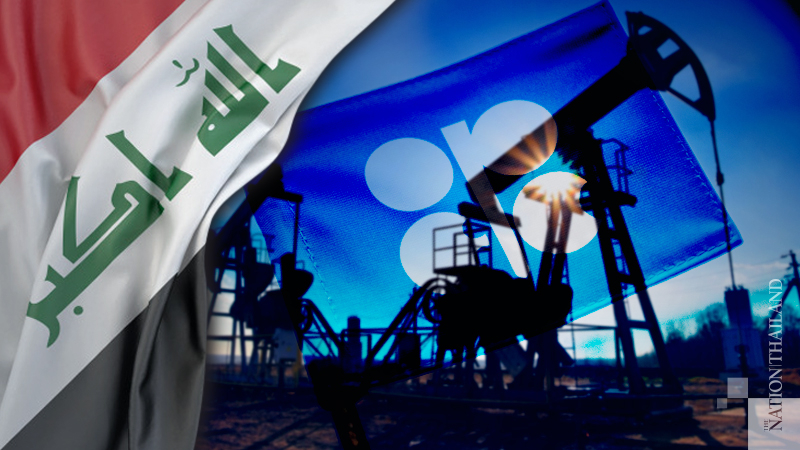
Iraq boosted crude exports in December and may have exceeded its OPEC+ output quota, which could complicate talks on Tuesday between major producers over whether to boost oil supplies.

Crude shipments from Iraq, the largest producer in the Organization of Petroleum Exporting Countries after Saudi Arabia, rose 4% last month to 3.26 million barrels a day, according to tanker-tracking and port-agent data compiled by Bloomberg.

OPEC and its allies such as Russia are weighing recent price gains against fresh coronavirus lockdowns that could stifle energy demand as they try to determine whether to increase oil output next month.

The OPEC+ alliance, led by Riyadh and Moscow, agreed in early December to pump an extra 500,000 barrels a day in January, and it’s meeting this week to consider an increase of the same size in February. The talks were meant to conclude on Monday, but will drag on amid an impasse between Russia, which wants to boost output, and others who believe production should remain unchanged next month.

As OPEC+ members begin opening their taps, more will end up exceeding their quotas, said Bob McNally, president of consultant Rapidan Energy Group and a former White House official. For now, Russia and Iraq are “by far” the biggest quota-busters, he said to Bloomberg Television.

Iraq, mired in an economic crisis, has angered the Saudis by pumping above its cap on several occasions since OPEC+ agreed to cuts in April. Baghdad is siding with Riyadh during this week’s meeting, however, in urging the group not to hike supply further in February.

Oil prices rallied after the cartel started its cutbacks, but still fell about 25% during 2020. Brent crude dropped a second day on Tuesday, sliding 0.5% to $50.85 a barrel by 3:09 p.m. in Singapore.

Iraqi Oil Minister Ihsan Abdul Jabbar said in December that his nation would respect its production cap even as it raised exports over the course of the month.

Baghdad’s quota was about 3.8 million barrels a day in December, before accounting for compensation cuts that it promised for the earlier breaches. Iraq pumped 3.86 million barrels daily in November, according to a Bloomberg survey, when exports were 3.13 million barrels a day. A survey showing OPEC’s December production will be published later this week.

Although exports aren’t a direct gauge of production, they do shed light on a country’s actual output. Iraq can consume as much as 650,000 barrels a day of crude in its refineries and often uses oil in power plants. To have met its quota last month, Iraq would have had to curb domestic use or sell crude held in storage.

Exports from neighboring Iran also rose in December, reaching the highest level since March, according to tanker-tracking data. Iran is exempt from an OPEC+ production limit, however, due to U.S. sanctions. Oil Minister Bijan Namdar Zanganeh said in mid-December that his country planned to roughly double production in the next year to 4.5 million barrels daily as it anticipates a loosening of sanctions after Joe Biden becomes president.

Russia has breached its output targets as well, according to data from the International Energy Agency. Moscow’s compliance with the OPEC+ deal has averaged 95%, meaning it has pumped about 100,000 barrels a day above its limit.

“For some reason, Russia and Iraq have been given a little bit of leeway to lag,” McNally said. He sees “no sign really of them coming into full compliance soon, much less making up for their owed barrels.”

Markets brace for greater chance of blue wave in Georgia #SootinClaimon.Com

#SootinClaimon.Com : ขอบคุณแหล่งข้อมูล : หนังสือพิมพ์ The Nation.

Markets brace for greater chance of blue wave in Georgia

InternationalJan 06. 2021A supporter holds a A supporter holds a “VOTE” flag at a campaign event for Raphael Warnock, U.S. Democratic Senate candidate, in Riverdale, Ga., on Jan. 4, 2021. MUST CREDIT: Bloomberg photo by Elijah Nouvelage

By Syndication Washington Post, Bloomberg · Katherine Greifeld

While the relentless spread of the coronavirus drove the equity market lower on Monday, there were also signs investors are preparing for a greater possibility that Democrats will gain control of the U.S. Senate.

A Goldman Sachs basket tracking stocks that should benefit from Democratic Party policies performed better than those expected to be harmed. And even as the S&P 500 dropped, the Invesco Solar ETF — thought to benefit from President-elect Joe Biden’s energy policy — rose more than 2%. Bond-market inflation expectations climbed to the highest since 2018, and options traders piled into protection against rising yields.

Underlying the moves was the belief that if Democrats prevail in Tuesday’s runoff elections in Georgia and take control of the Senate, Congress will deliver a bigger emergency aid package than it would under a divided government. That scenario could drive inflation higher, the thinking goes, pushing up Treasury yields and breathing life into economically sensitive stocks. Though all major indexes fell on Monday, cyclical sectors like energy and consumer discretionary stocks outperformed.

“Democratic control of the Senate should be viewed as increasing the risks of higher inflation,” said Sameer Samana, senior global market strategist at Wells Fargo Investment Institute. “Higher inflation expectations may portend better pricing power for a lot of cyclical businesses that we see playing a much larger role in 2021.”

Yet a too-quick pickup in inflation also could put upward pressure on interest rates and hasten the withdrawal of Federal Reserve stimulus. The 10-year break-even rate — a proxy for expected consumer price increases based on yields on inflation-linked Treasuries — rose to 2.01% Monday, a level last seen more than two years ago, data compiled by Bloomberg show.

Meanwhile, supply disruptions stemming from the pandemic caused manufacturers’ input prices to climb last month at the fastest pace since 2018 and their selling prices to soar at the quickest rate since 2011, IHS Markit said in its purchasing managers index report on Monday.

“With the Fed likely to keep rates near zero, the yield curve could steepen significantly” if the Democrats sweep the Georgia elections and follow through with tax proposals, Dennis DeBusschere, head of portfolio strategy at Evercore ISI, said in a note to clients on Monday. “The yield curve is likely to steepen as the economy normalizes, supported by strong housing and the negative real rate backdrop.”

Anxiety over a blue sweep of Congress that allows Biden to “aggressively” implement higher taxes to pay for fiscal aid could help explain why stocks sank on Monday, DeBusschere wrote.

Some options traders are evidently bracing for such a scenario. Near-term put spreads on the $19 billion iShares 20+ Year Treasury Bond ETF (ticker TLT) and the $58 billion iShares Russell 2000 ETF (ticker IWM) were in high demand on Monday. Those moves “appear to be positioning for a Dem sweep in Georgia,” Susquehanna International Group co-head of derivatives strategy Chris Murphy wrote in a note Monday.

The runoffs in Georgia were triggered after no candidates for the state’s two Senate seats clinched a majority of the vote. Predictions markets are expecting a close race, with trading on PredictIt.com signaling the probability of a Democratic-controlled Senate has risen to 48% from just 25% two weeks ago. The implied probability of a Republican Senate has dropped to 53% from 76% in late December.

A measure of calm returned to the market on Tuesday, with S&P 500 futures up 0.2% at 5:59 a.m. in New York and the Cboe Volatility Index down a fraction. That gauge, known as the VIX, jumped as much as 6.4 on Monday to 29.19 — the highest on a closing basis since the day after Election Day in November.

The toss-up nature of the race has inflated the S&P 500’s 30-day implied volatility relative to its realized volatility — a spread that should collapse in the aftermath of the vote, Murphy wrote. The runoff elections — and the potential for contested results that could delay the determination of who won for days — “is the major event propping up implied volatility,” he said.

“I would expect implied volatility levels to decrease — as well as an increase in realized volatility around that event — and the ratio above to compress after that event,” he wrote.

Death of Chinese tech worker fuels anger over brutal hours #SootinClaimon.Com

#SootinClaimon.Com : ขอบคุณแหล่งข้อมูล : หนังสือพิมพ์ The Nation.

Death of Chinese tech worker fuels anger over brutal hours

InternationalJan 06. 2021

By The Washington Post · Eva Dou

She was in her early 20s, and she was working hard to help to win market share for a tech company run by China’s second-richest man.

The employee, named Fei, collapsed in the wee hours of Dec. 29 after a long shift working at online deals giant Pinduoduo, the company said. She passed away after six hours of first-aid treatment.

Though the cause of death hasn’t been confirmed, Fei’s fate has reignited scrutiny of brutal work schedules and vast inequalities in the Chinese tech industry, whose power and wealth are attracting growing public criticism and pushback from regulators. Online discussions about Fei’s death racked up hundreds of millions of views this week, while Shanghai labor regulators told local media they had sent a team to investigate Pinduoduo’s labor contracts and work hours.

Fueling the public anger, a Pinduoduo social media account originally said grass-roots employees faced a “trade-off of life for money,” a statement the company later denounced as an unauthorized opinion of an outsourced marketing worker.

“We are heartbroken by Fei’s death and feel deeply for her family,” Pinduoduo later said in a statement, using the employee’s first name. “She was popular among her peers and valued by her colleagues. Our team has been accompanying the family all this time and providing every assistance that her family needs.”

Reached by phone, a staff member of the labor protection department of Shanghai’s Changning district said officials were investigating the case but could not release any detail at this stage.

Rui Ma, a San Francisco-based tech analyst, said there has been discontent for years over harsh work schedules in China’s high-tech industry, but the anger has deepened as the so-called “996” schedule – short for 9 a.m. to 9 p.m., six days a week – has remained entrenched, despite the industry’s growing stature and resources.

“The outrage only reached a crescendo in the last few years,” she said. “If you want to work in this industry, it does not feel like there are many options to opt out of 996.”

The 996 schedule is technically illegal under China’s labor law, which limits the number of overtime hours for employees and requires overtime pay, said Aidan Chau, a researcher at China Labor Bulletin. But there has been little enforcement, and Chinese Internet companies widely require 996 work hours.

“Every Internet company is not abiding by the law,” Chau said.

Amid the criticism, some Internet companies are shifting to alternating six-day and five-day workweeks, a system dubbed “big and little weeks,” according to state-run broadcaster CGTN.

The public-relations crisis for Pinduoduo comes at a time when China’s Internet giants are feeling the harshest pressure from the government since the industry’s inception, as their growing power threatens vested interests and state control of key sectors. Pinduoduo’s larger rival Alibaba was put under anti-monopoly investigation last month, a fall from favor that sent shock waves through the business community. The probe followed Beijing’s decision to scuttle the IPO of Alibaba’s financial services spinoff Ant Group, after Alibaba’s founder Jack Ma angered the government with criticism of the country’s banking system.

Jack Ma – who has previously endorsed the 996 work culture – has been conspicuously missing from public events in recent weeks.

Pinduoduo’s founder Colin Huang became China’s second-richest person last year, surpassing Jack Ma, according to the Forbes real-time billionaires list. Founded in 2015 as a Groupon-like deals platform, Pinduoduo quickly took off, filling the low-end e-commerce segment that Alibaba was shifting away from in response to public pressure over counterfeit products on its platforms.

The details of Fei’s death reflected the harsh conditions for employees behind China’s glitzy Internet empires. According to Pinduoduo, she had collapsed after leaving work at 1:30 a.m. The company said she had written on her internal account that she was helping Pinduoduo to win market share in Xinjiang, in China’s northwest.

In response to the public outrage, Pinduoduo released a statement in which it quoted the deceased employee’s father thanking the company for its help. It also originally denied the “life for money” post, leading the social media platform Zhihu to make an unusual public statement confirming a Pinduoduo account had posted and then deleted the comment – an indication the controversy had reached a level where even peripherally involved companies felt compelled to respond.

Online, Fei’s case prompted others to write about their own experiences of overwork.

“From the Pinduoduo case, I have seen more than the death of one young woman, but the breaking of a family and the helplessness of tens of millions of IT workers who are on the brink of death but have kept quiescent due to capitalist manipulation,” one Chinese business executive who only identified himself by his surname, Li, wrote on Zhihu on Tuesday.

China’s powerful state-run TV broadcaster CCTV also indirectly criticized Pinduoduo on Monday. Without naming the company, it said in a post on Weibo that companies can’t have workers “exchange their lives for money.”

A number of Chinese companies have faced public accusations of employee deaths from overwork over the years. In 2006, the death of a 25-year-old Huawei engineer who had been working around-the-clock sparked public backlash, pushing the telecommunications giant to stop encouraging a “mattress culture,” where engineers worked through the night, napping on mattresses on the ground.

Britain is betting on 2 million vaccine shots weekly to end lockdown #SootinClaimon.Com

#SootinClaimon.Com : ขอบคุณแหล่งข้อมูล : หนังสือพิมพ์ The Nation.

Britain is betting on 2 million vaccine shots weekly to end lockdown

InternationalJan 06. 2021Police officers patrol the concourse at London Waterloo railway station on Jan. 5, 2021, as Britain goes back into lockdown in an attempt to prevent hospitals being overwhelmed. MUST CREDIT: Bloomberg photo by Hollie AdamsPolice officers patrol the concourse at London Waterloo railway station on Jan. 5, 2021, as Britain goes back into lockdown in an attempt to prevent hospitals being overwhelmed. MUST CREDIT: Bloomberg photo by Hollie Adams
By Syndication Washington Post, Bloomberg · Emily Ashton, Tim Ross

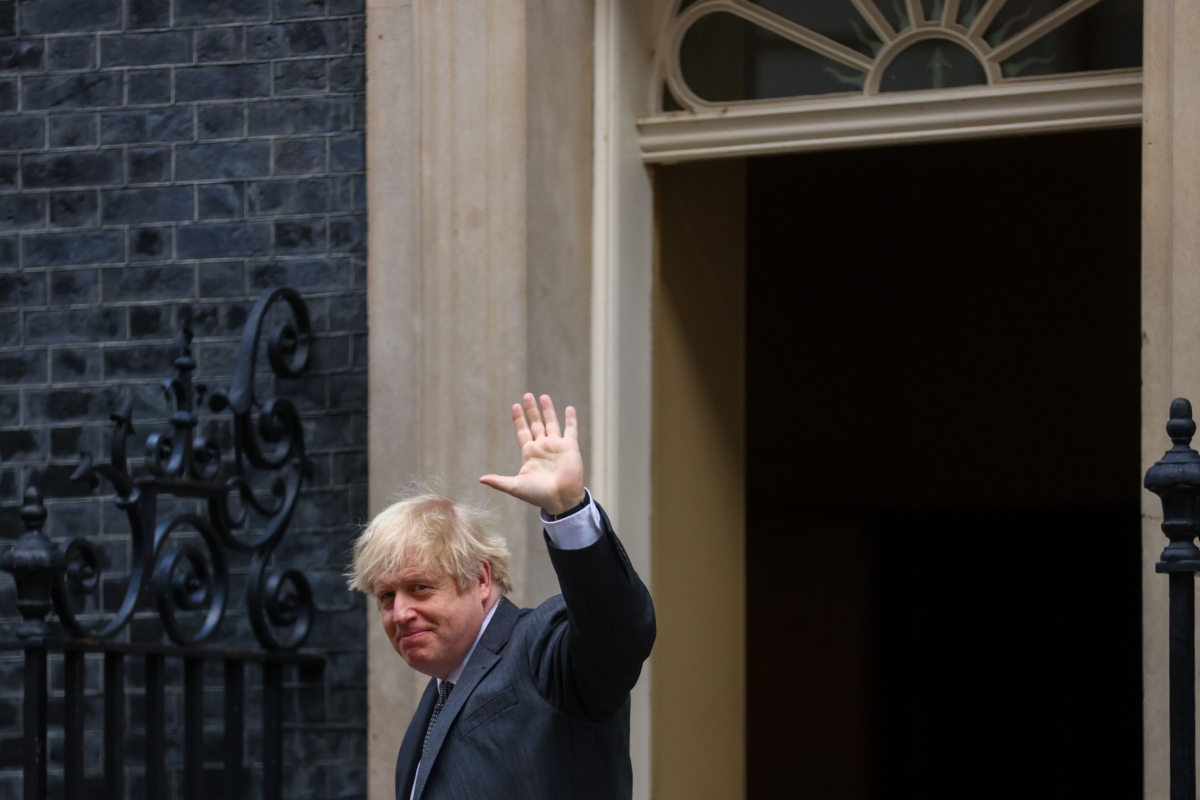
Prime Minister Boris Johnson pinned his hopes for a national recovery on a plan to deliver 2 million coronavirus vaccinations a week as Britain returned to lockdown in an attempt to prevent hospitals being overwhelmed.

Amid dire warnings that the National Health Service could fail to cope with soaring infection rates, the prime minister shut England’s schools and ordered people across the country to stay at home. U.K. Chancellor of Exchequer Rishi Sunak on Tuesday pledged new support to help companies and Johnson will give a news conference at 5 p.m. London time.

British Prime Minister Boris Johnson. "With every jab that goes into our arms, we are tilting the odds against covid and in favor of the British people," Johnson says as Britain returns to lockdown. MUST CREDIT: Bloomberg photo by Simon Dawson

British Prime Minister Boris Johnson. “With every jab that goes into our arms, we are tilting the odds against covid and in favor of the British people,” Johnson says as Britain returns to lockdown. MUST CREDIT: Bloomberg photo by Simon Dawson

Johnson warned of hard weeks ahead but announced a target to give shots to 13.9 million people at the highest risk from the disease by mid-February. Once they have all been vaccinated, the restrictions can begin to be eased, he said.

“With every jab that goes into our arms, we are tilting the odds against covid and in favor of the British people,” Johnson said a televised address. “The weeks ahead will be the hardest yet, but I really do believe that we are entering the last phase of the struggle.”

Meeting the ambitious target will depend on having enough vaccine doses, according to Doug Brown, chief executive of the British Society for Immunology.

“The bottleneck doesn’t seem to be on the logistical side,” Brown said in an interview. “The NHS is ready to deliver.” If any glitches do arise, it will likely be with supply, he said. “If we get the supplies, we can vaccinate that many people.”

The emergency measures, matching curbs in other parts of the U.K., started on Monday night and will last until at least Feb. 15 as medics try to get a grip on the pandemic. Johnson said he had no option but to close down all social activities, education and nonessential travel in the face of a sudden and severe surge in infections.

The announcement risks potentially devastating retail and hospitality businesses and threatening to push the economy into recession again. The pound fell.

The police will have legal powers to use fines and dispersal orders to enforce the rules. Parliament will be recalled to debate the measures on Wednesday but the regulations are due to become law earlier that day, Johnson said.

The prime minister was forced to act after data showed new infections soaring past 80,000 on Dec. 29 and more people in the hospital than in the first peak of the virus in April.

By Jan. 4, there were almost 27,000 patients hospitalized with covid-19 in England, a 30% increase in a week, which the government blamed on a surge in infections from a new, faster spreading strain of the virus.

Johnson resisted pressure from scientists and opposition lawmakers to lockdown the whole country in December. He cut back plans to allow families to mix over Christmas, but insisted he wanted to avoid nationwide curbs like those seen in March, choosing to keep a regional tier system in place instead.

Government chief medical officers for the four nations of the U.K. warned on Monday that the health service may not be able to cope without urgent action now. They issued a statement saying the NHS is “under immense pressure” already.

The British Medical Association, the union for doctors, underlined the crisis facing the NHS. “Hospitals are stretched to breaking point,” said Chaand Nagpaul, chair of the BMA council. “Doctors are desperate, with some even comparing their working environment to a war-zone as wards overflow.”

Scotland also announced a lockdown starting at midnight on Monday. “We are now in a race between the vaccine and the virus,” First Minister Nicola Sturgeon said.

Johnson had made keeping schools open for face-to-face learning a priority for his government. But scientists warned last month they would have to close to stop the virus from spreading. While children rarely suffer badly from the disease, they can infect their families after catching it from their friends.

“If we succeed in vaccinating all those groups, we will have removed huge numbers of people from the path of the virus,” Johnson said. “That will eventually enable us to lift many of the restrictions we have endured for so long.”

But there will be a “time lag” between vaccinating patients and the pressure on the NHS easing, Johnson said, adding that he is “cautious about the timetable ahead.” Vaccines Minister Nadhim Zahawi was more forthright about the target, saying on Twitter that “we will do this.”

The awkward timing of Europe’s deal with China #SootinClaimon.Com

#SootinClaimon.Com : ขอบคุณแหล่งข้อมูล : หนังสือพิมพ์ The Nation.

The awkward timing of Europe’s deal with China

InternationalJan 06. 2021

By The Washington Post · Ishaan Tharoor

Last week, China appeared to secure an investment agreement with the European Union. The deal, which has been long in the works and still needs to be ratified by the European Parliament, comes at a curious moment. E.U. officials looked past the last-minute entreaty of a top aide to President-elect Joe Biden, who hoped Brussels would stall in order to first have consultations with a new U.S. administration that’s less than three weeks from taking office.

Instead, the agreement was pushed through in the final moments of 2020 as Germany’s term in the rotating seat of the E.U. presidency came to an end. German Chancellor Angela Merkel, whose country’s automobile and industrial sectors are hungry for Chinese market access, was a driving force behind the agreement.

“The agreement, if it is ratified, would theoretically loosen restrictions on European companies in China’s tightly controlled market,” wrote The Washington Post’s Emily Rauhala. “European companies would no longer be required to operate joint ventures with Chinese partners, for instance, or be forced to share technology.”

Experts in China viewed the developments as a significant win for Beijing. “The deal will deepen the economic ties between China and the E.U., with negotiating a free-trade agreement being the expected next step,” Wu Xinbo, director of the Center for American Studies at Fudan University in Shanghai, told the South China Morning Post, a Hong Kong-based daily. “And it will also thwart the U.S. plan to join hands with Europe and isolate China from the future of globalization.”

European leaders contend that they are securing for their bloc similar terms to what the Trump administration negotiated with Beijing in its own “Phase 1” trade deal brokered at the beginning of last year. Ursula von der Leyen, president of the European Commission, said last week that tighter cooperation with Beijing would still allow Europe the ability to promote its “core values” and nudge China on political and economic reforms.

Critics say that position is woefully shortsighted, arguing “that Europe is knitting itself closer to an increasingly authoritarian China at a time when Beijing has shown little inclination to follow rules,” Rauhala added.

In the past year, China has squashed political freedoms in Hong Kong, rattled its saber at Taiwan, doubled down on its Orwellian program of repression in the far-western region of Xinjiang, battled India and bullied Australia and other countries on the world stage. Yet European officials gave Chinese government-run media outlets the opportunity to tout a major diplomatic victory, with the Global Times, an English-language state mouthpiece, hailing the pact as “a New Year gift from China and the E.U. to the whole world.”

That obscures the charged political atmosphere surrounding the West’s relations with Beijing. “The stories coming out of Xinjiang are pure horror. The story in Brussels is we’re ready to sign an investment treaty with China,” liberal European lawmaker Guy Verhofstadt tweeted Wednesday. “Under these circumstances any Chinese signature on human rights is not worth the paper it is written on.”

As far as E.U.-U.S. relations are concerned, the deal’s timing seems unfortunate. In an interview with CNN’s Fareed Zakaria aired Sunday, Jake Sullivan, Biden’s pick for White House national security adviser, stressed the incoming administration’s desire to meet with “like-minded” allies and move past the distrust sown during Trump’s bruising time in office.

“We are confident that we can develop a common agenda on issues where we share deep concerns on China,” Sullivan said.

The announced deal, though, is an indication of a different reality. Merkel and French President Emmanuel Macron have both separately emphasized the need for Europe to develop its “strategic autonomy,” weaning itself off more than half a century of sheltering under the umbrella of the Pax Americana. But, in this instance, critics note, Europe may be undermining what prospect there was of a meaningful united front on China.

“Countries mulling how far to stand up to China will draw their own conclusions: Europe talks about values but self-interest trumps solidarity,” wrote Edward Lucas in the Times of London. “The deal exemplifies the gap between the EU’s foreign policy aims and reality. The European Commission claims to be ‘geopolitical.’ In 2019 it deemed China a ‘strategic rival.’ Yet the mercantilist influence of big business, particularly in Germany, steamrollers ethical and security concerns.”

Noah Barkin, a senior visiting fellow at the German Marshall Fund for the United States, argued Merkel has prioritized the business interests of her country’s flagship firms and is keen to show that productive dialogue with China on various fronts is both possible and necessary. She has made these overtures even when the majority of the German public holds distinctly negative views of Beijing.

“In an increasingly black-and-white world where liberal democracies face an existential challenge from authoritarians and populists, Merkel still sees gray – and not only with China,” Barkin wrote in Foreign Policy. “The bargain she brokered recently with democratic backsliders Hungary and Poland to avert a clash over the EU budget is another example. George Soros accused her of surrendering to extortion.”

Some analysts see Merkel’s pragmatism as naivete. They doubt that expanded business ties will do much to “discipline the behavior” – as an E.U. statement put it – of China’s state-owned companies. And they fear that the agreement will bend Europe more to China than the other way around.

“Even in the current geopolitical order, China has repeatedly demonstrated its willingness to use its economic power as a strategic weapon,” wrote Financial Times columnist Gideon Rachman. “By deepening their economic reliance on China – without co-ordinating their policy with fellow democracies – European nations are increasing their vulnerability to pressure from Beijing.”

NYSE scraps plan to delist China telcos in ‘bizarre’ u-turn #SootinClaimon.Com

#SootinClaimon.Com : ขอบคุณแหล่งข้อมูล : หนังสือพิมพ์ The Nation.

NYSE scraps plan to delist China telcos in ‘bizarre’ u-turn

InternationalJan 05. 2021A person enters the New York Stock Exchange in New York on Jan. 4, 2021. MUST CREDIT: Bloomberg photo by Michael Nagle.A person enters the New York Stock Exchange in New York on Jan. 4, 2021. MUST CREDIT: Bloomberg photo by Michael Nagle.
By Syndication Washington Post, Bloomberg · Shirley Zhao, Lianting Tu · BUSINESS, WORLD, US-GLOBAL-MARKETS, ASIA-PACIFIC 

The New York Stock Exchange said it will no longer delist China’s three biggest state-owned telecommunications companies, backtracking on a plan that had threatened to escalate tensions between the world’s largest economies.

The U-turn came with scant explanation just four days after the NYSE said it would remove the shares to comply with a U.S. executive order. President Donald Trump — who now has just over two weeks left in office — signed an order in November barring American investments in Chinese firms owned or controlled by the military in a bid to pressure Beijing over what it views as unfair business practices.

The exchange cited “consultation with relevant regulatory authorities” for the reversal in a brief statement late Monday, declining to elaborate further.

The about-face, described as “bizarre” by a Jefferies Financial Group analyst, whipsawed investors who on Monday had sold shares of the Chinese telecom companies and raced to bet on which stocks might be delisted next. China Mobile, China Telecom and China Unicom Hong Kong all rallied on Tuesday.

A lack of clarity on why NYSE changed course left investors to speculate over whether it was simply a result of the exchange initially misinterpreting the November executive order, or something with broader geopolitical implications.

The episode has added to a sense of confusion surrounding implementation of Trump’s order in the waning days of his administration. Index providers FTSE Russell, MSCI and S&P Dow Jones Indices have all said in the past month they would remove some Chinese companies from equity gauges to comply with the order, but their lists of affected stocks have sometimes differed markedly.

The stakes are high for both Chinese and U.S. companies. The former have long turned to America’s stock market for capital and international prestige, raising at least $144 billion over more than two decades. Their U.S. counterparts, meanwhile, are keen to avoid any ratcheting up of tensions that might curb their access to China’s vast economy. Wall Street banks, in particular, have been pouring resources into the country after gaining unprecedented scope to operate there last year.

The NYSE’s reversal was “quite unexpected,” said Jackson Wong, director of asset management at Amber Hill Capital in Hong Kong. “Some funds that had an obligation to unload these shares will now need to buy them back. Some investors are also starting to price in a scenario that the decision to halt delistings could be the start of a de-escalation in tensions between China and the U.S.”

Calls and emails to the media department of the China Securities Regulatory Commission weren’t immediately returned Tuesday. The CSRC had responded to NYSE’s initial plan by calling it groundless and “not a wise move.” Spokespeople for the U.S. Treasury Department, U.S. Securities and Exchange Commission and the Financial Industry Regulatory Authority didn’t immediately reply to requests for comment.

It’s unclear whether NYSE’s reversal will have any impact on index providers, which help guide investments worth trillions of dollars. FTSE Russell declined to comment on Tuesday, while MSCI and S&P Dow Jones couldn’t immediately be reached. Bloomberg LP, the parent of Bloomberg News, also compiles stock and bond indexes.

In separate statements, China Mobile, China Telecom and Unicom said they will continue to monitor developments. China’s Foreign Ministry spokeswoman Hua Chunying said Tuesday that Beijing hopes the U.S. will respect the market and rule of law, and do things conducive to upholding order in the global financial markets.

The NYSE’s initial delisting proposal, announced on New Year’s Eve, marked the first time an American exchange had unveiled plans to remove Chinese companies as a direct result of rising geopolitical tensions between the two superpowers. In his executive order, Trump said the three telcos were among those directly supporting the Chinese military, intelligence and security apparatuses and aiding in their development and modernization.

The developments have unfolded in the last few weeks of the Trump administration, which for years has railed against China for what the U.S. president calls unfair trading practices. Trump has imposed tariffs on imports from China and carried out an aggressive campaign against Chinese technology firms such as Huawei Technologies, measures that have often elicited retaliation from Beijing. In a December article, Secretary of State Michael Pompeo discussed how U.S. investors are funding “malign PRC companies” whose shares are included in major indexes.

The NYSE has faced criticism from some market watchers over the way it handled the situation. Travis Lundy, an Asia markets veteran and independent analyst who publishes on the Smartkarma platform, said in a tweet that the U-turn reflected “rank ineptitude” by the exchange and “weak leadership” by the Treasury Department.

“They’ve had seven weeks to talk to Treasury about this,” Lundy said, adding that the department had published lengthy supplemental FAQs as well. “To implement the decision, and then four days later to backtrack — that’s just odd.”

While the impact on China Mobile and its two peers was always likely to be minimal given the bulk of their shares trade in Hong Kong, the delisting plan had heightened concerns about tit-for-tat sanctions between China and the U.S. as tensions between the superpowers simmer.

Chinese businesses without military links are also potentially vulnerable to delisting after Trump signed legislation with bipartisan support last month that could kick firms off U.S. exchanges unless American regulators can review their financial audits.

The outlook may depend in large part on how U.S.-China relations evolve after president-elect Joe Biden enters the White House later this month. While China’s President Xi Jinping said in a congratulatory message to Biden in November that he hopes to “manage differences” and focus on cooperation, few expect tensions to ease anytime soon.

“We don’t know as to how the Biden administration will pick up the baton that’s been left by the Trump administration,” said George Magnus, a research associate at Oxford University’s China Centre and author of “Red Flags: Why Xi’s China is in Jeopardy,” speaking on Monday before the NYSE’s reversal. “There will certainly be a transition cost to China if the mood in the U.S. remains sour.”

Germany leads European manufacturing to best month since 2018 #SootinClaimon.Com

#SootinClaimon.Com : ขอบคุณแหล่งข้อมูล : หนังสือพิมพ์ The Nation.

Germany leads European manufacturing to best month since 2018

InternationalJan 05. 2021

Euro-area manufacturing growth was led by Germany, where activity expanded the most in almost three years. Photographer: Krisztian Bocsi/Bloomberg

By Syndication Washington Post, Bloomberg · Fergal O’Brien

Euro-area manufacturing grew at the fastest pace in more than 2 1/2 years in December, bringing some positive news at the end of a horrific 2020 for the region’s economy.

Final readings of IHS Markit’s monthly surveys showed growth led by Germany, where activity expanded the most in almost three years, with all other countries covered also reporting an improvement on November. The euro-area index came in at 55.2, up from 53.8 though slightly lower than an earlier preliminary reading.

The improvement comes as governments continue to grapple with the coronavirus. The latest restrictions to contain the spread have been mostly confined to services such as bars and restaurants, allowing manufacturing to continue. That’s limiting the downside to the economy compared with the huge slump seen during the initial phase of the pandemic.

“Euro-zone manufacturing ended 2020 on an encouragingly strong note,” said Chris Williamson, an economist at IHS Markit. “Rising virus case numbers are nevertheless likely to mean trading conditions remain challenging in the near-term and therefore constrain growth.”

Some of the improvement at factories in December, particularly in Ireland and the Netherlands, reflected a temporary boost in demand from U.K. customers stockpiling before the end-of-year Brexit date.

The results may not fully capture disruptions in late December. France temporarily closed cross-Channel traffic from the U.K. after a new, more infectious strain of the coronavirus was discovered.

In Asia, manufacturing Purchasing Managers’ Indexes saw improvements in some countries, though China’s momentum moderated. Its official manufacturing gauge fell in December from a three-year high. The Caixin Media and IHS Markit PMI dropped to 53 from 54.9.