Australia donates millions of dollars to support ASEAN’s COVID-19 response efforts
InternationalNov 15. 2020Australian Prime Minister Scott Morrison (centre) announces financial packages to support ASEAN on Saturday. (Photo: VNA/VNS )
By Vietnam News
HÀ NỘI — Australian Prime Minister Scott Morrison on Saturday announced a series of financial packages to support ASEAN and Mekong countries with post-COVID-19 economic recovery at the second ASEAN-Australia biennial summit.
Those included A$21 million to the ASEAN Centre for Public Health Emergencies and Emerging Diseases, which was launched on Thursday; A$1 million for the ASEAN COVID-19 Respond Fund; and A$70 million for resilience and recovery in Southeast Asia in the sectors of maritime, connectivity, sustainable development and economic co-operation.
Australia recently committed some $500 million over three years to support access to safe and effective COVID-19 vaccines for Southeast Asia and the Pacific. Safe effective access to affordable COVID-19 vaccines will be the central factor in our collective recovery, Morrison said.
The Australian PM also committed a A$232 million package for Mekong countries, focusing on the environment, infrastructure, cyber, and critical technologies and scholarships.
“In spite of changes brought by COVID-19, ASEAN remains united as always and Australia’s commitment to a region of sovereign, independent states, resilient to coercion, remains absolutely steadfast,” he said.
“We are more than your neighbour as your first dialogue partner, we are also your partner in the great recovery.
“ASEAN centrality is at the core of Australia’s vision for the Indo Pacific. We strongly support the ASEAN outlook for the Indo-Pacific.
“In Australia we understand that your prosperity is our prosperity.”
Vietnamese Prime Minister Nguyễn Xuân Phúc said as Australia was one of the most long-standing partners of ASEAN with relationship established in 1974. Over the past four decades, the bilateral relationship has been increasingly strengthened.
At the ASEAN-Australia Summit on Saturday, the two sides agreed to hold the summit annually instead of biennially as a foundation to further deepen and substantially promote the important relationship. — VNS
HÀ NỘI — Leaders from ASEAN countries, the Republic of Korea (RoK), Japan and China praised the region’s international co-ordination in the battle against COVID-19 during a summit on Saturday.
Addressing the 23rd ASEAN+3 Summit on Saturday, RoK President Moon Jae-in said the COVID-19 Response Fund and the reserves of essential medical supplies had been a joint effort.
He said ASEAN and the RoK, Japan and China must boost co-operation in the area of public health and work towards the development and equitable supply of vaccines and treatment.
“We must also establish a timely and transparent co-ordination mechanism to prepare against new infectious diseases which could strike at any time,” he added.
On the economic front, he said the global economy was projected to bounce back to pre-pandemic levels by next year. But the speed of this recovery would be very uneven among different countries.
“We are still facing a wave of trade protectionism and uncertainties in the financial markets. There are concerns that an accelerated transition to a digital economy could widen the gap between social classes. No country can solve these challenges on its own,” he said.
Japanese Prime Minister Yoshihide Suga said Japan would provide more than US$200 million to secure medical supplies and equipment, as well as technical assistance to research institutes in ASEAN. On economic revitalisation, Japan has provided a total of $2.5 billion in budget support loans to countries.
Following up on the joint statement at the ASEAN+3 special summit on responding to COVID-19 in April, based on collaboration between Japan, China and the RoK, a contribution of $300,000 had been made from the ASEAN+3 Co-operation Fund to the COVID-19 ASEAN Response Fund. In addition, Japan had made its own contribution of $1 million to the fund, he added.
Chinese Prime Minister Li Keqiang delivered his thanks to the ASEAN countries, Japan and the RoK for offering support to China during the most difficult stages in its fight against COVID-19.
“ASEAN countries have extended assistance to China, and we have done as much as we can to help ASEAN countries. We’ve been there for each other and we are looking out for each other. This is the best demonstration of our solidarity and friendship,” Li said.
Thailand’s Prime Minister Prayut Chan-o-cha proposed promoting sustainable economic security, economic integration and supply chain connectivity in the region, and invited the Plus Three Countries to support the ASEAN Comprehensive Recovery Framework. — VNS
US-ASEAN partnership a ‘positive force’ for Indo-Pacific region: Indonesian foreign minister
InternationalNov 15. 2020Foreign Affairs Minister Retno LP Marsudi speaks on behalf of President Joko “Jokowi” Widodo at the ASEAN Women Leaders’ Summit on Nov. 12. (Twitter/@Menlu_RI)
By Alya Nurbaiti The Jakarta Post
Indonesia has conveyed its hope for a stronger partnership between ASEAN and the United States for years to come, as the partnership can promote peace, stability and prosperity in the Indo-Pacific region, Foreign Minister Retno LP Marsudi has said.
Speaking on behalf of President Joko “Jokowi” Widodo, Retno expressed Indonesia’s hope for a strategic partnership to US National Security Advisor Robert C. O’Brien, who represented President Donald Trump at the ASEAN-US Summit held virtually on Saturday.
“Indonesia hopes for the US to remain an important and strategic partner in the region, including in the implementation of the ASEAN Outlook on the Indo-Pacific. We expect the partnership to be a positive force to create peace, stability and prosperity in the region,” she said in a press conference held at the Bogor Palace, West Java.
During the virtual meeting, Retno said Indonesia emphasized the importance of maintaining the strong friendship and cooperation between ASEAN and the US.
“In the last four years, in the economic and development sectors, the US continues to be ASEAN’s second-largest trade and investment partner. The trading volume of the two parties increased by 39 percent from US$211.8 billion to $294.6 billion.”
She went on to say that US investment in the region had increased by 110 percent from $11.65 billion to $24.5 billion. In the energy sector, the US and ASEAN have made a long-term 2021-2025 partnership plan.
Meanwhile, in the digital economy sector, they have cooperated through capacity-building programs for 4,000 micro, small and medium enterprises (MSME).
Moreover, Retno said, in the past 10 months, the partnership between ASEAN and the US in health care had also strengthened with the mutual fight against the COVID-19 pandemic.
After thousands of Trump supporters rally in D.C., violence erupts when night falls
InternationalNov 15. 2020A supporter of President Donald Trump mocks a counterprotester as people gather for the Million MAGA March on Saturday, Nov. 14, 2020, in Washington, D.C. MUST CREDIT: Washington Post photo by Matt McClain
By The Washington Post · Julie Zauzmer, Katie Mettler, Marissa J. Lang, Rachel Chason, Emily Davies, Michael E. Miller, Peter Jamison, Fredrick Kunkle, John Woodrow Cox · NATIONAL, POLITICS WASHINGTON – President Donald Trump’s supporters had celebrated for hours on Saturday, waving their MAGA flags and blaring “God Bless the USA” as they gathered in Washington to falsely claim that the election had been stolen from the man they adore. The crowd had even reveled in a personal visit from Trump, who passed by in his motorcade, smiling and waving.
A supporter of President Trump near the White House on Friday. MUST CREDIT: Washington Post photo by Bill O’Leary.
But that was before the people who oppose their hero showed up and the mood shifted, growing angrier as 300 or so counterprotesters delivered a message the president’s most ardent backers were unwilling to hear: The election is over. Trump lost.
On stark display in the nation’s capital were two irreconcilable versions of America, each refusing to accept what the other considered to be undeniable fact.
While much of the day unfolded peacefully, brief but intense clashes erupted throughout. Activists spewed profanity and shouted threats, threw punches and launched bottles. On both sides, people were bloodied, and at least 10 were arrested, including four on gun charges.
When darkness fell, the counterprotesters triggered more mayhem as they harassed Trump advocates, stealing red hats and flags and lighting them ablaze. Scuffles continued well into the night as the provocateurs overturned the tables of vendors who had been selling pro-Trump gear and set off dozens of fireworks, prompting police to pepper-spray them.
At 8 p.m., violence broke out five blocks east of the White House between the president’s supporters, who wielded batons, and his black-clad detractors, many of whom had participated in District of Columbia rallies throughout the summer. The brawl went on for several minutes before police arrived and cleared the intersection.
In the melee, a District Fire official said, a man in his 20s was stabbed in the back and rushed to the hospital with serious injuries.
The earlier demonstrations were urged on by Trump, who refuses to concede to Joe Biden or allow a formal transition to begin. On Saturday morning, as the president’s devotees remained in District to fight for him, he headed to Trump National in the Virginia suburbs for a round of golf.
After a week in which more than 750,000 Americans were diagnosed with the novel coronavirus, almost none of his backers wore masks. Among their ranks were white nationalists, conspiracy theorists and far-right activists carrying signs demanding action that was already being taken: “Count the legal votes.”
Trump had thrilled them when his motorcade appeared on Pennsylvania Avenue shortly after 10 a.m., prompting fans to scramble to the side of Freedom Plaza to catch a glimpse.
“He drove right past me. I saw him. He waved right past me,” one man said as he tried to collect himself.
A group of women huddled around a phone, looking at a video of Trump’s appearance near a Walt Whitman quote inscribed in the stone beneath them: “The President is there in the White House for you, it is not you who are here for him.”
Then the appearance of counterprotesters sparked bursts of conflict, though they could have become far more violent had police not worked to keep the feuding sides separate. When a small group holding bright orange “Refuse Fascism” posters arrived at the edge of Freedom Plaza, they were almost immediately surrounded by Trump fans shouting “USA! USA!” into their faces.
The women leading the tiny march fought their way up 14th Street, repeatedly breaking out of the crowd, only to be engulfed again.
“Trump, pack your s—! You’re illegitimate!” they yelled into their megaphone.
One pro-Trump man attempted to gouge the opposition with a flag bearing the president’s name. Another grabbed a woman’s neon orange poster and hit her with it.
When the women made it to the barrier set up by police across the street, Trump supporters filled the entire intersection, blocking them. Police arrived on bikes and, after several minutes, moved the crowd back. Shortly after, the group began singing the national anthem.
Nearby, on the street beside inscriptions from Abraham Lincoln recognizing the District as a place of freedom, people piled atop a U-Haul truck with a flag of a gun and the words “Come and take it.”
Later, near Union Station, another altercation broke out.
Roland Biser, a 69-year-old Pentagon employee who had attended a pro-Trump rally, was driving home when he said he saw a young man throw a rock at a group of Trump supporters. The rock grazed a woman, he said, and may have hit someone else.
Biser pulled over as a crowd quickly surrounded the young man and three others with him, all of whom were Black. Nearly a hundred Trump supporters quickly surrounded them before a dozen U.S. Capitol Police officers rushed in and separated the groups.
As police escorted the four young men away, the crowd taunted them, chanting “USA!”
“I didn’t do anything!” said one of them, who had been handcuffed. The 21-year-old District resident insisted that it was the Trump supporters who had come after him.
A few minutes later, police removed his cuffs off and let him go.
A family of four on Capital Bikeshare bikes – the father with an American flag tied around his neck like a cape – were cut off by a line of counterprotesters as they tried to leave a tense scene outside the Supreme Court about 1 p.m.
“Get out of our city!” a young woman in black yelled.
“You lost, losers!” shouted a man.
The father and his teenage son began to chant “USA!” and raised their fists as police officers surrounded the family and pushed them out of the crowd.
“Why would you bring your kids here? It’s dangerous,” observed a man nearby, a helmet on his head and respirator hanging around his neck.
On a day when the president’s supporters touted a vast array of falsehoods, his spokeswoman, Kayleigh McEnany, offered perhaps the most ludicrous.
“More than one MILLION marchers for President @realDonaldTrump descend on the swamp in support,” she tweeted, vastly exaggerating the crowd size.
Hours before the official rally begun, the Trump believers had begun gathering at Freedom Plaza Saturday morning.
“They think we’re stupid,” a young White man with a microphone told the crowd. “They’re underestimating The Donald. They’re underestimating The Donald’s supporters.”
“They’re stupid!” a young White woman replied.
Speakers who addressed the aggrieved legions included Alex Jones, a discredited conspiracy theorist most famous for tormenting the families of school shooting victims, and Marjorie Taylor Greene, a recently elected congresswoman from Georgia who has promoted QAnon, which falsely alleges that famous Democrats belong to a cabal of Satan-worshiping pedophiles.
Among the rallygoers were members of the Proud Boys, an extremist group known for their black-and-yellow garb and endorsements of violence. Some wore flak jackets and helmets. “Stand Back, Stand By,” read several of their shirts, referencing the president’s directive to them during a September debate.
As conservative speakers at Freedom Plaza derided the news media, including Fox News, the Proud Boys marched down Pennsylvania Avenue, leading hundreds in chants of “F— antifa!” and shouting down stray opponents who yelled “Black lives matter!”
“All lives matter!” they screamed back.
Marching with them was District resident Justin Anthony, who waved a satirical sign that read, “Sue anyone who did not vote for this great American.”
He led chants to the tune of “Count only Trump votes” and danced around in a large mock police uniform with the name “Officer Pudge” on its badge.
Almost no one got it, he said. They joined in, asked for pictures, cheered.
“It’s crazy,” he said. “Like, they really don’t see how insane this is.”
Near the Supreme Court, a line of riot police stood facing a few dozen protesters resting homemade shields on the ground as a MAGA throng chanted and churned behind them.
“F- antifa!” they shouted in unison.
“Who’s antifa?” one Trump supporter wondered.
“I don’t know,” another responded. “But they don’t like her!”
Snippets of speeches from the court’s steps floated over the crowd between roaring cheers. Listeners climbed tree branches on the Capitol grounds, where they hung onto trunks and flipped off counterprotesters with their free hands.
A woman standing next to a barricade prayed over a well-worn Bible, an American flag sticking out of her purse.
On the other side of the police line, behind the line of homemade shields stamped with the letters BLM, a man with a cane also hunched over a book: “Black Reconstruction in America,” by W.E.B DuBois.
At midday, along the east end of Freedom Plaza, a lone counterprotester stood on the sidewalk holding a sign that read “Trump is the fraud.” He wore a gray cloth mask.
A succession of Trump supporters approached the curb, unmasked, to offer their opinions of his solitary demonstration.
“Why didn’t your mother abort you?” one screamed. “You’re mentally disturbed, and you’re a coward, and you’re a f—–. I hope you get AIDS.”
“I just feel strongly about the disinformation that’s being peddled on the Internet about fraud in this election,” said the counterprotester, a 40-year-old D.C. man who declined to give his name because he is a federal employee and feared repercussions at work.
As a thin film of sweat formed on his face, an elderly woman in red MAGA gear paused and stared at him, sadly.
“We feel bad for you that you can’t see the truth,” she said.
By The Washington Post · Ellen Nakashima · NATIONAL, WORLD, POLITICS, NATIONAL-SECURITY, MIDDLE-EAST Israeli agents acting at the behest of American officials assassinated al-Qaida’s second-in-command in August, in a brazen drive-by shooting in Iran’s capital, according to a senior U.S. official.
Abdullah Ahmed Abdullah, whose nom de guerre was Abu Muhammad al-Masri, was killed along with his daughter, Maryam, as they were driving in an upscale Tehran neighborhood, according to the official, who spoke on the condition of anonymity because of the matter’s sensitivity.
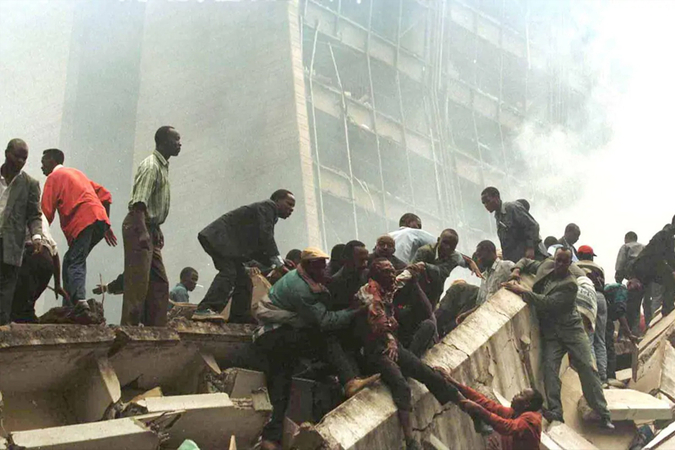
The operation, first reported Friday by the New York Times, further slims the leadership ranks of al-Qaida and removes the accused mastermind of the 1998 bombings of two U.S. embassies in East Africa that killed more than 200 people.
Al-Qaida has not officially acknowledged Masri’s death, and no country has claimed responsibility. The Israelis coordinated the operation with the CIA, according to the official. The CIA, FBI and Pentagon declined to comment, and the White House did not respond to a request for comment. The Israeli prime minister’s office and intelligence ministry also declined to comment.
Iran’s Foreign Ministry issued a statement Saturday denying the report and the presence of any Qaeda members in Iran, accusing the United States and Israel of trying “to draw a link between Iran and such groups through falsification and the leakage of fabricated information to the media.”
A report about Masri’s death was posted and quickly deleted from a private al-Qaida forum last month, according to SITE Intelligence Group, which tracks extremism online. al-Qaida has repeatedly failed to acknowledge the deaths of its leaders in the past two years, fearful that to do so would betray its weakness, SITE founder Rita Katz said.
Iran, a Shiite Muslim theocracy whose ideology is at odds with that of Sunni Islamic groups such as al-Qaida, has long denied it has harbored al-Qaida, though top leaders such as Masri fled from Afghanistan after the 2001 terrorist attacks and sought refuge there. The Washington Post first reported in 2003 that Masri was in Iran.
After the Aug. 7 attack on Masri, Iran concocted a cover story. Its semiofficial news agency Fars reported that a Lebanese man, Habib Daoud, and his daughter, Maryam, were shot and killed by a rider on a motorcycle, according to SITE. Other Iranian news outlets said the man was a history professor.
In fact Habib Daoud was Masri, 57, an Egyptian-born former professional soccer player who became one of Osama bin Laden’s most trusted lieutenants.
Masri joined al-Qaida at its inception in 1988, having fought the Soviets in Afghanistan. He ran al-Qaida’s terrorist training camps and played a role in the group’s mass-casualty attacks against Americans, including helping train the Somali militants who attacked U.S. forces in Mogadishu in 1993.
He was still on the FBI’s Most Wanted Terrorists list as of Saturday, and the State Department offered a reward of up to $10 million for information leading to his arrest.
“Abu Mohammed al-Masri was among the most important – and culpable – al-Qaida leaders on the planet,” said Nicholas J. Lewin, a former federal prosecutor in Manhattan who helped lead the investigation and prosecution of several of the group’s senior leaders and operatives. “His death deprives al-Qaida of one of its most experienced and respected leaders.”
Masri’s daughter, Maryam, married bin Laden’s son, Hamza bin Laden, who was being groomed for a leadership role and had also lived in Iran. He was killed last year in a U.S. counterterrorism operation in the Afghanistan-Pakistan region.
While it might seem strange that Iran would harbor senior al-Qaida leaders, Iran in the past had aided Sunni militant groups such as Hamas and Egyptian Islamic Jihad, and Osama bin Laden once contemplated Iran and al-Qaida teaming up against the West, counterterrorism expert Ali Soufan wrote in an article for the Combating Terrorism Center at West Point.
Many of al-Qaida’s senior commanders have been sheltered in Iran, though one by one, they have been killed in recent years. With Masri’s death, the only remaining member of al-Qaida’s shura council – its core leadership – with operational al-Qaida terrorist experience is Saif al-Adel, who is believed still to be in Iran.
Al-Qaida’s leader, Ayman al-Zawahiri, who assumed the mantle after the 2011 killing of Osama bin Laden by U.S. Special Forces in Pakistan, is 69 and ailing.
“Al-Masri’s death leaves limited choices for al-Qaida to select a new emir with the legitimacy of a bin Laden or Zawahiri,” Soufan said in an email. Adel is a prime contender, he said, but noted that “could be controversial because his appointment could leave al-Qaida open to accusations that it is acting as a puppet of the Iranian regime, whether or not these claims have any basis in reality.”
Trump lost at the ballot box. His legal challenges aren’t going any better.
InternationalNov 15. 2020Supporters of President Donald Trump gather near Freedom Plaza in Washington, D.C., on Saturday, Nov. 14, 2020. MUST CREDIT: Washington Post photo by Matt McClain
By The Washington Post · David A. Fahrenthold, Emma Brown, Hannah Knowles · NATIONAL, POLITICS, COURTSLAW, WHITEHOUSE WASHINGTON -President Donald Trump lost his reelection bid at the ballot box. But he said he could win it back in court.
In five key states, Trump and his allies filed lawsuits that – according to Trump – would reveal widespread electoral fraud, undo President-elect Joe Biden’s victory, and give Trump another four years. “Biden did not win, he lost by a lot!” Trump tweeted.
It’s not going well.
Rather than revealing widespread – or even isolated – fraud, the effort by Trump’s legal team has so far done the opposite: It’s affirmed the integrity of the election that Trump lost. Nearly every GOP challenge has been tossed out. Not a single vote has been overturned.
“The Trump legal team does not seem to have identified any kind of global litigation strategy that has any prospect of changing the outcome of the election, and all of the court filings to date underscore that – as do all of the court rulings that have been issued to date,” said Robert Kelner, a Republican lawyer who chairs the election and political law practice group at Covington & Burling, an international law firm based in Washington.
Part of the problem is that Trump’s approach has been backward: Declare crimes first, then look for proof afterward.
Again and again, the president or his allies said they’d found evidence that would stun the public and swing the election.
But, when Trump and his team revealed that evidence, it often was far less than they had promised. A “dead” voter turned out to be alive. “Thousands” of problematic ballots turned out to be one. Election-changing problems turned out to involve a few dozen, or a few hundred, ballots.
Some moments veered into the absurd, as the president’s lawyers tried – and failed – to use Trump’s reality-bending logic on baffled, unbending judges.
“Are your observers in the counting room?” Judge Paul Diamond asked Trump’s lawyers in Pennsylvania at one point, in a case where Trump was seeking to stop the vote count in Philadelphia.
In that case, Trump’s suit depended on the answer being “no.” The logic for stopping the vote count was that GOP observers were not being allowed to watch it.
But the actual answer was “yes.” The observers were there.
So Trump’s lawyer tried an answer that wasn’t yes or no.
“There’s a nonzero number of people in the room,” he responded.
That did not work.
Lawyers from two major firms have now backed out of helping Trump’s efforts. Inside the White House, some officials have grown pessimistic about this legal effort, according to people who have spoken to them.
But officially, the Trump campaign has said it will fight on, despite its losses.
“Every state has different laws and therefore different legal approaches,” said campaign spokesman Tim Murtaugh. “We are still determined to ensure that every legal vote is counted and every illegal vote is not.”
The mismatch between Trump’s rhetoric about voter fraud – and his ability to prove it – was particularly stark in Georgia.
There, Trump’s campaign said last weekthis week that it had found the clearest possible evidence of fraud: A dead man had voted.
“Someone used the identity of James Blalock of Covington, Georgia to cast a ballot in last week’s election, even though Blalock died in 2006,” the campaign posted on its website, along with a screenshot of Blalock’s obituary. It added: “These victims of voter fraud deserve justice.”
Trump’s campaign had one thing right. James Blalock is dead.
But it wasn’t him who voted.
“I knew it wasn’t fraud,” said Mrs. James Blalock, a 96-year-old widow, in an interview with Atlanta’s WXIA-TV on Friday.
Mrs. Blalock, whose first name is Agnes, had chosen to be listed on the voter rolls under her husband’s name – which is now an uncommon practice but is legal. She told WXIA she’d voted for Biden: “I guess I voted against the other one, really.”
Philip Johnson, chairman of the board of elections in Newton County, Ga., confirmed that account and called the allegations of Trump’s campaign “shameful.”
“I’ve been practicing law 46 years, and I believe that when you aim accusations or allegations, you should always have your facts straight,” Johnson said. He is a former Democratic Party official, but his appointed position is officially nonpartisan. “It just bothers me that they weren’t.”
WXIA said it had found at least one other instance where one of Trump’s “dead” voters was alive. There are a few remaining cases – including at least two in Nevada – where authorities are investigating whether someone did use a dead person’s name to vote. But they say these were isolated cases and didn’t amount to any kind of coordinated fraud.
The accusation about Mrs. Blalock wasn’t Trump’s only misfire in Georgia. In another case, Trump’s campaign had filed a lawsuit saying that 53 late-arriving ballots in Savannah’s Chatham County may have been backdated to appear valid.
But, when they called their witnesses, the witnesses admitted they didn’t know that for sure. The local board of elections testified that the ballots arrived on time.
Judge James Bass dismissed the case in eight words: “I’m denying the request and dismissing the petition,” he said from the bench.
In Nevada, Trump allies promised they had found problems on a huge scale. In news conferences, they said thousands of people – some having departed this life, others simply having departed Nevada – might have voted illegally.
They said there were reports of a van decked out in Biden/Harris logos, and carrying boxes of ballots that people were opening, filling out and sealing in envelopes
“Nevada is turning out to be a cesspool of Fake Votes,” Trump tweeted last week,this week, promising that new revelations, once released, would be “absolutely shocking!”
But many of the “out of state” voters turned out to be military personnel, who are allowed to continue voting while outside Nevada.
And the lawsuit filed in federal court offered no evidence of widespread fraud. Instead of thousands of illegal votes, Republicans presented evidence about . . . one.
In the lawsuit, a woman said a thief had filled out and returned her mail ballot. When she showed up to vote in person, the woman said, she wasn’t allowed.
County officials denied that. They said they had actually offered the woman a chance to vote in person, if she would sign an affidavit saying the mail-in ballot had been stolen. She had refused.
The Trump allies said this incident was still proof of a flawed system, because the woman could not vote in the normal way.
“I’m still having a hard time understanding your argument,” Judge Andrew Gordon said.
He blocked Republicans’ request for emergency changes in local voting procedures – but said they could return if they found more compelling evidence.
As of Friday, they had not.
Biden was winning the state by 34,000 votes. Trump’s litigation had not changed that total – even by one.
In Arizona, the Trump camp’s allegations of misconduct – and hope for an election miracle – centered at first on a conspiracy theory about Sharpie pens.
The president’s allies alleged that when voters in Maricopa County used Sharpies to bubble in Arizona ballots, the voting machines could not properly read them.
“AZ update:apparently the use of sharpie pens in gop precincts is causing ballots to be invalidated,” Trump ally Matt Schlapp, the head of the American Conservative Union, tweeted Nov. 4. “Could be huge numbers of mostly Trump supporters. More to come.”
Trump’s son Eric retweeted that, adding three siren emoji. Neither man explained how or why the Sharpie problem would have disproportionately affected Trump’s supporters.
Voters backed by a conservative legal advocacy group filed suit, claiming that Sharpies had been “bleeding through” ballots and causing problems with their processing.
Then the Trump campaign, the Republican National Committee and the Arizona GOP stepped in with another argument. The suit said that machines had repeatedly detected “overvotes” – where people appear to have chosen multiple candidates in the same race – and that poll workers had pushed or encouraged voters to push a green button casting their ballot anyway.
No vote is counted in an overvoted race.
The lawsuit said that invalidated overvotes would “prove determinative” in Trump’s bid for reelection and sought to block certification of Arizona’s results until the ballots could be reviewed by hand.
But there was a problem. In all of Maricopa County, the total number of overvotes for president was 190. Biden is winning Arizona by about 10,000 votes.
“We’re not alleging that anyone was stealing the election,” said the Trump campaign’s lawyer, Kory Langhofer, in a court hearing Thursday. Langhofer added later: “The allegation here is that, in what appears to be a limited number of cases, there were good faith errors in operating machines that should result in further review of certain ballots.”
State and county election officials have said there is no truth to the rumors that ballots filled out with a Sharpie do not cause problems for the voting machines. “We looked into that. We were able to determine that did not affect anyone’s vote,” said Arizona Attorney General Mark Brnovich, a Republican.
On Friday, Langhofer officially gave up on claims that the Sharpie allegation could flip the result of the presidential election in Arizona, saying the point was moot because so few votes were affected.
“We continue to explore President Trump’s options in Arizona,” said Murtaugh, the Trump campaign spokesman.
As his legal hopes faded, the president on Thursday endorsed a new, baseless, conspiracy theory: that a company called Dominion Voting Systems had given thousands of his votes to Biden. Dominion Voting Systems operates in Arizona and other key states.
Later that day, Trump’s own Department of Homeland Security released a statement rebutting his claim, though without naming Trump or Dominion directly. “The November 3rd election was the most secure in American history,” said the statement from the federal Cybersecurity and Infrastructure Security Agency and its state and local partners. “There is no evidence that any voting system deleted or lost votes, changed votes, or was in any way compromised.”
Brnovich, the Arizona attorney general, said the best piece of evidence that Maricopa County had run a fair election was the fact that the official who actually oversaw the voting – county recorder Adrian Fontes, a Democrat – had lost his own race.
“If indeed there was some great conspiracy, it apparently didn’t work,” Brnovich said.
In Michigan, Trump and Republican groups have filed five different lawsuits, all based on similar allegations: that officials in Detroit had miscounted ballots in a way that helped Biden. In one case, they didn’t even get the filing right – lawyers somehow aimed at the Western District of Michigan but instead filed the case in an obscure federal court in Washington. Trump’s team blamed a computer glitch.
The Michigan lawsuits relied on testimony from people inside the city’s ballot-counting room – poll watchers, an IT contractor, and an election worker. The most voluminous of the lawsuits, filed in federal court, include more than 230 pages of sworn statements.
“Shocking allegations of voter irregularities revealed in 234 pages of signed and sworn affidavits,” the Trump campaign wrote on Twitter.
But a closer look at the affidavits showed that many did not allege any wrongdoing with ballots. Instead, they showed poll challengers complaining about other things: a loud public-address system, mean looks from poll workers, and a Democratic poll watcher who said “Go back to the suburbs, Karen.”
Some poll observers had become suspicious simply after seeing many ballots cast for Democrats – in Detroit, a heavily Democratic city where Biden won 94 percent of the vote. “I specifically noticed that every ballot I observed was cast for Joe Biden,” one observer wrote. The Trump campaign filed that as evidence in court.
In other cases, poll challengers raised issues with procedures that election workers say were normal. Some, for instance, noted that workers input voters’ birth dates as January 1, 1900. Election officials say that was a quirk of the computer system: It required workers to enter a voter’s birth date at a step when they did not have access to that information, so they were told to enter a placeholder.
So far, Trump and his allies have faced a judge three times in Michigan.
All three times, it went poorly.
In one case, the plaintiffs relied on testimony from a poll worker, who was relaying what she’d been told by an unidentified election worker.
Judge Cynthia Stephens said that was hearsay. Inadmissible. The lawyer tried to argue.
” ‘I heard somebody else say something,’ ” Stephens said. “Tell me why that’s not hearsay. Come on, now.”
Stephens ruled against the plaintiffs.
A few days later, Judge Timothy Kenny heard a similar argument from another group of Republican plaintiffs. He asked how well the Republican poll-watchers understood the procedures they were watching.
The city had conducted a “walk-through” for Republican poll-challengers in late October, long before the counting began, to show how the absentee ballot counting procedure worked.
Had the plaintiff’s poll watchers been there, to learn about the process they were now objecting to?
No, the plaintiff’s lawyer said. They had not known about it.
“Plaintiff’s affiants did not have a full understanding of the [convention center] absentee ballot counting process,” Kenny wrote in an opinion. “However, sinister, fraudulent motives were ascribed to the process and the City of Detroit. Plaintiff’s interpretation of events is incorrect and not credible.”
David Kallman, an attorney for the Republican poll-challengers, said afterward that he would appeal Kenny’s decision to a higher court. He said there was still time to get a favorable ruling before Michigan is supposed to certify its statewide election results on Nov. 23.
“We’ve still got some time built in there,” Kallman said. “Not a lot of time.”
Pennsylvania was the state that put Biden over the top, and it has been the center of Trump’s legal battles since Election Day. Trump has said on Twitter that Pennsylvania’s fraud was so big that – if it were corrected – “based on our great Constitution, we win the State of Pennsylvania!”
In Pennsylvania’s courts, however, Trump’s legal team has produced no signs of fraud on that scale.
In fact, as his lawyers have bounced from loss to loss, they have often struggled to explain the logic of their own arguments.
In that Philadelphia case – where Trump’s lawyer attempted to dodge a question by saying there was a “nonzero number” of GOP observers in a room – Judge Paul Diamond responded with another question.
“I’m asking you as a member of the bar of this court,” Diamond said, invoking attorney’s responsibility to be honest. “Are people representing the plaintiffs in the room?”
“Yes,” the lawyer said.
“I’m sorry, then what’s your problem?” Diamond asked. Trump’s lawyers also wanted closer access for their observers in the room.
In another case, in state court, Trump’s attorneys asked a judge to throw out 592 ballots because voters had made minor mistakes, such as failing to write their address on the outer envelope. In most cases, the address was already printed on a mailing label attached to the envelope.
What the judge wanted to know was: Why? Why was the Trump campaign focused on these ballots? What was the reason for throwing out people’s votes, for a minor error?
“I am asking you a specific question, and I am looking for a specific answer,” said Judge Richard Haaz. “Are you claiming that there is any fraud in connection with these 592 disputed ballots?”
“To my knowledge at present, no,” Trump campaign attorney Jonathan Goldstein replied.
The Trump campaign has some broad, long-shot lawsuits still pending in Pennsylvania.
One seeks to have more than 680,000 votes in Democratic-leaning Philadelphia and Pittsburgh thrown out, on the basis that the campaign’s observers were not allowed close enough to the counting process. That could swing the state’s election, but it appears very unlikely to succeed.
Another seeks to throw out 10,000 ballots that arrived after Election Day, saying that an extension granted by the state was improper. That one may actually succeed, but it’s unlikely to swing the election – Biden’s lead is much bigger than 10,000, even if all those votes were his.
On Friday alone, Trump’s campaign suffered six different defeats in state courts, as judges rejected their attempts to invalidate about 9,000 ballots for minor errors.
The Trump campaign has notched only minor successes in Pennsylvania courts.
On Thursday, a state court agreed with Trump’s request to bar a small number of ballots where voters were late to provide missing proof of identification. Those ballots have not been counted yet.
That was a victory. But it only underscored the vast mismatch between Trump’s actual legal strategy and the history-changing one he had promised.
Before that court’s decision, Trump was losing Pennsylvania by 65,000 votes. Afterward, he was still losing Pennsylvania by 65,000 votes.
By The Washington Post · Hannah Knowles · NATIONAL, HEALTH, POLITICS, SCIENCE-ENVIRONMENT Late Friday night, North Dakota’s Republican governor – long resistant to statewide orders on masking and social distancing – acknowledged that his state and country were in dire straits.
Bars, restaurants and event venues would have to cut capacity, Gov. Doug Burgum said in a solemn video posted to social media. Most after-school activities would be put on hold. Starting Saturday, masks must be worn inside businesses, indoors in public spaces and outdoors when social distancing can’t be maintained, backed by potential fines of up to $1,000 for the first offense.
“Our situation has changed, and we must change with it,” the governor said, as the United States breaks records for daily new cases and North Dakota leads in recent infections per capita.
A dark reality is sinking in for officials around the country, with Burgum just the latest leader to announce stiff new restrictions in the face of surging cases and hospitalizations that health experts have been warning about for months. But doctors and health officials worry that the urgency of the escalating crisis has not gotten through to a public weary of pandemic shutdowns. And the push for stronger measures has triggered backlash and legal fights.
Chicago on Thursday became the first major city to announce a renewed stay-at-home advisory. A day later, New Mexico Gov. Michelle Lujan Grisham, a Democrat, reinstated many restrictions, prohibiting on-site dining and requiring nonessential businesses to close their physical locations. Three Western states – California, Oregon and Washington – just urged people to cancel travel that’s not absolutely necessary, and Oregon Gov. Kate Brown, a Democrat, also announced a two-week statewide “freeze” Friday, which included curbing gatherings ahead of Thanksgiving.
A vaccine breakthrough has buoyed hopes – “The cavalry is coming,” as Anthony Fauci, the nation’s top infectious-disease expert, put it – but the country is still facing what officials say could be its grimmest months yet of the pandemic, with tough decisions ahead and thousands of lives in the balance.
Many leaders are leery of stronger measures and economically painful shutdowns, as Democrats and Republicans remain stalled over a new coronavirus stimulus package that could blunt the economic fallout. President Donald Trump on Friday said his administration would not under “any circumstances” resort to a “lockdown.”
“Lockdowns cost lives, and they cost a lot of problems,” the president said at a news conference where officials said they hope to see millions of people immunized against the coronavirus by the end of the year.
A vaccine could be available to the general public as early as April, Trump said, a timeline echoed by experts such as Fauci. But in the meantime, coronavirus cases are soaring to new heights, pushing past 177,000 nationwide on Friday – little more than a week after the country cracked 100,000 daily infections for the first time. The vast majority of states have recorded a single-day high in new cases over the past week, as total infections in the United States approach 11 million. More than 1,300 new coronavirus-related deaths were reported in the United States on Saturday, up more than 200 from last Saturday’s total. Current covid-19 hospitalizations have risen to record heights, too, approaching 70,000.
The stakes are high, and officials are bitterly divided over how to respond in some hard-hit communities.
On Friday, a Texas state appeals court blocked El Paso County Judge Ricardo Samaniego’s stay-at-home order shuttering nonessential businesses in an area where growing coronavirus cases have packed hospitals to capacity and led local officials to call in mobile morgues. County Judge Ricardo Samaniego said the order was necessary to combat a deadly crisis.
But the measures ran afoul of Republican Texas Gov. Greg Abbott’s statewide rules. State Attorney General Ken Paxton hailed the Eighth Court of Appeals’ decision Friday on Twitter, decrying a “tyrant who thinks he can ignore state law” and vowing not to let “rogue political subdivisions try to kill small businesses and holiday gatherings.”
Samaniego was similarly biting in his response, accusing Paxton of gloating as the county suffered. More than half of the patients flooding the county’s health system have the coronavirus, Samaniego told The Washington Post. People are being sent out of state for care.
“Here we are in a really critical situation, he says, people, you can go to Thanksgiving?” Samaniego said of Paxton in an interview Saturday. “Just a complete disregard for our situation.”
Strain on health systems has pushed some states to not just reinstate old restrictions but also contemplate measures they had avoided earlier in the pandemic. In North Dakota, for instance, Burgum’s mask mandate came after rising pressure from health-care workers, as state officials authorized medical professionals to keep working in covid-19 units after testing positive for the coronavirus, if they lack symptoms.
Utah Gov. Gary Herbert, another Republican leader long wary of a sweeping mask order, said Sunday that he was mandating face coverings statewide in public settings and for people within six feet of anyone outside their household. The reversal came after swamped hospitals warned they might have to ration health care.
Some jurisdictions have narrowly staved off new orders and closures – for now. Officials in New York City, an early hot spot in the pandemic, said this past week that the nation’s largest school system could close if the rate at which coronavirus tests came back positive hit 3 percent. Mayor Bill de Blasio tweeted Saturday that the city remained below that benchmark but warned that things could change.
“We MUST fight back a second wave to keep our schools open,” he said.
Many are skeptical that leaders around the country will take serious new measures, amid pushback. The changes announced Friday in Oregon drew an outcry from businesses.
“We were already hearing from members they were concerned about what another shutdown would do to their chances of staying open,” said Jason Brandt, the president of the Oregon Restaurant and Lodging Association, in a statement, saying the new rules “will trigger an unknown amount of permanent closures.”
Veronica Miller, a professor at the UC Berkeley School of Public Health who signed an open letter this summer urging renewed shutdown measures, said she worries public health experts’ strident warnings are not getting through “to that extent that we need.”
“You can just see the graphs, they’re just really over the top, and it’s so much worse, and it’s going to get worse, and I do not see at the national level – I do not see any sense of urgency,” she said.
Thousands of mask-less Trump supporters rally in D.C., falsely claiming president won election
InternationalNov 15. 2020People wave to President Trump’s motorcade Saturday as it drives past Freedom Plaza as supporters gathered for the Million MAGA March in Washington D.C.. MUST CREDIT: Washington Post photo by Matt McClain.
By The Washington Post · Marissa J. Lang, Emily Davies, Michael E. Miller, John Woodrow Cox · NATIONAL, POLITICS WASHINGTON – President Donald Trump’s supporters had celebrated for hours on Saturday, waving their MAGA flags and blaring “God Bless the USA” as they gathered in Washington to falsely claim that the election had been stolen from the man they adore. The crowd had even reveled in a personal visit from Trump, who passed by in his motorcade, smiling and waving.
But that was before the people who oppose their hero showed up and the mood shifted, growing angrier as 300 or so counterprotesters delivered a message the president’s most ardent backers were unwilling to hear: The election is over. Trump lost.
On stark display in the nation’s capital were two irreconcilable versions of America, each refusing to accept what the other considered to be undeniable fact.
In brief but intense clashes, activists spewed profanity and shouted threats, threw punches and launched bottles. On both sides, people were bloodied, and at least 10 were arrested, including four on gun charges.
When darkness fell, the counterprotesters triggered more mayhem as they harassed Trump supporters and set off a large firework just outside a restaurant, prompting police to pepper-spray the instigators.
The earlier demonstrations were urged on by Trump, who refuses to concede to Joe Biden or allow a formal transition to begin. On Saturday morning, as the president’s devotees remained in the District of Columbia to fight for him, he headed to Trump National in the Virginia suburbs for a round of golf.
After a week in which more than 750,000 Americans were diagnosed with the novel coronavirus, almost none of his backers were wearing masks. Among their ranks were white nationalists, conspiracy theorists and far-right activists carrying signs demanding action that was already being taken: “Count the legal votes.”
Trump had thrilled them when his motorcade appeared on Pennsylvania Avenue shortly after 10 a.m., prompting fans to scramble to the side of Freedom Plaza to catch a glimpse.
“He drove right past me. I saw him. He waved right past me,” one man said as he tried to collect himself.
A group of women huddled around a phone, looking at a video of Trump’s appearance near a Walt Whitman quote inscribed in the stone beneath them: “The President is there in the White House for you, it is not you who are here for him.”
Then the appearance of counterprotesters sparked bursts of conflict that could have become far more violent had police not worked to keep the feuding sides separate. When a small group holding bright orange “Refuse Fascism” posters arrived at the edge of Freedom Plaza, they were almost immediately surrounded by Trump fans shouting “USA! USA!” into their faces.
The women leading the tiny march fought their way up 14th Street, repeatedly breaking out of the crowd, only to be engulfed again.
“Trump, pack your s—! You’re illegitimate!” they yelled into their megaphone,
One pro-Trump man attempted to gouge the opposition with a flag bearing the president’s name. Another grabbed a woman’s neon orange poster and hit her with it.
When the women made it to the barrier set up by police across the street, Trump supporters filled the entire intersection, blocking them. Police arrived on bikes and, after several minutes, moved the crowd back. Shortly after, the group began singing the national anthem.
Nearby, on the street beside inscriptions from Abraham Lincoln recognizing the District as a place of freedom, people piled atop a U-Haul truck with a flag of a gun and the words “Come and take it.”
One man, wearing camouflage and a red MAGA hat, waved an American flag attached to a baseball bat.
Later, near Union Station, another altercation broke out.
Roland Biser, a 69-year-old Pentagon employee who had attended a pro-Trump rally, was driving home when he said he saw a young man throw a rock at a group of Trump supporters. The rock grazed a woman, he said, and may have hit someone else.
Biser pulled over as a crowd quickly surrounded the young man and three others with him, all of whom were Black. Nearly a hundred Trump supporters quickly surrounded them before a dozen U.S. Capitol Police officers rushed between them and separated the groups.
As police escorted the four young men away, the crowd taunted them, chanting “USA!”
“I didn’t do anything!” said one of them, who had been handcuffed. The 21-year-old D.C. resident insisted that it was the Trump supporters who had come after him.
A few minutes later, police removed his cuffs off and let him go.
A family of four on Capital Bikeshare bikes – the father with an American flag tied around his neck like a cape – were cut off by a line of counterprotesters as they tried to leave a tense scene outside the Supreme Court about 1 p.m.
“Get out of our city!” a young woman in black yelled.
“You lost, losers!” shouted a man.
The father and his teenage son began to chant “USA!” and raised their fists as police officers surrounded the family and pushed them out of the crowd.
“Why would you bring your kids here? It’s dangerous,” observed a man nearby, a helmet on his head and respirator hanging around his neck.
On a day when the president’s supporters touted a vast array of falsehoods, his spokeswoman, Kayleigh McEnany, offered perhaps the most ludicrous.
“More than one MILLION marchers for President @realDonaldTrump descend on the swamp in support,” she tweeted, vastly exaggerating the crowd size.
The Trump believers had begun gathering at Freedom Plaza Saturday morning hours before the official rally.
“They think we’re stupid,” a young White man with a microphone told the crowd. “They’re underestimating The Donald. They’re underestimating The Donald’s supporters.”
“They’re stupid!” a young White woman replied.
The speakers who addressed the aggrieved legions included Alex Jones, a discredited conspiracy theorist most famous for tormenting the families of school shooting victims, and Marjorie Taylor Greene, a recently elected congresswoman from Georgia who has promoted QAnon, which falsely alleges that famous Democrats belong to a cabal of Satan-worshiping pedophiles.
Among the rallygoers were members of the Proud Boys, an extremist group known for their black-and-yellow garb and endorsements of violence. Some wore flak jackets and helmets. “Stand Back, Stand By,” read some of their shirts, referencing the president’s directive to them during a September debate.
As conservative speakers at Freedom Plaza derided the news media, including Fox News, the Proud Boys marched down Pennsylvania Avenue, leading hundreds in chants of “F— antifa!” and shouting down stray opponents who yelled “Black lives matter!”
“All lives matter!” they screamed back.
Marching with them was District resident Justin Anthony, who waved a satirical sign that read “Sue anyone who did not vote for this great American.”
He led chants to the tune of “Count only Trump votes” and danced around in a large mock police uniform with the name “Officer Pudge” on its badge.
Almost no one got it, he said. They joined in, asked for pictures, cheered.
“It’s crazy,” he said. “Like, they really don’t see how insane this is.”
At midday, along the east end of Freedom Plaza, another lone counterprotester stood on the sidewalk holding a sign that read “Trump is the fraud.” He wore a gray cloth mask.
A succession of Trump supporters approached the curb, unmasked, to offer their opinions of his solitary demonstration.
“Why didn’t your mother abort you?” one screamed. “You’re mentally disturbed, and you’re a coward, and you’re a f—–. I hope you get AIDS.”
“I just feel strongly about the disinformation that’s being peddled on the Internet about fraud in this election,” said the counterprotester, a 40-year-old D.C. man who declined to give his name because he is a federal employee and feared repercussions at work.
A thin film of sweat had formed on his face. An elderly woman in red MAGA gear paused and stared at him, sadly.
“We feel bad for you that you can’t see the truth,” she said.
Vaccine group hits $2 billion 2020 goal for low, middle income nations
InternationalNov 14. 2020A logo at the Pfizer French headquarters in Paris on Nov. 10, 2020. MUST CREDIT: Bloomberg photo by Nathan Laine.
By Syndication Washington Post, Bloomberg · Thomas Mulier, James Paton · WORLD, HEALTH, HEALTH-NEWS
A program that aims to supply low- and middle-income countries with covid-19 vaccines said it has raised more than $2 billion, though it needs another $5 billion for next year.
The vaccine initiative hit its 2020 funding target the same week Pfizer and BioNTech announced positive late-stage trial results showing their shot protects most people from the illness. The European Union, France, Spain, South Korea and the Bill and Melinda Gates Foundation pledged a combined $360 million, according to Gavi, the Vaccine Alliance, the group leading the effort.
Those developments offer “a glimmer of light at the end of the tunnel,” Seth Berkley, chief executive officer of Gavi, told reporters on a call Friday. “The science is moving forward and so is the finance needed to ensure that the science will be available to all.”
Despite the promising signs, Berkley called for caution, saying that important questions remain on efficacy in different groups, duration of protection, safety and production.
Gavi said 94 high-income countries have joined the Covax alliance, which aims to boost access to vaccines in 92 low- and medium-income countries. The program expects more deals in the coming weeks and months following agreements with companies including Sanofi and GlaxoSmithKline, Aurelia Nguyen, managing director of the Covax facility, said on the call.
“Not only is it likely we will need different vaccines for different contexts, there’s also no guarantee any one vaccine will succeed,” she said. “Perhaps more importantly, no single manufacturer has the capacity today to supply the global volume required to ensure that no country is left behind.”
As optimism grows that vaccines will arrive next year, health advocates and poorer nations are concerned that wealthier countries will monopolize supply, which is bound to be limited initially. The U.S. and Europe are in line to get the first doses of the vaccine developed by Pfizer and BioNTech.
Biden win revives hopes for $500 billion boost to IMF firepower
InternationalNov 14. 2020Kristalina Georgieva, managing director of the International Monetary Fund, left, and Ursula von der Leyen, president of the European Commission, in Brussels on Jan. 28, 2020. MUST CREDIT: Bloomberg photo by Geert Vanden Wijngaert.
By Syndication Washington Post, Bloomberg · Eric Martin · BUSINESS, WORLD, US-GLOBAL-MARKETS
Joe Biden’s victory in the U.S. presidential election is reviving hopes of a significant boost to International Monetary Fund resources to help nations fight the global pandemic.
IMF Managing Director Kristalina Georgieva called in March for the Group of 20 biggest economies to back a “sizable” increase in reserve assets called special drawing rights, or SDRs.
That would echo a similar decision in the 2009 financial crisis which was supported by the U.S., the fund’s largest shareholder, when Biden was vice president. President Donald Trump’s administration blocked a proposed $500 billion issuance, criticizing it for failing to target poor countries.
Biden has yet to speak about the proposal, but allies have advocated for it. Former Treasury Secretary Larry Summers, who advised the Biden campaign on economic policy, in October reiterated his prior call for a $1 trillion issuance. Summers is a paid contributor to Bloomberg.
In July, the Democrat-controlled House of Representatives voted for an allocation of at least $2.8 trillion as part of a larger defense appropriations bill now in the Republican-controlled Senate.
“There are many in the Democratic fold writ large who have argued the case for an SDR allocation,” said Mark Sobel, who served at the U.S. Treasury at the time of the 2009 allocation. “While an allocation has its pros and cons, it might be a good way to send a multilateral signal by a new administration.”
The U.S. is the linchpin for approving the move because the nation holds 16.5% of the voting power at the fund’s 24-member executive board, almost three times the sway of any other country. Passage requires 85% of votes, giving America a de facto veto.
The IMF press office declined to comment, referring questions to the Biden campaign. A campaign spokesman didn’t return an email seeking comment.
Advocates of new reserves argue that they would provide billions of dollars to poor countries struggling to pay for health care costs and social spending amid the pandemic.
Opponents, including U.S. Treasury Secretary Steven Mnuchin, counter that because reserves are allocated to all 190 members of the IMF in proportion to their quota, 70% would go to the G-20, with just 3% for the poorest developing nations.
An SDR allocation likely would continue to be opposed by Republicans, said Ted Truman, a longtime Federal Reserve economist who was a counselor to Treasury Secretary Timothy Geithner worked to build support for the last SDR allocation. U.S. backing for that $250 billion increase was debated even among Democrats within the Obama administration.
One concern for critics and some Republicans is that the move would provide funding to governments that the U.S. has tried to cut off from financing.
On example is Iran, which the American government has tried to squeeze over its nuclear program and support for terrorist groups. A global issuance of $500 billion in SDRs would give the nation access to almost $4 billion in IMF lending.
But the U.S. Congress would be less of an obstacle if a total SDR issuance is kept to less than about $650 billion, the current IMF quota of all nations.
A move of that size would only require Biden to consult with Congress, not to receive legislative approval, said Sobel, who also served as a U.S. representative to the IMF at the end of the Obama and start of the Trump administrations before joining the economic think tank OMFIF.
Any SDR allocation should be linked to China and private creditors providing debt relief and transparency, to make sure that reserves don’t simply pay off loans owed to them, Sobel said.
Truman, now at the Peterson Institute for International Economics, compared the reserves to the $1,200 stimulus checks that the U.S. government mailed to some taxpayers earlier this year. While they would go to everyone, and some might not spend them immediately, they would make a big difference to those that need them.
“It has the advantage of being a relatively simple deliverable,” he said. “I would think that it’s a possibility.”

 Australian Prime Minister Scott Morrison (centre) announces financial packages to support ASEAN on Saturday. (Photo: VNA/VNS )
 Foreign Affairs Minister Retno LP Marsudi speaks on behalf of President Joko “Jokowi” Widodo at the ASEAN Women Leaders’ Summit on Nov. 12. (Twitter/@Menlu_RI)
  A supporter of President Donald Trump mocks a counterprotester as people gather for the Million MAGA March on Saturday, Nov. 14, 2020, in Washington, D.C. MUST CREDIT: Washington Post photo by Matt McClain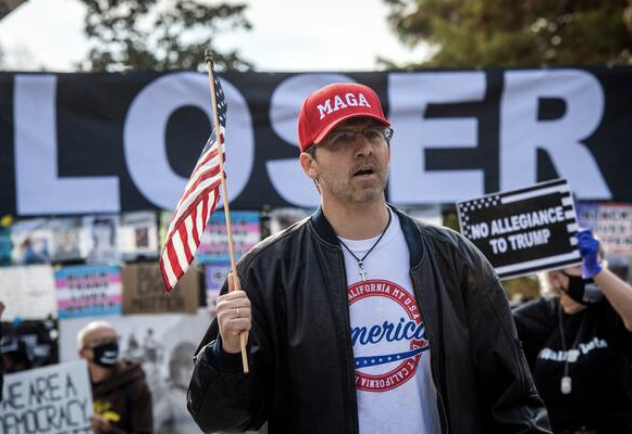
 Supporters of President Donald Trump gather near Freedom Plaza in Washington, D.C., on Saturday, Nov. 14, 2020. MUST CREDIT: Washington Post photo by Matt McClain
 People wave to President Trump’s motorcade Saturday as it drives past Freedom Plaza as supporters gathered for the Million MAGA March in Washington D.C.. MUST CREDIT: Washington Post photo by Matt McClain.
  A logo at the Pfizer French headquarters in Paris on Nov. 10, 2020. MUST CREDIT: Bloomberg photo by Nathan Laine.
  Kristalina Georgieva, managing director of the International Monetary Fund, left, and Ursula von der Leyen, president of the European Commission, in Brussels on Jan. 28, 2020. MUST CREDIT: Bloomberg photo by Geert Vanden Wijngaert.
  SootinClaimon.Com