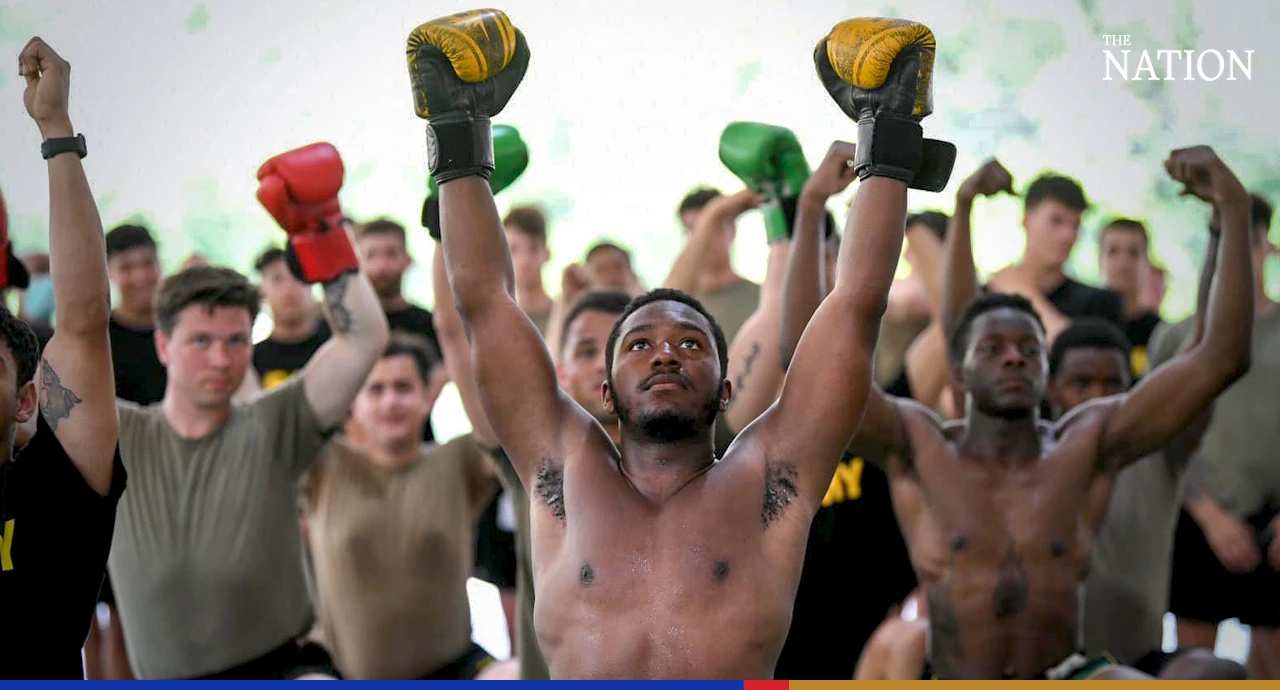
Muay Thai star Buakaw Banchamek imparted martial arts training to American soldiers participating in the Hanuman Guardian 2022 military exercise.
On Monday, Buakaw was selected as a special instructor to teach American and Thai soldiers Muay Thai. He was selected because he has taught the art in many countries.
Buakaw provided the soldiers with both theoretical and practical training, including warm-up exercises before fights, punching, kicking, striking with the knee, sparring, and also “wai kru”, a Thai ritual in which students pay respects to teachers.
Hanuman Guardian has been held annually for the past eleven years.
It is being held this year at the 31st Infantry Regiment garrison in Lopburi, having commenced on February 11 and ending on March 24.
Buakaw is currently practising while he is a member of the board of directors of the KickBoxing Association. His Buakaw Village will be used as a training camp for Thai kickboxers who will compete at the Southeast Asian Games in Hanoi, Vietnam, from May 12 to 23.
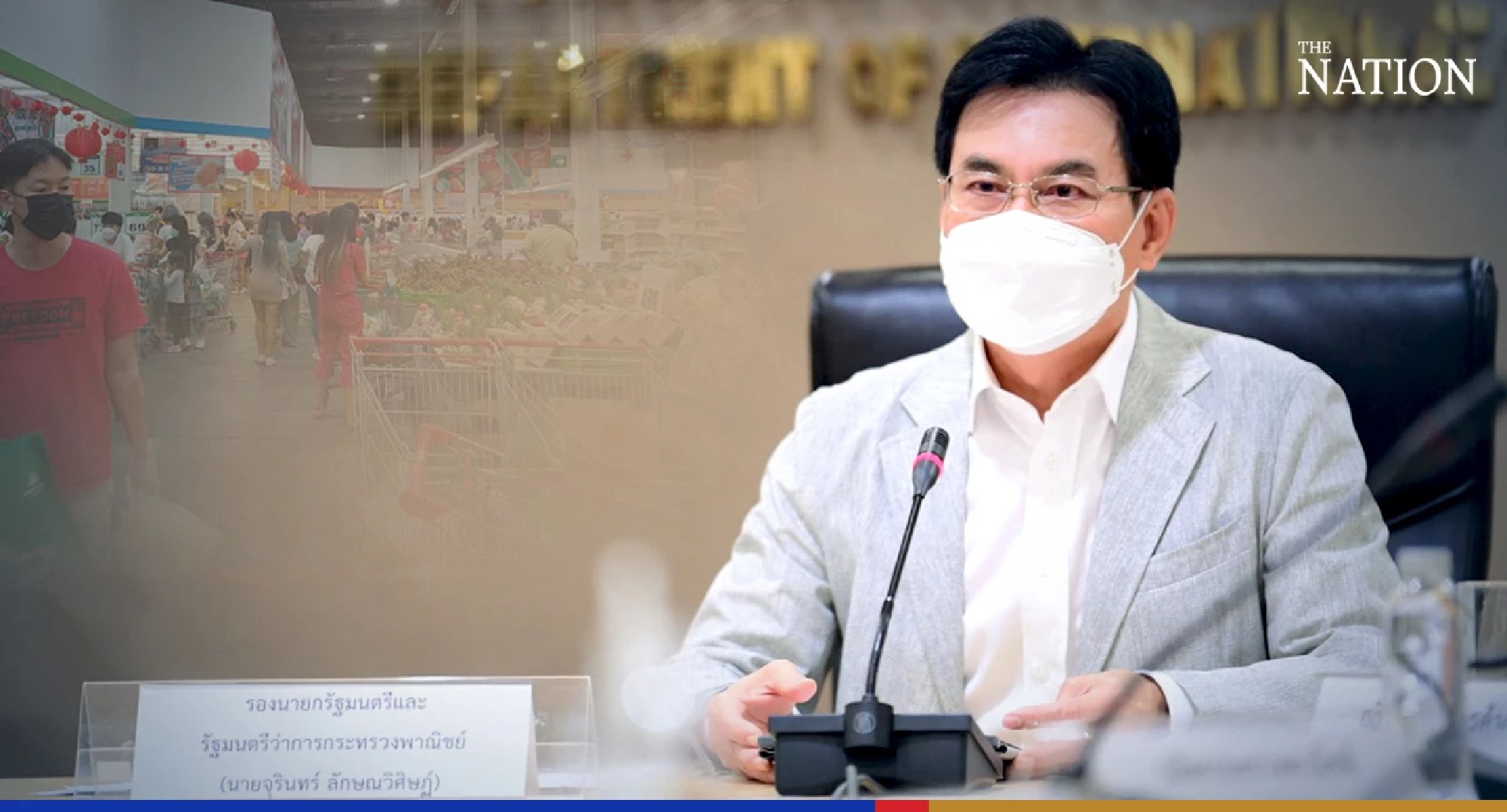
Commerce Minister Jurin Laksanawisit said on Tuesday that he has not approved any price increase of basic consumer products despite some manufacturers filing an appeal to raise prices due to increasing costs from the impact of the Russia-Ukraine war.
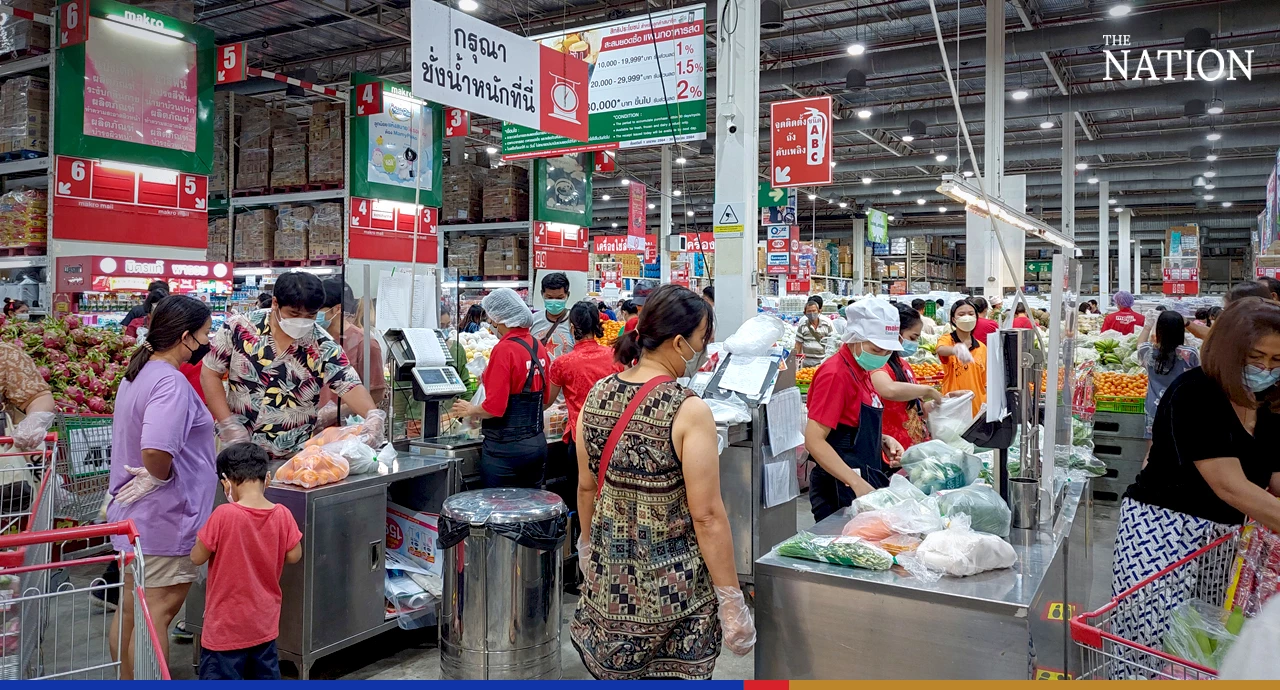
The Commerce Ministry stipulated that manufacturers of 18 consumer products and services cannot raise prices without approval from the Department of Internal Trade. They are: instant noodles, eggs and meats, canned foods, bagged rice, seasoning sauces, vegetable oils, carbonated drinks, milk and dairy products, electrical appliances, cleaning products, fertilisers, insecticides, animal feed, iron, cement, paper, drugs and medical equipment, and services of wholesale and retail shops.
“Manufacturers of chemical fertilisers, animal feed, canned foods and construction materials have asked the department to adjust prices upward due to increasing costs of raw materials imported from overseas,” said Jurin.
“The ministry will consider their request on a case-by-case basis to ensure fairness for every party and maintain market stability. The ministry is also working on measures to help reduce people’s cost of living, which should be announced soon,” he said.
Commerce permanent secretary Boonyarit Kalayanamit said the ministry was looking into the rising prices of wheat and corn for animal feed, which Thailand imports from Ukraine, one of the world’s major producers.
“In the end we may have to allow animal feed manufacturers to raise product prices to prevent a shortage of feed, as manufacturers are likely to halt production if raw material costs become too high,” he said.
“However, we will try to limit the price rise at a suitable level so that it does not create too heavy a financial burden on farmers,” he added.
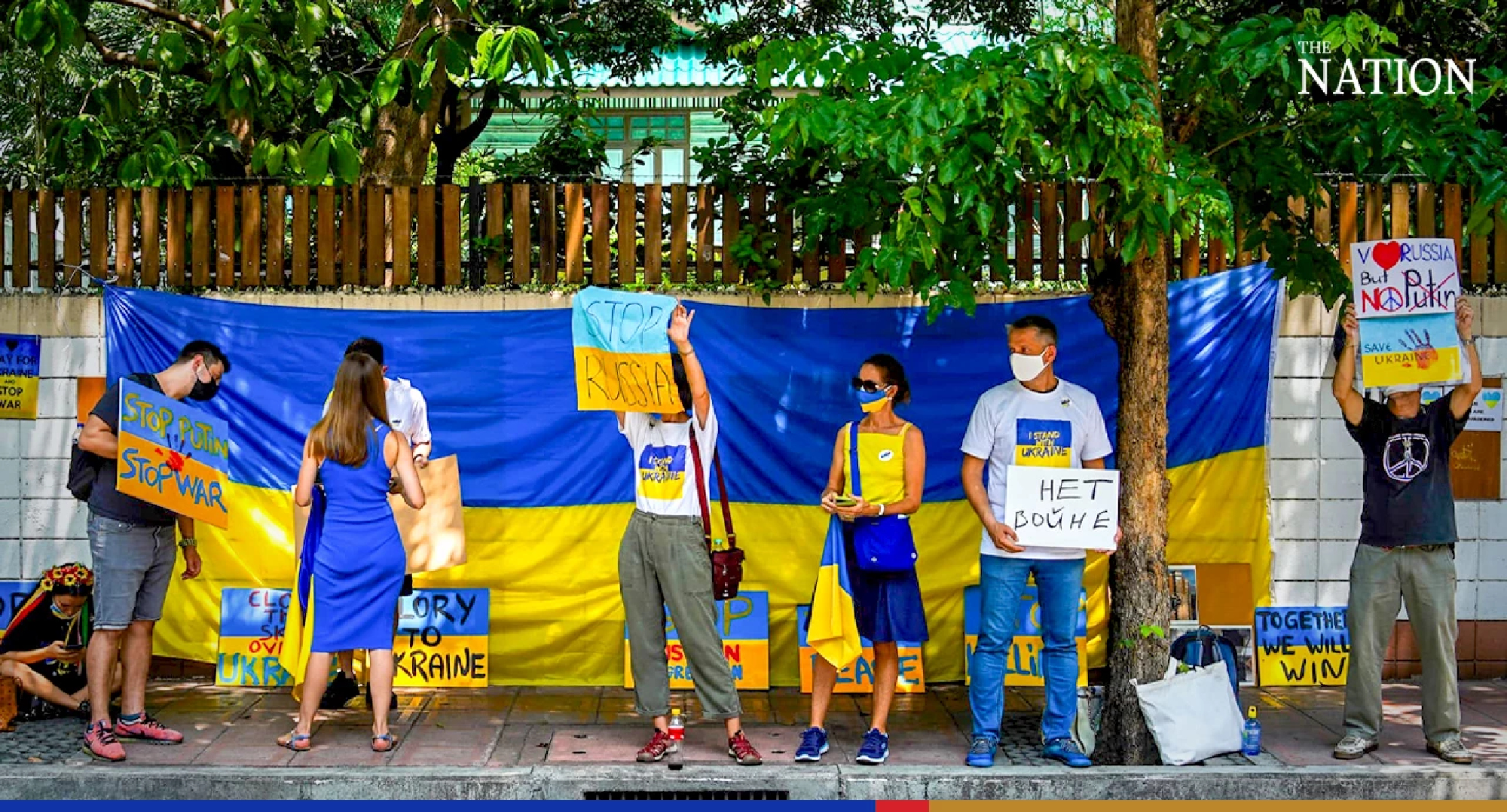
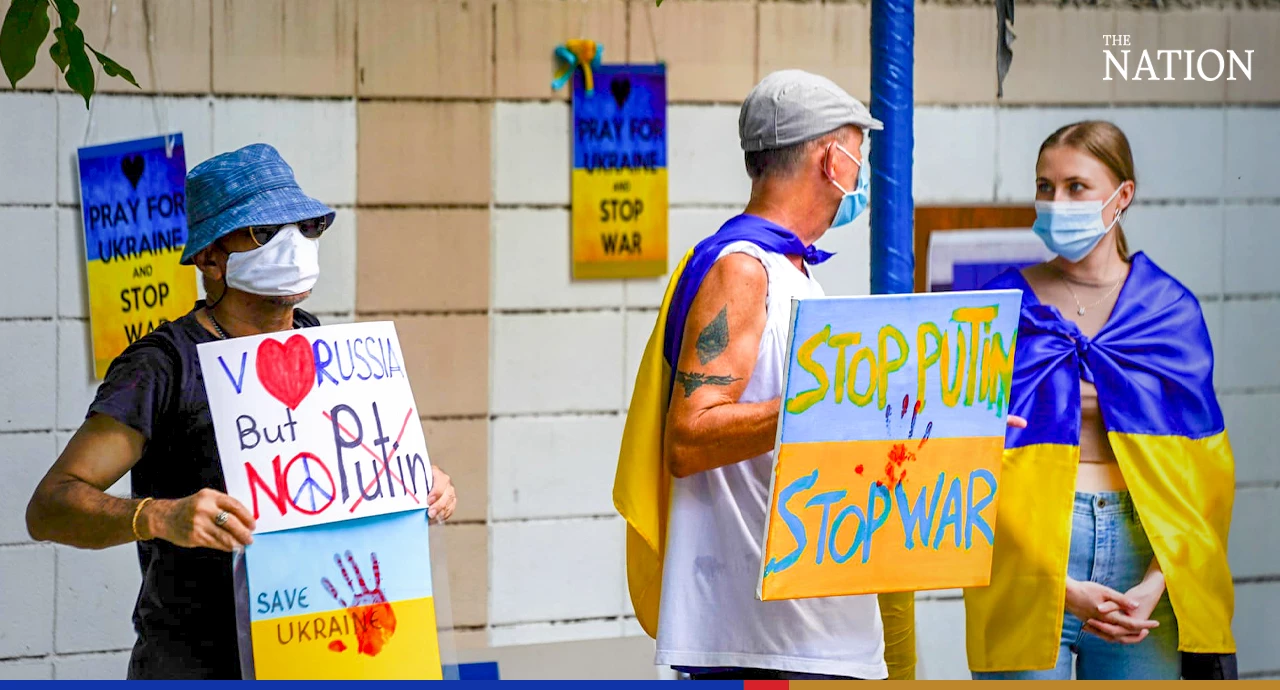
Foreigners living in Thailand gathered outside the Russian Embassy in Bangkok’s Bang Rak district on Tuesday, urging Russia to end its invasion of Ukraine.
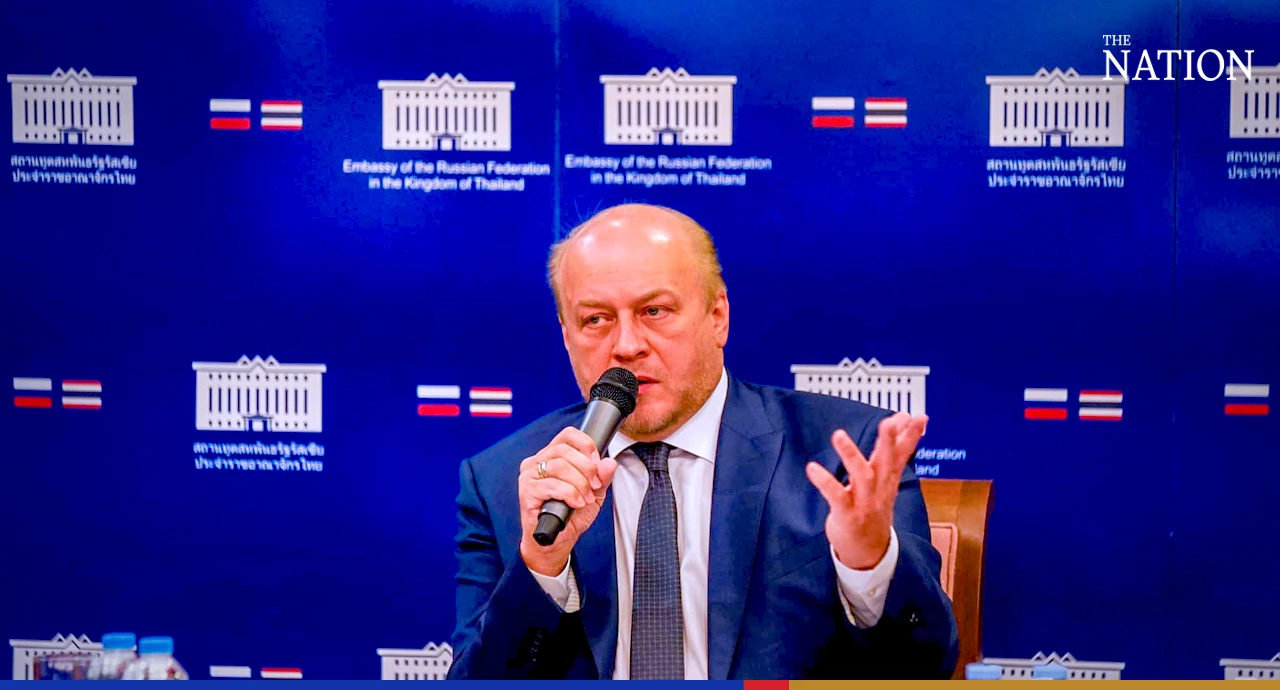
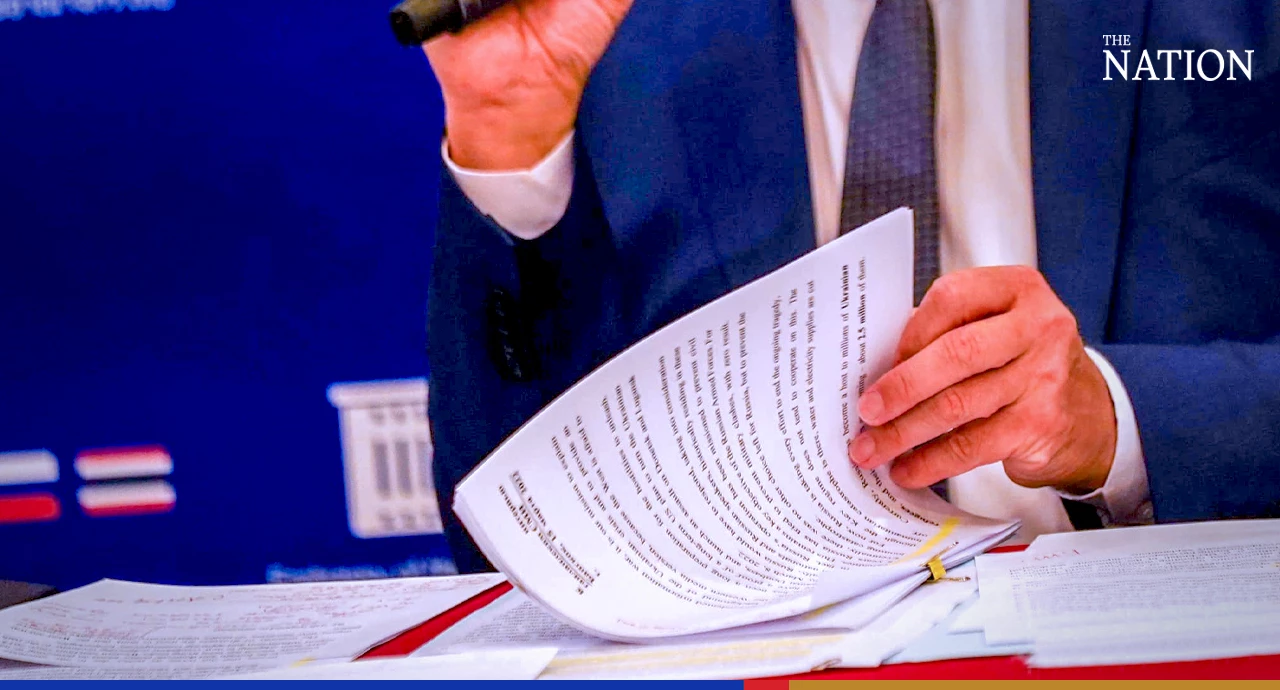
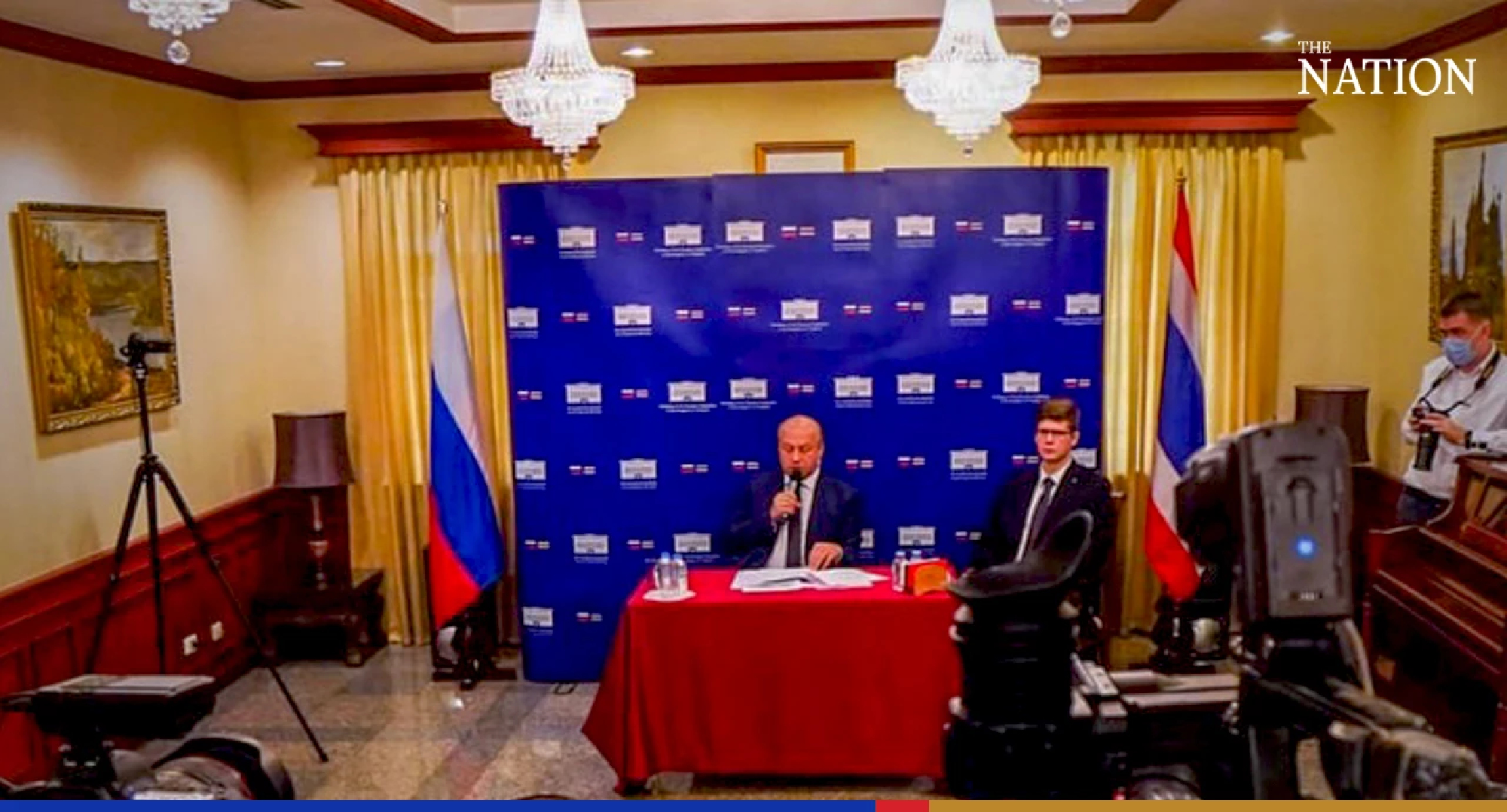
The protest came as Russian Ambassador Evgeny Tomikhin held a press conference at the embassy on the situation between Russia and Ukraine and the relationship between Moscow and Bangkok.
He confirmed the Thai-Russian relationship was still strong despite Thailand voting in the UN against Moscow over the conflict.
Regarding the war, the ambassador reiterated that Russia “had long tried to end this conflict in Ukraine – for the past eight years – in Donetsk and Luhansk, and even last year Moscow proposed measures for security and stability there, but failed to succeed as it was ignored by Western countries, the US and NATO”.
Russian Ambassador Evgeny Tomikhin
Tomikhin defended his country’s military operation in Ukraine, strongly insisting that civilian infrastructure such as schools or residential buildings were “never targeted”.
The Thai-Russian relationship is still strong despite Thailand voting in the UN against Moscow over the Ukraine conflict, Russian Ambassador Evegeny Tomikhin said at a press conference on Tuesday.
“Peaceful security” and “stability” have been part of Moscow’s solution to the Donetsk and Luhansk issues for the past eight years before this escalated into a war in Ukraine, he said.
“Russia respects and appreciates the Royal Thai government’s position regarding the Russia-Ukraine situation and, diplomatically, Russia does not interfere in domestic affairs,” Tomikhin said.
The ambassador stressed on “important” long-term Thai-Russia relations, especially in times of crisis, and noted that Thailand was ready to hear Moscow’s position on the ongoing Russia-Ukraine war despite being pressured by western governments not to do so.
On the domestic level, he said, Thailand has “amazingly assisted” stranded Russian tourists and provided security for the embassy.
Regarding the war, the ambassador reiterated that Russia “had long tried to end this conflict in Ukraine – for the past eight years – in Donetsk and Luhansk, and even last year Moscow proposed measures for security and stability there, but failed to succeed as it was ignored by Western countries, the US and NATO.
Tomikhin also defended his country’s military operation in Ukraine, strongly insisting that civilian infrastructure such as schools or residential buildings were “never targeted”.
The priority, he stated, was to “demilitarise” only the military structure in Ukraine. Regarding a humanitarian corridor, which Ukraine accused Moscow of not honouring, the ambassador guaranteed that the Russian army would allow people from surrounding cities in Ukraine to evacuate to safety each day from 10am. But he blamed Ukraine’s armed forces for “not allowing the people to leave the cities” and holding them “hostage against Russia’s army”.
Tomikhin went on to compare the current situation with what took place in Donetsk and Luhansk eight years ago. He claimed “innocent children and women who were residing in the area were killed by the Ukrainian armed forces and the situation was largely ignored by Western media”.
When asked to define the terms of Russia’s so-called “special military operation” versus “war”, the ambassador compared the “operation” to the war in Afghanistan that has been “going on for the past 20 years”.
He reiterated Moscow’s stance on its objective to “demilitarise” the Ukrainian military infrastructure, saying Russia wants to feel secure and safe at its border”.
The press briefing, which saw high attendance by the Thai media, was shut to Western media. The Russian Embassy reasoned that this was due to “limited space” and to “prevent Covid-19 infections”, so it could only accommodate Thai media.
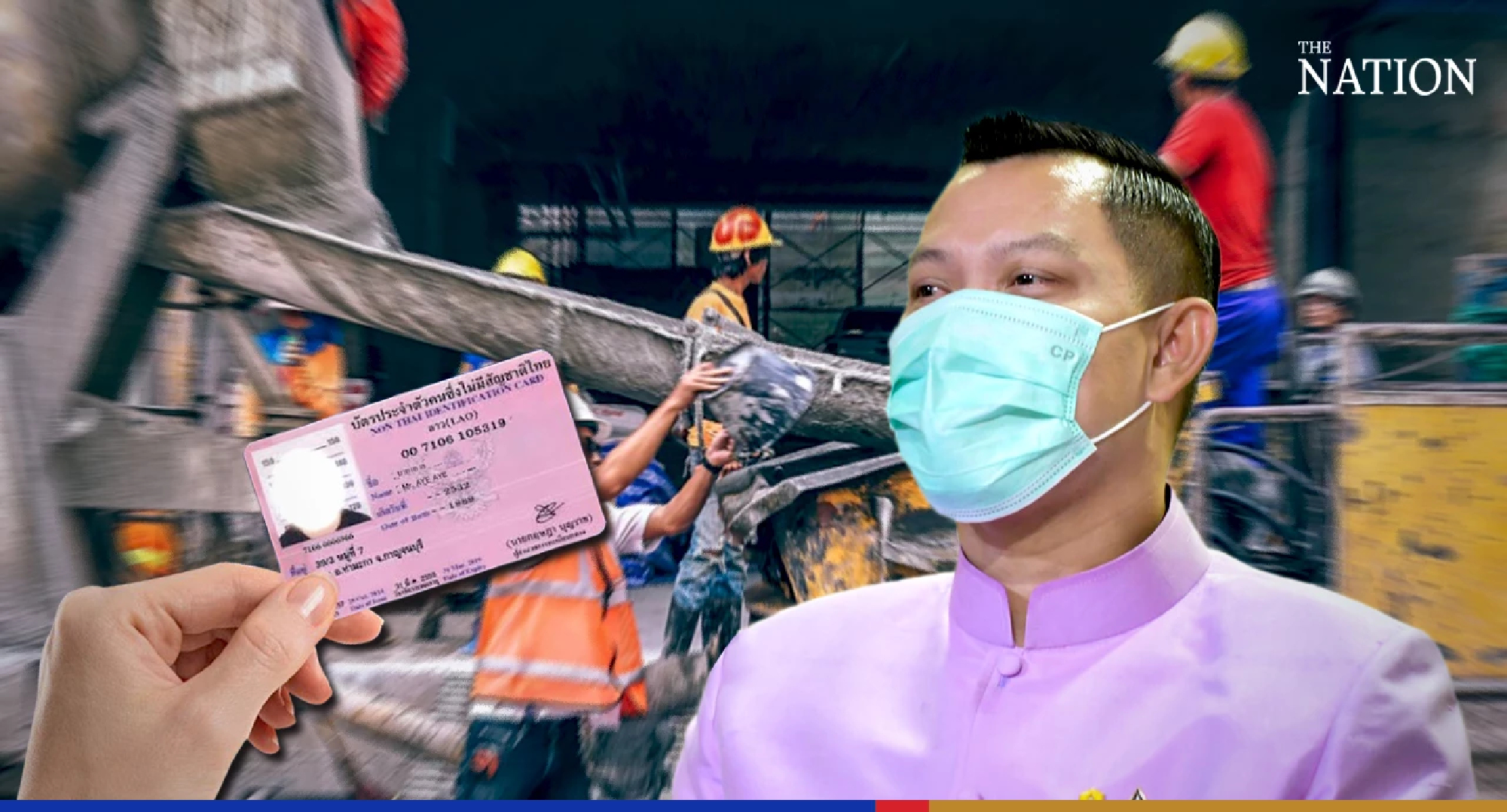
The Cabinet approved the extension of work permits for Cambodians, Laotians and people from Myanmar for two more years, Government spokesperson Thanakorn Wangboonkongchana said on Tuesday.
They need to have worked in Thailand for more than four years.
Thanakorn said the Cabinet signed a memorandum of understanding on labour cooperation under an employment agreement.
It will allow Cambodians, Laotians and people from Myanmar who have worked in Thailand for more than four years to apply for a work permit extension of up to two years.
The approval aims at solving the problem of travel for foreign workers in the present Covid-19 situation. It will also respond to demand for foreign workers so the business and economic sectors can move forward, he pointed out.
The Cabinet also approved an Interior Ministry draft regulation which will allow these workers to be able to stay in Thailand for six more months to apply for work permits.
Under the MoU, there are 54,236 workers from Myanmar, 26,840 from Cambodia and 25,504 from Laos.
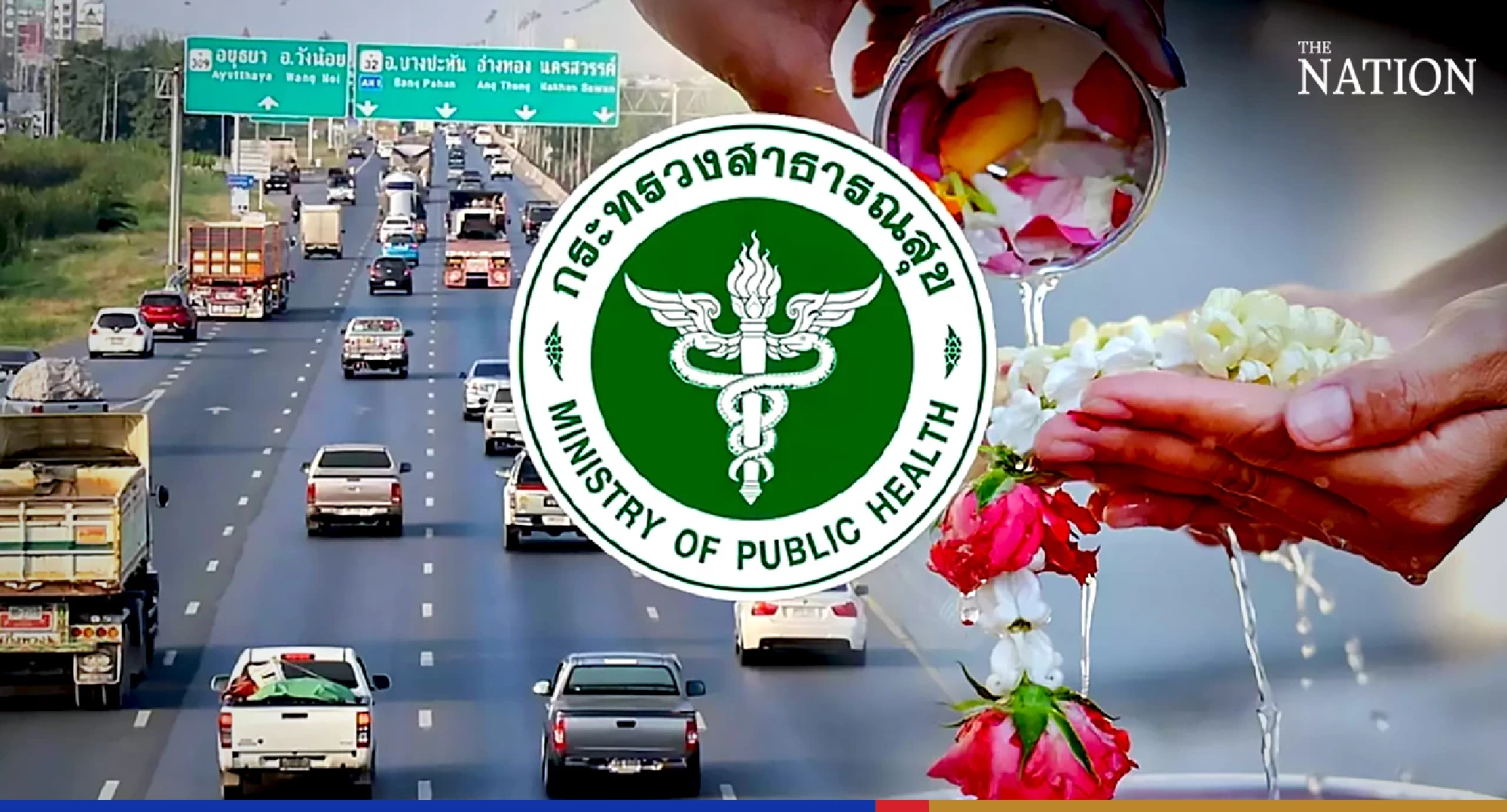
The Public Health Ministry will allow people to return to their hometowns during the Songkran festival this year as most citizens have been vaccinated, Public Health Minister Anutin Charnvirakul said on Tuesday.
He said Thailand would also vaccinate as many elderly as possible, including people with chronic diseases.
“Hence, the Public Health Ministry is willing to allow people to reunite with their families in their hometowns during the Songkran festival this year as most of them have been vaccinated,” he said.
“However, to ensure their safety, family members should take the elderly and bedridden patients for a Covid-19 jab to boost their immunity,” he advised.
Anutin also said the ministry had distributed vaccines to subdistrict hospitals and set up teams to administer vaccines at homes while monitoring symptoms after vaccinations.
The health minister asked people to refrain from dining outdoors with others, gathering or holding parties at least a week before travelling to their hometowns.
Anutin said it would be safer if all family members received Covid-19 booster jabs, so they could celebrate the festival happily.
“However, we cannot let people conduct activities freely as in Western countries as they would be at risk of infection,” he said.
Anutin went on to say that Covid-19 patients who develop moderate or severe symptoms can receive free treatment under the UCEP Plus scheme from Tuesday.
He said patients with mild symptoms can receive free treatment under home isolation or outpatient care.
“We believe these schemes will enable hospitals to have beds available for patients in need,” he added.
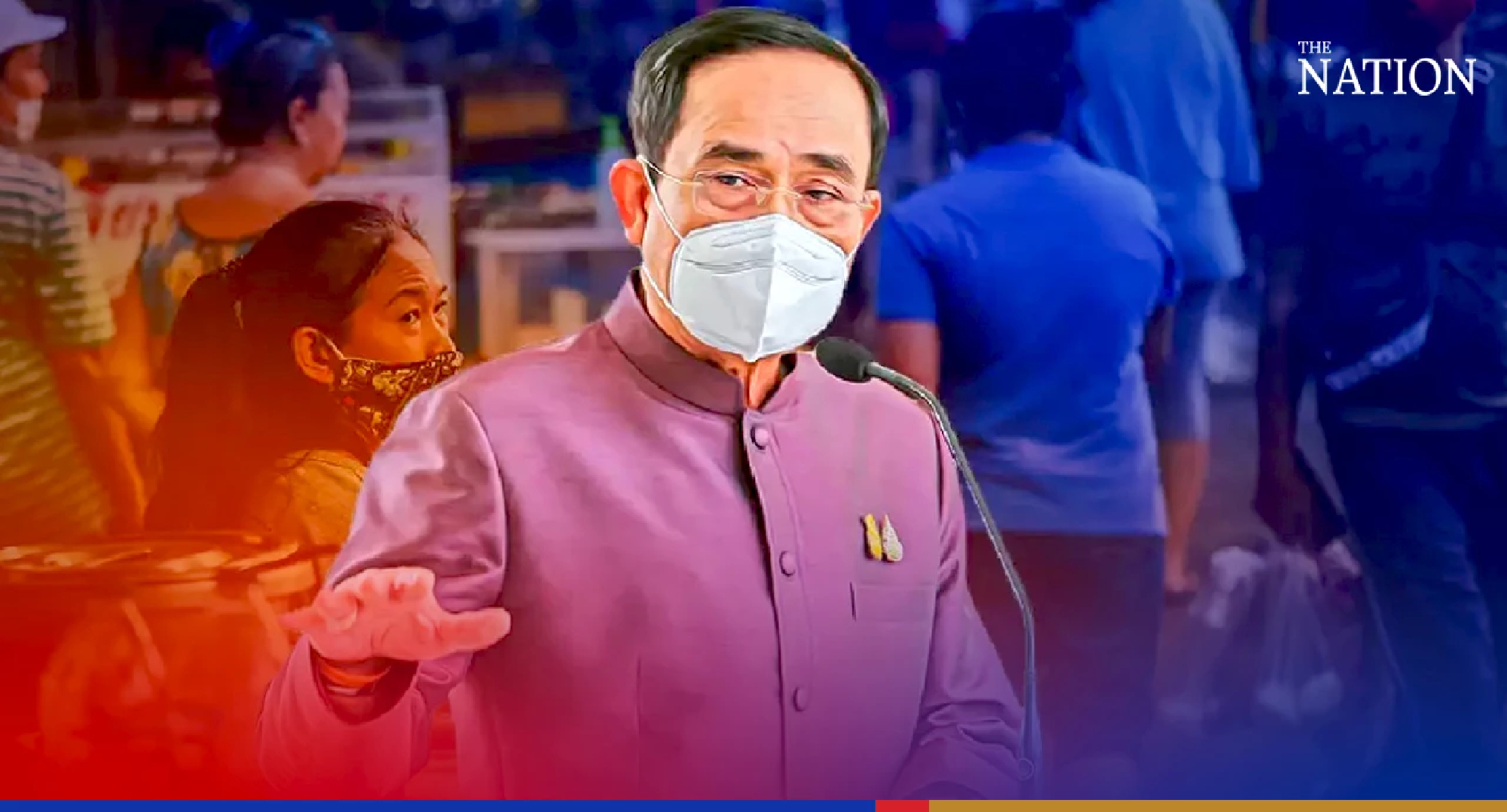
Prime Minister General Prayut Chan-o-cha has ordered relevant agencies to draw up measures to help reduce people’s cost of living amid increasing energy prices due to the Russia-Ukraine war, government spokesman Thanakorn Wangboonkongchana said on Tuesday.
“The government will announce short- and long-term measures soon,” he added.
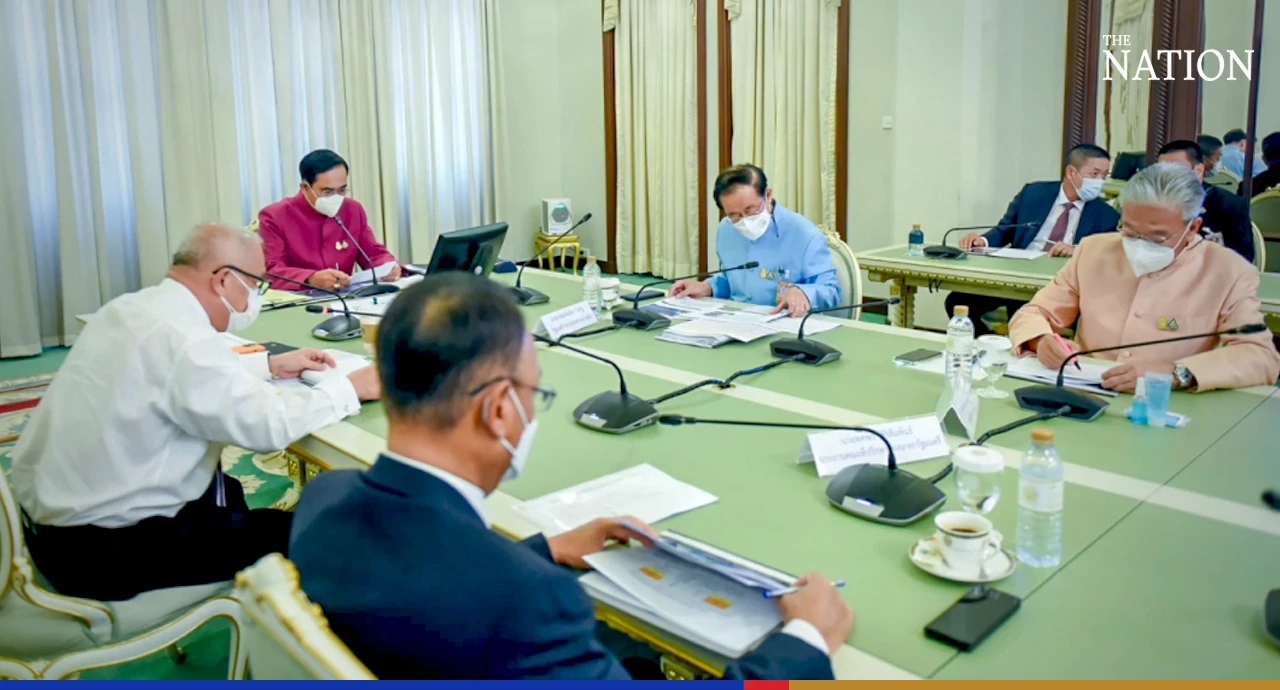
On Tuesday afternoon, the PM met with representatives from the Energy, Finance, Labour, Commerce, Agriculture and Cooperatives ministries, as well as the Bank of Thailand, the Fiscal Policy Office and the National Economic and Social Development Council to discuss suitable measures to help people affected by the energy price crisis, especially low-income earners and labourers.
“PM Prayut insisted that aid measures should prioritise people who have been affected the most, while using a limited budget to the fullest and for minimal impact on taxpayers,” said Thanakorn.
“Short-term measures will aim to reduce the financial burden immediately, while long-term measures will focus on promoting sustainable economic expansion.”
A news source from Government House said measures were expected to be announced as early as Wednesday afternoon.
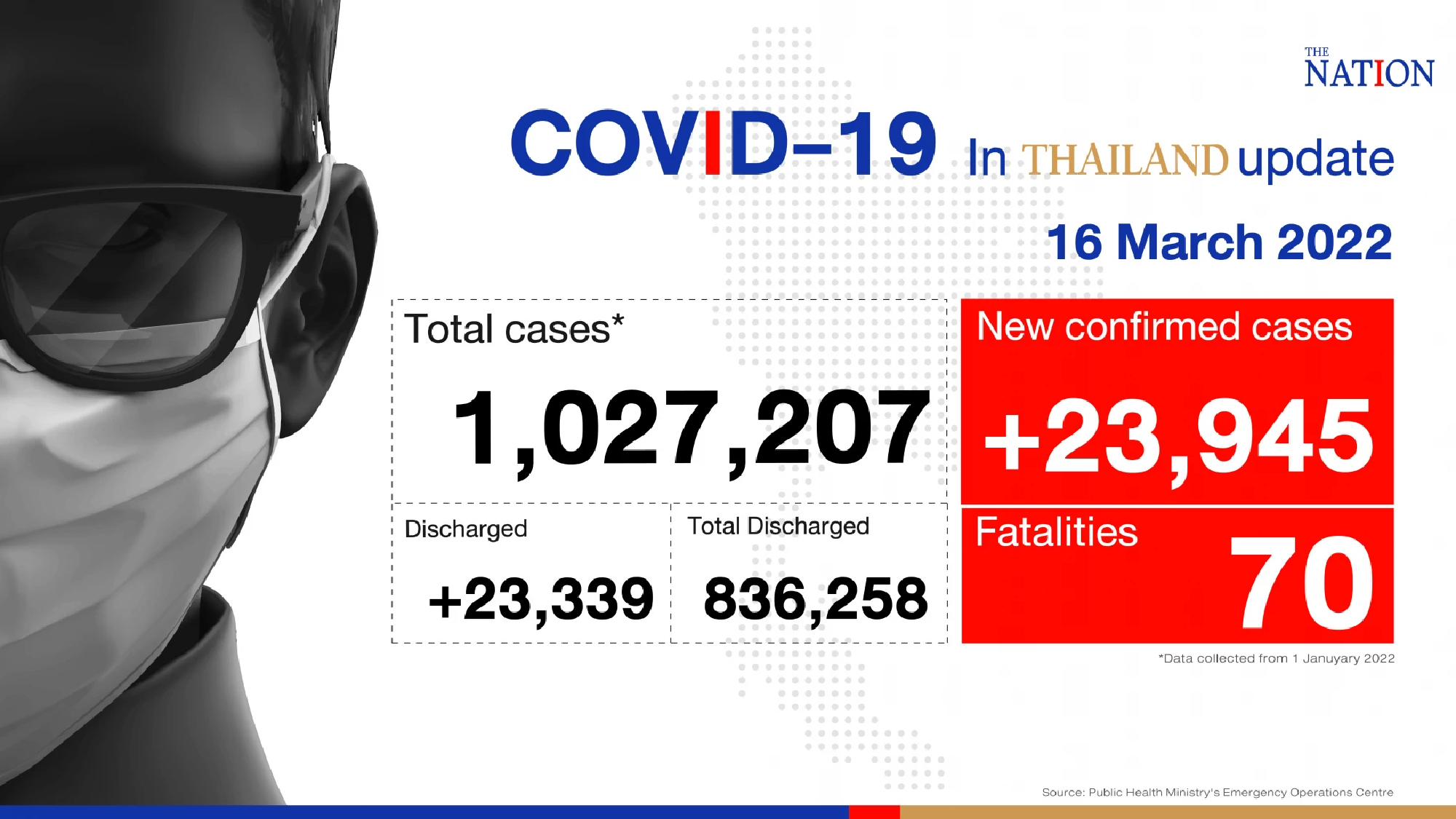
Ministry of Public Health reported on Wednesday (March 16) morning that in the past 24 hours there are 23,945 new patients who tested positive for Covid-19, 48 of whom have arrived in Thailand from abroad.
Death toll increased by 70, while 23,339 patients were cured and allowed to leave hospitals.
Cumulative cases in the country since January 1, 2022 are at 1,027,207.
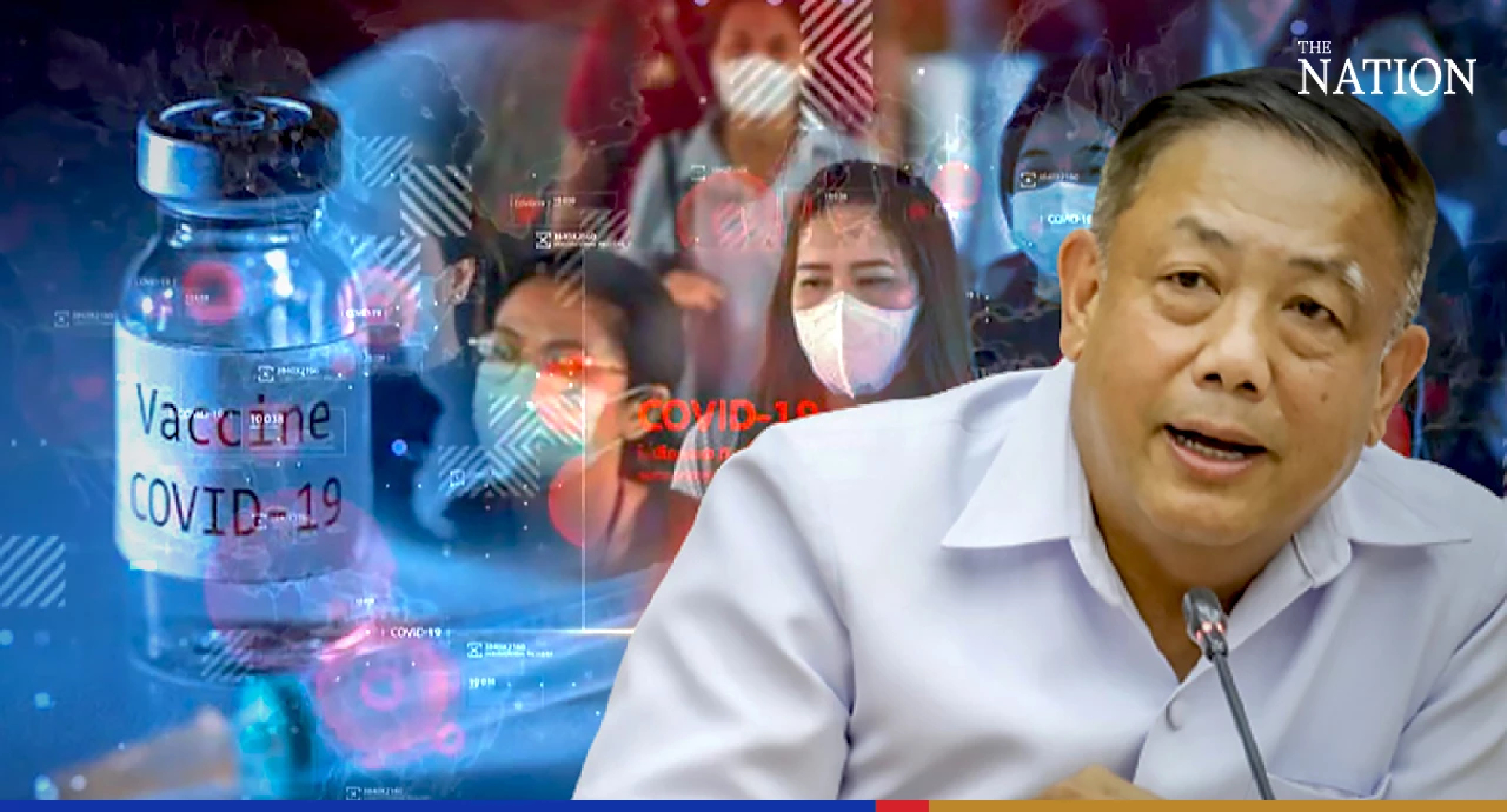
The Public Health Ministry on Tuesday approved half-dose mRNA Covid-19 vaccines as the third shot in a bid to encourage more people, especially the elderly and those with chronic conditions, to get a booster.
Dr Kiattiphum Wongrajit, the ministry’s permanent secretary, said recent figures show that most Covid-19 deaths were of the elderly, yet many were reluctant to get an mRNA booster because they feared side effects.
“To deal with this fear, I have instructed health officials to halve the Pfizer dose for the elderly,” Kiattiphum said at a press conference at the Public Health Ministry.
“A half-dose will also be given to members of the general public if they want a fourth shot. This is because studies have shown that just half the dose of an mRNA vaccine can reduce both side effects and improve immunity.”
He added that 97 per cent of the deaths recorded on Monday and announced on Tuesday were of people in the high-risk group, namely the elderly, people with chronic conditions and pregnant women.
Of the 70 patients who succumbed to the virus, 47 were 70 years or older, while 52 had not received any or just one Covid-19 shot, he said.
He added that according to statistics, only 0.1 per cent of patients in the below-50 age group succumbed to the virus. However, he said, the percentage rose to 0.3 for 50-60 years old and 7.5 per cent for the 70 and above.
Kiattiphum said these statistics convinced the Public Health Ministry to speed up providing boosters to the elderly and those with chronic conditions.
He also noted that though the percentage of deaths among elderly people was high, many did not die just due to Covid-19. He said underlying illnesses also contributed to many deaths.
“Studies found that 30 per cent of the senior Covid-19 patients did not have lung inflammation. So, if this group was given better protection, we should be able to reduce the number of deaths. If up to 60 per cent of the elderly population gets the third shot, deaths can be more than halved,” Kiattiphum said.
He added that the Public Health Ministry will also launch two campaigns ahead of the Songkran holidays in a bid to prevent infections and deaths among the elderly.
The first will be to launch a widespread vaccination campaign from March 21 to 30 to ensure most elderly people have received their third or second shot before their families show up for Songkran.
He said about 83 per cent of Thailand’s senior population has received the first shot and 78.5 per cent their second shot, while only 32 per cent have received a booster.
The second will be a “self-clean-up” campaign in which people planning to visit elderly relatives in provinces will be encouraged to avoid social contact, attend parties or crowded areas for at least a week before they return home. They will also be encouraged to take ATK tests before travelling upcountry for Songkran, he added.
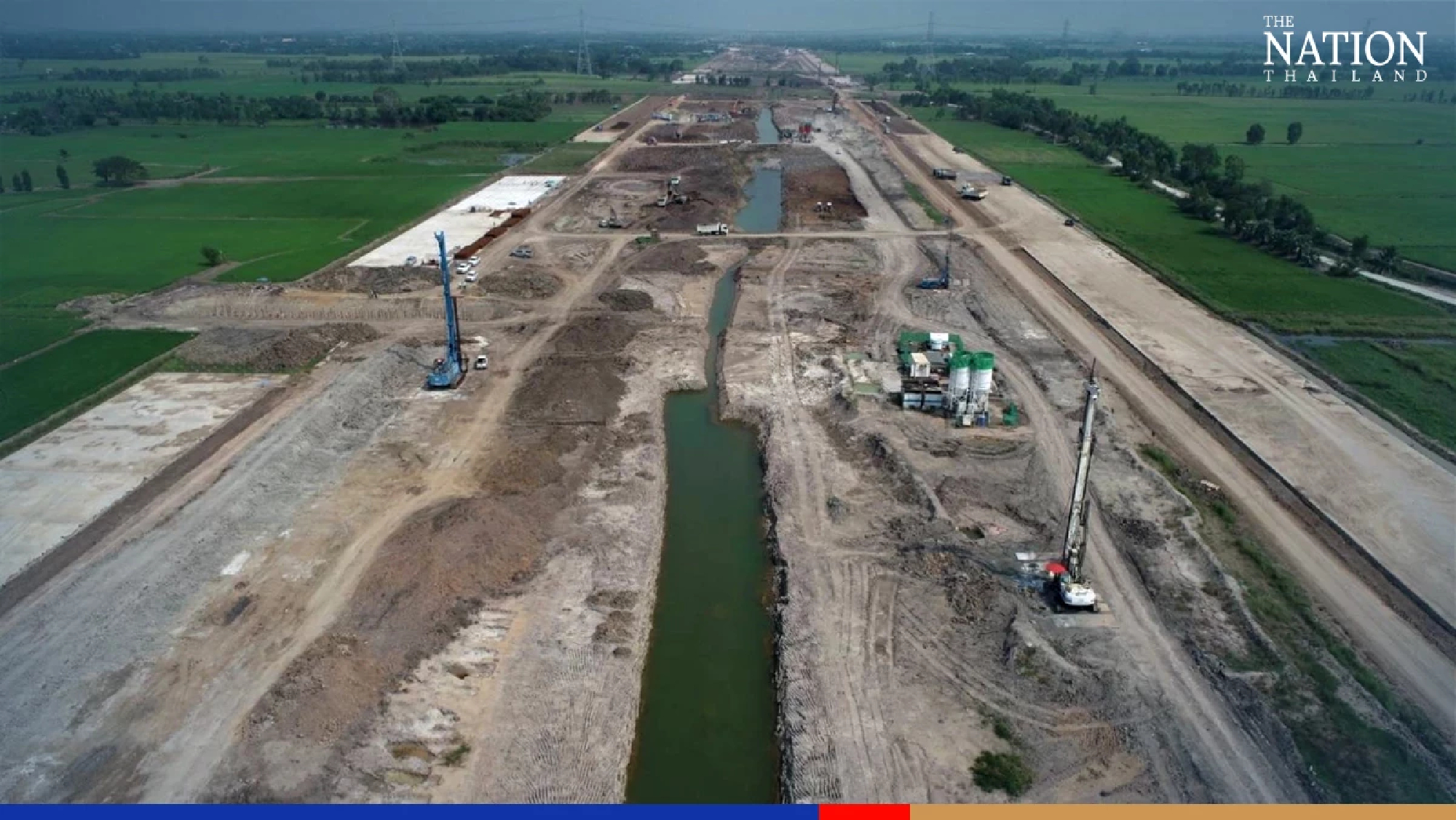
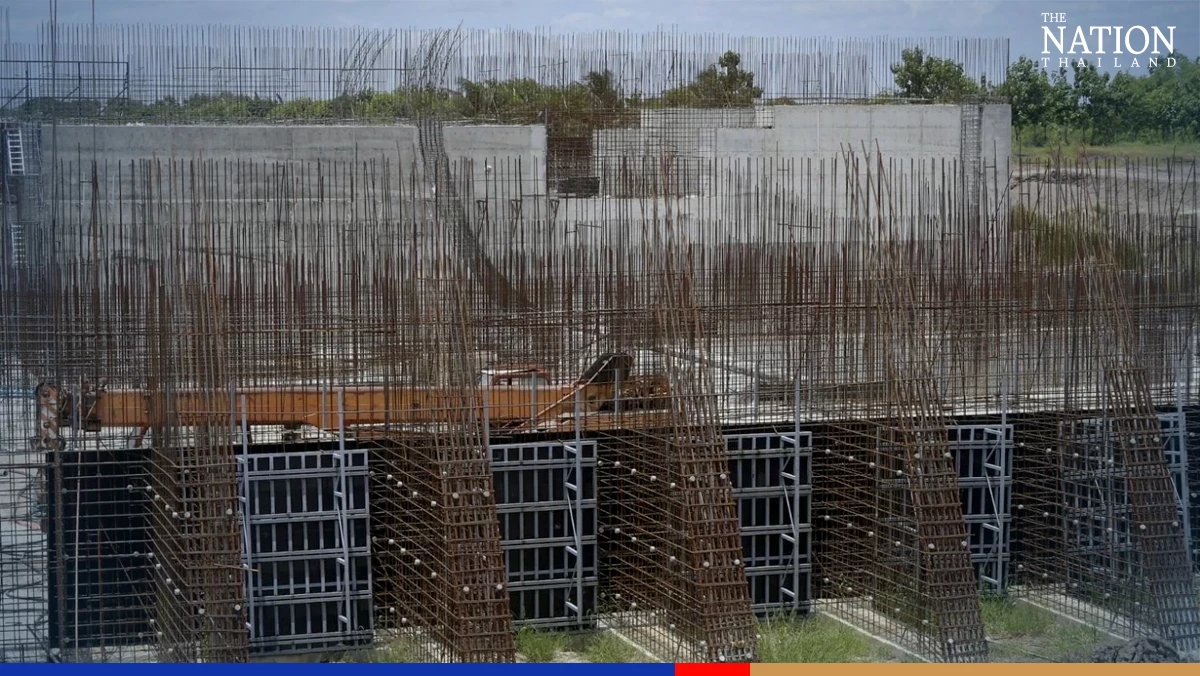
The 22.5-kilometre-long drainage canal being dug up in Ayutthaya is more than 20 per cent complete and is on target for completion next year, a senior irrigation official said on Tuesday.
Sermchai Siawsirithaworn, director of the Royal Thai Irrigation Department’s Large Water Resources Development Institute, said the project, dubbed Chao Phraya II, is moving smoothly and will be completed as scheduled.
This canal will tackle the yearly flooding in the heart of Ayutthaya’s Muang district by diverting water released by the Chao Phraya Dam. The canal is also expected to reduce flooding in other areas of the lower Chao Phraya basin.
The project’s key features are:
• Located in the Sanam Chai subdistrict of Ayutthaya’s Bang Sai district.
• The 22.50km canal is 200 metres wide, but width reduces to 110m when passing through residential areas.
• There will be an 8m-wide road on either side of the canal.
• A floodgate will be built at the end of the canal.
• Project costs 21 billion baht.
The project is expected to:
• Drain up to 2,930 cubic metres of water per second.
• Mitigate flooding in downtown Ayutthaya and up to 2.5 million farms in the lower Chao Phraya basin.
• Reduce flooding in other parts of Ayutthaya province.
• Irrigate some 229,000 rai of farms in the region.
• Provide 15 million cubic metres of water for consumption.
“Once the canal is ready, it will play a key role in the management of water resources in the Chao Phraya basin,” he said, adding that the drainage will also prevent the river from overflowing.
The director added that fallout from the Covid-19 pandemic and ongoing Russia-Ukraine has not affected the project so far, and the cost of construction has remained more or less unchanged.




 Russian Ambassador Evgeny Tomikhin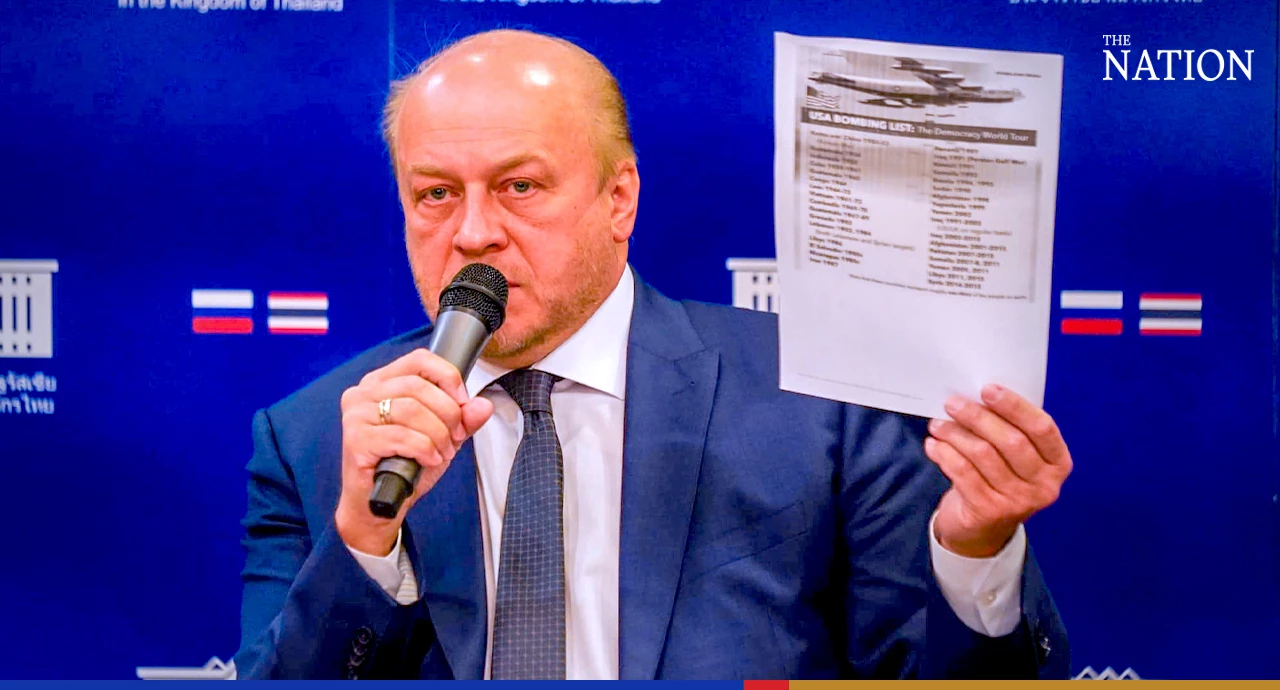
 The project’s key features are:
 “Once the canal is ready, it will play a key role in the management of water resources in the Chao Phraya basin,” he said, adding that the drainage will also prevent the river from overflowing.
