The Royal Gazette website on Friday published a new set of fees for app-based ride-hailing services effective immediately.
According to the new rules set by the Transport Ministry, fares for small cars will start at 40-45 baht for the first two kilometres, after which the cost is between 6 and 10 baht per kilometre.
The starting fare for medium cars is 45-50 baht for the first two kilometres and 7-12 baht for every kilometre after that.
Fares for larger vehicles start at 100 to 10 baht for the first two kilometres and 12-16 baht for each kilometre after that.
The announcement covers vehicles that have been registered with the Department of Land Transport to provide ride-hailing services via an electronic channel.
The service fee for calling a ride via an app starts at 20 baht, but if a cab is called during rush hour when few vehicles are available, then the calling fee can rise up to as much as 200 baht. The application will calculate the fare plus calling fees in advance so passengers can choose whether to go ahead with the booking.
This means a 2km ride on a taxi called via an app can cost 60 baht – 20 baht calling fees plus 40 baht initial fare.
The nasal-spray Covid-19 vaccine “NASTVAC”, developed by the National Centre for Genetic Engineering and Biotechnology (Biotech), is expected to start testing on humans by April 2022, said Dr Anan Jongkaewwattana, director of the agency’s Veterinary Health Innovation and Management Research Group Unit on Friday.
Biotech is an affiliate of the National Science and Technology Development Agency (NSTDA), which had started researching on Covid-19 vaccine since January 2019.
“We expect to submit all vaccine documentations to the Thailand Food and Drug Administration (FDA) by February next year, and hope that the human trial could start in April 2022,” he said. “In the trial phase, 200-300 doses of NASTVAC will be applied to volunteers. We will announce volunteer application once the FDA approves the human trial.”
“We have developed NASTVAC based on three kinds of nasal-spray vaccines: The virus-like particle (VLP) vaccine, the influenza-based vaccine, and the adenovirus vector-based vaccine,” he added.
Biotech said in August that laboratory mice treated with the adenovirus spray vaccine showed a strong immune response against Covid-19. Meanwhile, the modified influenza vaccine generated high levels of both antibodies and T cell immunity in mice.
Thailand on Friday took over the rotating chairmanship of the Asia-Pacific Economic Cooperation (Apec) from New Zealand, declaring the theme for 2022 Apec as “Open. Connect. Balance.”
During the handover of the Apec chairmanship, New Zealand Prime Minister Jacinda Ardern said that the 2021 theme of APEC, “Join, Work, Grow. Together,” was inspired by the Maori.
“Traditionally, building a waka (canoe) involved entire Maori communities working in harmony toward a common goal. These waka enabled Maori to traverse vast expanses of ocean. Likewise, building Apec prosperity requires collaborative effort from all the APEC economies to reach a common goal,” she said.
“New Zealand is confident that Thailand would paddle the APEC canoe forward with enthusiasm, creativity and ingenuity,” Ardern said.
Prime Minister Prayut Chan-o-cha said that Thailand was honored to host the Apec meetings in 2022, and would continue to work and collaborate with the Apec economies for common development.
He explained the theme for 2022 Apec — “Open. Connect. Balance,” hoping for Apec to be “opened” to all opportunities by facilitating trade & investment, “connected” in all dimensions through safe & seamless resumption of cross-border travel, and “balanced” in all aspects towards sustainable & inclusive growth.
He called for the Apec economies to synergize strength and determination in reaching the goal to create the opened, dynamic, resilient and peaceful Apec community.
Prayut also insisted that Thailand will be ready to welcome members of Apec family as well as all visitors in November next year.
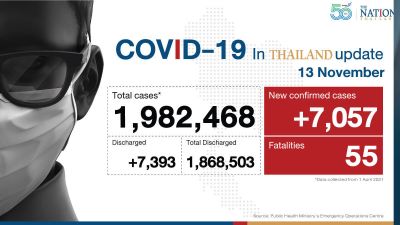
Ministry of Public Health reported on Saturday (November 13) morning that in the past 24 hours there are 7,057 new patients who tested positive for Covid-19, 198 of whom have been found in prisons.
Death toll increased by 55, while 7,393 patients were cured and allowed to leave hospitals.
The country’s total caseload from Covid-19 stands at 2,011,331 – 1,895,929 of whom have recovered, 95,413 are still in hospitals and 19,989 have died.
Separately, another 259,689 people were given their first Covid-19 shot in the last 24 hours, 481,230 their second shot and 33,025 a booster, bringing the total number of Covid-19 vaccine doses administered nationwide to 84,094,565.
According to Worldometer, confirmed cases globally had risen to 253.24 million on Saturday, 229.02 million of whom have recovered, 19.12 million are active cases (76,945 in severe condition) and 5.1 million have died (up by 7,193).
Thailand ranks 24th in the global list of most cases, which is topped by the US with 47.83 million, followed by India with 34.41 million, Brazil with 21.94 million, the UK with 9.49 million and Russia with 8.99 million.
The Thailand Meteorological Department said on Saturday (November 13) that the strong high-pressure system over upper Thailand is weakening, but the North and the Northeast still remain cool.
Meanwhile, the active low-pressure cell covers the South of Thailand. It is expected to move to Andaman Sea by November 14, while the strong northeast monsoon prevails across the Gulf of Thailand. Very heavy rains are likely over Chumphon, Surat Thani, Nakhon Si Thammarat, Ranong and Krabi with isolated heavy rains over Prachuap Khiri Khan, Phatthalung, Songkhla, Pattani, Phang Nga, Trang and Satun. People should beware of the severe condition that may cause flash floods and overflows. Residents along the Gulf should beware of inshore surge.
Waves are 2-3 meters high in the Gulf and more than 3 meters high during thundershowers. All ships should proceed with caution, and small boats keep ashore until November 14. The high-pressure system cover upper Thailand is weakening, but it remains cool in the North and the Northeast.
The weather forecast for the next 24 hours is as follows:
North: Cool weather in the morning with isolated light rains; temperature lows of 21-23 degrees and highs of 28-33 degrees Celsius. Temperature on hilltops is likely to drop to 10-15 degrees Celsius.
Northeast: Cool weather in the morning with isolated light rains; temperature lows of 20-22 degrees and highs of 30-31 degrees Celsius. Temperature on hilltops is likely to drop to 11-15 degrees Celsius.
Central: Mostly cloudy with isolated light rains; temperature lows of 22-24 degrees, highs of 32-33 degrees Celsius.
East: Mostly cloudy with isolated light rains; temperature lows of 24-25 degrees, highs of 30-33 degrees Celsius; waves 1-2 meters high and 2 meters offshore.
South (east coast): Thundershowers in 80 per cent of the areas with heavy to very heavy rains in many areas; temperature lows of 23-25 degrees, highs of 26-32 degrees Celsius; waves 2-3 meters high and over 3 meters during thundershowers.
South (west coast): Thundershowers in 70 per cent of the areas with heavy to very heavy rains in many areas; temperature lows of 21-24 degrees, highs of 27-30 degrees Celsius; waves 1-2 meters high and 2 meters offshore.
Bangkok and surrounding areas: Mostly cloudy with isolated light rains; temperature lows of 25-26 degrees, highs of 31-33 degrees Celsius.
The Digital Economy and Society (DES) Ministry has ordered a hunt for the person responsible for hacking into the Constitutional Court’s website, DES Minister Chaiwut Thanakmanusorn said on Friday.
The court’s website (constitutionalcourt.or.th) was hacked on Thursday, with home page data being replaced with the clip of a man, believed to be a foreigner, yelling at a vehicle with his hands on his head.
This happened after the court ruled on Wednesday that pro-democracy leaders Arnon Nampa, Panupong “Mike” Jadnok and Panassaya “Rung” Sitthichirawatanakul were aiming to oust the government.
“Our investigation revealed that the court’s website is being managed by a private company and its firewalls are not strong enough,” he said. “The website has been closed temporarily and retrieval of data is most likely not possible. The hacker, however, did not access the court’s database and no valuable data was stolen. Only data related to public relations was lost,” the minister said.
“We believe the hacking was done to discredit the court and had been planned in advance. It is yet to be concluded whether the hacking was related to the three pro-democracy leaders and the United Front of Thammasat and Demonstration group that the court was working on,” Chaiwut added.
“The investigators are checking on the IP addresses of those who logged into the system during that period. The DES Ministry will hold a press conference once the hacker has been identified.”
The minister also advised all government agencies to boost safety measures against attackers on their websites and avoid using passwords that are easy to guess.
“If you hire a private company to manage the website, be sure to select one that has experience in cyber security and offers comprehensive and standardised protection for all valuable data,” Chaiwut said.
He added that the DES Ministry was planning to use funds from its yearly budget of between 4 billion and 5 billion baht to help government agencies that do not have enough funding to overhaul their website’s security system.
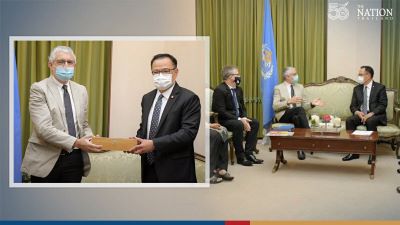
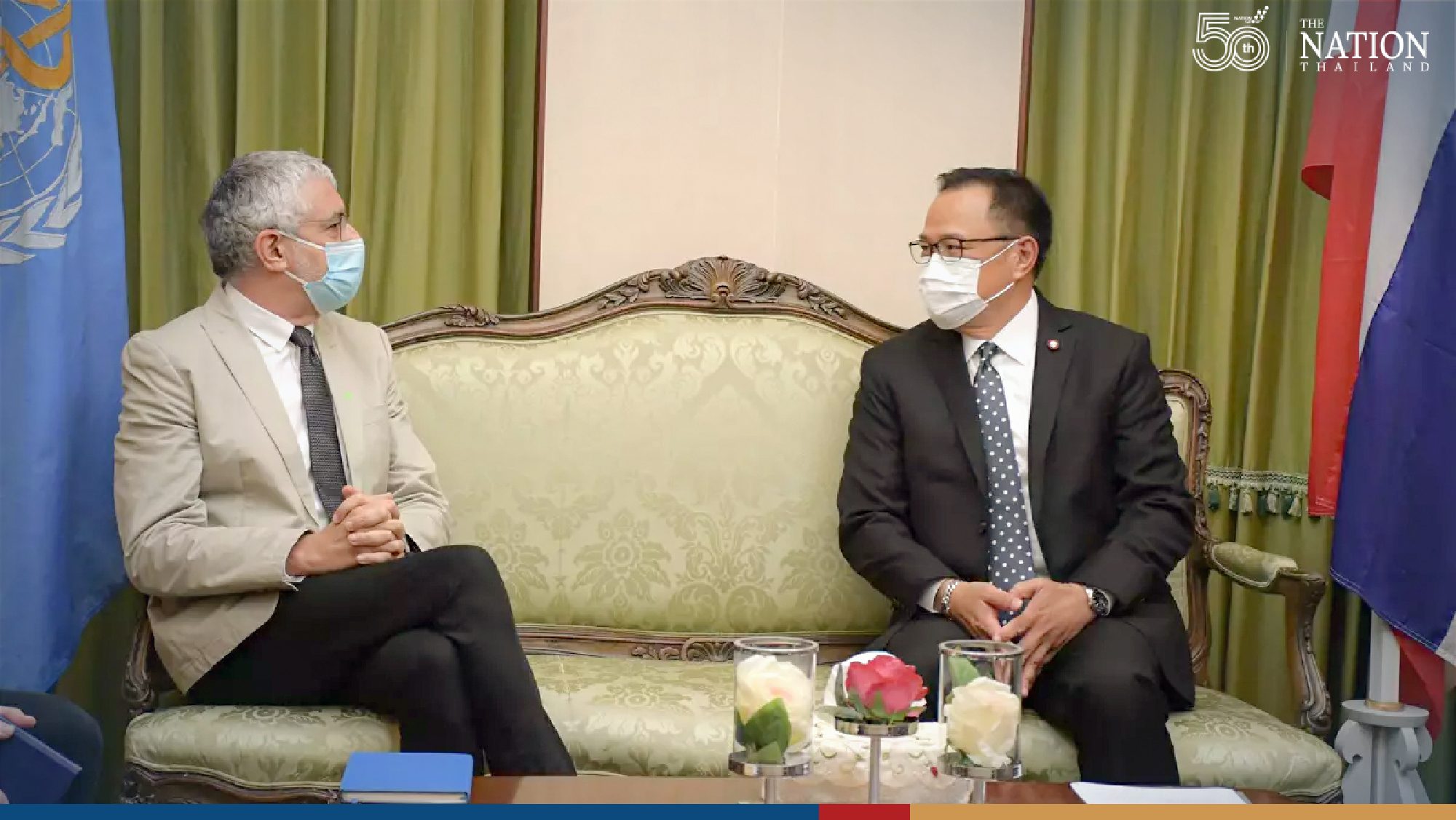
Public Health Minister Anutin Charnvirakul held a meeting on Friday with Dr Jos Vandelaer, the new World Health Organisation (WHO) representative to Thailand, who took office on October 1.
The aim of the meeting was to show how Thailand has been supporting and working in line with WHO’s medical and public health strategies.
Anutin apprises new WHO rep of Thailand’s Covid-19 situation
Anutin said special attention was being placed on the new WHO Country Cooperation Strategy, which comprises plans on:
• Digital health
• Noncommunicable diseases
• Road safety
• Migrant population
• Public health emergency
• Strengthening Thailand’s leadership in global health
The minister said 303 million baht has been earmarked for implementing these plans over five years.
Anutin also reassured Vandelaer that Thailand will be able to reach its target of administering 100 million doses of Covid-19 vaccines by yearend, which should not be difficult given that 85 million doses have already been administered across the nation. He added that the government is also working on providing booster jabs to those who have been fully vaccinated.
Anutin also told Vandelaer that the government has approved the purchase of approximately 2 million pills of Molnupiravir, which will be used with the locally produced Favipiravir. He said with this shipment, Thailand should have enough Covid-19 medication in reserve.
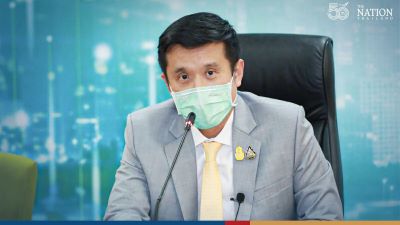
The date of reopening entertainment venues, pubs, bars and karaoke joints across Thailand was shifted from December 1 to January 15 on Friday.
The Centre for Covid-19 Situation Administration (CCSA) said the decision was made in line with the Covid-19 situation and vaccination status.
The CCSA along with Interior and Public Health ministries, provincial disease control bodies and related agencies will work with business operators to prepare for the opening of the venues and ensure all safety measures are in place.
Also on Friday, the CCSA meeting led by Prime Minister Prayut Chan-o-cha decided to shift Chanthaburi province from “dark red” zone to “red” zone, bringing the list of provinces under maximum disease control from seven to six. Tak, Nakhon Si Thammarat, Narathiwat, Pattani, Yala and Songkhla are still marked “dark red”.
Currently, 39 provinces are classified as “red” or high disease control areas. They are Kanchanaburi, Khon Kaen, Chonburi, Chumphon, Chiang Rai, Chiang Mai, Chachoengsao, Trang, Trat, Nakhon Pathom, Nakhon Nayok, Nakhon Ratchasima, Nakhon Sawan, Nonthaburi, Pathum Thani, Prachuap Khiri Khan, Prachinburi, Ayutthaya, Phatthalung, Phichit, Phitsanulok, Phetchaburi, Phetchabun, Ranong, Rayong, Ratchaburi, Lopburi, Satun, Samut Prakan, Samut Songkhram, Samut Sakhon, Saraburi, Sa Kaew, Suphanburi, Surat Thani, Ang Thong, Udon Thani, Ubon Ratchathani and now Chanthaburi.
The “orange” zone or controlled area covers 23 provinces, namely: Kalasin, Kamphaeng Phet, Chai Nat, Chaiyaphum, Buri Ram, Phayao, Phrae, Maha Sarakham, Mae Hong Son, Yasothon, Roi Et, Lampang, Lamphun, Loei, Singburi, Sukhothai, Surin, Nong Khai, Nong Bua Lamphu, Uttaradit, Uthai Thani, Amnat Charoen and Si Sa Ket.
Opening of pubs, bars postponed to Jan 15, Chanthaburi shifts to “red” zone
The Department of International Trade Promotion (DITP) has slated at least 63 events next year to help boost the export of Thai fruit. The agency’s director-general said on Thursday that this strategy should help generate more than 2.3 billion baht in revenue.
The DITP’s Director-General Phusit Ratanakul Sereroengri told the reporters that the Commerce Ministry has established proactive fruit management measures in 2022. In which, the DITP has completed planning over 60 activities to support the ministry’s measures.
Phusit said that the DITP will emphasise organising sales promotions to promote fruit sales abroad. He said the department will conduct online fruit business matching (OBM) negotiations and boost fruit exports in a hybrid format by organising activities to promote fruit consumption at international trade fairs both domestically and internationally. The department will prepare media to advertise Thai fruits in five foreign languages on the world’s stage. There will also be training to educate farmers on online trade and basic export courses.
“The department has planned to set up the provincial salesman teams to help distribute the produces domestically and internationally. Initially, these planned activities are expected to generate income into the country of approximately 2,368 million baht,” Phusit added.
For more information, please visit www.ditp.go.th or the call centre 1169.
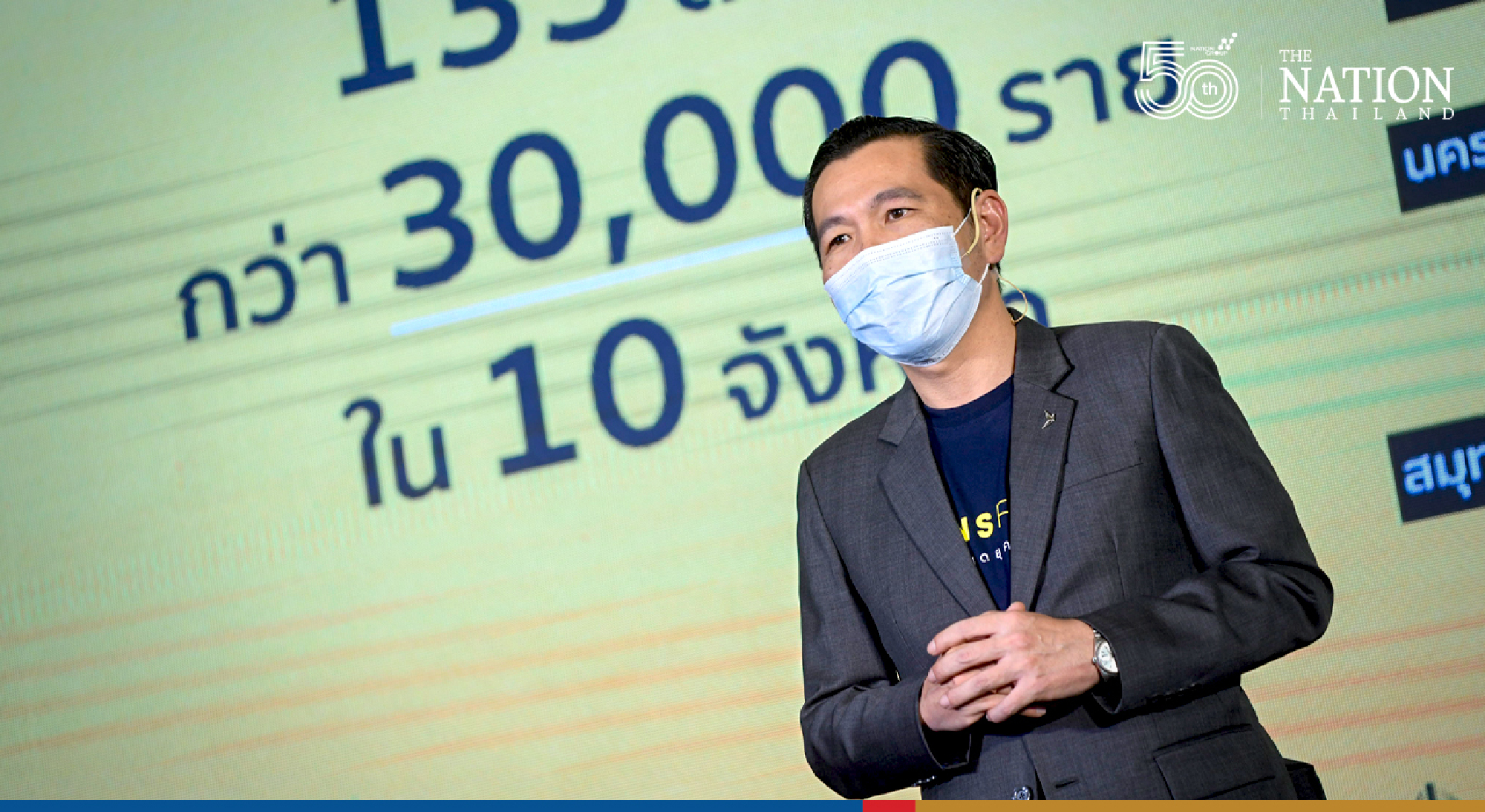
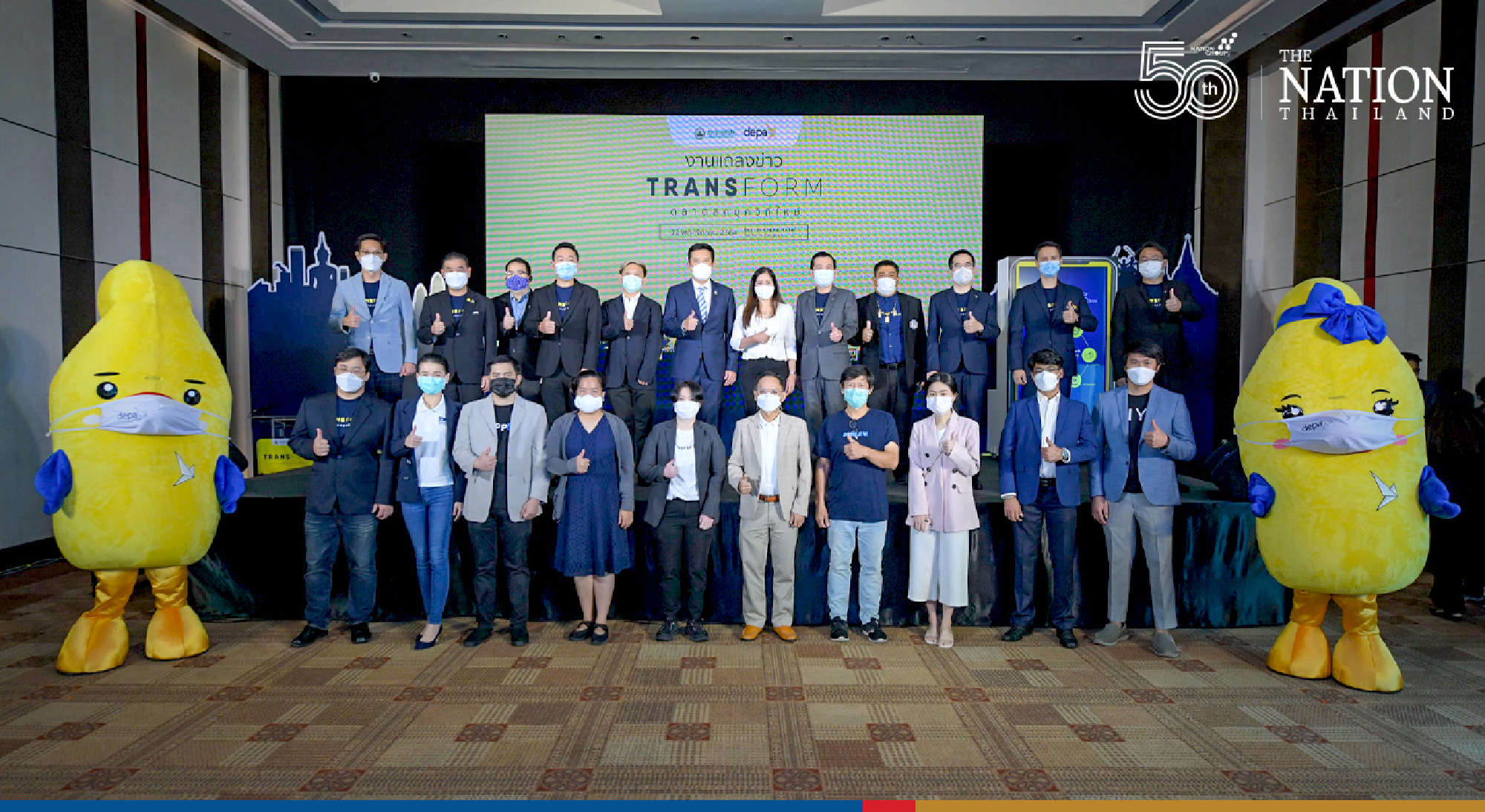
“depa” announced a launch of the ‘Transform: New-normal Market’ campaign to equip all SMEs, shops, hawkers and stalls with inevitable digital armors.
Aiming to support business management, create marketing opportunities and expand sales and logistic channels, the campaign serves consumer needs and lifestyles in a digital era. Starting with over 30,000 entrepreneurs in six pilot provinces, all buy-and-sales channels were to be shifted online with a cashless society. Meanwhile, the campaign also targeted to enlarge other markets’ awareness in the four Bangkok’s vicinities. With its second phase planned for another 25 provinces nationwide, this campaign took an active role in driving Thailand towards a full digital economy.
“depa” Kicked Off the ‘Transform: New-normal Market’ Campaign, Turning All Trades to Online and Embracing Cashless Society
HE. Mr. Chaiwut Thanakmanusorn, Minister of Digital Economy and Society (MDES), revealed that the ministry’s main mission was to develop a comprehensive foundation of digital innovation and technological infrastructures in all areas across the country. To facilitate an easily accessible technology and digital innovative to everyone, the Digital Economy Promotion Agency (depa) took a lead to promote and support the public from all sectors to be able to access and apply digital technology and innovation with the best potential. Especially, the local economy which is essential for the overall Thailand economy.
“The COVID-19 pandemic has casted a change in consumer behavior. So, the government have to take a leading role in developing the potential of Thai operators and helping and support them as well as turning this crisis into opportunity. As part of the MDES’s pillar, depa has launched a campaign called ‘Transform: New-normal Market’ to raise the operation standards of Thai SME operators, shops, hawkers and stalls by enabling them to exchange money via secured online system and facilitating all shopping lifestyles into a cashless society. We are optimistic that the digital technology will bring a recovery to the Thai grassroots businesses. In turn, this business group will help propel our economy to overcome COVID-19 crisis. In addition, the first phase is expected to generate over 300 million baht in revenue,” shared MDES Minister.
Dr. Nuttapon Nimmanphatcharin, President and CEO, depa, said that the Transform: New-normal Market campaign aimed at promoting and supporting the SME operators as well as small entrepreneurs like local shops, hawkers and stalls, to access and adapt to digital technology from the existing startups network. This would help improve their business efficacy, create market opportunities, increase distribution and logistics channels, and enable a transform of a new competitive model under sustainable growth. The first six pilot provinces included Bangkok, Nakhon Sawan, Nakhon Pathom, Chainat, Sing Buri and Lopburi, covering over 30,000 operators. Meanwhile, depa also put a plan in place to further create higher awareness in the four Bangkok’s vicinities.
“depa” Kicked Off the ‘Transform: New-normal Market’ Campaign, Turning All Trades to Online and Embracing Cashless Society
The Transform: New-normal Market Campaign would undergo four phases: Phase 1 In June 2021, the campaign conducted a selection and mobilization process of Thai digital startups and Thai digital service providers that covered six online-related technology groups, including E-payment, Chatbot, Delivery, Logistics, Point of Sales: POS and Service systems. These knowledge- and technology-wise would be paired up with the SMEs, shops, hawkers and stalls in order to utilize platforms for sales and distribution channels or the existing local applications.
Phase 2 From August 2021 onwards, the campaign launched a series of online training courses, hosted by experts, to advice and educate these businesses on how to conduct marketing activities on social media.
Phase 3 depa together with the selected digital startups would organize on-site visits and prototype market activities in the six pilot provinces, including Bangkok, Nakhon Sawan, Nakhon Pathom, Chainat, Sing Buri, Lopburi as well as deploy the on-site troops to promote these local applications.
Phase 4 Beginning of 2022, depa planned to carry out a showcase event in Bangkok to help revive the city’s economy in the post-COVID-19 crisis period as well as to exchange lessons learned from the transformation of these pioneer fresh markets that has turned into the complete new-normal fresh markets.
“The rapid growth of digital technology and the COVID-19 crisis itself has a great impact on the consumer behavior. Thus, entrepreneurs need to be resilient to the situation and the ever-changing consumer behavior by creating new marketing opportunities, reducing costs, increasing revenue and improving quality of life. depa is opportunistic that this Transform: New-normal Market campaign will be extended to benefit larger public in other provinces throughout Thailand. So, in 2022, we will continue this effort to reach out to another 65,000 businesses, and create digital prototype markets that will spread in over 20 provinces. This campaign will empower Thai entrepreneurs, create high economic values for Thailand and support the country to be ready to move forward as a total cashless society in the near future,” added depa President and CEO.
“depa” Kicked Off the ‘Transform: New-normal Market’ Campaign, Turning All Trades to Online and Embracing Cashless Society
Interested businesses and individuals, please check out for updates of the Transform: New-normal Market campaign at transformmarket.depa.or.th, contact depa for more information at E-mail: info.transformmarket@gmail.com and LINE OA: @transformmarket.





 Anutin apprises new WHO rep of Thailand’s Covid-19 situation
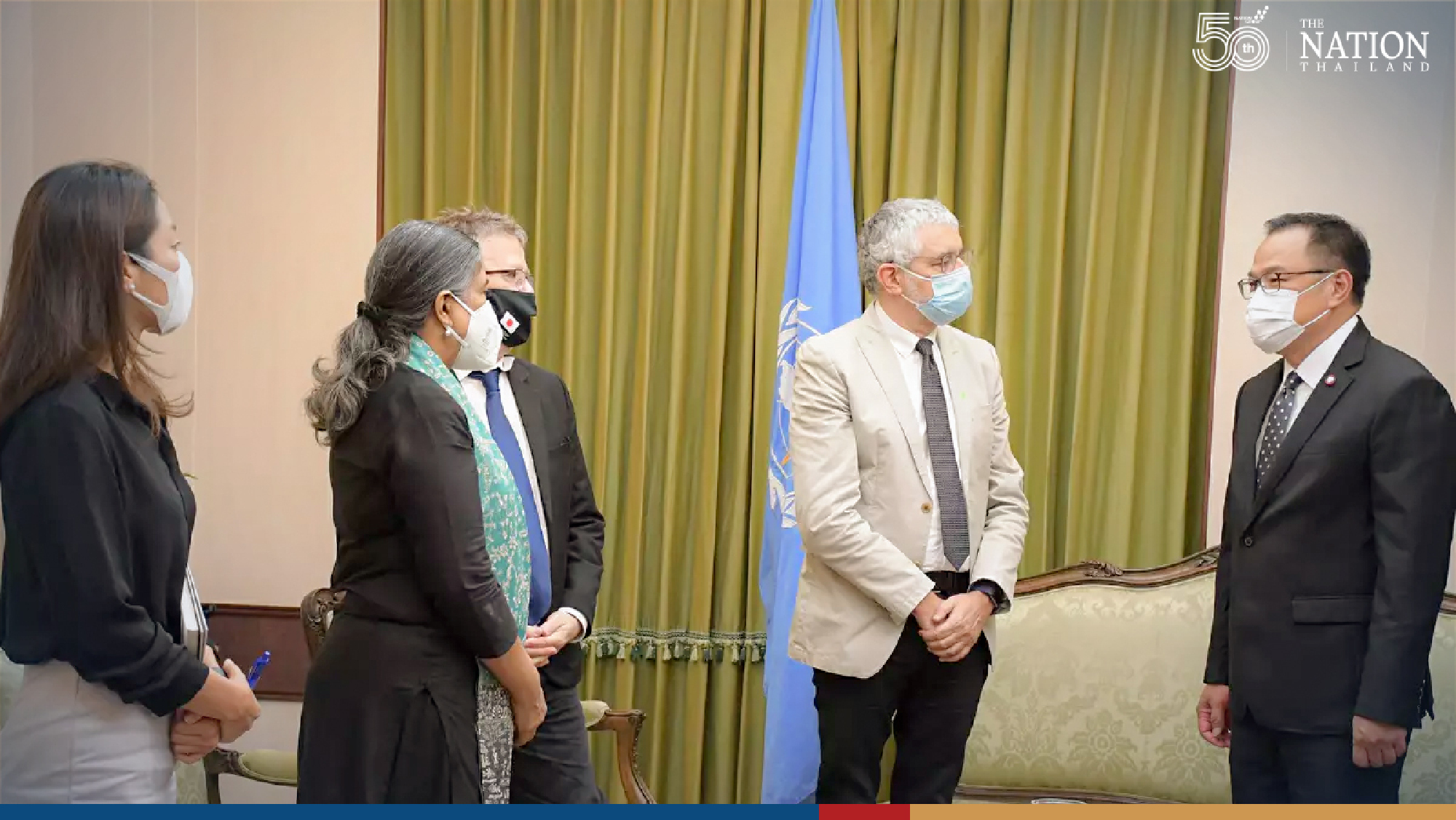 Anutin apprises new WHO rep of Thailand’s Covid-19 situation
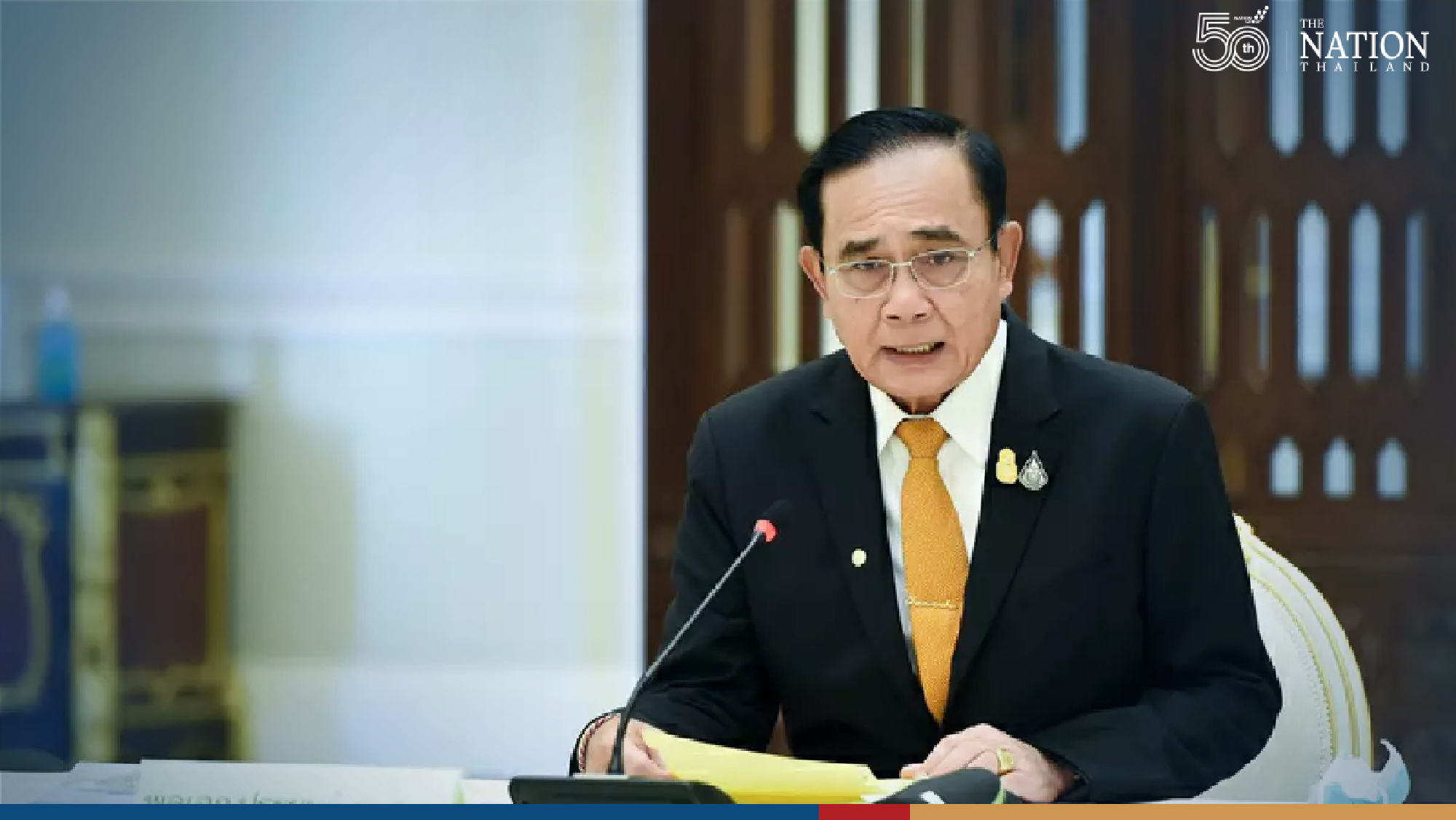 Opening of pubs, bars postponed to Jan 15, Chanthaburi shifts to “red” zone
 Opening of pubs, bars postponed to Jan 15, Chanthaburi shifts to “red” zone

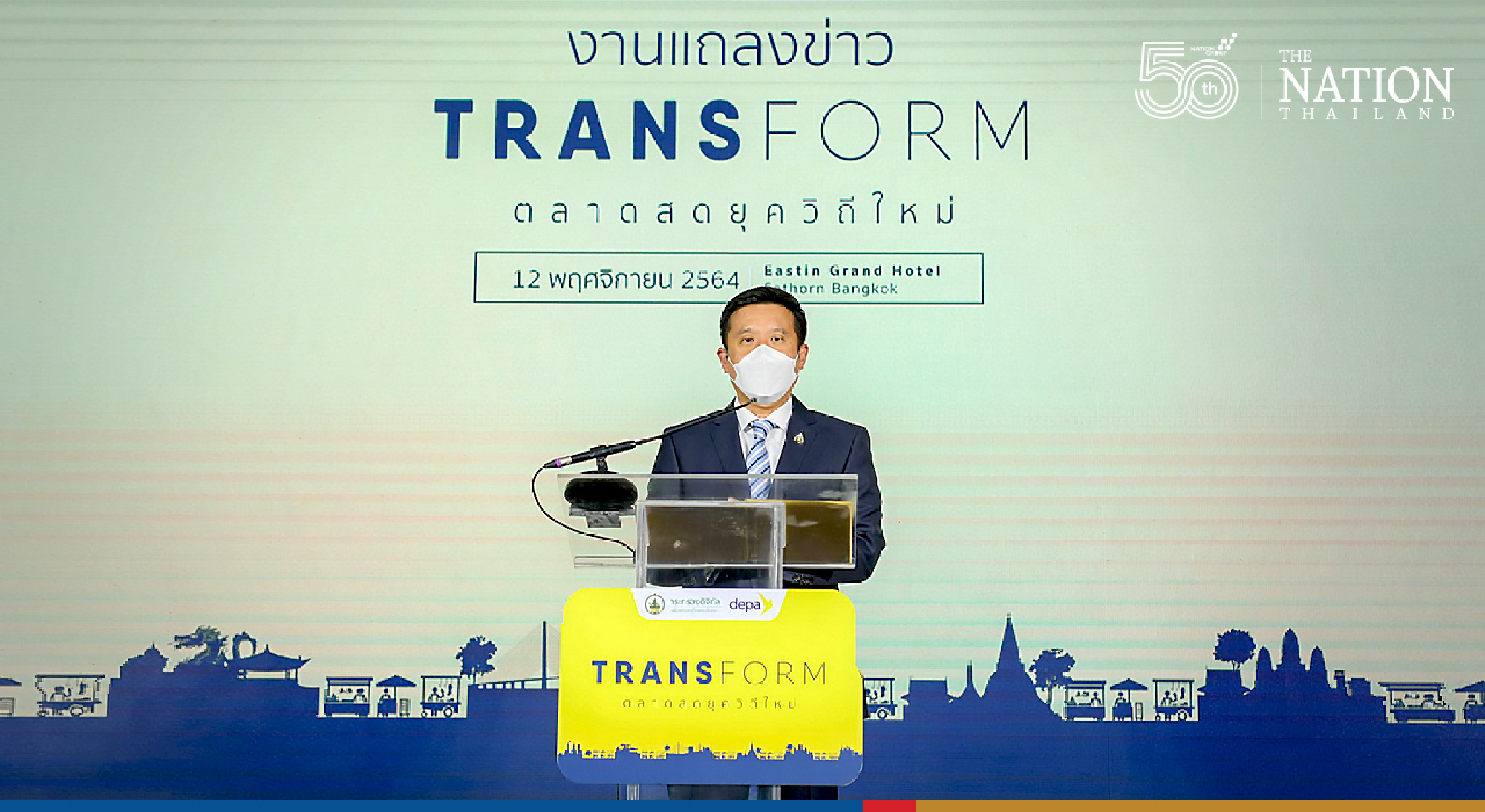 “depa” Kicked Off the ‘Transform: New-normal Market’ Campaign, Turning All Trades to Online and Embracing Cashless Society
 “depa” Kicked Off the ‘Transform: New-normal Market’ Campaign, Turning All Trades to Online and Embracing Cashless Society
 “depa” Kicked Off the ‘Transform: New-normal Market’ Campaign, Turning All Trades to Online and Embracing Cashless Society
