An Energy Ministry news source revealed that Deputy Prime Minister and Minister Supattanapong Punmeechaow is planning to nominate ministry permanent secretary Kulit Sombatsiri as the new board chairman of PTT Plc to replace Krairit Euchukanonchai, who will turn 65 in December and therefore can no longer remain a board member of a state enterprise.
Supattanapong had previously tried to nominate former PTT CEO and former deputy transport minister Pailin Chuchottaworn as PTT board chairman but was unsuccessful. Pailin was named a PTT board member instead.
Kulit is also the current chairman of the Electricity Generating Authority of Thailand (Egat) board, which means that if he were to chair the PTT board he would have to resign from this position first and Egat would need to find a new board chairman.
The source speculated that the move is Supattanapong’s plan to reshuffle the top rung of state enterprises under the Energy Ministry so that he gains total control of those state enterprises.
Back in August, Kulit had expressed his intention to return to the Finance Ministry as the permanent secretary, but the Cabinet instead approved Krisda Chinavicharana, former director-general of the Customs Department, for the position.
The Cabinet’s approval of December provincial administrative organisation (PAO) elections for 380 posts is the first step in restoring voters’ control over almost 100,000 posts that was suspended six years ago in 2014.
In the absence of local elections, tenures of PAO posts expired in 2018 and left 98,940 local politicians and administrators frozen in place.
The Election Commission (EC) has 60 days to prepare the polls, after getting the green light from Cabinet on Tuesday. Preparations include appointing local election committees and training 10,749 polling officials at provincial and district levels.
Local government administrations will then fix the election date of the elections, the voter-registration day, polling booth locations, etc.
The size of PAOs will be limited to 24 members per 500,000 residents, 30 per 1 million residents, 36 per 1.5 million residents, 42 per 2 million residents and 48 if the number of provincial residents exceeds 2 million.
Nakhon Ratchasima’s PAO will be the largest with 48 members, followed by Khon Kaen, Chonburi, Chiang Mai, Nakhon Si Thammarat, Buriram, Udon Thani and Ubon Ratchathani at 42.
The EC announced election preparations from October 28, voter registration from November 5-9 or 9-13, and election day itself on either December 13 or 20.
December 10-13 is a long holiday and December 20 is just inside the 60-day deadline.
The Cabinet is expected to allow local elections to be held by the end of the year, Jarungvith Phumma, secretary-general of the Election Commission (EC) said on Tuesday.
He provided details to the Cabinet on the EC’s readiness in holding local elections, including setting up regulations and training officials in each province and district.
He said once the Cabinet has given the green light, the EC will in a week or two come up with the dates and organise the polls within 60 days.
The first step will be holding provincial administration organisation elections in December as it has already been included in the royal decree.
Jarungvith said election units will be reduced from 1,000 to 600 members in line with preventive measures on Covid-19.
The amendment of the Constitution has not been added to the agenda when Parliament reconvenes on November 1, House Speaker Chuan Leekpai said.
He said the panel set up to examine charter amendment drafts is scheduled to complete its task by October 22, but added that it is likely the panel will want an extension on the deadline.
As for the iLaw “draft” with more than 100,000 signatures, Chuan said 100 officials have been given five days to examine the document and send their results to the Interior ministry.
Once approved by the ministry, the iLaw petition will be added to the Parliament agenda and the public will have 30 days to voice their opposition.
A Palang Pracharat Party member of Parliament has started a campaign on change.org website to remove Bangkok Governor Pol General Aswin Kwanmuang by seeking 50,000 signatures of people who wish to elect a new chief executive for the capital.
Bangkok MP Sira Jenjaka said, “I will present these signatures to Prime Minister General Prayut Cha-o-cha to urge the announcement of the election for governor,” he said.
“In the past four years, the current governor has failed to solve flood problems in Bangkok. Moreover, he has turned a blind eye to gambling dens and illegal entertainment venues that are still opening in many areas.”
Aswin took office on October 18, 2016, after being appointed by the National Council for Peace and Order. The normal term in office for Bangkok governor is four years.
“If you agree with me and want a new governor, go to http://chng.it/RCxj5rkRQK to sign a petition for removing Pol General Aswin from office,” he added.
Sira added that currently many roads in Bangkok were submerged during floods due to heavy rain, which needed immediate fixing. “However, all Aswin does is give excuses that the flood is just ‘water waiting to be drained’,” he said. “We need a new governor who plans ahead for the rainy season and provides both preventive and control measures instead of letting people face the problems on their own.”
Sira also questioned Aswin’s appointment of his youngest son, Pol Captain Pongsakorn Kwanmuang, as spokesperson for the Bangkok Metropolitan Administration, as a conflict of interest.
“PM Prayut should announce the governor election as soon as possible. In fact, it should have been announced before the local election for the Provincial Administrative Organisations’ chief executives,” he added.
Two leaders of the United Front of Thammasat and the Demonstration group, and a human rights lawyer, have been banned from speaking at a forum on the 44th anniversary of the October 6, 1976 Thammasat University massacre, according to the organisers of the event.
Krisadang Nutcharus, one of the organisers, revealed on Saturday that Thammasat’s directors had barred Parit Chiwarak and Panusaya Sithijirawattankul and human rights lawyer Arnon Nampa from the discussions at the Si Burapha Auditorium.
The reason behind the ban was not revealed.
“The decision makes us see the cowardice of the directors. We are holding this forum to hear different political opinions, views and perspectives. Banning them is unacceptable,” said Krisadang.
Meanwhile, the Free People group has announced it will hold its next rally on October 14 at Democracy Monument, to mark the October 14, 1973 mass uprising against military dictatorship.
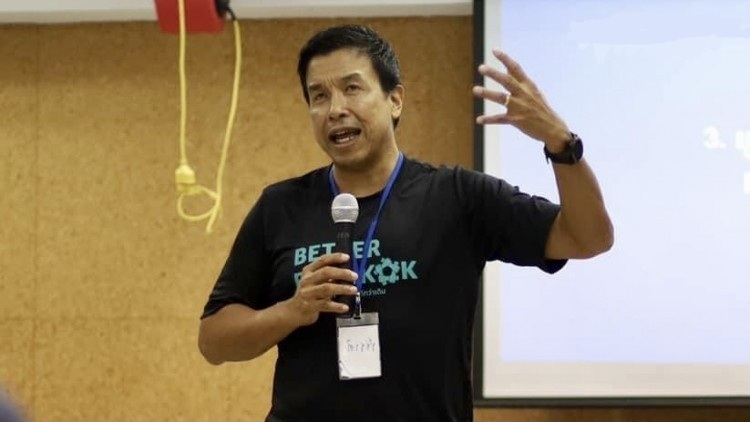
Former transport minister and ex-Pheu Thai executive Chatchart Sitthiphan has ruled out returning to his former political party or giving up his bid for Bangkok governor.
In a Facebook post on Tuesday, Chatchart said: “The rumours that I will go back to work with Pheu Thai, or give up my candidacy for Bangkok governor to make way for another candidate, are not true.”
Chatchart had quit the party to run as an independent candidate in the Bangkok gubernatorial election as current governor Aswin Kwanmuang’s term expires in October, although the new election date is yet to be announced.
“I am still working as an independent candidate and have been discussing with local communities to address their problems. My latest visit was to the Prawet district,” he added.
Chatchart served as transport minister in the Yingluck Shinawatra government and was also an assistant dean of Chulalongkorn University.
Last week many top Pheu Thai executives, including party leader Sompong Amornwiwat, stepped down from their executive positions. Their move bred speculation among some observers of a secret political deal to facilitate the return of former prime ministers Thaksin Shinawatra and Yingluck Shinawatra who are living abroad in exile.
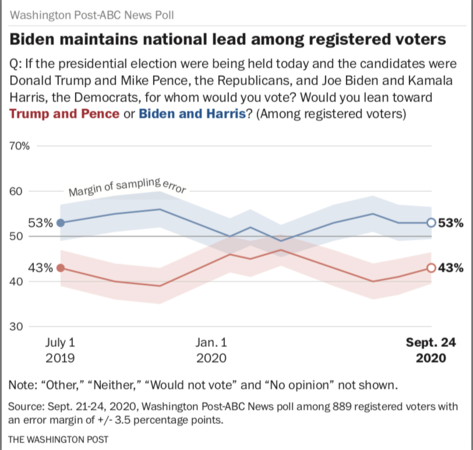
Biden maintains national lead among registered voters Photo by: The Washington Post — The Washington Post File Size: 0.96 Mb
By The Washington Post · Dan Balz, Emily Guskin · NATIONAL, POLITICS After two political conventions, the continuing spread of the novel coronavirus, economic dislocation, more racial upheaval and a coming battle over a Supreme Court vacancy, the race for the White House remains stable, with former vice president Joe Biden holding a steady advantage over President Donald Trump, according to a Washington Post-ABC News poll.
Biden and vice-presidential nominee Sen. Kamala Harris of California lead Trump and Vice President Mike Pence by 53% to 43% among registered voters, statistically unchanged from the 12-point margin in a poll taken in August just before Democrats and Republicans held their conventions. Biden and Harris also have a 10-point advantage among likely voters, 54% to 44%.
Majorities of Biden and Trump voters think it would be a national crisis if other candidate wins
Biden’s lead narrows to six points among likely voters (49% to 43%) and among registered voters (47% to 41%) when Libertarian Party nominee Jo Jorgensen and Green Party nominee Howie Hawkins are included as response options in the survey.
A sizable gender gap continues to fuel Biden’s lead, with women making the difference in the current state of the race. Trump has a lead of 55% to 42% among male likely voters, but Biden has an even larger 65% to 34% advantage among female likely voters. Trump’s lead among men is about the same as his margin over Hillary Clinton in 2016, but Biden’s lead among women is more than twice as large as Clinton’s was then.
Biden’s current overall lead is slightly larger than The Post average of national polls over the past few weeks, which finds Biden leading by eight points nationally. National polling reflects only the potential popular vote for president and is not a direct indicator of the state-by-state competition for electoral votes that determines the winner. Further complicating any comparison, the Libertarian candidate will be on all state ballots but the Green candidatewill not.
Post-ABC polls released during the week found very tight races in Florida and Arizona, while polls the previous week found Biden with a slight lead in Wisconsin and a large lead in Minnesota. Averages of battleground-state polls generally find a closer race than in the country overall, a sign of Trump’s continued competitiveness.
Interest in the election has climbed to near-record levels, with nearly 6 in 10 registered voters saying they are following the election “very closely,” higher than any in other presidential election at this time in the cycle dating back to 2000.
The number who say they are certain to vote also appears to be marginally higher than in previous elections. At present, 89% of registered voters say they are certain to vote between now and Election Day, Nov. 3, up from 83% at this point in 2016. A bare majority (52%) of registered voters say they will vote either by mail or early, with 45% saying they plan to vote on Election Day.
The president has repeatedly sought to question the reliability of mail ballots, asserting without evidence that voting by mail is subject to widespread fraud or foreign interference. (States that already use mail voting report minuscule incidents of fraud). In recent days, Trump has refused to say he will accept the outcome of the election and guarantee a peaceful transfer of power if he loses, citing mail voting.
Enthusiasm among Trump supporters is higher than among Biden supporters, a pattern that has been seen throughout this election year. Among registered voters, 65% of those currently favoring Trump say they are very enthusiastic about that support. Among those backing Biden, 47% of registered voters say they are very enthusiastic about their support for him.
Despite lacking fervor for Biden, the former vice president’s supporters are intensely concerned about Trump winning a second term, with a 70% majority of Biden voters saying Trump’s reelection would be “a crisis for the country.” By comparison, 59% of Trump voters say a Biden victory by would result in such a crisis. Among voters who support Biden but are “somewhat enthusiastic” or less about his candidacy, 56% say a Trump victory would mark a crisis.
The poll was conducted after the death of Supreme Court Justice Ruth Bader Ginsburg but before Trump’s Saturday nomination of federal Judge Amy Coney Barrett to the high court. But it finds that 64% of Biden supporters say the court vacancy makes it “more important” that he win the election, compared with 37% of Trump supporters who say the same about their candidate. Among all adults, Biden holds an eight-point advantage over Trump on whom Americans trust to handle the Supreme Court appointment.
Attitudes about the candidates, especially the president, have been fixed for several months. Today there are relatively few voters who say they could change their minds before they vote, with more than 9 of 10 Trump and Biden supporters saying they would not consider voting for the other major-party candidate.
The public continues to give the president negative marks overall for his handling of the presidency, with 44% of adults overall saying they approve and 53% saying they disapprove – and with 46% saying they strongly disapprove. His approval rating has bounced back from 39% in July now to about where he stood in May.
Trump’s one bright spot comes on the economy, where 52% of Americans rate his job performance positively and 45% rate it negatively.
The new poll also shows improvement in people’s perceptions of the state of the economy, with 40% now rating it as either “good” or “excellent” and 59% calling it either “not so good” or “poor.” While the assessment is still net negative, that represents an improvement over an August measure, when 31% gave the economy a positive rating and 68% rated it negatively.
Countering the more positive assessment of the economy and of Trump’s handling of it is the public’s appraisal of how he has dealt with the pandemic. Forty percent approve of how he has handled the health crisis and 58% disapprove.
Trump has tried repeatedly to change public perceptions, both about the state of the pandemic, often in conflict with medical and scientific experts, and how he has dealt with it. Despite those efforts, there has been no change in the public’s judgment of him over the past three monthly surveys.
Biden is seen as more trusted than Trump to deal with the coronavirus, by 53% to 41% among registered voters, and to deal with the overall issue of health care, by 54% to 40%.
Trump has long promised his own health-care plan and recently said he would take steps by executive action on that front, including assuring coverage for people with preexisting conditions. But that provision is already included in the Affordable Care Act, which the administration and many Republican state attorneys general are asking the courts to dismantle, and his executive order is not binding. The Supreme Court has scheduled oral arguments on the law on Nov. 10, one week after the election.
Trump and Biden are rated about equally on who is more trusted to deal with the economy, which was decimated by the pandemic and, while showing some signs of recovery, could remain weakened for a considerable time, according to economic forecasts. In the poll, 48% of voters trust Trump more compared with 47% who say they trust Biden more.
Biden is more trusted to deal with another set of issues in focus this election year: racial injustice, policing in Black communities and the violence that has accompanied otherwise peaceful protests over the shooting of unarmed African Americans by police. By 55% to 39%, voters trust Biden to handle equal treatment of racial groups more than Trump.
Trump has focused on the violence that has erupted in some cities, making law and order a theme of his convention and some of his campaign rallies. But by 51% to 44%, Biden is slightly more trusted to deal with crime and safety.
Separately, 55% of registered voters say they support recent protests against police treatment of African Americans, with 42% opposed.
Race, gender and educational differences define the major divisions between Trump’s and Biden’s coalitions and also point to shifts in sentiment compared with 2016 that put the president in a difficult position politically.
A principal challenge for Trump is replicating his 2016 support among White voters, who make up roughly 7 in 10 voters nationwide and larger percentages in the Upper Midwest states that sealed his 2016 victory.
Overall, the Post-ABC poll finds Trump with a narrow six-point edge among White likely voters (52% to 46%), smaller than his 16-point lead in a Post-ABC poll at this point in 2016 and his 15-point advantage in a Pew survey of confirmed voters that fall.
Trump edges Biden by eight points among White men with college degrees and leads by a wide 39 points among White men who do not have degrees. Biden leads among White women with college degrees by 41 points and is almost even among White women without degrees. In 2016, Clinton lost White women without college degrees by 23 points, according to the Pew survey of confirmed voters.
Among all non-White voters, Biden leads by 53 points, 76% to 23%. The sample sizes among Black, Latino or Asian American voters were not large enough to break out separately any of the groups among likely voters, nor Latino or Asian American registered voters. Among Black registered voters, Biden leads Trump by 88% to 9%, similar to Clinton’s margin but slightly lower than the support Barack Obama received in his 2008 and 2012 campaigns.
The educational divide among voters helped seal Trump’s victory four years ago. Clinton won college-graduate voters overall by 21 points in Pew’s survey of confirmed voters, and she lost those without a college education by seven points. Today, Biden is ahead among college-educated voters overall by 30 points and narrowly behind among those without college degrees, by six points.
Biden and Trump are roughly even in the battle for crucial suburban voters, with 52 percent supporting Biden to 47% for Trump. Again, Biden relies heavily on female voters. Suburban men back Trump by 60% to 38%, while suburban women favor Biden by an even larger 66 percent to 34%.
One group particularly likely to say a Trump victory would result in a crisis for the country is female voters supporting Biden, with 78% expressing that view, compared with 58% of men.
Another group whose allegiance today appears different than it was four years ago is voters 65 and older. Biden receives 52% support to Trump’s 47% among this group. Trump carried those voters over Clinton by between seven and nine points, according to some surveys. Biden supporters 65 and older are also significantly more likely to say it would be a crisis if Trump won reelection, with 79% of them holding that view, compared with smaller shares of younger Biden supporters.
The Washington Post-ABC News poll was conducted by telephone Monday through Thursday among a random national sample of 1,008 U.S. adults, including 889 registered voters and 739 likely voters. Three-quarters of the sample were reached on cellphones and the remaining quarter on landlines. Results among adults and registered voters have a margin of sampling error of plus or minus 3.5 percentage points; the error margin is plus or minus four points among the sample of likely voters. Sample sizes are larger among subgroups.
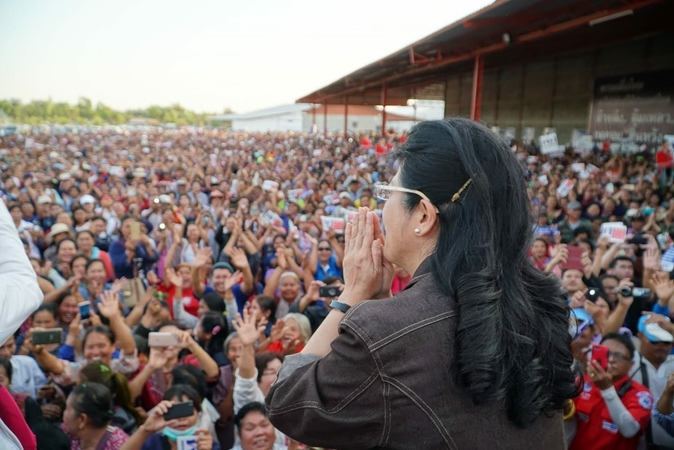
In a surprise development, Sudarat Keyuraphan has quit as chief strategist of Pheu Thai Party.
In a Facebook post on Friday evening, she said: “Although I am no longer the chief strategist, I am still a party member who is committed to working for the people and pushing for the amendment of the Constitution. I would like to thank all people who have been supporting the party and me all these years, and thank other members of the strategic committee for their hard work and sacrifice.”
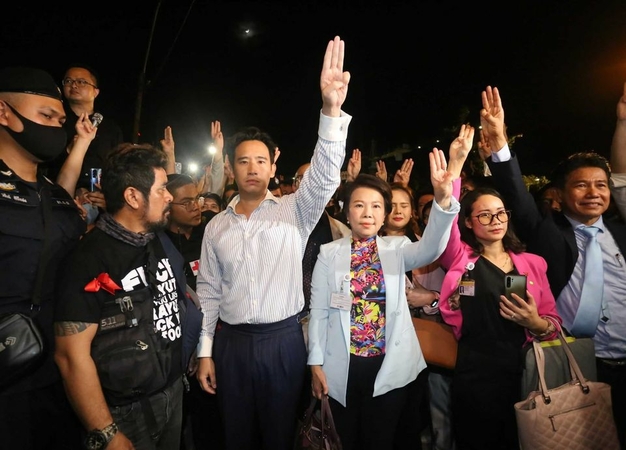
On the same day, four other members of Pheu Thai’s strategic committee — Kittiratt Na Ranong, Watana Muangsook, Phongthep Thepkanjana and Bhokin Balakul — also posted on their Facebook pages that they had quit the committee. Party deputy secretary-general Jirayu Huangsub posted on FB that he too had resigned from his position.
A news source revealed that signs of disagreement within the party were visible since last week when MPs from the northeastern provinces refused to attend the party’s meeting because they were discontented with the current policies proposed by the strategic committee and the leadership of party chief Sompong Amornwiwat.
Move Forward Party has apologised to the people for not being able to do more for amendment of the 2017 Constitution after Parliament voted on Thursday (September 24) to delay the charter amendment process.
Parliament voted to delay a decision on six motions for charter change. Instead, a committee was set up to study the motions for Constitution amendments ahead of a vote on the motions in a month.
Opposition Pheu Thai and Move Forward MPs walked out in protest after MPs and senators voted 431 to 255 to postpone the amendment vote and then 432-255 to set up the committee.
In a Facebook post shortly after the session, the party said it was sorry that it could not push for changes to the Constitution.
“We are deeply disappointed with the senators and the government who, instead of providing a democratic solution, just bought time to stay in power for another eight months,” it said. “We, however, would like to thank all support from the people who wish to see changes in the constitution.
“We will never lose hope in solving the country’s problems through the Parliament system. In the next Parliament debate, we will be even more vigorous, firm and united,” it promised.
The committee set up to examine the proposed amendments will consist of 45 members – 15 senators and 30 MPs from the opposition and ruling coalition parties. Pheu Thai and Move Forward refused to nominate members from their parties.

 Kulit Sombatsiri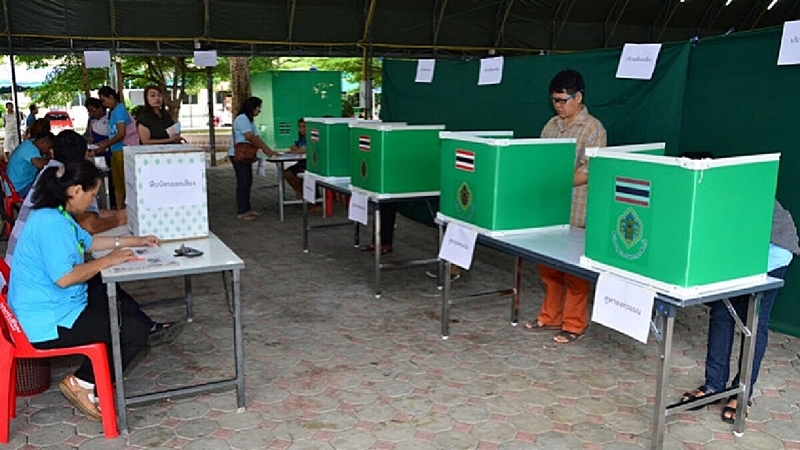
 Jarungvith Phumma
  File Photo: Chuan Leekpai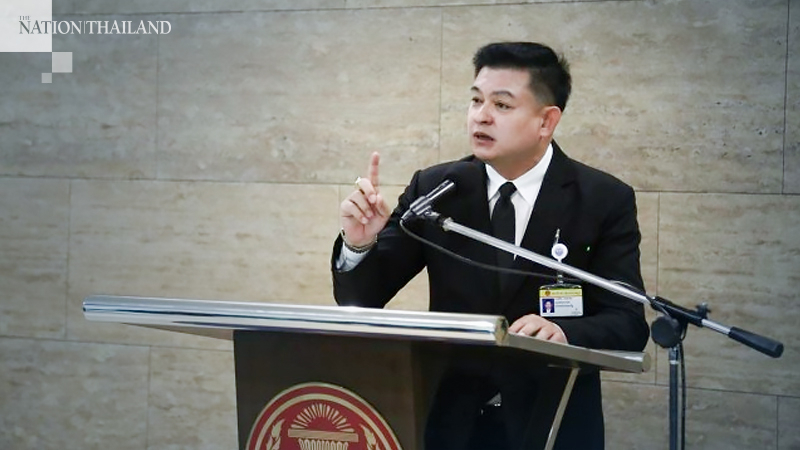



 SootinClaimon.Com