Tourists flock to Bang Saen Beach to see rare clear water

ศาสตร์เกษตรดินปุ๋ย : ขอบคุณแหล่งข้อมูล : หนังสือพิมพ์ The Nation

https://www.nationthailand.com/travel/30378726?utm_source=category&utm_medium=internal_referral

Tourists flock to Bang Saen Beach to see rare clear water

Nov 25. 2019
By The Nation

2,241 Viewed

Many tourists swarmed Bang Saen beach on Sunday after a photo of a clean beach and clear water was posted on social media. The beach became crowded again after a long silence.

When winter arrives, breeze normally pushes garbage away from the shore, making the water clear until the beginning of the next year.

A tourist said she had never seen such a clean beach and clear sea at Bang Saen before, while a Somtam salad vendor said she hoped the sea stayed clear like this, as all her spicy salad was sold out thanks to the tourists who appeared in droves.

Meanwhile in Songkla on the same day in the afternoon, Governor Jaruwat Kliangklao led military officers, administrative agents and locals in 20 boats to collect garbage from communities around Songkhla Lake.

“The amount of garbage in the area is impossible to collect in a day,” Jaruwat said. “However, if government officers cannot completely get rid of garbage on the island and do not rush to raise awareness among the people living near the lake, it will soon overflow with waste, which will later become a crisis as the waste tends to increase day by day.”

Monkey see, monkey do, monkey eat

ศาสตร์เกษตรดินปุ๋ย : ขอบคุณแหล่งข้อมูล : หนังสือพิมพ์ The Nation

https://www.nationthailand.com/travel/30378723?utm_source=category&utm_medium=internal_referral

Monkey see, monkey do, monkey eat

Nov 25. 2019
By The Nation

1,867 Viewed

Monkeys and residents of Lopburi Province celebrated the 31st Monkey Party Festival held Sunday (November 24) at the iconic archaeological site Phra Prang Sam Yot with a buffet of fruits and sweets and fancy parades.

Opening the event, provincial governor Yongyuth Kitwatananusont jokingly issued an official invitation to the monkeys to join the celebration – not that they needed much encouragement!

Hundreds of Thai and foreign tourists flocked to see the simian free for all, laughing and snapping photos as the monkeys chowed down.

Phra Prang Sam Yot is one of the most famous tourist attractions of Lopburi province thanks to its monkey residents, who draw visitors and generate revenue for the locals.

Traditional ways, sustainable tourism

ศาสตร์เกษตรดินปุ๋ย : ขอบคุณแหล่งข้อมูล : หนังสือพิมพ์ The Nation

https://www.nationthailand.com/travel/30378677?utm_source=category&utm_medium=internal_referral

Traditional ways, sustainable tourism

Nov 23. 2019
Photo credit: Dasta

Photo credit: Dasta
By The Nation

2,036 Viewed

The Designated Areas for Sustainable Tourism Administration (Dasta) has prepared three special routes and activities in Pattaya and the surrounding area to present to participants of the PATA Destination Marketing Forum 2019 , which it is hosting on November 28–29. The aim, said Dasta director-general, Taweepong Wichaidit, is to offer them an idea of local tourism packages and share knowledge of sustainable tourism management with the world. The three are as follows:

Photo credit: Dasta

Photo credit: Dasta

1. Tourism routes following the royal initiative project: Siricharoenwat Forest and the ancient Chinese Chakngeaw market. The Siricharoenwat Forest Project is a natural learning source and tourist attraction. Communities in area use the royal speech of His Majesty the King as a guideline and have developed activities including making EM Balls that help in water treatment and fertilizing lotus, trekking along nature study paths, building check dams and making artificial licks. Visitors can also take in Chinese Chakngeaw market, an old site that was once a flourishing business district.

Photo credit: Dasta

Photo credit: Dasta

Photo credit: Dasta

Photo credit: Dasta

Photo credit: Dasta

Photo credit: Dasta

2. Coconut route with Takhiantia community: The people here have chosen to preserve the traditional lives of their ancestors and the coconut plantations they so proudly raised. With help from Dasta, the community is now using tourism as a tool for reviving the traditional lifestyle. Things to do include biking to the coconut plantations, singing the traditional song of Lum Tad, releasing hornets to eliminate pests (black-headed worms), peeling coconuts with a spear and tasting coconut coffee.

Photo credit: Dasta

Photo credit: Dasta

Photo credit: Dasta

Photo credit: Dasta

Photo credit: Dasta

Photo credit: Dasta

3. Local tourism routes: the Thai way of life in Nong Prue and Nong Pla Lai. Here too, the communities are proud to maintain their traditions and to prove that even though modern tourism in Pattaya is on the increase, it has no effect on the way of life of the people here.

Photo credit: Dasta

Photo credit: Dasta

Nong Prue is an ancient community that has been in the area for more than 200 years and is home to the art school Ban Khon Nong Prue, which trains the children and young in khon (traditional masked dance). Visitors can learn basic khon movements and dress up in the traditional costumes.

Photo credit: Dasta

Photo credit: Dasta

Photo credit: Dasta

Photo credit: Dasta

All 3 routes will be open for interested PATA members in groups of 50. Participants will also get to learn about tourism management at the community level.

Survey underway as BMA eyes canal tourism

ศาสตร์เกษตรดินปุ๋ย : ขอบคุณแหล่งข้อมูล : หนังสือพิมพ์ The Nation

https://www.nationthailand.com/travel/30378611?utm_source=category&utm_medium=internal_referral

Survey underway as BMA eyes canal tourism

Nov 23. 2019
By The Nation

1,246 Viewed

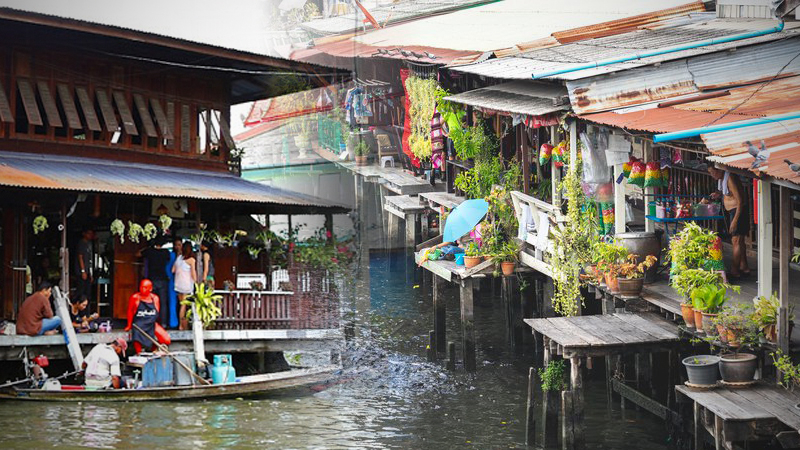
The Culture, Sports and Tourism Department, under Bangkok Metropolitan Administration (BMA), is surveying the Khlong Prawet Burirom canal, followed by the Khlong Bang Luang canal next year, in pursuit of new tourist attractions, said Somboon Homnan, the department’s deputy director-general, on Tuesday (November 19).

He cited an published article suggesting that Thailand should promote tourism along some of the 1,825 canals in the country as international tourists are keen on taking boat trips to see the traditional Thai ways of living.

“We are conducting a survey of Khlong Prawet Burirom canal and in 2020, we will turn to the Khlong Bang Luang canal, where many floating markets are located. Tourism routes will be developed in joint efforts between related authorities and the local communities.”

Meanwhile, the Traffic and Transportation Department and Krungthep Thanakom Co (KT), have organised free boat trips from Bang Wa Pier to Wat Kamphaeng Bang Chak Pier near Khlong Bang Luang Market on weekends and public holidays, from 8am to 6pm.

In addition, free boat trips will alos be offered from Bang Wa Pier to piers along the Chao Phraya River: Wat Intharam, Saphan Phut, Rachinee, and Tha Chang; starting from 6am to 9am (every 30 minutes) and from 9am to 7pm (every hour).

Sunflowers boost Suphan Buri tourism

ศาสตร์เกษตรดินปุ๋ย : ขอบคุณแหล่งข้อมูล : หนังสือพิมพ์ The Nation

https://www.nationthailand.com/travel/30378613?utm_source=category&utm_medium=internal_referral

Sunflowers boost Suphan Buri tourism

Nov 21. 2019
By The Nation

1,114 Viewed

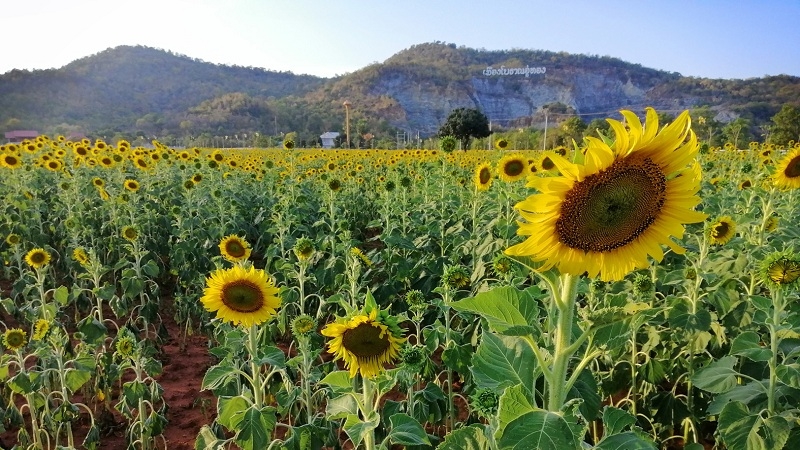
Tourists are flocking to the field of blossoming sunflowers in Rai Wannakit Sampan, U Thong District, Suphan Buri, turning it into a new landmark of the province.

There is no admission fee to the 40-rai field, opening from 8 am to 6pm.

Nearby is the Suvarnabhumi Village which hosts the annual festival of ethnic groups.


Related Story:

Sunny blooms draw fans to Lopburi, Mae Hong Son

Smaller cities urged to cash in on silk

ศาสตร์เกษตรดินปุ๋ย : ขอบคุณแหล่งข้อมูล : หนังสือพิมพ์ The Nation

https://www.nationthailand.com/travel/30378605?utm_source=category&utm_medium=internal_referral

Smaller cities urged to cash in on silk

Nov 21. 2019
By THE NATION

1,521 Viewed

Residents of Sakhon Nakhon and Kalasin provinces this week got to see how Thai silk products could help promote local tourism.

Lalida Chiranantaprawat, deputy director general of the Department of Business Development, said an event called “Silk Road to Secondary City” was held in both locales this past Monday through Wednesday (November 18-20).

“We want to stimulate sales of products and services related to the silk trade in Thailand’s smaller cities,” she said.

The department arranged a trek to the Northeast for reporters and bloggers who specialise in travel and lifestyle and could, Lalida said, “share their impressions with their readers, letting people see the value of silk products”.

“It will get more people buying silk products in the secondary cities, which will strengthen the grass-roots economy.”

It’s also important to get more young people to appreciate the Thai silk that was so beloved by their elders and to wear and use it more in their daily lives.

“We showed how silk attire can be worn in contemporary ways,” Lalida said.

Local producers were encouraged to develop products that meet consumer demand, while descendants of traditional weavers were urged to preserve their family knowledge.

The road trip also featured visits to Wat Phra That Choeng Chum and Wat Tham Pha Daen, villages celebrated for producing silk goods, the Indigo Dye Silk Group at Khok Si Suphan and the Kramsakon silk shop.

“In Kalasin we toured the Sirindhorn Museum and its Phu Kum Khao Dinosaur Research Centre,” Lalida said. “We also visited the weavers at Ban Nong Yuang Kham and the group making mudmee phu fabric at Ban Sung Noen.”

Lake of red lotus in Phayao beckons tourists

ศาสตร์เกษตรดินปุ๋ย : ขอบคุณแหล่งข้อมูล : หนังสือพิมพ์ The Nation

https://www.nationthailand.com/travel/30378505?utm_source=category&utm_medium=internal_referral

Lake of red lotus in Phayao beckons tourists

Nov 19. 2019
By The Nation

2,489 Viewed

Red lotus has begun blooming beautifully on 100 rai of Ing Wang lake in Phayao.

The lotus, which had failed to blossom for years due to drought, has now unexpectedly bloomed, lending Phayao a lively, picturesque look again.

President of Phayao community tourism development Somboon Buates said locals closed the area to tourists for decades, but have now opened it again “for conservation tourism”.

The lotus usually blooms every year on 1,000 rai. However, in 2016, Phayao faced severe drought and the lake dried up. Fortunately, the last few months saw a lot of rain, which filled the lake.

The red lotus meanwhile continues to expand.

“The best time for lotus watching is in the morning,” Somboon said.

Locals have prepared boats to take tourists around the lake.

Apart from the lotus, visitors can also witness traditional fishery.

The red lotus will continue to bloom until the end of the year.

Cool outings: Follow the birdsong to Mae Wong Park

ศาสตร์เกษตรดินปุ๋ย : ขอบคุณแหล่งข้อมูล : หนังสือพิมพ์ The Nation

https://www.nationthailand.com/travel/30378429?utm_source=category&utm_medium=internal_referral

Cool outings: Follow the birdsong to Mae Wong Park

Nov 17. 2019
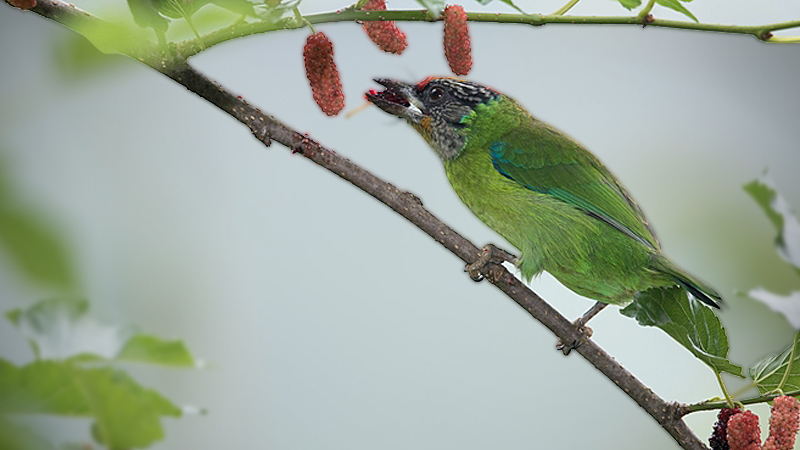
Golden throated Barbet

Golden throated Barbet
By The Nation

2,119 Viewed

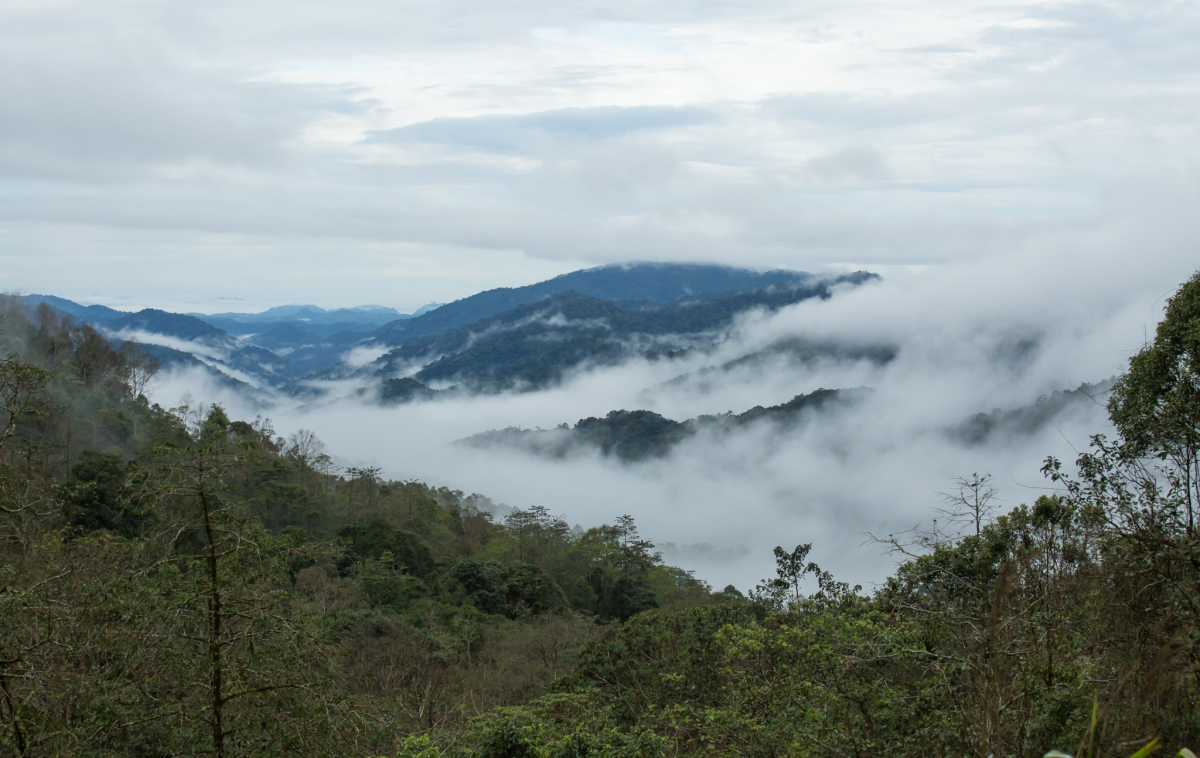
A steep drop in the temperature is refreshing for more than just Thailand’s human inhabitants – wildlife perks up too and the Kingdom becomes a winter rendezvous point for hundreds of species of migratory birds

Veteran wildlife photographer Artid Nima recommends Mae Wong National Park as a great place to observe the birds and other animals in their full glory at this time of year.

Local Lineated Barbet

Local Lineated Barbet

Straddling Mae Wong and Mae Poen districts in Nakhon Sawan and Pang Sila Thong district in Kamphaeng Phet, it became Thailand’s 55th national park in September 1987.

The park has a large area to accommodate campers as well as nature trails and offers activities such as rafting, cycling and guided bird watching.

Burmese yuhina

Burmese yuhina

Rusty naped Pitta

Rusty naped Pitta

White crowned Forktail

White crowned Forktail

Silver eared Mesia

Silver eared Mesia

Burmese Peacock-Pheasant

Burmese Peacock-Pheasant

Aiming far back: Preserving the ancient art of Khmer archery

ศาสตร์เกษตรดินปุ๋ย : ขอบคุณแหล่งข้อมูล : หนังสือพิมพ์ The Nation

https://www.nationthailand.com/travel/30378409?utm_source=category&utm_medium=internal_referral

Aiming far back: Preserving the ancient art of Khmer archery

Nov 16. 2019
Dressed as 9th century Angkor Empire warriors, six performers are led by a commander waving a red flag. Pointing their arrows at the target, they show the eight steps of traditional archery by following their commander’s orders. Photo credit: Hong Menea

Dressed as 9th century Angkor Empire warriors, six performers are led by a commander waving a red flag. Pointing their arrows at the target, they show the eight steps of traditional archery by following their commander’s orders. Photo credit: Hong Menea
By Soung Sovanny
The Phnom Penh Post

1,852 Viewed

Traditional and modern sets of bows and arrows are laid on a long table in the Royal Archery Club, established in Siem Reap town’s Prasat Bakong District, where visitors are introduced to the traditional form of Khmer archery or its modern equivalent.

Dressed as 9th century Angkor Empire warriors, six performers are led by a commander waving a red flag accompanied by a royal adviser (Hindu priest).

To commemorate the ancestors, the armies begin by saluting three times to the ground and waiting for a horn signal from the royal adviser before taking the bows and arrows off the table to the ‘battlefield’.

Pointing their arrows at the target, they show the eight steps of traditional archery by following their commander’s orders.

The activities conducted at the Royal Archery Club’s soft opening ceremony earlier this year were a performance of what Khmer Empire troops practised before going out for battle.

Royal Archery Club founder Sa Dina told The Post: “We opened to the public about eight months ago after developing the 5ha plot of empty land by digging fish ponds and clearing land.”

Located in Steung village about 5km from Bakorng temple and 24km from Siem Reap town, the Royal Archery Club is becoming an ancient village in the “land of Gods”.

“We studied Siem Reap’s geography, and the area is a former garrison. If we think about Siem Reap’s history, we can imagine the glorious time when we were a great empire.

“We had an idea to create a garrison-like village in the area which was an ancient Khmer reservoir in the 9th century,” said Dina, 33.

Sreiny Pesey, one of the visitors, arrived in the shooting hall when a big group of visitors had just completed their session. She had heard of the archery club and was interested to learn.

“I am interested in this place as it offers a session on our traditional Khmer archery and I have never touched this ancient weapon before.

“So I just want to try and see if he organised the place like our ancestors did,” said Pesey, who moved from Phnom Penh to live in Siem Reap.

She added that she loved the fresh environment and promised that she would come back when the military camp was completely constructed.

“It is a fun game in which I can learn not only shooting arrows from different distances with two models of bow but also witness the traditional methods ancient armies practised in the field,” said Pesey, 32, who admitted she found archery difficult to pick up on her first go.

Visitors can choose a traditional Khmer bow that was used in ancient times to kill enemies or a modern one that is used in official sporting competitions. Photo credit: Hong Menea

Visitors can choose a traditional Khmer bow that was used in ancient times to kill enemies or a modern one that is used in official sporting competitions. Photo credit: Hong Menea

Royal Archery Club manager Til Channlin documented the origin of traditional Khmer archery from various sources and studied the posture and techniques used in each form of archery.

One performer, who wore a white robe covered with accessories to play the role of a priest, said: “I researched archery from elders, museums and temple walls. The most information we can gain is from temples, where pictures a shown of archers, the shooting stance, shooting technique and all aspects of the weapon.

“Archery features on the walls of temples built during the reign of Suryavarman II. But we also found depictions at the Baphuon and Banteay Srey temples, meaning that Khmer archery existed earlier than that,” said Channlin.

The passionate researcher said that it showed the strength of traditional Khmer archery and was a way to commemorate the Khmer people who built the territory and temples for later generations.

More importantly, he said, he wanted to show locals and other nationalities about Khmer archery.

“Regarding the shooting stance, I found on the walls of Angkor Wat about 32 gestures. Today we practise only eight at the Royal Archery Club, but we plan to increase that to all 32,” said Channlin.

The Royal Archery Club has more to offer other than archery. Visitors can have a leisurely walk through traditional villages with markets, or have a meal at the restaurant.

Dina is also building a library in the vicinity of the archery club.

“In our planned library, we have some collections of photos, videos, geographical information and tourism sites in Cambodia for all visitors to learn more about our heritage,” said Dina, who is also the founder of Cambodia Amazing Trip Planner.

“We also organise our bungalows according to the military ranks in 9th century style: commander, deputy commander, military unit chief and military personnel.

“In the restaurant, our guests can experience cuisines with natural ingredients and we title the dishes appropriately with names such as Military Camp Roast Chicken and Military Camp Roast Fish and eat in the way the commanders did in the past.”

The bungalows at Royal Archery Club will open to the public as soon as construction is complete.

Dina has already set the price range: Commander and Deputy Commander Bungalows ($35), Military Unit Chief ($25), Military Bungalow ($15) and a camping site that can accommodate up to 250 tents at $10 each.

The learning session lasts 90 minutes with locals paying $5.00 and foreigners $9.00 per person. The traditional Khmer archery performers assist visitors in holding the bow and placing the arrow properly so they do not hurt themselves.

Visitors can choose traditional Khmer archery that was used in ancient times to kill enemies or modern equipment that is used in official sporting competitions.

“For our traditional archery, the bow is made from bamboo, rattan and talipot palm and could be used to hunt animals. Some visitors think that the traditional form of archery is harder to learn,” said Channlin.

For more information, visit their website: royalarcheryclub.com or Facebook: @royalarcheryclub.

Overtourism ruffles feathers of Japanese locals

ศาสตร์เกษตรดินปุ๋ย : ขอบคุณแหล่งข้อมูล : หนังสือพิมพ์ The Nation

https://www.nationthailand.com/travel/30378310?utm_source=category&utm_medium=internal_referral

Overtourism ruffles feathers of Japanese locals

Nov 13. 2019
The Great Buddha of Kamakura, a major tourist attraction in Kanagawa prefecture

The Great Buddha of Kamakura, a major tourist attraction in Kanagawa prefecture
By The Japan News
Asia News Network
Tokyo

1,512 Viewed

A surge in foreign visitors and overtourism are increasingly causing problems for local Japanese residents.

In Hokkaido, there have been complaints about foreign tourists trespassing on agricultural land, and many communities have had to deal with problems such as harmful behaviour, littering and severe traffic jams. Local governments and residents are struggling to handle the situation.

“If pathogens or pests stuck to people’s shoes are brought into the fields, I can’t calculate the damage it would cause to crops,” said a 35-year-old man who runs a farm in Biei, Hokkaido. More than 2 million people visit Biei each year to see its wide-open, hilly scenery.

About 400 farmers cultivate about 10,000 hectares around the hills that are popular with tourists. Recently, bus guides have been seen leading foreign tourists into fields so they can take better pictures to post on social media. There have also been problems with tourists flying drones without permission.

In June, about 30 incidents were reported to a website the town government and others set up so people could file complaints. Not wanting their fields to be damaged any further, some farmers have reportedly cut down poplar and Japanese larch trees that were popular with picture-taking tourists.

Stakeholders are considering carrying out patrols in Biei and reporting trespassing on agricultural land to the police.

“We want many people to enjoy our beautiful nature, but if farmers’ way of life is threatened we may have to take strong action,” said an official of the Biei Vitalization Association.

In 2018, Japan had 31.19 million foreign visitors, a record high for the sixth year in a row. The government wants the country to be an attractive tourist destination and hopes to reach 40 million foreign tourists by 2020.

However, friction has started to appear between tourists and the communities they visit. In Kyoto, foreign tourists have chased after and stood in front of maiko and geiko performers trying to take their picture, pulled kimono and caused other annoyances.

Since September 30, the city has been calling for better manners via a map app that many foreign tourists use to navigate old ochaya restaurants where maiko and geiko serve customers in the Gion district.

“Tourists who treat private property like a theme park make residents uneasy. We want them to display good manners while experiencing history and culture,” said the head of the city’s tourism MICE promotion office.

Serious traffic jams

Kamakura, Kanagawa prefecture, is visited by about 20 million people per year. On weekends and holidays there are often serious traffic jams around sites such as Tsurugaoka Hachimangu shrine and the Great Buddha of Kamakura.

According to the city, the average speed of vehicles was about 18kph in fiscal 2017. The congestion has delayed ambulances. The city is considering instituting “load pricing” to regulate traffic by charging vehicles to drive on certain roads.

Dazaifu Tenmangu shrine in Fukuoka prefecture has also had its share of problems, with foreign tourists being noisy on the path up to the shrine and littering.

In April, the prefectural government published a “manner comic” on its homepage in English, Korean and other languages, instructing people how to pray at the shrine and to not leave any garbage behind.

Manner survey

The Japan Tourism Agency surveyed 138 municipalities nationwide about problems with tourists’ manners.

The most common answer was “improperly using toilets” at 25.4 per cent, followed by “littering in residential areas and public spaces” at 20.3 per cent and “going into off-limits areas without permission” at 15.9 per cent. Multiple answers were allowed.

The agency is creating videos to instruct foreign tourists on manners, such as how to get on and off trains, and etiquette for taking pictures.

It is also creating a “tourism index” to numerically express the economic effects and negative impacts of tourism on communities, which municipalities could use in their tourism policies.

“Regulating tourist behaviour has its limits. People need to skillfully explain their local nature and culture, and think of ways of asking for cooperation,” said Akiko Kosaka, senior researcher at the Japan Research Institute Ltd.