The race to save a legend

ศาสตร์เกษตรดินปุ๋ย : ขอบคุณแหล่งข้อมูล : หนังสือพิมพ์ The Nation

http://www.nationmultimedia.com/detail/world/30364599

  • Hot-air balloons are a popular way to take in the beauty of the lake, with its vegetable plantations and traditional houses on stilts./AFP
    Hot-air balloons are a popular way to take in the beauty of the lake, with its vegetable plantations and traditional houses on stilts./AFP

The race to save a legend

World February 23, 2019 01:00

By Agence France-Presse
Nyaung Shwe, Myanmar

2,705 Viewed

Inle Lake in Myanmar’s Shan state is a diamond in danger of disappearing

MYANMAR’S FAMED Inle Lake has enchanted tourists for decades with its floating gardens and the graceful leg-rowing style of its fisherman, but experts warn the lake is drying up and urgent action is needed to avoid disaster.

Each year around 200,000 foreigners and one million locals visit Inle – a vast, serene body of water surrounded by verdant hills.

Many criss-cross the lake on small wooden boats to visit stilted villages of the Intha ethnic minority.

A balloon glides gracefully over the lake./AFP

Others glide soundlessly overhead in hot-air balloons as farmers tend to drifting fields of tomatoes below, grown on the water on layers of decomposing vegetation.

Fishermen elegantly propel their boats with their leg curled round a large oar.

But there is a “darker side” to this seemingly bucolic idyll, says Martin Michalon, a researcher into the impact of development on the lake.

As farmers race to produce higher yields, pesticides and fertilisers are slowly poisoning the water.

Inle is also shrinking at an alarming rate.

Traditional houses rise on stilts amid vegetable plantations./AFP

“One century ago, it was six metres deep in rainy season. Now it is never more than three metres deep,” explains Michalon.

Deforestation to clear land for development and slash-and-burn farming is thought to be largely to blame, with silt flowing into the lake from surrounding hillsides.

But water extraction for irrigation and increased numbers of tourists could also be putting undue strain on the water table.

If conditions at the lake deteriorate, then tourism – the area’s most powerful economic driver – will also likely be affected.

The lake has enchanted tourists for decades, but experts warn it’s drying up and urgent action is needed to avoid disaster. /AFP

Urgent action is needed to avoid Inle experiencing this “double disaster” in the next few years, warns Michalon.

Political will to help save Inle Lake has so far not been translated into action.

“There is very loud commitment, but on the ground very little changes,” he adds.

Welcome to drone town

ศาสตร์เกษตรดินปุ๋ย : ขอบคุณแหล่งข้อมูล : หนังสือพิมพ์ The Nation

http://www.nationmultimedia.com/detail/world/30364598

Surrounded by forests, Naka appears to drone enthusiasts who admire the views transmitted to their display screens./Japan NewsYomiuri 
Surrounded by forests, Naka appears to drone enthusiasts who admire the views transmitted to their display screens./Japan NewsYomiuri

Welcome to drone town

World February 23, 2019 01:00

By Wataru Yukita
Japan News Yomiuri

3,174 Viewed

A sparsely populated Japanese locale is catching a buzz as the country’s drone-flying capital

IN A QUIET mountainous area where rushing creeks and chirping birds used to provide the only usual sounds, there is now a mechanical buzz in the air. The source of the sounds is drones – small unmanned aerial vehicles flying over a town in Tokushima Prefecture.

The town, Naka, where the population has steadily been decreasing, is now being promoted as the place “where the largest number of drones fly in Japan” by seeking to turn its very lack of uniqueness to its advantage.

In late November at the B&G Yagai Katsudo Centre, a facility for outdoor activities surrounded by forests and streams within the town, three drones were gracefully flying in the bright blue sky.

They slowly made circles, rapidly ascended and showed off moves as if they were living creatures. Controlling the drones were officials of the municipal government’s drone-promotion office.

Hayato Tawa, 23, deputy chief of the promotion office, made an appeal, saying, “You can fly drones here in unlimited ways without worrying that they will hit buildings or people.”

In April 2016 the town became Japan’s first municipality to establish a section exclusively for drones.

Surrounded by forests, Naka appears to drone enthusiasts who admire the views transmitted to their display screens./Japan NewsYomiuri 


In 2017 the local government made a “drone map” that identified 25 spots suitable for flying drones, including a place that is good for seeing autumn leaves.

After it was released online, the map gained popularity via social media, and about 100 drone fans visited from all over the nation in the course of a year.

Hitomi Adachi, a 47-year-old company employee from Naniwa Ward, Osaka, who visited the town for the first time in September, said it was “different from Osaka. I can freely fly my drone in this great natural setting, and I never get tired of it, even when I fly it for many hours.”

Naka was created in 2005 as a result of a merger of five towns and villages. The population then was 11,596, but it has fallen year by year. The current population is 8,444, with residents age 65 or older making up 48.5 per cent. There are only two convenience stores in the town, which has no famous tourist spots.

Why did a town in such a condition decide to focus on drones?

Naka has a map showing all the coolest places to send a drone aloft. /Japan NewsYomiuri 

Drones attracted public attention in Japan in the wake of an incident in April 2015 in which a drone was found on the rooftop of the Prime Minister’s Office.

At the time, a man who had moved to and was living in the town as a member of local vitalisation cooperators happened to remark, “If it were in this town, a falling drone wouldn’t bother anybody.”

The Civil Aeronautics Law revised in the wake of the incident prohibits drone flights in “densely inhabited districts”.

However, Naka is a town where the population has been decreasing and forests account for 95 per cent of its acreage. Thus, there are few places in the town that are subject to the law’s regulation.

A plan to vitalise the local communities by using drones has proceeded smoothly. The central and prefectural governments have taken note of the efforts.

Naka was then designated a “special drone zone” by the prefectural government. In February 2016 Japan’s first experiment with using drones to deliver parcels to houses, which was organised by the Land, Infrastructure, Transport and Tourism Ministry and other entities, was implemented in the town as a measure to help people facing difficulties shopping.

The town government also invited drone-race events and has held events for residents to experience flying drones.

Initially many of the residents were sceptical about the plan, voicing doubt about how useful drones would be. But now many of the residents have purchased drones and fly them.

Kunishige Takezaki, 79, who has been in the forestry business for many years, became interested in drones in the wake of hands-on events, and purchased one for about 150,000 yen in the summer of 2016.

“I feel as if I myself am flying while I watch the screen of the controller. This town where I have lived for many decades looks different when I see it from the sky.”

Drones are also utilised for the forestry business, the town’s main industry.

Usually, trees cut down in the mountains are transported to nearby roads using wires and ropes. It had been a heavy burden for workers to attach ropes to the trees while climbing up and down mountain slopes.

Now the ropes are attached to drones, which carry the ropes to the working sites, so work can be completed within several minutes.

Hirohito Kamei, 41, president of Kamei Ringyo, a Tokushima-based forestry company, expressed hope, saying, “Drones can wipe away the image that forestry work is too hard and can contribute to securing workers.”

The town has attempted to vitalise its local communities for four years. Although its depopulation problem cannot be solved quickly or easily, the sight of drones hovering in its skies gives the impression that the future holds unlimited possibilities.

Book early, choose your day and save a bundle

ศาสตร์เกษตรดินปุ๋ย : ขอบคุณแหล่งข้อมูล : หนังสือพิมพ์ The Nation

http://www.nationmultimedia.com/detail/world/30364522

Book early, choose your day and save a bundle

World February 21, 2019 16:55

By The Nation

3,322 Viewed

The 2019 Travel Pricing Outlook report, drawing on an analysis of the Airlines Reporting Corporation (ARC) global air and Expedia Group’s lodging-trend data, reveals timing matters when it comes to unlocking travel savings.

 A checklist of ways to save on travel is timely, given ARC’s analysis of airfare pricing trends for the world’s most popular domestic and international routes, which found average ticket prices (ATP) rose around five per cent in 2018. If this trend continues, now may the best time to book 2019 travel.

Overall inbound travel to Thailand increased by more than 10 per cent (from 7,067,955 to 7,836,846) with Hong Kong travellers contributing close to 11 per cent of the overall figure and Singapore and US travellers in second and third place, respectively.

Time-based travel savings tips for Thai travellers as produced by the report include booking three weeks in advance, waiting until the weekend to book flights to unlock fare savings – the best day of the week to book is Sunday to enjoy savings up to 20 per cent. The most expensive day of the week to book your flight is on a Friday, with prices more than five per cent up, but the best day of the week to travel is Friday with savings close to 5 per cent while Sunday is the most expensive day to travel with prices more than 5 per cent.

Friday is also the day when the best hotel deals are snapped up. Unlike airfares, the most expensive day to book a hotel is generally on a Sunday. Another tip is adding a Saturday night to your mid-week trip to save more on airfares inbound to Thailand.

Chuck Thackston, Managing Director of Data Science at ARC says that for around three-quarters of trips, quantifiable savings can be accessed by travellers who extend their weekday trip to include a Saturday night stay.

“The savings opportunities quantified by extending mid-week travel over a weekend is a new and valuable finding for travellers. The industry has talked about ‘bleisure’ for a while now, but we have been able to actually quantify real savings for travellers around this concept. It’s something that people who love travel should really start to incorporate into their travel plans,” he says.

James Marshall of Expedia Group explained: “Finding patterns in data is at the core of what we do. Our algorithms use data science to analyse approximately 19 quadrillion potential flight itineraries and filter them to display the most relevant options for each journey. When it comes to saving on flights, booking early and taking advantage of the other unique ways to save on Expedia, will help people go places for less.”

While travellers might save money by booking a basic fare such as a fare with seat-only, no bag and potentially other limitations, it pays to choose carefully. If bags are added to a basic fare, the total cost of travel almost always exceeds that of other economy fares where checked bags are included in the cost of the ticket.

Choosing between flights-with- and without-stops is also the factor in airfare price.

“We took a deep-dive into direct versus connecting flights to myth-bust the idea that direct flights are always more expensive. Bottom line: They aren’t. Lots of factors come into play when airlines set fares, so the time to connect and other convenience factors need to be considered when making your decision on the best flight for your trip,” says Thackston.

And should travellers delay booking a trip if oil prices rise? The short answer is no. When oil and/or airline fuel prices jump, travellers need not delay booking a trip based on the assumption that airfares will immediately rise. Comparing commodity price and ATP trends over many years shows the days and weeks after a commodity price jump may actually be the most cost-effective window to book flights, as any effect that fluctuation may have on ATPs is more likely to appear over a longer time period.

Destination of deities

ศาสตร์เกษตรดินปุ๋ย : ขอบคุณแหล่งข้อมูล : หนังสือพิมพ์ The Nation

http://www.nationmultimedia.com/detail/thailand/30364600

  • Young pilgrims show their spirit in the sacred fire walking ceremony./Photo by Khob Jai Thailand page
    Young pilgrims show their spirit in the sacred fire walking ceremony./Photo by Khob Jai Thailand page

Destination of deities

Thailand February 23, 2019 01:00

By Pattarawadee Saengmanee
The Nation Weekend

4,945 Viewed

The charming Chinese festival to honour the goddess Lim Ko Niao was held this week in Pattani

WITH THE Chinese New Year celebrations done and dusted for another year, the people of Pattani turned their attention last weekend to the southern city’s annual festival honouring the highly revered goddess Lim Ko Niao.

Young pilgrims show their spirit in the sacred fire walking ceremony.

The festival, which started last Saturday and drew to a close yesterday, saw the Chinese descendants of the town turn the sacred Leng Chu Kiang grounds and Chinatown on Anuro Road into a lively entertainment venue. Thousands of local residents as well as tourists both Thai and from neighbouring Malaysia answered present for the festival, the highlights of which include a sedan-chair procession, the carrying of ancient deities to the river for bathing and walking through fire. On the sidelines, an outdoor theatre offers an interesting programme of cultural shows like Chinese opera, the southern shadow play and a Nora dance to pay homage to the deities while the walking street bustles with vendors selling local delicacies and souvenirs.

“This celebration reflects our identity and the diversity of our history and religious beliefs. Pattani has long been a multicultural community, where Thai Buddhists, Chinese and Muslims have learnt to live together in harmony. The economy is still driven by tourism and this festival is telling the outside world that Pattani is alive and well and different from what is seen on the news,” says assistant professor Noppadol Tippyarat, dean of the faculty of fine and applied arts at Prince of Songkhla University.

The pilgrims continue the procession by swimming across the Pattani River. 

Legend has it that Lim Ko Niao crossed the South China Sea from China to Pattani to bring her brother back home to be with their dying mother. The young man, Lim To Kiam, declined her request, preferring to stay in Pattani because he had married a daughter of Phraya Tani and converted to Islam. Lim Ko Niao was frustrated by her brother’s refusal and ended up hanging herself from a cashew nut tree. The villagers later carved a wooden statue and built a shrine next to Masjid Kerisik to remember her life.

In 1879, Luang Cheen Kananurak refurbished the Leng Chu Kiang Shrine and moved Chao Mae Lim Ko Niao to her new home. The shrine was originally built to honour the goddess medical doctor known as Zhou Shi Gong.

On the 14th day of the first month according to the Chinese calendar, the divine rituals begin with the goddess Lim Ko Niao procession. Only men are allowed to carry the red wood palanquin enshrined with an original figure of the goddess and her presence is supposed to bring residents fortune and prosperity.

The highlight is a grand procession of Chinese deities on the full moon of the first month, 15 days after the Chinese New Year. At midnight, Chinese men, young and old, gather at the Leng Chu Kiang Shrine and perform a ceremony to ask the goddess when they can start and how to arrange the line.

On 14th day of the first month, the more than 400-year-old statue of the goddess Lim Ko Niao is brought out from the Leng Chu Kiang Shrine and carried around the town. 

Featuring 18 statues of deities in the Leng Chu Kiang Shrine, plus seven others from local residences in the neighbourhood, this year’s procession began at 4.15am and was led by four original and imitation statues of the goddess Medical Doctor and goddess Lim Ko Niao, followed by goddess Tubtim, goddess Tiger, goddess Guan Yin, goddess Guan Yu and the fortune goddess.

“There’s no evidence that allows us to trace the beginning of this celebration. We don’t know when it started or who initiated it, but it has become a beautiful tradition handed down from generation to generation,” says 74-year-old Sathorn Kanjanasim, who serves as a committee member of Leng Chu Kiang Shrine.

“Pattani pioneered the tradition of the holy deity procession and this is now held in both Yala and Narathiwat. The difference here is that we don’t allow a medium to join the ceremony.”

After roaming around the town, the procession reached the Dechanuchit Bridge and the young men showed their respect for the goddesses by carrying all 25 statues across the Pattani River. It was deep and not easy to swim while carrying a statue but the men were cheered on in their task by Muslim villagers standing alongside Thai and Chinese pilgrims.

Late in the afternoon, the visitors moved to the ceremonial ground in front of the Shrine to find the best spot to watch the breathtaking fire walking ceremony. My friend and I climbed up to the roof deck, hoping our vantage point would allow us to capture stunning photos.

 Local residents set up an altar table to welcome the deity procession, while a million firecrackers are burnt to celebrate. 

“We believe that the water brings out the inauspicious elements from the statues when they are soaked in the river and that the fire walking ceremony burns wickedness,” Sathorn explains.

“I’ve been part of the deity procession for 40 years. We need to observe religious precepts for three to nine days before performing a fire walking ceremony to purify our minds.”

Surrounded by red fencing and off limits to women, the fire path is set up with charcoal, rice, coconut leaf stalks, salt and paper talismans. The deity procession continued to the entrance of the ceremonial ground where the hundreds of barefoot men were blessed with holy water before stepping into the fire.

Teerasak Kwansurat decided to take part in the fire walking ceremony when he was 19 at a friend’s invitation.

“I was born in Pattani and I first served as a volunteer for the Leng Chu Kiang Shrine. The fire walking ceremony is a way for a man to prove his maturity,” Teerasak, 32 says.

“After I saw other people walking on fire, I found myself wondering how hot it really was. I decided to find out for myself and prayed to Chao Mae Lim Ko Niao. If I came out of it safely, I would swear off beef for a life. And from the first steps, I never felt the heat of the fire. The streets are hotter. I stay focused on every step and I observe the religious precepts for three to nine days before the ceremony. It’s an individual belief.”

Carriers of the status meet to walk round the ceremonial ground three times while in a meditative state. 

My media friend Chainarong Kitinartintranee also joined the ceremony though he didn’t fare quite so well: he ended up with a burn on his foot.

“Not everyone that can participate in this auspicious ceremony, so I was quick to accept Teerasak’s invitation. I didn’t feel the fire was hot. But I walked on the black charcoal and that’s when I got burnt,” he says.

“At first, I found the palanquin was heavy but the atmosphere gave me power and strength. The senior members encouraged us and urged us to keep focused and everything went smoothly.”

The ceremony wrapped just before 6 when the procession entered the shrine. The statues were dressed in new costumes and jewellery, while the pilgrims offered fruits and joss paper to ask for fortune, success and good health in the Year of the Pig.


FANNING BELIEF

>> The Leng Chu Kiang Shrine is located at 63, Anoru Road, Pattani.

>> Find out more details at http://www.Facebook.com/LimKoNeaw.pn.

So why do we travel?

ศาสตร์เกษตรดินปุ๋ย : ขอบคุณแหล่งข้อมูล : หนังสือพิมพ์ The Nation

http://www.nationmultimedia.com/detail/thailand/30364597

So why do we travel?

Thailand February 23, 2019 01:00

By The Nation

3,322 Viewed

A well-known reservation website looks into our motivations for heading off to parts unknown

SEVENTY EIGHT percent of Thai travellers say their motivation to travel is to “go to places my friends have not been” when they were asked about travel motivation, according to new research conducted by Booking.com.

The survey also reveals how nationality is likely to impact travel style. For most nationalities, the top motivation to travel is straightforward: to get some downtime. Thais are no exception, with 89 per cent of Thai travellers saying that “giving myself time to relax” is one of the reasons why they go on holiday. This makes it the top travel motivation to all nationalities with the exception of the Danish and the French, who cite “being free to act how I feel” as their top motivation to travel.

However, when comparing top travel motivations between nationalities, it is clear that travellers from different corners of the world have different preferences. Thais seem most easily tempted by nostalgia (77 per cent of Thai travellers want to “rediscover past good times”), Chinese and Taiwanese travellers attach relatively high importance to “experiencing a simpler lifestyle (respectively 83 per cent and 76 per cent) and Japanese, German and Hong Kong travellers simply want to “get away from the demands at home”.

Finally, for some travellers, travel is a question of social status: particularly among Indonesians (75 percent), Indians (75 percent), Thais (78 percent), and Filipinos.

Most global disagreement is on the subject of adventure tourism. Russian travellers say they like to spend their off-time “finding thrills and excitement”, while Dutch and German travellers rate this on average the lowest.

For Thai travellers, the top five motivations are “give myself time to relax”, “taking time to mentally unwind”, “being free to act how I feel”, “being physically active”, and “experiences I couldn’t have at home”.

Destinations also vary according to nationality. Most global travellers select destinations based on categories such as “personal safety” and “cleanliness”, but there are plenty of nationalities that prioritise “natural beauty” or “tasty local food”. Top five factors Thai travellers take into considerations when choosing a destination are “personal safety”, “clean”, “tasty local food/cuisine”, “outstanding natural scenery”, and “an exotic atmosphere”.

Travel behaviour is also heavily influenced by what is easy to reach. This may be why Indian travellers make up the majority of Bhutan bookers, Argentinean travellers are the most seen customers in Paraguay and the South Koreans are the biggest fans of Guam. If you look at the countries that Thais travel to relatively often, it is clear that they know how to appreciate their country and the neighbours. The 10 of the most favoured destinations for Thai travellers in 2018 are Thailand, Laos, Myanmar, Singapore, Hong Kong, Cambodia, Japan, Macao, Vietnam and Maldives.

The research was commissioned by Booking.com and independently conducted among a sample of 53,492 respondents across 31 countries from the US, the UK, Spain and France to Australia, India and South Korea. In order to participate in this survey, respondents had to be 18 years of age or older, had to have travelled at least once in the past 12 months and be either the primary decision maker or involved in the decision making of their travel. The survey was taken online and took place between October 16 to November 12, 2018.

The always faithful ferry

ศาสตร์เกษตรดินปุ๋ย : ขอบคุณแหล่งข้อมูล : หนังสือพิมพ์ The Nation

http://www.nationmultimedia.com/detail/thailand/30364480

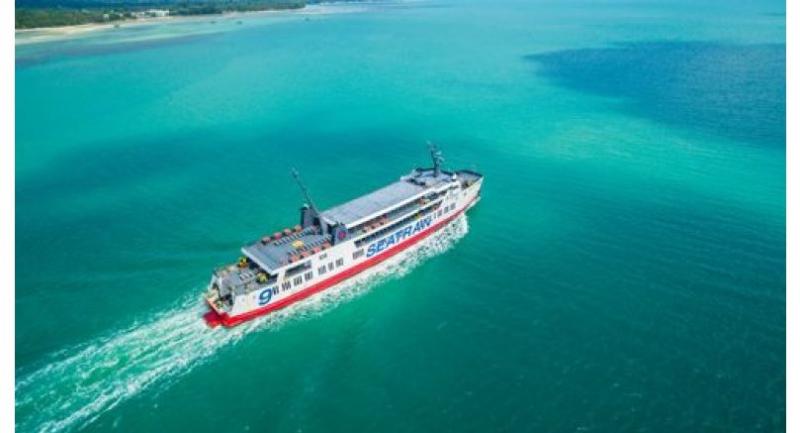
  • One of two major ferryboat services plying Thai waters, Seatran Ferry has been in business for 30 years.
    One of two major ferryboat services plying Thai waters, Seatran Ferry has been in business for 30 years.

The always faithful ferry

Thailand February 22, 2019 01:00

By Kitchana Lersakvanitchakul
THE NATION

3,345 Viewed

Among the Gulf islands, book passage with Seatran, which has been riding the waves for 30 years

It’s not so much fear of flying over open water that puts bums on the seats of ferryboats to get from Surat Thani to Koh Samui and back. It’s all about the bloody convenience and, well sure, the vastly cheaper fare.

Seatran Ferry, which has been in business for 30 years – not counting a brief hiatus that ended in 2002 – gets its passengers from Donsak Pier in Surat Thani to Nathon Pier on Samui Island in 120 minutes. Its boats are chugging back and forth every day from 5am to 7.30pm.


Up to 600 people and 80 vehicles can fit on the ferry. Passengers pay Bt150 each and another Bt400 to Bt470 if they have a vehicle, the rate varying with vehicle size.

Note that you cannot take your car to Samui on a plane – unless you’re very rich or very well connected.


“Ferryboat services are being used more and more by Thai and foreign tourists,” says Seatran general manager Benjawan Tanphaibul.

“There’s a rumour about a new concessionaire who’s going to jump-start the business, but it isn’t easy because of the huge investment and high maintenance costs involved.


“Sustaining our business requires continual improvements in service, with many fine experiences, as well as maintenance. We have our own shipyard with inspections and maintenance checks every two years,” she says.

One of the “fine experiences” Benjawan refers to is an auspicious pre-cruise van drive to Wat Donsak, home to the world’s largest statue of revered monk Luang Phor Thuat (1582-1682).


On boarding the ferry, passengers tend to spread out according to personal preference. Some take up positions at the stern to enjoy the views of the Gulf and the islands. Others grab a seat indoors to read or chat or take a nap. I was in a group holding “frequent traveller” cards and we had our own private space.

Boredom doesn’t seem to be a factor on the journey, not with a coffeeshop, a well-stocked mini-mart and a place to get your feet massaged for 45 minutes for Bt300.


“Our passengers can feel safe because we have all the basic equipment, such as lifejackets and life rafts,” says Benjawan. “We’re registered as a ‘coastal ship’ so we don’t need to have dinghies. It’s only a 34-kilometre crossing, so rescue vessels could reach us quickly if there were an emergency.”

On arrival on Koh Samui, we ride another van up into the hills, to the Fair House Beach Resort & Hotel. There’s a stop along the way at Lad Koh Viewpoint, between Chaweng and Lamai beaches. It offers a wonderful vista, making you appreciate the island’s incredible natural beauty.


A walk down to the beach and a hop across rocks being attacked by tumultuous waves affords more great photos. We make plans to return the next day and catch what promises to be a stunning sunrise.

Waking early the next morning, we’re ready for another ferry ride, this one on the high-speed, 200-passenger Seatran Discovery from Samui’s Bangrak Pier to Koh Phangan. The ride, naturally popular with revellers headed to the monthly full-moon parties on Rin Beach, takes 30 minutes and costs Bt350.


From there you can get to Koh Tao on yet another ferry, but that trip takes up to three hours.

Koh Phangan has another attraction that surely tops a rave party. Than Sadet Waterfall National Park is so named – it means “he visited” – because the visitor was King Rama V, who came in 1889 to see the waterfall. He was impressed enough to have the royal monogram inscribed prominently on a rock, where it still can be seen.


And then there’s the Yang Na Yai tree with a circumference of 14.6 metres a height of 53.5 metres. A sign erected by the Department of Rural Roads in 2013 puts the tree’s age at about 400 years.

Our jaws were still slack when we reached Mae Haad Beach in time for low tide, when it’s possible to walk over to little Koh Ma on sand that’s “ocean floor” the rest of the day.


Apart from the “separated sea”, visitors come for the beautiful white sand of the beach itself, the sunsets viewed over Koh Ma and some of the best snorkelling and diving on Koh Phangan.

Foreigners swimming in the clear waters off the beach could be seen from the Koh Raham Restaurant & Beach Bar perched on a small rocky outcrop, a nice spot for a coffee break.


Back on Samui, time was rewardingly spent at the Phra Yai Market near Nathon Pier and the Bophut Fisherman’s Village, a walking street packed with tourists struggling to decide what to buy and where to eat. There’s a lot on offer.

At Hinta Hinyai you hear the story of an elderly couple killed in a storm during a sea journey. There’s a shrine to Guan Yu, the Chinese god of war who espoused not just bravery and courage but also honesty, loyalty, gratitude and ethical behaviour.


And at the restaurant Wang Sarai there is a to-die-for dish among the Hainanese treats called moo kho, which got its name from a technique in food preservation but now, happily, is another memory to be preserved.

Off on a sea cruise

There are three ways to book passage on the Seatran Ferry. Get a membership card so you can use the Call Centre (077 950 559). Otherwise, visit the Seatran Ferry Office or go online to http://www.SeatranFerry.com.

Romantic retreats for Valentines

ศาสตร์เกษตรดินปุ๋ย : ขอบคุณแหล่งข้อมูล : หนังสือพิมพ์ The Nation

http://www.nationmultimedia.com/detail/world/30363902

Romantic retreats for Valentines

World February 11, 2019 12:25

By The Nation

2,882 Viewed

With just three days to go to Valentine’s Day, Booking.com has released its global research showing that 45 per cent of travellers believe planning a holiday bring more of an emotional boost than getting engaged.

But you can combine the two and make a holiday an engagement to remember. You’ve bought the ring, you’ve practised proposing in the mirror, now all you have to figure out is where to ask. Booking.com has delved into its over 1 million properties to source destinations across the globe to suggest a list of seriously romantic places with a unique twist to make the proposal an occasion to remember.

Chiang Mai never fails to impress you with its unique charm. With the weather still cool and no smog to cloud the sky at night, you and your beloved will have the most romantic time ever. Stay in quaint guesthouse Green Tiger Vegetarian House, a calm a relaxing hideaway in the heart of Chiang Mai to be closer than ever with your love one.

Or go to Verona, Italy and stay at The Lady Capulet apartments which are only a 5minute stroll from Juliet’s house and offer luxury accommodation in the heart of this romantic city. Shakspeare’s Romeo and Juliet might not have enjoyed the happilyeverafter they were hoping for but that doesn’t mean you can’t – head to Juliet’s balcony and ask ‘where for art thou, Romeo?’ before asking the even bigger question.

Back to Bagan in Myanmar where you might try a hot air balloon ride over the beautiful pagodas and landscape of Bagan to pop the question. After the adrenaline rush, retreat to Bagan Lodge for some pampering at the spa and pool and celebrate your engagement with traditional cuisine at Tiffin Box.

In South America, Bolivia’s Salar de Uyuni is one of the most incredible sights in the world. It’s the world’s largest salt flat, holding 10 billion tonnes of salt set against an epic backdrop where you may even see pink flamingos – it’s picture perfect for when you pop the question. Hotel Palacio de Sal is another must as it’s built out of salt bricks and even features salt furniture.

Snow lovers can go to Norway and be spoilt for choice with a number of beautiful places to propose – perhaps after an exhilarating husky ride, underneath nature’s twinkling background of the Northern Lights or even in your very own snow hotel. The romantic Kirkenes Snowhotel offers picturesque mountain views, arcticthemed snow suites, intricate snow sculptures and thermal bedspreads to keep you and your beloved cosy.

Simply Singapore

ศาสตร์เกษตรดินปุ๋ย : ขอบคุณแหล่งข้อมูล : หนังสือพิมพ์ The Nation

http://www.nationmultimedia.com/detail/world/30363794

 Design Orchard is a new retail showcase of designed-in-Singapore brands and also features a co-working/studio space for designers. (courtesy of Design Orchard)
Design Orchard is a new retail showcase of designed-in-Singapore brands and also features a co-working/studio space for designers. (courtesy of Design Orchard)

Simply Singapore

World February 09, 2019 01:00

By Khetsirin Pholdhampalit
The Nation Weekend
Singapore

4,689 Viewed

The City State opens a home dedicated to its own labels right in the heart of its shopping mecca

SINGAPORE’S most famous shopping precinct, Orchard Road, has long been lined with the stores and boutiques of the world’s leading brands. Today it is also home to the brightest and best of local creations thanks to the opening last month of the two-and-a-half-storey building known as Design Orchard.

Design Orchard is a new retail showcase of designed-in-Singapore brands and also features a co-working/studio space for designers. (courtesy of Design Orchard)

A retail space dedicated to showcasing local talent through 61 home-grown brands covering fashion, beauty and lifestyle, stationery and souvenirs, the new mall – a joint development of the JTC Corporation, Singapore Tourism Board (STB) and Enterprise Singapore and standing at the junction of Cairnhill and Orchard Roads – will become both a one-stop shopping destination for Singapore products and a workshop centre to groom emerging local designers.

“You can shop for items that you can’t find outside Singapore and indeed several of our brands don’t have physical stores. Tourists today want authenticity and uniqueness and Design Orchard will definitely add to the retail diversity to Orchard Road,” says Ranita Sundra, STB’s director of retail and dining.


The ground floor is a retail space for 61 home-grown brands.

The building, designed by Singapore-based firm WOHA, boasts a minimalist design and a clean and modern look thanks to the predominant use of concrete and glass. The porthole concrete structural walls don’t only soften the hardness but also provide inviting openings of the shop displays and ventilation through the building structure.

The 836-square-metre ground floor is a retail space operated by home-grown retailer Naiise that will also regularly organise events to create more enduring and non-conventional retail experiences for shoppers.

 The interactive mirror gives information about the product with a simple touch.

“We offer retail technology with self-checkout stations and interactive mirrors, allowing visitors to enjoy shopping on their own. Visitors can show the products they like to the interactive mirror and it will provide the brand story and product information including choice of colours, sizes, prices and similar products,” says Dennis Tay, chief executive officer of Naiise.

 An animal-themed series of products by The Animal Project

Different beasts drawn in black-and-white in a naive-style by autistic artists of The Animal Project (TAP), a social enterprise that celebrates, showcases and supports the abilities of persons with special needs, are featured on a collection of mugs, tumblers, pouches and totes.

TAP is known for its curatorship of artists with special needs who are exceptional in illustrating animals, and their animal-themed products are also available at Singapore Zoo. These artists earn royalties from the sale of products and the TAP Collective is currently made up of five autistic students. Half of the profits go to a charity of TAP’s choosing.

A collection of Peranakan capsule necklaces by Eden+Elie

Eden+Elie, the socially conscious jewellery brand that focuses on developing individuals from communities in need into skilled artisans, offers attractive collections of handmade jewellery inspired by intricate heritage beaded designs.

A selection of products by  Onlewo

Home furnishing brand Onlewo – the name means “happy nest” in Mandarin – offers a line of whimsical patterned fabrics used for upholstery, wallpaper and soft furnishings. Founder/designer Mike Tay draws the inspiration from his background in Peranakan culture as well as his interest in Singapore’s cultural diversity.

Peranakan motifs, the vintage elements he found in Little India and Chinatown, cultural buildings as well as Singapore’s iconic landmarks Merlion and Gardens by the Bay are reinterpreted into patterned fabrics and wallpapers, ceramic pieces, accessories and stationery.

Valley Arora, a self-taught photographer, loves to explore her city on foot with a camera in her hand. Her favourite images are old elements and motifs of cultural buildings and heritage row houses that encapsulate the diverse cultures and history of this island-state. The photographs are rendered in highly vivid tones and transferred to cushion covers, laptop sleeves, clutches, scarves, serving trays and coasters.

Products by Valley Arora

The 930sqm second floor slated to open in March will be operated by the Textile and Fashion Federation Singapore (Taff). Called the Cocoon Space, it is set to become an incubation space for fashion designers and will feature co-working spaces and resources such as a Makers Studio equipped with professional sewing equipment and a Fabric Library offering a wide selection of textiles.

Taff will also run an incubation programme focused on sustainability, innovation and technology for fashion start-ups from both Singapore and around the region.

The sloping green rooftop is a public space set against the backdrop of Orchard Road.

“The Cocoon Space provides aspiring Singapore designers with shared facilities under one roof, enabling them to testbed and prototype their ideas, and hone their business skills more quickly. Most importantly, we want to work with them to create products that are aligned to industry trends and consumer needs. This is why Taff’s incubation programme will focus on fashion technology and sustainability,” says Alan Yeo, director of retail and design at Enterprise Singapore.

The building’s sloping rooftop with greenery, timber benches and pebble-shaped seats is designed as a multi-function public space surrounded by trees wand with bustling Orchard Road as the backdrop.

GOING NATIVE

Design Orchard at the junction of Orchard and Cairnhill Roads is open daily from 10.30am to 9.30pm.

Visit http://www.DesignOrchard.sg.

All lit up with love

ศาสตร์เกษตรดินปุ๋ย : ขอบคุณแหล่งข้อมูล : หนังสือพิมพ์ The Nation

http://www.nationmultimedia.com/detail/world/30363656

All lit up with love

World February 08, 2019 01:00

By THE NATION

4,870 Viewed

Hong Kong’s Victoria Harbour will become the hottest spot for couples to celebrate Valentine’s Day with the International Light Art Display forming the backdrop for fabulous photos until February 24.

Organised by the Hong Kong Tourism Board (HKTB) and the Tourism Commission, the new light art installations are designed on the theme Love and Romance and showcase 15 works created by local and overseas artists.

Among the new light art installations are “Bunch of Tulips” from Hungary that greets visitors with a colourful bunch of giant LED flowers, and the interactive “Birds Fly Around With You” from Japan that illuminates more bird sculptures as people step into the magic circle.


Alongside are stunning installations by four local artists including “Geometry of Love” inspired by colourful stained glass church windows and reflecting geometric heartshaped patterns on the ground, and “Hello, Stranger”, which when looked at activates 60 seconds of interactive LED lighting and music.


At the Tamar Park in Admiralty, the 50-metre Light Tunnel will be dressed in pink to echo the theme of Love and Romance and display multiple heart shapes to grab the attention of lovers. On top of the new installations, eight popular existing installations, which have been on display from the very beginning of the Festival in November last year, including “Angels of Freedom”, “Talking Heads” and “Tapping”, remain on view.


Part of the “Hong Kong Pulse Light Festival” at the Central and Western District Promenade (Central Section), the installations are lit up every evening from 5 to 11.

Find out details at http://www.DiscoverHongKong.com.

Flying high with Emirates

ศาสตร์เกษตรดินปุ๋ย : ขอบคุณแหล่งข้อมูล : หนังสือพิมพ์ The Nation

http://www.nationmultimedia.com/detail/world/30363652

Flying high with Emirates

World February 07, 2019 01:00

By THE NATION

5,494 Viewed

Emirates celebrates the month of love by offering special fares for group bookings from two to nine passengers, allowing them to travel with their loved ones and family members to the airline’ s most popular destinations – Hong Kong, Vienna, New York, and Cairo.

The special airfares are available for customers who purchase tickets from today until February 24 and are valid for outbound travel from Bangkok and Phuket until November 30.

The special return fares for Hong Kong cost Bt6,185 for economy class and Bt13,555 for business; for Vienna, Bt22,880 and Bt90,255, for New York, Bt29,510 and Bt128,935, and for Cairo, Bt25,325 and Bt81,415.

Onboard the spacious A380, Business Class passengers can enjoy flatbed seats, 23-inch HD LCD screens and access to the Onboard Lounge, where passengers can sip cocktails and munch canapes with their travel companions. Economy Class passengers can also enjoy extra legroom, HD touchscreen and inseat power in the custom lit cabin aboard the A380.

In addition, passengers across in all cabins can sit back, relax and enjoy Emirates’ award-winning inflight entertainment that features up to 3,500 channels of on-demand movies and games. Passengers can also browse through social media and keep uptodate with the latest happenings via the aircraft’s preloaded 20MB of free Wi-Fi data.

For those making a short stopover in Dubai, Emirates passengers travelling through Dubai until March 31 can benefit from My Emirates Pass privileges across participating retail and leisure outlets simply by presenting their boarding pass and a valid form of identification. The offer allows customers to take advantage of fantastic discounts and benefits in more than 500 locations across the UAE, including retail outlets and various leisure activities, spa treatments, fine dining, and more.

The airline has an extensive global network of over 150 destinations across six continents, in 86 countries and territories. Travellers from Thailand can conveniently connect from Bangkok to Emirates’ global destinations via Dubai, using a mix of B777 and A380 aircraft. Currently, Emirates operates 49 weekly flights from Suvarnabhumi Airport, and two daily flights from Phuket to Dubai with a range of schedules available throughout the day. Four of its seven daily flights from Bangkok to Dubai are operated on the iconic A380.

To book flight tickets, visit http://www.Emirates.com/th.