Maryland jurisdictions want to roll back reopening
Health & BeautyJul 21. 2020A pedestrian passes by the main gate of the National Zoo in March 2020, shortly after the zoo closed because of the coronavirus pandemic. MUST CREDIT: Washington Post photo by Bill O’Leary
By The Washington Post · Ovetta Wiggins, Rachel Chason, Dana Hedgpeth, Julie Zauzmer · NATIONAL, HEALTH
The top health officers in Maryland’s most-populous jurisdictions – including Montgomery and Prince George’s counties – asked the state on Monday to reconsider what activities it permits amid the novel coronavirus pandemic as experts across the Washington region urged caution while watching virus cases rise in recent weeks.
The health officers said their respective jurisdictions are weighing “a range of revisions,” including restrictions on gathering sizes, mandating face coverings for indoor and outdoor activities, and stopping indoor service at restaurants and bars.
The email was sent to Deputy Secretary of Health Fran Phillips and signed by the health officers in Anne Arundel, Baltimore, Howard, Montgomery and Prince George’s counties and Baltimore City.
“Our jurisdictions are prepared to act quickly to address these concerns but would prefer for the state to take action to create a unified, standardized approach to address this resurgence of cases,” they wrote.
Mike Ricci, a spokesman for Maryland Gov. Larry Hogan, a Republican, said in a statement that the state looks “closely at the data every day with public health experts” and will continue to emphasize caution.
“We have stressed to local health officers the importance of enforcing the public health orders currently in place, particularly at bars and restaurants,” Ricci said. “We cannot allow a small segment of bad actors to squander the sacrifices that Marylanders have made. But as the governor has said, if necessary, he is prepared to take action.”
The seven-day average of coronavirus cases in the greater Washington region has nearly doubled in the past month. It stood at 1,760 on Monday after climbing steadily from a low of 907 cases.
On Sunday, Maryland reported 925 new cases, the highest number since late May, when there were more than 1,000 new cases reported daily. Virus-related hospitalizations have also started showing slight upticks.
The state’s six largest jurisdictions have all seen a rebound in new infections in recent days, with Howard and Anne Arundel showing the most dramatic increases. In Howard, the seven-day average in new cases has jumped from five in mid-June to about 40, rivaling the figures that were reported at the peak of the crisis in May and June. In Anne Arundel, the seven-day average has jumped from just above 20 in late June to more than 60 this weekend.
The letter from the Maryland health officials came on the same day the District of Columbia’s top health official released data showing that the city is nowhere near putting a lid on community transmission of a virus that has increased its rate of spread across the region.
The D.C. Health Department published a key metric for the first time Monday and revealed that the number is dismal: The percentage of new coronavirus cases linked to already known cases is 2.8%.
The city’s goal is 60%, which would indicate that the nation’s capital is capable of tracking the spread of the virus and that cases are closely linked. For now, the tiny percentage indicates that the virus is still spreading widely in the community without contact tracers being able to tell enough close contacts of sick people to quarantine as they are exposed.
The small number means most people contracting the virus are not aware of contacts with someone who had it.
LaQuandra Nesbitt, the city’s health director, said D.C. will consider bringing back some restrictions on business or social activities to try to reduce the community spread. She chastised residents for socializing too much in private homes and going to the grocery store daily instead of occasionally.
“It’s not good,” Luisa Franzini, a professor and chairwoman of the Health Services Administration department at the University of Maryland’s school of public health, said of the rising caseloads. “As we reopen and people go out and about more and meet other people and do things without being careful in wearing masks, avoiding being indoors and social distancing, we expected the cases would go up, and that’s what we’re seeing.”
She said leaders in the Washington region should consider prohibiting indoor seating at restaurants again, as well as reclosing gyms, nail salons, barbershops and other places where people are in close contact indoors. Much of the spread is linked to human behavior, she said.
Leana Wen, an emergency physician and public health professor at George Washington University, said creating a safe environment for schools to reopen in the fall should take precedence over allowing bars to remain open.
“Maybe we should determine that these types of settings should not be open in the meantime in order to keep the level of infection relatively low so that school can open,” said Wen, who previously was Baltimore City’s health commissioner. “If we as a society say our priority is, say, reopening schools in August, then we need to be reimposing some of these measures.”
As health officials urged caution, the region was moving ahead with a gradual reopening likely to bring more people into contact with one another.
The Smithsonian announced Monday that the National Zoo and the National Air and Space Museum’s Steven F. Udvar-Hazy Center in Virginia will welcome visitors Friday, marking the first time the public can visit the world’s largest museum complex since it closed March 14. Other Smithsonian sites remain shuttered, with reopening dates not yet announced.
The Smithsonian is releasing 5,000 daily passes for the zoo and 1,500 for Udvar-Hazy, which can be reserved by phone or visiting the Smithsonian’s website.
Metro announced that it will increase transit service significantly next month, from historic lows to at least 70% of what service had been before the pandemic.
While some organizations took steps toward normalcy, others said the pandemic forced them into the opposite direction.
Organizers canceled the Marine Corps Marathon for the first time in its 45-year history. Race director Rick Nealis said the decision was made Friday by Marine Corps Commandant David Berger after it became clear that key logistics could not be nailed down until uncomfortably close to race day, Oct. 25.
D.C. officials in a Monday news conference discussed the lengthening time it is taking some residents to receive coronavirus test results. They said that hospitalized patients are getting results within a day and that nursing home residents with tests processed by the city’s public health lab are learning results within two days.
Commercial labs are taking much longer, in some cases seven to 10 days.
“It speaks to the need for national leadership. We can collect samples. We’ve pretty much gotten that down. But we need the labs to complete the test,” said Mayor Muriel Bowser, a Democrat. “We can’t have our national leadership throwing up their hands.”
Nesbitt said that if the testing backlog gets much worse, the city might have to return to encouraging testing only for high-priority populations. “At this point, we have the capacity to provide a test for anyone who needs a test,” she said.
The city closed its public testing sites Monday because of the heat – the sites are outdoors – and will operate with shortened hours on Tuesday and Wednesday. Nesbitt said that while the city will undoubtedly test fewer people on these days (public testing sites account for 40% of D.C.’s daily tests) and she has “some concerns” about the virus’s spread with fewer tests, private doctors’ offices could do more tests and absorb some of the demand.
By The Washington Post · Derek Hawkins, Felicia Sonmez · NATIONAL, HEALTH
With coronavirus cases rising across the country and the U.S. death toll topping 137,000, President Donald Trump on Sunday dismissed concerns about the spike in infections, telling Fox News that “many of those cases shouldn’t even be cases.”
“Many of those cases are young people that would heal in a day,” the president told Fox News host Chris Wallace in an interview. “They have the sniffles and we put it down as a test.”
While young people make up an increasing share of new cases, the virus has affected people in all age groups. A surge of infections is driving deaths back up again after months of decline, and hospitals in hard-hit states such as Florida, Texas and Arizona are facing an influx of patients that health officials say could soon overwhelm medical systems. Nationwide, hospitalizations were on track to exceed their previous peak of roughly 60,000, reached in the pandemic’s early months.
Here are some other significant developments:
The Trump administration is trying to block billions of dollars for states to conduct testing and contact tracing in an upcoming coronavirus relief bill, people involved in the talks said Saturday. The administration is also trying to block billions that GOP senators want to allocate for the Centers for Disease Control and Prevention, the people said.
A growing number of Americans disapprove of Trump’s handling of the pandemic. Currently, 38 percent approve of his handling, and 60 percent disapprove, according to a new Post-ABC News poll.
A study from South Korea could bolster those who argue that reopening classrooms in much of the United States is too risky, suggesting that while children under 10 are less likely to spread the coronavirus, those between ages 10 and 19 will spread it similarly to adults.
Georgia’s presentation of its coronavirus data is again under scrutiny, with a viral tweet pointing out how the color-coding of a government map has evolved. At the beginning of the month, for instance, a county needed at least 5,959 coronavirus cases to be colored red in the state’s map of the outbreak. Now, a county needs at least 9,597 – with the result that no other county has newly joined the four that have been colored red since July 1, even as the state’s cases have jumped by more than 37 percent in that period.
Health authorities are seeking to conduct testing faster while conserving resources. The Food and Drug Administration on Saturday reissued an emergency use authorization to Quest Diagnostics for a coronavirus test to be used in pool testing, which involves combining samples from several people and testing them all at once.
Trump’s remarks came after another week of grim data highlighting the uncontrolled spread of the virus. Infections rose in states from every region of the country, with more than a dozen states on Saturday reaching record highs in their seven-day averages for new daily cases.
Georgia, Missouri, Wisconsin, North Carolina and Kentucky reported new single-day case records on Saturday, while states from Vermont to North Dakota to Oregon showed significant increases in their weekly averages, according to tracking by The Washington Post.
More than 20 states are reporting seven-day averages in coronavirus-related deaths that are higher than at the end of June, underscoring the turnaround since May and June, when deaths declined nationally – which Trump had touted as a sign of progress.
Rep. Donna Shalala, D-Fla., whose district encompasses parts of Miami with widespread infections, pushed back on the notion that the new cases were limited to young, healthy people and weren’t a cause for concern.
“It’s the working poor, it’s seniors, it’s now young people, and it’s totally out of control,” Shalala, a former health and human services secretary, said on ABC News’s “This Week.” “We need to close down again … That’s our worst nightmare, and we’re going to have to do that.”
In Sunday’s interview, Wallace noted that new cases had far outpaced increases in testing over the past month. He also confronted Trump about his incorrect and oft-repeated predictions that the virus would “disappear.”
“I will be right eventually,” Trump told the host. “You know I said, ‘It’s going to disappear.’ I’ll say it again.”
“Does that discredit you?” Wallace asked.
Trump said he didn’t think so. “It’s going to disappear, and I’ll be right,” he said.
The president’s dismissive attitude toward the coronavirus appears to be costing him public support as the 2020 presidential election draws closer. The approval rating for his handling of the pandemic has dropped 28 points since March as he has disregarded health experts and sowed confusion about the importance of public health measures, according to a new Post-ABC News poll. Thirty-eight percent of Americans currently approve of his handling of the pandemic, compared with 60 percent who disapprove.
The White House’s approach to the pandemic is also starting to put Trump at odds with fellow Republicans as Congress debates another round of coronavirus relief funding. The administration is seeking to block billions of dollars for states to conduct testing and contact tracing, along with billions of dollars that Republican lawmakers want to allocate for the Centers for Disease Control and Prevention. Officials speaking on the condition of anonymity to reveal confidential deliberations said the administration’s stance had angered some Republican senators, who were pushing to secure the funds.
The country’s already feeble coronavirus testing system is under increased strain from the wave of new infections, with labs in some places taking a week or more to provide results to patients. Health experts say such wait times render tests useless in efforts to control the spread of the virus.
“The national testing scene is a complete disgrace,” Colorado Gov. Jared Polis, a Democrat, told NBC News’s “Meet the Press” on Sunday, adding that tests sent to out-of-state private labs were taking as many as nine days to return results.
Once a test is delayed for more than 48 hours, it becomes “not very useful for clinical decision-making,” former Food and Drug Administration commissioner Scott Gottlieb said on CBS News’s “Face the Nation.”
“We’ve had plenty of time to get this right,” he said. “What we don’t have is excess capacity that we can surge into these epidemic cities.” Testing companies were falling behind not just in hotbeds such as California, Florida and Texas, he said, “but now they’re pulling testing out of other regions and you’re seeing delays there.”
With little leadership from the federal government, state and local officials were pressing forward with a patchwork of efforts to control their own outbreaks.
In Los Angeles, where cases have reached record levels, Mayor Eric Garcetti, a Democrat, warned that the city was “on the brink” of another stay-at-home order. He told CNN’s “State of the Union” that the city reopened too quickly and called for patience as businesses shuttered again. “We have to be as vigilant today as we were the first day,” he said.
A growing number of states have instituted mask requirements, with governors from both major parties urging people to stop politicizing the issue. “It shouldn’t be about politics,” Arkansas Gov. Asa Hutchinson, a Republican, who last week issued a statewide requirement for people to wear face masks in public, told ABC on Sunday. “It’s not popular, it’s not something that we want to do, it’s not the first lever we pull, but it is one that when the data says it’s necessary, we do it, and I think this is the right approach that we have to take.”
#ศาสตร์เกษตรดินปุ๋ย : ขอบคุณแหล่งข้อมูล : หนังสือพิมพ์ The Nation.
‘Superspreading’ events, triggered by people who may be asymptomatic, propel virus pandemic
Health & BeautyJul 19. 2020Health officials say a covid-19 cluster has left at least 186 people infected. Photo by: The Washington Post — The Washington Post
By The Washington Post · Ariana Eunjung Cha · NATIONAL, HEALTH
It wasn’t until Day 7 of her team’s coronavirus investigation when it dawned on Linda Vail, the health officer for Michigan’s Ingham County, that this was going to be a big one. It had started with just two infections at the college bar on June 18, not long after the state began reopening. But the numbers quickly jumped to 12, then 18, then 34.
As of Friday, she was staring at a spreadsheet with 187 infected at Harper’s Restaurant and Brew Pub.
“The tables were six feet apart, but no one stayed there,” she said. “The DJ was playing music so people were shouting, the dance floor started to get crowded. We had flattened the curve and then boom.”
Photo by: The Washington Post — The Washington Post File Size: 0.12 Mb
The East Lansing case is what’s known as a superspreading event – possibly the largest so far in the United States among the general public. Many scientists say such infection bursts – probably sparked by a single, highly infectious individual who may show no signs of illness and unwittingly share an enclosed space with many others – are driving the pandemic. They worry these cases, rather than routine transmission between one infected person and, say, two or three close contacts, are propelling case counts out of control.
More than 1,000 suspected clusters – ranging from the single digits to thousands – have been logged in a database compiled by a coder in the Netherlands. A megachurch in South Korea. A political rally in Madrid. An engagement party in Rio de Janeiro. Nearly all took place indoors, or in indoor-outdoor spaces.
Virus sizes compared Photo by: The Washington Post — The Washington Post
Even as the Trump administration pressures schools to reopen this fall, the latest research suggests that understanding how and why these events occur – and how to prevent them – is key to reopening safely. In recent days, governors from at least 18 states, including Michigan, have backtracked on plans to loosen restrictions due to outbreaks.
But even those efforts may fail if people ignore the most common ways the virus is considered to spread. Transmission, it turns out, is far more idiosyncratic than previously understood. Scientists say they believe it is dependent on such factors as an individual’s infectivity, which can vary person to person by billions of virus particles, whether the particles are contained in large droplets that fall to the ground or in fine vapor that can float much further, and how much the air in a particular space circulates.
Donald Milton, a professor of environmental health at the University of Maryland, and other experts have wondered if superspreading events could be the “Achilles’ heel” of the virus. If we could pinpoint the conditions under which these clusters occur, Milton argued, we could lower the transmission rate enough to extinguish the spread.
“If you could stop these events, you could stop the pandemic,” Milton said. “You would crush the curve.”
One key factor in such events may be airborne transmission – an idea gaining new adherents but that has not been proved conclusively. The World Health Organization has described most infections as occurring from close face-to-face contact involving large, virus-laced respiratory droplets that drop to the ground within a few feet of the person expelling them due to gravity. But this month, a group of prominent scientists made the case that superspreading clusters suggest the virus is sometimes being transmitted over longer distances through the air in far smaller and more numerous particles.
The coronavirus does not appear to be airborne in the same way as measles or tuberculosis, which have much higher rates of transmission. But the proponents of airborne transmission say it appears the virus could act similarly in some environments – a theory with major implications for the reopening of businesses and schools, as well as for nursing homes and residences dependent on ventilation systems that recirculate air.
Jose-Luis Jimenez, a researcher at the University of Colorado Boulder, was one of 239 scientists who penned an open letter to the WHO, calling for greater recognition of the role that clouds of fine aerosols containing the virus may play in its spread, prompting the agency last week to acknowledge “emerging evidence” of airborne transmission.
“It is becoming clear that the pandemic is driven by superspreading events, and that the best explanation for many of those events is aerosol transmission.” Jimenez said.
As we enter the seventh month of the global pandemic, scientists are still frustratingly in the dark when it comes to key aspects of how the virus is transmitted.
Why, for instance, didn’t the earliest infections in the United States, or the infamous Lake of the Ozarks party, spur lots of cases, while a much smaller gathering at a Michigan bar produced nearly 200? Why out of countless large gatherings held – church services, soccer games, choir rehearsals, and Zumba classes – did only a fraction ignite significant infections?
Part of the uneven spread of the coronavirus – and the phenomenon of superspreading – can be explained by extreme individual variation in infectivity, researchers say.
Some people will not transmit the virus to anyone, contact tracing has shown, while others appear to spread the virus with great efficiency. Overall, researchers have estimated in recent studies that some 10% to 20% of the infected may be responsible for 80% of all cases.
Scientists are only starting to understand the different factors – physiological, behavioral, environmental – that play a role in amplifying transmission.
An infected person’s viral load can impact how much they “shed”; the differences have been shown to be on a scale of billions of virus particles. A recluse is less likely to spread the virus than a social butterfly. And being outdoors with masks, as we’ve been told countless times, is less likely to lead to spread than being indoors.
When many U.S. states imposed stay-at-home orders in mid-March, epidemiologists stressed the importance of the R0. Known as the basic reproduction number and pronounced “r-naught” (a Britishism for the number zero), it is a measure of how many people on average a single individual infects. In measles, that number is very high – somewhere between 12 to 18. In Ebola, it’s about 1.5.
For the novel coronavirus, it’s thought to be somewhere in between, around two to three. But researchers say that number obscures what is really happening on the ground.
A growing body of evidence suggests that SARS-CoV2, like other coronaviruses, expands in a community in fits and starts, rather than more evenly over space and time. Adam Kucharski of the London School of Hygiene and Tropical Medicine has estimated that the value of what’s known as the k-parameter – a measure of how much a virus tends to cluster – indicates that just 10% of people may be responsible for 80% of novel coronavirus cases.
Real world data corroborates the skewed transmission pattern.
In a detailed analysis of outbreaks in Hong Kong, for example, researchers found three distinct groups of incidents. The superspreading individuals, representing 20% of the total, were responsible for 80% of transmissions. A second group, involving about 10% of cases, transmitted the virus to one or two others. The final group, 70%, did not infect anyone else at all.
In Israel, investigators looking at 212 cases concluded that they could be linked back to 1% to 10% of people. And in an outbreak in a South Korea office tower, investigators found that about 45% of 216 workers got the virus from a single person. In the United States, an analysis from five counties in Georgia found that superspreading appeared to be “widespread across space and time,” and that 2% of the infected seeded 20% of the cases.
Most of these events took place in coronavirus hot spots of which most people are now aware: buildings where people live in close quarters, such as nursing homes, prisons, worker dormitories and cruise ships. There have been a fair number of clusters at meat-processing and frozen food factories, as well as at a curling event in Edmonton, Canada, leading some to speculate that temperatures could be a factor.
“It is possible that the cold atmosphere in this setting has facilitated the spread of the virus,” Gwenan Knight and others at the London School of Hygiene and Tropical Medicine wrote in an analysis of 201 events that was published in Wellcome Open Research.
The rest of the known superspreading events were set in a hodgepodge of social venues where people gather in crowds: concerts, sports games, weddings, funerals, churches, political rallies, restaurants, shopping centers. And nearly all took place indoors, or in venues with indoor-outdoor spaces.
Stanford researcher Morgan Kain, who focuses on mathematical modeling of disease transmission, said his analysis shows that regions that have not been greatly affected by the pandemic are most vulnerable because almost everyone would theoretically be susceptible to infection and a single unlucky confluence of an infectious person in the right environment could very quickly set off a chain reaction of transmissions. Kain and others argue that out-of-the-box ideas are needed to combat such spread.
“That’s why it’s particularly dangerous in the United States that places that don’t have cases are opening up, going back to indoor restaurants, bars, gyms where infected people move about,” he said.
One proposal, from a Moscow State University professor, calls for shifting testing resources from the general public to efforts to identify potential “super emitters” with high viral loads by using randomized testing. Other proposals focus on limiting people’s more random interactions, such as on public transit, or at bars and restaurants, while loosening restrictions on their regular contacts, such as through work or school. This would still pose some risk but would theoretically help contain it to certain social “bubbles.”
Scientists are also looking to technology to help prevent superspreading events. Several teams in far-flung parts of the world are trying to build breathalyzers or special paper that can detect active virus. Numerous governments and companies are experimenting with ultraviolet lights hooked up to ventilation systems to try to kill the virus as it passes through air conditioning and heating systems.
Yuguo Li, a professor at the University of Hong Kong who studies infection control and air, steers clear of the space between two tall buildings where there’s no wind. He prefers to take his walks by the sea. And he avoids city buses.
After spending several months scrutinizing some of the most famous superspreading cases involving the coronavirus, Li is convinced virus transmitted through the air played a role in many of them.
In a case involving a restaurant in the Chinese city of Guangzhou where families from three adjacent tables were infected, for example, he describes how air currents near people flow in an upward plume, lifted by the warmth of the human body. He suspects the particles went into the air conditioning, which blew them toward those tables. None of the other diners or wait staff were affected.
He believes ventilation may also be to blame for a case involving a young man from China’s Hunan province, who sat in the back of a bus but ended up infecting seven others in various areas of the vehicle and then two more on a second minibus he hopped onto next. Li interviewed the patient, driver, passengers and reviewed video footage and found it odd that few of those who became infected were nearby. In fact, at least one passenger who fell ill was as far away as possible at the front of the bus – 31 feet away – from the coronavirus-positive man.
Similar inferences have been made about the outbreak at the Skagit Valley Chorale in Washington state, where 52 of the 61 singers who attended a 2½-hour practice became ill. The U.S. Centers for Disease Control and Prevention wrote that the act of singing may have “contributed to transmission through emission of aerosols, which is affected by loudness of vocalization.”
In addition, the researchers wrote, that “super-emitters, who release more aerosol particles during speech than do their peers, might have contributed to this and previously reported covid-19 superspreading events.”
William Nazaroff, an environmental engineer from the University of California at Berkeley, explained that when people are indoors, they are literally breathing the same air as everyone else in the room. If the virus can be airborne, which he believes it can, then he said we need to consider whether every building that’s open should modify its ventilation systems to be able to filter out more virus or use ultraviolet lights to kill it.
“It has to do with the plume of what is emitted and the extent it can infringe on your breathing zone,” Nazaroff said.
While it’s often impossible to identify the person who triggered an outbreak, there have been some commonalities among those who have been pinpointed as the likely source in studies. They tend to be young. Asymptomatic. Social.
Scientists suspect these “super-emitters” may have much higher levels of the virus in their bodies than others, or may release them by talking, shouting or singing in a different way from most people. Research based on the flu, which involved college students blowing into a tube, showed that a small percentage tended to emit smaller particles known as aerosols more than others. These particles tend to hang or float, and move with the flow of air – and therefore can go much farther and last longer than larger droplets.
In a study published in Emerging Infectious Diseases by Japan’s Hitoshi Oshitani at Tohoku University of 22 superspreading individuals with the coronavirus, about half were under the age of 40, and 41% were experiencing no symptoms.
Julian Tang, a virologist at University Hospitals of Leicester in Britain, emphasized that whether someone triggers an outbreak often comes down to happenstance. Unlike some other viruses that may be contagious for a lifetime or months, the coronavirus has a very short window of infectivity – at most, four to nine days – according to multiple studies.
Tang said studies of other diseases have shown the asymptomatic can sometimes shed more virus for longer periods, although whether this applies to the coronavirus is unknown.
“Normally if you get very sick, you clear the virus quickly,” he explained. “Ironically, if you are quite mildly ill, or not ill at all, your immune system might tolerate it more and you will shed longer with higher viral loads.”
He said Typhoid Mary, the asymptomatic cook who was a superspreader of Salmonella typhi, was known to have a quirk in her immune system that did not allow her to clear the bacteria as well as others, so it was still present and more readily transmissible.
In the case of the Hunan man who transmitted the virus while riding two buses, Li said that “amazingly” after that four-hour window of infectivity, he is not known to have infected anyone else at all.
“Like autumn leaves suddenly all falling off,” he said.
In the case of Ingham County, where the superspreading event occurred at the college bar, the surrounding community of about 280,000 had mostly experienced slow transmission throughout the pandemic. But even after the owners of Harper’s Restaurant and Brew Pub in East Lansing closed June 20 after the outbreak – and after Michigan Democratic Gov. Gretchen Whitmer shut indoor bar service throughout most of the state July 1 – the outbreak continued to spread.
Of the 187 total cases traced back to Harper’s Restaurant as of Friday, 144 were among people who had been at the venue. The other 43 were their family members, friends, co-workers and other contacts. The infected spanned hundreds of miles and 16 counties.
Investigators were told there were 225 customers on two floors with a normal capacity of 950. The air conditioning was on, and some people were out on a deck. There was a line outside of people waiting to be let in.
Harper’s did not respond to request for comment but said in a Facebook post that it is working to modify its heating and air conditioning system with air purifying technology.
Health officials have yet to find the first patient but are focusing on a few possibilities. Vail said it may be impossible to find the original source given that about a third of the initial cases were asymptomatic, as were 19% of people who caught it from those at the bar.
“It’s just crazy,” she said of how quickly infections climbed.
While the numbers have continued increasing for more than three weeks, Vail takes comfort in the fact that most people they have reached are providing lists of their contacts, and that new cases appear to be slowing down.
“I guess I might have thought that was going to go higher,” she said, “which tells me that at least people paid attention when we told them to quarantine.”
Coronavirus updates: Halfway through the year, the pandemic’s only intensifying in many states
Health & BeautyJul 19. 2020File photo of drive-through coronavirus testing
By The Washington Post · Hannah Knowles, Derek Hawkins, Jacqueline Dupree · NATIONAL, HEALTH
Halfway through the year – and halfway through the summer season when officials once hoped warmer weather might speed the coronavirus’s retreat – the pandemic is only intensifying in much of the country.
Major school districts are bucking federal pressure to say they won’t reopen classrooms in the fall. Infections have been reaching record heights in the South, West and Midwest. More than 20 states are reporting seven-day averages in coronavirus-related deaths higher than at the end of June, underscoring the turnaround since May and June when deaths declined nationally – a development President Donald Trump had touted as a sign of progress.
Here are some other significant developments:
The Trump administration is trying to block billions of dollars for states to conduct testing and contact tracing in an upcoming coronavirus relief bill, people involved in the talks said Saturday. The administration is also trying to block billions that GOP senators want to allocate for the Centers for Disease Control and Prevention, the people said.
A study from South Korea could bolster those who argue reopening classrooms in much of the United States is too risky, suggesting that, while children under 10 years old are less likely to spread the coronavirus, young people between 10 and 19 years old will spread it similarly to adults.
Georgia’s presentation of its coronavirus data is once again under scrutiny, with a viral tweet pointing out how the color-coding of a government map has evolved. At the beginning of the month, for instance, a county needed at least 5,959 coronavirus cases to be colored red in the state’s map of the outbreak. Now, a county needs at least 9,597 – with the result that no other county has newly joined the four that have been colored red since July 1, even as the state’s cases have jumped by more than 37 percent in the intervening time.
Health authorities are seeking to conduct testing faster while conserving resources. The Food and Drug Administration on Saturday reissued an emergency use authorization to Quest Diagnostics for a coronavirus test to be used in pool testing, which involves combining samples from several people and testing them all at once.
Arizona on Saturday reported a single-day high in new deaths, another sign that the surge in fatalities health officials had warned about is underway. And North Carolina, Georgia, Kentucky, Wisconsin and Missouri announced record-high new cases. The country set another record Friday for daily coronavirus infections, with states reporting a combined 76,403 new confirmed cases – more than double the amount the country was reporting daily during the initial surge of cases in the spring.
Globally, coronavirus-related deaths are nearing 600,000, according to tracking by Johns Hopkins University. Upward of 137,000 of those deaths were reported in the United States, where total known infections have ballooned to close to 3.7 million, based on data tracked by The Washington Post. More than 394,000 new cases and 4,300 deaths had been added in the U.S. over seven days.
Former Food and Drug Administration commissioner Scott Gottlieb warned heading into the weekend that hospitalizations could surpass a nationwide peak of nearly 60,000 in the coming days and said the country was on track to see several more weeks of continued spread. California, Montana, Puerto Rico and Texas on Saturday broke their records for covid-19 hospitalizations.
“We’re taking a lot of infection into the fall, and once this collides with flu season the trajectory is going to be up,” Gottlieb told CNBC.
The new wave of infections is once again straining resources at hospitals and leading to testing backlogs, with one lab in Arizona on Saturday reporting more than 60,000 tests pending. In South Carolina, lawmakers have requested military installations to help speed testing and reporting of the results: “This is an all-hands-on-deck time for us,” state senator Tom Davis, a Republican, tweeted.
The FDA has reissued emergency use authorization for a coronavirus test to be used in pool testing as part of the ongoing effort to save precious resources.
Pool testing involves combining samples from several people and testing them all at once. If the batch comes out positive, then the patients would be retested individually. But if the batch is negative, everyone is cleared.
It’s “an important step forward,” said FDA Commissioner Stephen Hahn in a statement.
However, the virus has continued to disrupt nearly every aspect of daily life.
With the start of classes looming, some states such as Iowa, Florida and South Carolina have told schools to reopen. But others have backed off hopes of getting children back in the classroom, even as top federal health officials frame a widespread return to school as a boon to public health.
California has ordered most of its schools to conduct remote instruction in the new academic year unless counties can meet strict benchmarks for reducing community transmission. Under the mandate from Democratic Gov. Gavin Newsom schools must stay off the state’s “watch list” for virus outbreaks for at least two weeks before they can resume classroom instruction.
Texas also pushed back start dates for in-person learning, allowing school districts more flexibility in when they decide to return after facing pushback for what many educators, parents and school officials said was a risky deadline for getting back to normal. And in Chicago, the country’s third-largest public school district, officials announced this week they would pursue a “hybrid” model involving a mix of at-home and in-person instruction.
As fear of the virus wins out, a fast retreat from in-person learning
The South Korean study suggesting young people between 10 and 19 years old spread covid-19 much like adults comes days after CDC Director Robert Redfield said that there is not “much evidence” of children driving transmission, though he allowed that the risks could become clearer as children head back to school. The Trump administration has generally pointed to foreign countries’ experiences reopening their schools as evidence that the United States can move ahead safely.
The pandemic also remains a persistent source of uncertainty in the sports world. The latest disruption hit summer baseball, as the Toronto Blue Jays said Saturday they are “in the process of finalizing the best home location for the remainder of the 2020 season” after the Canadian government barred the team from playing home games at their ballpark in Toronto. Officials said covid-19 was to blame.
“Based on the best-available public health advice, we have concluded the cross-border travel required for MLB regular season play would not adequately protect Canadians’ health and safety,” said Marco Mendicino, minister of immigration, refugees and citizenship.
The announcement arrived just days before Opening Day in Major League Baseball. The Blue Jays’s home opener is July 29 against the visiting Washington Nationals.
Responses to the U.S.’s rise in infections have been inconsistent at the state and local level, creating a nationwide patchwork of public health measures and reopening plans. Former FDA head Gottlieb warned on CNBC on Friday that lack of policy action at the state level left it up to the “collective action of individuals” to protect themselves and their communities.
In hard-hit Texas, for example, it’s been Houston Democratic Mayor Sylvester Turner challenging a planned in-person Republican Party of Texas convention that he argues poses too great a health risk with infections in the area spiraling out of control. A federal appeals court just blocked a lower-court ruling that would have allowed the Texas GOP to proceed with the gathering in downtown Houston.
“In the middle of a pandemic, the doors remain locked,” Sylvester said of the appeals court’s decision.
More than half of all states have instituted some form of statewide mask requirements, but governors have faced resistance. In Arkansas, some local law enforcement officials were refusing to enforce the mask mandate Republican Gov. Asa Hutchinson issued this week. Texas Republican Gov. Greg Abbott has experienced similar pushback from sheriffs and county officials.
Other governors have moved to strike down local mask ordinances, including Georgia’s Brian Kemp, a Republican, who this week sued to stop Atlanta from enforcing the mayor’s mandate for face coverings in public – even as the state’s coronavirus numbers soar.
Georgia on Saturday reported a record high of nearly 4,700 new coronavirus cases, bringing its total cases to nearly 140,000, while 36 new deaths were reported. Average daily deaths have risen 150 percent compared with a week ago.
Georgia along with Florida, Texas, California and Arizona have led the country in new cases over the past seven days. Florida alone added more than 80,000 infections.
By The Washington Post · Lena H. Sun, Amy Goldstein · NATIONAL, HEALTH, POLITICS, SCIENCE-ENVIRONMENT
WASHINGTON – On the eve of a new coronavirus reporting system this week, data disappeared from a Centers for Disease Control and Prevention website as hospitals began filing information to a private contractor or their states instead. A day later, an outcry – including from other federal health officials – prompted the Trump administration to reinstate that dashboard and another daily CDC report on the pandemic.
On Thursday, the nation’s governors joined the chorus of objections over the abruptness of the change, asking the administration to delay it for 30 days. In a statement, the National Governors Association said hospitals need the time “to learn a new system, as they continue to deal with this pandemic.
Meanwhile, the disappearance of the real-time data – the CDC dashboard was taken down Tuesday night before resurfacing Thursday morning – was a ripple effect of the administration’s new hospital reporting protocol that took effect Wednesday, according to a federal health official who spoke on the condition of anonymity to discuss internal deliberations.
On Thursday evening, the nation’s governors objected to the abruptness of the change, asking the administration to delay the altered requirements for 30 days. In a statement, the National Governors Association said hospitals need the time “to learn a new system, as they continue to deal with this pandemic. In addition, governors urge the administration to make this information publicly available.”
The disappearance of the real-time data from the CDC dashboard, which was taken down Tuesday night before resurfacing Thursday morning, was a ripple effect of the administration’s new hospital reporting protocol that took effect Wednesday, according to a federal health official who spoke on the condition of anonymity to discuss internal deliberations.
Without receiving the data firsthand, CDC officials were reluctant to maintain the dashboard – which shows the number of patients with covid-19, the disease caused by the virus, and hospital bed capacity – and took it down, the federal health official said. The CDC dashboard states that its information comes directly from hospitals and does not include data submitted to “other entities contracted by or within the federal government.” It also says the dashboard will not be updated after July 14.
The dashboard “was taken down in a fit of pique,” said Michael Caputo, the assistant secretary for public affairs at the Department of Health and Human Services. “The idea CDC scientists cannot rely upon their colleagues in the same department for data collection, or any other scientific work, is preposterous.”
This week, the CDC, the government’s premier public health agency whose medical epidemiologists analyze the hospital data, also stopped producing reports about trends in the pandemic that had gone twice a week to states, and six days a week to officials at multiple federal agencies. Adm. Brett Giroir, an assistant secretary in the HHS who oversees coronavirus testing, was unhappy that the CDC hospital report stopped Wednesday and Thursday mornings, according to the federal health official.
Caputo said that the goal is to maintain transparency, adding that conversations were still taking place between HHS officials and the CDC on a plan to keep producing the dashboard updates and the reports. “We expect a resolution,” he said.
Another HHS spokesperson said the CDC might create a new dashboard, based on a wider set of information.
During a conference call for journalists Thursday on coronavirus testing, Giroir did not acknowledge his displeasure with the reports’ discontinuation. But he said: “Those data are really critical to all of us. . . . I wake up in the morning and first thing I do, I look at the data. I look at midday. I look at it at night before I go to bed. . . . Those kind of data are really important to us. We drive the response based on that.”
The CDC site had been one of the few public sources of granular information about hospitalizations and ICU bed capacity. About 3,000 hospitals, or about 60 percent of U.S. hospitals, reported their data to the CDC’s system.
The president of the American Medical Association, Susan Bailey, spoke out Thursday on the uncertainties about access to data. “[W]e urge and expect that the scientists at the CDC will continue to have timely, comprehensive access to data critical to inform response efforts,” she said.
Governors, hospital officials and state health officers were given scant notice of the change in the reporting system. Two top administration health officials said in a letter to governors early this week that some hospitals were not complying with the previous protocols, suggesting that states might want to consider bringing in the National Guard to help gather the information. Hospital industry leaders vehemently protested that characterization, as well as the idea that they should be assisted by the National Guard in the midst of a pandemic.
HHS and CDC officials have said the protocol was changed to streamline reporting of data that is used, among other things, to determine the federal allocation of therapeutics, testing supplies and protective gear. Instead of reporting to the long-standing CDC system, hospitals must send data about covid-19 patients and other metrics to a recently hired federal contractor, called TeleTracking, or to their state health departments.
At least some state health departments that have been collecting data for their hospitals and sending it to Washington have already said the switch will make it impossible for them to continue, at least for now. The changed protocol includes a requirement that hospitals send several additional types of data that some state systems are not equipped to handle, state health officials said.
The Pennsylvania Department of Health sent a notice to hospitals Tuesday night saying that its platform was not ready to accommodate the new federal requirements, so that hospitals needed to report every day to both the state and to TeleTracking.
Charles Gischlar, spokesman for the Maryland Department of Health, said the reporting change “is a heavy lift for hospitals.”
The new system “exceeds the capacity of the current statewide system” to which hospitals had been reporting, he said, so the state no longer can send consolidated information to the federal government. As a result, he said in a statement, hospitals must provide data individually to the government.
By The Washington Post · Hannah Denham, Taylor Telford · BUSINESS A slew of retailers have joined Walmart in requiring shoppers to wear face coverings at every U.S. store amid an upswing in coronavirus infections.
Target and CVS Health announced new policies Thursday. Kohl’s and Kroger made the change Wednesday afternoon, hours after Walmart – the world’s biggest retailer – said it would require mask-wearing at its 5,300 namesake and Sam’s Club locations.
Target said its new mask policy, which takes effect Aug. 1, does not apply to young children or those with underlying medical conditions. Like Walmart, it will station employees at store entrances to remind shoppers to wear masks and to provide disposable ones if needed. It also will install signage, run reminders on store audio systems and encourage no-contact shopping options. More than 80% of its 1,871 U.S. stores already have mask requirements in compliance with local and state mandates.
CVS said its policy takes effect Monday at its 10,000 U.S. locations.
“To be clear, we’re not asking our store employees to play the role of enforcer,” CVS Chief Operating Officer Jon Roberts said in a news release. “What we are asking is that customers help protect themselves and those around them by listening to the experts and heeding the call to wear a face covering.”
Kroger, the nation’s largest supermarket chain, announced Wednesday in a tweet that masks will be required at all 2,758 stores. The Ohio-based grocer’s banners include Kroger, Harris Teeter, Ralphs and Fred Meyer.
Kohl’s policy takes effect Monday at more than 1,100 stores nationwide.
Both companies already required employees to wear masks.
Walmart said that masks would be required at all its stores starting Monday, and that it will position “health ambassadors” at the entryways to help with enforcement. The retailer said about 3,500 of its more than 5,300 Walmart and Sam’s Clubs locations already are observing public health mandates within their respective markets.
“We know some people have differing opinions on this topic,” said a news release from Dacona Smith and Lance de la Rosa, the chief operating officers of Walmart and Sam’s Club, respectively. “We also recognize the role we can play to help protect the health and well-being of the communities we serve by following the evolving guidance of health officials like the [Centers for Disease Control and Prevention].”
The world’s biggest retail trade group lauded Walmart’s move and expressed hope that it would be a “tipping point” for the retail industry. Costco, Apple and Best Buy already had mask policies in place.
“Workers serving customers should not have to make a critical decision as to whether they should risk exposure to infection or lose their jobs because a minority of people refuse to wear masks in order to help stop the spread of the deadly coronavirus,” the National Retail Federation trade said in a statement.
“Shopping in a store is a privilege, not a right. If a customer refuses to adhere to store policies, they are putting employees and other customers at undue risk,” the statement continued.
Mixed messaging from local and state governments, and varying business policies, have politicized mask use despite CDC guidance that suggests masks can help prevent the spread of the novel coronavirus, the pathogen that causes the disease covid-19, which has killed at least 133,000 Americans. The number of confirmed U.S. coronavirus infections is approaching 3.5 million. The CDC, which originally downplayed the importance of masks, now calls face coverings “a critical preventive measure” and says they should be worn in public.
The move comes amid a surge in infections, particularly in the South and West, that has overwhelmed hospitals and raised fears of more outbreaks this fall and winter. The United States topped 50,000 new cases in one day for the first time on July 1, shortly after the nation’s top infectious-disease expert, Anthony Fauci, warned that the country could expect to see 100,000 new cases a day “if this does not turn around.” On Wednesday, the United States reported 65,852 daily new cases.
Economists say nationwide mask requirements could prevent a return to widespread shutdowns and further economic turmoil. Last week, a Goldman Sachs analysis estimated that a nationwide mask requirement could avert more shutdowns and the potential loss of $1 trillion from U.S. gross domestic product.
The patchwork approach to masks and the political tempest surrounding them has left retail workers vulnerable as they enforce mask policies. Some workers say they have been told that they cannot refuse service to maskless customers, even if local laws require the wearing of masks. During the pandemic, retail workers have been physically assaulted, even suffering broken limbs and, in the case of a security guard at a Family Dollar store in Michigan, killed while trying to enforce the mask requirement.
By The Washington Post · Griff Witte · NATIONAL, BUSINESS, HEALTH, POLITICS, SCIENCE-ENVIRONMENT
They have emerged as an unlikely symbol of partisan divide and a source of bottomless derision for President Donald Trump.
But masks on Wednesday moved ever closer to becoming a new national reality in America’s pandemic-scarred life, with businesses, states and health experts preaching their promise as the country’s last line of defense against a fast-growing viral threat.
Even as the White House continued to resist pushing for a national mask mandate, evidence abounded that face coverings were becoming a de facto requirement – and not only in big cities where they have been in widespread use for months.
Alabama’s governor, who leads one of the country’s most conservative states, on Wednesday said people would be obligated to wear masks when leaving the house. The announcement, which came as Alabama recorded a new single-day novel coronavirus death record, means nearly half of all states now have a mandate.
The world’s largest retailer and a staple of rural communities nationwide, Walmart Inc., issued the same requirement for shoppers in its stores. A powerful trade group quickly embraced the choice, raising the prospect that other major chains will soon follow.
“Shopping in a store is a privilege, not a right,” said the National Retail Federation. “If a customer refuses to adhere to store policies, they are putting employees and other customers at undue risk.”
The moves came only hours after Robert Redfield, director of the Centers for Disease Control and Prevention, declared that coronavirus outbreaks – now raging across much of the country – could be “under control” within one or two months if the public adopts widespread mask use.
So far, that hasn’t happened – despite a toll that on Wednesday topped 134,000 deaths and hit nearly 3.5 million cases. Health experts say that if masks aren’t more routinely used, governors will have little choice but to continue rolling back economic reopenings as cases surge.
Trump has led the charge in casting doubt on mask use, mocking those who don one and refusing for months to wear one in public. He has recently endorsed their use, but only grudgingly, and late last week wore one in public for the first time.
Trump’s contempt has been emulated by rank-and-file Republicans, who polls show are significantly less likely than Democrats or independents to wear masks, as well as by GOP officeholders.
One such official, Oklahoma Gov. Kevin Stitt, on Wednesday became the first state chief executive to announce that he has tested positive for the coronavirus. Just over three weeks ago, Stitt appeared unmasked at a Trump rally in Tulsa, where the president joined thousands of others in dispensing with face coverings.
Stitt said he felt “fine” and would be isolating. The governor, who urged residents to flock to restaurants early in the outbreak even as other state leaders were shutting down, said he did not believe he had contracted the virus at Trump’s rally.
The news came as Oklahoma reported more than 1,000 new coronavirus cases – a single-day record as the average number of new deaths also increases.
In Florida, which has the dubious distinction of leading the nation with an average of more than 10,000 cases a day over the past week, hospital officials said they had seen a spike in covid-19 patients that caught them off-guard.
Carlos Migoya, president and CEO of Miami’s Jackson Health System, Florida’s largest hospital group, told CNN on Wednesday that the number of patients with covid-19, the disease caused by the coronavirus, jumped from 129 on June 14 to 420 patients on July 14.
One of the main culprits, he said: resistance to wearing a mask.
“The biggest issue is that we have a lot of aggressive noncompliant people, people that just do not believe that masking is the right thing to do,” Migoya said. “A lot of the young people are saying, ‘So what if I get it? If I get it, it doesn’t mean anything.’ “
The evidence that masks are effective in stopping the spread of the coronavirus has existed nearly as long as the virus itself has. But the messaging about whether the public should wear them has often been muddled.
Early on, the country’s top scientific and medical officials warned against them.
“Seriously people- STOP BUYING MASKS!” U.S. Surgeon General Jerome Adams tweeted in late February as the coronavirus was beginning to circulate in communities across the country. “They are NOT effective in preventing general public from catching #Coronavirus.”
The country’s leading infectious-disease specialist, Anthony Fauci, also counseled against widespread mask use, saying the United States needed to conserve its fast-dwindling mask stockpile for front-line medical workers.
He changed his mind in early April, telling the public that “the better part of valor when you’re out and you can’t maintain that six-foot distance is to wear some type of facial covering.”
Trump, however, has remained resistant and has mocked Democratic rival Joe Biden for wearing one. That has, in turn, fed conservative suspicion of masks as an infringement on personal liberty – a refrain repeated at city council meetings nationwide and in viral videos as shoppers insist on their constitutional right to not mask up.
Health experts on Wednesday applauded Alabama Gov. Kay Ivey, a Republican, and Walmart for doing what the federal government has not, which is to insist that masks are not a choice.
“It’s the right thing to do. We can’t afford for this to continue as an us-versus-them issue or as a science-versus-politics issue,” said Marc Hahn, president of the health-sciences-focused Kansas City University. “We’ve got to come to a point where we can adopt sound public health strategies.”
And the time for that is limited, Hahn said. He compared the drive to promote masks to the push for mandatory seat belt use in the 1970s.
“It took three to five years for folks to comply with those legal mandates,” said Hahn, who served as anesthesiologist for two U.S. presidents. “We don’t have three to five years. We don’t have three to five weeks. This is serious.”
The urgency was underscored by Ivey’s decision Wednesday, which came after prominent public health officials in her state urged a mandate.
Coronavirus hospitalizations and new cases in Alabama have risen sharply in recent weeks, while daily covid-19 deaths have hit a record high for the third time in six days. The state reported 47 new deaths Wednesday, and on Tuesday, it reported 1,365 current hospitalizations, though officials say some of the recent increase stemmed from a change this week in hospital reporting methods.
More than 20 other states have mask mandates, including California, Maryland, New York and Virginia. Some states, such as Ohio and Texas, require masks only in counties where coronavirus infection rates have hit a high level. Ohio Gov. Mike DeWine, a Republican, had attempted to institute a statewide mandate in early May before backing down in the face of fierce resistance.
Walmart’s decision to require masks – with its potential to alienate the company’s clientele in red states and rural areas – echoed its choice last year to end the sale of ammunition following a mass shooting at its store in El Paso, Texas.
The Arkansas-based retailer announced the mandate in a Wednesday news release, citing the recent resurgence in U.S. covid-19 cases and the need for consistency across its operations. Walmart said roughly 3,500 of its more than 5,300 namesake stores and Sam’s Club locations already comply with public health mandates in their respective markets.
“We know some people have differing opinions on this topic,” according to the news release from Dacona Smith and Lance de la Rosa, the chief operating officers of Walmart and Sam’s Club, respectively. “We also recognize the role we can play to help protect the health and well-being of the communities we serve by following the evolving guidance of health officials like the CDC.”
The CDC on Tuesday stepped up its efforts to promote masks, publishing an editorial in the Journal of the American Medical Association that concluded “cloth face coverings are one of the most powerful weapons we have to slow and stop the spread of the virus – particularly when used universally within a community setting.”
The agency pointed to the example of two hair stylists in Missouri, both of whom exhibited covid-19 symptoms for days as they snipped and cut and both of whom later tested positive for the virus.
But because they were wearing masks, as required by law, investigators found that “none of the stylists’ 139 clients or secondary contacts became ill, and all 67 clients who volunteered to be tested showed no sign of infection.”
Redfield told an interviewer Tuesday that mask-wearing may be the key to allowing businesses to stay open and, if employed widely, could set the United States on a very different trajectory.
“If we could get everybody to wear a mask right now,” he said in a JAMA Live webcast, “I really think in the next four, six, eight weeks, we could bring this epidemic under control.”
By The Washington Post · Fenit Nirappil, Ovetta Wiggins, Rachel Chason, Dana Hedgpeth · NATIONAL, HEALTH WASHINGTON – The greater Washington region recorded its highest daily coronavirus caseload in weeks Wednesday as the city lost more ground in its fight to quell the pandemic.
Maryland, Virginia and Washington, D.C., combined to report the region’s highest single-day case increase since June 4. Area leaders are monitoring a rise in cases in hopes of staving off outbreaks that have occurred elsewhere in the country.
While much of the increase is the result of infection spikes in Virginia’s Hampton Roads region, many other localities have also reported increases in recent days.
City leaders said Wednesday that a key transmission rate metric rose to alarming levels for the first time since late April.
The transmission rate – the number of people a new patient is likely to infect – surpassed 1 earlier this month after steadily rising since mid-June. City leaders want the rate below 1 for five consecutive days before considering a shift into the third stage of coronavirus recovery, although the D.C. Health Department has cautioned that the metric becomes a less reliable indicator of transmission as cases decline.
D.C. public health officials have said the next stage of coronavirus recovery will be difficult to achieve because it requires drastically lower risks of the virus spreading.
The city also has struggled to achieve two weeks of declining new cases, measured by the date a person developed symptoms, excluding patients from confined facilities. Officials have measured seven days of declining cases as of Wednesday, but the clock has reset several times, with cases going up and down rather than a steady decline.
Hospitals in the city have been running at just short of 80 percent capacity – a threshold that could trigger additional restrictions or measures to handle a surge of coronavirus patients.
Mayor Muriel Bowser, D, said at a Wednesday news conference the city has been testing record numbers of people, which might lead to a higher raw number of cases, but she noted the rate of people testing positive has stayed below 5% in recent weeks.
“Our message continues to be the same: The virus is still in our community, it’s still circulating, and we have to be very vigilant in wearing masks, practicing social distancing and washing our hands, and in being judicious about the activities that we participate in,” she said.
Maryland Gov. Larry Hogan, R, said Wednesday that noncompliance of restrictions in bars and restaurants could force the state to shut down those businesses like other states that have seen surges in cases.
“At this point, we’re trying to crack down on the bad apples without killing the whole industry,” Hogan said. “If it gets out of control, we’ll have to take another look.”
Contact tracers across the county are finding the virus is being spread in bars and restaurants where young customers are not wearing masks or practicing social distancing, he said. Maryland health officials are monitoring an uptick in the positivity rate on coronavirus tests among residents under the age of 35.
“While our health metrics are continuing to slightly decline or plateau, this battle is not behind us, not by a long shot,” he said. “Low risk does not mean no risk.”
He urged residents to refrain from traveling to states experiencing high caseloads. Those who do travel should get tested when they return, he said.
The governor said Maryland has not experienced a surge seen in states like Texas and Florida because Maryland put restrictions in place for bars and restaurants under the state’s reopening plan. For example, he said, bars were instructed to serve seated customers and prohibit people congregating.
On Tuesday, Hogan sent a letter to county leaders pressing them to enforce those restrictions on establishments. He said Wednesday that “it really is a responsibility of the counties” to devise a coordinated response with its liquor boards, health departments and police departments.
Statewide in Maryland, hospitalization numbers increased for a second consecutive day Wednesday, while the seven-day average increased for the fifth day in a row. At the same time, the state conducted a record number of tests with a decline in the positivity rate, as well as its rate of deaths.
In the state’s most populous jurisdiction, Montgomery County Executive Marc Elrich, D, said Wednesday the county will continue enforcing physical distancing and mask requirements and plans to focus next on construction sites, shutting down projects where workers are not wearing masks.
“We are going to double down,” he said, noting that construction workers might go back to communities where residents live in close quarters, making community spread more likely. “We are not going to go the way of these other states where reopening has led to a reemergence of the virus.”
The county reported 103 additional cases on Wednesday, though its seven-day average has held steady for weeks.
Elrich said he was “a little surprised” by Hogan’s letter a day earlier telling local leaders they “have the responsibility to enforce the laws.” He said Montgomery County has been doing so already, and noted that Hogan could have offered to work jointly with the localities, using state police to help enforcement efforts.
Elrich said county officials would give businesses a warning before taking any actions.
Virginia took its own set of actions Wednesday on a first-in-the-nation measure to protect workers from the coronavirus.
The state’s safety and health codes board voted to adopt a set of coronavirus-related workplace safety mandates, requiring businesses to implement a raft of safety measures to protect people from being infected with coronavirus at work. Companies could face steep financial penalties if they are found to have violated the policies.
The new mandates come as Virginia, Maryland and Washington reported 1,920 new cases and 25 additional fatalities Wednesday.
Maryland saw 759 new cases and seven deaths, while Virginia had new 1,084 cases and 15 deaths. Washington’s caseload increased by 80, while three new fatalities brought an end to the city’s five-day streak with no reported deaths.
While each jurisdiction eclipsed its seven-day average caseload, the biggest spikes continued to occur in Virginia’s Hampton Roads region, which saw 494 new cases.
The seven-day average of coronavirus cases in that area has increased for 11 consecutive days, reaching 383 daily cases Wednesday. That’s five times higher than in late June.
Northern Virginia’s 241 daily cases Wednesday was above its seven-day average and the highest daily total since July 5. Despite the increase, the seven-day average in the state’s D.C. suburbs is virtually unchanged since mid-June.
A rise in hospitalizations across the greater Washington region has followed the caseload increase. The area’s seven-day average of covid-19 patients in hospitals has risen for six consecutive days.
But not every metric in the Washington region was worsening. The number of patients in intensive care or using ventilators has held steady, while the average number of daily deaths dropped to its lowest point since early April.
Jul 14. 2020File photo of cover-19 patient in U.S.
By The Washington Post · Carolyn Y. Johnson · NATIONAL, HEALTH, SCIENCE-ENVIRONMENT
WASHINGTON – New treatment options for covid-19 could arrive months before even the most optimistic timeline for a vaccine, senior Trump administration officials said at a briefing Monday. But limited supply could outstrip demand if the pandemic continues to rage, creating a national tug-of-war over limited doses.
“Vaccines are the permanent hope for controlling this outbreak, but even with success, some people may not respond to vaccines and some may not get vaccinated, so we are always going to need therapeutics,” said Janet Woodcock, who is leading the therapeutics effort under “Operation Warp Speed” and is a senior adviser to the Food and Drug Administration commissioner. Warp Speed is a federal government initiative to speed up the development of countermeasures against the coronavirus.
Unlike vaccines, Woodcock said, therapeutics have to be developed against multiple facets of the infection, including antiviral treatments.
Woodcock urged Americans who have recently recovered from the coronavirus to donate blood plasma, rich with virus-fighting antibodies, to help other patients.
“We need donors. There are blood drives ongoing, and the U.S. government will be trying to accelerate these drives for convalescent plasma,” Woodcock said. “We need to get the word out nationally, this is something people can do. I think people feel very helpless in the face of this – and this is something everyone can contribute who has been infected.”
Although it is not yet clear whether the plasma transfusions are effective, they have been shown to be safe in large numbers of patients and evidence suggests they may help, particularly if given to hospitalized patients early in the disease. Convalescent plasma has been viewed as a bridge to the development of pharmaceutical treatments and vaccines, but there is a relatively narrow window for donation, six to eight weeks after illness, which limits the ability to make it widely available.
Woodcock also emphasized the prospects for monoclonal antibodies, biotechnology drugs that can block the coronavirus and that are moving into large-scale trials this summer, in hopes of learning whether they are effective by fall. Monoclonal antibodies can be used as a treatment or a preventive measure that may be of particular utility in groups of people who don’t respond as well to vaccines, such as older people.
Last week, the federal government’s Biomedical Advanced Research and Development Authority announced a $450 million investment to scale up production of experimental monoclonal antibody drugs being developed by Regeneron Pharmaceuticals, a New York company. That will help the company produce 70,000 to 300,000 doses of treatment, depending on what final dose is shown to be effective.
At least 50 monoclonal antibody drugs are in development, Woodcock said. But with the United States reporting more than 50,000 new coronavirus cases a day, the demand for treatments could quickly outstrip the supply.
“Obviously, we are trying to get as many doses available as possible, for as many people,” Woodcock said. “This requires, of course, scale-up of manufacturing, and even worldwide, there’s a limited number of facilities that can do biotech fermentation at the scale necessary.”
By The Washington Post · Toluse Olorunnipa · NATIONAL, HEALTH, POLITICS
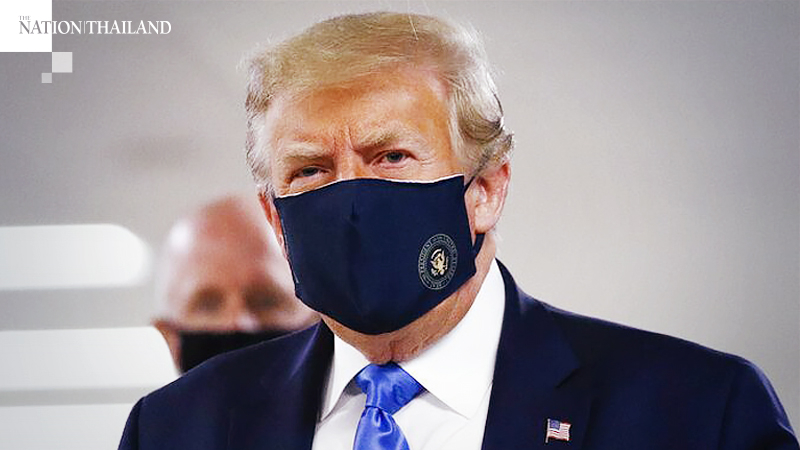
WASHINGTON – President Donald Trump wore a mask in public for the first time Saturday, more than three months after public health officials from his own administration recommended that all Americans cover their face when social distancing was not possible.
Trump’s decision to don a mask during a trip to Walter Reed National Military Medical Center followed several months of controversy over his reluctance to abide by public health guidelines even as novel coronavirus cases surged nationwide. Before wearing the navy-colored mask Saturday, Trump had disparaged his Democratic rival, Joe Biden, for wearing a mask and publicly downplayed the importance of face coverings.
While the president said in recent interviews that he had no problem with masks, Saturday’s public appearance was the first tangible example of him following through on that with action.
“I’ve never been against masks, but I do believe they have a time and a place,” Trump said Saturday at the White House before leaving for Walter Reed.
While visiting wounded veterans and health-care workers at the facility, Trump wore a dark mask that covered most of his face. It featured the presidential seal.
For months, health officials and several Republican lawmakers have urged Trump to model good safety practices by wearing a mask in public, even though he is in an uncommon situation because he is regularly tested for the coronavirus. Trump resisted, and the concept of mask-wearing became part of the country’s partisan political battles as the coronavirus spread rapidly in America and other countries gained control of the pandemic.
“Unfortunately this simple lifesaving practice has become part of a political debate that says: If you’re for Trump, you don’t wear a mask. If you’re against Trump, you do,” Sen. Lamar Alexander, R-Tenn., said last month during a Senate hearing. “That is why I have suggested the president should occasionally wear a mask even though there are not many occasions when it is necessary for him to do so. The president has millions of admirers. They would follow his lead.”
Trump instead chose to set a different example, holding several mass gatherings in recent weeks in which most participants did not wear masks. Trump defied local ordinances and guidelines in Michigan, Oklahoma, Florida, Arizona and elsewhere as he traveled the country maskless.
His explanations varied over the course of three months as he opted against mask-wearing and as the White House staff implemented and then quickly abandoned a universal mask policy. In recent weeks, Trump and the White House staff photographed around him have not worn masks.
Trump has attacked Biden on Twitter for wearing a mask and told Fox News on Thursday that Biden’s mask was the “the largest mask I think I have ever seen. It covers up a big proportion of his face.”
Biden’s campaign criticized Trump on Saturday for waiting so long to wear a mask publicly.
“Donald Trump spent months ignoring the advice of medical experts and politicizing wearing a mask, one of the most important things we can do to prevent the spread of the virus,” said Biden campaign spokesman Andrew Bates.
“Rather than taking responsibility and leading, he wasted four months that Americans have been making sacrifices by stoking divisions and actively discouraging people from taking a very basic step to protect each other,” Bates said. “By contrast, Joe Biden has led by example from the start and as president will make decisions informed by science to protect the American people and defeat the virus.”
As health officials in the Trump administration have tried to persuade Americans to wear masks to slow the spread of the coronavirus, Trump has repeatedly focused on the aesthetics of face coverings and social distancing – adding to the politicization of the issue.
“I just don’t want to wear one myself,” Trump said in early April when asked if he’d wear a mask. “It’s a recommendation; they recommend it. I’m feeling good. I just don’t want to be doing – I don’t know, somehow sitting in the Oval Office. . . . I think wearing a face mask as I greet presidents, prime ministers, dictators, kings, queens, I don’t know. Somehow, I don’t see it for myself. I just – I just don’t.”
After he toured a factory in Michigan in May, Trump told reporters that he did not wear a mask in front of cameras because he “didn’t want to give the press the pleasure of seeing” him with his face covered.
By Saturday, with coronavirus cases in the United States hitting records on a daily basis, Trump was willing to wear the mask in front of cameras – strolling through Walter Reed surrounded by several men who were also wearing masks.
Trump said it made sense for him to wear the mask because he was in a hospital and “in that particular setting where you’re talking to a lot of soldiers and people that in some cases just got off the operating tables.”
Walter Reed’s website includes guidance that says visitors “are expected to wear a cloth face covering over their nose and mouth upon entering and while moving about the facility . . . when not able to maintain 6 feet of social distancing.”
In explaining his about-face on face coverings this month, Trump still focused on superficial rationale, not the public health benefits.
“Actually, I had a mask on. I sort of liked the way I looked, okay? I thought it was okay,” Trump told Fox Business Network on July 1. “It was a dark, black mask, and I thought it looked okay. Looked like the Lone Ranger. But, no, I have no problem with that. I think – and if people feel good about it, they should do it.”
Several Trump campaign aides and White House officials posted images of Trump wearing his mask on Saturday, with most commenting on how he looked rather than on the public health issue.

 A pedestrian passes by the main gate of the National Zoo in March 2020, shortly after the zoo closed because of the coronavirus pandemic. MUST CREDIT: Washington Post photo by Bill O’Leary
 President Trump /File photo
 Health officials say a covid-19 cluster has left at least 186 people infected. Photo by: The Washington Post — The Washington Post
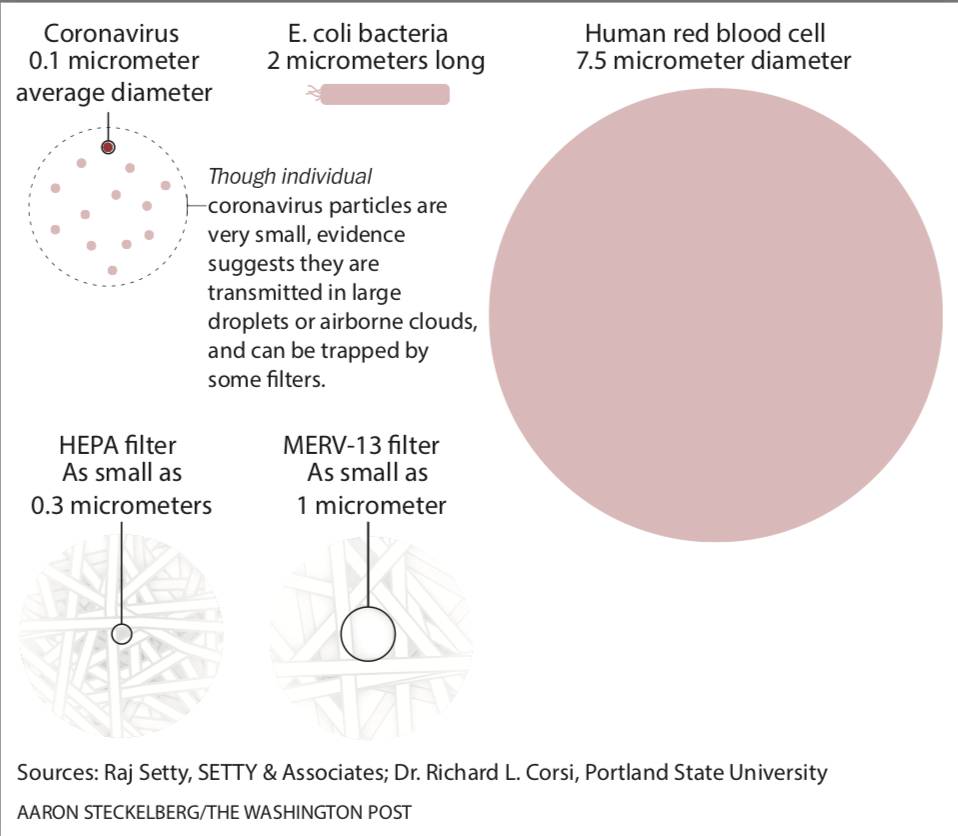
 File photo of drive-through coronavirus testing
 File photo of President Trump

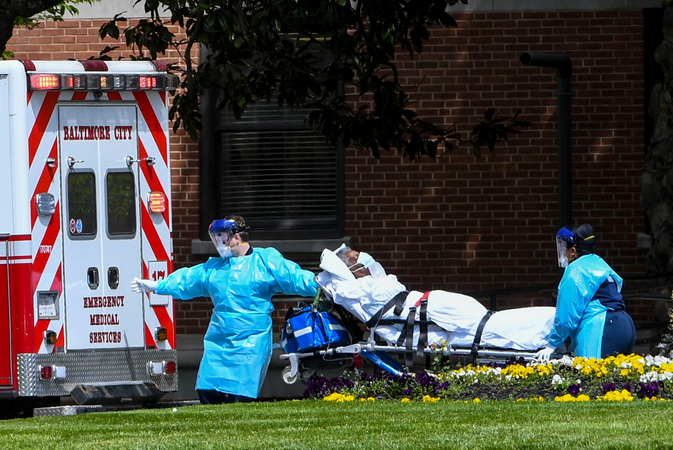 File photo of cover-19 patient in U.S.