Short of breath? Is it your heart or Covid-19? #ศาสตร์เกษตรดินปุ๋ย

#ศาสตร์เกษตรดินปุ๋ย : ขอบคุณแหล่งข้อมูล : หนังสือพิมพ์ The Nation.

https://www.nationthailand.com/lifestyle/30386490?utm_source=category&utm_medium=internal_referral

Short of breath? Is it your heart or Covid-19?

Apr 21. 2020
By The Nation

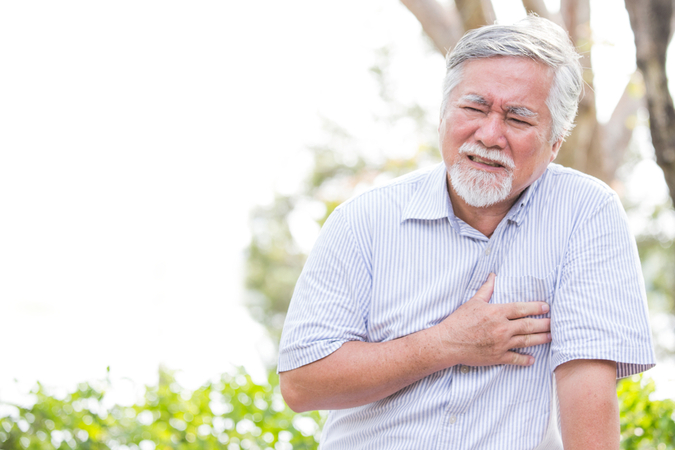
Covid-19 has affected people across the world since it surfaced in China’s city of Wuhan late last year and one of its key symptoms is tightness of chest and shortness of breath. However, these are the same symptoms for certain types of heart disease, so how does one differentiate?

Dr Chattanong Yodwut, a cardiologist at Bangkok Hospital, said the symptoms of Covid-19 begin in the upper respiratory system, with nasal congestion, runny nose, which later develops into a cough, sore throat, high fever, chills, aches, headache and joint pain.

After that, the virus shifts to the lower respiratory tract and infects the lungs, bringing down the level of oxygen in the blood. At this point, the patient will feel exhausted, short of breath and have palpitations. These symptoms are similar to those for coronary diseases, with the exception of flu symptoms.

Similarly, the symptoms for pulmonary edema or fluid filled lungs does not include flu symptoms. In pulmonary edema the patient will find it difficult to breathe when lying down and will develop a cough.

It is important for chronic heart disease patients to beware that Covid-19 simulates this disease until the symptoms can be quite difficult to distinguish, Dr Chattanong advised.

The Covid-19 virus can be fatal for heart-disease patients, as well those above the age of 65 and suffering from chronic conditions like high-blood pressure, lung disease, cancer, kidney disease, cirrhosis and immune deficiency. Patients with such conditions must be extremely careful in protecting themselves and strictly follow the recommendations of the Public Health Ministry, especially since there is no direct vaccine for the virus.

Heart disease patients who have been infected by Covid-19 virus will show severe symptoms which may lead to myocardial infarction or heart failure. The virus causes the metabolic system to go into overdrive until it causes heart failure. Covid-19 also affects the kidneys, causing the body to fail in expelling water and thus flooding the lungs. The doctor said both these conditions can be fatal or lead to complications that require long periods of hospitalization.

People with chronic heart disease must closely keep watch for any symptoms they may develop, starting from colds, nasal congestion, runny nose, cough, sore throat, a high temperature, chills, aches and joint pain, and immediately rush to the hospital if these symptoms worsen.

The best and most effective advice for everybody with chronic conditions is they maintain social distancing, wear a mask, keep their hands clean, eat well-cooked food with their own spoons, keep their daily necessities separate from others and not venture into hotspots. People coming into close contact with such patients must realise that they may be putting them at risk.

They escaped China. Now they wait for the pandemic to end. #ศาสตร์เกษตรดินปุ๋ย

#ศาสตร์เกษตรดินปุ๋ย : ขอบคุณแหล่งข้อมูล : หนังสือพิมพ์ The Nation.

https://www.nationthailand.com/lifestyle/30386444?utm_source=category&utm_medium=internal_referral

They escaped China. Now they wait for the pandemic to end.

Apr 21. 2020
William Lowe, 51, and his daughter, Weiya, 5, at the airport in Wuhan, China, before their Feb. 7 evacuation flight. (MUST CREDIT: Family photo)

William Lowe, 51, and his daughter, Weiya, 5, at the airport in Wuhan, China, before their Feb. 7 evacuation flight. (MUST CREDIT: Family photo)
By The Washington Post · Joe Heim · NATIONAL, HEALTH, SCIENCE-ENVIRONMENT

In early February, as their flight departed the airport in Wuhan, China, William Lowe and his wife, Xiaoli, thought they had escaped the most dangerous place on Earth.

The Maryland couple and their 5-year-old daughter had been visiting Xiaoli’s parents in Hubei province, the original hot spot of the novel coronavirus outbreak, when they were evacuated. When the cargo plane chartered by the U.S. government to fly them and other Americans out of China finally landed at Travis Air Force Base in California, William breathed a huge sigh of relief.

Back on U.S. soil, he felt a sense of security. He believed the human and medical disaster unfolding in China couldn’t happen here. He trusted the United States would respond with its scientific and economic might to prevent an outbreak of similar scale.

That was then.

Following a two-week quarantine at Lackland Air Force Base near San Antonio, the family returned to their Baltimore County home and soon realized the invisible threat they had escaped in China was already spreading quickly in the United States. Now, two months after leaving Wuhan, they find themselves anxiously waiting for the pandemic to peak in their community. And wondering about what will follow.

In the meantime, the sense of security he felt about being back in the United States has evaporated.

“I assumed the federal government would be doing things to prepare. The level at which that wasn’t done is astounding and exasperating,” William, who is on sabbatical from his teaching position at Howard County Community College, said in a phone interview. “That period of denial has put us in a much worse position.”

When they first arrived back from China, Xiaoli, a doctoral candidate in the school of education at the University of Maryland, would call her family every day to check on them and make sure none had caught the virus. Now the tables have turned. It is her family and friends in China who call and email to check on her health and safety.

“They are all very worried about us,” Xiaoli said. “My high school classmates have collected masks to send to me. Every day they ask me how I’m doing and what I need.”

In China, Xiaoli said, life is slowly starting to return to normal. Schools are still closed, but more and more people, including her siblings and her father, have returned to work. Her family and friends still get their temperature taken when they leave their homes in the morning and when they go into stores and supermarkets. There is an extensive tracking system that attempts to test and isolate anyone showing coronavirus symptoms.

“People are relaxing a little bit, but I think everyone is being very cautious because they know there are asymptomatic people,” she said. “No one really goes to public places. Big restaurants are not open.”

Having life return to normal in Maryland feels a long way off for Xiaoli, William and their daughter. Xiaoli has not left the home in more than a month, other than to take short walks in the neighborhood. All of the family’s food is delivered. The only interaction with the outside world is on social media video platforms. William rides his bike, but at Xiaoli’s urging he has gone out less.

“I’m just more concerned all the time,” Xiaoli said. “The message that this virus is very dangerous really registers with me both through my experiences and my mom’s constant nagging.”

Xiaoli said she’s pleased with how Maryland Gov. Larry Hogan (R) has handled the pandemic and credits him for being among the first governors to shut schools and nonessential business. But like her husband, she is dismayed with the federal response and wishes the government would have acted sooner and with more urgency.

“I really feel angry,” she said. “I feel the federal government really played this down at the beginning before they took any strict measures.”

Until last year, Xiaoli taught in the Baltimore City school system. One of the most difficult things for her has been knowing how many low-income students are stuck at home without computers or laptops. For them, she said, the learning has stopped.

“With this crisis I feel they will be left behind,” she said, starting to cry. “The government really needs to allocate more resources to city students. My heart is with the students.”

Xiaoli said she takes comfort that so many Americans have practiced social distancing and made great sacrifices to keep themselves and others healthy. But as the death toll in the United States continues to mount and signs point to it becoming the country hardest hit by covid-19, the disease caused by the coronavirus, William and Xiaoli can’t help but think about their journey from Wuhan two months ago.

“The irony is that the evacuation flight was to get us out of a danger zone,” William said. “And now we’re in a danger zone, and things are much worse here than they are in China.”

ER nurse in an overwhelmed hospital recounts ‘impossible’ decision she had to make #ศาสตร์เกษตรดินปุ๋ย

#ศาสตร์เกษตรดินปุ๋ย : ขอบคุณแหล่งข้อมูล : หนังสือพิมพ์ The Nation.

https://www.nationthailand.com/lifestyle/30386376?utm_source=category&utm_medium=internal_referral

ER nurse in an overwhelmed hospital recounts ‘impossible’ decision she had to make

Apr 20. 2020
Emergency nurses Sal Hadwan, 30, left, Mikaela Sakal, 25, and Joey Friedman, 24, pose in Detroit on Wednesday, April 15, 2020. MUST CREDIT: Photo for The Washington Post by Brittany Greeson

Emergency nurses Sal Hadwan, 30, left, Mikaela Sakal, 25, and Joey Friedman, 24, pose in Detroit on Wednesday, April 15, 2020. MUST CREDIT: Photo for The Washington Post by Brittany Greeson
By  The Washington Post · Eli Saslow · NATIONAL, HEALTH 

Mikaela Sakal, on being an ER nurse in an overwhelmed hospital and the decision she had to make – – –

This was my first nursing job. How crazy is that? Nobody prepared us for this, because this didn’t exist. These aren’t the kind of scenarios you go over in training. Where do you put 26 critical patients when you only have 12 rooms? How many stretchers fit into a hallway? What are you supposed to tell your patients when you might not have time to take them to the bathroom, or clean them, or call their families, or make them comfortable, because you’re the only nurse on that part of the floor, and you’ve got eight people on life support and a few who might be dying?

Nothing went by the book. We did the best we could, and it was never close to enough. Every night, we had to come into work and rewrite the rules.

The breaking point came last week. There were a lot of breaking points, but that was the last one. We got into work at 7, like always, and the first thing we do is get our assignment for the night and look at the patient loads. In school, what they teach you is it should be one nurse for every four patients in the ER. That’s what you hope for. That’s the ideal.

Our charge nurse, Sal, came in, and you could see he was upset. He told us: “These numbers are terrible. I’m sorry. It’s worse than ever. I don’t even want to tell you.”

We had like seven or eight nurses staffing the entire ER. Some of us were going to have 15 patients by ourselves at some point in the night, and that’s when we decided: “We can’t do this again.” It’s not fair to us. It’s not safe for the patients. We started calling and sending text messages to management: “We’re not clocking in or reporting to the floor until you bring in more staff.” Day shift kept working overtime to support us, which we knew was brutal for them, but it meant the patients were getting care. All of us went into the break room and listened to all the alarms going off. We sat in our scrubs and we waited.

It was always a little crazy working at Sinai Grace, even before all this. That’s one of the reasons I came to work here. They tell you: “This place will make you a great nurse.” We get more ambulances than any other hospital in Detroit. It’s sirens and resuscitations all night. I asked and I advocated for myself to work in the most critical area, because I wanted to learn. Nurses come here to get that hands-on experience, so it was almost a point of pride sometimes if we were a little short-staffed. Like, we can handle it. This is a tightknit group. We’ve been through a lot together. You think you’ve seen it all, but then a month ago, the ER was suddenly getting maxed out, and we had a bunch of staff leaving, or quarantined, or getting sick with this virus. Our patient loads started going way up. We’d have like 110 people in the ER and not nearly enough staff. Each night it was like: “It is bad? Or is it really, really bad?”

It got scary bad. I wish I could forget how bad it got.

Like the night it was just Joey and me assigned to 26 critical patients. He’s one of our best nurses, and I’d like to think we make a good team. We were in the part of the emergency room called the TCU, or transitional care, where they put the sickest people before transferring them to the ICU. Usually, you might have 10 patients in there, with a few on ventilators who will transfer within a few hours. This night we had eight on vents and the rest on supplemental oxygen. Some of the patients were awake and some were sedated. A few patients had been in there for 90 hours. The ICU was full, and we didn’t have anywhere else to put people. There were stretchers lined against the walls. We ran out of oxygen monitors. We had extension cords running everywhere.

You need to be everywhere at once. That’s how it feels. You don’t go to the bathroom. You don’t eat. You’re lucky if you find time in a 12-hour shift to get water. You spend every minute moving from patient to patient, trying to keep them stable and alive.

There’s constant noise, and it’s all so mechanical. There’s really no talking. We’re not allowing any visitors, and the patients are sedated or just trying to breathe. Most of them are too sick to ask for what they need. But call lights are going off and the tweeter is beeping every time we get another medical trauma, which happens like 15 or 20 times a night. The phones ring all the time, and it might be a family member asking for an update, but you look at the number and if it isn’t a doctor, you honestly don’t have time. Alarms are going off every minute. Pump alarms for the patients’ life-sustaining medications. Monitor alarms. Oxygen alarms. Heart-rate alarms. Some beep, some chime, some ring. Every one could mean a crisis. I’d go home and hear alarms. All of us do. Sometimes, I think I’m hearing them in my sleep.

And the thing is, you have to prioritize. You have to choose. You want to sit with these patients and build relationships and comfort them. That shouldn’t be a luxury. That’s part of basic care. Some of these patients are hanging on and continuing to suffer because they don’t have family with them. They need someone to say, “It’s OK. I’m here.” They need someone to touch them. We had one nursing-home patient whose heart rate dropped really low, and he wasn’t verbal at all, and you could see that he was scared and confused and working too hard to breathe. His family wishes were that he didn’t want to be intubated. We gave him a low dose of morphine for comfort. We stood in the hallway with him and took his hand and kind of rubbed his head, and as soon as we did that, this guy started to let go. We were able to be there for him, and a lot of times now, we can’t be.

That’s probably my best memory in all this.

There are a lot of bad ones. I had a patient in a backroom, and her blood-pressure medication ran out. I was taking care of somebody else, because we’re always taking care of someone else. We’re changing an oxygen tank, or helping intubate someone, or refilling a crucial medication. We can’t be everywhere. It’s unrealistic and dangerous to keep this up. I heard the pump alarm in her room at the last minute. By the time I got there, her pressure had dropped to like 40 over 20. She was still alive, barely, but I don’t know how she’s doing now.

There was another patient in bad shape a few rooms over. Joey had to leave the floor to transport someone to ICU, so now I was alone with 25 or 26. It was maybe 5 o’clock in the morning. I was responding to alarms and trying to keep an oxygen mask on one lady who was confused and kept wanting to take it off, even though her life depended on it, and meanwhile, this other patient was in a room pretty far out of sight because we didn’t have any other space. His blood-pressure medication must have run out. I didn’t know about it until Joey came back and started yelling to grab more medication and call the doctor, but it was too late. This patient had come from a nursing home and he was a lot older. He was incredibly sick. It’s a lot to process. There’s sadness and guilt and so much anger at the situation. But we had to keep moving. We had to do the after-life care, and there were other alarms going off.

Joey and I talked when we got off in the morning. We wanted to put in our two weeks right then. The whole nursing staff was saying the same thing to management. “This isn’t OK. We need more people. We need support.”

I realize this is a crazy situation for any hospital to deal with. It’s a pandemic, and Detroit is one of the hardest hit, and our hospital gets the worst of it. We have a bunch of nursing homes nearby, and a huge number of our patients have underlying health issues. It’s the perfect storm. They’ve tried to hire some nurses or bring some in from other areas and departments, but they don’t always have the same training, and a lot don’t want to stay. Who can blame them? The whole ER is this virus. We’re wearing one disposable gown for our entire shift. We’ve had sit-ins here over staffing issues before, and the demands of this virus made it so much worse. We went from having 14 nurses on at night to sometimes having 10 or less. Eventually, all of us hit that point: “Enough is enough. We’re not clocking in until you bring more support. Do something.”

So we sent the message, and then it felt like we were waiting in the break room for a long time. We all agreed it wasn’t safe, but the nurses on day shift were a little better staffed than we were, so it was actually better care for patients with them staying on. They were FaceTiming us, saying they could handle the whole shift if they needed to. They were ready to stay 24 hours. Nobody could believe it had gotten to that point. We were a mess in the break room. It was a cry fest. Some people were frustrated and really angry, but honestly I was getting quieter and more and more sad. It didn’t feel natural to sit there, knowing what was happening outside. We love this community, and we love these patients. A part of me was like: “We can’t leave it to day shift. Should we just go deal with it?” But if we kept doing that, nothing was going to change. It wasn’t going to get better, not for us or for the patients. Eventually, an administrator came in and asked: “So what do you want?”

We said we wanted more staff, but he said nobody could come right away. We asked to talk to someone higher up, but he said the situation was what it was, and there was nobody to call.

It went on like that. At one point it felt like we were being told to either report to work or leave the premises. We all kind of sat there, shocked, trying to make a decision. Do you accept a situation that’s unsafe for you and your patients, or do you take a stand and walk away from them? Two versions of feeling guilty. It was impossible. It’s still impossible.

Joey and I made our decision about 9 o’clock. We said, “You can start calling somebody to address these staffing concerns, or we’re leaving.” It hurt to do it. The alarms were going off and ambulances were coming in. We handed over our badges and walked out the door.

Unknown number of people unwittingly infected #ศาสตร์เกษตรดินปุ๋ย

#ศาสตร์เกษตรดินปุ๋ย : ขอบคุณแหล่งข้อมูล : หนังสือพิมพ์ The Nation

https://www.nationthailand.com/lifestyle/30384945?utm_source=category&utm_medium=internal_referral

Unknown number of people unwittingly infected

Mar 27. 2020
By The Nation

There is no way of knowing how many people are unwittingly infected with the Covid-19 virus, the National Research Council of Thailand says.

Dr Thiravat Hemachudha, head of the Centre for Emerging Infectious Diseases Health Science Centre, cited the council’s conclusion on Friday (March 27) in pointing out that these unaware victims form an entirely separate group from the documented cases.

They might not be showing any symptoms or could do so within 12 hours of infection, he said.

A report in the magazine Science suggests there could have been 6.2 times more unaware victims than confirmed victims prior to the government’s clampdown on dining and entertainment venues.

That measure and steadily improving healthcare management will have reduced the figure to 0.5, it’s estimated.

Is ‘social distancing’ the wrong term? Expert prefers ‘physical distancing,’ and the WHO agrees. #ศาสตร์เกษตรดินปุ๋ย

#ศาสตร์เกษตรดินปุ๋ย : ขอบคุณแหล่งข้อมูล : หนังสือพิมพ์ The Nation

https://www.nationthailand.com/lifestyle/30384905?utm_source=category&utm_medium=internal_referral

Is ‘social distancing’ the wrong term? Expert prefers ‘physical distancing,’ and the WHO agrees.

Mar 27. 2020
By Special To The Washington Post · Rebecca Gale

The government, media organizations and meme creators have all embraced the term “social distancing” when discussing how to stem the coronavirus pandemic.

But Daniel Aldrich, a professor of political science and public policy at Northeastern University, is concerned that the term is misleading and that its widespread usage could be counterproductive. The World Health Organization has come to the same conclusion. Last week, it started using the term Aldrich prefers: “physical distancing.”

Aldrich says efforts taken to slow the spread of the coronavirus should encourage strengthening social ties while maintaining that physical distancing. In a tweet, he lauded young people running errands for elderly neighbors for practicing “social connectedness with physical distance.”

“These social ties are the critical element to getting through disasters,” said Aldrich. As director of the Security and Resilience Program, he researches how communities show resilience under major shocks, such as war, natural disasters and pandemics, focusing on the role of networks and cohesion.

Aldrich has been reaching out to his colleagues and decision-makers about his concern regarding the usage of social distancing, and he said some public health authorities and nongovernmental organizations are shifting their language accordingly.

The WHO independently started using the term “physical distancing” last week. “We’re changing to say ‘physical distance,’ and that’s on purpose because we want people to still remain connected,” said WHO epidemiologist Maria Van Kerkhove in the organization’s March 20 daily press briefing.

Social distancing, which refers to creating physical space between one another and avoiding large gatherings, comes from public health and epidemiology lexicon. Aldrich said he thinks the semantics are misleading. “Some people think the [term] social distancing literally sounds like, ‘If I had friendships before, it’s time to hunker down. Or, if I were a member of a church or synagogue, it’s time to pray by myself,'” he said. “But the covid-19 order is going to be around for a while, and we need to feel connected.”

He’s heard anecdotally about people who have stopped attending religious services or the gym, for example, but aren’t reaching out through technology to maintain their social connections.

Aldrich is particularly concerned about the elderly and infirm, who are even less likely to have the tech-savviness to maintain social ties. He urges their loved ones to reach out through notes, phone calls or by leaving groceries on porches.

Aldrich’s research shows that the communities that survive and rebuild most effectively after disasters are those with strong social networks, which can share lifesaving information with one another. The people and communities that fare the worst are the ones with vulnerable populations who have weak social ties and lack trust and cohesion. Such people – as the 1995 Chicago heat wave, the 2018 Camp Fire in California and the 2011 earthquake and tsunami in Japan showed – are often the first to perish in a disaster.

In the 2018 Camp Fire in Paradise, California, Aldrich found that the people who didn’t survive were often the ones who didn’t have strong social connections. “The people who got out in time had people calling ahead of time, before the fire arrived, saying, ‘It’s time to go,'” he said.

Aldrich found similar results about who followed evacuation orders after Hurricanes Harvey, Irma and Maria. In Japan’s March 2011 earthquake, tsunami and subsequent nuclear meltdown, Aldrich found widely uneven death rates in coastal communities: places where everyone survived, and places where 1 in 10 residents died. “The communities where no one died had incredibly strong social cohesion. They were able to evacuate and help everyone out of their homes,” he said.

Some experts don’t think the current language needs to or should be changed. While conceding that Aldrich has a point about the importance of maintaining social connections, Lori Peek, a sociology professor at the University of Colorado at Boulder and the director of the National Hazards Center, said “social distancing” has already taken root.

“People understand what [social distancing] is,” she said. “They are adopting it as individuals, and organizations are adopting policies that are rooted in this protective action.”

She wouldn’t alter any terminology at this point, she added, because it is important to maintain clear and consistent messages from trusted sources. “Anything that could further confuse the public is really dangerous,” Peek said. “Trust me, I am an academic. I love talking about language and words, but right now this is a matter of life and death.”

Robert Olshansky, emeritus professor of urban and regional planning at the University of Illinois at Urbana-Champaign, sees a paradox in the term social distancing. “The paradox is that we are being very collaborative and social by mutually agreeing to stay six feet away from each other,” he said. “The term ‘social distancing’ implies that we have to become a more separate and individual society, but there is no way we are going to survive this problem and emotionally support ourselves through this if that is what we do.”

But Olshansky, who has studied how communities recover after large urban disasters, said that, in this instance, it is abundantly clear that social distancing is a physical, not a social, requirement.

“People are thinking about being solitary in their homes, but in all of my online networks, I am not sensing that people are being alone, just physically separating themselves.”

In the San Francisco Bay area, where he lives, he said he sees walkers waving hello to him through his picture window and stepping off trails and sidewalks to allow six feet between other people when passing.

He and Aldrich agree about the importance of social networks in surviving and recovering from disasters. In studying anxiety after Japan’s twin disasters, Aldrich found that the single biggest factor – more than wealth or physical health – that accounted for the levels of anxiety for people sheltering indoors was whether they had a neighbor or a friend they could talk to regularly. “However bad it is, however nervous I am, having these friends make it better. There is emotional support that we can get as well.”

Such social connections are necessary not just to combat the pandemic, but for rebuilding and recovering, Olshansky said. “History has shown us that collaborative, mutually supportive communities are the ones that are most successful at sustainably recovering from large disasters.”

Gale is a writer in Chevy Chase, Maryland, who covers health, politics and policy.

Virus in tears? Little to cry about #ศาสตร์เกษตรดินปุ๋ย

#ศาสตร์เกษตรดินปุ๋ย : ขอบคุณแหล่งข้อมูล : หนังสือพิมพ์ The Nation

https://www.nationthailand.com/lifestyle/30384892?utm_source=category&utm_medium=internal_referral

Virus in tears? Little to cry about

Mar 26. 2020
By The Nation

A recent report cited by the World Health Organisation saying the SARS virus was found in a patient’s teardrops has many people asking if Covid-19 dwells there too.

The new coronavirus is known to spread through bodily fluids, but the focus has been on mucous from coughs and sneezes.

Dr Saichin Isipradit, director of Mettapracharak Hospital (Wat Rai Khing) in Nakhon Pathom, said this week a study had found symptoms of pink eye (conjunctivitis) in 0.8 per cent of Covid-19 victims.

“Tears normally leave the eyes through tiny openings on the edges of the eyelids,” she said. “The fluid then drains into the nose through little ‘tubes’ called nasolacrimal ducts.

“If a large amount of the virus enters the eyes, such as when someone sneezes or coughs directly into your face, the droplets could enter these ducts. Cases of airborne Covid-19 are rare – infection comes mostly from infected droplets.”

Avoid crowds, Saichin advises. Eat only healthy food, wash your hands frequently with soap or alcohol-based hand sanitiser, and never use someone else’s personal utensils.

Coronavirus adds peril to those already at risk #ศาสตร์เกษตรดินปุ๋ย

#ศาสตร์เกษตรดินปุ๋ย : ขอบคุณแหล่งข้อมูล : หนังสือพิมพ์ The Nation

https://www.nationthailand.com/lifestyle/30384717?utm_source=category&utm_medium=internal_referral

Coronavirus adds peril to those already at risk

Mar 24. 2020
Dan Downs, 71, walks his dog Gracie at his home in Colonial Heights, Virginia, on Sunday, March 22, 2020. MUST CREDIT: Photo for The Washington Post by Julia Rendleman

Dan Downs, 71, walks his dog Gracie at his home in Colonial Heights, Virginia, on Sunday, March 22, 2020. MUST CREDIT: Photo for The Washington Post by Julia Rendleman
By The Washington Post · Cleve R. Wootson Jr. · NATIONAL

MIAMI – Isolated in her third-floor apartment, Maria Sweezy knew her coronavirus situation was more precarious than most, but what she saw on her phone Sunday morning left her unsettled and fighting panic.

A woman she had befriended at a camp for children with Type I diabetes was dead – along with her baby. Everyone suspected the coronavirus, which can have more adverse symptoms for diabetics. Messages streamed into Sweezy’s phone from people she had met as a camp resident and counselor, some sharing pictures of their friend – including one that included Sweezy, as a dark-haired teenager, grinning.

Dan Downs, 71, stands for a portrait at his home in Colonial Heights, Virginia, on Sunday, March 22, 2020. MUST CREDIT: Photo for The Washington Post by Julia Rendleman

Dan Downs, 71, stands for a portrait at his home in Colonial Heights, Virginia, on Sunday, March 22, 2020. MUST CREDIT: Photo for The Washington Post by Julia Rendleman

“It was just Wednesday, she was posting about some drama with Amazon,” said Sweezy, 24, who just moved from New York to Florida last year. She was aghast that someone her age, from the same area of upstate New York, could have been felled by this disease. “There are pictures of us at the summer camp dance. . . . I’m watching someone who’s very much like me – someone in my same situation – die with her baby in her arms. It’s so hard to not panic.”

Soon after sending her condolences to the woman’s family, Sweezy scoured her apartment: washing both sides of her front door and all the metal doorknobs, spraying sanitizer on her debit card, sprinkling peroxide on her toothbrush and dipping her keys in bleach.

She pulled out a calendar and thought about every time she had come into contact with another person, filling in those squares with the word “exposed.”

As millions of Americans distance themselves from one another in an attempt to stop the spread of the coronavirus, the struggle is particularly acute for those whose existing ailments can be fatally exacerbated by the disease – people whose lungs have been compromised by pulmonary disorders, whose immune systems have been suppressed by chemotherapy or whose blood sugar spikes dangerously as their bodies fight even common colds.

They have become the most stringent of the social distancers, filling refrigerators and medicine cabinets and hoping that supplies last until the worst is over.

Wary of hospital waiting rooms filled with coughing people, when they get sick, they are turning to self-diagnosis and, at times, simply guessing.

And they clean. A lot.

Dan Downs had planned to spend this week on a cruise ship threading its way through the Hawaiian islands. Instead, he has been fortifying and disinfecting his shrinking world, hoping to avoid the deadly coronavirus at all costs.

The 71-year-old retired educator has chronic obstructive pulmonary disease, which has left him with 50% of his lung capacity and an increased risk of dying of the coronavirus. He spends most of each day tethered to a breathing tube attached to an oxygen concentrator. The most dire coronavirus warnings, he realizes, are aimed directly at him.

“I’m pretty sure if I get this stuff it’s going to kill me,” he said. “I used to laugh at people who washed their hands after, say, touching a doorknob. Now, it’s like everything is radioactive. . . . I hate thinking about dying, but I know I’m in a high-risk group. Double-high risk. Triple.”

As the coronavirus ravaged Italy and the first cases cropped up in the United States, Downs and his wife approached life with the compulsiveness of germaphobic doomsday preppers. They stocked up on groceries – using a supermarket service that delivered straight to their car, not risking a trip inside. They arranged to have everything else they and their two Australian shepherds need delivered to their porch in Colonial Heights, Virginia.

They washed their produce in the kitchen sink with soap and water, and scrubbed the containers the other groceries arrived in, letting it all air dry on the front porch. They’ve revived the ancient art of canning. Perishables that can’t be crammed into jars are stuffed into the freezer.

Downs has not read a completely dry newspaper in weeks. Every morning, just after unwrapping it with gloved hands, he blasts it with disinfectant spray.

Even with the extreme antimicrobial measures, he worries about things beyond his control. His home is stocked with medicine and machines to help him breathe. But soon, he believes, a lot more people will need that medicine and those machines. If his oxygen concentrators break or his breathing tubes wear out, will he be able to get replacements? What if the factories that make his medications close because too many people are sick?

“The things that worry me the worst, mostly, is probably catching it,” he said. “But after that, supply chain disruptions. I can see, in the foreseeable future, problems up and down the supply chain. Not just my strawberries and my ice cream. Who’s going to drive the trucks that deliver the medicine?”

He estimates he has bought his family 90 days in isolation, but has no idea whether that will be enough.

“I think in three months, things are going to be a lot worse,” he said. “That’s when there are going to be problems. And that’s when I’m going to have to venture out of my house.”

Last week, Lidia Vitale, of Flemington, New Jersey, was certain the pain and swelling in her leg was caused by a blood clot. She’d had them before, and she had been a doctor for decades, before her career was sidelined by two bouts of lung cancer.

The last time she felt the leg pain, in November, she limped to the hospital and got an ultrasound for confirmation. But last week, she weighed a nearly impossible choice: complications from a blood clot or a hospital waiting room that suddenly has been rendered hostile.

“I don’t want to be at the hospital,” she said. “I can’t be anywhere near it.”

She texted her doctor for advice, and he agreed with her worries.

So she went to her medicine cabinet and grabbed some leftover anti-clotting medication, then swallowed a few pills.

Ill strangers at the hospital aren’t the only people she has been trying to avoid. Nearly a month ago, her two children went on spring break with her estranged husband. When they came back, both teens had sniffles and her ex had a hacking cough.

“On the one hand, I want to see my kids. I want to be with them,” she said. “But am I putting myself more at risk just being near them?”

Instead, she sits in her house alone, trying to stick to a schedule. Her ability to exert herself is already hampered by her compromised lung capacity, but she knows she needs to move to avoid blood clots.

After the doctor sent a new prescription for blood clot medication to her pharmacy, she drove to the pickup window to get the medication.

On the way back, she decided to take one of the biggest risks in several isolated weeks: She went to see her mother.

“I called her and I said, ‘Mom, it’s so beautiful out. I can’t come inside, but we can sit outside.’ ” she said. “We sat on the porch, six feet away, and had a conversation.”

Testing discrepancies among states muddles meaning of results #ศาสตร์เกษตรดินปุ๋ย

#ศาสตร์เกษตรดินปุ๋ย : ขอบคุณแหล่งข้อมูล : หนังสือพิมพ์ The Nation

https://www.nationthailand.com/lifestyle/30384715?utm_source=category&utm_medium=internal_referral

Testing discrepancies among states muddles meaning of results

Mar 24. 2020
A nurse talks to colleagues outside Newton-Wellesley Hospital in Newton, Massachusetts, before testing people for coronavirus on Wednesday, March 18, 2020. MUST CREDIT: Photo for The Washington Post by Adam Glanzman

A nurse talks to colleagues outside Newton-Wellesley Hospital in Newton, Massachusetts, before testing people for coronavirus on Wednesday, March 18, 2020. MUST CREDIT: Photo for The Washington Post by Adam Glanzman
By  The Washington Post · Steven Mufson, Andrew Ba Tran, Brady Dennis · NATIONAL

Epidemiologists and other scientists seeking to decipher test result patterns and slow the advance of the coronavirus are stumbling over the huge disparities among the ways states administer or report information.

Some states are keeping negative tests secret while others are not. Some track state lab results, while ignoring test results from private companies. Some restrict the availability of tests, while others test widely.

New York has detected 780 positive tests per million people, at a rate of 1 in 4 tests administered. Ohio has 30 positive results per million people, at a rate of 3 in 4 testing positive, according to analysis of data from the Covid Tracking Project, a group that tracks testing numbers released by each state’s health department. The data runs through Sunday.

Ohio’s ratio seems high because its website stopped reporting negative tests after March 15. So doctors cannot tell whether New York is the epicenter of the disease or whether places such as Ohio are harboring similar numbers of carriers of the virus and have not done enough testing or have not disclosed enough to uncover potential cases. No state has reported fewer positive test results per million residents than Ohio.

“We have no systematic strategy to do the kind of surveillance necessary to understand the chain of transmission,” said Harlan Krumholz, a cardiologist at Yale University’s school of medicine and an expert on analyzing the outcomes of a broad range of medical treatments. “We’re basically flying blind because we have so little idea about its penetration into our society and the number of people affected.”

About eight states are reporting positive results only, including Ohio and Maryland, which switched from reporting the figures. Texas and Pennsylvania are among states that started out reporting positives only but switched to more robust figures and now include negative results as well.

“I think a lot of time people don’t realize the importance of negative results,” said Justin Lessler, an associate professor of epidemiology at the Johns Hopkins Bloomberg School of Public Health and lead writer on a study estimating the incubation period of the coronavirus.

By including statistics on negative test results, researchers and health officials can tell whether the increasing numbers are a result of an epidemic or indicative of testing expansion.

Melanie Amato, press secretary for the Ohio Department of Health, said last week that the department received four test kits from the Centers for Disease Control and Prevention, each of which can test 300 to 400 people. So far, she said, Ohio has been able to test everyone who meets state guidelines: people who are hospitalized, first responders, health care workers, and those who have been in contact with a confirmed case of the virus.

But those categories do not include everyone who might be infected – and contagious.

Alabama has not reported any deaths and has one of the lowest rates of positive test results per capita, but as a result of shortages, it also has one of the lowest rates of administering the tests. It has tested at a rate less than a tenth that of Washington state, where the virus first appeared in the United States.

Don Williamson, the president of the Alabama Hospital Association and previously the state’s health commissioner for more than two decades, said regions where limited testing has happened so far are exactly where capacity should be ramped up, perhaps even more than in places where the outbreak already is widespread.

“If you want to get ahead of the disease, you have to know where the disease is going,” Williamson said.

He noted that of Alabama’s official count of 81 covid-19 cases, many were not linked to travel, signaling that the disease already is spreading within local communities. Despite that, large swaths of the state have no reported cases. Covid-19 is the disease caused by the novel coronavirus.

“I don’t for a minute believe there is no disease in those parts of the state,” Williamson said. “We just simply don’t have a good handle on how much of the disease is actually out there. . . . It’s hard for people to understand why social distancing is so important if there are no cases in your community, if you have no visible evidence there is disease.”

Williamson said the state’s lab in Montgomery has the ability to process tests from other parts of Alabama, but the challenge has been the same as in so many other corners of the country: a shortage of supplies.

In Alabama’s case, he said, that has meant a “consistent and perpetual” shortage of swabs and the materials needed to transport viral specimens safely.

Williamson relayed how state officials in recent days placed an order through commercial suppliers for supplies they desperately needed, only to find the order had been canceled so the products could be diverted to the Strategic National Stockpile.

He said state officials delivered the right messages on social distancing, and Alabama still has an opportunity to bend the curve of infections in the right direction.

“But it would be very helpful to be able to show that progress,” he said. “Right now, the longer we go without testing large numbers of people, the less data we have to guide that social distancing. . . . You need to know your starting point.”

Texas is another example of statistical uncertainty. The state has over 9 million more residents than New York. But New York has processed seven times as many tests as Texas.

“I think that in Texas it’s mostly the availability of tests,” said John Henderson, president and chief executive of the Texas Organization of Rural and Community Hospitals. But as commercial enterprises enter the supply chain for tests, that is expected to change soon. New York is a hot spot, he said. Texas is not.

In a group-text conversation Monday, Henderson questioned the need for tests, given how much time has gone by. But rural hospital directors taking part told him their staffs wouldn’t be safe without tests.

“They have to know who’s positive so they can do a quarantine,” Henderson said. “It’s less about knowing whether your community has it and more about protecting the front-line staff.”

The coronavirus isn’t alive. That’s why it’s so hard to kill. #ศาสตร์เกษตรดินปุ๋ย

#ศาสตร์เกษตรดินปุ๋ย : ขอบคุณแหล่งข้อมูล : หนังสือพิมพ์ The Nation

https://www.nationthailand.com/lifestyle/30384693?utm_source=category&utm_medium=internal_referral

The coronavirus isn’t alive. That’s why it’s so hard to kill.

Mar 23. 2020
By The Washington Post · Sarah Kaplan, William Wan, Joel Achenbach · NATIONAL, SCIENCE-ENVIRONMENT

Viruses have spent billions of years perfecting the art of surviving without living – a frighteningly effective strategy that makes them a potent threat in today’s world.

That’s especially true of the deadly new coronavirus that has brought global society to a screeching halt. It’s little more than a packet of genetic material surrounded by a spiky protein shell one-thousandth the width of an eyelash, and leads such a zombie-like existence, it’s barely considered a living organism.

But as soon as it gets into a human airway, the virus hijacks our cells to create millions more versions of itself.

There is a certain evil genius to how this coronavirus pathogen works: It finds easy purchase in humans without them knowing. Before its first host even develops symptoms, it is already spreading its replicas everywhere, moving onto its next victim. It is powerfully deadly in some, but mild enough in others to escape containment. And, for now, we have no way of stopping it.

As researchers race to develop drugs and vaccines for the disease that has already sickened 200,000 and killed more than 8,700 people, and counting, this is a scientific portrait of what they are up against.

– – –

Respiratory viruses tend to infect and replicate in two places: In the nose and throat, where they are highly contagious, or lower in the lungs, where they spread less easily but are much more deadly.

This new coronavirus, SARS-CoV-2, adeptly cuts the difference. It dwells in the upper respiratory tract, where it is easily sneezed or coughed onto its next victim. But in some patients, it can lodge itself deep within the lungs, where the disease can kill. That combination gives it the contagiousness of some colds along some of the lethality of its close molecular cousin SARS, which caused a 2002-2003 outbreak in Asia.

Another insidious characteristic of this virus: By giving up that bit of lethality, its symptoms emerge less readily than SARS, which means people often pass it to others before they even know they have it.

It is, in other words, just sneaky enough to wreak worldwide havoc.

Viruses much like this one have been responsible for many of the most destructive outbreaks of the past 100 years: the flus of 1918, 1957 and 1968; and SARS, MERS and Ebola. Like the coronavirus, all these diseases are zoonotic – they jumped from an animal population into humans. And all are caused by viruses that encode their genetic material in RNA.

That’s no coincidence, scientists say. The zombie-like existence of RNA viruses makes them easy to catch and hard to kill.

Outside a host, viruses are dormant. They have none of the traditional trappings of life: metabolism, motion, the ability to reproduce.

And they can last this way for quite a long time. Recent laboratory research showed that, although SARS-CoV-2 typically degrades in minutes or a few hours outside a host, some particles can remain viable – potentially infectious – on cardboard for up to 24 hours and on plastic and stainless steel for up to three days. In 2014, a virus frozen in permafrost for 30,000 years that scientists retrieved was able to infect an amoeba after being revived in the lab.

When viruses encounter a host, they use proteins on their surfaces to unlock and invade its unsuspecting cells. Then they take control of those cells’ own molecular machinery to produce and assemble the materials needed for more viruses.

“It’s switching between alive and not alive,” said Gary Whittaker, a Cornell University professor of virology. He described a virus as being somewhere “between chemistry and biology.”

Among RNA viruses, coronaviruses – named for the proteins spikes that adorn them like points of a crown – are unique for their size and relative sophistication. They are three times bigger than the pathogens that cause dengue, West Nile and Zika, and capable of producing extra proteins that bolster their success.

“Let’s say dengue has a tool belt with only one hammer,” said Vineet Menachery, a virologist at the University of Texas Medical Branch. This coronavirus has three different hammers, each for a different situation.

Among those tools is a proofreading protein, which allows coronaviruses to fix some errors that happen during the replication process. They can still mutate faster than bacteria, but are less likely to produce offspring so riddled with detrimental mutations that they can’t survive.

Meanwhile, the ability to change helps the germ adapt to new environments, whether it’s a camel’s gut or the airway of a human unknowingly granting it entry with an inadvertent scratch of her nose.

Scientists believe the SARS virus originated as a bat virus that reached humans via civet cats sold in animal markets. This current new virus, which can also be traced back to bats, is thought to have had an intermediate host, possibly an endangered scaly anteater called a pangolin.

“I think nature has been telling us over the course of 20 years that, ‘Hey, coronaviruses that start out in bats can cause pandemics in humans, and we have to think of them as being like influenza, as long term threats,'” said Jeffery Taubenberger, virologist with the National Institute of Allergy and Infectious Diseases.

Funding for research on coronaviruses increased after the SARS outbreak, but in recent years that funding has dried up, Taubenberger said. Such viruses usually simply cause colds and were not considered as important as other viral pathogens, he said.

– – –

Once inside a cell, a virus can make 10,000 copies of itself in a matter of hours. Within a few days, the infected person will carry hundreds of millions of viral particles in every teaspoon of their blood.

The onslaught triggers an intense response from the host’s immune system: Defensive chemicals are released. The body’s temperature rises, causing fever. Armies of germ-eating white blood cells swarm the infected region. Often, this response is what makes a person feel sick.

Andrew Pekosz, a virologist at Johns Hopkins University, compared viruses to particularly destructive burglars: They break into your home, eat your food and use your furniture, and have 10,000 babies. “And then they leave the place trashed,” he said.

Unfortunately, humans have few defenses against these burglars.

Most antimicrobials work by interfering with the functions of the germs they target. For example, penicillin blocks a molecule used by bacteria to build their cell walls. The drug works against thousands of kinds of bacteria, but because human cells don’t use that protein, we can ingest it without being harmed.

But viruses function through us. With no cellular machinery of their own, they become intertwined with ours. Their proteins are our proteins. Their weaknesses are our weaknesses. Most drugs that might hurt them would hurt us too.

For this reason, antiviral drugs must be extremely targeted and specific, said Stanford virologist Karla Kirkegaard. They tend to target proteins produced by the virus (using our cellular machinery) as part of its replication process. These proteins are unique to their viruses. This means the drugs that fight one disease generally don’t work across multiple ones.

And because viruses evolve so quickly, the few treatments scientists do manage to develop don’t always work for long. This is why scientists must constantly develop new drugs to treat HIV, and why patients take a “cocktail” of antivirals that viruses must mutate multiple times to resist.

“Modern medicine is constantly needing to catch up to new emerging viruses,” Kirkegaard said.

SARS-CoV-2 is particularly enigmatic. Though its behavior is different from its cousin SARS, there are no obvious differences in the viruses’ spiky protein “keys” that allow them to invade host cells.

Understanding these proteins could be the key to developing a vaccine, said Alessandro Sette, head of the Center for Infectious Disease at the La Jolla Institute for Immunology. Previous research has shown that the spike proteins on SARS are what trigger the immune system’s protective response. In a paper published this week, Sette found the same is true of SARS-COV2.

This gives scientists reason for optimism, according to Sette. It affirms researchers’ hunch that the spike protein is a good target for vaccines. If people are inoculated with a version of the spike protein, it could teach their immune system to recognize the virus and allow them to respond to the invader more quickly.

“It also says the novel coronavirus is not that novel,” Sette said.

And if SARS-CoV-2 is not so different from its older cousin SARS, then the virus is likely not evolving very fast, giving scientists developing vaccines time to catch up.

In the meantime, Kirkegaard said, the best weapons we have against the coronavirus are public health measures like testing and social distancing and our own immune systems.

Some virologists believe we have one other thing working in our favor: the virus itself.

For all its evil genius and efficient, lethal design, Kirkegaard said, “The virus doesn’t really want to kill us. It’s good for them, good for their population, if you’re walking around being perfectly healthy.”

Evolutionary speaking, experts believe, the ultimate goal of viruses is to be contagious while also gentle on its host – less destructive burglar and more of a considerate house guest.

That’s because highly lethal viruses like SARS and Ebola tend to burn themselves out, leaving no one alive to spread them.

But a germ that’s merely annoying can perpetuate itself indefinitely. One 2014 study found that the virus causing oral herpes has been with the human lineage for 6 million years. “That’s a very successful virus,” Kirkegaard said.

Seen through this lens, the novel coronavirus now killing thousands across the world is still early in its life. It replicates destructively, unaware that there’s a better way to survive.

But bit by bit, over time, its RNA will change. Until one day, not so far in the future, it will be just another one of the handful of common cold coronaviruses that circulate every year, giving us a cough or sniffle, and nothing more.

What it’s like to be infected with coronavirus #ศาสตร์เกษตรดินปุ๋ย

#ศาสตร์เกษตรดินปุ๋ย : ขอบคุณแหล่งข้อมูล : หนังสือพิมพ์ The Nation

https://www.nationthailand.com/lifestyle/30384627?utm_source=category&utm_medium=internal_referral

What it’s like to be infected with coronavirus

Mar 23. 2020
Mike Saag, an infectious disease doctor at the University of Alabama at Birmingham, tested positive for covid-19, and is telling people that the best way to slow the spread of the virus is to stay at home. MUST CREDIT: Harry Saag

Mike Saag, an infectious disease doctor at the University of Alabama at Birmingham, tested positive for covid-19, and is telling people that the best way to slow the spread of the virus is to stay at home. MUST CREDIT: Harry Saag
By  The Washington Post · Joel Achenbach, Ben Guarino, Ariana Eunjung Cha · NATIONAL, HEALTH

Ritchie Torres, 32, a New York City councilman from the Bronx, first had nothing more than a “general sickly feeling.” Then came a bad headache. He felt terrible. But for Torres, the worst effects of covid-19 so far have been mental: “It is psychologically unsettling to know I am carrying a virus that could harm my loved ones.”

The Rev. Jadon Hartsuff, 42, an Episcopal priest in Washington, D.C., felt drained after a Sunday service on Feb. 23. He took a nap. No big deal – the service can be tiring. The next day at the gym, his muscles ached. He became fatigued, feverish, slightly dizzy. “I kept telling people I felt spongy,” he recalls. “Like a kitchen sponge.”

Mike Saag, 64, an infectious disease doctor in Alabama, developed a cough, like a smoker’s hack. He was bone-tired, his mind foggy. About five days in, the misery intensified. “This is not something anybody wants to go through,” he said Saturday. “I implore everyone to stay at home!”

These stories were offered in recent days by people in the U.S. who now know the new coronavirus and the disease it causes intimately. In sharing their experiences, they are helping to demystify this alarming contagion.

Covid-19 can be a severe illness, even deadly. But it varies from person to person, and most people with a confirmed infection do not require hospitalization.

It can induce intense fatigue and trigger a recurring cough and intermittent fever. This is a slow-developing illness, and it lingers, the whole process typically playing out in weeks rather than days.

Patients with covid-19 report a psychological toll. This disease is unfamiliar. It’s a pandemic virus that has alarmed the entire planet. A natural reaction is anxiety.

Jim, a 34-year-old from Long Island who asked that his full name be withheld, had mild symptoms for several days and then abruptly developed shortness of breath, fever and chest pains.

“The fear is real,” he said. “It’s impossible not to be scared at times that it’s just going to take this insane turn into uncontrollably bad.”

Saag, the doctor, teaches at the University of Alabama at Birmingham and fully understands the biological processes that take place when a virus invades the body. He knows, for example, that his immune system generates the symptoms – things like fever. He became sick after a long drive from the Northeast back to Alabama, and on Monday night, he experienced rigors – his body shaking uncontrollably.

“It was my immune system saying, ‘Hey, let’s fight this sucker off.’ ”

Still, even with his medical background, he had to suppress the natural fear any person would feel. His advice to other covid-19 victims: “Stay calm. Monitor yourself. The No. 1 thing to keep an eye on is breathing. If it becomes difficult to breathe, you should really get to a facility.”

As for fear and anxiety, “We got a disease that’s kind of scary, and anxiety is part of the equation. That’s why I started with ‘stay calm.’ ”

Torres, the youngest member of the New York City Council, tested positive for the coronavirus Monday after his chief of staff tested positive the previous weekend. Torres is under quarantine at his Bronx apartment. Busy with his job on the council and his campaign for the 15th congressional district’s open seat, he was unable to stockpile supplies as the contagion hit the city. He has been asking deliverers to drop off his meals at a safe distance.

“To feel so helplessly dependent is a painful adjustment for me,” he said. “The virus preys upon our need to be human, our need for social and physical affection. I struggle with depression, and the virus has left me struggling even more so.”

He added, “If you are young and a millennial and healthy, it is tempting to feel a false sense of security. That delusion could not be farther from the truth.”

Mark and Jerri Jorgensen and their friend Carl Goldman were among the passengers on the ill-fated voyage of the Diamond Princess. Jerri, 65, a former high school volleyball and track coach from St. George, Utah, tested positive after the ship docked in Yokohama, Japan, and was placed in quarantine. Authorities took her off the ship and placed her in isolation, but she never felt any symptoms.

“I never had a sore throat or headache or anything,” she said. She stayed in a hospital for 14 days until she tested negative twice. She spent her days doing Pilates via FaceTime with friends back home at 1 a.m. in the morning Japan time.

“I would do planks, push-ups and put my headphones on, and I’d have really good ’80s rock ‘n’ roll and just dance in the room,” she recalled.

Goldman, 67, who owns a radio station in Santa Clarita, California, tested negative while on the ship, but on the State Department-sponsored evacuation flight home, he fell asleep and woke up with a 103-degree fever. He was quickly quarantined in the back of the plane with plastic sheeting between him and the other passengers. By the time they landed in the States about eight hours later, his fever was gone.

“I had no headache, no sore throat, no sneezing, no dripping of the nose, no body aches. Just a dry cough,” he said. He had some shortness of breath for three or four days while walking around or talking, but nothing that required treatment. The cough persisted for two weeks.

He was taken to the University of Nebraska for treatment. He and 12 other covid-19 patients were isolated from one another, but they had a group “town hall” conference call each day with the doctors.

Goldman, who left on Monday, was one of the last to be discharged.

“We would cheer when they finally tested someone negative,” he said.

He was treated with a bit of ibuprofen at the beginning and told to drink a lot of Gatorade. (“The white blue is the bomb, and stay away from grape – it’s nasty.”)

Mark Jorgensen, 55, tested positive while in quarantine on Feb. 22.

“When they told me, I felt like, ‘Are you kidding me?’ I felt fine,” he recalled. They flew him to a hospital in Salt Lake City, where he continued to feel fine the whole time.

“It was kind of bizarre. I was perfectly healthy, but I was taking up this biocontainment unit, and they were all coming in hazmat suits and this whole bit,” he said.

Jorgensen is a two-time kidney transplant recipient taking immunosuppressants. As of this week, he said, he was still testing positive for the coronavirus, but the hospital released him to home quarantine.

A Syracuse, New York, woman in her 20s, who spoke to The Washington Post on the condition of anonymity, said her first symptom was shortness of breath. She went shopping with her mother in New York City on Saturday and began to cough and feel tired, as though she’d just finished a sprint.

“I feel like, because I’m so young my symptoms weren’t that big – but it definitely caught me off guard,” she said. “I haven’t felt anything like it. I’ve never had the flu before.”

On Sunday, in New York City, an urgent care facility declined to give her a test. “I got tremendously worse,” she said. Her temperature rose to 101, along with a headache that she described as “the worst part of my entire experience.”

Her mother drove her to Syracuse, in upstate New York, where Monday morning a physician’s office agreed to give her a test. The clinicians directed her through the back of the building, gave her a mask and had her wait in a disused room.

When a doctor in protective gear entered, the other clinicians stood outside the door. “They were kind of freaking out because they’re like, oh my God, it’s in Syracuse!” the woman said.

When the test results came back positive, the young woman became the third confirmed coronavirus case in New York’s Onondaga County. The health commissioner there ordered the family to quarantine at home.

Hartsuff, the priest, did not realize he had covid-19 until news broke on March 8 that a fellow priest in Washington, the Rev. Timothy Cole, had tested positive. They’d seen each other at a conference more than two weeks earlier. Hartsuff quickly informed his church that he’d been sick and was getting a test. The positive result came back three days later.

He doesn’t know whether he transmitted the infection to anyone at his church, but he’s feeling guilty that he didn’t self-quarantine earlier.

“I wasn’t staying home, I wasn’t staying away from church, and I have a lot of guilt around that,” he said by phone from his apartment, where he is feeling much better, symptom-free, but remains in self-quarantine.

“I’m trying to encourage people, and encourage myself, to differentiate between this whole thing being something that is very serious and something that is very scary. There is a very fine line between the two,” he said.

Now more than two weeks after his symptoms began, Jim from Long Island is still having difficulty breathing. He’s gone to urgent care twice and has been in communication with the health department but has been told he should just treat himself at home. He’s been living in the guest room downstairs while his wife and two children live upstairs. They leave him food at the door.

“I felt like I was raising the alarm everywhere I went, saying, ‘I think I have this!’ and being largely ignored,” he said.

Alison McGrath Howard, a Washington clinical psychologist with covid-19, said of her illness, “I’ve never had anything like this. The symptoms feel unfamiliar to me, and therefore I don’t know how to mentally make sense of them.”

The symptoms come and go. She feels better – for a while.

“And then I take my dog outside and feel like I’m going to fall down,” she said. “And my fever is gone, and then it comes back. And while I have been sicker with other things like bronchitis or stomach viruses or really bad colds, this feels like a constant fatigue. It’s the weirdest thing.”

Anne Kornblut, 47, a Facebook executive and former reporter and editor for The Post, suddenly developed a headache March 11, not long after she returned to her home in California after a trip to New York City.

“I had to get in bed and go to sleep. It hit me like a truck,” she said.

Her symptoms came and went. At times, she felt just “under the weather.” Although she didn’t think she had covid-19, she managed to get a test and was on the treadmill Sunday, feeling better, when her doctor called and said she was positive.

She posted her story on Facebook, and described the uncertainty that everyone is facing, including health officials: “The health department called to inform me to stay away from everyone, including my children. So who should take care of them if my husband tests positive, too? ‘We haven’t had that scenario yet,’ the public health nurse said, offering to call me back.”

By late Friday, her fever had spiked again, and she had another terrible headache. And her husband had tested positive.