How coronavirus overwhelmed Italy, with 4,000 deaths in one month #ศาสตร์เกษตรดินปุ๋ย

#ศาสตร์เกษตรดินปุ๋ย : ขอบคุณแหล่งข้อมูล : หนังสือพิมพ์ The Nation

https://www.nationthailand.com/lifestyle/30384549?utm_source=category&utm_medium=internal_referral

How coronavirus overwhelmed Italy, with 4,000 deaths in one month

Mar 21. 2020
By The Washington Post · Chico Harlan, Stefano Pitrelli · WORLD, HEALTH, EUROPE 

ROME – Police driving through the center of Rome blast loudspeaker messages telling people to stay indoors. The few who venture out are liable to be charged with crimes if their reasons are deemed frivolous. Most Italians have internalized the lockdown with a wartime-level commitment, scolding and shaming those who break the rules.

Still, even that hasn’t been enough.

A month after first cases exploded into view in northern Italy, the coronavirus has killed more than 4,000 Italians, including 627 reported on Friday alone. It has sickened tens of thousands more, and swiftly rendered the country unrecognizable – somber, desolate and scared. But for all the life-disrupting measures Italy has taken to slow the virus, it continues to spread and kill at an alarming clip.

The feeling is that battle against the virus, brutal and consuming as it has been, is only beginning.

As the first Western country to deal with a major outbreak, Italy has become a grim symbol of the virus’ dangers and the difficulty of contending with it. While other European countries and some U.S. states have borrowed Italy’s stay-home strategy, Italy is learning that the strategy does not work quickly, even when broadly adhered to.

Ten days since the beginning of a strict nationwide lockdown, the number of known coronavirus cases continue to rise some 15 percent every day. While that is shy of exponential growth, it is enough to overwhelm hospitals and morgues. More people are getting sick than can be cared for.


The lockdown, which included restrictions on travel and the closure of most stores aside from supermarkets and pharmacies, was initially put in place through April 3. But Prime Minister Giuseppe Conte made it clear in an interview with the Corriere della Sera that the measures would go on longer.

Conte said the “restrictions are working.” But even once the pace of transmission starts to wane – hopefully days from now, he said – “we won’t be able to immediately resume life as it was.”

Some politicians in Italy’s northern provinces have pressed for even harsher measures. They want narrower hours for supermarkets, a wider closure of factories and a mass-scale military deployment to keep people off the streets. Several leaders in the north have turned their ire toward people who continue to exercise outdoors, and have called on Conte to place a ban on jogging.

In an interview, the vice governor of the Lombardy region, Fabrizio Sala, said anonymized data provided by telecommunications companies indicated that 60 percent of all movement in the region had stopped, compared to a normal period before the virus. But even so, he said, too many people were leaving the house.


“People should stay at home more,” he said.

Polls indicate that the lockdown has wide support, and many of the Italians leaving their homes are doing so for essential work. Still, tens of thousands have been cited by police for breaking the lockdown rules.

In recognition of the limits on how democracies can contend with the virus, Italy has not used some of the more heavy-handed or invasive tools used successfully by China – including sustained monitoring outside apartment complexes and apps that log location and body temperature.

Italy’s biggest mistake, virologists say, was not instituting the nationwide lockdown more swiftly.

It is unclear if such a move, made weeks earlier, would have been as widely accepted – because the horrors of the virus had not yet come fully into view. Still, by the time Conte formally made his decree on March 10, the virus’s explosive growth had been set in motion.

“That move should have come from the beginning,” said Giorgio Palù, a professor of microbiology and virology at the University of Padova and the former president of the European and Italian Society for Virology.

Instead, when Italy was learning about the first burst of locally transmitted cases, it put only a fraction of the country – 50,000 people, in 11 towns – in strict lockdown. People in those towns were banned from exiting or entering, barring emergencies, and they were tested rigorously.

Experts say the disaster was likely set in motion weeks earlier, with people transmitting the virus well before officials realized there was any problem. The epicenter of the outbreak was Italy’s richest region, but also one of the oldest areas in a nation that has the world’s second-highest proportion of seniors. Because older people are more vulnerable to the coronavirus, Italy has been hit particularly hard. Among the people who have died, the median age is 80, according to Italy’s national health service.


Some initial signs suggest the localized lockdowns may have helped. Ten of those towns were in the Lombardy province of Lodi, where the pace of cases has risen at a rate far below other areas in the region. In a sealed-off town in a separate region further to the east, Vo’, the transmission of the illness has nearly stopped.

“You always pay a price for being first,” said Giuliano Martini, the Vo’ mayor. “But the others had time to act based on our experience, looking at the situation on the ground. They could’ve predicted it.”

Now under nationwide lockdown, all of Italy resembles Vo’ from several weeks ago. People stress about the economic cataclysm that is waiting the country, but those fears compete for more foundational concerns: about elderly parents, about the inability to see loved ones. In many neighborhoods across the country, stir-crazy Italians go to their balconies at night and either sing or open their windows and play music. At other times in the day, one of the public radio stations has started playing songs about the locked-down life. (“We are all cooks,” one lyric said.)

The moments are levity are fleeting, though, and there is widespread agreement that the country is facing its gravest challenge since at least World War II. This week, Italy surpassed China for the largest number of coronavirus-related deaths. Each of the last six days, the country has announced at least 300 dead. In Bergamo, the hardest-hit cities, military trucks have started lining up outside a hospital, to take the dead away to farther-away crematoriums.

On Friday, Sky News published footage from inside the main public hospital in Bergamo depicting a wrenching crisis: patients on gurneys struggling to breathe, including in the hallways, and exhausted-looking doctors and nurses without proper protective gear. In a public plea posted on the hospital’s Facebook page, the director of the department of medicine, Stefano Fagiuoli, said the facility was in “full emergency.”


“We are in desperate need of both nurses and physicians, together with ventilators” and protective equipment, he said.

He issued what amounted to an open call for nurses and doctors who wanted to come to Bergamo.

“If you are a health personnel, you are more than welcome to join us in fighting the coronavirus,” Fagiuoli said.

The situation is most dire in the north, but cases are increasing rapidly in most parts of the country, and authorities have been responding to a growing number of local hotspots. Some of the cases were transmitted by people who fled Lombardy and returned to their southern hometowns before travel restrictions were put in place. This week, authorities closed off a town of some 40,000 two hours south of Rome, after seeing a spike in cases. A new decree prevents people from leaving even for work purposes.

The spike had reportedly been triggered by a festival three weeks earlier.

Since then, according to the text of the restrictions place on the town, the increase in cases had been “remarkable.”

– – –

– Jan. 31: Italy confirms coronavirus in two Chinese tourists visiting Rome. The government declares a six-month state of emergency and becomes the first European country to suspend flights from China.

– Feb. 21: Italy reports its first cases of apparent community transmission and its first coronavirus death, a 78-year-old man from Vo, in the Veneto region.

– Feb. 22: Italy announces a lockdown affecting 50,000 people in the northern Lombardy and Veneto regions.

– March 4: With more than 2,500 cases confirmed, Italy announces closure of schools and universities.

– March 8: With nearly 5,900 cases confirmed, Italy orders a lockdown for 16 million people in the north, while also closing museums and theaters nationally.

– March 10: With nearly 7,400 total cases, the lockdown is extended to the rest of the country, limiting travel abroad and across regions.

– March 11: With nearly 12,500 cases confirmed, the government halts nearly all commercial activity aside from supermarkets and pharmacies.

– March 19: Italy surpassed China as the country with the most reported coronavirus deaths.

Cities struggle to protect vulnerable homeless populations as coronavirus spreads #ศาสตร์เกษตรดินปุ๋ย

#ศาสตร์เกษตรดินปุ๋ย : ขอบคุณแหล่งข้อมูล : หนังสือพิมพ์ The Nation

https://www.nationthailand.com/lifestyle/30384539?utm_source=category&utm_medium=internal_referral

Cities struggle to protect vulnerable homeless populations as coronavirus spreads

Mar 20. 2020
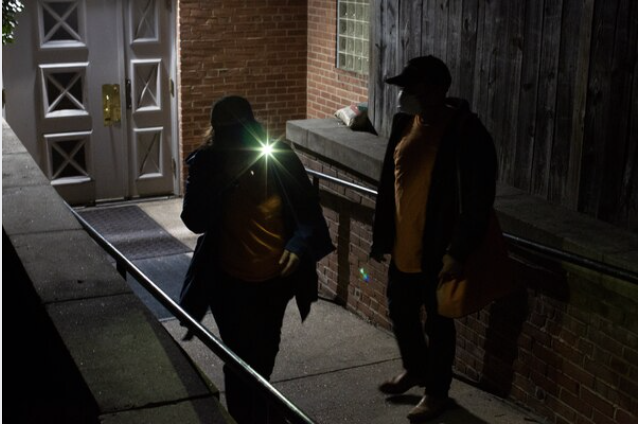
Gabriel Santos and Deborah Taylor of the outreach organization Bethesda Cares hand out fresh socks on March 17, 2020, in Silver Spring, Md. MUST CREDIT: Photo for The Washington Post by Robb Hill

Gabriel Santos and Deborah Taylor of the outreach organization Bethesda Cares hand out fresh socks on March 17, 2020, in Silver Spring, Md. MUST CREDIT: Photo for The Washington Post by Robb Hill
By The Washington Post · Marissa J. Lang, Justin Wm. Moyer, Nitasha Tiku · NATIONAL

WASHINGTON – The man was still yards away when she saw it – a white face mask, glowing in the predawn light.

Gabriel Santos, a homeless-outreach worker, had waked with cold symptoms. Not wanting to expose his clients to illness, he reached for the mask. It would be better this way, he thought. But now, as he approached the woman sheltering outside a building, its other effects became clear.

Gabriel Santos and Deborah Taylor of the outreach organization Bethesda Cares search for homeless people who sleep in various areas of Silver Spring, Md, on March 17, 2020. MUST CREDIT: Photo for The Washington Post by Robb Hill

Gabriel Santos and Deborah Taylor of the outreach organization Bethesda Cares search for homeless people who sleep in various areas of Silver Spring, Md, on March 17, 2020. MUST CREDIT: Photo for The Washington Post by Robb Hill

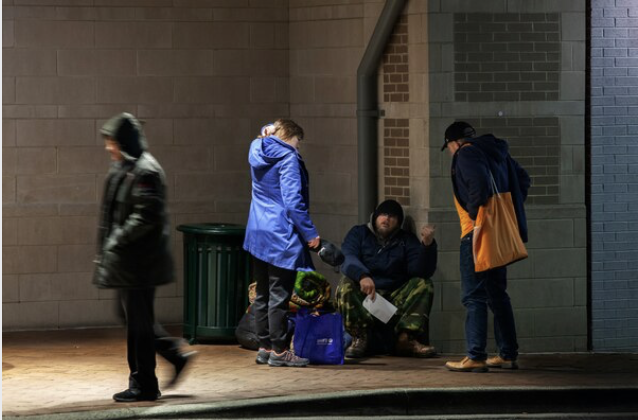
“Don’t come over here with no mask on,” shouted Debra, a chronically homeless woman who sat bundled in a winter coat, a black-and-white blanket pulled over her lap. “I said don’t you come over here!”

Santos pulled the mask down, hoping she would recognize his face. A senior outreach coordinator with the nonprofit Bethesda Cares, Santos sees her often on his morning patrols of suburban Silver Spring, Maryland. But it was no use.

Gabriel Santos and Deborah Taylor, of the outreach organization Bethesda Cares, talk with a homeless person about the coronavirus on March 17, 2020, in Silver Spring, Md. MUST CREDIT: Photo for The Washington Post by by Robb Hill

Gabriel Santos and Deborah Taylor, of the outreach organization Bethesda Cares, talk with a homeless person about the coronavirus on March 17, 2020, in Silver Spring, Md. MUST CREDIT: Photo for The Washington Post by by Robb Hill

“I don’t care who you are!” she shouted again. “Don’t come over here with no mask!”

News of the rapidly spreading coronavirus, which as of Thursday had killed more than 170 people in the United States, has reached America’s homeless. But protocols meant to keep the public safe may do little to protect those without homes to shelter in – and could expose some of society’s most vulnerable people to even greater risk.

From San Francisco to Chicago to Washington, best practices are meeting harsh realities in a patchwork of responses that vary state by state, city by city.

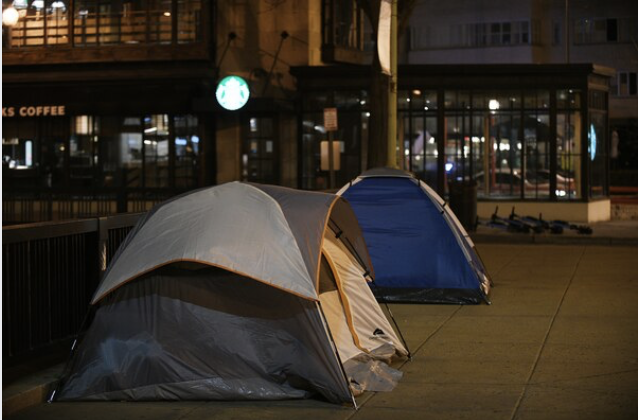
Tents of homeless men and women are set up in Washington, D.C.'s Dupont Circle area on March 16, 2020. MUST CREDIT: Photo for The Washington Post by Astrid Riecken

Tents of homeless men and women are set up in Washington, D.C.’s Dupont Circle area on March 16, 2020. MUST CREDIT: Photo for The Washington Post by Astrid Riecken

Several local and state governments this week have ordered restaurants, coffee shops, libraries and other public gathering places to close – cutting off access to places where homeless people on the street can go to use the bathroom and wash their hands.

Recommendations from the Centers for Disease Control and Prevention say to limit gatherings to 10 people and practice “social distancing,” keeping at least six feet from others. Implementing such guidelines at an emergency shelter meant to house dozens of homeless adults can be impossible.

Michele Hydier, near Washington, D.C.'s Union Station on March 17, 2020, is receiving a fraction of the money she used to receive when panhandling. MUST CREDIT: Washington Post photo by Michael S. Williamson

Michele Hydier, near Washington, D.C.’s Union Station on March 17, 2020, is receiving a fraction of the money she used to receive when panhandling. MUST CREDIT: Washington Post photo by Michael S. Williamson

Covid-19, the disease caused by the coronavirus, hits people over 60 and those with preexisting health conditions hardest. The virus is easily spread through touch and by lack of proper hygiene.

People experiencing homelessness are increasingly older and sicker. Many have underlying health conditions but lack access to primary-care physicians or preventive health screenings. They struggle to find public bathrooms to maintain basic hygiene. Those who live in tent encampments or crowded shelters might be unable to keep their distance from others or self-isolate if they show symptoms.

Even their fiercest advocates – experts who have long served the homeless in their communities – worry about inadvertently putting their clients’ health at risk by simply showing up and doing their jobs.

“The education we’re giving our staff going out and working with this population is they’re not the ones you have to worry about being a possible carrier of this virus right now – you are,” said Betsy Bowman, director for adult and community services at EveryMind, a nonprofit organization that works with the homeless in suburban Montgomery County, Maryland. “You’re the one who went to church and saw your friend who just got back from overseas. It’s more likely that you’re going to give it to them. And if an infection gets into that population, it’s going to be devastating.”

The U.S. Interagency Council on Homelessness estimates there are 567,700 homeless people in the country. The most underserved live in parts of Washington, California, Maine, Oregon and Washington state, according to a Washington Post analysis of data from the U.S. Health Resources and Services Administration.

In the nation’s capital, homeless shelters announced they would stay open around the clock, instead of the usual 12 hours, and emergency measures will allow Mayor Muriel Bowser, D, to temporarily house homeless families for up to 60 days.

Bowser said city officials are working to ensure any homeless person showing symptoms gets appropriate treatment – but what that looks like in practice is not clear.

“If we have a person who is experiencing homelessness who needs to quarantine, we will make sure this happens,” she said.

Wayne Turnage, the city’s deputy mayor for health and human services, said homeless residents are being given hand sanitizer while encampment cleanups – which typically force residents to move their tents before streets are power-washed – have been limited to trash pickups.

Those who stay in Washington shelters are being screened before entering, and residents are required to stay in the same bed in the same shelter to limit movement between facilities. The city’s guidance for homeless-service providers includes checking clients for fever, encouraging hand-washing, staggering bathing and meal times, and moving beds at least three feet apart.

Laura Green Zeilinger, director of the D.C. Department of Human Services, said it’s not known whether anyone in the city’s homeless population has tested positive because the city doesn’t report results based on housing status. She said the city has found space where up to 200 people could self-quarantine if they’re otherwise unable.

Shelter environments do not naturally lend themselves to social distancing behaviors, experts say.

In some shelters, people share rooms and sleep in bunk beds. In others, mats line the floor of empty rooms to squeeze in as many people as possible during the cold winter months. Meals are served and consumed in large cafeterias. Recreation rooms, bathrooms and laundry facilities are shared.

Many shelters do not have room to isolate someone for an extended period. Some already are running low on cleaning supplies, hand sanitizer, food and volunteers to relieve overworked staff. Others have told volunteers to stay home – an effort to limit the number of people in and out of shelters at a time when experts say even asymptomatic people can spread the coronavirus.

“Our homeless services here are countercyclical, so when all these services are shutting down, we have to be in ramp-up mode,” said Shannon Steene, executive director of Carpenter’s Shelter in suburban Alexandria, Virginia, which serves families with children. “The thought of a potential self-quarantine with everyone in the shelter at one time, that is very sobering for me.”

The homeless are exempt from a public health order to “shelter in place” in seven Northern California counties, but officials encouraged them to seek shelter. For many of that region’s most vulnerable residents, it isn’t an option.

The San Francisco Bay area, home to some of the biggest names in the technology sector, also struggles with one of the biggest homelessness crises in the country.

There were more than 8,000 homeless people in San Francisco last year, according to city estimates based on a single night. By other city measurements, the number is more than 17,000.

“When you layer on top of that the coronavirus and mass vulnerability, we’ve moved beyond crisis to something bigger,” said Karen Hanrahan, chief executive of the Glide Foundation, a nonprofit that provides services to the homeless.

San Francisco Mayor London Breed, D, announced a $5 million emergency fund and public health order earlier this month to help vulnerable populations, including the homeless. The money will pay for roving cleaning crews to minimize contagion and support expanded daytime hours at shelters.

Local outreach teams run by nonprofits and the city are offering hand sanitizer and information on how to stay healthy. San Francisco also has deployed additional hand-washing stations on the streets.

The city plans to offer temporary housing to help people exposed to covid-19 who can’t self-isolate, including dozens of recreational vehicles placed in neighborhoods. In its ongoing search for quarantine housing, the city is also looking at unoccupied residential properties and vacant hotel rooms.

Sarah Owens, a spokeswoman for Breed, declined to say how many additional spaces are still needed or whether testing for coronavirus is being done in vulnerable populations, citing patient privacy.

Jennifer Friedenbach, executive director of the nonprofit Coalition on Homelessness, estimated there are about 40,000 people in San Francisco who cannot self-quarantine, because their housing situation does not allow it, including people living on the streets or in shelters, jails or single-room-occupancy hotels.

In a region where many homeless people sleep in tents beneath overpasses, on sidewalks and in parks, Friedenbach said the city’s effort to protect vulnerable populations must include a moratorium on removing tents from encampments.

“I feel like the city is working really hard and trying to come up with stuff as fast as they can,” Friedenbach said. “I don’t think $5 million is going to get us to the place where we’re preventing the spread.”

In the Seattle area, where the first domestic coronavirus case was reported, care providers have been working on social distancing in shelters. Seattle city officials also are funding emergency hotel rooms for the homeless, said Daniel Malone, executive director of the Downtown Emergency Service Center, a homeless outreach organization.

Because testing for the coronavirus remains limited, city spokesman Scott Thomsen, Seattle has focused on spreading its homeless population out as much as possible.

No cases of coronavirus have been reported among Seattle’s homeless, said Malone, who added that the city was in need of additional tests for the homeless.

Tests have remained hard to get, even for those with health insurance and demonstrable symptoms. Shelters and homeless advocacy organizations said they are waiting – just like everyone else – for test kits to be more widely available.

“They’re asking me: ‘What if I want to get tested? Where do I go?’ ” said Kasia Shaw, a nurse practitioner with Arlington Homeless Services Center in Virginia. “I tell them: ‘Well, there are not enough tests. You’re more than welcome to call the emergency room, but they’re going to ask you screening questions, and if you don’t meet the criteria, then they’re just going to tell you to self-isolate.’ ”

Doug Schenkelberg, executive director of the Chicago Coalition for the Homeless, said the homeless population in the Windy City has been “way undertested.” He said a large proportion of Chicago’s homeless live not on the street but in small apartments with many other people.

“These are folks that don’t have stable housing, likely in crowded environments,” he said. “How do you provide support to them? They’re not as easily found as folks on the street or in the shelter system.”

To many advocates for the homeless, the North Star in this health crisis remains the same as it ever was – finding people stable housing.

Michael Clark, 35, has been staying at the men’s shelter in Montgomery County for three months. Though he is taking warnings about the coronavirus seriously, he said he feels as if it is a distraction from his most immediate needs.

“My goal here is to get my life on track,” Clark said. “If it’s not helping me move forward, then I just can’t have anything to do with it.”

Many shelters have begun to formulate no-contact supply drops and lunch donations. Workers and volunteers who assist the homeless are also increasingly anxious about their own safety.

“We have staff coming to work and handling business as usual, but we have volunteers saying, ‘I’m not sure I want to be there. It’s going to be more than 10 people,’ which is true,” said Pam Michell, executive director of New Hope Housing in suburban Virginia. ” ‘It’s really hard to be six feet away,’ which is true.”

Some homeless communities have started to self-police.

Shelter workers said grown men are following one another out of bathroom stalls, shouting to one another to wash their hands. Clients are staggering meal times and taking smoke breaks farther apart.

Washington’s largest homeless encampments are centered around Union Station, where people huddle in tents under two railroad underpasses.

Michele Hydier and her partner often sleep beneath the underpass after a day of panhandling. Business has been slow – on a recent day, she earned $1 and a fruit cup instead of the $20 she normally takes in.

Many stores in the area that encampment residents rely on for bathrooms, for Internet access and to charge their phones are closed. Residents are still leaving food and supplies for those in the encampments – just less of it.

“It’s like people are scared of us,” Hydier said.

Back in Silver Spring, five miles from the National Institutes of Health, a team of street outreach workers were handing out supplies – socks, snacks, a poncho. They did not have hand sanitizer to give. They were out of bottled water.

When Santos, the homeless-outreach worker, reached to hand Debra a bar of soap, she pushed it away.

“What the hell am I going to do with that?” she asked.

“I know they’re closing things down,” said Deborah Taylor, programs director at Bethesda Cares. “I want to make sure you have somewhere to go, to use the bathroom, wash your hands.”

The woman shrugged, her face shrouded by an oversize furry hood.

“I probably don’t,” she said.

Hospital workers battling coronavirus turn to bandannas, sports goggles and homemade face shields amid shortages #ศาสตร์เกษตรดินปุ๋ย

#ศาสตร์เกษตรดินปุ๋ย : ขอบคุณแหล่งข้อมูล : หนังสือพิมพ์ The Nation

https://www.nationthailand.com/lifestyle/30384491?utm_source=category&utm_medium=internal_referral

Hospital workers battling coronavirus turn to bandannas, sports goggles and homemade face shields amid shortages

Mar 20. 2020
By The Washington Post · Ariana Eunjung Cha, Michael E. Miller, Christopher Rowland, Tom Hamburger · NATIONAL, HEALTH
One Seattle-area hospital system has set up its own makeshift assembly line – using parts purchased from Home Depot and craft stores – to create protective face shields for workers. Boston nurses are gathering racquetball glasses to use in place of safety goggles. And in New York, a dialysis center is preparing to use bandannas in place of masks as protection against the novel coronavirus.

Just 11 weeks into a pandemic crisis expected to last months, the nightmare of medical equipment shortages is no longer theoretical. Health-care workers, already uneasy about their risk of infection amid reports of colleagues getting sick and new data showing even relatively young people may become seriously ill, are frustrated and fearful.

“That has really freaked everybody out,” said Elissa Perkins, an emergency medicine physician at Boston Medical Center.

President Donald Trump responded to the growing crisis Wednesday by invoking the Defense Production Act to mobilize war-scale manufacturing for critical items, and federal health officials have announced plans to buy 500 million N95 respirators over the next 18 months.

Also, Vice President Mike Pence said legislation signed Wednesday gives manufacturers protection against lawsuits when selling N95 masks to health-care workers, freeing producers such as 3M and Honeywell to sell tens of millions more per month. But it’s unclear how long it will take get the equipment to the front lines, and many worry that lives may be lost before such efforts catch up to a virus spreading exponentially across the country.

Few hospitals have experienced a crush of coronavirus patients. But many of the supplies have been used up during routine care over the past few weeks, with no more on the way amid global hoarding and the shutdown of equipment factories in China and elsewhere.

Chief among the concerns is the limited supply of personal protective equipment, especially the fitted face masks known as N95 respirators that are able to filter out extraordinarily small particles like viruses. Guidance from the Centers for Disease Control and Prevention previously called for using N95 masks whenever seeing a patient suspected of having covid-19, the disease caused by the novel coronavirus. But last week, the agency changed course as it became clear that demand for N95s would outstrip the nation’s small supply. Now, the CDC says that nurses and doctors only need to wear N95s when performing procedures that might cause the patient to cough or otherwise “aerosolize” the virus, sending it into the air in small particles.

Jordan Asher, a senior vice president at Sentara Healthcare, based in Virginia Beach, said such steps are necessary to stretch out existing stockpiles as long as possible.

“In medicine, we have what is optimal and what is good but still standard of care,” he said. Right now, he said, there aren’t enough resources to be optimal.

But many health-care professionals wonder whether the looser-fitting surgical masks are adequate. Although the CDC and the World Health Organization have said the virus is not airborne, a paper published in the New England Journal of Medicine this week showed that in laboratory conditions where it is aerosolized – similar to what can happen in a hospital when a patient is intubated – the virus may remain infectious in the air for a half-hour.

More than 85,000 health-care providers have signed a Change.org petition that urges the Trump administration to do more to get the critical supplies. Recommendations, they wrote, “should not be based on what’s available; availability should be based on what is necessary.”

Health officials said part of the reason for the shortage relates to the expansion of testing. Some testing sites are using excessive numbers of N95 masks, gowns, gloves and eye protection for simple swab tests. Workers decked out in full head-to-toe protective gear may make for dramatic images in news photos and on TV, they said, but it’s unnecessary.

The gear “is being wasted testing outpatients,” said Demetre Daskalakis, deputy commissioner for the Division of Disease Control at the New York City Health Department.

In a departure from the latest CDC guidance, the city is recommending that only hospitalized patients receive coronavirus tests to preserve masks and other protective equipment. Even with stringent conservation measures, he said, some providers in the city could begin running out of N95 masks and other personal protective equipment in a matter of weeks.

Darrell Pile, CEO of the Southeast Texas Regional Advisory Council, which is responsible for distributing resources to local health providers from the Strategic National Stockpile, said the amount they had received so far is “horribly inadequate to meet existing demand.”

“For those that received them, it might last a week or two,” Pile said, noting that some emergency medical services crews and other health providers had run out of gloves as well as N95 masks. He says he has already doled out all the supplies he received Sunday night, “and the requests just keep coming in.”

Nisha Mehta, a doctor who runs two Facebook communities for physicians with a total of 65,000 members, said many doctors are frustrated with new procedures put in place to conserve equipment.

“We’re normally not supposed to reuse masks from patient to patient,” said Mehta, a radiologist in Charlotte, North Carolina. “But a lot of people are posting that they are getting one for the entire day, if they even have one.”

Kristin Annis, a 36-year-old nurse anesthetist in Northern Virginia, said she understands the need for adjustments as a result of shortages but is concerned for her in-laws who care for her child. “I’m petrified I’m going to bring it home,” she said. “The problem is, this is spreading rapidly. We know we’re not near the peak yet. We know some of these patients are going to be bringing it with them even if they don’t have symptoms.”

Jeffrey Silberzweig, chief medical officer for the Rogosin Institute, which has nine facilities in the New York City area and provides dialysis for 1,400 patients with end-stage kidney disease. He said he has tried everything possible to find more masks, which are used by patients as well as doctors and staff, but will run out of supplies in three to five days. The centers plan to start using face shields along with bandannas as a substitute – a setup recommended by the CDC as “a last resort.”

“It is far from ideal but it is better than no solution at all,” he said.

Perkins, the emergency medicine physician, said Boston Medical Center still has a six-week supply of N95s, but doctors and nurses have been told they must conserve them by restricting their use to aerosolizing procedures. That leaves health-care workers potentially exposed not only when examining people with flu-like symptoms but also those with completely unrelated symptoms who might nevertheless have the virus, she said.

“We are being asked to conserve our best [personal protective equipment] now for more dangerous situations later on, but that is exposing us to dangerous situations now,” Perkins said.

Asher said he has hope that old-fashioned American ingenuity will help us out of this situation. Wednesday morning, he reviewed draft plans for homemade equipment shared by hospitals on the West Coast, and he has been following the large, open-source efforts by engineers and hackers to create new products to make up for the shortfalls.

“This country has been incredible about producing new equipment in the past . . . I think we need to stay positive,” he said.

One of the most creative efforts occurred at Providence St. Joseph Health, which has 51 hospitals in several states. Using a face shield design found online by their top infection control executive, Becca Bartles, and materials that quality control overseer Jennifer Bayersdorfer purchased at retail outlets, they fashioned 500 masks to distribute to doctors and nurses Tuesday night.

Amy Compton-Phillips, chief clinical officer for Providence, said the hospital system has been emailing the design to other health-care centers and ordinary people across the country who want to help:

“I feel like it’s a way to knit your socks like in World War II,” she said. “Until we can get supply lines up and running, this will be a way for Americans to contribute to the war against covid.”

A wealth of resources #ศาสตร์เกษตรดินปุ๋ย

#ศาสตร์เกษตรดินปุ๋ย : ขอบคุณแหล่งข้อมูล : หนังสือพิมพ์ The Nation

https://www.nationthailand.com/lifestyle/30384460?utm_source=category&utm_medium=internal_referral

A wealth of resources

Mar 19. 2020
Roxanne Roberts is a reporter covering Washington's social, political and philanthropic power brokers. She has been at The Washington Post since 1988, working for the Style section as a feature writer and columnist.

Roxanne Roberts is a reporter covering Washington’s social, political and philanthropic power brokers. She has been at The Washington Post since 1988, working for the Style section as a feature writer and columnist.
By The Washington Post · Roxanne Roberts · FEATURES, HEALTH

The rich are not different. They can get sick and die. Just like the rest of us.  But they have more options, and one of those options is to throw money at the coronavirus.

So they’re fleeing to their country homes. Chartering private jets. Putting their doctors on speed dial and getting home visits. They have pantries full of food and toilet paper. None of these is a guarantee against contracting a deadly disease, but it reduces their exposure and allows them to get treatment sooner.

It’s been this way throughout history. The rich have always fared better during a public health crisis. The poor are exposed at greater rates, get sicker because often they aren’t as healthy to begin with and have higher mortality rates.

“The wealthy have often done better than the poor when faced with epidemics and pandemics because they tend to be resilient as a function of having greater resources,” says Richard Keller, a professor of medical history and bioethics at the University of Wisconsin-Madison.

So it was, so it is, so it always will be. When President Donald Trump was asked Wednesday why athletes and other well-connected people are getting tested before everyone else, he said, “Perhaps that’s been the story of life.”

Will it be any different this time?

– – –

The streets of Palm Beach are empty. The boat show is canceled, as is this weekend’s International Red Cross Ball, one of the season’s leading social events.

The exclusive Florida enclave is home to some of the richest people in the country and some of the oldest. Last week, a man infected with conoravirus flew from New York to West Palm Beach, causing a quiet freakout among the regulars on the island. So the sidewalks in front of the beautiful mansions on this man-made paradise have proverbially rolled up.

“People are staying in place,” says Shannon Donnelly, longtime social editor of the Palm Beach Daily News. “Everything has been canceled.”

The wealthy are hunkering down in their very big houses, and telling staff to stay home or work half days. They’ve just discovered home grocery delivery. Prices are high – as usual – but not out of control. High-end stores are open, but who is going out?

“There’s not a bottle of Purell in Tiffany’s window – yet,” says Donnelly.

One business-as-usual site had been Mar-a-Lago, where Trump and his family celebrated together less than two weeks ago, when some thought coronavirus was still something to joke about. Now club regulars are staying home because the virus doesn’t care how rich or powerful you are.

Not everyone can stay in place. For those who want or need to fly, demand for private jets has soared.

“We have seen a substantial increase in the desire to fly private,” says Stephanie Chung, president of JetSuite, a top luxury rental company. “In the past few weeks and particularly this past week we have seen an uptick of about 5 to 10 percent in new inquiries from travelers that have not flown private in the past.”

New customers include families traveling for spring break and corporate clients restricted from flying commercially who are able to spend up to $7,000 an hour for a charter flight. And this isn’t just about the plane: Many clients have expressed fear of traveling through large airports, especially after seeing news reports of crowds crammed into Chicago’ O’Hare and New York’s JFK. Most private planes fly out of small terminals reserved for VIP customers.

Chung’s current sales pitch is anti-virus focused: “For those that are looking to minimize mass public exposure, private jet travel allows passengers to avoid crowds in security lines and large waiting areas as boarding is often conducted immediately upon arrival at the airport. Furthermore, our aircraft have significantly fewer guests per flight and are regularly cleaned with solvents that target the coronavirus. There are ample hand sanitizers and other options to maintain maximum hygiene while onboard our aircraft.”

On Friday, supermodel Naomi Campbell shared a video of her commercial flight from Los Angeles to New York City wearing a white hazmat suit, safety goggles, a medical face mask and purple gloves. “We have to do what we have to do,” she explained to her fans. Before the flight, Campbell had acupuncture on her ears to “reset the nervous system.” Other celebrities have posted photos of themselves wearing designer protective masks that retail for hundreds of dollars.

Campbell did not share where she was headed, but many of the wealthy residents of Manhattan have already fled to their country or beach homes. The theory is that they’re less likely to be exposed to coronavirus in smaller communities, and self-isolation has historically proved to be a survival strategy for the rich. Unless, of course, they’re already exposed and carrying the virus to those very same communities.

One wealthy Washington,D.C., woman, who discussed her plan for dealing with the pandemic on the condition of anonymity, is considering decamping to her second home located in a small town of less than 10,000 in upstate New York. “Because it’s such a rural community with so few people, there are no reports of covid-19 so far,” she explained. On paper, that sounds good: She and her husband are both older than 65 with underlying medical issues, which puts them at high risk. The down side: Rural communities have fewer Level One trauma centers, which means that they have fewer options should either of them get sick.

Which is why doctors with concierge service are suddenly in high demand. The idea is simple. Clients pay an annual fee which allows the doctors to spend more time with fewer patients. It’s the modern version of the small-town general physician who’s been taking care of families for decades.

Jim Long, who has a solo practice in Fairfax, Virginia, has spent most of the past couple weeks talking calls. “I’m spending a lot of time on the phone and texts,” he says. “Having access in real time provides a kind of reassurance and an added sense of security. I’ve had to quell the hysteria.”

Long’s practice isn’t just for the rich, but his clients – about 60 percent are older than 60 – pay about $2,000 a year for the personal attention and access a concierge physician can provide. He started sending email blasts to his patients two weeks ago and gives everyone masks before they enter his office.

Last week, he got 10 coronavirus testing kits. “We don’t get them faster than anyone else,” says Long. One of his patients wanted the test so he could visit his elderly mother; he was asymptomatic and didn’t get a test. The only patient who’s been tested so far was a robust man with a severe fever and cough who tested negative for flu. The novel coronavirus results are pending.

Some concierge services are even more exclusive. Clients with MD2, which has practices in New York, Beverly Hills, McLean, Virginia, and other high-income locations, pay $15,000-$25,000 annually for doctors who serve only 50 families. The headquarters is just outside of Seattle, where the fear is even greater and their doctors are making house calls wearing protective suits and masks.

“A lot of people want tests,” says JoAnn Ollila, director of marketing. But MD2, like most other practices, is using the coronavirus tests for patients who show symptoms. Instead, they’re urging patients to call doctors at any time to assess their risk and help everyone stay calm. “Everyone’s greatest fear is being alone at their greatest time of need.”

– – –

Throughout history, scholars, scientists and philosophers have wrestled with the stark fact that the most of the rich survive plagues and pandemics while the poor die cruelly.

“The Decameron,” set in 1348, is a masterpiece of classical early Italian prose by Giovanni Boccaccio. You probably studied it in school: Seven women and three men tell 100 witty tales while staying at a secluded villa outside of Florence. In the fictional account, the 10 had fled to the villa to escape the Black Death. The plague ravaged the Italian city, with bodies piled up in the streets. About half of the population died.

Historians believe the disease killed about 75 million people, a third of Europe’s population overall, and most of the victims were poor. “Plague is primarily an urban phenomenon,” says Keller. As with most pandemics, the disease spread quickly among those living in close quarters, catching the blood-borne bacteria from fleas that fed off infected rats and then bit humans.

The rich fled to the country side – their own homes or that of relatives – sometimes escaping the plague but occasionally carrying it with them in their textiles or food supplies. Mortality demographics are hard to pinpoint before the 19th century, but it is believed that the wealthy fared far better because they were better fed and healthier to begin with.

Cholera is the “health and wealth story of the 19th century,” explains Keller. The first pandemic began in Jessore, India, in 1817 – where hundreds of thousands died – and reached Europe by 1831, killing 6,500 in London and 18,000 in Paris. Almost all of these deaths occurred in the poorest, most-crowded sections of the cities, the product of contaminated food or water.

But tuberculosis was the deadliest disease in that century, especially in France, where it killed about 100,000 annually. “The rich were able to send a sick relative to a sanitarium to live in isolation,” says Keller. “Population density was really the critical issue: It killed the poor in far greater numbers than the rich.”

The last time Americans faced a global pandemic was 1918, when Spanish flu ravaged the globe. Health-care systems, already crippled by soldiers returning from World War I, were overwhelmed by the fast-moving influenza. Transmitted by soldiers returning from World War I, it affected families up and the social strata – even President Woodrow Wilson was infected. The death toll in the United States was 675,000; historians believe the worldwide toll was 50 million.

– – –

In 1842, Edgar Allan Poe wrote “Masque of the Red Death.” The short story, one of Poe’s best, is set in a fictional country where a gruesome disease called the Red Death has ravaged the land. (Sounds familiar? Roger Corman made it into a 1964 horror film starring Vincent Price.)

The ruler, Prince Prospero, is not afraid. He closes his palace to all except a thousand of his favorite knights and ladies, then welds the doors shut. “With such precautions the courtiers might bid defiance to contagion,” writes Poe. “The external world could take care of itself. In the meantime it was folly to grieve or to think. The prince had provided all the appliances of pleasure. There were buffoons, there were improvisatori, there were ballet-dancers, there were musicians, there was Beauty, there was wine. All these and security were within. Without was the ‘Red Death.'”

One night, the prince decides to host a masquerade ball for his friends. At midnight, a guest arrives wearing a mask of a corpse and a costume like a funeral shroud. Prospero is furious at the tasteless display; his guests shrink away. The prince confronts the figure and immediately dies.

You can guess what happens next: Everyone else in the castle dies. “And Darkness and Decay and the Red Death held illimitable dominion over all,” concludes Poe.

It’s fiction, of course.

Coronavirus will radically alter the U.S. #ศาสตร์เกษตรดินปุ๋ย

#ศาสตร์เกษตรดินปุ๋ย : ขอบคุณแหล่งข้อมูล : หนังสือพิมพ์ The Nation

https://www.nationthailand.com/lifestyle/30384452?utm_source=category&utm_medium=internal_referral

Coronavirus will radically alter the U.S.

Mar 19. 2020
File  photo by Syndication Washington Post

File photo by Syndication Washington Post
By The Washington Post · William Wan, Joel Achenbach, Carolyn Y. Johnson, Ben Guarino · NATIONAL, HEALTH 

When Jason Christie, chief of pulmonary medicine at Penn Medicine, got projections on how many coronavirus patients might soon be flocking to his Philadelphia hospital, he said he felt physically ill.

“My front-line providers – we were speaking about it in the situation report that night, and their voices cracked,” Christie said on Wednesday. They saw how quickly the surge would overwhelm the system, forcing doctors to make impossible choices – which patients would get ventilators and beds, and which would die.

“They were terrified. And that was the best-case scenario.”

Experts around the country have been churning out model after model – marshaling every tool from math, medicine, science and history – to try to predict the coming chaos unleashed by the new coronavirus and to make preparations.

At the heart of their algorithms is a scary but empowering truth: What happens next depends largely on us – our government, politicians, health institutions and, in particular, 327 million inhabitants of this country – all making tiny decisions on an daily basis with outsize consequences for our collective future.

In the worst-case scenario, America is on a trajectory toward 1.1 million deaths. That model envisions the sick pouring into hospitals, overwhelming even makeshift beds in parking lot tents. Doctors would have to make agonizing decisions about who gets scarce resources. Shortages of front-line clinicians would worsen as they get infected, some dying alongside their patients. Trust in government, already tenuous, would erode further.

That grim scenario is by no means a foregone conclusion – as demonstrated by the less dire death counts in countries such as Germany that have taken aggressive steps to bolster their health system.

If Americans embrace drastic restrictions and school closures, for instance, we could see a death toll closer to thousands and a national sigh of relief as we prepare for a grueling but surmountable road ahead.

– – –

Doing that will require Americans to “flatten the curve” – slowing the spread of the contagion so it doesn’t overwhelm a health-care system with finite resources. That phrase has become ubiquitous in our national conversation. But what experts have not always made clear is that by applying all that downward pressure on the curve – by canceling public gatherings, closing schools, quarantining the sick and enforcing social distancing – you elongate the curve, stretching it out over a longer period of time.

Success means a longer – though less catastrophic – fight against the coronavirus. And it is unclear whether Americans – who built this country on ideals of independence and individual rights – would be willing to endure such harsh restrictions on their lives for months, let alone for a year or more.

This month began with U.S. officials recommending actions such as hand-washing and social distancing. By Sunday, the Centers for Disease Control and Prevention was warning against gatherings of 50-plus people. By Monday, President Donald Trump had made an abrupt turn from encouraging Americans to go on with their lives, to urging them to work from home, not meet in groups of more than 10, and calling on local officials to close schools, bars and restaurants. (Getting the public to comply has been alarmingly difficult. Young revelers from Bourbon Street to Miami have ignored those pleas, as have some elderly, who are at highest risk.)

Trump’s sudden shift was driven by an alarming new scientific model, developed by British epidemiologists and shared with the White House. The scientists bluntly stated the coronavirus is the most serious respiratory virus threat since the Spanish Flu of 1918. If no action to limit the viral spread were taken, as many as 2.2 million people in the United States could die over the course of the pandemic, according to epidemiologist Neil Ferguson and others at the Imperial College Covid-19 Response Team.

Adopting some mitigation strategies to slow the pandemic – such as isolating those suspected of being infected and social distancing of the elderly – only cuts the death toll in half to 1.1 million, although it would reduce demand for health services by two-thirds.

Only by enacting an entire series of drastic, severe restrictions could America shrink its death toll further, the study found. That strategy would require, at minimum, the nationwide practice of social distancing, home isolation, and school and university closures. Such restrictions would have to be maintained, at least intermittently, until a working vaccine is developed, which could take 12 to 18 months at best.

The report’s conclusion: This is “the only viable strategy.”

– – –

Here is another thing that hasn’t been spelled out in our national conversation about flattening the curve: There will probably be more than one curve.

If we’re lucky, the coming months will probably look more like string of hilly bumps, say epidemiologists. If authorities ease some measures in coming months or if we start letting them slip ourselves, that hill could easily turn right back into the exponential curve that has cratered Italy’s health system and that U.S. officials are desperately trying to avoid replicating.

Climbing this first bump is in many ways the most challenging because it involves persuading people to change their individual behaviors for an abstract larger good – and because no one knows how far we actually are from the peak.

On Tuesday morning, New York Gov. Andrew Cuomo, a Democrat, said infections in his state are expected to peak in 45 days – at the start of May. The state has roughly 53,000 hospital beds, including 3,000 intensive-care beds – way short of the projected need for as many as twice that number of beds and as many as 11 times the number of ICU beds.

A day earlier, Northwell Health – whose 23 hospitals and 800 outpatient centers make up New York’s largest health system – canceled all elective surgeries in its hospitals to free up staff and space. It has 5,500 beds.

“We’re looking at Italy, which is currently 10 days ahead of us, and what they’ve had to do,” said Maria Carney, Northwell’s chief of geriatrics. Carney was health commissioner for New York’s Nassau County during the 2009 H1N1 outbreak and has worked furiously on Northwell’s plans to prepare for the coming tsunami.

One reason she and others are alarmed: In China, the fatality rate in Wuhan, the raging epicenter, was 5.8%. But in all other areas of the country it was 0.7% – a signal that most deaths were driven by an overwhelmed health system.

And U.S. hospitals are pinched as it is, with some already running at 95% capacity pre-coronavirus, Carney noted. As cases surge, Northwell plans to place multiple beds in single rooms. Its ambulances will also shuttle patients to less crowded satellite sites. Those suffering from ordinary emergencies – strokes, heart attacks, car accidents – may find themselves routed to other facilities away from ERs to avoid transmission.

But it’s unclear if it will be anywhere near enough.

Staffing shortages are already developing: As of Tuesday, 18 Northwell employees had already tested positive for the coronavirus. More than 200 were self-quarantined as a result of potential exposures, foreshadowing what is likely to come.

If the numbers next month get truly crazy, cities may look to convert stadiums into isolation wards, as in Wuhan. Cuomo has talked of turning the six-block-long Javits Convention Center on New York City’s west side into a medical surge facility. Others might take Italy’s approach and split hospitals into those treating coronavirus and those treating all other medical problems, to reduce transmission.

In San Francisco, we may see coronavirus patients put into RVs. In Takoma Park, Maryland, the old Washington Adventist Hospital site, which shuttered in 2019, could suddenly find its doors reopened.

– – –

As America enters this utterly unfamiliar territory, some experts have turned to history for glimpses of what to expect in the months ahead.

Initially leery of alarming the public, they have increasingly compared this pandemic to the 1918 Spanish flu, the deadliest in modern history. It infected roughly a third of the world’s population and killed at least 50 million people, including at least 675,000 in the United States.

Like the hilly bumps experts foresee in coming months, the 1918 pandemic hit America in three waves – a mild one that spring, the deadliest wave in fall and a final one that winter.

With each wave came a cycle of denial, devastation, community response finally kicking into overdrive – always followed by finger-pointing and blame among leaders and the public.

“Every outbreak is different,” said medical anthropologist Monica Schoch-Spana, who spent months digging through archives to study how Spanish flu played out in Baltimore.

Like coronavirus is likely to do, the 1918 flu overwhelmed hospitals. Unable to get help, desperate families waited outside to beg and try to bribe doctors for treatment. In a three-week period, 2,000 died in Baltimore alone. Mortuaries ran out of caskets. When the bodies finally reached cemeteries, the gravediggers were so ill, no one could bury the dead.

Economic pressure on business owners and workers caused public resistance to adopt – and stick with restrictions. The crisis brought out the best in Baltimoreans – with sewing circles churning out gauze masks and hospital bedding, and neighbors donating food and services.

But it also brought out the worst – xenophobic conspiracy theories that nurses of “German extraction” were deliberately infecting people. African American patients were kept out of most hospitals under Jim Crow-era segregation.

“Pandemics aren’t just physical,” said Schoch-Spana. “They bring with them an almost shadow pandemic of psychological and societal injuries as well.”

– – –

Stanford virologist Karla Kirkegaard said she has tried to stave off dread from the projected U.S. death toll with a case study she teaches in her classes:

Amid a cholera outbreak in mid-19th century London, as panicked residents fled one hard-hit neighborhood, a doctor named John Snow calmly entered the breach. He deduced that the source of hundreds of deaths was a single contaminated water pump and persuaded authorities to remove the pump’s handle – a strategy that ended the outbreak.

Controlling the covid-19 pandemic will take much more than a single water pump, Kirkegaard acknowledged as she sheltered in place at her Bay Area home.

But the story, she said, reminds her how powerful the simple act of one individual can be.

Pre-symptoms virus tests prove nothing, MD says #ศาสตร์เกษตรดินปุ๋ย

#ศาสตร์เกษตรดินปุ๋ย : ขอบคุณแหล่งข้อมูล : หนังสือพิมพ์ The Nation

https://www.nationthailand.com/lifestyle/30384417?utm_source=category&utm_medium=internal_referral

Pre-symptoms virus tests prove nothing, MD says

Mar 19. 2020
By The Nation

Online and in the street, many people are saying that everyone should be tested for Covid-19 infection and it should be free, but there’s a caveat to consider: If the test isn’t done correctly, a “negative” might mean only “no infection found”, as opposed to “not infected”.

It could even be a false negative, masking the dire truth.

Dr Opas Karnkawinpong

Dr Opas Karnkawinpong

In a talk this week, Dr Opas Karnkawinpong, head of the Health Ministry’s Department of Medical Sciences, said there are two ways to detect Covid-19 infection:

• A real-time reverse transcription polymerase chain reaction (RT-PCR) test, which looks for the virus in the cells of mucus from the throat or tissue from behind the nasal cavity. If infection might be present in the lungs, sputum from the lungs is examined. Care must be taken to prevent environmental contamination, so the test has to be done in a proper laboratory. It takes 2.5-3 hours to get a result and costs Bt2,500.

• The “rapid test”, which assesses immunity after the immune system has begun fighting the virus. it takes 15-30 minutes. Imported test kits cost Bt500, but the department is developing its own, which will cost Bt200.

Opas said laboratory testing is beneficial in determining whether there is infection, in helping monitor, prevent and control an infection, and in supplying epidemiological data to guide measures to control the diseases and gauge the efficacy of vaccines.

During the Covid-19 incubation period of about 14 days, before any symptoms become apparent, a respiratory test can determine if there is infection, but it’s a tricky process and the virus might easily escape detection, Opas said.

If the test result is negative, the examiner can only conclude “virus not found”, but that doesn’t mean “not infected”. Infection only becomes easily detected after symptoms appear.

“If you get sick, you have to go to the lab again,” he said. “If you have the symptoms, infection will be detected 100 per cent, and this is when the testing becomes useful in diagnosing and controlling the disease.”

Midway through the incubation period, 5-7 days after infection, the immune system should be at work and a blood sample will show the state of immunity, Opas said. A positive result indicates an immune response, but it remains unclear what stage the infection has reached, so any such result “is likely to be useless”. He nevertheless recommends undergoing a blood test if there is suspicion of infection.

“Leave it to medical personnel or health officials to interpret every result. Don’t try to check yourself or interpret the results yourself. That requires lab study. Not everyone can immediately know whether they’re infected or not,” he said. “The Health Ministry conducts free respiratory-infection diagnoses and blood tests to monitor disease control.”

The Department of Medical Sciences has certified 40 laboratories to test for Covid-19. They have the combined capacity to examine 4,000-5,000 samples per day, but currently are receiving only about 500 samples a day.

The ministry will soon have 100 labs in the system, increasing the potential capacity to 10,000 samples per day.

Covid-19 hits doctors, nurses, EMTs, threatening health system #ศาสตร์เกษตรดินปุ๋ย

#ศาสตร์เกษตรดินปุ๋ย : ขอบคุณแหล่งข้อมูล : หนังสือพิมพ์ The Nation

https://www.nationthailand.com/lifestyle/30384294?utm_source=category&utm_medium=internal_referral

Covid-19 hits doctors, nurses, EMTs, threatening health system

Mar 18. 2020
File photo

File photo
By The Washington Post · Lenny Bernstein, Shawn Boburg, Maria Sacchetti, and Emma Brown · NATIONAL, HEALTH

Dozens of health care workers have fallen ill with covid-19 and more are quarantined after exposure to the virus, an expected but worrisome development as the U.S. health system girds for an anticipated surge in infections.

From hotspots such as the Kirkland, Washington nursing home where nearly four dozen staff tested positive for coronavirus, to outbreaks in Massachusetts, Pennsylvania, California and elsewhere, the virus is picking off doctors, nurses and others needed in the rapidly expanding crisis.

“We all suspect it’s the tip of the iceberg,” said Liam Yore, a board member of the American College of Emergency Physicians.

“The risk to our health care workers is one of the great vulnerabilities of our health care system in an epidemic like this,” he said. “Most ERs and health care systems are running at capacity in normal times.”

Gauging how badly providers have been hit is difficult because no nationwide data have been released by the U.S. Centers for Disease Control and Prevention, medical associations or health care worker unions. A federal official who was not authorized to speak with the media said the government has received reports of more than 60 infections among health care workers. More than a dozen are related to travel. Authorities are investigating how the others became sick.

In previous outbreaks of infectious disease and in other countries where the current pandemic arrived earlier, health care workers have experienced a disproportionate share of infections. They have been put at risk in the U.S. not only by the nature of their jobs, but by shortages of protective equipment such as N95 face masks and government bungling of the testing program, which was delayed for weeks while the virus spread around the country undetected.

At EvergreenHealth hospital in Kirkland, Washington – just miles from the nursing home at the center of the U.S. outbreak – and in Paterson, New Jersey, two emergency physicians are hospitalized in critical condition with covid-19, according to their professional association. It is unclear whether the doctors, in their 40s and 70s respectively, were infected at their hospitals or in their communities, the organization said.

“As emergency physicians, we know the risks of our calling,” its president, William Jaquis, said in the statement.

In Pittsfield, Massachusetts, 160 employees of Berkshire Medical Center have been quarantined at home after exposure to patients who tested positive, forcing the medical center to hire 54 new nurses who began arriving Friday, according to news reports.

A provider has tested positive at Johns Hopkins Medicine. That former employee of NYU Winthrop Hospital in Mineola, New York infamously flew from New York to Florida last week while awaiting results of a test that ultimately showed he was positive, a spokeswoman told The Washington Post. In Philadelphia, St. Christopher’s Hospital for Children shuttered its intensive care unit to new patients and closed a trauma unit when a physician tested positive, the Philadelphia Inquirer reported.

Caregivers outside hospitals and nursing homes may be even more vulnerable.

A 36-year-old firefighter and emergency medical technician in Santa Cruz, Califorina, who was denied a test early this month because he didn’t meet strict government criteria then in force, tested positive for the virus late last week.

“This, to me, was the failure of the public health system,” said his wife, who also has tested positive and spoke on the condition of anonymity because she fears her family will be unfairly blamed for exposing others. “This was a decision made because there weren’t enough tests to prioritize my husband.”

On Mar. 9 the couple learned that one of the EMT’s co-workers had tested positive after being hospitalized. At that point, based on their contact with someone with a confirmed infection, they both were tested.

“As EMTs, they are going into these vulnerable communities, going into convalescent homes, literally responding to and interacting with the most vulnerable people,” she said.

Eight firefighters in nearby San Jose also have tested positive for the virus in recent days, according to news accounts. In Kirkland, 42 of 100 members of the Fire Department and a few police officers were quarantined, some after responding to 911 calls from the Life Care Center nursing home.

Others caught the virus as it spread through their community, said a spokeswoman for the city. Five firefighters remained in quarantine Monday and one has tested positive for the virus.

A Life Care health worker in her 40s was one of the first known people to test positive in Seattle’s King County, public health officials announced on Feb. 29. A third of the 180-member staff remained out on Friday with covid-9 symptoms, said Timothy Killian, a Life Care spokesman.

Because the testing program has lagged,health care workers often have no way to know whether people walking through the door with respiratory symptoms are suffering from the flu or covid-19, providers said. Even when precautions were taken, the virus has found its way into health care facilities.

At a Veterans Affairs hospital in Tucson, 23 people with respiratory symptoms were brought to an outpatient clinic with no protections for staff except masks, said a doctor who works at the facility. She asked to speak anonymously because she is not authorized to discuss care with the news media. Later, the patients tested positive for coronavirus.

“They’re not doing the testing,” she said. “They marched them through the hospital to my clinic. They put masks on them, but nothing else.”

Marcelo Venegas, a doctor at an urgent-care center in Queens, New York, woke up on Thursday morning with symptoms consistent with covid-19, including shortness of breath and a low-grade fever. His flu test came back negative, and a coronavirus test is still pending. He is now is quarantined at home in Teaneck, New Jersey, until at least Friday.

Venegas has seen two patients who had confirmed covid-19 infections and more than a dozen others whom he suspected of covid-19. Many were younger than 50 and had negative tests for the flu. Venegas said he wanted to test at least 20 people for coronavirus but didn’t bother because he knew they would not fit the tight eligibility criteria.

Venegas said he’d called in sick only twice before in eight years on the job. “Being sick is daunting,” he said. “I’m never sick.”

During Monday’s briefing on the pandemic, Vice President Mike Pence stressed that health care workers and people older than 65 would receive priority as the government increases the number of testing sites.

“We’re putting a real priority on our extraordinary health-care workers,” Pence said.

But the risks of caring for infectious, seriously ill people under the pressure of a pandemic are almost impossible to avoid. In hard-hit Italy, for example, 20% of health care professionals in the Lombardy region have become infected with the virus, according to a March 13 update in the medical journal The Lancet. In China, 3,387 health-care workers were infected by Feb. 24, almost all in Hubei province, the center of the outbreak, according to Chinese health authorities.

In the 2003 SARS outbreak in Toronto, most cases were acquired in hospitals. Of the 44 people who died, two were nurses and one a doctor. During the Ebola outbreak of 2014-2016, more than 8% of Liberian health care workers died.

“If there are large numbers of health-care workers exposed, how do we manage that and keep them out of health-care facilities?” asked former CDC Director Tom Frieden. ” . . . You eliminate your ability to respond.”

U.S. coronavirus testing stalled for six weeks. A small German lab made 1.4 million tests in that time. #ศาสตร์เกษตรดินปุ๋ย

#ศาสตร์เกษตรดินปุ๋ย : ขอบคุณแหล่งข้อมูล : หนังสือพิมพ์ The Nation

https://www.nationthailand.com/lifestyle/30384211?utm_source=category&utm_medium=internal_referral

U.S. coronavirus testing stalled for six weeks. A small German lab made 1.4 million tests in that time.

Mar 17. 2020
By The Washington Post · Peter Whoriskey, Neena Satija · NATIONAL, WORLD, HEALTH, EUROPE

 When Olfert Landt heard about the novel coronavirus, he got busy. The founder of a small Berlin-based company, the ponytailed 54-year-old first raced to help German researchers come up with a diagnostic test and then spurred his company to produce by the end of February more than 1.4 million tests for the World Health Organization.

“My wife and I have been working 16 hours a day, seven days a week, ever since,” said Landt by phone about 1 a.m. Friday, Berlin time. “Our days are full.”

By contrast, over the same critical period, U.S. efforts to distribute tests ground nearly to a halt, and the country’s inability to produce them left public health officials with limited means to determine where and how fast the virus was spreading. From mid-January until Feb. 28, fewer than 4,000 tests from the U.S. Centers for Disease Control and Prevention were used out of more 160,000 produced.

The United States’ struggles, in Landt’s view, stemmed from the fact the country took too long to use private companies to develop the tests. The coronavirus pandemic was too big and moving too fast for the CDC to develop its own tests in time, he said.

“There are 10 companies in the U.S. who could have developed the tests for them,” Landt said. “Commercial companies will run to an opportunity like this.”

As the coronavirus continues to spread across the United States, causing more than 70 deaths and more than 4,000 confirmed cases, the struggles that overwhelmed the nation’s testing are becoming clearer.

First, the CDC moved too slowly to tap into the expertise of academia and private companies such as Landt’s, experts said. For example, it wasn’t until last week that large companies such as Roche and Thermo Fisher won approval from the Food and Drug Administration to produce their own tests.

While FDA and CDC officials have attributed some of the testing delays to their determination to meet exacting scientific standards they said were needed to protect public health, the government effort was nevertheless marred by a widespread manufacturing problem that stalled U.S. testing for most of February.

The CDC has yet to fully explain the nature of the manufacturing problem but told The Washington Post on Monday that the design of the test could also have resulted in flawed tests.

But the U.S. Department of Health and Human Services, which oversees the CDC, said earlier this month that it is investigating the defect in many of the initial coronavirus test kits.

It has been long-standing practice for CDC scientists in emergencies to develop the first diagnostic tests, in part because the CDC has access to samples of the virus before others, officials said. Later, private companies that win FDA authorization can scale up efforts to meet demand.

In responses for this report, CDC spokesman Benjamin Haynes said in a statement: “This process has not gone as smoothly as we would have liked. . . . CDC has a responsibility to ensure that all CDC laboratory research and development activities, testing processes, and data are the highest possible quality and are traceable, reproducible, and documented with appropriate rigor.”

He said the manufacturing problem may have arisen because of the test’s design or because of contamination.

Finally, acknowledging that there “is a great need for test manufacturers to rapidly make testing available,” the statement said that “commercial labs are working to develop their own tests and hopefully will be available soon for clinical settings throughout the country.”

But critics say government officials should have moved much more quickly to bring on expertise from outside the CDC.

“The CDC has good scientists and they are proud,” Landt said. “But in this situation, they took the wrong approach.”

– – –

At the very beginning, U.S. efforts to develop a diagnostic test for the coronavirus kept pace with the rest of the world.

Shortly after publication of the virus’s genome in early January, German researchers announced that they had designed a diagnostic test. Then, within days, scientists at the CDC said they’d developed one, too, and even used it detect the first U.S. case.

“We actually do have laboratory diagnostics here at CDC that are stood up,” Nancy Messonnier, the CDC’s director of the National Center for Immunization and Respiratory Diseases, told reporters Jan. 17.

From there, however, U.S. efforts fell behind quickly, especially when compared with the efforts of the WHO, which has distributed more than 1 million tests to countries around the world based in part on the method developed by the German researchers.

As early as Feb. 6, four weeks after the genome of the virus was published, the WHO had shipped 250,000 diagnostic tests to 70 laboratories around the world, the agency said.

By comparison, the CDC at that time was shipping about 160,000 tests to labs across the nation – but then the manufacturing troubles were discovered, and most would be deemed unusable because they produced confusing results. Over the next three weeks, only about 200 of those tests sent to labs would be used, according to CDC statistics.

In fact, the U.S. efforts to distribute a working test stalled until Feb. 28, when federal officials revised the CDC test and began loosening up FDA rules that had limited who could develop coronavirus diagnostic tests.

During that critical interval, the CDC repeatedly assured the public that progress was being made, even as public health officials around the country began to raise alarms about the shortage of tests.

In January, CDC officials boasted during the coronavirus briefings that the United States has “one of the strongest public health systems in the world.”

At briefing on Feb. 12, Messonnier said “rapid development of a diagnostic and rapid deployment to the states” is “clearly a success.”

On Feb. 14, she said: “We can be proud. . . . We moved quickly.”

On Feb. 21, Messonnier acknowledged problems with the testing kits but described the issues as “normal.”

But by that point, public health labs around the nation had run very few of the CDC tests, according to the agency. Health officials across the country began pleading for a test that worked, or at least the authorization to use another test.

– – –

In the absence of tests, the calls for the United States to tap into the expertise of academia, hospitals and private companies, such as Landt’s, grew more insistent.

“It took [the CDC] a while to come up with the test, honestly,” said Alex Greninger of the University of Washington.

His lab had developed its own test and began seeking approval to use it on patients on Feb. 18. But that test, along with others that had been developed in various academic centers and hospitals, could not be used on patients until the FDA relaxed its testing rules on Feb 28.

He noted that many of the state public health labs had also figured out how to use the CDC test properly – by tossing one of its components – but were not allowed to actually do so until the FDA approved the workaround that same day.

“We had all these state public health labs that had a perfectly good [test] on their hands, and they knew it, they were upset,” Greninger said.

“What surprised me the most was to hear how much emphasis there is at CDC on quality control – to the point where, in my opinion, it really compromised surveillance,” said Michelle Mello, a professor of law and medicine and Stanford who recently wrote a paper about the delays in testing for coronavirus in the United States. “You can’t track what you don’t see.”

On March 7, FDA Commissioner Stephen Hahn stressed the importance of quality, noting that diagnostic tests in some other countries have been flawed. He did not specify which countries he meant, but China’s test may have produced lots of false positives, according to a recent publication by Chinese researchers.

“What’s important here is that we have a test that the American people can trust,” Hahn said.

But even a small firm, like Landt’s, is capable of producing a lot of high-quality tests and could have helped the efforts in the U.S., Landt said. His company, known as TIB for TIB Molbiol Syntheselabor GmbH, based their tests on the methods the German researchers published in January.

Though it has just 55 employees globally, TIB had experience in developing tests for SARS and the swine flu. It began producing the coronavirus tests in mid-January, just days after the Chinese researchers posted the virus’s genome, Landt said. It can produce about a million of them a week.

As wearying as his schedule has been, Landt said, “I like the feedback from people.”

– – –

Exactly what went wrong with the CDC’s first tests in the first critical weeks hasn’t been fully explained by the agency, aside from the possibility that the design was flawed or that the tests were contaminated.

While such diagnostic tests can vary in the specifics, they typically involve trying to match the genetics of a patient sample, taken from nasal and throat swabs, against those of the virus.

In the case of the CDC method, the test consisted of attempts to match a patient sample against three distinct pieces of the virus’s genetic code. A patient was declared to have coronavirus if each of those three attempts came back as a match.

The trouble with the CDC test arose because the third attempt at a match, known as the N3 component, produced an inconclusive result even on known samples of the coronavirus.

While the cause of the problem in the CDC test may be unknown, it meant that in the weeks before Feb. 28, the public health labs were left waiting for a usable test.

By Feb. 8, public health labs were notifying the CDC of troubles with the test, and four days later, about a week after the first CDC tests had shipped, officials acknowledged the problem during a news conference.

“Some of the states identified some inconclusive laboratory results,” Messonnier said Feb. 12. “We are working closely with them to correct the issues and as we’ve said all along, speed is important, but equally or more important in this situation is making sure that the laboratory results are correct.”

In the following weeks, CDC officials repeatedly said they were working to resolve the manufacturing problem. Then, on Feb. 28, the agency announced that it would just scrap the N3 component of the test that had been causing trouble. Officials also contacted a private company called Integrated DNA Technologies and asked it to make new test kits, the company said.

While the problems with the CDC test persisted, the vast majority of testing had to be done at the CDC’s Atlanta lab, and the numbers being tested were woefully below what experts said was needed.

As late as Feb. 27, 203 specimen tests had been run out of state labs; another 3,125 had been run out of the CDC.

James Lawler, director of the global center for health security and an epidemiologist at the University of Nebraska Medical Center, was one of the infectious disease specialists who flew out to meet the Diamond Princess cruise ship passengers in Japan and flew back with them to the United States. Lawler said the problem was not just in the manufacturing of the test but in the design.

In his view, the test has design problems that make it too difficult for many labs to make it work unless they have perfect conditions.

He said that even though the University of Nebraska Medical Center – a world renowned infectious-disease institution that houses the state’s public health lab – was able to get the CDC version of the test to work, the Nebraska center developed its own test based on the German lab design published by the WHO.

“It’s very nuanced and complicated to make a diagnostic test,” Lawler said. “If you don’t go back and fix things . . . and realize, ‘Hey, maybe I should try a different target,’ that’s when you can run into problems. . . . Everything down to the details of the humidity and temperature in some people’s laboratories is going to be different.”

If the design of the test is flawed, he said, “all of those conditions may come into play. Some people have been able to get reproducibly good results and others haven’t.”

– – –

Shortly after Feb. 28, when CDC officials announced the decision to reconfigure the CDC test, the number of those tests run by public health labs soared, from roughly 25 or fewer per day to as many as 1,500. At the same time, authorities were allowing other facilities to use their own tests – including the Cleveland Clinic, Stanford University and Greninger’s at the University of Washington.

Even so, complaints of testing scarcity continued to roll in last week. And even as tests become more widely available, experts and officials have cautioned that a backlog will continue due to a critical shortages: swabs to collect patient samples, machines to extract the genetic material from the swabs, workers qualified to run the tests.

Even if those problems are resolved, however, those critical early delays, when the CDC was struggling to issue tests to the states, significantly damaged efforts to contain the spread of coronavirus, experts said.

In a CDC tele-briefing on Feb. 29 that included some local and state public health directors, local officials lamented the initial inability to test. A reporter asked: “Did the lack of testing capabilities delay finding out who these cases were, particularly the person who died?”

In answer, Jeff Duchin, the public health chief in King County, Washington, where 37 deaths have been reported, suggested that the lack of tests was critical, in addition to the fact that authorities had limited who could be tested. Initially, they had said tests would only be used for those who had traveled in affected regions of the globe or had otherwise been in contact with an infected person.

“So, you know, if we had the ability to test earlier, I’m sure we would have identified patients earlier in the community, possibly at hospitals, but we were also looking at not only availability of testing but whether patients met criteria for testing,” Duchin said.” So, given the fact that we just recently acquired our availability of testing and new criteria were published, this person was brought to our attention.”

Thomas Frieden, an infectious disease physician who served as CDC director under President Barack Obama, called on Sunday for an “independent group” to investigate what went wrong with the CDC’s testing process. He said that in the past, the CDC moved quickly to produce tests for diseases such as H1N1, a.k.a. swine flu.

“We were able to get test kits out fast,” Frieden said on CNN. “Something went wrong here. We have to find out why so we can prevent that in the future.”

Frieden said the agency has been muzzled under President Donald Trump and despite the multitude of problems with the rollout of testing, “the CDC is still the greatest public health institution in the world.”

Europe bans travel amid virus threat to its free-flowing economy #ศาสตร์เกษตรดินปุ๋ย

#ศาสตร์เกษตรดินปุ๋ย : ขอบคุณแหล่งข้อมูล : หนังสือพิมพ์ The Nation

https://www.nationthailand.com/lifestyle/30384206?utm_source=category&utm_medium=internal_referral

Europe bans travel amid virus threat to its free-flowing economy

Mar 17. 2020
A pedestrian wearing a face mask stands in an almost empty Pariser Platz square beside the Brandenburg Gate monument in Berlin on March 16, 2020. MUST CREDIT: Bloomberg photo by Krisztian Bocsi.

A pedestrian wearing a face mask stands in an almost empty Pariser Platz square beside the Brandenburg Gate monument in Berlin on March 16, 2020. MUST CREDIT: Bloomberg photo by Krisztian Bocsi.
By Syndication Washington Post, Bloomberg · Nikos Chrysoloras, Viktoria Dendrinou, Milda Seputyte · WORLD, EUROPE 

The European Union proposed a temporary halt to non-essential travel in the latest efforts by the trading bloc to suspend the foundations of its community to contain the spread of the deadly coronavirus.

In a memo sent to EU governments, and seen by Bloomberg, the European Commission said the ban on incoming visits to Europe and the restrictions to outgoing travel are aimed at lifting an ever growing number of internal border closings, which have disrupted free movement within the bloc — one of the key pillars of European integration.

In an unusually blunt admission, the EU’s executive arm also warned the travel restrictions may not be effective in slowing the spread of the virus.

The desperate move comes as member states erect unprecedented barriers within the EU’s boundaries, hlating the normal free flow that underpins the livelihoods of 500 million people and prompting output cuts at manufacturers including PSA Group and Volkswagen, Europe’s two largest carmakers.

A 20-mile (32-kilomter) tailback of trucks on the border between Poland and Lithuania is the latest indicator of how the coronavirus is bogging down Europe’s economy. Like most in the 27-nation bloc, Poland is desperate to keep a lid on the outbreak of the disease, but national measures have gummed up supply routes.

Alongside the internal snarls of traffic, there’s a similar story on the periphery: Ukraine, which enjoys free trade with the EU, has closed 150 customs checkpoints. Bulgaria says trucks trying to leave for Turkey along a critical transport corridor face “significant” delays. Sea cargo from China is being held for at least 14 days at Romania’s Constanta port.

Healthcare professionals, frontier workers, diplomats and persons in need of humanitarian protection are exempt from the proposed travel ban, which is due to last for a month but could be extended further. EU leaders are due to adopt the proposal over a conference call on Tuesday.

German Chancellor Angela Merkel spoke Monday with French President Emmanuel Macron, European Council chief Charles Michel and EU Commission President Ursula von der Leyen about ways to coordinate and unify “measures to ensure the functionality of the domestic market.” The EU’s external borders are the subject of discussions this week among home-affairs ministers.

Inside the bloc, the economic realities of health-induced lockdowns are starting to sink in.

“As a result of the current global outbreak of coronavirus, supply chains and the global transport and logistics markets are currently seeing a substantial negative impact,” DSV Panalpina said in a statement on Monday, when the Denmark-based logistics company withdrew its 2020 outlook.

With operations across Europe that rely on a timely flow of parts, Volkswagen joined peers such as Fiat Chrysler Automobiles and PSA in winding down production at some factories. Restricted access to sites has complicated the movement of parts and finished cars, a spokesman for Wolfsburg, Germany-based VW said.

The world’s largest automaker said the consequences of halting output at sites in Spain, Slovakia and Italy are starting to ripple out to other plants including its U.S. factory in Chattanooga, Tennessee. Even countries less affected by the virus are stepping up health checks. VW’s plant in Portugal started measuring the temperature of truck drivers at factory gates.

Citing “serious” virus outbreaks near some sites, supply disruptions and a “sudden decline” in auto markets, Peugeot maker PSA said Monday it will gradually close all European production sites this week starting with its facility in Mulhouse, France. The halts will include plants in France, Spain, Germany, the U.K., Poland, Portugal and Slovakia, and will be carried out between March 16 and March 19, according to the statement.

Earlier Monday, Fiat Chrysler said its Italian unit and the Maserati brand would suspend production in Europe.

Border closings within the EU disrupt the normally tightly woven links between its members. When Austria closed its border to Italy last week, there were reports of an 80-kilometer backup at the Brenner Pass, a critical artery over the Alps. Efforts to clear the bottleneck — including opening car lanes for trucks — appears to have helped, thanks in part to the sharp drop in passenger vehicles making the crossing.

With truck traffic down about 50%, queues have all but disappeared, but some of the issues cropped up elsewhere. At crossings into Germany, there are waits of 1.5 hours near Passau, about 40 minutes in Kufstein-Kiefersfelden and 15 minutes at the Walserberg border near Salzburg, according to the Austrian operator Asfinag.

With travel all but halted, there’s a further knock-on effect for the freight market. When a passenger flight gets canceled, so does its cargo capacity, which could increase transport costs and hamper production, according to Paivi Wood, special adviser at the Finnish Chambers of Commerce.

As national governments try to secure their citizens, there are concerns that the measures have gone too far. French Finance Minister Bruno Le Maire urged fellow European leaders to take a united front inside the EU to smooth the difficulties.

“The first reflex is withdrawal, protection. It’s also a reflex you have to understand — everyone protects their population, everyone protects their citizens,” he said late Sunday on France 2 television. “It’s essential for Europe to be present for solidarity and to say we are putting our means together, we protect our economy and we guarantee solidarity for everyone.”

There are some early signs of that the community sentiment is playing out. Near the queue of trucks in the Lithuanian town of Kalvarija, border guards lent devices to test travelers’ temperatures to their Polish counterparts, whose equipment was malfunctioning.

But such gestures may be too little, too late to ease the pain for Europe’s economy.

VW’s management board and top labor leaders have called on workers to prepare for more difficulties ahead, according to a letter to staff seen by Bloomberg.

“The next weeks will be strenuous, maybe hard as well,” Chief Executive Officer Herbert Diess and other company officials said in the message.

A resource-starved rural hospital steels itself for coronavirus’s arrival #ศาสตร์เกษตรดินปุ๋ย

#ศาสตร์เกษตรดินปุ๋ย : ขอบคุณแหล่งข้อมูล : หนังสือพิมพ์ The Nation

https://www.nationthailand.com/lifestyle/30384124?utm_source=category&utm_medium=internal_referral

A resource-starved rural hospital steels itself for coronavirus’s arrival

Mar 15. 2020
Dayton General CEO Shane McGuire is checked for fever outside the assisted-living center. MUST CREDIT: Photo by Nick Otto for The Washington Post

Dayton General CEO Shane McGuire is checked for fever outside the assisted-living center. MUST CREDIT: Photo by Nick Otto for The Washington Post
By The Washington Post · Eli Saslow · NATIONAL, HEALTH 

DAYTON, Wash. – The hospital was still waiting on a test result for its first possible case of the novel coronavirus when the staff crowded into a meeting room late last week to finalize plans for a potential outbreak. Employees at tiny Dayton General Hospital had spent the past month marshaling what few resources they could as they watched the virus spread from China to Italy to Seattle and finally toward them in rural America, which they worried was the most vulnerable place of all.

“How are we on masks and protective gear?” asked Shane McGuire, the hospital’s CEO.

“Getting low,” the supply manager said. “I can’t buy anything. Everything’s out of stock.”

“How about our staffing?” McGuire asked. “We need to make contingency plans in case some of us get exposed and need backup.”

Nobody answered, and McGuire looked around the room at his pharmacy department of one, at his 70-year-old doctor, who was working alone in the emergency room, and at his lab director, who was now also in charge of infection control. Most people on his staff were already working multiple jobs to keep the hospital functioning. “I know we’re stretched thin as it is,” McGuire said. “We’ll improvise and make it work however we can.”

They had been doing exactly that for the past several years, somehow keeping the doors open even as America’s rural health-care system collapsed all around them, with 125 other rural hospitals around the country closing for budget reasons and doctor shortages spreading across 85 percent of rural counties. Dayton General could no longer afford to offer obstetrics, endoscopy or surgery of any kind. Its emergency room and nursing home were both losing more than $1 million per year. But the hospital remained the final lifeline for an aging community of about 5,000 people in a rugged corner of southeast Washington state, isolated from all other medical care by 35 miles of barley and wheat.

The employees in the meeting room took turns reviewing what they knew about the novel coronavirus. The Centers for Disease Control and Prevention said it was deadliest for the elderly, and Dayton residents were an average of 13 years older than people in the rest of the state. The virus was worse for people with underlying health issues, and, like most rural communities, Dayton had high rates of COPD, obesity, diabetes and heart disease. Experts estimated that as many as 1 million of the most vulnerable Americans might need to rely on lifesaving ventilators, and Dayton General had none.

“This is a virus that can take over and expose your weaknesses,” McGuire said, and he feared that was true for both rural residents and the beleaguered hospitals left to care for them.

The virus had just arrived in rural America, but already, small hospitals across the country had begun bumping up against the limitations of their resources. A facility in the Berkshires had lost much of its nursing staff to a 14-day quarantine. A critical access hospital in North Texas had only one face shield in storage and couldn’t acquire any others. A hospital in Wisconsin was borrowing sterilized medical gowns from local dentists. And throughout the hard-hit areas of Washington state, rural hospitals with only a handful of beds had begun making plans to set up tents or rent vacant buildings in case extra space was needed.

Dayton had already closed its nursing home to visitors as a safety precaution and lined the hospital walls with its limited supply of hand-sanitizer stations. It had put signs outside the ER instructing people with flu-like symptoms to call rather than enter the building, which was what one local woman had done a few days earlier after returning from a trip abroad with a fever and a cough. Two nurses in protective gear had walked outside to the resident’s car to take a sample for coronavirus testing and had sent the test kit off to a lab in North Carolina. Three days later, they were still waiting for the results.

“We should know something soon, right?” a nurse asked.

“Yes,” McGuire said. “But as far as our mentality goes, it’s not a matter of if this virus comes. It’s when.”

“But it might not be here yet?”

“Maybe not yet,” he said.

– – –

If there was any source of comfort for the hospital, it could be found in the supply room. The staff had more than 40 cartons of medical gloves in storage. It had at least 50 gallons of hand sanitizer, 4,000 medical gowns, and four boxes of precious N95 respirator masks that an employee had found hidden away on the shelves of Tractor Supply and City Lumber. Under normal circumstances, Dayton General had enough supplies and enough cash on hand to operate for about two weeks, but nothing promised to be normal about the next two weeks, or the weeks after that, so supply manager Chris Davis left the meeting and went to his desk in the storage bunker to see if he could somehow bolster their reserves.

He sat at a computer surrounded by shelves that were already starting to empty. He went online and checked the 11 orders he had resubmitted to the hospital’s vendors earlier that morning.

Antibacterial wipes, 1 carton: “Rejected.”

Yellow procedure masks, 12 boxes: “Rejected.”

Face shields, two cases: “Rejected.”

Children’s masks, 1 case: “Rejected.”

Davis had first noticed a change in the hospital’s supply chain in early January, when most retail stores sold out of respirator masks and they became increasingly difficult to find online. The hospital’s vendors had begun to ration equipment according to each hospital’s ordering history, which meant rural hospitals were permitted to purchase only their typically small allotment of weekly supplies, even as they prepared for the threat of a pandemic. Eventually, Dayton General’s weekly purchasing allowance had been dropped to half its normal supply order, and then to a third, and lately, Davis hadn’t been able to get anything at all. Vendors were running so low on protective equipment that they had begun to prioritize their biggest accounts, which meant Davis had begun looking for masks and hand sanitizer on Amazon, where he found two 12-ounce bottles selling for $80.

He had been forced to begin his own sort of rationing, tucking away boxes of gloves and surgical masks in the hidden corners of the bunker, doling out supplies little by little to each hospital department according to need. The process of caring for just one coronavirus patient, during just one interaction, meant that each nurse and doctor would need to wear a sanitized gown, two pairs of gloves, a face shield, goggles, and a respirator mask – all of which would need to be thrown out after a single use.

“We could burn through some of these supplies in days,” Davis said, so management at Dayton General had called the governor’s office to request 3,500 masks that had yet to emerge from a state stockpile, and Davis had continued placing and checking his daily orders even as the quest began to seem increasingly futile.

Surgical masks: “Rejected.”

Sanitary hats: Backordered and scheduled to arrive April 8.

Hand sanitizer: Backordered and scheduled to arrive April 11.

“That’s almost a month,” Davis said, and he got up from his desk to sort through boxes of supplies, trying not to think about what might happen before the next delivery came.

– – –

One doctor at the hospital had spent his professional life anticipating and confronting worst-case scenarios, and now Lewis Neace finished treating a patient for stomach pain and toured his empty ER with another doctor as they tried to envision what it might look like during an outbreak. Neace had only three examination bays where he could treat patients. He had only two rooms with negative airflow that could be used in the case of an infectious disease. He had an average of only one nurse and one nursing assistant to accompany him during each shift, and his ER had no intensive-care capabilities.

“What if people start to crash?” his colleague asked.

“We’ll transfer them,” Neace said. “Spokane. Walla Walla.”

“And if those trauma centers are full?”

Neace thought for a moment. He knew it was a possibility, and he’d imagined creating more ER space in the event of a surge by adding tents or cots in the hallways for patients. But who would care for those patients? And how much intensive care could the hospital provide without ventilators?

“The path of this disease is something we can’t fully travel,” Neace said.

He’d spent more than 45 years practicing the most intense versions of emergency medicine as a doctor in a busy urban ER and also as an Air Force flight surgeon on missions in Afghanistan and Iraq. He’d served as a helicopter medic during Hurricane Andrew and performed rescue missions around the world by parachuting and by scuba diving. And then, in 2015, he’d moved back with his wife to their tiny hometown nine miles down the road from Dayton, planning to retire. But the hospital needed another doctor to staff the ER, so he’d agreed to work one day a week, which had become three days a week, which had turned into a full-time job as ER director.

“I failed at retirement,” Neace liked to say, but the hospital needed him, and he loved the work. Dayton General was considered one of the best-run rural hospitals in the state, with an innovative program for telemedicine and stellar ratings from its patients. Most of them were on Medicaid or Medicare with limited income, but they had voted to increase their own taxes to expand the hospital’s nursing home and keep the ER afloat. Occasionally, Neace treated traumatic injuries coming off the adjacent highway, or the nearby ski area, or the Snake River, but his job mostly consisted of caring for patients who were dealing with the gradual impacts of getting older. Many left their trucks running in the parking lot and greeted him by name.

Only during the past few weeks had it occurred to Neace that it could be here in this troubled hospital that he might confront one of the largest global emergencies of his career.

A nurse knocked on his office door and held out a piece of paper. “The results finally came back,” she said, and Neace took the single-spaced lab report from her hand and started to scan it, until after a few seconds he noticed a line that read, “Reference Range: Not Detected.”

“Not detected,” he said, sounding relieved, and he kept looking at the lab report until he saw a section labeled “COVID-19,” where a single word was printed on its own line. “Detected,” it read.

“Oh,” Neace said, wincing, setting the paper down on his desk. “Detected.”

– – –

Within a few minutes, the news began to travel out of the ER and through the building, spreading from one person to the next until it reached the main nursing station, where Angie Moore was holding an evening meeting for her staff.

“In case you didn’t know yet, we got a positive result,” she told them. A few of the nurses started to stay something and Moore held up a hand. She had been born at Dayton General, and now both of her daughters were also on the nursing team. Nobody knew the hospital better, which made her a trusted authority among her staff. “Now, there’s also good news,” she said. “It’s one person that tested positive. That one person was traveling overseas. That one person was tested in the car and never came into the hospital. From what I understand, that one person has been quarantined at home ever since she took the test, which is exactly how this is supposed to go.”

“But what about before she took the test?” one of the nurses asked.

“How about her family?” asked another. “Have they been quarantined, too?”

“Everything spreads in this town,” another nurse said. “If any of them even stopped at the gas station at some point, that could be all it takes.”

“Or went to church, or the grocery store -”

“OK. Yes. That’s the reality,” Moore said, hoping to end the conversation, because despite all the variables her nurses couldn’t control, there were still some things they could. She led her staff toward the two rooms of the hospital that had negative airflow to prevent the spread of infectious disease. The rooms had been sealed off with two clear plastic sheets, with just enough room between the plastic sheets for a few nurses to change into protective gear.

Moore explained that the hallway had been divided into three zones: “COLD” for the regular part of the hospital; “WARM” for the area between the plastic sheets where the medical staff would change into protective equipment; and “HOT” for the two negative-airflow rooms where they would treat patients who had the novel coronavirus. She handed each nurse two pairs of gloves, a gown, a sanitary hat, a respirator mask and a face shield. She reminded them to save their equipment, since it didn’t need to be thrown out until they treated a patient.

“It’s time to practice a full dress rehearsal,” Moore told them.

One by one, the nurses moved through the stations, traveling from cold to warm to hot, until after a few minutes the medical staff at Dayton General was crowded into the secure area. They stood in full protective gear and rubbed hand sanitizer onto their gloves, waiting for the virus they knew had arrived.