Ubon Ratchathani’s famous candle festival will be marked in line with the “new normal”, with the beautifully sculpted giant candles being put on display at public parks instead of being paraded around the city to prevent the spread of Covid-19.
The display will be accessible three times a day – 10am, 2pm and 6pm – to visitors who have registered online.The not-to-be missed extravagant candle festival is held in Ubon Ratchathani every year to mark Asalha Bucha and the start of Buddhist Lent, where hordes of tourists, both local and foreign, gather to admire the extravagantly creative giant candles as well as enjoy traditional dance and music shows.
The festival this year is being held from Friday to July 7.
Tourists are flocking back to Chiang Mai’s Mon Jam mountain in Mae Rim district, as highland resorts reopen to offer cool relief from the sweltering summer temperatures.
Hotels and restaurants on the scenic mountain have started opening their doors to returning tourists after several months in Covid-19 lockdown, said Wichit Metha-Anantkul, president of Mon Jam Agricultural Tourism Entrepreneurs Club.
“Since the limit on inter-provincial travel was lifted, we have seen increasing online bookings from tourists seeking rooms from about Bt800 [per night],” he said. “Meanwhile, some are pitching their tents at camping sites to enjoy the cool mountain weather and the sea of mist in the morning.”
Best known for a beautiful mountaintop viewpoint over the Mae Rim Valley and the floral orchard of its Royal Project farms, Mon Jam is about an hour’s drive from downtown Chiang Mai.
However, while visitors are flowing back as the virus outbreak eases, restarting the tourism economy in Mon Jam is not without its obstacles.
“Some tourism operators in Mae Rim districts are facing charges of trespassing after the land on which they built hotels and resorts was later declared to be national forest,” said Wichit. “Fifteen such cases are still pending investigation, and we have submitted an appeal to the National Land Policy Committee to allow the operators to resume their businesses, which will help bring in tourists and promote other enterprises in the communities.”
Jul 03. 2020People watch the sunrise from Cadillac Mountain at Acadia National Park in 2014. MUST CREDIT: Washington Post photo by Matt McClain
By The Washington Post · Maria Sacchetti · NATIONAL, BUSINESS, FEATURES, TRAVEL
BAR HARBOR, Maine – Tourists typically pack this seaside village on Maine’s rocky coast for the Fourth of July holiday, lining up to take whale-watching trips, hike Cadillac Mountain or savor slices of blueberry pie. But since the coronavirus struck, the sidewalks have been desolate.
About 200 cruise ships have canceled their stops. Fireworks, clambakes and conventions are all off. The Bar Harbor Regency, an elegant hotel that once hosted the Obamas, did not hold a single wedding in June.
“It’s a ghost town,” said Deb Jordan, director of sales and catering at Bar Harbor Resorts. She wore a mask with a smiley face on it, but she was not smiling. She called the scene outside her office here “eerie, scary, nauseating.”
“There’s no cars and no people. The phones aren’t ringing,” she said, her voice rising after another week of hearing from sobbing brides whose coronavirus-summer weddings were teetering on the brink. “And all I’m doing is sitting here and canceling reservations through the Internet.”
Vacationland feels lonely this year. The coronavirus has hammered the tourism industry worldwide – closing national parks, sealing off beaches and shuttering summer camps – and Maine is no exception. But the state also has weathered the pandemic far better than most U.S. states, and officials have tussled with the tourism industry over whether to restrict millions of out-of-state visitors or capitalize on Maine’s safety record to salvage the last few weeks of summer.
And the pandemic is hitting Maine in its bicentennial year, with a multitude of planned events – lobster festivals, county fairs and Fourth of July parades – all canceled.
“You can’t have economic health without public health,” Gov. Janet Mills, a Democrat, said in an interview Wednesday. If infections spike, she said, “That’s the worst possible thing that could happen to our economy. And the worst possible thing that could happen to the tourism industry in particular. People will not want to come back to Maine for a long, long time if we can’t tell them, as we’ve been saying, ‘Come to Maine because we’re safe and we want you to stay safe.’ “
Maine has one of the nation’s lowest coronavirus infection rates, with about 3,300 confirmed cases of covid-19 (the disease caused by the virus) and 105 deaths, the majority in nursing homes, despite having the highest share of older people in the United States. Twenty-one percent of the state’s 1.3 million residents are senior citizens 65 and over, according to the U.S. census.
Tourism is one of the state’s biggest industries, accounting for 1 in 6 jobs and pumping $6.5 billion into the economy in 2019. Industry leaders say the all-too-short summer, when about 22 million tourists flood into Vacationland, makes up the most lucrative months. Acadia National Park, outside Bar Harbor, counts more than 3 million visitors a year.
Maine has required tourists from several states to quarantine for two weeks once they arrive here, or they must take a coronavirus test within three days of travel. But industry leaders said many tourists found the rules cumbersome – especially when they planned to spend most of their time outdoors anyway – and chose to go elsewhere instead.
State officials say their strict visitation requirements, combined with a mandate to wear masks, limiting the size of social gatherings, and the luck of having a largely rural state, have saved lives. They shudder to think what might have happened if the state had allowed easy entry to a flood of visitors from some of the state’s top customers in places that had major outbreaks, such as Massachusetts or New York. There have been surges of the virus in other vacation destinations in recent days: Myrtle Beach in South Carolina reopened to recoup the summer and turned into a coronavirus hot spot instead. Los Angeles and Miami Beach are closing for the Fourth of July. Texas saw the virus soar after Memorial Day gatherings.
But industry leaders said that though they initially understood the need for tough measures, they have dragged on too long. Since the pandemic began, Maine’s retailers and innkeepers have installed plexiglass partitions in hotel lobbies, sanitized rooms and kitchens, spaced out tables and reduced the number of people allowed on tours to avoid infection.
With cruise ships canceled and Canadian border crossings closed, smaller groups are expected.
“To me, at this point, I think we have to learn to coexist with the virus,” said Manoj Mirpuri, owner of Bliss Jewelers in Bar Harbor, which sells whale-tale-shaped wristlets and anchor pendants, but had hardly any customers early this week.
Vacancy signs hung outside cozy inns and stately hotels along the coast this week, with rooms that normally are an impossible find this time of year fetching slashed prices instead. Clerks sit in empty shops scented with coconut oil, and there are no crowds to enjoy the salty breezes and cooler climes. Some water parks and inns have closed for the season. Thousands of people are struggling or out of work – and not just in the luxury hotels, but also among the florists, photographers, tour guides and gift store workers who support them.
“I never thought we’d get to this point,” said Alf Anderson, executive director of the Bar Harbor Chamber of Commerce. He said some businesses have closed permanently, while others “are teetering on the edge” in a season that is strongest from mid-May to the end of October. “A lot of these businesses, they make their year’s revenue in four to five months out of the year, and we’ve already lost two.”
But others said they appreciated the governor’s caution, noting the outbreaks in other states where coronavirus infections initially were low.
In York, a city of 13,000 people about 70 miles northeast of Boston, innkeepers Tony Sienicki, 77, and his husband, Jerry Rippetoe, 76, have welcomed visitors for years, often parents who were in Maine to drop off their children at summer camps. But this year they closed the Inn at TJ’s and issued refunds.
“If someone came here and got sick, I’d never be able to live with myself,” said Rippetoe, an interior designer. “We’re in our 70s, and we’re the most at-risk people on the planet. She’s looking out for all of us.”
Dennis Burnheimer, 53, manager of Stage Run by the Sea motel in Ogunquit, installed sanitizer dispensers and plexiglass shields at the front desk. Behind that, he wore a mask. The air smelled of saltwater and disinfectant.
But nobody was checking in. Just four of the 24 rooms were full, and he had cut the nightly rates from $259 to $179.
“Most people are afraid, and the state has scared them away,” he said. “I don’t want anyone to get sick.”
State Rep. Kent Ackley, an independent from Maine’s Lakes region, said he understood the mixed feelings. He and his wife run a glamping operation, and he knows his constituents love the Vacationland moniker because he filed a bill to change the slogan to “Staycationland” and it went down in flames. But he also has an elderly 81-year-old mother who is at high risk for infection.
“If we got sick and brought it to Mom, that would be devastating,” he said. “There are a lot of people in Maine who understand that. You put family first.”
In the Bar Harbor area, which has drawn socialites and campers for ages – from the Rockefellers to celebrities such as Martha Stewart – tourism is at the heart of the village. Here, people are supposed to relax, switch their frantic lifestyles over to the rhythms of the sun and the tides. Tourists who filtered into town this week said they saw more people than they expected, given the fear of infection. Some wore masks, but a few did not. And some followed the quarantine rules, but others slipped out to the supermarket or gathered in restaurants.
Bill Kamil, 54, a history professor from Ohio, and his wife Michelle Sampson, 52, a costume designer, said they and their sons, Hunter, 13, and Sebastian, 12, had no trouble quarantining in his family’s summer home outside Bar Harbor. They wore masks as they sat on a bench near the waterfront with their dog, Dude.
“We think it’s a social responsibility,” Kamil said.
After the governor relaxed restrictions on Wednesday, allowing tourists from New York, New Jersey and Connecticut to visit without quarantining or taking a test – notable exception: Massachusetts – tourism industry leaders and retailers cheered and hoped summer would pick up and carry the momentum into fall’s leaf-peeping season. Vermont and New Hampshire already were exempt because of their low rates of infection.
Eben Salvatore, operations director for Bar Harbor Resorts, said while he was happy that people could visit more easily, the shift came too late to rebound for the holiday. “Giving us New York, New Jersey and Connecticut in July is like selling pumpkins in November,” Salvatore said.
His friend Kevin DesVeaux, who owns the West Street Café, closed his business on Monday, a move that is unthinkable during a normal peak season. Tourism is so reliable here that he sank more than $2 million into rebuilding his restaurant a few years ago. But this year he lacked workers, and customers.
“This was our year to get back on our feet,” DesVeaux said.
Larry Sweet, 63, a co-owner of Oli’s Trolley, said he typically runs 20 tours a day in peak season, but this week was down to four, and with smaller groups for social distancing. He said he believes the governor had Maine’s best interests in mind, and he hopes the state is “making the right choice” to reopen.
Jun 30. 2020Airplane of Southwest Airlines/File photo
By The Washington Post · Luz Lazo · NATIONAL, BUSINESS, FEATURES, TRANSPORTATION, TRAVEL U.S. airlines will require passengers to answer health questions before boarding, including whether they have experienced covid-19 symptoms or have been exposed to someone who tested positive for the virus, the industry’s leading trade group said Monday.
Major U.S. carriers, including American, Delta and United are implementing the new health acknowledgment policy as an “additional level of protection during the pandemic,” said Airlines for America (A4A).
Travelers should expect to be asked to fill out the new health questionnaire when they check in, the airline trade group said. Besides questions about their health, passengers are asked to commit to wearing a face covering at the airport and on their flight.
“Passengers who fail or refuse to complete the health acknowledgment may be deemed unfit to travel and each carrier will resolve the matter in accordance with its own policies,” A4A said. The new measure is expected to remain in place through the public health crisis.
A4A President and chief executive Nicholas Calio said in a statement that the health assessments are one more measure in a “multilayered approach to help mitigate risk and prioritize the well-being of passengers and employees.”
Airlines and airports in recent months have adopted new strategies for combating the coronavirus. In some airports, travelers have their temperatures checked upon arrival, while all major airlines are enforcing the use of face coverings.
With the health questionnaires, airlines seek assurance from passengers that they are not experiencing symptoms of covid-19, the disease caused by the novel coronavirus, such as fever, shortness of breath and others such as a cough, loss of taste or smell, chills, muscle pain and sore throat.
Passengers will also be asked to acknowledge whether they have been exposed to someone who tested positive or had symptoms of covid-19 in the 14 days prior to travel.
Other airlines enforcing the new health acknowledgment policies are Alaska Airlines, Hawaiian Airlines, JetBlue Airways and Southwest Airlines.
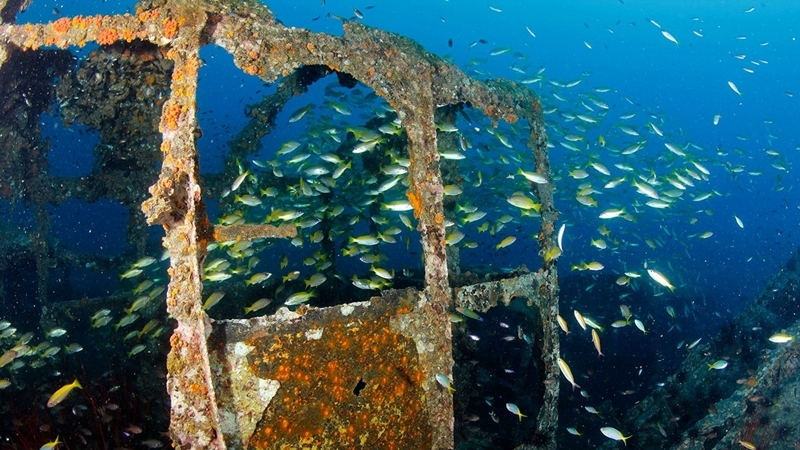
Marine animals are flourishing once again in the Gulf of Thailand due to the elimination of human waste.
Through a collaboration of several sectors, tanks, trains, garbage trucks are no longer allowed to dump waste into the sea.The thriving marine life is expected to be tourist attractions in Pattani and Narathiwat provinces.Over 10 years, they have become habitats for various species of fish and other marine lives.
Between June and September is the best period to experience the beauty of the blue world in Thailand as the Covid-19 situation has now improved.
With the lockdown measures being lifted, tourism is gradually recovering.
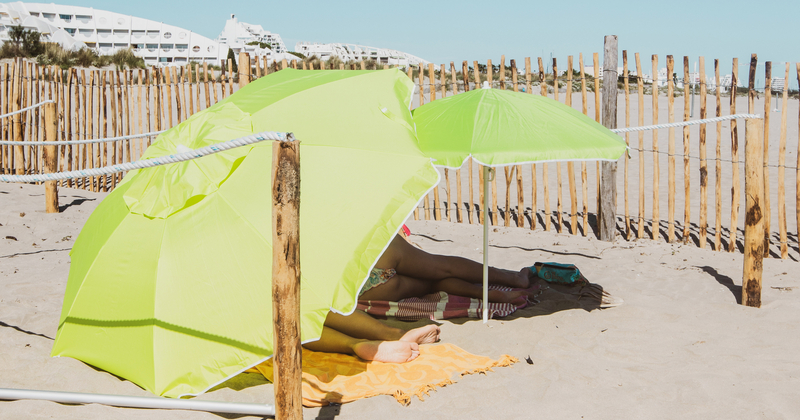
Jun 28. 2020La Grande-Motte set up the first organized static beach in France. MUST CREDIT: Photo for The Washington Post by Sandra Mehl
By The Washington Post · Miriam Berger · WORLD, ASIA-PACIFIC, EUROPE, MIDDLE-EAST Sunscreen? Check. Towel? Check. Mask? Disinfectant? At least six feet of space? Depends on where and what beach. As tourists and travelers start to return to many of the world’s seasides, government health officials and scientists are turning their attention to every inch of sand to assess the risk of the coronavirus’s spread.
But while the novel coronavirus may dislike direct sun and open air, it loves a crowd and shared spaces. That’s why officials in southern England were so shocked last week by what they classed as a “major incident” amid a heat wave: thousands of people packing beaches, all in violation of social distancing measures. In Brazil, beachgoers have similarly flocked to sandy shores while flouting face mask recommendations.
From “beach bubbles” to drones to censors and cellphone tracking, here’s how some countries are readying their beaches for a summer of social distancing.
– Greece
Greece’s picturesque sandy seasides have long been an alluring summer destination. But this year, the Mediterranean country has a new attraction: a low coronavirus count and, as a of mid-June, borders open to some foreign tourists.
Greece also wants to keep it that way, despite the risk of a resurgence posed by letting in travelers. So the government has devised a plan for mandating disinfectants and maintaining physical distances since it began to reopen beaches in mid-May, with updates since. Under current regulations, only up to 40 people will be permitted per every 1,000 square meters of beach, or about a quarter acre. A maximum of two chairs can be under each umbrella, which must be placed at least 13 feet from another. (An exemption is made for families, who are allowed to be in proximity to one other as a group.)
Beachgoers are supposed to place a towel on their chair, which staff are required to sanitize after every use. To further discourage crowds, beach-based restaurants were initially allowed to serve only takeaway meals, and no alcohol, to people waiting at least five feet apart while in line.
Beachgoers who violate these rules can face a fine from the police of up to $1,120, according to the BBC.
– Belgium
Cellphone tracking and censors will be deployed to keep Belgium’s seaside resorts and beaches less crowded this summer, Reuters reported.
Beaches are allowed to open as of Saturday, and the government has devised a tracking system aimed at rerouting residents and tourists to less-populated areas. Using cellphone data and 130 censors stationed around towns, authorities will be updating a public website sharing in real-time that areas are more or less crowded. Dark green will indicate an area is calm, while orange will denote high density, according to the Reuters news agency.
Some local governments have devised their own designs. In the town of Knokke-Heist, tourism council member Anthony Wittesaele came up with “beach bubbles” – or markings in the sand to indicate 32-square-foot boxes, or about the size of a medium-size carpet.
“We have implemented what we call ‘beach bubbles,’ where one family or friends can be together in a safe way and to visualize the distance that they should be from one another,” he told Reuters.
– Dubai
The financial center of the United Arab Emirates is beginning to reopen, months after its upscale malls and lavish hotels shut down. During scorching summer days, much of life in the Emirates happens in the air-conditioned indoors, which now poses a problem for coronavirus infection-control.
But in public, the politically restrictive city-state is trying to enforce its new beach protocol. Dubai has made mask-wearing at the beach mandatory and banned groups of more than five. Masks while in the water, though, are not required. (Masks in general are required in public, except in some instances like strenuous exercise.)
Between May 29, when beaches reopened, and June 7 the government reported that 316 people were penalized for violating the rules, according to the Abu Dhabi-based the National newspaper. On just one Friday in early June, police cited 221 offenders. The fine for violating face mask-wearing and social-distancing rules is more than $800.
Police told the National they have also made use of drones to zone in on rule breakers.
– Thailand
Thailand still remains closed to international travelers, so its beloved beaches have fewer crowds and possible pitfalls to worry about.
In the meantime, mask-clad workers at the entrance of beachside venues screen and count everyone entering to keep a low capacity. In the coastal city of Pattaya, beachgoers are required to stay around three feet apart. Residents told the South China Morning Post that they had never seen the water so clean or sand so empty.
Like many Southeast Asian countries, Thailand’s confirmed coronavirus count remains comparatively low to other European or Latin American countries. But it has still taken the virus seriously. Some beaches reopened only on June 1. And after kick-starting local tourism, the government is considering travel corridors with China and Japan, among others, Bloomberg News reported.
– Spain
Drones are also buzzing above the carefully monitored beaches of Lloret de Mar, a resort town in northeastern Spain.
Spain is readying for the return of foreign travelers after curbing its initial coronavirus outbreak, which killed more than 28,300 people. “The way we go to the beach this year has changed but that doesn’t mean we can’t enjoy it,” urged a promotional video for one resort very popular with British tourists, AFP reported.
At Lloret de Mar, sensors are also in place to alert the municipality when an area’s capacity has been reached. Visitors can then access this information via a designated app, according to AFP.
So far, crowding hasn’t been an issue. But Lloret de Mar is prepared for all kinds of beach conditions. The local government has additionally devised plans for cordoning off sections based on age, such as designating special areas for the elderly, families with children, and groups without kids.
– France
In May, France initially reopened its beaches to short-term exercising but banned most other activities. That prompted one resort to experiment with social-distancing compliant sunbathing, The Washington Post reported. The resort town of La Grande Motte near Montpelier roped off 75 squares to keep people separated. The municipality’s website then offered beachgoers the chance to reserve a three-hour spot up to two days in advance. Openings quickly filled up.
As of June, restrictions at beaches are more loose, though people are still recommended to keep wearing face masks, wash hands and stay at a distance from others.
Jun 28. 2020The first tour bus arrived in San Fele this past week. MUST CREDIT: Photo by Federica Valabrega for The Washington Post.
By The Washington Post · Chico Harlan, Stefano Pitrelli · WORLD, EUROPE
SAN FELE, Italy – The mountaintop town is four hours south of Rome, reachable by switchback roads – appropriately remote for an alternate reality. Here, far away from the coronavirus pandemic, in a place where nobody has tested positive or gotten sick, it was lunchtime, and a restaurant in town was filling up: tables of four, tables of six, a table of eight, and then the biggest table of all, reserved for teachers and middle schoolers celebrating graduation.
The teenagers had taken their final exams online – per national rules – but this was San Fele, so they were able to push through the restaurant doors, laughing, eating in a hurry, trading seats, no masks in sight. The teachers weren’t wearing masks either. Nor the mayor, sitting at another table. Nor the live musicians, who started belting out tunes in the kind of celebration that could only happen in a place where nobody was deemed a threat.
A sunset view of San Fele, Basilicata, Italy. MUST CREDIT: Photo by Federica Valabrega for The Washington Post.
“It’s almost normal,” said Elisabetta Chieca, 37, a city councilor, sitting at a nearby table where the mayor was fighting to speak over the din.
“All locals here,” said Donato Sperduto, the mayor. “Everybody knows everybody.”
With some combination of geographic isolation, initial precautions and good fortune, the town of San Fele never even had a coronavirus curve to flatten – and it now has the enviable chance to ride out the pandemic as a New Zealand-like oasis, free from the virus’s dangers and disruptions.
But like other places around the world that have managed to control or prevent outbreaks, from island nations to nursing homes, there is recognition here that coronavirus-free status is a precarious state. At any moment, somebody with the virus could come up the switchback roads.
“Our fear,” Sperduto said, “is those who come from the outside.”
San Fele survives economically by pitching itself as a weekend tourism destination. Before the pandemic, on many summer Sundays, dozens of tour buses from other parts of Italy would pull up, in what amounted to a momentary doubling of the town’s population. Visitors would stroll through the city center. They’d buy ricotta at a local farm. After hikes to see the nearby forest and waterfalls, they’d stop at the very restaurant where the mayor was now talking about how to navigate Italy’s reopening.
“We can’t rest easy,” he said, as the server brought out pasta topped with truffles, then roast lamb.
So after lunch, the mayor took the three newest arrivals in town – two reporters and a photographer – back into the city center, where the stone streets were too narrow for cars. He led the way around the corner and walked up the steps to the office of one of San Fele’s two doctors.
“Ciao, Michele,” Sperduto said.
The door opened, and a nurse spread out three coronavirus antibody tests, a batch of which the mayor had ordered for the town at the beginning of Italy’s outbreak.
“As soon as somebody arrives, we’ll try to test them,” Sperduto said. “Of course, it’s all based on being aware of who visits.”
A nurse, with a prick, drew blood samples from three fingertips. A couple of minutes later, the results were back.
The town was still coronavirus-free.
From the highest point in San Fele, one can see the signs of decay common in so many Italian hilltop towns – places built for medieval defense, but less practical for the modern world.
The town, over the past century and a half, saw its population get halved and then halved again, to 2,800. Most of the youth left for college or jobs, returning only as visitors to see their elderly parents.
The town center has become a hollowed husk, 30% occupied, beautiful but crumbling. Weeds twist through some of the sidewalks and walls. A couple of front doors are padlocked. Some of the windows are knocked out. One resident, leading a short tour down the street where she lived, pointed to the houses all around her.
“That one is empty,” Angela Verducci, 65, said. “That one is empty. They’ll be tearing that one down because the roof collapsed.”
Because those who remain in San Fele are largely older – it has an estimated 15 centenarians, and many more in their 90s – officials had worried at the outset of the pandemic that the town might be in for a disaster. While outbreaks raged in Italy’s north, experts warned about what could lie ahead for Italy’s poorer south, given its dearth of hospital intensive care beds and medical resources.
So San Fele took precautions in every way it could. It barred people from entering the pharmacy and instituted home deliveries for prescriptions. It administered coronavirus tests to volunteers, police officers, trash collectors – anybody having contact with others. Meanwhile, a nationwide lockdown halted most movement, and saved the south from a calamity of the scale experienced in the north.
San Fele’s region – Basilicata, the obscure instep of Italy’s boot – has had only 401 coronavirus cases, and only two in the last month.
At least one was a person who entered the region from the outside.
In retrospect, the mayor said, San Fele felt most secure during the lockdown. People were anxious, but almost nobody was arriving in town.
Italy loosened restrictions on inter-regional travel June 3. Now it is opening up to travelers from across Europe. Many of the people who grew up in San Fele and moved away now have the chance, at last, to come back.
And gradually, that is what is happening.
The mayor’s eldest daughter, 26, who lives in the northern city of Turin, recently made plans for a return visit. A man from Milan showed up in town on a recent weekend, wearing an N95 mask, to check in on his mother.
“Most of my family – grandfather, brothers, cousins – all left,” said Vito Ricigliano, 72, who then mentioned that a cousin who lives in Rome was also returning to San Fele later that day.
“We grew up together,” he said. “We trust one another. But anything is possible. When I go visit him, I’ll wear a mask.”
Several hours later, Ricigliano was knocking on the door of his cousin, who was still unpacking and cleaning up. The cousin, Michele Maselli, 72, moved away from San Fele at age 14 and said the place was “dying,” but he came back every summer – for the “tranquility,” and because it was home.
Maselli mentioned that, when he arrived in town, somebody stopped him and asked why he was wearing a mask.
He was taken aback.
“Out of respect,” he replied. He didn’t consider himself high-risk – there weren’t many new daily cases in Rome and he and his wife had driven directly to town. Still, it seemed the right thing to do.
“Here,” Ricigliano said with a laugh, “you are the threat.”
The new arrivals had no duty to inform the town they were coming, and so they hadn’t yet been tested. Meanwhile, the town had no chance to test people who were just passing through.
The following day, around 10 a.m., the first tour bus of the season pulled up to a parking lot at the base of the town. It brought a group of 23 people from across Italy’s south. They had started the morning in Matera, one hour away. They got off the bus here wearing backpacks and sneakers, holding walking sticks. Most had masks.
For the next three hours, they trekked through the town center and into the surrounding forest, on trails crowded with day-trippers. They took photos at the waterfalls. At lunchtime, they made their way to the restaurant.
It was even more packed than it had been a few days earlier. Big families, with children and grandparents, were there for their Sunday meals. One teenager, with balloons at his table, was celebrating a birthday.
A server pushed several tables together. The group of 23 out-of-towners sat down.
By The Washington Post · Michael Birnbaum, Quentin Ariès · NATIONAL, BUSINESS, WORLD, HEALTH, POLITICS, TRANSPORTATION, EUROPE, TRAVEL BRUSSELS European diplomats are poised to approve an agreement on which foreign travelers they want to welcome starting on July 1, as the European Union reopens its external borders for the first time since March, but with the coronavirus still raging in the United States, the possibility of allowing American tourists hasn’t even figured into the discussion, according to six diplomats familiar with the talks.
Europe’s draft in-and-out list reflects its assessment of how well other countries have managed to control their outbreaks. EU countries were among the world’s hardest hit by the pandemic this spring, but most now have the virus under control and have been willing to consider opening their borders to other countries where covid-19 is similarly in check.
China is among the 15 countries set to make the cut, despite EU skepticism about how transparent it has been about its outbreak. Visitors from China would be allowed to enter Europe only if Beijing drops measures against EU travelers.
Also expected to be approved: Algeria, Australia, Canada, Georgia, Japan, Montenegro, Morocco, New Zealand, Rwanda, Serbia, South Korea, Thailand, Tunisia and Uruguay.
The list is subject to final approval on Saturday, but diplomats said it was unlikely to change.
The rest of the world would continue to be kept out for nonessential travel.
The decision underscores the perception here that United States has failed in its coronavirus response. European leaders and health experts have watched with unease as many U.S. states insist on reopening, even as infections spike in many parts of the country.
EU members have seen clusters of infections since they began relaxing their own restrictions. Germany, Spain and Portugal are among those that have reimposed localized lockdowns. But for the bloc as a whole, diagnoses have slowed to 16 cases per 100,000 population over the past two weeks, the main measure Europe is using to determine whether countries make the cut.
The United States, by contrast, stands at 122 cases per 100,000 population and is getting worse. Florida has set records for the past 19 days in a row.
Wary of being pulled into a diplomatic brawl with each country they continue to exclude, European leaders have strained to keep their internal discussions focused narrowly on issues of science and epidemiology.
“The European Union has an internal process to determine from which countries it would be safe to accept travelers,” Eric Mamer, a spokesman for the European Commission, told reporters on Thursday as the discussions were underway. “Our internal process is related, obviously, to considerations based on health criteria.”
But there are clear political pressures.
The continued restrictions on travel from the United States will strain Europe’s most important geopolitical relationship, even if it was President Donald Trump who moved first to block European travelers in March. Continuing the ban on travel with Russia will exacerbate diplomatic tensions with an already-volatile neighbor.
The EU plans to review its list of acceptable countries every two weeks.
The list is a recommendation, not a requirement, because each EU nation retains sovereign control over its borders. But EU members have strong incentives to go along with the decision, since, if they do not, the gradual process of restoring border-free travel within Europe could be placed on hold or reversed, diplomats said.
Diplomats negotiated for hours in multiple meetings in recent days. Although there are tensions between poorer, tourist-dependent southern European nations and richer, more cautious northern ones, enough countries are in favor to assure the decision, diplomats said.
The blandly technocratic discussions – conducted in-person by the 27 EU ambassadors in a conference room in Brussels – masked the human drama caused by the travel disruptions. Couples have been stuck on opposite sides of the Atlantic for months. Business negotiations are on hold. Long-dreamed-of vacations have been delayed. Europe’s airports, once bustling connectors for the world, have been eerily quiet. In Brussels, the airport usually has 300 flights a day. It expects 435 for all next week, according to a spokeswoman.
And for the United States – where travel restrictions on Europe remain in place – the European decisions were a point-blank assessment that a U.S. passport, once one of the world’s most powerful, now carries a black mark of disease.
Secretary of State Mike Pompeo on Thursday acknowledged the desire in Washington to open up the world for travel again.
“We’re all taking seriously the need to figure out how to get this open. We need to get our global economy back going again,” he told an online discussion held by the German Marshall Fund of the United States. “We’ll work closely with our European friends, broadly, because I know there’s different views, again, inside the European Union.” He cited “a dozen or more” countries that were interested in opening up to Americans, without naming any of them.
During the EU discussions, there have been judgment calls. Some countries, such as China, report infection figures that some public health officials don’t fully trust. Other countries are trending worse, even though their overall infection levels remain relatively decent. And – as Trump has noted repeatedly in recent days – if a country doesn’t perform as many tests, it doesn’t find as many infections. The European Union plans to consult with its delegations on the ground to decide how much trust to put in each country’s official figures.
Europe fell into two camps during the discussions: the tourist-seeking countries and everyone else, according to the diplomats, who spoke on the condition of anonymity to talk about the closed-door negotiations. The tourist spots – led by Greece and Portugal – favored allowing more people to come visit, hoping to salvage at least a scrap of their fast-dwindling summer season. Other countries, especially in the chillier, richer north, wanted to proceed more cautiously.
The talks were also complicated by the fact that European caseloads vary widely. Sweden, the worst-off in Europe, reported 155 cases per 100,000 residents over the last two weeks. Portugal, the second-worst, stood at 44. Britain, which is no longer a member of the EU but until the end of the year is subject to many EU decisions, was in third place at 24.
And then there were countries that are close enough in their caseload to Europe that they could have been allowed or excluded depending on where precisely the line was drawn. Turkey, Canada and Egypt all had backers and detractors, the diplomats said, since they have slightly worse infection rates than the European Union. Ukraine was on the list, then dropped off. Tiny Georgia, a country of 3.7 million people, steadfastly remained. There was extensive back and forth about China, which has been reporting lower infection rates than the European Union and which has imposed travel restrictions on some E.U. countries but not others.
Hua Hin’s iconic Railway Hotel to reopen doors on July 1
Jun 25. 2020
By The Nation
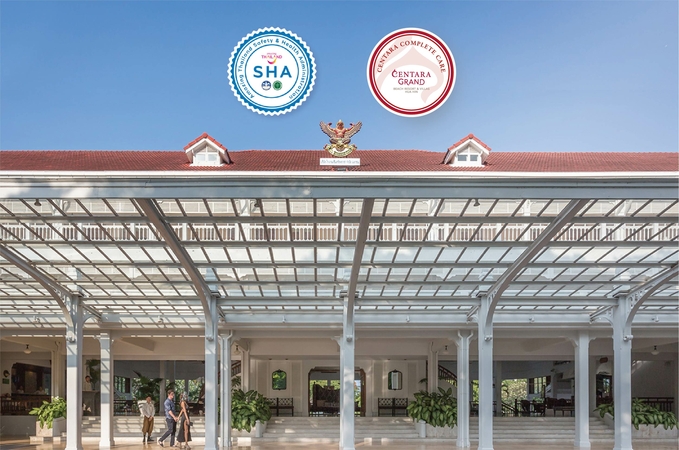
Guests will return to Hua Hin’s oldest and grandest beachside hotel next week as the Centara Grand emerges from three months of lockdown. Also known as the Railway Hotel, the century-old wooden edifice in opulent gardens will reopen its doors on July 1, with a safety guarantee provided by the Tourist Authority of Thailand’s “Amazing Thailand Safety and Health” certificate.
The hotel has reinforced that guarantee with its own Centara Complete Care scheme, developed in collaboration with water and hygiene tech leader Ecolab, and SGS, the world’s leading inspection, verification, testing and certification company.
The iconic beach resort will reopen under a12-point action plan covering social distancing, health, hygiene, and enhanced sanitisation across the entire guest journey, as well as extensive training, and accreditation & monitoring. Among the rigorous changes is the elimination of self-service buffets at its restaurants, with live stations screened off from guest touch access, social distancing of 1.5 metres between tables, chairs, fitness equipment, function space and sun loungers (which are sanitised after each usage), and increased frequency of sanitisation of all public areas such as lifts and kids’ clubs. There will be no in-room delivery of luggage or meals with all items instead left at the guestroom door.
Spa and wellness facilities will allow single treatments only with no use of steam, saunas or Hammams for the time being. All treatment rooms will be sanitised in between guest usage. Sanitising gel and disposable face masks will be placed in guest rooms Other key changes include free health check-ups from on-site medical staff, a dedicated system of contactless measures for check-in and payment, as well as upgrading of teleconferencing capabilities for the meeting sector as businesses get back to work. Staff, all of whom have undergone special training, will wear accredited face masks at all times, while temperature readings and hand sanitisation will be mandatory for all guests and employees.
Having first opening its doors in the early 1920s, Hua Hin’s Centara Grand is regarded as one of the grandest hotels of the East, with expansive of gardens overlooking the sea.

 The display will be accessible three times a day – 10am, 2pm and 6pm – to visitors who have registered online.
 The not-to-be missed extravagant candle festival is held in Ubon Ratchathani every year to mark Asalha Bucha and the start of Buddhist Lent, where hordes of tourists, both local and foreign, gather to admire the extravagantly creative giant candles as well as enjoy traditional dance and music shows.
 The festival this year is being held from Friday to July 7.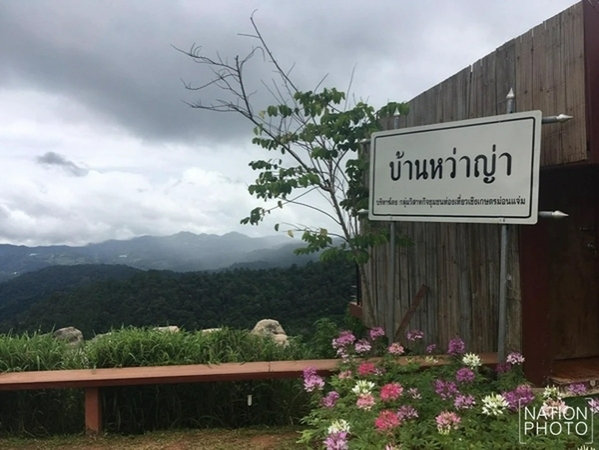


 People watch the sunrise from Cadillac Mountain at Acadia National Park in 2014. MUST CREDIT: Washington Post photo by Matt McClain
 Airplane of Southwest Airlines/File photo

 The thriving marine life is expected to be tourist attractions in Pattani and Narathiwat provinces.
 Over 10 years, they have become habitats for various species of fish and other marine lives.


 La Grande-Motte set up the first organized static beach in France. MUST CREDIT: Photo for The Washington Post by Sandra Mehl
 The first tour bus arrived in San Fele this past week. MUST CREDIT: Photo by Federica Valabrega for The Washington Post.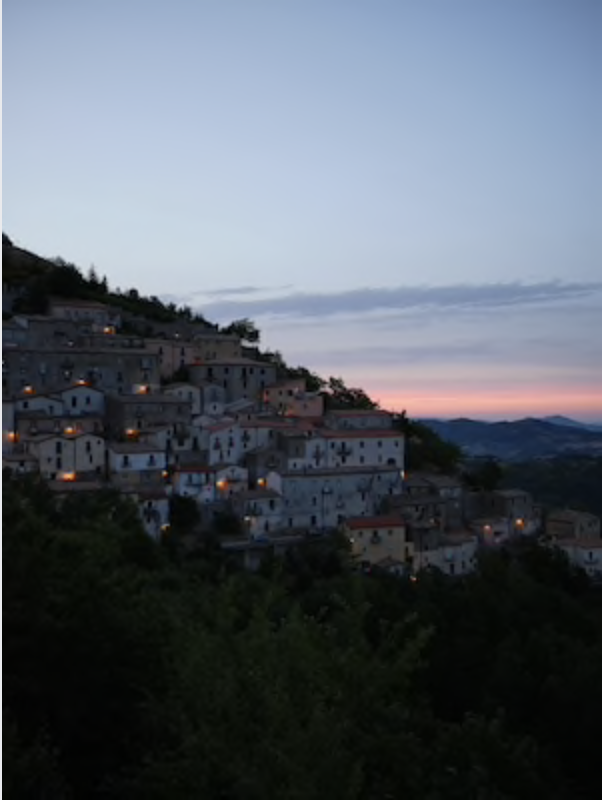
.jpg)
.jpg)
.jpg)

