Universal Studios Japan sets measures for reopening #ศาสตร์เกษตรดินปุ๋ย

#ศาสตร์เกษตรดินปุ๋ย : ขอบคุณแหล่งข้อมูล : หนังสือพิมพ์ The Nation.

https://www.nationthailand.com/travel/30389180?utm_source=category&utm_medium=internal_referral

Universal Studios Japan sets measures for reopening

Jun 07. 2020
Photo credit: www.mprabin.com

By Syndication Washington Post, The Japan News-Yomiuri · No Author · WORLD, ASIA-PACIFIC 
Universal Studios Japan, a theme park in Osaka, which has temporarily been closed due to the coronavirus pandemic, has unveiled to the press its measures to prevent infections as the park plans to reopen in stages, starting Monday.

At the entrance gate, park staff wearing face guards will check the temperature of visitors and deny admission to those who have a temperature of 37.5C or higher.

Visitors will be asked to wear masks and use hand sanitizers. In addition, the park will request that visitors sit in every other row when on a roller coaster.

And when waiting in lines, they will be asked to stand at regular intervals following stickers that had been placed on the ground.

The park will also request that visitors not make physical contact with the themed characters.

Furthermore, at restaurants, visitors will be required to register with a tracking system introduced in Osaka in which a person who may have had contact with an infected person is notified via email.

“We’d like to propose a new way of enjoying the park while implementing preventive measures,” a senior official of the park said.

The park will be open again for the first time in about three months. From Monday to June 14, admission will be allowed only to Osaka Prefecture residents who have annual passes and have made prior reservations.

After June 15, admission will be allowed for all Osaka Prefecture residents with advance tickets.

The admission will be further expanded after June 19 to those who reside in the six prefectures in the Kansai region and hold annual passes.

Vacationing – with caveats #ศาสตร์เกษตรดินปุ๋ย

#ศาสตร์เกษตรดินปุ๋ย : ขอบคุณแหล่งข้อมูล : หนังสือพิมพ์ The Nation.

https://www.nationthailand.com/travel/30389177?utm_source=category&utm_medium=internal_referral

Vacationing – with caveats

Jun 07. 2020
Staff in protective face shields prepare the pool area for guests on May 30,2020, at Falling Rock, one of several hotels at Nemacolin Woodlands Resort in Wharton, Pa. MUST CREDIT: Photo for The Washington Post by Jeff Swensen

Staff in protective face shields prepare the pool area for guests on May 30,2020, at Falling Rock, one of several hotels at Nemacolin Woodlands Resort in Wharton, Pa. MUST CREDIT: Photo for The Washington Post by Jeff Swensen
By The Washington Post · Andrea Sachs · FEATURES, TRAVEL

At Nemacolin Woodlands Resort in Pennsylvania, a tall man in a gray suit and a black mask approached my car. He leaned toward my lowered window and asked for my name. Satisfied with my answer, he aimed a raygun-shaped gadget at my forehead, pressed the button and read the digital display.

“Ninety-seven degrees,” he told me in a slightly muffled voice.

Three degrees higher, and the resort would have turned me away, one of several protections against the coronavirus. But since I was fever-free, the security officer stepped aside, clearing the way to the luxury property and my first getaway since shutdowns began.

The pandemic knocked the breath out of the hospitality industry, but hotels across the country are slowly rising to their feet. According to Smith Travel Research, occupancy levels reached 35% between May 17 and 23, a notable improvement from early April, when 21 percent of hotel rooms were booked. To reassure guests, properties are implementing health and safety measures that rewrite the textbook on hospitality.

“It’s like a hotel opening,” Chris Baran, Nemacolin’s director of sales and marketing, said of resuming operations during the crisis. “We have to forget everything we know and do it this way.”

Nemacolin was one of the area’s first luxury properties to welcome back leisure travelers. In early May, the resort opened several dozen rooms at Falling Rock, its Fallingwater-inspired lodging. (The Frank Lloyd Wright-designed home is about 10 miles away). It also resumed a bevy of activities, including golf, tennis, fly-fishing, paintball, basketball, safari tours and biking on 2,000 acres of trails. A few days shy of June, the hotel added accommodations at Chateau LaFayette, the opulent spread modeled after the Ritz in Paris, as well as the outdoor pools and Laurel Lane shops. On Friday, when several Pennsylvania counties advanced to the “green phase” of the state’s reopening plan, the resort started accepting appointments at its spa and fitness center. Its on-site restaurants also switched from takeout to sit-down service at reduced capacity, so guests would no longer have to eat pan-seared scallops or a 16-ounce rib eye off disposable plates.

The day Washington lifted its stay-at-home order, I was on the road to Pennsylvania. My mission: to see how the new protocols would affect the guest experience and whether they would help or hinder my ability to relax. Ultimately, I wanted to know if Nemacolin could liberate me from the burdens of my face mask – metaphorically speaking, of course.

The hospitality industry is facing a mountain of challenges. Properties can’t just swing open their doors and hand guests a welcome cocktail, even if the staff has thoroughly disinfected the door handles and prepared the drinks while swaddled in personal protective equipment. First and foremost, the hotels must adopt the rules and restrictions issued by the state and local governments. The reopening measures touch on nearly every aspect of the hotel experience, from the number of guests permitted inside the restaurants to the accessibility of the spas and fitness centers.

For example, the Hotel Monteleone in New Orleans opened June 1 with 240 out of 570 rooms available. Its Criollo Restaurant can serve only 25% – or 25 seats – of its total capacity, and customers must provide a name and phone number for contact tracing purposes. Louisiana is not allowing stand-alone bars to open during its first phase; however, the hotel’s historic Carousel Bar and Lounge received the state’s blessing because it possesses a food service license. “We have to present guests with a bar menu, even if they don’t order from it,” explained hotel manager Stephen Caputo. As for the fitness center, only six guests can workout at a time. The spa, meanwhile, could remain shuttered until July.

“The objective is to create some sense of normalcy,” Caputo said, “even if it is restricted.”

To assist hotels as they tiptoe back, the American Hotel & Lodging Association created Stay Safe, a guide based on recommendations from the Centers for Disease Control and Protection and an advisory board composed of hoteliers. The measures promote practices recognizable to anyone who has shopped for groceries or ordered takeout during the pandemic, such as mandatory face coverings and no-contact food delivery. However, some of the suggestions are unique to hotels – for example, housekeeping should not enter a guest’s room unless the visitor has requested cleaning service.

“So many hotels operate differently – their constructions are different, and their travelers are different,” said Chip Rogers, the association’s president and chief executive. “We created a baseline for all hotels.”

Hotel chains have also assembled their own rule books and safety committees. Hilton launched the Hilton CleanStay program, a partnership with RB, the U.S. manufacturer of Lysol, and the Mayo Clinic Infection Prevention and Control. Marriott formed the Global Cleanliness Council, a body of experts from the public health, food safety and infectious-disease fields. Northwood Hospitality’s Safety and Well-Being Promise is centered on three principles: prevention, cleanliness and minimizing contact.

“The main challenge is how do the hotels create the confidence and cleanliness that is close to a hospital without making it feel like a laboratory or clinic,” said Linda Canina, academic director of the Center for Hospitality Research at Cornell University in New York.

The answer, thankfully, is not plastic-covered furniture or long-handled claws for grabbing your key card or breakfast sandwich. However, hotels have made significant changes from top to bottom in public and private spaces. For instance, they have erected plexiglass shields at front-desk counters, removed seating in lobbies and restaurants for social distancing purposes, and placed floor decals six feet apart. Guest rooms have been stripped of such extraneous materials as menus, magazines and extra bedding. Signs at elevator landings remind guests of the rider limit. Assuming most people don’t travel with a tape measure, Hotel Monteleone has adhered footprint stickers in each corner of its six lifts.

Hotels are also adjusting their guest services and reimagining their amenities. Hotel Drisco in San Francisco will keep its buffet but replace the communal serving dishes with individually plated and wrapped breakfast items – served on bone china, of course. At Hotel Figueroa in Los Angeles, text messaging with guests is the preferred form of communication. Four Sisters Inns, a collection of boutique properties in California, is requiring guests to reserve a breakfast time in its restaurants or order a complimentary breakfast in bed. (You will have to crawl out bed at least once, to collect the tray outside the door.) The evening happy hour with communal hors d’oeuvres is out, replaced by a picnic box filled with cheeses, fruit and crackers and a split of wine. The Sisters had to retire the cookie jar but not the cookies: The baked goods will arrive in individually sealed packaging. Hotels such as Nemacolin, Hotel Drisco and Hotel Monteleone are expanding their inventory of oft-forgotten items, adding masks and hand sanitizer to their supplies of toothbrushes and razors.

Upon arrival at Nemacolin, a bellhop offered to give me a lift from the self-parking lot to the hotel in a golf cart. “We disinfect them after each ride,” he added encouragingly. I accepted.

He dropped me off at the entrance to the Chateau LaFayette lobby, which was dripping in chandeliers and fresh flowers. Hand sanitizer dispensers stood out among the lavish furnishings. At the front desk, an employee greeted me from behind a plexiglass shield. I pressed my ID against the transparent square. He informed me of the house rules: I must wear a mask at all times outside of my room, and only four people are permitted inside the elevator at one time. He said the shuttle was not running and suggested I drive my own vehicle or walk. He asked if I wanted housekeeping to tidy up my room. I declined, preferring to restrict my social bubble to members-only.

To reach my room, I had to press an “up” elevator button protected by a plastic sheath. (The covering fell off and was not replaced during the remainder of my stay.) Inside, I switched on the TV to scan the listing of restaurants and activities, but the hotel channel was not working, so I had to make repeated calls and visits to the front desk. I eventually settled on an itinerary of mostly free diversions: miniature golf, bowling, pool, yoga ($20) and a wildlife talk starring a small collection from Nemacolin’s menagerie. Three restaurants were serving meals in lockdown fashion: Call, and they deliver anywhere on the property. I chose pizza from Barattolo by the Chateau’s purring fireplace.

I learned that some activities are built for social distancing. Hovering on the mini-golf course is bad form; the family behind me waited patiently while I putted around waterfalls and over trenches. At the bowling alley every other lane was open, and an employee wiped down each ball between players. Yoga is normally held in the spa, which was closed during my stay. Even better, the instructor gathered our trio in an open-air pavilion surrounded by rolling green hills and vocal birds.

“There is no cleaning [for you to do] after shavasana,” Susan said, referring to our final relaxing pose. “I will clean the mats.”

For the wildlife talk, the two experts separated the folding chairs and, as much as we pleaded with our eyes, did not allow us to cuddle Meatball Hoagie the guinea pig or Wendell the rabbit. Nor did they allow us to touch Loki, the sled dog who made a late afternoon appearance in the Chateau’s lobby. I air-pet him from a safe distance.

The pool drew the largest gatherings, though the ominous gray clouds and wind gusts kept most people on dry land. Staff members in plastic face shields reminiscent of a welder’s protective gear disinfected tables and delivered food in sealed containers. Signs at the towel station and pool bar reminded us to keep six feet apart.

The hotel was only 35% full, so crowding was not a big concern. However, many guests did not wear masks, a troubling predicament. I tried to keep my distance, which considering the spaciousness of the property was not too difficult. I raised the issue with the front desk as well with Baran once I was home. He said masks are required in indoor public spaces and that he would remind the staff to enforce this rule. (Housekeeping also cleaned my room even though I had declined its services; Baran said he would look into this oversight, as well.)

Despite the restrictions and occasional lapses, I could feel the tight knots loosening. It didn’t take much. A shaggy-haired musician performing under a cloud-speckled sky. A hole-in-one on the mini-golf course. An ankle dip in the hot tub. Two nights in a bed unaware of the previous months of fitful sleep.

On my last morning, I slid on my mask and headed down to the lobby. A bellhop was cleaning the revolving door. Without missing a beat, another staff member raced over to a side door and held it open for me.
Moomin Valley Park reopens #ศาสตร์เกษตรดินปุ๋ย

#ศาสตร์เกษตรดินปุ๋ย : ขอบคุณแหล่งข้อมูล : หนังสือพิมพ์ The Nation.

https://www.nationthailand.com/travel/30389174?utm_source=category&utm_medium=internal_referral

Moomin Valley Park reopens

Jun 07. 2020
Visitors stroll under the

Visitors stroll under the “umbrella sky” exhibit at Moomin Valley Park in Hanno, Saitama Prefecture. MUST CREDIT: Yomiuri Shimbun
By Syndication Washington Post, The Japan News-Yomiuri · No Author · WORLD, FEATURES, ASIA-PACIFIC, TRAVEL

Moomin Valley Park has reopened in Hanno, Saitama Prefecture, after a more than two-month shutdown due to the new coronavirus.

The park, which features the popular Moomin characters from Finland, had been closed since March 31. It resumed operations with various preventive measures, such as restricting the number of daily visitors to a maximum of 3,000 and using thermography to check visitors’ temperatures when they enter.

The gates opened at 10 a.m. Thursday, and about 20 people wearing masks entered the park, applying disinfectant to their hands. They were greeted by a decorated area featuring about 2,000 opened umbrellas – parents and children walked beneath this roughly 300-meter-long “umbrella sky” that stretches to an adjacent open area.

Bang Saen locals dive in as beach finally reopens #ศาสตร์เกษตรดินปุ๋ย

#ศาสตร์เกษตรดินปุ๋ย : ขอบคุณแหล่งข้อมูล : หนังสือพิมพ์ The Nation.

https://www.nationthailand.com/travel/30388864?utm_source=category&utm_medium=internal_referral

Bang Saen locals dive in as beach finally reopens

Jun 01. 2020
By The Nation

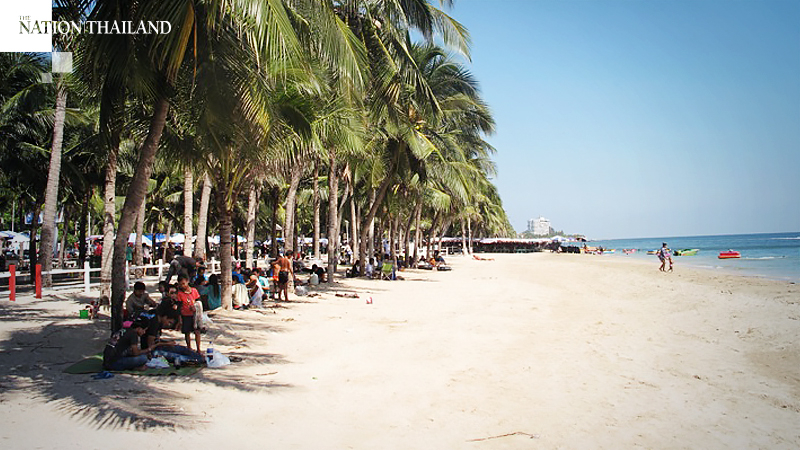
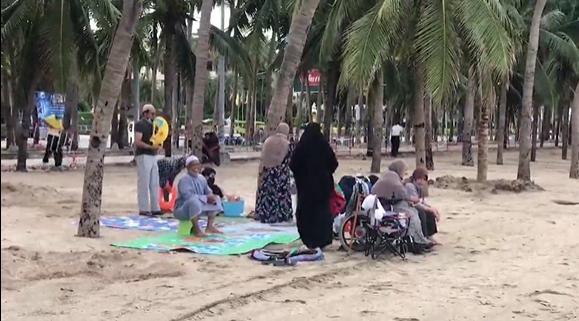
Residents of Chonburi are finally enjoying Bang Saen Beach again, after it was reopened on Monday (June 1) following more than two months of lockdown.

At 8am, police removed barriers that were blocking entry to the beach, while tourists and locals waited patiently to step back on the sand and swim in the sea again.

However, police have banned vendors’ stalls and other tourism services until June 5, when the beach will officially reopen.

Alcohol is also prohibited, and anyone found drinking on the beach will be arrested.

Bang Saen is considered the closest beach to Bangkok, lying just 108 kilometres to the east of the capital.

A local family told the Nation Thailand that their son was delighted to be allowed back, as the beach was part of the community.

However, the father said they would remain cautious over Covid-19.

Wang Nam Kheow hills covered in bright blooms #ศาสตร์เกษตรดินปุ๋ย

#ศาสตร์เกษตรดินปุ๋ย : ขอบคุณแหล่งข้อมูล : หนังสือพิมพ์ The Nation.

https://www.nationthailand.com/travel/30388741?utm_source=category&utm_medium=internal_referral

Wang Nam Kheow hills covered in bright blooms

May 29. 2020
By The Nation

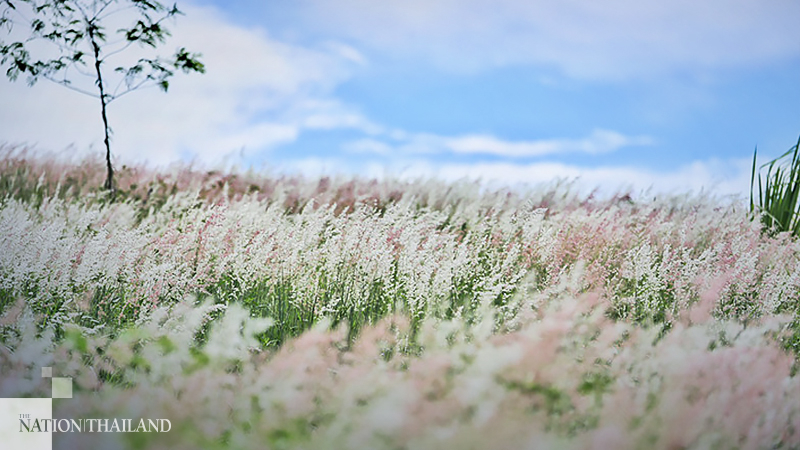
Many cars were seen parked along Highway No 3060 (Wang Nam Kheow-Pak Chong) as people stopped to take photographs of fields covered in white, pink and purple blooms.

Pongthep Malachasing, president of Nakhon Ratchasima’s tourism club, said the hillsides are usually covered in colourful flowers upon the arrival of the rainy season.

“These fields of flowers have become popular among locals and tourists, who stop to take photographs to post on social media,” he said.

These fields covered in bright, colourful blooms have become a new tourist attraction in Nakhon Ratchasima, with many people coming to enjoy the fresh air and natural surroundings in the Wang Nam Kheow district.

Six countries cautiously reopening for summer travel #ศาสตร์เกษตรดินปุ๋ย

#ศาสตร์เกษตรดินปุ๋ย : ขอบคุณแหล่งข้อมูล : หนังสือพิมพ์ The Nation.

https://www.nationthailand.com/travel/30388213?utm_source=category&utm_medium=internal_referral

Six countries cautiously reopening for summer travel

May 20. 2020
By Special To The Washington Post · Drew Jones · FEATURES, TRAVEL 
After months of lockdowns, European leaders are preparing to lift some coronavirus-related travel restrictions and allow tourism to resume – cautiously.

“Our message is we will have a tourist season this summer,” European Union Economic Affairs Commissioner Paolo Gentiloni told the BBC last week, “even if it’s with security measures and limitations.”

Those E.U. measures include updating health protocols for hotels and public transit and expanding contact tracing between member states. The goal, according to a news release from the European Commission, is “to help the EU tourism sector recover from the pandemic, by supporting businesses and ensuring that Europe continues to be the number one destination for visitors.”

There are regulations, chief among them that non-European tourists will have to wait until at least June 15 to begin their visits. But much of the loosening of restrictions will be left up to individual nations – France and Ireland, for example, have agreed to allow travel among them without requiring a 14-day quarantine in the final destination.

Here’s what other countries on the continent, along with a few top non-European travel destinations, are planning.

– – –

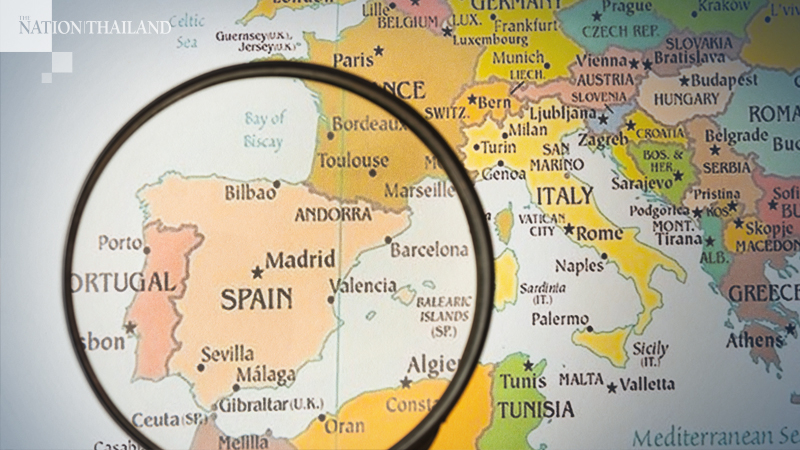
Spain

In the Spanish beach town of Canet d’en Berenguer, outside Valencia, officials are accounting for social distancing with a system allowing beachgoers to book appointments on the sand via mobile app.

The beach will be divided into a grid of socially distanced sites, with staggered arrival times and the option to choose either a morning or afternoon slot (but not both). In all, the restrictions will allow for a maximum of 5,000 people per day, about half of the beach’s normal capacity.

“This summer will be very different,” Canet d’en Berenguer Mayor Pere Joan Antoni Chordá told CNN. “There’ll be more space between your neighbor. Like a ‘business-class’ beach.”

– – –

Iceland

When Iceland reopens its borders June 15, it will require all visitors to either take a covid-19 test, agree to a two-week quarantine or present official documentation of a recent negative test for the disease caused by the novel coronavirus.

Regardless of which option they choose, tourists will have to download a contact-tracing app. Iceland has tested more than 13% of its population of about 360,000 people, a higher rate than any other country in the world.

“Iceland’s strategy of large-scale testing, tracing and isolating have proven effective so far,” tourism minister Thordis Kolbrun Reykfjord Gylfadottir said in a statement.

Iceland has reported 10 coronavirus-related deaths since the pandemic began.

– – –

Greece

Greece will open to tourists a bit later, starting July 1, but the nation’s usual packed nightlife scene probably won’t be a part of it. Solo or socially distanced small-group activities, such as kayaking and boating, will be encouraged instead.

“The tourism experience this summer may be slightly different from what you’ve had in previous years,” Prime Minister Kyriakos Mitsotakis told CNN. “Maybe no bars may be open, or no tight crowds, but you can still get a fantastic experience in Greece – provided that the global epidemic is on a downward path.”

Every international traveler to Greece will have to enter through Athens and submit to a health screening, which includes a rapid covid-19 test.

– – –

Mexico

Beaches across Mexico will open to tourists starting in June, with phases of reopening continuing through July and August. Los Cabos, the tip of the Baja California peninsula that includes popular spring break destination Cabo San Lucas, will allow for limited travel beginning June 1 as health screenings and enhanced sanitation measures ramp up to accommodate more tourists late into the summer.

The Los Cabos tourism board said it will look to open many of the area’s hotels and, eventually, the international terminal at its airport, if the new safety protocols reduce the spread of the virus. Cancun and Riviera Maya will also reopen in phases, though the U.S. State Department’s has a “Level 4: Do Not Travel” advisory for the area.

“For those looking further to international destinations, the overarching theme [in online searches] seems to be relaxation and beach time, with Mexico and the Caribbean dominating the list,” an Expedia spokeswoman told Travel + Leisure.

– – –

Australia and New Zealand

On the other side of the world, Australia and New Zealand are experimenting with the idea of a “travel bubble” that would allow tourists to travel freely between the countries, which have both had relatively few deaths. The bubble, however, would apply only to residents of the two countries,

“Our Number 1 focus at the moment is making sure that both our countries are in the position where we’re domestically managing covid-19 to a point where we can with confidence open borders,” New Zealand Prime Minister Jacinda Ardern said at a recent news conference.

Italy announces plans to ease travel restrictions starting June 3 #ศาสตร์เกษตรดินปุ๋ย

#ศาสตร์เกษตรดินปุ๋ย : ขอบคุณแหล่งข้อมูล : หนังสือพิมพ์ The Nation.

https://www.nationthailand.com/travel/30387985?utm_source=category&utm_medium=internal_referral

Italy announces plans to ease travel restrictions starting June 3

May 17. 2020
File photo

File photo
By The Washington Post · Chico Harlan · WORLD, EUROPE 

ROME – Italy on Saturday moved to significantly unwind coronavirus-related movement restrictions, announcing plans to allow travel across the country as well as to and from abroad beginning June 3.

Such changes would restore many of the freedoms that were in place before Italy became the epicenter for the virus’s spread in Europe. Italy is under intense economic pressure to reopen its doors and revive its tourism sector, which normally accounts for 13 percent of its GDP.

But the country is also gambling that it can contain any new outbreaks that might come with freer travel.

Since early March, the movement of Italians has been severely restricted, as part of one of the most rigid lockdowns in Europe. Under the current restrictions, people in the country are not allowed to leave their region, and leisure travelers are prohibited from coming to Italy. Anybody arriving in the country for urgent business reasons is required to self-isolate for 14 days.

In an evening address, Prime Minister Giuseppe Conte said that people arriving from other E.U. states would not be subject to quarantine.

“This will create the conditions for tourism recovery,” he said.

The continent’s external borders are closed to nonessential travelers until at least mid-June – keeping Italy, initially, off the table as a travel option for Americans. Foreign minister Luigi Di Maio indicated that Italy’s eased restrictions would apply to those already in the European Union, writing on Facebook that from June 3 it will be possible “to move within E.U. states.”

Even by loosening the restrictions, Italy will have a hard time fully restoring its summer tourism season. Airlines have dramatically cut back on routes to the country, and many people who had planned trips to Italy have already canceled. Countries with more controlled outbreaks, like Greece and Portugal, are trying to pitch themselves as safe travel destinations for northern Europeans trying to escape to the beach.

Still, Italy is moving quickly to ease its restrictions in part because many of its regional governments, worried about the economic toll, have agitated for a more rapid timetable. On May 4, Italy took the first steps to emerge from lockdown, allowing factories and construction projects to resume. The government has since pushed up the opening date for restaurants – from early June to May 18. Retail stores and museums will also restart May 18.

“The epidemiological situation in Italy is holding,” said Fabrizio Pregliasco, a virologist at the University of Milan, who noted that the last two weeks haven’t shown any worrying upticks in the transmission of the virus. “With some caution, it is reasonable to imagine a reopening.”

The stringent lockdown Italy imposed for eight weeks succeeded in slowing the pace at which the virus was spreading. The country is discovering roughly 1,000 new coronavirus cases daily, compared with 6,000 at the peak in late March. Only 10 percent of the country’s intensive care beds are occupied by coronavirus patients, compared with more than 50 percent more than a month ago.

The country is sure to pay a severe economic price, because of restrictions necessitated by the virus and because it came to a standstill for so long. Italy’s economy is expected to contract this year by more than 9 percent, its deepest recession in history. Italy’s Confcommercio business association said that drop in consumption will mainly hit a few sectors – particularly, hotels and restaurants.

Thailand’s Phuket beckons when travel resumes #ศาสตร์เกษตรดินปุ๋ย

#ศาสตร์เกษตรดินปุ๋ย : ขอบคุณแหล่งข้อมูล : หนังสือพิมพ์ The Nation.

https://www.nationthailand.com/travel/30387624?utm_source=category&utm_medium=internal_referral

Thailand’s Phuket beckons when travel resumes

May 10. 2020
Tourists take a selfie photograph at Patong Beach in Patong, Phuket, Thailand, on Jan. 16, 2018. MUST CREDIT: Bloomberg photo by Taylor Weidman.

Tourists take a selfie photograph at Patong Beach in Patong, Phuket, Thailand, on Jan. 16, 2018. MUST CREDIT: Bloomberg photo by Taylor Weidman.
By Syndication Washington Post, Bloomberg · Randy Thanthong-Knight · FEATURES, TRAVEL 

As a swimmer, I’ve always felt at home in the ocean. But Phuket, a place I’ve visited more than a dozen times since childhood, is where I find stillness.

The ocean laps calmly, and when you close your eyes to feel the salty breeze, you can hear the rustling of tropical forests right off the coast. Vendors sell just-cracked coconuts sloshing over with fresh juice. Point in any land-bound direction, and within a few miles you’ll find the world’s best beach resorts, gracious hospitality, and restaurants that vary from street food stalls to a Michelin-starred dining room. It’s the best of all worlds, somehow squeezed onto a picturesque island that’s just a puddle-hop flight from my home in Bangkok.

Even an “up and down” one-hour flight feels impossibly far away at this time. While some of Thailand’s provinces haven’t reported a single case of covid-19, Phuket has become the country’s biggest hot spot. The island, which once received about a million tourists each month, is now deserted. And the government is forecasting that tourism won’t reignite until a vaccine emerges, which could take well more than a year.

But Phuket remains my mental refuge. Bangkok, like many other locked-down cities with its compact living spaces, isn’t meant for a quarantined lifestyle. When I open my windows in my downtown apartment, I’m greeted by construction noises and rooftops of neighboring buildings rather than blue water and the sound of chirping birds. Life, in other words, is not a beach.

Until I can get back safely to Phuket, I’ll relish one silver lining about its current quietude. In recent years the island was suffering from overtourism; huge numbers of visitors and too many boat businesses had led to the buildup of marine debris, damaged coral, and a disruption in the balance of wildlife and natural habitats. A pause on human visitors has brought out rare sea turtles to nest in record numbers on empty beaches, and the manatee-like creatures called dugongs have been spotted in typically boat-riddled shallows. That means Phuket will be its most beautiful self whenever we can return.

When the time comes, of course I’ll hit up some of my local favorites-but I’ll also indulge in the singularly luxurious spots that have given Phuket its prime position at the top of many bucket lists. Here’s how to nail the best of both worlds.

Even as a native Thailander, I find the food served from southern kitchens akin to the old ghost pepper challenge-it flexes your spicy taste receptors until they’re numb and tingly. Besides being unapologetically hot, it’s also rich and decadent: think pork kua kling, a spicy dish spiked with kaffir lime leaves and curry paste, or the stir-fried bitter beans with shrimp paste called sataw pad kapi.

I tend to order both at Raya, my favorite restaurant on the island. It’s set inside a century-old house in Phuket Old Town-an unassuming spot that you could easily pass by and never notice, with a geometric tiled floor and black-and-white photos on its walls. It’s not air-conditioned, so on a hot day, I’ll head to the nearby Tu Kab Khao instead. Located in a colonial building with coffered ceilings and Murano chandeliers, it focuses on prettied-up versions of family recipes such as stir-fried pork leg with salted krill and stir-fried pumpkin with dried shrimp and shrimp paste.

Charter a boat for a day from Phuket, as it’s possible to explore the many islands of the Andaman Sea. Head a few hours northwest to find the Similan Islands, an archipelago of 11 islets that are ringed by crystal-clear waters inhabited by neon coral, turtles, and reef sharks. To the east are Thailand’s famous Phi Phi Islands and the less-visited Koh Yao Noi and Koh Yao Yai, which offer secluded beaches and pristine coves.

On Phuket itself, there’s much more to do than whiling the day away under the sun. Old Phuket Town, with its brightly colored Portuguese-inspired buildings, has long been dismissed as overly rundown. But the area has been experiencing a renaissance: Historic buildings have been restored and turned into cafes, restaurants, and shops. Enormous, colorful murals now coat previously crumbling facades. Most nights of the week, the streets are lined with vendors who simmer traditional dishes, be it pots of rice and pork rib soup or bowls of stir-fried noodles with eggs.

Just a short cab ride away is Chalong Bay Rum Distillery, where small-batch rum is made from organic Thai sugarcane. Go in the afternoon for a two-hour cocktail workshop; you’ll learn about the artisanal process while roaming a sun-drenched plantation. From the thatched-roof open-air dining room, you’ll also learn to make a few drinks, including a Thai twist on the caipirinha that’s flavored with red chile. (They call it the spicyrinha.)

When it comes to hotels in Phuket, there’s no sense in going off the beaten path. The island is home to some of the best resorts in the world, including the very first feather in Aman’s glorious cap. Opened in 1988, Amanpuri has 44 villas with private pools and 40 pavilions spread out on a former coconut plantation, each adorned with traditional Thai arts including decorative bowls and Buddhist ornaments. Not only is it a coveted spot to rest your head at night, but the resort offers access to a private beach with ultra-fine sand and clear water, where the lounge chairs are shaded by beautiful parasols and flanked by enormous gray boulders.

If nature is what you need, try a treetop villa at Keemala instead. The hillside resort is surrounded by lush rainforest and looks pulled out of a fantasy film set; some of the rooms are fashioned after birds nests, and from their plunge pools you can commune with chirping cicadas and crickets.

For the ultimate in seclusion, if that’s what remains on order in a post-lockdown world, there’s Como Point Yamu on Phuket’s quiet east side. Its turquoise-hued, glass-walled villas face the bay, which means any photo you take pointing outwards will be blue-on-blue-on-blue. Included in its amenities are a boat that takes you to a private beach club on nearby Naka Yai Island-perfect for kayaking and paddle boarding-and a 100-meter-long infinity pool facing the vast sea and its many limestone islands.

As I daydream about Phuket, I’m planning on supporting Soi Dog Foundation, which rescues dogs from the meat trade and helps find them homes abroad. With international flights grounded, the organization will need more help than ever to provide food and medical support for the animals in its care.

Airlines step up pressure for government-run temperature checks for travelers #ศาสตร์เกษตรดินปุ๋ย

#ศาสตร์เกษตรดินปุ๋ย : ขอบคุณแหล่งข้อมูล : หนังสือพิมพ์ The Nation.

https://www.nationthailand.com/travel/30387545?utm_source=category&utm_medium=internal_referral

Airlines step up pressure for government-run temperature checks for travelers

May 08. 2020
File photo

File photo
By The Washington Post · Hannah Sampson · BUSINESS, FEATURES, TRAVEL

JetBlue is the latest airline to urge government officials to add temperature screenings for air travelers.

Joanna Geraghty, JetBlue’s president and chief operating officer, said in an interview with CNN Friday that while temperature checks might not be effective for asymptomatic people, they could still alert authorities to someone who should not be flying.

“Our perspective is there needs to be a global industry solution for this,” she said. “Different standards for different airlines is going to be challenging for the traveling public. If you show up in an airport and one airline does temperature checks one way and another does it another way, that’s just hard for consumers. Our recommendation is for the government to step in and handle that service.”

Her comments echoed those of Southwest Airlines CEO Gary Kelly, who told CBS News this week that he was urging the Transportation Security Administration to start checking temperatures as part of a checkpoint screening process. Frontier Airlines, which became the first U.S. airline to announce its own temperature scans on Thursday, also urged government authorities to take over the job.

Geraghty said she expected to see more developments around health requirements and flying soon.

“I think a lot will be changing in the next few weeks around what the industry is going to do and, more importantly, what that nationwide standard should be and whether the government will be stepping in and setting some of those nationwide requirements,” she said.

A TSA statement late Thursday said the agency had not made any decisions about airport health screenings.

“Ongoing discussions with our [Department of Homeland Security] and interagency colleagues, as well as our airport and airline partners, will enable the agency to make informed decisions with regard to the health and safety of the aviation environment,” the statement said. “The safety and security of the traveling public and our employees will always be our top priority.”

Tibet Airlines to launch 18 new air routes in summer #ศาสตร์เกษตรดินปุ๋ย

#ศาสตร์เกษตรดินปุ๋ย : ขอบคุณแหล่งข้อมูล : หนังสือพิมพ์ The Nation.

https://www.nationthailand.com/travel/30386708?utm_source=category&utm_medium=internal_referral

Tibet Airlines to launch 18 new air routes in summer

Apr 24. 2020
More than 40 million tourists from home and abroad visited Tibet in 2019, up 19 percent year on year, according to local authorities.[Photo/Xinhua]

More than 40 million tourists from home and abroad visited Tibet in 2019, up 19 percent year on year, according to local authorities.[Photo/Xinhua]
By Xinhua

Tibet Airlines plans to add 18 air routes this summer to provide more options for passengers and promote tourism in Southwest China’s Tibet autonomous region, according to the company.

The air routes will link Lhasa, capital of the autonomous region, and other cities in China including Kunming, Changsha and Shijiazhuang.

The company said it will offer a total of 66 air routes this summer.

More than 40 million tourists from home and abroad visited Tibet in 2019, up 19 percent year on year, according to local authorities.