Krabi’s starfish haven Ao Siao gets ready for post-virus tourist influx #ศาสตร์เกษตรดินปุ๋ย

#ศาสตร์เกษตรดินปุ๋ย : ขอบคุณแหล่งข้อมูล : หนังสือพิมพ์ The Nation.

https://www.nationthailand.com/travel/30386853?utm_source=category&utm_medium=internal_referral

Krabi’s starfish haven Ao Siao gets ready for post-virus tourist influx

Apr 27. 2020
By The Nation
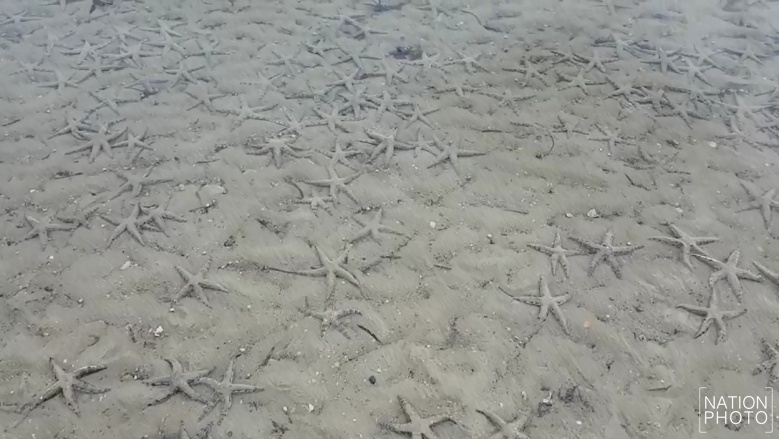
Thousands of starfish can be seen when the tide ebbs in Krabi’s Ao Siao beach.

Though this beach is not that popular among tourists compared to the Nopparat Thara Beach on mainland Krabi, Khlong Muang Beach or the island of Phi Phi, Ao Siao is getting ready to attract tourists once the Covid-19 outbreak comes to an end.

The 2-kilometre-long beach is still abundant with natural resources, especially scores of starfish which can be seen when the tide ebbs. The beach is also known for its refreshing breezes and strangely shaped sand dunes.

Ao Siao is 5km from Ao Nang Beach within the Hat Nopparat Thara-Mu Koh Phi Phi National Park.

Scientists think they know ways to combat viruses on airplanes. They’re too late for this pandemic. #ศาสตร์เกษตรดินปุ๋ย

#ศาสตร์เกษตรดินปุ๋ย : ขอบคุณแหล่งข้อมูล : หนังสือพิมพ์ The Nation.

https://www.nationthailand.com/travel/30386968?utm_source=category&utm_medium=internal_referral

Scientists think they know ways to combat viruses on airplanes. They’re too late for this pandemic.

Apr 29. 2020
A visualization from Purdue University shows how the tiny invisible droplets from a single cough flow through the cabin of a Boeing 767 passenger jet. MUST CREDIT: Qingyan Chen/Purdue University School of Mechanical Engineering handout

A visualization from Purdue University shows how the tiny invisible droplets from a single cough flow through the cabin of a Boeing 767 passenger jet. MUST CREDIT: Qingyan Chen/Purdue University School of Mechanical Engineering handout
By The Washington Post · Michael Laris · NATIONAL, FEATURES, HEALTH, TRANSPORTATION, TRAVEL

On March 14, 1977, a woman with the flu climbed aboard a 737 and headed for Kodiak, Alaska, with 53 other passengers and crew. After an engine failed, most of them sat on the runway with the cabin doors shut, and the ventilation system off, for two hours. Within three days, 38 more people were sick.

More than four decades after state and federal epidemiologists showed how easily viruses spread from person to person on airplanes, the novel coronavirus has decimated global aviation. Daily passenger screenings are down 95 percent, according to the Transportation Security Administration.

Though there have been significant advances since the 1970s, and airlines spent weeks touting the safety of flying and their steps against the coronavirus, passenger cabins still pose a danger for the spread of infectious diseases, experts said.

It is a problem of biology, physics and pure proximity, with airflow, dirty surfaces and close contact with other travelers all at play.

Breakthroughs are possible, researchers said. Ultraviolet lights that promise to destroy viruses without hurting humans are being tested by Columbia University scientists, who say the lights would be effective in airplane cabins, airports, hospitals and schools.

“As we speak, there are 100 hairless mice being exposed for 15 months,” said David J. Brenner, director of Columbia’s Center for Radiological Research. The mice live under the lights eight hours a day and get eye and skin tests every couple of weeks, and after eight months the researchers have found no damage, “which is encouraging.”

The lamps could have helped prevent the spread of covid-19, Brenner said, but “it’s come a little too soon for us. If it had come at this time next year, we’d be in a good position to fight it.”

The Federal Aviation Administration and major manufacturers have long been aware of the risk of diseases spreading on flights and have sponsored research seeking improvements.

– – –

Boeing is experimenting with lavatories that can sanitize themselves in less than three seconds. Engineers at the U.S. manufacturer and its top competitor, Airbus, have explored changing the way air moves around passengers to reduce infections.

But fighting illnesses and preparing for disaster were not industry’s top priorities as global air travel soared.

“When you can easily sell your airplanes, you try to defer the problems to the future,” said Qingyan Chen, a Purdue University engineering professor who helped lead a major FAA-funded research project on disease transmission aboard aircraft and has received research funding from Boeing. “Today we found that future is actually 2020.”

How far airlines and manufacturers might go now, and how far regulators or passengers might push them, remains unclear. Boeing was already under siege for deadly design flaws in its 737 Max aircraft following two crashes, and the company said it is seeking takers for a “voluntary layoff” plan as the aviation sector has slowed “to a trickle.”

“When the world emerges from the pandemic, the size of the commercial market and the types of products and services our customers want and need will likely be different. We will need to balance the supply and demand accordingly,” chief executive Dave Calhoun told employees in an April 2 letter.

The FAA regulates airplane design and production, down to the requirements for fire-retardant seat cushions, and oversees airline operations. But while the agency sets some air-quality standards, such as acceptable carbon dioxide levels, it has not set rules for preventing the spread of infectious diseases in airplane cabins.

“It’s very hard for industry to change. . . . It’s not like a flip of a switch,” said Chen, pointing to the expense of developing new features and getting them certified by the FAA. But those high costs also underscore the key role for government, he said. “Regulation is very important. If you regulate that, then they will have to do something.”

The FAA declined to answer a question about why it has avoided setting requirements to address the spread of viruses on planes. A spokesman instead pointed to comments FAA Administrator Steve Dickson made March 11 on Capitol Hill.

Pressed on what requirements the FAA has affecting the “possible transmission of contagious diseases on commercial flights,” Dickson, who took the top regulator job less than a year after leaving Delta Air Lines, instead discussed rules covering “noxious fumes.” He also echoed statements from airlines during the pandemic.

“The risk to the public is no higher than it would be in any area where you have folks gathered,” Dickson told Rep. David Price, D-N.C., saying the air on planes is “on par” with that in homes.

“The research that’s been done over the years is that there’s really not any significant difference in what you would have in a building such as we’re sitting in today, in terms of air quality,” Dickson added, before taking a question from Rep. Mario Diaz-Balart, R-Fla.

A week later, Dickson said he would be self-quarantining after a “brief encounter” before the hearing with Diaz-Balart, who tested positive for the virus and eventually recovered.

– – –

As the coronavirus spread globally, the message from the airline industry to would-be customers was that planes were safe and that extra precautions were being taken. But the science behind cabin air quality has been lost in some of the messaging.

As President Donald Trump downplayed the threat of the virus, the White House offered reassurances. Asked March 2 if he would be comfortable traveling with his family to Disney World, Vice President Mike Pence said that “there’s been no recommendation about any limitations on travel” in the United States, adding that he travels “all the time.”

The TSA screened more than 20 million people over the next two weeks, both passengers and workers, as travelers continued to process the dangers and the virus continued to spread. On March 16, Trump advised against unnecessary travel.

Unions representing aviation workers, who have complained about the lack of masks and other protective equipment, say hundreds of flight attendants and pilots have tested positive for covid-19, and at least seven have died.

Airlines have noted that all, or most, of their planes use high-efficiency particulate air filters. Air flows past millions of particle-grabbing layers in the filters and is blended with air sucked in through the engines, creating roughly a 50-50 mix of fresh and recirculated air.

Delta said that “HEPA air filters extract more than 99.999% of even the tiniest viruses.” Alaska Airlines, citing studies from the European Union Aviation Safety Agency, argued that cabin air “can be better than the air found in many office buildings,” given how frequently it recirculates. Southwest said the filters help provide onboard air quality “which, in most cases, exceeds the quality of air that can be found outdoors.”

Chen, who edits the journal Building and Environment and has studied air quality in offices and cruise ships in addition to planes, said that while planes get high marks on some measures, many of the industry claims are misleading.

While air on a Southwest plane may be cleaner than what is outside in a highly polluted city in China or India, Chen said, that is not the case in United States, where Southwest does most of its flying.

The European research cited by Alaska Airlines focused on certain chemical contaminants, not viruses.

“To be honest, airplanes are not designed to prevent infectious-disease transmission,” said Chen, who was co-director of the FAA-funded Airliner Cabin Environment Research center from 2004 to 2010. “They’re not designed to do the job.”

Experts agree that HEPA filters are highly effective at capturing everything from viruses to skin flakes.

But that is only part of the picture.

The problem is passengers can still breathe in tiny floating droplets from a coughing passenger seated nearby – before the air carrying those droplets can be vented out of the cabin and filtered.

Precisely how far the droplets might float before being pulled out and cleaned has been the subject of intricate scientific observation, airflow modeling and disease tracing, from the onboard flu cases in Alaska to an earlier coronavirus outbreak in 2003, when severe acute respiratory syndrome (SARS) killed 774 people around the world.

On March 15 of that year, a Boeing 737 took off from Hong Kong for a three-hour flight to Beijing, with a feverish 72-year-old man sitting in 14E, a middle seat.

Of the 120 people on board, 22 were later diagnosed with confirmed or probable cases of SARS, according to a reconstruction published in the New England Journal of Medicine that year. Researchers said the “most plausible” explanation was that they were infected on the plane by the man in 14E. He died of atypical pneumonia a few days after the flight.

The World Health Organization had defined “contact” with a SARS patient as sitting in the same row, or in the two rows ahead or behind the infected person.

The researchers found that the risk for those in the three rows in front of the man, or the same row, was much higher than for those sitting elsewhere. But two people seated as far as seven rows in front of him were also infected, as were two flight attendants. Five passengers later died.

People moving around or touching surfaces may have played a role, or the virus may have floated in the air for longer than expected, the researchers concluded.

A decade after the SARS flight, Emory University researchers, with support from Boeing, sought to address those findings.

Public health students carrying iPads on 10 flights from Atlanta built a “network model” of passenger contacts and infection risks. The authors, including a top Boeing physician, concluded that respiratory disease spread by droplets would likely be “limited to one row in front of or in back of an infectious passenger.”

In seeking to explain how people sitting so far away on the Beijing-bound flight ended up sick, the Emory researchers said the SARS “transmissions” may have happened at the airport, or come from “other sources before or after the flight.”

The authors of the original SARS study had acknowledged those possibilities, but said that many people got sick around four days later and that “clustering” pointed to the day of the flight as a crucial moment. They also said they could have missed others who became ill.

Experts in disease transmission are still wrestling with the implications of that Beijing flight and what insights it may provide for today’s much more deadly coronavirus pandemic.

The Centers for Disease Control and Prevention in February reiterated the two rows up, two rows back guidance for defining “contact” with an infected patient, which can shape who gets monitored.

Some local public health officials have cast a wider net. Officials in Monroe County, New York, warned all passengers and crew members on a 50-seat jet bound for Rochester on March 14, along with everyone at the airport around the time it landed, to monitor themselves because a patient diagnosed with covid-19 had been on board.

The death of American Airlines flight attendant Paul Frishkorn last month highlights the need to “avoid further contagion” of airline crew members, the Air Line Pilots Association said, adding that at least three of its pilots have died. The group called on Transportation Secretary Elaine Chao to require that airlines be more exacting about cleaning and inform employees when they have been exposed, or aviation could “grind to a complete halt.”

– – –

Chen was born to a farming family in Fujian province, in southeast China, where his university studies were delayed by Mao Zedong’s brutal Cultural Revolution. He spent painful years lugging massive rocks for construction projects before coming to the United States and delving into the behavior of tiny particles on airplanes.

Working with two Boeing engineers and a team of researchers from Purdue, Chen wanted to know how changing an airplane’s ventilation system would affect the risk ofcontracting SARS, as a stand-in for other dangerous viruses that might emerge.

Their results, published last year, were startling. They found that passengers sitting with a SARS patient in a seven-row section of a Boeing 767 would have a 1-in-3 chance of getting sick from a five-hour flight. On a shorter 737 flight, the risk was 1 in 5.

But they found that changing the existing ventilation system – essentially by having air flow into the cabin from near the floor rather than from above – would make a big difference, cutting the risk by half or more.

Chen said droplets were swept away from passengers more efficiently using alternative systems, one tested by Airbus engineers and another developed by Chen and his team.

One reason: The warmth of the passengers’ bodies helped the flow of air coming up from underneath, since warm air rises, he said. Going with that flow, rather than fighting against it, lessened the turbulence that could keep germs on top of passengers.

“We try to not mix your air with your neighbors’,” Chen said.

The study assumed the virus that caused SARS could stay airborne for long periods, which is different from what the CDC says is typically occurring with the novel coronavirus.

Scientists and public health officials said covid-19 is largely spread from one person to another through droplets, such as when people cough or sneeze.

Such relatively large droplets, brimming with viruses, generally travel only a limited distance before being pulled down by gravity, sort of like ping-pong balls falling back to the table after being whacked.

That is why social distancing guidelines have emphasized the six-foot distance and call for incessant hand-washing, to avoid picking up fallen droplets and bringing them to your face.

Fortunately, experts said, the coronavirus does not behave like the fearsomely infectious measles virus, which can stay aloft for up to two hours, more like the balls bobbing and floating around an old-school lottery machine.

But Chen – whose background is in mechanical engineering and fluid dynamics, not medicine – said the uncertainties around covid-19 remain a cause for caution.

The World Health Organization said droplets are the main path for infection, but noted research showing that the coronavirus has become airborne in some hospital settings, including during intubation to help breathing.

U.S. researchers reported suspending coronaviruses in the air and said such infections are “plausible.”

The National Academies of Sciences, Engineering, and Medicine on April 1 pointed to evidence that the coronavirus can spread by air through “normal breathing,” not just via droplets from coughing, and cited research from the University of Nebraska that it was detected in the air beyond six feet from sick people. The White House subsequently recommended that people wear masks in public.

Chen also noted research showing that the coronavirus can be found in feces and wonders if the violent flush of airplane toilets could cause the virus to become airborne. The outbreak on the Diamond Princess cruise ship provides added concern. Though researchers found evidence the virus spread via contacts and droplets, Chen wonders if air systems may also have contributed.

What he has established through years of research is that droplets less than a certain size – about 20 microns, or millionths of a meter – can easily be swept through the air. Following a cough, they disperse widely, and it takes about four minutes on average for such particles to be filtered out of the cabin, his research shows.

Slightly larger droplets can still float for 10 seconds in the cabin’s blowing air, or be carried in the wake of someone walking, he said.

Larger, heavier droplets that settle quickly remain the most serious risk with covid-19, he said.

But any person deciding whether to fly, now or in the future, should be vigilant, and wear a mask, he said.

“I personally believe we just provide all possible routes of transmission and make people aware of the risks,” Chen said.

On Monday, JetBlue said it would require all passengers to wear masks starting May 4, and American Airlines said it would start handing out face coverings on some flights. “This is the new flying etiquette,” said JetBlue president Joanna Geraghty.

For a manufacturer such as Boeing, the choices were difficult, Chen said, including deciding how much to upend current designs in search of progress.

“I don’t mean Boeing does not want to change. . . . They definitely think this is a problem they need to solve,” Chen said, noting the years the company spent sponsoring his research. But changing an aircraft is a major undertaking.

“The technology we developed is not bulletproof. It’s much better than the current one – but not bulletproof,” Chen said. “Is that worth spending money to change all the systems?”

Boeing would not comment on the SARS transmission risks outlined by Chen and its engineers and said its product strategies are proprietary. It said research on disease transmission “is and continues to be a high priority.”

The company said it tested its “Fresh Lav,” which uses automated ultraviolet lights to kill 99.9 percent of germs in lavatories “after every passenger use,” on a specially outfitted Boeing 777 last year.

Airbus, facing the same challenges, would not say if alternative ventilation systems may be introduced. Current cabin configurations reflect what is considered “most effective and achievable,” the company said in a statement.

– – –

Brenner and his team at Columbia have begun testing their special 3-by-3-inch lights against the novel coronavirus, which has killed more than 210,000 people worldwide.

One colleague, physicist David Welch, is calibrating exposure from the lamps. Another, Manuela Buonanno, is testing how many viruses survive.

They killed two batches of less-threatening coronaviruses in recent weeks with a very low level of exposure, according to research released Monday, and Brenner said things are looking good so far with the one that causes covid-19.

Brenner believes the technology could address the problem of a virus-spewing airplane passenger.

“You’re sitting there and the guy right behind you sneezes. . . . All the filters in the world aren’t going to help you,” Brenner said. “I think the lamp would potentially deal with that.”

What takes longer is conclusively proving the long-term safety for people exposed to the light, a type of radiation known technically as far-UVC light. Traditional ultraviolet lights are used to clean water supplies and sanitize operating rooms, but only when no people are under them, because they can cause cancer and eye damage.

But Brenner said far-UVC light is different. It is generated at the far end of the ultraviolet spectrum and is “not in any way penetrating.” It barrels right through air or droplets containing viruses, but is quickly absorbed – and stopped – by the protein in dead skin cells or in the layer of tears on the surface of the eyes, Brenner said.

“In order to produce any damage, it has to get to the live cells,” he said. “Not once have we yet seen any hazardous effects.”

Could the light somehow sneak through and cause damage?

“I think the answer’s no. That’s why we have all those mice sitting upstairs in this long-term study,” Brenner said.

Brenner has studied the effects of CT scans, nuclear plants and dirty bombs. He and his colleagues developed a commonly used radiation protocol for fighting prostate cancer. He initially thought of the lamps as a weapon against infections during surgeries, after a good friend died of one.

There are challenges, including the need for a huge supply of the lightbulbs, though he said industry is already ramping up for that. The lights are mainly for targeting viruses in the air, since they might hide in the tiny shadows of upholstery, he said. A closed tray table would also be a problem.

Boeing said its lavatory prototype uses far-UVC lights, which are “not harmful to humans.” The company said it could not speak directly to the Columbia research but is pursuing creative “cabin upgrades.”

Airbus declined to say if it would consider the lights, and the FAA would not say if it supports the idea.

The Columbia researchers have been palpating the skin of the mice and looking for lesions on their corneas. Some of the males are getting a bit antsy from being cooped up, but otherwise are looking good, Brenner said. At the end of the study, researchers will check them for any subtle DNA damage.

As scientists scurry to develop vaccines, viruses traverse the globe along with people, moving “from city to city. They go by train or plane or buses,” Brenner said. “If you can target transportation modes in some way, you could do a lot of good.”

How to plan your first post-pandemic trip #ศาสตร์เกษตรดินปุ๋ย

#ศาสตร์เกษตรดินปุ๋ย : ขอบคุณแหล่งข้อมูล : หนังสือพิมพ์ The Nation.

https://www.nationthailand.com/travel/30386278?utm_source=category&utm_medium=internal_referral

How to plan your first post-pandemic trip

Apr 18. 2020
Sun loungers sit on the beach at San Foca, Italy, on May 22, 2018. MUST CREDIT: Bloomberg photo by Giulio Napolitano.

Sun loungers sit on the beach at San Foca, Italy, on May 22, 2018. MUST CREDIT: Bloomberg photo by Giulio Napolitano.
By The Washington Post · Natalie B. Compton · FEATURES, TRAVEL

The ability to travel is just one of the many luxuries temporarily suspended as the novel coronavirus outbreak continues its spread around the world. For now, we’ve been tasked with putting travel plans on hold and staying home to “flatten the curve.”

But although experts are uncertain whether summer travel will be possible, not all future travel is off the table.

“I’m reminding people this thing is not forever,” says Robert Reiner, a psychologist and executive director at Behavioral Associates. “It has a beginning, a middle and an end.”

In the meantime, we can daydream and use these tips to start planning that glorious first post-pandemic vacation.

– Use trip-planning as a coping mechanism, but be flexible

According to Reiner, there are two crises going on during this pandemic: a biological one (the coronavirus outbreak) and a psychological one (coronavirus anxiety, economic uncertainty and social isolation, among other issues).

Trip-planning can be a way to give yourself something to look forward to and provide an uplifting distraction from immediate pandemic problems. However, there are caveats. You’ll set yourself up for more stress if you finalize a trip too early. The outbreak could cancel it.

“Right now, especially with people’s spirits so low, structuring something that you are excited about is a great thing, as long as you understand the fact that it might not happen,” Reiner says.

As you start connecting your travel dots, remember that we can’t travel now, and stay-at-home orders as well as and restrictions aren’t predictable. You may want to keep staying home, even when travel technically becomes allowed.

Reopening dates “do not mean that it will be safe to travel then,” says Adam Goldstein, the co-founder and former CEO of the now-shuttered travel aggregation site Hipmunk. “And will it be ethical to travel then? Even if you’re technically allowed to – which I think in some states you still are – if you don’t need to, you shouldn’t, because you might be an asymptomatic (covid-19) carrier.”

So instead of planning for summer trips, think long-term, perhaps even into 2021.

“Because companies are so lenient with their cancellation policies right now, there’s no reason why you shouldn’t look at” travel opportunities, says Misty Belles, the managing director of global PR for Virtuoso, a network of agencies specializing in luxury and experiential travel. “The escapism of being able to look and dream, and think about what you want to do, is ideal.”

– Window-shop for travel online

If you don’t have a specific trip in mind, start fresh. Dedicate some of your screen time to hunting for your next destination.

For example, try using special tools on Kayak, Hopper and Skyscanner that show users the cheapest flights in the world from your home airport at any given time. You may spot affordable routes that lead to your next trip, big or small.

To put entirely new-to-you international destinations on your radar, sign up for Scott’s Cheap Flights to get alerts on handpicked flight deals.

Travelers can also browse By The Way’s City Guides, each written by a local writer in that destination, and the Instagram page for domestic and international trip inspiration.

– Be intentional with your future travel plans

As you’re browsing, consider what you want out of your next trip. Think about those you’ve already taken, and what experiences were the most meaningful, memorable or disappointing.

“This is this rare moment where the entire travel industry and travelers get a pause and a complete reset, which is something we’ve never had before,” says Konrad Waliszewski, CEO and co-founder of TripScout, a travel planning and entertainment platform.

After the pandemic, Waliszewski wants to travel somewhere new to him on every level.

“I’m going to pick a place that’s just a lot further away, literally and figuratively,” he says. “I’m just going to read about it now, watch any documentary or movie about it.”

– Dive into the details

Researching beyond basic trip logistics can help us luxuriate in the experience of trip planning.

“The trip-planning is an extension of the trip itself,” Waliszewski says. “It’s a great way to be entertained at home.

In addition to reading books and watching movies about your future destination, he recommends reading about the culture and history of a place, and following locals on Instagram, from chefs to journalists to artists.

Following chefs on Instagram to find restaurants on the road is a trick chefs use when they travel.

“You find people that you like or trust their taste – even though that may be completely arbitrary – and just go for it,” Pok Pok’s chef and owner Andy Ricker said of following chefs on Instagram.

Once you find chefs or other interesting locals to follow, save any of their relevant posts in a folder under your Instagram “Saved” photos for easy access before or on your trip.

– Organize your research

As you amass a list of places to see, restaurants you’d like to eat at and museums you’d like to explore, save them on Google Maps so they’re handy.

Star points of interest in Google Maps or create location-specific lists if you want to feel more organized. When your trip approaches, download that map so it’s available even when you don’t have internet access or cell service.

Other tools can help log your trip research, like Pinterest boards, Google Docs or spreadsheets, and maps on Waliszewski’s TripScout. Try apps like Roadtrippers for organizing road trips or Packpnt if you want to get an extremely early jump on your packing list.

Your normal life routine might not have allowed for such deep dives into all of the eating, drinking and sightseeing opportunities that travel offers. Although the pandemic has taken away much, it has given us time – to really prepare for the next trip and appreciate the travel memories we already have.

As Waliszewski put it, the pandemic is “making me just so grateful for having the opportunity to have traveled in the first place.”

Sun-starved, locked down Italians ask if summer can be saved #ศาสตร์เกษตรดินปุ๋ย

#ศาสตร์เกษตรดินปุ๋ย : ขอบคุณแหล่งข้อมูล : หนังสือพิมพ์ The Nation.

https://www.nationthailand.com/travel/30386156?utm_source=category&utm_medium=internal_referral

Sun-starved, locked down Italians ask if summer can be saved

Apr 16. 2020
Artist’s impression of plexiglass panels creating protective pods on a beach. Source: Nuova Neon Group Due Srl

Artist’s impression of plexiglass panels creating protective pods on a beach. Source: Nuova Neon Group Due Srl
By Syndication Washington Post, Bloomberg · Chiara Remondini, Flavia Rotondi · WORLD, EUROPE 

When Italians look for light at the end of the tunnel in the sixth week of their nationwide lockdown, a lot of them see the same thing: sunshine, endless beaches and the warm Mediterranean sea.

But with summer approaching fast and no indication that the deadly coronavirus is anywhere near being eradicated, some are starting to ask whether a return to the thousands of beaches dotting the country’s 4,971 miles (8,000 kilometers) of coastline is even possible.

If you’ve been on an Italian beach you know: there’s a lot of social, but not much distance. Most of the prime spots have been snapped up by private “bathing establishments” where clients — many of whom return each year and pay by the season — are stacked in tight rows of deck chairs or chaise lounges. Neighboring bathers share the shade of umbrellas to gossip, smoke, drink coffee or play cards, as their children roll in the sand nearby.

“We’ll be going to the beach this summer,” Culture and Tourism undersecretary Lorenza Bonaccorsi assured Italians in an appearance on state Rai television. How will the government assure adequate health and safety measures? “We’re working on it,” she said.

Like other European governments, Italy is struggling to find a way to ease movement restrictions and get the economy rolling again while managing the risk of a virus resurgence.

For Italy, tourism is a big part of the equation. Though the industry accounts for as much as 13% of GDP, revenue in the first half will be down 73% compared with last year, with some 25 million fewer foreign tourists between July and September, according to the CNA confederation of artisans and small and medium-sized companies.

With the spring season virtually wiped out, and uncertain prospects for foreign visitors returning anytime soon, the country may need Italian bodies on its beaches this summer in order to kick-start the economy.

It’s far from clear how that will work. Even though the nationwide lockdown is set to end on May 3, Italians are being told to expect only a gradual opening-up of the country, with strict rules covering everything from safe distances to when and where to use masks and gloves. A task force to map out the country’s exit from the lockdown has yet to release its recommendations.

For Italy’s 30,000 beach operators, the unanswered questions range from what to do if a customer gets sick, to how bathrooms and showers should be cleaned and managed, to whether food can safely be served. And no one seems to know how social distancing would work.

Nuova Neon Group Due Srl, a display-panel maker from the Emilia-Romagna region, has proposed installing plexiglass panels around each pod of deck chairs and umbrellas, fueling social media reactions about the “barbecue temperatures” and the “prison-like atmosphere” the sectioned-off seating would create.

Italian media outlets have speculated about staggered entrance times, walk-through access tunnels with disinfectant sprinklers or security guards to enforce distancing rules. Some have even suggested numbered tickets for access to the surf.

Still, regional officials plan to soldier on, with or without a plan from the central government. Veneto Governor Luca Zaia said cancellations from Germans who traditionally flock to his region are as low as 7%, a sign that tourists are still in wait-and-see mode for the summer. “I don’t think it’s going to be a disaster,” he said.

During self-quarantine, learn a foreign language without leaving the house #ศาสตร์เกษตรดินปุ๋ย

#ศาสตร์เกษตรดินปุ๋ย : ขอบคุณแหล่งข้อมูล : หนังสือพิมพ์ The Nation.

https://www.nationthailand.com/travel/30384957?utm_source=category&utm_medium=internal_referral

During self-quarantine, learn a foreign language without leaving the house

Mar 27. 2020
A team of 150 linguists and teachers created the content for Babbel, a language-learning app with more than a dozen options. MUST CREDIT: Babbel handout

A team of 150 linguists and teachers created the content for Babbel, a language-learning app with more than a dozen options. MUST CREDIT: Babbel handout
By The Washington Post · Andrea Sachs

Je suis un chat.

Clearly, I am not a cat, but to fill my self-quarantined time, I have been repeating this French phrase over and over again. With the encouragement of Duolingo, a foreign language app, I have also been Paul and un chien (a dog). To learn another country’s language in these circumstances, I had to accept the new reality.

At this point in time, we have no idea when we will be able to travel abroad again. But we don’t need to be idle. We can keep our travel muscles limber with foreign language classes. Then, once we can roam the globe again, we can gleefully jump right into conversations with locals – and their pets.

Linguist experts and educators say the best way to learn a new language is to converse directly with the instructor or native speaker, ideally in the same physical space. However, with schools and foreign language centers closed, we have to take our lessons indoors, online and in isolation. In response, a few organizations, such as the International Center for Language Studies and the Global Language Network, both in the District, have shifted their in-person classes to virtual “synchronous classrooms.” For this arrangement, students and teachers confer via Skype, Zoom or another similar computer interface platform.

“You need clear audio and video, and a good connection,” said Anna Carson, director of ICLS’s Foreign Language Division. “You need to see how the teacher is producing sound and the placement of the tongue in the mouth.”

ICLS is offering private classes as well as 10-week group classes for $385. The Global Language Network charges $200 but refunds $100 if the student does not miss more than two classes for a 12-week package or one class for a six- to 10-week session.

“When it comes to learning a language, nothing compares to the in-person experience,” said Andrew Brown, founder and executive director of the Global Language Network, a nonprofit organization. “However, the circumstances of the global pandemic has forced us in a corner and we are making the best of a challenging situation.”

If your schedule, budget or unruly nest of hair prevents you from pursuing a course of this semipublic nature, try tapping into the trove of resources and tools online. Angelika Kraemer, director of the Language Resource Center at Cornell University in Ithaca, New York, recommends the free programs associated with libraries, such as Mango Languages, which has partnerships with learning institutions around the country. (To find libraries in your area, use Mango’s search tool.) Kraemer also suggests BBC Languages, which is run by the British public broadcasting company. The multimedia lessons cover about 40 languages, and depending on the country, the instruction may include sports videos, crossword puzzles, kids’ programming (easier vocabulary and concepts than adult fare) and street slang, such as “saufen wie ein loch,” a German phrase that translates to “Let’s drink as if there’s no tomorrow.”

For similarly creative lessons, Per Urlaub, associate dean of the Language School at Middlebury College in Vermont, directs aspiring speakers to the Center for Open Educational Resources and Language Learning at the University of Texas, one of 16 national centers funded by the Education Department. The site posts materials for more than 20 languages, including podcasts in Mandarin, slam poetry in Portuguese and more than three decades of recordings of Czech Moravians living in Texas. Urlaub also recommends foreign publications, such as France’s Le Monde and Italy’s La Repubblica, as a means to improve your reading skills and gain a different perspective of world events. He said to choose a familiar subject, such as breaking news about the coronavirus, and then graduate to the opinion pages, which contain more challenging linguistic features and cultural viewpoints.

“If I were hunkered down, I would focus on reading proficiency,” he said. “Reading skills come first and go last.”

Self-quarantined travelers can pick up a new language through virtual classes, online resources and apps, such as Duolingo, which offers lessons for more than 30 languages, including Spanish. MUST CREDIT: Duolingo screenshot

Self-quarantined travelers can pick up a new language through virtual classes, online resources and apps, such as Duolingo, which offers lessons for more than 30 languages, including Spanish. MUST CREDIT: Duolingo screenshot

The pandemic has driven a lot of us into the arms of Netflix. The marathon watch-fests are escape hatches, but they can also have educational value. Language Learning with Netflix is a free extension available through the Google Chrome Web store that features a catalog of international movie and TV series, including 306 offerings in Spanish, 132 in Mandarin, 39 in German and 18 in Hindi. In addition to hearing dialogue in the native tongue, you can read subtitles in two languages, which helps with translation, and look up words in a pop-up dictionary, among other tools. (I tried to load this accessory but could not because of a computer issue. As an alternative, I watched a French series called “The Hook Up Plan” with French subtitles, and am, um, hooked.)

“You don’t interact with the language in a natural way, but you can improve your listening comprehension skills and vocabulary,” Urlaub said. “But you won’t gain oral fluency.”

Apps have also stepped into this vacuum and are ideal for people ready to cut their apron strings with Google Translate. But educators warn users to approach the programs with realistic expectations.

“Apps give people who have not had a lot of exposure to the language the illusion that they have learned quite a lot,” Urlaub said. “Instead of engaging with real people, we are interacting with a static system.” However, Urlaub admits that he has used Duolingo to refresh his French and that “in a weird way, it’s fun.”

During my own self-quarantine, I hoped to awaken my dormant French, which has been in a deep Sleeping Beauty slumber since college. I asked the college professors for advice on navigating the app landscape. Kraemer said to look at the app developers: Are they professionals familiar with the process of learning a new language or a “tech whiz sitting in an office”? She also approves of apps that resemble video games with competitive goals, ascending levels of success and an ego-boosting award system.

“The game aspect of unlocking the next badge keeps you going back for more,” she said.

Other worthwhile attributes: a visually appealing design and lessons organized in digestible time segments. “It is easier to sit down for 10 or 30 minutes every so often,” she said.

Rosetta Stone's app offers travelers a program that teaches them skills useful for a trip abroad. MUST CREDIT: Rosetta Stone

Rosetta Stone’s app offers travelers a program that teaches them skills useful for a trip abroad. MUST CREDIT: Rosetta Stone

Earlier this past week, with no shortage of 10- to 30-minute blocks of time, I decided to wave some smelling salts under the nose of my French. I started with Duolingo, because even though I was learning alone in my apartment, I was not alone in the wider Duolingo universe. Michaela Kron, a company spokesperson, said the app boasts 30 million active monthly users and recorded a 91 percent rise in participants in the United States between the weeks of March 9 and March 16. (The app is free, but the upgraded ad-free version ranges from $6.99 per month to $12.99 per month, depending on the plan.)

I chose a goal of 10 minutes per day and took a placement test that kicked me back to my first day of French high school class. I cycled through lessons that tested me on a handful of pre-K words, such as cat, dog, horse, man and woman, in a variety of challenges, such as translating phrases, speaking a word into my phone’s microphone and typing a phrase uttered in French. I was advancing fast, with the cartoon characters cheering me on, but slid backward several times for, say, forgetting the feminine and masculine articles of pizza and croissant. (Question for Duo, the owl mascot: Why am I learning words that are spelled the same in both languages? Why not teach pain, instead of pizza, and pomme, instead of orange? Just a suggestion.) I earned gems that I could spend in the Duolingo store and lost and gained hearts that I needed to perform the exercises. I could have nabbed an extra heart by watching an ad, but that seemed like cheating.

I became so driven to excel in Basics 1 that, two hours later, I was still sitting in the same spot, pounding “A cat is eating a croissant” into my phone. Kron later warned me that students should stick to their goal time or they could sabotage their memory retention and, in my case, get a little obsessed. If I stick with Duolingo, the lessons will grow more difficult, plus I can expand my curriculum with such features as Duolingo Stories and the Duolingo French podcast. In addition, once we are allowed to leave our homes, I can meet up with other members at community events – maybe over une pizza and un croissant. (Nailed it.)

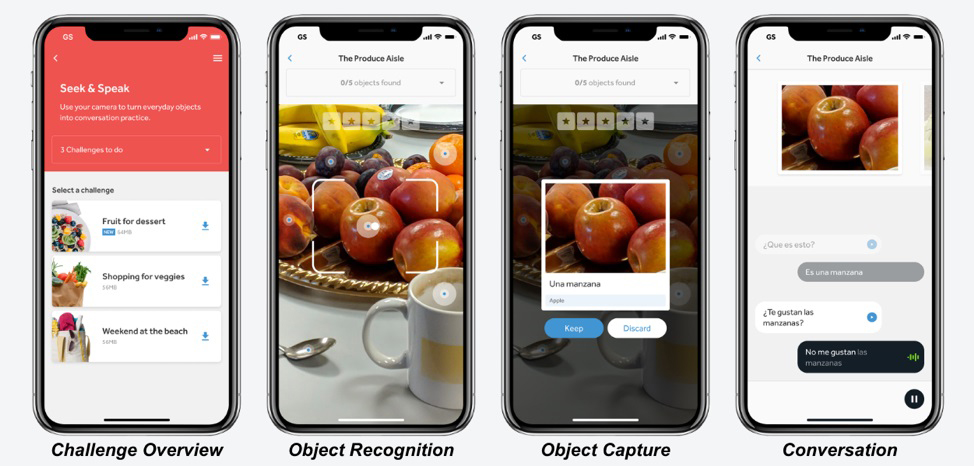
Babbel, which has noticed a more than 50 percent jump in subscriptions since the virus outbreak, lets people sample the goods with its free preview lesson; the entire learning package costs between $6 and $13 a month (and is currently free for U.S. students). The courses for the Newcomer and Beginner I levels cover vocabulary and phrases that any traveler would be grateful to have on the tip of the tongue, such as the words for directions, greetings, clothing items and telling time – plus the odd profanity. The challenges are similar to Duo’s – translation, speaking, listening – but the degree of difficulty was higher and the initial lessons seemed more relevant to real life. The 150 linguists and teachers in charge of creating Babbel’s content and methodology can really work a virtual classroom.

After three sections, I could sense a solid foundation of French taking shape. When I shut down my phone that night, I felt as if I could wake up in Paris and ask a local for directions to a clothing store. In the shop, I could inquire about a sweater or pair of shoes. And if the store didn’t have my size, I could let the curses fly.

Founded in 1992, Rosetta Stone is part of my early travel memories; the mustard-yellow kiosks selling the boxed language programs were as much an airport staple as Hudson News and Auntie Anne’s Pretzels. The retail arm is gone, and the app has taken up the mantle. The company has a free three-day trial before you have to start paying from $36 for three months to $199 for a lifetime subscription with unlimited access to all of the languages. (During the pandemic, students can access the resource free.) After my tumble down the rabbit hole with Duolingo, I appreciated the strict 30-minute increment. I chose the travel-theme series and spent the next half-hour absorbing a slow build of information, from singular nouns to plural, with new verbs introduced. First, everyone was eating and drinking; then they were running, reading and writing. I had a technical glitch: The program said it was struggling to hear me through my faulty microphone. So I lifted the device closer to my mouth and growled in a deep Catherine Deneuve voice. At the end of the lesson, I earned a “Great Job” from Prof. R. Stone.

For English speakers, Lirica offers only Spanish lessons at the moment but plans to expand this year. The three-year-old company was founded by Paul Custance, a former financial director at Sony Music UK, a connection that makes sense when you realize that the lesson plan is based on international hits – specifically, 44 songs curated by linguists and performed by such artists as Maluma, Enrique Iglesias and Lila Downs.

“Repetition is a necessary part of learning vocabulary and constructs in a foreign language,” Custance said. “Just think of a song you like and part of it will likely play in your head. When language elements are accompanied by a catchy tune, there is a higher chance you will emotionally engage with them and, crucially, remember them.”

The app comes with two to three free tunes per level; after you use up your pass, the program costs $8 for one month or $25 for a year. (The company is offering free monthly subscriptions to U.S. schools.) Nicky Jam’s “Hasta el Amanecer,” an award-winning reggaeton song, was queued up first. The program uses the lyrics as a vehicle to teach grammar and vocabulary words and phrases, as well as sharpen listening and comprehension skills.

“What do we know so far?” Lirica asked me.

“Nicky is flirting with a girl,” I answered correctly.

Many of the words alone are useful but strung together – well, it depends on the setting. I will probably have to save “Ven dale ahi, ahi, moviendo todo eso pa’ mi,” or “Come on, come on, move it all for me,” for a conversation with a furniture moving company – or a night in a Latin American dance club.

Spring is here, and Mother Nature doesn’t care about a pandemic #ศาสตร์เกษตรดินปุ๋ย

#ศาสตร์เกษตรดินปุ๋ย : ขอบคุณแหล่งข้อมูล : หนังสือพิมพ์ The Nation

https://www.nationthailand.com/travel/30384457?utm_source=category&utm_medium=internal_referral

Spring is here, and Mother Nature doesn’t care about a pandemic

Mar 19. 2020
People explore blooming cherry blossoms near the Tidal Basin on Sunday. Several National Cherry Blossom Festival events have been canceled because of the coronavirus. MUST CREDIT: Washington Post photo by Matt McClain

People explore blooming cherry blossoms near the Tidal Basin on Sunday. Several National Cherry Blossom Festival events have been canceled because of the coronavirus. MUST CREDIT: Washington Post photo by Matt McClain
By The Washington Post · Adrian Higgins · FEATURES, HOMEGARDEN

Through the ages and across cultures, spring has been a metaphor for life and its renewal. All the vital forces of the universe are captured in a single blushing cherry blossom. Whether we ever stop to ponder this or merely find casual delight in the trees now erupting into bloom, or the fields of daffodils dancing at their feet, we see the vernal world as being reborn and fresh. Except nature’s party this year seems just plain wrong. A saucer magnolia abloom is as off as someone whistling at a

Where is the gloom of November when you need it?

The equinox occurs late Thursday, but spring has been around a while. March has brought a growing season that is unusually early and spectacular in its broad and unfrosted display, at least in the Mid-Atlantic. Didn’t the flowers get the coronavirus memo?

A runner is framed by a blossoming tree on Tuesday in Springfield, Va. MUST CREDIT: Washington Post photo by Matt McClain

A runner is framed by a blossoming tree on Tuesday in Springfield, Va. MUST CREDIT: Washington Post photo by Matt McClain

In normal times, the eruption of life we call spring is not just a natural phenomenon but a call to people to leave their winter caves and come together to celebrate the floral renaissance. In Washington, D.C., that’s the communal worship of the cherry blossom followed in other communities in the United States and, especially, in Europe with folk festivals and maypole dancing.

The shared celebration, integral to our collective joy of being alive, has been turned on its head by our abrupt sequestration. What will the Tidal Basin hold this year now that Cherry Blossom Festival events have been canceled? Will the hordes still flock to the Yoshino blossoms or will a diminished crowd find elbow room? Will there be just a few souls dealing with a dystopian emptiness amid the countless blossoms? Everything about this crisis is new to the generations born after World War II.

Spring has arrived, the days are lengthening, the air warming and we have been ordered back into the caves. It’s dark and bloomless in there, with only our rolls of toilet paper to hug. Meanwhile, Flora dances with the windblown petals, blithe to our worries and privations.

Does a falling tree make a sound in an empty forest, does spring burst forth without us? Oh yeah. The green thumbs among us may have assembled a paradise of flowering plants, but even those curated blooms are more interested in bees, beetles and moths than us, because flowering is about sex and the transfer of pollen to pistil. The trees in early bloom need months to form their apples and acorns and hazelnuts. Even trees rendered sterile by our manipulation think they are fertile. Sorry, guys, the spring eruption is not for our benefit, biologically.

Don’t judge them harshly; plants have had to put up with their own pernicious pests and diseases for centuries, most spread by us. Think of the Dutch elm disease, caused by a fungus spread by beetles, or the xylella bacteria using carrier insects to afflict vineyards, citrus orchards and, in Italy, ancient olive groves. The spread of plant disease too often is a byproduct of our globalization, and so is the coronavirus – there could be no more graphic example of the interconnectedness of human society than the wildfire spread of this disease from an interior region of China. In choosing Homo sapiens, covid-19 has found both vector and victim in one.

Botanical gardens, our temples to spring, are closing or partially closing around the world, further distancing folks from the most awaited season (for those of us in the Northern Hemisphere). The Royal Horticultural Society has announced that the highlight of Britain’s horticultural calendar, the Chelsea Flower Show in May, is canceled.

The Dubai Miracle Garden, a giddying display of 150 million annual flowers in a Disneyland setting, is closed, according to its website.

What must be one of the strangest experiences at the moment is to wander through the Keukenhof, the Dutch botanical estate near Amsterdam where acres of sinuous garden beds are exploding with millions of planted tulips and other spring bulbs, planted by an army of gardeners last fall.

Here you will find rivers of tulips in lipstick red, bubble-gum pink and golden yellow, along with some subtler hues and variegations. Beneath the canopy of burgeoning trees, the air is fresh and scented with countless hyacinths and other spring beauties.

For this spring’s display, the gardeners planted 7 million bulbs. A floral mosaic alone consumed 50,000 tulips, grape hyacinths and crocuses.

The flower beds are set beside lakes, pavilions and woodland paths, and have been a quaintly over-the-top display of the floral and mercantile ingenuity of the Netherlands bulb industry for decades. The flowers have attracted millions of visitors over the years – at first the Dutch and their European neighbors but increasingly East Asians in a shrinking world. Last year some 1.5 million tourists came from more than 100 countries to revel in the eight-week display. This year the starring blossoms will open to an empty house.

The 2020 show – themed “A World of Colors” – was to have begun Saturday and run until May 10. For now the park is closed by government regulation until at least April 6, but it seems unlikely it will be opened after that, upstaged by a World of Covid.

You could say, as the Japanese do, that the brevity of the cherry blossoms is a symbol of our own brief time. You could say too that to plant a tree or a garden is to defy that. Those are acts of inherent faith in the future, whether we are around to see them or not.

We need plants, even if they don’t need us, so admire the spring bursting at the mouth of the cave. And yet in our confinement, in our inability to revel unfettered this spring, there is a real sorrow. One thinks of poet Philip Larkin’s ode to the awakening trees. “Their greenness is a kind of grief.”

U.S. economy expected to lose 4.6 million travel-related jobs this year from coronavirus fallout #ศาสตร์เกษตรดินปุ๋ย

#ศาสตร์เกษตรดินปุ๋ย : ขอบคุณแหล่งข้อมูล : หนังสือพิมพ์ The Nation

https://www.nationthailand.com/travel/30384303?utm_source=category&utm_medium=internal_referral

U.S. economy expected to lose 4.6 million travel-related jobs this year from coronavirus fallout

Mar 18. 2020
By The Washington Post · Rachel Siegel · NATIONAL, BUSINESS, FEATURES, HEALTH, TRAVEL 

The United States is expected to lose 4.6 million travel-related jobs this year as the coronavirus outbreak levies an $809 billion blow to the economy, according to startling projections released Tuesday by the U.S. Travel Association.

Further, 4 million total jobs have been eliminated already or are on the verge of being lost in the next few weeks, the American Hotel & Lodging Association said. In some of the hardest-hit markets – such as Seattle, San Francisco, Austin and Boston – properties are shutting down and occupancy rates are at unprecedented lows.

Total spending on travel in the United States – including from transportation, retail, lodging and restaurants – is expected to drop by $355 billion for the year, or 31 percent – more than six times the impact of the Sept. 11, 2001, terrorist attacks. The projected 4.6 million jobs lost would, by themselves, nearly double the U.S. unemployment rate, from 3.5 percent to 6.3 percent, according to U.S. Travel.

The travel industry is joining airlines and casinos in begging for a government rescue. On Tuesday, Treasury Secretary Steven Mnuchin said that the Trump administration wants to send direct cash payments to Americans in the next two weeks as part of a massive economic stimulus package forming between Congress and the White House. The overall price tag of the package could be around $1 trillion.

The hotel industry alone is asking for $150 billion – largely in the form of direct grants – to keep employees on the payroll and small businesses afloat. The broader travel industry is also seeking an additional $100 billion, executives said on a press call. Those tallies are separate from the more than $50 billion being sought by the airline industry.

The requests were presented by industry leaders to Trump, Vice President Mike Pence and other officials handling the pandemic in a White House meeting Tuesday.

Chip Rogers, president and chief executive of AHLA, said coronavirus had had a more severe economic impact on the lodging industry than the Sept. 11, 2001, terrorist attacks and the 2008 financial crisis combined. In a stunning reversal, the industry is facing the possibility that half of the hotels in the United States could close this year, Rogers said. The prospect is especially dire for the small businesses that make up 83 percent of the travel industry.

Jon Bortz, president and chief executive of the Pebblebrook Hotel Trust and AHLA chairman, said his company let 4,000 employees go and expects to lay off an additional 2,000 by the end of the month – representing more than three-quarters of its workforce. Pebblebrook, which has 54 hotels nationwide, is facing shutting down doors at more than half of its properties.

Douglas Dreher, president and CEO of the Hotel Group, said occupancy at some properties had dropped to the single digits and that one-third of the company’s workforce will be let go in the near term.

“It is for us the Great Depression,” Dreher said. “We need help.”

Industry leaders emphasized that government funding would need to come within days. Direct grants would go toward lost salaries and make sure that hotel owners can make their mortgage payments.

Marriott International said Tuesday that it was starting to furlough what it expects to be tens of thousands of employees. The hotel chain, which has nearly 1.4 million rooms and employs 130,000 people in the U.S., began shutting down some managed properties last week. Those who lost their jobs won’t be paid while on furlough, but they would continue to receive health-care benefits, the company said.

ตีกอล์ฟเสร็จไปนวดสปากันมั้ย #ศาสตร์เกษตรดินปุ๋ย

#ศาสตร์เกษตรดินปุ๋ย : ขอบคุณแหล่งข้อมูล : หนังสือพิมพ์คมชัดลึก

https://www.komchadluek.net/news/lifestyle/422158?utm_source=category&utm_medium=internal_referral&utm_campaign=lifestyle

ตีกอล์ฟเสร็จไปนวดสปากันมั้ย

14 มีนาคม 2563 – 08:00 น.
สปา,กอล์ฟ,โรงแรมแคนทารี กบินทร์บุรี,สนามกอล์ฟกบินทร์บุรีสปอร์ตคลับ,ซอลท์ พอท ทรีทเมนต์,โพธาลัย เลเชอร์ ปาร์ค,นวดด้วยศาสตร์การแพทย์แผนไทยแบบดั้งเดิม
เปิดอ่าน 107 ครั้ง

เอาใจคนรักกีฬากอล์ฟ ชื่นชอบการพักผ่อนท่ามกลางธรรมชาติ อีกทั้งนวดสปาผ่อนคลาย

แม้ภาคธุรกิจท่องเที่ยวจะโดนกระแสไวรัสโควิด-19 จนทำให้อยู่ในภาวะนิ่ง แต่บรรดาโรงแรมต่างๆ ก็ไม่ลดละความพยามในการจัดแคมเปญต่างๆ เพื่อดึงนักท่องเที่ยวทั้งชาวไทยและชาวต่างประเทศให้ไปใช้บริการ


เอาใจคนรักกีฬากอล์ฟ

      ** โรงแรมแคนทารี กบินทร์บุรี เอาใจคนรักกีฬากอล์ฟและชื่นชอบการพักผ่อนท่ามกลางธรรมชาติในห้องพักหรูอยู่สบาย ให้สนุกสนานกับการดวลวงสวิงกับผองเพื่อน ณ สนามกอล์ฟที่ยาวที่สุดในประเทศไทยและติดท็อป 5 ของโลก อย่าง สนามกอล์ฟกบินทร์บุรีสปอร์ตคลับ หรือ สนามกอล์ฟฮิลล์ไซด์คันทรี โฮม กอล์ฟ แอนด์รีสอร์ท กับแพ็กเกจห้องพักพร้อมออกรอบเล่นกอล์ฟ 2 วัน 1 คืน ในราคาเริ่มต้นเพียง 3,200 บาทสุทธิ (จันทร์-พฤหัสบดี) และราคา 4,000 บาทสุทธิ (ศุกร์-อาทิตย์ และวันหยุดนักขัตฤกษ์) พักในห้องสตูดิโอ 1 ห้อง สำหรับ 2 ท่าน พร้อมอาหารเช้าและการออกรอบเล่นกอล์ฟ 18 หลุม จำนวน 2 รอบ (1 รอบต่อวัน) ตั้งแต่วันนี้ถึงวันที่ 31 ธันวาคม 2563….แฟนกอล์ฟตัวจริงห้ามพลาด!

ซอลท์ พอท ทรีทเมนต์

    ** ยกระดับการปรนนิบัติผิวทั่วเรือนร่าง สปา เซ็นวารี โรงแรมเซ็นทาราแกรนด์บีชรีสอร์ทและวิลลา หัวหิน ขอต้อนรับฤดูร้อนอันสดใส พร้อมเชิญทุกท่านคลายความเมื่อยล้า ในทรีทเมนต์ยอดนิยม “ซอลท์ พอท ทรีทเมนต์” ด้วยการนวดด้วยหม้อดินอุ่นร้อน ประคบกับสมุนไพรตำสด ผสานเทคนิคการนวดของสปา เซ็นวารี เริ่มจากช่วงแขน เรื่อยมาจนถึงแผ่นหลังและช่วงลำตัวทั้งหมด


ประคบกับสมุนไพรตำสด

ซึ่งนอกจากจะรับประกันด้านการบำบัดความเมื่อยล้า ยังมอบความปลอดโปร่งโล่งสบายโดยใช้กลิ่นธรรมชาติจากสมุนไพรสดคุณประโยชน์นานัปการทั้ง 7 ชนิด อาทิ การบูร มะกรูด ตะไคร้ เม็ดเกลือทะเล ล้วนมีสรรพคุณด้านการดูแลผิวพรรณ การันตีความผ่อนคลายตลอดระยะเวลา 90 นาที ในราคาสุทธิท่านละ 2,700++บาท ตั้งแต่วันนี้ไปจนถึงเดือนมิถุนายน 2563

ทรีทเมนต์แผนไทยแบบดั้งเดิม

** โพธาลัย เลเชอร์ ปาร์ค ขอเชิญคุณสัมผัสประสบการณ์ “ทรีทเมนต์และการนวดด้วยศาสตร์การแพทย์แผนไทยแบบดั้งเดิม” ท่ามกลางในบรรยากาศและสภาพแวดล้อมอันสงบ ส่วนตัว ซึ่งจะช่วยเติมเต็มความสุขกายสบายใจและช่วยปรับสมดุลให้ร่างกายหลากหลายรูปแบบ อาทิ ไทย เมอริเดียน มาสสาจ, เดอะ ทัช ออฟ โพธาลัย, ไทย ทัช มาสสาจ และซินโดรม เทอราพี มาสสาจ เป็นต้น พร้อมรับส่วนลดสุดพิเศษกับ “นวดเพื่อสุขภาพในช่วงเวลาพิเศษ” เอาใจคนรักสุขภาพโดยเฉพาะ พร้อมรับส่วนลด 20 เปอร์เซ็นต์ ทุกวันจันทร์–ศุกร์ ตั้งแต่เวลา 10.00–14.00 น. เมื่อใช้บริการตั้งแต่ 1,000 บาทขึ้นไป ที่ โพธาลัย เวลเนส แอนด์ ลองเจวิตี้ ตั้งแต่วันนี้ถึง 31 มีนาคม 2563

เที่ยวโรงงานหลวง-ลุยแปลงสตรอเบอร์รี่พรีเมียม #ศาสตร์เกษตรดินปุ๋ย

#ศาสตร์เกษตรดินปุ๋ย : ขอบคุณแหล่งข้อมูล : หนังสือพิมพ์คมชัดลึก

https://www.komchadluek.net/news/lifestyle/421972?utm_source=category&utm_medium=internal_referral&utm_campaign=lifestyle

เที่ยวโรงงานหลวง-ลุยแปลงสตรอเบอร์รี่พรีเมียม

13 มีนาคม 2563 – 00:05 น.
ดอยคำ,สตรอเบอร์รี่,โรงงานหลวงอาหารสำเร็จรูปที่ 1 ฝาง,โรงไฟฟ้าบ้านยาง,ศาลเจ้าแม่กวนอิมพระราชทาน,นารอ กรองแก้ว,ศิรินภา ไชยพล,ธนกฤต จันทรสมบัติ
เปิดอ่าน 216 ครั้ง

เยี่ยมชมกระบวนการผลิต โรงงานหลวงอาหารสำเร็จรูปที่ 1 (ฝาง) พร้อมชมแปลงสตรอเบอร์รี่พรีเมียม

ในช่วงที่ไวรัสโควิด-19 กำลังแพร่ระบาด และฝุ่นพิษ พีเอ็ม 2.5 ก็ยังอบอวลทั่วเมืองหลวง เห็นทีต้องหนีไปสูดอากาศบริสุทธิ์ในที่ห่างไกลมลพิษกันเสียหน่อย และครั้งนี้เราเลือกที่จะมุ่งหน้าขึ้นเหนือไปเรียนรู้เส้นทางการกำเนิด “ดอยคำ” ที่ อ.ฝาง จ.เชียงใหม่ พร้อมเยี่ยมชมกระบวนการผลิต โรงงานหลวงอาหารสำเร็จรูปที่ 1 (ฝาง) ตั้งอยู่ในพื้นที่บ้านยาง ตำบลแม่งอน ซึ่งหลอมรวมไปด้วยชาติพันธุ์ วัฒนธรรม และศาสนา ทั้งไทยพุทธ จีน มุสลิม มีเอกลักษณ์และอยู่ร่วมกันอย่างสันติสุขท่ามกลางขุนเขา ดังคำกล่าวที่ว่า “ชุมชนแห่งความสุขที่พ่อสร้าง”

ภายในพิพิธภัณฑ์โรงงานหลวงที่ 1 (ฝาง)

โรงงานหลวงอาหารสำเร็จรูปที่ 1 (ฝาง) เป็นโรงงานหลวงแห่งแรกที่ก่อตั้งขึ้นตามแนวพระราชดำริในการพัฒนาที่ยั่งยืนตามหลักปรัชญาของเศรษฐกิจพอเพียงของ พระบาทสมเด็จพระมหาภูมิพลอดุลยเดชมหาราช บรมนาถบพิตร เพื่อแก้ไขปัญหาความเดือดร้อนและทุกข์ยากของราษฎร ปัจจุบันเป็นโรงงานหลักที่เป็นกำลังสำคัญในการผลิตผลิตภัณฑ์ภายใต้ตราสินค้า “ดอยคำ” และเป็นสถานที่ท่องเที่ยวเชิงการศึกษา โดยด้านหน้าของโรงงานเป็น พิพิธภัณฑ์โรงงานหลวงที่ 1 (ฝาง) เป็นสถานที่รวบรวมและจัดแสดงแนวพระราชดําริในการพัฒนาที่ยั่งยืนตามแนวปรัชญาของเศรษฐกิจพอเพียง ตัวอาคารเป็นสถาปัตยกรรมแบบจีนยูนนานเพื่อให้คนจีนในพื้นที่รู้สึกเป็นเจ้าของและไม่เกิดความแตกแยก จัดแสดงในรูปแบบพิพิธภัณฑ์มีชีวิตโดยมีวัตถุประสงค์เพื่อให้เป็นแหล่งเรียนรู้และพัฒนาอย่างยั่งยืนด้านอุตสาหกรรมการเกษตรแปรรูป เพื่อเกื้อหนุนและส่งเสริมให้เกิดการพัฒนาชุมชนโดยรอบ เพื่อเป็นสถานที่รวบรวมและจัดแสดงแนวพระราชดำริในการพัฒนาและเพื่อความคงอยู่อย่างยั่งยืนของโรงงานหลวง

โรงไฟฟ้าบ้านยาง

ศาลเจ้าแม่กวนอิมพระราชทาน

          เดินเข้าไปด้านในอีกนิดจะเห็น โรงไฟฟ้าบ้านยาง ซึ่งเป็นโครงการพระราชดำริโรงไฟฟ้าพลังน้ำขนาดเล็กแห่งแรกของประเทศ ปัจจุบันยังคงดำเนินกิจการอยู่ ไม่ไกลกันนักเป็นที่ตั้งของสถานีอนามัยเก่าที่ในหลวง รัชกาลที่ 9 โปรดเกล้าฯ ให้สร้างพระราชทานแก่ชาวชุมชนบ้านยาง หากยังมีแรงแนะนำให้เดินขึ้นเขาไปอีกนิดพอได้เหงื่อ บนเนินเขาเป็นที่ตั้งของ ศาลเจ้าแม่กวนอิมพระราชทาน สถานที่ยึดเหนี่ยวจิตใจของชาวบ้านยางที่นับถือพระพุทธศาสนา

สตรอเบอร์รี่สดเกรดพรีเมียม

นารอ กรองแก้ว

          ในช่วงเดือนกุมภาพันธ์และมีนาคมเป็นฤดูกาลของสตรอเบอร์รี่ ซึ่งช่วงนี้ดอยคำได้คัดสรร “สตรอเบอร์รี่สดระดับพรีเมียม” สายพันธุ์พระราชทาน 80 จากการส่งเสริมเกษตร “โครงการพัฒนาพื้นที่ลุ่มน้ำแม่งอน อันเนื่องมาจากพระราชดำริ” มาจำหน่ายที่ร้านดอยคำ 7 สาขาในกรุงเทพฯ และเมื่อมาถึงถิ่นสตรอเบอร์รี่ระดับพรีเมียมทั้งที เราจึงไม่พลาดที่จะเยี่ยมชมไร่สตรอเบอร์รี่ของเกษตรกรที่ปลูกส่งให้กับดอยคำ ที่บ้านหนองเต่า ต.ม่อนปิ่น อ.ฝาง ซึ่ง นารอ กรองแก้ว เกษตรกรวัย 27 ปี เล่าให้ฟังว่า เริ่มต้นปลูกสตรอเบอร์รี่มาตั้งแต่ปี 2561 ก่อนหน้านี้ปลูกลิ้นจี่ซึ่งให้ผลผลิตน้อยและราคาไม่ดีเท่าที่ควร เจ้าหน้าที่จากดอยคำจึงเข้ามาสนับสนุนให้ปลูกสตรอเบอร์รี่ สายพันธุ์พระราชทาน 80 ตอนที่เริ่มปลูกไม่มีความรู้เลย ก็ได้เจ้าหน้าที่ดอยคำเข้ามาให้คำแนะนำทุกอย่างตั้งแต่เริ่มปลูกจนกระทั่งเก็บเกี่ยวผลผลิตไม่ให้ผลมีรอยช้ำ และคัดส่งดอยคำตามมาตรฐานที่กำหนด

สตรอเบอร์รี่สดๆ จากไร่

          “ปีแรกที่เริ่มปลูกยังไม่มีประสบการณ์ผลผลิตก็ยังไม่ดีมาก ก็ค่อยๆ เรียนรู้ไป พอปีที่แล้วเพิ่มพื้นที่ปลูกรายได้ก็เพิ่มขึ้น ยิ่งปีนี้อากาศดี ฝนไม่ตกนอกฤดู สตรอเบอร์รี่จึงออกผลเยอะและลูกใหญ่กว่าปีก่อน สลับเก็บวันเว้นวันได้ประมาณวันละ 50 กิโลกรัม คัดแยกเป็นเกรดส่งไปบรรจุกล่องขายเป็นผลสดแบบพรีเมียมได้ราคาดีมาก แต่ก็มีเฉพาะบางช่วงเท่านั้น หลังจากกลางเดือนเมษายนไปก็ไม่สามารถเก็บเกี่ยวได้แล้ว” หนึ่งในเกษตรกรที่ปลูกสตรอเบอร์รี่ส่งให้ดอยคำเล่าถึงที่มาก่อนจะบรรจุกล่องเป็นสตรอเบอร์รี่สดเกรดพรีเมียม

ธนกฤต จันทรสมบัติ

          ด้าน ธนกฤต จันทรสมบัติ เจ้าหน้าที่ส่งเสริมและพัฒนาเกษตร โรงงานหลวงอาหารสำเร็จรูปที่ 1 (ฝาง) วัย 27 ปี เล่าว่า หน้าที่หลักของตัวเองคือการนำเอาองค์ความรู้ทางวิชาการเกษตรที่ผ่านการวิจัยจากโรงปฏิบัติการวิจัยทางพืชมาถ่ายทอดให้พี่น้องเกษตรกรบนพื้นที่สูง โดยเฉพาะเกษตรกรที่ปลูกสตรอเบอร์รี่ และมัลเบอร์รี่ ซึ่งดูแลพื้นที่ครอบคลุมพื้นที่ 3 อำเภอ ใน จ.เชียงใหม่ ประกอบไปด้วย อ.ฝาง อ.ไชยปราการ อ.แม่อาย โดยในพื้นที่ทั้ง 3 อำเภอมีเกษตรกรปลูกสตรอเบอร์รี่รวมทั้งสิ้น 50 ไร่ 85 ครัวเรือน

สตรอเบอร์รี่สดๆ จากไร่

          “สตรอเบอร์รี่จะเริ่มปลูกตั้งแต่เดือนตุลาคมเก็บผลผลิตได้ 5 เดือน เริ่มตั้งแต่กลางเดือนธันวาคมจนถึงสิ้นเดือนเมษายน ซึ่งเกษตรกรแต่ละรายจะมีรายได้ต่อครัวเรือนเฉลี่ยอยู่ที่ 7-8 หมื่นบาท แต่ถ้าเกษตรกรมีความตั้งใจขยันเอาใจใส่และดูแลสตรอเบอร์รี่อย่างดี ก็สามารถทำรายได้มากถึง 1-2 แสนบาทต่อครัวเรือน อย่างที่ผ่านมามีเกษตรกรที่ขายสตรอเบอร์รี่ได้ 1 แสนบาท ทั้งสิ้น 10 ราย และ 2 แสนบาทอีก 5 ราย” เจ้าหน้าที่ส่งเสริมและพัฒนาเกษตรให้ข้อมูล

สตรอเบอร์รี่สดเกรดพรีเมียม

          หลังจากชมไร่สตรอเบอร์รี่ และเด็ดชิมกันแบบสดๆ แล้ว เราตามเส้นทางสตรอเบอร์รี่ต่อไปยังโรงคัดแยกเกรด แบ่งเป็นขนาดใหญ่สุด เกรด AA คัดพิเศษ 16 ผล น้ำหนัก 480 กรัมต่อกล่อง เกรด A คัดพิเศษ ขนาด 20 ผล น้ำหนัก 450 กรัมต่อกล่อง และขนาด B คัดพิเศษขนาด 24 ผล น้ำหนัก 380 กรัมต่อกล่อง จากนั้นขนส่งโดยรถห้องเย็นส่งถึงผู้บริโภคใน กทม.เช้าตรู่วันถัดไป

ศิรินภา ไชยพล

โรงเรือนสตรอเบอร์รี่

          ทริปนี้เรายังมีโอกาสได้ชมเทคโนโลยีการวิจัยเนื้อเยื่อสตรอเบอร์รี่ภายในโรงเก็บผลิตภัณฑ์เกษตรและโรงปฏิบัติการวิจัยทางพืช รวมถึงโรงเรือนสตรอเบอร์รี่ ซึ่งเราได้ ศิรินภา ไชยพล ผู้จัดการแผนกนวัตกรรมเกษตร (Lab) โรงงานหลวงอาหารสำเร็จรูปที่ 1 (ฝาง) พาชมโรงเรือนแห่งใหม่นี้พร้อมอธิบายให้ฟังว่าโรงเรือนทั้งหมดใช้ระบบน้ำทำความเย็นและออกแบบป้องกันแมลงศัตรูพืช มีระบบการให้ปุ๋ยอัตโนมัติ ควบคุมความเข้มข้นของปุ๋ย วัดปุ๋ยในดินเพื่อดูการตอบสนองของพืช ปัจจุบันมีเกษตรกรจำนวน 6 รายร่วมปลูกสตรอเบอร์รี่ในโครงการ จำนวน 6 โรง อีก 3 โรงปลูกโดยดอยคำ โดยเริ่มปลูกชุดแรกเมื่อวันที่ 15 ตุลาคมปีที่แล้ว ขณะนี้ผลผลิตชุดแรกออกแล้ว รสชาติและขนาดเป็นที่พอใจ แต่ยังต้องพัฒนาต่อไป ซึ่งการปลูกในโรงเรือนจะสามารถปรับสภาวะแวดล้อม ลดต้นทุนการผลิต ลดการใช้สารเคมี ไม่ต้องกำจัดวัชพืช ไม่เสี่ยงต่อสภาพอากาศที่แปรปรวน และตอบสนองความต้องการผู้บริโภคสตรอเบอร์รี่นอกฤดูกาล

สตรอเบอร์รี่ที่ปลูกในโรงเรือน

          อดใจรออีกนิด…สตรอเบอร์รี่สดเกรดพรีเมียมจากดอยคำ อาจมีให้อร่อยกันได้ทั้งปีเร็วๆ นี้คร้า…

สักครั้งในชีวิต จาริกตามรอย “พระศาสดา” #ศาสตร์เกษตรดินปุ๋ย

#ศาสตร์เกษตรดินปุ๋ย : ขอบคุณแหล่งข้อมูล : หนังสือพิมพ์คมชัดลึก

https://www.komchadluek.net/news/lifestyle/420854?utm_source=category&utm_medium=internal_referral&utm_campaign=lifestyle

สักครั้งในชีวิต จาริกตามรอย “พระศาสดา”

5 มีนาคม 2563 – 17:21 น.
พระศาสดา,สมเด็จพระสัมมาสัมพุทธเจ้า,สมเด็จเจ้าฟ้าฯ กรมพระศรีสวางควัฒนฯ,ศนพนิธิ มหานนท์,พระธรรมโพธิวงศ์ วีรยุทฺโธ,พระนวกโพธิ,พุทธคยา,สารนาถ,สาวัตถี,กุสินารา,พาราณสี,ตรัสรู,ประสูติ,ปฐมเทศนา,ปรินิพพาน,อินเดีย,เนปาล,โรงพยาบาลจุฬาภรณ์,สังเวชนียสถาน 4 แห่ง,จาริกแสวงบุญ,บรรพชา,อุปสมบท
เปิดอ่าน 482 ครั้ง

การเดินทางจาริกแสวงบุญ ณ แดนพุทธภูมิ ไปตาม “สังเวชนียสถาน 4 แห่ง” ก็เหมือนได้ใกล้ชิดพระพุทธองค์

หน้าที่ชาวพุทธนอกจากการน้อมนำหลักธรรมคำสอนของ “สมเด็จพระสัมมาสัมพุทธเจ้า” มาใช้ดำเนินชีวิต ยึดเหนี่ยวจิตใจให้ประพฤติแต่กรรมดีละเว้นความชั่วแล้ว การเดินทางจาริกแสวงบุญ ณ แดนพุทธภูมิ ไปตาม “สังเวชนียสถาน 4 แห่ง” สักครั้งในชีวิต ก็เป็นอีกหนึ่งหนทางเหมือนได้ใกล้ชิดพระพุทธองค์ และยิ่งได้ข้ามน้ำข้ามทะเลไปบวชครองผ้าเหลืองถึงดินแดนแห่งศรัทธาก็นับเป็นบุญยิ่ง ในแต่ละปีจึงได้เห็นพุทธศาสนิกชนมหาศาลจากทั่วโลกมุ่งหน้าสู่อินเดียและเนปาล ดินแดนอันเป็นต้นกำเนิดแห่งพระพุทธศาสนา


ศ.นพ.นิธิ มหานนท์ ในพิธีปลงผมนาค

    การเดินทางครั้งนี้ก็เช่นกัน โอกาสครบรอบ 10 ปีการดำเนินงานของโรงพยาบาลจุฬาภรณ์ ได้จัดโครงการบรรพชาอุปสมบทหมู่และปฏิบัติธรรมถวายเป็นพระกุศลแด่ ศาสตราจารย์ ดร.สมเด็จพระเจ้าน้องนางเธอ เจ้าฟ้าจุฬาภรณวลัยลักษณ์ อัครราชกุมารี กรมพระศรีสวางควัฒน วรขัตติยราชนารี องค์ประธานก่อตั้งโรงพยาบาลจุฬาภรณ์ ณ แดนพุทธภูมิ สาธารณรัฐอินเดีย และสหพันธ์สาธารณรัฐประชาธิปไตยเนปาล ระหว่างวันที่ 15-23 กุมภาพันธ์ 2563

ขบวนแห่นาคไปยังวัดมหาโพธิ์ พุทธคยา

พิธีบรรพชาเป็นสามเณรนวกะ

สามเณรนวกะ ใต้ต้นศรีมหาโพธิ์

พิธีอุปสมบท

      ในการนี้ ศาสตราจารย์ ดร.สมเด็จพระเจ้าน้องนางเธอ เจ้าฟ้าจุฬาภรณวลัยลักษณ์ อัครราชกุมารี กรมพระศรีสวางควัฒน วรขัตติยราชนารี เสด็จไปทรงเป็นประธานฝ่ายฆราวาส ในพิธีปลงผมนาค ณ พระอุโบสถวัดไทยพุทธคยา รัฐพิหาร สาธารณรัฐอินเดีย ทรงขริบผมนาคจำนวน 44 คนซึ่งเป็นบุคลากรของราชวิทยาลัยจุฬาภรณ์ สถาบันการศึกษาจุฬาภรณ์ และสถาบันวิจัยจุฬาภรณ์ นำโดย ศ.นพ.นิธิ มหานนท์ เลขาธิการราชวิทยาลัยจุฬาภรณ์ โดยมี พระธรรมโพธิวงศ์ (วีรยุทฺโธ) เจ้าอาวาสวัดไทยพุทธคยา และหัวหน้าพระธรรมทูตสายอินเดีย-เนปาล กล่าวนำประกอบพิธี

      พร้อมกันนี้ เสด็จไปยังมณฑลพิธีใต้ต้นพระศรีมหาโพธิ์ ภายในวัดมหาโพธิ์ พุทธคยา สถานที่ตรัสรู้ของสมเด็จพระสัมมาสัมพุทธเจ้า ทรงเป็นประธานฝ่ายฆราวาสในพิธีบรรพชาสามเณรนวกะ (บวชใหม่) ทั้ง 44 รูป ก่อนที่สามเณรนวกะจะเข้าสู่พิธีมหามงคลอุปสมบทเป็น “พระนวกโพธิ” อย่างสมบูรณ์ภายในพระอุโบสถวัดไทยพุทธคยา โดยมี สมเด็จพระมหาธีราจารย์ กรรมการมหาเถรสมาคม ประธานสำนักงานกำกับดูแลพระธรรมทูตไปต่างประเทศ และเจ้าอาวาสวัดยานนาวา เป็นต้น เป็นพระอุปัชฌาย์

สมเด็จเจ้าฟ้าฯ กรมพระศรีสวางควัฒนฯ ทรงบาตรพระนวกโพธิ ที่วัดไทยพุทธคยา

     ในการนี้ สมเด็จเจ้าฟ้าฯ กรมพระศรีสวางควัฒนฯ ได้ทรงบาตรพระนวกโพธิ อีกทั้งทรงปลูกต้นราชพฤกษ์ บริเวณลานหมอชีวก ณ วัดไทยพุทธคยา และในวันสุดท้ายของโครงการบรรพชาอุปสมบทหมู่และปฏิบัติธรรมถวายเป็นพระกุศล ซึ่งเป็นวันลาสิกขาพระนวกโพธิ ได้เสด็จไปยังปรินิพพานวิหาร ณ สาลวโนทยาน เมืองกุสินารา รัฐอุตตรประเทศ สถานที่จำลองการดับขันธปรินิพพานของพระพุทธเจ้า ทรงกระทําประทักษิณในพระวิหาร ทรงสักการะปรินิพพานสถูป ทรงเป็นประธานฝ่ายฆราวาสในพิธีลาสิกขาพระนวกโพธิทั้ง 44 รูป ที่พระอุโบสถวัดไทยกุสินาราเฉลิมราชย์

ทรงสักการะพระพุทธรูปปางปรินิพพานภายในปรินิพพานวิหาร เมืองกุสินารา

ทรงเป็นประธานฝ่ายฆราวาสในพิธีลาสิกขาพระนวกโพธิ วัดไทยกุสินาราเฉลิมราชย์

     และในการนี้ยังโปรดให้มีหน่วยแพทย์พระราชทานจากโรงพยาบาลจุฬาภรณ์ เพื่อตรวจรักษาพระภิกษุสงฆ์ ผู้จาริกแสวงบุญ ตลอดจนประชาชนในพื้นที่โดยรอบวัดไทยพุทธคยา และวัดไทยกุสินาราเฉลิมราชย์ ซึ่งส่วนใหญ่เป็นการตรวจรักษาอาการเบื้องต้นในโรคพื้นฐานทั่วไป สร้างความซาบซึ้งในพระกรุณาธิคุณอย่างยิ่ง

หน่วยแพทย์พระราชทานจากโรงพยาบาลจุฬาภรณ์

     ศ.นพ.นิธิ มหานนท์ เลขาธิการราชวิทยาลัยจุฬาภรณ์ กล่าวว่า เป็นที่ทราบกันดีว่า ศาสตราจารย์ ดร.สมเด็จพระเจ้าน้องนางเธอ เจ้าฟ้าจุฬาภรณวลัยลักษณ์ อัครราชกุมารี กรมพระศรีสวางควัฒน วรขัตติยราชนารี ทรงศรัทธาในพระพุทธศาสนามาตลอด เข้าพระทัยอย่างลึกซึ้งเกี่ยวกับพระพุทธศาสนา โรงพยาบาลจุฬาภรณ์ซึ่งเปิดดำเนินการมาครบ 10 ปี จึงถือโอกาสจัดโครงการดังกล่าวเพื่อถวายเป็นพระกุศลแด่พระองค์ที่ทรงงานหนักเพื่อประชาชนชาวไทย โดยเฉพาะด้านสุขภาพของประชาชนผู้ยากไร้ รวมถึงการดูแลรักษาโรคมะเร็งซึ่งเป็นความเจ็บป่วยที่สร้างความทุกข์ทรมาน

พระนิธิยานนฺทโพธิ (ศ.นพ.นิธิ มหานนท์)

     “แรกเริ่มที่ทรงก่อตั้งโรงพยาบาลจุฬาภรณ์ ตั้งพระทัยให้เป็นโรงพยาบาลเฉพาะทางด้านมะเร็ง แต่เมื่อมีคนไข้มากขึ้น จึงได้ขยับขยายเป็นโรงพยาบาลทั่วไป เพื่อรักษาพยาบาลให้ครบทุกเรื่อง มีพระประสงค์ที่จะขยับขยายเพิ่มเป็น 400 เตียง ซึ่งจะเปิดให้บริการรักษาทุกโรคในต้นปี 2565 โดยเครื่องไม้เครื่องมือของเรามีคุณภาพเช่นเดียวกับต่างประเทศ บางอย่างดีกว่าด้วยซ้ำ เพราะเราเข้าใจในการวิจัยที่ก้าวหน้าของวิทยาศาสตร์ในด้านนี้ อีก 1-2 ปีข้างหน้าเราจะมีเทคโนโลยีการรักษามะเร็งเฉพาะจุด หรือ “เฮฟวี่ พาร์ติเคิล เธอราพี” มีผลข้างเคียงน้อย ทุกคนสามารถมาใช้รักษาได้ โดยโรงพยาบาลจุฬาภรณ์จะเป็นศูนย์กลางในการดูแล” ศ.นพ.นิธิ กล่าว

     ในการบรรพชาอุปสมบทถวายเป็นพระกุศลครั้งนี้ พระนวกะแต่ละรูปได้นามฉายาต่อท้ายด้วยคำว่า “โพธิ” ซึ่งเป็นรูปแบบการให้ฉายาที่เป็นเอกลักษณ์เฉพาะ เพื่อเป็นเครื่องแสดงให้รู้ว่าผู้บวชได้มาประกอบพิธีบรรพชาใต้ต้นพระศรีมหาโพธิ์ สถานที่ตรัสรู้ของพระพุทธเจ้า หนึ่งในสังเวชนียสถานทั้งสี่ นับเป็นความปีติของทุกคนที่ได้บวชเป็นพระสงฆ์อย่างสมบูรณ์ อาทิ ศ.นพ.นิธิ มหานนท์ เลขาธิการราชวิทยาลัยจุฬาภรณ์ ได้ฉายา “นิธิยานนฺทโพธิ” ผู้มีขุมทรัพย์เป็นเครื่องเพลิดเพลินยินดี, รศ.ดร.ธณัฏฐ์คุณ มงคลอัศวรัตน์ ผู้ช่วยอธิการบดี สถาบันบัณฑิตศึกษาจุฬาภรณ์ ได้ฉายา “สุธีรโพธิ” นักปราชญ์ผู้มีปัญญาดี, ณรงค์ฤทธิ์ ศรีธนะ นักวิจัย โรงพยาบาลจุฬาภรณ์ ได้ฉายา “วริทฺธิโพธิ” ผู้มีความสำเร็จอันประเสริฐ เป็นต้น

วิหารมหามายาเทวี ลุมพินี สถานที่ประสูติ

มหาเจดีย์พุทธคยา สถานที่ตรัสรู้

ธรรมเมกขสถูป ณ ป่าอิสิปตนมฤคทายวัน ต.สารนาถ สถานที่แสดงปฐมเทศนา

ปรินิพพานวิหาร ณ สาลวโนทยาน เมืองกุสินารา​​​​​​​

    สาระสำคัญอีกประการของการอุปสมบทหมู่ คือการที่พระนวกโพธิ ทั้ง 44 รูป ได้ออกเดินทางจาริก ปฏิบัติธรรม และเจริญสมาธิยังพุทธสังเวชนียสถาน 4 แห่ง ได้แก่ สถานที่ประสูติ ณ ลุมพินี, สถานที่ตรัสรู้ ณ พุทธคยา, สถานที่แสดงปฐมเทศนา ณ สารนาถ และสถานที่ปรินิพพาน ณ กุสินารา รวมถึงสถานที่แม้ไม่ใช่สังเวชนียสถานทั้ง 4 หากว่ามีความสำคัญตามพุทธประวัติ อย่างที่เมืองพุทธคยา ที่เต็มไปด้วยวัดพุทธนานาชาติ ของประเทศที่นับถือพระพุทธศาสนาทั้งสายมหายาน และเถรวาท ต่างมีศรัทธาร่วมกันสร้างขึ้น วัดเวฬุวัน เมืองราชคฤห์ วัดแห่งแรกในพระพุทธศาสนาที่พระเจ้าพิมพิสาร ทรงสร้างถวายเป็นพุทธบูชาแด่พระพุทธเจ้า และเป็นสถานที่ซึ่งพระอารยสงฆ์สาวก 1,250 รูป มาประชุมกันโดยไม่ได้นัดหมาย เป็นต้น กำเนิด “วันมาฆบูชา” หรืออย่าง “นาลันทาคาม” บ้านเกิดของพระสารีบุตร อัครสาวกฝ่ายขวาซึ่งต่อมาเป็นสถานที่สร้างมหาวิทยาลัยนาลันทา มหาวิทยาลัยที่มีชื่อเสียงโด่งดังที่สุดในโลก เคยมีพระภิกษุจำพรรษากว่าหมื่นรูปมาศึกษาพระธรรม

วัดญี่ปุ่นหนึ่งในวัดพุทธนานาชาติ ที่เมืองคยา

สถูปพระสารีบุตร ที่นาลันทาคาม

ยอดเขาคิชกูฏ 

กุฏิพระพุทธเจ้าที่วัดเชตวันมหาวิหาร

    ยอดเขาคิชกูฏ สถานที่ตั้งพระคันธกุฏิของพระพุทธเจ้า ที่สมัยพุทธกาลพระเจ้าพิมพิสาร กษัตริย์แห่งกรุงราชคฤห์ แคว้นมคธ ได้เสด็จขึ้นไปกราบนมัสการพระพุทธเจ้า ที่นี่เต็มไปด้วยรอยพระบาทของพระพุทธองค์ การดั้นด้นขึ้นไปจาริกและได้กราบพระพุทธบาทจึงเป็นยอดมงคลชีวิตอย่างหาใดเปรียบ เช่นเดียวกับการมีโอกาสล่องเรือในแม่น้ำคงคาที่ชาวฮินดูเชื่อว่าเป็นแม่น้ำศักดิ์ จึงมีพิธีกรรมศักดิ์สิทธิ์ตามความเชื่อมากมาย โดยเฉพาะการลงไปอาบน้ำล้างบาป การบูชาสุริยเทพ การเผาศพ ริมแม่น้ำ และเหนือสิ่งอื่นใดคือการลอยกระทงใบสาละเล็กๆ บูชาพระบรมสารีริกธาตุพร้อมกับขอขมาแม่น้ำคงคา หรืออย่าง “วัดพระเชตวันมหาวิหาร” เมืองสาวัตถี ที่พระพุทธเจ้าเสด็จมาประทับจำพรรษานานที่สุดถึง 19 พรรษา และยังมีกุฏิของพระราหุล กุฏิพระมหากัสสปะเถระ กุฏิพระสีวลี และกุฏิพระสารีบุตรอีกด้วย

ลอยกระทงใบสาละ บูชาพระบรมสารีริกธาตุ ณ คงคามหานที

เผาศพตามวรรณะริมแม่น้ำคงคา

อาบน้ำล้างบาปตามความเชื่อ

     พระครูปลัดเฉลิมชาติ ชาติวโร เลขานุการหัวหน้าพระธรรมทูตสายอินเดีย-เนปาล ให้มุมมองเกี่ยวกับเรื่องนี้ว่า การจาริกแสวงบุญยังแดนพุทธภูมินับว่าได้อานิสงส์หลายด้าน ประการแรกเป็นการสืบทอดมรดกธรรมที่พระพุทธเจ้าประทานไว้ก่อนเสด็จดับขันธปรินิพพาน ตรัสไว้ว่าบุคคลใดที่ปรารถนาจะไปกราบสักการะพระองค์หลังการล่วงลับก็สามารถไปได้ที่สังเวชนียสถาน 4 แห่ง บุคคลใดเมื่อได้ไป 4 สถานที่นี้แล้วสามารถยังจิตให้เกิดความเลื่อมใส ยังใจให้เกิดความศรัทธาได้ เมื่อกายใจแตกดับก็สามารถไปจุติยังโลกสวรรค์

เข้านมัสการพระพุทธเมตตา ในมหาเจดีย์พุทธคยา

มกุฎพันธเจดีย์ สถานที่ถวายพระเพลิง พระสรีระของพระพุทธเจ้า

     ประการถัดมา เป็นการเรียนรู้รากฐานของพระพุทธศาสนาให้ถึงแก่นแท้ เรียนรู้จุดที่พระพุทธศาสดาทรงถือกำเนิดขึ้นในโลก แม้ว่าปัจจุบันจะเป็นซากอิฐกองปูน แต่เมื่อเราได้ฟังเรื่องราวเกี่ยวกับพระพุทธองค์เชื่อมโยงกับสถานที่นั้นๆ  ซากอิฐกองปูนก็กลับกลายมีชีวิตขึ้นมาเหมือนว่าพระพุทธศาสนดายังคงประทับอยู่ ณ สถานที่นั้นๆ ประการที่ 3 เป็นรูปแบบที่พระอรหันต์สมัยก่อนได้ประพฤติปฏิบัติกันมาตั้งแต่พระพุทธเจ้ายังดำรงชีวิตอยู่ และเมื่อปรินิพพาน กล่าวคือเมื่อออกพรรษาแล้วมีธรรมเนียมไปเฝ้าพระพุทธเจ้าที่วัดเชตวันมหาวิหารบ้าง วัดเวฬุวันบ้าง เพื่อถวายรายงานการปฏิบัติของตนเอง สืบต่อเนื่องเป็นพันปีถึงปัจจุบัน การจาริกแบบนี้จึงเหมือนได้ตามรอยพระอรหันต์ ทำให้ได้ใกล้ชิดพระพุทธ พระธรรม และพระสงฆ์ยิ่งขึ้น

พระพุทธรูปปางปรินิพพาน ปรินิพพานวิหาร ณ สาลวโนทยาน เมืองกุสินารา

      และประการที่ 4 ใช่เพียงได้เข้าไปสู่พุทธสถาน แต่ในระหว่างที่เดินทางไกลนั้น จะมีพระธรรมวิทยากรคอยถ่ายทอดเรื่องราวของพระพุทธเจ้า บทธรรมต่างๆ ที่เชื่อมโยงกับพุทธสถานต่างๆ เป็นการใช้พุทธสถานสื่อให้เห็นธรรมของพระพุทธองค์ จากไม่เคยรู้ก็ได้รู้ จนทำให้เกิดศรัทธามากยิ่งขึ้น เป็นสิ่งที่มีค่ามากนำพาให้เราพ้นทุกข์ได้ และนำไปสู่ปัญญา

ศรัทธาไร้พรมแดน ณ พุทธภูมิ

       กล่าวได้ว่าการมาสู่สังเวชนียสถาน ณ แดนพุทธภูมิ ด้วยประโยชน์มากมายเช่นนี้ ชาวพุทธจึงควรสักครั้งหนึ่งที่จะมีโอกาสได้ตามรอยเท้า ตามรอยธรรมขององค์สมเด็จพระศาสดา…