The Tourism Authority of Thailand will seek a budget of 1 million baht to boost foreign arrivals so the country achieves its targeted tourism revenue of 1.5 trillion baht this year.
The first seven months of the year have seen 3.33 million foreign tourists visit the country.
TAT governor Yuthasak Supasorn said he would wait for the economic situation administration centre to hold its meeting, during which he would raise the budget request.
Yuthasak said TAT would need precisely 1.035 million baht to carry out its so-called “booster shot” measure to stimulate the entire tourism industry, so that the 1.5 trillion baht revenue target this year could be reached.
The target would be 50 per cent of pre-Covid levels in 2019, when the country gained 3 trillion baht in tourism revenue, Yuthasak noted.
TAT hopes to lure 10 million foreign tourists, who are expected to generate 844 billion baht in income, and encourage Thais to make 160 million trips to create extra revenue of 656 billion baht, he said.
The number of foreign tourists has significantly increased following the easing of Covid travel restrictions, Yutthasak pointed out.
He said 3,334,326 foreign tourists visited Thailand from January 1 to July 31 from the following top ten nations:
– Malaysia: 420,660
– India: 337,282
– Singapore: 183,836
– UK: 167,232
– Laos: 157,831
– United States: 152,635
– Cambodia: 148,897
– Vietnam: 131,770
– Germany: 124,930
– South Korea: 120,321.
Yuthasak said the top five entry points for foreigners were Suvarnabhumi Airport (1.92 million arrivals), Phuket International Airport (603,974), Don Mueang International Airport (191,893), Sadao border checkpoint (141,337) and Nong Khai border checkpoint (77,401).
He noted that after the government cancelled the Test & Go measure on May 1, the number of tourists that month jumped to 532,177, compared to 297,365 in April.
When the government cancelled quarantine for foreign arrivals on June 1, the number of visitors soared to 788,258 that month.
And after the government scrapped Thailand Pass in July, the number of foreign arrivals last month rose to 1.21 million, the TAT governor said.
“After Thailand Pass was abolished, about 33,000 to 49,000 foreign tourists arrived each day in July, raising the total number for the month to 1.21 million,” Yuthasak added.
Tourism in Songkhla bounced back strongly last month after the government cancelled the Thailand Pass system, with about 100,000 foreign arrivals recorded last month.
The rebound has prompted Malaysian investors to buy hotels and bars in the border town of Sadao in anticipation of a boom, said Tourism Council of Songkhla president Somphon Chiwawatthanaphong.
The number of tourists visiting the province had jumped since the Thailand Pass was scrapped on July 1 – especially via the Sadao border crossings and Ban Prakorb in neighbouring Na Thawi district.
He added that official July figures had not been released but he expected them to show at least 100,000 arrivals, jumping from 40,000 in May and 60,000 in June.
Somphon said Thais are also returning in large numbers to Songkhla’s tourism hub of Hat Yai city. Many are flying in before travelling on to Yala’s Betong district, he added.
About 80 per cent of Songkhla’s 40,000 rooms in both registered and unregistered hotels have reopened, he said, adding the rate would rise to 90 per cent late this year.
His council expects about 800,000 foreign tourists to visit Songkhla this year, mostly from Malaysia and Singapore.
Pre-Covid, Songkhla received about 2 million foreign tourists per year, according to Somphon.
Pre-pandemic, most hotels and bars in Sadao were owned by Malaysian investors but they sold them following the outbreak, he said. However, many have now returned to buy back the businesses, he said.
Somphon said most hotels in Hat Yai did not change hands as banks had been lenient with them during the Covid crisis.
“Banks did not want to seize their assets and now that hotels have resumed business, they have started to repay debts,” he said, adding that occupancy rates during last week’s long weekend rose as high as 70-80 per cent in Hat Yai.
However, he said Covid-19 had shown the need to restructure tourism in Songkhla.
Among other things, tourism businesses were diversifying to lure customers from different groups and markets.
The council is trying to attract tourists from Europe by asking Bangkok Airways to open new routes to Hat Yai from Koh Samui and Bangkok.
It will also promote Songkhla Lake as a tourist destination while campaigning for Songkhla to be awarded Unesco world heritage status along with places like Penang in Malaysia. The city is among several destinations that the Thai government has selected for nomination to Unesco.
The council is also encouraging Thais to travel to Songkhla by train. Trains are running again twice daily on the 60km route from Hat Yai to Padang Besar. He said tourists could also take the Butterworth train from Padang Besar to Kuala Lumpur and Singapore.
The council also plans to collaborate with Prince of Songkla University to draw international sports events to the city, Somphon said.
With K PAY LATER, KBank becomes Thailand’s first bank to help “unbanked” and “underbanked” Thais have access to buy-now-pay-later services without requiring a salary slip.
KASIKORNBANK has launched K PAY LATER – Thailand’s first-of-its-kind loan that allows customers to spend for their daily lives under the “buy-now-pay-later” concept.
The initiative aims to assist cash-strapped unbanked – underbanked Thais in having credit line for the purchase of necessary consumer goods while also providing them equitable access to loan in the system.
The target group includes freelancers, small merchants and wage earners who lack proof of income.
Application can be made easily by users via K PLUS. As soon as the loan is approved, customers can use it to spend at more than 100,000 participating stores nationwide.
K PAY LATER is a personal loan for purchases of consumer products that are daily necessities, based on the “buy-now-pay-later” concept, to help ease the burdens of who are short on cash.
Application is easy, as income-related documents and collateral are not required. The maximum loan limit is 20,000 Baht.
It is a revolving credit, with no limit to the number of drawdowns, although the drawdown amount must not exceed the set limit.
There is no interest payment if the loan is not used.
The minimum purchase amount is 50 Baht, and it can be repaid in installments starting at only 11 Baht per month.
The maximum installment period is 5 months. The loan can neither be withdrawn nor exchanged for cash.
Additionally, if customers use the credit limit regularly and make payments on time, KBank shall consider increasing the loan limit and offering other services to such customers in the future.
K PAY LATER customers can easily use the credit limit to purchase goods and services by scanning, tapping and paying via K PLUS at participating stores.
They can also choose a payment period of either 1 month, 3 months or 5 months.
Presently, there are more than 100,000 participating merchants nationwide covering multiple categories, including department stores, supermarkets, convenience stores, petrol stations, restaurants, home product stores, and mobile phone and IT accessory shops.
These include Tops, MaxValu, Big C, Makro, Central Department Store, Lawson, Family Mart, CJ Express, IKEA, Dohome, Boonthavorn, Jaymart, IT City, Banana IT, as well as other shops having KBank’s electronic data capture (EDC) device.
Interested persons can apply for K PAY LATER easily by themselves via the K PLUS application and get an approval result instantly with just three screen taps.
For more information, please call the K-Contact Center at 02-8888888 or visit https://kbank.co/3SdRtJd.
About eight in 10 Thai consumers have experienced mental health issues in the past six months, with stress (46%), insomnia (32%) and anxiety (28%)* among the top three conditions, according to new research by global market intelligence firm Mintel.
Thais’ mental state has been exacerbated by the prolonged effects of COVID-19, which contribute to feelings of frustration and helplessness. Furthermore, the research finds that consumers at different life stages and genders face different mental health challenges.
Gen Z is the loneliest generation
Work/study (48%) particularly affected Gen-Z consumers aged 18-24, who are found to be the loneliest (38%) compared to other generations** like Older Millennials (26%) and Gen X (15%). Peer pressure (33%) and social media (25%) are among the factors that contribute to their mental health challenges.
“Over one-third of young Thai consumers say they lack self-confidence according to our research. The portrayals of a ‘perfect’ life on social media, seeing their role models, influencers or acquaintances possess things they do not have, and the pressure to live up to other peoples’ standards can lead to mental conditions like low self-esteem, depression and anxiety. Brands can support this younger population through campaigns that encourage positive self-satisfaction,” said Wilasinee (Kaimook) Siriboonpipattana, Senior Lifestyle Research Analyst, Mintel Reports Thailand.
Women are more stressed than men
Nearly one-third (31%) of Thai women aged 18-34 say they are burnt out compared to 17% of men of the same age group. Women attribute work/study, uncertainty in future planning and financial situation/responsibilities to be among the top factors that impact their mental health.
“Women aged 18-34 are likely to juggle household responsibilities, job stability, and their marriage. As noted in our new research on lifestyles of women, they want to stay balanced and healthy, both mentally and physically. Brands can target this group — particularly those with busy lifestyles — by offering products and services that reduce mental health stressors and help them commit to healthy activities,” continued Kaimook.
Sleep deprivation affects all generations
Mintel’s research reveals that sleep affects Thais regardless of age, which can be linked to stressful life events. Across generations, about 35% of Gen Z and Millennials have experienced insomnia compared to 28% of Gen X.
In contrast to popular belief, insomnia affects people of all ages, not just the elderly. For instance, stay-at-home measures have blurred personal and professional life/study boundaries, leading to more stress and sleeplessness. Given that Thais struggle to sleep, brands can leverage new technologies to offer products or services that can detect sleep patterns and offer other health benefits.
Consumers look to brands to de-stigmatize mental health
Despite the increasing number of Thais experiencing mental health issues, consumers still lack access to mental health services and information.Over three-fourths (76%) of Thais agree that mental health should be discussed in public more often than before.
“Due to social constraints and stigma around mental health, we see high consumer expectations of brands in terms of mental health support. Considering its sensitive nature, brands need to show genuine empathy and understanding of consumers’ mental health journey.
Social media is growing in importance, with over three-fourths of consumers agreeing that it is a suitable channel for promoting mental products/services. As a result, brands that take a more active role in educating consumers, de-stigmatising mental health issues, and encouraging people to seek professional help will win over consumers,” Kaimook said.
Notes: *In the last six months prior to February 2022; 2,000 Thai internet users aged 18+ **Older Millennials aged 32-40; Gen X aged 41-56
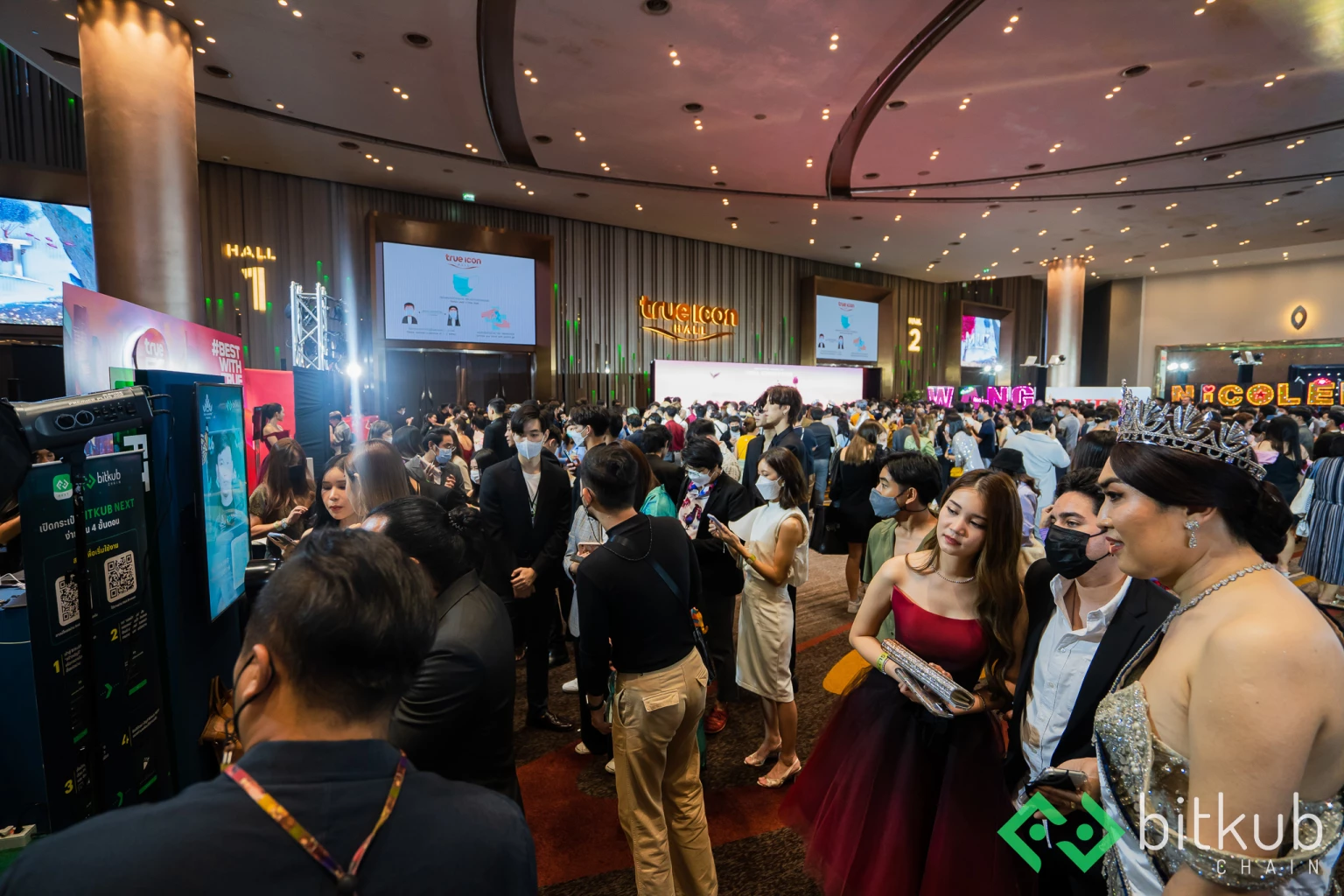
Bangkok, August 1, 2022 – Bitkub Blockchain Technology, Bitkub Chain and Blockchain Total Solution Provider and Miss Universe Thailand, a beauty pageant with a history of 20 years, together revolutionize the digital experience on the final round’s stage for another year.
On October 7, 2021, MUT NFTs collection was officially announced under the cooperation between Bitkub Blockchain Technology and Miss Universe Thailand. The collection regard to Miss Universe Thailand 2021 pageant with a special value given to main collectors and fans. Miss Universe Thailand NFTs collection was developed by Bitkub Blockchain Technology under decentralized network protocol called “blockchain”. Collectors and fans can feel a sense of the value and a story along with getting closer to the beauty pageant. Moreover, not only MUT NFTs collection was minted but the MUT crown item was specially introduced in Morning Moon Village game as a special collection item.
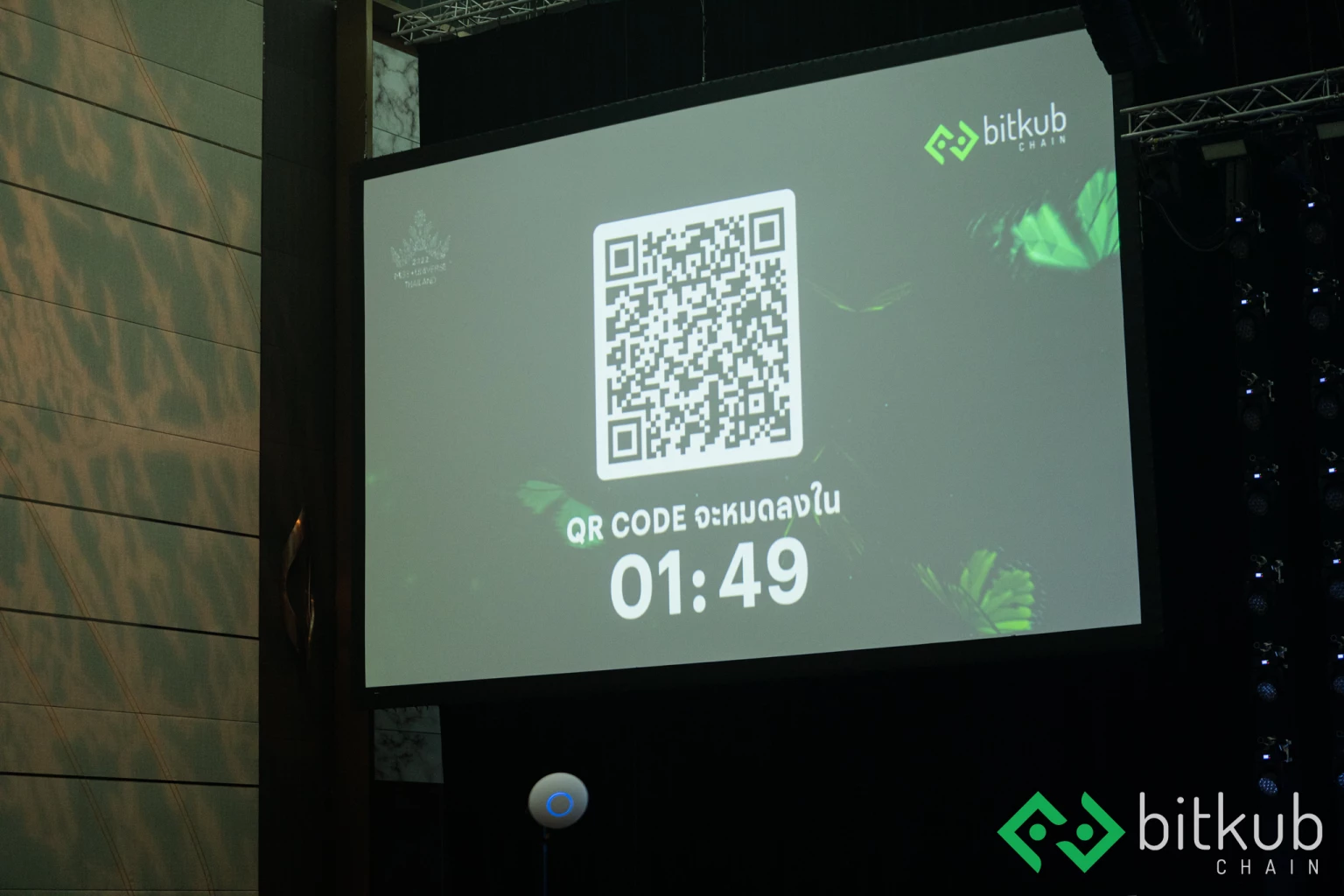
With the 2nd year cooperation between Bitkub and Miss Universe Thailand, the special NFT collection was introduced and will be airdropped to the participants of Miss Universe Thailand 2022’s final round. In addition, the participants will also have a chance to create their own NFT via “Creator Studio” feature. To open the new experience of watching the contest, there are several reasons that the participants should not miss:
The first Rock Stage in history
Swimsuit and evening gown competition with special guests
The new stage design inspired by the idea of metaverse and constellation
A chance of getting close to all 30 beauty contestants in every dimension
Both stations will be an extension into Muang Thong Thani and Muang Thong Thani Lake for a total distance of approximately 3 kilometres.
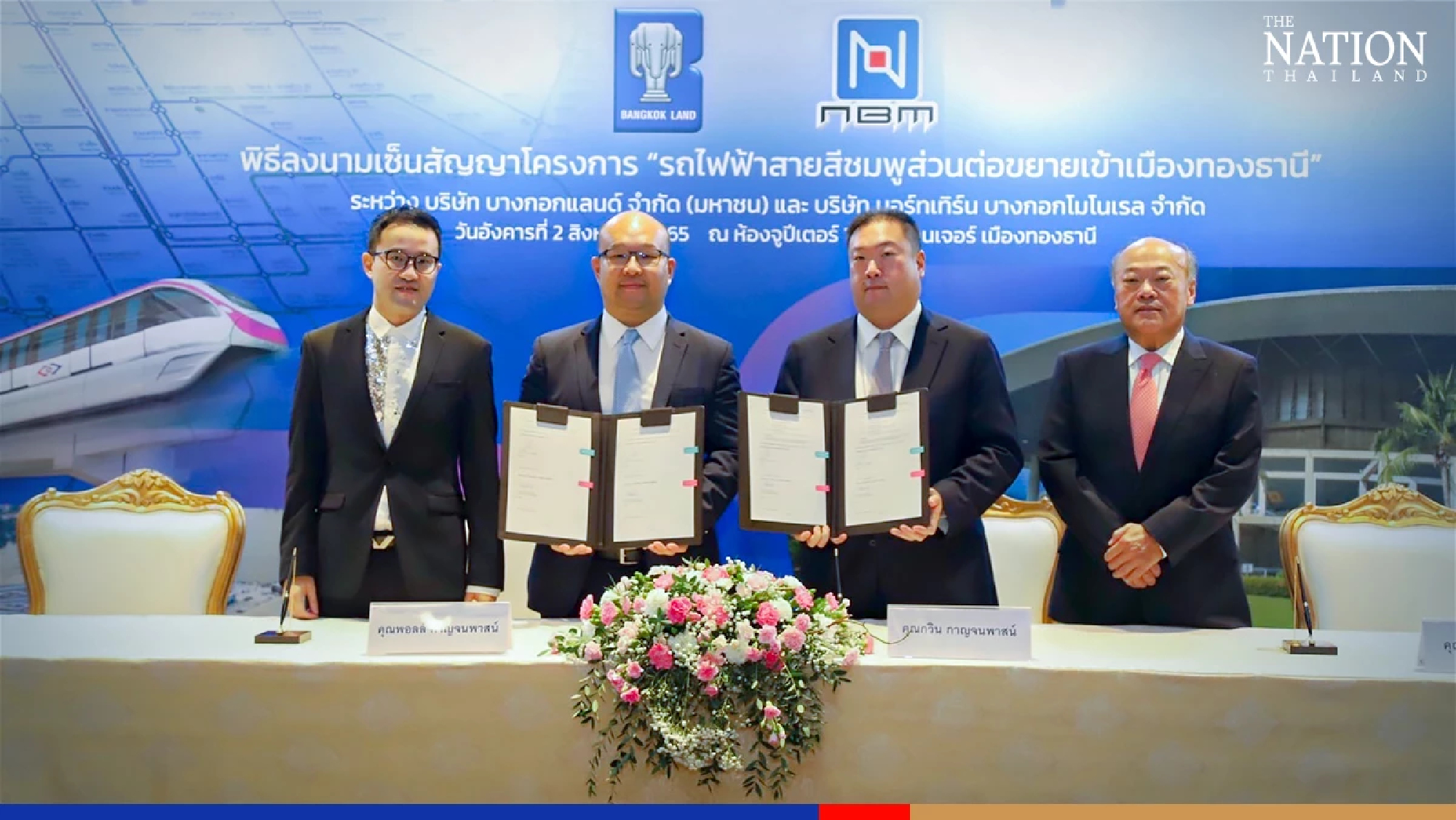
Bangkok Land Public Company Limited holds a signing ceremony with Northern Bangkok Monorail Co., Ltd. (NBM), a subsidiary of BSR JV Consortium, and a joint venture between the BTS Group Holdings Public Company Limited (BTSG), Sino-Thai Engineering and Construction Public Company Limited (STEC), and Ratch Group Public Company Limited for the “MRT Pink Line Extension to Muang Thong Thani” project with an investment of THB 4 billion for adding two more stations: IMPACT Muang Thong Thani Station (Challenger 1) and Muang Thong Thani Lake Station.
The construction is expected to be completed and operational in 2025.
Peter Kanjanapas, Chairman of Bangkok Land Public Company Limited, said, “ With this project, the Company will be able to contribute to the general public by helping more than 300,000 residents and workers in Muang Thong Thani, including over 10 million visitors and participants attending the exhibitions and conferences each year.In terms of business opportunities, the “MRT Pink Line Extension to Muang Thong Thani” project will also support various businesses in Muang Thong Thani, such as IMPACT Exhibition and Convention Center, hotels, Cosmo Bazaar, Cosmo Walk, Outlet Square, Beehive Lifestyle Mall and Cosmo Office Park to achieve an additional business growth of 10-20%. In addition, it will increase the potential and the value of the existing 600 rai of land in Muang Thong Thani.
The Company also invested THB 1 billion in constructing a skywalk connecting the project to IMPACT Exhibition and Convention Centers, hotels, retail stores, and department stores to accommodate the growing number of visitors and provide them maximum convenience.
It will also serve as a prime location for upcoming projects such as Mori Condominium, a 1,040-unit residential building, and Lenôtre Culinary Arts School.”
Kavin Kanjanapas, Executive Director of Northern Bangkok Monorail Company Limited (NBM), said, “The project signing between NBM and BLAND consists of two agreements:
1. The Construction Support Agreement for the “MRT Pink Line Extension to Muang Thong Thani” project
2. The Skywalk Connection Agreement for the skywalk project connecting the MRT Pink Line Extension to Muang Thong Thani buildings
Under the agreements, Bangkok Land Public Company Limited (BLAND) has approved about THB1.2 billion (inclusive of VAT) in contributions and loyalty funds to NBM for the construction and development of the extension to the Muang Thong Thani project and for the rights to BLAND and BLAND affiliates in the construction of the skywalk connecting MRT Pink Line stations to buildings or other construction located in Muang Thong Thani, which are the properties of BLAND Groups.
This is effective from the day of signing the agreement to the termination date of the rights for operating the MRT Pink Line Extension to Muang Thong Thani project in compliance with the MRT Pink Line joint venture agreement between NBM and the Metropolitan Rapid Transit Authority (MRTA).
In addition, BLAND has approved an annual THB 10.35 million contribution (inclusive of VAT) for the maintenance fund, starting from the operation date of the MRT Pink Line Extension to Muang Thong Thani.
The MRT Pink Line Extension to Muang Thong Thani project is among the significant projects of BTSG’s MOVE business, which aims to provide safe and convenient daily door-to-door transportation to passengers across multiple modes of travel.
The project is part of the main MRT Pink Line (Khae Rai to Minburi), linking four mass transit lines, namely the Purple Line (Bang Yai to Bang Sue), the SRT Dark Red Line (Bang Sue to Rangsit), the Green Line (Mo Chit to Saphan Mai to Khu Khot), and the Orange Line (Thailand Cultural Center to Minburi).
The estimated construction period of the MRT Pink Line Extension to Muang Thong Thani project is 37 months. It is scheduled to be fully open in 2025 with an expected number of 13,785 passengers/ride/day.
Upon completion, the project will help ease traffic entering the Muang Thong Thani area, a large community with many daily commuters.
For the entire monorail Pink Line, consisting of 30 stations (exclusive of the extension to Muang Thong Thani and Muang Thong Thani Lake), the construction progress is 89.43% complete (civil construction: 91.01% and electrical system 87.90%). It is scheduled to partly open for service by early 2023.
Zipmex Thailand has announced that it would gradually return three types of crypto coins to its customers whose ZipUp+ accounts have been frozen, starting with SOL.
Zipmex Thailand said all of its clients, who have deposited in the ZipUp+ product of Zipmex Global in Singapore, would get their SOL, XRP and ADA coins back in full but one type at a time.
On Tuesday, Zipmex Thailand clients will receive all of their SOL coins frozen in ZipUp+.
The XRP coins will be returned on Thursday and ADA coins on August 9, Zipmex Thailand said.
It said the balance of the coins of its clients will be credited to their Trade Wallet.
On July 20, Zipmex Thailand paused trading for two hours to disable ZipUP+ product from its platform due to problems faced by its partners.
Zipmex Thailand had earlier announced it was looking for investors so that it could return frozen coins in ZipUp+ accounts to its clients.
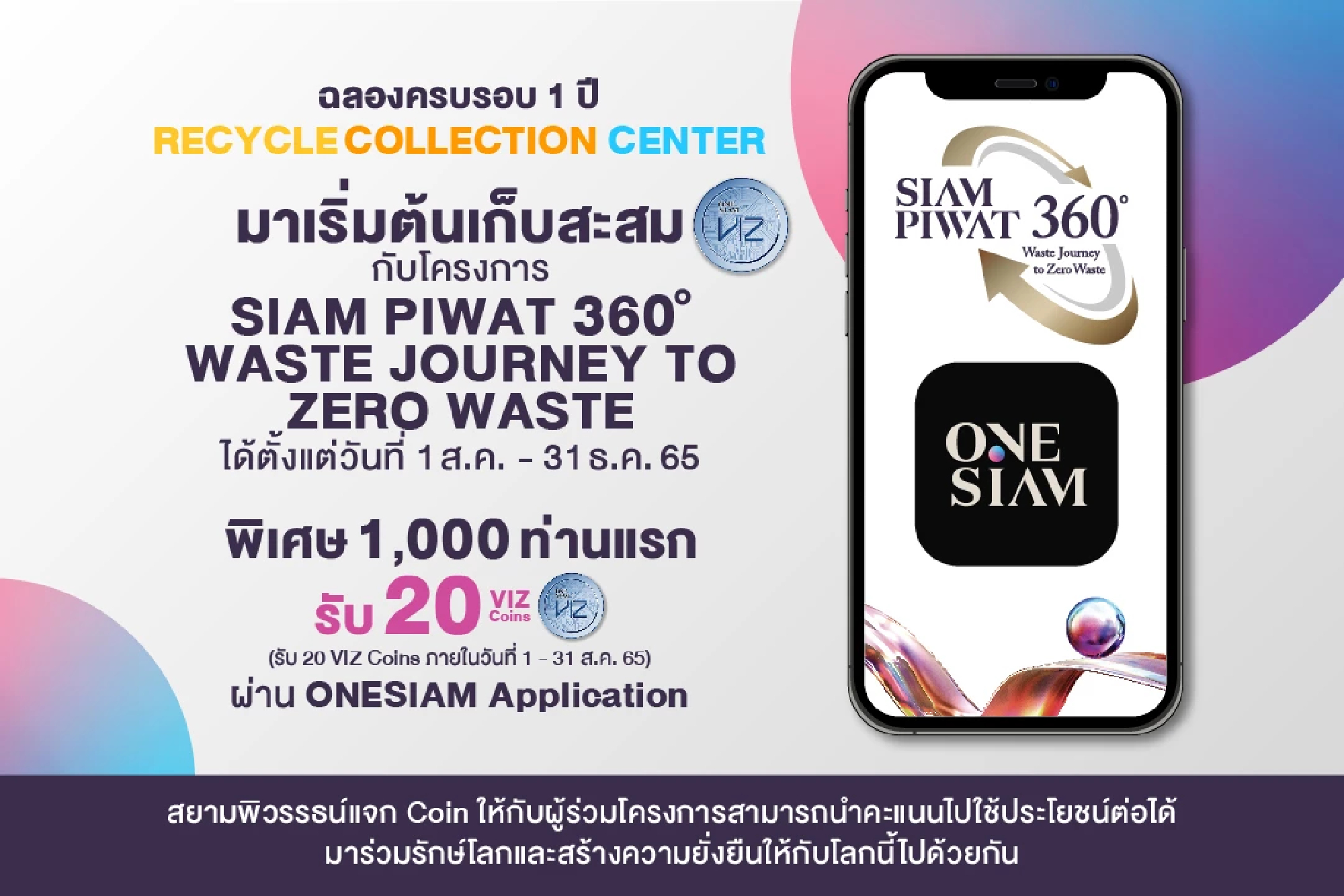
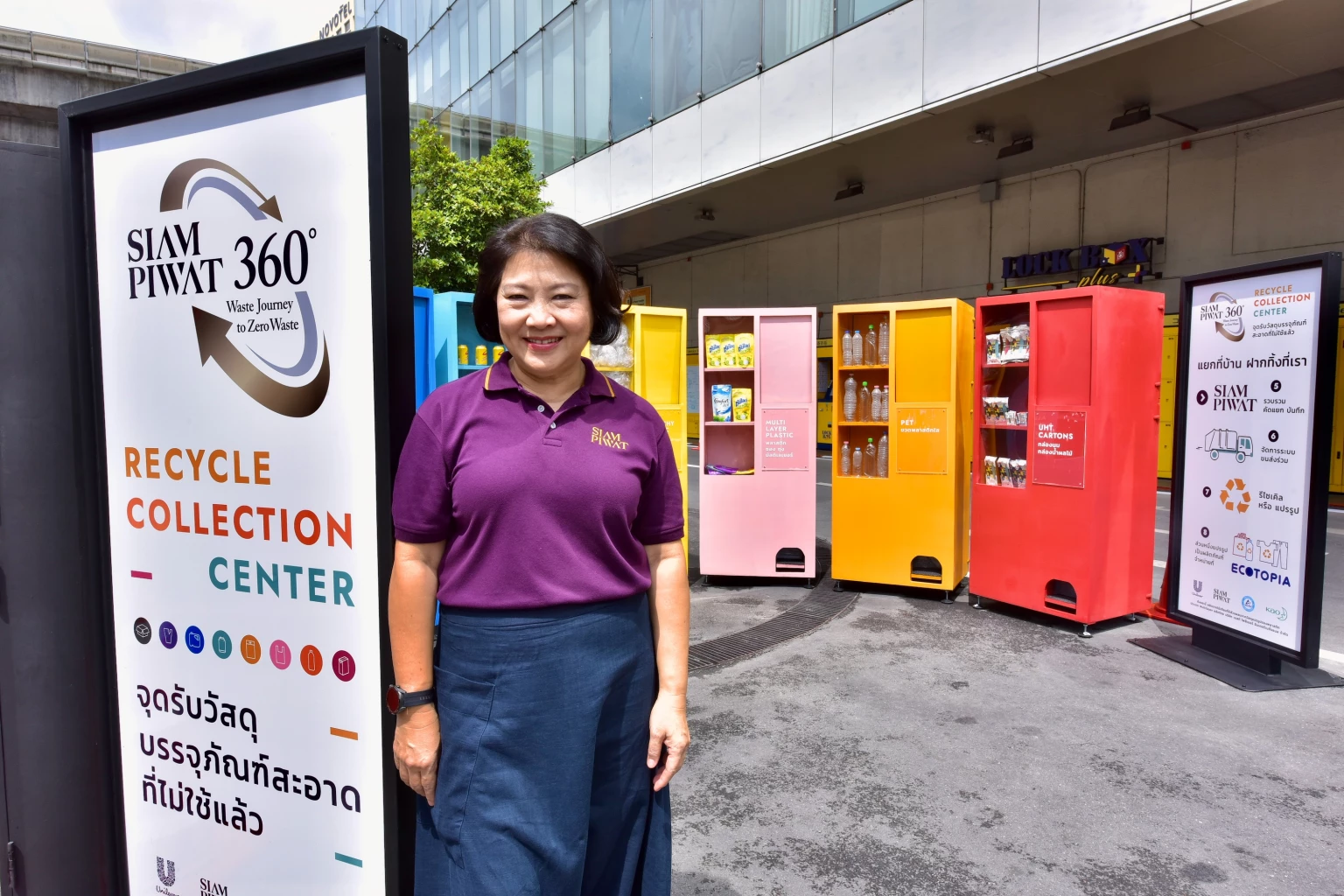
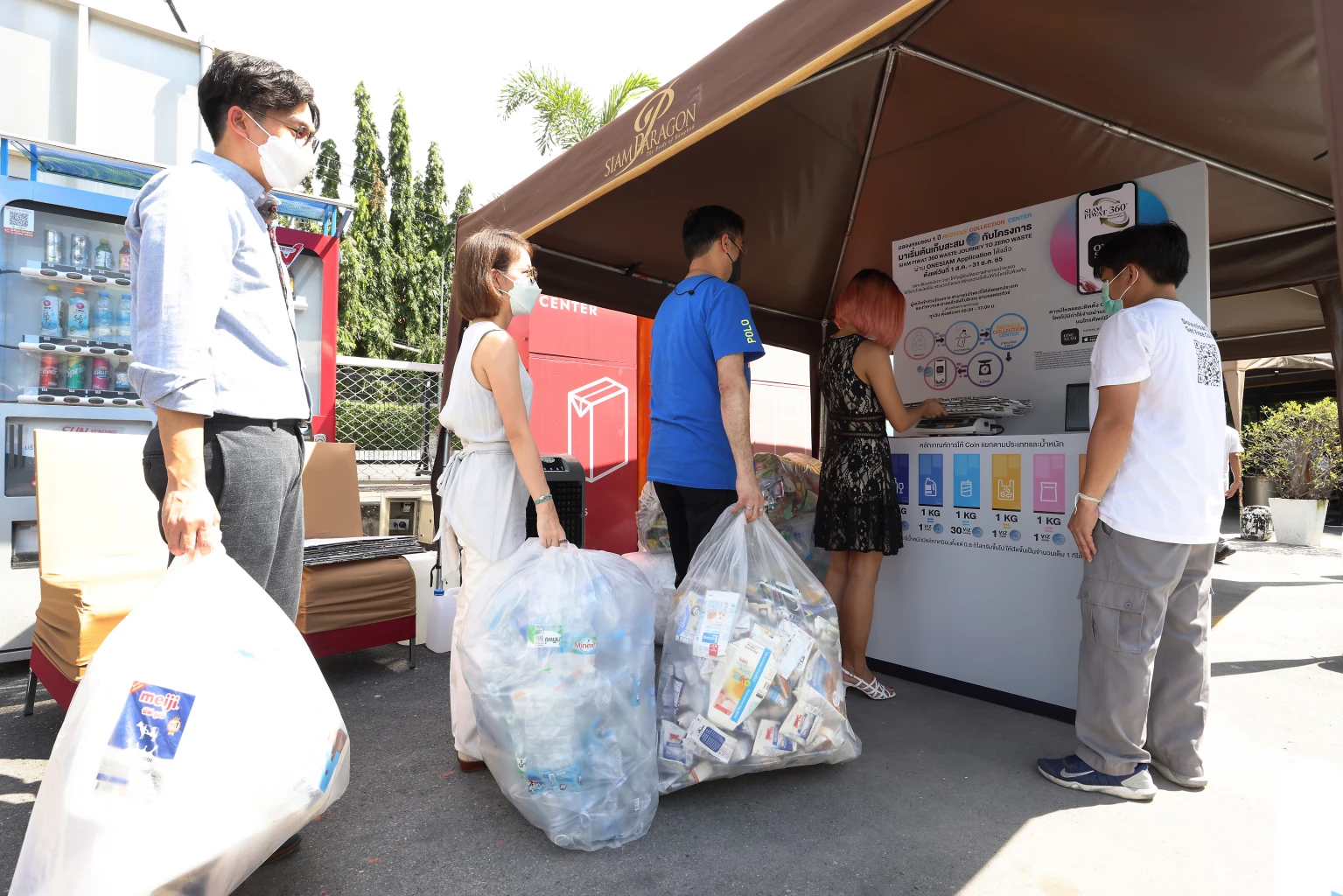
Bangkok (August 1, 2022) – Siam Piwat Co., Ltd., is building on the success of its Recycle Collection Center, Thailand’s first waste segregation point in the inner city, by introducing a new waste-to-VIZ Coin conversion program on ONESIAM Application.
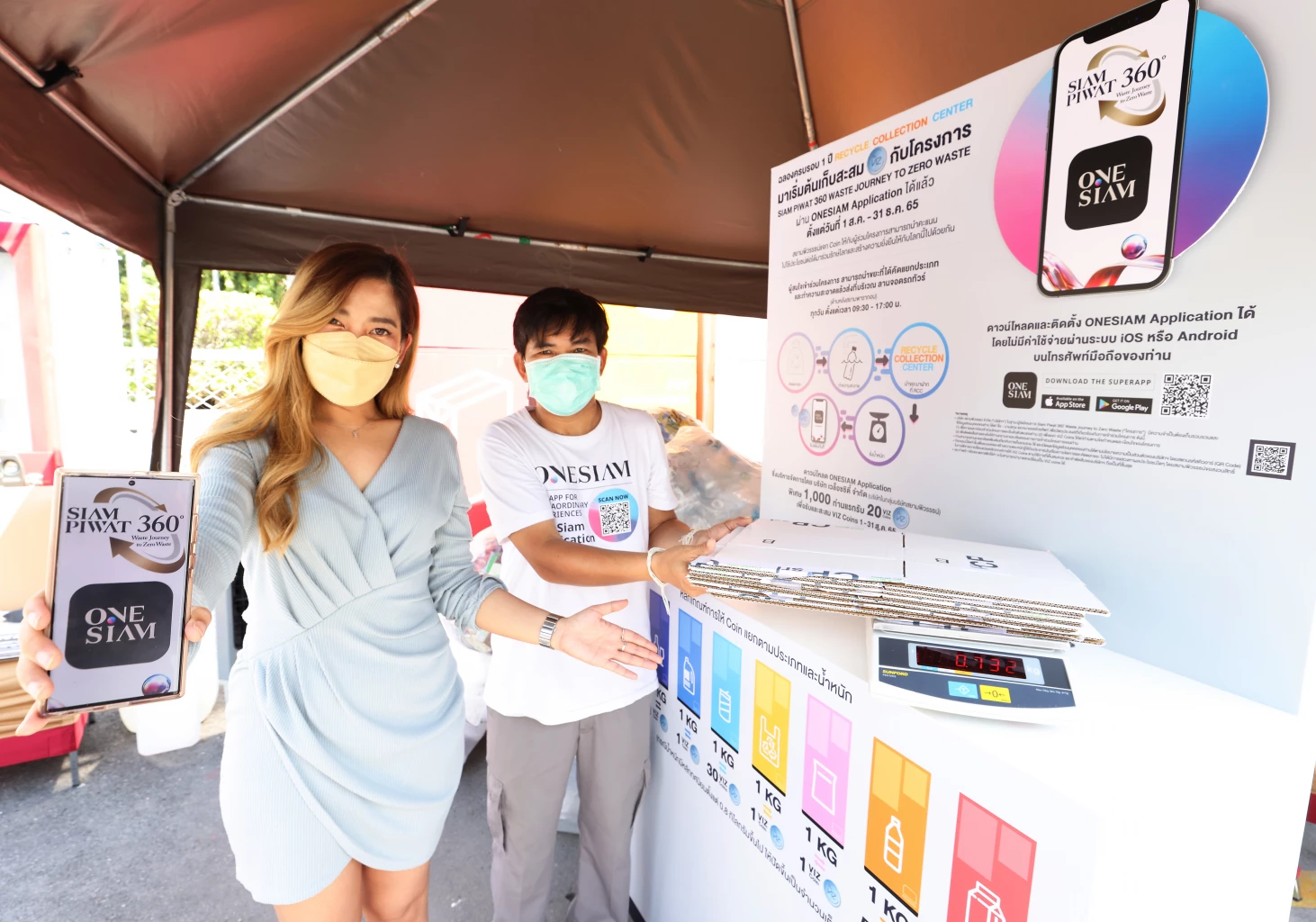
Managed by Velocity Co., Ltd. (a company in Siam Piwat Group), the program allows customers to convert waste into VIZ Coins, which can be redeemed for various privileges within its shopping malls.
Ms. Naratipe Ruttapradid, Chief Operating Officer of Siam Piwat Co., Ltd., said, “Since its launch, the Drive-Thru Recycle Collection Center, which is the first of its kind in Thailand, has garnered tremendous attention among eco-friendly people who share Siam Piwat’s view towards waste management and the significance of systemic waste separation across the value chain. This environmental project is open to everyone who wishes to make a positive contribution to society and the planet. To continue our efforts to promote eco-consciousness this year, we are introducing a program where customers can drop recyclable waste with us and convert them into VIZ Coins via ONESIAM Application. The goal is to encourage everyone to take part in reducing, sorting, and recycling waste to maximize its value, which will ultimately lead to a behavioral shift, eco-conscious consumption of resources, greater awareness in the value of waste, and a more widespread practice of waste separation.”
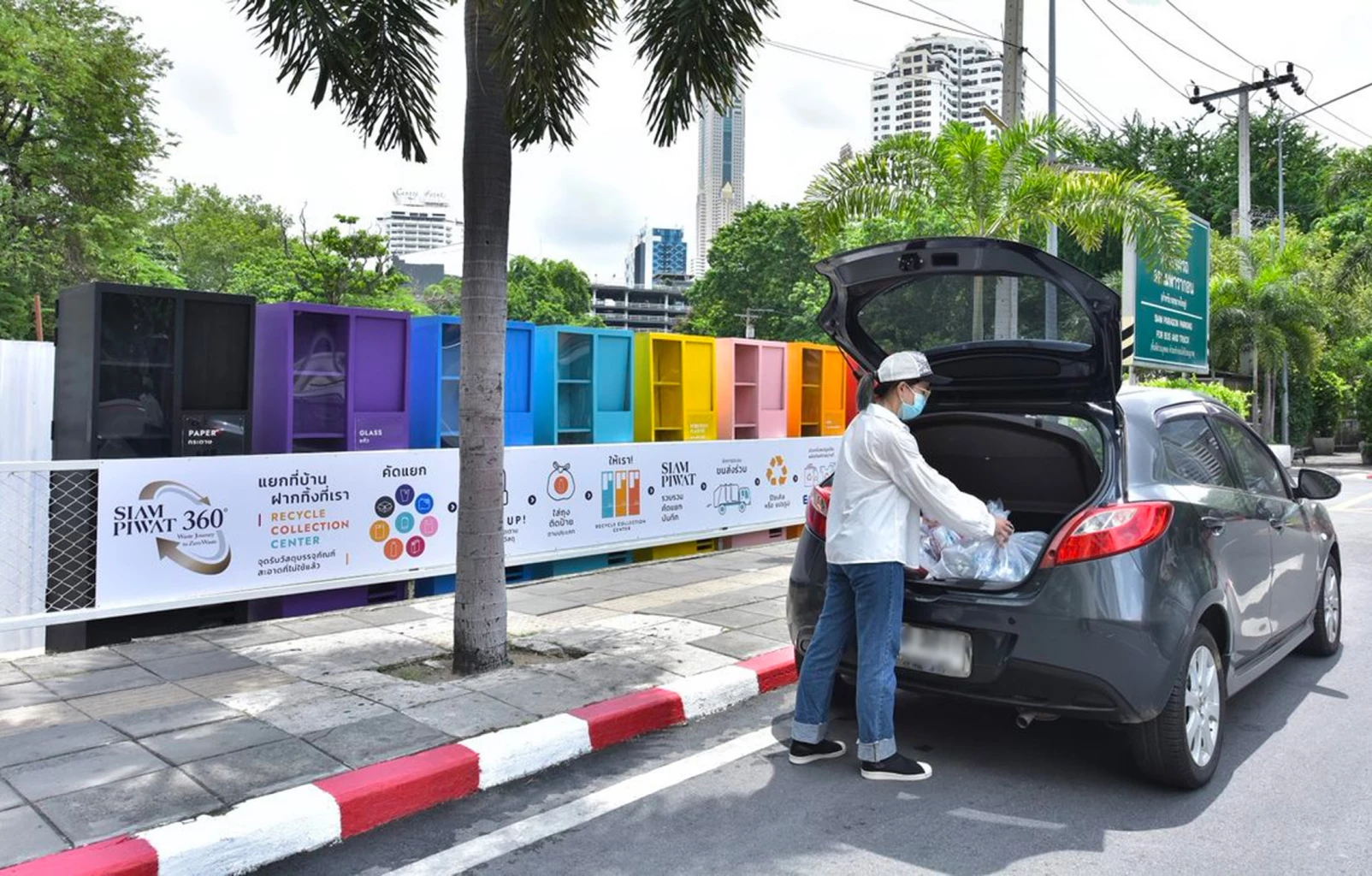
The Recycle Collection Center (RCC) is part of Siam Piwat 360° Waste Journey to Zero Waste Project, which seeks to advance closed-loop waste management in accordance with circular economy principles and places emphasis on systemic waste management across the value chain. Siam Piwat has installed two drive-thru waste collection points at Siam Paragon, namely at the tour bus parking lot on G Floor outside the north wing, and Exit 4 on G Floor (near Bangkok Bank). Customers and the general public are invited to drop off clean and sorted waste at these locations so that it can be recycled into raw materials and upcycled into products for sale at Ecotopia in Siam Discovery.
To celebrate the 1st anniversary of the project, Siam Piwat, in collaboration with Unilever Thai Group of Companies, Kao Industrial (Thailand) Co., Ltd., Tetra Pak (Thailand) Co., Ltd., and its partners, will be awarding VIZ Coins to participants from August 1, 2022 to December 31, 2022. The details are as follows:
1) Participants can drop off clean and sorted waste at the drive-thru collection point at the tour bus parking lot (at the back of Siam Paragon) daily from 9.30am to 5pm.
2) To join this program, participants are required to download ONESIAM Application in order to receive and collect VIZ Coins. The conditions for receiving VIZ Coins are as follows:
The first 1,000 first-time participants who drop off waste at the Recycle Collection Center between August 1-31, 2022 will receive 20 VIZ Coins.
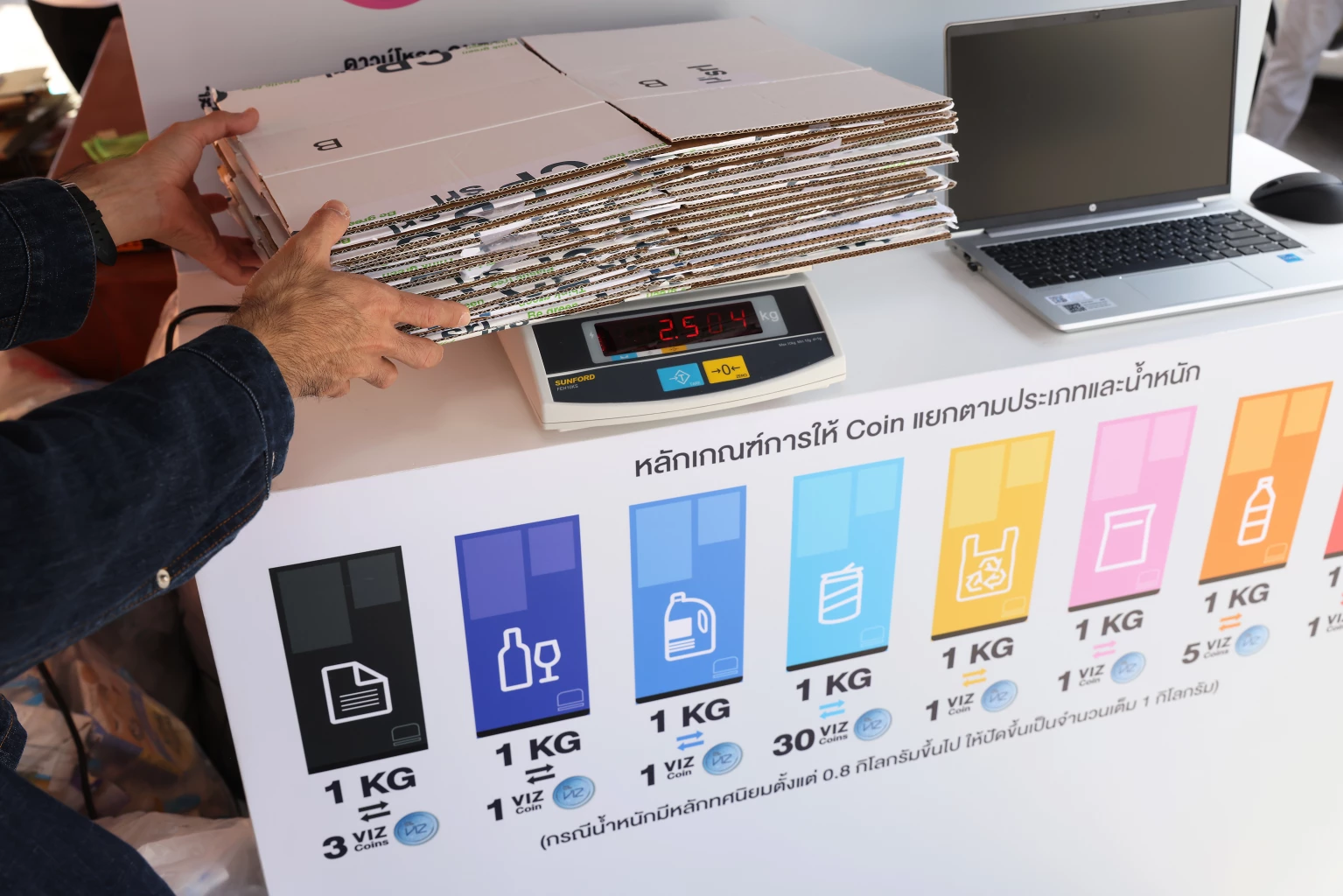
Participants who drop off waste at the Recycle Collection Center, including those under the item above, will receive VIZ Coins based on the criteria below when they scan the QR code at the drop-off point. (If the decimal of the weight exceeds 0.8 kilograms, it will be rounded up to 1 kilogram.)
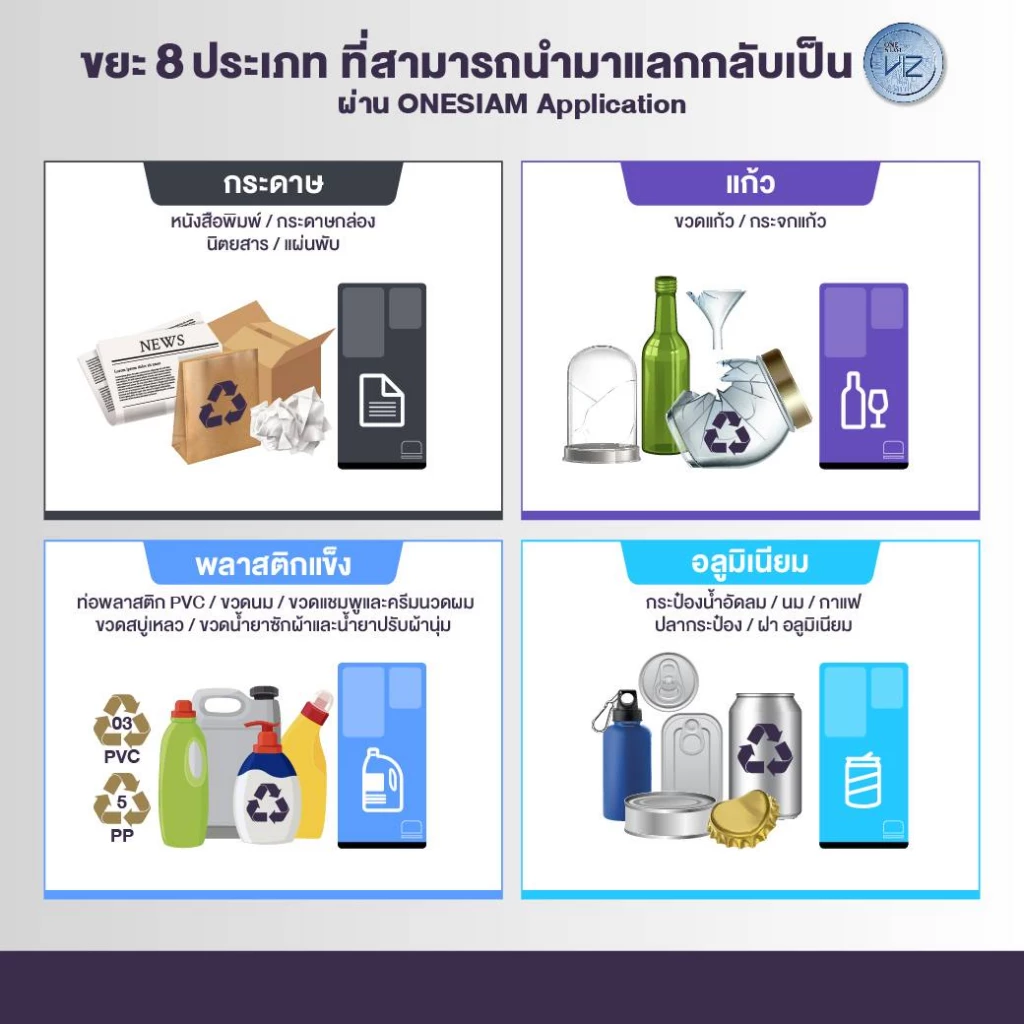
VIZ Coin conversion based on waste type and weight
1. Paper (1 kilogram = 3 VIZ Coins) e.g. newspapers, cardboard, magazines, brochures
2. Glass (1 kilogram = 1 VIZ Coin) e.g. glass bottles, glass panes
3. Hard plastic (1 kilogram = 1 VIZ Coin) e.g. PVC pipes, milk containers, shampoo and conditioner bottles, soap dispensers, laundry detergent and fabric softener bottles
4. Aluminum (1 kilogram= 30 VIZ Coins) e.g. soda cans, milk cans, coffee cans, tin cans for canned fish, aluminum lids
7. Clear plastic (1 kilogram = 5 VIZ Coins) e.g. water bottles, beverage bottles, clear dish soap bottles
8. Cartons (1 kilogram = 1 VIZ Coin) e.g. milk cartons, juice boxes, or coconut milk cartons
*Remarks: – This program aims to promote and raise awareness of waste segregation and management among the public only and is not engaged in for any profit. Siam Piwat reserves the right to change the VIZ Coin exchange criteria as appropriate. The Company’s decision is final. – Orphan plastic, or non-recyclable post-consumer plastic, cannot be exchanged for VIZ Coins.
Siam Piwat Company Limited (“Company”), as the organizer of Siam Piwat 360° Waste Journey to Zero Waste Project (“Project”), is required to collect and use your personal data, namely your full name and your phone number, in order to:
(1) Register your participation in the project and authenticate your identity; (2) Transfer VIZ Coins to you in accordance with the project’s terms and conditions; and (3) Communicate with you and inform you of the details of the project
You can read further information about the collection, use, and disclosure of your personal data in accordance with the Company’s privacy policy by scanning the QR code below.
Zipmex Thailand CEO and co-founder Akalarp Yimwilai said on Monday that Zipmex Global has not filed for bankruptcy in Singapore, as earlier reported and widely shared on social media.
Akalarp said Zipmex Global has instead sought approval from a Singapore court for a moratorium on legal action over its debts due to its problematic ZipUp+ product.
Any order issued by the Singapore court would have no impact or legal binding on customers of Zipmex Thailand who invested in ZipUp+, he said.
Zipmex Thailand’s clients would still have full rights to their digital assets deposited in ZipUp+, he added.
ZipUp+ offered Zipmex customers interest of up to 10 per cent to investors who deposited cryptocurrencies such as bitcoin and Etherium.
However, US$53 million of ZipUp+ deposits was then deposited with crypto lenders Babel Finance and Celsius, which have since filed for bankruptcy protection.
Zipmex Thailand disabled the product on July 20.
Akalarp said 60,000 to 70,000 Thai investors have deposited a total of around 2 billion baht in ZipUp+.
He said that if the Singapore court approves the debt moratorium request, Zipmex Global would need investors to inject fresh capital so it could return digital assets to its clients. Zipmex is reportedly in negotiations with potential investors.
With growing competition in the Bangkok office market, fueled by a large amount of new supply that is coming, ageing office buildings are losing their ability to retain and attract occupiers.
This trend is putting pressure on landlords of these buildings to become more proactive and find ways to enhance the value and competitiveness of their assets, according to property consultancy JLL.
“JLL’s leasing activity data shows that the majority of new leases are being signed within modern office buildings, showing a clear preference amongst occupiers. Consequently, buildings that are built before 2002, which are referred to as ‘ageing’, are typically struggling to attract new occupiers,” says Jeremy O’Sullivan, Head of Research and Consulting at JLL.
“Compared to the top-grade new supply coming to market, ageing buildings generally have an inferior design, facilities and technology. Some were previously prime grade buildings that have been downgraded to the secondary tier in recent years,” he adds.
The latest study by JLL reveals that the total stock of office space in Bangkok is standing at 9.97 million sqm at present, of which nearly 70% are buildings aged over 20 years. Findings from the study also show that office buildings aged not more than 20 years saw the average vacancy rate at 17% and the average rental at THB821/sqm/month at the end of the first quarter of 2022, while older buildings witnessed the average vacancy rate at 26% and the average rental at THB654/sqm/month over the same period.
Between now and 2026, the Bangkok office market will see an additional 2.2 million sqm of new space. Of this, more than 1.7 million sqm or 81% will be from prime grade developments. JLL expects this to raise vacancies and put further downward pressure on rents in ageing, secondary-grade office buildings.
Thananun Ruengveeravich, Head of Office Leasing Advisory at JLL, says “The growing availability of new prime office supply means that occupiers now have more options when it comes to site selection for their workplace. We have seen an increasing number of occupiers taking this opportunity to review their office efficiency and considering relocation to newer buildings.”
Findings from JLL’s study show that between the second quarter of 2021 and the first quarter of 2022, the Bangkok office market saw a negative net absorption of -82,000 sqm. However, office buildings whose construction was completed in 2011 or later continued to see positive net absorption of 99,000 sqm in total versus -181,000 sqm of negative take-up in older buildings.
“In response to the flight-to-quality trend of occupiers, some landlords of older, secondary-grade buildings are considering to offer rental discounts to maintain or boost occupancy while more proactive landlords are looking for a strategy to enhance their ageing assets to stay relevant and meet evolving demand from occupiers in the long term,” says Thananun.
Natcha Taepongsorat, Head of Asset Enhancement at JLL, says “Other than a pricing strategy, landlords of ageing office buildings can consider an asset enhancement as a longer-term solution to improve the performance of their assets, reduce operating costs, increase revenue and avoid obsolescence. This includes a wide range of strategies from operational efficiency improvement, property management and sustainability enhancement through to revitalization.”
JLL’s observations show revitalization has gained popularity among well-located secondary-grade office buildings whose landlords look to improve cash flow and net operating incomes of their assets. Investment costs typically range from THB 30 million to 200 million, depending on each individual asset and renovation scale. Some landlords may also get their ageing office buildings renovated to become more sustainable or meet green building standards such as LEED or TREES in order to attract a growing number of corporations with a net-zero target and reduce utility bills in the long run.
“The optimal building upgrade helps futureproof assets and allows them to remain competitive in the challenging market, which is reflected in the rental improvement and reduction in operation costs. With higher income and building quality, enhanced projects are generally appraised with higher values, benefiting landlords and forthcoming investors,” says Natcha.
“Asset enhancement strategies and scales vary. It is critical for landlords and investors to evaluate their asset performance, expectation of their target occupiers and their own expectation of return on investment before making any asset enhancement decision. This will help ensure the most impactful and cost-effective option and prevent overinvestment,” she concludes.
About JLL
JLL (NYSE: JLL) is a leading professional services firm that specializes in real estate and investment management. JLL shapes the future of real estate for a better world by using the most advanced technology to create rewarding opportunities, amazing spaces and sustainable real estate solutions for our clients, our people and our communities. JLL is a Fortune 500 company with annual revenue of $19.4 billion, operations in over 80 countries and a global workforce of more than 100,000 as of March 31, 2022. JLL is the brand name, and a registered trademark, of Jones Lang LaSalle Incorporated. For further information, visit jll.com