The Bank of Thailand (BOT) has told a committee of lawmakers to consider the fiscal 2023 budget bill as the country’s economy is showing steady improvement and the trend was likely to continue in 2023.
The BOT cited major contributions to the economic recovery from increasing domestic demand and revival of tourism.
The House of Representatives committee held a meeting with officials from the central bank and related agencies on Tuesday after the first reading of fiscal 2023 budget bill had been approved in principle by the House of Representatives during voting last Friday (June 3).
“The BOT estimated that the total number of foreign tourists in 2022 would reach 5.6 million people, while Thailand’s gross domestic product would bounce back to the same level as before the Covid-19 outbreak by the first quarter of 2023,” the committee’s spokesman, Paopoom Rojanasakul, said on Wednesday as he summarised Tuesday’s meeting.
“Negative factors that could hinder economic recovery include the impact of the Russia-Ukraine war, which has affected global consumption and investment, and the rising inflation,” he added.
“Meanwhile, the BOT estimated that the impact from the Omicron wave will be significantly smaller than that of the Delta wave last year.”
Agencies that participated in the meeting also notified the committee that in the rest of 2022, Thailand would face two major risk factors, namely rising domestic cost of living and shortage of foods, raw materials and fuel in the manufacturing sectors. These factors will further increase the inflation rate and will continue to rise until next year, when it is expected to gradually come down.
The committee also noted that the US Federal Reserve’s aggressive increasing of interest rate by half a percentage point on May 4 in an effort to slow inflation, which is considered the highest in 40 years, is having an impact on Thailand’s export sector.
The Monetary Policy Committee (MPC) has decided to keep the policy interest rate at 0.50 per cent per year.
MPC secretary Piti Disyatat said on Wednesday after the meeting that four members voted to maintain the policy rate at 0.50 per cent while three members voted to raise the policy rate by 25 basis points.
The committee speculated that the Thai economy could grow continuously and has a chance to recover better than expected because domestic demand and foreign tourist arrivals were picking up.
The committee forecast that headline inflation was likely to increase and stay at a high level longer than previously expected due to the increasing oil price and higher costs being passed on. The MPC deemed that a very accommodative monetary policy would be less needed going forward.
However, to ensure that the economy would be able to recover as expected, a majority of members voted to maintain the policy rate in this meeting and would monitor the development of economic recovery and inflation risks closely.
Meanwhile, three members viewed the information on economic recovery and inflation risk as already clear enough to raise the policy interest rate in this meeting.
The committee also speculated that the Thai economy would grow by 3.3 per cent in 2022 and 4.2 per cent in 2023 as domestic consumption has recovered better than expected, especially in the services sector.
Moreover, the number of foreign tourists is expected to increase continuously due to the relaxation of border controls in Thailand and other countries.
Moreover, the labour market and household incomes showed signs of improvement after the easing of prevention measures and the economic recovery.
Meanwhile, the impact of the Covid-19 situation and the Ukraine-Russia conflict on the Thai economy will be limited.
However, the committee said it would continue to monitor risk factors for economic recovery in the later phase, especially the impact of higher prices on the cost of living for households.
Investor sentiment around the Thai industrial market is rebounding after the COVID-19 pandemic, whereas demand is exceeding supply for Serviced Industrial Land Plots (SILPs), driving up rents and asking prices. The logistics market continued to grow at a steady pace in Q1, with average land price increasing to THB6.79 million per Rai, up from THB6.58 million per rai in Q4 2021.
Thailand’s logistics market continued to grow at a steady pace in 1Q 2022. Leasing activity in Ready Built Factories (RBFs), and Ready Built Warehouses (RBWs) remained active, driven by the growing demand for logistics property in the e-commerce sector. Total RBFs stock in Q1 2022 increased to 2.76 sq m or 0.05% q-o-q. The overall RBFs vacancy rate dropped to 10.18% from 11.44% in Q4 2021. Total RBWs stock was recorded at 4.15 million sq m, growing by 0.53% q-o-q. The overall RBWs vacancy rate edged down from 9.97% in Q4 2021 to 9.68% in 1Q 2022. Average asking rent for RBFs were recorded at THB187.0 per sq m per month, up by 1.82% q-o-q. Average asking rent for RBWs increased to THB153.0 per sq m per month, up by 0.97% q-o-q.
The industrial market recovered from last year, as Thailand remains a prime overseas factory base for foreign manufacturers. Total supply of Serviced Industrial Land Plots (SILPs) in Q1 2022 rose to 205,849 rai, growing by 3.26% q-o-q. The overall sales rate increased to 86.15%, up from 82.28% in Q4 2021. The average land price increased to THB6.79 million per Rai, up from THB6.58 million per Rai in Q4 2021.
Phongphan Phloiphet, Senior Manager, Logistics & Industrial, at Cushman & Wakefield, Thailand, said, “As we begin to move away from the COVID-19 pandemic, investor sentiment around the Thai industrial market is rebounding. Thailand’s favourable investment conditions, including access to good facilities, strong transport links, and a skilled labour force are drawing new investors from around the world and are incentivizing them to establish or expand operations in Thailand. We are beginning to see the impacts of this with demand exceeding supply for SILPs and subsequently increasing rents and asking prices.
“When considering ready-built warehouses, we are advising and assisting our clients with thorough due diligence and careful planning to ensure their preliminary needs are met. The same goes when examining land for development, with clarity being essential on preferred site layouts and features, land price, construction budget and overall timeframes, as the lack of existing supply may necessitate a flexible approach to site location.”
Cushman & Wakefield Thailand’s Logistics & Industrial department provides a wide array of services for investors, operators, and occupiers. We have vast local experience and knowledge that equips us to recommend what is the best approach for our clients:
Brokerage Services – Site Acquisition & Disposal
Tenant & Landlord Representation – Renewals, Reviews, New Contracts, Agreements, and Legal
Coordination and Project Management
Build-to-Suit Services
Research and Commercial Advisory
Market Analysis and Value Insights
Supply Chain Consultancy
For further information, please contact Khun Phongphan Phloiphet (Den) via mobile +66806547959 or email: Phongphan.phl@cushwake.com
Combination of global brand concept with premium location pushes sales over Bht 4,700 million
“We’ve been pleasantly surprised by the high demand for ultra-luxury homes that emphasize close-to-nature living and a ‘no-compromise’ approach to design and build quality. The Six Senses brand promise and concept, combined with an exceptional location at The Forestias, has been a winning proposition.”
Mr. Kittiphun Ouiyamaphun, Project Director – The Forestias, MQDC
Bangkok (June 7, 2022) – MQDC (Magnolia Quality Development Corporation), one of Thailand’s leading property developers announced today that the first Six Senses residences in Thailand, located at The Forestias on Bangna Trad kilometre 7, has registered total sales of Bht 4,700 million on 21 of its 27 homes, as of May 31, 2022.
Mr. Kittiphun Ouiyamaphun, Project Director – The Forestias, MQDC, said, “The speed at which homeowners made their decisions has shown there is strong demand for ultra-luxury homes in Bangkok that emphasize close-to-nature living and a ‘no-compromise’ approach to design and build quality. In just the first 30 days after launch, 16 residences were sold, with a further five residences now also sold.”
Six Senses Residences The Forestias range in size from around 790 square metres to up to almost 1,500 square metres in floor space, comprising of 27 detached homes set in their own gardens and around a private lagoon. The homes are available in three sizes ranging from three to five bedrooms, with prices starting from around Bht 180 million to over Bht 360 million.
Mr. Ouiyamaphun said, “These are among the finest and highest specced homes in Thailand, and are backed by MQDC’s 30-year warranty. They come with the extraordinary services and privileges expected from Six Senses, including bespoke concierge services, a Clubhouse, and the assurance of exceptional care in the running of a community centred on wellness, hospitality, and sustainability.”
He said Foster and Partners and DT Designs are the design and architectural consultants, and Six Senses Hotels Resorts Spas are the interior and overall project consultants. “They have helped ensure that the homes are nestled in greenery, seamlessly blending indoor and outdoor living, with onsens and pools, and views of the lagoon, and benefitting from the natural ventilation through the flow of breezes throughout the spaces.”
The first homes are expected to be completed in the second quarter of 2024.
The Forestias will also be the location for a new Six Senses hotel with around 85 rooms, scheduled to open in the first half of 2024.
Six Senses residence owners will have privileged access to the new hotel’s facilities and its extensive list of services that range from housekeeping and baby-sitting, to butler services, as well as additional benefits on services, rooms, food and beverage, and the spa.
He added that The Forestias’ other luxury residential component – Mulberry Grove branded homes – have also seen strong sales of Bht 3,720 million as at May 2022.
“The Mulberry Grove Villas cluster-home residences are specifically intended for multi-generational families who wish to live close together in multiple detached homes that are conveniently connected. There are 37 homes of three different sizes with four to six bedrooms and with functional areas that range from around 1,000 square metres to 1,700 square metres,” Mr. Ouiyamaphun said.
The Forestias is a 398-rai community located in the rapidly developing Eastern Economic Corridor. It includes large areas of parkland, residential properties under multiple brands that appeal to different lifestyles and age-groups, as well as numerous community and commercial components with a focus on healthy living and environmental quality.
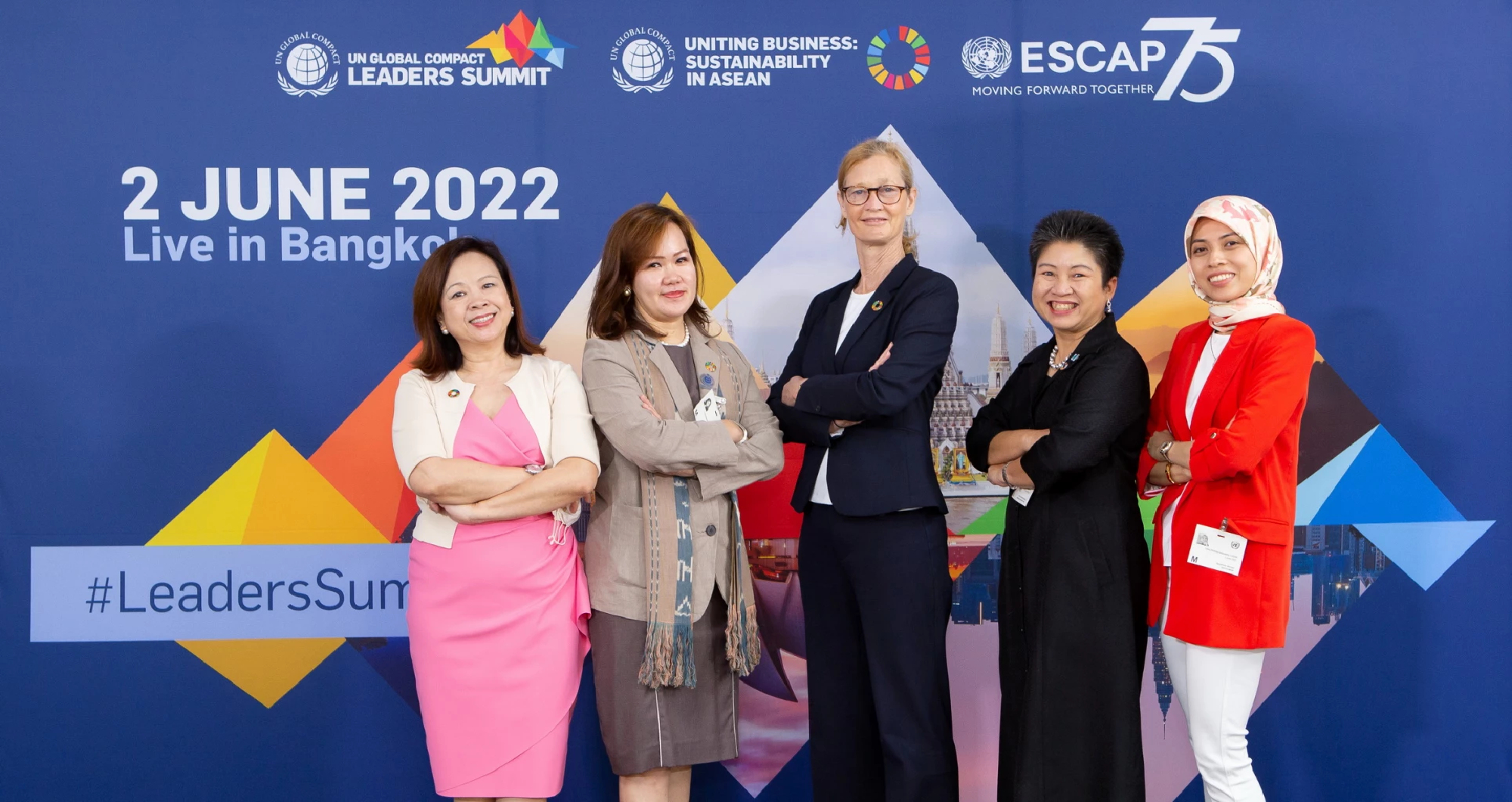
Global Compact Network Thailand (GCNT) together with the United Nations Economic and Social Commission for Asia and the Pacific (UN ESCAP) and the UN Country Team Thailand are empowering sustainability leaders across Southeast Asia at “UNGC Leaders Summit 2022” with more than 10,000 multi-sector partners around the world. The event highlight 3 sustainability: Climate Change, Biodiversity, and Social Development including engaging with SMEs to take part in driving the Sustainable Development Goals (SDGs) into ASEAN and into the Asia-Pacific region.
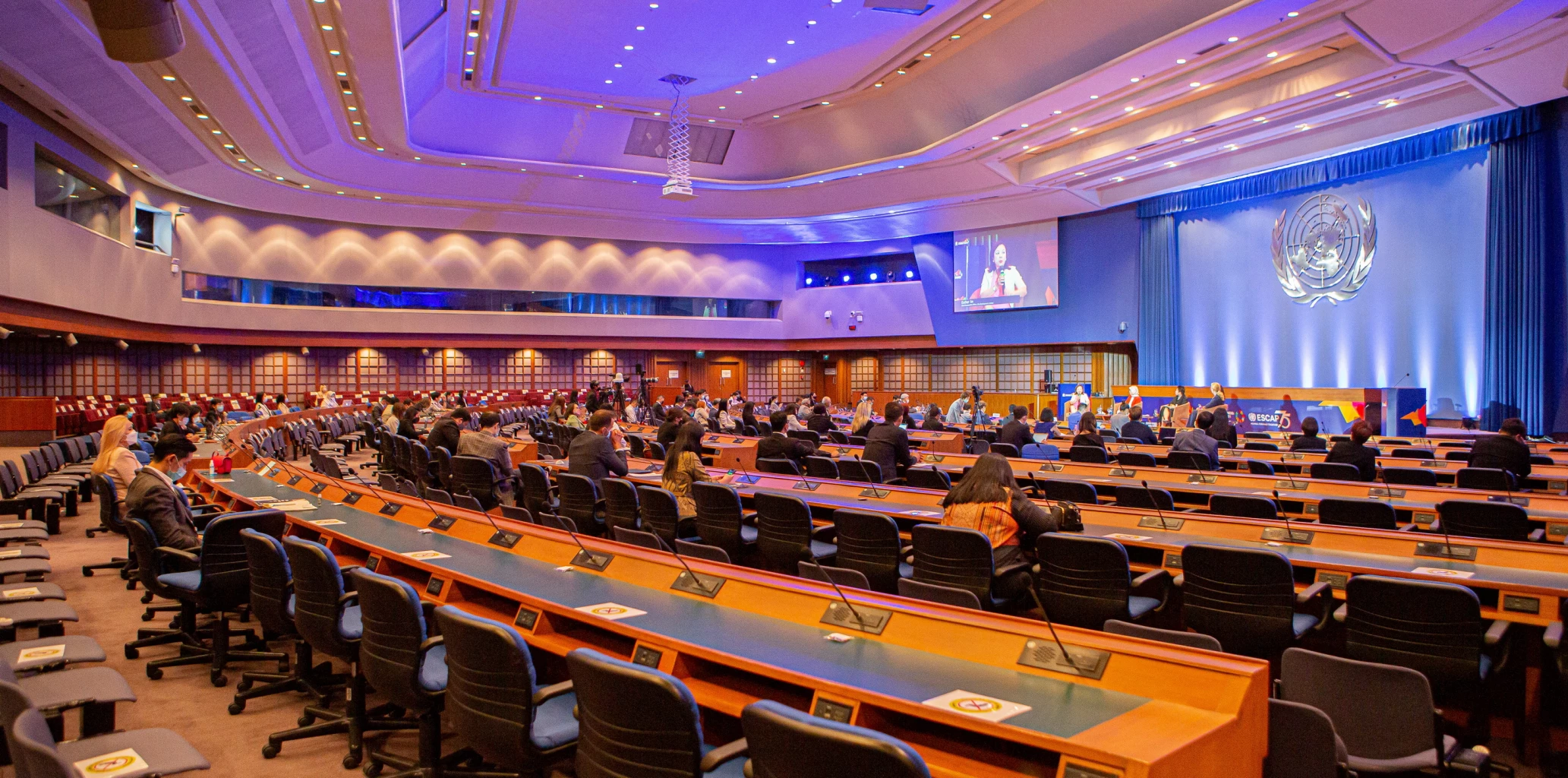
The Global Compact Network Association of Thailand (GCNT), together with the United Nations Economic and Social Commission for Asia and the Pacific (UN ESCAP) and the UN Country Team Thailand, co-hosted the “UNGC Leaders Summit 2022: Sustainability in ASEAN” to drive sustainability on the global stage Sustainability leaders from business, civil society, Government, Global Compact Local Networks Thailand, Indonesia, the Philippines, Singapore, Malaysia and Brunei. This year’s #LeadersSummit, inspired and catalyzed local and regional solutions for advancing policies that not only drive economic growth but accelerate progress towards the objectives of Sustainable Development Goals and the Paris Agreement in the ASEAN region with live broadcasts from Thailand around the world with over 10,000 attendees.
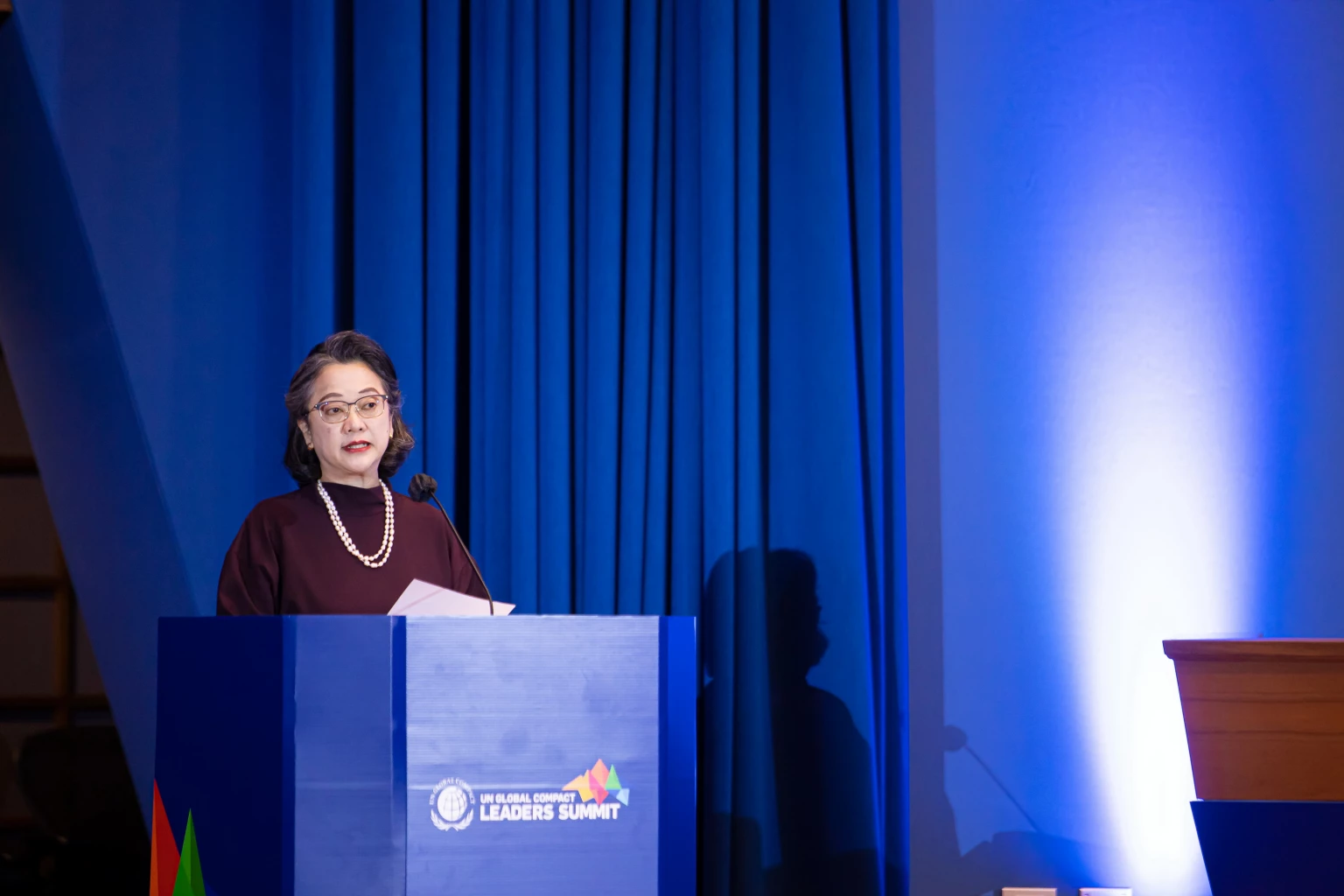
“The ESCAP Sustainable Business Network (ESBN), consisting of representatives of the private sector from the Asia-Pacific region, has adopted the Asia Pacific Green Deal for Business Declaration as a roadmap for companies to take the lead on climate action. ESBN, through this Green Deal, will lead private sector sustainability efforts to accelerate a green transformation in the region” said the Under-Secretary-General of United Nations and Executive Secretary of the United Nations Economic and Social Commission for Asia and the Pacific (ESCAP), H.E. Armida Salsiah Alisjahbana in her opening remark.
Sanda Ojiambo, Assistant Secretary-General and CEO of the UN Global Compact, spoke about the challenges facing the world today: “Today the world is still struggling to emerge from the coronavirus pandemic – a battle that will only be won when vaccines reach everyone – and remedy the disruptions it has set off in the global economy. Earlier this year, the IPCC published its gloomiest report yet, warning that time is no longer on our side to prevent a climate change catastrophe. And on top of these disasters, the war in Ukraine is posing a direct systemic and persisting threat to global security on three fronts: food, energy and human. In times such as these, business is called upon to act. A reason for optimism is that we are seeing businesses taking action; providing solutions; forming coalitions of the willing. Nevertheless there is still more that needs to be done, particularly with regards to mobilizing the financing and investments required for delivery of the Sustainable Development Goals”
Mr Noppadol Dej-Udom, Chief Sustainability Officer of Chareon Pokphand Group and Secretary General, Global Compact Network Thailand announced that “The UN Global Compact was set up to direct the power of business as a force for good. It started with the recognition that businesses have contributed significantly to create and intensify most of the world’s major problems: climate change, biodiversity loss, air and water pollution, inequality, and violation of human rights.
At the same time, businesses possess the resources and capabilities to help solve these problems. As business leaders, we must shoulder the responsibility of not only addressing our own negative impacts on environment and society – or the ‘do no harm’ approach, but also go further to utilize our energy and expertise to actively help solve those problems.”
Ms Ruenvadee Suwanmongkol, Secretary-General of Security and Exchange Commission Thailand said that “As the Thai capital market regulator, SEC is committed to promoting the development of sustainable investment climate and responsible investment business in line with the UN SDGs. In so doing, we aim to enhance competitiveness, ensure inclusiveness, and strengthen trust and confidence in the Thai capital market. We also seek to increase the knowledge and the sense of ownership of the SDGs with support from the government, businesses, and international organizations. We are driving all our efforts to build the capital market as a key engine for restructuring and digitizing the Thai economy. We believe our continuing efforts will help the economy adapt to the changing landscape and be recognized in the international arena.”
The meeting beginning with the SDGs Ambition session discussing the importance and value of defining and integrating SDGs through supply chain operations. Especially in the past two years, due to the coronavirus situation, plans to achieve net zero have required technology, investment, collaboration, and commitment from top management. In other words, the cost of not initiating anything. The value is higher than the adjustment of each industry. which is unique from different problems.
Gloyta Nathalang, Executive Vice President, Bangchak Corporation Public Company Limited, one of the Thai business leaders who shared the vision and goals of the organization in this session said that it was a great opportunity to exchange experiences and learn about the Sustainable Development Goals with business leaders from other countries in the ASEAN region. Everyone agreed that there must be a clear, achievable goal, giving importance and understanding to this matter from the level of directors, executives, to employees and business stakeholders. UNGC has the SDG Ambition Guide and SDG Tools as tools that make it easier to set clear goals and follow up. Moreover, The cooperation with various partners is also important that the Bangchak Group has set targets for carbon neutrality in 2030 and net zero in 2050, which are unable to achieve these goals on their own. Therefore, the principle of “Leading Inclusively” is applied to lead all stakeholders to achieve this goal together.
The next session was SMEs ASEAN which SMEs leaders discussed the integration of sustainability in SMEs’ operations to create their contributions to the Sustainable Development Goals and unlock market opportunities. It starts with understanding and motivational benefits along with enhancing knowledge and concrete examples, for example, using customer pain points as ideas to develop possible solutions to reach the new generation. And finally, there must be a network or ecosystem, which will allow the exchange of knowledge between each other and easy to cooperate which creates new opportunities business and enable sustainable growth.
The afternoon session started with three key sustainability agendas: Climate emergency & Biodiversity and social development that started with a discussion on how businesses are dealing with climate change and preserving biodiversity that are like two sides of the same crisis and that it is therefore important that these crises are addressed in an integrated manner. The meeting ended with the issue of Social Sustainability. It discusses trends in social investment which will see businesses increase their investment and commitment to social sustainability issues like never before. to create thriving communities and ecosystems.
Mr Peerapong Krinchai, Executive Vice President, Corporate Engineering, CPF Thailand shared that CPF is moving towards cost-effective rotation of natural resources throughout the value chain and zero greenhouse gas emissions. by developing standards for sustainable sourcing of raw materials throughout the supply chain It has set a goal that by 2030, the procurement of 100% of key agricultural raw materials must be traceable and come from areas that do not deforestation and biodiversity. In addition, CPF has also upgraded its data management to connect to the manufacturing process with Blockchain technology to make traceability more accurate and faster.
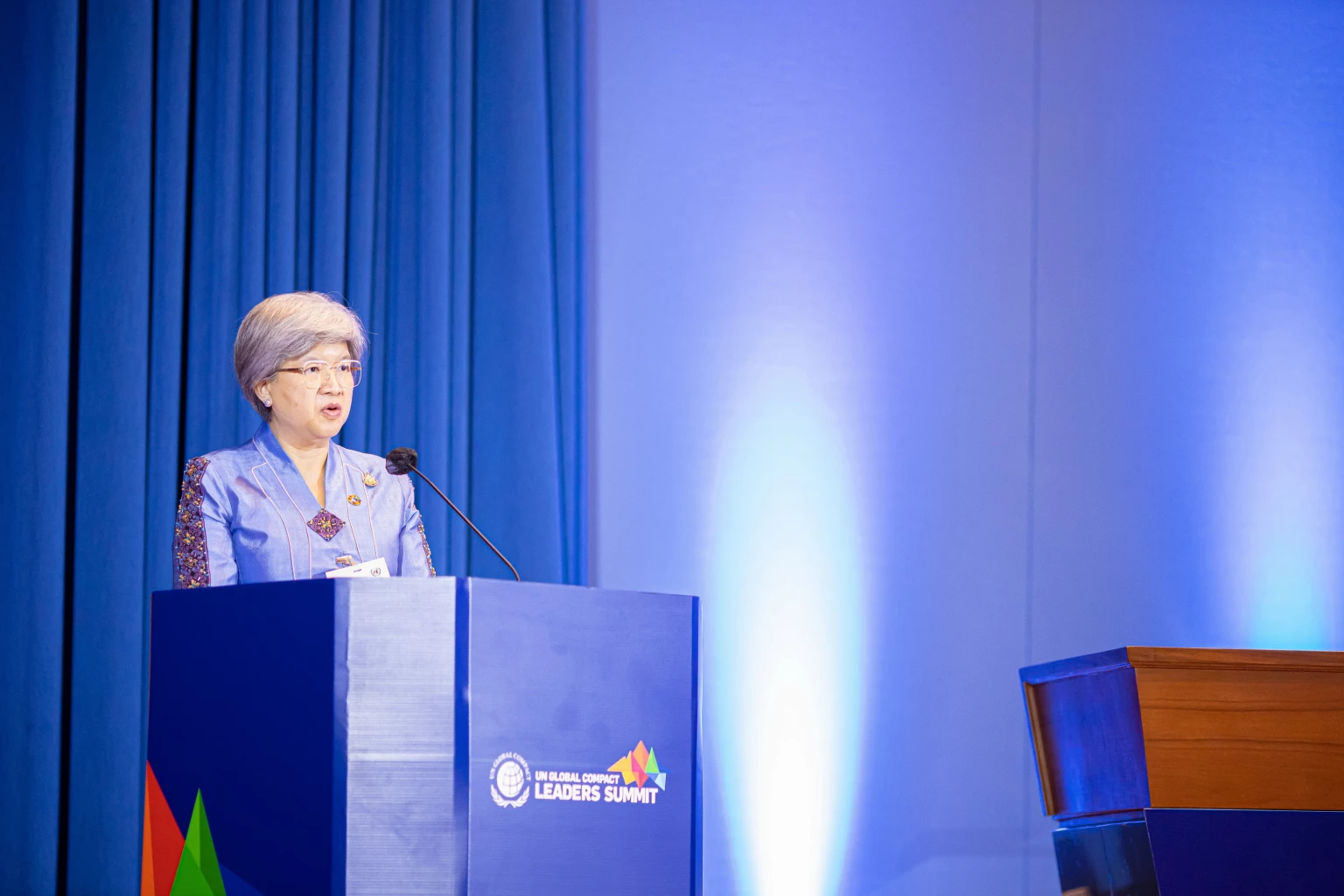
Mrs Gita Sabharwal the UN Resident Coordinator in Thailand has closed the meeting saying The private sector will play an important role in supporting the country’s aspirations under the UN Sustainable Development Cooperation Framework (UNSDCF) over the next five years. on climate change and promote biodiversity.
UNGC Leaders Summit 2022 : sustainability in ASEAN has underscored how the ASEAN region has been a torch-bearer in the wider Asia-Pacific region in ‘building back better, together.
Thai Airways International will soon sell more seats from its decommissioned Boeing 747 planes to boost its liquidity, the airline announced.
The “TG Warehouse Sale” Facebook page of THAI posted on its wall on Monday that the second round of live sale of Boeing 747 seats might be held on Friday but the schedule is yet to be confirmed.
It said both first-class and economy-class seats of Koito and Recaro brands will be put on sale in the second live session.
It said the number of available seats will be limited like in the first live session.
The page explained that it cannot sell a higher number of seats from the decommissioned planes because the goods have to pass complicated clearance steps and it would require cooperation from its limited number of staff.
The page said THAI plans to sell goods from its non-profit assets to boost its liquidity and the sale will also provide a chance for customers to get rare and impressive items.
The TG Warehouse Sale page opened the first live session on March 29 to sell 30 pairs of seats from its decommissioned planes. The seats were sold at THB35,000 per a pair and each customer was allowed to buy a maximum of three pairs.
The live session managed to sell the 30 pairs of seats within a minute and THAI earned Bt1.05 million. The seats were delivered to buyers in early May.
The baht opened at 34.42 to the US dollar on Wednesday, strengthening from Tuesday’s close of 34.47.
The currency is expected to move in a range between 34.35 and 34.55 on Wednesday, predicted Krungthai Bank market strategist Poon Panichpibool.
Poon said the baht might fluctuate and weaken during the day, especially before and after a key Monetary Policy Committee (MPC) meeting. If the MPC does not provide any signal that it would gradually increase the interest rate even if inflation rises, investors might still feel it will increase the rate eventually and this may force them to offload their bonds, Poon said.
However, whether the baht strengthens or weakens, it may not be by too much especially if the MPC thinks the economy might be improving and the tourism sector recovering better than expected.
Poon said the baht’s resistance level is 34.50 to 34.60 to the dollar – the level at which exporters are waiting to sell the US currency.
He added that the baht might not weaken heavily if investors do not view EM Asia assets as risky.
Poon advised businesses to use hedging tools such as options to manage risks in the highly volatile currency market.
Thailand’s rice exports are expected to reach 600,000 to 650,000 tonnes in May on pending delivery contracts, following higher rice demand and the weakening baht, the Thai Rice Exporters Association (TREA) said on Tuesday.
TREA President Charoen Laothamatas said Thailand exported 2,291,916 tonnes of rice worth THB39.44 billion in the past four months (January-April), up 52.7 per cent and 36.4 per cent year on year, respectively.
However, in April alone, Thailand exported 548,636 tonnes of rice worth THB9.97 billion, down 15.3 per cent and 10.0 per cent month on month, he said.
He said the decline in April rice exports were due to rising domestic prices, which led to a hike in the export prices as a result rice importers delayed purchase and delivery.
Charoen Laothamatas
Charoen added that Thailand exported 199,939 tonnes of white rice and 94,572 tonnes of steamed rice in April, down 35 per cent and 18.9 per cent month on month, respectively, due to the aforementioned issues.
However, the export of jasmine rice was up 4.6 per cent compared to the previous month, to 149,594 tonnes, thanks to an increase in export to countries in the Middle East, he said.
As of June 1, the price of 5 per cent white rice in Thailand was US$465 per tonne compared to $423-$427 in Vietnam, $338-$342 in India and $373-$377 in Pakistan.
Meanwhile, Thailand’s price of steamed rice was $480 per tonne compared to $348-$352 in India and $392-$396 in Pakistan.
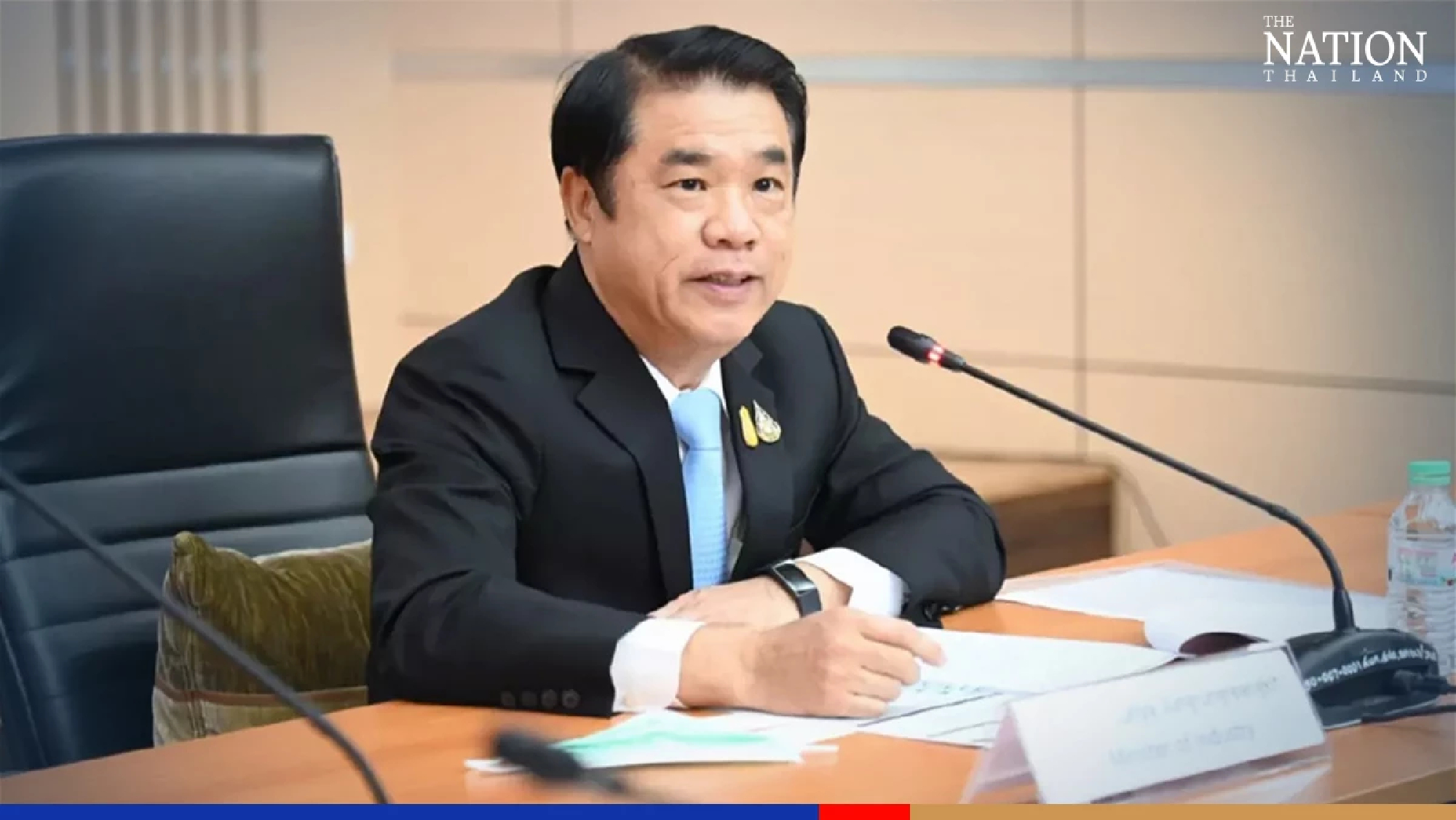
The government will exempt 60,344 factories from the annual factory licence fee to help operators recover in the aftermath of Covid-19, Industry Minister Suriya Juangroongruangkit said.
Suriya said on Tuesday that he had told the Industrial Works Department to exempt the annual factory licence fee for factories under Category 2 and Category 3. The fees were scheduled to be collected on Thursday. The fee exemption has been granted for three consecutive years.
He explained that it was one of the measures to help recovery for operators who were affected by the pandemic.
Meanwhile, the department’s director-general, Wanchai Phanomchai, said that the Cabinet has approved the decision and it will be published in the Royal Gazette, to be enforced from June 10, 2022, to June 9, 2023.
He said that there are 60,344 Category 2 and 3 factories this year while the total annual factory licence fee collection amounts to THB280 million.
Wanchai said that there is a growing investment trend. The number of factories has grown by 3.5 per cent in fiscal 2022, with an investment budget of THB45.477 billion.
The top three industries with the most number of new factories are: food, metal, and electric appliances and devices.
The Finance Ministry said a move to borrow 30 billion baht to boost liquidity of the Oil Fuel Fund is on hold as the fund is not a juristic entity so cannot apply for the loan itself.
Finance Minister Arkhom Termpittayapaisith said the ministry would submit the issue to the Council of State for legal advice on the fund’s status as a borrower.
“Meanwhile, the Oil Fuel Fund can ask the government to boost its liquidity via the central budget, which would require approval from the Energy Ministry,” Arkhom added.
The diesel price rose today from 32.94 to 33.94 baht per litre, on instructions from the Oil Fuel Fund executive committee.
The Oil Fuel Fund Office says the fund is 86.02 billion in debt – 40.14 billion from subsidising fuel and 35.88 billion baht from subsidising LPG – and only has liquidity of about 10 billion baht.
Thai Chamber of Commerce (TCC) chairman Sanan Angubolkul says a diesel price rise to 35 baht per litre would impact people’s living costs. However, the private sector believes the 35-baht price point is still “manageable” as they have adjusted strategies to cope with the global energy price crisis, he added.
Sanan said 35 baht per litre was still lower than in neighbouring countries, adding that the actual market price was higher.
Federation of Thai Industries (FTI) president Kriangkrai Thianukul said the private sector was more worried about the shortage of raw materials than the rising prices of fuel or products. He explained that global demand for Thai exports remained high, but rising costs could disrupt supply chains in certain industries.


 FIGURE 1: READY BUILT INDUSTRIAL MARKET
 FIGURE 2: SERVICED INDUSTRIAL LAND PLOT MARKET







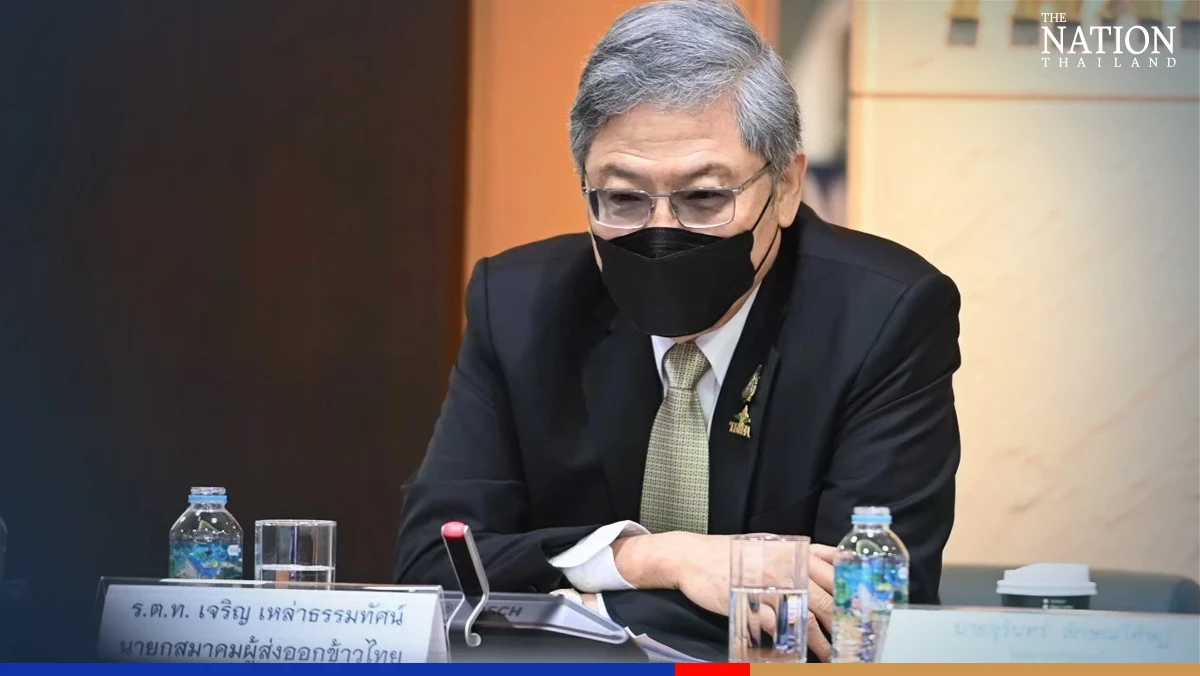 Charoen Laothamatas