Toyota, Chinese carmakers set to join EV price war in Thailand

#SootinClaimon.Com : ขอบคุณแหล่งข้อมูล : หนังสือพิมพ์ The Nation.

https://www.nationthailand.com/business/40014370


Spurred by growing domestic demand for electric vehicles, manufacturers in Japan and China are set to seek government subsidies to cut EV prices in Thailand, according to a Finance Ministry source.

Toyota, Chinese carmakers set to join EV price war in Thailand

Toyota is expected to join the Excise Department’s subsidy programme later this month, the source said.

“It will be the first Japanese car manufacturer to take part. This move is expected to prompt other carmakers from Japan and Europe to join so that they can avoid missing out on business opportunities,” the source added.

Chinese automakers Geely, Neta and Changan have also expressed interest in the subsidy programme and are in talks with the Excise Department, according to the source.

Meanwhile, Japanese carmaker Honda will likely postpone its participation until next year as it prepares its EV assembly operation in Thailand, the source said.
Toyota, Chinese carmakers set to join EV price war in Thailand

The Excise Department is offering subsidies ranging from 70,000-150,000 baht, depending on the size of battery used.

The subsidies are already being applied to cars offered for sale by Chinese brands such as MG, Haval and Ora – both completely knocked down (CKD) and completely built-up (CBU) models. Under the subsidy deal, carmakers can import CKD and CBU units for sale for two years. In the third year, they must make one unit in Thailand for every unit they import. That ratio rises to 1.5:1 in the fourth year.

Failure to meet those terms will be penalised with fines and additional import and excise taxes.

The Excise Department sees signs of increased interest in EVs among Thai consumers, said director-general Lavaron Sangsnit.

He pointed out that 3,000 EVs were reserved at the latest Thailand Motor Show, representing 10 per cent of all bookings made at the expo, which finished on April 3.

“This was a very good sign. We believe the momentum is quickly going in this direction,” he said.

The National Electric Vehicle Policy Committee headed by Energy Minister Supattanapong Punmeechaow will visit Japan early next month for talks with Japanese carmakers about potential investment in EV manufacturing in Thailand, Lavaron said.

Published : April 09, 2022

New research centre aims to offer readymade AI solutions to all sectors

#SootinClaimon.Com : ขอบคุณแหล่งข้อมูล : หนังสือพิมพ์ The Nation.

https://www.nationthailand.com/pr-news/business/40014357


Amid the increasing role of artificial intelligence (AI) in achieving greater efficiencies and profits in the corporate world, a new research venture aims to help businesses tap the power of AI.

New research centre aims to offer readymade AI solutions to all sectors

Vidyasirimedhi Institute of Science and Technology Council (Vista) on Friday,  announced the formation of a new venture, VISTEC, to establish the Thailand Artificial Intelligence Research Institute. The aim is to become a one-stop-service centre for education, experiment, research, and exchange of knowledge on AI. It also will promote and support the development of a digital workforce while developing and researching datasets to answer the rising demands of the industry and digital innovation service business sectors.

Visai AI Co Ltd (VISAI) signed a memorandum of understanding with the Digital Economy Promotion Agency (DEPA).

Vista chairman Pailin Chuchottaworn said the purpose of the venture was to ensure maximum benefit from artificial intelligence technology. “Many people have taken advantage of this technology. Not only big business organisations, but all entrepreneurs can tap AI to develop their knowledge and take their business forward,” Pailin said. VISTEC has created VISAI to create all AI solutions for all sectors in collaboration with DEPA, he said.

In the keynote session, Asst. Prof Nuttapon Nimmanphatcharin, the president and CEO of DEPA, spoke on “Ai as Digital Infrastructure”. He said Thailand’s economic structure in 2021 was quite fragile. He divided the pyramid structure into three major parts — the major portion is the agriculture sector while small and medium-sized enterprises are at the top of the pyramid. Big organisations are mostly multinationals, while the presence of big domestic companies is negligible in the economic structure. He thinks the time has come to promote and develop AI technologies to create a strong economic system with an infrastructure that everyone can access and use. He said business competition has been affected by the digital disruption, changing society, changing climate and new diseases. Due to all these reasons, Thailand needed to create systems that would give it a digital competitive advantage in four key areas: digital access, digital connectivity, digital data and digital automation to create sustainable growth.

Another panelist in this event, Assoc Prof Sarana Nutanong, the CEO of Visai, spoke on “Just Add Data”. The process of developing an AI system is collecting data and research to advance the application. “The mission is to enhance the competitiveness of our partners with cutting-edge AI and machine learning technologies. Also, to improve the accessibility of advanced modelling techniques to solve real world problems, together with improving tech competency of society through innovative automation and productivity solution for all ages,” he said. He believes Thailand can gain a competitive advantage by leveraging data-centric AI through all needed sectors.

Sarana said that VISAI AI, or just VISAI, was founded this past February with great cooperation from DEPA. VISAI sees an opportunity in applying the mega-tech trend, by developing and presenting high-performance “AI-enabled solutions,” as well as increasing people’s accessibility to AI with the concept “AI for Everyone”. 

In practice, data-centric AI, having been developed similar to service software, has a part in reducing dependency on advanced AI experts for those wishing to apply AI in their businesses. It also enables them to apply VISAI’s off-the-shelf models. This will reduce cost in time and personnel, which is the important factor to reduce entry barriers and increase AI accessibility on a large scale.

New research centre aims to offer readymade AI solutions to all sectors

Published : April 09, 2022
By : THE NATION

AGE expects strong Q1/2022 result driven by coal, logistics business

#SootinClaimon.Com : ขอบคุณแหล่งข้อมูล : หนังสือพิมพ์ The Nation.

https://www.nationthailand.com/pr-news/business/40014342


Asia Green Energy Pcl (AGE), a bituminous coal distributor and logistic services provider, expects Q1/2022 growth to rise continuously from the previous year, said AGE managing director for Asia Panom Kuansataporn.

AGE expects strong Q1/2022 result driven by coal, logistics business

Growth is supported by the rising price of coal as demand in the domestic and foreign business sectors remains strong. Revenue from coal sales in the first two months of 2022 increased by 60 per cent year on year.

Meanwhile, on the logistics side of the business, the company signed a contract worth 110 million baht to transport industrial products for the next two years. AGE also has an existing contract, signed in advance at the end of 2021, to transport three million tonnes of industrial products. This contract has a total service period of three years, starting this year.

The company plans to increase investment in logistics by adding one more warehouse. AGE currently operates five warehouses for storage services. In keeping with its strategy of boosting logistics investment, the company has increased its logistics revenue target from 4 per cent of total revenue last year to 5 per cent this year.

For 2022, the company set its target revenue from the logistic business at 2.5 billion baht, up from 2.002 billion baht in 2021. Services to AGE affiliates accounted for 76.5 per cent of logistics revenue while 23.5 per cent came from outside customers.

Meanwhile, the subsidiary AGE Agri Trading Co Ltd ­– which was recently established to provide, distribute and export agricultural products – is expected to realise revenue within this year.

Moreover, Panom said that At Energy Solution Co Ltd, of which AGE possesses a 49.99 per cent stock share, is starting to realise revenue from previous investment projects including retained January-February earnings of 6.14 million baht from a 5MW solar power plant in Lopburi.

As for recent progress, the company is continuously studying the possibility of investing in the energy business in line with energy policy.

At Energy Solution previously invested in a boiler-installation project and sold it to a customer in Thailand. This project is expected to realise revenue in the second half of 2022.

Hence, the company is confident that AGE’s total income this year will reach target growth of 15 billion baht, as 5 per cent of revenue will come from the logistics business and 95 per cent from the coal business. The company has also targeted sales of 6.5 million tonnes of coal.

Published : April 08, 2022

By : THE NATION

MQDC Engages Accenture to Develop Metaverse Project

#SootinClaimon.Com : ขอบคุณแหล่งข้อมูล : หนังสือพิมพ์ The Nation.

https://www.nationthailand.com/business/40014333


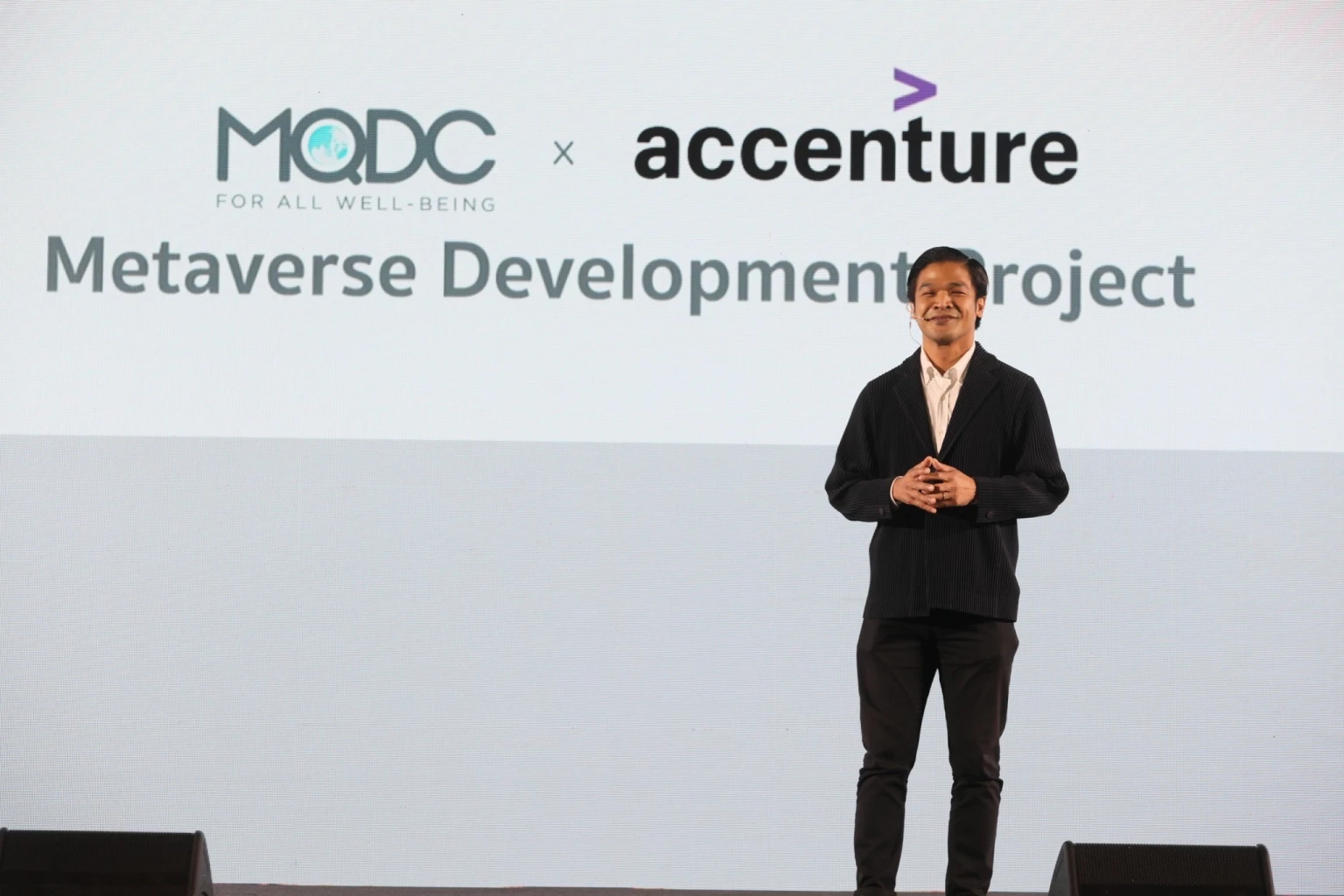
Magnolia Quality Development Corporation (MQDC) has teamed up with Accenture, a global professional services company, to create the MQDC Metaverse – a seamless connection for people between reality and the virtual world.

MQDC Engages Accenture to Develop Metaverse Project

Magnolia Quality Development Corporation (MQDC) has teamed up with Accenture, a global professional services company, to create the MQDC Metaverse – a seamless connection for people between reality and the virtual world.

Parut Penpayap, project director of MQDC Metaverse, said MQDC would create positive outcomes and authentic unique experiences through its own Metaverse. Accenture will support MQDC in inclusive business planning, marketing development and user experience design.
“This Metaverse Development Project demonstrates to our customers that we are not just a premium real estate developer but also an advanced technology and innovation service-provider for all well-being”, said Parut.

He added that MQDC is the first company in Thailand’s property sector to step into the metaverse. The concept for the MQDC Metaverse project can be divided into three parts.

MQDC Engages Accenture to Develop Metaverse Project

The first is to deliver an experience beyond imagination to customers and newcomers. The second is to develop new areas for people who are interested in participating in business development in the metaverse. And the third is to create an infinite space that connects the real world with the virtual world to allow customers and the general public to participate in various activities. Customers will be able to enter hybrid experiences that have never been seen anywhere else in the world, MQDC promised.

MQDC Engages Accenture to Develop Metaverse Project

“We are confident about the development of our Metaverse project. With creativity technology expertise as well as a deep understanding of Accenture’s metaverse development, our Metaverse project will bring comprehensive value and benefits to all users”, said Parut.

MQDC Engages Accenture to Develop Metaverse Project

Husin Adam, Accenture Thailand’s managing director, product industry lead, added that Accenture’s collaboration with MQDC would expand the reach of the digital world and bring consumers an immersive experience in an environment enriched with the physical, virtual and fantasy worlds.

“We believe there are massive opportunities in the metaverse, which will change how our business operates. Our -metaverse-powered] business will connect to our customers. We also believe that this (MQDC) project has a lot of potential. For Accenture, our expertise will lead you on a great metaverse journey”, said Husin

MQDC Engages Accenture to Develop Metaverse Project

Parut added that the announcement was merely the first phase in the journey of the MQDC Metaverse project. He said more interesting events will be launched in future, as the MQDC Metaverse’s ultimate goal is to allow simple access for clients all around the globe.

MQDC’s Metaverse project also plans to connect with Translucia Metaverse. This project is under the management of T&B Media Global (Thailand), a global entertainment content and animated series production company.

MQDC Engages Accenture to Develop Metaverse Project

Meanwhile, MQDC is also one of 11 partners of T&B Media Global who are co-issuing Crown Tokens – a digital asset which launched on leading crypto trading platform ZIPMEX last month. Crown Tokens link intellectual properties to non-fungible tokens (NFTs) and the metaverse to create a fully integrated ecosystem.

Published : April 08, 2022

Thai consumer sentiment at its lowest in six months, says UTCC

#SootinClaimon.Com : ขอบคุณแหล่งข้อมูล : หนังสือพิมพ์ The Nation.

https://www.nationthailand.com/business/40014347


Consumer sentiment in March dipped to 42.0, the lowest in six months, because of Omicron worries and the Russia-Ukraine war fallout, the University of the Thai Chamber of Commerce (UTCC) announced on Friday.

Thai consumer sentiment at its lowest in six months, says UTCC

UTCC rector Thanawat Polwichai announced at a press conference the results of the survey on sentiment indices compiled by his university’s economy and businesses forecast centre.

Thanawat said the consumer confidence index in March was 1.3 points lower than February’s 43.3, and the confidence index has fallen for three months in a row.

The university explained that an index lower than 100 points showed weak purchasing power because of slow economic recovery.

Thanawat said the key factors that prompted consumer sentiment to fall were people’s worries about the Omicron situation and the fallout from the Russia-Ukraine war.

He said the high infection rates affected the tourism and service sectors, which have not recovered yet. The situation was aggravated by the fallout from the war that had caused oil prices to rise sharply, affecting the cost of goods manufacturing.

Thanawat said the rising oil prices and manufacturing costs had stepped up pressure on the recovery of the global and Thai economies and Thai exports, as a result consumer sentiment had dropped because people’s incomes could not match the rising cost of living.

He said the UTCC expects consumer sentiment to improve in May when the government’s measures to mitigate the people’s cost of living would take effect.

He said the UTCC still maintained its economic growth forecast at 3.5 per cent.

Thanawat said there were good signs that consumer sentiment would rise in the late second quarter because the Centre for Covid-19 Situation Administration has eased travelling restrictions on foreign arrivals since April 1. The CCSA lifted the requirement of an RT-PCR test before departure to Thailand. The relaxation of measures would help the tourism sector to start recovering and becoming a boon to the economy.

He said if the government continues the co-payment subsidy scheme for consumers in June, it would help the economy recover in the late second quarter.

The rector said it is expected that the number of Covid infections would rise to about 50,000 or 100,000 a day after the Songkran holidays, but the UTCC believes the government would not lock down the country again as it would hurt the economy.

He called on the government to relegate Covid-19 to an endemic in June instead of July since most people have already received booster jabs. He said the announcement a month ahead of schedule would help quicker recovery of the Thai economy and it would add about 0.1 or 0.2 per cent to the growth.

But if the government fails to announce Covid-19 as an endemic soon, Thailand’s economic growth would fall by 0.5 per cent, or about Bt70 billion to Bt100 billion.

Thanawat added that the UTCC also found the Thai Chamber of Commerce’s confidence index had dropped to 35.5, the lowest in four months. The index gauges the sentiment of the business sector and chamber members in all provinces.

Published : April 08, 2022

By : THE NATION

Moody’s affirms Thailand’s Baa1 rating, maintains stable outlook

#SootinClaimon.Com : ขอบคุณแหล่งข้อมูล : หนังสือพิมพ์ The Nation.

https://www.nationthailand.com/business/40014331


Thailand’s sovereign credit has been rated at Baa1, or equivalent to BBB+, by Moody’s Investors Service, which maintained the country’s outlook at stable, Patricia Mongkhonvanit, director-general of the Public Debt Management Office (PDMO), said on Friday.

Moody's affirms Thailand's Baa1 rating, maintains stable outlook

According to the Moody’s report, the affirmation of the Baa1 ratings reflects Moody’s expectations that Thailand will continue to display economic resiliency to future shocks, underpinned by its large and diverse economy and strong macroeconomic policy effectiveness.

“The rating also takes into account material downward pressure on the economy’s growth potential from rapid population ageing and likely long-term economic scarring from the pandemic,” said the report. 


“While Moody’s expects Thailand’s government debt to increase and remain markedly higher than pre-pandemic norms, leaving the government with weakened fiscal strength for some time, Thailand’s fiscal metrics will still be stronger than most Baa-rated peers. Further, Moody’s assesses it likely that the government will quicken its pace of fiscal consolidation in the next two to three years once the economic recovery takes hold.

“The stable outlook indicates balanced risks to Thailand’s credit profile. Thailand’s economic strength may benefit from productivity gains, including through the ramp-up of the Eastern Economic Corridor to a greater extent than Moody’s currently expects. By contrast, the economic and social costs of ageing and Thailand’s capacity to absorb them have yet to be tested,” added the report.

“Meanwhile, the authorities’ track record of effective macroeconomic policies, including prudent fiscal policies, despite noise in the political landscape, contributes to the stable outlook,” the report said.

“Moody’s expects Thailand’s real GDP growth to come in at above potential rates for the next two to three years, as the effects of the pandemic fade and the tourism industry is slowly recovering,” said Patricia.

“The rating agency has, therefore, projected the economy to expand by 3.4 per cent in 2022 and 4.8 cent in 2023, which is not far from the estimation of the Asian Development Bank, which recently forecast that Thailand’s GDP will grow by 3 per cent this year and 4.5 per cent in 2023.”

Published : April 08, 2022

By : THE NATION

Arkhom rebuts criticism by ex-BOT governors, justifies government policies

#SootinClaimon.Com : ขอบคุณแหล่งข้อมูล : หนังสือพิมพ์ The Nation.

https://www.nationthailand.com/business/40014332


Finance Minister Arkhom Termpittayapaisith on Thursday dismissed concerns of six former central bank governors, saying the government has been using proper finance policies and the country still enjoys financial strength.

Arkhom rebuts criticism by ex-BOT governors, justifies government policies

Arkhom was responding to six former central bank governors, who had expressed concern during a recent seminar that excessive spending by the government would expose the country’s financial status to risk. They had also criticised the government for using deficit budget for several consecutive years.

Arkhom defended the government, saying the current spending in comparison with revenue could not be considered excessive, arguing that the deficit ratio in the national budget had actually dropped for fiscal 2023.

“Anyway, a deficit in the budget is still necessary but we have reduced the ratio,” Arkhom said.

He said the Finance Ministry had to make sure that the policies would facilitate economic recovery.

“In the past, the central bank used to increase the policy interest rate once it saw signs of economic recovery but I have to thank the current central bank governor for understanding the situation [and not increasing the policy rate],” Arkhom said.

“The Covid-19 situation is not over yet. This shows that the fiscal policies are in line with the policies of the Finance Ministry.”

The minister said the government had to borrow to tackle the Covid-19 crisis during the past two years and the practice was similar to what was done during the financial crises in 1997 and 2009.

“Every crisis needs money, so the government has to take recourse to a deficit budget and this policy is used in every country,” Arkhom said.

The minister said the government had raised the public debt ceiling, as had been done in the past, but the ceiling would be lowered once the economy recovers.

The finance minister accused previous governments of failing to restructure the country’s tax base after they introduced policies to reduce tax rates, such as corporate tax rates, leaving the present government with inadequate revenue. He said the current government is trying to restructure and expand the tax base.

“In the past, we didn’t do this but the government’s expenditure has been rising from investments, such as investments for roads to connect to rural areas, to allow rural people to bring their products to markets.

“And fixed expenditure is also rising, especially spending for various welfare schemes. Now, we have to take care of the elderly as well, so we have to restructure the tax structure,” Arkhom added.

The minister dismissed concerns that Thailand would face stagflation, a scenario in which the country’s inflation rises while the GDP declines.

He said the country’s GDP is rising but the cost is rising as well. “So, the economy is expanding quantitively and it’s not a concern. We only have concern about inflation because the rising cost would slow down spending by consumers. So, we must be able to control the inflation,” Arkhom said.

He said the government would not launch the THB1,500 cash subsidy co-payment scheme again because the economy has started to revive and the people are regaining their purchasing power. Instead, the government would provide purchase subsidies to only vulnerable groups, such as the registered poor who hold state welfare cards.

Speaking at the same press conference, Krisada Chinavicharana, permanent secretary for Finance, said the country has been using a deficit budget for most of the past 40 years.

He said Thai governments had been successful in making a balanced budget for only two years in the past 40 years.

He explained that Thailand is a developing country that needed to invest in infrastructure, so it needed to use a deficit budget.

He said the government could still manage the public debt because the current ratio of public debt is 60.17 per cent to GDP, well below the 70 per cent ceiling.

He said the treasury reserve now stands at about THB580 billion and the government is expected to receive revenue of THB2.4 trillion at the end of the fiscal year and treasury reserves would remain at about THB500 billion.

Published : April 08, 2022

By : THE NATION

Dow teams up with Thepvimol Plastic to develop low-carbon frozen food packaging trays

#SootinClaimon.Com : ขอบคุณแหล่งข้อมูล : หนังสือพิมพ์ The Nation.

https://www.nationthailand.com/pr-news/business/40014306


The new packaging tray is 50 per cent lower in carbon emission and promotes a circular economy, they said.

Dow teams up with Thepvimol Plastic to develop low-carbon frozen food packaging trays

Dow Thailand Group, a leading materials science company, together with Thepvimol Plastic have successfully developed food packaging trays formulated with polystyrene that contain up to 87 per cent recycled content, the firms said in a press release.

The new packaging tray is 50 per cent lower in carbon emission and promotes a circular economy, they said.

According to Dow, most frozen food trays are made from polystyrene, thanks to its lightweight, impact resistant, low moisture absorption, and recyclable properties.

Chatchai Luanpolcharoenchai, President of Dow Thailand Chatchai Luanpolcharoenchai, President of Dow Thailand
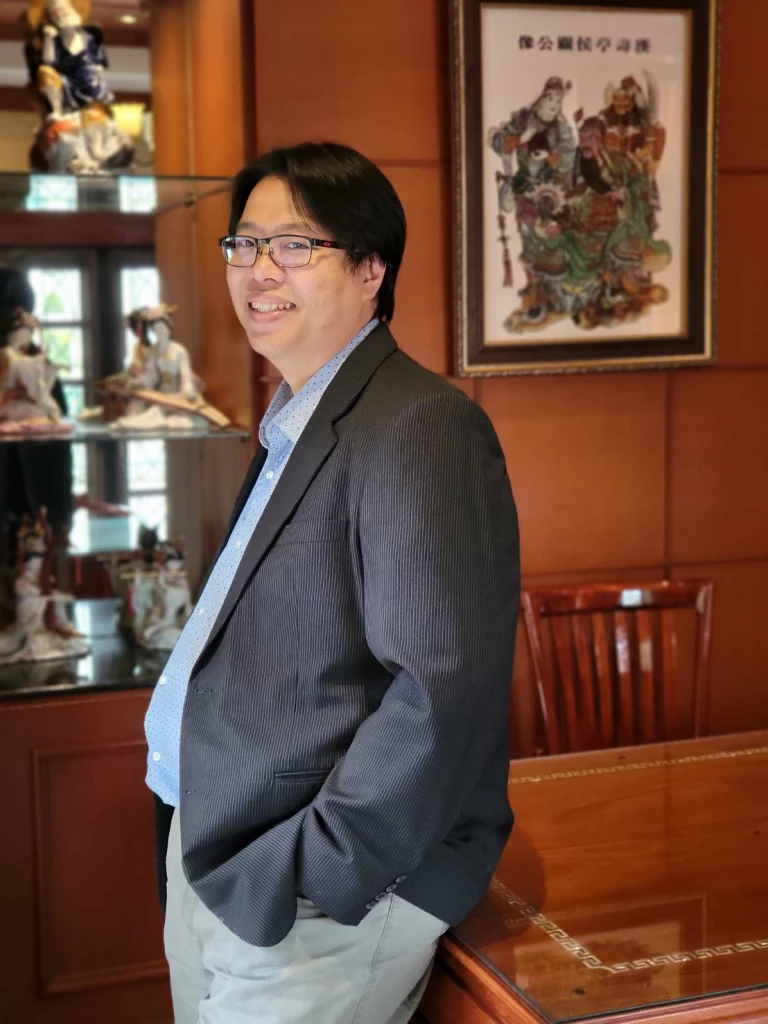
The company has now invented a new formula of polystyrene resin to help packaging manufacturers “achieve sustainability goals while meeting the needs of modern consumers”.

The innovation aims to support the packaging industry in its goal of achieving carbon neutrality.
Utilising Dow’s innovative solution, carbon dioxide emission is reduced by up to 2,046 tonnes per year, equivalent to planting more than 6,340 rai of trees per year, the press release said.

“We focus on reducing carbon emissions, stopping plastic waste, and closing the recycling loop,” Dow Thailand president Chatchai Luanpolcharoenchai said.

 Thanachai Wongvibulsin, Managing Director of Thepvimol PlasticThanachai Wongvibulsin, Managing Director of Thepvimol Plastic
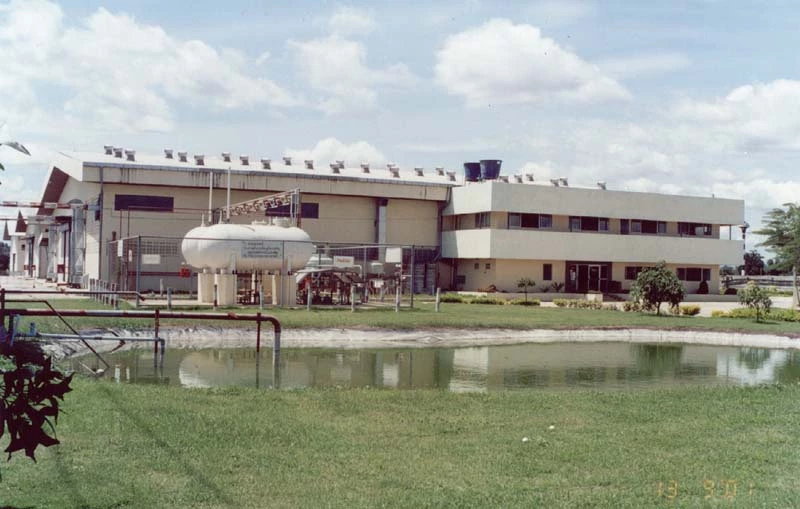
Thepvimol Plasti managing director Thanachai Wongvibulsin said: “Clean work pieces of non-standard sizes or food-grade leftovers from the entire production process can now be recycled to produce new products. The solution reduces transportation costs of the scraps and efficiently helps us manage waste materials in the factory. Our frozen food tray now has half the carbon footprint it used to have. This allows us to gain competitive advantages in the global market.”

Dow teams up with Thepvimol Plastic to develop low-carbon frozen food packaging trays

Find out more about the various types of polystyrene plastic resins from Dow Thailand at https://th.dow.com/en-us/products-solutions/polystyrene.html

Published : April 07, 2022

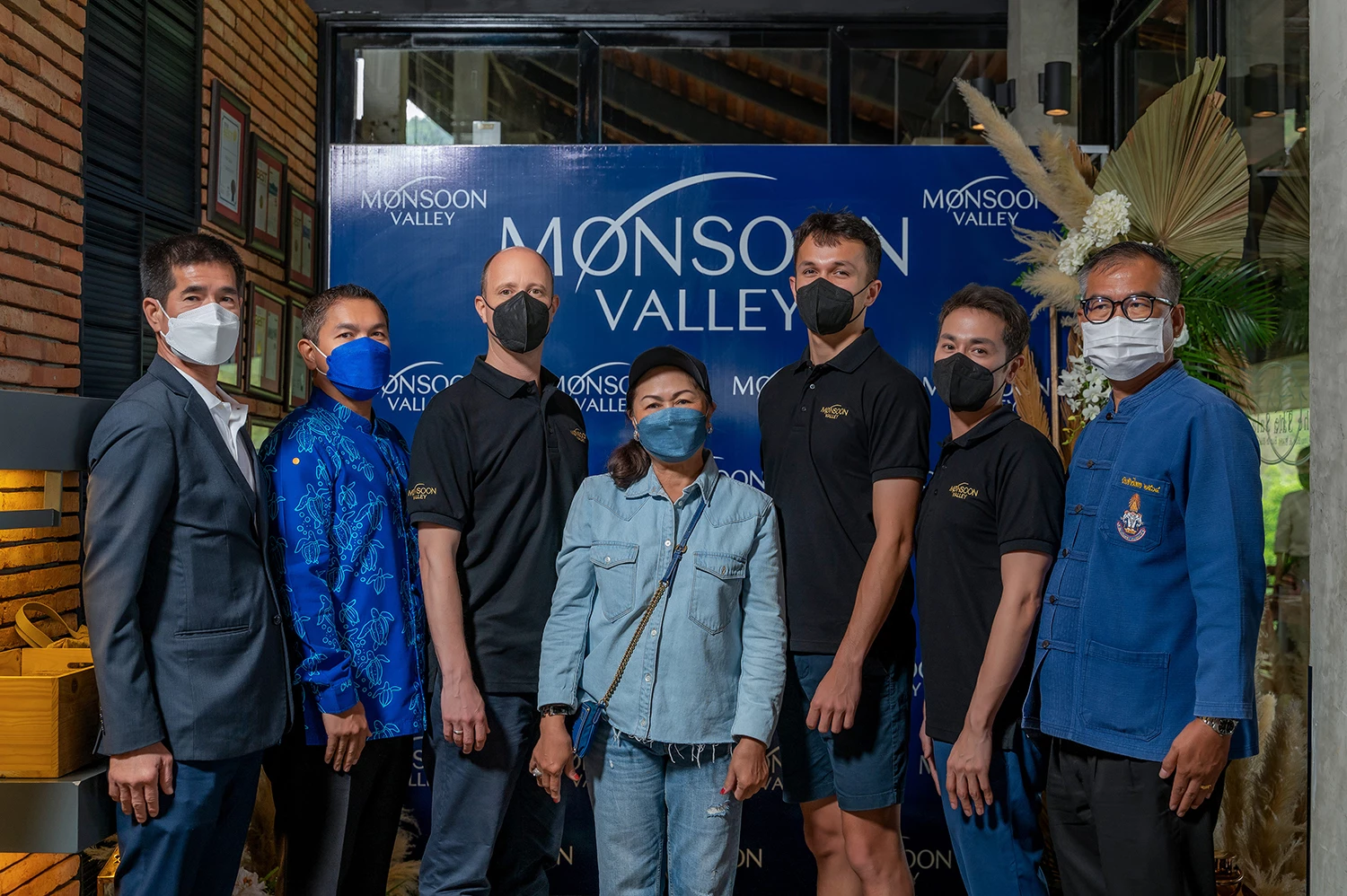
Mixing passion and performance: Monsoon Valley joins hands with F1 driver Alex Albon

#SootinClaimon.Com : ขอบคุณแหล่งข้อมูล : หนังสือพิมพ์ The Nation.

https://www.nationthailand.com/pr-news/business/40014298


This new partnership comes as Monsoon Valley celebrates its 20th Anniversary as Thailand’s premier vineyard. This year’s F1 season commences with the Bahrain Grand Prix from March 18-20.

Mixing passion and performance: Monsoon Valley joins hands with F1 driver Alex Albon

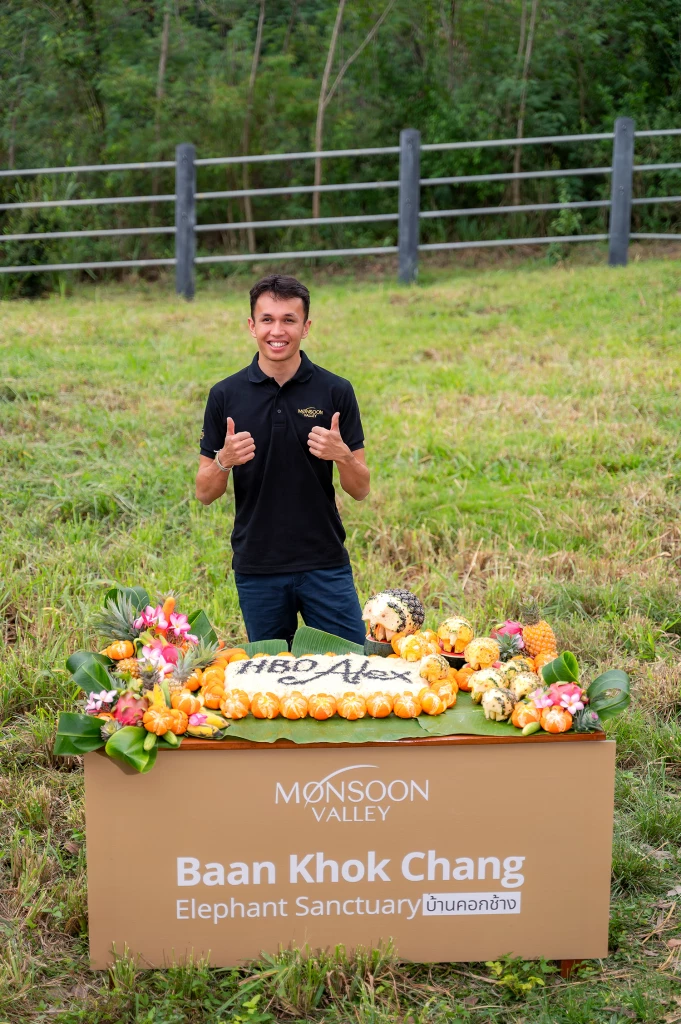
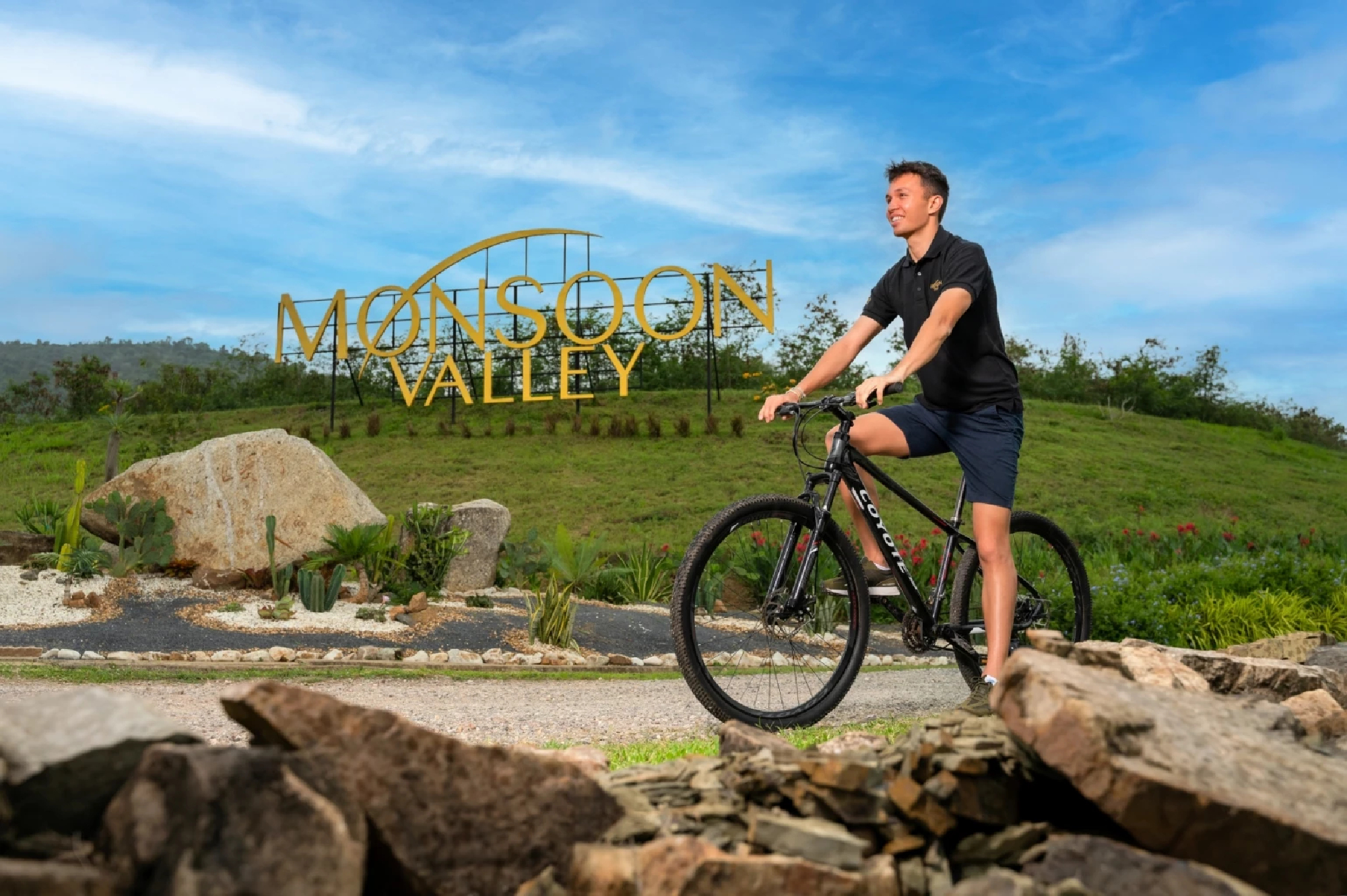
Monsoon Valley Vineyard, the home of Siam Winery’s premier flagship brand, has announced a new partnership with Thai Formula One driver, Alex Albon, as he joins the Williams Racing F1 team for the 2022 season.

This partnership unites two of Thailand’s most respected and world-renowned exports: Monsoon Valley, which produces superior grapes and exceptional beverages, and Alex Albon, who has reached the pinnacle of racing. 
As a Brand Ambassador, Alex will promote the company’s non-alcoholic beverages by displaying the logo prominently on his helmet and overalls.

Alex became Thailand’s first F1 driver in 65 years when he made his debut for the Toro Rosso team in 2019. Having been promoted to the Red Bull Racing team, he became the first Thai driver ever to achieve a podium finish when he finished third at the 2020 Tuscan Grand Prix.

Mixing passion and performance: Monsoon Valley joins hands with F1 driver Alex Albon

Having enjoyed a successful season in the DTM German touring car championship in 2021, winning a race at the iconic Nürburgring race track, he returns to F1 in 2022 to drive for Williams Racing. As a Williams driver, Alex follows in the footsteps of F1 legends such as Keke Rosberg, Nigel Mansell, Alain Prost, Damon Hill and Jacques Villeneuve, all of whom became world champions.

This new partnership comes as Monsoon Valley celebrates its 20th Anniversary as Thailand’s premier vineyard. This year’s F1 season commences with the Bahrain Grand Prix from March 18-20.

Mixing passion and performance: Monsoon Valley joins hands with F1 driver Alex Albon

Varit Yoovidhya, assistant managing director of Siam Winery, said: “We are delighted to partner with Alex, one of Thailand’s most prominent sportsmen. Alex’s passion for continuous improvement and relentless pursuit of excellence are values that unite and inspire us to never give up, and his journey to the highest levels of motorsport has inspired Thai youths and athletes everywhere. As part of Siam Winery’s commitment to supporting Thailand’s motorsport ambitions, we are thrilled to have Alex on board as a Brand Ambassador and for him to proudly display Monsoon Valley’s logo when he races on the global stage.”

Mixing passion and performance: Monsoon Valley joins hands with F1 driver Alex Albon

Alex Albon commented, “It’s a real honour to be named as the Brand Ambassador of Monsoon Valley in its 20th anniversary year. As a proud Thai, I feel deeply privileged to represent my country when I travel around the world. Every time I put on my helmet and step into the car, I am racing for Thailand. It feels fantastic to be able to support and promote Monsoon Valley, a home-grown world-class Thai brand. Racing in Formula 1 is a dream come true, and I hope that I can encourage even more Thai boys and girls to achieve their dreams in the future.”

Mixing passion and performance: Monsoon Valley joins hands with F1 driver Alex Albon

Built on the site of a former elephant corral near Hua Hin, Monsoon Valley Vineyard produces a selection of world-class wines and non-alcoholic grape juices. Owned by Siam Winery, one of the most successful and innovative Asian wine producers, Monsoon Valley has been continuously pushing the boundaries and elevating the standard of Thai beverage production for the last two decades.

Visit www.monsoonvalley.com for more information.

Published : April 07, 2022

The future of credit scoring for micro, small and medium enterprises

#SootinClaimon.Com : ขอบคุณแหล่งข้อมูล : หนังสือพิมพ์ The Nation.

https://www.nationthailand.com/pr-news/business/40014290


Imagine yourself as a small business entrepreneur: you have been marketing your products/services for a while and have several regular customers. Then, the pandemic strikes, causing rapid changes in consumer behaviour.

The future of credit scoring for micro, small and medium enterprises

Demand falls as people adapt to the new lifestyle. There is increased competition in the market from larger players. Now, you need more funding to upgrade your offerings to remain relevant in the market. However, you have never taken a loan from the bank, which increases the risk of you being denied funding. This is one of the biggest obstacles many individual and small entrepreneurs are facing.

The definition of Micro, Small & Medium Enterprises (MSMEs) by The Office of SMEs Promotion covers those with annual revenue less than THB500 million, and employing less than 200 people. They are characterised by their smaller size as compared to corporate counterparts. They usually carry out less technical business operations, regardless of the industry they are in, as many of them were originally household enterprises, founded by sole proprietorships. Every 7 out of 10 Thai nationals are employed or operating a business in this category.

When it comes to funding request or business expansion, traditional financial institutions usually input the payment behaviour of applicants in the credit-scoring model, as well as calculate the expected liquidation value of tangible collateral before deciding on the approval. This obviously excludes potential borrowers that possess no borrowing track record, or new generation startup enterprises where land and buildings are not required to operate thriving businesses. This puts MSMEs at a disadvantage compared to their large corporate rivals. This problem seems to be self-reinforcing and gaps between smaller and larger enterprises are only widening. To reduce this inequality, financial inclusiveness is already on the table of governments around the world.

Studies on modelling SME credit risks conducted in countries such as Japan, Indonesia, India and Thailand have found that financial statement information could also provide clues about borrower behaviour, as those with solid liquidity ratio tend to weather their business significantly better than others. Leverage ratio (the use of debt in their capital structure) and profitability ratio can also demonstrate their creditworthiness to a certain extent.

The question is, would it be possible to assess the credit risk of MSME borrowers, especially those without financial statements, like the case of sole proprietorships, where many of them have never taken bank loans before? The solution to this comes unexpectedly. The pandemic has forced a mass adoption of technology in all walks of life. We turned to remote working and restocking our groceries using mobile applications, we communicated more through social media to supplement physical interaction, and we adopted electronic banking transactions en masse. Online marketplaces hence became larger than ever.

This phenomenon has created a large unstructured data pool during the process, and in combination with advancement in modelling techniques, we are now able to predict the borrowers’ likelihood of defaults by detecting patterns in these data. Our study of countries across Asia shows that they are demonstrating promising predictive powers even if individuals or corporates never accessed formal banking products before.

Psychological matrices can also be leveraged to assess the creditability. A conscientious individual makes effective economic decisions; selflessness and generosity is statistically more credible than individuals with different characteristics. Social media activities can also provide information about potential behaviours, for example users with less connections or those who tend to be active during particular hours of the day could be less reliable than others. Other factors can be considered for optimisation as well.

The predictions from this alternative technique not only supplement the traditional way of credit risk measurement, but they are also found to provide improvements in predicting the probability of a default for borrowers. In some countries, there was an incorporation of banking transaction data in the model or a consideration on whether MSMEs have attended relevant development programmes aimed at increasing business operations efficiency. Participants in those programmes, sometimes sponsored by state-owned entities, tend to be more credible than those who did not and thereby enjoy lower funding costs.

This new approach will help a lot of MSME borrowers to gain funding access at more competitive rates, and financial institutions to better understand their customers, resulting in more financial inclusivity and reducing economic disparity. However, to achieve this goal, there must be enhancement in the data collection and sharing facilities, as data may need to be interchanged across providers from different industries (sharing mobile phone data usage with banks). Some advanced economies are planning to launch a Commercial Data Interchange, a data-sharing infrastructure operated on a consensual basis.

Regulatory bodies can play equally important roles in supporting this initiative by stipulating clear guidance and providing clearance on personal data collection and handling, to ensure that all data shared within the ecosystem is obtained rightfully and protected strictly from unauthorised access.

Stakeholders should have in place an end-to-end process of collecting and sharing information, and using this data to perform analysis for relevant factors for each business setting to obtain regulatory clearance. Once the process is streamlined and successful, there will be opportunity for a greater presence of MSME players to shine on a global stage, carrying more flexible operations and the ability to compete head-to-head with larger enterprises.

Sarun Boonchalakulkosol is Deloitte Thailand’s senior manager of risk advisory

Published : April 07, 2022

By : THE NATION