Orders were placed for a total of 31,896 vehicles during the 43rd Bangkok International Motor Show which ended on Sunday, the organisers said.
Jaturon Komolmit, chief of operations of the Grand Prix International that organised the show at Bitec Bangna, said bookings increased by 14.4 per cent compared to the 2021 motor show.
He said a total of 2,040 motorcycles were also booked during the show, an increase of 2 per cent.
More than 1.5 million visitors attended the show which opened on March 23.
He said the top 10 brands of booked vehicles were:
Toyota: 5,128 vehicles
Honda: 3,019
Mazda: 2,906
Isuzu: 2,594
Mitsubishi: 2,553
MG: 2,324
Suzuki: 2,204
Mercedes-Benz: 2,102
Ford: 1,797
Nissan: 1,620
Jaturon said Covid-19 did not affect vehicle sales, which means Thais had not lost their purchasing power but the buyers had simply waited for the right timing.
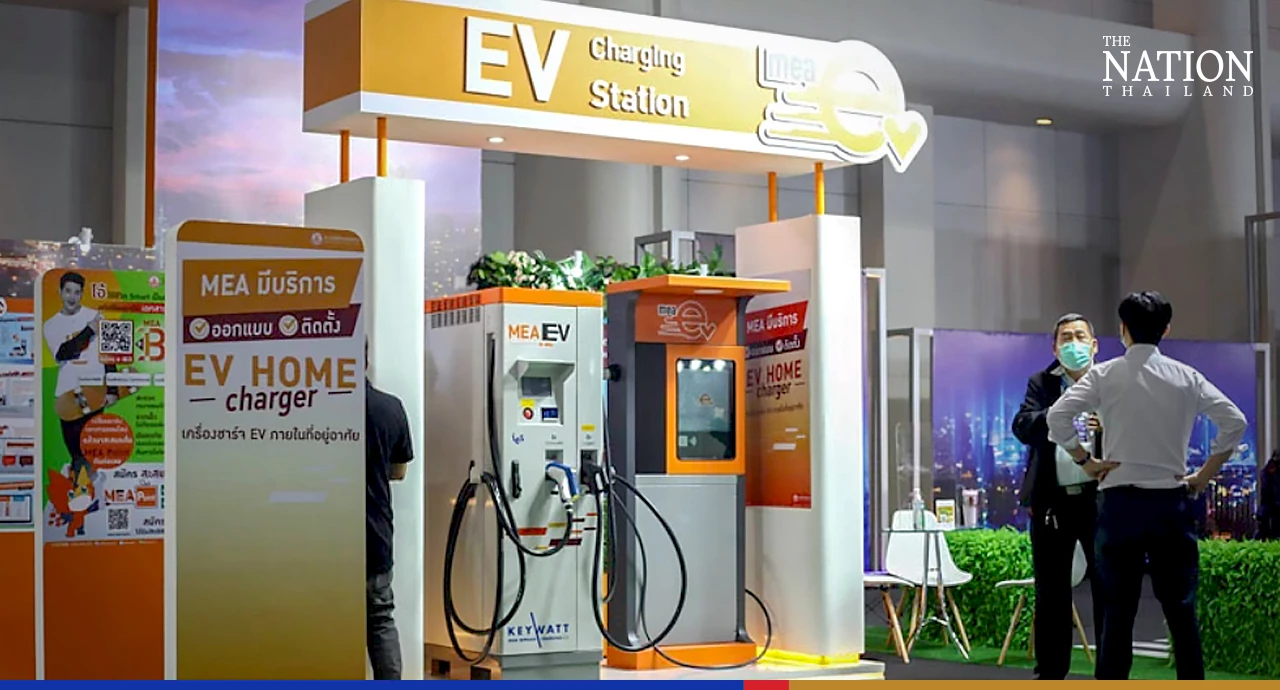
He said the motor show this year attached more importance to electric vehicles with 20 models on show. He said the subsidy programme of the government boosted bookings of EV vehicles to about 10 per cent of the total.
The Stock Exchange of Thailand is keeping pace with changing times by allowing the digital asset market to be in lockstep with the traditional capital market so they can have parallel growth, making it easier for all groups of investors.
The SET plans to launch this year “Live Exchange”, a funding platform for small and medium-sized enterprises (SMEs) and startups, as well as facilitate the expansion and easier access to both investment and utility tokens.
The Thai Digital Assets Exchange (TDX) will offer more flexibility to all groups of investors to facilitate investing in both traditional capital and digital markets, allowing a range of options to invest and raise capital. Speaking at the forum: “The New Paradigm Shift Of The Financial World”, hosted by The Nation and Asia News Network on March 30, the president of the Stock Exchange of Thailand, Pakorn Peetathawatchai, shared the goal of evolving and connecting the capital market and digital asset market to ensure growth and sustainability for both business and society. Offering an overview of the market, he said in 2021, the Thai capital market had continued to grow and was the 7th biggest in Asia and 18th in the world in market cap. He said the Thai capital market has been the biggest in Asean for almost a decade.
The SET estimates the key developments in the Thai capital market through three strategies: market growth; infrastructure expansion, environmental solution and social development. The SET wants to make the capital market more accessible by simplifying the procedures for opening new trading accounts, encouraging retail investors to use a digital platform for trading, and attracting young investors. He said the SET is going to offer an open platform, but he made it clear that they will not touch crypto. He made the point that most of the digital asset trading as of now revolves around cryptocurrency. The TDX platform would be launched in the third quarter this year including the investment and utility tokens, he said. Fundraising through tokenisation is now a global trend. Also, many features for investors are available according to their needs, while upholding investor protection measures. Investors can improve token liquidity by trading in the secondary digital asset exchange. Most digital asset exchanges are open 24/7. The settlement cycle is extremely fast compared with the traditional type. So, tokenisation can solve the problem for retail investors as it involves lower cost and offers more liquidity. As a result investors have more chances to make higher profit, he said. All investments carry risks, and there are pros and cons in both the traditional and digital markets. The SET has an important role of setting strict criteria for investors. All protocols are only part of measures to protect the sector against scammers and confusing information. Hence, the Thai SET plans all strategies to generate the most benefit to investors, he said.
Taweesak Vanichareon (5th from left), director-general of the Department of Tourism (DOT), Ministry of Tourism and Sports, together with DOT’s executives recently organized a press conference to announce the new direction of DOT’s operation.
Under the concept of “DOT: Step up to New Chapter”, the new direction features five key elements of Corporate, Innovation, Creativities, Networking, and Professional to develop tourism products and services, tourism sites as well as tourism personnel.
DOT aims to promote the tourism industry, domestic guides as well as foreign filmmaking in Thailand in accordance with the BCG (Bio-Circular-Green) economic model. The press conference has been held at Sukhumvit Room 1-2, The Grande Centre Point Terminal 21 in Bangkok.
Thailand has fallen behind Asian rivals in its bid to escape the middle-income trap, according to an expert panel debating economic revival after Covid-19.
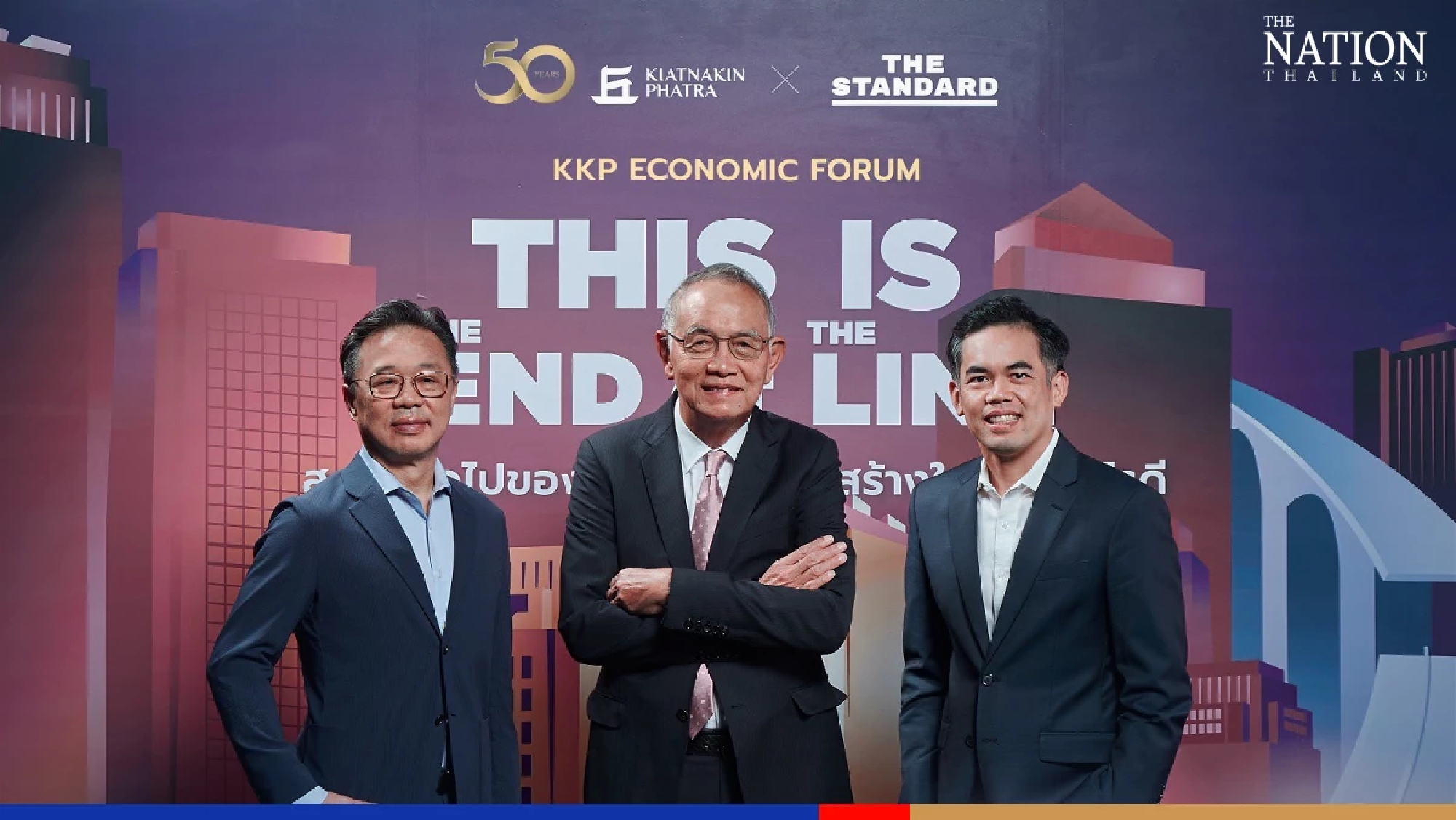
To break free from the trap, the Kingdom must accelerate GDP growth and sustainable development across all of society amid global political conflict, digital transformation and energy industry revolution, said Banyong Pongpanich, chairman of Kiatnakin Phatra Financial Group (KKP).
Banyong was speaking during Saturday’s virtual seminar “This is the end of the line: How to rebuild Thailand economy”, organised by KKP and The Standard.
He noted that Thailand’s GDP growth rate was slower than Asian countries with a similar beginning point, such as China and Singapore.
Meanwhile high-earners enjoyed on average eight times greater income than low-earners, proving the difference in access to education and resource across Thai society, he added.
“Thailand has strong economic fundamentals, but transitions in technology, politics and the environment will impact the country’s sustainability,” Banyong warned.
“Hence, troubleshooting in development sectors that have not reached their goals is the beginning of the solution.”
Thiraphong Wachiraphong, Kiatnakin Phatra Securities director of research, said Thailand’s economy was at a turning point as its economic growth and market share declines.
He added that global political conflict, the energy shortage and digital disruption meant Thailand could no longer depend on external factors to boost the country’s economy.
“Hence, relying on foreign direct investment (FDI) and tourists is not enough. Thailand must forge innovation fundamentals based on good education and corruption suppression,” he said.
The National Credit Bureau has reported that Covid-19 restrictions over two years have caused the non-performing loans (NPLs) of small-time borrowers and small and medium enterprises to rise to 200 billion baht and 320 billion baht respectively.
While reporting Thailand’s NPL situation at a recent seminar, the bureau also called on the government to come up with measures to help small-time debtors and SMEs, whose loans had become NPLs due to the Covid-19 crisis.
NPLs of small-time debtors and SMEs caused by the Covid crisis have been coded O21. The bureau said it learned that the O21 borrowers had been prompt with their payments before the Covid-19 crisis broke out in 2019 and their loans only became NPLs because they were unable to make payments for 90 days or more.
As of 2021 end, the bureau said there were 4.3 million NPL accounts, and 2.3 million of them were O21 NPLs worth 200 billion baht.
The bureau added that these O21-code debtors deserve help from the government because it is not their fault that they defaulted on their payments. It pointed out that these debtors were unable to pay their debts because they had complied with the Covid-containment measures taken by the Public Health Ministry.
The bureau also said the accumulated NPL of small-time debtors under all codes and categories at the end of 2021 stood at 950 billion baht, up 7.5 per cent compared to the end of 2020.
The accumulated debt (including NPLs) held by small-time borrowers can be divided by age group, with Gen Z (1997-2012) owing 97 billion baht, Gen Y (1981-1996) 4.5 trillion baht, Gen X (1965-1981) 3.8 trillion baht, Baby Boomers (1946-1964) 1.1 trillion baht and the Silent Generation (1928-1945) owing 26 billion baht, the report said.
Meanwhile, SMEs owe about 3.93 trillion baht, it said. As of the end of 2021, 286,300 SMEs with juristic entity status have accumulated NPLs worth 320 billion baht or 7.9 per cent of the overall loans for SMEs.
The report said SMEs that have been unable to service their debts hail from the hotel and food industry, property and construction, manufacturing, wholesale and retail, and the repairing of vehicles and motorcycles.
The report said SMEs from these five industries had accumulated NPLs worth 270 billion baht and have joined debt-restructuring programmes worth 250 billion baht.
The bureau also said that household debt is continuing to rise. As of the end of the fourth quarter of last year, household debt stood at 14.58 trillion, compared to 14.34 trillion at the end of the third quarter.
It said the Bank of Thailand has helped restructure 4.83 million household debts worth 3.19 trillion baht at the end of January this year.
The baht opened at 33.48 to the US dollar on Monday, weakening from Friday’s close of 33.46.
The Thai currency is expected to move between 33.40 and 33.60 during the day and between 33.20 and 33.80 during the week, Krungthai market strategist Poon Panichpibool said.
Poon said that the baht is likely to swing widely if foreign investors switch to selling over market concern that the US Federal Reserve will adopt quantitative tightening as early as next month (May).
He forecast that exporters would sell the dollar at a resistance level of 33.70.
Poon said that amid the current high volatility in the currency market, businesses should use hedging tools such as options to manage risks.
For the dollar, he expected uncertainty over the Ukraine-Russia conflict to drive up demand for the US currency, which is seen as a safe haven.
However, he advised investors to heed Fed signals to reduce the balance sheet or apply tightening, as these moves would increase the US bond yield and cause dollar fluctuations.
“50th National Book Fair & 20th Bangkok International Book Fair 2022”
Thais love to read. The amount of individuals that attend each year’s book fair ensures this. Despite the fact that the Covid-19 stopped Thai (and foreign) bookworms from shopping at last year’s book fair, the fair’s return in 2022 indicates that we all miss it!
“50th National Book Fair & 20th Bangkok International Book Fair 2022” will be held from March 26 to April 6, from 10am to 9pm, at Bang Sue Grand Station in Bangkok
Huawei has unveiled a country business strategy aimed at forging Thailand’s 5G leadership in Asean.
The Chinese tech giant is deeply involved in the construction of 2G, 3G, 4G, and 5G in Thailand, one of its largest markets.
“In 2022, we hope to drive 5G population coverage to 70 per cent, 5G penetration rate to 20 per cent from the current 10 per cent,” Huawei Thailand CEO Abel Deng said on Friday.
The tech firm would introduce 5G hospitals, 5G ambulances, and AI-assisted solutions in 20 hospitals.
Huawei also build 5G benchmark networks in several Thai cities and deploy 5G at 100 Eastern Economic Corridor factories, including five car-making plants, Deng said. The infrastructure would help support Thailand as this year’s Asia-Pacific Economic Cooperation (Apec) host, he added.
Deng said Huawei Cloud planned to release 80+ new cloud-based services to boost digital transition by banks, SMEs and online media providers this year.
Meanwhile it would continue to support the Government Cloud Service and improve data security under an agreement signed recently with the Digital Economy and Society Ministry.
Deng added the tech firm was also helping Thailand to meet its goal of carbon neutrality by 2050, having launched its Asia Pacific Digital Power Regional Headquarters in Bangkok last year.
Meanwhile the Huawei Cloud Partner Network expects to increase its members from 300 to 500 while the Huawei Cloud Spark Programme was empowering more than 2,000 developers and 300 start-ups every year.
“Our net profits increased by 75.9 per cent year on year. Profit growth has made the company more productive and risk-resilient,” Deng added.
Thailand and Vietnam have pledged to tighten economic cooperation in a bid to push the value of bilateral trade to US$25 billion by 2025.
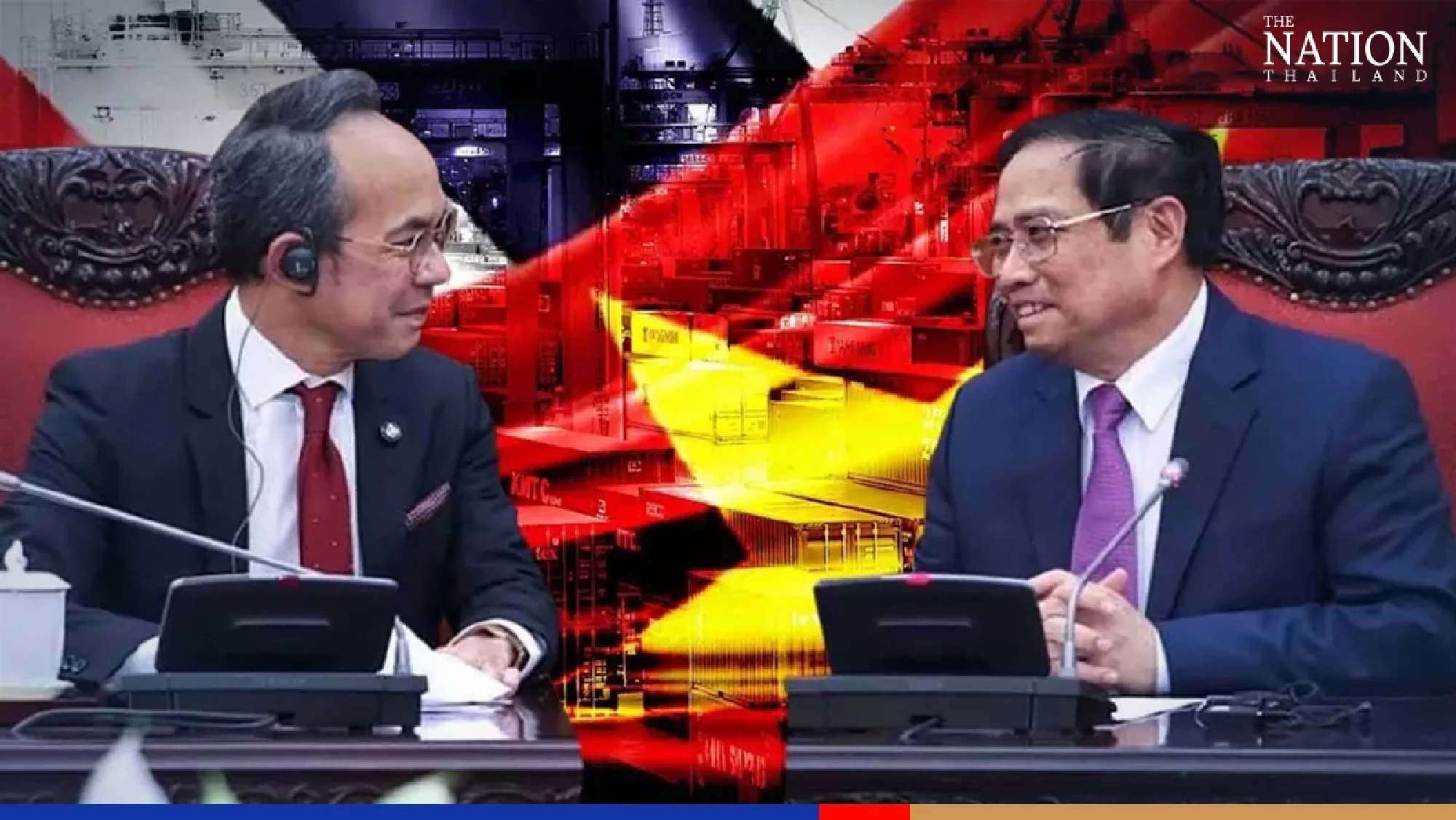
The resolution was made at a discussion between the Thai ambassador to Vietnam, Nikorndej Balankura, and Vietnam PM Pham Minh Chính in Hanoi on March 31.
The two met to discuss economic cooperation at bilateral, sub-regional and multi-national levels.
At the discussion, Nikorndej also proposed and won the premier’s promise that shipping Thai fruits to China via Vietnam would be made easier. He said the premier promised full cooperation in allowing Thailand to use Vietnam as a conduit to China.
The ambassador also asked the premier to open the door to investments in Vietnam, especially in the alternative energy sector. He said more Thais are interested in investing in Vietnam and so far, a third of the investments made by Thais have been in the energy sector.
He added that allowing Thais to invest in the clean energy sector will also help Vietnam achieve its net-zero carbon emissions goal by 2050. The ambassador said Thailand hopes to be among the top five foreign investors in Vietnam soon.
Meanwhile, Prime Minister Pham Minh Chính congratulated Thailand for successfully setting up the ThaiCham, or chamber of commerce and industry, in Vietnam to assist and drive bilateral investments.
The two sides also discussed cooperation in the Ayeyawady-Chao Phraya-Mekong Economic Cooperation Strategy (ACMECS).
Nikorndej proposed that Thailand and Vietnam link up supplies for industries in both countries. The prime minister, meanwhile, also pledged support for Thailand during the hosting of the Apec Summit in November.
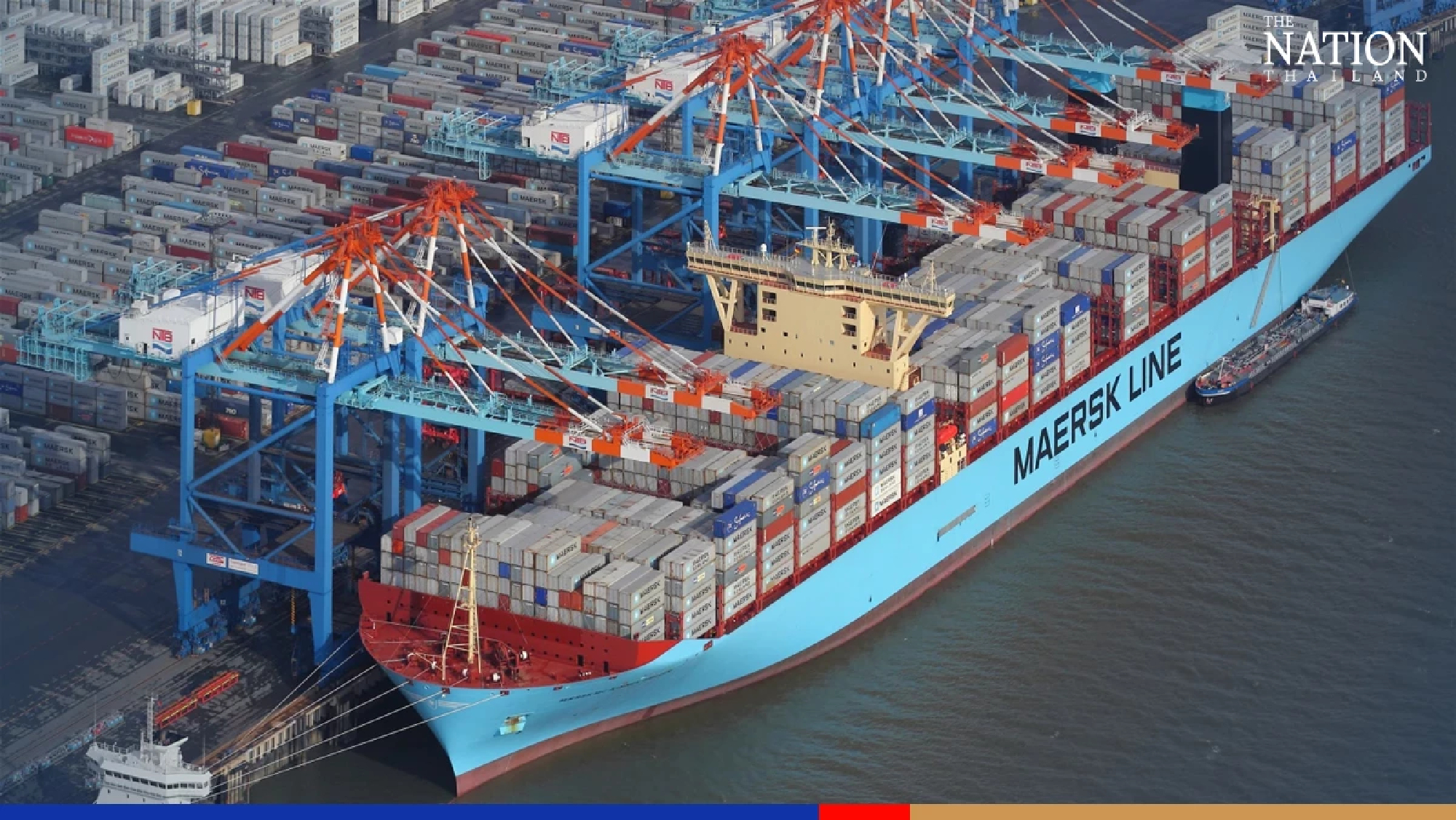
The Russia-Ukraine conflict and rising production costs are pressuring Thailand’s export sector, the Thai National Shippers’ Council (TNSC) reports.
Thailand’s export value in the first two months this year was US$44.74 billion, up 12.2 per cent year on year, The TNSC said on Saturday.
Exports were worth $21.25 billion in January and $23.48 billion in February, up 8 per cent and 16.2 per cent, respectively.
TNSC chairman Chaichan Charoensuk said January-February exports expanded strongly on orders made before Russia invaded Ukraine on February 24.
He expects Thai exports in the first quarter to expand around 5 per cent year on year before falling below 5 per cent in the second quarter under pressure from the Russia-Ukraine conflict and the resulting rise in production costs.
“The price of Thai export goods has increased by 5-10 per cent,” he added.
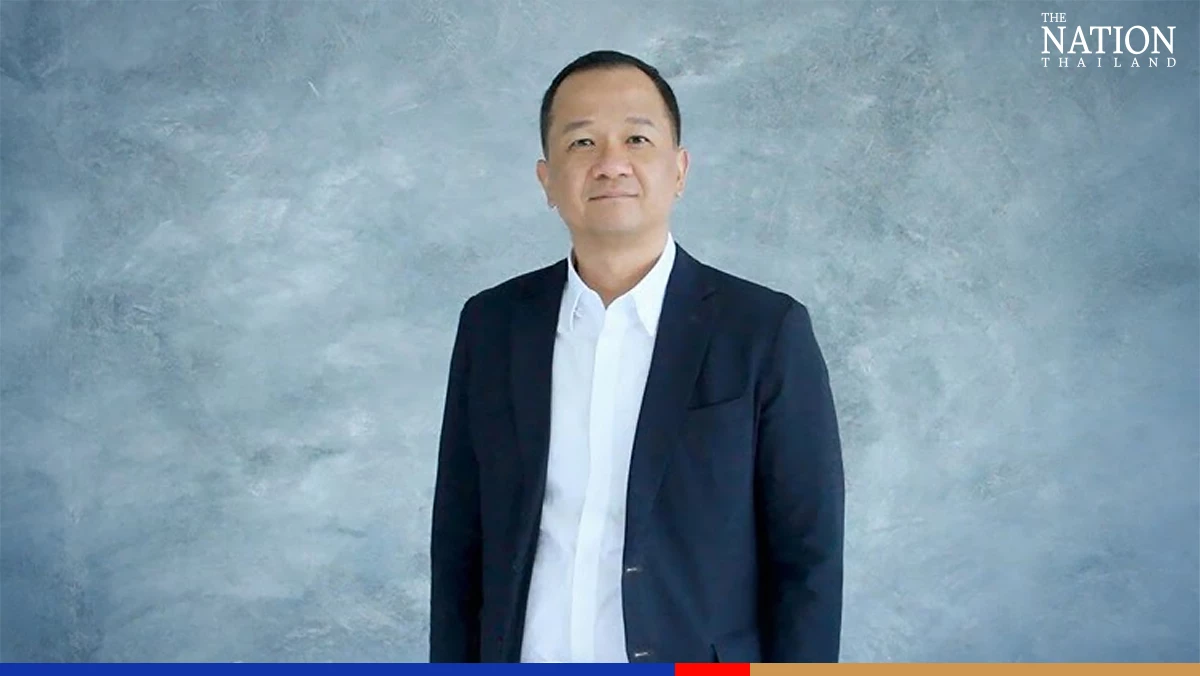
Chaichan Charoensuk
The TNSC, trade associations and industries concluded on March 25 that the war would drag on and continue to drive up prices of raw materials, Chaichan said.
Russia’s ban on exports of crude oil, natural gas and rare minerals, as well as economic sanctions on Moscow, were affecting many industries, he added.
However, five major Thai exports – rubber and rubber products, foods, cassava products, sugar and rice – would help lift revenue amid the Russia-Ukraine crisis.
“Meanwhile, tyres, textiles, auto parts, plastic beads and electrical appliances will also boost Thai exports,” he added.
Chaichan warned, however, that the microchip shortage in the automobile industry should be tackled urgently as Russia’s ban on exports of chip materials would exacerbate the issue.
TNSC cut its forecast for Thailand’s export growth this year from 5-8 per cent to no more than 5 per cent. Thai exports would drop further if the Russia-Ukraine war drags on and sparks further inflation and contraction of the global economy, Chaichan added.


 Jaturon said Covid-19 did not affect vehicle sales, which means Thais had not lost their purchasing power but the buyers had simply waited for the right timing.






 Chaichan Charoensuk
