Despite spills and air pollution, fossil fuel companies award CEOs for environmental records #SootinClaimon.Com

#SootinClaimon.Com : ขอบคุณแหล่งข้อมูล : หนังสือพิมพ์ The Nation.

https://www.nationthailand.com/business/40007324


It was the worst oil spill Marathon Petroleum had seen in years. A crack in a 60-year-old underground pipeline released 1,400 barrels of diesel fuel into an Indiana creek, staining the banks of the waterway and threatening a population of endangered freshwater mussels.

The incident barely registered, however, in the performance reviews of Marathon’s top executives, who earn part of their annual bonus by meeting environmental goals. Because these reviews account for the company’s number of significant oil spills in a year – not the total volume of oil – the Indiana spill counted as just one of 23 incidents in 2018.

The way Marathon evaluated its executives, 2018 was the company’s best environmental performance in at least eight years. The board of directors awarded chief executive Gary Heminger $272,251 for “excellence in environmental, personal safety and process safety improvement.”

ADVERTISEMENT

Many of the largest fossil fuel companies reward top executives for meeting environmental goals, a compensation tactic they adopted over the past two decades as a response to regulators and investors concerned with pollution and worker safety.

But the way some of these incentive programs are designed allows companies to award executives their full bonuses even in years when the firms cause major environmental damage or total emissions go up, according to a review of pay disclosures from six of the largest U.S. oil and gas companies and interviews with experts in compensation and environmental data.

Four of the companies – Chevron, Valero, Phillips 66 and Occidental Petroleum – have never missed their environmental targets in all the years they have publicly disclosed such goals, filings show. And yet, researchers who study environmental data for MSCI, an investment analytics firm, said three of the companies – Valero, Phillips 66 and Occidental – still lag behind the industry average for reducing toxic emissions, carbon emissions or both.

Marathon, which only missed its environmental targets once in the past decade, was rated average for toxic emissions and carbon emissions among oil and gas refining companies reviewed by MSCI.

“When you meet the metrics every year, that suggests that the metrics haven’t been sufficiently challenging,” said Rosanna Landis Weaver, executive pay program manager for As You Sow, a nonprofit group backed by foundation grants and individual donors that advocates for corporate social responsibility.

In some cases, experts say, companies are using metrics that don’t provide a full picture. Marathon’s focus on the number of environmental incidents across all of its operations means “very poor performance at one or two sites” – such as a large oil spill – “can be diluted by outperformance at other facilities,” Trillium Asset Management, an investor in Marathon that pressures companies to improve their social, governance and environmental practices, said in a letter to the company’s shareholders last year.

In emailed responses to questions, Marathon spokesman Jamal Kheiry said the company uses incentives to “measure the effectiveness of our environmental management system, and drive continuous improvement in environmental stewardship.”

Another oil giant, Occidental Petroleum, has given bonuses to executives for investing in carbon-capture projects even as the company’s total carbon emissions have gone up, filings and company emissions data show.

Occidental spokesman Eric Moses said the company has pledged to eliminate carbon emissions by 2050 and would soon begin evaluating executives on progress toward that goal. The carbon capture projects will “help both Occidental and businesses in other industry sectors to achieve shared net-zero goals.”

Lillian Riojas, a spokeswoman for Valero, said the company has “been able to meet our environmental targets because we have made very significant progress over the last decade” in areas including safety and toxic air emissions.

Chevron spokesman Sean Comey said the company’s board has updated its annual bonus program three times in the past three years to add incentives for reducing methane flaring, greenhouse gas emissions and investments in carbon offsetting.

Bernardo Fallas, a spokesman for Phillips 66, declined to comment.

Critics say climate goals are usually such a small portion of bonus plans that they have little influence over executive behavior. When Shell made emission reduction goals 10 percent of its executive bonus last year, some environmentally minded investors opposed the plan, arguing that over 50 percent of the annual bonus was still based on growing the company’s production of gas.

The pay package “encourages executives to chase higher levels of fossil fuel output,” said Simon Rawson, a director at ShareAction, a United Kingdom-based nonprofit that works to promote better corporate behavior and receives the majority of its funding through charitable grants.

This year, Shell said it would make emission reductions a greater portion of annual bonus incentives and remove natural gas production goals completely. Anna Arata, a Shell spokeswoman, said the pay packages of 16,500 employees partially depend on meeting companywide short-term emission goals.

The failure of some pay programs to promote better corporate behavior highlights a lack of oversight by corporate boards of directors, who approve executive pay at publicly traded companies and are tasked with managing long-term risks such as climate change, Rawson said. Even as many boards acknowledge this mandate – creating climate committees and designating sustainability chairs – they’ve failed to hold executives accountable for real action on environmental issues, he said.

The energy industry’s experience is a cautionary tale for the broader business world. Dozens of large companies, including Coca-Cola, Walmart, Ford Motor Co. and Procter & Gamble, have tied executive pay plans to environmental targets as they face pressure from investors to mitigate climate change, said Mindy Lubber, chief executive of climate advocacy group Ceres.

“CEOs do what they are paid to do,” said Lubber, whose Climate Action 100+ initiative pushes large companies to set carbon emission goals and have at least one senior executive’s pay tied to the company’s progress toward those emission goals.

But as evidence from oil and gas companies shows, executives can score highly on environmental goals even when their companies have mixed track records on the environment.

During Heminger’s tenure as Marathon CEO, from 2011 to 2020, climate advocates criticized the company for being slow to adopt a carbon reduction plan and for its role in orchestrating a Washington lobbying campaign aimed at loosening restrictions on vehicle pollution. Marathon says it was advocating for a review of the “feasibility” of current vehicle pollution standards and never took a position on whether changes to those standards were needed.

Pollution at Marathon refineries led to Clean Air Act violations and congressional scrutiny over toxic air emissions at a Detroit refinery, where local residents have complained for years about the facility’s release of toxic chemicals which they believe contribute to a high rate of respiratory illness in their community.

In Marathon’s annual pay disclosures, Heminger is credited with meeting or surpassing environmental targets during nine of his 10 years as CEO. He earned a total of $1.9 million for meeting these goals, including added payouts for exceeding expectations in five of those years, a Post analysis of energy company bonuses shows.

Heminger, who retired last year, declined to comment.

Marathon’s bonus system was questioned last year by Trillium Asset Management, which saw a disconnect between the way executives were rewarded and the way company facilities had harmed communities in places like Detroit. The investor asked Marathon to publish a report exploring how it could better incorporate community concerns into its bonus system.

In a proxy filing, Marathon’s board opposed the measure, saying unlike its current, quantifiable metrics, community concerns “would be difficult to measure and audit.” The board said it had the power “to reduce or completely eliminate awards” if it finds “our performance in any area, including our impact on the communities where we live and operate, has been unsatisfactory.”

Trillium has since sold its shares in Marathon, said Jonas Kron, Trillium’s chief advocacy officer.

Under its bonus system, Marathon classifies all spills, air emissions, permit violations and regulatory actions into four tiers, based on their severity, and only counts the most severe incidents in the annual bonus plan. Oil spills, for example, are only counted if they release 10 or more barrels into water or 100 or more barrels onto land.

By this measure, the company has been fairly consistent: Every year from 2013 to 2019, the company experienced one or two pipeline oil spills of over 100 barrels, according to data from the Pipeline and Hazardous Materials Safety Administration.

But these numbers fail to account for the larger impact of spills like the one at Indiana’s Big Creek – at the time, Marathon’s largest pipeline spill by volume in seven years. Marathon sent around 80 responders to clean up the site, according to Kevin Turner, an on-scene coordinator with the Environmental Protection Agency, and agreed to fund an effort to propagate the mussel population.

Kheiry, the Marathon spokesman, said the company continually updates its technology and procedures to prevent oil spills and that this spill represented an “unanticipated risk” because it was caused by bank collapse, which usually doesn’t happen on flat terrain. The company recovered most of the spilled oil and cleaned up the banks of the creek. He said one bird died as a result of the spill and “there is no evidence that mussels were impacted.” He added that Marathon does try to account for the severity of incidents by using its tier system; the Indiana oil spill counted in the highest tier.

Because Marathon has grown its operations, it’s hard to assess whether the company has reduced its overall environmental harm. In four different years, Marathon counted a higher number of environmental incidents than the year before, but Heminger got his full environmental bonus anyway, because the board set higher limits for the number of incidents those years.

Marathon’s Kheiry said the company has grown significantly over the past decade, including with its acquisition of oil refining rival Andeavor, in 2018. Because it has more pipelines, refineries, gas processing plants and other facilities, the company is exposed to more environmental risk, and therefore its board sometimes raises the limits, Kheiry said.

“We believe our record of reducing incidents at newly acquired assets and maintaining superior performance at our existing assets shows that the [compensation] program has been a success,” Kheiry said.

Marathon says its environmental metrics are checked by its internal auditing group but are not reviewed by any independent third party.

Some of the people who live near Marathon’s Detroit refinery say air pollution remains an ongoing problem in their community. Vicki Dobbins, who lives blocks away from the refinery, says her neighborhood still smells like “old garbage” due to gas emissions.

“You can sometimes ride through here and the air is so strong you have to hold your breath,” Dobbins said.

After a release of toxic air emissions at the refinery in 2019, dozens of residents called local health officials to complain of a noxious gas affecting their breathing, according to the Michigan Department of Environment, Great Lakes, and Energy, which cited the company for causing a nuisance. Rep. Rashida Tlaib, D-Mich., convened a field hearing in Detroit and the House Committee on Oversight and Reform asked the EPA to investigate the problem of chemical leaks at the refinery.

Earlier this year, Marathon settled with Michigan over 10 different environmental violations covering several incidents from the past four years, agreeing to take new precautions including a community air quality website visible to the public. Tim Carroll, an EPA spokesman, said the agency conducted an inspection of the refinery in July of this year and “will share more information about it when it becomes publicly available.”

Marathon, citing data from Michigan’s state pollution database, said air emissions at the Detroit facility have declined 80 percent over the past 20 years, and said the vast majority of air pollutants in that area of the city are now generated by other neighboring industrial facilities, such as steel and automobile plants and a sewage treatment center.

The company says it’s working with residents of southwest Detroit. As part of its settlement, Marathon agreed to install a new air filtration system at a public pre-k-8 school less than a mile from the refinery. Marathon says it also set aside $5 million this year to buy the homes of some residents who want out.

The threat of climate change has forced many companies to rethink their pay practices. Investors are pushing energy giants to go beyond pollution goals and incorporate carbon emission targets into CEO pay, claiming that may be the best way to motivate executives to take the drastic actions necessary to meet long-term carbon reduction goals.

The challenge, says U.K. researcher Dario Kenner, is that oil executives are already hardwired to grow profits and revenue from fossil fuels, which often means generating more carbon emissions. Kenner, who researches wealth and climate change, co-authored a study this year that found executives of BP, Chevron, ExxonMobil and Shell all have strong personal incentives to delay significant carbon reducing measures.

While Marathon, Occidental, Chevron and Valero all began linking executive bonuses to carbon emission goals within the past two years, these companies all still incentivize executives to grow financial or production metrics, such as earnings, cash flow or total oil production, filings show.

“If you have big chunky metrics that are linked to production and growth, that is going to drive executive behavior,” says ShareAction’s Rawson, who helped lead the opposition to Shell’s pay programs last year.

For the past three years, Houston-based energy giant Occidental has rewarded CEO Vicki Hollub a total of over $600,000 for meeting the company’s environmental, safety and sustainability goals, the Post analysis of bonuses shows. These goals encouraged Hollub to make investments in carbon capture technologies, which the company described as “an important feature of Occidental’s strategy to reduce its greenhouse gas emissions while growing its business.”

But scientists say capturing carbon is energy-intensive and not yet contributing to a meaningful reduction in carbon emissions. Rather than decreasing its emissions, Occidental’s total carbon emissions from its direct operations grew by 30 percent from 2017 to 2019, according to company data.

The company’s efforts in carbon capture “have not yet translated into quantitative evidence in terms of overall improvement in the company’s performance for carbon emissions,” said Antonios Panagiotopoulos, a vice president at MSCI.

Moses, the Occidental spokesman, says its emissions numbers reflect an increase due to its 2019 acquisition of Anadarko Petroleum.

Published : October 11, 2021

By : The Washington Post

Ministry comes up with new strategy to lift Thai rubber sector #SootinClaimon.Com

#SootinClaimon.Com : ขอบคุณแหล่งข้อมูล : หนังสือพิมพ์ The Nation.

https://www.nationthailand.com/business/40007350


The Agriculture and Cooperatives Ministry on Sunday released guidelines and strategies for the Thai rubber sector to penetrate the global market.

Alongkorn Ponlaboot, an adviser to the ministry, said the six guidelines and seven strategies have been devised to develop products, boost farmers’ income and open more trading channels.

He added that the strategies also cover income guarantees, application of new market mechanisms and projects, such as online auctions, rubber futures exchange market and the Rubber Valley project.

ADVERTISEMENT

“We are making changes in the rubber industry to meet market demands amid the Covid-19 crisis and to generate income for the 1.83 million rubber farmers nationwide,” he said.

He added that Asia was the world’s biggest rubber supplier, while Thailand is the largest rubber manufacturer in the region.

“Thailand is still the largest exporter of concentrated rubber latex and smoked rubber sheets in the world,” he said.

Alongkorn said he expects Thailand’s rubber production and exports to grow further as the country can produce 92-per-cent fresh rubber latex and hold almost 70 per cent of the global market share. He also pointed out that there is a rising demand for medical rubber products like gloves due to the Covid-19 crisis.

“Thailand has the opportunity to penetrate another 100 countries in addition to Malaysia, China and South Korea, which are the largest importers of Thai rubber,” he added.

Published : October 11, 2021

By : THE NATION

Worse-than-expected NFP pulls down Thai baht #SootinClaimon.Com

#SootinClaimon.Com : ขอบคุณแหล่งข้อมูล : หนังสือพิมพ์ The Nation.

https://www.nationthailand.com/business/40007338


The baht opened at 33.90 to the US dollar on Monday, weakening from the previous closing rate of 33.85.

The Thai currency is likely to move between 33.85 and 34.00 during the day and between 33.50 and 34.00, Krungthai Bank market strategist Poon Panichpibool predicted.

Poon said that investors should speculate on the upcoming bond auction. Foreign investors will invest in Thai stocks if the demand was more than expected, which caused the baht to strengthen.

ADVERTISEMENT

However, the baht will not strengthen soon because it was affected by many domestic factors such as floods and the Covid-19 situation.

Meanwhile, Poon said the dollar might weaken as the market opens for more risks which decrease the possession of the dollar as a safe-haven asset.

Moreover, the dollar might continue to weaken if the US Federal Reserve expressed its concern for economic recovery or does not decrease the quantitive easing (QE). The dollar’s momentum was supported by many risk factors such as stagflation or Evergrande’s crisis.

Related News

Baht unchanged, may strengthen after release of NFP report

Baht strengthens as investors eye Thai stocks

Baht faces further weakening

Poon said that the baht almost weaken past the level of 34.00 to the dollar many times. He said that the weakening momentum might slow down in the short term. 

The key resistance level for the baht would be at 34.00 to the dollar, which is the level at which exporters might sell the US currency. 

The baht’s key support level would be from 33.60 to 33.70, the level some importers are waiting for so they can buy dollars, he added.

In the previous week, the market opened for more risks after it eased its worries about the US debt ceiling negotiation. The market is waiting for the Fed’s economic statement and QE decreasing policy this week after the lastest Nonfarm Payrolls was worse than expected.

Published : October 11, 2021

By : THE NATION

SET rises, but worries over QE tapering and fund flow volatility cast shadow #SootinClaimon.Com

#SootinClaimon.Com : ขอบคุณแหล่งข้อมูล : หนังสือพิมพ์ The Nation.

https://www.nationthailand.com/business/40007334


The Stock Exchange of Thailand (SET) Index rose by 3.54 points or 0.22 per cent to 1,642.95 on Monday morning, witnessing a high of 1,645.72 and a low of 1,642.07 in opening trade.

Krungsri Securities predicted the day’s index would fluctuate between 1,630 and 1,650 points despite rising oil price in response to tightening supply and hope over Thailand reopening after domestic Covid-19 cases have declined.

The brokerage firm, meanwhile, said uncertainty over the US Federal Reserve signalling it would taper its quantitative easing and fund flow volatility would pressure the index.

ADVERTISEMENT

It also recommended buying of the following companies’ shares as an investment strategy:

▪︎ PTT, PTTEP, TOP, PTTGC, SPRC, BCP and IVL, which benefit from rising oil price

▪︎ AOT, KBANK, SCB, CPN, CRC, HMPRO, AAV, BA, MINT, AMATA, WHA and MAJOR, which benefit from the country reopening.

The SET Index closed at 1,639.41 on Friday, up 5.69 points or 0.35 per cent. Transactions totalled 92.93 billion baht with an index high of 1,644.16 and a low of 1,635.77.

Published : October 11, 2021

By : THE NATION

Gold price drops in opening trade #SootinClaimon.Com

#SootinClaimon.Com : ขอบคุณแหล่งข้อมูล : หนังสือพิมพ์ The Nation.

https://www.nationthailand.com/business/40007335


The price of gold dropped by THB50 in morning trade on Monday, the Gold Traders Association reported.

Areport at 9.23am said the buying price of a gold bar was THB28,050 per baht weight and selling price THB28,150, while the buying and selling price of gold ornaments is THB27,545.72 and THB28,650, respectively.

At close on Saturday, the buying price of a gold bar was THB28,100 per baht weight and selling price THB28,200, while gold ornaments were THB27,591.20and THB28,700, respectively. 

ADVERTISEMENT

The spot gold price on Monday morning hovered around US$1,760 (THB59,505) per ounce after Comex gold at close on Friday dropped by $1.8 to $1,757.4 per ounce due to pressure from the rise in the US government bond yields, although the numbers of US non-farm payrolls in September came out much lower than expected.

Related news:

The Hong Kong gold price, meanwhile, rose by HK$10 to $16,320 (THB70,917) per tael, the Chinese Gold and Silver Exchange Society reported.

Published : October 11, 2021

By : THE NATION

Global minimum tax on corporations likely to be included in reconciliation bill, Yellen says #SootinClaimon.Com

#SootinClaimon.Com : ขอบคุณแหล่งข้อมูล : หนังสือพิมพ์ The Nation.

https://www.nationthailand.com/business/40007319


Treasury Secretary Janet Yellen said she is confident that Congress will include provisions for a global minimum tax on corporate profits in reconciliation legislation, days after the United States and 135 other nations endorsed the levy to combat tax-cutting.

Global minimum tax on corporations likely to be included in reconciliation bill, Yellen says

Each country that signed the deal must pass legislation to enact the measure, which is aimed at limiting corporations’ ability to lower their tax bills by shifting profits to the lowest-tax jurisdictions globally.

“I am confident that what we need to do to come into compliance with the minimum tax will be included in a reconciliation package. I hope that it will be passed and we will be able to reassure the world that the United States will do its part,” Yellen told ABC News’s “This Week” program.

ADVERTISEMENT

Congressional Democrats are currently hammering out a so-called reconciliation bill that would substantially raise federal spending on social safety-net programs and on fighting climate change.

Low-tax nations, including Ireland and Hungary, that had long resisted the minimum-tax deal finally endorsed it last week, bringing it closer to fruition after six years of global diplomatic bargaining. All members of the Group of 20 nations and the Organization for Economic Cooperation and Development (OECD) have signed on.

The rule requires countries to set a minimum tax of 15 percent on the profits of companies with annual revenue above 750 million euros.

The OECD, which led discussions on the deal, said it would allow countries to collect around $150 billion in new revenue annually.

A recent report found that corporations are shifting $1.38 trillion worth of profit each year into havens that charge little to no tax, causing the governments where that profit is actually earned to miss out on $245 billion in annual revenue.

Yellen said the deal would curb the global “race to the bottom” through which countries have cut their tax rates ever lower to attract businesses to set up headquarters and hire workers.

The tax-cutting spree has deprived many countries of the “resources we need to invest in our people and our economies,” she said. The deal “is really something we need to make globalization work and to make it work for American workers,” Yellen added.

Some critics said the agreement, which updates the 3,000-odd bilateral treaties that regulate global taxation, doesn’t do enough for the world’s poorest countries.

The 15 percent rate is too low and “will neither curb profit shifting effectively, nor provide substantial revenues to more than a handful of OECD member countries,” Alex Cobham, chief executive at the nonprofit Tax Justice Network, said in an emailed statement. “Everyone else has been left out – especially lower-income countries which lose the greatest share of their current tax revenues to corporate tax abuse.”

Published : October 11, 2021

By : The Washington Post

Multidimensional poverty reduces worldwide while COVID-19 exposes existing vulnerabilities #SootinClaimon.Com

#SootinClaimon.Com : ขอบคุณแหล่งข้อมูล : หนังสือพิมพ์ The Nation.

https://www.nationthailand.com/pr-news/perspective/40007348


Thailand has achieved the lowest multidimensional poverty score in ASEAN

Bangkok, 11 October 2021 – 70 countries revealed significant reduction in multiple dimensions of poverty and Thailand has the lowest multidimensional poverty level in ASEAN, yet existing systemic vulnerabilities are exposed by COVID-19, according to UNDP’s new analysis.

The Multidimensional Poverty Index (MPI), released by the United Nations Development Programme (UNDP) and the Oxford Poverty and Human Development Initiative (OPHI), is a measure that looks beyond income to include 10 indicators that capture the education, health, and standard of living dimensions, where a lower score implies a lower poverty ranking.  

The 2021 MPI covers 109 developing countries, which are home to 5.9 billion people. The report shows that 70 countries studied, covering roughly 5 billion people, experienced a statistically significant reduction in their multidimensional poverty levels at least one period during the two decades before the COVID-19.  

According to the report, Thailand’s multidimensional poverty index is 0.002, the lowest among the Association of Southeast Asian Nations (ASEAN) countries that are included in the study, such as Myanmar (0.176), Cambodia (0.170), Lao People’s Democratic Republic (0.108), Philippines (0.024), Viet Nam (0.019), and Indonesia (0.014). Thailand’s score is also lower than that of the East Asia and the Pacific (0.023) region.
Nevertheless,1.3 billion people—about 92 percent of the population in developing countries—remain multidimensionally poor. 
 

COVID-19 and multidimensional poverty around the world

ADVERTISEMENT

While complete data on COVID-19’s impacts on the MPI are not yet available, the pandemic has exposed cracks in social protections systems, education, and workers’ vulnerability around the world. These cracks, the report shows, are deepest in countries with higher levels of multidimensional poverty. 

The severity of the COVID-19 crisis in the world’s poorest countries has been underestimated because limited direct mortality has kept them outside the international spotlight. Analysis shows that people in the poorest countries are being impacted in far reaching ways with consequences that remain to be seen.
“The COVID-19 pandemic has eroded development progress around the world, and we are still grappling to understand its full impacts,” says Achim Steiner, UNDP Administrator. “This year’s Multidimensional Poverty Index (MPI) reminds us of the need for a complete picture of how people are being affected by poverty, who they are and where they live, if we are to build forward better from this crisis and design effective responses that leave no one behind.”

This year’s report shines light on how poverty is exacerbated by existing inequalities, for example, across ethnic groups and among women.  Analyses of multidimensional poverty and ethnicity are vital. Disparities across ethnic and racial groups should be prioritized by policy makers to achieve fair inclusive development post COVID-19. 
 

Thailand’s MPI had improved before COVID-19. The current MPI score of 0.002 is based on the 2019 survey, while in 2015/2016 and 2012, the index was 0.003 and 0.005 respectively.  From the latest survey, 176 thousand people moved out of poverty because of better access to basic infrastructure such as sanitation, drinking water, electricity, and housing. Nevertheless, access to education, especially years of schooling, as well as access to nutrition remain major sources of deprivation.  These aspects require particular attention, as the pandemic has hit the most vulnerable population the hardest.

Adopting a multidimensional approach to poverty analysis highlights the importance of looking at poverty beyond income.  Thailand’s incidence of multidimensional poverty is 0.5 percentage points higher than the incidence of monetary poverty, implying that individuals, despite living above the monetary poverty line, may still suffer deprivations in health, education and/or standard of living. 

Addressing multidimensional poverty is challenging, as the pathway to ending such poverty is not always linear and the changes in different dimensions vary across periods. There is no one-size-fits-all approach. Mixtures of approaches, beyond those for improving income, must be explored and implemented to ensure fair and inclusive development. Further, detailed antipoverty policies and actionable guide have to be more targeted to address differences in intensity and composition of the poverty. This is the time for reshaping policies and rethinking development pathways for a fair, equitable recovery post COVID-19.  

Access full data and publication: https://ophi.org.uk/global-mpi-2021/ 
 

Published : October 11, 2021

By : THE NATION

Thailand secures $17.5 million from Green Climate Fund towards water and agricultural resilience #SootinClaimon.Com

#SootinClaimon.Com : ขอบคุณแหล่งข้อมูล : หนังสือพิมพ์ The Nation.

https://www.nationthailand.com/pr-news/business/40007299


Drawing on technology, nature-based approaches, and markets, UNDP-supported adaptation project to bolster livelihoods and the Thai economy, contributing towards COVID-19 recovery

Songdo, 8 October 2021 – Ahead of the international climate conference COP26 next month, the global Green Climate Fund has today approved a new US$17.5 million grant towards building the climate change resilience of farmers in Thailand. Approximately 62,000 people living in three of the country’s vulnerable northern provinces are set to directly benefit.

“We appreciate the support of the Green Climate Fund in bringing this innovative new project to life,” said Director-General of Royal Irrigation Department, Mr. Praphit Chanma. “Led by the Royal Irrigation Department under the Ministry of Agriculture and Cooperatives, with support from the United Nations Development Programme (UNDP), it will bring technology, ecosystem-based approaches, and markets to bear on helping farmers and the economy to abstain from climate catastrophe. With increasingly volatile climate conditions ahead, this project is highly appropriate. As a result, about 62,000 people in the Yom and Nan river basins will benefit directly, while more than 25 million Thais across the Greater Chao Phraya River Basin will ultimately stand to benefit.”

ADVERTISEMENT

While Thailand has made remarkable progress in social and economic development over the last four decades, rising temperatures and more frequent and extreme droughts and floods driven by climate change pose an increasing threat to the country’s economy. In this context, COVID-19 has presented another set of immediate challenges, with Thailand experiencing one of the steepest contractions among ASEAN member states, including a contraction in agricultural employment of 10.9 percent.

Related news:

Water management and sustainable agriculture has emerged as a leading concern. The new project will help build the resilience of farmers in in the Yom and Nan river basins in Sukhothai, Phitsanulok and Uttaradit provinces through improved climate information and forecasts, the introduction of more climate-resilient agricultural practices, and expanded access to markets and finance.

At the same time, it will work with subnational and national agencies to improve risk-informed planning and decision-making, promote cross-sectoral coordination, and upgrade critical infrastructure such as irrigation canals and floodgates.

With the Green Climate Fund grant met with $16.2 million co-finance from the Royal Thai Government, a private sector partner Krungsri Bank will also contribute more than $113,000 towards financial literacy training for farmers. The Bank for Agriculture and Agricultural Cooperatives has also pledged a line of credit of $16 million to help farmers invest in adaptation measures.

Other key implementation partners include the German development agency GIZ and King Mongkut’s University of Technology North Bangkok, with respective expertise in ecosystems-based water management and agricultural modeling as well as dissemination and expanding access to climate information to the public, in particular to agricultural households.

“UNDP has been working closely with the Thai Government on climate change preparedness for a number of years, including building capacity to secure global finance for climate action, and efforts to integrate agriculture into national adaptation planning,” said Renaud Meyer, Resident Representative of UNDP in Thailand.

“We are pleased to support this transformational new project which will contribute across the Sustainable Development Goals – including reducing poverty and hunger, accelerate climate action, advancing decent work and economic growth – while also helping the government realise its Nationally Determined Contribution under the global Paris Agreement. The current heavy flooding, impacting more than 30 provinces across Thailand and 200,000 households and their livelihoods, underlines the urgency of climate action and identifying long-term solutions to increase the resilience of communities and farmers.”

Implementation is expected to begin in March 2022. For more information, please visit the project page here.

Published : October 10, 2021

By : THE NATION

Biden faces shrinking timetable to salvage his agenda #SootinClaimon.Com

#SootinClaimon.Com : ขอบคุณแหล่งข้อมูล : หนังสือพิมพ์ The Nation.

https://www.nationthailand.com/business/40007317


WASHINGTON – At one point during a private 90-minute Zoom call with liberal lawmakers on Monday, Rep. Ro Khanna, D-Calif., asked President Joe Biden why he had not simply locked Sens. Joe Manchin, D-W.Va., and Bernie Sanders, I-Vt., in a room and forced them to cut a deal on the Democrats economic package.

Smiling back at Khanna, Biden said, “Ro, that would be like asking for a homicide,” according to two people on the call who spoke on the condition of anonymity to describe the private exchange.

Biden’s joking response underlined a serious fact: He faces daunting difficulties in the coming weeks now that the recent dramas over his economic plans have left him just a few weeks to salvage his agenda, right his presidency and tackle problems that in some cases were years in the making.

ADVERTISEMENT

Democrats are pushing to pass his infrastructure bill by month’s end, following recent setbacks on the Hill, along with a broad safety net package. The two bills include major climate provisions that Biden wants to tout at a global climate summit next month, and Democrats also want something to show Virginia’s voters before their Nov. 2 vote for governor.

“If we don’t pass one of those before the gubernatorial election, it’s a huge, huge mistake,” said Sen. Mark Warner, D-Va., referring to the infrastructure bill and a separate measure to boost U.S. science and research, both of which have passed the Senate but not the House. “We’ve got two major wins – two major bipartisan wins. . . . Let’s get at least one if not both of those wins for the president on the board.”

A recent deal with Senate Republicans, meanwhile, staved off a disastrous government default until December, but at the cost of ensuring that a politically explosive debt-limit fight will unfold as the White House is struggling to push through the other bills.

This upcoming stretch may be Biden’s last chance to revive a presidency that has suffered major blows in recent months. Since being rocked by the Afghan withdrawal and the surging delta variant over the summer, Biden’s approval rating has fallen steadily, hitting a low of 38% in the latest Quinnipiac poll. Some of the campaign pledges that inspired Biden’s supporters, from voting rights to immigration reform, have fallen by the wayside. A jobs report on Friday suggested the economy has been slowed down by the delta variant.

Beyond that, the coming weeks will tell whether Biden’s central message – that America’s democratic system can still tackle big problems – will hold true. Even if the president cannot push through his major goals by month’s end, he faces enormous pressure to show at least some progress, with White House aides looking at the months leading up to Christmas as a crucial window.

To make that happen, Biden is gambling on the freewheeling negotiating style reflected in his crack about Sanders and Manchin, which was first reported by CNN. His style features banter and light teasing between the president and members of Congress he has in many cases known for decades, coupled with attempts to lay out priorities and nudge lawmakers toward compromise.

If he does succeed, the payoff could be significant. The infrastructure bill and safety net package combined would represent the biggest federal investment in the economy in decades, and polls suggest they are popular. Terry McAuliffe, the Democratic nominee for Virginia governor, is among those publicly pushing for the bipartisan infrastructure legislation to be quickly enacted to show that Washington can still deliver results.

“We’re going to try to move as quickly as we can,” said Senate Finance Committee Chairman Ron Wyden, D-Ore., who is overseeing major revisions to the tax code and health-care programs. “This is going to be a window when people are really going to see who’s focusing on them.”

Conversely, without action, the expanded Child Tax Credit, which has become a staple of the administration’s economic message, will abruptly cut off at the end of December, depriving millions of parents of expected payments.

Biden has become heavily involved in the discussions over how to wage these fights, and is now devoting much of his daily schedule to his legislative priorities, aides say.

The president is briefed almost every morning on the negotiations by senior aides in the Oval Office and receives multiple updates throughout the day. Louisa Terrell, who heads the White House Office of Legislative Affairs, often attends those meetings, along with National Economic Council Director Brian Deese, White House Domestic Policy Council Director Susan Rice and longtime Biden aide Steve Ricchetti, who serves as counselor to the president.

Aides say Biden’s approach is to encourage Democrats of all ideological stripes to describe what would enable them to sign onto a deal, rather than trying to coerce them into supporting the president’s blueprint.

“President [Barack] Obama’s attitude was: ‘Here’s what we think.’ Biden is a little more like, ‘What can we do? How can we meet you?'” said one administration official who has worked with Biden for years, speaking on the condition of anonymity to reflect private conversations. “It’s all about hearing where the other person is coming from.”

That approach is mirrored by the president’s top advisers. Ahead of meetings, congressional aides often plan how best to elicit approval from White House officials on a particular position, according to multiple people involved in the negotiations.

But the officials – including Terrell and Deese – are often scrupulously poker-faced and elusive about Biden’s personal convictions, as well as their own beliefs, on issues that divide Democrats, the people said, often to the frustration of people on Capitol Hill.

“They are really good at not showing their cards, and it leaves you with the impression they’re just trying to piece it all together,” one of the aides said.

Phil Schiliro, who served as Obama’s director of legislative affairs, said such talks can get highly emotional. “It seems very contentious from the outside – feelings can run high and it feels like it might not happen,” said Schiliro, who was involved in the high-pressure talks over the Affordable Care Act. “But if the conversations behind the scenes are happening the right way, there’s an ability to reconcile differences.”

Arguably, though, the president has little to show thus far for his strategy. Congressional Democrats have struggled for months to reach an agreement, and the possibility remains that Biden’s entire agenda could collapse amid internal sniping.

Those frustrations spilled into the open this week with an extraordinary back-and-forth between Manchin, a moderate and one of the Democrats’ key holdouts on the safety net bill, and Sanders, a democratic socialist and a leader of the party’s liberal wing.

On Wednesday, Manchin reiterated his belief that the bill should not exceed $1.5 trillion, saying he did not believe that “we should turn our society into an entitlement society.” That prompted a blistering response from Sanders, who continues to back the $3.5 trillion bill.

“Is protecting working families and cutting childhood poverty an entitlement?” Sanders asked at a news conference. After reeling off a list of similar rhetorical questions, he added, “Perhaps most importantly, does Senator Manchin not believe what the scientists are telling us, that we face an existential threat regarding climate change?”

The increasingly public warfare underscores not only the yawning financial gap Democrats must bridge in short order, but also fundamental differences about what issues to prioritize among a very long list. The bill currently includes a variety of priorites from universal pre-kindergarten care to tuition-free community college, and from new Medicare benefits to climate provisions.

Many Democrats believe they could lose the House in 2022 and not have another opportunity to enact their agenda for years, further ramping up the pressure to deliver results now.

Senate Majority Leader Chuck Schumer, D-N.Y., is pressuring fellow Democrats to agree on a framework for the safety net package in a matter of days, so it and the infrastructure bill can be passed by the end of this month. The infrastructure bill has bipartisan support, but Democrats will have to push the safety net bill through the Senate with only Democratic votes, using a complex parliamentary procedure called reconciliation.

Some Democrats are signaling they do not necessarily feel bound by party leaders’ rapid timetable.

“Obviously, this is an enormously complicated and consequential bill,” Sanders said at the news conference. “The American people are not calling my office saying, ‘You’ve got to do it by Thursday or by next Monday.’ What they are saying is, ‘Make sure that we continue to have the $300 payment for our kids. Make sure that you can expand Medicaid. Make sure you deal with climate.’ “

As they battle over the size of the legislation, Democrats are also debating how to structure the benefit programs so they fit under the final cap.

Manchin argues forcefully that Democrats should impose income limits on programs like the Child Tax Credit, so that wealthier households do not receive benefits they may not need. But if the Child Tax Credit is adjusted that way, it could violate Biden’s pledge not to raise taxes on households earning less than $400,000 per year, while adding administrative complications to a program still in its infancy.

Some liberal lawmakers, in turn, have floated the idea of funding some new programs only for a set number of years, which in theory would lower their costs. The liberals hope, however, that the programs will prove so popular that Congress would be forced to extend them later. But some centrist lawmakers are balking at that accounting strategy.

Biden’s challenge is that both wings of the Democratic Party believe they have already been forced to yield too much. Centrists complain that the president has taken the liberals’ side by tying the infrastructure package to the far more liberal safety net bill.

“If Biden thinks he’s adopted a middle course that should leave people equally happy, he has misjudged the situation,” said Bill Galston, a former domestic policy official in President Bill Clinton’s administration. “The prevailing view of the centrists is the president has tilted decisively in the other direction. There’s not a lot of joy in Mudville.”

Liberals are rankled that after they agreed to cut down the size of the safety net package significantly to $3.5 trillion, they are now being told they must reduce it much more.

“There is nothing superfluous in the agenda. Every dollar is needed to deliver millions of good-paying jobs, affordable child care and health care, and a clean energy future,” said Lindsay Owens, executive director of Groundwork Collaborative, a left-leaning group.

If Biden has one weapon in his arsenal, it’s the recognition by many Democrats that if his agenda collapses, it could be devastating for the party in the 2022 midterm elections and beyond.

Democrats above all else are trying desperately to avoid what happened with President Donald Trump’s pledge to repeal the Affordable Care Act in 2017. That effort bogged down the congressional Republican majority for months, and when then-Senate Majority Leader Mitch McConnell, R-Ky., finally brought a repeal provision to the floor for a vote, it was defeated in a major embarrassment.

Democratic pollster Celinda Lake said that passing major, substantive legislation is particularly important to two groups of voters – women who swing between the two parties and Democratic voters who often may not to turn out to vote.

“Both of those groups really want something done,” Lake said. “And the White House knows that.”

Published : October 10, 2021

By : The Washington Post
Confidence index in Bangkok real-estate will recover once pandemic eases: REIC #SootinClaimon.Com

#SootinClaimon.Com : ขอบคุณแหล่งข้อมูล : หนังสือพิมพ์ The Nation.

https://www.nationthailand.com/business/40007305


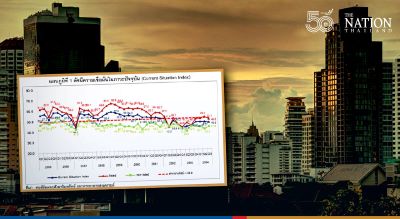
A recent survey shows that the real-estate confidence index in Bangkok and its vicinity has dropped to below average over the past 10 quarters, the Real Estate Information Centre (REIC) reported on Saturday.

The Government Housing Bank’s REIC said the confidence index of residential developers in Greater Bangkok in the third quarter of this year stood at 45.8, marking a slight drop from the previous quarter.

However, the centre said it believes confidence will improve in the next six months once the Covid-19 situation eases.

The index value for the sector has been below the median of 50 for 10 consecutive quarters since the second quarter of 2019.

ADVERTISEMENT

REIC acting director-general Wichai Viratakaphan said the Bank of Thailand’s loan-to-value (LTV) control measures in the second quarter of 2019, coupled with the Covid-19 pandemic were to blame for the low index.

He said these two factors had slowed down both supply and demand in the real-estate sector, adding that developers were still very concerned about the ongoing pandemic.

“However, the confidence index among developers in Greater Bangkok for the next six months has risen to 57.2. This may be due to the government’s promise to have 70 per cent of the population fully vaccinated by the end of 2021, including using the Pfizer vaccines donated by the US to provide free boosters,” Wichai said.

Related news:

He added that the Centre for Economic Situation Administration (CESA) also recently proposed new measures to the Cabinet, including the expansion of the ceiling for foreign buyers. CESA proposed that foreigners be allowed to own more than 49 per cent of condominium units as well as be allowed to buy landed property.

“The confidence in real estate for the next six months has risen significantly since the government began relaxing lockdown measures and allowing some businesses like restaurants, beauty salons, massage parlours and airlines to resume business,” he concluded.

Published : October 10, 2021

By : THE NATION